
About On India’s 77th Independence Day, Prime Minister Narendra Modi announced an important scheme to support artisans and craftspeople — the PM Vishwakarma Yojana. It was officially launched on September 17, 2023, on the occasion of Vishwakarma Jayanti, at the India International Convention and Expo Centre in Dwarka, New Delhi. This scheme shows the government’s dedication to helping people who work in traditional crafts, keeping India’s cultural heritage alive. The Cabinet Committee on Economic Affairs, led by PM Modi, approved it on August 16, 2023. Its goal is to uplift skilled individuals in different traditional trades and ensure their art continues to thrive. Objectives of PM Vishwakarma Yojna Highlights Of the Scheme Key Benefits of the Scheme 1. Enhanced Access to Tooling Facilities This means making it easier for small and medium businesses (MSMEs) to use high-quality tools and machinery.Why it matters: Many MSMEs can’t afford advanced equipment, so giving them access improves their work quality, speeds up production, and increases their ability to compete in the market. 2. Industry-Ready Manpower This refers to providing proper training so that people have the skills industries are looking for.Why it matters: Training programs help bridge the gap between what people learn and what companies actually need, making it easier for participants to get jobs and for businesses to find skilled workers. 3. Support for Process and Product Development This means helping businesses improve the way they make products (process) and create new or better products.Why it matters: When companies improve their processes, they can make goods faster and cheaper. New or improved products also help them attract more customers and stay ahead of competitors. 4. Consultancy and Job Work Services This involves giving businesses expert advice and taking on specific work tasks for them when needed.Why it matters: Consultancy helps companies solve problems and improve their operations, while job work services allow them to outsource certain tasks, saving time, effort, and costs. 25 traditional trades are covered under PM Vishwakarma Yojana PM Vishwakarma Yojana is an endeavour to uplift the Vishwakarmas of India who work tirelessly with their hands and tools, connecting them to the mainstream of development and making them self-reliant.
Pension Fund Regulatory and Development Authority (PFRDA)
Introduction “The Pension Fund Regulatory and Development Authority (PFRDA) is the top government body that looks after and manages the pension sector in India. It works to protect the interests of people who invest in pensions and helps ensure they have financial security in their old age. PFRDA’s main goal is to promote a safe, well-managed, and growing pension system. In this article, we’ll explore its history, what it does, why it’s important, the challenges it faces, and what the future might look like for PFRDA.” About PFRDA The Pension Fund Regulatory and Development Authority (PFRDA) is the government body that looks after and manages the pension system in India. It was first set up temporarily in 2003, but in 2013 it officially became a permanent body through the PFRDA Act, which started working fully in 2014. Its main job is to make sure the pension system runs smoothly, grows in a healthy way, and helps people have financial security when they retire. History of PFRDA Simply put, PFRDA was created to fill a big gap — most Indian workers, especially in the private and unorganized sectors, didn’t have any proper pension plans. Before it existed, pensions were mainly for government employees, which meant most people had no financial safety net after retirement. To fix this, the government launched the National Pension System (NPS) in 2004, making pension benefits available to everyone, not just government staff. PFRDA’s job is to manage, promote, and regulate this system so it works fairly, reaches more people, and lasts for the long run. Role of PFRDA PFRDA plays an important role in growing and managing the pension sector in India. Its importance can be seen through the different ways it works: Powers and Functions of PFRDA PFRDA has a wide range of powers and responsibilities, which include: Challenges Faced by PFRDA Way Forward Conclusion The Pension Fund Regulatory and Development Authority (PFRDA) plays a key role in shaping how pensions work in India. By solving existing problems and making the most of available opportunities, PFRDA can make pension schemes reach more people and work more effectively. This will help ensure that every citizen has financial security after retirement. In the long run, it will not only improve people’s lives but also strengthen the country’s economic stability. FAQ’s Is PFRDA a statutory body? Yes, the Pension Fund Regulatory and Development Authority (PFRDA) is a statutory body established under the PFRDA Act, 2013, to regulate and develop the pension sector in India. PFRDA under which ministry? The PFRDA functions under the Ministry of Finance, Government of India, and oversees pension schemes like the National Pension System (NPS)

Pradhan Mantri Bharatiya Jan Aushadhi Pariyojana (PMBJP)
“Jan Aushadhi – Seva Bhi, Rozgar Bhi” Introduction The Pradhan Mantri Bhartiya Janaushadhi Pariyojana (PMBJP) is a government initiative started in 2008 to make quality medicines available to everyone at low prices. These medicines are sold through special outlets called Janaushadhi Kendras. The scheme is managed by the Pharmaceuticals and Medical Devices Bureau of India (PMBI). Its tagline, “Jan Aushadhi – Seva bhi, Rozgar bhi,” highlights that the scheme not only serves the people but also creates job opportunities. About The “Pradhan Mantri Bhartiya Janaushadhi Pariyojana (PMBJP)” was launched in November 2008 by the Department of Pharmaceuticals, Ministry of Chemicals & Fertilizers, in collaboration with Central Pharma Public Sector Undertakings. The initiative aims to provide quality medicines at affordable prices to the public through dedicated outlets called Pradhan Mantri Bhartiya Janaushadhi Kendras (PMBJK). Key Activities of the Pradhan Mantri Bhartiya Janaushadhi Pariyojana With an objective of making quality generic medicines available at affordable prices to all, Pradhan Mantri Bhartiya Janaushadhi Pariyojana (PMBJP) aims to make quality generic medicines available at affordable prices. Some of the activities under this initiative include: Despite the country being one of the leading exporters of generic medicines to the world, the majority of Indians lack sufficient access to affordable medicines. Branded medicines are sold at significantly higher prices than their unbranded generic equivalents, though they are identical in their therapeutic value. Major Initiatives under PMBJP 1. Affordable Medicines for All:PMBJP aims to provide high-quality generic medicines at much lower prices compared to branded ones, making healthcare more accessible for every Indian. 2. Wide Network of Stores:Over 15,000 Jan Aushadhi Kendras have been opened across India where these affordable medicines are available. 3. Women’s Health Support – Suvidha Sanitary Napkins: To promote menstrual hygiene, Jan Aushadhi Suvidha Oxo-biodegradable sanitary napkins are sold at just ₹1 per pad. Since their launch in August 2019, over 72 crore napkins have been sold as of January 2025. 4. Jan Aushadhi SUGAM App: Launched in August 2019, the app helps users: 5. Dual Impact – Seva Bhi, Rozgar Bhi:The scheme not only serves public health needs but also creates employment through Kendras across the country. Features of PMBJP A unique feature of the scheme is that it is operated by government agencies as well as by private entrepreneurs. Transforming Healthcare: A Look at the Growth Financial Year Number of PMBJP Kendras Opened (Yearly Addition) Cumulative Kendras Sales at MRP (₹ in Crore) 2014–15 8 80 7.29 2021–22 1,053 8,610 893.56 2022–23 694 9,304 1,235.95 2023–24 1,957 11,261 1,470 2024–25 (As on 28.02.2025) 3,796 15,057 1,767 Number Of PMBJP Kendras Opened Financial Year Number of Medicines Number of Surgical Items Total 2020–21 1,450 204 1,654 2021–22 1,616 250 1,866 2022–23 1,759 280 2,039 2023–24 2,047 300 2,347 Conclusion \The Pradhan Mantri Bhartiya Janaushadhi Pariyojana is a revolutionary step in transforming India’s healthcare landscape. By ensuring access to affordable, high-quality generic medicines and promoting public awareness, PMBJP not only makes healthcare more inclusive but also opens doors for employment and entrepreneurship. With continuous expansion and strong public response, the scheme is truly fulfilling its vision of “Seva bhi, Rozgar bhi.” Frequently Asked Questions (FAQs) Q1. When was PMBJP launched?The scheme was launched in November 2008. Q2. What is the objective of PMBJP?To provide affordable and quality generic medicines to all, especially the underprivileged. Q3. Who implements the scheme?It is implemented by the Pharmaceuticals and Medical Devices Bureau of India (PMBI) under the Department of Pharmaceuticals. Q4. What is the price of Suvidha Sanitary Napkins?Just ₹1 per pad. Q5. How many Jan Aushadhi Kendras are there as of 2025?A total of 15,057 Kendras have been opened across India (as of Feb 2025). Q6. How are the medicines tested?Every batch is tested in NABL-accredited labs and sourced from WHO-GMP certified manufacturers.
SIDBI Grade A and B Syllabus
“C4S Courses brings you a laser-focused, step-by-step roadmap for cracking SIDBI 2025 — with syllabus-aligned lessons, expert faculty insights, and performance-tested strategies tailored for Phase 1 and Phase 2, across General, Legal, and IT streams.” SIDBI Grade A and B Syllabus 2025 The syllabus focuses on the specific knowledge and skills needed for each role. Whether you’re applying for the General, Legal, or IT stream, you need to have a strong grasp of your subject. The exam is meant to check how well you understand key concepts and how you can apply them in real-world situations related to your field. SIDBI Syllabus 2025 Phase 1 The SIDBI Phase 1 Exam 2025 will have different sections, each aimed at testing certain important skills needed for the job. Here’s a simple breakdown of the exam format and what topics you’ll need to study for each part. English Language (30 Questions, 30 Marks) Reasoning Ability (25 Questions, 25 Marks) Quantitative Aptitude (25 Questions, 25 Marks) Computer Knowledge (20 Questions, 20 Marks) General Awareness (20 Questions, 20 Marks) MSMEs (30 Questions, 30 Marks) Stream-Specific (50 Questions, 50 Marks) The stream-specific section will have questions related to the specific role or department for which the candidate has applied (e.g., Legal, IT, etc.). Legal Stream (Grade B) IT Stream (Grade B) SIDBI Syllabus 2025 Phase 2 The SIDBI Grade A & B Phase 2 exam includes both objective and descriptive questions. It mainly checks how well candidates understand MSME-related topics or their specific professional field, along with their ability to write clearly and effectively in English. Paper I: English Language Paper II: General Stream (Grade A & B): MSMEs, Policy, and Finance Paper II: Legal Stream (Grade B): Advanced Legal Knowledge Paper II: IT Stream (Grade B): Advanced IT and Data Management
PM Dhan-Dhaanya Krishi Yojana
Why in News? The Union Cabinet approved the “Prime Minister Dhan-Dhaanya Krishi Yojana”, or PMDDKY, to enhance agricultural productivity and increase adoption of sustainable agricultural practices across the country. PM Dhan-Dhaanya Krishi Yojana (PMDDKY) is a flagship initiative aimed at transforming Indian agriculture. Announced in the Union Budget 2025–26, the scheme focuses on enhancing productivity and promoting sustainable farming. Introduction On 16th July 2025, the Union Cabinet approved the Prime Minister Dhan-Dhaanya Krishi Yojana (PMDDKY) — a major initiative aimed at transforming India’s agricultural landscape. First announced in the Union Budget 2025–26, this scheme focuses on driving growth in 100 agri-districts by bringing together 36 Central schemes from 11 different Ministries in a well-coordinated, saturation-based approach. With a budget of ₹24,000 crore per year for the next six years starting FY 2025–26, it also includes state-level schemes and local partnerships with private players. Instead of launching new schemes, PMDDKY ensures better coordination and last-mile delivery of existing programmes, reducing overlap and increasing their impact on farmers. Introduction On 16th July 2025, the Union Cabinet approved the Prime Minister Dhan-Dhaanya Krishi Yojana (PMDDKY) — a major initiative aimed at transforming India’s agricultural landscape. First announced in the Union Budget 2025–26, this scheme focuses on driving growth in 100 agri-districts by bringing together 36 Central schemes from 11 different Ministries in a well-coordinated, saturation-based approach. With a budget of ₹24,000 crore per year for the next six years starting FY 2025–26, it also includes state-level schemes and local partnerships with private players. Instead of launching new schemes, PMDDKY ensures better coordination and last-mile delivery of existing programmes, reducing overlap and increasing their impact on farmers. Major Highlights Objectives of PM Dhan-Dhaanya Krishi Yojana The PMDDKY aims to serve as a multi-dimensional rural development intervention. Its five core objectives are: These objectives aim not only to improve farm incomes but also to ensure climate-resilient and market-oriented farming systems. Targeted Districts: Criteria and Selection The number of districts chosen from each state or Union Territory will depend on their share of Net Cropped Area and operational land holdings. However, to ensure fair representation, at least one district from every state will be selected. These selected districts will serve as the main focus areas for agricultural reforms that are driven by the convergence of schemes, and the strategies used will be customised to fit each district’s agro-climatic conditions and cropping patterns. District-Level Planning and Implementation Each selected district under PMDDKY will establish a District Dhan-Dhaanya Krishi Yojana (DDKY) Samiti, chaired by the District Collector or Gram Panchayat. This committee will include progressive farmers and departmental officers to ensure a broader representation. The DDKY Samiti will prepare a District Agriculture & Allied Activities Plan through: These plans will guide the coordinated implementation of all converging schemes in the district. The progress of each Dhan-Dhaanya district will be tracked using 117 Key Performance Indicators (KPIs) on a central monitoring dashboard, reviewed monthly to assess performance, highlight gaps, and promote accountability. Multi-Tier Governance The scheme will be governed through a three-tier implementation structure: Teams similar to the ones at the district level will also be formed at the state level, with the responsibility of ensuring effective convergence of schemes in districts. Two teams will be formed at the central level: one under Union Ministers, and another under Secretaries and department officers. Each level will ensure strategic planning, execution, and issue resolution. To bolster on-ground oversight, Central Nodal Officers will be appointed for each district to conduct regular field visits, monitor progress, and coordinate with local teams. Institutional and Knowledge Support To ensure effective implementation, PMDDKY will involve key institutions for support: This partnership between government bodies, academic institutions, and on-ground agencies ensures that the scheme is locally relevant, scientifically guided, and focused on achieving real results. Digital Ecosystem for Monitoring and Farmer Support Targeted Results A major point to note is that this scheme will focus on fruits, fisheries, beekeeping, animal husbandry, and agroforestry, not just crop agriculture. By leveraging scale, technology, and institutional strength, the scheme is poised to be a game changer in rural transformation. The scheme will result in: Conclusion The Prime Minister Dhan-Dhaanya Krishi Yojana (PMDDKY) combines the strengths of convergence of schemes, local-level planning, and real-time monitoring to address some of the long-standing problems in Indian agriculture. With a strong financial backing of ₹24,000 crore every year for six years, and the involvement of NITI Aayog, agricultural universities, and 11 central ministries, the scheme focuses on uplifting 100 districts that currently have low productivity, moderate crop density, and limited access to credit. The goal is to build strong and sustainable rural livelihoods and fulfill the vision of “Sabka Saath, Sabka Vikas” in the agriculture sector.
SIDBI Grade A & B Preparation Strategy
Introduction Preparing for the SIDBI Grade A and Grade B 2025 exams isn’t just about hard work—it’s about smart work, the right strategy, and a plan that actually works. With sections like Reasoning, Quantitative Aptitude, English, General Awareness, and Professional Knowledge (for Grade B), it’s normal to feel a bit overwhelmed. But what if we told you that all of this can be tackled in just 90 days? Yes, we mean it! With our structured 3-month study plan, specially crafted by C4S Experts, you can cover every subject, strengthen weak areas, and stay fully exam-ready without last-minute panic. This isn’t just another generic plan—it’s a battle-tested roadmap to help you crack SIDBI with confidence. So if you’re serious about clearing SIDBI Grade A or B this year, stick with us. This blog gives you the exact 90-day strategy you need to master the syllabus and ace the exam. Let’s dive right into it! Why a 3-Month Study Plan will Work? Of course, three months might sound short, but with the right approach, it’s more than enough to crack the SIDBI Grade A or B Exam. The key is structured preparation, and that’s where our 90-day plan comes in. Think of it as a step-by-step system, not a last-minute hustle. Cramming won’t help in a conceptual and competitive exam like SIDBI. What you really need is a plan that keeps you consistent and exam-ready from Day 1. So, if you’re serious about clearing the exam, start strong with this 90-day strategy designed by C4S Experts. Phase Duration Focus Areas Phase 1: Foundation Days 1–30 Build core concepts in all subjects – QA, Reasoning, English, GA, and Professional Knowledge (for Grade B) Phase 2: Practice Days 31–60 Intensive practice with topic-wise tests, sectional quizzes, and mock drills Phase 3: Revision Days 61–90 Full-length mock tests, analysis, speed improvement, and final polish All in all, following a phased approach not only brings clarity to your preparation but also ensures that you peak at just the right time, right before the exam. It’s like training for a marathon: start steady, build momentum, and finish strong. Phase 1 (Days 1–30): Build Your Foundation Phase 1: Foundation (Days 1–30) Let’s be real—the first month is all about understanding the basics. This is your time to build a strong foundation. Don’t rush. Instead, focus on learning concepts and creating quick, handy notes that you’ll use later during revision. Quantitative Aptitude: Start with arithmetic—topics like percentages, ratios, averages, time & work, and SI-CI. Spend around 2 hours daily solving 20–25 questions, and try to note down shortcuts or tricks you come across. Accuracy matters more than speed right now. Reasoning Ability: Begin with puzzles, syllogisms, and seating arrangements. These are common in SIDBI exams. It’s okay if you’re slow in the beginning—just make sure you understand the logic clearly. Speed will come with practice. English Language: Focus on grammar basics, reading comprehension, and vocabulary. A good habit? Read The Hindu editorials every day. Write down 5–10 new words, their meanings, and usage. This will help you with both comprehension and essay writing. General Awareness (GA): This is a game-changer. SIDBI places high weightage on financial and banking awareness. Dedicate 1 hour daily to reading current affairs, RBI updates, SIDBI schemes, and government policies. Make notes in bullet format. Professional Knowledge (for Grade B aspirants): Start with the basics of financial management, banking laws, and credit appraisal. Read one chapter per day from standard reference books and follow it up with relevant online lectures of C4S Courses or PDFs. Don’t overdo it—consistency is key. Weekly Checkpoint: Every Sunday, take one sectional test per subject. This helps track your progress and builds test stamina early on. Don’t worry about scores right now—focus on learning from your mistakes. Phase 2 (Days 31–60): Practice, Analyze, Improve Phase 2: Practice (Days 31–60) Now that your basics are in place, it’s time to shift gears from learning to applying. This phase is all about practice, speed-building, and testing yourself under pressure. Start by attempting sectional mocks twice a week for each subject. Make sure you set a timer and practice in exam-like conditions—no distractions, just focus. This builds your mental stamina and helps you manage time better on the actual exam day. For Quant and Reasoning, stop isolating topics. Start mixing question types—just like they appear in the exam. For example, solve a set that includes arithmetic, DI, and number series together. For Reasoning, combine puzzles, syllogisms, and input-output in one go. This helps you train your brain to switch gears quickly, just like in real tests. Sample Daily Schedule – Phase 2 (Practice Phase) Time Activity 6:30 AM – 7:30 AM Editorial reading + Vocabulary (5–10 new words) 10:00 AM – 11:30 AM Quantitative Aptitude Practice (Mixed topic sets + timed drills) 12:00 PM – 1:00 PM Reasoning Practice (Puzzle + logical mix) 4:00 PM – 5:00 PM General Awareness (Current affairs + banking/financial updates) 6:00 PM – 7:00 PM Professional Knowledge (for Grade B only – theory + MCQs) 9:00 PM – 9:30 PM Sectional Mock / Analysis / Flash Revision Notes Don’t forget: After every mock or practice session, spend 30 minutes reviewing your mistakes. That’s where the real learning happens. Phase 3 (Days 61–90): Revision and Mocks Phase 3: Revision & Final Prep (Days 61–90) You’ve come a long way—this last month is where you polish your preparation and boost your confidence. Think of it as your final lap, where every move counts. Start attempting 3–4 full-length mock tests each week, and make sure you do them in strict exam-like conditions—no distractions, no breaks. The next day, don’t just move on—analyze your results carefully, revisit tough questions, and go over concepts you struggled with. Now is the time to revise daily. Open your short notes, check your error log, and focus on things you tend to forget. Small, consistent revision will go a long way. For General Awareness, go all-in on the last six months of current affairs. Prioritize

SIDBI Grade A and B Syllabus 2025 and Exam Pattern
SIDBI Recruitment 2025 Notification To crack the highly competitive SIDBI Grade A and Grade B exams, aspirants need expert guidance, structured content, and a focused study approach. C4S Courses have been meticulously designed to provide comprehensive preparation for SIDBI Exams 2025. With a syllabus-aligned curriculum, expert faculty, and proven strategies, C4S ensures that candidates are well-prepared to tackle each stage of the exam with confidence. SIDBI Syllabus 2025 for Grade A and B The SIDBI Recruitment 2025 Notification was officially released on 13th July 2025, announcing a total of 76 vacancies for Officer Grade A (Assistant Manager) and Grade B (Manager) posts. The SIDBI Syllabus 2025 for both Assistant Manager and Manager roles is quite similar to the syllabus of other standard banking exams. To make your preparation easier, we’ve provided a clear and concise overview of the SIDBI syllabus for both posts in the table below. Particulars Details Organization Small Industries Development Bank of India (SIDBI) Exam Name SIDBI Grade A & Grade B Recruitment 2025 Post Name Assistant Manager (Grade A), Manager (Grade B) Vacancies 76 Application Mode Online Notification Release Date 13th July 2025 Exam Level National Selection Process Written Exam + Interview Job Location All India Official Website www.sidbi.in SIDBI Grade A and B Exam Pattern 2025 Before jumping into the syllabus, it’s important to first understand the SIDBI Exam Pattern 2025 for both Assistant Manager and Manager posts. The exam is conducted in two stages — Phase 1 (Online Test) and Phase 2 (Interview). Each stage has its own format and marking scheme depending on the post and stream you’re applying for. So, if you’re preparing for the SIDBI exam, make sure to go through the exam pattern thoroughly to plan your preparation effectively. SIDBI Phase 1 Exam Pattern 2025 (For All Streams/Grades) Subjects No. of Questions Marks Duration English Language 30 30 120 minutes Reasoning Aptitude 25 25 Quantitative Aptitude 25 25 Computer Knowledge 20 20 General Awareness (with special reference to Banking, Financial Sector, and ESI) 20 20 MSMEs: Policy, Regulatory & Legal Framework; Finance and Management (with focus on MSME) 30 30 Stream Specific Test 50 50 Grand Total 200 200 120 minutes Details of Stream Specific Test General Stream (Grade A & B): This section mainly tests your understanding of MSME financing and related financial concepts. Topics include: Legal Stream (Grade B): For law specialists, the exam covers core legal subjects such as: Information Technology (IT) Stream (Grade B): This section tests your domain expertise in IT and emerging technologies. Key areas include: SIDBI Phase 2 Exam Pattern 2025 (Grade A & B General Stream) SIDBI Phase II exam for Assistant Manager Grade ‘A’ (General Stream) and Manager Grade ‘B’ (General Stream) is the same, however, the difficulty level of questions varies for both grades. Paper Name of Test Type of Paper No. of Questions Marks Time Paper 1 English Language Online Descriptive 3 75 75 minutes Paper 2 MSMEs: Policy, Regulatory and Legal Framework; Finance and Management (with focus on MSME), MSME Financing, NPA & Recovery, NBFCs, Credit Risk Assessment, etc. Online Objective 50 75 60 minutes Descriptive Questions (10 will be asked; attempt any 4 – 2 of 15 marks & 2 of 10 marks) Online Descriptive 4 (to be attempted out of 10) 50 75 minutes Note- Some questions carry 2 marks each and some questions carry 1 mark each SIDBI Phase 2 Exam Pattern 2025 (Grade B Legal) Paper Name of Test Type of Paper No. of Questions Marks Time Paper 1 English Language Online Descriptive 3 75 75 minutes Paper 2 General Knowledge of Law: Constitutional Law, Administrative Law, Statutory Interpretation, Contract Act, Transfer of Property Act, Negotiable Instruments Act, Registration Act, Bharatiya Nyaya Sanhita, Bharatiya Nagarik Suraksha Sanhita, Bharatiya Sakshya Adhiniyam, Legal Drafting, RDB Act, SARFAESI Act, RTI Act, Limitation Act, IBC, etc. Online Objective 50 75 60 minutes Descriptive Questions (6 will be asked; attempt any 4 – 2 of 15 marks & 2 of 10 marks) Online Descriptive 4 (to be attempted out of 6) 50 75 minutes Note- Some questions carry 2 marks each and some questions carry 1 mark each SIDBI Phase 2 Exam Pattern 2025 (Grade B IT) Paper Name of Test Type of Paper No. of Questions Marks Time Paper 1 English Language Online Descriptive 3 75 75 minutes Paper 2 IT & Computer Science Topics: Software, Computer Fundamentals, Programming in C/C++/Java/Python, Data Structures, System Design, Networks, AI/ML, Cyber Security, Big Data, DBMS, IoT, Analytics, API usage, App Development, etc. (Indicative syllabus) Online Objective 50 75 60 minutes Descriptive Questions (10 will be asked; attempt any 4 – 2 of 15 marks & 2 of 10 marks) Online Descriptive 4 (to be attempted out of 10) 50 75 minutes Note- Some questions carry 2 marks each and some questions carry 1 mark each SIDBI Assistant Manager (Grade A) Syllabus The online test for SIDBI Grade A 2025 is the first step to get shortlisted for the interview round. To help you prepare better, the subject-wise syllabus has been explained below, covering all key areas like Reasoning, English Language, Quantitative Aptitude, and General Awareness. Go through the detailed SIDBI Grade A syllabus and begin your preparation with a clear focus and the right strategy. SIDBI Grade A Syllabus for Reasoning The Reasoning section of the SIDBI Assistant Manager (Grade-A) Exam includes several important topics. To score well, candidates should make sure they understand the basic concepts of each of these topics. Building a strong foundation in reasoning will help in solving questions quickly and accurately during the exam. SIDBI Grade A Syllabus for Quantitative Aptitude Below are the topics to be studied for the Quantitative Aptitude subject for SIDBI Grade A Exam 2025. SIDBI Grade A Syllabus for General Awareness The questions in the General Awareness section will be asked from reference to the Banking Industry and from the below topics. SIDBI Grade A Syllabus for English Language SIDBI Assistant Manager syllabus for English Language has been enlisted below-

SIDBI Grade A 2025 – Complete Information
SIDBI Grade A 2025 Recruitment The SIDBI Grade A 2025 Recruitment is one of the most awaited opportunities for aspirants aiming to enter India’s premier development financial institution – the Small Industries Development Bank of India (SIDBI). Known for its dynamic role in promoting MSMEs and inclusive growth, SIDBI offers not just a prestigious position but also long-term career security, a high-paying salary structure, and immense learning exposure in the financial sector. In this comprehensive guide by C4S (Clarity4Sure), we bring you everything you need to know — from notification details, important dates, eligibility criteria, syllabus, exam pattern, selection process, salary structure, to cut-off trends and preparation strategy. Whether you’re a first-time applicant or a serious repeater, this blog is your one-stop solution to crack SIDBI Grade A 2025 with confidence. SIDBI Grade A 2025 Notification: Important Exam Dates Events Dates SIDBI Grade A Notification Release 13 July 2025 Online Application Begins 14 July 2025 Last Date to Apply 11 August 2025 Tentative Date of Phase 1 Exam 06 September 2025 Tentative Date of Phase 2 Exam 04 October 2025 Tentative Schedule of Interview November 2025 SIDBI Grade A Vacancies 2025 Category Vacancies UR (Unreserved) 20 SC (Scheduled Caste) 7 ST (Scheduled Tribe) 3 OBC (Non-Creamy Layer) 15 EWS (Economically Weaker Section) 5 PwBD ▪ HI (Hearing Impaired) 2 ▪ OC (Orthopedically Challenged) 1 ▪ MD/ID (Multiple Disabilities / Intellectual Disability) 2 SIDBI Grade A 2025 Eligibility Age Limit for the SIDBI Assistant Manager Exam Age Relaxation The upper age limit is relaxed for the following categories: Educational Qualifications for the SIDBI Grade A Exam To be eligible for the SIDBI Grade A 2025 exam, candidates must possess any one of the following academic qualifications from a recognized university or institution: 1. Bachelor’s Degree (UG) – Minimum 60% (55% for SC/ST/PwBD) In any of the following disciplines: 2. Professional Qualifications (Any One): 3. Chartered Accountant (CA) A fully qualified Chartered Accountant is eligible. 4. Master’s Degree (Post-Graduation) 5. Bachelor’s Degree after 10+2 (3-year program) 6. Post-Graduation after Graduation Nationality for the SIDBI Grade A Exam To be eligible for the SIDBI Grade A (Assistant Manager) recruitment, a candidate must belong to any one of the following categories: Important Note: Attempts Allowed for the SIDBI Grade A Exam SIDBI puts no restriction on the number of attempts. As long as you meet the age criteria, you are eligible to apply for the SIDBI Grade A 2025 Assistant Manager exam. SIDBI Grade A Pattern 2025 The selection process will be conducted in three phases: SIDBI Grade A Phase 1 Pattern Sr. No. Name of the Test No. of Questions Maximum Marks Time 1 English Language 30 30 2 Reasoning Aptitude 25 25 3 Quantitative Aptitude 25 25 4 Computer Knowledge 20 20 5 General Awareness (with special reference to Banking & Financial Sector and Economic & Social Issues) 20 20 6 MSMEs: Policy, Regulatory & Legal Framework; Finance and Management (with focus on MSMEs) 30 30 7 Stream-Specific Test: MSME Financing (Due Diligence, KYC, Financial Ratios, Term Loan/Working Capital Assessment, Documentary Credit, NPA & Recovery, IRAC Norms, NBFC Financing, Credit Risk Assessment, etc.) 50 50 TOTAL 200 200 120 Minutes The actual merit will be based on your performance in the following sections: SIDBI Grade A Phase 2 Pattern So, the total marks for Phase 2 come to 200 marks, and you’ll have a combined time of 210 minutes to complete both papers. Paper Name of the Test Type of Paper No. of Questions Maximum Marks Time Paper I English Language Online Descriptive 3 75 75 minutes Paper II MSME / Finance Online Objective (Bilingual – Hindi & English) 50 questions (Mix of 1-mark and 2-mark questions) 75 60 minutes Online Descriptive 10 questions (Attempt any 4):2 questions of 15 marks each + 2 of 10 marks each 50 75 minutes SIDBI Grade A Final Selection The final selection will be based on the combined marks in Phase 2 + Interview. A psychometric test shall be conducted before the interview. SIDBI Grade A Syllabus 1. English Language Focuses on grammar, comprehension, and vocabulary skills: 2. Reasoning Aptitude Designed to test logical thinking and problem-solving: 3. Quantitative Aptitude Mathematical and data interpretation abilities are tested: 4. Computer Knowledge Covers fundamental computer literacy: 5. General Awareness (Banking, Finance & ESI Focus) Focuses on current and financial affairs: 6. Finance & Management (MSME-focused) Tests your understanding of financial systems and management practices: Finance Topics: Management Topics: 7. Stream-Specific Topics (MSME & Banking-Focused) SIDBI Grade A Phase 2 Syllabus For Phase 2, the syllabus has only been provided for Paper II by SIDBI, which is merely indicative. Here is the syllabus for both Paper 1 and Paper 2. Paper I – Descriptive English In this section, candidates will be evaluated on their written communication skills. You will be asked to attempt the following: This paper is designed to assess your clarity of thought, articulation, and command over the English language. Paper II – MSME and Finance (Domain-Specific Test) This is a specialized section that tests your knowledge and understanding of MSME and financial concepts. The topics broadly cover: MSME Sector – Policies and Frameworks Finance and Management with MSME Emphasis MSME Lending and Financial Operations Capital Markets and Investment Basics Government Schemes and Support for MSMEs SIDBI Grade A Phase 2 Syllabus For Phase 2, the syllabus has only been provided for Paper II by SIDBI, which is merely indicative. Here is the syllabus for both Paper 1 and Paper 2. Paper I – Descriptive English In this section, candidates will be required to complete the following tasks: Paper II – MSME & Finance This is a subject-specific paper aimed at evaluating your domain knowledge. The indicative and officially prescribed syllabus includes the following key areas: MSME Sector Finance & Management (with emphasis on MSMEs) MSME Lending & Credit Operations Capital Markets & Banking Government Support for MSMEs SIDBI Grade A Salary As per the official SIDBI Grade A 2025 notification, here’s a detailed breakdown of

Applications of Biotechnology
Introduction Biotechnology is the use of living things—like cells, microbes, or parts of organisms—to create useful products or improve existing processes. It’s a science that helps in making our lives better in many ways. For example, in medicine, biotechnology is used to make vaccines, insulin, and genetically engineered treatments. In agriculture, it helps develop genetically modified (GM) crops that grow faster, resist pests, and give better yields. In the environmental sector, it helps produce biofuels and manage waste in eco-friendly ways. In industries, it’s used for making things like enzymes, alcohol, and dairy products through fermentation and other biological processes. What is Biotechnology? Applications of Biotechnology Nutrient Supplementation One of the most valuable uses of biotechnology is making nutrient-rich food, especially in situations like food aid during hunger or emergencies. It helps add essential nutrients to food that might otherwise be missing from people’s diets. A great example is Golden Rice. Scientists used biotechnology to develop a special type of rice that contains beta-carotene, which the human body turns into Vitamin A. This is important because Vitamin A deficiency is a serious health issue in many poor regions, and this rice can help prevent blindness and other health problems caused by that deficiency. Abiotic Stress Resistance Only a small portion of the Earth’s land—about 20%—is suitable for farming. But as the global population keeps growing, we need to find ways to produce more food using less land. This means we also need to grow crops in areas that aren’t ideal for farming, like dry, salty, or cold regions. To do this, scientists are using biotechnology to develop crops that can survive tough conditions—like drought, high salt levels in the soil, or extreme cold. For example, in places like Africa and the Middle East, where the climate is often harsh, biotechnology has helped create stronger crops that can grow despite the challenging environment. Industrial Biotechnology Industrial biotechnology is when we use living cells or biological processes to make products for everyday use in industries. It’s like using nature’s tools—such as enzymes, bacteria, or yeast—to create useful materials or substances on a large scale. For example, it’s used to: Strength Fibres Spider silk is one of the strongest natural materials known. For its size, it’s even stronger than steel—it can stretch and handle a lot of tension before breaking. Because of this, scientists have been very interested in using spider silk to make super-strong materials, like bulletproof vests and body armor. In fact, spider silk is tougher than Kevlar, which is the material usually used in body armor. But there’s a problem—spiders are hard to farm, and they produce very little silk. So, scientists came up with a smart solution using biotechnology. They took the gene that makes spider silk and inserted it into goats. These genetically modified goats now produce the silk protein in their milk. This method is much more practical, because goats are easy to raise, and getting the silk protein from milk is far simpler and more efficient than collecting it from spiders. It’s a great example of how biotechnology can turn a natural wonder into a useful product for safety, industry, and innovation. Biofuels One of the most important uses of biotechnology today is in energy production. As the world starts to run low on oil and we face the harmful effects of pollution and climate change, there’s a growing need to find cleaner, greener alternatives to fossil fuels. Biotechnology is helping by making it possible to create fuel from plants, like corn, which can be turned into a type of biofuel that powers car engines. These biofuels are much better for the environment because they don’t release harmful greenhouse gases like regular petrol or diesel. Healthcare In healthcare, biotechnology plays a big role in making medicines—especially those that are hard to produce using traditional methods. Some drugs need to be extremely pure and precise, and conventional techniques often can’t guarantee that level of quality. Biotechnology helps solve this by using living cells or biological systems to make safe, effective, and pure medicines, like insulin, vaccines, and antibodies. This ensures the drugs are clean, reliable, and work the way they’re supposed to, which is especially important for treating serious illnesses. Food Processing Fermentation is a method that uses tiny microbes like bacteria or yeast to turn raw, often non-edible or quickly spoiling ingredients into tasty, safe-to-eat foods and drinks that last much longer. For example, through fermentation, things like milk can become yogurt, or grapes can become wine. This process not only makes the food more flavorful and nutritious, but also helps preserve it for a longer time, reducing waste. Fuel from Waste Commodity Chemicals and Specialty Chemicals With the help of biotechnology, many useful chemicals can now be made in a cleaner and more eco-friendly way. Traditionally, making these chemicals involved harsh substances like hydrochloric acid (HCl) and used a lot of energy, which isn’t good for the environment. But now, scientists use biocatalysts—special enzymes or microbes—to produce the same chemicals more efficiently, using less energy and fewer harmful ingredients. For example, polymer-grade acrylamide, which is used in water treatment and plastics, can be made through biotech methods in a safer, greener, and more cost-effective way. Issues With Application Of Biotechnology While biotechnology has many benefits, it also brings some important concerns that need to be carefully considered: 1. Ethical Concerns Altering the genes of humans, animals, or crops raises questions about what’s morally right or wrong. People worry about crossing natural limits or playing “God.” 2. Environmental Impact Using genetically modified organisms (GMOs) in farming may upset the natural balance, harm wildlife, or reduce biodiversity by affecting native species. 3. Health Risks Some people are concerned about the long-term health effects of eating genetically modified (GM) food or undergoing gene-based medical treatments, as we still don’t fully understand all the impacts. 4. Intellectual Property Rights When biotech companies patent seeds, medicines, or techniques, it can make them expensive and less accessible, especially for poor
Sub-Mission on Agricultural Mechanization (SMAM)
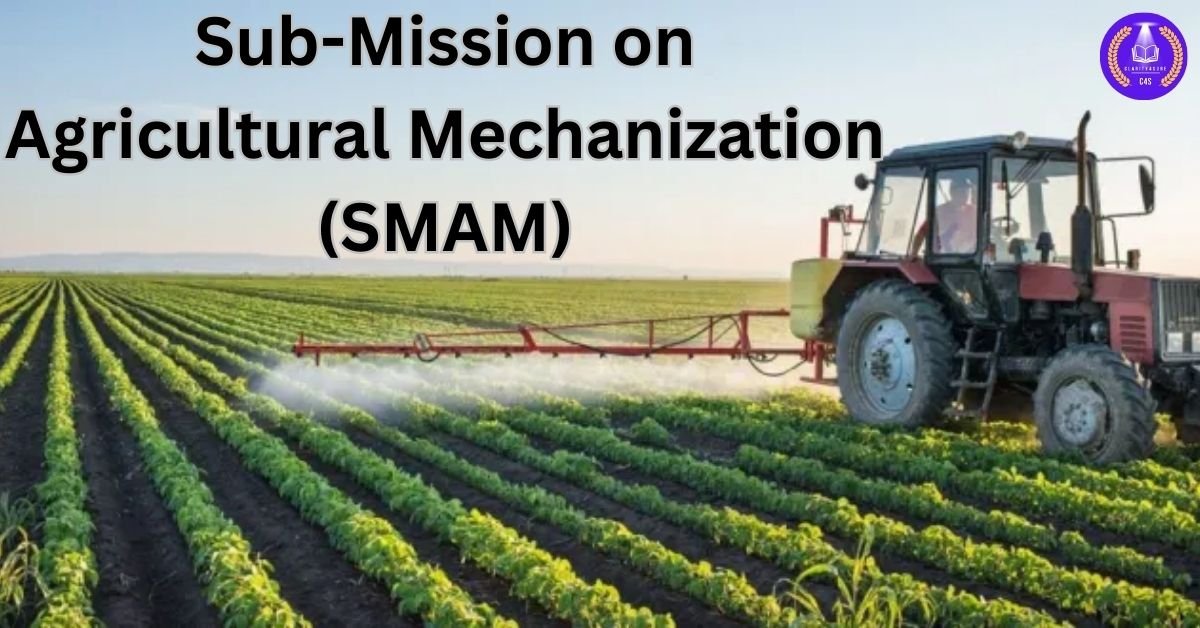
About The Ministry of Agriculture and Farmers Welfare launched the Sub-Mission on Agricultural Mechanization (SMAM) in 2014–15 to promote the use of modern equipment in farming. Under this scheme, farmers in most states can get a 40–50% subsidy on buying agricultural machinery. However, in the North Eastern Region (NER) states, the support is more generous—100% subsidy, but limited to ₹1.25 lakh per farmer. To make things easier, the ministry has also created a multilingual mobile app called ‘CHC-Farm Machinery’. This app helps farmers find and connect with Custom Hiring Centres (CHCs) near them, where they can rent farm machines instead of buying them. This is especially helpful for small and marginal farmers who can’t afford to own expensive equipment. Aim’s and Objective The government is working to expand farm mechanization, especially for small and marginal farmers and in remote or tough-to-reach areas where access to modern farm equipment is limited. Components of SMAM The government is taking several steps to promote and strengthen agricultural mechanization so that modern tools and machines reach more farmers in an effective and practical way. Here’s what they’re doing in simple terms: 1. Training, Testing, and Demonstration This part focuses on: 2. Post-Harvest Technology and Management (PHTM) This initiative aims to: 3. Financial Support for Buying Machinery Together, these efforts are meant to make farming easier, more efficient, and more profitable for farmers across the country. Conclusion The Sub-Mission on Agricultural Mechanization (SMAM) is a crucial initiative by the Ministry of Agriculture and Farmers Welfare that addresses one of the core needs of Indian agriculture—mechanization for all, especially for small and marginal farmers. By offering financial support, promoting Custom Hiring Centres, encouraging training and demonstrations, and ensuring access to post-harvest technologies, SMAM is helping bridge the gap between traditional and modern farming. With focused efforts on affordability, accessibility, and awareness, the mission is not only improving farm productivity and efficiency but also reducing farmers’ dependency on manual labor and outdated practices. In the long run, this mission is playing a vital role in modernizing Indian agriculture, enhancing income generation, and contributing to the overall sustainability of the farm sector.


