

About Farm Mechanisation in India Farm mechanisation simply means using machines and modern tools instead of doing all farm work by hand or with animals. It helps farmers do their work faster, more easily, and on time—like sowing seeds, watering crops, or harvesting. In a country like India, where many people still depend on farming for their income, using machines can really improve crop production, reduce hard manual labour, and save time. Mechanisation also helps farmers deal with labour shortages and grow more food efficiently. Current Scenario Crop-Specific Insights Key Areas of Mechanisation Global Comparisons Factors at Play Benefits of Mechanisation Related Government Initiatives State-Specific Initiatives Infrastructure Development Collaboration with Private Sector Customisation for Small Landholdings Policy Reforms Promotion of Agri-Entrepreneurship Challenges What more to be done for achieving 75-80% Farm Mechanisation in India? Conclusion Farm mechanisation isn’t just about using machines instead of human hands — it’s about making farming smarter, faster, and more efficient. It helps farmers grow more food with less effort, save time, reduce costs, and deal with labour shortages. With the growing demand for food and the challenges of climate change, mechanisation ensures that farming stays productive and reliable. For small and marginal farmers, access to affordable and suitable machines can change their lives by increasing income and reducing drudgery. As India moves forward, smart and inclusive mechanisation — backed by innovation, training, and strong support systems — will be key to building a future where farming is not only profitable but also sustainable for generations to come.

India’s Soil Health Crisis
Introduction India is facing a serious soil health crisis, mainly because of an imbalanced fertilizer policy. The government provides heavy subsidies on urea, which is rich in nitrogen. As a result, farmers tend to use too much nitrogen in their fields while ignoring other essential nutrients like phosphorus, potassium, micronutrients, and organic manure. Right now, the NPK ratio (Nitrogen:Phosphorus:Potassium) being used is around 7.7:3.1:1, which is far from the ideal ratio of 4:2:1. This imbalance is damaging the soil, making it less fertile over time. The more farmers rely on nitrogen alone, the worse the soil becomes—creating a vicious cycle of falling productivity. With India’s population growing and the demand for food increasing, it’s urgent to fix this issue. Balanced use of fertilizers, better awareness among farmers, and smart policy changes are essential to restore soil health and secure the future of Indian agriculture. What is the Role of Soil in Maintaining India’s Agricultural Prosperity? Soil is the backbone of agriculture and plays a vital role in ensuring food security, crop productivity, and farmers’ livelihoods in India. It’s the main medium where plants grow, and it directly affects how well crops absorb nutrients and how much they yield. Thanks to the rich and varied soils in India—like alluvial soil in the Indo-Gangetic plains and black soil in Maharashtra—the country can grow a wide range of crops. These soils help feed 1.4 billion people, with foodgrain production reaching a record 329.7 million tonnes in 2022–23. The FAO even says that 95% of the world’s food depends on healthy soil, showing just how critical soil is for India’s future. Healthy soil also supports natural nutrient cycling. It stores and supplies essential nutrients like nitrogen, phosphorus, and potassium, which plants need to grow. Soil microbes—tiny living organisms in the soil—help break down organic matter, fix nitrogen from the air, and keep the soil fertile. Traditional practices like vermiculture and the use of biofertilizers in organic farming depend on such living, nutrient-rich soils. When this balance breaks down, farmers end up relying more on chemical fertilizers, which hurts long-term productivity. Soil also works like a sponge—it absorbs, holds, and drains water, helping crops survive even in tough weather. Soils rich in organic matter hold water better, reducing the need for frequent irrigation. This is especially helpful in drought-prone areas like Rajasthan and Bundelkhand, where practices like mulching and cover cropping help retain moisture and protect crops. On the flip side, in areas with heavy rainfall, good soil structure prevents waterlogging and keeps roots healthy. Another important role of soil is in fighting climate change. Soil stores carbon naturally, which helps reduce the effects of global warming. Soils with more carbon can help stabilize temperatures, prevent desertification, and support more resilient crops. Eco-friendly farming methods like agroforestry and conservation agriculture boost this carbon storage, reducing harmful greenhouse gas emissions. In fact, healthy agricultural soils have the potential to absorb 3 to 8 gigatons of CO₂ each year, which can make a big difference in tackling climate change. Soil is also home to countless organisms that support natural pest control. Earthworms, fungi, and other beneficial microbes improve soil quality and help plants grow stronger without the need for chemical pesticides. Research shows that farms with rich soil biodiversity have fewer pest attacks, making farming more eco-friendly and cost-effective. Finally, soil health is closely tied to economic stability and rural livelihoods. Around two-thirds of India’s population depends on farming, and healthy soils mean better yields, higher incomes, and lower costs on fertilizers and pesticides. When soil is fertile, farmers can earn more and rely less on expensive inputs. Plus, soil-friendly businesses like organic farming, composting, and bio-input production create more jobs and boost rural economies. What are the Key Factors Contributing to India’s Soil Health Crisis? Unsustainable Agricultural Practices: Using too many chemical fertilizers and pesticides, along with growing the same crop repeatedly (monocropping), has damaged the fertility of India’s soil and created serious nutrient imbalances.In states like Punjab and Haryana, farming has become too intensive—mostly focused on growing wheat and rice due to the government’s support through Minimum Support Prices (MSP). This has led to soil being overworked and degraded.Also, repeated tilling and deep plowing damage the natural structure of soil, making it harder for the soil to hold water and nutrients.According to the 2022 State of India’s Environment Report, nearly 30% of India’s land is now degraded. Declining Organic Carbon and Soil Microbial Life: Soil organic carbon (SOC) is key to keeping soil fertile, but it is rapidly decreasing because farmers are adding less organic matter.In areas like the Indo-Gangetic belt, burning crop stubble after harvest removes valuable organic material instead of letting it go back into the soil.Heavy use of chemical fertilizers also harms the tiny living organisms in the soil that help recycle nutrients.Cutting down forests and building cities are also reducing the natural richness of soil.In fact, India’s SOC levels have dropped from 1% to just 0.3% in the past 70 years. In Punjab, only 6.9% of soils had high organic carbon, and this number went down further in 2024–25. Soil Erosion and Desertification: Deforestation, overgrazing, and bad water use practices have caused major soil erosion, especially in dry regions.Mining and industrial activities have also stripped away the topsoil, making the land less suitable for farming.As per the Desertification and Land Degradation Atlas of India (SAC 2021), around 97.85 million hectares of land—almost 29.77% of India’s total land—is degraded. Over Extraction and Salinization Due to Poor Irrigation Practices: Irrigation methods that are not well planned—like using too much groundwater or flood irrigation—have made soils salty and alkaline and caused waterlogging.In Punjab and Haryana, the constant use of irrigation without proper drainage has caused salt to build up in the soil.Improper use of canal water also results in waterlogging, which suffocates plant roots and reduces beneficial microbial activity.In 2022, India used around 239.16 billion cubic meters (bcm) of groundwater, with 87% going to agriculture.6.7 million hectares of salt-affected land in India causes

National Horticulture Mission (NHM)
Introduction The National Horticulture Mission (NHM), started in 2005-06 under the National Horticulture Board, is a government initiative focused on the all-round development of India’s horticulture sector. This means it works to boost the production of crops like fruits, vegetables, and flowers, while also improving how these crops are stored, processed, and marketed. The goal is to help farmers grow better-quality produce, reduce waste after harvesting, and get fair prices when they sell their crops. By doing all this, the mission aims to increase farmers’ incomes, improve access to nutritious food for everyone, and open up more opportunities for exporting India’s horticultural products to other countries. About the National Horticulture Mission Features of the National Horticulture Mission The National Horticulture Mission (NHM) is a major government initiative aimed at boosting the overall growth of the horticulture sector in India. It focuses on improving every aspect of horticulture—right from growing the crops to selling them in the market. Objectives of the National Horticulture Mission The National Horticulture Mission (NHM) was launched with the aim of bringing all-round growth to the horticulture sector, covering important crops like fruits, vegetables, flowers, spices, medicinal, and aromatic plants. Significance of the National Horticulture Mission Challenges Faced by the National Horticulture Mission Way Forward With the help of modern technologies, better cold storage facilities, and more focus on value-added products (like juices, jams, and dried fruits), the National Horticulture Mission (NHM) has the potential to grow even further and explore new opportunities. By improving market connections, promoting exports, and encouraging climate-friendly farming methods, the mission can make horticulture more sustainable and future-ready. At the same time, providing proper training and financial support to farmers will help them grow more efficiently, earn more, and become more competitive—not just in India, but also in global markets. This approach will not only strengthen farmers’ incomes but also take Indian horticulture to new heights. Conclusion The National Horticulture Mission (NHM) has played a big role in improving horticulture in India by helping farmers grow more, sell better, and reduce losses after harvest. With better production, stronger market connections, and improved storage and processing facilities, farmers are now in a much better position to earn more and reduce waste. This transformation is not just helping farmers make a decent living—it’s also making healthy fruits and vegetables more accessible to people and boosting India’s export potential.

Krishi Vigyan Kendra
Introduction Krishi Vigyan Kendra (KVK) is a special farm science centre set up by the Indian Council of Agricultural Research (ICAR) to help farmers directly at the district level. These centres are designed to bring the latest farming techniques and research straight to the fields. KVKs train farmers, show them practical demonstrations, and give expert advice to solve real farming problems. Their goal is to help farmers improve their crop yields, use sustainable farming methods, and boost rural development in a simple, practical way that works on the ground. About the Krishi Vigyan Kendra (KVK) Krishi Vigyan Kendra (KVK) is a district-level centre started by the Indian Council of Agricultural Research (ICAR) to help farmers connect with the latest agricultural research and technology. The first KVK was set up in 1974 with the idea of bringing practical, science-based farming solutions directly to rural communities. The main aim of KVKs is to: Each KVK provides practical, hands-on training to farmers, rural youth, and agricultural officers. The training is tailored to local needs and covers topics like crop cultivation, animal care, horticulture, fisheries, and forestry. They also run on-farm trials and demonstrations to test and showcase new farming methods, so farmers can see how well they work under real local conditions. KVKs also offer expert advice on: With over 700 KVKs across India, these centres have become important knowledge hubs for farmers. They play a big role in improving food security, raising incomes in rural areas, and encouraging the use of smart, modern farming techniques suited to each region. Features of the Krishi Vigyan Kendra (KVK) 1. Local Farm Science Centre:KVKs act like local farm science centres in every district. They help solve region-specific farming problems by bringing research-based solutions directly to the farmers. 2. Spreading New Technologies:They pass on the latest farming techniques and innovations from research labs to farmers, helping them grow more crops efficiently and sustainably. 3. Training and Skill Building:KVKs hold training sessions for farmers, women, young people, and agricultural staff. These programs teach practical skills in modern farming, helping people stay updated and self-reliant. 4. Testing New Ideas on Real Farms (On-Farm Testing – OFT):Before recommending new crops or techniques, KVKs test them on real farms in the area to see how well they work under local conditions. 5. Demonstrations on Farmers’ Fields (Frontline Demonstrations – FLD):KVKs show live demonstrations of successful farming methods directly on farmers’ land so others can see the benefits in action. 6. A Go-To Knowledge Center:KVKs also act as a one-stop shop for farming advice, soil and water testing, seed availability, and help with farm machines. 7. Covers All Aspects of Farming:KVKs don’t just focus on crops—they also guide farmers in horticulture (fruits/vegetables), livestock, fisheries, and tree-based farming for an all-round approach. 8. Promoting Eco-Friendly Farming:They encourage eco-friendly methods like organic farming, water-saving techniques, and farming practices that can withstand changing weather conditions. 9. Boosting Rural Businesses:KVKs help farmers learn how to start small businesses by adding value to their produce (like making pickles or jams), marketing their goods, and managing small enterprises. 10. Connecting Farmers with Scientists:They act as a bridge between research institutions and rural communities, making sure farmers’ voices are heard and their needs addressed. KVKs empower farmers with the latest knowledge and hands-on skills. By doing so, they help improve rural incomes, make farming more sustainable, and support the growth of agri-based businesses in villages. Objectives of the Krishi Vigyan Kendra (KVK) The Krishi Vigyan Kendra (KVK) aims to bridge the gap between agricultural research and its practical application by farmers. Its objectives focus on enhancing productivity, sustainability, and rural livelihoods through the effective transfer of knowledge and technologies. 1. Testing and Demonstrating New TechniquesKVKs test out new farming technologies and methods to see how well they work in different regions. They adapt these innovations to suit local climate, soil, and farming needs through real-life field trials. 2. Training and Skill BuildingThey offer hands-on training to farmers, rural youth, and agricultural workers. These trainings cover modern farming methods, how to care for livestock, and how to earn more through value-added products like processed food. 3. On-Farm Testing (OFT)KVKs work directly with farmers in their fields to try out new ideas and solve local farming problems. This helps make sure that the solutions actually work on the ground. 4. Frontline Demonstrations (FLDs)They show farmers how new seeds, tools, or practices work in real-life farming conditions—right on the farmer’s land. These demos help build confidence and encourage others to adopt new methods. 5. Sharing Useful InformationKVKs give expert advice on important topics like: 6. Promoting Eco-Friendly FarmingKVKs guide farmers on how to farm in ways that are good for the environment. This includes organic farming, saving water, and protecting natural resources. 7. Helping Other Farming Sectors TooBesides crops, KVKs also help farmers grow in areas like: KVKs connect farmers with the latest research and help them grow better crops, earn more money, and farm in a way that’s good for the land and future. They’re a powerful tool to improve rural life across India. Significance of the Krishi Vigyan Kendra (KVK) The Krishi Vigyan Kendra (KVK) is one of the most important institutions in India’s farming system. Set up by the Indian Council of Agricultural Research (ICAR), these centres work at the district level to help farmers improve their productivity, use modern techniques, and earn better incomes—all while promoting sustainable farming. 1. Spreading New Farming TechnologiesKVKs act as a bridge between scientists and farmers. They bring the latest agricultural research and tools directly to the farmer’s field so that new methods can be used in real-life situations. 2. Training and Skill BuildingKVKs provide practical training for: These programs focus on topics like modern farming, animal care, starting small agri-businesses, and value addition (e.g., turning raw produce into marketable goods). 3. Real-Field DemonstrationsInstead of just teaching in classrooms, KVKs show how things work in actual fields. They run trials of new seeds, fertilizers, tools, and techniques to prove their success before farmers
Irrigation System in India
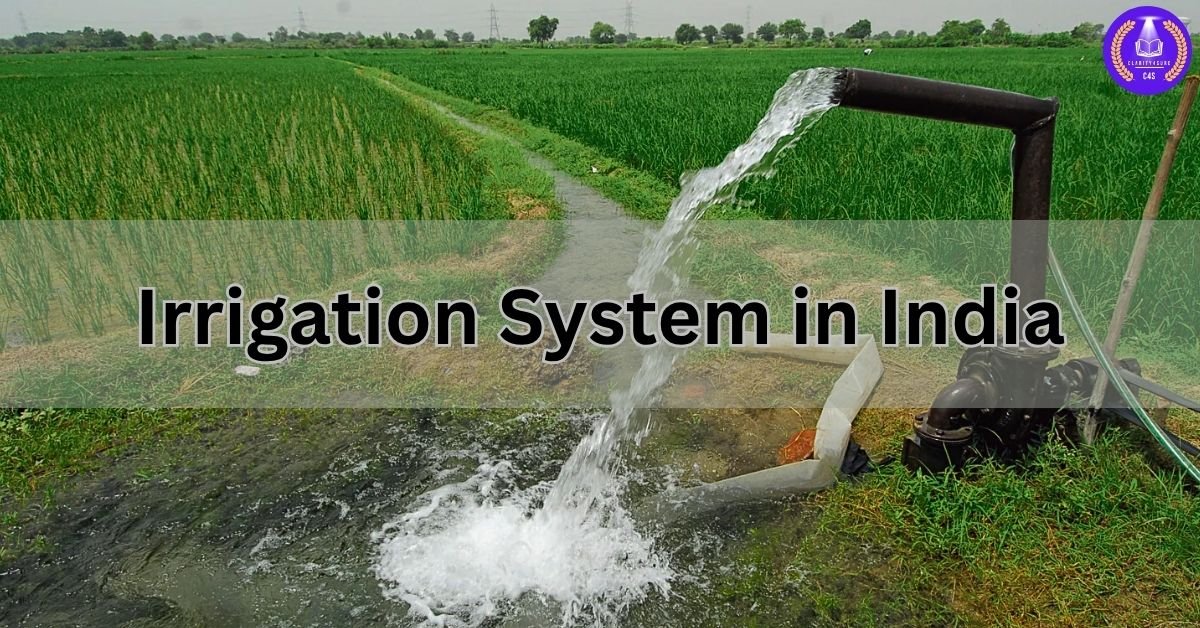
Introduction India’s irrigation system plays a vital role in supporting the country’s agriculture. It helps farmers grow crops even when the monsoon rains are delayed or insufficient, making it essential for ensuring both food security and rural growth. By providing a steady water supply, irrigation allows for better and more reliable crop production. In this article, we’ll explore all the key aspects of India’s irrigation system—why it’s needed, how geography affects it, its impact on the environment and society, the challenges it faces, and the possible solutions to make it better and more sustainable. About Irrigation System Irrigation means supplying water to crops using man-made systems to ensure they get enough moisture to grow properly. It’s especially helpful when rainfall is low or unreliable, as it provides an artificial water source for fields when natural rain isn’t enough. Even though India has the largest irrigated land area in the world, it still struggles with serious water shortages. That’s why it’s important to use efficient irrigation methods that save water while still supporting healthy crop growth. Water for irrigation usually comes from canals, wells, tube wells, tanks, rivers, ponds, or underground sources. The main purpose of irrigation is to help plants grow by: In India, around two-thirds of farmland needs irrigation because the monsoon rains are often uncertain, uneven, and seasonal. This makes irrigation essential for stable agricultural production. Geographical Factors Favouring Irrigation in Different Regions Northern Plains The Northern Plains are great for irrigation because the land here is flat and gently sloping, which makes it easier for canals to carry water over long distances.The soil is soft and easy to dig, so building canals and installing wells or tube wells is not too difficult.Also, the clay-rich subsoil acts like a natural storage tank, holding rainwater that seeps through.As a result, this region has plenty of groundwater, which can be used effectively for irrigation through wells and tube wells. Peninsular Plateau Irrigation in the Peninsular Plateau is much more challenging due to the hilly and rocky terrain.The hard rocks make it difficult and costly to dig canals or wells, which is why tank irrigation (storing rainwater in small tanks) is more common here.Also, the land is uneven, so it’s not easy for canals to carry water over long distances like they can in the plains.All these factors make irrigation in this region more complex and dependent on local water storage solutions. Necessity of Irrigation in Indian Agriculture India’s agriculture depends heavily on the monsoon, but the rainfall pattern is highly unpredictable. This makes irrigation a must to ensure stable crop production. Here’s why: Impact of Irrigation Development Environmental Impacts of Irrigation Development While irrigation helps boost farming, it can also cause some serious environmental problems if not managed properly: Socio-Economic Impact of Irrigation Projects Irrigation projects, especially big ones like dams, can also affect people and communities in several ways: Problems and Challenges Associated with Irrigation India has made big strides in expanding its irrigation network, but several challenges still affect its success and reach: 1. Expensive Micro-Irrigation Systems Modern systems like drip and sprinkler irrigation help save water, but they are too costly for small and poor farmers.Thankfully, NGOs like International Development Enterprises (IDE) are working in states like Maharashtra and Gujarat to develop cheaper versions and spread awareness among low-income farmers. 2. Delays in Project Completion Since the First Five-Year Plan, we’ve had a habit of starting too many irrigation projects at once, which causes delays and stretches resources thin.Even in completed projects, the basic infrastructure like field channels, water courses, and land levelling often takes too long to finish, delaying actual use of the available water. 3. Interstate Water Disputes Water is a state subject in India, meaning each state decides how to use its water. But most rivers flow across multiple states, which leads to conflicts over storage, usage, and priorities.This narrow, region-first approach often causes disputes between states about how water should be shared. 4. Uneven Development Across Regions According to the Ninth Five-Year Plan, the development of irrigation in the North Eastern region is only about 28.6%, compared to 95.3% in the northern region.This shows a big gap in irrigation access across different parts of the country. 5. Waterlogging and Salinity While irrigation brings water to farms, poor water management in some areas has caused waterlogging and salt build-up in the soil, making land less fertile and hard to farm. 6. Rising Costs Over the years, the cost of building and maintaining irrigation systems has gone up significantly, putting pressure on both the government and farmers. 7. Falling Water Tables In many parts of India, especially in the dry western regions, the groundwater level is going down fast. This is mainly due to too much water being pumped out and not enough rainwater being absorbed back into the ground. 8. Power Cuts and Energy Crisis Frequent power cuts in both rural and urban areas affect farmers who rely on electricity to run pumps for irrigation.One solution is to use solar-powered drip irrigation systems, especially in off-grid areas.The PM KUSUM scheme (Pradhan Mantri Kisan Urja Suraksha evam Utthaan Mahabhiyan) is a government initiative helping farmers adopt solar energy to overcome this challenge. While irrigation has improved agriculture in India, costs, regional imbalance, poor planning, environmental issues, and energy shortages still stand in the way. Addressing these problems with smart planning and inclusive policies is key to making irrigation more sustainable and accessible for all. Alternatives to Mitigate the Negative Impacts of Irrigation Projects While irrigation is essential for farming, it can sometimes cause problems like waterlogging, salinity, or harm to the environment. Luckily, there are smarter and more sustainable ways to reduce these negative effects. Some of them include: These steps can make irrigation more eco-friendly, cost-effective, and beneficial for both farmers and the environment. Irrigation Schemes in India Irrigation plays a big role in ensuring that farmers have enough water to grow crops, especially in areas where rainfall is uncertain. The Government of

Horticulture in India: Scope, Growth & Government Initiatives
Introduction Horticulture is a key part of India’s agriculture, involving the cultivation of fruits, vegetables, spices, flowers, and other plants. Thanks to the country’s diverse climate and soil types, this sector has grown to become one of the most important and productive areas in Indian farming. It not only supports food security but also plays a big role in boosting rural incomes and the overall economy. In this article, we’ll take a closer look at the current status of horticulture in India—exploring the major crops, the regions where they thrive, and the government schemes and initiatives that are helping the sector grow stronger. About Horticulture Types of Horticulture Fruits (Pomology) India’s climate is incredibly diverse, which makes it perfect for growing a wide variety of fruits. In the tropical and subtropical regions, you’ll find fruits like mango, banana, citrus, pineapple, papaya, guava, sapota (cheekoo), jackfruit, litchi, and grapes growing in abundance. Meanwhile, in the cooler, temperate areas, fruits like apple, pear, peach, plum, apricot, almond, and walnut thrive. Even the drier parts of the country support hardy fruits such as pomegranate, fig, and phalsa. Vegetables (Olericulture) When it comes to vegetables, India grows a rich mix of them throughout the year. Commonly grown crops include potato, tomato, onion, chillies, carrot, radish, turnip, beans, okra (lady finger), various gourds, lettuce, brinjal (eggplant), cabbage, cauliflower, spinach, and peas.Among all vegetables, potatoes top the list in terms of quantity, followed by tomatoes. On the global stage, India ranks second only to China in total vegetable production. Impressively, India is the world leader in cauliflower production, second in onions, and third in cabbage. Flowers (Floriculture) Thanks to our country’s wide range of climates, flowers can be grown somewhere in India throughout the year. Improved transport and cold chain systems now make fresh flowers available across the country. Among all states, Tamil Nadu leads in flower production. Spices and Condiments India is famous worldwide for its spices. The country grows a variety of spices like black pepper, cardamom, turmeric, ginger, and cumin. These not only add flavor to food but also contribute significantly to India’s economy, especially through exports. Plantation Crops These are crops grown mainly for commercial purposes and include tea, coffee, coconut, areca nut, rubber, and cocoa. Plantation crops play a major role in export earnings and also provide jobs to many people, especially in the southern and northeastern parts of India. Medicinal and Aromatic Plants India also grows a variety of plants used in medicines and wellness products. Plants like neem, aloe vera, and ashwagandha are grown for their medicinal value, while lemongrass and sandalwood are grown for their aromatic oils. These crops are increasingly in demand in the pharmaceutical, cosmetic, and herbal wellness industries. Horticulture in India These methods help ensure the quality and quantity of plants grown, making horticulture more efficient and productive. State Remarks Tamil Nadu Known for its rich biodiversity and favorable climate, Tamil Nadu supports the cultivation of a wide variety of horticultural crops such as tropical and temperate fruits, vegetables, spices, condiments, plantation crops, medicinal and aromatic plants, and commercial flowers. Jammu & Kashmir Horticulture is the backbone of Kashmir’s rural economy, generating over ₹50 crore in revenue annually. Major fruits include apples, pears, cherries, walnuts, almonds, peaches, saffron, apricots, strawberries, and plums. Odisha Grows fruits like pineapple, mango, and cashew; vegetables like mushrooms, drumsticks, and onions; and spices such as ginger and turmeric. The state supports horticulture through subsidized planting material, training programs, field demonstrations, and promotion at lift irrigation points. Punjab Had around 82,600 hectares under horticulture by 2002, with continuous growth since then. Grows fruits like sweet orange, kinnow, guava, peach, litchi, and mango. Maharashtra A major horticulture state producing bananas, figs, grapes, custard apples, wood apples, jambul, pomegranate, mandarin orange, guava, and sweet orange. Also cultivates vegetables, medicinal plants, and spices. Tripura With its hilly terrain, warm and humid climate, and annual rainfall of 2500 mm, Tripura is ideal for rainfed horticulture. Major fruits include pineapple, jackfruit, orange, litchi, cashew nut, coconut, lime, and lemon. Assam Popular horticulture crops include carambola, wood apple, jackfruit, ginger, oranges, olives, figs, and bamboo shoots. Nearly 75% of the population depends on agriculture and horticulture for livelihood. Andhra Pradesh Due to its diverse climate, Andhra Pradesh excels in growing citrus, chillies, turmeric, oil palm, cocoa, cashew, guava, coriander, banana, ginger, and coconut. National Horticulture Mission (NHM) The National Horticulture Mission (NHM) was started by the Government of India in 2005–06 to boost the overall growth of the horticulture sector across the country. The main goal of the mission is to increase the production of fruits, vegetables, flowers, spices, and medicinal plants by: NHM also focuses on: By encouraging farmers to grow a variety of horticulture crops, NHM plays a major role in: Hence, NHM helps make horticulture more profitable, sustainable, and farmer-friendly. National Horticulture Board (NHB) Importance of Horticulture in India Mission for Integrated Development of Horticulture (MIDH) Objectives of Mission for Integrated Development of Horticulture It aims to make horticulture more productive, sustainable, and profitable—while also helping farmers earn more and creating new jobs in rural areas. Strategy to achieve objectives Conclusion As India keeps tapping into the huge potential of its horticulture sector, it’s important to keep pushing for better ways to grow crops, reduce post-harvest losses, and support farmers in earning more. Government initiatives like the Mission for Integrated Development of Horticulture (MIDH) and other related schemes are valuable tools to strengthen this sector even more. With the right support and improvements, horticulture can continue to grow steadily, boost productivity, and improve the livelihoods of millions of people who depend on it. Frequently Asked Questions (FAQs) 1. What are horticulture crops? Horticulture crops include fruits, vegetables, flowers, herbs, spices, medicinal and aromatic plants, and ornamental plants. 2. Who is known as the Father of Horticulture? 3. What is NHM? The National Horticulture Mission (NHM) is a government initiative launched in 2005–06 to support the production and development of horticulture crops in India.
NABARD & NIRCA Launch Training for Chilli, Turmeric Farmers on Post-Harvest Tech
Why in News? The initiative was officially announced on June 25, 2025, during a special interaction program held at the NIRCA campus in Rajamahendravaram. During the event, officials from NABARD and NIRCA highlighted how important it is for farmers to use scientific methods for handling and storing turmeric and chilli. They explained that proper post-harvest care can help reduce losses, avoid contamination, and improve the quality and market value of these crops—ultimately helping farmers earn more. Introduction To help farmers make more money and reduce crop wastage, NABARD and ICAR-NIRCA have come together to launch a special training program in East Godavari, Andhra Pradesh. This program is meant for individual farmers and Farmers’ Producer Organisations (FPOs) who grow turmeric and chilli, two of the region’s most important spice crops. The training will teach them how to handle, store, and process their crops better after harvest, using modern and scientific techniques. The goal is to improve crop quality, reduce losses, and help farmers earn higher profits by adding more value to their produce. Objectives of the Training Key Components of the Initiative Static and Factual Highlights Significance of the Initiative Summary/Static Details Why in the News? NABARD & NIRCA Launch Training for Chilli, Turmeric Farmers on Post-Harvest Tech Initiative By NABARD & ICAR-NIRCA Target Crops Turmeric & Chilli Focus Area Post-harvest management & processing technologies Beneficiaries Farmers & Farmers’ Producer Organisations (FPOs) Training Venue NIRCA campus, Rajamahendravaram, Andhra Pradesh

Why to Choose C4S Courses for NICL AO?
Why C4S Courses is the smart choice for cracking the NICL AO 2025 exam? Choosing the right platform for your exam preparation can make all the difference. Here’s why C4S Courses is the smart choice for cracking the NICL AO 2025 exam: Expert Faculty with Insurance & Banking FocusLearn from top educators who specialize in insurance and public sector exams — with simplified explanations and exam-focused teaching. Structured Study Plan & Complete Syllabus CoverageOur course follows a well-organized approach, covering Prelims, Mains, and Interview preparation, including all key topics like Reasoning, Quant, English, General Awareness, and Insurance Awareness. Mock Tests & Sectional QuizzesPractice with real exam-like mock tests, previous year papers, and sectional quizzes to track your progress and improve your speed and accuracy. Affordable & Value for MoneyHigh-quality content at a price you can afford — no overpriced coaching fees, just focused, student-friendly learning. Doubt Support & MentorshipGet your doubts resolved with dedicated doubt-clearing sessions, one-on-one mentorship, and community support via Telegram/WhatsApp. Current Affairs & Insurance Awareness UpdatesStay ahead with daily current affairs, insurance news, and quick revision notes that are tailored for NICL AO Mains. Descriptive Writing Practice for Mains + Interview GuidanceWe help you prepare for the descriptive section (Essay & Precis) and also offer Interview preparation modules — a complete end-to-end strategy. Whether you’re just starting or looking for revision — C4S Courses is built to help you succeed in NICL AO 2025 with confidence. Introduction Are you aiming to crack the NICL AO 2025 exam with confidence and precision? C4S (Clarity 4 Sure) presents a specially designed NICL AO 2025 Crash Course – your ultimate solution for fast, focused, and effective preparation. Crafted by experts with years of experience in insurance and banking exams, this crash course offers comprehensive coverage of all key topics, including Quantitative Aptitude, Reasoning, English, General Awareness, and Insurance & Financial Market Awareness. With smart study techniques, live classes, targeted practice sets, and doubt-solving support, we ensure you’re not just prepared – you’re exam-ready. What is the NICL AO 2025 Crash Course by C4S? The NICL AO 2025 Crash Course by C4S (Clarity 4 Sure) is a structured and intensive program designed to comprehensively prepare aspirants for both Phase I and Phase II of the NICL AO exam. This course includes concept lessons in Quantitative Aptitude, Reasoning, and English, supported by master notes and PDF-based follow-up materials. It also offers a full-fledged test series featuring Full-Length Tests (FLT) and Mock Full-Length Tests (MFLT) to simulate the real exam environment. The crash course emphasizes General Awareness (GA) with month-wise sessions, along with special MCQ-based classes on Budget, Economic Survey, and Insurance in News. For Phase II, it features targeted training in Descriptive English—covering essays, précis, and letter writing—with dedicated sessions and evaluated descriptive tests. Additionally, sectional tests for GA, Computer, and Descriptive English enhance focused practice. Designed with expert insights and up-to-date exam trends, this crash course is a one-stop solution for serious NICL AO aspirants looking for focused, effective, and affordable preparation. Why Choose C4S for NICL AO 2025 Preparation? Choosing C4S (Clarity 4 Sure) for your NICL AO 2025 prep means opting for a high‑quality, focused approach. C4S offers: Course Highlights Special Offer: Use code CLARITYNICL to get the course at ₹599 Subjects Covered in the Crash Course Expert Faculty & Teaching Methodology The NICL AO Crash Course by C4S is guided by a team of expert faculty who specialize in insurance and banking examinations. The teaching methodology at C4S is built on clarity, depth, and exam-oriented precision. Rather than offering a generic, volume-based approach, C4S focuses on delivering concept-driven, interactive sessions that are tailored to the evolving pattern of the NICL AO exam. Each class is designed to build core understanding, reinforce it with practice, and polish it through tests and feedback. Faculty members actively engage with students during sessions, offer real-time doubt resolution, and ensure that even complex topics are made simple through structured explanations and exam-relevant insights. Smart Practice Modules & Mock Tests Course Duration & Schedule Go through the PDF Provided for the detailed information: Personalized Doubt Support & Mentorship The NICL AO 2025 Crash Course by C4S offers a highly supportive learning environment through its personalized doubt support and dedicated mentorship. C4S ensures that learners are never left stuck—whether it’s a conceptual doubt in Quant, a reasoning puzzle, or structuring a descriptive answer. Students receive timely responses to their queries through active mentor engagement and structured sessions. Beyond academic support, mentors at C4S also guide aspirants on exam strategy, time management, and confidence-building. This one-on-one attention helps candidates stay focused, overcome hurdles, and progress steadily toward success in the NICL AO exam. C4S has consistently delivered impressive results for aspirants across multiple exams in the regulatory body: Why This Matters for NICL AO Aspirants With C4S’s banking and insurance shortlist successes, including a top-tier performance in NABARD Grade A, aspirants can feel assured that the NICL AO Crash Course is backed by a proven, success-oriented framework. Affordable Pricing & Enrollment Details C4S Courses makes top-quality preparation accessible to all aspirants by offering its NICL AO 2025 Crash Course (Phase I + II) at an extremely affordable rate. Originally priced at ₹2,100, students can avail a limited-time discounted price of just ₹599 by applying the coupon code CLARITYNICL during checkout. This one-time payment includes comprehensive coverage—classes, notes, full-length mock tests, descriptive evaluations, and interview guidance—valid till September 30, 2025. The simple and secure enrollment process requires basic details such as name, email, mobile number, and state, making it convenient for anyone across India to join and begin their preparation journey instantly. FAQs – Everything You Need to Know 1. What is the NICL AO 2025 Crash Course by C4S?The NICL AO 2025 Crash Course is a power-packed, exam-focused program by Clarity 4 Sure (C4S) designed to prepare aspirants for both Phase I and Phase II of the NICL AO exam. It includes concept lessons, master notes, sectional and full-length tests, and descriptive answer evaluations—everything you need to be
NICL AO Recruitment 2025, Apply Online For 266 Administrative Officer Vacancies Apply
Introduction The NICL AO Apply Online link is now active! All interested candidates can submit their applications online from 12th June to 3rd July 2025. The National Insurance Company Ltd. has officially announced the NICL AO Recruitment 2025 for 266 Administrative Officer (AO) posts in Scale I. This is a great opportunity for those who want to build a career in the insurance sector. Candidates must complete their online registration and fee payment between 12th June and 3rd July 2025 (including both days). The selection process includes: Details about downloading the admit card (call letter) will be shared soon on the official NICL website. NICL AO Recruitment 2025: Overview The NICL AO (Administrative Officer) Recruitment for 2025 provides a great chance for those who want to build a career in insurance management, with job openings available in different branches across India. Candidates need to go through a competitive selection process, which includes two online exams followed by an interview, to get these desirable positions. Exam Particulars Details Name of Organization National Insurance Company Limited Posts Administrative Officers Cycle 2025 No. of Vacancies 266 Application Start Date 12th June 2025 Application End Date 3rd July 2025 Level of Exam National Frequency of Exam Yearly Mode of Exam Online Exam Stages Three phases: Prelims, Mains, Interview Purpose To select an Administrative Officer in NICL NICL AO Notification 2025 Out All the aspiring candidates who wish to apply for 266 Administrative Officer (AO) posts in the Scale I cadre can download the NICL AO Recruitment notification PDF. With online registrations starting on June 12, 2025, and closing on July 3, 2025, interested individuals should note these important dates. The selection process will include a Phase I online exam on July 20, 2025, followed by a Phase II exam on August 31, 2025. All the eligibility criteria, exam pattern, and other important details are mentioned in the official notification PDF. NICL AO Exam Date 2025 The NICL AO Exam Dates 2025 have been officially announced in the NICL Recruitment notification PDF. The Phase 1 (Preliminary) online exam will be held on 20th July 2025. Candidates are advised to keep checking the official NICL website for any updates or changes related to the exam date. Events Dates (2025) Prelims Exam Date 20th July, 2025 (Tentative) Mains Exam Date 31st August, 2025 (Tentative) Interview To Be Announced NICL AO Vacancy 2025 NICL has announced the NICL Recruitment 2025 for 266 Administrative Officer (AO) posts in the Scale I category. This is a great opportunity for those looking to build a secure and rewarding career in the public sector insurance industry. The detailed notification, released on June 10, 2025, includes the total number of vacancies available across different fields, including both Generalist and Specialist roles. NICL AO 2025 – Vacancy Distribution Specialist Discipline Discipline Total Posts UR OBC SC ST EWS PwBD (a) PwBD (b) PwBD (c) PwBD (d & e) Doctors (MBBS) 10 4 3 1 1 1 – – – – Legal 20 8 7 2 1 2 – – – – Finance 20 8 6 3 1 2 – – – – Information Technology 20 8 6 2 2 2 – – – – Automobile Engineers 20 8 6 3 1 2 – – – – Specialist Backlog Vacancies Discipline Total Posts UR OBC SC ST EWS PwBD (a) PwBD (b) PwBD (c) PwBD (d & e) Doctors (MBBS) 4 – – 3 1 – – – – – Finance 1 – – 1 – – – – – – Automobile Engineers 1 – 1 – – – – – – – Total – Specialist Total Posts UR OBC SC ST EWS PwBD (a) PwBD (b) PwBD (c) PwBD (d & e) 96 36 29 15 7 9 1 2 1 1 Generalist Discipline Discipline Total Posts UR OBC SC ST EWS PwBD (a) PwBD (b) PwBD (c) PwBD (d & e) Generalist 170 68 47 26 12 17 3 1 0 0 NICL AO Recruitment 2025 Apply Online The official notification for NICL AO Recruitment 2025 has been released. All interested candidates can apply online from 12th June to 3rd July 2025 for a total of 266 vacancies in both Generalist and Specialist roles. This recruitment offers a great career opportunity in the insurance sector, with an attractive salary package. The starting basic salary is ₹50,925, and the total monthly pay (including allowances) can be around ₹85,000 to ₹90,000 in metro cities. The selection process includes a Preliminary exam, a Mains exam, and an Interview. The NICL AO apply online link is now active, so eligible candidates should apply soon. Steps to Apply For NICL AO Recruitment 2025 The NICL Administrative Officer (AO) Recruitment 2025 applications must be submitted online only. Candidates can fill out the application form between 12th June and 3rd July 2025, and must also make the payment online within this period. Here are the steps to apply: NICL AO Application Fees 2025 It’s essential for applicants to check the official notification for the exact fee details and ensure timely payment to avoid any issues with their application. The category-wise fee to be paid while applying the NICL Administrative Officer post is as follows: Category Application Fees SC / ST / PWBD ₹250 Others ₹1000 NICL AO 2025 Selection Process The candidates will have to appear for a prelims examination first. The candidates who will score more than the cut-off marks will be shortlisted for the mains examination. The candidates afterwards will be eligible for an interview round. Hence the overall selection process of candidates for the post of NICL AO includes the following stages: Prelims Examination The prelims exam includes the English language, reasoning ability, and quantitative aptitude. The English section assesses grammar, vocabulary, and comprehension, while the Reasoning Ability section evaluates logical reasoning and problem-solving through puzzles and syllogisms. The Quantitative Aptitude section covers mathematical puzzles and basic arithmetic. This objective, multiple-choice test is vital for qualifying for the Main Examination, making a high score essential. Mains Examination
Sustainable Agriculture
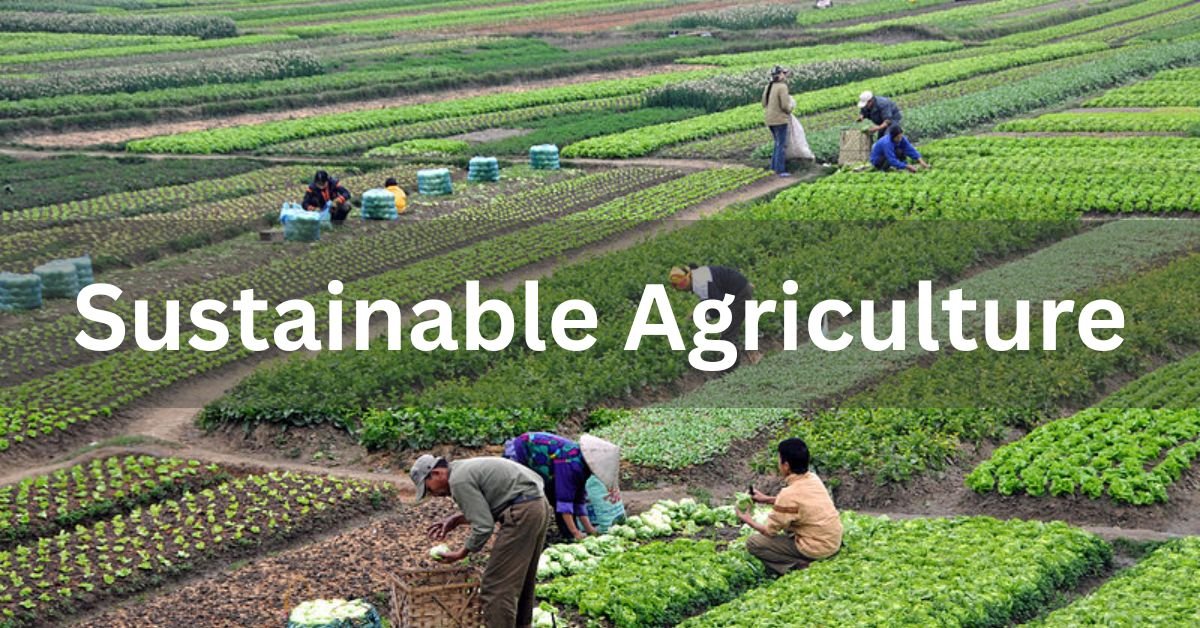
Introduction Sustainable agriculture means growing crops and raising animals in a way that protects the environment, uses natural resources wisely, and helps farmers deal with changes in the climate. The main idea is to produce enough food today without harming the ability of future generations to do the same. This type of farming focuses on: A key part of sustainable agriculture is understanding ecosystem services – like how forests help store carbon, how bees pollinate crops, or how healthy soil supports plant growth. These services from nature are essential for farming and must be preserved. The idea of sustainability in farming became more well-known after the Brundtland Report in 1987, which talked about development that meets today’s needs without compromising the future. What is Sustainable Agriculture? Principles of Sustainable Agriculture Different Methods of Sustainable Agriculture Advantages of Sustainable Agriculture Challenges of Sustainable Agriculture Sustainable Agriculture in India Government Initiatives Other Initiatives Challenges to Sustainable Agriculture in India Rising Population and Degraded Ecosystems:With more people and damaged natural environments, farmers have relied heavily on intensive farming methods like HYV seeds and chemical fertilizers, along with deforestation, to keep up with food demand. Lack of Capital:Many small and medium farmers don’t have enough money or financial support to switch from traditional methods to sustainable farming. Lack of Access to Information & Technology:Farmers often don’t have proper knowledge, tools, or technology to improve how they grow, process, or sell their crops using modern, sustainable techniques. Lack of Economic Incentives:Because there are no clear rewards or financial support, many farmers are uncertain or hesitant about shifting to sustainable farming practices. Lack of Public Policy & Infrastructure:There aren’t enough government policies, support systems, or basic infrastructure to help and encourage farmers to adopt eco-friendly farming methods. Strategies for Making Agriculture More Sustainable Conclusion Sustainable agriculture needs to balance social, economic, and environmental goals — all three are equally important. With the population growing, natural resources running out, and the threat of climate change increasing, we won’t be able to meet the food needs of the future unless we shift to more sustainable ways of farming. This means building food systems that can feed everyone, create jobs and income, and protect the environment and natural resources that we all depend on. MCQ’s 1. Which of the following is a core objective of sustainable agriculture? A. Maximizing crop yieldsB. Reducing food pricesC. Maintaining soil fertilityD. Increasing pesticide use Answer: (C) See the Explanation Sustainable agriculture aims to maintain soil fertility through crop rotation, organic inputs, and conservation techniques.2. What is the significance of crop rotation in sustainable agriculture? A. Prevents erosionB. Enhances soil nutrientsC. Reduces pestsD. All of the above Answer: (D) See the Explanation Crop rotation helps prevent soil erosion, maintains nutrient balance, and controls pest populations.3. Which method is NOT typically associated with sustainable agriculture? A. AgroforestryB. Intensive monocultureC. PermacultureD. Organic farming Answer: (B) See the Explanation Intensive monoculture depletes soil nutrients and relies heavily on chemical inputs, opposing sustainable practices.4. Which government initiative supports sustainable agriculture in India? A. Green RevolutionB. National Mission on Sustainable AgricultureC. Make in IndiaD. Swachh Bharat Abhiyan Answer: (B) See the Explanation The National Mission on Sustainable Agriculture (NMSA) promotes sustainable practices like soil health management and resource conservation.5. What is a key challenge for sustainable agriculture in India? A. Excess rainfallB. Lack of modern technologyC. Small land holdingsD. Surplus food production Answer: (C) See the Explanation Small land holdings limit the application of advanced sustainable techniques, making it challenging for farmers to adopt best practices. FAQ’s Q: What is sustainable agriculture?Answer: Sustainable agriculture means growing food in a way that keeps the land healthy, protects the environment, and uses fewer harmful chemicals, while still producing enough to feed people. Q: What are the main principles of sustainable agriculture?Answer: It is based on three key ideas — protecting nature, supporting farmers’ incomes, and treating people fairly. The goal is to keep farming going strong for the long term. Q: How does sustainable agriculture protect the environment?Answer: It helps the environment by using fewer chemicals, rotating crops, keeping soil healthy, and using water carefully. Q: What are the benefits of organic farming within sustainable agriculture?Answer: Organic farming makes the soil healthier, reduces pollution, protects wildlife, and gives people cleaner, safer food to eat. Q: How does sustainable agriculture address climate change?Answer: It helps farmers cope with climate change by using better water systems, protecting the soil, and supporting more plant and animal diversity on farms.


