
Introduction At C4S Courses, we believe that success in competitive exams isn’t just about hard work—it’s about smart preparation. “Sharpening Your Skills: Essential Preparation Techniques” is designed to guide aspirants through the most effective methods to boost their learning, stay focused, and perform with confidence. Whether you’re preparing for government exams, regulatory bodies, or any competitive test, this guide provides actionable strategies to help you study better, manage time wisely, and master the art of revision and retention. Join us as we help you transform your efforts into results with practical, proven techniques that truly make a difference. Outline Effective Study Methods and Techniques for Each Section of the Exam Stay ahead with the most important Current Affairs that are crucial for your success! In this video, we cover the latest updates on agriculture, rural development, economic policies, government schemes, and banking news — all tailored for the NABARD Grade A syllabus. Phase 1: Preliminary Exam 1. Reasoning Ability 2. Quantitative Aptitude 3. English Language 4. Decision Making 5. Computer Knowledge 6. General Awareness 7. Economic & Social Issues (ESI) 8. Agriculture & Rural Development (ARD) NABARD Grade A Exam Preparation↓Phase 1: Preliminary Exam↓→ Reasoning Ability→ Puzzles→ Seating Arrangement→ Syllogism→ Blood Relations→ Coding-Decoding→ Inequality → Quantitative Aptitude→ Data Interpretation→ Simplification→ Number Series→ Arithmetic (Percentage, Profit & Loss, Time & Work, etc.) → English Language→ Reading Comprehension→ Cloze Test→ Error Spotting→ Sentence Rearrangement→ Fill in the Blanks → Decision Making→ Situational Judgement→ Ethical Reasoning → Computer Knowledge→ MS Office Basics→ Internet→ Networking→ Software-Hardware→ Keyboard Shortcuts → General Awareness→ Current Affairs (Last 6 Months)→ Banking & Financial Awareness→ Government Schemes→ Agriculture & Rural Sector News → Economic & Social Issues (ESI)→ Indian Economy→ Poverty & Employment→ Education→ Sustainable Development→ Monetary & Fiscal Policy → Agriculture & Rural Development (ARD)→ Soil & Crops→ Animal Husbandry→ Irrigation→ Crop Patterns→ Schemes (PM-KISAN, RKVY)→ NABARD Reports ↓Phase 2: Mains Exam↓→ Paper I: General English (Descriptive)→ Essay Writing→ Precis Writing→ Reading Comprehension→ Letter Writing → Paper II: ESI + ARD (General Discipline)→ Objective Questions→ Descriptive Answers (10 & 15 Marks)→ Data-Based Flowcharts & Keywords→ NABARD Reports, Budget, PIB, RBI Docs ↓Additional Preparation Tips↓→ Mock Tests (1–2 per week)→ Weekly ESI + ARD Revision→ PYQ Practice→ Time Allocation for Descriptive Answer Writing→ Structured Note-Making & Flowcharts Phase 2: Mains Exam Paper I: General English (Descriptive) Paper II: ESI + ARD (General Discipline) Additional Preparation Tips Provide Specific Tips for Improving Comprehension, analytical abilities and problem solving skills 1. Reading Comprehension (for English & Descriptive Papers) ✔ Tips: Source-based Reference: 2. Analytical Abilities (Reasoning + ESI & ARD Interpretation) ✔ Tips: Reference Materials: 3. Problem-Solving Skills (Quantitative Aptitude & ARD/ESI Case-Based Questions) ✔ Tips: Recommended Resources: 4. Descriptive Answer-Writing Skills ✔ Tips: 5. Revision + Strategy Tips Authentic Study Sources: NABARD Grade A Preparation – Advanced Skills Focus↓1. Reading Comprehension (For English & Descriptive Papers)↓→ Read Thematic Content Daily→ Topics: Agriculture, Economy, Rural Development→ Sources: The Hindu, Indian Express → Practice RC Sets from PYQs→ Fact-based + Inference-oriented RCs → Skimming & Scanning Techniques→ Identify central idea, tone, facts quickly → Build Vocabulary Contextually→ Use Vocabulary.com, C4S English MCQs → Summarize Paragraphs→ Write 1–2 line summaries after reading → Sources:→ C4S Mock English Modules→ NABARD PYQs, Descriptive Strategies from Toppers ↓2. Analytical Abilities (Reasoning + ESI/ARD Interpretation)↓→ Daily Puzzle & Logical Sets→ Focus: Seating, Syllogism, Input-Output, Statement-Conclusion → Elimination Strategy→ Rule out incorrect options logically → Interpret Economic & Agri Data→ Practice: Budget, Economic Survey, Graphs → Decision-Making Practice→ Ethics, Stakeholder Judgement, Priority Handling → Sources:→ NABARD/RBI Reasoning PYQs→ PIB Scheme Analysis ↓3. Problem-Solving Skills (Quant + Case-Based ARD/ESI)↓→ Focus on Conceptual Clarity→ Topics: Arithmetic (Time & Work, SI/CI, P&L, % etc.) → Formula + MCQ Practice→ 10–15 mixed-topic questions daily → Mock Test Strategy→ Time-bound, analyze mistakes → Case-Based Practice in ARD/ESI→ Apply schemes/terms to real scenarios → Sources:→ C4S Quant Sets & ARD/ESI Case Booklets→ NABARD Annual Report, RBI Statistics ↓4. Descriptive Answer Writing Skills↓→ Follow P-E-E Structure→ Point → Evidence → Explanation → Include Schemes & Data→ Ex: PM-KISAN, SHG-Bank Linkage → Practice 10/15-Marks Answers→ Follow word limit, Intro–Body–Conclusion → Peer Review→ Get feedback via C4S Review Groups / Telegram ↓5. Revision + Strategy Tips↓→ Maintain a Doubt Book→ Track tough RCs, ARD/ESI facts, Reasoning errors → Weekly Sectional Review→ Revisit weak topics + fresh MCQs → Combine Static + Current→ Static theory → Apply in Current Affairs-based Qs → Sources:→ NABARD PYQs→ Economic Survey, Budget (GOI)→ C4S Notes (ESI, ARD, Quant, Descriptive)→ PIB Portal for Schemes Encourage Active Learning through regular practice, revision and self assessment Encouraging Active Learning for NABARD Grade A Active learning is the key to cracking competitive exams like NABARD Grade A. Instead of passively reading notes or watching lectures, aspirants must engage deeply with the content through practice, revision, and self-assessment. Regular Practice builds familiarity with question patterns and improves speed and accuracy. Whether it’s solving MCQs for ARD/ESI, attempting comprehension passages, or reasoning puzzles—daily practice keeps concepts fresh and sharp. Revision reinforces memory. Weekly and monthly revision cycles ensure you don’t forget important schemes, data, or concepts. Make use of short notes, flowcharts, and flashcards for faster recall. Self-Assessment allows you to measure progress. Take full-length mock tests and section-wise quizzes under exam-like conditions. Analyze your mistakes to refine your strategy and strengthen weak areas. By turning your preparation into an active learning cycle, you don’t just study harder—you study smarter. And that’s exactly what NABARD Grade A demands. Conclusion At C4S Courses, we believe that every aspirant has the potential to succeed—with the right guidance, tools, and mindset. Cracking the NABARD Grade A exam isn’t just about studying hard—it’s about studying smart, staying consistent, and actively engaging with the syllabus. From mastering descriptive writing to solving complex reasoning puzzles, from understanding economic policies to staying updated on rural development schemes—each step in your preparation matters. With our structured study plans, authentic content, and expert-curated resources, we aim to transform your effort into success. Stay consistent, stay curious,
Understanding the NABARD Exam: A Comprehensive Overview
Introduction When we talk about rural development and agricultural growth in India, one name that stands tall is NABARD – the National Bank for Agriculture and Rural Development. Established in 1982, NABARD has been a cornerstone of India’s rural economic architecture. As an apex development bank, its primary mandate is to promote sustainable and equitable agriculture and rural prosperity. NABARD channels credit and resources into rural areas, strengthens rural financial institutions, and supports policy planning and infrastructure development. Whether it’s empowering small and marginal farmers through refinancing schemes, funding watershed development and climate-resilient agriculture, or promoting self-help groups and rural entrepreneurship — NABARD’s footprint can be seen in nearly every facet of rural India’s transformation. In essence, NABARD is not just a financial institution — it is a development catalyst driving inclusive growth, empowering rural communities, and ensuring food and livelihood security across India. Why NABARD is so Important ? NABARD is completely owned by the Government of India and plays a key role in improving life in rural areas. It works to make farming and village life better by making sure money reaches the people who need it most — like farmers and small business owners. It also keeps an eye on Regional Rural Banks (RRBs) and cooperative banks to make sure they’re doing their job well. Think of NABARD as the guide and protector of rural finance, helping villages grow stronger and more self-reliant. But NABARD’s reach goes beyond India’s borders. It actively partners with global development organizations like the: These partnerships help bring in global best practices, funding, and innovation to support Indian farmers and rural communities. A Dream Career: NABARD Grade A & B Exams Every year, thousands of aspirants aim to become a part of this highly respected institution by cracking the NABARD Grade A and Grade B exams. And for good reason—these positions offer not only a stable government career but also the chance to create a real impact on the ground. These roles are not just about banking—they’re about being part of a mission to drive sustainable agriculture, empower rural communities, and ensure financial inclusion. What Makes This Exam Highly Competitive Getting into NABARD isn’t easy—and it shouldn’t be. The selection process is designed to pick the best minds who are genuinely passionate about rural development. As a NABARD officer, your work directly influences agricultural policy, credit planning, and rural development projects. If you’re planning to appear for the NABARD Grade A or B 2025 exam, you’re aiming for a career that is not only prestigious but also deeply fulfilling. Exam Name NABARD Grade A & NABARD Grade B Post Grade A: Assistant ManagerGrade B: Manager Organisation Name National Bank for Agriculture and Rural Development (NABARD) Exam Type Online Examination Application Fees Grade A:General/OBC/EWS – ₹800SC/ST/PwD – ₹150Grade B:General/OBC/EWS – ₹900SC/ST/PwD – ₹150 Selection Process 1. Phase 1: Prelims2. Phase 2: Mains3. Phase 3: Interview Job Location India (All India Posting) Category Government Job Official Website www.nabard.org A Glimpse into NABARD’s Beginning The idea of NABARD didn’t just appear out of thin air. It was the result of serious planning and study. Back in the day, the Government of India asked the Reserve Bank of India (RBI) to look into how credit (mainly loans and financing) was being provided for farming and rural development. In response, a special committee was formed called CRAFICARD—short for the Committee to Review the Arrangements for Institutional Credit for Agriculture and Rural Development. This committee suggested that a dedicated bank was needed to streamline and strengthen the flow of credit to rural areas. That recommendation led to the formation of NABARD. What Does NABARD Actually Do? NABARD isn’t just another government bank—it’s India’s backbone for rural development. From improving agricultural practices to funding rural infrastructure, it’s at the heart of every initiative aimed at transforming rural India. A Quick Glimpse of Its Reach As of May 2023, NABARD has: Not only that—it’s one of the top 50 taxpayers in India, and instead of just sitting on profits, it reinvests them back into development work. That’s real commitment! Key Functions of NABARD 1. Refinancing 2. Banking Supervision 3. Development Work NABARD Grade A & Grade B 2025: Selection Procedure NABARD Grade A & Grade B 2025 selection procedure is a three-stage process that involves the following phases – Phase 1 – Preliminary exam This is the first step of the journey. It’s an online objective test meant to screen candidates. The paper includes subjects like English, Reasoning, Quantitative Aptitude, Computer Knowledge, and topics related to Agriculture & Rural Development, Economic & Social Issues, etc.It’s qualifying in nature, which means the marks won’t count for the final selection, but you need to clear it to move on to the next round. Phase 2 – Mains exam This is the most crucial phase, as the marks you score here do count towards your final merit. The Mains consists of both descriptive and objective papers, depending on the post.For Grade B candidates, there is one additional paper (analytical paper on Development Economics, Statistics, Finance, and Management) apart from what Grade A candidates have to appear for. Phase 3 – Interview or Personality Test If you clear the Mains, you’ll be invited for the final round—the interview. This is where your personality, communication skills, and understanding of rural development issues are evaluated.It’s your chance to make a strong impression and show why you’re the right fit for a prestigious institution like NABARD. NABARD Grade A & Grade B 2025: Job Profile Once you get selected as an Assistant Manager (Grade A), you can be posted in any department of NABARD, no matter what your educational background is. NABARD follows a formal and structured work culture, so you’ll be working under the supervision of a Chief General Manager (CGM), who will be your reporting officer. Similarly, when you join NABARD as a Grade B Officer, you take up the position of a Manager. Your role will involve handling a range of responsibilities—from approving loans to coordinating work between departments. NABARD Grade
Animal Husbandry and Dairying
Introduction The Department of Animal Husbandry & Dairying (DAHD) operates under the Ministry of Fisheries, Animal Husbandry & Dairying, established on May 31, 2019 — carving out animal husbandry and dairying from the broader agriculture ministry to offer focused governance and support. Achievements in Animal Husbandry and Dairy Livestock Sector in India The livestock sector plays a vital role in India’s rural economy. From 2014-15 to 2020-21, it grew at a strong annual rate of 7.93%, showing how important it has become for farmers and the overall agricultural landscape. Dairy Sector – India’s White Revolution Dairy is the largest agricultural product in India, making up about 5% of the national economy. More than 8 crore farmers are directly involved in dairy farming. Egg & Meat Production India is also a major producer of eggs and meat: In Simple Terms India’s livestock and dairy sectors are not only feeding the nation but also driving rural livelihoods, boosting the economy, and helping the country become a global leader in milk, eggs, and meat production. Key Initiatives Taken to Enhance the Livestock Sector Challenges in Animal Husbandry and Dairying The livestock and dairy sector in India faces several practical challenges that impact its growth and productivity: These issues highlight the need for stronger support systems, awareness programs, better infrastructure, and easy access to credit and veterinary services to truly unlock the potential of India’s livestock sector. Way Forward To improve the livestock and dairy sector in India, several practical steps can be taken to tackle current challenges and boost productivity: In short, a combination of better healthcare, quality feed, modern facilities, and supportive policies can transform India’s livestock and dairy industry into a more efficient and sustainable sector.
NABARD Grade A 2025: Exam Dates, Syllabus, Salary & Complete Guide
Introduction Preparing for a competitive exam like NABARD Grade A can feel overwhelming, but don’t worry—you’re not alone in this journey. With the right guidance and planning, cracking this exam is totally achievable. I’m here to simplify everything you need to know about NABARD Grade A. Whether it’s the latest notification, exam pattern, syllabus, preparation strategy, or even salary details—we’ll cover it all, step by step. No confusion, no stress. But before we dive in, let’s first understand what NABARD is and why this exam is such a great opportunity. What is NABARD? NABARD stands for National Bank for Agriculture and Rural Development. Established in 1982, its prime focus is on supporting the agriculture and rural development sectors of India. It’s basically India’s top institution when it comes to rural development, agriculture financing, and supporting farmers. If you’re passionate about rural progress and want a stable, respected career in the government sector, NABARD is one of the best choices out there. Let’s break down everything about this exam in simple terms—because at C4S Courses, we believe in making learning easy and result-oriented. Let’s get started! NABARD Grade A 2025 Notification: Released Date, PDF Download Link The official notification for NABARD Grade A 2025 hasn’t been released yet—but don’t worry, the C4S team is on it. We’re closely tracking every update, and the moment it’s out, we’ll share the official PDF link here so you can download it easily. In the meantime, let’s not sit idle. To help you stay ahead, we’ll walk you through everything you need to know about the NABARD Assistant Manager exam based on the 2024 notification. This will give you a clear idea about how the exam works, what to study, and how to prepare smartly. Stay tuned—we’ll keep you updated, every step of the way. NABARD Grade A 2025 Exam Dates: Apply Online Deadline & Phase Schedule Here are the important dates of the NABARD assistant manager 2025 exam: Event Dates NABARD Grade A Notification 2025 To be announced Online Application Start Date To be announced Online Application Last Date To be announced Phase 1 (Preliminary) Exam To be announced Phase 2 (Mains) Exam To be announced Note: Don’t worry about missing any dates—C4S Courses will update you as soon as the official schedule is released. Just focus on your preparation for now! Click on the link to download the NABARD Grade A 2025 Notification PDF for free. (The link will be active once the NABARD assistant manager 2025 notification is released.) NABARD Grade A 2025 Vacancy: Category-wise Seats & Reservation Details The official NABARD assistant manager A 2025 recruitment notification is yet to be released. Once, released, we’ll update the latest NABARD assistant manager vacancies. To give you an idea, in the 2024 notification, NABARD announced a total of 100 vacancies for Rural Development Banking Services (RDBS), with 50 of those for Generalist posts. NABARD Grade A 2025 Eligibility: Age, Qualifications & Nationality The NABARD assistant manager eligibility criteria for the 2025 exam cover key aspects such as age limit, educational qualification, nationality, and the number of attempts. It’s essential to ensure you meet all these requirements before you start your application process. NABARD Grade A Age Limit 2025: Relaxation for SC/ST/OBC/PwD Your age for the NABARD assistant manager 2025 exam is calculated as of the 1st of the month in which the notification is released. If you’re in the unreserved or general category, you need to be at least 21 years old and not older than 30 years to be eligible for the exam. For reserved categories, relaxations in the upper age limit will apply as per NABARD’s guidelines. NABARD Grade A Educational Qualification: Degree, Specializations & Marks Required To apply for the NABARD assistant manager 2025 general stream, you must meet one of the following educational qualifications: NABARD Grade A Nationality Criteria: Indian Citizenship Proof To be eligible for the NABARD Assistant Manager exam, you must be an Indian citizen. NABARD Grade A Attempt Limit 2025: Category-wise Attempt Rules Here’s some good news! NABARD doesn’t impose any restriction on the number of attempts for the assistant manager exam. As long as you meet all the eligibility criteria, you are eligible to apply for the NABARD assistant manager 2025 Assistant Manager (RDBS) exam. NABARD Grade A 2025 Exam Pattern: Phase 1 & 2 Paper Structure The NABARD Assistant Manager exam follows a structured selection process to identify the best candidates. It consists of three phases: Let’s start with understanding the official NABARD assistant manager Phase 1 2025 pattern: NABARD Grade A Phase 1 Pattern: Sections, Duration & Marking Scheme Here is the NABARD assistant manager 2025 Phase 1 exam pattern: Subject No. of Questions Maximum Marks Qualifying Sections Reasoning 20 20 English Language 30 30 Computer Knowledge 20 20 Quantitative Aptitude 20 20 Decision Making 10 10 Merit Sections General Awareness 20 20 Economic and Social Issues (ESI) 40 40 Agriculture & Rural Development (ARD) 40 40 Total 200 200 Note: Phase 1 Key Details: Negative Marking, Cut-Off Trends & Time Management Tips Let’s get into more details to help you understand the NABARD assistant manager Phase 1 pattern: NABARD Grade A Phase 2 Pattern: Descriptive Test & Interview Weightage Here is the NABARD assistant manager 2025 Phase 2 exam pattern: Paper Type No. of Questions Time (minutes) Total Marks Paper 1 General English (Online Descriptive) 3 90 100 Paper 2 Economic and Social Issues (ESI) & Agriculture and Rural Development (ARD) 50% Objective: 30 Questions50% Descriptive: 6 Questions (4 to be attempted) Objective: 30Descriptive: 90 100 Phase 2 Key Details: ARD/ESI Paper Format & Answer Writing Strategy Let’s get into more details to help you understand the NABARD assistant manager Phase 2 pattern: NABARD Grade A Interview 2025: Panel Expectations & Common Questions Phase 3 of the NABARD assistant manager exam consists of a psychometric test (subject to the discretion of NABARD) and an interview. Here’s what you need to know: Psychometric Test Interview NABARD Grade A Final Selection: Merit List, Document Verification & Joining Process To become a NABARD Assistant Manager, your final selection depends on how well
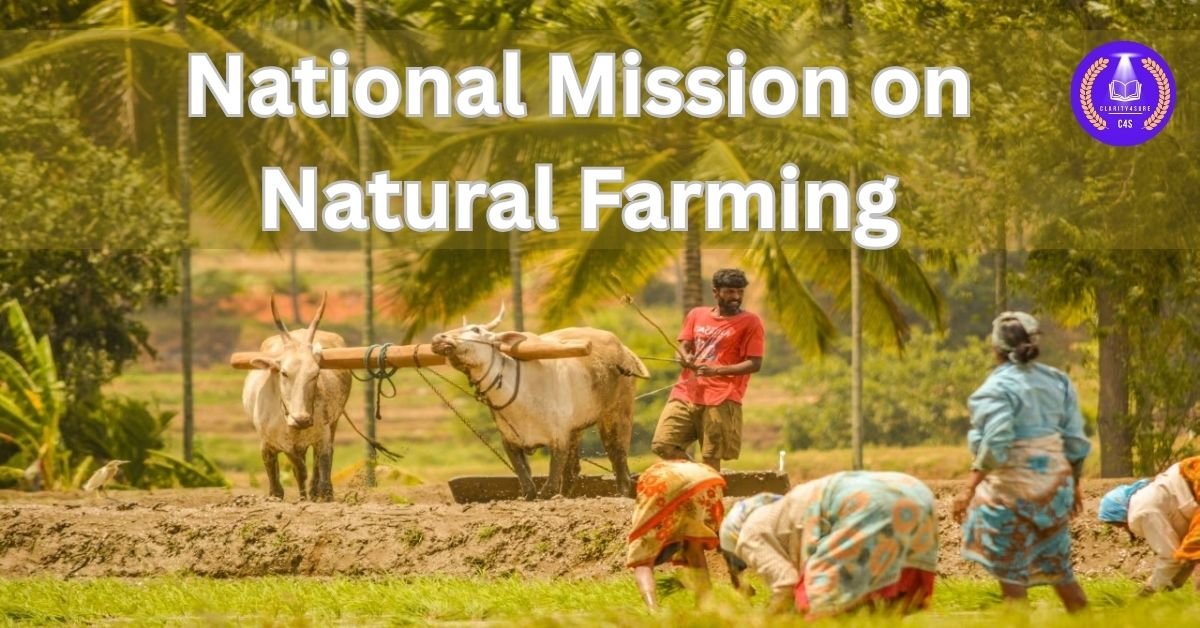
National Mission on Natural Farming
Background Need Major Highlights of the National Mission on Natural Farming (NMNF) Natural Farming Natural farming is a way of farming that works with nature, not against it. The idea is to grow crops in a way that’s healthy for both the environment and people, making farming sustainable for the long run. It uses local knowledge, traditional practices, and methods suited to the local environment. The goal is to rely less on things bought from outside and build a farming system that takes care of itself over time. Main practices in natural farming include: Natural Vs. Organic Farming Aspect Natural Farming Organic Farming Approach Minimal human intervention; works with nature’s processes Follows specific standards and guidelines Soil Treatment Avoids tilling to preserve natural soil structure Allows tilling Fertilizers No external fertilizers; relies on natural soil fertility Uses organic fertilizers like compost and manure Pest Control Depends on natural pest management methods Uses approved organic pesticides External Inputs Little to no external inputs External organic inputs allowed Certification No formal certification system (earlier under BPKP/NMNF) Strict certification process (e.g., NPOP, USDA Organic) Chemicals & GMOs Completely avoids synthetic chemicals and GMOs Prohibits synthetic chemicals and GMOs Regulation Less structured, more traditional Well-regulated with clear guidelines Benefits of Natural Farming Government Initiative Challenges Way Forward The government now understands that natural farming can help solve environmental problems, increase farmers’ earnings, and make sure there’s enough healthy food for everyone. When these efforts are combined with the active involvement of local farmers and innovative ideas from different states, natural farming has the potential to shape a better, more sustainable future for agriculture in India. Conclusion Natural farming represents a powerful shift towards sustainable agriculture, aiming to restore harmony between farming practices and nature. By reducing dependence on costly chemical inputs and embracing traditional, eco-friendly methods, natural farming helps protect the environment, ensures healthier food for consumers, and offers long-term economic benefits to farmers. Government initiatives like the National Mission on Natural Farming (NMNF), alongside programs like PMKSY, Soil Health Cards, and NMSA, are actively supporting this movement. States across India are already adopting these practices, showing that with proper support and awareness, the transition is possible. While challenges like learning local ecosystems, initial lower yields, and market acceptance remain, the combined efforts of the government, local communities, and research institutions make the future of natural farming in India bright and promising. With sustained commitment, natural farming can play a key role in building a resilient, healthy, and sustainable agricultural system for the country.
NABARD Grade A Recruitment 2025, Notification, Online Form, Eligibility
NABARD, short for the National Bank for Agriculture and Rural Development, is a top-level financial institution in India that is fully owned by the Government of India. It plays a key role in supporting rural development and agriculture. Every year, NABARD conducts the Grade A exam to hire Assistant Managers in various departments. The recruitment process is held in three stages — Prelims, Mains, and a Personal Interview. This exam is highly competitive and is a great opportunity for candidates looking to work in the rural and agricultural finance sector. The NABARD Grade A Notification 2025 along with complete details on the official(https://www.nabard.org/) website. Get to know more details about the exam from the article below. NABARD Grade A Notification 2025 PDF The National Bank for Agriculture and Rural Development (NABARD) will soon publish the detailed NABARD Notification 2025 on its official website, www.nabard.org. This official notification will provide complete information about the online application process, exam pattern, syllabus, selection procedure, and other important details for candidates preparing for the exam. While waiting for the new notification, you can refer to the previous year’s notification PDF to get an idea about the exam format, important dates, eligibility criteria, and other key information. This will help you start your preparation early and stay ready for the upcoming exam updates. NABARD Grade A Recruitment 2025- Highlights The National Bank for Agriculture and Rural Development (NABARD) is one of India’s most respected banks, especially known for its focus on rural development and agriculture. Every year, thousands of hopeful candidates aspire to join NABARD because of its strong reputation and the opportunities it offers in the banking sector. If you’re planning to apply for the NABARD Grade A Recruitment 2025, here’s a quick overview of the exam details to help you get started on your preparation journey. Organization Name National Bank for Agriculture and Rural Development (NABARD) Post Name Assistant Manager Vacancies To be Announced Category Government Jobs Important Dates To be Announced Selection Process Prelims → Mains → Interview Salary Rs. 44,500/- (Basic Pay) Official Website www.nabard.org NABARD Grade A 2025 Important Dates NABARD will soon announce the important dates for the NABARD Grade A 2025 exam along with the official notification. If you’re waiting for the NABARD Grade A Vacancy 2025 updates, keep an eye on this space because we will share all the latest important dates and information here as soon as they are released. Events Dates NABARD Grade A Notification 2025 To be Announced Online Application Start Date To be Announced Last Date to Apply Online To be Announced Last Date to Pay Fees To be Announced NABARD Grade A Admit Card 2025 To be Announced NABARD Grade A Prelims Exam Date 2025 To be Announced NABARD Grade A Result 2025 To be Announced NABARD Grade A Score Card To be Announced NABARD Grade A Vacancy 2025 NABARD will release the detailed vacancy list for the Grade A Assistant Manager posts along with the official notification. Last year, NABARD announced a total of 102 Assistant Manager positions in different areas like Rural Development Banking Service (RDBS) and Rajbhasha (language-related discipline). Once the official vacancy details for 2025 are out, we will update you with the exact number of openings in each discipline. Meanwhile, you can refer to the NABARD Assistant Manager Vacancy 2024 table below to get an idea of the vacancies across various departments from last year. Discipline UR SC ST OBC EWS Total Assistant Manager – Rural Development Banking Service (RDBS) General 23 7 3 12 5 50 Chartered Accountant 2 0 0 1 1 4 Finance 3 1 1 1 1 7 Computer / Information Technology 9 1 1 5 0 16 Agriculture 1 0 0 0 1 2 Animal Husbandry 1 0 0 1 0 2 Fisheries 0 0 1 0 0 1 Food Processing 0 0 0 1 0 1 Forestry 1 0 0 1 0 1 Plantation & Horticulture 1 0 0 0 0 1 Geo Informatics 0 0 0 1 0 1 Development Management 1 0 1 1 0 3 Statistics 0 0 1 0 1 2 Civil Engineering 1 0 0 2 0 3 Electrical Engineering 0 0 1 0 0 1 Environmental Engineering / Science 1 0 1 0 0 2 Human Resource Management 1 1 0 0 0 2 Total (RDBS) 45 10 10 26 9 100 Assistant Manager – Rajbhasa Total 1 1 0 0 0 2 Grand Total 46 11 10 26 9 102 NABARD Grade A Online Application Form 2025 The National Bank for Agriculture and Rural Development (NABARD) will soon open the online application for the Assistant Manager recruitment 2025 on its official website www.nabard.org. When the link is active, candidates can click on it to apply and find all the details about the NABARD Assistant Manager vacancy. NABARD Grade A 2025 Application Fee The online application fee for NABARD Grade-A posts is given below: Category Assistant Manager in Grade ‘A’ (RDBS) General Category Rs. 800/- SC / ST / PWD Rs. 150/- NABARD Recruitment 2025 Eligibility Criteria The candidates must fulfill the required eligibility criteria to be eligible for NABARD Assistant Manager vacancies. The essential qualification and age limit have been discussed below. NABARD Assistant Manager Age Limit Age Limit for NABARD Grade A: Candidates’ age should be between 21 to 30 years for apply for NABARD recruitment 2025. i.e., the candidate must have been born not earlier than 02-09-1994 and not later than 01-09-2003. The relaxation in the upper age limit is as follows: S.No. Category Age Relaxation 1 SC / ST 5 years 2 OBC 3 years 3 Person with disabilities (General) 10 years 4 Person with disabilities (SC / ST) 15 years 5 Person with disabilities (OBC) 13 years NABARD Assistant Manager Educational Qualification Post / Department Name Educational Qualification Assistant Manager in Grade ‘A’ (RDBS) General: Bachelor’s degree in any subject from a recognized University/Institution with minimum 60% marks (SC/ST/PWBD: 55%) OR Postgraduate degree, MBA/PGDM with minimum 55% marks (SC/ST/PWBD: 50%) OR CA/CS/ICWA
Pradhan Mantri Krishi Sinchayee Yojana (PMKSY)
Introduction Pradhan Mantri Krishi Sinchayee Yojana (PMKSY) was launched during the year 2015-16 to enhance physical access of water on farm and expand cultivable area under assured irrigation, improve on-farm water use efficiency, introduce sustainable water conservation practices, etc. PMKSY is an umbrella scheme, consisting of two major components being implemented by Ministry of Jal Shakti, namely, Accelerated Irrigation Benefit Programme (AIBP), and Har Khet Ko Pani (HKKP). HKKP, in turn, consists of four sub-components: (i) Command Area Development & Water Management (CAD&WM); (ii) Surface Minor Irrigation (SMI); (iii) Repair, Renovation and Restoration (RRR) of Water Bodies; and (iv) Ground Water (GW) Development (approval only till 2021-2022, and thereafter only for ongoing works). Further, in 2016, CAD&WM sub-component of HKKP was taken up for pari passu implementation with AIBP. In addition, PMKSY also consists of Watershed Development Component (WDC) which is being implemented by Department of Land Resources, Ministry of Rural Development. Further, Per Drop More Crop (PDMC) component being implemented by Department of Agriculture and Farmers Welfare (DoA&FW) was also a component of PMKSY during 2015-22, and is now being implemented separately by DoA&FW. What is Pradhan Mantri Krishi Sinchayee Yojana (PMKSY)? Objectives of PMKSY Components of PMKSY The Accelerated Irrigation Benefit Programme (AIBP) was started in 1996 to help speed up the completion of major irrigation projects that states couldn’t finish on their own due to lack of funds. Under the PMKSY-AIBP, 53 such big projects have been completed so far, which has added irrigation facilities to about 25.14 lakh hectares of land — giving farmers better water access and boosting crop production. The Har Khet Ko Pani (HKKP) part of PMKSY focuses on making sure every farm gets water. It works by creating new water sources through small irrigation systems, repairing and restoring old water bodies, strengthening traditional water systems, and building structures to harvest rainwater. HKKP has several smaller parts under it: The Watershed Development component deals with managing rainwater and protecting soil. It includes activities like treating the upper areas of land (ridges), building structures along drainage lines, harvesting rainwater, and keeping moisture in the soil. This is done on a watershed basis, meaning it treats the entire area that drains rainwater to a common point, helping improve agriculture and water conservation in a natural and sustainable way. Formulation & Implementation of PMKSY The Pradhan Mantri Krishi Sinchayee Yojana (PMKSY) was created by combining three earlier schemes to bring all irrigation efforts under one umbrella for better planning and results. These three schemes were: By merging these schemes, PMKSY aims to provide a more holistic and coordinated approach to irrigation and water management across the country. For implementation, PMKSY follows a decentralized approach. This means planning and execution are done at the state and district levels. Each state prepares a State Irrigation Plan, and within it, individual District Irrigation Plans are made to address local water needs more effectively. This ensures that solutions are tailored to the specific conditions of each area, making water usage smarter and more efficient. Conclusion The Pradhan Mantri Krishi Sinchayee Yojana (PMKSY) stands as a landmark initiative aimed at ensuring water security for Indian agriculture through effective planning, efficient use, and sustainable practices. By integrating various irrigation and water management schemes under a single umbrella, PMKSY has created a more coordinated and impactful approach to solving the country’s irrigation challenges. Its focus on “Har Khet Ko Pani” and “More Crop Per Drop” reflects the government’s commitment to boosting agricultural productivity while conserving precious water resources. The decentralized, area-specific implementation through State and District Irrigation Plans ensures grassroots-level participation and locally suitable solutions. As the scheme continues to evolve, it not only empowers farmers with better irrigation facilities but also contributes significantly to climate resilience, food security, and rural livelihoods — making it a key pillar in India’s agricultural transformation journey.
Watershed Management
About A watershed is an area of land where all the rainwater or melted snow flows to a common point like a river, lake, or ocean. Watershed management means protecting and restoring important natural resources such as soil, water, plants, and the environment in that area. To manage a watershed well, we first need to identify its problems and then make a plan. This process needs everyone’s involvement, including local people, the government, NGOs, and private organizations. The government has taken several steps for watershed development. One such step is a program under the Pradhan Mantri Krishi Sinchayi Yojana (PMKSY). In its new version, PMKSY 2.0, a special activity called Springshed development was launched to tackle water shortages in hilly areas. There are also other efforts to build rainwater harvesting systems and save water by involving local communities. Examples include the Haryali Watershed Project and Neeru-Meeru in Andhra Pradesh. Watershed management has helped protect the environment and improve people’s lives. But there are still some problems, like no clear laws and poor teamwork among different groups. These challenges can be solved by encouraging community participation and better governance. Background Watershed management in India has its roots in the country’s long tradition of conserving water. In the past, people in India used various traditional methods like stepwells, tanks (reservoirs), and old-style irrigation techniques to collect, store, and use water for farming and daily needs. However, in the 20th century, problems like water shortage, soil erosion, deforestation, and land damage started increasing due to rising population, more farming, and poor land use practices. In the 1950s, India began its first official watershed management programme called the ‘Community Development Program’, which focused on soil and water conservation. Later, in the 1980s, the Indian government started the ‘Watershed Development Project’. Over time, the approach to watershed management in India has shifted from being government-controlled to becoming more community-based and participatory. Introduction Watershed management is a complete and balanced method to protect and take care of natural resources like soil, water, plants, and the environment in a specific area called a watershed. It uses a mix of smart strategies to save water and soil, support eco-friendly farming and land use, and encourage community development. The main goals of watershed management are to solve water-related problems, reduce environmental damage, deal with climate change, and improve the lives of people living in that area. What is a Watershed? Watershed is a geographical area of land where all the surface water whether coming through rainfall or melting of snow drains to a common outlet point, such as a river, lake, or ocean. It is also known as a drainage basin or catchment area. Characteristics of a Watershed Types of watershed: Watersheds are divided into 5 types based on the size Watershed management: Watershed management is a comprehensive approach to manage and protect the natural resources in a specific geographical area of a watershed. It involves integrated planning, conservation of natural resources, and sustainable use of land, water, and vegetation. It works towards both protecting and enhancing the quality of natural resources like land and water. Objectives of Watershed Management Principles of Watershed Management Procedure of Watershed Management 1. Watershed Delineation:The first step in managing a watershed is to clearly identify and mark its boundaries. This is done using tools like GIS (Geographic Information Systems) and detailed maps. Experts study various features of the area such as land use, soil type, vegetation, water bodies, weather, population, and local activities to understand the watershed better. 2. Involving Stakeholders:Once the area is understood, the next step is to bring in all the important people and groups — local communities, government departments, NGOs, private organizations, and even indigenous groups. They come together through meetings and discussions to plan and contribute to the management process. 3. Identifying Problems:With everyone’s input, the real issues in the watershed are identified. These could include things like lack of water, soil erosion, pollution, or deforestation. This joint problem identification helps focus on the most urgent environmental challenges. 4. Setting Goals:Based on the problems found, clear and realistic goals are set. These goals guide all the future actions and plans for managing the watershed. 5. Planning Strategies:A detailed management plan is created. It outlines what needs to be done, how it will be done, and who will do it. This plan includes specific actions and solutions to reach the set goals. 6. Putting the Plan into Action:Once the plan is ready, it’s implemented with the help of available resources, partnerships, and teamwork among all involved groups. 7. Monitoring Progress:To make sure everything is going according to plan, regular checks and assessments are carried out. This helps track the success of the actions and make improvements if needed. 8. Building Local Capacity:Training, education, and awareness programs are run to equip local people with the skills and knowledge they need. This enables them to take an active role in managing the watershed and improving the use of natural resources like water and soil. Government Initiatives for Watershed Management in India 1. Pradhan Mantri Krishi Sinchayi Yojana (PMKSY), 2015 (Earlier known as Integrated Watershed Management Program – IWMP, launched in 2009) The Government of India started the Integrated Watershed Management Program (IWMP) in 2009 as a Centrally Sponsored Scheme. It was earlier known as the Watershed Development Project, and today, it is part of the larger Pradhan Mantri Krishi Sinchayi Yojana (PMKSY), launched in 2015. PMKSY 1.0 (Till 2022) – Key Achievements: PMKSY 2.0 (From 2021 onwards): 2. Micro Watershed Development Projects Micro watershed development projects are efforts aimed at the sustainable management and conservation of natural resources in small, defined geographic areas, called micro watersheds. These projects are mostly taken up in arid or semi-arid regions of India that are vulnerable to drought and water scarcity. These projects use various conservation techniques, such as: Some important micro watershed development projects in India: Drought Prone Area Programme (DPAP) Desert Development Programme (DDP) Both DPAP and DDP were later included under
Agriculture and Food Management
Introduction Seeds-quality and use of fertilisers Rainfall and irrigation system Agriculture credit Agriculture mechanisation Agriculture extension Improvement in agriculture marketing infrastructure Key interventions includes Agriculture Marketing Infrastructure (AMI) sub-scheme, Agriculture Infrastructure Fund (AIF), e-NAM Scheme. Climate action in agriculture Studies show that if the average yearly temperature in India goes up by 2°C and annual rainfall increases by 7% by the year 2099, our country’s agricultural productivity could drop by 8–12%. That means farmers may grow less food, and it could affect food supply and rural livelihoods. To tackle this challenge, the government has introduced some important programs: Together, these efforts aim to make Indian agriculture more resilient, eco-friendly, and sustainable in the face of climate change. Allied sectors: Potential to Build Resilience The fisheries sector in India is growing rapidly, with an average annual growth rate of 8.7%, which is the highest among related areas. Livestock farming is also growing fast, with a growth rate of 8% per year. To support and boost these sectors, the government has launched several important programs: These efforts are helping India’s fisheries and livestock sectors grow stronger and contribute more to the economy. Cooperative societies Cooperative societies play an important role in many areas like farming, banking and credit, housing, and supporting women’s welfare. To strengthen these societies, the government has introduced some key measures: These steps are aimed at making cooperative societies more useful and accessible for everyone, especially farmers and rural communities. Food processing industries The agriculture and food sector provides about 12.4% of all jobs in India’s organized workforce. In the financial year 2024, agricultural and food products made up nearly 11.7% of India’s total exports. Notably, the share of processed food exports (like packaged and ready-to-eat products) has grown significantly — from about 15% in 2018 to over 23% in 2024. This shows India is exporting more value-added food products. To support this growth, the government has introduced important programs: These efforts aim to boost jobs, increase exports, and strengthen the food processing industry in India. Food management To ensure food security and support farmers, the government has introduced some important programs: Together, these initiatives aim to ensure food availability, support vulnerable families, and provide farmers with financial help. Conclusion India’s agriculture plays a crucial role in driving the country’s economy and ensuring food security for its people. Even though the sector faces many challenges like changing weather patterns and limited resources, it has remained strong and continued to grow steadily. This resilience is largely thanks to various government programs that help farmers increase their crop yields, encourage growing a wider variety of crops, and offer social security measures to protect farmers’ livelihoods. These efforts together support the backbone of rural India and contribute to the nation’s overall development.
Mastering Answer Writing for IRDAI Exam: 10 Proven Tips to Score Higher Marks
Introduction Despite months of diligent preparation, many candidates struggle to convey their thoughts effectively. Before you proceed, ask yourself: Are your answers well-structured, balanced, and precise? Or do they lack the clarity required for high scores? A common mistake is assuming that knowledge alone will suffice. However, IRDAI Phase II is not just about what you know—it’s about how effectively you communicate it. This guide will introduce 10 tried-and-tested techniques that will help you craft high-quality responses, improve answer presentation, and maximize scoring potential in IRDAI’s descriptive papers. A Brief Overview of the IRDAI Phase II Exam The IRDAI Assistant Manager Phase II exam has a descriptive format, with three key papers: Each paper is designed to evaluate your: The Economic and Social Issues impacting Insurance sectorpaper require a writing-focused approach, emphasizing clarity, structure, and precision. Whether you’re interpreting IRDAI regulations or assessing a policy framework, how well you present and articulate your analysis plays a crucial role in determining your final score. To help you maximize your performance, we’ve outlined the 10 most effective tips for writing high-scoring answers in the IRDAI exam. Let’s dive in and start transforming your writing strategy! 10 Proven Tips to Improve Your Answer Writing for IRDAI Exam 1. Understand the Question Completely Before jumping into writing, it’s crucial to fully grasp what the question is asking. Misinterpreting directives can result in an answer that, while well-written, doesn’t match the examiner’s expectations. Why this matters: How to do it: Example: Q: Critically Examine the Role of IRDAI in Promoting Financial Literacy. 2. Build a Clear Structure: Introduction, Body, Conclusion A well-structured response provides clarity and logical flow, making it easier for examiners to assess your points. Why this matters: How to do it: Example: Q: Discuss the Role of the Insurance Ombudsman. 3. Use Relevant Examples, Schemes & Data Authenticity and depth improve your answer quality. Examiners reward real-world knowledge. Why this matters: How to do it: Tip: Maintain a notebook to track schemes, policies, IRDAI initiatives and review them periodically. 4. Keep It Simple and Precise Unnecessary complexity does not impress examiners—it confuses and wastes space. Why this matters: How to do it: Use short, active-voice sentences for clarity. Example: Bad: “The regulatory framework instituted by IRDAI is aimed at harmonizing financial literacy among various demographic cohorts.” Good: “IRDAI promotes financial literacy through targeted campaigns and policy interventions.” 5. Use Visual Aids Wherever Possible Diagrams, flowcharts, and tables simplify complex information. Why this matters: How to do it: Example: Claim Process Flowchart: Policy Issuance → Premium Paid → Claim Raised → Verification → Settlement 6. Maintain Balance in Your Arguments Balanced perspectives showcase analytical ability and prevent bias. Why this matters: How to do it: Example: Q: Evaluate IRDAI’s Microinsurance Initiatives. 7. Practice Time Management Efficient writing is key in exams where timing matters. Why this matters: How to do it: Tip: Attempt familiar questions first for confidence and speed. 8. Write and Review Daily Answer-writing improves only with practice. Why this matters: How to do it: Checklist: 9. Join a Mock Test or Answer Writing Series Simulating exam pressure sharpens performance. Why this matters: How to do it: Bonus Tip: Review UPSC GS-II/III style papers for insurance/regulation topics. 10. Develop Your Unique Writing Style A distinct style improves confidence and impact. Why this matters: How to do it: IRDAI Tip: Write as if addressing a policymaker—analyze, inform, and recommend solutions. How C4S Helps You Master Answer Writing for IRDAI C4S (Clarity4Sure) is designed to enhance your answer-writing skills, ensuring your responses in the IRDAI Assistant Manager exam are structured, analytical, and impactful. Here’s how C4S equips you with the tools to write effective answers: Concept-Based Learning for Strong Fundamentals Writing well-structured answers begins with clear understanding. C4S ensures: ✔Expert-led video lecturesand separate Q&A Sessionprovide in-depth explanations of IRDAI concepts. ✔Clarity-focused teaching methodology helps you break down complex topics into simpler, well-articulated points. ✔Topic-wise structured learning builds a strong foundation, ensuring answers are logical and well-supported with facts. Impact on Answer Writing: Mock Tests & Performance Analysis to Strengthen Writing C4S offers sectional and full-length tests that refine your ability to write well-structured answers under exam pressure. ✔Timed mock tests simulate actual exam conditions, improving speed and clarity. ✔Detailed feedback & performance tracking highlight strengths and improvement areas. ✔Topic-wise evaluations help fine-tune precision and depth in responses. Impact on Answer Writing: Current Affairs & Insurance Updates for Relevant Examples Writing strong descriptive answers requires authenticity and depth, achieved through real-world examples and policy references. C4S helps you stay updated by providing: ✔Daily coverage of IRDAI-related news ensures you can incorporate latest developments in answers. ✔Monthly insurance digests summarize crucial financial and regulatory updates. ✔Analysis of economic trends & policies enhances the ability to use relevant data in answers. Impact on Answer Writing: Descriptive Writing Practice for Polished Answers C4S focuses specifically on refining descriptive writing skills, offering: ✔Model answers showcasing structured writing strategies. ✔Peer reviews & expert evaluation to guide improvement. ✔Essay and précis writing training for IRDAI Mains. Impact on Answer Writing: Smart Study Plans & Personalized Guidance C4S understands that each aspirant has a unique pace and learning style, offering: ✔Adaptive study plans tailored to individual strengths and weaknesses. ✔24/7 doubt resolution to clarify concepts and improve articulation. ✔One-on-one mentorship for refining answer quality. Impact on Answer Writing: IRDAI Interview Kit: Developing Analytical Thinking Descriptive writing is not just about information; it’s about judgment and clarity. The IRDAI Interview Kit trains aspirants to: ✔Frame balanced arguments, essential for IRDAI policy-based discussions. ✔Analyze regulatory challenges critically, building a strong foundation for structured writing. ✔Practice real interview-style questions, improving depth of reasoning. Impact on Answer Writing: Final Thought: C4S Elevates Your Answer Writing Skills Descriptive answer writing in IRDAI exams isn’t just about information—it’s about judgment, articulation, and clarity. C4S ensures that through expert-led learning, structured writing practice, and real-time feedback, you develop an exam-ready approach to tackling IRDAI questions with confidence and precision Here’s your 2023 PYQ with all ten tips


