
Context India and Canada have taken a major step toward resetting bilateral relations with the signing of a landmark civil nuclear agreement and renewed commitment to conclude a Comprehensive Economic Partnership Agreement (CEPA). The agreements were finalised following bilateral talks between Prime Minister Narendra Modi and Canadian Prime Minister Mark Carney at Hyderabad House, New Delhi. This marks a significant diplomatic revival after relations had deteriorated in 2023. What are the Key Highlights of India and Canada High-level Engagements? What are the Key Highlights of India-Canada Bilateral Relations? What are the Major Challenges in India-Canada Relations? What Measures can Strengthen India-Canada Relations? FAQ’s 1. What security frameworks govern India–Canada cooperation?Security cooperation between the two countries is guided by the Joint Working Group on Counter Terrorism established in 1997 and the Framework for Cooperation on Countering Terrorism signed in 2018. Legal cooperation is further supported through the Extradition Treaty (1987) and the Mutual Legal Assistance Treaty (1994). 2. Why is the Khalistan issue significant in bilateral relations?India considers the activities of pro-Khalistan groups in Canada a serious national security concern, which has caused a major breakdown of trust between the two countries. 3. How important is trade between India and Canada?Trade between the two countries is significant. In 2024, India became Canada’s 7th largest trading partner, with total bilateral trade reaching USD 30.9 billion, and India maintaining a trade surplus in goods. 4. Why is Canada strategically important for India?Canada is strategically important for India because of its large energy resources, availability of critical minerals, strong technology base, and its role in the Indo-Pacific region, which supports India’s long-term growth and energy security.
US-Israel Attack on Iran
Context The United States and Israel launched a joint military operation against Iran, triggering a multi-front regional war. What is the Conflict? The United States and Israel initiated a large-scale military offensive—Operation Epic Fury (Operation Genesis)—targeting Iran’s nuclear and ballistic missile infrastructure. The operation reportedly resulted in the assassination of Iran’s Supreme Leader Ali Khamenei and several senior officials. The campaign, launched under former US President Donald Trump and Israeli Prime Minister Benjamin Netanyahu, marks a shift from decades of shadow conflict to direct, high-intensity warfare. Iran responded with Operation Truthful Promise 4, launching large-scale drone and missile attacks on Israel and US-allied Gulf states. Historical Background What are the Implications of the US and Israel-Iran War? Global India What Measures can India take to Mitigate the Impact of the US and Israel-Iran Conflict? Conclusion The 2026 West Asian escalation exposes India’s vulnerability in energy security and diaspora safety. By maintaining its strategic autonomy and acting as a stabilising, non-partisan voice for peace — embodying the role of a Vishwa Bandhu (global friend) — India can safeguard its interests while reinforcing that this is not an era of war. FAQ’s
Centre Pauses Rice Fortification
Why in News? The Central government has decided to “temporarily” discontinue rice fortification under the Pradhan Mantri Garib Kalyan Anna Yojana (PMGKAY) and allied schemes after a comprehensive review based on a study from the Indian Institute of Technology (IIT) Kharagpur. What are the Recent Developments Regarding Rice Fortification? What is Rice Fortification? Components of Rice Fortification FAQ’s
National Monetisation Pipeline 2.0
Why in News? The Union government has launched the second phase of the National Asset Monetisation Pipeline (NMP 2.0), prepared by NITI Aayog in coordination with line ministries, to unlock value from public infrastructure assets and mobilise investment. What is NMP? The National Asset Monetisation Pipeline (NMP) is a structured programme aimed at monetising existing public infrastructure assets by leasing them to private players for a fixed period, while ownership remains with the government. It was first launched in 2021. NMP 2.0 National Monetisation Pipeline (NMP 2.0) Significance National Monetisation Pipeline (NMP 2.0) is significant because if following reasons: National Monetisation Pipeline (NMP 2.0) Challenges The experience of NMP 1.0 shows that asset monetisation is not just about setting big targets. It requires strong institutions, investor trust and clear policies. While the first phase achieved close to 90% of its target, it also revealed practical challenges that NMP 2.0 must address. Way Forward If measures are implemented effectively, NMP 2.0 can become a strong tool for financing infrastructure development by recycling existing public assets in a sustainable way, without putting additional pressure on government finances. For this to happen, the government must ensure policy stability so that private investors feel confident about committing funds for the long term. Transparent and realistic valuation of assets is also essential to attract fair and competitive bids, while avoiding criticism about undervaluation or lack of accountability. At the same time, ministries and public sector undertakings need stronger institutional capacity and expertise to design, negotiate, and manage public-private partnership (PPP) agreements efficiently. Clear communication with the public is equally important to remove misunderstandings and explain that asset monetisation is not the same as privatisation, but rather a way to make better use of public assets while retaining ownership. Well-designed risk-sharing arrangements must also be built into projects so that uncertainties related to demand and revenue do not discourage private participation. Finally, better coordination between the Centre and States is crucial to speed up approvals, reduce delays, and ensure smoother implementation. Together, these steps can help NMP 2.0 unlock value from public assets, attract private investment, and support long-term infrastructure growth in a balanced and responsible manner.
India’s HPV Vaccination Drive
Why in News? The Government of India is set to launch a nationwide HPV vaccination programme to prevent cervical cancer among adolescent girls. What is HPV Vaccination? It protects against high-risk strains of Human Papillomavirus infection (HPV) that cause most cervical cancer cases. The HPV vaccine is a recombinant vaccine that uses virus-like particles to stimulate immunity without containing a live virus. How HPV Causes Cancer? What is Human Papillomavirus (HPV)? What are the Key Facts Regarding the HPV Vaccination Drive? FAQ’s
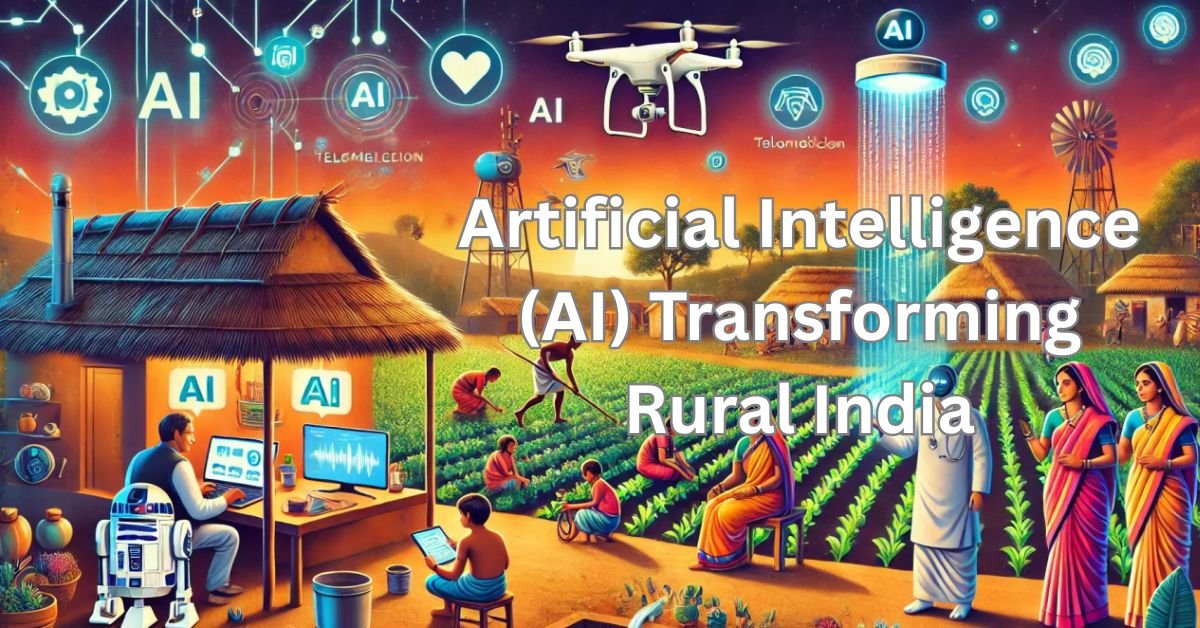
Artificial Intelligence (AI) Transforming Rural India
Why in News? Government highlights the expanding role of Artificial Intelligence (AI) in rural development. Emphasis on inclusive, people-centric AI aligned with Viksit Bharat@2047. India–AI Impact Summit 2026 signals transition from pilot projects to system-wide AI deployment. Key Takeaways Applications of AI in Rural India National AI Policy Framework for Inclusive Development India AI Governance Guidelines Challenges Way Ahead To make the benefits of Artificial Intelligence truly inclusive, it is essential to first strengthen digital infrastructure in rural areas. This means ensuring reliable broadband connectivity, stable internet access, and well-developed data systems so that digital services can function smoothly and reach every village. Alongside infrastructure, there is a strong need to promote digital literacy and awareness about AI among citizens, farmers, local entrepreneurs, and government officials. When people understand how to use technology confidently, they can make better use of AI-enabled services in agriculture, healthcare, governance, and livelihoods. At the same time, the growing use of data and AI must be supported by strong data protection measures and ethical safeguards. These are necessary to prevent misuse of personal information, protect privacy, and ensure that no group is left out or disadvantaged by technological systems. Finally, institutional capacity at the Panchayat level needs to be strengthened so that local governments can effectively adopt and manage AI tools. This includes training officials, building technical expertise, and providing resources so that Panchayats can use AI for planning, monitoring, and delivering services more efficiently. Together, these steps can help ensure that AI supports equitable and sustainable rural development.

India a Major Contributor to Global Pesticide Toxicity
Context A global scientific study has identified India as one of the largest contributors to pesticide-related environmental toxicity. The findings raise concerns about biodiversity loss, ecosystem health and sustainability of agricultural systems. Core Finding What is Total Applied Toxicity (TAT)? Impacts of High Total Applied Toxicity (TAT) on India Regions with high increases include sub Saharan Africa and parts of the Indian subcontinent. India’s Legal Framework: Is It Outdated? Environmental Governance Challenges Global Policy Context At the 2022 UN biodiversity negotiations, countries committed to reducing pesticide risk by 50% by 2030. However, the study shows the world is not on track to meet this target due to rising toxicity levels. This signals a gap between international commitments and actual agricultural practices. Way Forward Addressing the growing risks from pesticide use requires a strong and coordinated policy response. A key priority is shifting toward less toxic alternatives such as Integrated Pest Management (IPM) and biological control methods, which help manage pests while reducing environmental and health damage. At the same time, organic and natural farming need to be actively promoted by scaling up initiatives like the Paramparagat Krishi Vikas Yojana (PKVY) and expanding natural farming models across regions. Legal reforms are also essential the regulatory framework must be updated to reflect current realities, include strict liability and compensation provisions for harm caused, and phase out or ban highly hazardous pesticides. Greater transparency in data is equally important, with mandatory annual reporting of pesticide use and public disclosure of residue levels to ensure accountability. Finally, farmers must be supported through incentives for sustainable agricultural practices, reduced dependence on chemical inputs, and better integration of farming with climate-resilient strategies. Together, these measures can help protect the environment, safeguard public health and ensure long-term agricultural sustainability.
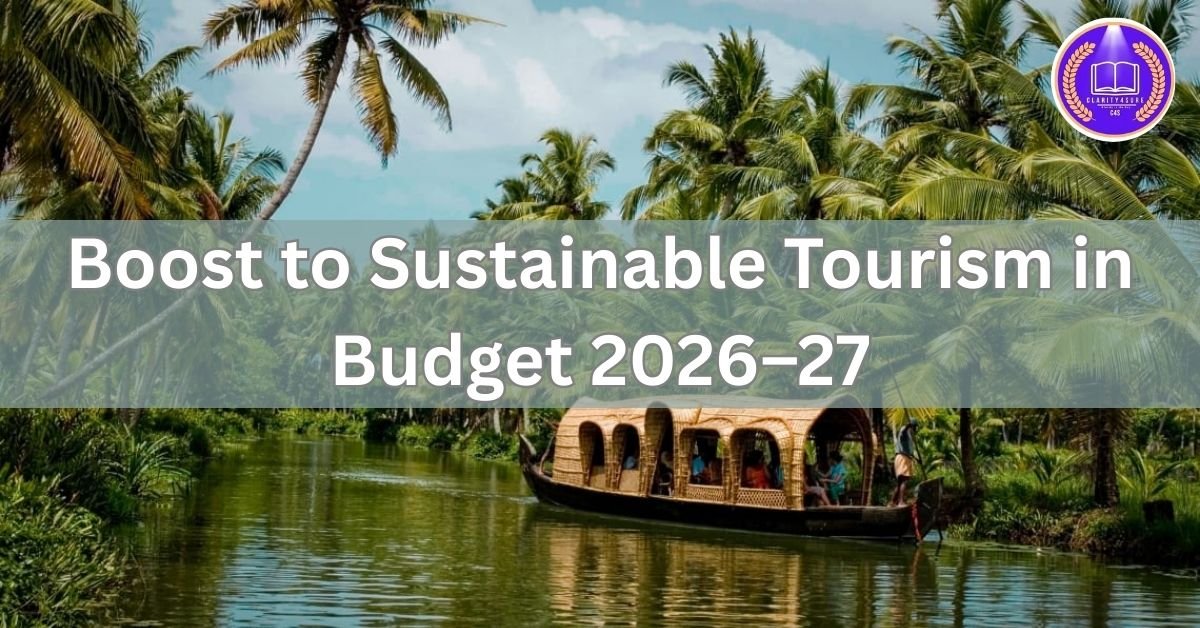
Boost to Sustainable Tourism in Budget 2026–27
Why in News? Tourism has emerged as a focal point in the Union Budget 2026-27, with the government unveiling a comprehensive set of measures aimed at positioning the sector as a strategic growth driver for the Indian economy. New Initiatives Announced for Tourism Development in Union Budget 2026-27 Challenges Associated with Tourism Development in India Steps Needed to Promote Tourism Development in India Conclusion The Union Budget 2026–27 lays out an ambitious and forward-looking plan to strengthen India’s tourism sector. With focused initiatives such as the development of Buddhist circuits in the Northeast, promotion of eco-trails, hosting of the Global Big Cat Summit, and upgrading hospitality education and infrastructure, the government is clearly aiming to position tourism as a key pillar of economic growth. These measures reflect a shift toward sustainable, experience-based and globally competitive tourism. However, the real impact of this vision will depend on how effectively India addresses long-standing challenges such as weak infrastructure, environmental pressure in fragile regions, safety concerns and gaps in global competitiveness. Ensuring better connectivity, responsible tourism practices and meaningful participation of local communities will be crucial in turning tourism into a strong, inclusive and sustainable engine of economic development.
PRAHAAR: India’s First Counter-Terrorism Policy
Why in News? India has formally adopted its first comprehensive national counter-terrorism doctrine, PRAHAAR, marking a shift from a largely operational response to a structured, long-term strategic framework. The policy has been issued by the Ministry of Home Affairs and institutionalises a pro-active, intelligence-driven, whole-of-government approach to terrorism. What is PRAHAAR? Cross-Border and Emerging Terror Threats Implementation Challenges of PRAHAAR Strategy Measures to Strengthen the PRAHAAR Strategy Conclusion PRAHAAR represents a strict, zero-tolerance approach to terrorism that focuses on prevention rather than just reaction. It brings together the efforts of the government, technology systems, and society as a whole to tackle security threats from multiple angles. This includes using advanced technology to disrupt terror activities, taking strong legal action against offenders, and promoting community-based efforts to prevent radicalisation before it spreads. However, the effectiveness of PRAHAAR will depend on how well it maintains a balance. While firm enforcement is necessary to protect national security, it is equally important to ensure that fundamental rights and civil liberties are not compromised in the process. Achieving this balance will be key to its long-term success. FAQ’s 1. What is PRAHAAR?PRAHAAR is India’s first complete National Counter-Terrorism Policy, introduced by the Ministry of Home Affairs. It follows a proactive, intelligence-based, and zero-tolerance approach to deal with terrorism. 2. What are the key pillars of PRAHAAR?Its main pillars are prevention, response, capacity building across agencies, protection of human rights, de-radicalisation, international cooperation, and recovery through a whole-of-society approach. 3. Which legal frameworks support PRAHAAR?The policy is supported by important laws such as the Unlawful Activities (Prevention) Act (1967), the Prevention of Money Laundering Act (2002), the Arms Act (1959), and the new criminal codes introduced in 2023. 4. What are the major challenges in implementing PRAHAAR?Key challenges include coordination issues between the Centre and States, capacity limitations in state police forces, subjectivity in de-radicalisation, concerns about civil liberties, and difficulties in coordination among different agencies. 5. How does PRAHAAR address modern terror threats?It focuses on tackling cyber radicalisation, crypto-based financing, drone threats, CBRN risks, and cross-border terror networks through the use of technology, intelligence sharing, and international cooperation.
Election Commission of India (ECI)
Introduction The Election Commission of India (ECI), a constitutional body, stands as a cornerstone of Indian democracy. Through free, fair, and transparent elections in India, it ensures that the voice of the Indian populace is heard through the ballot. About Election Commission of India (ECI) Constitutional Provisions related to the Election Commission of India (ECI) Composition of Election Commission of India Article 324 of the Constitution has made the following provisions about the composition of the Election Commission of India: Appointment of Members of ECI As per the Chief Election Commissioner and other Other Election Commissioners (Appointment, Conditions of Service and Term of Office) Act, 2023, the Chief Election Commissioner and the Election Commissioners are appointed by the President of India on the recommendation of a three-membered Selection Committee consisting of: A Search Committee headed by the Cabinet Secretary suggests five names to the Selection Committee. The Selection Committee is not bound to these name suggestions and may consider any person other than those suggested by the Search Committee. It is to be noted that the process of appointment of the Chief Election Commissioner and the Election Commissioners has changed recently in 2023. Before this, they were appointed by the President on the recommendation of the Union CoM. Term of Members of ECI According to the Election Commission (Conditions of Service of Election Commissioners and Transaction of Business) Act, 1991, the Chief Election Commissioner and the Election Commissioners hold office for a term of 6 years or until they attain the age of 65 years, whichever is earlier. Resignation of Members of ECI According to the Election Commission (Conditions of Service of Election Commissioners and Transaction of Business) Act, 1991, the Chief Election Commissioner and the Election Commissioners can resign at any time by writing to the President. Removal of Members of ECI Removal of the Chief Election Commissioner Removal of Election Commissioner and Regional Commissioners Salary and Allowances of the Members of the ECI According to the Election Commission (Conditions of Service of Election Commissioners and Transaction of Business) Act, 1991, the Chief Election Commissioner (CEC) and two Election Commissioners (ECs) receive equal salaries, allowances, and other prerequisites that are similar to those of the judge of the Supreme Court. The Chief Election Commissioner Vis-a-vis Election Commissioners As per the Election Commission (Conditions of Service of Election Commissioners and Transaction of Business) Act, 1991: Thus, though the Chief Election Commissioner is the chairman of the Election Commission, the other Election Commissioners have an equal say in deciding a matter. Power and Functions of ECI The powers and functions of the Election Commission of India can be classified into three categories as explained below Administrative Functions Advisory Functions Quasi-Judicial Functions Assisting Machinery of ECI The Election Commission of India (ECI) relies on a well-structured machinery comprising various roles and responsibilities to support the electoral process: Deputy Election Commissioners (DEC) These Commissioners are drawn from civil services and appointed by the ECI with a tenure system. They are assisted by the Secretaries, Joint Secretaries, Deputy Secretaries, and Under Secretaries. Chief Electoral Officer (CEO) These officers are appointed at the State level, by the Chief Election Commissioner in consultation with the State Government. District Returning Officer (DRO) These officers are appointed at the district level. The Collector acts as the DRO for every constituency in the district. Returning Officer (RO) These officers are appointed by the DRO for every constituency. Presiding Officer (PO) These officers are appointed by the DRO for every polling booth. Independence of Election Commission of India (ECI) Constitutional Provisions Ensuring Independence of ECI Article 324 of the Indian Constitution has made certain provisions to ensure the independent and impartial functioning of the Election Commission of India (ECI). The most important of them can be seen as follows: Factors Hampering the Independence of ECI Supreme Court’s Directions to Promote Independence of ECI In Anoop Baranwal vs Union of India Case (2023), the Supreme Court gave the following directions to ensure the independence and neutrality of the Election Commission: Issues with Election Commission of India Apart from the above-mentioned factors, the ECI faces several other challenges which hamper its impartial and effective functioning. Some of the prominent challenges faced by the ECI are as follows: Constitutional Provisions Related to Elections in India Article 324 to Article 329 in Part XV of the Indian Constitution contains detailed provisions regarding elections in India. Here’s a brief overview of these provisions: Article No. Subject-matter Article 324 Superintendence, direction, and control of elections are to be vested in an Election Commission. Article 325 No person is to be ineligible for inclusion in or to claim to be included in a special electoral roll on grounds of religion, race, caste, or sex. Article 326 Elections to the House of the People and the Legislative Assemblies of States to be based on adult suffrage. Article 327 Power of Parliament to make provisions with respect to elections to Legislatures. Article 328 Power of State Legislature to make provisions with respect to elections to such Legislature. Article 329 Bar to interference by Courts in electoral matters. Way Forward The Election Commission of India (ECI) stands as a bulwark of democracy, ensuring the sanctity of electoral processes and upholding the democratic ideals enshrined in the Constitution. With its unwavering commitment to free and fair elections, the ECI plays a pivotal role in fostering political participation, safeguarding the rights of citizens, and strengthening the democratic fabric of the nation. Necessary steps should be taken to enhance its independence and give more teeth to it.


