
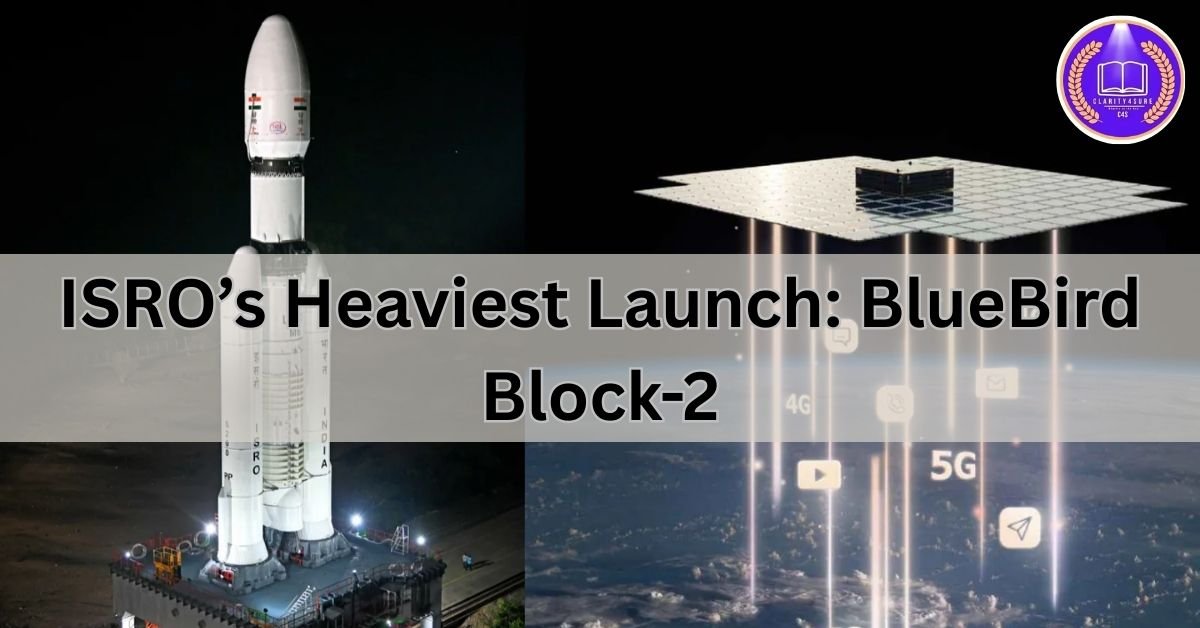
Why in News? ISRO marked a major milestone by launching its heaviest satellite, BlueBird Block-2 (6,100 kg, by the US firm AST SpaceMobile), using the Launch Vehicle Mark-3 (LVM3) rocket, showcasing India’s strong heavy-lift launch capability. What is BlueBird Block-2? Low Earth Orbit (LEO) What is the LVM3 Launch Vehicle? Three-Stage Rocket Structure 1. First Stage – Solid Boosters 2. Second Stage – Liquid Core Stage 3. Third Stage – Cryogenic Upper Stage Technology Improvements for Better Performance Cryogenic upgrade (C32 stage) Semi-cryogenic engine development Bootstrap reignition technology Role in Future Space Missions Frequently Asked Questions (FAQs) 1. What is BlueBird Block-2? BlueBird Block-2 is a 6,100 kg commercial satellite by AST SpaceMobile, providing direct-to-mobile 4G/5G connectivity in LEO (160 km to 2,000 km). 2. What is the significance of LEO? Low Earth Orbit (LEO) hosts communication, Earth observation, and navigation satellites, enabling low-latency global connectivity. 3. What are the stages of the LVM-3 rocket? LVM-3 has three stages: S200 solid boosters, L110 liquid-fueled core, and C25 cryogenic upper stage, optimized for heavy-lift missions.
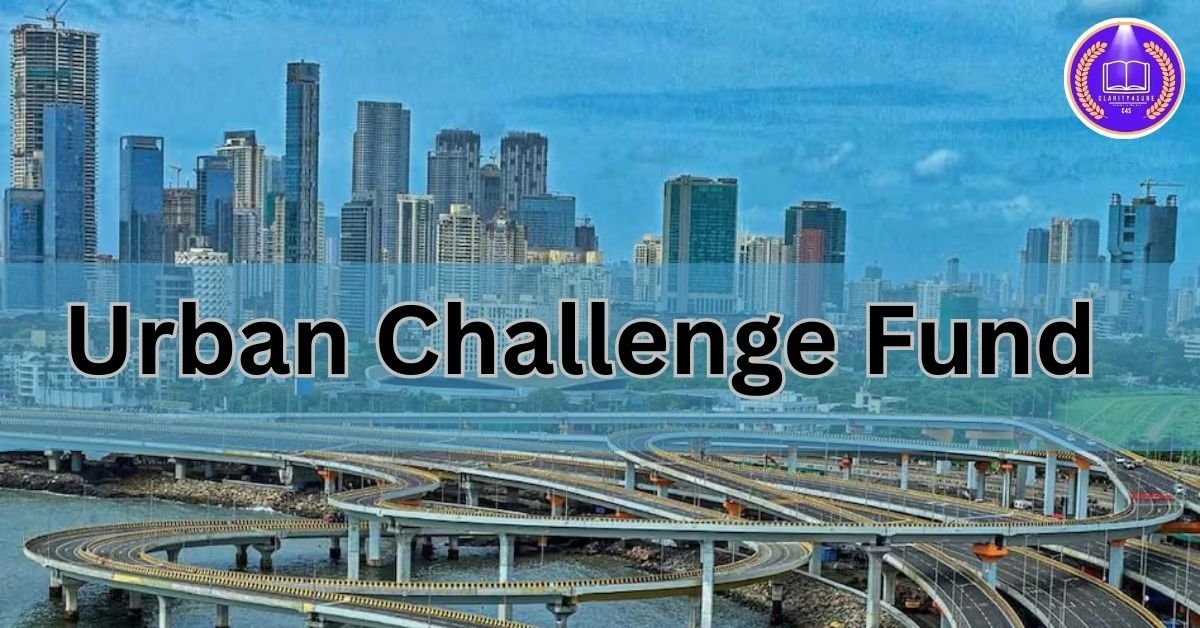
Urban Challenge Fund
Why in News? The Union Cabinet has approved the Urban Challenge Fund (UCF), a new Centrally Sponsored Scheme aimed at financing large-scale urban infrastructure through market-linked funding and competitive project selection. What are the Key Facts About the Urban Challenge Fund (UCF)? Funding Pattern and Financing Model 1. Central Government Support 2. Market-Based Funding (Mandatory Requirement)Cities must arrange at least 50% of the project cost from market sources. This can include: 3. Remaining 25% ContributionThe final share of funding can come from: 4. Overall Purpose of This Funding Model Why are Cities Central to India’s Economic Future? 1. Productivity Powerhouses 2. Consumption and the Rising Middle Class 3. Global Competitiveness and Foreign Investment 4. Social and Economic Opportunities What are the Challenges in Sustainable Development of Indian Cities? 1. Infrastructure and Housing Shortage Investment gap Housing shortage 2. Slow Completion of Housing Projects Reasons for delays 3. Environmental and Resource Pressure Rapid urban growth is damaging basic natural resources like air, water, and land. Air and pollution Water crisis Waste management 4. Transport Problems and Climate Risks Urban systems are struggling to handle movement and climate stress. Traffic congestion Urban heat Urban flooding 5. Weak Urban Governance and Finances Cities generate most of the economy but have limited financial and administrative power. Limited revenue control Coordination problems What Measures can be Adopted for Sustainable Growth of Indian Cities? 1. Transit-Oriented Development (TOD) 2. Non-Motorized Transport (NMT) 3. Digital Infrastructure for Integrated Planning (PM Gati Shakti) 4. Sponge City Approach for Flood Management 5. Reducing Urban Heat (Urban Heat Island Mitigation) 6. Circular Economy in Waste Management 7. Water Neutrality and Reuse Conclusion The Urban Challenge Fund represents a major step toward making urban development in India more financially sustainable and future-ready. Instead of relying only on government grants, it helps cities raise funds from markets, attract private investment, and manage resources more efficiently. The scheme also focuses on improving urban governance, encouraging innovation, and ensuring that even smaller and emerging cities get the support they need to grow in a planned way. By promoting better infrastructure, stronger financial systems, and greater private sector participation, the fund aims to build cities that are more resilient, inclusive, and economically vibrant. In the long run, it is designed to help Indian cities meet the demands of rapid urbanisation while improving living standards and supporting the country’s broader development goals.

RBI Assistant Syllabus and Exam Pattern 2026
Introduction The Reserve Bank of India (RBI) conducts the RBI Assistant exam every year to recruit Assistants for its branches across the country. If you are planning to appear for the RBI Assistant 2026 exam, it is important to clearly understand the exam pattern and syllabus before starting your preparation. Knowing how the exam is structured helps you plan your studies in the right direction and improves your chances of selection. This guide explains everything you need to know — including the syllabus, exam pattern, selection process, marking scheme, and the Language Proficiency Test. The written exams test a candidate’s knowledge and skills in areas such as: Understanding the marking scheme is also very important, as it helps you decide how to attempt the paper strategically. RBI Assistant Exam Pattern 2026 Understanding the RBI Assistant exam pattern is very important because it tells you how the exam is structured — such as how many sections there are, how marks are given, and how much time you get to complete each part. When you know these details in advance, you can plan your preparation better, focus more on important topics, and manage your time properly during the exam. The RBI Assistant Exam Pattern 2026 will be officially released along with the RBI Assistant 2026 notification. Candidates should carefully go through the exam pattern for both the Preliminary and Mains examinations to understand what to expect and prepare accordingly. RBI Assistant Prelims Exam Pattern 2026 Sr. No Name of the Test Number of Questions Maximum Marks Duration 1 English Language 30 30 20 Minutes 2 Numerical Ability 35 35 20 Minutes 3 Reasoning Ability 35 35 20 Minutes Total 100 100 60 Minutes RBI Assistant Mains Exam Pattern 2026 Sr. No Name of the Test Number of Questions Maximum Marks Duration 1 Reasoning Ability 40 40 30 Minutes 2 English Language 40 40 30 Minutes 3 Numerical Ability 40 40 30 Minutes 4 General Knowledge 40 40 25 Minutes 5 Computer Knowledge 40 40 20 Minutes Total 200 200 135 Minutes RBI Assistant Syllabus 2026 The RBI Assistant syllabus covers five main subjects — Reasoning Ability, Numerical Ability, English Language, Computer Knowledge, and General Awareness. Each of these sections focuses on important topics that are commonly asked in banking exams. For example, Reasoning tests your logical thinking and problem-solving skills, Numerical Ability checks your maths and calculation skills, English focuses on grammar and reading comprehension, Computer Knowledge covers basic computer concepts, and General Awareness includes current affairs and banking-related information. To prepare well for the RBI Assistant exam, candidates should study all these sections carefully and understand the concepts clearly. Covering the full syllabus properly will help improve performance and increase the chances of success. RBI Assistant Prelims Syllabus 2026 The RBI Assistant Prelims exam syllabus consists of the following subjects – English Language, Numerical Ability, and Reasoning Ability. Candidates will be required to solve questions from all these subjects in 60 minutes. So, this exam does not only check a candidate’s knowledge but also their speed and accuracy. The subject-wise RBI Assistant Prelims Syllabus is given below for candidates to go through. RBI Assistant English Syllabus Subject Syllabus Topics English Comprehension English Subject Verb Agreement English Cloze Test English Sentence Rearrangement English Tenses English Synonyms & Antonyms English Spelling Correction English One-word Substitution English Sentence Completion English Direct & Indirect S RBI Assistant Numerical Ability Syllabus Subject Syllabus Topics Numerical Ability Profit and Loss Numerical Ability Data Interpretation Numerical Ability Quadratic Equation Numerical Ability Number Series Numerical Ability Algebra Numerical Ability Averages Numerical Ability Percentages Numerical Ability Mensuration (2D) Numerical Ability Interest Numerical Ability Averages RBI Assistant Reasoning Syllabus Subject Syllabus Topics Reasoning Odd Man Out Reasoning Blood Relation Reasoning Coding and Decoding Reasoning Analogy Reasoning Direction Based Questions Reasoning Seating Arrangements Reasoning Symbols Reasoning Number Series Note – These 3 sections in the prelims exam – Quantitative Aptitude, Logical Reasoning, English Language will be the same for RBI Assistant mains exam, with an increased level of difficulty. RBI Assistant Mains Syllabus 2026 RBI Assistant Mains Syllabus consists of five sections i.e. Quantitative Aptitude, Logical Reasoning, English Language, Numerical Ability (Math), General Awareness, Computer Knowledge. Among these five sections, three sections – Quantitative Aptitude, Logical Reasoning, English Language are the same as RBI Assistant Prelims exam, with an increased level of difficulty. RBI Assistant General Awareness Syllabus Subject Syllabus Topics General Awareness History, Geography of India General Awareness Socio-economic Policy Development General Awareness Indian Economy General Awareness States, Countries, Institutions General Awareness Science General Awareness Current Affairs and Politics in India General Awareness Quantitative Aptitude General Awareness Human Rights Issues General Awareness Logical Reasoning General Awareness Books and Authors RBI Assistant Computer Knowledge Syllabus Subject Syllabus Topics Computer Knowledge History of Computers Computer Knowledge Basics of Hardware and Software Computer Knowledge Devices Computer Knowledge Virus and Hacking Computer Knowledge Languages Computer Knowledge MS-Office Computer Knowledge Operating System Computer Knowledge Internet RBI Assistant Language Proficiency Test Syllabus The candidates who are shortlisted based on the main examination are called for the Language Proficiency Test, the final stage of selection. Candidates who are not proficient in the local language can be disqualified. The Language Proficiency Test is conducted in the official language/Local language of the concerned states. Below are the expected local languages of different states. How to Prepare for RBI Assistant Exam 2026? Preparing for the RBI Assistant Exam 2026 becomes much more manageable when you follow a structured and well-planned approach. Since the exam mainly focuses on Reasoning Ability, English Language, and Numerical Ability, candidates should begin their preparation with a clear strategy and consistent practice. At C4S Courses, we recommend starting with a complete understanding of the syllabus and exam pattern so you know exactly what to study and how the exam is conducted. Once you are clear about the structure, create a daily study schedule that allows you to cover every topic in a balanced way. Strengthen your basics by using reliable study materials, standard books, online classes,
Fund of Funds for Startups (FFS)
Why in News? Recently, the Government of India has committed Rs. 7,385 crores under Fund of Funds for Startup India Investment, launched in 2016, for 88 Alternative Investment Funds (AIFs). What is Fund of Funds for Startup? Performance What is Alternate Investment Funds AIF? What is the State of Startups in India? How Does FFS Work? Future Prospects of FFS Conclusion The Fund of Funds for Startups (FFS) is a significant initiative to boost Indian startups by ensuring better access to capital. While there are challenges in implementation, its impact on fostering innovation, entrepreneurship, and employment is undeniable. As India’s startup ecosystem grows, FFS will continue to play a crucial role in making India a global startup powerhouse.
Prime Minister’s Internship Scheme
Context Data from the Controller General of Accounts show severe underutilization of funds under the Prime Minister’s Internship Scheme (PMIS), pointing to weaknesses in the scheme’s design, demand, and implementation barely a year after its launch. What is the Prime Minister’s Internship Scheme (PMIS)? Key Concerns Regarding the Prime Minister’s Internship Scheme (PMIS) India’s Major Skill Development Initiatives Measures to Strengthen the Prime Minister’s Internship Scheme (PMIS) Conclusion
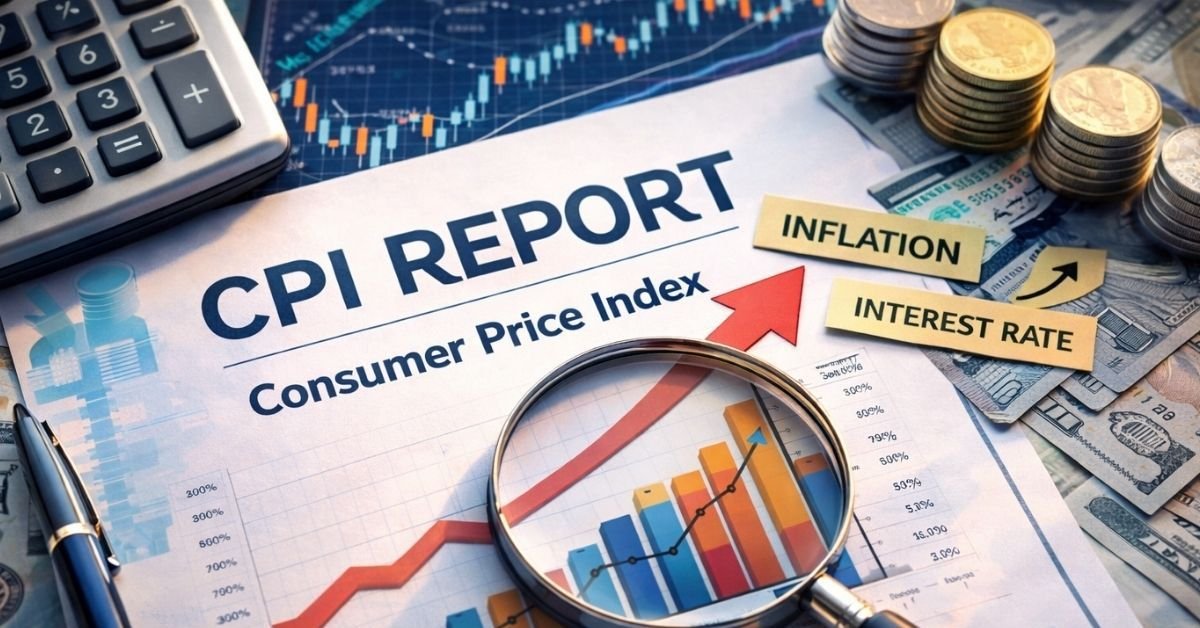
Reimagining India’s Consumer Price Index
Introduction The Consumer Price Index (CPI), which measures changes in retail prices, was 1.33% year-on-year in December 2025. This is much lower than the Reserve Bank of India’s target range of 2% to 6%, showing that overall price pressures in the economy are quite low. However, this headline figure does not show the full picture. There is still negative food inflation and differences between rural and urban price trends, which make policymaking more complex. A revised CPI series with base year 2024 is expected to be released soon. Meanwhile, concerns about the cost of living continue, especially for vulnerable households. Because of this, understanding how CPI behaves is important for making balanced and effective policy decisions. What is the Consumer Price Index (CPI)? The Consumer Price Index (CPI) is a statistical tool that shows how the prices of everyday goods and services change over time. It tracks what consumers pay for a fixed basket of items used in daily life, so it helps measure the cost of living. Another measure is the Wholesale Price Index (WPI), which tracks changes in the prices of goods at the wholesale or producer level, before they reach consumers. In India, retail inflation, which is measured using the CPI, was 1.33% in December 2025. Difference between Consumer Price Index and Wholesale Price Index Aspect Consumer Price Index (CPI) Wholesale Price Index (WPI) Meaning Measures average price changes at the retail / consumer level Measures average price changes at the wholesale / producer level Inflation Type Retail or cost-of-living inflation Wholesale or producer inflation Compiled by National Statistical Office (NSO), Ministry of Statistics and Programme Implementation (MoSPI) Office of Economic Adviser (OEA), Ministry of Commerce & Industry Base Year 2012 = 100 (revision underway to 2024) 2011–12 = 100 Use by RBI Used for inflation targeting Not used for inflation targeting Key Issues Associated with India’s Consumer Price Index Measures Needed to Strengthen India’s Consumer Price Index Conclusion The Consumer Price Index (CPI) is India’s main measure of retail inflation. However, using 2012 as the base year for a long time made it harder for the index to reflect changing consumption habits, rising importance of services, and increasing urban living costs. Now, the base year is being revised to 2024, using data from the latest Household Consumption Expenditure Survey. This update will make the CPI more accurate by improving how items are represented, how much weight they are given, and what goods and services are included. With more detailed regional data and better use of core inflation indicators, this change will also help monetary policy work more effectively. Overall, updating the CPI regularly will allow it to better reflect real changes in the cost of living in India’s fast-changing economy.
India–AI Impact Summit 2026
Context Introduction India is at an important turning point in its development, and Artificial Intelligence (AI) is becoming a major driving force. For the country, AI is not just a technology but a strategic national tool that helps make technology more accessible, inclusive, and equitable for everyone. This rapid technological progress is creating new opportunities in almost every field. At the same time, India’s presence in global technology and governance discussions is growing, showing its increasing role in shaping international policies on emerging technologies. As part of this expanding global role, the India–AI Impact Summit 2026 will be held in New Delhi from 16 to 20 February. It will be the first global AI summit to take place in the Global South. The summit is designed as an impact-focused global platform that aims to turn AI into real, measurable benefits for economies. It aligns with India’s national vision of “Welfare for All, Happiness of All” and the global idea of “AI for Humanity.” The event will bring together global leaders, policymakers, innovators, and experts to showcase AI applications and discuss future directions for governance, innovation, and sustainable development. Core Principles: The Three Sutras Articulating the AI Impact The India–AI Impact Summit 2026 is guided by three foundational pillars, referred to as Sutras, which articulate the core principles guiding global cooperation on AI. Thematic Areas: The Seven Chakras of the India–AI Impact Summit 2026 The India-AI Impact Summit 2026 has attracted significant high-level engagement, with 15–20 Heads of Government, over 50 international ministers, and more than 40 global and Indian CEOs expected to participate. Chakra Focus Areas Human Capital Advancing equitable skilling and inclusive workforce transitions for an AI-enabled future of work. Inclusion for Social Empowerment Advancing AI systems that are inclusive by design, empowering diverse communities and ensuring equitable representation. Safe and Trusted AI Building globally trusted AI systems anchored in transparency, accountability, and shared safeguards for innovation. Science Harnessing AI to accelerate frontier science, foster scientific collaboration, and translate breakthroughs into shared global progress. Resilience, Innovation, and Efficiency Driving sustainable, resource-efficient AI systems that strengthen climate resilience and sustainability. Democratizing AI Resources Promoting equitable access to foundational AI resources for inclusive innovation and sustainable development worldwide. AI for Economic Development & Social Good Leveraging AI to enhance productivity, innovation, and inclusive development across economies and societies. Through these Chakras, India aims to shape global AI norms while addressing local challenges. The outcomes of the Summit will guide policy makers, investors, and industry leaders in the years ahead. Human Capital: India’s Talent Pool Anchoring Global AI Cooperation ndia’s rapid adoption of AI is opening new pathways for innovation and inclusive growth across sectors. As technology evolves, India is advancing workforce readiness for an AI-driven economy while ensuring broad participation across regions and socio-economic groups. The Human Capital thematic working group focuses on strengthening these efforts by shaping an equitable AI skilling ecosystem that enables smooth workforce transitions and equips citizens with capabilities for emerging roles. Inclusion for Social Empowerment: India’s Approach to Inclusive AI AI offers India a powerful pathway to expand social inclusion by improving access to services and participation for communities across languages, regions, and abilities. India’s digital public infrastructure positions it well to translate AI innovations into tangible social outcomes. The Inclusion for Social Empowerment thematic working group focuses on advancing inclusive-by-design AI solutions that reflect India’s diversity, strengthen institutional readiness, and ensure AI systems remain safe, relevant, and usable, with clear benefits for underserved and vulnerable communities. Initiatives Enabling Social Empowerment through AI: Safe and Trusted AI: Enabling Responsible AI Aligned with National Priorities As AI systems grow in scale and impact, ensuring reliability, transparency, and accountability becomes central to sustaining public confidence and responsible innovation. India’s regulatory frameworks position it to contribute meaningfully to the global AI safety efforts. The Safe and Trusted AI thematic working group focuses on strengthening governance capacity and enabling shared learning across countries. India’s Efforts for Developing Safe and Accountable AI: Resilience, Innovation and Efficiency: Strengthening Resilience through Indigenous AI Innovation India’s approach to AI places strong emphasis on efficiency and sustainability, aligning technological progress with environmental responsibility and inclusive access. The Resilience, Innovation and Efficiency thematic working group builds on India’s strengths to promote efficiency as a core design principle, enabling adaptable and climate-conscious AI systems that expand access, narrow global disparities, and support a resilient, inclusive, and sustainable AI ecosystem. Measurable Outcomes in Efficient AI Development: Democratising AI Resources: Developing Shared AI Resources Development of AI systems depends on access to compute, data, and infrastructure, resources that remain unevenly distributed across countries and institutions. Open and interoperable infrastructure, combined with multilateral cooperation, can support contextualised AI development aligned with national priorities. The Democratising AI Resources thematic working group focuses on advancing equitable access and strengthening global representativeness. Key Milestones in Shared AI Infrastructure: AI for Economic Growth and Social Good: Scaling Impact through AI While AI holds immense potential to accelerate economic growth and social progress, realizing this promise at scale remains a challenge. The AI for Economic Growth and Social Good Working Group focuses on scaling AI solutions that deliver measurable economic and social outcomes. Empowering AI-Driven Economic and Social Impact: Conclusion The India–AI Impact Summit 2026 strengthens India’s position as an important platform for shaping the global direction of artificial intelligence. Guided by the Seven Chakras and the Three Sutras—People, Planet, and Progress—the Summit promotes a development-focused approach to AI. It connects policy with real-world implementation and links innovation with public benefit, creating a clear and structured path for using AI responsibly. The aim is to ensure that technological progress supports inclusive growth and sustainable development. The Summit also highlights India’s role as a global partner and convenor in AI cooperation, encouraging shared standards, collaboration, and scalable solutions that benefit society. Overall, it marks a shift from discussions to real action, showing India’s commitment to responsible, inclusive, and development-oriented use of AI.

Genetically Modified (GM) Crops
A Genetically Modified crop is created when new DNA is introduced into plant cells. Plant genetic modification entails inserting a specific stretch of DNA into the plant’s genome to confer new or different characteristics. Introduction Genetic modification (GM) is a scientific technique in which a piece of DNA is deliberately introduced into the genetic material of a living organism. In plants, this process involves adding a specific segment of DNA to the plant’s genome so that it develops new or improved traits, such as resistance to certain diseases. Globally, the most commonly grown genetically modified crops are cotton, soybeans, maize, and canola, mainly engineered for herbicide tolerance and resistance to insect pests. The United States, Brazil, Argentina, India, and Canada are the leading countries cultivating GM crops, and together they account for about 90% of the total area under GM cultivation worldwide. GM Crops and their Development Genetically modified (GM) crops were first introduced in the United States in 1994 with the Flavr Savr tomato, which was developed to slow down the ripening process and delay softening and spoilage. Even before GM crops entered agriculture, genetic modification was already being widely used in the medical field to produce products such as insulin, vaccines, and other pharmaceutical drugs on a large scale. Methods of producing GM Crops To genetically modify a crop, a specific gene that provides a desired trait—such as Cry or Cyt genes or any other useful gene—is inserted into the plant’s DNA. This process is mainly carried out using two methods: one involves recombinant DNA technology, where Agrobacterium tumefaciens is used as a natural carrier to transfer the gene into the plant, and the other is a direct method, in which the gene is introduced straight into the plant cells using physical or chemical techniques. Direct approach Agrobacterium tumefaciens–mediated gene transfer Advantages of Genetically Modified Crops Better than conventional breeding Pest resistance Virus resistance Drought-resistant plants Herbicide tolerance Sustainable agricultural practices Enhanced nutritional value Disadvantages of Genetically Modified Crops Applications of GM Crops GM Crops in India Regulatory Framework for GM Crops in India Statutory Bodies Involved Status of GM Crops in India
Revised PRIME MINISTER’S EMPLOYMENT GENERATION PROGRAMME (PMEGP)
Introduction Government of India has approved the introduction of a new credit linked subsidy programme called Prime Minister’s Employment Generation Programme (PMEGP) by merging the two schemes that were in operation till 31.03.2008 namely Prime Minister’s Rojgar Yojana (PMRY) and Rural Employment Generation Programme (REGP) for generation of employment opportunities through establishment of micro enterprises in rural as well as urban areas. PMEGP will be a central sector scheme to be administered by the Ministry of Micro, Small and Medium Enterprises (MoMSME). The Scheme will be implemented by Khadi and Village Industries Commission (KVIC), a statutory organization under the administrative control of the Ministry of MSME as the single nodal agency at the National level. At the State level, the Scheme will be implemented through State KVIC Directorates, State Khadi and Village Industries Boards (KVIBs) and District Industries Centers (DICs) and banks. The Government subsidy under the scheme will be routed by KVIC through the identified Banks for eventual distribution to the beneficiaries/entrepreneurs in their Bank accounts. However, in case of Delhi where no DIC is in existence the scheme is implemented by State office KVIC & KVIB in entire Delhi. KVIC will coordinate with State KVIBs/State DICs and monitor performance in rural and urban areas. Objectives of PMEGP Quantum and Nature of Financial Assistance i) For setting up of new micro enterprise (units) Category of Beneficiary Beneficiary’s Contribution (of project cost) Subsidy – Urban Area Subsidy – Rural Area General Category 10% 15% 25% Special Category (SC / ST / OBC / Minorities / Women / Ex-servicemen / Physically Handicapped / NER / Hill & Border Areas, etc.) 5% 25% 35% (ii) 2 nd Loan for upgradation of existing PMEGP/REGP/MUDRA units Category of Beneficiary under PMEGP Beneficiary’s Contribution (of Project Cost) Rate of Subsidy (of Project Cost) All Categories 10% 15% (20% for NER and Hill States) Eligibility Conditions of Beneficiaries For PMEGP new enterprises/units Other Eligibility Conditions of PMEGP (New units) (i) Projects without Capital Expenditure are not eligible for Financing under the scheme . (ii) Cost of the land should not be included in the Project cost. Cost of the ready built as well as long lease or rental Work-shed/Workshop can be included in the project cost subject to restricting such cost of ready built as well as long lease or rental work shed/workshop to be included in the project cost calculated for a maximum period of 3 years only. (iii) PMEGP is applicable to all new viable micro enterprises, including Village Industries projects except activities prohibited by Local Government/Authority keeping in view environment or socio-economic factors and activities indicated in the negative list of the guidelines. (Para 30 of the guidelines). (iv) Trading activities: For upgradation of existing PMEGP/REGP/MUDRA units Implementing Agencies The Scheme will be implemented by Khadi and Village Industries Commission (KVIC), Mumbai, a statutory body created by the Khadi and Village Industries Commission Act, 1956, which will be the single nodal agency at the national level. At the State level, the scheme will be implemented through State Directorates of KVIC, State Khadi and Village Industries Boards (KVIBs) and District Industries Centers and COIR Board for coir related activities others agencies like National Scheduled Tribes Finance and Development Corporation (NSTFDC), National Backward Classes Finance and Development Corporation (NBFDC), Indian Institute of Entrepreneurship, Guwahati, National Institute of Entrepreneurship and small Business Development, National Institute for Micro small and Medium Enterprises, Institute of Entrepreneurship development, Odisha, TR&TCs, O/o DCMSME and MSME DIs etc. Can also be enrolled as IAs, as and when necessary. All the IAs including the AIs that may be enrolled in future will be allowed to receive and process applications in all rears irrespective of the rural or urban category. KVIC will coordinate with state KVIBs/ State DICs other IAs and monitor performance in rural and urban areas. They IAs will also involve National Small Industries Corporation (NSIC), Udyami Mitras empanelled under Rajiv Gandhi Udami Mitra Yojna, RSTEIs/RUDSETIs, Panchayati Raj Institutions, NGOs of repute and other relevant agencies in identification of beneficiaries under PMEGP. Coir Board will be involved in identifying Coir units for their setting up under PMEGP in both rural as well as urban areas, their hand holding and monitoring. Other Agencies Financial Institutions Identification of beneficiaries The identification of beneficiaries will be done at the District level by implementing agencies and Banks. The Banks should be involved right from the beginning to ensure that bunching of applications is avoided. The applicants who have already under gone training of at least 10 days (for off line mode) / 60 hours (for online mode) under EDP or Skill Development Programme (ESDP) or vocational training need not undergo EDP training again. Priority will be given to persons affected bu natural calamities/disasters in the areas which are declared as affected by ‘Disaster’ as defined under Section 2(d) of the Disaster management Act 2005 by the Ministry of Home affairs. Exaggeration in the cost of the project with a view only to availing higher amount of subsidy should not be allowed. KVIC in consultations with Bankers Association had devised scoring model (Score card) which is being used by IAs for appraisal of PMEGP proposals and subsequent forwarding of applications/proposals to the Banks. The scoring model is displayed on the website of KVIC and Ministry. Bank Finance Banks sanction 90% of the total project cost for General Category beneficiaries/institutions and 95% for Special Category beneficiaries/institutions, and disburse the full sanctioned amount for setting up the project. Bank finance is provided as: The maximum project cost under PMEGP is ₹50 lakh, which includes both capital expenditure and working capital. The working capital limit is: If the capital expenditure itself reaches the maximum project cost ceiling, banks may sanction additional funds beyond ₹50 lakh (manufacturing) and ₹20 lakh (service sector); however, no subsidy is available on this additional amount. If, after three years from the start of production, the actual capital and working capital expenditure is less than the sanctioned amount, the excess margin money subsidy corresponding to the shortfall must be refunded to KVIC. Rate
Unlocking the Potential of Divyangjans in India
Context As the International Day of Persons with Disabilities (PwDs) (3rd December 2025) reminds us of the need for an inclusive society, India is making strong progress toward inclusivity for PwDs, driven by major legal and policy reforms, government initiatives and landmark events like Purple Fest 2025. What are the Key Legal Framework and Government Initiatives for Disability Rights in India? Legal Framework for Empowering Divyangjans Rights of Persons with Disabilities Act, 2016 (RPwD Act) National Trust Act, 1999 Rehabilitation Council of India (RCI) Act, 1992 Scheme for Implementation of RPwD Act, 2016 (SIPDA) Government Initiatives Sugamya Bharat Abhiyan (Accessible India Campaign) Assistance to Disabled Persons (ADIP) Scheme Unique ID for Persons with Disabilities (UDID) Deendayal Divyangjan Rehabilitation Scheme (DDRS) PRASHAST App National Divyangjan Finance and Development Corporation (NDFDC) PM-DAKSH–DEPwD Portal Divya Kala Mela Artificial Limbs Manufacturing Corporation of India (ALIMCO) Promotion of Indian Sign Language (ISL) What are the Challenges Confronting Persons with Disabilities (PwD) in India? Accessibility Challenges Gaps in Inclusive Education Employment and Economic Exclusion High Healthcare Costs and Limited Support What Further Steps are Necessary to Advance Inclusivity and Accessibility for PwDs in India? Bridge the Governance Gap Universalise Accessibility Economic Empowerment through Skills Promote Innovation in Assistive Technology Conclusion India has put in place a strong legal and policy framework for the rights of persons with disabilities, led by the Rights of Persons with Disabilities Act, 2016 and the Accessible India Campaign. However, the real challenge lies in effective implementation on the ground. Strict enforcement of disability laws, timely compliance by institutions, and strong accountability mechanisms are essential to turn rights into reality. At the same time, persons with disabilities need greater access to skill development, employment opportunities, and entrepreneurship so that they can participate meaningfully in economic growth. Investing in accessible and affordable technologies, including digital and assistive innovations, will further remove everyday barriers. Together, these steps are crucial to ensure the full inclusion of persons with disabilities in India’s vision of a Viksit Bharat.


