Introduction The NICL AO 2025 notification is out! National Insurance Company Limited (NICL) has announced 266 vacancies for the post of Administrative Officer (AO). Out of these, 170 posts are for Generalists, and 96 are for Specialists in areas like IT, Legal, Finance, and more. The online application process has already started and will remain open till 3rd July 2025.The Phase I (Preliminary) Exam is expected to be held on 20th July 2025, followed by Phase II (Mains) and an Interview for shortlisted candidates. If you’re interested in a government job in the insurance sector, this is a great opportunity to apply! NICL AO Exam 2025 Highlights Total Vacancies: 266 posts for Administrative Officer (Scale I) Application Dates: Exam Dates: Age Limit (as on 1st May 2025): Eligibility: This is a great opportunity if you’re aiming for a secure government job in the insurance sector! Particulars Details Conducting Body National Insurance Company Limited (NICL) Official Website https://nationalinsurance.nic.co.in Post Name Administrative Officer (Scale I) Total Vacancies 266 (Generalists: 170, Specialists: 96) Mode of Exam Online Stages of Selection 3 Phases: • Phase I – Preliminary• Phase II – Main• Phase III – Interview Phase I – Prelims 100 marks, 60 minutes Phase II – Mains • Paper 1 (Objective): 250 marks, 150 minutes (for both Generalists & Specialists)• Paper 2 (Descriptive): 30 marks, 30 minutes (Essay, Preci and Comprehension 10 marks each) Interview Weightage 80:20 (Written: Interview) Online Registration & Fee Payment 12th June 2025 to 3rd July 2025 (both days inclusive) Phase I Exam Date (Tentative) 20th July 2025 Phase II Exam Date (Tentative) 31st August 2025 Call Letter Download To be announced later NICL AO Notification The NICL AO 2025 recruitment is a great opportunity for those looking to build a stable career in the insurance sector. A total of 266 vacancies are available — for both Generalist and Specialist posts. Key Points: NICL AO Vacancy NICL has announced 266 vacancies for Scale I Administrative Officer posts in its 2025 recruitment drive. These include 170 Generalist positions and 96 Specialist roles across Finance, Legal, IT, Automobile Engineering, and MBBS disciplines. Candidates must ensure they meet the age (21–30 years as on 1st May 2025) and educational qualifications before applying. Only one application per candidate is permitted, and applications must be submitted online between 12th June and 3rd July 2025. Discipline UR OBC SC ST EWS Total Vacancies Generalist 68 47 26 12 17 170 Specialists Doctors (MBBS) 4 3 1 1 1 10 Legal 8 7 2 1 2 20 Finance 8 6 3 1 2 20 Information Technology 8 6 2 2 2 20 Automobile Engineers 8 6 3 1 2 20 Specialist Backlog Doctors (MBBS) – – 3 1 – 4 Finance – – 1 – – 1 Automobile Engineers – 1 – – – 1 Grand Total – – – – – 266 NICL AO Exam Pattern and Syllabus 2025 NICL AO Exam Pattern The NICL AO exam pattern delineates the comprehensive selection process, comprising multiple stages. The pattern highlights the examination structure, marking scheme, subjects covered, and the overall assessment criteria for aspiring Administrative Officers. These stages include: Discipline Selection Process Generalist 1. Prelims – Objective Test2. Mains – Objective Test and Descriptive Test3. Interview Specialists(Doctors, Legal, Finance, IT, Automobile Engineers) 1. Prelims – Objective Test2. Mains – Objective Test and Descriptive Test3. Interview Part A – Applicable for all applicants other than for Hindi Officers. The written exam will be conducted in two phases Phase – I: Preliminary Examination online Preliminary Examination consisting of Objective Tests (Multiple Choice type Questions) for 100 marks will be conducted online (applicable for all disciplines except Hindi Officers). This test would be of 60 minutes duration consisting of 3 sections (with separate timings for each section) Name of Test No. of Questions Marks Duration Medium of Exam English Language 30 30 20 minutes English Reasoning Ability 35 35 20 minutes English / Hindi Quantitative Aptitude 35 35 20 minutes English / Hindi Total 100 100 60 minutes English / Hindi Phase – II: Main Examination online (i) Objective Test: The Objective Test of 3 Hours duration consists of five & six sections for Generalists for total 250 Marks Name of Test No. of Questions Marks Duration Reasoning Ability 50 50 40 minutes English Language 50 50 40 minutes General Awareness 50 50 30 minutes Computer Knowledge 50 50 30 minutes Quantitative Aptitude 50 50 40 minutes Total 250 250 180 minutes (3 hours) (i) Objective Test: The Objective Test of 3 Hours duration consists of five & six sections for Specialists for total 250 Marks Name of Test No. of Questions Marks Duration Reasoning Ability 40 40 35 minutes English Language 40 40 30 minutes General Awareness 40 40 20 minutes Computer Knowledge 40 40 25 minutes Quantitative Aptitude 40 40 35 minutes Technical & Professional Knowledge in Relevant Discipline (Specialist Only) 50 50 35 minutes Total 250 250 180 minutes (3 hours) (ii) Descriptive Test: The descriptive Test of 30 Minutes duration with 30 marks will be a Test of English Language (Essay – 10 Marks, Precise – 10 & Comprehension – 10 marks). Note: Part B. – Applicable for Hindi Officers only Exam Format for Hindi (Rajbhasha) Officers Hindi Language Descriptive Test Marks Distribution for Hindi Language Section: Task Marks Essay Writing 20 marks Precis Writing 10 marks Comprehension 10 marks Letter Writing 10 marks Total 50 marks Typing Requirements This section is crucial for candidates applying for Hindi Officer roles, so practicing Hindi typing and understanding essay/letter formats in advance will really help. Let me know if you want a practice set for this section too! Part C – Interview Candidates will be selected for the Interview stage based on their overall marks in the Main Examination (Phase II), as per the rules mentioned in the NICL AO 2025 notification. This applies to: Only those who score well enough in the Mains (or Written Exam for Hindi Officers) will be shortlisted and called for the Interview, which
Cooperative Banks in India
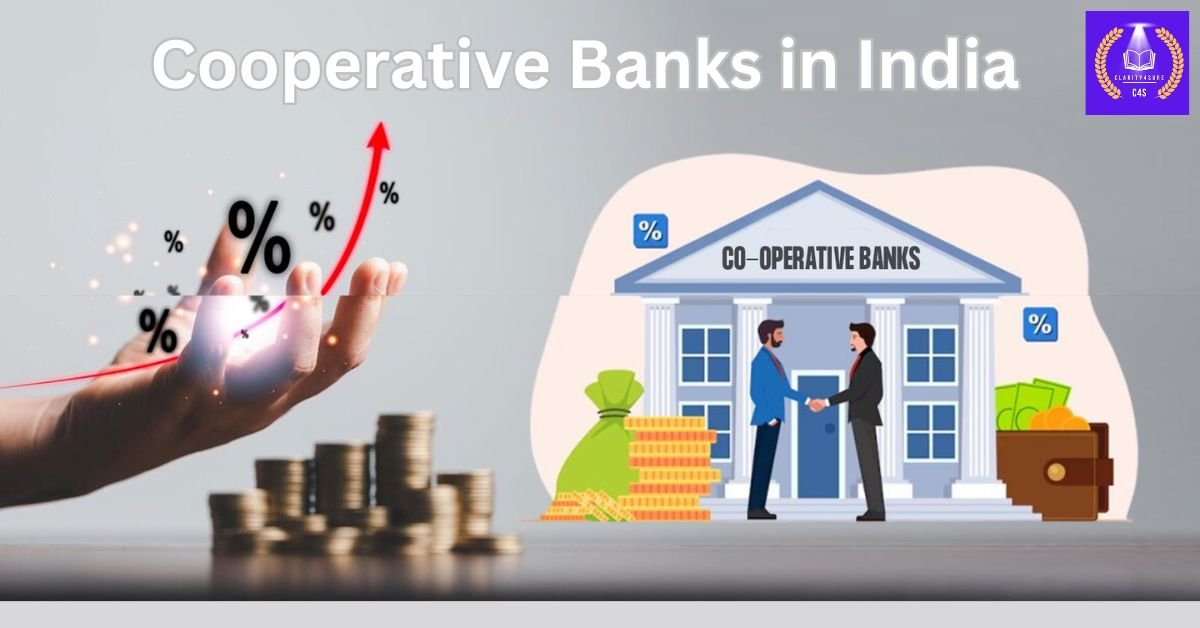
What are Cooperative Banks? Cooperative Banks are a type of bank in India that are run by the people, for the people. They work on the idea of helping each other—members pool their money to give loans and financial services to fellow members. Instead of focusing only on profit, these banks focus more on supporting their members’ financial needs and building a strong community. Features of Cooperative Banks in India Cooperative Banks are special because they are owned and run by the people who use them. That means the customers are also the owners. These banks are called “cooperative” because they are based on teamwork and mutual support. Everyone has an equal say in how the bank is run—each person gets one vote, no matter how much money they have. The goal isn’t to make huge profits, but to help each other financially. Like regular banks, they give loans and also take deposits from people. Cooperative Banks are officially formed and registered under a special law made by the state government where they operate. Each state has its own Cooperative Societies Act for this. At the national level, NABARD (National Bank for Agriculture and Rural Development) is the top organization that guides and supports all cooperative banks in India, especially those working in rural areas. Regulation of Cooperative Banks in India In India, Cooperative Banks are controlled by two main authorities: So, while the RBI handles financial rules, the RCS takes care of day-to-day management and structure. Difference between Commercial Banks and Cooperative Banks Basis of Difference Commercial Banks Cooperative Banks Formed as Joint-stock Banks Co-operative organizations Governing Act Banking Regulation Act, 1949 Co-operative Societies Act of 1904 Regulation Controlled directly by the Reserve Bank of India (RBI) Governed by the Registrar of Co-operative Societies SLR and CRR Requirements Relatively Higher Relatively Lower Services Offered Offer a wide range of banking services Offer a limited range of banking services Area of Operation Operate on a large scale, usually across the country Operate on a small scale, generally region-specific Main Functions Provide short-term finance to industry, trade, commerce, etc. Primarily meet the credit needs of farmers and rural borrowers Rate of Interest Lower interest rates on deposits Slightly higher interest rates on deposits Borrowers Only account holders; no voting rights or policy influence Member-shareholders; have voting rights and influence on lending policy Flexibility in Lending More flexible in lending options Limited flexibility due to strict cooperative rules Structure of Cooperative Banks in India In India, Cooperative Banks are mainly divided into two types based on where they operate: Each of these categories is further broken down into smaller types based on the level they operate at and the kind of services they offer. Urban Cooperative Banks (UCBs) – These are banks that mostly work in cities and towns.They usually give loans to small business owners, shopkeepers, and individuals who need financial help. Based on how they are regulated, UCBs are divided into: Rural Cooperative Banks (RCBs) – These banks are meant for villages and rural areas.They support farmers and rural workers by giving them loans and other financial services. Based on the purpose and duration of loans, RCBs are of two types: Short-Term Structures Short-Term Rural Cooperative Credit Structure These banks give loans for up to 1 year to help farmers with things like buying seeds, fertilizers, and doing seasonal farming work.They work in three levels (3-tier system): State Cooperative Banks (SCBs) District Cooperative Central Banks (DCCBs) Primary Agricultural Credit Societies (PACS) Long-Term Rural Cooperative Credit Structure These banks provide loans for bigger farming needs that take more time and money, like buying a tractor, digging a well, or improving land.Loan periods range from 1.5 years to 25 years.They work in two levels (2-tier system): State Cooperative Agriculture and Rural Development Banks (SCARDBs) Primary Cooperative Agriculture and Rural Development Banks (PCARDBs) Significance of Cooperative Banks in India Cooperative banks have a unique way of working, which makes them really important for India’s economy especially for people in villages and small towns. Here’s what makes them so valuable: 1. Reaching the Unbanked (Financial Inclusion) Many people in India still don’t use banks. Cooperative banks help bring banking to those who’ve never had it before, especially in rural and remote areas. 2. Easy Loans for Everyone (Access to Credit) These banks give easy loans at reasonable interest rates, which helps farmers, small shop owners, and others who often can’t get loans from big banks. 3. Helping People Save (Promoting Savings) They encourage people to save money by offering savings and deposit schemes that fit the daily needs of people in rural areas. 4. Supporting Local Needs (Local Development) Because they are deeply rooted in their communities, cooperative banks understand local problems and provide financial help for things like farming, irrigation, or small business growth. 5. Uplifting Rural India (Rural Development) Most cooperative banks are located in rural areas and focus on helping farmers, small businesses, and poor families meet their financial needs. 6. Teaching Money Skills (Financial Literacy) They also teach people how to manage money wisely, understand loans, savings, and banking—something very important in areas with low education levels. Driving Inclusive Growth By giving financial help to people who are often left out by big banks, cooperative banks boost small businesses, self-employment, and local industries.They are especially helpful for people who don’t meet the strict rules of commercial banks. As India continues to grow and use more digital technology, cooperative banks have the power to help even more people—in both rural and urban areas—leading the country toward fair and inclusive economic progress. Banking Regulation (Amendment) Act, 2020 In light of the crises related to some UCBs, the Banking Regulation Act, 1949 was amended through the Banking Regulation (Amendment) Act, 2020. It is aimed to bring all the UCBs and Multi-State Cooperative Banks under the direct supervision of the Reserve Bank of India (RBI). Major Features of the Act Conclusion Cooperative banks are a pillar of India’s banking system, offering affordable financial services to
Inland Fisheries & Aquaculture Meet 2025
Why in News? The Department of Fisheries, Ministry of Fisheries, Animal Husbandry and Dairying organized the “Inland Fisheries & Aquaculture Meet 2025,” focusing on the development of inland fisheries and aquaculture in Indore, Madhya Pradesh. Inauguration of Key Fisheries Projects under PMMSY Support to Beneficiaries and Technological Integration Growth of Inland Fisheries Since 2015 Technology-Driven Growth and Innovation State of India’s Fisheries Sector Pradhan Mantri Matsya Sampada Yojana (PMMSY) Blue Revolution The Blue Revolution is a major initiative aimed at growing the fisheries sector in a sustainable and organized way. It focuses on increasing fish production through inland and marine fisheries as well as aquaculture. To make this more effective, the government combined all existing fisheries-related schemes into one unified program called “Blue Revolution: Integrated Development and Management of Fisheries.” Run by the Ministry of Agriculture and Farmers Welfare, the program provides focused support to every part of the fisheries sector. Main goals of the Blue Revolution include: Summary Table Category Details Event Inland Fisheries & Aquaculture Meet 2025 Organizer Department of Fisheries, Ministry of Fisheries, Animal Husbandry and Dairying Location Indore, Madhya Pradesh Purpose Boost development of inland fisheries and aquaculture Major Launches Reservoir Fisheries Cluster at Halali Dam, new PMMSY-supported projects Support to Stakeholders Distribution of certificates to cooperatives, FFPOs, start-ups; Kisan Credit Cards (KCCs); aquaculture insurance Financial Investment (Since 2015) ₹38,572 crore invested in fisheries sector Fish Production Growth Increased from 95.79 lakh tonnes (2013–14) to 195 lakh tonnes (2024–25); 75% from inland fisheries Inland Production Increase Grew by 140% to 147.37 lakh tonnes Livelihood Impact Supports rural development, year-round production, better land utilization for small/marginal farmers Technological Integration 45,000 inland units approved under PMMSY; pilot project with ICAR-CIFRI using drones for fish transport & monitoring India’s Global Rank 3rd in overall fish production, 2nd in aquaculture (after China), 4th in fish exports Top Producing States Andhra Pradesh, West Bengal, Karnataka About PMMSY Pradhan Mantri Matsya Sampada Yojana (2020–2025) focuses on sustainable fisheries growth and fisher welfare PMMSY Objectives Bridge production gaps, modernize value chain, enhance socio-economic welfare Blue Revolution Umbrella scheme for fisheries growth through inland, marine, and aquaculture sectors Blue Revolution Goals Increase fish production sustainably, use modern tech, ensure food security, generate jobs, support weaker sections
Mastering IRDAI Phase 2 Management PYQs: Trends and Insights for Success
Introduction The IRDAI Phase 2 examination not only assesses candidates’ domain knowledge in insurance but also places significant emphasis on managerial competence. Paper III – Insurance and Management, particularly the Management section, tests aspirants on fundamental principles of management, organizational behavior, communication, leadership, and business ethics — all essential for effective governance in the insurance and financial services sector. This blog offers an in-depth exploration of Previous Year Questions (PYQs) from 2017 to 2024, identifying core managerial themes and real-world application areas that frequently feature in the exam. The PYQs reveal IRDAI’s focus on evaluating not just theoretical clarity but also the ability to apply management concepts in practical, evolving business contexts. Key themes include leadership theories, decision-making processes, motivation models, HR practices, and digital transformation in business environments. Case-study based questions further test the candidate’s critical thinking, ethical reasoning, and people management skills — especially in situations involving communication barriers, team conflicts, or customer service challenges. By thoroughly analyzing these PYQs, candidates can pinpoint recurring focus areas such as: This section not only assesses one’s conceptual foundation in management but also one’s adaptability to solve problems in a people-centric, regulatory, and evolving service sector environment. With the right blend of structured understanding, strategic revision, and case-based thinking, aspirants can confidently approach the Management section and significantly enhance their overall performance in IRDAI Phase 2. Importance of Analyzing Previous Year Questions (PYQs) Analyzing Previous Year Questions (PYQs) is an indispensable component of successful exam preparation, providing a wealth of information that significantly improves your study approach. Incorporating PYQs into your study regimen is a highly effective tactic for strengthening your preparation, refining your test-taking proficiency, and significantly boosting your prospects of success in the IRDAI Grade A exam. Regular practice and thorough analysis can profoundly impact your performance. Exam Pattern & Syllabus Phase II: Mains Examination The IRDAI Assistant Manager Mains Exam is conducted in an offline, pen-and-paper format, requiring candidates to demonstrate strong descriptive writing skills. The exam consists of three papers, each carrying 100 marks, summing up to a total of 300 marks. The entire examination lasts for 180 minutes, with 60 minutes allotted per paper. Management syllabus a) Its nature and scope; b) Management Processes – Planning, Organization, Staffing, Directing and Controlling; role of a Manager in an Organization; c) Leadership: The tasks of a leader; leadership styles; leadership theories; A successful leader versus an effective leader; d) Human Resource Development- Concept of HRD; Goals of HRD; Career Planning – Training and Development; e) Performance Appraisal – Potential appraisal and development – feedback and performance counselling – rewards – employee welfare; f) Motivation, Morale and Incentives: Theories of Motivation; How Managers Motivate; Concept of Morale; Factors determining morale; Role of Incentives in Building up Morale; g) Communication: Steps in the Communication Process; Communication Channels; Oral versus Written Communication; Verbal versus non-verbal Communication; upward, downward and lateral communication; Barriers to Communication; h) Role of Information Technology; i) Corporate Governance: Factors affecting Corporate Governance; Mechanisms of Corporate Governance. PYQ 2017-2023-2024 Paper III – Insurance and Management – Part 2 – Management Attempt any Five questions. Each question carries 10 marks. Write answer in 100 Words a) What is leadership strategy and explain various styles of leadership? b) Explain the process of effective decision making? c) What is importance of digital Marketing? d) What is importance of Business ethics? e) Explain team building process. f) Case Study based Question on Empathy and Body Language: A manager at a large retail store observed an increase in customer complaints regarding interactions with staff members. To address this issue, a workshop focusing on empathy and effective body language was conducted to improve customer service. During the workshop, a role-play scenario was enacted. An employee named Sarah was tasked with handling a customer named John, who was upset about a defective product he had purchased. Initially, Sarah approached John with her arms crossed and avoided eye contact, which seemed to escalate John’s frustration. After a brief pause, Sarah recalled her training. She uncrossed her arms, maintained eye contact, and spoke in a calm voice to acknowledge John’s concerns. She empathized with his situation by stating, “I understand how upsetting it can be to receive a product that doesn’t meet your expectations.” Sarah’s adjustment in her approach visibly calmed John, and they proceeded to resolve the issue amicably. Questions: IRDAI Grade A 2023 – Phase 2 Sub-section – Paper III – Insurance and Management – Part 2 – Management (65 marks) 3. A passage was given, you have read it and answer 3 questions below it. (15 marks) In a multinational corporation, effective communication is pivotal for seamless operations across diverse geographical locations. The case study focuses on XYZ Corp, a global tech giant with offices in over 30 countries. Despite advanced technological tools, XYZ Corp faces significant challenges in internal communication. For instance, during the rollout of a new global policy, the U.S. headquarters sent out detailed emails and hosted video conferences to explain the changes. However, employees in the East Asian offices reported confusion and a lack of clarity about the implementations. The feedback highlighted issues such as the timing of video conferences not being suitable for all time zones and the translations of emails not capturing the nuances of the new policy. Additionally, the company’s reliance on written communication has been identified as a barrier for some non-native English speakers who prefer more direct, verbal instructions. These communication barriers have led to delays in project deadlines and a noticeable drop in employee satisfaction scores. Questions: A. Identify and discuss the key communication barriers faced by XYZ Corp as described in the passage. (5 marks)B. What strategies could XYZ Corp implement to overcome the communication challenges highlighted in the case study? (5 marks)C. How could addressing communication barriers at XYZ Corp impact employee morale and productivity? (5 marks) 4. Differentiate between personnel management and human resource management. (10 marks) 5. Analyse the below graph and answer the following questions below it: (10

Mastering IRDAI Phase 2 Insurance PYQs: Trends and Insights for Success
Introduction The IRDAI Phase 2 examination has consistently tested candidates’ understanding of the dynamic and evolving insurance landscape. Paper III – Insurance and Management, particularly the Insurance section, demands not only a strong grasp of theoretical concepts but also practical insights into the real-world challenges and opportunities in the insurance sector. This blog delves deep into previous years’ questions (PYQs) from 2017 to 2024, offering a comprehensive analysis of recurring themes, emerging topics, and strategic focus areas. Whether it’s reinsurance, insurance penetration, or the role of intermediaries, the PYQs highlight the industry’s response to economic cycles, regulatory shifts, and technological advancements. Key themes such as the impact of business cycles on insurance, mobilizing savings, and the integration of digital platforms like BimaSugam reflect the industry’s adaptation to India’s changing economic priorities. Moreover, questions on dynamic vs static risks, insurable interest, and geopolitical challenges underscore the evolving complexity of the insurance sector. By exploring these PYQs, candidates can identify important topics like: This blog equips aspirants with actionable insights, structured analysis, and a strategic approach to ace the Insurance section of the IRDAI Phase 2 exam. Importance of Analyzing Previous Year Questions (PYQs) Analyzing Previous Year Questions (PYQs) is an indispensable component of successful exam preparation, providing a wealth of information that significantly improves your study approach. Incorporating PYQs into your study regimen is a highly effective tactic for strengthening your preparation, refining your test-taking proficiency, and significantly boosting your prospects of success in the IRDAI Grade A exam. Regular practice and thorough analysis can profoundly impact your performance. Exam Pattern & Syllabus Phase II: Mains Examination The IRDAI Assistant Manager Mains Exam is conducted in an offline, pen-and-paper format, requiring candidates to demonstrate strong descriptive writing skills. The exam consists of three papers, each carrying 100 marks, summing up to a total of 300 marks. The entire examination lasts for 180 minutes, with 60 minutes allotted per paper. Insurance syllabus a) History of Indian Insurance, principles of Insurance; b) Risk and uncertainty, pooling and diversification of risk, Indemnity and Insurable interest; c) Legal foundations of Insurance, basics in Group/Health Insurance/Pensions; Intermediation: role in mobilizing savings, evolution of various types and Bancassurance in India; d) Functions performed by Insurers: Product design, pricing, distribution, underwriting, claims, Investment and Reinsurance; e) Insurance lines and products: Property-Liability, Life Insurance and Annuities and Health Insurance; Liability risks and Insurance, valuation and Solvency requirements, Specialist Insurance lines in India – Agricultural and Export Credit Guarantee; Reinsurance, GIC of India, obligator sessions and retention of risk within the Country. IRDAI Grade A – Phase 2 :Paper III – Insurance and ManagementSub-section Part 1 – Insurance PYQ 2017 Part 1 – Insurance Attempt any Five questions. Each question carries 10 marks. Write answer in 100 Words. a) What is reinsurance and what is its importance? b) What is concentration risk and how to manage and mitigate? c) Discuss insurance penetration in India and compare India’s growth with the US and China for life and non-life insurance penetration from 2013-2015. d) Role of brokers and banks in insurance as intermediaries. e) What is insurance density and does high insurance density mean high insurance inclusion? f) What is insurable interest? g) What is co-insurance and Comment on co-insurance from a risk management point of view? PYQ 2023Part 1 – Insurance (35 Marks) Answer the following questions (2-3) based on the data given in the table below: (10 marks) Table 1: Expanded Performance Data for 15 Classes of Business Over 10 Years Class of Business Year 1 Premiums ($M) Year 10 Premiums ($M) Percentage Growth Average Annual Growth (%) Claims Settlement Ratio (%) Net Profit/Loss Ratio (%) Auto 100 200 100% 7.2% 95% 12% Life 150 300 100% 7.2% 90% 15% Health 120 240 100% 7.2% 88% 10% Property 80 160 100% 7.2% 93% 8% Casualty 50 75 50% 4.1% 96% 6% Marine 70 105 50% 4.1% 85% 9% Aviation 30 45 50% 4.1% 89% 18% Liability 60 90 50% 4.1% 92% 5% Reinsurance 110 165 50% 4.1% 89% 11% Agricultural 40 60 50% 4.1% 95% 10% Export Credit 130 195 50% 4.1% 82% 14% Cyber 90 135 50% 4.1% 87% 7% Fire 100 150 50% 4.1% 90% 9% Travel 115 172.5 50% 4.1% 93% 8% Pet 95 142.5 50% 4.1% 93% 2% Questions: Read the following passage: Passage:Person A: I’ve been looking into different policies lately because I want to ensure my family is financially secure if something unexpected happens to me. The plan I’m considering promises a payout to my family in case of my death, which can help cover living expenses and debts. Person B: That sounds like a crucial safety net. I’ve been focusing on a different kind of plan—something that covers mishaps. For instance, if I were to get injured in an accident and couldn’t work, this policy would help cover my medical bills and even provide some income replacement during my recovery. Person A: Absolutely, it’s all about reducing financial burdens during tough times. My choice helps take care of long-term security by providing a lump sum, which is especially important since I have young kids. Person B: Right, and while my focus is more immediate, dealing with unforeseen events that could derail my day-to-day life, it’s comforting to know that there are specific plans aimed at protecting against those short-term disruptions. Questions:A. What is the type of insurance Person A is discussing? (2.5 marks) B. Compare the insurance discussed by Person A with that mentioned by Person (5 marks) PYQ 2024 Part 1 – Insurance (35 Marks) Q1. Answer any four out of the six questions given below in 150 words each. (7.5 x 4 = 30 Marks) A. Explain the differences between dynamic risk and static risk. B. What are risks, perils, and hazards in the insurance industry? C. Discuss the concept of insurable interest and explain how it is identified in marine insurance, property insurance, and life insurance. D. Why can’t pure risk be controlled? Discuss the difficulties insurers face in

IRDAI Phase 2 ESI PYQ Analysis
Introduction The IRDAI Phase 2 Economic and Social Issues (ESI) Analysis plays a crucial role in understanding the evolving landscape of the insurance sector. This phase examines key economic trends, regulatory developments, and social factors impacting insurance penetration and financial stability. In recent years, insurance accessibility, digital transformation, and sustainability have become focal points for policymakers and industry leaders. The Phase 2 analysis deal into topics such as deposit crunches, risk-based capital frameworks, and India’s transition towards a sustainable economy, providing insights into how these factors shape the insurance industry. In this blog, we dive into previous years’ questions—especially from 2017 to 2024—to uncover trends, frequently asked themes, and strategic insights that can help candidates prepare effectively for this crucial section. Whether it’s Direct Benefit Transfer (DBT), FDI in insurance, or digital platforms like BimaSugam, the ESI paper reflects the evolving economic priorities of the nation and their intersection with financial protection. Importance of Analyzing Previous Year Questions (PYQs) Examining PYQs plays a crucial role in effective exam preparation, offering valuable insights that enhance your study strategy. 1. Identifying Exam Trends 2. Mastering Time Management 3. Tracking Performance and Self-Assessment 4. Understanding the Examiner’s Approach 5. Building Exam Confidence 6. Developing an Effective Revision Strategy Integrating PYQs into your study routine is a powerful strategy for boosting preparation, refining test-taking skills, and increasing your chances of success in the IRDAI Grade A exam. Consistent practice and analysis can make a significant difference in your performance! Exam Pattern & Syllabus Phase II: Mains Examination The IRDAI Assistant Manager Mains Exam is conducted in an offline, pen-and-paper format, requiring candidates to demonstrate strong descriptive writing skills. The exam consists of three papers, each carrying 100 marks, summing up to a total of 300 marks. The entire examination lasts for 180 minutes, with 60 minutes allotted per paper. Paper II – Economic and Social issues impacting insurance Syllabus a) Economic Growth, business cycles and insurance penetration, impact of age structure on economy, application of utility theory to insurance premium setting, macroeconomic factors including catastrophes and pandemics that may impact insurers and insurance markets; b) Financial markets, Financial Institutions and financial services integration and risks arising from interconnectedness; systemic risk and concentration risk; c) Economic capital and risk based capital requirements, economic impact of risk transfer arrangements including reinsurance, contribution of Insurance sector to sustainable and responsible development of economy, Insurance Investments in Infrastructure sector; d) Economic reforms in India leading to Insurance sector reforms, Insurance regulation – financial and market conduct regulations, functions of IRDAI, role of an Actuary, de-tariffing in India, motor business and Indian experience, changing Insurance Regulations/Laws and FSLRC; e) Social structure in India, Insurance in rural and social sectors and obligations of Insurers thereto, Indian Micro-Insurance experience, Social security laws and implementation thereof. RSBY – Health insurance scheme for Below Poverty Line (BPL) families. ESI PYQ (2024, 2023, 2017) IRDAI Grade A 2024 – Phase 2 – (Recollected Questions) Q1. Answer any three questions out of the five given below in around 300 words each (3 × 24 = 72 Marks) A. What are the initiatives aimed at achieving last-mile connectivity in the insurance sector? B. Discuss the impact of deposit crunches on the insurance sector. C. What are the advantages and disadvantages of technology adoption in the insurance sector? D. Explain the concept of Risk-Based Capital and its implementation and supervision in the insurance industry. E. How is India transitioning towards a sustainable economy? Q2. Answer any four questions out of the five given below in around 100 words each(4 × 7 = 28 Marks) A. What is PM VayaVandanaYojana, and what are its key features? B. Explain the concept of Central Bank Digital Currency (CBDC) and its relevance in the current financial system. C. Discuss Sovereign Green Bonds and their usefulness in the insurance sector. D. What are the techniques for loss minimization and reduction in the insurance industry? E. Explain the role of actuaries in the insurance sector and their importance in risk management. IRDAI Grade A 2023 – Phase 2 – (Recollected Questions) Q1. Answer any three questions out of the five given below in around 300 words each (3 × 24 = 72 Marks) Part 2-7 marks. IRDAI Grade A 2017 – Phase 2 – (Recollected Questions) Q1. Answer any three questions out of the five given below in around 300 words each (3 × 24 = 72 Marks) a) Recently, the Government of India highlighted the success of the Direct Benefit Scheme. Discuss the main objectives of this scheme and the key enabler – JAM – for an efficacious implementation of DBT. b) Evaluate the social and economic impact of the Make in India movement. What are the challenges faced under this movement? c) What is GST? Compare it with the earlier tax regime with respect to any two of the following stakeholders: d) Atal Pension Yojana scheme was designed to encourage savings for retirement. Discuss in detail the key features of the Atal Pension Yojana and the role pensions play in an individual’s life. e) What tax benefits do different pension and insurance schemes offer? How can these benefits enhance financial planning? Part 2-7 marks. Write answer in 100 Words a) Explain in brief the major highlights and objectives of Pradhan MantriFasalBimaYojana (PMFBY). b) Inflation is not good for the country; how can the monetary policy decision tackle the inflationary period? c) What are the components of household savings and discuss the contribution of insurance in household savings? d) What is the role of small finance banks in financial inclusion? e) Explain the role of marine insurance in boosting trade and commerce. Topic-Wise PYQ Mapping with Syllabus: Syllabus Topic PYQs Years Asked Age structure impact Declining young population & insurance 2023 Risk-based capital Risk-based capital: concept & supervision 2024 Insurance regulation Role of IRDAI, Underwriting, Brokers 2023, 2024 Insurance for social sector PMFBY, PMVVY, APY, Ayushman Bharat 2017, 2023, 2024 Sustainable development Green bonds, sustainable economy 2024 Financial market linkage Deposit
Rashtriya Gokul Mission
What is Rashtriya Gokul Mission? This is a flagship scheme focused on the development and conservation of India’s indigenous bovine breeds. The main goal of the mission is to boost milk production and improve productivity in a sustainable way. Launched In: December 2014Ministry: Ministry of Fisheries, Animal Husbandry, and Dairying Funding Pattern:The scheme is mostly run through 100% grant-in-aid, with a few specific components receiving subsidies: Aim of Rashtriya Gokul Mission: Significance: The Rashtriya Gokul Mission (RGM) is expected to boost the overall productivity of cattle and buffaloes across the country, especially helping small and marginal farmers. It will also be particularly beneficial for women, as they carry out more than 70% of the work in livestock farming. Components: key areas of focus under this scheme include: Implementing Agency: The Rashtriya Gokul Mission (RGM) is carried out through State Implementing Agencies (SIAs), mainly the Livestock Development Boards in each state Key Initiatives under the Mission: This helps build strong infrastructure for animal husbandry and boosts rural incomes. Rashtriya Gokul Mission – Important Facts Category Details Full Name of the Scheme Rashtriya Gokul Mission Launched On December 2014 Launched By Central Government Nodal Ministry Ministry of Animal Husbandry, Dairying and Fisheries Objectives – Protect and conserve indigenous cattle breeds- Increase milk production- Reduce cattle diseases Financial Outlay ₹2,400 crore Type of Funding 100% grant-in-aid by the Central Government (with few exceptions) Period of Operation Initially 2014–17, extended from 2021 to 2026 Implementing Agencies – Livestock Development Boards- CFSPTI- CCBFs- ICAR- Universities & Colleges- NGOs- Cooperative Societies Components of the Scheme – National Program for Bovine Breeding- National Mission for Bovine Productivity Main Initiatives – Gokul Gram- Semen Stations- IVF Labs- E-Pashu Haat / Nakul Prajnan Bazaar- Pashu Sanjivani Vehicles- National Bovine Genomic Center- National Kamdhenu Breeding Centre- Kamdhenu Awards- Gopal Ratna Awards Important Indigenous Breeds – Gir/Kathiawari Cow – Gujarat- Sahiwal Cow – Punjab, Haryana, Rajasthan- Hallikar Cow – Karnataka- Amritmahal Cow – Karnataka- Deoni Cow – Maharashtra- Murrah Buffalo – Haryana, Delhi- Jaffrabadi Buffalo – Gujarat Exotic Cattle Breeds in India – Jersey Cow – Jersey Island, UK- Holstein Friesian Cow – Netherlands FAQ Q1. What is the Rashtriya Gokul Mission?Ans. It is a scheme aimed at conserving and developing indigenous bovine breeds in India. Q2. Which ministry launched Rashtriya Gokul Mission?Ans. The Ministry of Fisheries, Animal Husbandry and Dairying launched the scheme. Q3. What is the implementing agency of Rashtriya Gokul Mission?Ans. The National Dairy Development Board (NDDB) and State Livestock Development Boards implement the scheme. Q4. What is the aim of the Rashtriya Gokul Mission announced by the Union government?Ans. The mission aims to promote the conservation, development, and sustainable use of indigenous bovine breeds. Q5. What is Rashtriya Gokul Mission subsidy?Ans. The scheme provides subsidies for setting up Gokul Grams, IVF labs, and cattle development centers to enhance breed quality.
Sharpening Your Skills: Essential Preparation Techniques for NABARD Grade A
Introduction At C4S Courses, we believe that success in competitive exams isn’t just about hard work—it’s about smart preparation. “Sharpening Your Skills: Essential Preparation Techniques” is designed to guide aspirants through the most effective methods to boost their learning, stay focused, and perform with confidence. Whether you’re preparing for government exams, regulatory bodies, or any competitive test, this guide provides actionable strategies to help you study better, manage time wisely, and master the art of revision and retention. Join us as we help you transform your efforts into results with practical, proven techniques that truly make a difference. Outline Effective Study Methods and Techniques for Each Section of the Exam Stay ahead with the most important Current Affairs that are crucial for your success! In this video, we cover the latest updates on agriculture, rural development, economic policies, government schemes, and banking news — all tailored for the NABARD Grade A syllabus. Phase 1: Preliminary Exam 1. Reasoning Ability 2. Quantitative Aptitude 3. English Language 4. Decision Making 5. Computer Knowledge 6. General Awareness 7. Economic & Social Issues (ESI) 8. Agriculture & Rural Development (ARD) NABARD Grade A Exam Preparation↓Phase 1: Preliminary Exam↓→ Reasoning Ability→ Puzzles→ Seating Arrangement→ Syllogism→ Blood Relations→ Coding-Decoding→ Inequality → Quantitative Aptitude→ Data Interpretation→ Simplification→ Number Series→ Arithmetic (Percentage, Profit & Loss, Time & Work, etc.) → English Language→ Reading Comprehension→ Cloze Test→ Error Spotting→ Sentence Rearrangement→ Fill in the Blanks → Decision Making→ Situational Judgement→ Ethical Reasoning → Computer Knowledge→ MS Office Basics→ Internet→ Networking→ Software-Hardware→ Keyboard Shortcuts → General Awareness→ Current Affairs (Last 6 Months)→ Banking & Financial Awareness→ Government Schemes→ Agriculture & Rural Sector News → Economic & Social Issues (ESI)→ Indian Economy→ Poverty & Employment→ Education→ Sustainable Development→ Monetary & Fiscal Policy → Agriculture & Rural Development (ARD)→ Soil & Crops→ Animal Husbandry→ Irrigation→ Crop Patterns→ Schemes (PM-KISAN, RKVY)→ NABARD Reports ↓Phase 2: Mains Exam↓→ Paper I: General English (Descriptive)→ Essay Writing→ Precis Writing→ Reading Comprehension→ Letter Writing → Paper II: ESI + ARD (General Discipline)→ Objective Questions→ Descriptive Answers (10 & 15 Marks)→ Data-Based Flowcharts & Keywords→ NABARD Reports, Budget, PIB, RBI Docs ↓Additional Preparation Tips↓→ Mock Tests (1–2 per week)→ Weekly ESI + ARD Revision→ PYQ Practice→ Time Allocation for Descriptive Answer Writing→ Structured Note-Making & Flowcharts Phase 2: Mains Exam Paper I: General English (Descriptive) Paper II: ESI + ARD (General Discipline) Additional Preparation Tips Provide Specific Tips for Improving Comprehension, analytical abilities and problem solving skills 1. Reading Comprehension (for English & Descriptive Papers) ✔ Tips: Source-based Reference: 2. Analytical Abilities (Reasoning + ESI & ARD Interpretation) ✔ Tips: Reference Materials: 3. Problem-Solving Skills (Quantitative Aptitude & ARD/ESI Case-Based Questions) ✔ Tips: Recommended Resources: 4. Descriptive Answer-Writing Skills ✔ Tips: 5. Revision + Strategy Tips Authentic Study Sources: NABARD Grade A Preparation – Advanced Skills Focus↓1. Reading Comprehension (For English & Descriptive Papers)↓→ Read Thematic Content Daily→ Topics: Agriculture, Economy, Rural Development→ Sources: The Hindu, Indian Express → Practice RC Sets from PYQs→ Fact-based + Inference-oriented RCs → Skimming & Scanning Techniques→ Identify central idea, tone, facts quickly → Build Vocabulary Contextually→ Use Vocabulary.com, C4S English MCQs → Summarize Paragraphs→ Write 1–2 line summaries after reading → Sources:→ C4S Mock English Modules→ NABARD PYQs, Descriptive Strategies from Toppers ↓2. Analytical Abilities (Reasoning + ESI/ARD Interpretation)↓→ Daily Puzzle & Logical Sets→ Focus: Seating, Syllogism, Input-Output, Statement-Conclusion → Elimination Strategy→ Rule out incorrect options logically → Interpret Economic & Agri Data→ Practice: Budget, Economic Survey, Graphs → Decision-Making Practice→ Ethics, Stakeholder Judgement, Priority Handling → Sources:→ NABARD/RBI Reasoning PYQs→ PIB Scheme Analysis ↓3. Problem-Solving Skills (Quant + Case-Based ARD/ESI)↓→ Focus on Conceptual Clarity→ Topics: Arithmetic (Time & Work, SI/CI, P&L, % etc.) → Formula + MCQ Practice→ 10–15 mixed-topic questions daily → Mock Test Strategy→ Time-bound, analyze mistakes → Case-Based Practice in ARD/ESI→ Apply schemes/terms to real scenarios → Sources:→ C4S Quant Sets & ARD/ESI Case Booklets→ NABARD Annual Report, RBI Statistics ↓4. Descriptive Answer Writing Skills↓→ Follow P-E-E Structure→ Point → Evidence → Explanation → Include Schemes & Data→ Ex: PM-KISAN, SHG-Bank Linkage → Practice 10/15-Marks Answers→ Follow word limit, Intro–Body–Conclusion → Peer Review→ Get feedback via C4S Review Groups / Telegram ↓5. Revision + Strategy Tips↓→ Maintain a Doubt Book→ Track tough RCs, ARD/ESI facts, Reasoning errors → Weekly Sectional Review→ Revisit weak topics + fresh MCQs → Combine Static + Current→ Static theory → Apply in Current Affairs-based Qs → Sources:→ NABARD PYQs→ Economic Survey, Budget (GOI)→ C4S Notes (ESI, ARD, Quant, Descriptive)→ PIB Portal for Schemes Encourage Active Learning through regular practice, revision and self assessment Encouraging Active Learning for NABARD Grade A Active learning is the key to cracking competitive exams like NABARD Grade A. Instead of passively reading notes or watching lectures, aspirants must engage deeply with the content through practice, revision, and self-assessment. Regular Practice builds familiarity with question patterns and improves speed and accuracy. Whether it’s solving MCQs for ARD/ESI, attempting comprehension passages, or reasoning puzzles—daily practice keeps concepts fresh and sharp. Revision reinforces memory. Weekly and monthly revision cycles ensure you don’t forget important schemes, data, or concepts. Make use of short notes, flowcharts, and flashcards for faster recall. Self-Assessment allows you to measure progress. Take full-length mock tests and section-wise quizzes under exam-like conditions. Analyze your mistakes to refine your strategy and strengthen weak areas. By turning your preparation into an active learning cycle, you don’t just study harder—you study smarter. And that’s exactly what NABARD Grade A demands. Conclusion At C4S Courses, we believe that every aspirant has the potential to succeed—with the right guidance, tools, and mindset. Cracking the NABARD Grade A exam isn’t just about studying hard—it’s about studying smart, staying consistent, and actively engaging with the syllabus. From mastering descriptive writing to solving complex reasoning puzzles, from understanding economic policies to staying updated on rural development schemes—each step in your preparation matters. With our structured study plans, authentic content, and expert-curated resources, we aim to transform your effort into success. Stay consistent, stay curious,
Understanding the NABARD Exam: A Comprehensive Overview
Introduction When we talk about rural development and agricultural growth in India, one name that stands tall is NABARD – the National Bank for Agriculture and Rural Development. Established in 1982, NABARD has been a cornerstone of India’s rural economic architecture. As an apex development bank, its primary mandate is to promote sustainable and equitable agriculture and rural prosperity. NABARD channels credit and resources into rural areas, strengthens rural financial institutions, and supports policy planning and infrastructure development. Whether it’s empowering small and marginal farmers through refinancing schemes, funding watershed development and climate-resilient agriculture, or promoting self-help groups and rural entrepreneurship — NABARD’s footprint can be seen in nearly every facet of rural India’s transformation. In essence, NABARD is not just a financial institution — it is a development catalyst driving inclusive growth, empowering rural communities, and ensuring food and livelihood security across India. Why NABARD is so Important ? NABARD is completely owned by the Government of India and plays a key role in improving life in rural areas. It works to make farming and village life better by making sure money reaches the people who need it most — like farmers and small business owners. It also keeps an eye on Regional Rural Banks (RRBs) and cooperative banks to make sure they’re doing their job well. Think of NABARD as the guide and protector of rural finance, helping villages grow stronger and more self-reliant. But NABARD’s reach goes beyond India’s borders. It actively partners with global development organizations like the: These partnerships help bring in global best practices, funding, and innovation to support Indian farmers and rural communities. A Dream Career: NABARD Grade A & B Exams Every year, thousands of aspirants aim to become a part of this highly respected institution by cracking the NABARD Grade A and Grade B exams. And for good reason—these positions offer not only a stable government career but also the chance to create a real impact on the ground. These roles are not just about banking—they’re about being part of a mission to drive sustainable agriculture, empower rural communities, and ensure financial inclusion. What Makes This Exam Highly Competitive Getting into NABARD isn’t easy—and it shouldn’t be. The selection process is designed to pick the best minds who are genuinely passionate about rural development. As a NABARD officer, your work directly influences agricultural policy, credit planning, and rural development projects. If you’re planning to appear for the NABARD Grade A or B 2025 exam, you’re aiming for a career that is not only prestigious but also deeply fulfilling. Exam Name NABARD Grade A & NABARD Grade B Post Grade A: Assistant ManagerGrade B: Manager Organisation Name National Bank for Agriculture and Rural Development (NABARD) Exam Type Online Examination Application Fees Grade A:General/OBC/EWS – ₹800SC/ST/PwD – ₹150Grade B:General/OBC/EWS – ₹900SC/ST/PwD – ₹150 Selection Process 1. Phase 1: Prelims2. Phase 2: Mains3. Phase 3: Interview Job Location India (All India Posting) Category Government Job Official Website www.nabard.org A Glimpse into NABARD’s Beginning The idea of NABARD didn’t just appear out of thin air. It was the result of serious planning and study. Back in the day, the Government of India asked the Reserve Bank of India (RBI) to look into how credit (mainly loans and financing) was being provided for farming and rural development. In response, a special committee was formed called CRAFICARD—short for the Committee to Review the Arrangements for Institutional Credit for Agriculture and Rural Development. This committee suggested that a dedicated bank was needed to streamline and strengthen the flow of credit to rural areas. That recommendation led to the formation of NABARD. What Does NABARD Actually Do? NABARD isn’t just another government bank—it’s India’s backbone for rural development. From improving agricultural practices to funding rural infrastructure, it’s at the heart of every initiative aimed at transforming rural India. A Quick Glimpse of Its Reach As of May 2023, NABARD has: Not only that—it’s one of the top 50 taxpayers in India, and instead of just sitting on profits, it reinvests them back into development work. That’s real commitment! Key Functions of NABARD 1. Refinancing 2. Banking Supervision 3. Development Work NABARD Grade A & Grade B 2025: Selection Procedure NABARD Grade A & Grade B 2025 selection procedure is a three-stage process that involves the following phases – Phase 1 – Preliminary exam This is the first step of the journey. It’s an online objective test meant to screen candidates. The paper includes subjects like English, Reasoning, Quantitative Aptitude, Computer Knowledge, and topics related to Agriculture & Rural Development, Economic & Social Issues, etc.It’s qualifying in nature, which means the marks won’t count for the final selection, but you need to clear it to move on to the next round. Phase 2 – Mains exam This is the most crucial phase, as the marks you score here do count towards your final merit. The Mains consists of both descriptive and objective papers, depending on the post.For Grade B candidates, there is one additional paper (analytical paper on Development Economics, Statistics, Finance, and Management) apart from what Grade A candidates have to appear for. Phase 3 – Interview or Personality Test If you clear the Mains, you’ll be invited for the final round—the interview. This is where your personality, communication skills, and understanding of rural development issues are evaluated.It’s your chance to make a strong impression and show why you’re the right fit for a prestigious institution like NABARD. NABARD Grade A & Grade B 2025: Job Profile Once you get selected as an Assistant Manager (Grade A), you can be posted in any department of NABARD, no matter what your educational background is. NABARD follows a formal and structured work culture, so you’ll be working under the supervision of a Chief General Manager (CGM), who will be your reporting officer. Similarly, when you join NABARD as a Grade B Officer, you take up the position of a Manager. Your role will involve handling a range of responsibilities—from approving loans to coordinating work between departments. NABARD Grade
Animal Husbandry and Dairying
Introduction The Department of Animal Husbandry & Dairying (DAHD) operates under the Ministry of Fisheries, Animal Husbandry & Dairying, established on May 31, 2019 — carving out animal husbandry and dairying from the broader agriculture ministry to offer focused governance and support. Achievements in Animal Husbandry and Dairy Livestock Sector in India The livestock sector plays a vital role in India’s rural economy. From 2014-15 to 2020-21, it grew at a strong annual rate of 7.93%, showing how important it has become for farmers and the overall agricultural landscape. Dairy Sector – India’s White Revolution Dairy is the largest agricultural product in India, making up about 5% of the national economy. More than 8 crore farmers are directly involved in dairy farming. Egg & Meat Production India is also a major producer of eggs and meat: In Simple Terms India’s livestock and dairy sectors are not only feeding the nation but also driving rural livelihoods, boosting the economy, and helping the country become a global leader in milk, eggs, and meat production. Key Initiatives Taken to Enhance the Livestock Sector Challenges in Animal Husbandry and Dairying The livestock and dairy sector in India faces several practical challenges that impact its growth and productivity: These issues highlight the need for stronger support systems, awareness programs, better infrastructure, and easy access to credit and veterinary services to truly unlock the potential of India’s livestock sector. Way Forward To improve the livestock and dairy sector in India, several practical steps can be taken to tackle current challenges and boost productivity: In short, a combination of better healthcare, quality feed, modern facilities, and supportive policies can transform India’s livestock and dairy industry into a more efficient and sustainable sector.