Introduction The Insurance Regulatory and Development Authority of India (IRDAI) has officially announced the cutoff marks for the Phase II (Mains Descriptive Examination) of the Assistant Manager Recruitment 2024. This stage is crucial as it determines which candidates move forward to the final interview round. If you have appeared for the exam, this blog will provide you with all the essential details, including the category-wise cutoff marks, factors affecting cutoff trends, and the next steps in the selection process. Overview of IRDAI Assistant Manager Recruitment 2024 The IRDAI Assistant Manager recruitment process consists of three phases: Only those who clear Phase II with scores above the cutoff marks will be invited for the Phase III interview round. IRDAI Assistant Manager Phase-I Cut-Off 2024 The preliminary examination is the first hurdle candidates must clear. The cut-off marks for the 2024 prelims have been officially released, providing insights into the competitive landscape. Below is a detailed breakdown: Category Cut-Off Marks General (UR) 109.50 EWS 103.25 OBC 102.25 SC 91.25 ST 82.50 PwBD Type A 54.40 Phase II (Mains Descriptive Examination) Cutoff Marks The cutoff marks are the minimum scores required to qualify for the next stage. These vary depending on category, difficulty level of the exam, and competition. Below is the official cutoff list for the IRDAI Phase II (Mains) Exam 2024: Category Cutoff Marks (out of 300) General (UR) 178 EWS 169 OBC 170 SC 155 ST 162 PWBD 146 These cutoff marks are determined based on the exam difficulty, number of vacancies, and overall candidate performance. Factors Influencing Cutoff Marks Several factors influence the determination of cutoff marks in any competitive examination, including the IRDAI Assistant Manager Exam. Here are the key aspects that played a role in shaping this year’s cutoff trends: Next Steps for Candidates Who Qualified Phase II If you have successfully cleared the Phase II cutoff, congratulations! You are now eligible to appear for the Phase III – Interview Round. Here’s what you should do next: What If You Did Not Qualify? If you did not meet the cutoff marks, don’t be discouraged. Here’s what you can do: Join C4S Courses IRDAI Mentorship Program 2025 and start your journey of IRDAI 2025 preparation today! Conclusion The IRDAI Phase II cutoff marks are a crucial milestone for candidates aspiring to become Assistant Managers in the insurance sector. Those who have cleared the cutoff should now focus on preparing for the interview, while others can use this experience to improve for future attempts. Stay focused, motivated, and well-prepared for the next phase, and best of luck with your IRDAI Assistant Manager 2024 journey! For the latest updates, visit the official IRDAI website.
How and to what extend would Micro irrigation help in solving India’s water crisis? [UPSC-2021]
Micro irrigation is the slow application of continuous drips, tiny streams or miniature sprays of water above or below the soil surface. Micro irrigation can be useful in undulating terrain, rolling topography, hilly areas, barren land and areas having shallow soils. Drip irrigation system, also known as ‘trickle irrigation system’, is a method of applying the required amount of water directly to the root zones of plants through drippers or emitters at frequent intervals. In this system, water is applied drop-by-drop or by a micro jet on the soil surface or sub-surface at a rate lower than the infiltration rate of the soil Sprinkler irrigation is a method of applying water in a manner similar to rain. It is suited for most row, field and tree crops. Water can be sprayed over or under the crop canopy. The sprinkler breaks up the water into droplets sized 0.5–4 mm. The drop size is controlled by pressure and nozzle size of the sprinklers. The average rate at which water is sprayed onto the crops is measured in mm/hour. The following are the ways in which micro – irrigation helps in addressing India’ s water crisis :- 1. Water Conservation Example:In Rajasthan, the adoption of drip irrigation in mustard and wheat farming helped reduce water usage by 40% while maintaining crop yield. 2. Increased Agricultural Productivity Example:Farmers in Maharashtra’s Jalgaon district, known for banana cultivation, increased their yield by 40% using drip irrigation while cutting down water usage. 3. Mitigating Groundwater Depletion Example:In Andhra Pradesh, the government’s micro-irrigation scheme led to a 30-40% reduction in groundwater extraction. 4. Energy Efficiency& Water Use Efficiency Example:In Gujarat’s Saurashtra region, farmers using drip irrigation experienced lower electricity consumption and reduced operational costs. Efficiency of Drip Irrigation is 95% compared to traditional 40% 5. Suitability for Drought-Prone Areas Example:In Bundelkhand (Uttar Pradesh & Madhya Pradesh), farmers successfully cultivated pulses and oilseeds using sprinkler irrigation, despite frequent droughts. 6. Government Initiatives Supporting Micro-Irrigation Extent of Micro Irrigation Going beyond Ultimate Irrigation Potential of India Conclusion Micro-irrigation is a crucial solution to India’s water crisis as it reduces water wastage, improves agricultural productivity, saves energy, and mitigates groundwater depletion. However, greater awareness, financial incentives, and robust implementation are needed to scale its adoption across India. Expanding micro-irrigation can make agriculture more sustainable, water-efficient, and resilient in the face of climate change.
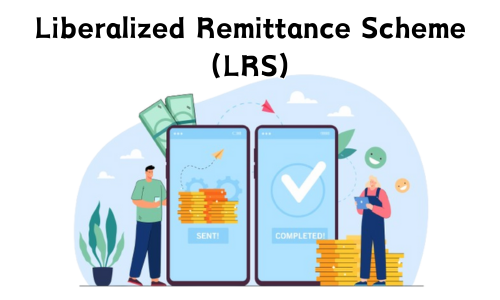
Liberalised Remittance Scheme (LRS)
The Liberalised Remittance Scheme (LRS) is an initiative by the Reserve Bank of India (RBI) that allows Indian residents to remit (send) money abroad for various purposes such as education, travel, medical expenses, investments, and more. Since its introduction in 2004, LRS has played a crucial role in facilitating seamless international transactions for individuals. In this detailed blog, we’ll explore what LRS is, its objectives, limits, permissible transactions, taxation, and important rules every Indian should know before sending money abroad. What is the Liberalised Remittance Scheme (LRS)? The Liberalised Remittance Scheme (LRS) was introduced by the RBI in 2004 to simplify foreign remittances for Indian residents. Under this scheme, individuals can send up to USD 250,000 per financial year (April–March) outside India for permissible transactions without requiring prior approval from the RBI. This means that Indian residents can freely remit funds for purposes like foreign travel, overseas education, investments, gifts, donations, medical treatment, and more—as long as they comply with RBI guidelines. Objectives of the Liberalised Remittance Scheme (LRS) The primary goals of LRS include: Who Can Use LRS? The Liberalised Remittance Scheme (LRS) is available only to resident individuals, including: Note: If a minor wants to remit money abroad, their guardian must make the transaction on their behalf. Permissible Transactions Under LRS Under LRS, individuals can remit funds abroad for the following purposes: 1. Education Expenses 2. Travel & Tourism 3. Medical Treatment 4. Investments in Foreign Stocks & Real Estate 5. Gifts & Donations 6. Business & Professional Services 7. Emigration & Visa-Related Expenses Transactions Not Allowed Under LRS LRS Limit: How Much Can You Remit? Under LRS, individuals can remit up to USD 250,000 per financial year (April–March). Example: Advantages of the Liberalised Remittance Scheme Taxation & TCS (Tax Collected at Source) Under LRS Since October 1, 2023, new Tax Collected at Source (TCS) rules apply to foreign remittances under LRS: Purpose of Remittance TCS Rate (up to ₹7 lakh per year) TCS Rate (above ₹7 lakh per year) Education (using an education loan) 0% 0.5% Education (without a loan) 0% 5% Medical Treatment 0% 5% Foreign Travel (Tour Packages) 5% 20% Other Remittances (Investment, Gift, etc.) 5% 20% How to Send Money Abroad Under LRS? Follow these simple steps to remit funds under LRS: Step 1: Choose a Bank or Financial Institution Most major banks in India, like SBI, HDFC, ICICI, Axis, and Kotak, offer LRS remittance services. Step 2: Submit Required Documents Step 3: Transfer Money via Approved Channels You can use: Conclusion The Liberalised Remittance Scheme (LRS) has made global financial transactions easier, faster, and more transparent for Indian residents. Whether you’re planning to study abroad, invest in global stocks, or send money to family overseas, LRS provides a structured and legal way to do so. However, it’s important to understand the rules, taxation policies, and documentation requirements before making remittances. Always check with your bank or financial advisor to ensure compliance with RBI guidelines.

India Post Payments Bank (IPPB)
Introduction India, with its vast and diverse population, has always faced challenges in financial inclusion, especially in rural and semi-urban areas. Traditional banking systems often fail to reach remote corners, leaving millions of people without access to basic banking services. To bridge this gap, the Government of India launched India Post Payments Bank (IPPB)—a transformative initiative aimed at bringing banking to every doorstep. In this comprehensive blog, we’ll explore what IPPB is, its objectives, key features, benefits, and how it is changing the face of digital banking in India. What is India Post Payments Bank (IPPB)? Launched on September 1, 2018, by Prime Minister Narendra Modi, India Post Payments Bank (IPPB) is a government-owned payments bank operated under the Department of Posts (India Post), Ministry of Communications. It is designed to provide accessible, affordable, and user-friendly banking services to every Indian, particularly those in rural and remote areas. IPPB leverages India Post’s vast network of over 1.5 lakh post offices (including 1.35 lakh rural post offices) and over 3 lakh postal employees to offer doorstep banking services. Objectives of India Post Payments Bank The primary goals of IPPB are: Key Features of India Post Payments Bank (IPPB) 1. Digital Banking at Every Doorstep With IPPB’s doorstep banking, customers can open accounts, make transactions, and even pay bills from the comfort of their homes. Postmen act as banking agents, carrying biometric-enabled devices to assist customers. 2. Aadhaar-Based Paperless Account Opening 3. Three Types of Savings Accounts India Post Payments Bank offers three types of savings accounts: 4. No Minimum Balance Requirement Unlike traditional banks, IPPB does not require customers to maintain a minimum balance, making banking more accessible to the rural population. 5. Easy Money Transfers 6. Bill Payments & Recharge Facility IPPB allows customers to pay electricity bills, gas bills, water bills, phone recharges, and more through a single platform. 7. Government Subsidy & Pension Disbursement Government schemes like PM-KISAN, LPG subsidies, pensions, and MNREGA payments are directly credited to beneficiaries’ IPPB accounts. 8. QR Card for Cashless Transactions IPPB provides a QR (Quick Response) Card, which enables customers to withdraw cash or make payments simply by scanning their card and authenticating with their fingerprint—no PIN required! 9. Micro Insurance & Investment Services 10. Integration with India’s Digital Economy IPPB supports: Advantages of India Post Payments Bank (IPPB) 1. Banking for Every Indian With over 1.5 lakh post offices and 3 lakh postal workers, IPPB ensures last-mile connectivity—reaching even the most remote villages. 2. Safe & Secure Transactions Biometric authentication ensures fraud-proof transactions, making IPPB a safe banking option. 3. No Hidden Charges Unlike private banks, IPPB does not impose hidden fees or high maintenance charges, making it ideal for low-income customers. 4. Support for Small Businesses & Farmers IPPB empowers farmers, small traders, and self-employed individuals with digital banking solutions that eliminate dependency on cash. 5. Boosts Digital India & Cashless Economy With its digital-first approach, IPPB plays a key role in India’s Digital India mission and promotes a cashless economy. Challenges & Way Forward While IPPB has made significant progress, some challenges need to be addressed: Despite these challenges, the future of IPPB looks promising. With increased digital adoption, expanding financial awareness, and continued government support, IPPB has the potential to become a game-changer in rural banking. Conclusion India Post Payments Bank (IPPB) is more than just a bank—it’s a movement towards financial empowerment. By leveraging the vast postal network, it brings banking services to the doorstep of every Indian, especially in rural and remote areas. With its no-frills, easy-to-use banking model, IPPB is ensuring that every Indian, regardless of their location or income, has access to financial services. From farmers to daily wage laborers, from pensioners to self-employed individuals—IPPB is transforming lives, one transaction at a time. As digital banking continues to grow in India, IPPB will play a crucial role in making financial services accessible to all, bridging the urban-rural banking divide, and contributing to a truly “Banked India.”

Swadesh Darshan Scheme 2.0
Introduction India, with its rich cultural heritage, diverse landscapes, and historical marvels, has always been a paradise for travelers. To enhance and promote tourism in an organized manner, the Government of India launched the Swadesh Darshan Scheme in 2014. Taking this initiative to the next level, Swadesh Darshan Scheme 2.0 was introduced to focus on sustainable and destination-driven tourism. What is Swadesh Darshan Scheme 2.0? The Swadesh Darshan Scheme 2.0, launched in 2022 by the Ministry of Tourism, is an upgraded version of the original Swadesh Darshan Scheme. While the first phase of the scheme focused on developing thematic tourism circuits, the second phase prioritizes destination-centric development with a strong emphasis on sustainability, local community involvement, and visitor experience. Unlike its predecessor, which had a circuit-based approach, Swadesh Darshan 2.0 aims at holistic development of selected destinations, ensuring they are world-class, eco-friendly, and culturally immersive. Objectives of Swadesh Darshan 2.0 Swadesh Darshan 2.0 has been designed with specific goals in mind to create a sustainable and structured tourism ecosystem in India. The primary objectives include: Key Features of Swadesh Darshan 2.0 1. Destination-Centric Development Unlike the previous scheme, which focused on circuits, Swadesh Darshan 2.0 prioritizes specific destinations for holistic development. 2. Sustainability & Responsible Tourism The scheme places great emphasis on sustainable tourism practices such as: 3. Public-Private Partnerships (PPP) The scheme encourages collaboration between government and private investors to develop tourism infrastructure efficiently. 4. Skill Development & Local Empowerment A major focus is on training and upskilling local communities to help them engage in tourism-related professions, including guiding, hospitality, and handicrafts. 5. Smart Tourism Integration of digital technology for: 6. Infrastructure & Amenities Enhancement The scheme ensures the development of modern amenities like better roads, signage, sanitation, safety measures, and tourist information centers. 7. Special Focus on Lesser-Known Destinations Swadesh Darshan 2.0 gives priority to unexplored and emerging tourism destinations, ensuring that lesser-known places gain recognition. Top Destinations Covered Under Swadesh Darshan 2.0 The Ministry of Tourism has identified several destinations for holistic development under the scheme. Some of the notable destinations include: These destinations will receive state-of-the-art infrastructure, better accessibility, and eco-friendly tourism initiatives under Swadesh Darshan 2.0. Impact and Benefits of Swadesh Darshan 2.0 1. Boosts Local Economy By focusing on employment generation, the scheme helps local artisans, tour guides, and businesses grow. 2. Enhances Tourist Experience With better infrastructure, smart tourism solutions, and clean surroundings, visitors will have a world-class travel experience. 3. Preserves Culture & Heritage By supporting restoration and conservation efforts, the scheme helps maintain India’s historical and cultural sites. 4. Promotes Sustainable Tourism Swadesh Darshan 2.0 ensures that tourism growth does not come at the cost of environmental degradation. 5. Strengthens India’s Global Tourism Position By creating world-class tourist destinations, India aims to attract more international travelers and boost foreign exchange earnings. Challenges While the Swadesh Darshan Scheme 2.0 is a groundbreaking initiative, certain challenges need to be addressed: Despite these challenges, the scheme presents a promising roadmap for India’s tourism sector, making it more competitive and sustainable. Conclusion Swadesh Darshan Scheme 2.0 is set to redefine the way tourism develops in India. By focusing on destination-centric, sustainable, and community-driven tourism, this initiative has the potential to transform India into a top global travel destination. With improved infrastructure, enhanced visitor experience, and a strong focus on cultural preservation and environmental sustainability, Swadesh Darshan 2.0 is a step towards responsible and enriching tourism in India.

Market Infrastructure Institutions
Introduction The financial markets play a crucial role in a country’s economy, ensuring smooth trading of securities, commodities, and derivatives. But behind every seamless stock trade or commodity transaction, there are key institutions that ensure transparency, security, and efficiency. These are called Market Infrastructure Institutions (MIIs). In India, SEBI (Securities and Exchange Board of India) regulates MIIs, which include stock exchanges, clearing corporations, and depositories. These institutions act as the backbone of the financial markets, ensuring fair, efficient, and secure trading. What are Market Infrastructure Institutions (MIIs)? Market Infrastructure Institutions (MIIs) are organizations that provide essential facilities for trading, clearing, and settlement of financial instruments like stocks, bonds, and derivatives. According to SEBI, MIIs include: These institutions enhance market integrity, reduce risks, and build investor confidence by ensuring a transparent and well-regulated trading environment. Why are MIIs Important? Market Infrastructure Institutions play a critical role in: Without MIIs, financial markets would be chaotic, increasing fraud risks and inefficiencies. Types of Market Infrastructure Institutions (MIIs) 1. Stock Exchanges A Stock Exchange is a marketplace where stocks, bonds, derivatives, and other securities are bought and sold. Key Stock Exchanges in India Functions of Stock Exchanges 2. Clearing Corporations A Clearing Corporation acts as a mediator between buyers and sellers to ensure trade settlement without risks. Key Clearing Corporations in India Functions of Clearing Corporations 3. Depositories A Depository is a financial institution that holds securities in electronic (demat) form to ensure safety and easy access. Major Depositories in India Functions of Depositories Regulatory Framework for MIIs in India The Securities and Exchange Board of India (SEBI) regulates and supervises MIIs to ensure fair and transparent operations. Key SEBI Regulations for MIIs: Role of SEBI in Regulating MIIs How MIIs Impact Investors? 1. Ensuring Smooth & Secure Trading Stock exchanges provide a transparent platform where investors can buy and sell securities with confidence. 2. Reducing Counterparty Risks Clearing corporations ensure every trade is settled, eliminating the risk of payment default. 3. Safeguarding Securities Depositories allow investors to store shares electronically, making transactions faster and safer. 4. Lowering Transaction Costs By automating processes, MIIs reduce brokerage and settlement charges, benefiting retail investors. 5. Enhancing Market Transparency MIIs ensure real-time price discovery, helping investors make informed decisions. Challenges Faced by MIIs Despite their importance, MIIs face several challenges: To tackle these, MIIs invest in advanced technology, cybersecurity, and regulatory compliance. Conclusion Market Infrastructure Institutions (MIIs) are the foundation of India’s financial markets, ensuring seamless trading, secure settlements, and investor protection. Stock exchanges, clearing corporations, and depositories work together to maintain market integrity, transparency, and efficiency. With SEBI’s regulatory oversight, MIIs continue to evolve, embracing new technologies like AI, blockchain, and automated trading to enhance market security and efficiency.

RBI Integrated Ombudsman Scheme (RBI-IOS)
Introduction Banking services are an essential part of our daily lives, but sometimes, customers face issues like unauthorized transactions, delayed services, or unfair charges. To ensure a transparent and efficient grievance redressal mechanism, the Reserve Bank of India (RBI) introduced the RBI Integrated Ombudsman Scheme (RBI-IOS) 2021. This scheme aims to simplify the complaint process by integrating multiple ombudsman schemes into a single, uniform platform, making it easier for customers to get their banking-related grievances resolved. What is the RBI Integrated Ombudsman Scheme (RBI-IOS)? The RBI Integrated Ombudsman Scheme (RBI-IOS) 2021 is a customer grievance redressal system launched by the Reserve Bank of India (RBI) on November 12, 2021. It integrates three previous ombudsman schemes into one unified platform: Now, instead of multiple schemes, all complaints are handled under one scheme, making the process simpler, faster, and more efficient. Key Features of RBI Integrated Ombudsman Scheme Who Can File a Complaint Under RBI IOS? Anyone with a banking-related issue can file a complaint, including: If you have faced issues like unauthorized transactions, delayed banking services, non-payment of deposits, fraud, or wrong deductions, you can file a complaint under RBI IOS. Types of Complaints Covered Under RBI IOS The scheme covers a wide range of banking and financial complaints, including: 1. Banking-Related Complaints 2. NBFC-Related Complaints 3. Digital Payments & Transactions How to File a Complaint Under RBI IOS? The complaint filing process under RBI Integrated Ombudsman Scheme is simple and fully digital. Here’s how you can do it: 1. Check If You Are Eligible 2. File the Complaint Online The easiest way to file a complaint is through the Complaint Management System (CMS) Portal: Visit: https://cms.rbi.org.inEmail: crpc@rbi.org.in 3. Track Your Complaint After filing, you will receive a complaint reference number, which can be used to track the status online. 4. Resolution Time The RBI ensures that complaints are resolved within 30 days. 5. Appeal If Needed If you are not satisfied with the decision, you can appeal to the Appellate Authority within 30 days of receiving the ombudsman’s decision. Benefits of RBI Integrated Ombudsman Scheme Limitations of RBI IOS Conclusion The RBI Integrated Ombudsman Scheme (RBI IOS) is a game-changer in customer grievance redressal, offering a simplified, digital, and efficient platform to resolve banking and NBFC-related complaints. With its one-stop solution, zero cost, and fast resolution process, it provides much-needed relief to customers facing financial disputes.

Essential Poultry Terminologies
Introduction Poultry farming is an ever-growing industry, providing a significant source of meat and eggs worldwide. Whether you’re a beginner, a seasoned poultry farmer, or just an enthusiast, understanding poultry-specific terminologies is essential for better farm management, breeding, and marketing Terminologies Associated with Poultry Category Nomenclature Definition General Terms Poultry Domesticated birds like chickens, turkeys, ducks, and geese raised for meat or eggs. Aves (Avian) The class of birds, including all species, both wild and domestic. Chicken Any domestic chicken, regardless of sex or age. Poultry Farm A farm where domestic fowls, especially chickens, are reared for eggs or meat. Poultry Farmer/Dealer A person who rears domestic fowls for eggs or meat. Poultry Farming The practice of raising domestic fowls for eggs or meat. Poultry by Age and Sex Day-old Chick (DOC) A chick on the day of hatching. Baby Chick A chick within one week of age. Chick A young chicken up to eight weeks old. Growing Chick/Grower A chick between 9 and 16 weeks of age. Pullet An immature female chicken before laying eggs, under 1 year old. Hen An adult female chicken that has laid eggs. Layer A hen raised for egg production, laying from around 21 to 72 weeks. Cockerel A young male chicken under one year old. Tom A mature male turkey, no longer a poult. Broiler A young bird bred and grown specifically for meat production.(6-8 week) Rooster A male chicken is typically called a “rooster” or “cock” once it reaches sexual maturity, usually around 4-5 months of age (20 Weeks), when it starts crowing and showing interest in hen. On average, roosters can live between 5-8 years Capon A castrated male chicken raised for meat. Poultry Housing & Equipment Coop A house or cage where poultry are kept. Brooder A heated enclosure for raising young chicks. Battery A cage system used for housing poultry, commonly in commercial farms. Nest Box A box where hens lay eggs. Poultry Feathers & Anatomy Axial Feather Also known as an index feather. Coverts Feathers covering the primary and secondary wing feathers. Crest A ball of feathers on the heads of some chicken and geese breeds. Crop A part of the digestive tract used for temporary food storage. Comb A fleshy appendage on a chicken’s head. Snood A fleshy wattle on the head of certain poultry breeds, especially turkeys. “Understanding the egg production cycle is crucial for efficient poultry farming. From chick rearing to peak laying periods, every phase plays a vital role in maximizing productivity. Watch this insightful video of C4S here to learn more about the key stages of egg production!” “Prepare for success with the AFO Mentorship Test Series by C4S Courses! Designed to help you master key concepts, improve accuracy, and boost confidence, our test series provides in-depth practice and expert guidance to ensure you’re exam-ready. Enroll now and take your preparation to the next level!” FAQ on Egg Production Cycle (Based on FAO Guidelines) 1. What is the typical duration of an egg production cycle? 2. What are the main phases of egg production? 3. Why is the brooder phase important? 4. What happens during the grower phase? 5. When do chickens start laying eggs? 6. Why are birds transferred to layer houses? 7. What is the role of lighting in egg production? 8. What happens after the laying cycle ends? “Prepare for success with the AFO Mentorship Test Series by C4S Courses! Designed to help you master key concepts, improve accuracy, and boost confidence, our test series provides in-depth practice and expert guidance to ensure you’re exam-ready. Enroll now and take your preparation to the next level!” Conclusion Understanding poultry terminologies is crucial for anyone involved in poultry farming, backyard poultry keeping, or agribusiness. Whether you’re raising layers, broilers, or specialty breeds, knowing these terms will help in better farm management, breeding, and decision-making. By mastering poultry-specific vocabulary, farmers can improve productivity, communicate effectively with industry professionals, and ensure proper care of their flocks. “Prepare for success with the AFO Mentorship Test Series by C4S Courses! Designed to help you master key concepts, improve accuracy, and boost confidence, our test series provides in-depth practice and expert guidance to ensure you’re exam-ready. Enroll now and take your preparation to the next level!”

Open Interest
Why in News? Since February 24, 2025, the SEBI consultation paper has affected OI calculations, limits on positions, and new trading sessions before and after continued derivatives trading. The delta calculation has been staunchly opposed by the Futures Industry Association, or FIA, a global body representing foreign portfolio investors. Introduction Understanding Open Interest (OI) is essential for traders in futures and options markets, especially in regulated markets overseen by authorities like SEBI (Securities and Exchange Board of India). These regulatory bodies ensure transparency, market integrity, and investor protection. What is Open Interest? Open Interest (OI) refers to the total number of outstanding futures or options contracts that have not been settled. It represents the number of active contracts in the market at a given time. Many traders confuse Open Interest with Volume, but they are different: Key Features of Open Interest: How SEBI and Other Regulatory Bodies Monitor Open Interest In India, SEBI regulates the futures and options market to ensure fairness and prevent market manipulation. Here’s how regulatory bodies use Open Interest data: Monitoring Unusual Market Activity Preventing Excessive Speculation Enhancing Market Transparency Protecting Retail Investors How Open Interest Impacts Market Trends Open Interest is a powerful indicator used to analyze market participation and trend strength. Here’s how it works: Price Up + OI Up → Bullish Market Price Down + OI Up → Bearish Market Price Up + OI Down → Weak Rally Price Down + OI Down → Weak Sell-Off By understanding these relationships, traders can make better entry and exit decisions. Open Interest vs. Trading Volume Many traders confuse Open Interest with Trading Volume, but they measure different things: Factor Open Interest (OI) Volume Definition Total number of active contracts Number of contracts traded in a session Indicates Market participation and liquidity Market activity and momentum When it Increases? When new contracts are added When more trades occur When it Decreases? When contracts are closed If fewer trades happen OI shows the number of open positions, while Volume shows the number of trades executed. How to Use Open Interest in Trading Open Interest is a valuable tool for futures and options traders. Here’s how you can use it: Identifying Breakouts and Reversals Spotting Smart Money Moves Measuring Market Sentiment Understanding Liquidity and Risk SEBI’s Role in Regulating Open Interest in India SEBI plays a vital role in regulating derivatives markets. Some of the key regulatory actions related to Open Interest include: These regulations ensure that traders, institutions, and retail investors participate in a fair and transparent market. Conclusion Open Interest is a crucial indicator for traders, but understanding its regulatory aspects is equally important. By monitoring OI trends and complying with SEBI guidelines, traders can make more informed decisions and avoid excessive risk. Frequently Asked Questions (FAQ) 1. What does high open interest mean?It means more traders have active positions, indicating higher participation. 2. How does SEBI regulate Open Interest?SEBI monitors Open Interest data, imposes position limits, and ensures market transparency to prevent manipulation. 3. Where can I check Open Interest?On trading platforms like NSE, BSE, CME, Binance, and TradingView.

Digital Agriculture Mission
Introduction The Digital Agriculture Mission (DAM) is a visionary initiative by the Government of India to modernize and revolutionize the agricultural sector through digital technologies. Launched to improve efficiency, productivity, and sustainability, this mission integrates Artificial Intelligence (AI), Internet of Things (IoT), blockchain, drones, and data analytics to help farmers make informed decisions. With rising food demands, climate challenges, and the need for resource optimization, digital agriculture is a game-changer for the future of Indian farming. What is Digital Agriculture? Digital Agriculture refers to the use of advanced digital technologies to enhance farm productivity, market access, and overall agricultural efficiency. It includes: The Digital Agriculture Mission (2021-2025) is a step toward empowering farmers with data-driven solutions and increasing the resilience of Indian agriculture. Objectives of the Digital Agriculture Mission The Digital Agriculture Mission (DAM) aims to: By leveraging digital tools, DAM aims to modernize traditional farming practices and ensure food security. Key Technologies in the Digital Agriculture Mission 1. Artificial Intelligence (AI) in Agriculture 2. Internet of Things (IoT) in Smart Farming 3. Blockchain for Transparent Supply Chains 4. Drones and Satellite Imaging in Farming 5. Big Data and Cloud Computing in Agriculture By integrating these technologies, Indian agriculture is moving toward a more efficient and sustainable future. Major Components of the Digital Agriculture Mission 1. AgriStack – The Unified Farmer Database 2. eNAM – Digital Market for Farmers 3. Kisan Call Centers and AI Chatbots 4. Smart Farming & IoT Integration By digitizing all aspects of agriculture, DAM ensures better productivity, reduced costs, and enhanced market access. Benefits of the Digital Agriculture Mission Higher Farm Productivity Better Financial Inclusion for Farmers Improved Supply Chain Efficiency Climate-Resilient Farming Sustainable Agriculture & Environmental Benefits By implementing digital solutions, Indian farmers can achieve better incomes, improved crop quality, and sustainable growth. Challenges in Implementing the Digital Agriculture Mission Overcoming these challenges requires government support, private sector involvement, and farmer training programs. Future of Digital Agriculture in India By 2030, digital agriculture will be the backbone of India’s food security and sustainability efforts. Conclusion The Digital Agriculture Mission is a game-changer for Indian farming, empowering farmers with AI, IoT, blockchain, and big data. By improving efficiency, market access, and sustainability, it paves the way for a smarter, tech-driven agricultural sector. Frequently Asked Questions (FAQs)