
All exams GA
In one line
Context:
The Bison Horn Maria dance of the Dandami Maria (Maria) tribe in Bastar, Chhattisgarh, is celebrated for its vivid ceremonial performance and resilience of cultural identity despite modern influences.
About the Dandami Maria Tribe
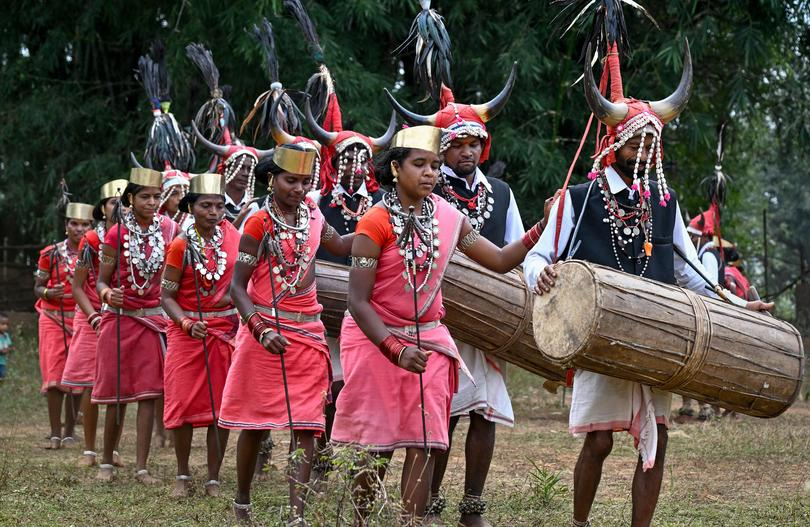
Other Names: Bison Horn Maria, Khalpati Maria
Ethnic Group: Part of the broader Gond (Koytorias) community
Origin:
- Descendants of the ancient Gondwana region in central India.
- Part of the Gond tribal tradition, one of the oldest indigenous groups of the Deccan plateau.
- Language: Dandami Maria, with Gondi dialects (Dravidian origin).
Habitat & Distribution:
- Predominantly in Bastar, southern Chhattisgarh, including Darbha, Tokapal, Lohandiguda, Dantewada.
- Forest-based settlements shape agriculture, hunting, fishing, and rituals.
Key Cultural Features
1. Bison Horn Maria Dance
- Performed during festivals, rituals, and community gatherings by men and women.
- Men’s attire: Horn-shaped bamboo headgear decorated with bison/cattle horns, feathers, cowries, cloth strips, bead necklaces, ankle bells.
- Women’s attire: Handwoven saris, silver and brass jewellery, coin ornaments, ceremonial crowns.
2. Social & Cultural Life
- Ghotul (youth dormitory): Central to socialisation, cultural transmission, and community cohesion.
- Distinct hairstyles, traditional ornaments, and ceremonial objects (tobacco boxes, combs) hold symbolic value.
- Flexible social norms: Divorce and widow remarriage are permitted, reflecting progressive tribal customs.