

Introduction The Institute of Banking Personnel Selection (IBPS) has officially declared the IBPS AFO Final Result on April 1, 2025. Candidates who appeared in the IBPS SO (Specialist Officer) Recruitment for Agricultural Field Officer (AFO) 2025 can now check their results on the official website of IBPS – ibps.in. The final result has been prepared based on the combined performance of candidates in the IBPS SO Mains Exam and the Interview Process. Those who have successfully cleared all stages will be provisionally allotted to participating banks. IBPS AFO Final Result – Overview Exam Conducting Authority Institute of Banking Personnel Selection (IBPS) Post Name Agricultural Field Officer (AFO) Total Vacancies 500+ (Expected) Selection Process Prelims → Mains → Interview → Final Merit List Final Result Date April 1, 2025 Official Website ibps.in Steps to Check IBPS AFO Final Result Follow these steps to check your IBPS AFO final result: Details Mentioned on the IBPS AFO Final Result After downloading the final result, candidates must carefully check the following details: IBPS AFO Final Cut-Off Marks The cut-off marks for the IBPS AFO final selection are determined based on the following factors: Expected IBPS AFO Final Cut-Off (Category-Wise) Category Expected Final Cut-Off (Out of 100) General (UR) 57-62 OBC 54-59 SC 48-53 ST 44-50 EWS 55-60 Note: The official cut-off will be released by IBPS along with the final result. IBPS AFO Selection Process & Final Merit List The IBPS AFO Final Merit List is prepared based on the marks obtained in: Only those candidates who scored above the cut-off marks in Mains & Interview and secured a place in the merit list will be provisionally allotted to participating banks based on their preference and ranking. IBPS AFO Joining & Document Verification Process What After IBPS AFO Final Result ? IBPS AFO Salary & Perks Selected candidates for the IBPS AFO post will receive an attractive salary package along with various benefits. Conclusion – IBPS AFO Final Result 2025 The IBPS AFO Final Result is a crucial step for candidates aspiring to secure a position as an Agricultural Field Officer in public sector banks. Those who have successfully cleared the Mains Exam & Interview will now move forward with the document verification and joining process. Candidates are advised to regularly check their registered email and the official IBPS website for further updates regarding the provisional allotment and joining formalities. Congratulations to all the selected candidates! FAQs – IBPS AFO Final Result 2025 Q1. When was the IBPS AFO Final Result declared?The IBPS AFO Final Result 2025 was declared on April 1, 2025. Q2. How can I check my IBPS AFO Final Result?You can check your result by visiting the IBPS official website ibps.in and entering your login details. Q3. What is the cut-off for IBPS AFO Final Selection?The cut-off varies based on the category. The expected cut-off for the General category is 57-62 marks out of 100. Q4. What is the salary of an IBPS AFO?The starting salary of an IBPS AFO is around ₹55,000 – ₹65,000 per month, including allowances. Q5. What is the next step after the IBPS AFO final result?After the final result, candidates will be provisionally allotted to banks, followed by document verification and joining.
National Food Security Act (NFSA)
Introduction Food security is one of the most critical aspects of national development, ensuring that every individual has access to sufficient, nutritious, and affordable food. In a country like India, where hunger and malnutrition have historically been major challenges, the government has implemented various schemes to strengthen food security. To institutionalize the right to food, the Government of India enacted the National Food Security Act (NFSA), 2013. This landmark legislation aims to provide legal entitlement to subsidized food grains for a large section of India’s population, covering over 81 crore beneficiaries through the Targeted Public Distribution System (TPDS). History and Background of NFSA The concept of food security in India evolved over several decades, with various schemes and policies aimed at ensuring food availability for the poor. Key Milestones in India’s Food Security Policy Year Policy/Program Significance 1947-1950 Rationing System Introduced First effort to provide subsidized food grains 1960s Green Revolution Increased agricultural production, making India self-sufficient 1975 Integrated Child Development Services (ICDS) Introduced supplementary nutrition for children & mothers 1995 Mid-Day Meal Scheme (MDM) Launched to provide school children with free meals 1997 Targeted Public Distribution System (TPDS) Introduced to target the most vulnerable sections 2013 National Food Security Act (NFSA) Gave legal backing to food security The NFSA is a game-changer because it shifts food security from a welfare-based approach to a rights-based framework. Objectives of the National Food Security Act The NFSA is designed to achieve multiple objectives, including: 1. Eliminating Hunger and Malnutrition 2. Strengthening the Public Distribution System (PDS) 3. Ensuring Affordable Access to Food 4. Supporting Farmers & Agricultural Stability 5. Women & Child Welfare 6. Establishing a Legal Framework for Food Security Eligibility & Beneficiaries Under NFSA The NFSA covers 67% of India’s population, with specific provisions for priority households and the poorest of the poor (Antyodaya Anna Yojana – AAY). 1. Priority Households (PHH) 2. Antyodaya Anna Yojana (AAY) Households The identification of eligible households is done by state governments based on SECC (Socio-Economic and Caste Census) data. Key Features of the National Food Security Act (NFSA), 2013 The NFSA aims to make food security a legal right for eligible beneficiaries and ensures access to affordable, nutritious, and sufficient food through the Targeted Public Distribution System (TPDS) and other welfare schemes. Major Features of NFSA Key Schemes Under NFSA 1. Targeted Public Distribution System (TPDS) 2. Mid-Day Meal Scheme (MDM) 3. Integrated Child Development Services (ICDS) 4. Maternity Benefits Scheme (PMMVY) Implementation & Distribution Mechanism The NFSA is implemented through the Food Corporation of India (FCI) and state governments. 1. Procurement & Storage 2. Allocation to States 3. Distribution to Beneficiaries Impact of NFSA on India’s Food Security Positive Outcomes: Reduced hunger & malnutrition among poor households.Improved school attendance due to the Mid-Day Meal Scheme.Supported farmers through stable procurement at MSP.Empowered women by recognizing them as heads of households in ration cards. Beneficiaries & Eligibility Criteria Under NFSA The NFSA covers 67% of India’s population, with two major categories of beneficiaries: 1. Priority Households (PHH) 2. Antyodaya Anna Yojana (AAY) Households Challenges & Limitations: Way Forward 1. Strengthening PDS Infrastructure GPS tracking of food grains to prevent diversion.Digitization of ration cards for transparency. 2. Expanding Nutritional Coverage 3. Enhancing Awareness & Outreach Conclusion The National Food Security Act (NFSA) is one of India’s most significant welfare programs, ensuring that no citizen goes hungry. By providing legal backing to food security, NFSA has made affordable food accessible to millions of poor households. However, to maximize its benefits, India needs to strengthen the PDS system, enhance food diversity, and ensure better governance in implementation. With the right reforms, NFSA can make India a hunger-free and nutritionally secure nation.

Agriculture Infrastructure Fund (AIF)
Introduction Agriculture is the backbone of the Indian economy, contributing significantly to GDP and employment. However, inadequate post-harvest infrastructure, lack of storage facilities, and inefficient supply chains often lead to significant losses. To address these issues, the Government of India launched the Agriculture Infrastructure Fund (AIF) in 2020 as a long-term debt financing initiative to develop farm-gate and post-harvest infrastructure. Overview of Agriculture Infrastructure Fund (AIF) Feature Details Launch Year 2020 Tenure 10 years (2020-2030) Total Corpus ₹1,00,000 crore Loan Interest Subvention 3% per annum (up to ₹2 crore) Credit Guarantee Coverage Up to ₹2 crore under CGTMSE Repayment Period Up to 7 years (including moratorium) Implementing Ministry Ministry of Agriculture & Farmers Welfare Target Beneficiaries Farmers, FPOs, SHGs, PACS, Agri-Entrepreneurs\ What is the Agriculture Infrastructure Fund (AIF)? The Agriculture Infrastructure Fund (AIF) is a ₹1 lakh crore Central Sector Scheme (CSS) designed to provide medium to long-term debt financing for agricultural infrastructure projects. It supports projects related to post-harvest management, storage, processing, and market linkage facilities. Key Features of AIF: AIF provides a boost to rural economy by developing storage, cold chain, processing units, and other critical agri-infrastructure, reducing post-harvest losses and enhancing value addition. Loan & Financial Assistance Particulars Details Total Fund Allocation ₹1,00,000 crore Maximum Loan Amount No fixed limit (subvention up to ₹2 crore) Interest Subvention 3% per annum (up to ₹2 crore loan) Credit Guarantee CGTMSE coverage for loans up to ₹2 crore Repayment Period Up to 7 years (including moratorium) Moratorium Period Up to 2 years Objectives of the Agriculture Infrastructure Fund The AIF scheme aims to: By addressing these critical needs, AIF is helping India transition from a production-centric approach to a market-driven agribusiness model. Eligible Projects under AIF A wide range of post-harvest infrastructure projects are covered under AIF, including: 1. Farm-Gate Infrastructure 2. Storage & Warehousing 3. Processing & Value Addition 4. Supply Chain & Market Linkages 5. Smart & Digital Agriculture These projects help in improving efficiency, reducing losses, and ensuring better price realization for farmers. Eligible Infrastructure & Activities Category Examples Post-Harvest Infrastructure Warehouses, silos, cold storage units Processing & Value Addition Rice mills, flour mills, dairy processing, food parks Supply Chain & Logistics e-NAM-compatible storage, market yards, rural haats Smart & Digital Agri Solutions IoT-based farm monitoring, AI-powered agri-tech solutions Renewable Energy for Agri Use Solar-powered cold storage, biogas plants Eligible Beneficiaries Under AI Category Eligible Entities Individual Farmers Small & marginal farmers, agri-entrepreneurs Farmer Producer Organizations (FPOs) Registered FPOs involved in post-harvest activities Self-Help Groups (SHGs) Women SHGs, rural cooperative groups Cooperatives & PACS Primary Agricultural Credit Societies (PACS), agri-cooperatives Agri-Tech Startups Agri-processing, cold storage, logistics startups Public Sector Units (PSUs) State agencies involved in agri-infrastructure development AIF is designed to support a wide range of stakeholders in the agriculture ecosystem. Eligible entities include: 1. Individual Farmers & Agri-Entrepreneurs 2. Farmer Producer Organizations (FPOs) & Self-Help Groups (SHGs) 3. Cooperatives & PACS 4. Startups & Agri-Tech Companies 5. State Agencies & Public Sector Units (PSUs) By covering diverse stakeholders, AIF ensures comprehensive agricultural infrastructure development. Loan & Financial Assistance Under AIF AIF provides low-interest loans with attractive financial support. Key Financial Benefits: Particulars Details Loan Amount ₹1 lakh crore total allocation Interest Subvention 3% per annum (up to ₹2 crore) Credit Guarantee Up to ₹2 crore under CGTMSE Repayment Period 7 years (including moratorium) Maximum Moratorium 2 years For projects requiring more than ₹2 crore, interest subvention is limited to ₹2 crore, but additional loan amounts are available at market rates. Impact of Agriculture Infrastructure Fund (AIF) So Far Key Indicator Impact (2020-2024) Total Loans Sanctioned ₹40,000+ crore Projects Supported Thousands of storage & processing units PACS & FPOs Benefitted 1000+ rural cooperatives upgraded Reduction in Post-Harvest Losses Significant improvement in storage & logistics Private Investment in Agri-Infrastructure Increased participation in cold chain & processing How to Apply for AIF Loan? Farmers and agripreneurs can apply for AIF funding through an online application process. Step-by-Step Application Process: The AIF Dashboard helps in tracking loan applications and approvals in real-time. Impact of Agriculture Infrastructure Fund The AIF scheme has significantly impacted Indian agriculture. Key Achievements (2020-2024): The fund has empowered farmers, improved supply chain efficiency, and reduced rural distress. Challenges & Limitations of AIF Despite its success, AIF faces some challenges: Addressing these challenges through policy improvements, faster approvals, and better outreach will enhance AIF’s effectiveness. Conclusion The Agriculture Infrastructure Fund (AIF) is a game-changer in India’s agri-sector, providing long-term, low-cost financing for critical infrastructure development. By reducing post-harvest losses, improving storage, and boosting farm-to-market linkages, AIF plays a key role in enhancing farmers’ income and rural development. To fully realize AIF’s potential, stakeholders must actively participate in availing benefits, investing in modern infrastructure, and driving agri-sector growth.

Self-Regulatory Organizations
Introduction In modern economies, industries often need oversight to ensure ethical practices, fair competition, and consumer protection. While governments regulate many industries, some sectors rely on Self-Regulatory Organizations (SROs) to establish and enforce standards. An SRO is a non-governmental organization that regulates its members through rules, policies, and ethical standards. These organizations play a crucial role in maintaining transparency, preventing fraud, and ensuring smooth market operations. What is a Self-Regulatory Organization ? A Self-Regulatory Organization (SRO) is an independent body within an industry that sets rules, monitors compliance, and enforces ethical and professional standards without direct government intervention. Key Features of SROs: How Do SROs Work? SROs create a framework of rules for industry participants and enforce compliance through audits, penalties, or license revocations. These organizations function as watchdogs, ensuring that businesses operate ethically and transparently. Types of Self-Regulatory Organizations (SROs) Worldwide Self-Regulatory Organizations exist in multiple industries, from finance and securities to healthcare, advertising, and law. 1. Financial & Securities SROs Financial Industry Regulatory Authority (FINRA) – USA National Stock Exchange (NSE) & Bombay Stock Exchange (BSE) – India Investment Industry Regulatory Organization of Canada (IIROC) Securities and Exchange Board of India (SEBI) (Partially Self-Regulatory) 2. Legal & Professional SROs American Bar Association (ABA) – USA The Law Society – UK & Canada Chartered Financial Analyst (CFA) Institute 3. Healthcare & Medical SROs American Medical Association (AMA) Medical Council of India (MCI) & General Medical Council (GMC) – UK Pharmaceutical Research and Manufacturers of America (PhRMA) 4. Advertising & Media SROs Advertising Standards Authority (ASA) – UK Press Council of India (PCI) Motion Picture Association (MPA) 5. Technology & Digital Industry SROs As digital markets expand, SROs help regulate online platforms, cybersecurity, and artificial intelligence ethics. Functions and Responsibilities of SROs Self-Regulatory Organizations play a vital role in industry governance. Their main responsibilities include: 1. Establishing Industry Standards 2. Licensing & Certification 3. Monitoring & Compliance 4. Consumer & Investor Protection 5. Dispute Resolution & Mediation 6. Market & Professional Ethics Enforcement 4. Increased Market Stability 5. Better Consumer Protection Advantages of Self-Regulatory Organizations SROs provide significant benefits for industries, professionals, and consumers. Challenges & Criticism of SROs Despite their benefits, Self-Regulatory Organizations also face challenges: Future of Self-Regulatory Organizations The role of SROs is evolving with new technologies and globalization. Future trends include: Conclusion Self-Regulatory Organizations play a critical role in maintaining industry integrity and ethical standards. While they are not a replacement for government regulations, they provide specialized oversight that enhances market stability, professional accountability, and consumer protection. However, their effectiveness depends on transparency, accountability, and fair enforcement of rules. As industries evolve, SROs must adapt, innovate, and strengthen their regulatory mechanisms to remain effective.
NABARD Grade A 2024 & 2023 Analysis
Introduction The NABARD Grade A 2024 and 2023 Exam is one of the most prestigious banking exams in India, offering aspirants an opportunity to work in the Rural Development Banking Services (RDBS) of the National Bank for Agriculture and Rural Development (NABARD). The selection process consists of three phases: NABARD Grade A 2024 Phase 1 (Prelims) Exam Analysis Exam Pattern & Marking Scheme Section Number of Questions Marks Difficulty Level Reasoning Ability 20 20 Moderate Quantitative Aptitude 20 20 Moderate-Difficult English Language 30 30 Easy-Moderate General Awareness 20 20 Moderate Economic & Social Issues (ESI) 40 40 Moderate-Difficult Agriculture & Rural Development (ARD) 40 40 Moderate-Difficult Decision Making 10 10 Moderate Total 160 200 Overall: Moderate Section-wise NABARD Grade A 2024 Phase 1 Analysis Reasoning Ability Topics Number of Questions Difficulty Level Puzzles & Seating Arrangement 8-10 Moderate Coding-Decoding 2-3 Easy Blood Relations 2 Easy Syllogism 3-4 Moderate Key Takeaways: Quantitative Aptitude Topics Number of Questions Difficulty Level Data Interpretation (DI) 8-10 Moderate-Difficult Arithmetic (Profit & Loss, SI-CI, Time & Work) 5-6 Moderate Quadratic Equations 2-3 Moderate Key Takeaways: Economic & Social Issues (ESI) & Agriculture & Rural Development (ARD) Topics Number of Questions Difficulty Level Government Schemes 12-15 Moderate-Difficult Economic Survey 5-6 Moderate Rural Development Policies 8-10 Difficult Key Takeaways: NABARD Grade A 2024 Phase 2 (Mains) Exam Analysis Mains Exam Pattern Paper Subjects Type Marks Difficulty Level Paper 1 General English Descriptive 100 Moderate Paper 2 ESI & ARD Objective + Descriptive 100 Difficult Key Observations: NABARD Grade A 2024 Phase 2 Section-wise Analysis Descriptive English (Paper 1) Topics Weightage Difficulty Level Essay Writing 40 marks Moderate Letter Writing 30 marks Easy Reading Comprehension 30 marks Moderate Key Takeaways: ESI & ARD (Paper 2) Topics Weightage Difficulty Level Current Affairs & Economic Trends 30% Moderate Rural Development & Government Schemes 40% Difficult Static ARD Concepts 30% Moderate Key Takeaways: Expected Cut-off for NABARD Grade A 2024 Category Prelims Expected Cut-off Mains Expected Cut-off General 122-127 140-145 OBC 118-122 135-140 SC/ST 110-115 125-130 NABARD Grade A 2023 Prelims Exam Analysis (Phase 1) Overview of Prelims Exam Pattern The Phase 1 exam was an objective test conducted online, with a total of 200 marks and a duration of 120 minutes (2 hours). The sectional weightage is as follows: Section No. of Questions Marks Difficulty Level English Language 30 30 Easy-Moderate Reasoning Ability 20 20 Moderate Quantitative Aptitude 20 20 Moderate-Difficult General Awareness 20 20 Moderate Computer Knowledge 20 20 Easy-Moderate Economic & Social Issues (ESI) 40 40 Moderate-Difficult Agriculture & Rural Development (ARD) 40 40 Moderate-Difficult Total 200 200 Moderate-Difficult Section-Wise Analysis 1. English Language (Easy-Moderate Difficulty) The English section was relatively easy, with the following topic-wise weightage: 2. Reasoning Ability (Moderate Difficulty) The Reasoning section had a mix of puzzles and logical reasoning topics: 3. Quantitative Aptitude (Moderate-Difficult) The Quant section was calculation-intensive with tricky DI sets: 4. General Awareness (Moderate Difficulty) 5. Computer Knowledge (Easy-Moderate) This section was easy, with basic-level questions on: 6. Economic & Social Issues (ESI) (Moderate-Difficult) 7. Agriculture & Rural Development (ARD) (Moderate-Difficult) Prelims Exam Analysis: Key Takeaways Difficulty Level: Moderate to DifficultGood Attempts: 110-130 (for a high chance of selection)Expected Cut-off: NABARD Grade A 2023 Mains Exam Analysis (Phase 2) The Mains exam consisted of two papers: Paper 1 – English Descriptive (Moderate Difficulty) Ideal Score: 65-75 Marks Paper 2 – ESI & ARD (Moderate-Difficult) Section No. of Questions Marks Difficulty ESI Objective 30 Qs 50 Marks Moderate ARD Objective 30 Qs 50 Marks Moderate-Difficult ESI/ARD Descriptive 6 Qs (Attempt 4) 50 Marks Moderate Key Topics in Paper 2 Economic & Social Issues (ESI): Agriculture & Rural Development (ARD): Good Score in Paper 2: 65-75 Marks Final Selection & Cut-off Trends The final cut-off is based on the combined score of Mains + Interview. Here are the expected cut-offs based on past trends: Category Prelims Cut-off (Expected) Mains Cut-off (Expected) General 120-125 155-165 OBC 115-120 150-160 SC/ST 105-110 140-150 Comparative Analysis with Previous Years Year Difficulty Level Expected Cut-off Key Changes 2022 Moderate-Difficult 118-123 More focus on ESI & ARD 2023 Moderate 120-125 ESI & ARD questions were tougher 2024 Moderate-Difficult 122-127 Increased weightage on Rural Development NABARD Cut-off Trends (2022-2024) Exclusive C4S Courses NABARD Mentorship Programme – Your Gateway to Success! Are you preparing for NABARD Grade A 2025 and looking for expert guidance? C4S Courses NABARD Mentorship Programme is here to help you crack the exam with top-notch mentorship, structured study plans, and expert-led sessions. Join Now & Secure Your NABARD Dream! Enroll today at https://learn.c4scourses.in/learn/NABARD2025 Final Preparation Strategy for NABARD Aspirants Results by C4S Every year our students have successfully navigated the preliminary, mains, and interview rounds, emerging as the new faces of NABARD. Watch their success stories with C4S Courses ! Enroll today hopefully next success story will be yours ! Conclusion The NABARD Grade A 2024 Exam was moderate to difficult, with an increased focus on Agriculture & Rural Development. Aspirants must prioritize conceptual clarity and time management while strengthening descriptive writing for Mains.
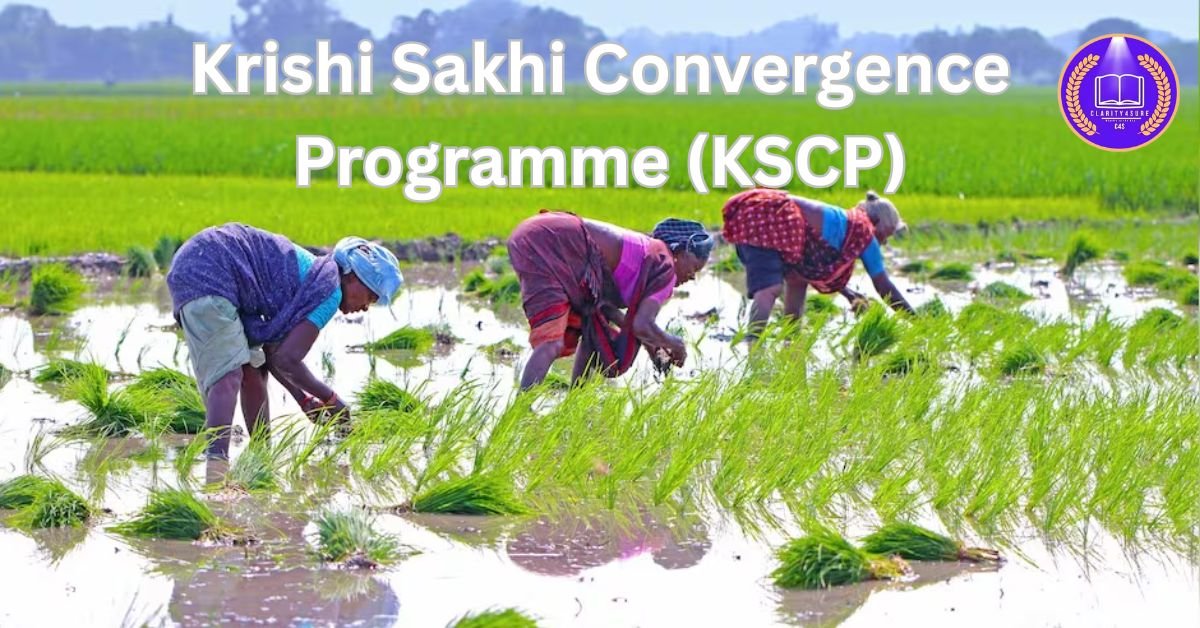
Krishi Sakhi Convergence Programme (KSCP)
Introduction Agriculture plays a crucial role in India’s economy, employing nearly 50% of the population. Women form nearly 75% of the total rural workforce, yet they remain largely invisible in policy frameworks, financial decisions, and agricultural leadership roles. Recognizing this gap, the Government of India launched the Krishi Sakhi Convergence Programme (KSCP)—a groundbreaking initiative aimed at training, certifying, and empowering rural women as agricultural entrepreneurs and community advisors. This initiative is not just about improving agricultural productivity but also about strengthening rural women’s financial independence, enhancing their decision-making power, and integrating them into the formal agricultural ecosystem. Background Krishi Sakhi Convergence Programme (KSCP) India is an agrarian economy, with over 50% of the population engaged in farming. Women contribute significantly to agricultural activities, accounting for nearly 75% of the total rural workforce. Despite their crucial role in food production, they face numerous challenges: Recognizing these challenges, the Government of India launched the Krishi Sakhi Convergence Programme (KSCP) under the Deendayal Antyodaya Yojana – National Rural Livelihood Mission (DAY-NRLM). This initiative trains, certifies, and empowers women farmers as Krishi Sakhis (Women Agricultural Advisors) who help local farmers improve productivity, access financial support, and adopt sustainable practices. What is Krishi Sakhi Convergence Programme ? The Krishi Sakhi Convergence Programme (KSCP) is a government-backed initiative that aims to train rural women from Self-Help Groups (SHGs) in modern and sustainable farming techniques. After completing the training, these women, known as Krishi Sakhis, serve as community agricultural advisors, helping fellow farmers improve their farming practices, increase crop yields, and access financial and government support. Key Objectives of KSCP The Krishi Sakhi Convergence Programme is designed to address the barriers that limit women’s participation in agriculture and create an inclusive farming ecosystem. Evolution of Women’s Role in Agriculture & Policy Support Traditional Era (Before Independence) Post-Independence (1950-2000) Recognition & Policy Shift (2000-2020) Launch of KSCP (2023-Present) How Does the Krishi Sakhi Convergence Programme Work? The KSCP framework is designed in multiple phases to ensure maximum outreach and effectiveness. Benefits of the Krishi Sakhi Convergence Programme The KSCP scheme offers wide-ranging benefits for women farmers, rural communities, and the Indian agricultural sector. Benefits for Women Farmers Benefits for the Agriculture Sector Benefits for the Government Challenges in Implementing KSCP Despite its tremendous potential, the Krishi Sakhi Convergence Programme faces several challenges: Future Prospects of KSCP Conclusion The Krishi Sakhi Convergence Programme is a game-changer for women’s empowerment, agricultural sustainability, and rural development. By equipping women with knowledge, financial access, and leadership roles, this initiative is reshaping Indian agriculture and creating a stronger, self-reliant rural economy.

Digital Crop Survey
Why in News? The government told Parliament on Friday that mechanisms such as geo-referencing and real-time data information, field-level data capture, supervisor approval, and sample check by States help in maintaining accuracy of the data collected under the Digital Crop Survey (DCS). Introduction Agriculture is the backbone of India’s economy, with over 50% of the population dependent on farming. However, traditional crop surveys have often been inaccurate, time-consuming, and inefficient. To address these challenges, the Government of India launched the Digital Crop Survey (DCS)—a technology-driven initiative that aims to digitize farm data, improve transparency, and support farmers with real-time insights. Background of the Digital Crop Survey India is one of the world’s largest agricultural economies, with over 140 million farmers depending on farming for their livelihood. However, traditional crop surveys conducted by local authorities and revenue officers have faced several challenges: To solve these issues, the Government of India launched the Digital Crop Survey (DCS) as part of its Digital Agriculture Mission (2021-2025). This initiative aims to digitize and centralize crop-related data for better policy-making, financial access, and risk management in agriculture. Digital Crop Survey: Key Information Feature Details Scheme Name Digital Crop Survey (DCS) Launched By Government of India (Ministry of Agriculture) Launch Year 2021 (Part of Digital Agriculture Mission 2021-2025) Objective To digitize crop data using technology for accurate, real-time monitoring and policy-making Technology Used Satellite imagery, AI, ML, GIS Mapping, Remote Sensing, Mobile-Based Geo-Tagging Key Benefits Accurate crop data collection; Faster & transparent crop insurance claims; Real-time monitoring of crops & weather; Improved access to government subsidies; Enhanced financial access for farmers (loans, credit) Implementation Process Geo-tagging of farmland; Remote sensing & satellite monitoring; AI-based crop identification ;Farmer verification & data integration; Real-time data usage for policies & schemes Linked Government Schemes PM Fasal Bima Yojana (PMFBY), Kisan Credit Card (KCC), PM-KISAN, National Agricultural Market (eNAM) Challenges Lack of digital awareness among farmers; Internet & connectivity issues in rural areas; High implementation costs; Data privacy and security concerns Expected Impact Increased farmer income; Better crop insurance & financial access; Reduced crop losses through early warnings; Strengthened food security & agriculture policies Evolution of Crop Surveys in India What is the Digital Crop Survey? The Digital Crop Survey (DCS) is a government initiative that uses technology, remote sensing, and AI-based tools to digitally capture and verify crop data in India. It aims to replace manual surveys with real-time, accurate, and transparent data collection. This initiative is part of India’s Digital Agriculture Mission, which aims to modernize farming using digital tools. Objectives of the Digital Crop Survey The Digital Crop Survey was introduced to overcome the inefficiencies of traditional crop surveys and provide accurate, real-time data to improve agricultural policies and farmer welfare. Key objectives include: Government Policies & Digital Crop Survey Integration The Digital Crop Survey is closely linked to several existing agricultural policies and programs, such as: How Does the Digital Crop Survey Work? The Digital Crop Survey follows a five-step process to collect, verify, and analyze crop data across India: 1. Geo-Tagging of Agricultural Land 2. Remote Sensing & Satellite Monitoring 3. AI & ML-Based Crop Identification 4. Farmer Verification & Data Integration 5. Real-Time Data Usage for Policies & Schemes Benefits of the Digital Crop Survey The Digital Crop Survey provides multiple benefits to farmers, policymakers, financial institutions, and agricultural researchers. Benefits for Farmers Benefits for the Government Benefits for Banks & Insurance Companies Challenges in Implementing Digital Crop Survey While the Digital Crop Survey has many advantages, its successful implementation faces several challenges: 1. Lack of Digital Awareness Among Farmers 2. Internet & Mobile Connectivity Issues 3. Data Privacy & Security Concerns 4. High Implementation Costs Impact of the Digital Crop Survey on Indian Agriculture The Digital Crop Survey is a game-changer for Indian agriculture. It will help: If successfully implemented, India can become a global leader in digital agriculture by ensuring real-time, transparent, and data-driven farming practices. Global Influence & Future Prospects Countries like the USA, Brazil, and the Netherlands have successfully implemented digital agriculture programs using AI, IoT, and satellite-based monitoring. India’s Digital Crop Survey aims to replicate these successful models by integrating machine learning, blockchain, and big data analytics to make agriculture more efficient and profitable. The Digital Crop Survey is a major step towards modernizing Indian agriculture. It will empower farmers, streamline government policies, and improve the overall efficiency of the agriculture sector. Conclusion The Digital Crop Survey is a transformative initiative that will modernize Indian agriculture through technology, AI, and satellite-based monitoring. While challenges exist, the long-term benefits for farmers, policymakers, and financial institutions outweigh them. India’s future in farming is digital! With the right support, awareness, and implementation, this initiative can empower farmers, reduce risks, and create a stronger agricultural economy.

Gold Monetisation Scheme
Why in News? The government has decided to discontinue the Gold Monetisation Scheme (GMS) starting from Wednesday (March 26, 2025) in view of the evolving market conditions, the Finance Ministry said. Introduction Gold has always been a preferred investment in India, often passed down through generations. However, most of this gold remains idle in homes and bank lockers, earning no returns. The Gold Monetisation Scheme (GMS), introduced by the Government of India in 2015, provides a way to earn interest on gold deposits while ensuring its safety. If you own gold in the form of jewelry, coins, or bars, this scheme allows you to deposit it in banks and earn tax-free interest while also contributing to the national economy. What is the Gold Monetisation Scheme? The Gold Monetisation Scheme (GMS) is a gold deposit scheme where individuals and institutions can deposit their gold with banks for a fixed period and earn interest on it. The deposited gold is melted, refined, and used for various purposes such as: At the end of the tenure, depositors can withdraw their investment in gold or cash, depending on the deposit type. Background of the Gold Monetisation Scheme India is one of the largest consumers of gold in the world, with households and institutions holding over 25,000 tonnes of gold. However, most of this gold remains idle in lockers and private holdings, contributing nothing to the economy. To mobilize this idle gold and reduce reliance on gold imports, the Government of India launched the Gold Monetisation Scheme (GMS) on November 5, 2015. Why Was the Gold Monetisation Scheme Introduced? Benefits of Gold Monetisation Scheme The Gold Monetisation Scheme (GMS) is designed to help individuals, institutions, and the economy by converting idle gold into a productive asset. Instead of keeping gold in lockers, depositors can earn interest while ensuring its safety. Here are the benefits of the Gold Monetisation Scheme: Why to Invest in the Gold Monetisation Scheme? Here are the top reasons why the Gold Monetisation Scheme is a better alternative to keeping gold idle at home or in lockers: Types of Gold Deposits The scheme offers three types of deposits: 1. Short-Term Gold Deposit 2. Medium-Term Gold Deposit 3. Long-Term Gold Deposit How to Apply for the Gold Monetisation Scheme? The process is simple and involves a few easy steps: Step 1: Visit a Collection and Purity Testing Centre (CPTC) Step 2: Open a Gold Deposit Account with a Bank Step 3: Earn Interest on Your Gold Deposit Step 4: Withdrawal After Maturity Eligibility Criteria for the Gold Monetisation Scheme Interest Rates Under the Gold Monetisation Scheme The interest rates vary based on the tenure of the deposit: Deposit Type Tenure Interest Rate (Approx.) Short-Term 1-3 Years 1-2% per annum Medium-Term 5-7 Years 2.25% per annum Long-Term 12-15 Years 2.5% per annum Interest is calculated on the weight of deposited gold, NOT its market value. Gold Monetisation Scheme vs Gold ETFs & Gold Bonds Feature Gold Monetisation Scheme Gold ETFs Sovereign Gold Bonds Returns Fixed interest Market-based Fixed interest + Market appreciation Safety High (Govt-backed) High High (Govt-backed) Physical Gold Required? Yes No No Liquidity Moderate High Moderate Tax Benefits Yes No Yes Conclusion If you have idle gold at home, the Gold Monetisation Scheme is an excellent way to earn interest while keeping it safe and secure. With tax-free earnings, flexible tenure options, and government backing, it is a smart alternative to traditional gold storage.
Rural Infrastructure Development Fund (RIDF)
Introduction Rural development is a key pillar of economic growth, and robust infrastructure plays a vital role in uplifting rural communities. In many developing countries, including India, rural areas still lack adequate roads, irrigation facilities, healthcare centers, schools, and electricity, affecting millions of people. To address this challenge, the Rural Infrastructure Development Fund (RIDF) was established to provide financial support for rural infrastructure projects, enhancing agricultural productivity, connectivity, and overall living standards. Introduction Rural infrastructure is the foundation of a strong rural economy. It connects villages to cities, enables farmers to access markets, improves education and healthcare, and promotes industrial growth in rural regions. However, rural areas often face infrastructure deficits, including: To overcome these challenges, the Government of India, through NABARD (National Bank for Agriculture and Rural Development), established the Rural Infrastructure Development Fund (RIDF) in 1995-96. Since then, RIDF has been instrumental in strengthening rural economies by financing various projects that improve agriculture, education, healthcare, irrigation, and rural connectivity. What is the Rural Infrastructure Development Fund (RIDF)? The Rural Infrastructure Development Fund (RIDF) is a long-term financing mechanism managed by NABARD. It provides low-cost loans to state governments, rural local bodies, and other agencies to develop essential infrastructure in rural areas. Initially, RIDF focused on agriculture and irrigation projects, but over the years, its scope has expanded to include over 30 sectors, covering rural roads, healthcare, education, drinking water, sanitation, renewable energy, and rural industrial development. Key Features of RIDF: Objectives of the Rural Infrastructure Development Fund (RIDF) RIDF was created with the primary objective of strengthening rural infrastructure to improve the quality of life and boost economic development. The major objectives of RIDF include: Bridging the Rural Infrastructure Gap Enhancing Agricultural Productivity Promoting Rural Employment and Economic Growth Improving Rural Connectivity Ensuring Sustainable Development Key Sectors Covered Under RIDF Over the years, RIDF has evolved to cover a wide range of rural infrastructure projects. Some of the key areas include: Irrigation and Water Resources Rural Roads and Bridges Agricultural and Rural Market Infrastructure Health and Education Drinking Water and Sanitation Renewable Energy and Sustainable Initiatives Benefits and Impact of RIDF RIDF has played a transformative role in rural India, benefiting millions of people by improving infrastructure, employment opportunities, and economic growth. Challenges in Implementing RIDF Projects Despite its success, RIDF faces several challenges in execution: To overcome these challenges, stronger policy support, efficient fund utilization, and better coordination between government agencies and local authorities are needed. Future of Rural Infrastructure Development Fund (RIDF) As India moves towards digital and sustainable development, RIDF will play a crucial role in shaping the future of rural areas. Some key focus areas for the future include: With the right policies and efficient execution, RIDF will continue to be a game changer in rural development. Conclusion The Rural Infrastructure Development Fund (RIDF) is not just a funding mechanism—it is a catalyst for rural transformation. From better roads and irrigation to healthcare, education, and renewable energy, RIDF has significantly contributed to rural India’s progress. To achieve a truly self-reliant and prosperous rural economy, we must continue to invest in infrastructure, empower rural communities, and ensure sustainable development.

National Food Security Mission (NFSM)
Introduction Food security is a critical issue for any nation, ensuring that every citizen has access to sufficient, safe, and nutritious food. In India, the National Food Security Mission (NFSM) was launched in 2007-08 with the goal of increasing food grain production, reducing dependence on imports, and improving farmers’ income. This initiative plays a key role in sustainable agriculture, rural development, and the nation’s economic stability. Background of NFSM Why Was NFSM Launched? Before NFSM, India faced several agricultural challenges: To address these issues, the National Development Council (NDC) recommended the launch of NFSM. The mission was designed to bridge the yield gap and increase food grain production in a sustainable manner. Implementation The Ministry of Agriculture & Farmers Welfare oversees NFSM, collaborating with state governments and agricultural research institutions. The program follows a cluster-based approach to implement reforms effectively. Steps in Implementation: Objectives of the National Food Security Mission The primary goals of NFSM include: Key Components of NFSM The National Food Security Mission has several sub-missions and components to address different aspects of food security: 1. NFSM – Rice 2. NFSM – Wheat 3. NFSM – Pulses 5. NFSM – Nutri-Cereals 6. NFSM – Oilseeds and Oil Palm 7. NFSM – Commercial Crops 8. NFSM – Restructured Programme Impact of NFSM Since its launch, the National Food Security Mission has made significant contributions to India’s agriculture: Challenges Faced by NFSM Despite its success, NFSM faces some hurdles: The Future of NFSM To strengthen India’s food security, NFSM needs continuous improvements: Conclusion The National Food Security Mission is a cornerstone of India’s agricultural policy. By promoting sustainable farming, improving crop yields, and ensuring economic stability for farmers, NFSM plays a crucial role in achieving self-sufficiency in food production. However, addressing challenges like climate change and water scarcity is essential to ensure long-term food security. India’s future in agriculture depends on innovation, sustainability, and farmer empowerment. With continued efforts, NFSM will help build a hunger-free, food-secure, and prosperous India. FAQs on National Food Security Mission


