
RBI Grade BNABARD ESISEBI
In one line
Former Chief Economic Adviser Arvind Subramanian Criticizes GST
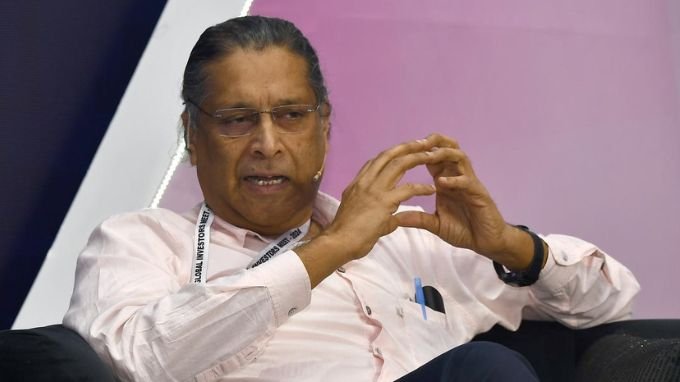
- Arvind Subramanian, former Chief Economic Adviser has expressed dissatisfaction with the GST regime’s complex, multiple-rate structure and the rapid rise of “tax terrorism.”
- He also told that an increase in the GST rate, stating that the current GST Council has become a rate cutting committee and exemption granting committee.
- He criticized the GST Council for blaming the GST Council for raising rates, highlighting the political economy dynamic.
GST Implementation and Council Formation
Background and Establishment
- The Constitutional (122nd Amendment) Bill (CAB) was introduced in Parliament to implement GST.
- The CAB was passed by Rajya Sabha and Lok Sabha on 03rd and 08th August, 2016.
- The President assent to the “The Constitution (One Hundred And First Amendment) Act, 2016″ on 8th September, 2016.
Vision and Mission
- The Council aims to establish the highest standards of the cooperative federation and develop a harmonised national market for goods and services.
- The Council’s vision and mission are to evolve a GST structure that is information technology driven and user-friendly.
Composition of the Council
“RBI MPC Unpacked: Key Theory Meets Today’s Macro Trends”Tap to play · from the C4S channel
- The Council is a joint forum of the centre and the states, comprising the Union Finance Minister as the Chairperson, the Union Minister of State in-charge of Revenue or Finance, and the Minister in-charge of Finance or Taxation or any other Minister nominated by each state government.
- The Council’s decisions are taken at its meetings, with a majority of three-fourths of the weighted votes of the members present and voting at the meeting.
Free · RBI Grade B
Want the free material for this exam?
ESI-FM notes, the monthly current affairs PDF and essay topics — all free, on WhatsApp.
Get it on WhatsApp — one tap or just leave your numberFunctions of the Council
- The Council is required to make recommendations on taxes, cesses, surcharges, goods and services subjected to GST or exempted from GST, model GST Laws, principles of levy, apportionment of GST levied on supplies in the course of inter-state trade or commerce, the threshold limit of turnover below which goods and services may be exempted from GST, rates, special provision with respect to the states of Arunachal Pradesh, Assam, Jammu and Kashmir, Manipur, Meghalaya, Mizoram, Nagaland, Sikkim, Tripura, Himachal Pradesh and Uttarakhand, and any other matter relating to GST.
- The Council also recommends the date on which the GST may be levied on petroleum crude, high-speed diesel, petrol, natural gas and aviation turbine fuel.