

Why in News?
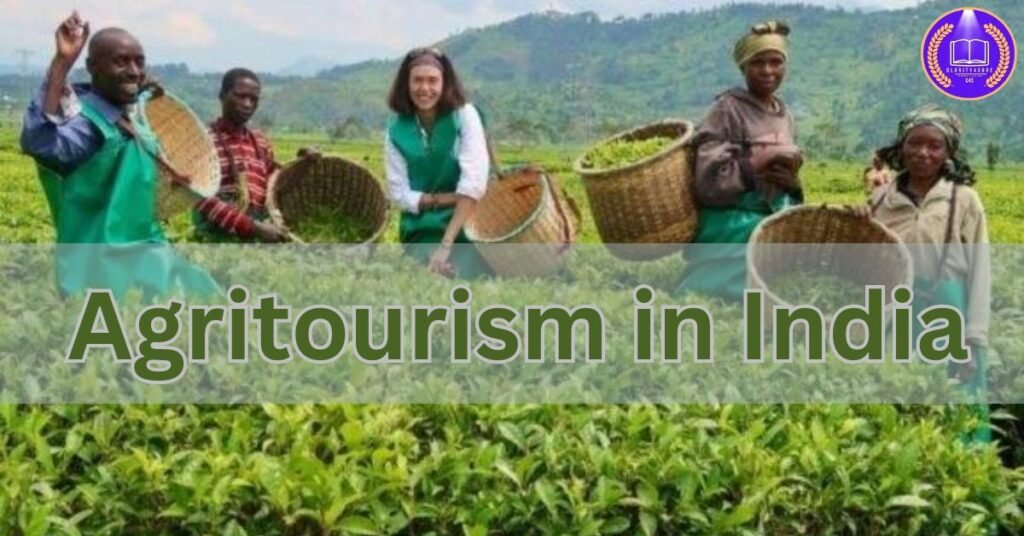
Himachal Pradesh (HP) is promoting agri-tourism to strengthen its economy where tourism contributes around 7% to the State’s GDP.
Introduction
Agritourism in India is not just a new travel trend but a bridge connecting urban dwellers with the heart of rural India. It offers an authentic, immersive experience into the lives of farmers, showcasing their agricultural practices, traditional customs, and sustainable lifestyles. With agriculture forming the backbone of the Indian economy, agritourism has immense potential to boost rural incomes, preserve cultural heritage, and promote eco-friendly travel.
What is Agritourism?
Agritourism, also known as agro-tourism, is a form of tourism where visitors experience farm life firsthand. This includes participating in farming activities, staying in rural homestays, engaging in organic food cultivation, and understanding local traditions. It blends agriculture with tourism, creating opportunities for experiential learning, sustainable development, and cultural exchange.
Unlike traditional tourism, agritourism promotes sustainability, enhances local economies, and educates visitors about rural livelihoods. It provides an alternative income source to farmers, reduces urban-rural disparity, and fosters appreciation for the farming community.
Why is Agritourism Gaining Popularity in India?
1. A Break from Urban Life
Modern city life is stressful, fast-paced, and disconnected from nature. Agritourism offers a peaceful escape, allowing visitors to reconnect with nature, breathe fresh air, and embrace a slower lifestyle.
2. Growing Interest in Sustainable and Responsible Tourism
Travelers are increasingly aware of their environmental impact. Agritourism promotes eco-friendly travel through organic farming, water conservation, and minimal carbon footprint tourism.
3. Educational and Cultural Exchange
It provides hands-on learning about organic farming, dairy farming, indigenous crop cultivation, and traditional cooking techniques. Schools and universities also promote agritourism for educational field trips.
4. Government Support and Policies
The Indian government encourages agritourism through subsidies, training programs, and tourism development schemes, helping farmers transform their lands into tourist destinations.
5. Rise of Organic and Farm-to-Table Movement
The demand for organic produce has surged in India. Visitors are keen to learn about pesticide-free farming, organic cultivation, and self-sustaining agricultural practices.
Top Agritourism Destinations in India
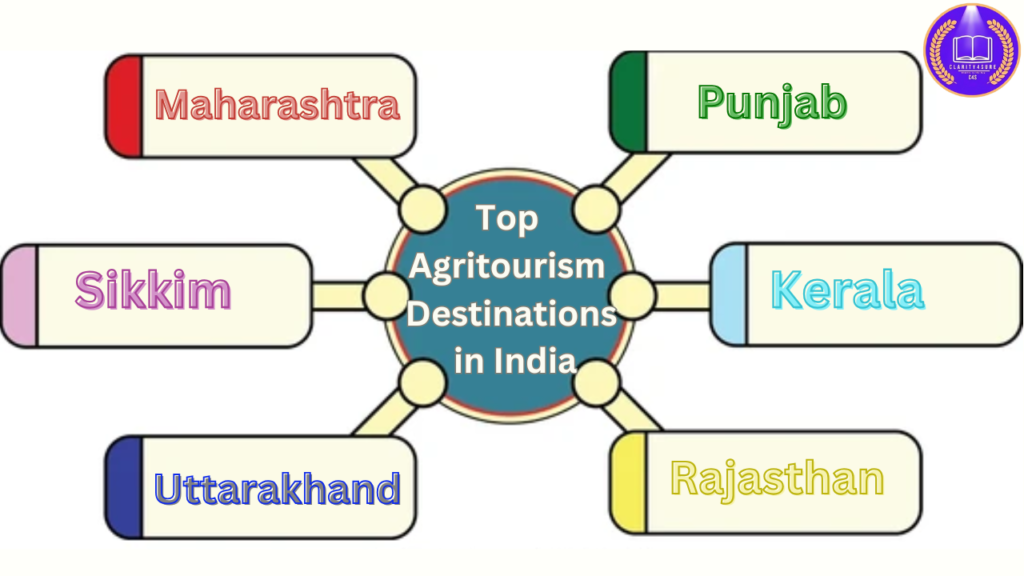
Agritourism is flourishing across India, from the spice plantations of Kerala to the lush vineyards of Maharashtra. Here are some top destinations:
1. Maharashtra – India’s Agritourism Pioneer
Maharashtra has over 300 agritourism centers, thanks to initiatives by the Maharashtra Tourism Development Corporation (MTDC). Top locations include:
- Baramati:
- Famous for grape farms, sugarcane fields, and organic farming.
- Palghar:
- Offers rice farming, fish farming, and tribal culture experiences.
- Nashik:
- Home to India’s top vineyards, offering wine tourism and grape harvesting experiences.
2. Punjab – The Land of Prosperous Farming
Punjab’s agritourism offers vibrant farm stays where visitors can experience:
- Wheat harvesting and tractor rides.
- Traditional Punjabi cooking using farm-fresh ingredients.
- Dairy farming and rural handicraft workshops.
3. Kerala – Spice and Tea Plantations
Kerala’s agritourism revolves around its lush plantations:
- Wayanad:
- Famous for organic coffee, tea, and spice plantations.
- Thekkady:
- Known for eco-friendly farm stays, Ayurveda gardens, and tribal agriculture.
- Munnar:
- Offers tea plantation tours and interactive farm visits.
4. Rajasthan – Desert Agritourism
Rajasthan combines agritourism with cultural heritage:
- Pushkar and Jodhpur:
- Camel breeding farms, millet fields, and rural handicrafts.
- Udaipur and Jaisalmer:
- Desert farming, traditional Rajasthani cuisine, and folk performances.
5. Sikkim – India’s First Organic State
Sikkim is a haven for organic farming enthusiasts:
- Temi Tea Garden:
- One of India’s best organic tea plantations.
- Dzongu:
- Home to cardamom plantations and eco-friendly farm stays.
6. Uttarakhand – Himalayan Agritourism
Uttarakhand’s scenic farm retreats include:
- Mukteshwar:
- Apple orchards, dairy farming, and organic vegetable cultivation.
- Ranikhet and Almora:
- Terraced farming, bee-keeping, and homestay experiences.
Government schemes for agritourism in India
Agritourism in India is gaining momentum, thanks to several government initiatives aimed at promoting rural tourism and supporting farmers. Here are some key government schemes that facilitate agritourism in India:
1. Ministry of Tourism’s Rural Tourism Scheme
Launched under the Swadesh Darshan and PRASAD schemes, this initiative promotes rural tourism, including agritourism, by developing infrastructure, training local communities, and providing financial assistance to rural entrepreneurs.
States like Maharashtra, Kerala, Punjab, and Rajasthan have benefited from this scheme to enhance agritourism facilities.
2. Maharashtra Agritourism Policy (2020)
Maharashtra became the first state in India to implement a dedicated Agritourism Policy to encourage farm tourism.
Key benefits:
Farmers can set up agritourism centers without needing commercial land conversion.
50% subsidy on infrastructure development for registered agritourism centers.
Financial assistance for setting up farm stays, traditional activities, and rural handicraft promotion.
3. Rashtriya Krishi Vikas Yojana (RKVY)
A centrally sponsored scheme that supports innovative agricultural businesses, including agritourism.
Provides financial aid for farm infrastructure, organic farming, and rural entrepreneurship.
4. NABARD (National Bank for Agriculture and Rural Development) Assistance
NABARD offers loans and subsidies for agritourism projects under schemes like:
Agri-Clinics and Agri-Business Centers (ACABC) – Encourages agripreneurs to set up tourism-based agricultural businesses.
Rural Infrastructure Development Fund (RIDF) – Funds infrastructure improvements for agritourism centers.
5. State-Specific Agritourism Initiatives
Several states have launched their own policies to support agritourism:
Kerala – Promotes farm tourism through its Responsible Tourism Mission, offering subsidies to farmers for setting up eco-friendly farm stays.
Punjab – Encourages agritourism through financial aid to farmers hosting visitors for organic farming experiences.
Madhya Pradesh – Offers incentives under its Rural Tourism Scheme, integrating agritourism with heritage tourism.
6. Atmanirbhar Bharat and MSME Schemes
Agritourism businesses can avail benefits under MSME (Micro, Small, and Medium Enterprises) schemes, including loans, skill development, and marketing support.
The Atmanirbhar Bharat Abhiyan encourages rural entrepreneurship, including agritourism startups.
7. Pradhan Mantri Gram Sadak Yojana (PMGSY)
Focuses on improving rural road connectivity, making agritourism destinations more accessible to tourists.
8. Skill India and Rural Entrepreneurship Programs
Training programs under Skill India help farmers develop hospitality, marketing, and business management skills to operate agritourism ventures successfully.
Deen Dayal Upadhyaya Grameen Kaushalya Yojana (DDU-GKY) offers training for youth in agritourism-related services.
Experiences to Enjoy in Agritourism
Agritourism offers diverse activities catering to all age groups:
- Farm Stays & Homestays –
- Experience traditional rural hospitality with home-cooked meals and nature walks.
- Fruit Picking & Crop Harvesting –
- Seasonal experiences include mango, strawberry, and grape picking.
- Dairy Farming & Animal Husbandry –
- Learn about milk production, cow milking, and traditional cheese-making.
- Organic Cooking Lessons –
- Participate in farm-to-table cooking with local ingredients.
- Tractor & Bullock Cart Rides –
- Enjoy rustic transport through farmlands.
- Handicraft Workshops –
- Explore pottery, weaving, and bamboo crafts by rural artisans.
- Nature Walks & Bird Watching –
- Many farms are surrounded by rich biodiversity.
Benefits of Agritourism for Farmers and Rural Communities
- Alternative Income Source –
- Reduces dependency on seasonal farming by providing additional earnings through tourism.
- Preservation of Traditional Practices –
- Helps retain cultural farming methods and indigenous knowledge.
- Employment Generation –
- Creates jobs in hospitality, tour guiding, local food production, and handicrafts.
- Eco-Friendly Development –
- Promotes organic farming, water conservation, and sustainable rural living.
- Bridging the Rural-Urban Gap –
- Raises awareness about agricultural importance among urban populations.
Challenges and Way Forward
Despite its potential, agritourism in India faces challenges:
- Infrastructure Gaps –
- Many rural areas lack proper roads, electricity, and accommodation facilities.
- Limited Marketing & Awareness –
- Farmers struggle to reach tourists due to limited digital marketing knowledge.
- Seasonal Dependency –
- Activities like fruit picking and crop harvesting are seasonal, limiting year-round tourist flow.
- Policy Support & Training –
- More structured policies, subsidies, and skill-building programs are needed to empower farmers.
Future Potential
- The future of agritourism in India is bright, with increasing interest in eco-tourism, digital marketing initiatives, and support from government agencies.
- By improving infrastructure, promoting digital platforms, and fostering collaborations between farmers and tourism boards, agritourism can become a mainstream travel segment.
Conclusion
Agritourism in India offers a perfect blend of adventure, education, and cultural immersion. Whether you’re looking for a peaceful retreat, an insightful farming experience, or an eco-friendly vacation, India’s agritourism destinations have something unique to offer.
The Indian government is actively working on integrating agritourism into mainstream tourism policies, ensuring better funding, training, and marketing support for farmers.
Digital platforms are being developed to promote agritourism destinations and connect farm owners with potential tourists.
By supporting agritourism, we contribute to rural development, environmental sustainability, and cultural preservation.







