Daily Current Affairs Quiz
23 & 24 November, 2025
National Affairs
1. 131st Amendment Bill, 2025
Source: IE
Context:
The Parliament is up for a heated winter session as the Union Government plans to introduce the contentious Constitution (131st Amendment) Bill, 2025 in the upcoming session set to start from December 1, 2025.
About the Bill
- The Bill aims to include Chandigarh under Article 240 of the Indian Constitution.
- Article 240 gives the President the power to make regulations for Union Territories (UTs) — enabling direct governance via presidential regulations and potentially appointing a full-time Administrator or Lieutenant Governor (LG) for Chandigarh.
- The government says the goal is to “simplify the process for law-making” for the UT of Chandigarh, aligning it with other UTs that do not have a legislative assembly.
Why the Bill Matters (Broader Implications)
- Governance Shift
- Moving Chandigarh under Article 240 gives the President/Government of India more direct control via regulations, rather than relying on state-based administration.
- Political Symbolism
- For Punjab, Chandigarh is not just a UT but a symbol of its political and historical identity.
- Centralizing its control is being viewed as erosion of Punjab’s rights.
- Federalism
- Critics argue this move undermines federal principles because it reduces the role of a key State (Punjab) in administering its capital.
2. Atomic Energy Bill 2025
Source: TH
Context:
A Bill seeking to open up the civil nuclear sector for private players and a proposed law on Higher Education are among the ten new proposed legislations listed by the government for introduction in the winter session of Parliament, beginning December 1.
What’s the Proposal?
- The Atomic Energy Bill, 2025 is among the 10 bills listed for the upcoming Winter Session of Parliament.
- It seeks to open up India’s civil nuclear sector to private players, shifting away from the current state monopoly.
- The idea is to modernise regulation and usage of atomic energy under a more liberal legal framework.
Other Key Bills on the Agenda
Apart from the Atomic Energy Bill, other notable bills listed for the Winter Session include:
- Higher Education Commission of India Bill — To set up a new, independent regulator for higher education.
- National Highways (Amendment) Bill, 2025 — To make land acquisition for highways faster and more transparent.
- Corporate Laws (Amendment) Bill, 2025 — Proposals to tweak the Companies Act, 2013 and LLP Act, 2008 for ease of doing business.
- Securities Markets Code Bill, 2025 — To consolidate SEBI Act, Depositories Act, and Securities Contracts Act into a unified code.
- Arbitration & Conciliation (Amendment) Bill, 2025 — Changes to the arbitration law for faster and clearer dispute resolution.
- Insolvency & Bankruptcy Code Amendment Bill, 2025 and Jan Vishwas (Amendment) Bill, 2025 are also expected to be discussed.
3. G-20 Summit in South Africa
Source: TH
Context:
The G-20 Summit was held in Johannesburg, South Africa, for the first time in Africa. The event was notable for the U.S. boycott, even as leaders adopted a new G-20 declaration on climate change.
Key Highlights:
Modi’s Call to Reassess Global Growth Parameters
- PM Narendra Modi said current global growth models have deprived large populations of resources.
- He advocated for development aligned with “integral humanism”, balancing economic progress with environmental protection.
Australia–Canada–India Technology & Innovation (ACITI) Partnership
- Announced after a trilateral meeting with Australia’s PM Anthony Albanese and Canada’s PM Mark Carney.
- Aims to strengthen cooperation on:
- AI and critical technologies
- Clean energy innovation
- Resilient supply chains
- Described as collaboration among “democratic partners across three continents and three oceans.”
New G-20 Initiatives Proposed by India
- G-20–Africa Skills Multiplier Initiative
- India will train 1 million people across Africa in skills development.
- G-20 Global Healthcare Response Team
- A proposal for coordinated global health readiness and crisis response.
- G-20 Initiative on Countering the Drug-Terror Nexus
- To address linkages between narcotics, money laundering, and terror financing.
U.S. Boycott and Its Impact
- The U.S. did not send a leader, citing strained relations with South Africa.
- SA President Cyril Ramaphosa symbolically prepared to hand over the Presidency to an “empty chair”.
- A U.S. diplomat attended the meet; President Donald Trump plans to host the G-20 in 2026.
Climate Change Declaration
- Leaders adopted the G-20 Declaration on Climate Change.
- Stressed on:
- Strong global measures for climate mitigation
- Greater support for developing nations
- Rethinking development pathways in line with global equity
About G20
- Full Form: Group of 20 (G20)
- Type: Intergovernmental forum
- Members: 19 sovereign countries + European Union (EU) + African Union (AU)
- Purpose: Address major global issues including international financial stability, climate change mitigation, and sustainable development.
History & Formation
- Founded: 1999, in response to global economic crises of the late 1990s
- Inaugural Meeting: 15–16 December 1999, Berlin
- Key Founders:
- Canadian Finance Minister Paul Martin
- US Treasury Secretary Larry Summers
- German Finance Minister Hans Eichel
- Reason for Formation:
- To address financial instability exposed by crises in Mexico (1994–95), Asia (1997), Russia (1998), and the LTCM hedge fund collapse (1998)
- Expand representation beyond G7/G8 to include emerging economies
4. COP30 Summit
Source: TH
Context:
The 30th Conference of Parties (COP30) to the UNFCCC concluded in Belem, Brazil, with a new consensus agreement titled Global Mutirão. The summit focused on financing, equity, fossil fuels, and deforestation—longstanding points of contention between developed and developing nations.
Key Outcomes of COP30
| Key Outcome | Details / Purpose |
|---|---|
| Two Global Road Maps | COP30 President Andrei Lago announced: 1. Road Map to Halt & Reverse Deforestation 2. Road Map for a Just & Orderly Transition Away from Fossil Fuels |
| Purpose of Road Maps | • Reduce global dependence on fossil fuels • Mobilise global resources for climate action • Ensure action is just, planned, and equitable |
| Global Mutirão Consensus Agreement | “Global Mutirão: Uniting humanity in a global mobilisation against climate change” addressing key contentious issues |
| Climate Finance (Article 9, Paris Agreement) | • Developed nations must provide funds to developing countries for clean energy transition • Push for predictable, adequate, and accessible climate finance |
| Trade-Restrictive Climate Measures | Advance cooperation on unilateral trade-restrictive measures (e.g., carbon border taxes) affecting developing-country exports |
| Nationally Determined Contributions (NDCs) | Countries urged to update and strengthen NDCs to align with 1.5°C target Focus on bridging ambition–implementation gap |
| 1.5°C Gap | Acknowledgement that current commitments are insufficient Countries urged to scale up mitigation, adaptation, and finance |
India’s Position at COP30
- India, along with several developing countries and petro-states, did not support the inclusion of a timeline for phasing out fossil fuels.
- Position based on:
- Development needs and energy security
- Equity and differentiated responsibilities
- Lack of adequate climate finance and technology transfer
India supported:
- Emphasis on equity, climate justice, and common but differentiated responsibilities (CBDR-RC).
- Opposition to forced or rigid timelines that could constrain developing economies.
5. African Grey Parrots
Source: TH
Context:
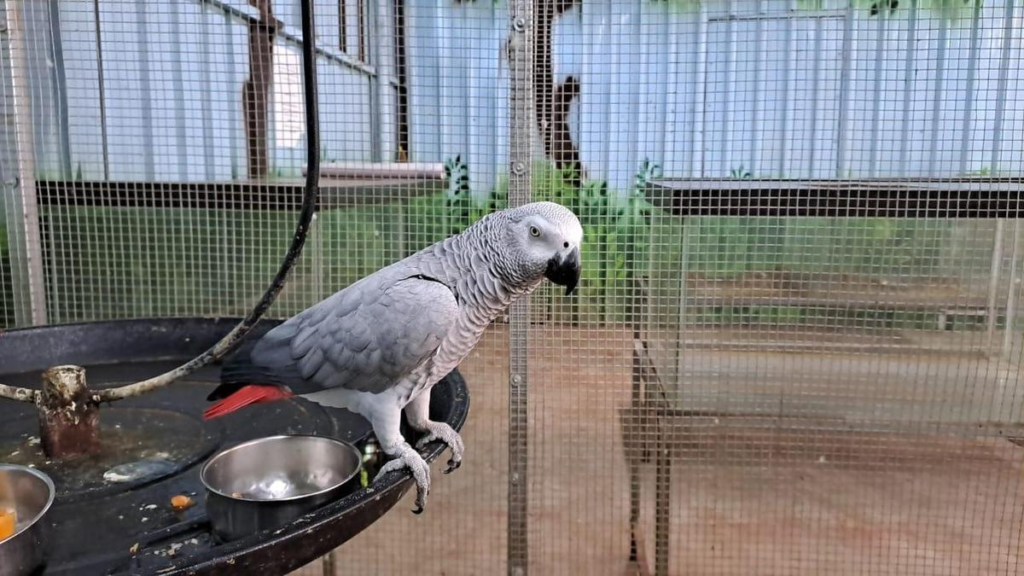
An investigation through RTI applications by The Hindu revealed that State Forest Departments across India have no official records of African grey parrot trade, despite their widespread presence in pet markets. The species is Endangered (IUCN) and listed under CITES Appendix I, requiring the highest level of protection.
About the Species
- African Grey Parrot (Psittacus erithacus)
- Listed as Endangered by IUCN.
- Listed in CITES Appendix I (strictest trade regulations).
- Population severely affected by international pet trade and habitat loss.
Legal Requirements for Breeding (CITES Appendix I)
To breed African grey parrots legally in India, one must have:
- Breeding licence under Breeders of Species Licence Rules, 2023.
- CITES import permit.
- DGFT import licence number.
- No-Objection Certificate from the Chief Wildlife Warden at time of import.
Banking/Finance
1. ANMI Urges SEBI to Focus on Investor Education & Eligibility Norms
Source: TH
Context:
The Association of National Exchanges Members of India (ANMI) has submitted recommendations to the Securities and Exchange Board of India (SEBI) amid rising retail losses in the Futures & Options (F&O) segments. There is currently debate around reducing expiry days in derivatives contracts but the ANMI believes the real issue lies elsewhere.
Key Recommendations from ANMI
- Investor Education Should Be Prioritised
- ANMI argues that structured training and awareness programmes for retail investors are essential to sustainably reduce losses.
- They emphasise that product modifications (e.g., changing expiry days) don’t address the root issue of limited investor understanding.
- Strict Eligibility Norms for Traders
- The association suggests strengthening eligibility criteria for participation in complex derivatives.
- This includes perhaps assessing financial literacy and risk awareness before allowing trading in high‑risk segments.
- Caution Against Product Tweaks Alone
- ANMI warns that simply reducing the number of expiry days or altering contract specifications won’t fix the underlying problem of uninformed participation.
Futures & Options (F&O)
- Futures: A contract to buy or sell an asset (like stocks, commodities, currencies) at a predetermined price on a specified future date.
- Options: A contract that gives the buyer the right, but not the obligation, to buy (Call Option) or sell (Put Option) an asset at a predetermined price before or on a specific date.
Key Features:
| Feature | Futures | Options |
|---|---|---|
| Obligation | Both parties must execute the contract on expiry | Only buyer has right; seller has obligation |
| Risk | Unlimited potential loss/gain | Loss limited to premium paid (for buyer) |
| Premium | No upfront cost (except margin) | Buyer pays a premium upfront |
| Settlement | Cash or physical delivery | Usually cash-settled in India |
| Usage | Hedging & speculation | Hedging, speculation, or income strategies |
Terminology
- Strike Price: Price at which option can be exercised.
- Expiry Date: Date on which contract settles.
- Lot Size: Minimum number of units in a contract.
- Margin: Security deposit to cover potential losses in futures.
The Association of National Exchanges Members of India (ANMI)
- Full Name: Association of National Exchange Members of India (ANMI)
- Type: Industry body representing members of stock exchanges in India
- Members: Primarily brokers and trading members of national stock exchanges (like NSE and BSE)
2. Sebi to Discuss Capping Broker Fees with Mutual Fund Heads
Source: Mint
Context:
The Securities and Exchange Board of India (Sebi) plans to meet top executives of asset management companies (AMCs) to discuss a proposal to cap broker fees for executing trades by mutual funds. This is part of Sebi’s broader initiative to overhaul mutual fund costs charged to investors, known as the Total Expense Ratio (TER).
Proposed Cap on Broker Fees
- Sebi proposed reducing brokerage paid by mutual funds:
- Cash market: 12 bps → 2 bps
- Derivatives: 5 bps → 1 bps
- Objective: Avoid investors paying twice for research — once via brokerages, again through AMC research.
- Sell-side brokers have pushed back, suggesting a relaxed cap of 6–7 bps due to the importance of their research.
Total Expense Ratio (TER) Overhaul
- TER includes management fees, distributor commissions, brokerage and transaction costs, custodian/RTA fees, statutory levies, and other expenses.
- Sebi plans to unbundle TER for transparency, excluding statutory levies like STT and stamp duty.
- Current TER for equity schemes:
- 2.25% for ₹500 crore AUM
- 1.05% minimum for ₹50,000 crore AUM
- TER directly impacts investor returns; higher TER reduces net gains over time.
Total Expense Ratio (TER)
The Total Expense Ratio (TER) is the annual fee charged by a mutual fund to manage and operate its scheme. It is expressed as a percentage of the fund’s average assets under management (AUM) and includes all costs related to fund management.
Components of TER
TER generally includes:
- Management Fees: Payment to the fund manager for managing the portfolio.
- Administrative Expenses: Costs of fund operations, accounting, and reporting.
- Marketing and Distribution Expenses (if applicable): Includes brokerage and commission paid to distributors.
- Custodian and Registrar Fees: Payment to entities maintaining fund assets and records.
- Other Operational Costs: Legal, audit, and regulatory compliance costs.
TER does not include brokerage or transaction costs for buying and selling securities, which are accounted for separately in fund disclosures.
3. Payout APIs
Source: ET
Context:
The Reserve Bank of India (RBI) is investigating a sharp rise in money laundering through bank payout APIs, misused by unregulated Technology Service Providers (TSPs) posing as fintech companies. These entities exploit bulk-payment APIs to transfer large sums without KYC, OTP, or standard checks.
What Are Payout APIs?
A Payout API (Application Programming Interface) is a software interface provided by banks that allows businesses or authorized entities to automatically send money to multiple recipients in a fast, secure, and scalable manner.
Unlike traditional bank transfers where you manually enter details and authenticate each transaction (e.g., using OTPs), a payout API allows bulk transfers programmatically, making it ideal for payroll, vendor payments, or refunds.
Key Features
- Automation: Payments can be initiated via software without manual intervention.
- Bulk Processing: Supports payments to hundreds or thousands of beneficiaries in a single request.
- Multiple Channels: Can send money to bank accounts, UPI IDs, or mobile wallets.
- Integration with Business Systems: Companies can integrate it directly with ERP, accounting, or payroll systems.
- Reduced Friction: Eliminates repetitive steps like OTP entry or manual data entry.
Types of Payout APIs
- Cross-Border Payout APIs: For sending money internationally.
- Online Payout APIs: For digital payments to customers or vendors.
- Offline / POS Payout APIs: For payments in physical stores using devices like PoS or UPI soundboxes.
4. Easebuzz Receives RBI Nod to Operate as Full-Service Payment Aggregator
Source: BS
Context:
Fintech firm Easebuzz has been authorised by the Reserve Bank of India (RBI) to operate as a full-service payment aggregator (PA), enabling online, offline, and cross-border payment services for merchants across India.
What is a Payment Aggregator (PA)?
A Payment Aggregator (PA) is a financial entity that facilitates digital payments for merchants by collecting and processing payments from multiple payment instruments (like credit/debit cards, UPI, net banking, wallets) without the merchant having to set up individual arrangements with each bank or payment method.
They act as intermediaries between customers, banks, and merchants, simplifying online and offline transactions.
Key Features
- Single Integration: Merchants integrate once with the PA instead of multiple banks or payment methods.
- Multi-Channel Payments: Supports online (e-commerce), offline (PoS, UPI soundbox), and cross-border transactions.
- Settlement to Merchant: Collects payments from customers and settles them in the merchant’s account after deducting fees.
- Compliance & Security: Licensed by the Reserve Bank of India (RBI) to ensure KYC, AML, and regulatory compliance.
Types of PAs
- Full-Service PA: Handles online, offline, and cross-border payments.
- PA-P (Physical): Focuses on offline transactions, where the payment device (PoS, soundbox) and payment instrument are physically present.
- Cross-Border PA: Specialized in international transactions, enabling merchants to receive foreign payments.
RBI Eligibility Criteria for Payment Aggregators (PAs)
- Entity: Must be an Indian company (foreign firms cannot directly operate).
- Net Worth: Minimum ₹15 crore for new PAs; may increase with scale.
- Fit & Proper: Promoters, directors, and key personnel must meet RBI standards.
- Governance & Risk: Strong internal controls, AML/KYC compliance, cybersecurity, and grievance redressal.
- Operational: Segregate customer funds, maintain settlement accounts, ensure transaction tracking.
- Regulatory: Obtain RBI authorisation; report transaction and compliance data periodically.
- Other: No holding of customer funds beyond settlement; due diligence on merchants and TSPs.
Agriculture
1. From Gene Modification to Genome Editing: India’s Agricultural Revolution
Source: IE
Context:
India’s journey in crop biotechnology has been slow with traditional genetically modified (GM) crops, but genome editing (GE) is emerging as a game-changer. While GM crops introduce foreign genes, GE precisely edits a plant’s own genome, offering higher yields, better nutrition, and disease resistance without transgenic concerns.
Key Developments:
Limited Progress on GM Crops
- India’s genetically modified (GM) crop adoption has largely been restricted to Bt cotton.
- No new GM crop technology has been approved for commercialisation since 2006.
Emergence of Genome Editing (GE)
- Indian scientists are now making headway with genome-edited crops, supported by research initiatives and government funding.
- Notable trials include GE rice lines (Samba Mahsuri and MTU-1010) that show:
- Up to 19% yield increase for one line.
- Better adaptation to saline or alkaline soils.
- A GE mustard line is under multi-location testing and could be released by 2026.
How GE Works
- Uses CRISPR-Cas systems (Cas9/Cas12a) to precisely edit native plant genes.
- Example: Editing the Gn1a gene in rice reduces its activity → increases cytokinin → higher grain yield.
- GE plants can be transgene-free, meaning Cas proteins are removed in later generations.
Policy and Regulatory Support
- GE plants are exempt from strict biosafety regulations applied to GM crops, as they do not carry foreign DNA.
- Approvals are handled at the Institutional Biosafety Committee level, simplifying the process.
- The government has allocated significant funding to boost GE research through ICAR and other institutions.
Target Crops and Genes
- ICAR has identified 178 genes in 24 field crops and 43 genes in 16 horticultural crops for potential genome editing.
- GE aims to improve yield, quality, stress tolerance, and climate resilience across key agricultural and horticultural crops.
Domestic Innovation
- Indian scientists have developed a miniature genome editing tool using TnpB proteins, which is smaller, cheaper, and can bypass intellectual property limitations compared to standard CRISPR tools.
Strategic Significance
- GE allows higher productivity, nutritional improvement, and resilience while avoiding public resistance linked to GM crops.
- India could overcome the stagnation of the GM era, positioning itself as a leader in safe, next-generation crop biotechnology.
Genetically Modified (GM) Crops
- Definition: Organisms whose DNA has been altered by inserting foreign genes from other species.
- Method: Traditional genetic engineering (transgenic approach).
- Example: Bt cotton (gene from bacteria inserted to confer pest resistance).
- Regulation: Strict oversight; considered transgenic and often faces higher regulatory barriers.
- Impact: Introduces traits not naturally present in the plant’s gene pool.
Genome Editing (GE)
- Definition: Precise modification of an organism’s own DNA without necessarily introducing foreign genes.
- Method: Technologies like CRISPR-Cas9, TALENs, or ZFNs to add, delete, or replace specific genes.
- Example: Editing rice for drought tolerance by modifying its existing genes.
- Regulation: Often considered differently from GM crops; regulatory frameworks are evolving.
- Impact: Can achieve desired traits while maintaining the species’ natural gene pool.
Key Difference: GM crops usually involve foreign DNA, while genome editing modifies existing DNA with precision.
2. Government Pushes Integrated Farming for Marginal Farmers
Source: News on Air
Context:
Agriculture and Farmers’ Welfare Minister Shivraj Singh Chouhan highlighted the government’s focus on promoting integrated farming practices for the benefit of marginal farmers during the Sixth International Agronomy Congress in New Delhi.
Key Highlights:
- Integrated Farming Initiative:
- Minister urged agro-scientists to prepare a five-year plan to promote integrated farming.
- Objective: Enhance productivity, sustainability, and income of marginal farmers.
- Agricultural Dependency & Diversification:
- 46% of India’s population still depends on farming.
- Emphasis on leveraging research and data to encourage crop diversification and sustainable practices.
- International Agronomy Congress:
- Duration: Three days.
- Activities: Plenary sessions, thematic symposia, keynote lectures, poster presentations, exhibitions, and a dedicated Young Scientists and Students’ Conference.
- Theme 2025: “Re-envisioning Agronomy for Smart Agro-Food Systems and Environmental Protection.”
Significance:
- Promotes science-driven, sustainable agriculture.
- Supports farmer income growth and resilient agro-food systems.
Facts To Remember
1. Mahit clinches 50m rifle 3 Positions gold
India’s Mahit Sandhu clinched the women’s 50m rifle 3 Positions gold for her fourth medal at the Summer Deaflympic Games in Tokyo.
2. Abhinav wins men’s 25m pistol gold at the Deaflympics
Abhinav Deshwal won India’s 15th medal in shooting at the Deaflympics, clinching the gold in the 25m pistol event in Tokyo with a record in qualification.
3. Lakshya clinches Australian Open
A fluent Lakshya Sen ended a difficult stretch on the international circuit by clinching his first title of the 2025 season, defeating Japan’s Yushi Tanaka in the Australian Open men’s singles final.
4. Legendary actor Dharmendra passes away; PM Modi expresses condolences
Legendary actor Dharmendra, fondly known as Bollywood’s He-Man, has passed away at the age of 89.
5. Justice Surya Kant becomes 53rd Chief Justice of India
Justice Surya Kant today took oath as the 53rd Chief Justice of India. President Droupadi Murmu administered the oath of office of Justice Surya Kant at Rashtrapati Bhavan this morning.
6. S&P’s global rating projects India’s economy to grow 6.5% in current fiscal year
Standard and Poor’s global rating has projected that India’s economy will grow 6.5 percent in the current fiscal year and 6.7 percent in the next financial year.
7. PM Modi, HM Amit Shah pay tributes to Ahom general Lachit Borphukan on Lachit Diwas
Prime Minister Narendra Modi today paid tributes to Ahom general Lachit Borphukan on Lachit Diwas.
8. Defence Minister Rajnath Singh inaugurates Haryana Pavilion at International Gita Mahotsav in Kurukshetra
Defence Minister Rajnath Singh today inaugurated the Haryana Pavilion at the ongoing International Gita Mahotsav in Kurukshetra, Haryana.
9. Nation observes 350th Martyrdom Day of Guru Tegh Bahadur
The 350th martyrdom day of the ninth Guru of Sikhs, Guru Teg Bahadur, is being observed today. He was executed on the orders of Mughal emperor Aurangzeb in the year 1675.
10. PM Modi congratulates Indian Blind Women’s Cricket Team for Historic T20 World Cup victory
Prime Minister Narendra Modi has congratulated the Indian Blind Women’s Cricket Team for creating history by winning the inaugural Blind Women’s T20 World Cup.
11. First Edition of IAF International Squash Championship 2025 Begins in New Delhi
The Indian Air Force is set to host the First Edition of the Indian Air Force International Squash Championship 2025 at Air Force Station New Delhi from today till November 28 at Air Force Station, New Delhi.
12. Indian Navy to Commission First Mahe-Class ASW Shallow Water Craft in Mumbai on Monday
Indian Navy will commission Mahe, the first Mahe-class Anti-Submarine Warfare Shallow Water Craft at the Naval Dockyard in Mumbai on Monday. Chief of the Army Staff, General Upendra Dwivedi will preside over the ceremony.