

Daily Current Affairs Quiz
30 November, 2025
National Affairs
1. CSIR-NAL Launches Production Version of Hansa-3 Trainer Aircraft
Source: TH
Context:
The CSIR-National Aerospace Laboratories (NAL), Bengaluru has unveiled the production version of the Hansa-3(NG) trainer aircraft, a fully indigenous two-seater designed to meet India’s growing demand for pilot training. This initiative strengthens India’s self-reliance in aerospace technology and reduces dependence on foreign trainer aircraft.
Hansa-3(NG)
- Type: Two-seater trainer aircraft
- Airframe: All-composite (lighter and more durable than metal)
- Purpose: Private Pilot Licence (PPL) and Commercial Pilot Licence (CPL) training
- Origin: Developed by CSIR-NAL in the early 1990s; latest iteration features significant upgrades
Related Developments – SARAS Mk-2
- CSIR-NAL is developing SARAS Mk-2, a 19-seater Light Transport Aircraft for civilian and military use.
- Features: Pressurized cabin, digital avionics, glass cockpit, autopilot, command-by-wire flight controls, weight and drag reduction
- Aim: Strengthen regional connectivity and meet short-haul passenger aircraft needs
- Iron Bird Facility: Inaugurated for full-system integration, ground testing, and subsystem validation
2. Brown Butterflies Cause Flutter in Kolkata, Experts Cite Rains
Context:
Kolkata has recently witnessed an unusual surge in brown butterflies, sparking curiosity and mild concern among residents. Experts confirm that this rise is a seasonal, climate-driven natural phenomenon, primarily influenced by prolonged monsoon rains and favourable ecological conditions. The species responsible for this sudden appearance is the Common Evening Brown (Melanitis leda).
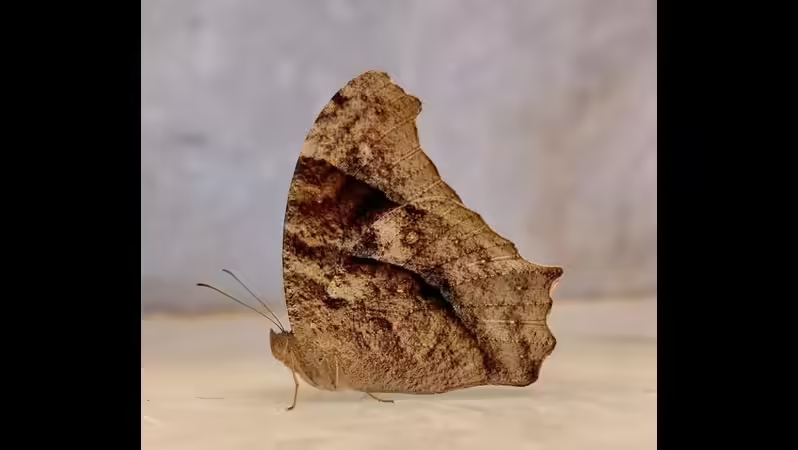
Common Evening Brown (Melanitis leda)
- Species: Common Evening Brown (Melanitis leda) — small, leaf-like butterflies with wingspan around 2.5–3 inches.
- Weight: A few milligrams
- Appearance: Brown wings that mimic dry or dead leaves, helping them blend into forest floors and grassy patches.
- Behaviour: Active during dusk and night; often attracted to artificial lighting.
- Extent: Swarming balconies, homes, gardens, pavements and common urban open spaces.
3. Dynamic Ground Water Resources of India, 2025 Report
Source: TOI
Context:
The Dynamic Ground Water Resources of India, 2025 report released by the Central Ground Water Board (CGWB) shows a slight improvement in India’s groundwater recharge. However, 25% of assessed units remain stressed, indicating persistent over-extraction and regional vulnerabilities.
Key Findings of the 2025 Report
Marginal Increase in Annual Recharge
- 2024: 446.9 BCM
- 2025: 448.52 BCM
- Still lower than the 2023 level of 449.08 BCM.
Assessment Coverage
- Total units assessed (blocks/mandals/talukas): 6,762.
Stress Categories (2025)
- Over-exploited units: 730 (10.8% of total).
- Combined Semi-critical + Critical + Over-exploited: Over 25% of all units.
- Indicates extraction exceeding recharge in many regions.
Regions Showing Decline in Recharge
Significant drop in groundwater recharge recorded in:
- Andhra Pradesh
- Arunachal Pradesh
- Assam
- Jharkhand
- Kerala
- Punjab
- Jammu & Kashmir
Hotspots of Over-Exploitation
States/UTs with highest concentration of over-exploited and critical units:
- Punjab
- Haryana
- Delhi
- Western Uttar Pradesh
- Rajasthan
- Gujarat
- Karnataka
- Tamil Nadu
- Telangana
- Andhra Pradesh
Causes
- Indiscriminate groundwater withdrawal
- Climatic factors, especially irregular rainfall
- High dependence on groundwater for irrigation
States Showing Improvement in 2025
Significant increase in groundwater recharge seen in:
- Bihar
- Chhattisgarh
- Madhya Pradesh
- Karnataka
- Maharashtra
- Rajasthan
- Tamil Nadu
- Telangana
- Uttar Pradesh
Why Did Recharge Improve?
- Rainfall contributes nearly 60% of India’s total groundwater recharge.
- A better monsoon in 2025 than in 2024 boosted recharge.
- Good rains reduced groundwater pumping for agriculture.
- Central and state initiatives for rainwater harvesting, aquifer recharge, and conservation have shown positive impact in many regions.
Agriculture
1. Scientists Raise Concerns Over ITPGRFA “Compromise Proposal”
Source: TH
Context:
A coalition of scientists, Scientists for Genetic Diversity, has voiced strong opposition to a “compromise proposal” discussed during the 11th session (GB11) of the International Treaty on Plant Genetic Resources for Food and Agriculture (ITPGRFA) in Lima, Peru. The proposal aims to enhance the Multilateral System (MLS), which governs global sharing of plant genetic resources.
Key Highlights:
- Event: 11th Session (GB11) of ITPGRFA
- Location: Lima, Peru
- Stakeholders Concerned: Scientists for Genetic Diversity
- Focus: “Compromise proposal” to strengthen Multilateral System (MLS)
Multilateral System (MLS)
- Purpose: Facilitates access and benefit-sharing of plant genetic resources for food and agriculture globally
- Scope: Covers agronomic crops and forages listed in the treaty
- Key Objective: Promote food security, sustainable agriculture, and equitable sharing of benefits
Scientists’ Concerns
- The “compromise proposal” may undermine genetic diversity protections
- Risks limiting access or imposing restrictive conditions on plant genetic resources
- Potentially affects research, breeding programs, and global food security initiatives
- Calls for greater transparency and inclusive decision-making in treaty negotiations
Facts To Remember
1. Crisil raises GDP growth forecast to 7% in FY26
Crisil has raised its forecast for the country’s GDP growth to 7% from 6.5% for the current financial year, following the first-half growth of 8% that exceeded expectations.
2. Arunachal Pradesh’s Traditional ‘Dao’ Blade and Yak Churpi Receive GI Tag
Arunachal Pradesh secured two new Geographical Indication (GI) tags in November 2025 for its traditional blade ‘Dao’ and the high-altitude dairy product Yak Churpi. The recognition by the GI Registry (DPIIT, Ministry of Commerce & Industry) highlights the rich craftsmanship, indigenous food heritage and cultural identity of tribal communities in the state.













