Introduction
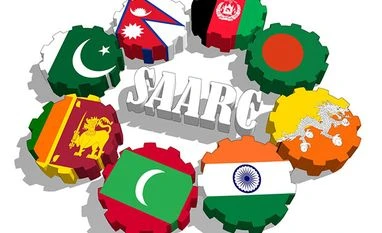
The South Asian Association for Regional Cooperation (SAARC) is a group formed by South Asian countries to work together and help each other grow. It was created on 8 December 1985 in Dhaka, Bangladesh with the aim of improving cooperation in areas like the economy, society, culture, and technology.
SAARC has 8 member countries:
India, Pakistan, Bangladesh, Sri Lanka, Nepal, Bhutan, Maldives, and Afghanistan.
Its headquarters is in Kathmandu, Nepal.
Over the years, SAARC has started several important initiatives. These include the SAARC Development Fund to support development projects, the South Asian University to promote higher education and regional understanding, and the SAARC Satellite to help member countries in communication, education, and disaster management. SAARC has achieved some success, especially in areas such as education cooperation, disaster response, and limited trade initiatives. However, the organisation has not reached its full potential. This is mainly because of political tensions between member countries, particularly India and Pakistan, and very low trade among South Asian nations compared to other regions.
SAARC Overview
The South Asian Association for Regional Cooperation (SAARC) is a regional group formed on 8 December 1985 in Dhaka to promote cooperation among South Asian countries. It has 8 members: India, Pakistan, Bangladesh, Sri Lanka, Nepal, Bhutan, Maldives, and Afghanistan. The headquarters is in Kathmandu, Nepal.
SAARC works in areas like trade, education, health, and disaster management through bodies such as the SAARC Secretariat and Council of Ministers. While it has taken some useful initiatives, its progress has been limited due to political tensions among member countries.
| Information | Details |
|---|---|
| SAARC Established | 8 December 1985, Dhaka (Bangladesh) |
| Number of Member Countries | 8 – India, Bangladesh, Nepal, Sri Lanka, Maldives, Bhutan, Afghanistan, Pakistan |
| Number of Observers | 9 – Australia, European Union (EU), Iran, Japan, Mauritius, South Korea, USA, China, Myanmar |
| SAARC Headquarters | Kathmandu, Nepal |
| Launch of SAARC Satellite | 2017 |
| SAARC Specialised Bodies | South Asian University (India); South Asian Regional Standards Organization – SARSO (Dhaka); SAARC Development Fund – SDF (Bhutan); SAARC Arbitration Council – SARCO |
| 1st Secretary-General of SAARC | Abul Ahsan (Bangladesh) |
| Current Secretary-General | Golam Sarwar (Bangladesh) – since 4 March 2023 |
| Last Country to Join SAARC | Afghanistan (April 2007) |
Historical Background
- Formation Idea (1980s):
- In the early 1980s, leaders such as Ziaur Rahman of Bangladesh and Indira Gandhi of India, along with other South Asian leaders, suggested creating a regional organisation so that neighbouring countries could cooperate and develop together.
- Treaty Signed (1985):
- On 8 December 1985, the SAARC Charter was signed in Dhaka, Bangladesh, which officially led to the formation of SAARC.
- Founding Members:
- SAARC was originally formed by seven countries—Bangladesh, Bhutan, India, Maldives, Nepal, Pakistan, and Sri Lanka. Afghanistan became a member later in 2007.
- Objectives:
- The main objective of SAARC is to encourage economic, social, cultural, and technical cooperation among South Asian nations and to strengthen regional unity.
- Headquarters and Secretariat:
- To manage and coordinate its activities, the SAARC Secretariat was set up in Kathmandu, Nepal, in 1987.
- Early Initiatives:
- In its initial phase, SAARC focused on areas such as health, population control, agriculture, rural development, and education, which helped create a foundation for future economic and trade-related cooperation.
SAARC Principles
- All member countries are treated as equal, irrespective of their size, population, or economic strength.
- Cooperation among members focuses on economic, social, and cultural development for the benefit of all countries in the region.
- Decisions within the organisation are taken collectively, ensuring mutual agreement and consensus among all members.
- SAARC aims to strengthen regional self-reliance by using local resources and reducing dependence on external powers.
- Member countries are encouraged to cooperate in areas such as trade, technology, education, and culture.
- There is full respect for national sovereignty, and no country interferes in the internal affairs of another member state.
Objectives
- To promote cooperation among member countries in economic, social, cultural, technical, and scientific fields.
- To enhance economic growth and intra-regional trade within South Asia.
- To strengthen social development, especially in areas such as health, education, and poverty reduction.
- To ensure regional peace and stability through dialogue, mutual understanding, and cooperation.
- To encourage cultural exchange and sharing of knowledge among member states.
- To promote regional self-reliance by making effective use of shared resources.
SAARC Countries List
| S.No | Country | Capital | Population | Area (sq km) |
|---|---|---|---|---|
| 1 | Afghanistan | Kabul | 42 million | 652,230 |
| 2 | Bangladesh | Dhaka | 170 million | 147,570 |
| 3 | Bhutan | Thimphu | 0.8 million | 38,394 |
| 4 | India | New Delhi | 1.42 billion | 3,287,263 |
| 5 | Maldives | Malé | 0.5 million | 298 |
| 6 | Nepal | Kathmandu | 31 million | 147,516 |
| 7 | Pakistan | Islamabad | 240 million | 881,913 |
| 8 | Sri Lanka | Colombo / Sri Jayawardenepura Kotte | 22 million | 65,610 |
Structure and Composition of SAARC
SAARC’s structure includes the Secretariat in Kathmandu, the Council of Ministers, and various Technical Committees. Its membership consists of eight countries: Afghanistan, Bangladesh, Bhutan, India, Maldives, Nepal, Pakistan, and Sri Lanka.
- SAARC Summit –
- The highest decision-making body of SAARC, made up of the Heads of State or Government of member countries. It meets every two years to decide major policies and set regional priorities.
- Council of Ministers (COM) –
- Consists of the Foreign Ministers of member states. It is responsible for implementing decisions taken at the SAARC Summit and reviewing the progress of SAARC programmes.
- Standing Committee –
- Composed of the Foreign Secretaries of member countries. It coordinates and monitors the work of various SAARC bodies and ensures smooth functioning.
- SAARC Secretariat –
- Located in Kathmandu, Nepal, and headed by the Secretary-General. It coordinates activities, implements programmes, and maintains records of SAARC decisions.
- Observers –
- SAARC has nine observers: Australia, China, the European Union, Iran, Japan, Mauritius, Myanmar, South Korea, and the United States.
SAARC’s Specialized Body
- SAARC Arbitration Council (SARCO) – Pakistan:
- SARCO was established to settle commercial and investment disputes among SAARC member countries. It helps promote regional trade and economic cooperation by offering a fair and efficient arbitration system.
- SAARC Development Fund (SDF) – Bhutan:
- Headquartered in Bhutan, the SDF provides financial support for social, economic, and infrastructure projects in member countries. Its main objective is to reduce regional imbalances and encourage sustainable development in South Asia.
- South Asian University (SAU) – India:
- Located in India, SAU was set up to offer postgraduate education and promote research for students from SAARC nations. It aims to strengthen regional integration and academic cooperation.
- South Asian Regional Standards Organisation (SARSO) – Dhaka:
- Based in Dhaka, SARSO works to develop common regional standards and ensure quality of products and services. It supports smoother trade and technical cooperation among SAARC countries.
SAARC Significance
- Global Significance of SAARC:
- SAARC represents about 21% of the world’s population, covers nearly 3% of the world’s land area, and contributes around 3.8% of the global economy (about US$2.9 trillion).
- Neighbourhood First Policy:
- SAARC supports India’s Neighbourhood First approach by strengthening ties with South Asian neighbours through trade, connectivity, and development cooperation.
- Act East Policy Integration:
- Through SAARC-related initiatives, South Asia can be linked with Southeast Asia, boosting integration in sectors like services, IT, tourism, and trade.
- India’s Global Leadership Role:
- Active engagement in SAARC helps India project regional leadership, contribute to development and humanitarian efforts, and shape policy decisions in South Asia.
- Regional Stability and Peace:
- SAARC offers a platform for dialogue and cooperation, helping build trust, reduce conflicts, and promote peace among South Asian countries.
SAARC Achievement
- SAFTA (South Asian Free Trade Area) came into force in 2006 to reduce tariffs and encourage trade among SAARC countries.
- Intra-SAARC trade, though still low compared to global standards, increased from about $1 billion in 1995 to nearly $23 billion by 2020.
- SAARC Development Fund (SDF) was launched in 2010 with a capital of $300 million to support social, economic, and infrastructure projects in member states.
- Initiatives such as the SAARC Motor Vehicles Agreement (2010) and SAARC Railway Cooperation were introduced to improve regional transport and connectivity.
- SAARC has set up several specialised bodies, including the SAARC Tuberculosis and HIV/AIDS Centre (Bangladesh) and the SAARC Agriculture Centre (Bhutan).
- The SAARC Food Bank, launched in 2013, helps member countries during food shortages and emergencies.
- The SAARC Disaster Management Centre (SDMC), located in India, works on disaster preparedness, mitigation, and emergency response.
- Cultural and knowledge exchange is promoted through institutions like the SAARC Cultural Centre (Sri Lanka) and the SAARC Documentation Centre (India).
SAARC Challenges
- India–Pakistan tensions have repeatedly escalated into conflicts, which severely affect cooperation and decision-making within SAARC.
- Geopolitical pressures and the growing influence of external powers, especially China, add complexity to regional relations and decision-making.
- SAARC functions on the principle of consensus, meaning opposition by even one member can block reforms, agreements, or policy initiatives.
- The organisation often faces difficulties in implementing decisions and regional projects due to weak institutional authority and poor coordination.
- Intra-regional trade remains low because member countries export similar products, maintain high tariffs, and face investment and non-tariff barriers.
- Environmental challenges such as climate change, disasters, and resource degradation affect all member nations and require collective action, which has been limited so far.
Way Forward
To strengthen SAARC, there is a need to significantly boost intra-regional trade, which currently accounts for only about 5% of the total trade of member countries. Reducing tariffs, removing non-tariff barriers, and diversifying exports can greatly enhance regional economic integration. Improving connectivity is equally important, as only around half of South Asian countries are well connected through transport and digital networks; better roads, railways, energy grids, and internet infrastructure will ease trade and mobility. SAARC institutions such as the Secretariat and the SAARC Development Fund (USD 300 million) must be strengthened with greater authority and efficiency to ensure effective implementation of regional projects. Special attention should be given to less-developed members like Afghanistan, Bhutan, and the Maldives through targeted development programmes to reduce regional disparities and promote inclusive growth. At the political level, regular dialogue and summits can help build trust among member states, particularly India and Pakistan, contributing to regional peace and stability. Finally, closer cooperation is needed to address emerging challenges such as climate change, health crises, technology, disaster management, and sustainable development, where collective regional action can deliver substantial benefits.