There was a time when India’s middle class had to carefully manage every expense. Choices were limited, and many dreams had to wait. Today, that picture has changed significantly. Higher incomes, better digital access, and more opportunities have enabled millions of families to improve their quality of life and pursue bigger aspirations. Government initiatives have also played an important role in this transformation. Since 2014, higher income tax exemption limits and GST reforms have helped people save more and increase their disposable income. As a result, India’s middle class has become more financially secure, more confident, and a key driver of the country’s economic growth.
Who is the Middle Class?
The meaning of “middle class” is not the same everywhere. It depends on factors such as income levels, cost of living, purchasing power, access to education and healthcare, and even people’s lifestyle and spending patterns. One of the most widely accepted ways to compare countries is the classification used by the World Bank. Every year, it groups countries based on their Gross National Income (GNI) per capita, which measures the average income earned by a country’s residents.
For FY26, the World Bank classifies economies as follows:
Low-income: Up to US$1,135
Lower-middle-income:US$1,136 – US$4,495
Upper-middle-income:US$4,496 – US$13,935
High-income: Above US$13,935
These income groups offer a simple way to understand where countries stand economically and provide a useful reference for discussing the size and progress of the middle class around the world.
The Changing Face of India’s Middle Class
Over the past decade, the global middle class has grown at an unprecedented pace. In 2010, most middle-class households were concentrated in OECD countries. However, this has changed significantly. Between 2009 and 2017, the global middle-class population nearly doubled, increasing from 1.8 billion to 3.5 billion. Today, around 40% of the world’s middle class lives in Asia, with India and China driving much of this growth.
India has been one of the biggest contributors to this transformation. Between 2011 and 2019, the country’s GDP per capita increased by 53%, reflecting rising incomes and improving living standards. During the same period, India’s middle class expanded steadily at an average annual rate of 6.3% (1995–2021) and now makes up about 31% of the country’s population.
The growth story is far from over. According to OECD projections, India is expected to overtake China between 2030 and 2035 to become the country with the world’s largest middle-class population. This shift reflects increasing incomes, better employment opportunities, and a higher standard of living for millions of Indians. It also means stronger consumer demand, greater purchasing power, and a larger role for India in the global economy.
A growing middle class does much more than increase spending. It encourages urbanisation, supports the rise of new cities, and creates demand for better education, healthcare, housing, and financial services. As incomes rise, families invest more in their children’s education and overall well-being, helping build a skilled workforce for the future. A strong middle class also promotes entrepreneurship, drives innovation, supports small businesses, and contributes more through taxes, strengthening public services and economic development.
The World Economic Forum (WEF)highlights another important trend in India. Future consumption growth will not be limited to major metropolitan areas. Nearly 93% of urban consumer growth is expected to come from cities outside the five largest metros—New Delhi, Mumbai, Kolkata, Bengaluru, and Chennai. As a result, nearly 500 new consumer cities are expected to emerge, creating fresh opportunities for businesses and boosting regional economic growth.
The WEF also estimates that by 2036, India’s middle class and affluent consumers will account for 93% of the country’s total consumer spending, up from 80% in 2026. By 2035, more than 20% of people across major generations—from Baby Boomers to Gen Z—are expected to spend at least US$45 a day, reflecting rising purchasing power across age groups. This opens up enormous opportunities for businesses to develop products and services that cater to a wider range of consumers.
Beyond its economic contribution, a strong middle class plays an important role in building a stable and inclusive society. It helps reduce inequality, strengthens trust in institutions, and encourages better governance by demanding improved public services and accountability. Countries with a large and thriving middle class are generally better placed to achieve long-term, inclusive, and sustainable economic growth.
Strengthening the Middle Class: 12 Years of Transformative Governance
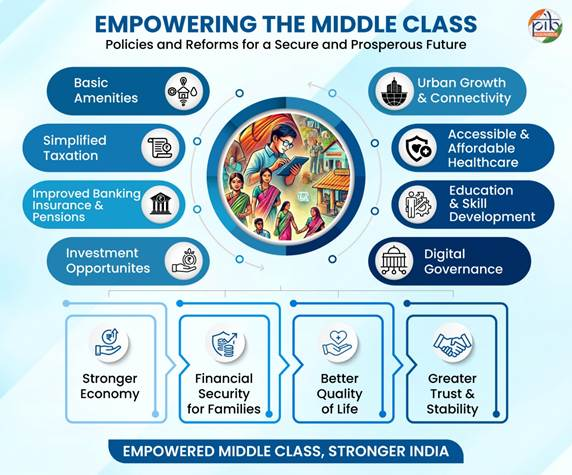
Over the past 12 years, the Government has introduced several reforms aimed at improving the financial well-being of India’s middle class. Changes in taxation, banking, insurance, pensions, and digital governance have made everyday life easier while creating more opportunities for savings, investment, and wealth creation. Better infrastructure, improved connectivity, and expanding urban development have also opened new avenues for employment and business.
Simplified Taxation
One of the biggest reliefs for the middle class has come through tax reforms. In July 2024, the Government announced a complete review of the Income Tax Act, 1961, and the new Income Tax Act, 2025 came into effect in April 2026.
The tax burden has reduced significantly over the years. In 2014, only individuals earning up to ₹2.5 lakh annually were exempt from paying income tax. Today, under the new tax regime introduced in 2023, individuals earning up to ₹12 lakh a year (or ₹12.75 lakh for salaried employees after the standard deduction) pay zero income tax. This has increased disposable income, improved household savings, and given families greater financial flexibility.
GST Made Everyday Life Simpler
The introduction of the Goods and Services Tax (GST) in July 2017 marked one of India’s biggest tax reforms. By replacing multiple central and state taxes with a single tax system, GST created a unified national market and simplified the indirect tax structure.
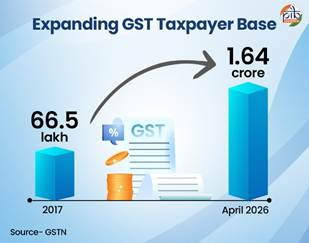
For the middle class, GST has made many everyday goods and services more affordable through lower tax rates on essential items and periodic rate rationalisation. Digital filing and compliance have also made the tax system more transparent and efficient. Reflecting its growing acceptance, the number of registered GST taxpayers has increased from 66.5 lakh in 2017 to 1.64 crore by April 2026.
Better Pension Security through the Unified Pension Scheme
Retirement planning has become more secure with the introduction of the Unified Pension Scheme (UPS), which came into effect in April 2025 for Central Government employees.
The scheme combines contributions from both employees and the Government while providing assured, inflation-linked pension benefits after retirement. It guarantees a minimum monthly pension of ₹10,000 for employees who have completed at least ten years of service. Dearness Relief helps pensioners cope with inflation, while family pension benefits ensure continued financial support for dependents after the pensioner’s death. Together, these provisions provide greater financial stability during retirement.
Insurance Coverage Has Expanded
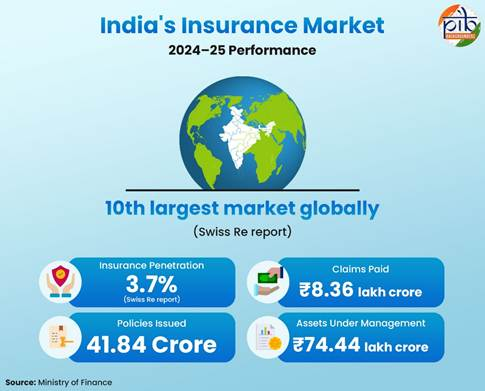
Insurance has become an increasingly important part of household financial planning. Today, India is the 10th largest insurance market in the world by premium volume, reflecting wider financial protection for families.
Households are also investing more in long-term financial security. The share of insurance and pension funds in household financial assets increased from 28.6% in FY2018–19 to 29.6% in FY2024–25, indicating growing awareness about future financial planning.
The Insurance Regulatory and Development Authority of India (IRDAI) has set an ambitious goal of “Insurance for All by 2047,” aiming to ensure that every citizen has access to life, health, and property insurance.
Several government-backed schemes have contributed to this expansion:
Pradhan Mantri Jeevan Jyoti Bima Yojana (PMJJBY) has enrolled 26.88 crore people, with over 10 lakh claims settled.
Pradhan Mantri Suraksha Bima Yojana (PMSBY) has provided affordable accident insurance to 57.11 crore subscribers.
Ayushman Bharat Pradhan Mantri Jan Arogya Yojana (AB-PMJAY) has issued 43.52 crore health cards, expanding access to quality healthcare.
The Employees’ State Insurance (ESI) Scheme now covers 3.24 crore employees, benefiting nearly 14.91 crore people, including their family members.
Recent reforms under the “Sabka Bima, Sabki Raksha” initiative have further strengthened consumer protection, improved insurance regulation, and encouraged greater investment in the sector.
Lower Interest Rates Have Reduced Financial Burden
Borrowing has become more affordable over the last decade. Home loan interest rates, which ranged between 9.5% and 10.5% in 2015, declined to around 7.35%–8.75% by 2025.
A major reason behind this decline has been the Reserve Bank of India’s monetary policy. The repo rate has fallen from 8% in 2015 to 5.25% in 2026, allowing banks to offer loans at lower interest rates.
Other loans have also become cheaper:
Personal loan interest rates declined from 14.25% in 2014 to around 12.5% in 2026.
Education loan rates fell from 14.25% to around 9.4% during the same period.
Lower interest rates reduce monthly EMIs, making it easier for middle-class families to buy homes, finance higher education, or meet personal financial needs.
MUDRA Loans Have Encouraged Entrepreneurship
Launched in April 2015, the Pradhan Mantri MUDRA Yojana (PMMY) provides collateral-free loans of up to ₹20 lakh for businesses in manufacturing, trading, services, and allied agricultural activities.
Since its launch, the scheme has sanctioned over 57 crore loans worth more than ₹40 lakh crore (as of March 2026). By making formal credit accessible without requiring collateral, PMMY has encouraged entrepreneurship, supported self-employment, and reduced dependence on informal lenders.
For many middle-class families, the scheme has made it easier to start or expand small businesses, creating new income opportunities and improving long-term financial stability.
A Stronger Financial Foundation
Taken together, these reforms have strengthened the financial position of India’s middle class. Lower taxes, wider insurance coverage, improved pension benefits, easier access to affordable loans, and digital financial services have reduced financial stress while increasing opportunities to save, invest, and build long-term wealth. Along with better infrastructure and expanding economic opportunities, these initiatives have made the middle class more financially secure and better equipped to contribute to India’s growth story.
Expanding Urban Growth and Better Connectivity
Over the past 12 years, India has witnessed rapid improvements in urban infrastructure and transport. Better housing, modern public transport, upgraded railways, and improved air connectivity have made everyday life more convenient for millions of middle-class families. These developments have not only reduced travel time but have also made commuting, homeownership, and inter-city travel more affordable and comfortable.
Affordable Housing for Urban Families
Owning a home is one of the biggest aspirations of the middle class, and the Government has taken several steps to make this dream more achievable.
Launched in 2015, Pradhan Mantri Awas Yojana–Urban (PMAY-U) has helped millions of families secure permanent homes. Building on its success, PMAY-U 2.0, launched in September 2024 under the Housing for All Mission, aims to provide housing support to one crore additional eligible urban families over the next five years. A total allocation of ₹8.76 lakh crore has been made for the programme.
As of May 2026, 125.31 lakh houses have been sanctioned under PMAY-U, and 98.1 lakh homes have already been completed and handed over to beneficiaries. This marks a remarkable 1,120% increase compared to the 8.04 lakh houses built between 2005 and 2014. The scheme has significantly improved access to affordable housing, especially for middle-income families living in urban areas.
Another important initiative is the SWAMIH (Special Window for Affordable and Mid-Income Housing) Fund, launched in 2019 to revive stalled housing projects. So far, the fund has completed over 58,000 homes across 146 projects and unlocked more than ₹49,500 crore for housing developments covering over 90 million square feet. Nearly 44% of these projects cater to low- and middle-income homebuyers, helping thousands of families finally receive possession of their homes.
Metro Networks Have Changed Daily Commuting
India’s metro rail network has expanded rapidly over the past decade, making city travel faster, safer, and more reliable. Today, India has the third-largest metro network in the world.
Metro construction has accelerated from just 0.68 kilometres per month before 2014 to nearly 6 kilometres per month today. Over the last 12 years, the Government has invested almost ₹3.7 lakh crore in metro projects across the country.
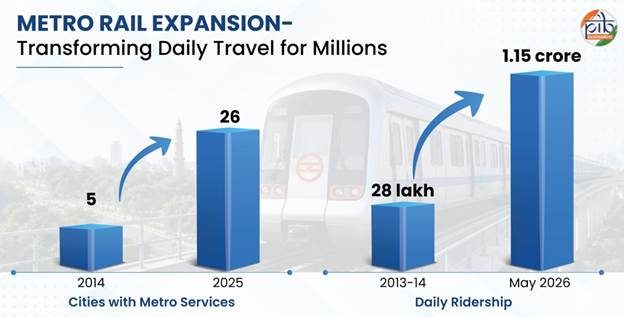
The number of cities with metro services has increased from 5 in 2014 to 26 by 2025, while daily ridership has grown from 28 lakh passengers in 2013–14 to more than 1.15 crore passengers today.
Under the Make in India initiative, over 2,100 metro coaches have been manufactured by BEML for cities such as Delhi, Bengaluru, Kolkata, Mumbai, and Jaipur.
For the middle class, these developments mean shorter travel times, lower commuting costs, reduced traffic congestion, and a dependable public transport system that makes everyday life easier.
Railways Have Become Faster and Safer
Indian Railways has undergone significant modernisation over the last decade, making train travel safer, faster, greener, and more comfortable.
Government support for the Railways has increased substantially, with budgetary allocation rising from ₹32,000 crore in 2014–15 to ₹2.78 lakh crore in 2025–26.
Passenger safety has improved through the introduction of Kavach, India’s indigenous train collision avoidance system that automatically applies brakes to prevent accidents. The length of railway tracks supporting speeds above 130 kmph has expanded from 5,036 kilometres in 2014 to 23,713 kilometres in 2026.
India has also introduced modern trains such as the Vande Bharat Sleeper service in 2026 and expanded the Amrit Bharat Express network, with 60 trains currently in operation.
Rail travel continues to grow in popularity. Passenger journeys increased from 716 crore in 2024–25 to 741 crore in 2025–26, with Indian Railways carrying more than two crore passengers every day. At the same time, 208 railway stations have been redeveloped with improved passenger amenities.
For middle-class travellers, these upgrades translate into faster journeys, safer travel, cleaner stations, and a more comfortable travel experience.
Air Travel Is Becoming Affordable for More Families
Flying is no longer limited to a small section of society. Over the past decade, air travel has become increasingly affordable and accessible for India’s growing middle class.
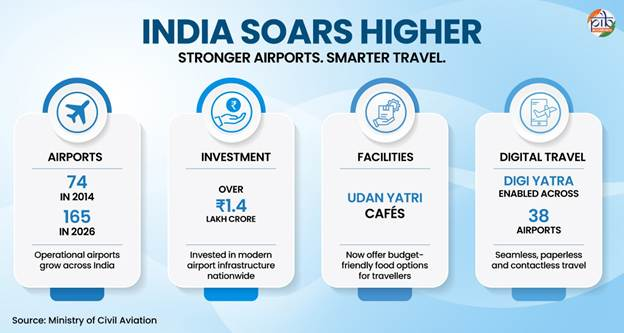
The number of operational airports has increased from 74 in 2014 to 165 in 2026, supported by investments of over ₹1.4 lakh crore in airport infrastructure. New airports at places such as Mopa, Kannur, Hollongi, Navi Mumbai, and Noida (Jewar) have significantly improved regional connectivity.
Passenger services have also improved through digital initiatives. Digi Yatra allows travellers to complete airport entry and boarding through facial recognition without carrying physical documents. Since its launch in December 2022, more than 9.3 crore passengers have used the facility across 38 airports.
Affordable food options through UDAN Yatri Cafés and stronger airport security through the e-BCAS digital platform have further enhanced the travel experience.
The UDAN (Ude Desh ka Aam Naagrik) scheme has played a major role in making air travel affordable for people living in smaller cities. Since 2016, the scheme has connected 95 airports, heliports, and water aerodromes through 665 routes, operating over 3.45 lakh flights and serving more than 164 lakh passengers. More than ₹4,800 crore has been invested in reviving underserved airports, while the Modified UDAN Scheme, approved in 2026, aims to connect 120 additional destinations over the next decade.
For middle-class families, this means more affordable flights, better connectivity to smaller cities, and a smoother, more convenient travel experience than ever before.
Better Access to Basic Amenities Has Improved Everyday Life
Over the past 12 years, access to essential services such as tap water, sanitation, electricity, and clean energy has improved significantly across India. These improvements have made daily life easier, healthier, and more comfortable for millions of middle-class families. At the same time, investments in urban infrastructure have helped improve living standards in both cities and rural areas.
More Homes Now Have Tap Water
Access to clean drinking water has expanded rapidly under the Government’s efforts to improve basic amenities.
The number of households with tap water connections increased from 3.23 crore in 2019 to 15.85 crore by May 2026—an increase of more than 390%. This expansion has reduced the time and effort spent collecting water while ensuring safer and more reliable access to drinking water for millions of families.
Cleaner Cities Through Better Waste Management
As cities have grown, managing garbage, sewage, and waste has become increasingly important.
To address this challenge, the Government launched the Swachh Bharat Mission (Urban) in 2014 with the goal of eliminating open defecation and improving scientific management of municipal solid waste. The programme was later strengthened through Swachh Bharat Mission-Urban 2.0.
The results have been remarkable. Waste processing has increased from almost negligible levels in 2014 to nearly 97% in 2026, making cities cleaner and improving public hygiene.
Alongside this, the Atal Mission for Rejuvenation and Urban Transformation (AMRUT), launched in 2015, has strengthened urban water supply and sewage infrastructure. Under AMRUT and AMRUT 2.0, more than 2.53 crore tap water connections and over 1.5 crore sewer connections have been provided. In addition, 583 sewage treatment projects have been approved under AMRUT 2.0, adding a treatment capacity of 6,649 million litres per day (MLD).
These initiatives have improved sanitation, reduced pollution, and made urban living healthier and more sustainable.
Reliable Electricity Has Become a Reality
India has made significant progress in ensuring uninterrupted electricity supply over the past decade.
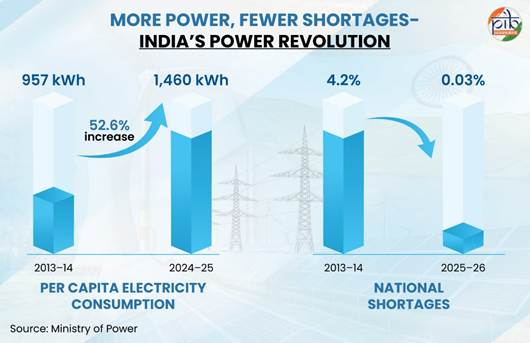
Large investments in power generation and transmission have reduced the country’s energy shortage from 4.2% in 2013–14 to just 0.03% in 2025–26.
Electricity availability has also improved considerably. Rural households now receive an average of 22.6 hours of electricity each day, compared to 12.5 hours in 2014. In urban areas, electricity supply has increased to around 23.4 hours daily, ensuring fewer power cuts and greater reliability.
Schemes such as the Deen Dayal Upadhyaya Gram Jyoti Yojana, the Integrated Power Development Scheme, and the Pradhan Mantri Sahaj Bijli Har Ghar Yojana (Saubhagya) have played a major role in expanding and modernising India’s electricity network. Together, these programmes involved investments of nearly ₹1.85 lakh crore, bringing electricity to millions of previously unelectrified households.
For middle-class families, this means uninterrupted power for homes, businesses, children’s education, and work, making daily life far more convenient.
Higher Electricity Use Reflects Better Living Standards
As electricity has become more reliable, its usage has also increased.
India’s per capita electricity consumption rose from 957 kWh in 2013–14 to 1,460 kWh in 2024–25, an increase of 52.6%.
For families, this translates into greater use of household appliances, air conditioners, refrigerators, computers, and digital devices. Reliable electricity has also supported remote work, online education, small businesses, and improved overall quality of life.
Looking ahead, the National Electricity Plan (2023–2032) aims to meet India’s growing power demand while expanding renewable energy and supporting emerging sectors such as green hydrogen.
Affordable and Accessible Healthcare
Healthcare has become more affordable and accessible over the past decade. Lower medicine costs, wider insurance coverage, stronger public health infrastructure, and greater focus on preventive healthcare have reduced the financial burden on millions of families.
Promoting Healthy Eating Through Eat Right India
Good health begins with healthy food. Recognising this, the Food Safety and Standards Authority of India (FSSAI) launched the Eat Right India movement in 2018 to encourage safe, nutritious, and sustainable eating habits.
By July 2025:
17.76 lakh food handlers had been trained.
179 Clean Street Food Hubs had been certified.
517 fruit and vegetable markets had received certification.
406 railway stations had been recognised as Eat Right Stations.
These initiatives improve food hygiene and quality, helping families reduce the risk of food-borne illnesses and lifestyle-related diseases while promoting healthier eating habits.
Affordable Medicines Through Jan Aushadhi Kendras
The Pradhan Mantri Bhartiya Janaushadhi Pariyojana has made quality medicines far more affordable for ordinary families.
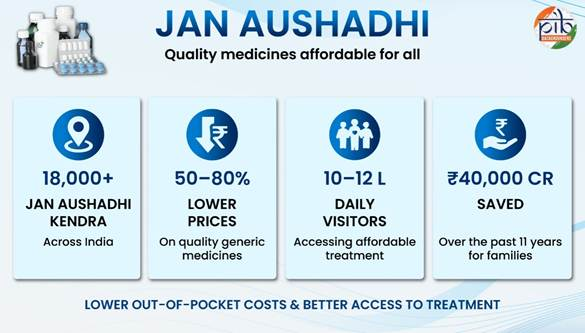
Following major reforms after 2015, the scheme has expanded to more than 18,000 Jan Aushadhi Kendras across the country. These stores provide quality generic medicines at 50% to 80% lower prices than branded alternatives.
Every day, around 10 to 12 lakh people purchase medicines from these centres.
The scheme now offers over 2,110 medicines and 315 surgical and healthcare products, ensuring that affordable treatment is available for a wide range of medical conditions.
Over the past 11 years, Jan Aushadhi medicines have helped Indian families save nearly ₹40,000 crore by reducing out-of-pocket healthcare expenses. For the middle class, this means quality treatment at significantly lower costs, making healthcare more affordable without compromising on quality.
Expanding Access to Quality Healthcare
Over the past decade, India’s healthcare system has become more accessible, affordable, and inclusive. Government initiatives have focused not only on providing treatment but also on improving maternal health, strengthening primary healthcare, expanding health insurance, and controlling major diseases. These efforts have reduced healthcare costs and improved health outcomes for millions of middle-class families.
Better Care for Expectant Mothers
The Pradhan Mantri Surakshit Matritva Abhiyan (PMSMA), launched in 2016, provides free, high-quality antenatal check-ups to pregnant women on the 9th of every month during their second and third trimesters. The programme also encourages doctors from the private and voluntary sectors to participate through a dedicated online portal and mobile application.
As of May 2026, more than 7.46 crore pregnant women had received health check-ups under the scheme, with over 22,000 healthcare facilities providing these services across the country. By ensuring timely medical care during pregnancy, PMSMA has helped improve maternal and child health while reducing pregnancy-related risks.
Ayushman Bharat Has Made Healthcare More Affordable
Launched in September 2018, Ayushman Bharat – Pradhan Mantri Jan Arogya Yojana (AB-PMJAY) is the world’s largest publicly funded health insurance programme. It provides cashless treatment at empanelled government and private hospitals, reducing the financial burden of hospitalisation for millions of families.
The scheme has also expanded support for senior citizens. More than 86.5 lakh people aged 70 years and above have received Ayushman Vay Vandana Cards, enabling them to access healthcare without worrying about high treatment costs.
Ayushman Arogya Mandirs Are Bringing Healthcare Closer to People
One of the most significant healthcare reforms has been the establishment of Ayushman Arogya Mandirs (AAMs) under the Ayushman Bharat programme. These centres provide free primary healthcare services closer to where people live, whether in rural, urban, or tribal areas.
Ayushman Arogya Mandirs are part of the broader Ayushman Bharat Mission, which also includes:
Ayushman Bharat Pradhan Mantri Jan Arogya Yojana (AB-PMJAY)
PM-Ayushman Bharat Health Infrastructure Mission
Ayushman Bharat Digital Mission
Together, these initiatives aim to provide quality healthcare at every level—from primary care to specialised treatment.
As of April 2026, India had 1,85,555 operational Ayushman Arogya Mandirs. By June 2026, these centres had recorded more than 540 crore patient visits and conducted over 60 crore screenings for oral, breast, and cervical cancers.
These reforms have also reduced the financial burden of healthcare. India’s Universal Health Coverage (UHC) Index improved from 57 in 2015 to 63 in 2021, while out-of-pocket healthcare spending declined significantly from 60.6% in 2014–15 to 39.4% in 2021–22.
Stronger Fight Against Major Diseases
India has also made significant progress in preventing and treating major diseases through large-scale public health programmes.
Under the National TB Elimination Programme, tuberculosis incidence declined by 21% between 2015 and 2024, while treatment coverage increased from 53% to 92%, well above the global average.
Efforts to eliminate malaria have also delivered encouraging results. The National Framework for Malaria Elimination, launched in 2016, and the National Strategic Plan (2023–2027) introduced better surveillance, real-time monitoring, and a “test, treat, and track” approach. Between 2015 and 2023, malaria cases and deaths declined by around 80%, and in 2024, India exited the World Health Organization’s High Burden to High Impact Group for malaria.
Disease surveillance has also improved in other areas. The number of Sentinel Surveillance Hospitals for dengue diagnosis increased from 110 in 2007 to 869 by 2025, enabling quicker detection and treatment.
Similarly, the National Viral Hepatitis Control Programme, launched in 2018, provides free testing and treatment across 1,140 healthcare centres. By September 2025, more than 18.23 crore people had been screened under the programme.
Cancer care has also expanded significantly. Since 2014–15, the Government has strengthened specialised cancer treatment through the Strengthening of Tertiary Cancer Care Centres Scheme. Today, 20 State Cancer Institutes, 19 Tertiary Cancer Care Centres, and 439 District Cancer Care Centres are providing treatment and improving access to quality cancer care across the country.
Better Education, Skills, and Entrepreneurship Opportunities
Over the past 12 years, India has invested heavily in education, skill development, and entrepreneurship to create better opportunities for its growing middle class. Improved access to quality education, stronger institutions, industry-focused training, and easier access to finance have helped young people build successful careers, start businesses, and improve their standard of living.
Improving School Education
Quality education remains one of the strongest foundations for India’s long-term development. Today, the country has 14.71 lakh schools, serving over 24.69 crore students with the support of 1.01 crore teachers (2024–25).
A major reform came with the launch of Samagra Shiksha in 2018, which brought school education from pre-primary to senior secondary under a single integrated programme. This has improved planning, resource allocation, and learning outcomes across the education system.
The National Education Policy (NEP) 2020 further transformed school education by promoting holistic learning, critical thinking, skill development, and greater flexibility in education. The policy aims to prepare students for future careers by focusing not only on academics but also on practical skills and innovation.
For middle-class families, these reforms mean better access to quality education, improved learning opportunities, and stronger pathways to higher education, employment, and upward social mobility.
Expanding Access to Higher Education
Over the past decade, India has significantly expanded its higher education system by increasing the number of premier institutions, making education financing easier, welcoming global universities, and strengthening medical education. These initiatives have created more opportunities for students from middle-class families to pursue quality education without facing major financial barriers.
More IITs, More Opportunities
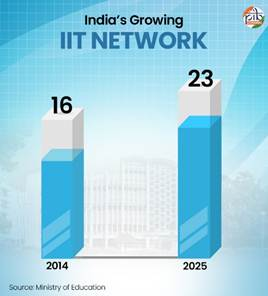
The Indian Institutes of Technology (IITs) continue to be among India’s most prestigious institutions for engineering and technology education. In 2014, the country had 16 IITs. With the establishment of seven new IITs, the total number has increased to 23 by 2025.
Student enrolment has also grown rapidly, doubling from around 65,000 students to nearly 1.35 lakh during this period. To meet future demand, the Government has approved further expansion in newer IITs, creating capacity for 6,500 additional students at campuses in Tirupati, Bhilai, Jammu, Dharwad, and Palakkad. Around 130 new senior faculty positions have also been sanctioned to maintain high academic standards.
For middle-class families, this expansion means greater access to world-class technical education, better career prospects, higher earning potential, and more opportunities to move up the economic ladder.
Vidya Lakshmi Scheme Makes Higher Education More Affordable
Launched in 2024, the Vidya Lakshmi Scheme aims to ensure that financial constraints do not prevent deserving students from pursuing higher education.
The scheme offers collateral-free and guarantor-free education loans through a simple digital platform. Students from families with an annual income of up to ₹8 lakh are also eligible for a 3% interest subsidy, provided they secure admission on merit to one of the 860 recognised higher education institutions.
Between February 2025 and February 2026, more than 60,600 education loans worth over ₹7,750 crore were sanctioned, with over ₹1,400 crore already disbursed for students’ first semester or first year.
For middle-class families, the scheme reduces the financial burden of higher education and enables students to pursue their academic goals without worrying about arranging large upfront funds.
Global Universities Are Coming to India
India is also becoming an attractive destination for internationally reputed universities.
Institutions such as Deakin University and the University of Wollongong have established campuses in GIFT City, Gujarat, while the University of Southampton has opened a campus in Gurugram.
In addition, during 2025, the University Grants Commission (UGC) issued Letters of Intent to eight foreign higher education institutions from Australia, Italy, the United Kingdom, and the United States, allowing them to establish campuses in cities such as Bengaluru, Mumbai, and Chennai.
These developments allow Indian students to access internationally recognised degrees, global teaching methods, and experienced faculty without leaving the country. For middle-class families, this significantly reduces the high cost of studying abroad while offering more choices for quality higher education.
Stronger Medical Education and Healthcare
India has also expanded medical education to improve both healthcare services and the availability of trained healthcare professionals.
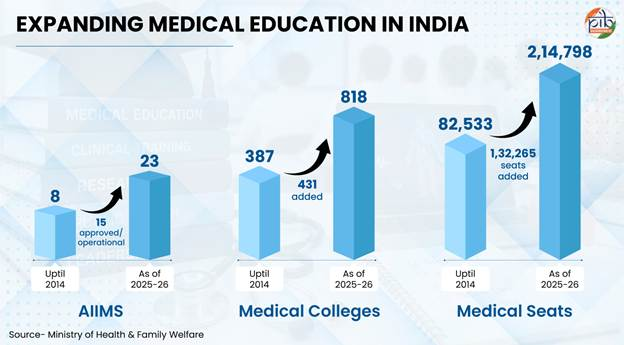
By March 2026, the country had more than 2,045 medical institutions, including 818 allopathy colleges, 323 dental colleges, and 942 AYUSH colleges.
The number of All India Institutes of Medical Sciences (AIIMS) has also increased substantially. Today, 23 AIIMS are either operational or have been approved across the country, compared to just a handful a decade ago.
For middle-class families, this expansion means better access to quality healthcare closer to home, shorter waiting times for treatment, lower travel expenses, and reduced dependence on expensive private hospitals. At the same time, it creates more opportunities for students aspiring to pursue careers in medicine and healthcare.
Greater Focus on Nursing and Mental Healthcare
Along with expanding medical colleges, the Government is also strengthening nursing education to address the growing demand for trained healthcare professionals. Around 157 new nursing colleges are being established alongside new medical colleges, which are expected to add nearly 15,700 nursing graduates every year. This will not only improve the availability of skilled nurses but also create more career opportunities for young people.
Mental healthcare has also received greater attention. A new NIMHANS-2 (National Institute of Mental Health and Neuro Sciences) will be established in North India to improve access to advanced mental health services in the region. Existing institutes in Ranchi and Tezpur are also being upgraded as Regional Apex Institutions, strengthening specialised mental healthcare across the country.
To improve emergency medical services, the Government plans to increase the capacity of Emergency and Trauma Care units in District Hospitals by 50%, ensuring quicker and better treatment during medical emergencies.
The Union Budget 2026–27 has also made healthcare more affordable by exempting customs duty on 17 additional life-saving medicines and adding seven more rare diseases to the duty-free personal import list. These measures are expected to reduce treatment costs for patients who rely on specialised medicines.
In addition, the Government plans to develop five Regional Medical Value Tourism Hubs, bringing together modern healthcare, medical education, AYUSH, and rehabilitation services. These centres aim to position India as a leading global destination for affordable and high-quality healthcare.
Lower Tax Burden on Education and Medical Expenses Abroad
The Union Budget 2026–27 also provided relief to families sending money overseas for education or medical treatment. The Tax Collected at Source (TCS) under the Liberalised Remittance Scheme (LRS) has been reduced from 5% to 2% for these purposes.
For middle-class families, this means lower upfront costs when paying for education or medical treatment abroad, making overseas studies and specialised healthcare more affordable.
Strengthening Skill Development Through ITIs
Skill development has remained a key focus of the Government’s employment strategy.
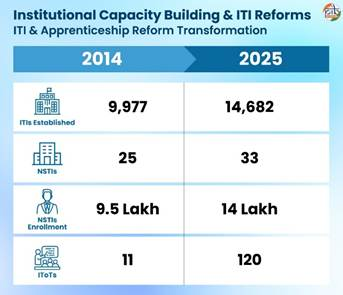
Industrial Training Institutes (ITIs) continue to play an important role in preparing young people for the workforce by providing practical, industry-oriented vocational training. They help create a steady supply of skilled workers for sectors such as manufacturing, construction, electronics, automotive, and services.
For middle-class families, stronger ITIs mean better employability, improved job prospects, and greater opportunities for stable incomes and long-term career growth. By equipping young people with industry-relevant skills, these institutions also support entrepreneurship and contribute to India’s growing economy.
PM–SETU: Upgrading ITIs for Better Jobs
To make vocational education more relevant and industry-focused, the Government launched PM–SETU (Pradhan Mantri Skilling and Employability Transformation through Upgraded ITIs) in October 2025. The Centrally Sponsored Scheme has an estimated outlay of ₹60,000 crore and aims to modernise Industrial Training Institutes (ITIs) across the country.
The programme focuses on upgrading infrastructure, improving the quality of training, and aligning courses with the changing needs of industries. For middle-class families, this means better access to high-quality vocational education, improved employability, and greater opportunities to secure stable jobs and higher incomes—without necessarily pursuing expensive professional degrees.
Skill India Mission
Launched in 2015, the Skill India Mission aims to equip young people with industry-relevant skills and support the vision of an Aatmanirbhar Bharat (self-reliant India). The mission offers a wide range of training opportunities, including short-term skill courses, apprenticeships, technical internships, and online learning programmes.
Some of its major initiatives include:
Pradhan Mantri Kaushal Vikas Yojana (PMKVY)
Jan Shikshan Sansthan (JSS)
National Apprenticeship Promotion Scheme (NAPS)
Craftsmen Training Scheme (CTS)
The mission was revamped for the 2022–2026 period with a stronger focus on emerging technologies and future-ready skills. Today, training programmes cover areas such as Artificial Intelligence (AI), the Internet of Things (IoT), advanced manufacturing, and high-end service sectors, helping young people prepare for modern job markets.
A key feature of the programme is the Skill India Digital Hub (SIDH), a single online platform where learners can access skill courses, apprenticeship opportunities, certifications, and job listings.
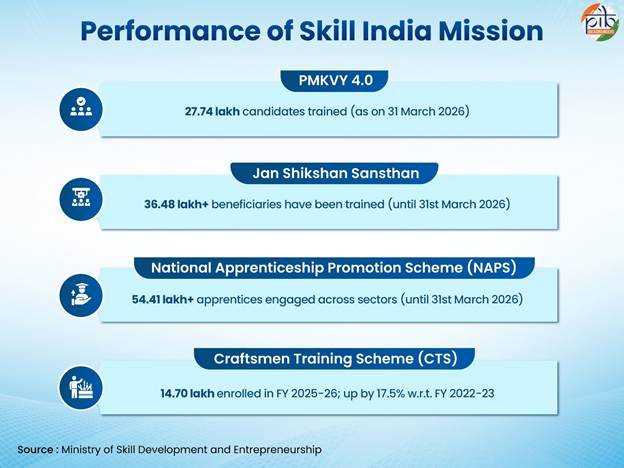
The mission has already reached millions of people. As of March 2026:
27.74 lakh candidates have been trained under PMKVY 4.0.
36.48 lakh learners have benefited through Jan Shikshan Sansthan (JSS).
54.41 lakh apprentices have received on-the-job training under NAPS.
For India’s middle class, these initiatives create new pathways to employment, career advancement, and better incomes by equipping people with skills that are in demand in today’s economy.
Encouraging Entrepreneurship Through Startup India
Over the past decade, India has witnessed a remarkable rise in entrepreneurship, creating new opportunities for innovation, employment, and economic growth. A key driver of this transformation has been the Startup India initiative, launched to support new businesses from the idea stage to expansion.
To help startups grow, the Government has introduced three major support schemes:
Fund of Funds for Startups (FFS), which provides financial support through venture capital funds.
Startup India Seed Fund Scheme (SISFS), which helps early-stage startups convert innovative ideas into successful businesses.
Credit Guarantee Scheme for Startups (CGSS), which improves access to loans by reducing the financial risk for lenders.
The impact of these initiatives has been significant. In 2016, only 502 startups were officially recognised, creating just 308 direct jobs. By March 2026, the number of recognised startups had grown to more than 2.23 lakh, generating over 23.3 lakh direct employment opportunities.
For the middle class, this growth has created new career options, encouraged self-employment, and made it easier for aspiring entrepreneurs to turn business ideas into successful ventures. It has also expanded opportunities in technology, manufacturing, healthcare, education, and many other sectors.
The startup ecosystem has also become more inclusive. Nearly 48% of recognised startups have at least one woman director or partner, highlighting the increasing participation of women in entrepreneurship and business leadership.
Seamless Digital Governance for Everyday Convenience
India’s digital transformation has made government services faster, more transparent, and easier to access. By combining digital identity, banking, and mobile technology, the Government has created a strong digital public infrastructure that allows citizens to access services anytime and from anywhere.
JAM Trinity: The Foundation of Digital India
One of the biggest milestones in this transformation has been the JAM Trinity, which brings together:
Jan Dhan bank accounts
Aadhaar digital identity
Mobile connectivity
Together, these three pillars have made it easier for people to receive government benefits directly, access banking services, and use digital platforms without unnecessary paperwork or intermediaries.
At the heart of this system is the Pradhan Mantri Jan Dhan Yojana (PMJDY), launched in 2014 as India’s flagship financial inclusion programme. Its objective is to ensure that every adult has access to a bank account and essential financial services such as savings, credit, insurance, and pensions.
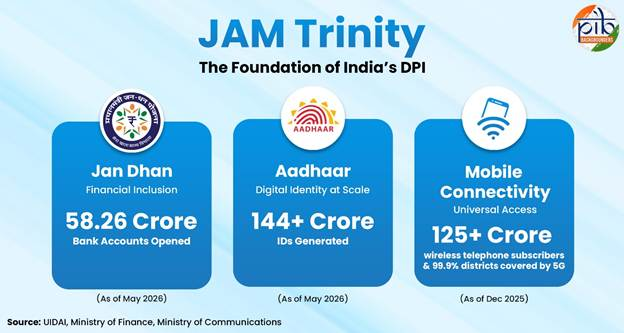
The scheme has expanded rapidly over the past decade. The number of Jan Dhan accounts increased from 14.72 crore in 2015 to 58.26 crore by May 2026. During the same period, deposits in these accounts grew from ₹15,670 crore to over ₹3.01 lakh crore.
For middle-class families, Jan Dhan accounts provide a secure way to save money, receive government benefits directly, and access formal financial services such as loans, insurance, and pension schemes. Combined with Aadhaar and mobile technology, they have made everyday financial transactions faster, safer, and more convenient.
Aadhaar and Mobile Connectivity Have Powered India’s Digital Transformation
Aadhaar has become the backbone of India’s digital public infrastructure by providing every resident with a unique biometric-based digital identity. It enables quick and secure identity verification, making it easier to access government services, financial products, and many other essential facilities.
As of May 2026, more than 144 crore Aadhaar numbers had been issued across the country. Its widespread use reflects how deeply Aadhaar has become part of everyday life. During 2024–25 alone, over 2,707 crore authentication transactions were carried out. Whether opening a bank account, receiving government benefits, or completing digital verification, Aadhaar has made these processes faster, more transparent, and more reliable.
Mobile connectivity has further accelerated this digital transformation. Today, 85.5% of Indian households own at least one smartphone, making mobile phones an essential tool for communication, banking, education, shopping, and accessing government services.
The number of wireless subscribers has also grown significantly—from around 93.7 crore in November 2014 to 125.87 crore by December 2025. At the same time, India has emerged as a major mobile manufacturing hub. The value of mobile phone production increased nearly 28 times, from around ₹0.18 lakh crore in 2014–15 to approximately ₹5.5 lakh crore in 2024–25.
Together, Jan Dhan accounts, Aadhaar, and mobile connectivity—the JAM Trinity—have transformed the way people interact with the Government and the financial system. For middle-class families, this means quicker access to services, direct transfer of benefits, secure digital payments, less paperwork, and greater control over their finances. Overall, the JAM ecosystem has made everyday life more convenient while supporting India’s transition to a modern digital economy.
DigiLocker: Important Documents, Anytime and Anywhere
Launched in 2015, DigiLocker has made document management simple, secure, and completely digital. It allows citizens to store and access important documents such as driving licences, educational certificates, vehicle registration papers, and other official records in one secure digital wallet.
For middle-class families, DigiLocker has reduced the need to carry physical documents or worry about losing them. It also makes processes such as college admissions, job applications, banking, and government services much faster by enabling instant digital document verification.
Its growing popularity reflects its usefulness. From just 9.98 lakh users in 2015, DigiLocker has expanded to 69.9 crore registered users as of 2 June 2026. More than 950 crore digital documents had been issued through the platform by May 2026, making it one of the world’s largest digital document repositories.
UMANG: One App for Government Services
Launched in 2017, the UMANG (Unified Mobile Application for New-age Governance) app brings hundreds of government services together on a single mobile and web platform.
Instead of visiting multiple websites or government offices, citizens can use UMANG to access a wide range of services, including checking EPFO balances, applying for PAN and Aadhaar-related services, accessing DigiLocker, paying utility bills, using pension services, applying for passports, accessing driving licence services, and checking examination results.
For middle-class families, UMANG saves both time and effort by providing easy access to government services from the comfort of home. It reduces paperwork, simplifies everyday tasks, and makes public services more convenient and accessible.
The platform has witnessed steady growth since its launch. User registrations have increased from 24 lakh (0.24 crore) in 2017 to 11.39 crore as of 2 June 2026, reflecting the growing adoption of digital governance across the country.
Middle Class Empowerment: A Foundation for Growth
Over the past 12 years, the Government has introduced a series of reforms aimed at improving the lives of India’s middle class. From lower taxes and better financial security to affordable housing, improved healthcare, quality education, skill development, and stronger digital services, these initiatives have made everyday life easier for millions of families. Better infrastructure, wider access to basic amenities, and improved connectivity have also created new opportunities for growth and prosperity. As one of the key drivers of the economy, the middle class has benefited from policies that promote greater financial stability, convenience, and upward mobility. Together, these efforts have laid a stronger foundation for a more confident, empowered, and aspirational middle class, contributing to India’s journey towards becoming a developed nation.
C4S Courses is one of India’s fastest-growing ed-tech platform, dedicated to helping students prepare for premier entrance exams such as NABARD Grade A and RBI Grade B.