Daily Current Affairs Quiz
21 July , 2026
International & National Affairs
1. UNFPA Demographic Futures Survey 2026
Source: Times of India
Context
The United Nations Population Fund (UNFPA) published its global study “Lives, Choices and Futures — Demographic Futures Survey 2026” (released around World Population Day, 11 July), examining the aspirations, relationships and family decisions of young adults aged 18–39 across the world.
About the Survey
What It Is
- A cross-national global study of 108,926 internet-connected young adults (18–39) across 73 countries and territories.
- Builds on preliminary findings in the 2025 State of World Population (SOWP) report.
Key Global Findings
- Marriage ideals persist: Over two-thirds of young adults prefer an arrangement including marriage (36% marriage before cohabitation, 34% after).
- Aspiration–reality gap: Among 25–39s wanting to marry/partner, 25% are single and not dating (men 30% vs women 19%).
- Economic preconditions: Financial security is the top consideration for partnership (81%); financial stability (88%), stable employment (87%) and emotional readiness (85%) are the top thresholds before having children.
- Joy over policy: 80% cite the joy children bring as their top motivation — state incentives/workforce contribution rank lowest.
- Biggest barrier: Economic and housing constraints are the single highest barrier to parenthood globally (72%).
- Declining achieved fertility: Across all regions, actual children among older respondents (35–39) is consistently below the ideal reported by younger cohorts. Two children is the most common ideal in 5 of 7 regional groupings.
- Optimism: ~66% globally feel positive about their future.
India-Specific Trends
- Ideal vs actual family size: Women (18–39) want 2.1 children vs actual 1.0 among 35–39s; men want 2.2 vs actual 1.1.
- India’s Total Fertility Rate (TFR) has fallen to ~1.9–2.0 — below the replacement level of 2.1 (down from ~3.3 in the early 2000s).
UNFPA Policy Recommendations
Enhance economic security & affordable housing; expand accessible childcare & gender-equitable parental leave; promote gender equality in unpaid care work; and adopt a rights-based demographic framework — shifting from rigid birth targets toward reproductive agency and individual choice.
Practice MCQs
Q1. With reference to fertility and demographic concepts, consider the following statements:
- The replacement-level Total Fertility Rate is generally taken as 2.1.
- India’s Total Fertility Rate has fallen below the replacement level.
- The demographic dividend refers to growth potential from a rising share of the working-age population.
- The Total Fertility Rate measures the number of children born in a country in a single year.
How many of the above statements are correct? (a) Only one (b) Only two (c) Only three (d) All four (e) None
Q2. With reference to the UNFPA Demographic Futures Survey 2026, consider the following statements:
- It surveyed over 108,000 internet-connected young adults aged 18–39 across 73 countries.
- It found that economic and housing constraints are among the biggest barriers to parenthood.
- In India, the ideal family size reported by young women (2.1) exceeds the actual number of children among older women.
- UNFPA stated that the survey is a nationally representative, population-level estimate for each country.
How many of the above statements are correct? (a) Only one (b) Only two (c) Only three (d) All four (e) None
Answer Key
- (c) — Statement 4 wrong: TFR is a per-woman lifetime average, not an annual count.
- (c) — Statement 4 wrong: UNFPA said the survey is not nationally representative.
2. E-Commerce Council of India (ECCI)
Source: The Hindu
Context
The Internet and Mobile Association of India (IAMAI) launched the E-Commerce Council of India (ECCI) — a first-of-its-kind national platform to represent, unify and advance India’s $120-billion digital commerce ecosystem through collaboration between industry, government and other stakeholders.
About the ECCI
What It Is
- A dedicated, first-of-its-kind national industry council for India’s digital commerce landscape.
- Acts as an umbrella body bridging private digital platforms, logistics firms, payment providers and government regulators.
- Founded under the aegis of IAMAI.
- Core objective: present a single, common voice for the digital trade ecosystem in policy conversations with government.
Founding Members
- ~70–80 members onboarded, including Amazon, Flipkart, Swiggy, Eternal (Zomato), IndiaMART, MakeMyTrip, ixigo, Uber, Rapido, Shiprocket, eBay, Urban Company, Meesho, Tata 1mg.
- IAMAI President: Dr. Subho Ray; keynote by economist Dr. Laveesh Bhandari.
Key Functions
- Policy advocacy: structured interface with policymakers, offering research/data on digital payments, consumer protection and online commerce.
- Cross-border trade & logistics: simplify cross-border e-commerce; help Indian brands, exporters and MSMEs reach international markets.
- MSME enablement: frameworks to digitally onboard MSMEs, giving access to national/global supply chains.
- AI & tech integration: best practices for AI-powered commerce, quick-commerce logistics, digital payments.
- Indian E-Commerce Summit (IECS): plans an annual national summit for government, founders, academics and international partners.
3. Manasbal Lake
Source: The Hindu
Context
Following large-scale de-weeding and channel dredging over ~70,000 sq ft, Manasbal Lake in Jammu & Kashmir is showing clear signs of ecological recovery, marked by the return of migratory birds (many from Siberia, winter 2025–26).
About Manasbal Lake
What It Is
- Often called the “Supreme Gem of all Kashmir Lakes.” Named after the sacred Manasarovar Lake.
- The deepest natural freshwater lake in Jammu & Kashmir / the Kashmir Valley, with a maximum depth of ~43 ft (13 m).
Location
- Safapora area, Ganderbal district, central J&K, ~30 km north of Srinagar.
- Encircled by four villages: Jarokbal, Kondabal, Nesbal, Gratbal.
- Bounded by the Baladar mountains (east), the Karewa plateau (north — lacustrine/loessic deposits), and the limestone-rich Ahtung hills (south).
- Managed by the Wular-Manasbal Development Authority (WMDA).
- Lotus (Nelumbo nucifera) blooms densely along the periphery every July–August.
- Jharokha/Jaroka Bagh: ruins of a 17th-century fort & terraced Mughal garden built by Empress Nur Jahan (also an ancient temple, ~8th–10th c.).
- One of Kashmir’s largest natural aquatic-bird spawning grounds; supports mallards, grebes, teals, and (per the article) white-headed ducks.
- A wintering habitat on the Central Asian Flyway.
4. FIFA World Cup 2026
Source: The Hindu
Context
Spain are the new FIFA World Cup 2026 champions, beating Argentina 1-0 in extra time in the final at MetLife Stadium (New Jersey) on 19 July 2026 — ending Lionel Messi’s bid for back-to-back titles. It is Spain’s second World Cup crown (first since 2010).
About FIFA World Cup 2026
What It Is
- The 23rd edition of the quadrennial FIFA men’s football World Cup.
- Crowned Spain as champions for the second time (previously 2010).
Host Nations & Landmarks
- Co-hosted by three North American nations — USA, Canada, Mexico — across 16 cities (first-ever 3-nation co-host).
- Mexico became the first country to host World Cup matches in three different tournaments (1970, 1986, 2026).
Final
- Spain 1-0 Argentina (after extra time), at MetLife Stadium (New York/New Jersey Stadium), East Rutherford.
- Winning goal: Ferran Torres (~106th minute) — Spain dominated, Emiliano Martínez made a final-record 11 saves.
- No team has won back-to-back World Cups since Brazil (1958 & 1962).
Individual Awards (Verified)
| Award | Winner | Nation |
|---|---|---|
| Golden Ball (Best Player) | Rodri | Spain |
| Golden Boot (Top Scorer) | Kylian Mbappé | France |
| Golden Glove (Best GK) | Unai Simón | Spain |
| Best Young Player | Pau Cubarsí | Spain |
| Fair Play Award | — | Netherlands |
5. Lestes paloti (New Damselfly Species)
Source: The Hindu
Context
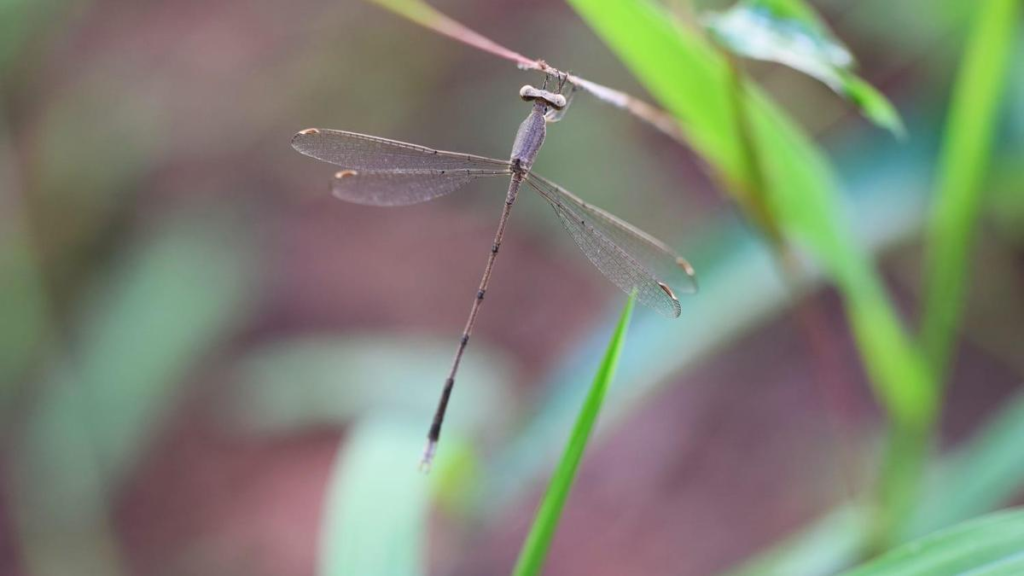
A team of odonatologists discovered a new species of spreadwing damselfly, Lestes paloti, in the Western Ghats of Kerala — published in the International Journal of Odonatology. It is the first new Lestes species from the Western Ghats in nearly 96 years.
About Lestes paloti
What It Is
- A newly described spreadwing damselfly of family Lestidae, order Odonata.
- Named after Dr. Muhamed Jafer Palot, a scientist at the Zoological Survey of India (ZSI), Kozhikode, for his contributions to Indian odonatology and Western Ghats fauna.
- Significance: first new Lestes species from the Western Ghats since Lestes malabaricus (1929) — a ~96-year gap; and the first new Indian Lestes since Lestes garoensis (1987).
Found In
- Six Kerala districts: Kannur, Kozhikode, Wayanad, Malappuram, Palakkad, Ernakulam.
Habitat (Unusual)
- Unlike most damselflies that stay near open water, it inhabits scrub vegetation around homesteads and laterite hillocks, often away from visible open water.
6. Bill to Raise Supreme Court Judges’ Strength to 38
Source: The Hindu
Context
The Union government introduced the Supreme Court (Number of Judges) Amendment Bill, 2026 in the Lok Sabha on 20 July 2026 (Monsoon Session), to replace an ordinance and raise the sanctioned strength of the Supreme Court from 34 to 38 judges (including the CJI) — amid concerns over mounting case backlog. Introduced by Law Minister Arjun Ram Meghwal.
About the Bill
What It Does
- Amends Section 2 of the Supreme Court (Number of Judges) Act, 1956 — substituting “thirty-three” with “thirty-seven” (judges excluding the CJI).
- Total sanctioned strength thus rises from 34 → 38 (including CJI); an increase of four judges.
- Replaces the Supreme Court (Number of Judges) Amendment Ordinance, 2026, promulgated by President Droupadi Murmu in May 2026 (while Parliament was not in session); four judges were already appointed against the enhanced strength.
- Retains the existing collegium-based appointment system — no change to how judges are appointed.
- Does not require a constitutional amendment (passed by simple majority).
Constitutional & Historical Background
- Article 124(1): The Supreme Court originally comprised a CJI + 7 judges; empowers Parliament to increase the number by law.
- Growth of strength: 8 (1950) → 11 (1956) → 14 (1960) → 18 (1977/78) → 26 (1986) → 31 (2009) → 34 (2019) → 38 (2026).
- Last increase: 2019 (30→33 excluding CJI), following a request by then-CJI Ranjan Gogoi.
- Contrast — High Courts: Under Article 216, the President can vary HC judge strength by executive order; the SC’s strength needs an Act of Parliament.
Practice MCQs
Q1. With reference to the number of judges in the Supreme Court of India, consider the following statements:
- Article 124 empowers Parliament to increase the number of Supreme Court judges by law.
- The Supreme Court (Number of Judges) Amendment Bill, 2026 raises the sanctioned strength to 38, including the Chief Justice of India.
- The strength of the Supreme Court can be increased by the President through an executive order, similar to High Courts.
- The Bill retains the existing collegium system for appointment of judges.
How many of the above statements are correct? (a) Only one (b) Only two (c) Only three (d) All four (e) None
Q2. With reference to the Supreme Court (Number of Judges) Amendment Bill, 2026, consider the following statements:
- It replaces an ordinance promulgated in May 2026.
- It amends the Supreme Court (Number of Judges) Act, 1956.
- The last increase in the Supreme Court’s strength before this was carried out in 2019.
- The Bill requires a constitutional amendment to be passed.
How many of the above statements are correct? (a) Only one (b) Only two (c) Only three (d) All four (e) None
Answer Key
- (c) — Statement 3 wrong: SC strength needs an Act of Parliament, not a presidential order.
- (c) — Statement 4 wrong: no constitutional amendment required; it amends the 1956 Act.
Banking/Finance
1. Why Inflation Is Rising in India
Source: The Hindu
Context
India’s Wholesale Price Index (WPI) inflation hit a fresh high of 9.87% in June 2026 (from 9.68% in May). The authors argue this surge is driven mainly by higher fuel costs and food supply shocks — i.e. cost-push and supply-side factors — rather than excess demand (overheating).
Verified Latest Data
- WPI inflation: 9.87% (June) vs 9.68% (May) — a record under the new 2022-23 base year series.
- Group-wise: Primary Articles 7.0% | Fuel & Power 27.41% (eased from 30.33% in May) | Manufactured Products 7.48%.
- WPI Food Index: 6.14% (up from 4.49%).
- Retail inflation (CPI) was much lower at 4.38% in June — note the wide CPI-WPI divergence.
- Key drivers: mineral oils/petroleum products, food articles, basic metals, chemicals.
The Core Argument
Two Kinds of Prices (Michal Kalecki)
- Primary commodity prices = demand-determined: Supply is virtually fixed (vertical supply curve). A supply shock (e.g. bad monsoon) shifts supply left → prices rise. This is demand-pull in effect.
- Industrial/manufactured prices = cost-determined: Factories run below capacity, so higher demand raises output, not price (flat supply curve). Prices instead reflect cost of production + profit markup. This is cost-push.
What Happened in India
- Manufactured inflation: Not from demand. Wage costs don’t push prices up (Indian workers are largely price-takers with weak bargaining power). Instead, material costs — especially oil — drive it. Fuel & power prices track manufactured inflation almost one-to-one.
- Food inflation: Driven by supply shock — an inadequate monsoon linked to the El Niño effect. Droughts have historically coincided with food-inflation spikes (drought is a sufficient but not necessary condition).
Key Concepts
- WPI vs CPI: WPI measures wholesale/producer-level price change (no services); CPI measures retail prices paid by consumers (includes services) — RBI targets CPI.
- Cost-Push Inflation: Inflation from rising input costs (oil, raw materials, wages) rather than excess demand.
- Demand-Pull Inflation: Inflation when aggregate demand outstrips supply.
- Countercyclical Fiscal Policy: Adjusting taxes/spending against the economic cycle — e.g. cutting fuel duties when prices spike.
- PPI (Producer Price Index): Measures price change from the producer’s perspective; India released it alongside WPI (9.57% in June).
Practice MCQs
Q1. With reference to the Wholesale Price Index (WPI) in India, consider the following statements:
- The WPI is released by the Ministry of Commerce and Industry.
- Unlike the CPI, the WPI does not include services.
- The Reserve Bank of India’s inflation-targeting framework is based on the WPI.
- The current WPI series uses 2022-23 as the base year.
How many of the above statements are correct? (a) Only one (b) Only two (c) Only three (d) All four (e) None
Q2. With reference to the Kaleckian analysis of inflation described in the article, consider the following statements:
- Primary commodity prices are treated as demand-determined, with a virtually fixed (vertical) supply.
- Manufactured goods prices are treated as cost-determined, reflecting a markup over production costs.
- A key driver of India’s recent manufactured-goods inflation is the rise in oil/fuel and power costs.
- The authors attribute the manufactured inflation mainly to rising wage costs of Indian workers.
How many of the above statements are correct? (a) Only one (b) Only two (c) Only three (d) All four (e) None
Answer Key
- (c) — Statement 3 wrong: RBI targets CPI, not WPI.
- (c) — Statement 4 wrong: material/oil costs drive manufactured inflation, not wages.
2. RBI’s Financial Inclusion Index (FI-Index)
Source: Business Standard
Context
The RBI released the composite Financial Inclusion Index (FI-Index) for FY26, which rose to 70.0 in March 2026 from 67.0 in March 2025 (a 4.48% increase). Separately, the RBI issued final Prudential Norms on Specified Non-Financial Assets (SNFA) acquired by Regulated Entities, tightening the resolution of distressed loans (effective 1 October 2026).
Part A — Financial Inclusion Index (FI-Index)
Key Data (Verified)
- FY26: 70.0 vs FY25: 67.0 vs FY24: 64.2 — steady rise; growth across all three sub-indices.
- Improvement mainly driven by the Usage parameter — reflecting deepening (not just widening) of financial inclusion.
About the FI-Index
- Introduced by the RBI in August 2021 (first published for FY ending March 2021), in consultation with the government and sectoral regulators.
- Scale: 0 to 100 (0 = complete exclusion, 100 = full inclusion).
- Composite of 97 indicators across banking, investments, insurance, postal, and pension sectors.
- Three parameters with weights: Access (35%), Usage (45%), Quality (20%).
- No base year — a cumulative index built on the previous year’s value.
Part B — Prudential Norms on SNFA
What It Is
- Final prudential norms issued under the Resolution of Stressed Assets Directions, 2025, effective 1 October 2026.
- SNFA (Specified Non-Financial Asset): a non-financial asset (e.g. property/collateral) acquired by a Regulated Entity (RE) in settlement of a defaulted loan.
Key Restriction
- REs are prohibited from selling/transferring an SNFA back to the defaulting borrower, its promoters, related parties, or any entity acting on the borrower’s behalf.
- Aim: prevent defaulters from reacquiring their own assets at a discount after willful default — closing a moral-hazard loophole and strengthening credit discipline.
Practice MCQs
Q1. With reference to the RBI’s Financial Inclusion Index (FI-Index), consider the following statements:
- It was introduced by the RBI in August 2021.
- It is measured on a scale of 0 to 100 and has no base year.
- Its three parameters are Access, Usage and Quality, with Usage carrying the highest weight.
- For FY26 (March 2026), the index stood at 70.0.
How many of the above statements are correct? (a) Only one (b) Only two (c) Only three (d) All four (e) None
Q2. With reference to the RBI’s prudential norms on Specified Non-Financial Assets (SNFA), consider the following statements:
- The norms were issued under the Resolution of Stressed Assets Directions, 2025.
- Regulated Entities are barred from selling an SNFA back to the defaulting borrower or its related parties.
- The framework comes into effect from 1 October 2026.
- The FI-Index and the SNFA norms are both released by SEBI.
How many of the above statements are correct? (a) Only one (b) Only two (c) Only three (d) All four (e) None
Answer Key
- (d) — All four statements are correct.
- (c) — Statement 4 wrong: both are issued by the RBI, not SEBI.
Agriculture
1. India Joins WTO Agreement on Fisheries Subsidies (AFS)
Source: TH
Context
India announced on 20 July 2026 that it has joined the WTO Agreement on Fisheries Subsidies (AFS) after depositing its Instrument of Acceptance — becoming the 123rd WTO member to do so. The move balances India’s commitment to sustainable fisheries with protection of its traditional and small-scale fishers.
About the Development
India’s Accession
- Commerce Secretary Rajesh Agarwal formally handed over India’s Instrument of Acceptance to WTO Director-General Ngozi Okonjo-Iweala on 20 July 2026.
- India = 123rd member to accept the agreement.
About the Agreement (AFS)
- Adopted by consensus at the 12th WTO Ministerial Conference (MC12), Geneva, June 2022 (part of the “Geneva Package”).
- The first multilateral WTO agreement with an environmental sustainability objective, and only the second new multilateral agreement since WTO’s founding in 1995 (after the Trade Facilitation Agreement).
- Entered into force on 15 September 2025, after two-thirds of members (111) ratified.
- Mandated by SDG Target 14.6 (eliminate subsidies contributing to overfishing/IUU fishing).
What It Covers / Prohibits
- Prohibits subsidies to: Illegal, Unreported and Unregulated (IUU) fishing; fishing of overfished stocks; and fishing on the unregulated high seas.
- Scope: marine wild capture fishing and fishing-related activities at sea.
- Excluded: aquaculture and inland fisheries remain outside the agreement’s scope — significant for India, whose sector is largely small-scale/inland.
Key Concepts
- WTO (World Trade Organization): Geneva-based body (est. 1995, replaced GATT) that sets and enforces global trade rules; DG is Ngozi Okonjo-Iweala.Ministerial Conference: The WTO’s top decision-making body, meeting roughly every two years (MC12 = Geneva 2022; MC13 = Abu Dhabi 2024).
- Blue Economy: Sustainable use of ocean resources for economic growth while preserving ocean health.
- PMMSY (Pradhan Mantri Matsya Sampada Yojana): India’s flagship scheme (2020) for sustainable, inclusive fisheries development.
Exam Relevance
- NABARD Grade A/B: Highly relevant — fisheries (allied ARD sector), PMMSY, blue economy, sustainable fisheries, small-fisher livelihoods; strong core-syllabus overlap.
Facts To Remember
1. EPFO Launches VISHWAS 2026 for Settlement of Penalty-Related Disputes
The Employees’ Provident Fund Organisation (EPFO) launched VISHWAS 2026, a one-time dispute resolution scheme for the amicable settlement of damages and penalty-related disputes under the EPF Act, 1952, and the Code on Social Security, 2020. The scheme will remain operational for six months and covers pending judicial cases, recovery proceedings, and cases where penalty notices are pending or yet to be issued.
2. CGPDTM Joins National Knowledge Resource Consortium (NKRC)
The Office of the Controller General of Patents, Designs and Trade Marks (CGPDTM) signed an MoU with CSIR-NIScPR to join the National Knowledge Resource Consortium (NKRC). The partnership will provide access to international journals, patent databases, e-books, and scientific resources, strengthening research, innovation, and intellectual property administration in India.
3. NIELIT to Establish Two Semiconductor Centres of Excellence
The National Institute of Electronics & Information Technology (NIELIT) announced the establishment of two Centres of Excellence (CoEs) in Ahmedabad and Guwahati to strengthen India’s semiconductor ecosystem. The initiative, aligned with the India Semiconductor Mission (ISM) 2.0, will provide specialised training in semiconductor manufacturing, packaging technologies, and advanced electronics.
4. Telangana Launches Indiramma Housing Scheme for Hyderabad
The Government of Telangana launched the Indiramma Housing Scheme for the Hyderabad Core Urban Region (CURE) to provide affordable housing through high-rise residential buildings. Applications will be accepted from 21 July to 10 August 2026 through MeeSeva Centres, the MeeSeva portal, and WhatsApp services. Under the scheme, the government will provide a ₹5 lakh subsidy, while beneficiaries will contribute approximately ₹6 lakh.
5. Article 370 Wins Best Feature Film at 72nd National Film Awards
The Hindi film Article 370 was named Best Feature Film at the 72nd National Film Awards (2024). Mammootty and Kartik Aaryan jointly won the Best Actor award for Bramayugam and Chandu Champion, respectively, while Yami Gautam received her first National Film Award as Best Actress for Article 370.
6. Rahul Himalian Appointed Additional CMD of IRCTC
The Ministry of Railways appointed Rahul Himalian, Director (Tourism & Marketing) of IRCTC, as the Additional Chairman & Managing Director (CMD) of the Indian Railway Catering and Tourism Corporation (IRCTC), following the resignation of Sanjay Kumar Jain.
7. New Damselfly Species ‘Lestes paloti’ Discovered in Kerala
Indian researchers discovered a new spreadwing damselfly species, Lestes paloti, in Kerala’s Western Ghats. Named after Dr. Muhamed Jafer Palot, the discovery marks the first new Lestes species identified in the Western Ghats in 97 years, highlighting the region’s rich biodiversity.
8. PV Sindhu Wins Japan Open 2026 Women’s Singles Title
Indian badminton star PV Sindhu won her maiden Japan Open Women’s Singles title by defeating Akane Yamaguchi of Japan in the final. France’s Christo Popov won the men’s singles title.
9. Spain Wins FIFA World Cup 2026
Spain won its second FIFA World Cup title by defeating defending champions Argentina 1–0 after extra time in the final. Ferran Torres scored the winning goal, while Rodri won the Golden Ball and Kylian Mbappé claimed the Golden Boot.
10. ‘Peacko’ Unveiled as Mascot of BWF World Championships 2026
Union Minister Mansukh Mandaviya unveiled ‘Peacko’, inspired by the Indian peafowl, as the official mascot of the BWF World Championships 2026, scheduled to be held in New Delhi from 17–23 August 2026.
11. World Chess Day Observed on 20 July
The United Nations observed World Chess Day on 20 July 2026 to celebrate chess as a tool for education, inclusion, and peace. The 2026 theme was “Celebrate, create and make a difference.”
12. Andhra Pradesh Signs MoU with UN-Habitat
The Government of Andhra Pradesh signed an MoU with UN-Habitat to promote sustainable and climate-resilient urban development. The partnership includes establishing a Centre of Excellence for Urban Affairs in Amaravati.
13. Uttar Pradesh Launches Kaushal Setu and Kaushal Sarathi Portals
The Uttar Pradesh Government launched the Kaushal Setu and Kaushal Sarathi portals to strengthen the state’s skill development ecosystem by improving access to training centres, courses, digital registration, and employment opportunities.
14. Transition VC Launches ₹1,500 Crore Fund II
Energy-transition-focused venture capital firm Transition VC launched Fund II with a target corpus of ₹1,500 crore to invest in engineering-led startups working in clean energy, advanced manufacturing, industrial engineering, and deep technology, supporting India’s energy transition ecosystem.