

Source: New Indian Express
Context
A Srinagar artisan developed the Grass Mache technique, converting aquatic weeds and grasses removed from Dal Lake into decorative and utility products.
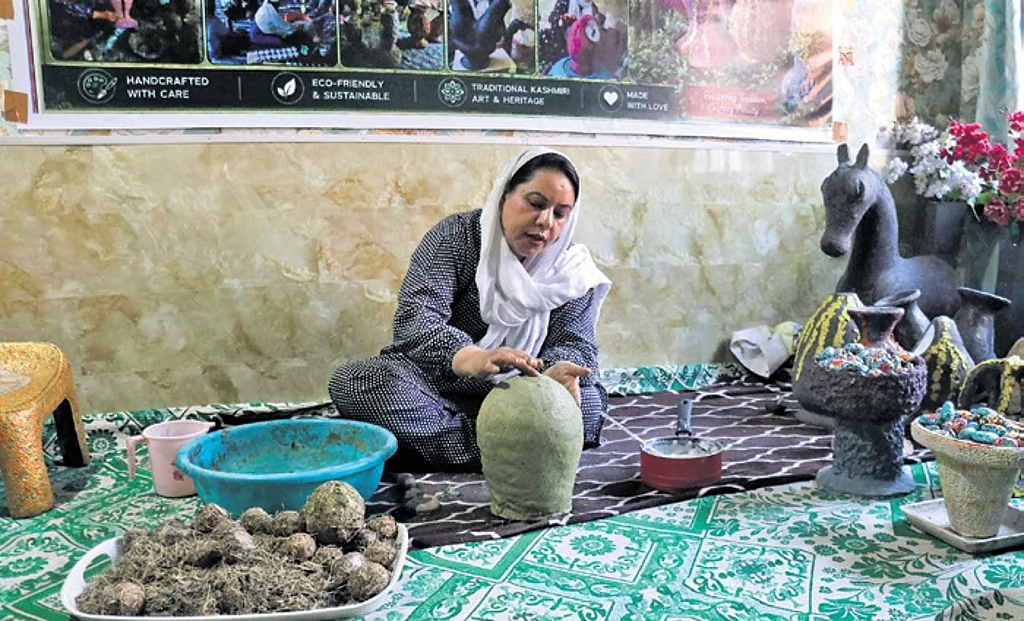
What It Is
- An innovative craft technique using discarded aquatic weeds and grasses from Dal Lake as raw material
- Adapts techniques from Kashmir’s centuries-old papier-mâché tradition
- Creating sustainable products from biological waste
How It Works
- Dried weeds are processed into a fine fibrous pulp
- Mixed with suitable materials
- Moulded into shapes and dried
- Producing a natural, stone-like texture
Important Facts for Exams
- Grass Mache — craft technique using Dal Lake aquatic weeds, adapted from papier-mâché
- Dal Lake, Srinagar — an urban lake suffering from eutrophication, encroachment and weed infestation
- Main invasive weeds in Dal Lake: Azolla, Salvinia, water hyacinth and Ceratophyllum
- Eutrophication — nutrient enrichment causing excessive weed and algal growth, depleting dissolved oxygen
- Dal Lake is managed by the Lakes Conservation and Management Authority (LCMA), formerly LAWDA
- Kashmiri papier-mâché holds a GI tag; other J&K GIs include Kashmir Pashmina, Kashmir Saffron, Kashmir Walnut Wood Carving and Basohli Painting
- Wular Lake in J&K is a Ramsar Site; Hokersar, Surinsar-Mansar and Tsomoriri are others in the region
- Related concept: circular economy — converting waste streams into inputs







