RBI Grade BNABARD ESISEBI
In one lineMore on this exam
Source: BS
“RBI MPC Unpacked: Key Theory Meets Today’s Macro Trends”Tap to play · from the C4S channel
Context:
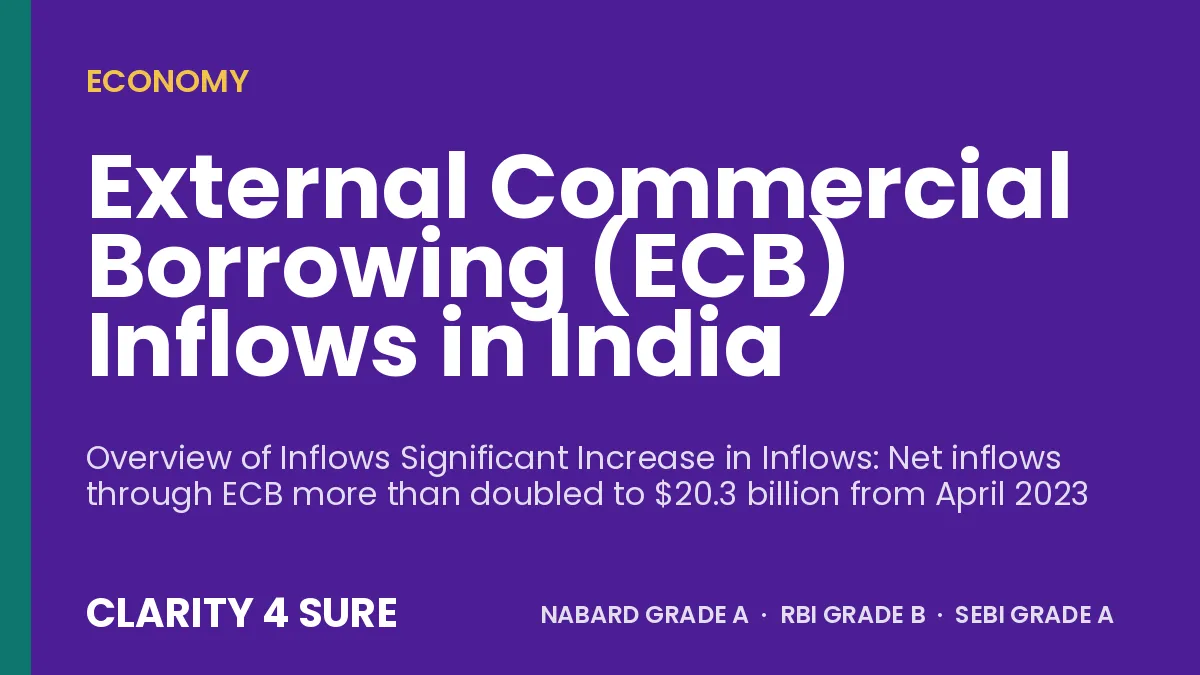
The Reserve Bank of India (RBI) has amended the External Commercial Borrowing (ECB) framework through the Foreign Exchange Management (Borrowing and Lending) (First Amendment) Regulations, 2026.
Objective → rationalise and liberalise the ECB regime to improve access to foreign capital.
What is External Commercial Borrowing (ECB)?
- Loans raised by Indian entities from foreign lenders.
- Typically used for:
- Infrastructure
- Capital expenditure
- Business expansion
- Governed by RBI under FEMA regulations.
Key Objectives of the Revised Framework
- Simplify borrowing rules
- Expand access to global finance
- Improve ease of doing business
- Align borrowing costs with market conditions
- Rationalise maturity and usage norms
Major Changes Introduced
1. Expansion of Eligible Participants
- Broader set of borrowers and recognised lenders allowed.
2. Removal of Borrowing Cost Restrictions
- All-in-cost cap removed.
- Authorised dealer (AD) banks no longer need to verify cost alignment with market conditions.
➡ More flexibility in negotiating loan terms.
3. Rationalisation of Maturity and Borrowing Limits
- Changes in minimum average maturity rules.
- Clarifications on refinancing and outstanding borrowings.
4. End-Use Clarifications
ECB funds may now be used for:
- Acquisition of control
- Purchase of land or immovable property (subject to restrictions)
However:
- On-lending for real estate business is prohibited.
5. On-Lending by RBI-Regulated Entities
- ECB funds can be on-lent to individuals.
- Real estate business remains excluded.
6. Changes Related to Authorised Dealer (AD) Banks
- Requirement to maintain a current account to qualify as designated AD bank removed.
7. Simplified Reporting Requirements
- Streamlined compliance and reporting timelines.
8. Clarifications on Financial Instruments
- Treatment of:
- Foreign Venture Capital Investors (FVCIs)
- Convertible instruments
- Short-term borrowing limits (manufacturing sector)