RBI Grade BNABARD ESISEBI
In one line
The RBI said banks must maintain 99 per cent of the required Cash Reserve Ratio daily from 16 October, up from 90 per cent at present — to reduce surplus liquidity in the banking system.
Context of the News
“RBI MPC Unpacked: Key Theory Meets Today’s Macro Trends”Tap to play · from the C4S channel
Key Highlights
- CRR rate remains unchanged at 3%: Banks must continue to maintain 3% of their Net Demand and Time Liabilities (NDTL) as cash reserves with the RBI.
- Daily maintenance rises from 90% to 99%: Banks must now maintain at least 99% of their prescribed CRR on every day of the reporting fortnight, compared with 90% earlier.
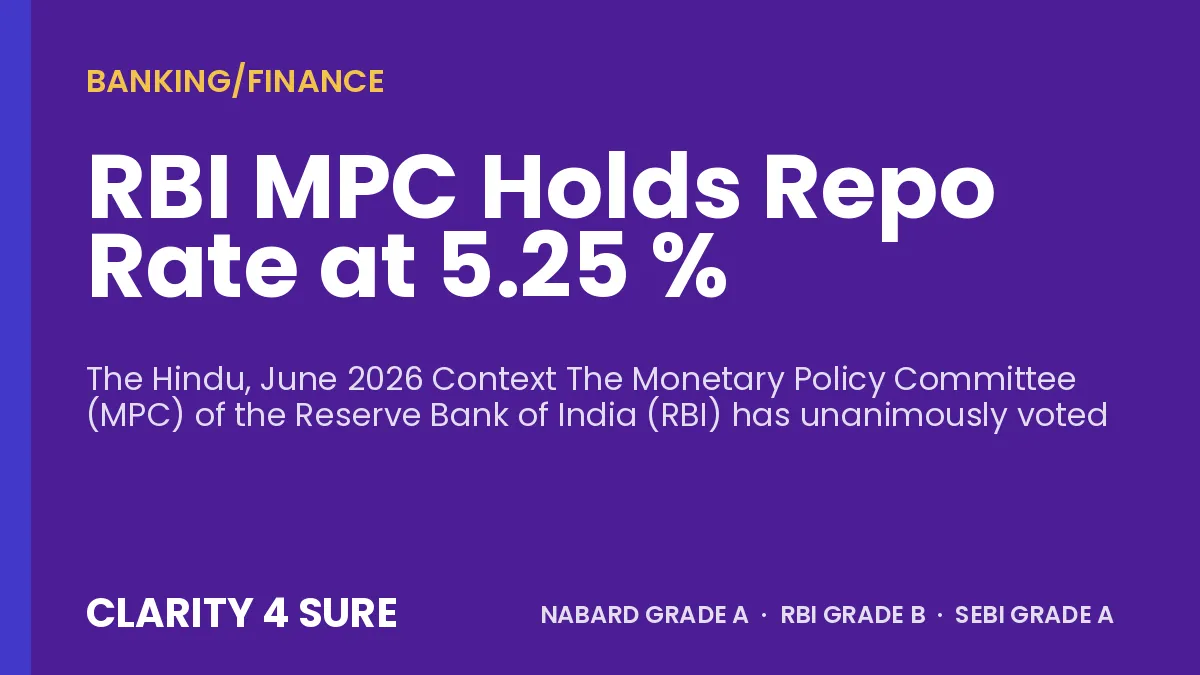
- Purpose: The RBI is trying to absorb excess liquidity and bring short-term market interest rates closer to the policy repo rate.
- Banking system liquidity surplus: It was around ₹3.88 lakh crore on 8 October 2026.
Understanding the CRR Change with an Example
Suppose a bank has an NDTL of ₹1,000 crore.
| Particulars | Amount |
|---|---|
| Prescribed CRR rate | 3% |
| Total CRR required | ₹30 crore |
| Earlier minimum daily maintenance (90%) | ₹27 crore |
| New minimum daily maintenance (99%) | ₹29.7 crore |
CRR vs SLR
| Basis | CRR | SLR |
|---|---|---|
| Full form | Cash Reserve Ratio | Statutory Liquidity Ratio |
| Maintained with/in | RBI | Banks themselves |
| Form | Cash reserves | Cash, gold and eligible securities |
| Interest/return | No interest on CRR balances | Eligible securities may earn returns |
| Main purpose | Manage liquidity and monetary conditions | Maintain liquidity and support financial stability |
Key Terms for Exams
- CRR (Cash Reserve Ratio): The percentage of a bank’s NDTL that must be maintained as cash reserves with the RBI. Banks do not earn interest on these reserves.
- SLR (Statutory Liquidity Ratio): The percentage of NDTL banks must maintain in specified liquid assets, such as cash, gold and eligible government securities.
- NDTL (Net Demand and Time Liabilities): A bank’s net demand and time liabilities, broadly representing deposits and certain other liabilities used to calculate reserve requirements.
- Repo Rate: The rate at which the RBI lends money to banks against eligible securities.
- Liquidity: The availability of money and funds in the banking system.
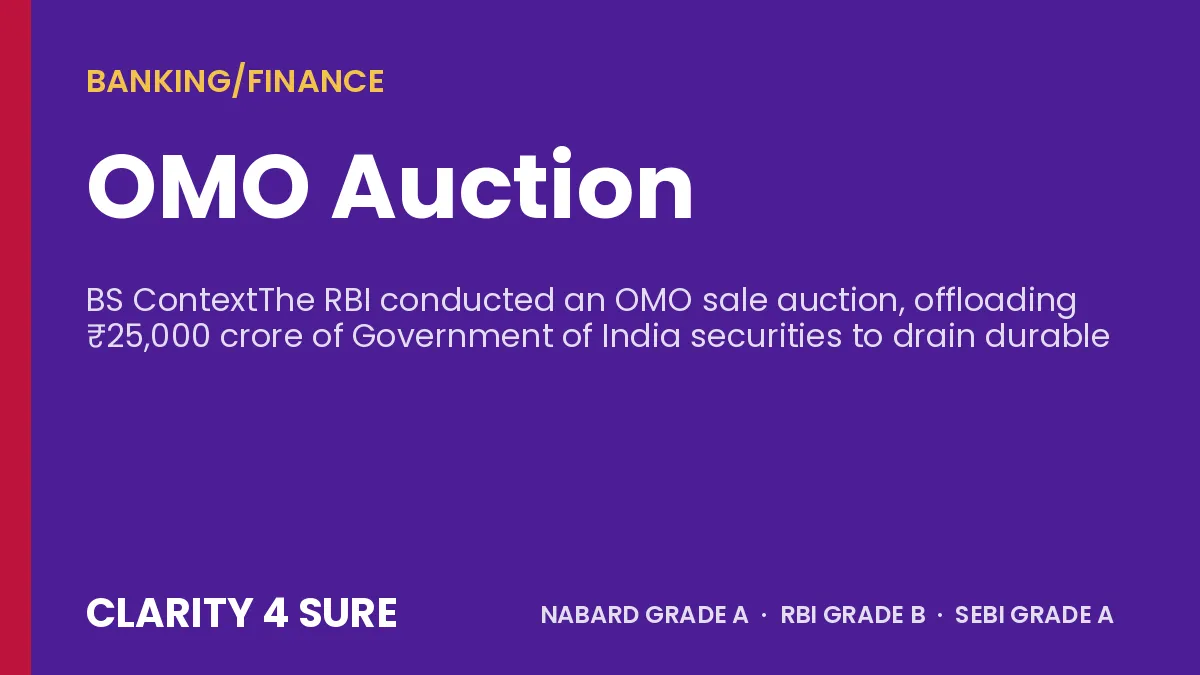
- OMO (Open Market Operations): The RBI’s purchase or sale of government securities to manage liquidity. Selling securities generally absorbs liquidity.
- WACR (Weighted Average Call Rate): The weighted average interest rate on overnight unsecured funds borrowed and lent in the interbank call money market.