Introduction
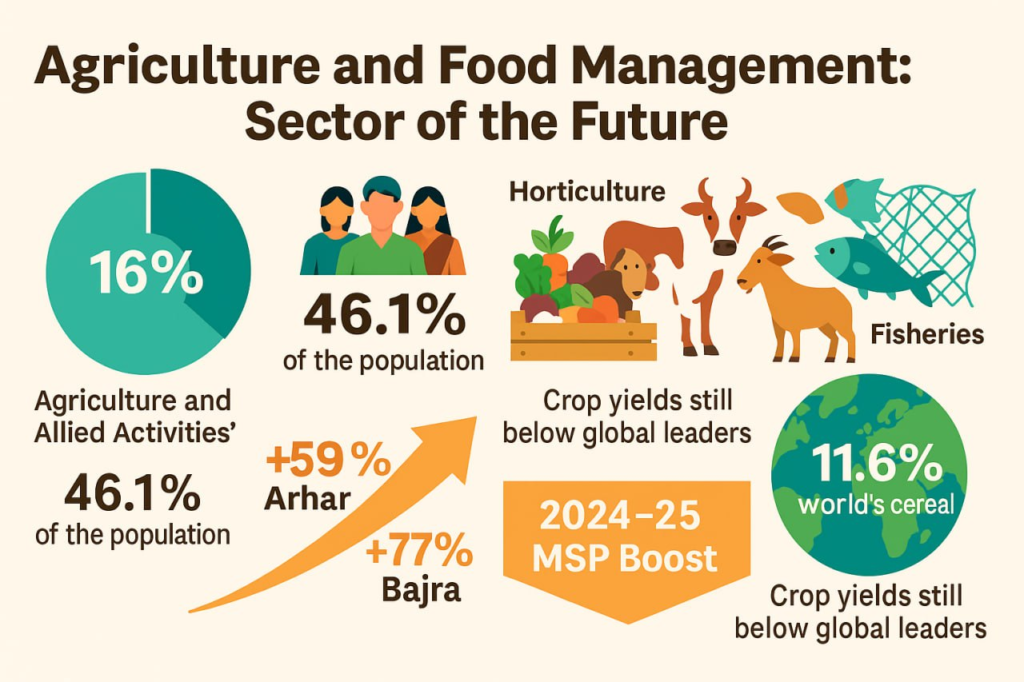
- The ‘Agriculture and Allied Activities’ sector makes up about 16% of India’s GDP for FY24 and supports around 46.1% of the population.
- Sectors like horticulture, livestock, and fisheries are now major contributors to agricultural growth.
- India grows 11.6% of the world’s cereals, but its crop yields are much lower than other leading producers.
- For 2024-25, the government has increased the MSP for Arhar by 59% and for Bajra by 77% over their average production cost.
Seeds-quality and use of fertilisers
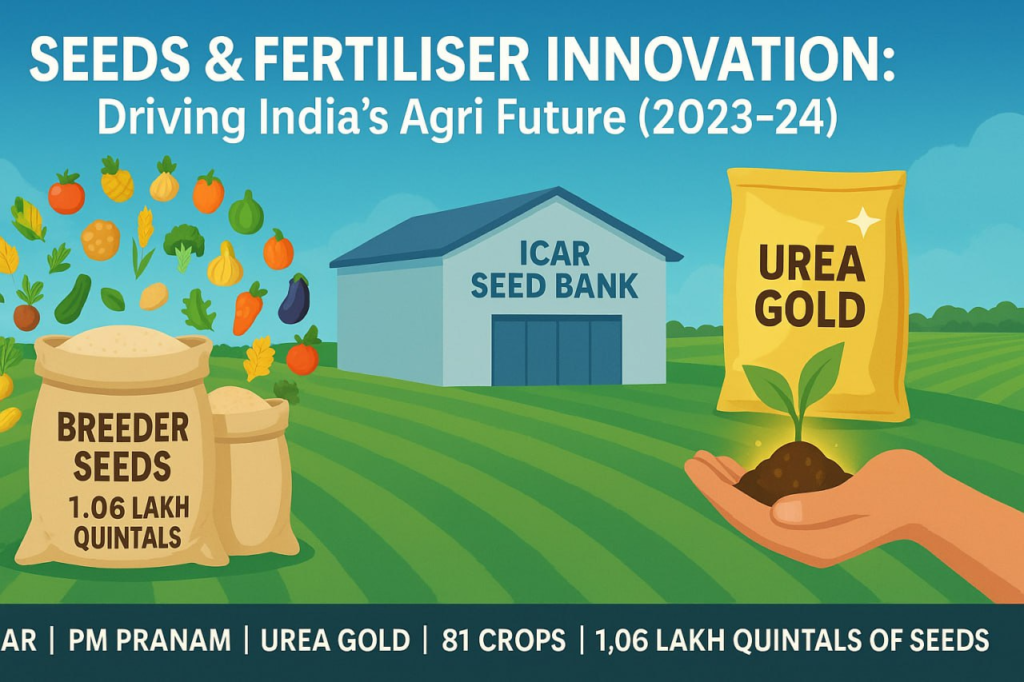
- In the 2023-24 season, ICAR produced 1.06 lakh quintals of breeder seeds across 1,798 varieties for 81 crops.
- Key steps taken include setting up seed banks, introducing ‘Urea Gold’ (a mix of urea and sulphur to improve nutrient absorption), and launching the PM PRANAM initiative.
Rainfall and irrigation system
- The agriculture sector is very sensitive to weather changes, and only 55% of the total sown area has access to irrigation.
- In addition, more than two-thirds of India’s farmland is at risk of drought.
- To address this, key measures include the ‘Per Drop More Crop‘ program under the Pradhan Mantri Krishi Sinchayee Yojana (PMKSY), the Micro Irrigation Fund (MIF), and the Rain-fed Area Development (RAD) scheme.
Agriculture credit
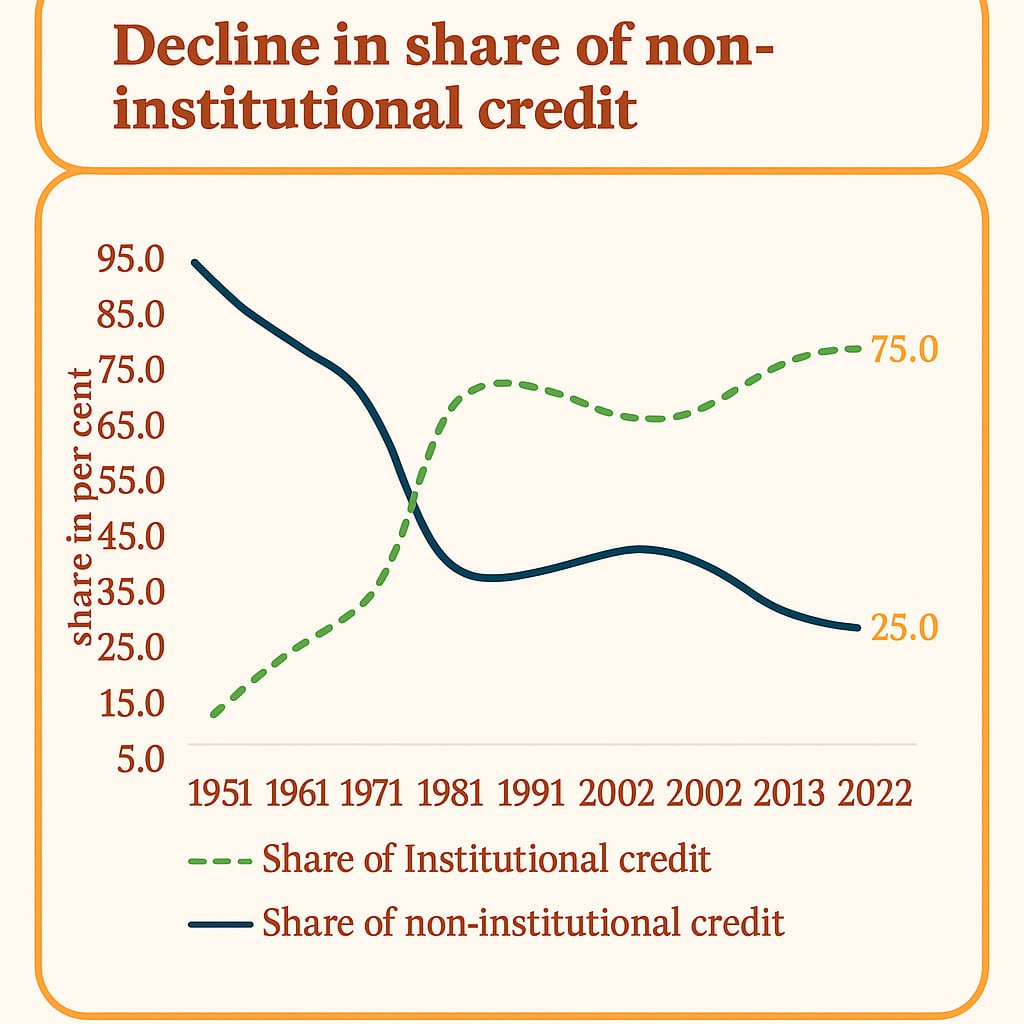
- India has 7.75 crore active Kisan Credit Card (KCC) accounts.
- In 2018-19, KCC was extended to also cover the working capital needs of fisheries and animal husbandry.
- Important steps in this area include the Modified Interest Subvention Scheme (MISS), Prompt Repayment Incentive (PRI), Pradhan Mantri Fasal Bima Yojana (PMFBY), and PM-KISAN.
Agriculture mechanisation
- The high cost of farm machinery is a major challenge for small and marginal farmers, making it hard to promote mechanisation.
- To tackle this, key efforts include the Sub-Mission on Agricultural Mechanisation (SMAM), which supports setting up Custom Hiring Centres (CHCs), farm machinery banks that allow farmers to rent equipment at low cost, and providing drones to Women Self-Help Groups (SHGs).
Agriculture extension
- Agricultural extension plays a key role in sharing knowledge with farmers, boosting productivity, and encouraging sustainable farming practices.
- To support this, the Sub-Mission on Agricultural Extension (SMAE) has been launched to strengthen extension services, promote farm-based entrepreneurship, and improve overall productivity.
Improvement in agriculture marketing infrastructure
Key interventions includes Agriculture Marketing Infrastructure (AMI) sub-scheme, Agriculture Infrastructure Fund (AIF), e-NAM Scheme.
- Agriculture Marketing Infrastructure (AMI):
- The Agricultural Marketing Infrastructure (AMI) scheme, a sub-scheme of the Integrated Scheme for Agricultural Marketing (ISAM), aims to promote the development of agricultural marketing infrastructure by providing financial assistance to various stakeholders, including farmers, cooperatives, and private sector investors.
- This includes building storage facilities, upgrading rural haats, and creating infrastructure for direct marketing and post-harvest operations.
- The scheme operates as a demand-driven, credit-linked, and back-ended subsidy scheme, offering subsidies ranging from 25% to 33.33% of the project cost.
- Agriculture Infrastructure Fund (AIF):
- Marking a crucial milestone in India’s mission to transform its agricultural sector, the Union Cabinet, chaired by Prime Minister Narendra Modi on August 28, 2024, approved a significant expansion of the Agricultural Infrastructure Fund (AIF) scheme.
- This decision introduces a series of measures designed to make the AIF more attractive, impactful, and inclusive, reflecting the government’s commitment to enhancing agricultural productivity and infrastructure.
- e-NAM Scheme:
- The e-National Agriculture Market (e-NAM) is a pan-India electronic trading platform launched by the Government of India to create a common online market for agricultural commodities, aiming to facilitate transparent and efficient trading for farmers, traders, and buyers.
Climate action in agriculture
Studies show that if the average yearly temperature in India goes up by 2°C and annual rainfall increases by 7% by the year 2099, our country’s agricultural productivity could drop by 8–12%. That means farmers may grow less food, and it could affect food supply and rural livelihoods.
To tackle this challenge, the government has introduced some important programs:
- National Mission for Sustainable Agriculture (NMSA):
- This program helps farmers adapt to climate change by promoting water-saving techniques, better soil health, and climate-resilient farming practices.
- Paramparagat Krishi Vikas Yojana (PKVY):
- This scheme encourages farmers to switch to traditional organic farming methods, which are better for the environment and help maintain long-term soil fertility.
- Mission Organic Value Chain Development for North Eastern Region (MOVCDNER):
- Focused on the Northeast, this mission supports organic farming and helps farmers connect with markets so they can earn better incomes from organic produce.
Together, these efforts aim to make Indian agriculture more resilient, eco-friendly, and sustainable in the face of climate change.
Allied sectors: Potential to Build Resilience
The fisheries sector in India is growing rapidly, with an average annual growth rate of 8.7%, which is the highest among related areas. Livestock farming is also growing fast, with a growth rate of 8% per year.
To support and boost these sectors, the government has launched several important programs:
- Rashtriya Gokul Mission:
- This program focuses on improving indigenous cattle breeds to increase milk production and support farmers.
- Livestock Health and Disease Control Program:
- This initiative helps keep animals healthy by preventing and controlling diseases, which in turn improves productivity.
- Pradhan Mantri Matsya Sampada Yojana (PMMSY):
- This scheme aims to modernize fisheries and fish farming, increase fish production, and improve the income of fishermen.
- Fisheries and Aquaculture Infrastructure Development Fund (FIDF):
- This fund provides financial support to build better infrastructure for fisheries and aquaculture, such as cold storage, processing units, and fishing harbors.
These efforts are helping India’s fisheries and livestock sectors grow stronger and contribute more to the economy.
Cooperative societies
Cooperative societies play an important role in many areas like farming, banking and credit, housing, and supporting women’s welfare.
To strengthen these societies, the government has introduced some key measures:
- Model Bye-Laws for Primary Agricultural Credit Societies (PACS):
- These are updated rules designed to make these societies more efficient and transparent.
- Transforming PACS into Common Service Centres (CSCs):
- This helps turn local cooperative societies into centers where people can access various government services easily.
- Setting up retail petrol and diesel outlets:
- Cooperatives are being encouraged to run fuel stations, which can help communities get better access to fuel.
- Introducing micro-ATMs within cooperative societies:
- This allows people in rural and remote areas to withdraw money and do banking without having to travel far.
These steps are aimed at making cooperative societies more useful and accessible for everyone, especially farmers and rural communities.
Food processing industries
The agriculture and food sector provides about 12.4% of all jobs in India’s organized workforce. In the financial year 2024, agricultural and food products made up nearly 11.7% of India’s total exports.
Notably, the share of processed food exports (like packaged and ready-to-eat products) has grown significantly — from about 15% in 2018 to over 23% in 2024. This shows India is exporting more value-added food products.
To support this growth, the government has introduced important programs:
- Pradhan Mantri Kisan Sampada Yojana (PMKSY):
- This scheme promotes food processing infrastructure and helps farmers get better value for their produce.
- Production Linked Incentive Scheme for Food Processing (PLISFPI):
- This program encourages food companies to increase production by offering financial incentives.
- Pradhan Mantri Formalisation of Micro Food Processing Enterprises (PMFME):
- This helps small food processing businesses become formal and grow, improving their access to markets and credit.
These efforts aim to boost jobs, increase exports, and strengthen the food processing industry in India.
Food management
To ensure food security and support farmers, the government has introduced some important programs:
- National Food Security Act (NFSA):
- This law guarantees affordable food grains to millions of people across the country, helping to fight hunger and malnutrition.
- Pradhan Mantri Garib Kalyan Anna Yojana:
- Under this scheme, the government provides free or subsidized food grains to poor families, especially during tough times like the COVID-19 pandemic.
- Credit Guarantee Scheme for e-NWR-based Pledge Financing (CGS-NPF):
- This program helps farmers get loans by using electronic warehouse receipts (which prove their stored crops) as collateral. It makes it easier for farmers to borrow money after harvest to manage their expenses better.
Together, these initiatives aim to ensure food availability, support vulnerable families, and provide farmers with financial help.
Conclusion
India’s agriculture plays a crucial role in driving the country’s economy and ensuring food security for its people. Even though the sector faces many challenges like changing weather patterns and limited resources, it has remained strong and continued to grow steadily. This resilience is largely thanks to various government programs that help farmers increase their crop yields, encourage growing a wider variety of crops, and offer social security measures to protect farmers’ livelihoods. These efforts together support the backbone of rural India and contribute to the nation’s overall development.