Why in News?
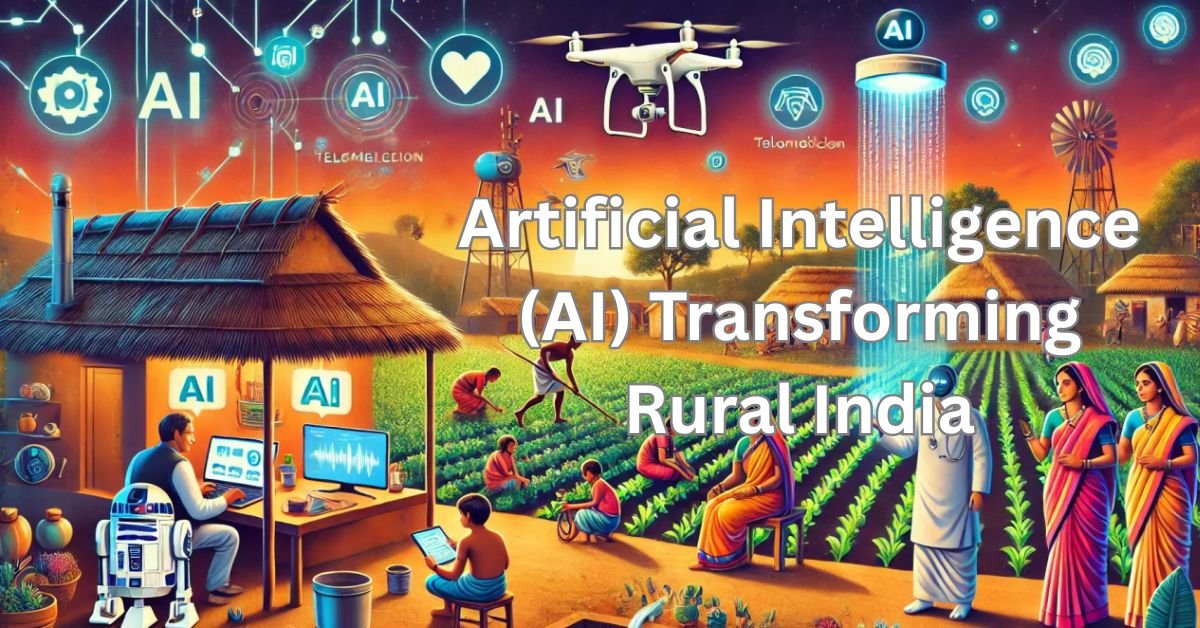
Government highlights the expanding role of Artificial Intelligence (AI) in rural development. Emphasis on inclusive, people-centric AI aligned with Viksit Bharat@2047. India–AI Impact Summit 2026 signals transition from pilot projects to system-wide AI deployment.
Key Takeaways
- AI positioned as a public good to promote equity and inclusion.
- Focus on fairness, transparency, accountability, and India-specific risk mitigation.
- Integration of AI with Panchayati Raj Institutions, Digital Public Infrastructure, agriculture, health, and skilling.
- Multilingual AI tools reducing literacy and language barriers.
Applications of AI in Rural India
- Geospatial Monitoring of Rural Assets:
- AI platforms like BhuPRAHARI use high-resolution satellite images to monitor the construction and condition of rural infrastructure such as roads, Amrit Sarovars (water bodies), and public buildings. This reduces the need for manual inspections and improves monitoring efficiency.
- Digital ShramSetu Mission:
- This mission focuses on using AI and advanced technologies to support workers in the informal sector. By combining technology with proper regulations and impact assessment, it helps improve service delivery and strengthens livelihood support for rural and informal workers.
- AI Infrastructure in Agriculture:
- The Ministry of Agriculture and Farmers Welfare is using AI tools like Kisan e-Mitra, a virtual assistant that helps farmers by providing information about government schemes, including income support and other benefits.
- Promoting AI in Rural Development:
- The Suman Sakhi WhatsApp Chatbot in Madhya Pradesh uses AI-based conversations to provide easy access to information on maternal and newborn health, especially for women and families in rural areas.
- AI for Language Inclusion and Multilingual Governance:
- AI is helping people from rural, remote, and tribal regions access digital services in their own languages, making governance more inclusive and reducing language barriers.
- BHASHINI:
- Launched in July 2022, BHASHINI is an AI-based national language platform that supports translation, speech-to-text, text-to-speech, and voice services in more than 36 Indian languages, helping citizens access digital services easily.
- BharatGen:
- Introduced in 2025, BharatGen is India’s first government-funded sovereign Large Language Model designed specifically for Indian languages, culture, and social contexts.
- Adi Vaani:
- This AI-enabled platform helps tribal communities in remote areas overcome communication barriers by improving access to information and services in languages they understand.
National AI Policy Framework for Inclusive Development
- Launched in 2018 by NITI Aayog, the National Strategy for AI identifies AI as a transformative tool to address India’s developmental challenges.
- The strategy prioritises sectors with high social impact, particularly agriculture, healthcare, education, and governance.
- The strategy emphasises improving access, affordability, and quality of essential services in underserved regions.
- The policy emphasises augmentation of human capabilities rather than replacement of labour. It promotes inclusive economic participation through digital skilling and technology-enabled employment.
India AI Governance Guidelines
- India AI Governance Guidelines (2025):
- Launched by the Ministry of Electronics and Information Technology (MeitY), these guidelines aim to ensure that Artificial Intelligence in India is developed and used in a safe, ethical, and responsible manner.
- Seven Guiding Principles (Sutras):
- The framework lays down seven core principles that act as moral and ethical foundations for AI development. These principles focus on fairness, transparency, accountability, privacy, and human oversight.
- Six Pillars of AI Governance:
- The guidelines provide detailed recommendations under six major areas of AI governance, covering aspects such as data management, safety standards, risk assessment, legal compliance, and institutional mechanisms.
- Phased Action Plan:
- The framework includes a clear roadmap with short-term, medium-term, and long-term steps to gradually build a strong and responsible AI ecosystem in the country.
- Practical Implementation Guidelines:
- It offers clear and actionable guidance for companies, developers, and regulators to ensure that AI systems are transparent, accountable, and aligned with public interest.
Challenges
- Digital Infrastructure Gap:
- Basic facilities like reliable electricity, fast internet, and stable digital connectivity are still not equally available in many rural areas, making it difficult to use AI-based services effectively.
- Low Digital Literacy:
- Many people in rural regions do not have the necessary digital skills or familiarity with technology to use AI-powered platforms and services.
- Limited and Poor Data Availability:
- AI systems need large amounts of accurate and representative data to work properly, but such data is often limited or unavailable in rural areas.
- Disconnected Government Databases:
- Data is often stored separately by different government departments, which makes it difficult to combine information and take coordinated decisions.
- High Implementation Costs:
- Setting up and running AI systems requires significant financial investment for technology, infrastructure, and maintenance.
- Financial Constraints of Local Bodies:
- Rural local governments often have limited budgets and must balance many development needs, making it hard to prioritise spending on AI initiatives.
Way Ahead
To make the benefits of Artificial Intelligence truly inclusive, it is essential to first strengthen digital infrastructure in rural areas. This means ensuring reliable broadband connectivity, stable internet access, and well-developed data systems so that digital services can function smoothly and reach every village. Alongside infrastructure, there is a strong need to promote digital literacy and awareness about AI among citizens, farmers, local entrepreneurs, and government officials. When people understand how to use technology confidently, they can make better use of AI-enabled services in agriculture, healthcare, governance, and livelihoods.
At the same time, the growing use of data and AI must be supported by strong data protection measures and ethical safeguards. These are necessary to prevent misuse of personal information, protect privacy, and ensure that no group is left out or disadvantaged by technological systems. Finally, institutional capacity at the Panchayat level needs to be strengthened so that local governments can effectively adopt and manage AI tools. This includes training officials, building technical expertise, and providing resources so that Panchayats can use AI for planning, monitoring, and delivering services more efficiently. Together, these steps can help ensure that AI supports equitable and sustainable rural development.