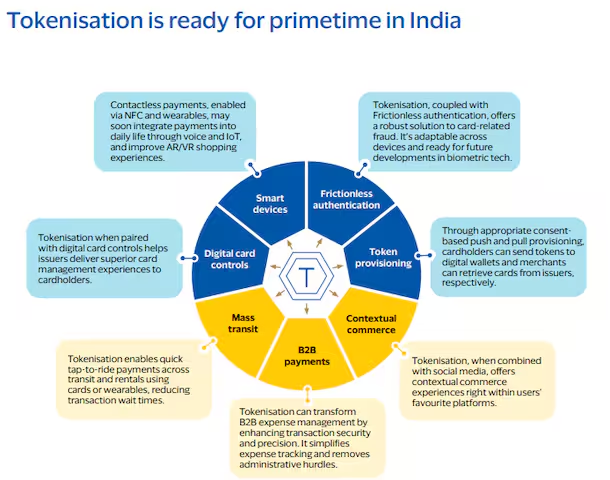
Over 91 crore tokens were issued by December 2024 and has enabled nearly 98% of e-commerce transactions to be processed without actual card data, reducing the risk of data breaches.
Why in News?
Introduction
NABARD 2021-2024 Cutoff Analysis | What we can Learn? #nabard_grade_a_exam #nabard_cutoffTap to play · from the C4S channel
In the digital age, convenience and speed in financial transactions come with an equally pressing need for robust cybersecurity. With online frauds, data breaches, and phishing scams on the rise, it became essential for regulators to intervene. The Reserve Bank of India (RBI) took a crucial step in this direction by introducing Card Tokenization—a powerful solution to secure digital card transactions.
A clean PDF of this page with the C4S header — it opens right away, and the link comes to your WhatsApp too.
What is Card Tokenization?
Card Tokenization is a security process that converts a consumer’s sensitive card details (card number, CVV, expiry date) into a unique, non-sensitive digital identifier called a token. This token can be used for transactions without revealing actual card details, significantly reducing the risk of misuse.
Example:most asked
Suppose your debit card number is 1234 5678 9876 5432. After tokenization, it may become TK9876543212345678XZY, which is useless to hackers even if intercepted.
Why Was Tokenization Introduced in India?
The introduction of tokenization in India was driven by several key concerns:
- Rampant Data Breaches:
- Merchants storing card data became vulnerable to large-scale cyberattacks.
- Increased Online Transactions:
- Digital payments surged post-2016, especially after the COVID-19 pandemic.
- Card-on-File Risks:
- Saving card details for quick checkout created security loopholes.
- Global Best Practices:
- RBI aligned Indian practices with global standards such as PCI DSS (Payment Card Industry Data Security Standard).
RBI’s Regulatory Timeline on Tokenization
| Date | Regulatory Development |
|---|---|
| Jan 8, 2019 | RBI permits Tokenization for mobile and wearable devices. |
| Sep 7, 2021 | RBI extends tokenization to Card-on-File (CoF) transactions. |
| Dec 23, 2021 | Deadline extended to June 30, 2022 for merchants to delete stored card data. |
| Sep 30, 2022 | Final compliance date. Merchants no longer allowed to store actual card details. |
| 2023 onwards | Banks and fintechs continue implementation across POS, QR code, and UPI-based interfaces. |
How Does Card Tokenization Work?
Free live session
NABARD Grade A 2026: 45-Day Final Revision Plan + Daily Targets
 🔒 Register to watchLast Sunday’s session · recording
8 of the top 10 in NABARD Grade A 2025, Rank 1 included, and Rank 1 back to back before that in 2021 and 2022: all prepared with C4S. Watch last Sunday's session on the 45-day final revision plan now, then join the next one live on Zoom.
Recording out · Watch it whenever you like · 75 minutes · free
Here’s a detailed workflow of how tokenization works in India:
Step-by-Step Workflow
- Customer Chooses to Save Card
- During checkout, the user opts to save card details with consent.
- Token Request is Sent
- The merchant/app (called Token Requestor) requests the card network (Visa, Mastercard, etc.) for a token.
- Token Generation
- A unique token is generated and mapped to the card for that specific device and merchant.
- Token Saved
- The token (not the real card number) is stored by the merchant/app.
- Transaction Authorization
- For future payments, this token is used to complete the transaction, which is routed via the tokenization service provider.
Types of Tokenization
| Type | Description |
|---|---|
| Device-Based Tokenization | Token is generated and tied to a specific device (e.g., smartphone, smartwatch). |
| Merchant-Based Tokenization | Token valid only for a specific merchant. |
| Card-on-File (CoF) Tokenization | Used by apps like Zomato, Swiggy, Amazon, Flipkart for saved card payments. |
Benefits of Card Tokenization
Security Benefits
- No storage of actual card data with merchants.
- Minimizes chances of mass data leaks.
- Resistant to phishing and replay attacks.
User Experience
- Faster checkout without re-entering card details.
- Reduces cart abandonment in e-commerce.
Regulatory Compliance
- Merchants avoid penalties for non-compliance.
- Builds trust with consumers and payment partners.
Industry-Wide Ecosystem Uplift
- Encourages global payment companies to align with India’s security standards.
- Enhances confidence in mobile wallets and fintech platforms.
Key Stakeholders in the Tokenization Ecosystem
| Entity | Function |
|---|---|
| Customer | Authorizes token generation and saves the card digitally. |
| Merchant/App | Initiates the tokenization request, stores the token. |
| Token Requestor | A PCI-DSS certified platform that interacts with card networks. |
| Card Network | Issues the token and maps it to the card details securely. |
| Issuer Bank | Validates the token transaction and settles it. |
Tokenization vs Traditional Card Storage
| Parameter | Traditional Card Storage | Tokenization |
|---|---|---|
| Data Stored | Actual card number, CVV, expiry | Randomized token, no card data |
| Security Risk | High (prone to breaches) | Low (token has no intrinsic value) |
| RBI Compliance | Not allowed after October 1, 2022 | Fully compliant |
| Device Dependency | Can be used across devices | Device + merchant-specific |
Major Platforms Using Tokenization in India
| Platform | Tokenization Integration |
|---|---|
| Google Pay | Tokenization for both Visa and Mastercard cards |
| PhonePe | Offers tokenized payments via RuPay, Visa, Mastercard |
| Paytm | Supports tokenization across its app and wallet |
| Amazon, Flipkart | All saved cards now tokenized with consent |
| Zomato, Swiggy | Use tokenized card data for food delivery transactions |
Challenges in Card Tokenization Implementation
Despite its advantages, several challenges exist:
- Technical Infrastructure:
- Small merchants may lack integration capability.
- User Education:
- Many users do not understand what tokenization means.
- Cross-device Payments:
- Tokens are merchant- and device-specific, limiting mobility.
- Initial Glitches: Some users faced transaction failures during early rollout.
Impact on Indian Payment Landscape
- Card tokenization has significantly enhanced the security and trust in India’s digital payment ecosystem.
- Since its implementation, data breaches related to card storage have sharply declined, and consumer confidence in online transactions has improved.
- While initial adoption posed challenges for merchants and users, tokenization has led to smoother checkouts, increased repeat purchases, and better compliance with global security standards.
- Overall, it has marked a crucial step toward making digital payments in India safer and more resilient.
Statistics Post-Implementation (RBI and NPCI data)
| Metric | Before Tokenization | After Tokenization (2024) |
|---|---|---|
| Data Breach Incidents | 50+ per year | <10 per year |
| Card-on-File Storage | 100 crore+ cards stored | 0 (as per RBI mandate) |
| Repeat Transactions | 30% drop post-rule | Recovered by Q1 2023 |
| Customer Trust Score (Survey) | 68/100 | 85/100 |
Future of Tokenization in India
The journey of tokenization in India is far from over. Upcoming developments include:
- Offline Tokenized Payments:
- Integration with UPI-Lite and NFC cards.
- Expansion to Non-card Instruments:
- Possibly Aadhaar-linked wallets or BNPL services.
- Advanced Biometric Token Authorization:
- Using face/fingerprint for token-based payments.
- Cross-platform Tokens:
- Work in progress to allow cross-device usage.
Conclusion
Card Tokenization is not just a regulatory compliance measure—it is a transformative move that will redefine digital payment security in India. With RBI’s proactive policies and growing consumer awareness, tokenization is steadily becoming the gold standard for safe, seamless, and smart transactions.
As India’s digital economy grows, card tokenization ensures we do so with trust and security at the core.
FAQs
1. Is card tokenization mandatory in India?
Yes. As per RBI, merchants must delete stored card details and use tokenization instead.
2. Can I opt out of tokenization?
Yes. But then you’ll need to manually enter card details for every transaction.
3. Is tokenization chargeable?
No. RBI has mandated that tokenization must be free of charge for customers.
4. Can I view or manage my saved tokens?
Yes. Merchants and banks provide a dashboard to view and delete tokens.
5. Are international cards supported?
Yes, provided the card network supports tokenization for cross-border use.