Daily Current Affairs Quiz
03 March, 2026
International Affairs
1. Iran–Israel War 2026
Context:
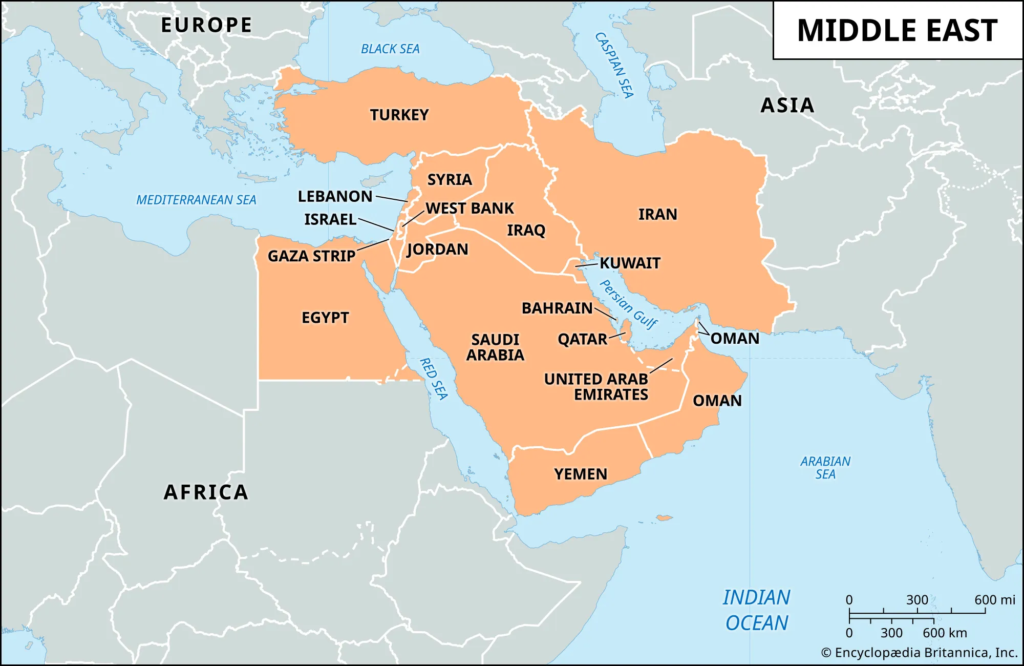
The United States and Israel launched a joint military operation against Iran, triggering a multi-front regional war.
What is the Conflict?
The United States and Israel initiated a large-scale military offensive—Operation Epic Fury (Operation Genesis)—targeting Iran’s nuclear and ballistic missile infrastructure. The operation reportedly resulted in the assassination of Iran’s Supreme Leader Ali Khamenei and several senior officials.
The campaign, launched under former US President Donald Trump and Israeli Prime Minister Benjamin Netanyahu, marks a shift from decades of shadow conflict to direct, high-intensity warfare.
Iran responded with Operation Truthful Promise 4, launching large-scale drone and missile attacks on Israel and US-allied Gulf states.
Historical Roots of Tensions
1. The 1953 Coup
The CIA-backed overthrow of Iranian Prime Minister Mohammad Mosaddegh fostered long-term anti-US sentiment in Iran.
2. The 1979 Islamic Revolution
The revolution replaced the Shah’s pro-Western regime with a clerical government that views the US as the “Great Satan” and Israel as illegitimate.
3. Nuclear Dispute
Iran’s uranium enrichment program has long been viewed by Israel as an existential threat and by the US as a global security risk.
4. Regional Proxy Conflicts
Iran’s “Axis of Resistance”—including Hezbollah, Hamas, and the Houthis—has intensified friction with Israel and US interests.
5. Collapse of Diplomacy
Breakdown of nuclear negotiations in early 2026 contributed directly to military escalation.
National Affairs
1. India–Canada Relations
Source: Mint
Context:
India and Canada have taken a major step toward resetting bilateral relations with the signing of a landmark civil nuclear agreement and renewed commitment to conclude a Comprehensive Economic Partnership Agreement (CEPA). The agreements were finalised following bilateral talks between Prime Minister Narendra Modi and Canadian Prime Minister Mark Carney at Hyderabad House, New Delhi.
This marks a significant diplomatic revival after relations had deteriorated in 2023.
1. Landmark Uranium Supply Agreement
- Canada will supply uranium to India under a long-term agreement.
- The deal includes cooperation in:
- Small Modular Reactors (SMRs)
- Advanced nuclear reactors
- The uranium supply agreement is valued at approximately CAD $2.6 billion (US $1.9 billion).
- It supports India’s nuclear energy expansion and clean energy goals.
The supply strengthens India’s fuel security for nuclear power generation and aligns with its low-carbon transition strategy.
2. Strategic Energy Partnership
Both leaders agreed to launch a Strategic Energy Partnership, covering:
- Uranium supply
- Liquefied Natural Gas (LNG)
- Critical minerals
- Clean technology collaboration
Canada positioned itself as a reliable LNG supplier from its west coast. The partnership also enhances cooperation in securing critical minerals essential for clean-tech manufacturing and nuclear infrastructure.
3. Defence and Maritime Cooperation
India and Canada agreed to expand cooperation in:
- Defence industry collaboration
- Maritime domain awareness
- Counter-terrorism coordination
Both sides emphasised that terrorism, extremism, and radicalisation are shared global challenges requiring close cooperation.
4. Comprehensive Economic Partnership Agreement (CEPA)
- The two sides decided to finalise CEPA negotiations soon.
- Target: Increase bilateral trade to $50 billion.
- CEPA aims to:
- Expand market access
- Promote investment flows
- Generate employment in both countries
Negotiations resumed last year after being paused amid diplomatic tensions.
Significance for India
- Strengthens long-term nuclear fuel security
- Diversifies energy and critical mineral supply chains
- Supports clean energy and manufacturing ambitions
- Expands defence and maritime cooperation
- Revives a key trade partnership amid global geopolitical shifts
2. Centre Designates Legacy Thrust Territories
Source: TNIE
Context:
The Ministry of Home Affairs (MHA) has introduced the concept of Legacy Thrust Territories (LTTs) to prevent the resurgence of Left Wing Extremism (LWE) following major security successes against Naxalism.
The initiative aims to consolidate long-term peace and stability in previously insurgency-affected areas.
What are Legacy Thrust Territories?
Legacy Thrust Territories are:
- Previously Naxal-affected districts.
- Identified for continued security vigilance and focused development intervention.
- Brought under sustained monitoring even after a significant decline in insurgent activities.
The framework ensures that operational gains against LWE are institutionalised and not reversed.
Background: Decline of Left Wing Extremism
- Around 2000: Nearly 200 districts were affected by LWE.
- By 2025: The number declined to 38 districts.
- Currently: Only 7 districts remain on the active LWE list:
- 5 in Chhattisgarh
- 1 in Jharkhand
- 1 in Odisha
These districts, along with other formerly affected regions, are being brought under the Legacy Thrust framework.
Aim of the Initiative
- Prevent resurgence of Naxalism after security operations.
- Ensure transition from security-led control to governance-led development.
- Consolidate peace through administrative expansion and socio-economic integration.
3. National Arogya Fair 2026 Held in Shegaon, Maharashtra
Source: PIB
Context:
The National Arogya Fair 2026 was successfully organised from 25–28 February 2026 at Shegaon in Buldhana district, Maharashtra. The event brought together healthcare professionals, policymakers, traditional medicine practitioners, and wellness stakeholders under one platform.
The fair focused on promoting affordable, accessible, and integrated healthcare services for the public.
About National Arogya Fair 2026
The event showcased services across all major systems of medicine, including:
- Allopathy
- Ayurveda
- Yoga
- Naturopathy
- Unani
- Siddha
- Homeopathy
Together, these systems form the AYUSH framework, promoting holistic healthcare in India.
Banking/Finance
1. SEBI Mandates Registered Name & Registration Number Disclosure on Social Media
Source: ET
Context:
The Securities and Exchange Board of India (SEBI) has issued a new circular requiring all SEBI-registered market intermediaries to disclose their registered name and SEBI registration number while posting securities market-related content on social media platforms.
The move aims to curb financial misinformation and protect retail investors from unregistered influencers and fraudulent entities.
What is the Directive?
It is a regulatory mandate requiring SEBI-regulated entities and their agents to:
- Prominently display their registered identity.
- Mention their SEBI registration number.
- Ensure transparency in all securities-related digital communications.
Objective of the Rule
- Enable investors to clearly differentiate between:
- Authorised SEBI-regulated intermediaries
- Unregistered financial influencers (“finfluencers”)
- Strengthen transparency and accountability in digital investment advice.
- Enhance investor protection amid rising social media-driven financial scams.
Key Features of the Circular
1. Mandatory Identity Disclosure
- The registered name and SEBI registration number must:
- Appear on social media profiles.
- Be displayed at the beginning of each securities-related post, video, or advisory content.
2. Wide Applicability
The rule applies to a broad range of SEBI-regulated entities, including:
- Stockbrokers
- Mutual Funds
- Investment Advisers
- Research Analysts
- Portfolio Managers
- Alternative Investment Funds (AIFs)
- Asset Management Companies (AMCs)
- Real Estate Investment Trusts (REITs)
- Infrastructure Investment Trusts (InvITs)
- Distributors and agents of these entities
3. Broad Platform Coverage
The mandate covers both open and closed digital platforms, including:
- YouTube
- Telegram
- X (formerly Twitter)
- Threads
- Closed and semi-closed groups
4. Multiple Registration Rule
- Entities holding multiple SEBI registrations must:
- Provide a web link listing all registration details.
- Mention only the relevant registration number in individual posts.
2. RBI Imposes ₹11.50 Lakh Penalty on Mahindra & Mahindra Financial Services
Context:
In February 2026, the Reserve Bank of India (RBI) imposed a monetary penalty of ₹11.50 lakh on Mahindra & Mahindra Financial Services Limited (MMFSL) for regulatory non-compliances observed during its annual inspection.
The inspection was conducted with reference to the company’s financial position as on 31 March 2025 (FY25).
Legal Provisions Invoked
The penalty was levied under:
- Section 58G(1)(b) read with
- Section 58B(5)(aa) of the RBI Act, 1934
These provisions empower RBI to impose penalties on Non-Banking Financial Companies (NBFCs) for regulatory violations.
Reasons for the Penalty
1. Violation of Fair Practices Code
- MMFSL charged revised foreclosure fees on certain loan accounts.
- The revised charges were not incorporated in the loan agreements as required.
- This constituted a breach of the Fair Practices Code prescribed by RBI.
2. Complaint-Handling Deficiencies
RBI observed lapses in the company’s grievance redressal mechanism:
- Complaints were not escalated to the Internal Ombudsman within mandated timelines.
- In some cases, final decisions were communicated to complainants beyond the prescribed time limit.
- These actions violated RBI’s regulatory norms on customer protection and complaint resolution.
Regulatory Action Taken
- The irregularities were detected during RBI’s supervisory inspection.
- RBI issued a show-cause notice to the company.
- After reviewing the company’s response, the central bank imposed the monetary penalty.
3. IIP Growth Slows to 4.8% in January 2026
Source: The Hindu
Context:
India’s industrial output growth moderated in January 2026, indicating a broad-based slowdown across key sectors including manufacturing, mining, and electricity.
What is IIP?
The Index of Industrial Production measures the performance of industrial sectors such as manufacturing, mining, and electricity. It is a key high-frequency indicator of economic growth and industrial activity in India.
Key Highlights of January 2026 IIP Data
- IIP Growth: Slowed to 4.8% in January 2026
- Previous Month (December 2025): 7.8% (later revised upward to 8%)
- Lowest in Three Months
This moderation signals a cooling of industrial momentum after December’s 26-month high.
Sector-wise Performance
Manufacturing Sector
- Growth slowed to 4.8% in January
- December 2025 growth: 8.4%
- January 2025 growth: 5.8%
Manufacturing, which carries the highest weight in IIP, was the primary drag on overall industrial growth.
Mining Sector
- Growth eased to 4.3%
- Had shown acceleration in the previous two months
The slowdown reflects moderation in raw material extraction activity.
Electricity Sector
- Growth slowed to 5.1%
- December 2025: 6.9%
- January 2025: 2.4%
Despite moderation, electricity output remains stronger compared to last year.
Infrastructure Sector: A Bright Spot
The infrastructure segment recorded 13.7% growth, the fastest since August 2023.
This was the only major sector to show accelerating growth, reflecting continued public capital expenditure and strong core sector activity.
What This Means for the Indian Economy
- Broad-Based Slowdown: All major sectors, except infrastructure, witnessed moderation.
- Demand Concerns: Weak consumer non-durables output suggests possible stress in consumption demand.
- Investment Signals: Slowing capital goods growth could impact private investment sentiment.
- Policy Implications: The data may influence future monetary and fiscal policy decisions, especially if industrial slowdown persists.
3. Fino Payments Bank’s Transition to Small Finance Bank on Track
Source: The Hindu
Context:
Fino Payments Bank clarified that its transition to a Small Finance Bank (SFB) remains on schedule despite recent developments involving its Managing Director and CEO.
Background
Fino Payments Bank received in-principle approval from the Reserve Bank of India to transition into a Small Finance Bank (SFB). This comes amid the arrest of its Managing Director and CEO, Rishi Gupta, in connection with alleged Goods and Services Tax (GST)-related violations.
What is a Small Finance Bank (SFB)?
Small Finance Banks are financial institutions licensed by the RBI to:
- Promote financial inclusion
- Provide basic banking services to underserved sections
- Extend credit to small businesses, micro enterprises, farmers, and unorganised sectors
Unlike Payments Banks, SFBs can:
- Accept deposits without restrictions
- Lend extensively, including larger loan products
- Offer a broader range of financial services
Payments Bank vs Small Finance Bank (SFB)
| Basis of Comparison | Payments Bank | Small Finance Bank (SFB) |
|---|---|---|
| Regulator | Reserve Bank of India | Reserve Bank of India |
| Objective | Promote financial inclusion through payments and deposit services | Promote financial inclusion through deposits and credit delivery |
| Lending Facility | Not allowed to lend | Allowed to provide loans |
| Deposit Acceptance | Demand deposits only (subject to RBI cap) | Demand and time deposits allowed |
| Revenue Model | Transaction fees, remittances, third-party product distribution | Interest income from loans + fee-based services |
| Priority Sector Lending (PSL) | No mandatory 75% PSL norm | Minimum 75% of ANBC to priority sector |
| Capital Requirement | Minimum ₹100 crore | Minimum ₹200 crore |
| Target Customers | Migrant workers, low-income households, small businesses | MSMEs, small farmers, informal sector, low-income individuals |
| Banking Scope | Limited banking functions | Full-service banking (within SFB framework) |
| Investment Pattern | Major portion invested in government securities | Diversified lending and investment portfolio |
4. EPFO Retains EPF Interest Rate at 8.25% for FY26
Source: FE
Context:
The Employees’ Provident Fund Organisation (EPFO) has recommended retaining the Employees’ Provident Fund (EPF) interest rate at 8.25% for FY 2025–26.
Key Decision
The Employees’ Provident Fund Organisation has recommended:
- EPF Interest Rate: 8.25%
- Applicable For: Financial Year 2025–26 (FY26)
- Status: Unchanged for the second consecutive year
This decision maintains stability in returns for over 6 crore EPF subscribers.
Historical Trend of EPF Interest Rates
- FY26: 8.25% (unchanged)
- FY24: 8.15% (last revision before increase)
- FY22: 8.10% (four-decade low)
The FY22 rate of 8.1% was the lowest in nearly 40 years, reflecting subdued earnings and broader economic pressures at that time.
What is EPF?
The Employees’ Provident Fund (EPF) is:
- A mandatory retirement savings scheme for salaried employees
- Managed by EPFO
- Jointly contributed by employer and employee
It provides:
- Retirement corpus
- Partial withdrawals for housing, medical, education needs
- Pension benefits under EPS (Employees’ Pension Scheme)
5. SEBI Intensifies Tech-Driven Enforcement to Curb Pre-Investment Scams
Source: BS
Context:
Amid a sharp surge in retail investor participation, the Securities and Exchange Board of India (SEBI) has strengthened its surveillance and technology-driven enforcement framework to tackle rising pre-investment scams.
SEBI Chairman Tuhin Kanta Pandey highlighted growing instances where aspiring investors are defrauded even before engaging with SEBI-registered intermediaries.
What Are Pre-Investment Scams?
Pre-investment scams involve fraudsters:
- Luring investors through fake trading apps
- Operating misleading WhatsApp or Telegram groups
- Promising guaranteed or abnormally high returns
- Diverting funds into personal bank accounts
In many cases, funds are siphoned off before investors interact with regulated brokers or investment platforms.
6. SEBI’s 50% Portfolio Overlap Rule
Source: Mint
Context:
The Securities and Exchange Board of India (SEBI) has tightened norms for thematic and sectoral mutual funds by introducing a 50% portfolio overlap cap within schemes of the same fund house.
According to an analysis by Elara Securities, the move is set to trigger portfolio restructuring across multiple schemes.
What is the 50% Overlap Rule?
- Thematic and sectoral schemes within the same asset management company (AMC) cannot have more than 50% common holdings.
- The objective is to:
- Ensure scheme differentiation
- Avoid duplication of investment strategies
- Protect investor interests
- Improve transparency and product clarity
Key Findings from Elara Securities Report
- 51 sectoral and thematic schemes currently breach the 50% overlap threshold.
- However, the majority show only marginal breaches.
- Only 13 schemes (excluding those with assets below ₹1,000 crore) have overlap exceeding 52%.
- These schemes will need to rebalance portfolios over a three-year glide path.
Why SEBI Introduced the Rule
- Reduce Product Duplication
Many AMCs were launching multiple thematic funds with similar portfolios, leading to internal competition and investor confusion. - Strengthen Risk Differentiation
High overlap reduces diversification benefits and exposes investors to concentrated sector risks. - Improve Transparency and Governance
The reform aligns with SEBI’s broader objective of streamlining mutual fund categories and enhancing disclosure norms.
Facts To Remember
1. PM Narendra Modi’s Visit to Rajasthan & Gujarat (28 February 2026)
Narendra Modi launched the nationwide HPV Vaccination Programme in Ajmer, Rajasthan, targeting girls aged 14 years with single-dose Gardasil-4 protection.
He inaugurated and laid foundation stones for projects worth over ₹16,680 crore in Rajasthan across infrastructure and urban sectors.
In Gujarat, he inaugurated Micron’s ATMP semiconductor facility in Sanand with an investment of ₹22,516 crore.
The visit strengthened healthcare outreach and semiconductor manufacturing in India.
2. Dr. Jitendra Singh Inaugurates Biotech Facilities at BRIC-RGCB
Union Minister Jitendra Singh inaugurated the Central Facility for Recombinant Cells and Sensors at Rajiv Gandhi Centre for Biotechnology, Kerala.
Developed with ₹60 crore support from DBT, it boosts drug discovery and genomics research.
He also laid the foundation stone for an ₹80 crore cGMP facility.
The initiative enhances India’s biotechnology and research ecosystem.
3. National Arogya Fair 2026 Held in Maharashtra
The National Arogya Fair 2026 was organised in Shegaon, Maharashtra by the Ministry of AYUSH and AIAC.
President Droupadi Murmu inaugurated the event promoting integrated healthcare systems.
It showcased Allopathy and AYUSH services with free medical outreach.
Six senior Vaidyas were honoured for contributions to traditional medicine.
4. MoTA Announces Three Tribal Festivals in March 2026
The Ministry of Tribal Affairs announced three festivals to promote tribal art, culture, and commerce.
Events include Tribes Art Fest, Living Roots Festival, and Bharat Tribes Fest in New Delhi.
The festivals aim to strengthen tribal livelihoods and market linkages.
They highlight India’s rich indigenous heritage and cultural diversity.
5. ISA and IIT Delhi Sign Framework for Solar Capacity Building
The International Solar Alliance signed an FFA with Indian Institute of Technology Delhi.
The partnership promotes renewable energy capacity building and academic collaboration.
It expands research in solar energy, AI integration, and policy studies.
The move strengthens clean energy leadership across ISA member nations.
6. HCLTech and IIT Kanpur Partner for Deep Tech Innovation
HCL Technologies signed an MoU with Indian Institute of Technology Kanpur.
The collaboration focuses on AI, robotics, and next-generation technologies for GCCs.
It bridges academic research with enterprise-ready solutions.
The partnership boosts India’s deep-tech innovation ecosystem.
7. Nagaland Signs MoU with IMD for Weather Forecasting
Nagaland’s Higher Education Department signed an MoU with the India Meteorological Department.
An X-band Doppler Weather Radar will be installed under Mission Mausam.
The 20-year partnership strengthens atmospheric research and disaster preparedness.
It enhances high-resolution forecasting in the Northeast region.
8. India–EU to Grant MFN Status for Five Years
India and the European Union agreed to grant each other MFN status under the FTA.
The provision will apply for five years after the agreement’s enforcement.
The FTA covers tariff reduction on 96.6% of traded goods.
It is expected to significantly boost bilateral trade and investment flows.
9. Ayatollah Alireza Arafi Named Iran’s Interim Supreme Leader
Following the death of Ali Khamenei, Ayatollah Alireza Arafi was appointed interim Supreme Leader.
Article 111 of Iran’s Constitution activated a three-member Interim Leadership Council.
The council includes President Masoud Pezeshkian and the Chief Justice.
The Assembly of Experts will appoint the permanent successor.
10. Jammu & Kashmir Wins First Ranji Trophy Title
Jammu & Kashmir clinched its maiden Ranji Trophy 2025–26 title.
They defeated Karnataka on first-innings lead in the final at Hubballi.
Auqib Nabi was named Player of the Tournament with 62 wickets.
J&K became the 19th team to win India’s premier domestic cricket title.
11. Zero Discrimination Day 2026 – 1 March
Zero Discrimination Day was observed globally on 1 March 2026.
The 2026 theme was “People First.”
Launched by UNAIDS in 2014, it promotes equality and inclusion.
The butterfly symbol represents transformation and dignity for all.
12. World Civil Defence Day 2026 – 1 March
World Civil Defence Day was observed on 1 March 2026.
The theme was “Managing Environmental Risks for a Resilient and Sustainable Future.”
It marks the enforcement of the ICDO Constitution in 1972.
The day honours civil defence personnel worldwide.
13. West Bengal Signs MoU for Ichhamati & Jalangi Masterplans
The West Bengal government signed an MoU with GIZ and SMCG.
The project will prepare basin-based masterplans under ‘Nodi Bandhan.’
It focuses on pollution control, dredging, and flood mitigation.
The initiative strengthens transboundary river management with Bangladesh.
14. President Droupadi Murmu Dedicates Women Welfare Schemes in Delhi
President Droupadi Murmu launched four welfare schemes under ‘Sashakt Nari Samriddh Delhi.’
Schemes include Delhi Lakhpati Bitiya Yojana and Saheli Pink NCMC.
Free LPG cylinders and Ladli Scheme DBT support were also expanded.
The initiatives promote women’s safety, mobility, and financial empowerment.
15. Reinsurers Withdraw Marine Hull War Cover Amid West Asia Hostilities
Escalating tensions in West Asia have prompted global and domestic reinsurers to withdraw marine hull war risk coverage in high-risk maritime zones, impacting shipping and trade insurance costs. Several global reinsurers, along with General Insurance Corporation of India (GIC Re), have withdrawn marine hull war cover for vessels operating in designated high-risk regions.