Context:
The recent tragic cloudburst in Uttarkashi (Uttarakhand), which devastated the village of Dharali and surrounding areas, is a stark reminder of how climate change is intensifying natural disasters in India.
What is a Cloudburst?
A cloudburst is an extremely intense rainfall event over a small area within a short duration. As per the India Meteorological Department (IMD), it is defined as rainfall exceeding 100 mm per hour across an area of 20–30 sq km. However, a 2023 study by IIT Jammu and the National Institute of Hydrology (NIH) redefined this as rainfall of 100–250 mm/hour concentrated in just 1 sq km, making it one of the most hyper-local and destructive meteorological phenomena.
Why Are Himalayan Regions More Vulnerable?
- Steep Terrain: Hilly slopes accelerate water runoff, triggering landslides and flash floods.
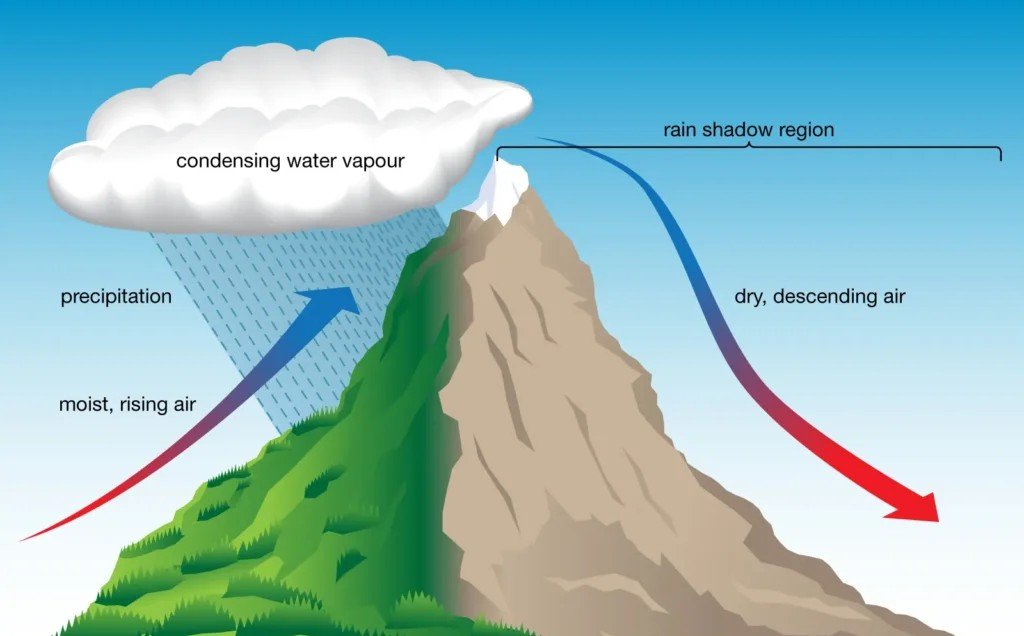
- Orographic Effect: Moist monsoon winds are forced upwards by mountains, leading to rapid condensation and heavy rainfall.
- Poor Soil Absorption: Rocky terrains reduce infiltration, increasing surface water accumulation.
- Fragile Ecosystems: High-altitude settlements (1,000–2,000m) are ecologically sensitive and structurally unprepared for such events.
Scientific Causes and Climate Link
- Moisture Build-Up and Collapse: Towering storm clouds (cumulonimbus) rapidly store moisture due to vertical air currents. A sudden collapse of these currents releases massive rainfall in minutes.
- Climate Change: Warmer air holds more water vapor. For every 1°C temperature rise, the atmosphere retains 7% more moisture, increasing the likelihood of intense short-duration rainfall events.
- Aerosols and Black Carbon: Pollution from forest fires, diesel vehicles, and stubble burning adds cloud condensation nuclei (CCN) to the atmosphere, altering cloud formation and intensifying rainfall episodes.
Impacts of Cloudbursts
- Sudden Flash Floods: Rapid overflow of streams and nullahs, sweeping away people, property, and vehicles.
- Landslides and Mudslides: Water-saturated slopes lose cohesion, causing devastating earth movements.
- Infrastructure Collapse: Roads, bridges, and electricity poles fail under the pressure of debris and water.
- High Casualty Rates: The unpredictable and sudden onset leaves communities with no time to respond.
Challenges in Forecasting Cloudbursts
Free live session
NABARD Grade A 2026: what the 2025 cut-offs changed, and the 90-day plan
Today · 7:30 PM IST
- Short Duration & Micro-scale: The extremely localized nature makes it nearly impossible to predict using conventional forecasting tools.
- Lack of Dense Monitoring Network: Hilly regions lack sufficient Doppler radar and weather stations.
- Limited Local Alert Systems: Remote villages often receive alerts too late, if at all.
- High Cost of Modern Tech: AI-based early warning systems and high-resolution radars remain underfunded.