Daily Current Affairs Quiz
16 December, 2025
National Affairs
1. Viksit Bharat — Guarantee for Rozgar and Ajeevika Mission (Gramin) Bill
Source: PIB
Context:
The Union government is preparing to introduce the Viksit Bharat — Guarantee for Rozgar and Ajeevika Mission (Gramin) Bill in the Lok Sabha, proposing to replace the Mahatma Gandhi National Rural Employment Guarantee Act (MGNREGA), 2005. The Bill signals a major restructuring of India’s flagship rural employment programme.
Key Changes Proposed:
Shift in Scheme Design
- Moves from a demand-driven framework (legal right to demand work) to a supply-driven model.
- Employment will be provided only in rural areas notified by the Union government, not universally across all rural regions.
Budgetary Structure
- Annual allocations will be capped at a fixed budget decided by the Centre.
- Budget determination will be based on unspecified “parameters”, reducing statutory entitlement.
Guaranteed Workdays
- Increases guaranteed employment from 100 days to 125 days per household.
Centre–State Financial Sharing
- State governments’ share of expenditure rises sharply:
- From 10% under MGNREGA
- To 40% under the new Bill
- This substantially increases fiscal pressure on States, particularly poorer ones.
Comparison with MGNREGA
| Aspect | MGNREGA (2005) | VB–G RAM G Bill |
|---|---|---|
| Nature of Scheme | Demand-driven, rights-based | Supply-driven |
| Legal Guarantee | Statutory right to work | Conditional on Centre’s notification |
| Workdays | 100 days | 125 days |
| Budget | Demand-based, uncapped | Fixed, capped allocation |
| State Share | ~10% | 40% |
| Coverage | All rural areas | Select notified rural areas |
2. Heritage Conservation Architects for ASI Monuments
Source: TNIE
Context:
The Ministry of Culture has launched an initiative to empanel heritage conservation architects to oversee the upkeep, restoration, and conservation of Archaeological Survey of India (ASI)-protected monuments.
What Are Heritage Conservation Architects?
A heritage conservation architect is a specialist trained to restore, conserve, and manage historic structures, preserving their architectural integrity, materials, and cultural significance in line with established scientific and conservation norms.
Key Features of the Empanelment Initiative
- National Panel Creation – Qualified architects will be empanelled to form an ASI-approved pool for heritage conservation projects.
- Donor Flexibility – Corporates, donors, and private entities can directly engage ASI-approved architects for projects funded through the National Cultural Fund (NCF).
- ASI Oversight – All projects will remain under ASI supervision to ensure compliance with scientific conservation standards.
- Defined Responsibilities – Architects will prepare Detailed Project Reports (DPRs), design conservation methodologies, provide project management, and supervise execution.
- Execution by Donor-Selected Agencies – Restoration work will be carried out by agencies chosen by donors, subject to ASI approval.
- Eligibility Criteria – Architects must have prior experience in conserving or restoring heritage structures over 100 years old.
- Tenure – Empanelment is valid for three years, with annual performance reviews.
3. Emperor Perumbidugu Mutharaiyar II
Source: IE
Context:
The Prime Minister of India welcomed the release of a commemorative postage stamp celebrating Emperor Perumbidugu Mutharaiyar II (Suvaran Maran), recognising his administrative excellence and patronage of Tamil culture.
About Emperor Perumbidugu Mutharaiyar II
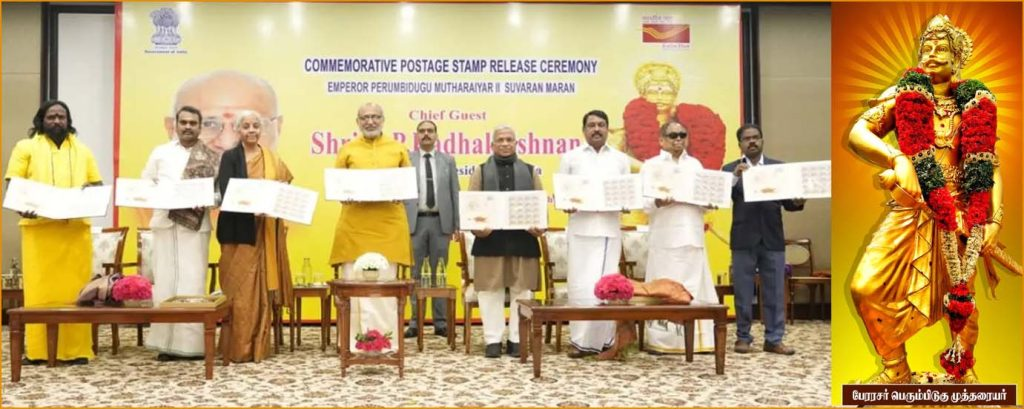
Period: c. 705–745 CE
Other Names: Suvaran Maran, Shatrubhayankar
Dynasty & Kingdom:
- Member of the Mutharaiyar dynasty, a powerful Tamil ruling lineage.
- Feudatories of the Pallavas, particularly under Nandivarman II.
- Controlled central Cauvery region, including Thanjavur, Tiruchirappalli, Pudukkottai, Perambalur, and nearby areas.
- Ruled primarily from Tiruchirappalli for nearly four decades.
4. Bison Horn Maria Dance
Source: TH
Context:
The Bison Horn Maria dance of the Dandami Maria (Maria) tribe in Bastar, Chhattisgarh, is celebrated for its vivid ceremonial performance and resilience of cultural identity despite modern influences.
About the Dandami Maria Tribe
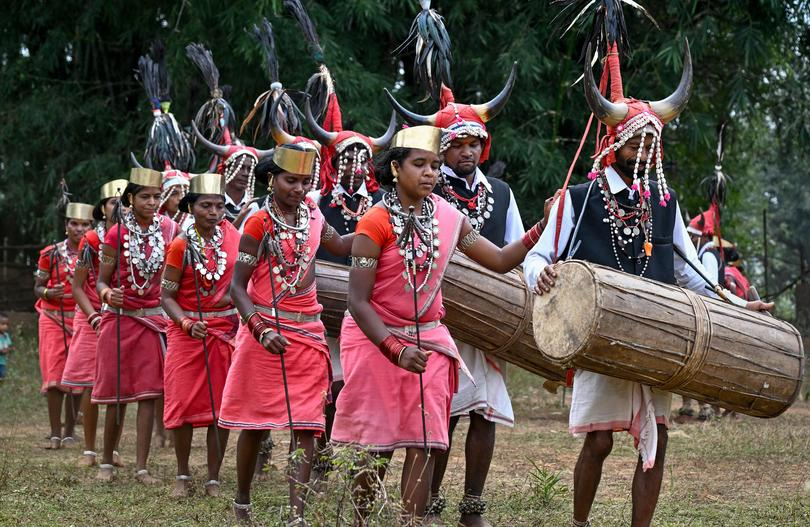
Other Names: Bison Horn Maria, Khalpati Maria
Ethnic Group: Part of the broader Gond (Koytorias) community
Origin:
- Descendants of the ancient Gondwana region in central India.
- Part of the Gond tribal tradition, one of the oldest indigenous groups of the Deccan plateau.
- Language: Dandami Maria, with Gondi dialects (Dravidian origin).
Habitat & Distribution:
- Predominantly in Bastar, southern Chhattisgarh, including Darbha, Tokapal, Lohandiguda, Dantewada.
- Forest-based settlements shape agriculture, hunting, fishing, and rituals.
Key Cultural Features
1. Bison Horn Maria Dance
- Performed during festivals, rituals, and community gatherings by men and women.
- Men’s attire: Horn-shaped bamboo headgear decorated with bison/cattle horns, feathers, cowries, cloth strips, bead necklaces, ankle bells.
- Women’s attire: Handwoven saris, silver and brass jewellery, coin ornaments, ceremonial crowns.
2. Social & Cultural Life
- Ghotul (youth dormitory): Central to socialisation, cultural transmission, and community cohesion.
- Distinct hairstyles, traditional ornaments, and ceremonial objects (tobacco boxes, combs) hold symbolic value.
- Flexible social norms: Divorce and widow remarriage are permitted, reflecting progressive tribal customs.
5. India’s Biosecurity Measures
Source: TH
Context:
Advances in modern biotechnology, including synthetic biology and genetic engineering, have significantly increased humanity’s ability to manipulate biological systems. While these technologies offer immense benefits for health, agriculture, and industry, they also lower barriers for misuse, making biosecurity a critical national and global concern.
What is Biosecurity?
Biosecurity refers to the policies, systems, and practices designed to prevent the intentional misuse of biological agents, toxins, or technologies.
Key dimensions of biosecurity:
- Protection of laboratories handling dangerous pathogens
- Monitoring and regulation of biological research
- Detection, attribution, and containment of deliberate disease outbreaks
- Safeguarding human, animal, and plant health
Biosecurity is distinct from biosafety, which focuses on preventing accidental release of pathogens. Strong biosafety frameworks are foundational to effective biosecurity.
What is the Biological Weapons Convention (BWC)?
- Came into force in 1975
- First multilateral disarmament treaty to completely ban an entire class of weapons of mass destruction
- Prohibits:
- Development
- Production
- Stockpiling
- Acquisition and use of biological and toxin weapons
- Requires destruction of existing stockpiles
Why Does India Need Stronger Biosecurity?
Structural Vulnerabilities
- Geography and ecology expose India to transboundary biological risks
- High population density amplifies outbreak impact
- Agricultural dependence increases vulnerability to agro-terrorism
- Extensive livestock and biodiversity heighten zoonotic risk
Emerging Threat Landscape
- Rapid spread of biotechnologies enables dual-use research
- Lower technical barriers allow malicious actors to experiment with pathogens
- Reports of non-state actors attempting to prepare Ricin toxin highlight real risks
India’s Existing Biosecurity Architecture
India has multiple institutions and legal instruments addressing bio-risk reduction:
Institutional Framework
- Department of Biotechnology: research governance and lab safety
- National Centre for Disease Control: disease surveillance and outbreak response
- Department of Animal Husbandry and Dairying: livestock biosecurity
- Plant Quarantine Organisation of India: agricultural biosecurity
- National Disaster Management Authority: biological disaster guidelines
Legal and Policy Instruments
- Environment (Protection) Act, 1986 (hazardous microorganisms and GMOs)
- Biosafety Rules, 1989
- Recombinant DNA Research and Biocontainment Guidelines, 2017
- Weapons of Mass Destruction Act, 2005
- Participation in:
- Biological Weapons Convention
- Australia Group (export controls)
6. Right to Disconnect Bill, 2025
Source: TOI
Context:
The Right to Disconnect Bill, 2025, a Private Member’s Bill introduced by NCP MP Supriya Sule, has sparked renewed debate on work–life balance and employee well-being in India’s increasingly digital work culture.
What the Bill Seeks to Do
The Bill aims to grant employees a statutory right to disengage from work-related communications outside agreed working hours, protecting personal time amid constant digital connectivity and remote work.
Key Features
- Legal Right to Disconnect – Employees can ignore work calls, emails, or messages after contractual work hours without fear of disciplinary action (Section 7).
- Defined Out-of-Work Hours – Clearly specifies hours beyond which employees are not expected to respond, reducing ambiguity and employer overreach.
- Employees’ Welfare Authority – A central body to oversee implementation, safeguard employee dignity, and promote work–life balance.
- Negotiation Charter – Mandates employer–employee agreements detailing after-hours communication protocols and exceptions.
- Overtime Compensation – Employees responding voluntarily after hours are entitled to overtime pay at normal wage rates (Section 11).
- Digital Well-Being Measures – Awareness programs, counselling services, and Digital Detox Centres, particularly for remote work environments.
- Penalties for Non-Compliance – Violating organizations face a financial penalty of 1% of total employee remuneration, acting as a deterrent.
Banking/Finance
1. Unemployment Rate Dips to 4.7% in November: PLFS
Source: TOI
Context:
The Periodic Labour Force Survey (PLFS), conducted by the National Statistical Office (NSO) under the Ministry of Statistics & Programme Implementation (MoSPI), provides monthly estimates of key labour market indicators for persons aged 15 years and above.
Key Findings:
Unemployment Rate (UR)
- Declined to 4.7% in November
- Lowest since April, when it was 5.1%
- Indicates improvement in employment conditions
Labour Force Participation Rate (LFPR)
The Labour Force Participation Rate (LFPR) is the percentage of a country’s working-age population (usually aged 15 and above) that is either employed or actively seeking employment.
Overall LFPR
- Increased to 55.8% in November
- Highest level since April
- Growth driven mainly by rural participation
Rural vs Urban Trends
- Rural LFPR: Rose to 58.6% in November (from 58% in April)
- Urban LFPR: Marginal dip from 50.5% (October) to 50.4% (November)
Female Labour Force Participation
Female Labour Force Participation Rate (FLFPR) is the percentage of women of working age (usually 15–64 years) who are either employed or actively seeking employment.
Overall Trend
- Steady increase from June to November 2025
- Rose from 32% to 35.1%
Rural–Urban Divide
- Rural female LFPR:
- Increased from 35.2% (June) to 39.7% (November)
- Major contributor to overall female participation
- Urban female LFPR:
- Remained relatively stable
Worker Population Ratio (WPR)
Worker Population Ratio (WPR) is the proportion of employed persons in the total population of a country or region.
Overall WPR
- Increased from 52.8% (April 2025) to 53.2% (November 2025)
Rural WPR
- Rose from 55.4% to 56.3%
Female WPR
- Overall female WPR increased from 32.5% to 33.4%
- Rural female WPR improved significantly from 36.8% to 38.4%
2. Draft Insurance Amendment Bill, 2025
Context:
The Union government has circulated the Draft Insurance Laws (Amendment) Bill, 2025 among Members of Parliament, proposing tighter regulatory controls on the utilisation of life insurance funds and other specified insurance business funds, with a strong focus on policyholder protection, actuarial transparency, and financial prudence.
Key Provisions of the Draft Bill
1. Restrictions on Use of Insurance Funds
- Life insurers and notified insurance classes are barred from:
- Declaring dividends to shareholders
- Paying bonuses to policyholders
- Servicing debentures
- These payments can be made only from a surplus:
- Disclosed through an actuarial valuation
- Reflected in the valuation balance sheet
- Submitted as part of statutory returns to IRDAI
2. Safeguards Against Artificial Surplus Creation
- Insurers cannot inflate surplus by transferring amounts from reserve funds
- Exception allowed only if:
- Reserve funds were created exclusively from earlier valuation surpluses
- Such surpluses were already reported to IRDAI
3. Caps on Debenture Servicing
- Payments from surplus for debentures (principal + interest):
- Maximum 50% of disclosed surplus
- Interest on debentures:
- Capped at 10% of surplus
- Exception if interest is offset against interest credited to the insurance fund while determining actuarial valuation assumptions
4. Limits on Shareholders’ Share in Surplus
- Participating (Par) Policies
- Shareholders’ share (including guaranteed dividends):
- Capped at 10% of surplus
- Subject to further limits prescribed by IRDAI
- Shareholders’ share (including guaranteed dividends):
- Non-Participating (Non-Par) Policies
- Entire surplus may be allocated as permitted by regulation
Institutional and Structural Amendments
Laws Proposed to be Amended
- Insurance Act, 1938
- Life Insurance Corporation Act, 1956
- Insurance Regulatory and Development Authority Act, 1999
Liberalisation of Foreign Investment
- Foreign investment cap in Indian insurance companies
- Proposed increase to 100% of paid-up equity capital
- Includes foreign portfolio investors
- Objective:
- Accelerate sectoral growth
- Enhance capital availability
- Improve insurance penetration
Policyholders’ Education and Protection Fund
- Mandatory creation of a dedicated fund
- Sources:
- Grants and donations
- Penalties imposed by IRDAI
- Purpose:
- Policyholder awareness
- Education
- Protection initiatives
3. Sebi–Amfi in Talks to Ease SIF Distributor Exam
Source: Mint
Context:
The Securities and Exchange Board of India (Sebi) and the Association of Mutual Funds in India (Amfi) are considering changes to the NISM Series XIII (Derivatives) examination, which is mandatory for distributors seeking to sell Specialized Investment Funds (SIFs). The move aims to make the exam more relevant, practical, and accessible without diluting investor protection.
Why the Issue Has Arisen
1. Misalignment Between Exam Content and SIF Products
- The NISM XIII exam has three sections:
- Currency derivatives
- Equity derivatives
- Interest rate derivatives
- Currency derivatives currently have no relevance to SIFs, as:
- Sebi does not permit SIF strategies involving currency derivatives
- All approved SIF strategies rely mainly on equity and debt derivatives
2. High Entry Barrier for Distributors
- The exam is considered much tougher than the standard MF distributor (NISM VA) exam
- Features:
- Advanced mathematics
- Derivatives-heavy content
- Negative marking
- Result: Very low pass rate, discouraging participation
Key Proposals Under Discussion
1. Rationalising Exam Content
- Partial removal or dilution of currency derivatives section
- Retention of equity and interest rate derivatives due to relevance for risk explanation
2. Introduction of Exam Levels
- Different levels aligned with product complexity
- Distributors can qualify for the specific SIF strategies they intend to sell
- Ensures relevance without compromising risk awareness
3. Maintaining Investor Protection
- Amfi is cautious about not weakening risk assessment standards
- Focus remains on ensuring distributors can explain risks clearly to investors
About Specialized Investment Funds (SIFs)
Purpose
- Designed to bridge the gap between:
- Retail Mutual Funds (low risk)
- Portfolio Management Services (PMS) (high ticket, high risk)
Key Features
- Minimum investment: ₹10 lakh (PMS: ₹50 lakh)
- Target investors: Risk-tolerant, informed investors
- Approved strategies (7):
- Equity Long-Short Fund
- Equity Ex-Top 100 Long-Short Fund
- Sector Rotation Long-Short Fund
- Debt Long-Short Fund
- Sectoral Debt Long-Short Fund
- Active Asset Allocator Long-Short Fund
- Hybrid Long-Short Fund
Facts To Remember
1. Bill to Repeal Obsolete Laws Tabled in Lok Sabha
Context
The Union government has introduced a Repealing and Amending Bill in the Lok Sabha to further streamline India’s statute books by removing laws that have become redundant, outdated, or operationally irrelevant.
2. Rajya Sabha Pays Homage to Martyrs on 54th Vijay Divas
The Rajya Sabha paid homage to the brave hearts, who made a supreme sacrifice in the service of the nation on the 54th Vijay Divas today. The day marks the victory of India against Pakistan in 1971.
3. India-Maldives Joint Military Exercise Ex Ekuverin Concludes in Thiruvananthapuram
The bilateral military exercise Ex Ekuverin between the Indian Army and the Maldives National Defence Forces, MNDF, concluded at Thiruvananthapuram with a joint validation exercise.
4. India’s Unemployment Rate Falls to 4.7% in November: MoSPI
India’s Unemployment Rate (UR), declined to 4.7 per cent in November this year, at its lowest level since April, for individuals aged 15 years and above.
5. SPARSH onboards over 31 lakh defence pensioners across India and Nepal
System for Pension Administration – Raksha (SPARSH) has onboarded more than 31 lakh defence pensioners across India and Nepal as of November 2025.