Source: TH
Context:
Rising tensions involving Iran, Israel, and the United States have brought global attention to the Strait of Hormuz, due to fears that conflict could disrupt global oil and LNG shipments.
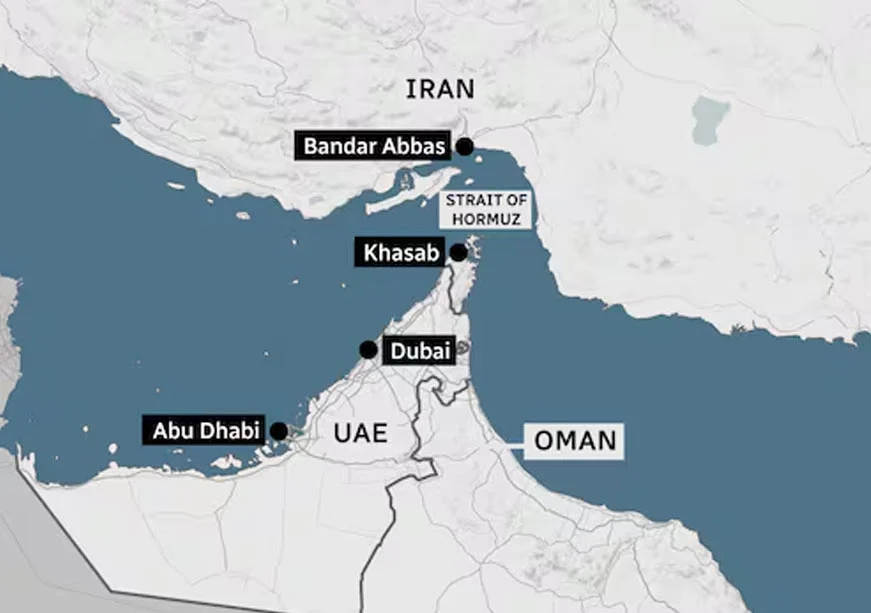
What is the Strait of Hormuz?
The Strait of Hormuz is a strategically vital maritime passage through which a large share of the world’s oil and gas exports travel from the Persian Gulf to global markets.
It is considered one of the most important energy chokepoints in the world.
Location
- Lies between Iran (north) and Oman (south).
- Connects the Persian Gulf to the Gulf of Oman and then to the Arabian Sea, opening into the Indian Ocean.
Importance of the Strait of Hormuz
Major Global Oil Transit Route
- It is one of the world’s most critical maritime chokepoints.
- A significant share of global crude oil and liquefied natural gas (LNG) trade passes through it.
- Oil exports from Gulf countries move through this route toward Asia, Europe, and other regions.
Strategic Significance
The strait is crucial for the export of petroleum from countries such as:
- Saudi Arabia
- Iraq
- Kuwait
- Qatar
- Bahrain
- Iran
- United Arab Emirates
Geographic Features
- Narrowest width: ~33 km
- Shipping lanes: about 3 km wide in each direction
Because of this narrow passage, the strait is considered a critical maritime chokepoint.
Historical Importance
The Strait of Hormuz has long been central to global geopolitics and trade.
Major historical events linked to it include:
- 1973 Arab Oil Embargo
- Iran–Iraq War (1980–88), especially the “Tanker War”
- Repeated tensions involving tanker seizures and sanctions in 2012, 2019, and 2023–24