

Daily Current Affairs Quiz
31 July , 2026
National Affairs
1. The Houbara Bustard
Context
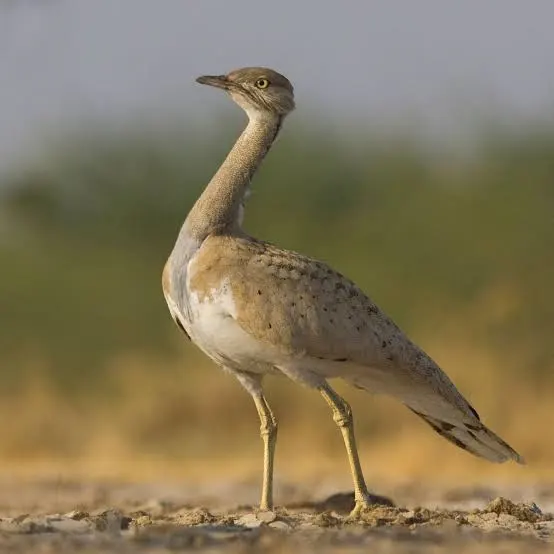
In a cross-border conservation milestone, 672 captive-bred Houbara Bustards (Chlamydotis macqueenii) were released on 26 June 2026 across the arid territories of Karakalpakstan, the autonomous republic in north-western Uzbekistan, as part of a joint Uzbekistan–Kazakhstan–UAE effort to restore the ecologically devastated Aral Sea region.
What It Is
- The Asian Houbara or MacQueen’s Bustard (Chlamydotis macqueenii) is a medium-to-large, ground-dwelling migratory bird of the bustard family Otididae (order Otidiformes), adapted to hyper-arid desert environments.
- Formerly treated as a subspecies of the North African Houbara (Chlamydotis undulata); the two are now recognised as separate species, the genus Chlamydotis containing only these two.
Habitat: Sandy and stony deserts, gravel plains, dry steppes and open shrublands across Central Asia, West Asia, North Africa and parts of South Asia — including India’s Thar Desert and Rann of Kutch, where it is a winter visitor.
Conservation status
| Framework | Status |
|---|---|
| IUCN Red List | Vulnerable |
| CITES | Appendix I — international commercial trade prohibited |
| CMS | Appendix II for the Asian Houbara (the North African Houbara is in Appendix I) |
| India | Schedule I, Wild Life (Protection) Act, 1972 |
2. Union Minister: Resignation and Reappointment
Context
Following Dharmendra Pradhan’s resignation as Union Education Minister on 25 July 2026 amid nationwide protests over the entrance-examination paper leak controversy, President Droupadi Murmu accepted the resignation, and Pralhad Joshi — already Union Minister for Consumer Affairs, Food and Public Distribution — was given additional charge of the Ministry of Education, taking charge on 26 July 2026.
What It Is
A ministerial resignation occurs when a member of the Union Council of Ministers voluntarily steps down or is asked to vacate office by the Prime Minister, requiring a formal procedure to reallocate the portfolio.
Constitutional Provisions
| Article | Provision |
|---|---|
| Article 74 | Council of Ministers with the PM at the head to aid and advise the President, who shall act in accordance with such advice |
| Article 75(1) | The PM is appointed by the President; other Ministers are appointed by the President on the advice of the Prime Minister |
| Article 75(2) | Ministers hold office during the pleasure of the President |
| Article 75(3) | Collective responsibility of the Council of Ministers to the House of the People (Lok Sabha) |
| Article 75(4) | Oath of office and secrecy administered by the President as per the Third Schedule |
| Article 75(1A) | Total number of Ministers, including the PM, shall not exceed 15% of the total strength of the Lok Sabha (inserted by the 91st Amendment, 2003) |
| Article 77(3) | The President makes rules for the allocation of business among Ministers — the Government of India (Allocation of Business) Rules |
| Article 78 | Duty of the PM to communicate Council decisions to the President |
Procedure of Resignation
- Submission: The Constitution prescribes no procedure. By convention, a Minister tenders resignation through the Prime Minister.
- Recommendation: The Prime Minister evaluates it and formally advises the President to accept.
- Acceptance: The President accepts the resignation under Article 75(2); a notification is issued by Rashtrapati Bhavan.
3. The Cauvery River and the Mekedatu Project
Sources: Indian Express
Context
Tamil Nadu Chief Minister C. Joseph Vijay wrote to Prime Minister Narendra Modi on 28 July 2026, urging the Union Government not to grant any statutory or administrative approval to Karnataka’s proposed Mekedatu balancing reservoir project unless it is demonstrably consistent with the CWDT Award and the Supreme Court’s judgment.
About the Cauvery River
- One of India’s major east-flowing peninsular rivers, historically called Dakshin Ganga (“Ganga of the South”) and Ponni in Tamil.
- Origin: Talakaveri, on the Brahmagiri range of the Western Ghats in Kodagu (Coorg) district, Karnataka, at an elevation of about 1,341 m.
- Basin area: 81,155 sq km, about 2.7% of India’s geographical area, spread across Karnataka (34,273), Tamil Nadu (43,856), Kerala (2,866) and Puducherry.
- Bounded by the Western Ghats on the west, the Eastern Ghats on the east and south, and ridges separating it from the Krishna and Pennar basins on the north.
Tributaries
- Left bank: Harangi, Hemavati, Shimsha, Arkavati.
- Right bank: Lakshmantirtha, Kabini, Suvarnavati, Bhavani, Noyyal, Amaravati.
About the Mekedatu Project
- Mekedatu means “Goat’s Leap” in Kannada — a deep gorge where the Arkavati joins the Cauvery.
- Location: Ramanagara district, Karnataka, about 90–100 km south of Bengaluru, roughly 4 km upstream of the Tamil Nadu border.
- Type: proposed multipurpose balancing reservoir-cum-drinking water project, executed by Cauvery Neeravari Nigam Ltd (CNNL).
- Cost: estimated at roughly ₹6,000–9,000 crore across different project reports.
- Objectives: supply 4.75 TMC of drinking water to the Bengaluru Metropolitan Region — the additional quantum granted by the Supreme Court — and generate 400 MW of hydroelectric power; Karnataka also argues it would regulate monthly releases to Tamil Nadu and prevent floodwaters escaping to the sea.
4. ADR–NEW Report on Chief Ministers: Criminalisation of Politics
Context
The Association for Democratic Reforms (ADR) and National Election Watch (NEW) released an analysis of the self-sworn election affidavits of all 31 incumbent Chief Ministers — heading 28 states and 3 Union Territories with legislatures (Delhi, Puducherry and Jammu & Kashmir). The affidavits are those filed with the Election Commission before each Chief Minister’s most recent election.
What is Criminalisation of Politics?
- The growing participation and election of individuals with criminal backgrounds to public office — legislatures and executive positions alike.
- It undermines democratic governance by allowing persons facing serious criminal charges to shape law-making and public administration.
- Drivers: money and muscle power in elections, the “winnability” calculus of parties, weak and delayed judicial processes, and voter tolerance driven by caste, community or patronage considerations.
Key Findings
Criminal Cases
- 14 of 31 (45%) Chief Ministers have declared criminal cases.
- 11 (35%) face serious criminal cases.
- Two Chief Ministers have declared attempt-to-murder cases.
Assets
- Average declared assets of Chief Ministers: ₹118.07 crore.
- Combined assets of all 31 Chief Ministers: ~₹3,660 crore.
- Four Chief Ministers have assets exceeding ₹100 crore.
Wider Trend (18th Lok Sabha, 2024)
- MPs with criminal cases increased from 30% (2009) to 46% (2024).
- MPs with serious criminal cases rose from 14% (2009) to 31% (2024).
- Serious criminal cases among MPs have increased by 124% since 2009.
- Candidates with criminal cases had a 15.3% winning chance in 2024, compared to 4.4% for candidates with clean records.
Legal Framework
- Section 8, Representation of the People Act, 1951 disqualifies legislators only upon conviction.
- Under Section 8(3), conviction with imprisonment of 2 years or more leads to disqualification during imprisonment plus 6 years after release.
- Mere pending criminal cases or framing of charges do not result in disqualification.
Banking/Finance
1. RBI Allows Banks to Link Bulk Deposit Rates to Liquidity Profile
Sources: BS
Context
The Reserve Bank of India has given banks greater flexibility in pricing bulk deposits, allowing differential interest rates based on the liquidity characteristics of such deposits under the Liquidity Coverage Ratio (LCR) framework, while retaining the broader principle of uniformity in deposit pricing.
RBI Amends Interest Rate Directions for Bulk Deposits
Uniformity Retained
- Deposit interest rates must remain uniform across all branches for similar deposits accepted on the same date.
- No discrimination between customers for identical deposits.
Flexibility Introduced
- Banks can offer differential interest rates on bulk deposits based on the differential run-off rate under the Liquidity Coverage Ratio (LCR) framework.
- Eliminates the need to create artificial maturity buckets for pricing.
Stronger Disclosure Norms
- Deposit interest rates must strictly follow the pre-disclosed schedule on the bank’s website.
- Bulk deposit rates must be published daily at 10:00 AM, with a maximum grace period until 10:10 AM.
What is a Bulk Deposit?
Defined under the Master Direction – RBI (Interest Rate on Deposits) Directions:
| Category of bank | Bulk deposit threshold |
|---|---|
| Scheduled Commercial Banks (excluding RRBs) and Small Finance Banks | Single rupee term deposit of ₹3 crore and above |
| Regional Rural Banks and Local Area Banks | Single rupee term deposit of ₹1 crore and above |
- The SCB/SFB threshold was raised from ₹2 crore to ₹3 crore in June 2024 (it had earlier moved from ₹1 crore to ₹2 crore in 2019).
- Rationale given at the time: better classification between bulk and retail deposits and improved asset–liability management.
What is the Liquidity Coverage Ratio (LCR)?
- A Basel III liquidity standard requiring a bank to hold enough High Quality Liquid Assets (HQLA) to survive an acute stress scenario lasting 30 calendar days.
- Formula: LCR = Stock of HQLA ÷ Total Net Cash Outflows over 30 days. The minimum requirement is 100%.
- Run-off factor: the assumed percentage of a given category of deposit or funding that would be withdrawn during the 30-day stress window. Stable retail deposits carry low run-off factors; unsecured wholesale funding carries much higher ones, because large institutional depositors are far more flight-prone.
- This is the economic logic behind the new rule: a deposit with a higher run-off rate imposes a higher HQLA cost on the bank, and the bank may now price that cost into the interest rate it offers.
Practice MCQs
Q1. With reference to the RBI’s recent amendments to the directions on interest rates on deposits, consider the following statements:
- Banks have been permitted to offer differential interest rates on bulk deposits by considering the differential run-off rate applicable under the Liquidity Coverage Ratio framework.
- The requirement that deposit interest rates be uniform across all branches and customers has been withdrawn.
- Interest rates on bulk deposits must be disclosed on the bank’s website by 10:10 am on each business day.
- The amended directions come into effect from 1 October 2026.
How many of the above statements are correct? (a) Only one (b) Only two (c) Only three (d) All four (e) None
Q2. With reference to bulk deposits in India, consider the following statements:
- For Scheduled Commercial Banks other than Regional Rural Banks, and for Small Finance Banks, a bulk deposit means a single rupee term deposit of ₹3 crore and above.
- For Regional Rural Banks and Local Area Banks, the bulk deposit threshold is ₹1 crore and above.
- The threshold for Scheduled Commercial Banks was raised from ₹2 crore to ₹3 crore in 2024.
- Bulk deposits are governed by the Master Direction on Interest Rate on Advances.
How many of the above statements are correct? (a) Only one (b) Only two (c) Only three (d) All four (e) None
Answer Key
- (c) — Statements 1, 3, 4 are correct; Statement 2 is wrong because the RBI has expressly retained the uniformity principle. Rates must remain uniform across branches and customers; the flexibility is confined to differentiation on the basis of LCR run-off characteristics.
- (c) — Statements 1, 2, 3 are correct; Statement 4 is wrong because bulk deposits fall under the Master Direction – RBI (Interest Rate on Deposits) Directions. Interest Rate on Advances governs lending rates, not deposits.
2. Sovereign-Backed Protection & Indemnity Cover for Indian Shipping
Sources: TH
Context
The Department of Financial Services (DFS), Ministry of Finance, launched India’s first sovereign-backed Protection & Indemnity (P&I) insurance product under the Bharat Maritime Insurance Pool (BMIP) at an event in New Delhi on Thursday, 30 July 2026. The product was designed by The New India Assurance Company Limited, and the event was chaired by DFS Secretary Sanjay Lohiya, who handed over the first P&I policy document to Shipping Corporation of India Limited.
Key Features of the P&I Product
- Covers third-party liabilities — crew liability, cargo liability, pollution liability and wreck removal.
- Supported by a 24×7 port correspondent network, with an indemnity limit of up to USD 1.5 billion through the pool’s combined underwriting capacity.
- Aims to reduce India’s dependence on the International Group of P&I Clubs, which have historically dominated third-party liability insurance for shipping.
- Positioned by the Ministry as a step towards Atmanirbhar Bharat in specialised insurance — reducing dependence on foreign markets and retaining the value generated by India’s maritime trade within the domestic economy.
What is P&I Insurance?
- Marine insurance has two broad limbs: Hull & Machinery (damage to the ship itself) and Cargo (damage to goods). P&I covers the third-party liabilities that fall outside both.
- Typical P&I heads: injury, death or repatriation of crew, passenger claims, cargo loss or damage claims, oil pollution, wreck removal, collision liability beyond hull cover, fines and stowaway costs.
- Globally, P&I is provided by P&I Clubs — mutual, not-for-profit associations owned and controlled by shipowner and charterer members, which pool large claims among themselves.
- The International Group of P&I Clubs is a not-for-profit association of 12 clubs covering roughly 87–90% of the world’s ocean-going tonnage and over 95% of ocean-going tankers.
The Bharat Maritime Insurance Pool (BMIP)
Approval and launch
- Approved by the Union Cabinet in April 2026; formally launched with first policy issuances on 12 May 2026.
- Total underwriting capacity of USD 1.5 billion, backed by a sovereign guarantee of USD 1.4 billion (₹12,980 crore).
- Reported to run for 10 years, extendable by a further five, with the corpus funded by ship owners and oil companies and partial backing from GIC Re.
Coverage
- All four critical maritime risk categories — Hull and Machinery, Cargo, Protection and Indemnity, and War Risk — for Indian-flagged or Indian-controlled vessels, and for any vessel starting from or destined for an Indian port.
Facts To Remember
1. President Murmu Launches New Initiatives to Mark Four Years in Office
President Droupadi Murmu launched multiple initiatives at Rashtrapati Bhavan in July 2026 to mark four years of her presidency. The initiatives include an application-based e-Audio Guide, RAAHI heritage connector, Bachpan ‘Bal Parisar’, e-Upahaar (3rd Edition), Net Zero Energy Strategy service block, and infrastructure projects. Vice President C.P. Radhakrishnan also released five commemorative books highlighting her four-year presidential journey.
2. Delhi Tops e-Zero FIR Registrations for Cyber Financial Fraud
The Ministry of Home Affairs informed Parliament that over 12,000 e-Zero FIRs were registered for cyber financial fraud in 2025 across 18 States and UTs. Delhi recorded the highest number with 6,115 cases, followed by Chandigarh. The e-Zero FIR system allows victims to report fraud through the National Cyber Crime Reporting Portal or the 1930 helpline before converting it into a regular FIR within three days.
3. Tripura Signs Three MoUs with NSE
The Government of Tripura signed three MoUs with the National Stock Exchange (NSE) to promote financial literacy, skill development, entrepreneurship, and investment awareness. The collaboration covers SIPARD, the Directorate of Industries & Commerce, and the Directorate of Skill Development. NSE will fund the programmes, while the state government will provide training infrastructure.
4. CUK and Indian Navy Sign MoU for Maritime Research
The Central University of Kerala signed an MoU with the Indian Navy to strengthen collaboration in maritime studies, defence research, innovation, and strategic knowledge development. The partnership will focus on AI, cybersecurity, ocean sciences, logistics, and maritime technologies. It also aims to enhance defence innovation through academic and research cooperation.
5. IISc to Host Fifth C-DOT Telecom Centre of Excellence
FSID, C-DOT, and IISc Bengaluru signed an agreement to establish a Centre of Excellence for advanced telecom research. The centre will focus on 5G, 6G, AI, cybersecurity, quantum communication, and industry-academia collaboration. It becomes C-DOT’s fifth Centre of Excellence in India.
6. India Becomes World’s Second-Largest Supplier of Seafarers
According to the BIMCO-ICS Seafarer Workforce Report 2026, India became the world’s second-largest supplier of seafarers with over 3.11 lakh professionals, accounting for 12.16% of the global workforce. India moved from fifth position in 2015 to second in 2026, behind the Philippines. The report also highlighted a global shortage of qualified maritime officers.
7. ADB Approves USD 850 Million for Rooftop Solar Programme
The Asian Development Bank approved an USD 850 million loan under Subprogram-2 of the Accelerating Affordable and Inclusive Rooftop Solar Systems Development Programme. The funding supports the Prime Minister Surya Ghar: Muft Bijli Yojana and aims to help India achieve 30 GW rooftop solar capacity by FY27. It is also expected to reduce nearly 28.8 million tonnes of CO₂ emissions.
8. Open Secure AI Alliance Launched
NVIDIA, Microsoft, IBM, and several global technology firms launched the Open Secure AI Alliance (OSAA) to strengthen AI security and resilience. The alliance promotes secure-by-design AI systems, common security standards, and collaborative research. It was launched following growing cybersecurity concerns involving AI platforms.
9. Satya Pal Kumar Appointed Director of FIU-IND
The Appointments Committee of the Cabinet appointed IRS officer Satya Pal Kumar as Director of the Financial Intelligence Unit-India (FIU-IND) for a five-year term. He succeeded Pankaj Kumar Mishra. FIU-IND plays a key role in combating money laundering, terror financing, and suspicious financial transactions.
10. CCI Approves Go Digit Merger
The Competition Commission of India approved the merger of Go Digit Infoworks Services with Go Digit General Insurance. It is the first merger between an insurance company and a non-insurance holding company under the amended Insurance Laws Act, 2025. Following the merger, Fairfax Group will hold a 57.28% stake in Go Digit General Insurance.
11. New Fungus Species Discovered in Maharashtra
Researchers discovered a new polypore fungus species named Microporellus kolhapurensis in Kolhapur district, Maharashtra. The discovery was published in the Botanical Survey of India journal Nelumbo. It is only the second recorded species of the Microporellus genus found in Maharashtra.
12. Delhi Launches Lakshmi Yojana
The Delhi Government approved the Delhi Lakshmi Yojana to provide ₹2,500 monthly financial assistance to eligible women. The scheme has a budget allocation of ₹5,110 crore for 2026–27. Eligible women can choose between full payment through RD/FD or a combination of RD/FD and CBDC wallet.
13. Chhattisgarh Launches DWEEPTI Yojana
Chhattisgarh launched DWEEPTI Yojana, India’s first women-led distributed renewable energy policy. The scheme aims to create 5,000 solar enterprises, generate 50,000 green jobs, and provide clean energy access to five lakh families. Women SHGs will be trained as “Solar Didis” under the initiative.
14. Shatmanyu Shrivastava Appointed LIC CFO
LIC appointed Shatmanyu Shrivastava as Executive Director (Finance & Accounts) and Chief Financial Officer following the resignation of Sunil Agrawal. He previously served as Executive Director (Enterprise Risk Management) and Chief Risk Officer. Varadarajan Muthuvenkataraman was appointed as the new Chief Risk Officer.
15. Ajinkya Rahane Retires from International Cricket
Former Indian batter Ajinkya Rahane announced his retirement from all formats of international cricket in July 2026. Rahane was known for his calm leadership and played a key role in India’s historic Test series victory in Australia. He finished his career with 12 Test centuries, including eight overseas.
16. India Gets First Department of Military Medicine
Union Defence Minister Rajnath Singh inaugurated India’s first dedicated Department of Military Medicine at Command Hospital, Lucknow. The department will strengthen combat medical preparedness through research, training, and specialised programmes in military trauma, CBRNE response, disaster medicine, and humanitarian assistance.
17. India to Set Up First Telecom Manufacturing Zone
The Department of Telecommunications and the Madhya Pradesh Government signed an MoU to establish India’s first Telecom Manufacturing Zone at Gwalior. Spread over nearly 350 acres, the project will manufacture telecom equipment, semiconductors, optical fibre, and 5G/6G products under a plug-and-play industrial model.
18. MoTA Signs MoU for RET Medicinal Plant Conservation
The Ministry of Tribal Affairs signed a three-year MoU with CSIR-NBRI to conserve Rare, Endangered and Threatened (RET) medicinal plant species. The collaboration will integrate traditional tribal knowledge with modern botanical research while ensuring equitable benefit sharing with tribal communities.
19. MoRD Partners with PCI India for Women-Led Enterprises
The Ministry of Rural Development signed a three-year non-financial MoU with PCI India to strengthen women-led enterprises through public procurement. A National Resource Cell will be established under DAY-NRLM to support SHG enterprises with GeM onboarding, tender participation, and capacity building across selected states.
20. IRDAI Clears Magma General Insurance Acquisition
IRDAI approved Patanjali Ayurved and DS Group’s acquisition of Magma General Insurance from Sanoti Properties for ₹4,500 crore. Patanjali will acquire a 73.56% stake, while DS Group will acquire 24.50%. IRDAI also granted an insurance licence to ProTec General Insurance.
21. SBI Card and Google Pay Launch Co-Branded Credit Card
SBI Card and Google Pay launched the Google Pay Flex SBI Card with RuPay and Visa variants. The RuPay version supports UPI-linked credit card payments and offers annual rewards of up to ₹18,000. The card integrates directly with the Google Pay app for digital account management.
22. NCDEX Launches ‘Nidhi’ Mutual Fund Platform
NCDEX launched “NCDEX Nidhi”, a mutual fund transaction platform aimed at expanding mutual fund penetration in rural and semi-rural India. Built on API-first architecture, the platform initially onboarded six Asset Management Companies and supports UPI AutoPay for SIPs.
23. Telecom Excellence Awards 2025 Presented
Union Minister Jyotiraditya M. Scindia presented the Pandit Deendayal Upadhyaya Telecom Excellence Awards 2025 to Amantya Technologies and Finaara. During the event, the theme “Scale without Boundaries” was unveiled for India Mobile Congress 2026, scheduled from 7–10 October in New Delhi.
24. Four Mathematicians Receive 2026 Fields Medal
The International Mathematical Union awarded the 2026 Fields Medal to John Pardon, Yu Deng, Jacob Tsimerman, and Hong Wang. Yu Deng and Hong Wang became the first Chinese nationals to receive the honour, while Hong Wang became only the third woman ever to win the prestigious mathematics award.
25. Seventh Mahe-Class ASW Vessel Launched
Cochin Shipyard Limited launched Machilipatnam, the seventh Mahe-class Anti-Submarine Warfare Shallow Water Craft for the Indian Navy. The vessel has over 80% indigenous content and is named after the historic port city of Machilipatnam in Andhra Pradesh, reflecting India’s Aatmanirbhar Bharat vision.
26. India Finishes Third at ISSF World Cup 2026
India finished third at the ISSF World Cup Rifle/Pistol 2026 held in Hangzhou, China, with one gold, one silver, and two bronze medals. Esha Singh won gold in the women’s 25m pistol, while Sainyam Vij secured silver in the women’s 10m air pistol.
27. International Tiger Day – 29 July
International Tiger Day is observed every year on 29 July to promote global tiger conservation and protect tiger habitats. Established in 2010 during the St. Petersburg Tiger Summit, the day highlights efforts to conserve the species. India remains home to nearly 70% of the world’s tiger population.
28. International Day of Friendship – 30 July
The United Nations observes the International Day of Friendship on 30 July to promote peace, solidarity, and mutual understanding among people and nations. First officially observed in 2011, the day encourages friendship as a means of fostering global harmony.







