
Source: PIB
Context
Four newly developed moth bean varieties — CAZRI Moth-4, 5, 6 and 7 — by ICAR-Central Arid Zone Research Institute (CAZRI), Jodhpur demonstrated remarkable field-level resilience during an El Niño year in Kharif 2026.
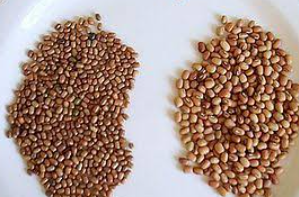
What It Is
- Vigna aconitifolia — also called mat bean, Turkish gram or dew bean
- An extremely drought-hardy, herbaceous, short-day annual legume of the family Fabaceae
- Recognised as one of the most resilient pulse crops of the hot arid and semi-arid zones of South Asia
Habitat and Growing Conditions
- Native to South Asia; cultivated in hot, rainfed, marginal desert tracts
- Most extensively in the Thar Desert region of western Rajasthan, and parts of Gujarat, Haryana and Punjab
- Thrives in extremely low and erratic rainfall, poor sandy soils with low organic carbon and fertility, and ambient temperatures exceeding 40°C
Important Facts for Exams
- Vigna aconitifolia — moth bean, mat bean, Turkish gram, dew bean; family Fabaceae
- A short-day annual legume; among the most drought-tolerant pulses
- Grown mainly in the Thar Desert, western Rajasthan; also Gujarat, Haryana, Punjab
- Regional rainfall 150–250 mm; normal dry spells of 20–30 days
- Varieties CAZRI Moth-4, 5, 6 and 7 survived a 35-day dry spell (3 August – 7 September 2026)
- “Pala” — the dry fodder from moth bean, valued for desert livestock
- Rhizobium symbiosis fixes atmospheric nitrogen in root nodules
- Other Vigna pulses: moong (V. radiata), urad (V. mungo), cowpea (V. unguiculata)
- ICAR-CAZRI, Jodhpur — the nodal institute for arid zone research
- India is the world’s largest producer, consumer and importer of pulses