NABARD ARDNABARD Grade AState AAO
In one line
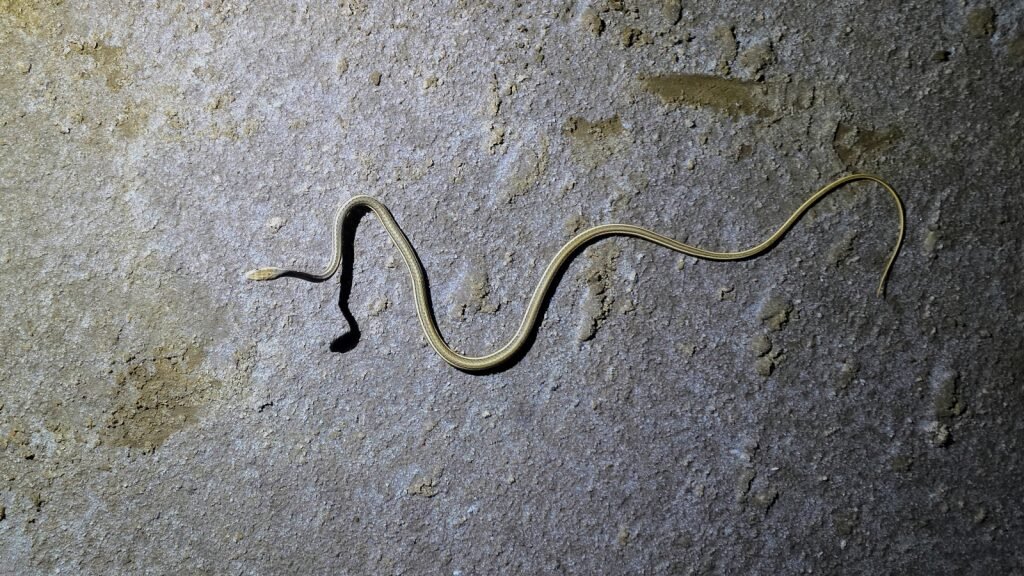
A sighting of the Afro-Asian Sand Snake was reported from Kutch, Gujarat — a species of India’s arid north-west.
Context
What It Is
India’s marine fisheries sector witnessed a major transformation in 2025!Tap to play · from the C4S channel
- Psammophis schokari — also called the Schokari Sand Racer, Forskål’s Sand Snake or Sind Sand Snake
- Family Psammophiidae (earlier placed under Lamprophiidae; often listed historically under Colubridae)
- First described by Forskål in 1775
Free PDF · print or read offline
Download this page as a PDF
A clean PDF of this page with the C4S header — it opens right away, and the link comes to your WhatsApp too.
Distribution
- Found across North Africa, West Asia, Central Asia and north-western India — hence the name “Afro-Asian”
- In India, recorded from Gujarat, Rajasthan, Haryana, Punjab, Himachal Pradesh and Jammu & Kashmir
- One of about four Psammophis species recorded in India, alongside P. condanarus, P. leithii and P. longifrons
Conservation Status
- IUCN: Least Concern
Important Facts for Examsmost asked
- Psammophis schokari — Afro-Asian Sand Snake / Schokari Sand Racer; family Psammophiidae
- IUCN: Least Concern; described by Forskål, 1775
- Distribution: North Africa to Central Asia and north-western India; in India from Gujarat, Rajasthan, Punjab, Haryana, HP and J&K
- Rear-fanged (opisthoglyphous) — fangs at the back of the upper jaw; venom is delivered by chewing, and such snakes are generally not medically significant to humans
- India’s “Big Four” medically significant snakes: Russell’s viper, saw-scaled viper, common krait and spectacled cobra
- Kutch, Gujarat — India’s largest district, containing the Great and Little Rann of Kutch, a salt marsh ecosystem
- The Rann of Kutch is the world’s only breeding ground for Greater Flamingos in the region — Flamingo City