RBI Grade BNABARD ESISEBI
In one lineMore on this exam
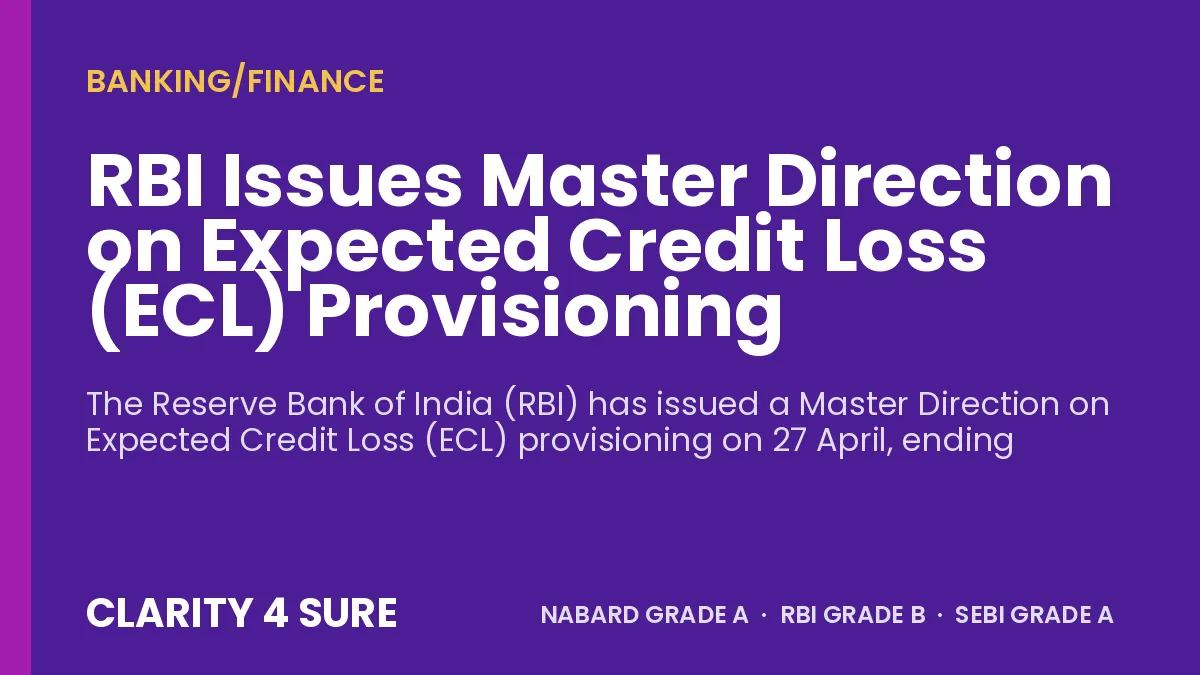
ECL is the technique by which financial institutions and companies predict potential financial loss arising from a customer’s inability to pay. It gives the estimate of expected losses on loans or financial assets based on probabilities.
“RBI MPC Unpacked: Key Theory Meets Today’s Macro Trends”Tap to play · from the C4S channel
- Calculation of ECL
- Estimate PD: This is an estimate of the probability of the borrower defaulting
- Loss Given Default Determination: This is a product of the estimate and probable loss when the borrower defaults.
- Calculation of EAD Exposure: This will involve the product of the result in LGD and the amount at risk at time of default
- Sum for Portfolio Level ECL: This is aggregation for individual loan ECLs to be able to find out expected loss for the portfolio as a whole.
- Why ECL?
- Improves Financial Integrity: Provides credulous financial statements.
- Aids in Risk Management: Ensures banks hold sufficient provisions to account for credit losses.
- Who Applies ECL?
- Companies: Employ ECL for impairment accounting of financial assets, including trade receivables.
- Banks: Employ ECL to measure and provide for credit losses on their loan portfolios.