Context
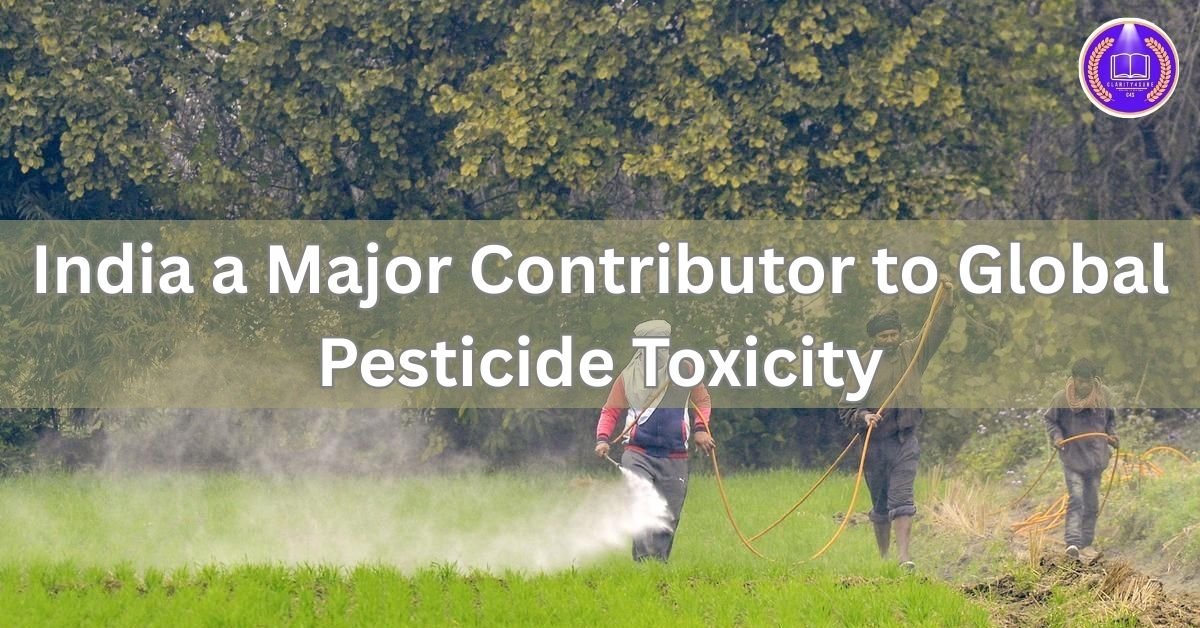
A global scientific study has identified India as one of the largest contributors to pesticide-related environmental toxicity. The findings raise concerns about biodiversity loss, ecosystem health and sustainability of agricultural systems.
Core Finding
- India, along with China, Brazil and the United States, accounts for nearly 70% of global Total Applied Toxicity (TAT) from pesticides.
- The study shows that global pesticide toxicity increased between 2013 and 2019, indicating that current policies are insufficient to curb ecological risk.
What is Total Applied Toxicity (TAT)?
- Total Applied Toxicity (TAT) is a scientific measure used to assess the overall toxic pressure that pesticides place on the environment.
- It considers both the amount of pesticides used and how inherently toxic and lethal they are to non-target species. This is different from traditional measures that focus only on the volume of pesticides applied.
- A rise in TAT harms biodiversity conservation, agroecology, ecosystem services and the long-term sustainability of agriculture. It affects pollinators, soil organisms, fish and aquatic life, terrestrial arthropods and plants.
- In simple terms, TAT shows not just how much pesticide is used, but how harmful that use actually is.
Impacts of High Total Applied Toxicity (TAT) on India
- Impact on Biodiversity: Decline in pollinators, as India’s horticulture sector (fruits, vegetables, oilseeds) depends heavily on pollination;
- Loss of Terrestrial Arthropods: Their decline affects birds, reptiles, and small mammals.
- Soil Biodiversity Degradation: Reduced soil fertility and natural nutrient cycling.
- Aquatic Ecosystem Damage: Pesticide runoff during monsoons contaminates rivers and ponds. Impacts rural livelihoods dependent on fisheries.
- On Agricultural: Pest resistance, reduced long-term productivity, and threat to sustainable agriculture.
- On Public Health: Acute poisoning, chronic health effects like cancer, neurological disorders, and endocrine disruption; and occupational hazards.
- On Economy: Rising healthcare costs, and impact on fisheries and allied sectors.
- Export Rejections: EU rejection of Indian basmati rice due to banned fungicide residues. Stricter Maximum Residue Limits (MRLs) in developed countries.
- Species most affected:
- Terrestrial arthropods
- Soil organisms
- Fish
- Pollinators
- Aquatic plants
- Terrestrial vertebrates
Regions with high increases include sub Saharan Africa and parts of the Indian subcontinent.
India’s Legal Framework: Is It Outdated?
- The Insecticides Act, 1968:
- It was mainly designed to regulate pesticide use in agriculture and has very limited provisions for exposure in homes or industries. It also does not fully address modern concerns such as higher toxicity levels, long-lasting environmental effects or clear liability mechanisms for harm caused.
- India is reported to still use 66 pesticides that are banned in other countries, including paraquat, which is banned in Europe.
- Pesticides Management Bill, 2025:
- This Bill aims to reduce risks to both people and the environment and encourages the use of biological and traditional alternatives to chemical pesticides.
- However, the Bill has been criticised for not involving enough expert consultation and for having weak provisions related to liability.
Environmental Governance Challenges
- Pressure on the Regulatory Framework:
- The Insecticides Act, 1968 is outdated and no longer fully suited to current needs. Enforcement and monitoring systems are also weak, making regulation less effective.
- Difficulty in Meeting International Commitments:
- India is a signatory to the Convention on Biological Diversity (CBD) and the Kunming–Montreal Global Biodiversity Framework.
However, rising Total Applied Toxicity (TAT) makes it harder for India to achieve the 2030 target of reducing pesticide-related risks.
- India is a signatory to the Convention on Biological Diversity (CBD) and the Kunming–Montreal Global Biodiversity Framework.
- Environmental Justice Concerns:
- Small farmers face increasing input costs, health risks and growing debt burdens due to pesticide use.
Rural and tribal communities living near biodiversity-rich areas are affected the most.
- Small farmers face increasing input costs, health risks and growing debt burdens due to pesticide use.
- Threat to Biodiversity Hotspots:
- India is home to major biodiversity hotspots such as the Western Ghats, the Himalayas and the Indo-Burma region.
High pesticide toxicity in these areas threatens endemic species and weakens the natural resilience of ecosystems.
- India is home to major biodiversity hotspots such as the Western Ghats, the Himalayas and the Indo-Burma region.
- Global Commitments and Monitoring Gaps:
- The UN Biodiversity Framework requires countries to regularly report annual pesticide use, provide data by active ingredient and monitor progress in real time.
However, many countries do not have strong data systems, which reduces transparency and weakens accountability.
- The UN Biodiversity Framework requires countries to regularly report annual pesticide use, provide data by active ingredient and monitor progress in real time.
Global Policy Context
At the 2022 UN biodiversity negotiations, countries committed to reducing pesticide risk by 50% by 2030. However, the study shows the world is not on track to meet this target due to rising toxicity levels. This signals a gap between international commitments and actual agricultural practices.
- Kunming–Montreal Global Biodiversity Framework (KM-GBF):
It is a global agreement for protecting biodiversity, similar to how the Paris Agreement guides global climate action. - Time Horizon:
The framework covers the period from 2022 to 2030, with a long-term vision extending to 2050. - Core Goals of the Framework:
- Long-term goals for 2050 include:
- Protecting and restoring biodiversity
- Ensuring sustainable use of biodiversity
- Fair and equitable sharing of benefits from genetic resources
- Closing the global biodiversity finance gap
- Long-term goals for 2050 include:
- 30×30 Target (Flagship Commitment):
- Protect at least 30% of the world’s land and oceans by 2030.
- 23 Action-Oriented Targets for 2030:
- Reduce pesticide risks by 50% by 2030, which is directly linked to Total Applied Toxicity (TAT)
- Restore at least 30% of degraded ecosystems
- Reduce the introduction and establishment of invasive species by 50%
- Reduce excess nutrients and plastic pollution
- Identify and phase out harmful subsidies worth about $500 billion per year, such as those for fossil fuels and unsustainable agriculture
- Biodiversity Finance Commitments:
- Mobilise $200 billion annually worldwide by 2030
- Developed countries to provide $20 billion per year to developing countries by 2025
- Increase this support to $30 billion per year by 2030
- Establish the Global Biodiversity Framework Fund (GBFF) under the Global Environment Facility (GEF)
- Digital Sequence Information (DSI):
- Agreement to share benefits arising from the use of digital genetic data
- Important for sectors like pharmaceuticals, biotechnology and agriculture
- Ensures fair benefit sharing for biodiversity-rich developing countries such as India
- Monitoring and Reporting:
- Countries must prepare National Biodiversity Strategies and Action Plans (NBSAPs)
- Align national targets with the global framework
- Submit regular progress reports on implementation.
Way Forward
Addressing the growing risks from pesticide use requires a strong and coordinated policy response. A key priority is shifting toward less toxic alternatives such as Integrated Pest Management (IPM) and biological control methods, which help manage pests while reducing environmental and health damage. At the same time, organic and natural farming need to be actively promoted by scaling up initiatives like the Paramparagat Krishi Vikas Yojana (PKVY) and expanding natural farming models across regions. Legal reforms are also essential the regulatory framework must be updated to reflect current realities, include strict liability and compensation provisions for harm caused, and phase out or ban highly hazardous pesticides. Greater transparency in data is equally important, with mandatory annual reporting of pesticide use and public disclosure of residue levels to ensure accountability. Finally, farmers must be supported through incentives for sustainable agricultural practices, reduced dependence on chemical inputs, and better integration of farming with climate-resilient strategies. Together, these measures can help protect the environment, safeguard public health and ensure long-term agricultural sustainability.