The National Social Assistance Programme (NSAP) is a major government welfare programme run by the Ministry of Rural Development. It was started on 15 August 1995 and provides financial support to vulnerable people in both rural and urban areas. The programme is based on Article 41 of the Indian Constitution, which asks the government to provide public assistance to people who need support, especially senior citizens, persons who are sick, and persons with disabilities (Divyangjan).
To make the pension system more transparent, the government uses technologies such as Aadhaar-based Direct Benefit Transfer (DBT) and Digital Life Certificates (DLCs). These help identify and remove fake or ineligible beneficiaries and ensure that financial assistance reaches the right people.
From 2026–27, NSAP is moving towards “saturation”, which means the government aims to ensure that every eligible person receives the benefits, so that no deserving beneficiary is left out. NSAP provides financial support to vulnerable people and uses technology to make sure that benefits reach the right people and no eligible person is left behind.
What is the National Social Assistance Programme (NSAP)?
- The Directive Principles of State Policy (DPSPs) guide the government to improve people’s lives by ensuring basic livelihood, better living standards, good public health and free education for children.
- Article 41 specifically says that the government should provide public assistance to people facing unemployment, old age, sickness, disability and other situations of serious need, depending on the country’s economic capacity.
- Keeping these principles in mind, the Government of India introduced NSAP in the Central Budget for 1995–96.
- NSAP was officially launched on 15 August 1995 as a Centrally Sponsored Scheme. The Prime Minister had announced its launch in a national broadcast on 28 July 1995.
- Initially, NSAP had three main schemes:
- National Old Age Pension Scheme (NOAPS) – to provide financial support to elderly people.
- National Family Benefit Scheme (NFBS) – to help families living below the poverty line when their main earning member died.
- National Maternity Benefit Scheme (NMBS) – to provide financial assistance related to maternity.
- These schemes were created to provide basic social and financial support to elderly people, poor families facing the death of their main breadwinner, and women during maternity.
- The main aim was to establish minimum national standards of social assistance across the country, while allowing states to provide additional support according to their own schemes.
NSAP was introduced to ensure that vulnerable people and families receive basic financial support during difficult situations, reflecting the government’s responsibility towards social welfare.
Various Features of the Programme
- Who does NSAP help?
NSAP mainly focuses on poor and vulnerable people, especially those who need financial support the most. - Central Government Support:
The Central Government provides the funds, while the schemes are mainly implemented by the State Governments.
Major Schemes under NSAP
- Indira Gandhi National Old Age Pension Scheme (IGNOAPS):
Provides a monthly pension to elderly people aged 60 years and above. - Indira Gandhi National Widow Pension Scheme (IGNWPS):
Provides financial assistance to widows aged 40 years and above who meet the eligibility conditions. - Indira Gandhi National Disability Pension Scheme (IGNDPS):
Provides financial support to eligible persons with disabilities aged 18 years and above. - National Family Benefit Scheme (NFBS):
Provides a one-time financial assistance to a family when its main earning member dies. - Annapurna Scheme:
Provides free food grains to eligible senior citizens who are not receiving benefits under the old-age pension scheme. - Direct Benefit Transfer (DBT):
Under DBT, pensions and other financial assistance are directly deposited into the beneficiaries’ bank accounts, helping reduce delays and the chances of misuse. - Social Inclusion:
By supporting elderly people, widows, persons with disabilities and poor families, NSAP helps reduce poverty and promotes social security and dignity for vulnerable sections of society.
NSAP provides financial and food support to vulnerable people, helping them meet their basic needs and live with greater security and dignity.
Major Components of NSAP
- Indira Gandhi National Old Age Pension Scheme (IGNOAPS):
This scheme provides a monthly pension to eligible elderly people aged 60 years and above. Those aged 60–79 years receive ₹200 per month, while people aged 80 years and above receive ₹500 per month. - Indira Gandhi National Widow Pension Scheme (IGNWPS):
This scheme provides financial support to eligible widows aged 40 years and above. Widows aged 40–79 years receive ₹300 per month, while those aged 80 years and above receive ₹500 per month. - Indira Gandhi National Disability Pension Scheme (IGNDPS):
This scheme supports eligible persons aged 18 years and above with 80% or more disability. They receive ₹300 per month, which increases to ₹500 per month after reaching 80 years of age. - National Family Benefit Scheme (NFBS):
Under this scheme, a one-time payment of ₹20,000 is provided to an eligible BPL family when its main earning member, aged 18–59 years, dies. - Annapurna Scheme:
This scheme provides 10 kg of food grains every month to eligible elderly people who qualify for old-age pension but are not receiving the pension.
These schemes provide regular pensions, one-time financial assistance and food support to elderly people, widows, persons with disabilities and families facing the loss of their main earning member.
Significance
- Financial Security for Vulnerable People:
NSAP provides basic financial support to elderly people, widows and persons with disabilities, helping them meet their everyday needs. It also supports families when their main earning member dies. - Helps Reduce Poverty:
The financial assistance provided under NSAP helps poor and vulnerable families manage their expenses and improve their standard of living. The Annapurna Scheme also provides food grains to eligible senior citizens who do not receive a pension. - Supports Women and Persons with Disabilities:
The widow pension scheme provides women with financial support and greater independence. The disability pension scheme helps persons with disabilities meet their needs and participate more actively in society. - Supports Rural and Weaker Sections:
A large number of NSAP beneficiaries live in rural areas. The assistance helps reduce economic difficulties and narrow social and economic inequalities. - Transparent and Efficient Delivery:
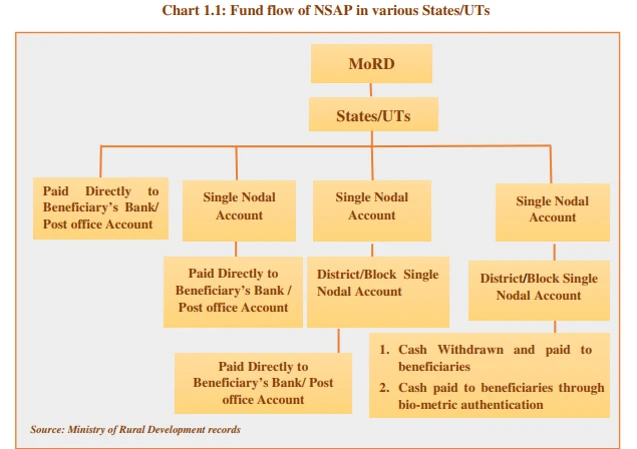
Through Direct Benefit Transfer (DBT), money is deposited directly into beneficiaries’ bank accounts. This reduces the role of middlemen, delays and the chances of corruption. - Promotes Social Welfare and Justice:
NSAP supports the government’s broader goal of social justice and inclusive development by providing assistance to people who are most in need.
NSAP acts as a social safety net, helping vulnerable people meet their basic needs, reduce poverty and live with greater financial security and dignity.
Key Pointers about NSAP
- Started in: 1995
- Ministry: Ministry of Rural Development (MoRD)
- Main Aim: NSAP provides social and financial support to poor and vulnerable families, especially elderly people, widows and persons with disabilities.
- Type of Scheme: It is a Centrally Sponsored Scheme, with financial support provided by the Central Government and implementation carried out by the States and Union Territories.
- Direct Benefit Transfer (DBT): Financial assistance is directly transferred to beneficiaries’ bank accounts, reducing delays and the role of middlemen.
Main Schemes under NSAP
- IGNOAPS: Provides ₹200 per month to eligible elderly people aged 60–79 years and ₹500 per month to those aged 80 years and above.
- IGNWPS: Provides ₹300 per month to eligible widows aged 40–79 years and ₹500 per month to those aged 80 years and above.
- IGNDPS: Provides ₹300 per month to eligible persons with disabilities aged 18–79 years and ₹500 per month to those aged 80 years and above.
- NFBS: Provides a one-time assistance of ₹20,000 to an eligible poor family when its main earning member, aged 18–59 years, dies.
- Annapurna Scheme: Provides 10 kg of free food grains every month to eligible senior citizens who qualify for old-age pension but are not receiving it.
Eligibility and Implementation
- The schemes primarily target Below Poverty Line (BPL) households, subject to the specific eligibility conditions of each component.
- The programme is implemented by State and Union Territory governments according to Central Government guidelines.
Why is NSAP Important?
NSAP acts as a social safety net for vulnerable people. It helps reduce poverty, provides financial security and promotes social inclusion and dignity among disadvantaged sections of society.
It is also linked to Article 41 of the Directive Principles of State Policy (DPSP), which calls upon the State to provide public assistance in situations such as old age, sickness, disability and unemployment, within its economic capacity. NSAP is a government programme that provides pensions, financial assistance and food support to people who need it most, helping them live with greater financial security and dignity.