

What Is Soil Aeration?
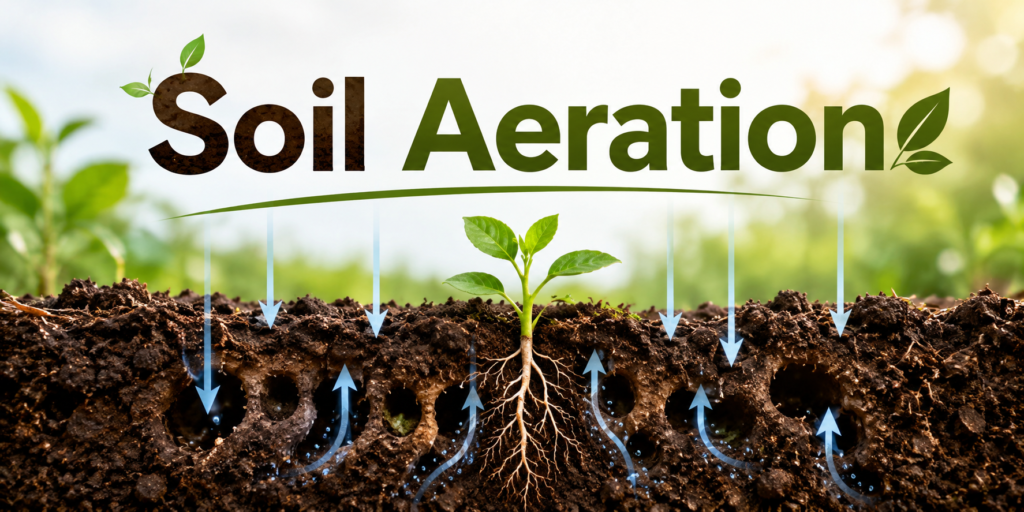
Soil aeration is the natural process through which air moves between the soil and the atmosphere. It allows oxygen to reach plant roots and helps remove excess carbon dioxide from the soil. Good soil aeration prevents oxygen deficiency in crops, promotes healthy root growth, and maintains a suitable environment for plant development
Causes Of Poor Soil Aeration
For good soil aeration, it is important to understand the factors that influence it. This helps farmers adopt the right practices and avoid problems that can harm crop growth. Some of the main factors affecting soil aeration are:
- Soil moisture levels
- Soil texture (sand, silt, or clay content)
- Water infiltration and drainage capacity
- Heavy machinery movement on fields
- Addition of organic matter
- Grazing by livestock
When these factors are not properly managed, they can cause soil compaction, reduce the amount of oxygen available to plant roots, and increase carbon dioxide levels in the soil, ultimately affecting plant health and productivity.
Soil Compaction
In most cases, poor soil aeration occurs because of soil compaction. Fine-textured soils, such as clay soils, are more likely to become compacted because their small particles pack closely together, leaving very little space for air to move through the soil. As a result, plant roots and beneficial soil organisms do not receive enough oxygen to survive and function properly. Soil compaction is often caused by improper irrigation practices, excessive tillage, and the repeated use of heavy machinery on fields.
Waterlogging
Waterlogging, whether caused by natural events like heavy rainfall and floods or by excessive irrigation, can seriously reduce soil aeration. When too much water fills the spaces between soil particles, it pushes out the air and leaves little or no oxygen available for plant roots and soil organisms. In simple terms, air cannot enter the soil when those spaces are already occupied by water. Once the excess water drains away or evaporates, air gradually returns to the soil, restoring the balance and improving oxygen availability.
Soil Organic Matter
Organic matter helps improve soil fertility and supports healthy plant growth. However, when large amounts of organic matter decompose, they release carbon dioxide (CO₂) into the soil. If the organic matter content is too high, CO₂ can build up faster than it can escape, leading to harmful levels in the soil. Excess carbon dioxide also reduces the availability of oxygen, which plant roots need for proper growth and respiration. Therefore, organic matter should be added in moderate amounts or applied after it has been well decomposed to maintain a healthy balance of gases in the soil.
Grazing With Livestock
Grazing animals can improve soil fertility by adding organic manure to the land. However, when animals remain in the same area for long periods, their hooves repeatedly press on the soil, causing compaction. Compacted soil has fewer air spaces, which reduces soil aeration and can affect plant growth. A practical way to prevent this problem is rotational grazing, where animals are moved between different pasture areas, allowing the soil time to recover and maintain its structure.
Regular Vehicular Traffic
Heavy farm machinery, such as forage harvesters and manure spreaders, can compact the soil by putting excessive pressure on it. Soil compaction reduces the spaces needed for air and water movement, negatively affecting plant growth. To minimize this problem, farmers should limit the use of heavy equipment, reduce the number of field passes, and avoid operating machinery when the soil is wet, as wet soil is much more vulnerable to compaction.
Soil Aeration Methods
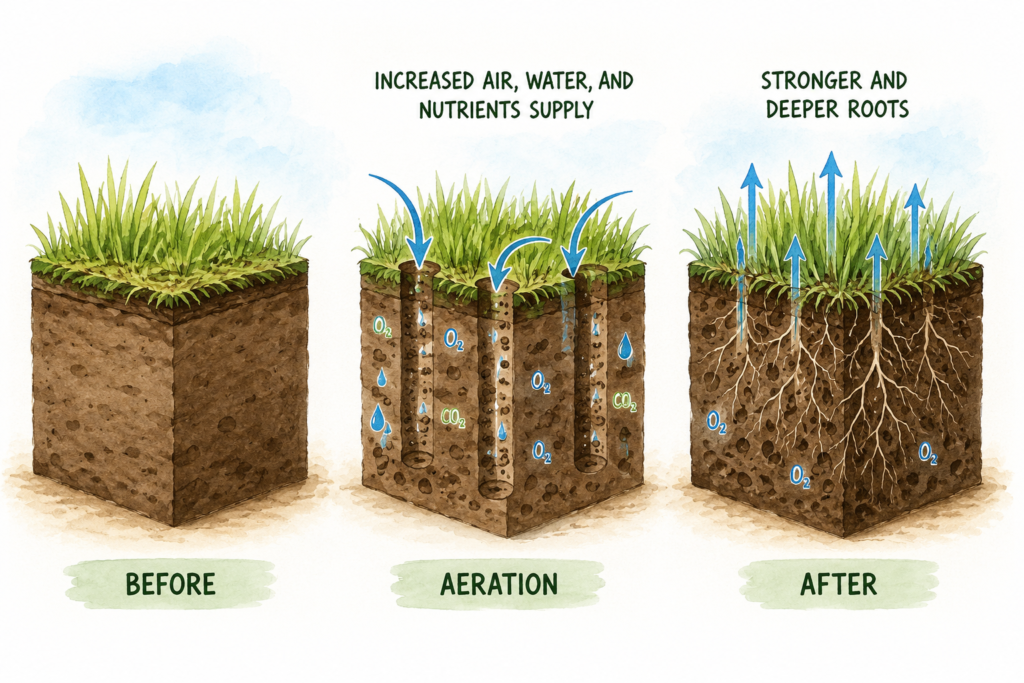
The main purpose of soil aeration is to increase the supply of oxygen in the topsoil so that plant roots and beneficial soil microorganisms can grow and function properly. Aeration also loosens compacted soil, making it softer and improving water infiltration and drainage. Different aeration methods are used depending on the size of the area and the condition of the land.
One extreme solution to severely compacted soil is to remove the existing land cover and start over, but this is often expensive, time-consuming, and impractical. A more effective and economical approach is soil aeration. Common soil aeration methods include spike aeration, plug (core) aeration, and liquid aeration, all of which help improve soil structure, air circulation, and overall soil health.
Spike Aeration
Spike aeration is a simple method that creates small holes in the soil, allowing air, water, and nutrients to reach plant roots. It causes very little disturbance to the ground and is usually done using spiked shoes, rollers, prongs, or mower attachments. Manual tools require physical effort, while mower attachments make the process easier and faster.
Best for: Sandy soils, where the holes remain open and improve airflow.
Not suitable for: Clay soils, because the spikes can compress the soil around the holes, making compaction worse.
Core Aeration
Core aeration is commonly used for compacted soils, especially clay soils. Instead of simply making holes, this method removes small plugs or cores of soil from the ground. These cores may contain soil, roots, and organic matter and are usually left on the surface to break down naturally.
Although the field may look messy for a short time, core aeration offers several benefits:
- Improves air exchange in the soil
- Increases oxygen supply to plant roots
- Enhances water infiltration and drainage
- Improves soil structure
- Helps mix organic matter into the soil
Core aeration can be performed using manual tools or machine attachments.
Liquid Aeration
Unlike spike and core aeration, liquid aeration does not physically disturb the soil. Instead, it uses liquid products containing wetting agents and nutrients that support beneficial soil organisms.
Wetting agents help water move deeper into the soil, encouraging microorganisms to live and work at greater depths. As these organisms and earthworms move through the soil, they create natural channels that improve airflow, water movement, and root growth.
Liquid aerators often contain seaweed extracts or other nutrients that stimulate bacterial activity. Increased microbial activity attracts worms and insects, which further improve soil porosity and help break down organic matter, increasing soil fertility.
Combining Methods
Soil aeration is often most effective when different methods are used together. For example, applying a liquid aerator about a week before core aeration can improve results by preparing the soil and encouraging biological activity before the cores are removed. This combined approach helps create healthier, better-aerated soil and supports stronger plant growth.
Why Tillage Is Not The Best Option For Aeration
Tillage is a farming practice that involves digging, turning, and breaking up the soil to make it looser and less compact. This improves soil aeration by allowing more oxygen to reach plant roots and soil organisms. However, the benefits of tillage are usually temporary and may come with several drawbacks if done too often.
Some negative effects of repeated tillage include:
- Increased risk of soil erosion by wind and water
- Damage to beneficial soil microorganisms
- Bringing buried weed seeds to the surface, which can encourage weed growth
- Higher fuel consumption and greenhouse gas emissions from farm machinery
At the same time, tillage can help control pests and weeds by disrupting their habitats and burying existing weeds.
Research has shown that tillage can improve soil aeration in the short term. For example, studies on peanut cultivation found that certain tillage methods increased the movement of oxygen through the soil. However, these benefits decreased over time as plants grew and soil conditions changed. Therefore, while tillage can be useful for reducing compaction and improving aeration temporarily, excessive use may harm soil health and increase erosion risks. Sustainable soil management practices are often preferred for long-term soil improvement.
Assistance Of EOSDA Crop Monitoring
Poor soil aeration cannot be seen directly, but its effects can be noticed through reduced crop growth and lower field productivity. Modern crop monitoring tools help farmers identify such problems by creating productivity and vegetation maps of their fields. By comparing these maps over time, farmers can determine whether their crops are growing normally or showing signs of stress.
If crop performance declines, it may indicate issues such as poor soil structure, nutrient deficiencies, or soil compaction that restricts air movement. Farmers can then inspect affected areas more closely to identify the exact cause and take corrective measures.
This approach is especially useful for farmers who follow no-till practices and for those managing clay soils, which are highly susceptible to compaction. By monitoring vegetation levels across different parts of a field, farmers can identify low-performing zones, assess overall field productivity, and make better management decisions to improve crop health and yields.
Why Is Soil Aeration Important?
The availability of nutrients to crops is closely linked to soil aeration. Well-aerated soils create a healthy environment for roots and beneficial microorganisms, helping plants absorb nutrients efficiently. In contrast, poor aeration can lead to nutrient imbalances and hinder plant growth.
How Soil Aeration Affects Nutrients
Nitrogen:
Nitrogen is one of the most important nutrients for plants. In well-aerated soils, beneficial bacteria convert organic nitrogen from plant residues, organic matter, and animal manure into forms that plants can easily absorb. When soil lacks oxygen, these bacteria become less effective, and nitrogen can be lost as gases such as nitrous oxide (N₂O), which also contributes to climate change. Poor aeration can therefore reduce the amount of nitrogen available to crops.
Manganese and Iron:
In well-aerated soils, manganese and iron remain in forms that are less likely to harm plants. When aeration is poor, these nutrients change into forms that plants absorb more easily. However, excessive uptake can become toxic and damage crop growth. Proper aeration helps maintain a healthy balance.
Sulfur:
In aerated soils, sulfur is present mainly as sulfate, a form that plants can use. In waterlogged or poorly aerated soils, sulfate can be converted into sulfide, including hydrogen sulfide, which is harmful to plant roots and can reduce crop performance.
Effects on Roots and Plant Health
Nutrient imbalances caused by poor aeration often lead to abnormal root development. Common signs include:
- Thick and short roots
- Dark-colored roots
- Poorly developed root hairs
- Irregular root growth
Since roots are responsible for absorbing water and nutrients, unhealthy roots can affect the entire plant and ultimately reduce yields.
Increased Risk of Diseases
Another major disadvantage of poor soil aeration is a higher risk of plant diseases, especially root rot caused by fungi and other pathogens. Waterlogged and oxygen-deficient conditions create an ideal environment for these harmful organisms. Maintaining good soil aeration helps reduce disease pressure and supports healthier crops and trees.
Conclusion
Soil aeration plays a vital role in nutrient availability, root development, and disease prevention. By ensuring adequate oxygen in the soil, farmers can promote healthier plants, improve nutrient uptake, and achieve better crop productivity. Proper soil management practices that maintain aeration are essential for sustainable and profitable farming.







