The Regional Comprehensive Economic Partnership (RCEP) is the world’s largest free trade agreement (FTA), bringing together 15 Asia-Pacific nations, accounting for nearly 30% of the global GDP and 30% of the world’s population. Signed on November 15, 2020, and officially coming into force on January 1, 2022, RCEP aims to establish a unified, seamless, and open market in the region.

Introduction
With the rapidly shifting global economic landscape, RCEP is expected to reshape global trade patterns, enhance regional economic cooperation, and strengthen supply chain resilience
Historical Background of RCEP
Free live session
NABARD Grade A 2026: what the 2025 cut-offs changed, and the 90-day plan
The 2025 cycle was the toughest on record at every stage. This session reads those numbers properly and turns them into a week-by-week plan for Phase 1.
In 4 days · Sun, 4 Oct at 7:30 PM IST · 75 minutes · free
NABARD 2021-2024 Cutoff Analysis | What we can Learn? #nabard_grade_a_exam #nabard_cutoffTap to play · from the C4S channel
Origins and Evolution of RCEP
| Year | Event/Development |
|---|---|
| 2011 | ASEAN proposed the idea of RCEP during the 19th ASEAN Summit in Bali, Indonesia. |
| 2012 | Official negotiations were launched during the ASEAN Summit in Cambodia. |
| 2017 | India raised concerns about trade deficits and cheap Chinese imports. Negotiations slowed. |
| 2019 | India formally withdrew from RCEP due to unresolved issues. |
| 2020 | RCEP agreement was signed by 15 member countries. |
| 2022 | RCEP officially came into force on January 1, 2022. |
A clean PDF of this page with the C4S header — it opens right away, and the link comes to your WhatsApp too.
What is RCEP?
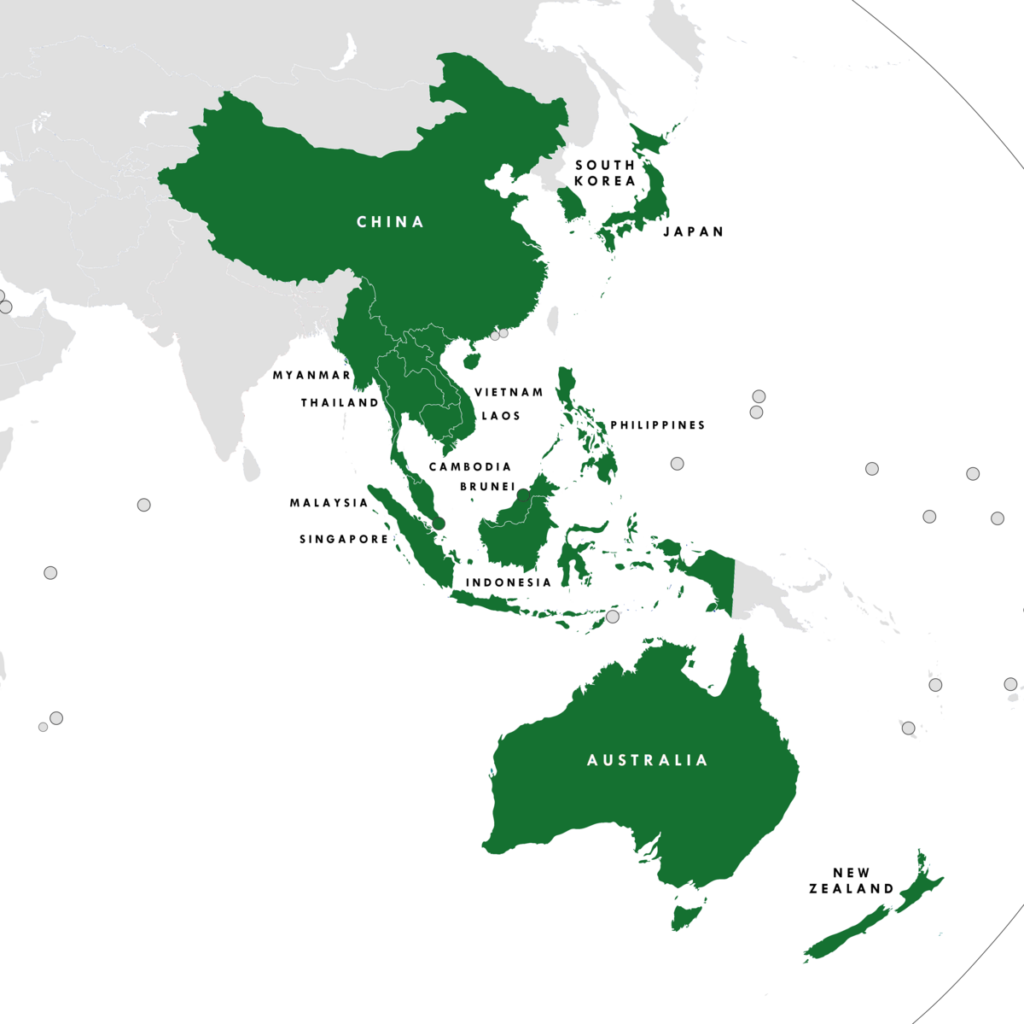
RCEP is a multilateral trade agreement between the 10 ASEAN (Association of Southeast Asian Nations) member states and five of their existing FTA partners:
Member Countries
- ASEAN Nations:
- Indonesia, Thailand, Singapore, Malaysia, the Philippines, Vietnam, Myanmar, Cambodia, Laos, and Brunei
- FTA Partners:
- China, Japan, South Korea, Australia, and New Zealand
Note: India was originally part of RCEP negotiations but opted out in 2019, citing concerns over trade imbalances and potential harm to domestic industries.
RCEP Member Countries
RCEP includes 15 countries, which are categorized into two groups:
ASEAN Member States (10 nations):
- Indonesia
- Malaysia
- Thailand
- Vietnam
- Philippines
- Singapore
- Myanmar
- Cambodia
- Laos
- Brunei
ASEAN’s FTA Partners (5 nations):
- China
- Japan
- South Korea
- Australia
- New Zealand
India’s Status:
India was part of the initial negotiations but opted out in 2019 due to concerns related to trade deficits, agricultural sector protection, and cheap Chinese imports.
Key Objectives of RCEP
- Eliminate trade barriers and tariffs
- Simplify customs procedures and rules of origin
- Enhance market access for goods, services, and investments
- Promote digital trade and e-commerce
- Protect intellectual property rights (IPR)
- Boost regional supply chain integration
- Support SMEs (Small and Medium Enterprises)
Major Provisions of RCEP
| Provision | Details | Impact on Member Nations |
|---|---|---|
| Tariff Reduction | Elimination of tariffs on over 90% of goods over 20 years. | Enhanced market access and reduced costs for exporters. |
| Rules of Origin (ROO) | Uniform set of rules for determining the origin of goods across all 15 countries. | Simplifies regional supply chains and encourages local manufacturing. |
| Trade in Services | Opening up 65% of service sectors and allowing foreign investment in critical industries. | Growth in finance, IT, and digital economy sectors. |
| E-Commerce | Ensures cross-border data flows, consumer protection, and electronic payment systems. | Boosts digital trade and innovation. |
| Intellectual Property (IPR) | Strengthened protection for trademarks, copyrights, and patents. | Encourages innovation and protects original content. |
| Dispute Settlement | Transparent and fair dispute resolution mechanism. | Reduces trade disputes and fosters economic stability |
Significance of RCEP: The World's Largest Trade Bloc
| Aspect | RCEP | CPTPP (Comprehensive and Progressive Agreement for Trans-Pacific Partnership) |
|---|---|---|
| Member Countries | 15 | 11 |
| GDP Coverage | $26.2 trillion (30% of global GDP) | $13.5 trillion (13.4% of global GDP) |
| Population | 2.3 billion people (30% of the world’s population) | 500 million people |
| Tariff Elimination | 90% over 20 years | 95% over 15 years |
| Sectors Covered | Goods, services, e-commerce, IP, investment | Similar scope but stricter labor and environmental standards |
Benefits of RCEP for Member Nations
1. Trade Liberalization and Market Access
- Reduced tariffs on 90% of traded goods.
- Increased access to manufacturing, agriculture, and service sectors.
- Seamless supply chain integration.
2. Unified Rules of Origin (ROO)
Under RCEP, businesses can source raw materials from any member country and still qualify for preferential tariff treatment.
3. Boost to Regional Supply Chains
- Strengthens ASEAN’s role as a global manufacturing hub.
- Reduces reliance on the U.S. and European markets.
4. Growth in Digital Trade and E-Commerce
- Protection of cross-border data flows.
- Enhanced consumer data protection and cybersecurity regulations.
5. Enhanced Investment Opportunities
- Opening up sectors like finance, logistics, telecommunications, and professional services to foreign investors.
Potential Challenges and Criticism of RCEP
India’s Absence and Trade Imbalance
India’s withdrawal from RCEP has been a major point of contention. Concerns over a surge of cheap Chinese imports, negative impacts on domestic industries, and a growing trade deficit were the key reasons behind India’s decision.
Unequal Benefits Among Member Nations
Larger economies like China and Japan may benefit disproportionately compared to smaller ASEAN nations. Less-developed countries may struggle to compete effectively in an open-market system.
Environmental and Labor Concerns
Unlike some trade agreements like the Comprehensive and Progressive Agreement for Trans-Pacific Partnership (CPTPP), RCEP does not impose strong environmental or labor protections, raising concerns over sustainability and workers’ rights.
Potential Over-Reliance on China
As China plays a dominant role in RCEP, there are fears that it could increase economic dependence on China, giving Beijing more geopolitical leverage over the region.
| Challenge | Details |
|---|---|
| India’s Absence | Without India, the bloc loses a massive consumer market of 1.4 billion people. |
| Dominance of China | China’s economic dominance raises concerns among smaller ASEAN nations. |
| Lack of Labor and Environmental Standards | Unlike CPTPP, RCEP does not enforce strict labor rights or environmental protections. |
| Unequal Benefits for Smaller Economies | Less developed countries like Cambodia and Laos may struggle to compete with advanced economies like Japan and South Korea. |
Impact of RCEP on Global Trade
Shift in Global Trade Dynamics
RCEP strengthens Asia-Pacific’s economic influence, potentially challenging Western-led trade agreements such as the United States-Mexico-Canada Agreement (USMCA) and the European Union’s trade pacts.
A Counter to US-led Trade Policies
With the US having withdrawn from the Trans-Pacific Partnership (TPP) under the Trump administration, RCEP positions China and ASEAN as key economic players in the region.
Reinforcement of Asia’s Economic Integration
By fostering deeper economic cooperation, RCEP lays the foundation for future agreements that could further strengthen trade and investment in Asia.
| Region | Expected Impact |
|---|---|
| ASEAN Nations | Boost in exports and manufacturing capabilities. Enhanced regional connectivity. |
| China | Expanded market access, reduced dependency on U.S. and EU markets. |
| Japan & South Korea | Greater access to Chinese and Southeast Asian consumer markets. |
| Australia & New Zealand | Growth in agricultural exports and access to Asian services markets. |
| India (Non-member) | Increased competition from RCEP countries. Potential loss of trade opportunities. |
Conclusion: A New Era of Global Trade
The Regional Comprehensive Economic Partnership (RCEP) is not just a free trade agreement — it is a strategic economic alliance that will redefine the global economic order. With 15 member nations, 2.3 billion consumers, and $26 trillion in GDP, RCEP is set to accelerate economic growth, strengthen regional supply chains, and create new opportunities for businesses and investors.
Future Prospects of RCEP
| Area of Impact | Expected Outcomes |
|---|---|
| Global Supply Chains | More resilient and diversified manufacturing hubs. |
| Digital Trade | Increased e-commerce and cross-border transactions. |
| Geopolitical Influence | Strengthens Asia’s economic dominance and reduces U.S. influence. |
| SME Development | Enhanced participation in global value chains. |
Final Thought
RCEP is not just about trade and tariffs, but about regional unity, economic cooperation, and shared prosperity in the Asia-Pacific. While challenges remain, the long-term benefits are expected to reshape the global economy for decades to come.