A radio-tagged, captive-bred white-rumped vulture (Gyps bengalensis) — released earlier in 2026 at the Mudumalai Tiger Reserve (MTR), Nilgiris district, Tamil Nadu — was electrocuted on Sunday, 28 June 2026 after contact with a power line at Ebbanad village overlooking the Sigur plateau. The bird was initially part of the Bombay Natural History Society (BNHS) release of 34 captive-bred vultures at Pench, Melghat, and Tadoba-Andhari Tiger Reserves during December 2025-January 2026. It was first released at Tadoba-Andhari Tiger Reserve (TATR), Maharashtra in December 2025, drifted into Karnataka, was captured and treated after showing signs of illness, and in April 2026 BNHS + Karnataka Forest Department secured permission from the Tamil Nadu Forest Department to release it in MTR — home to the last sizeable population of white-rumped vultures in South India. The bird, however, failed to acclimatise, undertaking exploratory forays to Gudalur, Kalhatty, and Ebbanad before its electrocution. This marks the end of India’s first attempted reintroduction of a captive-bred white-rumped vulture into the South Indian landscape and is expected to influence future conservation policy.
Context
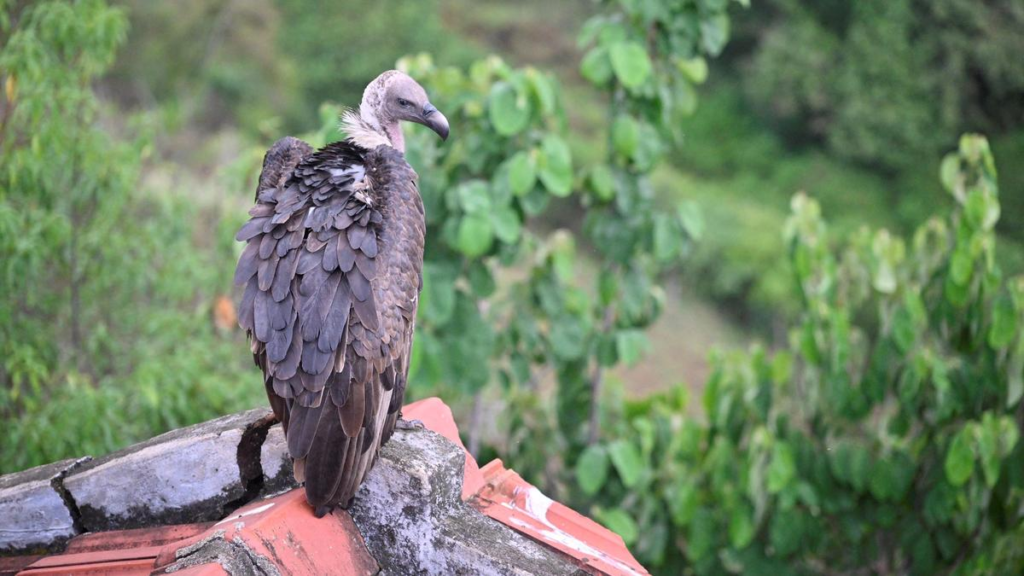
What is the White-Rumped Vulture (Gyps bengalensis)?
| Aspect | Detail |
|---|---|
| Scientific Name | Gyps bengalensis |
| Family | Accipitridae (Old World vultures) |
| IUCN Status | Critically Endangered (since 2000) |
| CITES | Appendix II |
| Wildlife (Protection) Act, 1972 | Schedule I (highest protection) |
| Population Decline | >99% in South Asia since 1990s |
| Main Cause | Diclofenac + other NSAIDs in veterinary use |
| Diet | Exclusively carrion (scavenger) |
| Breeding | October-April; monogamous; 1 nestling/year |
| Size | Smallest among Gyps species |
A clean PDF of this page with the C4S header — it opens right away, and the link comes to your WhatsApp too.
What is the Mudumalai Tiger Reserve (MTR)?
- State: Tamil Nadu.
- District: Nilgiris.
- Part of: Nilgiri Biosphere Reserve (India’s first BR, 1986).
- Adjoins: Bandipur TR (Karnataka), Nagarhole TR (Karnataka), Wayanad WLS (Kerala) — Mudumalai-Bandipur-Wayanad-Nagarhole landscape.
- WRV Population in MTR: 49-104 individuals across nesting colonies (Manigandan et al., 2023); 36 active nesting pairs documented (Venkitachalam & Senthilnathan, 2016); ~68 nests in adjoining Nilgiri North Forest Division (Ramakrishnan et al., 2014).
- Moyar Valley: Key vulture stronghold in MTR.
Who is the BNHS?
- Full Form: Bombay Natural History Society.
- Founded: 1883.
- HQ: Hornbill House, Mumbai.
- Status: Pan-India wildlife research and conservation NGO; partner of BirdLife International.
- Notable Role: First documented vulture decline in 1999; leads vulture conservation breeding programme since early 2000s.
What are the Jatayu Conservation Breeding Centres (JCBCs)?
| Centre | State | Partners |
|---|---|---|
| Pinjore | Haryana | BNHS + State Forest Dept |
| Rajabhatkhawa | West Bengal | BNHS + State Forest Dept |
| Rani | Assam | BNHS + State Forest Dept |
| Bhopal | Madhya Pradesh | BNHS + State Forest Dept |
Why are vultures critically important to ecosystem?
- Apex scavengers — clean up carcasses, prevent disease spread (anthrax, rabies, etc.).
- Ecosystem services: control pathogens that affect humans + livestock.
- Their decline has caused rise in feral dog populations → spike in rabies cases.
- A 2008 study estimated vulture decline caused ~₹2.3 lakh crore in economic losses in India over a decade.
What are India's vulture conservation initiatives?
Free live session
NABARD Grade A 2026: what the 2025 cut-offs changed, and the 90-day plan
Today · 7:30 PM IST
- Vulture Action Plan (VAP) 2020-2025 — by MoEFCC.
- Jatayu Conservation Breeding Centres (4 centres).
- Vulture Safe Zones (VSZs) — Diclofenac-free areas across India.
- Pench, Tadoba-Andhari, Melghat Tiger Reserves in Maharashtra — current reintroduction sites.
- Kaziranga landscape (Assam) — first soft-release of slender-billed vultures in March 2026.
Practice MCQs
Q1. With reference to the White-Rumped Vulture (Gyps bengalensis), consider the following statements:
- It is classified as Critically Endangered on the IUCN Red List.
- It is listed under Schedule I of the Wildlife (Protection) Act, 1972.
- Its primary cause of population decline has been the veterinary use of diclofenac and other NSAIDs.
- It is endemic to the South American continent.
How many of the above statements are correct?
(a) Only one (b) Only two (c) Only three (d) All four (e) None
(Statement 4 is wrong; the White-Rumped Vulture is native to South Asia (India, Nepal, Bangladesh, Pakistan), NOT endemic to South America.)
Q2. With reference to the electrocution incident at Mudumalai Tiger Reserve (28 June 2026), consider the following statements:
- The captive-bred white-rumped vulture was first released at Tadoba-Andhari Tiger Reserve in Maharashtra in December 2025.
- The bird was subsequently captured in Karnataka after showing signs of illness and treated before being released at Mudumalai Tiger Reserve in April 2026.
- The bird was electrocuted at Ebbanad village overlooking the Sigur plateau.
- The electrocution incident marks the success of India’s first attempted captive-bred WRV reintroduction in South India.
How many of the above statements are correct?
(a) Only one (b) Only two (c) Only three (d) All four (e) None
(Statement 4 is wrong; the electrocution marks the END (failure), NOT success of the first attempted reintroduction.)
Q3. With reference to the Bombay Natural History Society (BNHS), consider the following statements:
- BNHS was founded in 1883 and is headquartered at Hornbill House, Mumbai.
- BNHS is a partner of BirdLife International.
- BNHS leads India’s vulture conservation breeding programme in collaboration with state forest departments and the RSPB (UK).
- BNHS is a statutory body created under an Act of Parliament.
How many of the above statements are correct?
(a) Only one (b) Only two (c) Only three (d) All four (e) None
(Statement 4 is wrong; BNHS is a non-governmental, pan-India wildlife research NGO, NOT a statutory body created under an Act of Parliament.)
Q4. With reference to the Jatayu Conservation Breeding Centres (JCBCs), consider the following statements:
- The four JCBCs are located at Pinjore (Haryana), Rajabhatkhawa (West Bengal), Rani (Assam), and Bhopal (Madhya Pradesh).
- JCBCs are operated by BNHS in collaboration with state forest departments and the Royal Society for the Protection of Birds (RSPB), UK.
- The JCBCs currently house approximately 740 vultures, with about 110 already released into the wild for reintroduction.
- There is only one JCBC in India, located in Tamil Nadu.
How many of the above statements are correct?
(a) Only one (b) Only two (c) Only three (d) All four (e) None
(Statement 4 is wrong; there are 4 JCBCs (Pinjore, Rajabhatkhawa, Rani, Bhopal) — NOT one located in Tamil Nadu.)
Answer Key
- (c) — Statement 4 wrong: WRV is native to South Asia, not South America.
- (c) — Statement 4 wrong: Marks failure (end), not success.
- (c) — Statement 4 wrong: BNHS is an NGO, not a statutory body.
- (c) — Statement 4 wrong: 4 JCBCs exist, none in Tamil Nadu.
Exam Relevancemost asked
| Exam | Relevance |
|---|---|
| UPSC Prelims & Mains | Very High — GS-III (Environment, Biodiversity Conservation), Prelims (Schedules, IUCN, species) |
| State PCS (esp. TN, Kerala, Karnataka, Maharashtra) | High — MTR, Tadoba, BNHS, WRV |
| RBI Grade B (Phase I + II) | Medium — ESI on environment/biodiversity (recurring GA topic) |
| NABARD Grade A | High — Rural biodiversity, eco-services |
| Banking (SBI PO, IBPS, RBI Assistant) | High — GA on critically endangered species, schemes |
| Forest Service (IFS/IFoS) | Critical — Direct subject — Vulture conservation, BNHS, NSAIDs, JCBCs |
| SSC, Railway, Insurance | High — IUCN, Schedule I species, BNHS |