Organic farming is a method of agriculture that avoids the use of chemical fertilizers, pesticides, and other harmful chemicals. Instead, it focuses on natural methods to maintain soil fertility, protect the environment, and produce healthy and nutritious food. It also helps preserve the natural fertility and biological activity of the soil, making farming more sustainable in the long run. India has great potential for organic farming because of its diverse agro-climatic conditions. Different regions of the country can produce a wide variety of organic crops. In many parts of India, farmers have traditionally followed natural and chemical-free farming practices, which gives the country an additional advantage in expanding organic agriculture.
The demand for organic products is increasing steadily, both in India and international markets. This creates good opportunities for Indian farmers and organic producers to increase their income by catering to the growing demand for safe, healthy, and environmentally friendly food products. According to the FiBL & IFOAM Year Book 2024, India ranks 2nd in the world in terms of organic agricultural land and 1st in terms of the total number of organic producers. This highlights India’s strong position and significant potential in the global organic farming sector.
Introduction
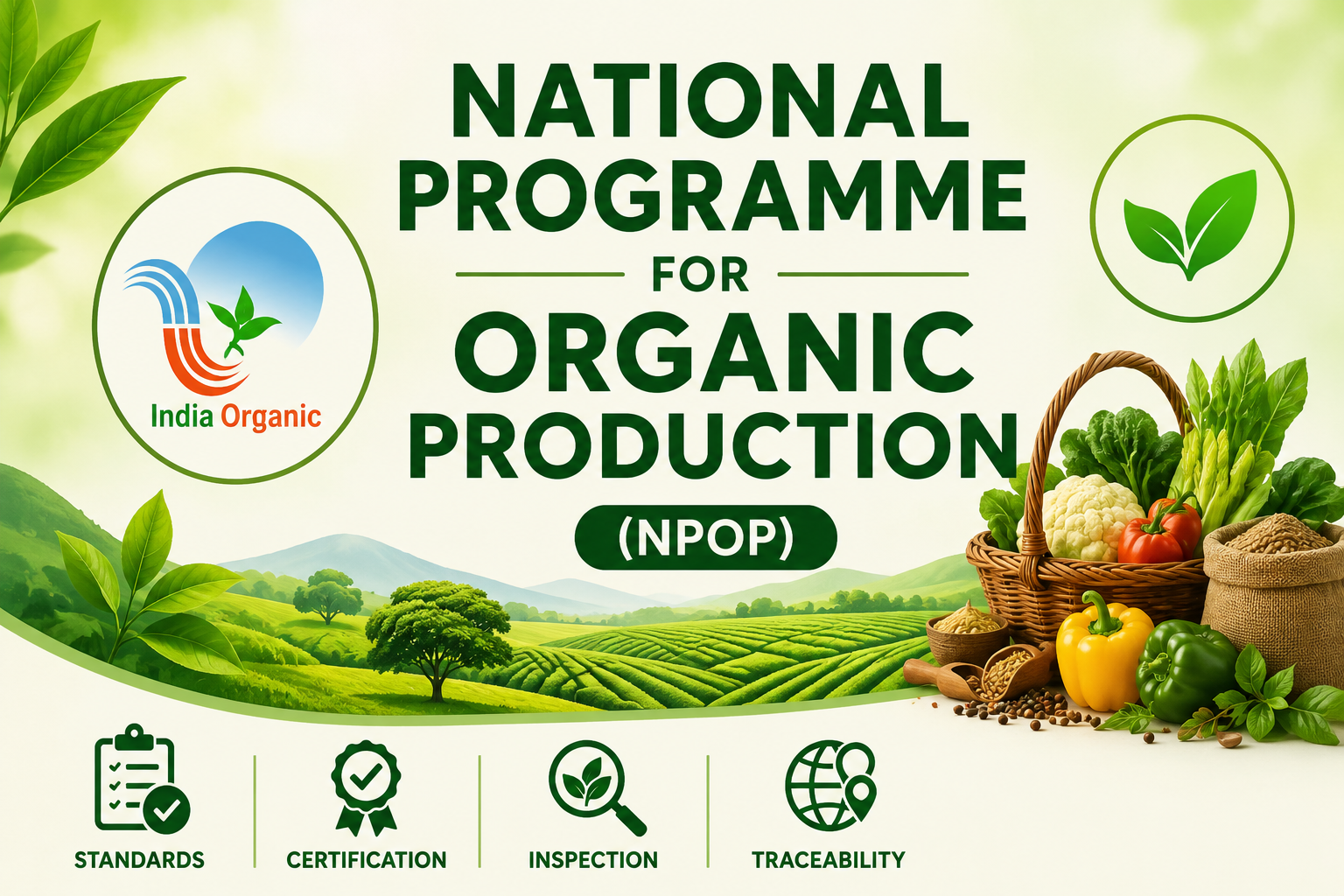
The National Programme for Organic Production (NPOP) is India’s system for regulating and certifying organic farming, particularly organic products meant for export.
How NPOP Started
NPOP was launched in 2001 by the Department of Commerce, Ministry of Commerce & Industry, Government of India. Its main purpose was to develop proper standards and certification systems for India’s organic products and make them suitable for international markets.
APEDA (Agricultural and Processed Food Products Export Development Authority) acts as the Secretariat for implementing NPOP.
To support small and marginal farmers, the Grower Group Certification system was introduced in 2005. Under this system, farmers can be certified as a group instead of each farmer having to go through the entire certification process individually.
Certification of Organic Products
For organic products intended for export, third-party certification is mandatory. This means that farmers or producers cannot simply declare their products to be organic themselves. An independent, accredited certification body has to inspect and certify them.
Under NPOP:
- Certification covers organic production and processes across the supply chain.
- Accredited certification bodies inspect organic farmers, producer groups and other operators.
- Both government and private certification bodies can operate, provided they are properly accredited.
- There are currently 37 active certification bodies, including 14 State Certification Bodies.
International Recognition
India’s NPOP standards for organic crop production have received international recognition.
They are recognized as equivalent by the European Commission and Switzerland and are also accepted by Great Britain. India also has a Mutual Recognition Agreement (MRA) for organic products with Taiwan.
This recognition helps Indian organic producers access important international markets.
No ₹50,000 per Hectare Subsidy Under NPOP
It is important to clarify that APEDA and the Department of Commerce do not provide a ₹50,000-per-hectare subsidy to farmers for organic cultivation under NPOP.
Therefore, claims that farmers receive this amount under NPOP are not correct.
NPOP Is Not Limited to Madhya Pradesh
Organic certification under NPOP is carried out across India and is not restricted to Madhya Pradesh.
As of 19 July 2025:
- 31 States/UTs were covered.
- 4,712 active organic grower groups were certified.
- These groups covered around 19.29 lakh farmers.
- Farmers were producing many different crops, including cereals, pulses, oilseeds, tea, coffee, spices and cotton.
Therefore, it would be incorrect to say that India’s organic grower groups are mainly located in Madhya Pradesh or that they are producing only cotton.
What About Organic Cotton?
- Under NPOP, cotton is covered only up to the production stage.
- After harvesting, activities such as ginning and further processing come under private certification arrangements.
How Are Farmers Checked?
NPOP has several layers of inspection to reduce the possibility of malpractice.
- First level – Internal inspections:
- The Internal Control System (ICS) must inspect every farmer twice a year. The ICS can be managed by the grower group itself or through a service provider/mandator.
- Second level – Certification Body:
- The accredited Certification Body conducts an annual audit of each grower group. It checks both the group’s office and farms. The number of farms inspected depends on factors such as the size of farms, number of farmers and overall risk.
- Additional inspections can also be carried out whenever necessary.
- Third level – NAB/APEDA checks:
- There is another layer of supervision over the certification bodies themselves. Through APEDA, the National Accreditation Body (NAB) can conduct unannounced inspections, including inspections of grower groups, particularly when there is a complaint or higher risk.
Steps Taken Against Malpractices
Although the system has several safeguards, cases of misuse and non-compliance have been reported. Authorities have taken steps to strengthen the system.
These include:
- Strict action against certification bodies involved in serious violations.
- Stronger NPOP rules for the legal structure and functioning of grower groups.
- Greater monitoring through ICS offices located closer to grower groups.
- Introduction of mobile-app-based inspections to improve monitoring.
- Additional checks for organic cotton certification and tighter geographical limits for certification bodies working with cotton.
- A major increase in unannounced inspections.
- Action against both defaulting grower groups and certification bodies where violations are established.
APEDA’s Role
APEDA is working to make the NPOP certification system credible, transparent and reliable.
Whenever there is credible evidence of violations, APEDA carries out investigations. The concerned certification body or operator is given due process, and those found violating NPOP rules can be penalized under the NPOP regulations.
NPOP is India’s framework for ensuring that organic products meet defined standards and can be trusted in both domestic and international markets. It uses multiple levels of inspection and certification, provides group certification for small farmers, and has mechanisms to detect and act against violations.
The key point is that NPOP is not a subsidy scheme. Its primary role is setting organic standards, certification, traceability, inspection and ensuring international acceptance of India’s organic products.
Features of NPOP
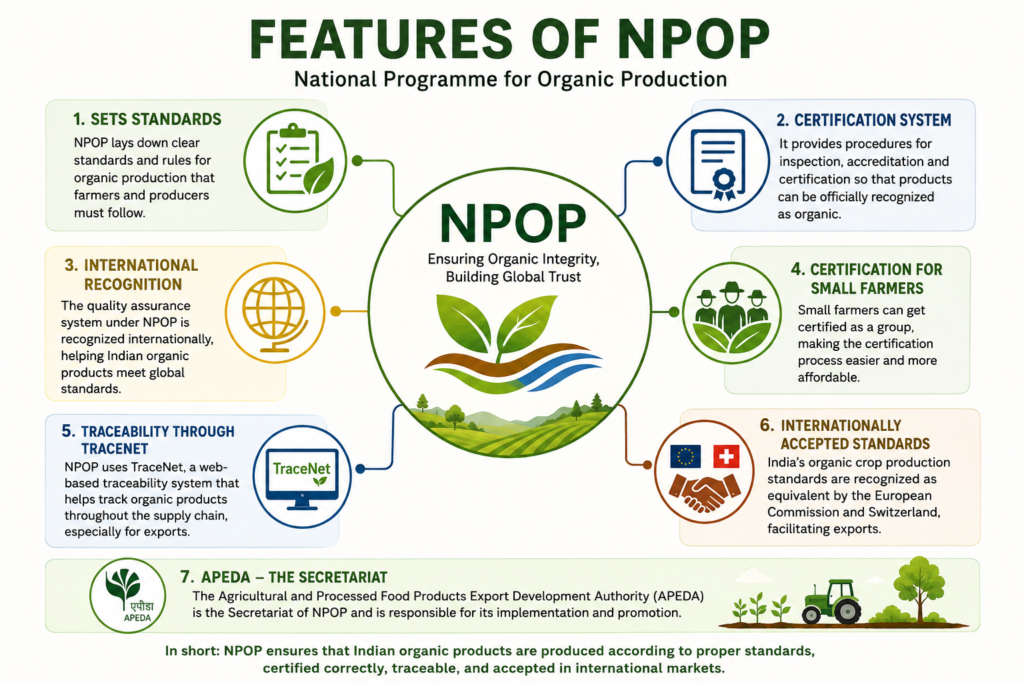
The National Programme for Organic Production (NPOP) is an Indian system that promotes and regulates organic farming and organic products, especially those meant for export.
Its main features are:
- Sets standards for organic farming: NPOP lays down clear rules and standards that farmers and producers must follow to produce organic products.
- Certification system: It provides procedures for inspection, accreditation, and certification so that products can be officially recognized as organic.
- International recognition: The quality assurance system under NPOP is recognized internationally, helping Indian organic products meet global standards.
- Certification for small farmers: Small farmers can get certified as a group, making the certification process easier and more affordable.
- TraceNet system: NPOP uses TraceNet, a web-based system that helps track organic products throughout the supply chain, particularly for exports.
- Internationally accepted standards: India’s organic crop production standards are recognized as equivalent by the European Commission and Switzerland, making exports to these markets easier.
- APEDA’s role: The Agricultural and Processed Food Products Export Development Authority (APEDA) acts as the secretariat for NPOP and manages its implementation.
NPOP 8th Edition, 2024
India’s organic certification system is currently based on the 8th Edition of the National Programme for Organic Production (NPOP), introduced in 2024.
The updated framework is important because India’s organic exports depend heavily on trust, proper certification and the ability to trace products from the farm to the market.
The 8th Edition focuses on:
- Stronger certification: Certification bodies are subject to closer monitoring to ensure that organic certificates are issued properly.
- Better traceability: The system aims to make it easier to track organic products throughout the supply chain and verify where they came from.
- Clearer rules: Procedures and responsibilities for farmers, operators and certification bodies have been made clearer.
- Technology-based monitoring: Greater use of digital tools and technology is being encouraged to improve inspections and monitoring.
- Global alignment: The framework aims to keep India’s organic certification system in line with international requirements, making Indian organic products more acceptable in global markets.
Why Does It Matter?
Organic products are sold largely on trust. Buyers and importing countries need to be confident that a product labelled organic has actually been produced according to recognized organic standards.
If certification and monitoring are weak, Indian organic products could face greater scrutiny, rejection, or loss of market confidence in international markets.
In short: The 8th Edition of NPOP, 2024 aims to make India’s organic certification system stricter, more transparent, technology-driven and internationally credible.
Export and Market Significance
The National Programme for Organic Production (NPOP) plays a very important role in helping India produce and export organic products. It provides a proper certification system that assures international buyers that Indian products meet recognized organic standards.
A wide range of products can be certified under NPOP, including:
- Cereals and pulses
- Oilseeds
- Tea and coffee
- Spices
- Fruits and vegetables
- Cotton
- Processed food products
- Medicinal plants
- Wild-collected products
India’s Strong Organic Producer Base
India has a very large number of organic farmers and producers. According to data cited on the APEDA NPOP portal, based on the FiBL & IFOAM Yearbook 2025, India ranks:
- 1st in the world in the number of organic producers
- 2nd in the world in organic agricultural land
This shows India’s significant potential in the global organic sector.
How NPOP Helps Indian Farmers and Exporters
NPOP provides official organic certification and supports the use of the India Organic identity. This gives buyers greater confidence that the products have been produced according to established organic standards.
As a result, certified Indian organic products can enter premium international markets, where consumers and buyers are willing to pay more for products that meet recognized organic standards. NPOP acts as a bridge between Indian organic farmers and the global market by providing certification, building trust and helping Indian organic products compete internationally.
NPOP and Domestic Organic Market
The National Programme for Organic Production (NPOP) is mainly used for certifying organic products meant for export. It ensures that Indian organic products meet the required standards for international markets.
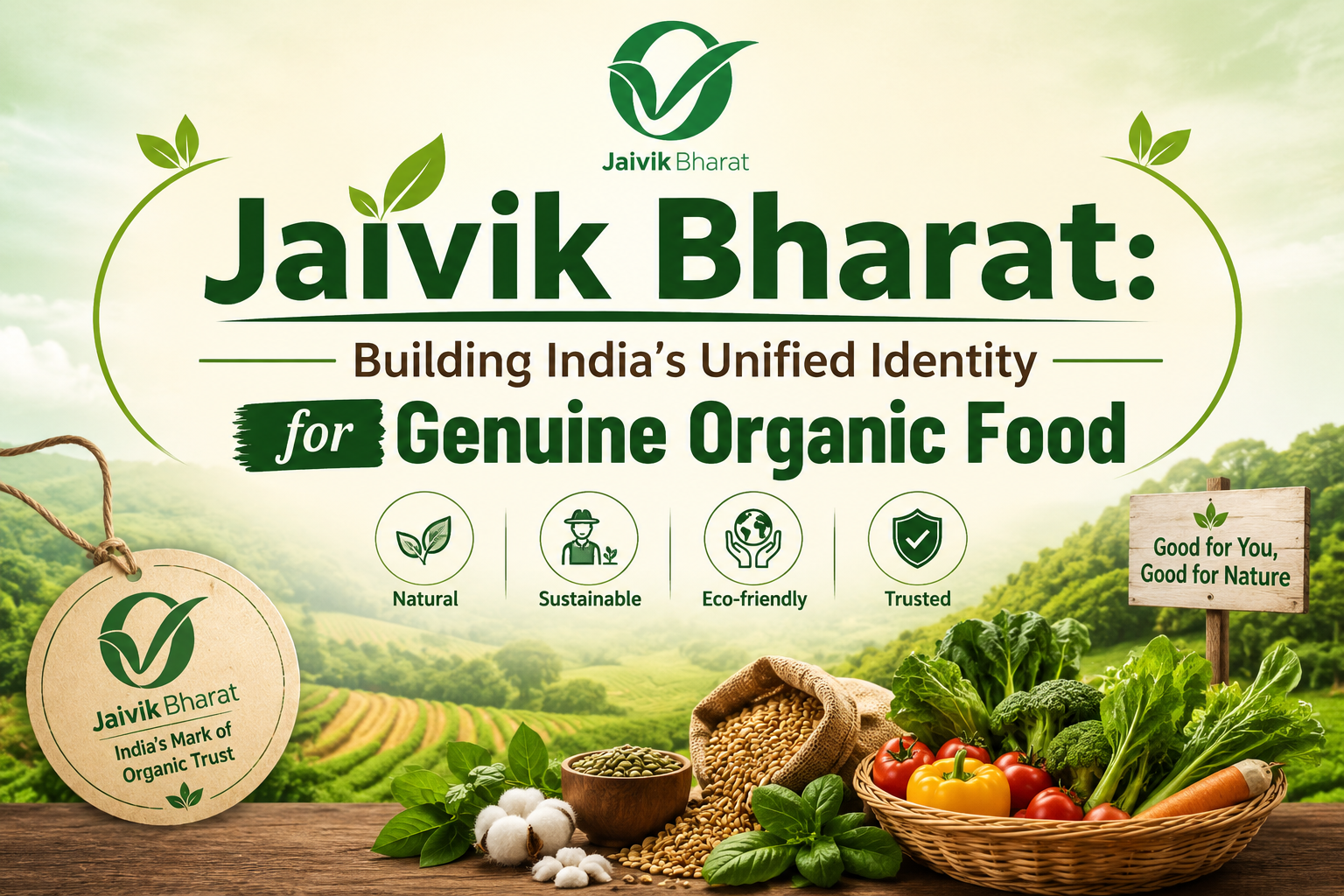
For organic food sold in the domestic Indian market, FSSAI’s Jaivik Bharat framework is also important. It helps consumers identify and recognize certified organic food products.
In India, organic products may therefore be associated with different certification or identification systems:
- NPOP Certification: Mainly important for organic products intended for export markets.
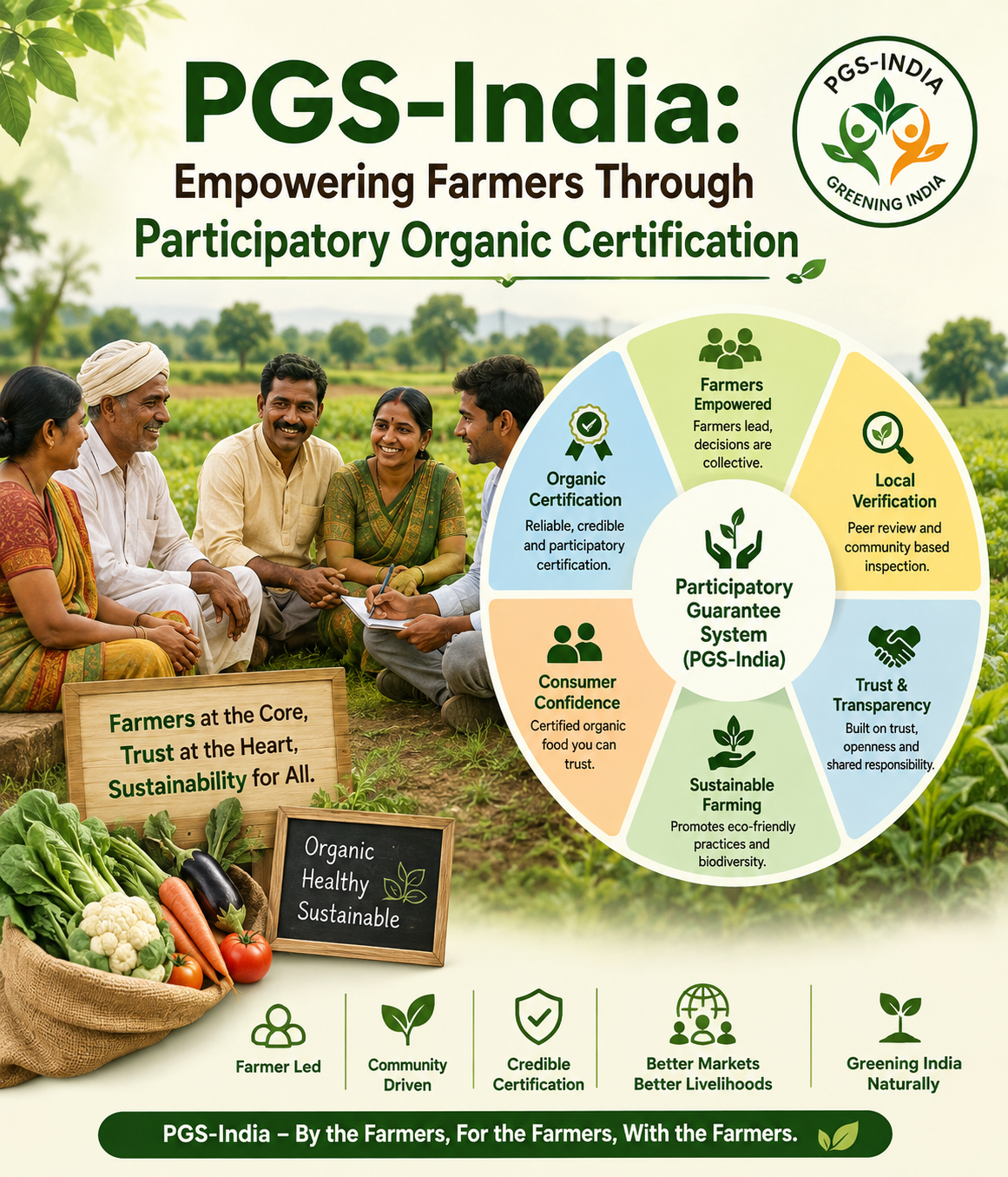
- Participatory Guarantee System (PGS-India): A community-based system that helps certify organic farming, particularly for domestic markets and small farmers.
- Jaivik Bharat Logo: Used for consumer identification of organic food products in India and helps consumers distinguish organic products from conventional ones.
NPOP mainly supports India’s organic exports, while PGS-India and the Jaivik Bharat framework are also important for organic products in the domestic market.
Key Concerns
Challenges Under NPOP
One of the biggest challenges faced by NPOP is maintaining the credibility of organic certification. Simply giving a product an “organic” label is not enough. There must be proper inspections, accurate records and reliable tracking at every stage.
Certification can become unreliable if:
- Inspections are not carried out properly
- Records are manipulated or incorrect information is provided
- Farmers use prohibited chemicals but the practice is not detected
- Traceability is lost between the farm, processor and exporter
- Certification bodies do not monitor farmers and producer groups closely
Concern Around Organic Cotton
Organic cotton certification has received particular attention because cases of irregularities have been reported. In some cases, action was taken against certification bodies, including suspension or cancellation of their accreditation.
This highlights an important point: organic certification is not just a formality. If certification is weak or unreliable, it can damage the reputation of Indian organic products in international markets.
Other Major Challenges
- Weak monitoring of certification bodies: Certification agencies themselves need regular and effective supervision.
- Contamination during storage and processing: Organic products can come into contact with conventional products or prohibited substances after harvesting.
- Large farmer groups are difficult to monitor: Checking whether every small farmer follows organic standards can be challenging.
- High certification costs: Small and marginal farmers may find certification expensive and difficult to manage.
- Gaps in post-production tracking: Maintaining traceability after harvesting, especially during processing, storage and transportation, can be difficult.
- Fake organic claims: There is always a risk that conventional products may be falsely sold or labelled as organic.
The main challenge for NPOP is maintaining trust in the organic label. Strong inspections, transparent certification, proper record-keeping and complete traceability are essential to ensure that a product sold as “organic” is genuinely organic and that India maintains its credibility in the global organic market.
Conclusion
The National Programme for Organic Production (NPOP) is India’s main system for certifying organic products, especially those meant for export. It is implemented by APEDA under the Ministry of Commerce and Industry and sets rules for organic farming, certification, inspection, labelling and tracking of products from the farm to the market. NPOP helps ensure that Indian organic products meet required standards and can be trusted by buyers in international markets. Its success depends on strict certification, proper inspections, transparent traceability and strong action against any irregularities. A reliable NPOP system is important not only for farmers and exporters but also for maintaining India’s reputation as a trusted supplier of organic products in the global market.