Current Affairs March 2026
Every day of the month in one file. Enter your details once — the download opens right away.
We already have your details, so no form: tap to open.
Download the March 2026 PDFDownload the March 2026 revision sheet PDFFree live session
NABARD Grade A 2026: what the 2025 cut-offs changed, and the 90-day plan
The 2025 cycle was the toughest on record at every stage. This session reads those numbers properly and turns them into a week-by-week plan for Phase 1.
Today · 7:30 PM IST · 75 minutes · free
March 2026 at a glance
22 daily compilations, 598 items across 5 topics — Facts To Remember weighed the most. Read the charts first: they tell you where this month's questions will come from.
22 daily compilations | 598 items covered | 5 topics | 20 data tables |
Items by topic | Items per day Darker = a heavier day. Two-day posts are split across their days. |
₹15,000 The earlier Paragraph 11(4) of the Employees’ Pension Scheme 1995 allowed employees and employers to opt for pension … Employees’ Pension Scheme (EPS), 2026 · 12 13 & 14 March 2026 | 95% Countdown to 2030 The GEM Report's framing of urgency — with only 4 years remaining to the SDG deadline and completio… UNESCO GEM Report 2026 · 31 March 2026 |
₹1 crore Established at a cost of ₹1 crore Tamil Nadu Launches First Dark Sky Park in Kolli Hills · 1 & 2 March 2026 | ₹11.50 lakh In February 2026, the Reserve Bank of India (RBI) imposed a monetary penalty of ₹11.50 lakh on Mahindra & Mahindra Fi… RBI Imposes ₹11.50 Lakh Penalty on Mahindra & Mahindra Financial Services · 3 March 2026 |
₹10,000 crore In March 2026, Bank of Baroda raised ₹10,000 crore through Series-I long-term Green Infrastructure Bonds, becoming th… Bank of Baroda Raises ₹10,000 Crore Through Green Infrastructure Bonds · 10 & 11 March 2026 | ₹2.08 trillion Earlier central assistance approved in 2019–20: ₹2.08 trillion. Jal Jeevan Mission 2.0 · 12 13 & 14 March 2026 |
₹2,584.60 crore The Union Cabinet has approved the Small Hydro Power (SHP) Development Scheme for the period FY 2026-27 to FY 2030-31… Small Hydro Power (SHP) Development Scheme · 20 March 2026 | ₹25,101 crore The Reserve Bank of India injected ₹25,101 crore into the banking system through a 3-day Variable Rate Repo (VRR) auc… RBI Injects ₹25,101 Crore via VRR Auction · 20 March 2026 |
₹31.80 lakh In March 2026, the Reserve Bank of India (RBI) imposed a monetary penalty of ₹31.80 lakh on HSBC India for non-compli… RBI Imposes ₹31.80 Lakh Penalty on HSBC India for Deposit Norm Violations · 23 March 2026 | ₹20,000 crore The Government of India launched the Credit Guarantee Scheme for Microfinance Institutions-2.0 (CGSMFI-2.0) in March … Credit Guarantee Scheme for Microfinance Institutions-2.0 (CGSMFI-2.0) · 24 March 2026 |
₹95.40 lakh Union Bank of India: ₹95.40 lakh RBI Imposes Penalties on Banks and Fintech Firm · 29 & 30 March 2026 | 7.6% FY 2025–26 GDP growth revised to 7.6%. New GDP Series Upgrades FY26 Growth to 7.6% · 28 February 2026 |
 Scheme to knowPM-JANMAN: Pradhan Mantri Janjati Adivasi Nyaya Maha Abhiyan for PVTGsPM-JANMAN (Pradhan Mantri Janjati Adivasi Nyaya Maha Abhiyan) is a Rs 24,104 crore mission launched in November 2023…
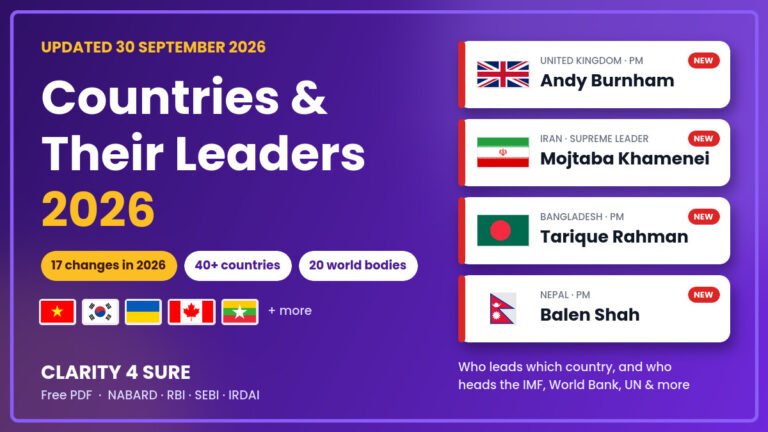 Free sheet · Static GKCountries & Their Leaders 2026Who leads which country in 2026, with all 17 changes marked. Get the article and the PDF free on WhatsApp.Get it free on WhatsApp →
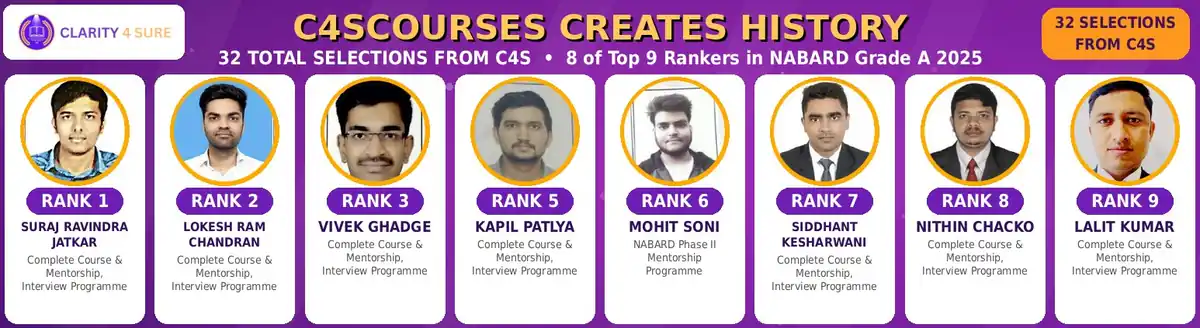
8 of the top 10 ranks in NABARD Grade A 2025 came from one classroom
Ranks 1, 2, 3, 5, 6, 7, 8 and 9 on the final list, and 32 selections in all, prepared with C4S Courses (Clarity 4 Sure). The same descriptive training and the same current affairs notes you are reading now.
- 1Suraj Ravindra JatkarRank 1
- 2Lokesh Ram ChandranRank 2
- 3Vivek GhadgeRank 3
- 5Kapil PatlyaRank 5
- 6Mohit SoniRank 6
- 7Siddhant KesharwaniRank 7
- 8Nithin ChackoRank 8
- 9Lalit KumarRank 9
- 28 February, 2026
- 01 & 02 March, 2026
- 03 March, 2026
- 04 & 05 March, 2026
- 06 & 07 March, 2026
- 08 & 09 March, 2026
- 10 & 11 March, 2026
- 12,13&14 March, 2026
- 15 & 16 March, 2026
- 17 March, 2026
- 18 March, 2026
- 19 March, 2026
- 20 March, 2026
- 21 & 22 March, 2026
- 23 March, 2026
- 24 March, 2026
- 25 March, 2026
- 26 March, 2026
- 27 March, 2026
- 28 March, 2026
- 29 & 30 March, 2026
- 31 March, 2026
28 February, 2026
Daily Current Affairs Quiz
28 February, 2026
National Affairs
1. INS Anjadip Commissioned
Source: TOI
Why in News?
The Indian Navy commissioned INS Anjadip, the fourth indigenously designed Anti-Submarine Warfare Shallow Water Craft (ASW-SWC), at Chennai Port.
Key Details
- Commissioned by Chief of Naval Staff Admiral Dinesh K. Tripathi.
- Built by Garden Reach Shipbuilders & Engineers (GRSE) at Kattupalli.
- Length: 77 metres.
- Named after the historic Anjadip Island near Karwar.
Capabilities and Features
- Designed to detect, track and neutralise enemy submarines in coastal and shallow waters.
- Equipped with:
- Shallow-water sonars
- Lightweight torpedoes
- Anti-submarine rockets
- Advanced combat management system
- Suitable for:
- Coastal surveillance
- Low-intensity maritime operations
- Search and rescue missions
2. Rail Tech Policy
Source: TOI
Why in News?
The Ministry of Railways launched the Rail Tech Policy along with a dedicated Rail Tech Portal. The initiative aims to involve startups and innovators in solving railway challenges through technology.
About Rail Tech Policy
- A technology-driven innovation framework of Indian Railways.
- Provides a structured platform for startups, industry, researchers, and innovators to develop and test technological solutions for railway operations.
Ministry: Ministry of Railways, Government of India.
Objectives
- Transform Indian Railways into a technology-enabled and innovation-led transport system.
- Promote adoption of:
- Artificial Intelligence (AI)
- Automation
- Data analytics
- Digital systems
- Improve safety, maintenance, and operational efficiency.
Key Features
Rail Tech Portal
- 24×7 digital platform inviting innovative ideas and solutions.
- Facilitates proposal submission, evaluation, and pilot implementation.
Innovation Challenges
Focus on emerging technological solutions such as:
- AI-based monitoring systems
- Drone-based rail inspection
- Rail stress and track monitoring
- Sensor-based predictive maintenance
Safety Priority
- Highest priority given to startup solutions related to railway safety.
3. ASTraM – Actionable Intelligence for Sustainable Traffic Management
Source: The Hindu
Why in News?
Former Dutch Prime Minister Dick Schoof visited the Bengaluru Traffic Management Centre to study the ASTraM system, which has drawn global attention for its AI-based traffic prediction and management capabilities.
About ASTraM
- An AI-driven big data platform for macro-level traffic management.
- Provides city authorities with real-time, integrated situational awareness of traffic conditions.
- Goes beyond GPS navigation by enabling predictive and strategic traffic control.
Developed By
- Bengaluru Traffic Police in collaboration with Arcadis, a Dutch design and consultancy firm.
Objective
- Shift traffic management from a reactive approach to a proactive, data-driven system.
- Reduce congestion and improve road safety.
- Enable faster and automated incident detection and response.
4. India’s Young Adults Rank 60th in Global Mental Health Report
Source: IE
In February 2026, US-based NGO Sapien Labs released its report titled
“Global Mind Health in 2025: Mind Health – The Ability to Navigate Life’s Challenges and Function Productively.”
India’s Ranking
- Youth (18–34 years):
- Rank: 60th out of 84 countries
- Mind Health Quotient (MHQ) Score: 33
- Older Adults (55+ years):
- Rank: 49th globally
- MHQ Score: 96
Observation: Older Indians perform significantly better in mental health indicators compared to young adults.
About the Global Mind Health 2025 Report
Methodology
Countries are ranked using the Mind Health Quotient (MHQ), which measures:
- Emotional capacity
- Social functioning
- Cognitive abilities
- Physical well-being
Global Findings
- Global Average MHQ Score: 66
- Adults 55+ years:
- Average MHQ: 101
- Nearly 10% face clinically major mental health challenges
- Youth (18–34 years):
- Average MHQ: 36
- 41% experience clinically major mental health issues
Top Performing Countries
Youth (18–34 years)
- Ghana
- Nigeria
- Kenya and Zimbabwe
Adults (55+ years)
- Indonesia
- El Salvador
- Ghana and Mexico
5. India’s First State Innovation Mission (SIM) Launched in Tripura
Source: PIB
Context:
Launched by Dr. Jitendra Singh, Union Minister of State (Independent Charge), Ministry of Science & Technology.
- Venue: Hapania International Exhibition Center, Agartala, Tripura.
- Northeast described as the “New Engine of India’s Growth.”
About State Innovation Mission (SIM)
- First State-level innovation mission in India.
- Part of Atal Innovation Mission (AIM) 2.0.
- Implemented under NITI Aayog’s State Support Mission (SSM).
- Purpose:
- Build strong and inclusive innovation ecosystems in States and UTs.
- Align innovation with national priorities and local capabilities.
- Provide long-term institutional support for innovation-led development.
Other Key Launches in Tripura
- T-NEST (Tripura: Nurturing Entrepreneurship and Startups)
- First premier incubation and innovation hub of Tripura.
- Focus on startup promotion and entrepreneurship development.
- District Innovator Fellowship (DIF)
- Among India’s first district-level innovation fellowship programmes.
- Identifies grassroots innovators and supports them through structured lifecycle mentoring.
- Upcoming AI Policy
- Tripura announced plans to introduce a state Artificial Intelligence policy.
Banking/Finance
1. New GDP Series (Base Year FY23)
Source: IE
Why in News?
The Ministry of Statistics and Programme Implementation (MoSPI) has revised India’s national accounts. GDP base year shifted from 2011–12 to 2022–23 to improve accuracy and align with global statistical standards.
What is GDP Base Year?
- A base year is a reference year used to calculate Real GDP by removing inflation effects.
- It reflects a year with relatively stable prices and economic structure.
- Helps measure actual growth in output and production, not just price changes.
New Base Year
- Earlier base year: 2011–12
- Revised base year: 2022–23 (FY23)
- Updated periodically to align with the System of National Accounts (SNA).
Objective of the Revision
- Reflect modern economic structure and consumption patterns.
- Capture growth of digital economy and new industries.
- Improve measurement of informal and gig sectors.
- Align with global statistical best practices.
Key Methodological Changes
Advanced Inflation Adjustment (Deflation)
- Number of price indicators increased significantly (approx. 180 → 600).
- Sector-specific price indices replace broad economy-wide deflators.
- Double deflation introduced in manufacturing and agriculture:
- Inputs and outputs deflated separately.
- Prevents raw material price changes from appearing as production growth.
Better Measurement of Informal & Household Sector
- Uses updated annual data instead of outdated proxies.
- Data sources include:
- Annual Survey of Unincorporated Sector Enterprise (ASUSE)
- Periodic Labour Force Survey (PLFS)
- Explicit tracking of gig and platform workers.
Integration of Big Data & Administrative Sources
- GST data used to verify corporate activity and regional output.
- e-Vahan data for transport sector estimation.
- Public Finance Management System (PFMS) for real-time government spending.
Improved Structural Consistency
- Supply and Use Tables (SUT) reconcile production and expenditure estimates.
- Reduces statistical discrepancies in GDP calculations.
Refined Consumption Estimation
- Private Final Consumption Expenditure (PFCE) estimated using:
- Survey data
- Commodity flow approach
- Production data
- Based on global COICOP 2018 classification.
Improved Quarterly Estimates
- Proportional Denton method used to smooth quarterly data.
- Removes artificial spikes in short-term growth numbers.
2. New GDP Series Upgrades FY26 Growth to 7.6%
Source: TOI
Why in News?
The Government released Second Advance Estimates of GDP based on the new national accounts series. India’s GDP growth for FY 2025–26 is now estimated at 7.6%, higher than earlier projections.
Key Highlights:
- FY 2025–26 GDP growth revised to 7.6%.
- Earlier First Advance Estimate (January): 7.4% (based on old series).
- New GDP series includes:
- Updated base year: 2022–23 (earlier 2011–12).
- Improved methodologies.
- Additional data sources for better accuracy and granularity.
Revisions to Previous Years
- FY 2023–24 growth revised down:
- From 9.2% (old series) → 7.2% (new series)
- FY 2024–25 growth revised up:
- From 6.5% → 7.1%
Nominal GDP Impact
- Nominal GDP (size of the economy) revised downward for 2023–26.
- This may worsen key fiscal indicators such as:
- Fiscal deficit-to-GDP ratio
- Debt-to-GDP ratio
3. MSME Ministry Upgrades NSIC to Schedule ‘A’ Category CPSE
Source: PIB
Why in News?
- The Ministry of MSME has upgraded the National Small Industries Corporation (NSIC) to Schedule ‘A’ status from Schedule ‘B’.
- The move recognises NSIC’s consistent “Excellent” performance and growing operational scale.
About Central Public Sector Enterprises (CPSEs)
- Companies in which the Central Government holds 51% or more equity.
- Operate in sectors such as infrastructure, manufacturing, finance, energy, and services.
Governing Framework
- Incorporation:
- Companies Act, 2013 (or earlier 1956 Act), or
- Established as statutory corporations through Acts of Parliament.
- Administrative Authority:
- Department of Public Enterprises (DPE), Ministry of Finance.
History of Categorisation
- Introduced in 1965 following recommendations of the Committee on Top Posts.
- Purpose: Create hierarchy among CPSEs for:
- Pay scale determination
- Board-level executive ranking
- Governance structure
Four Schedules of CPSEs
Schedule A
- Highest tier.
- Large enterprises with major national and strategic importance.
Schedule B
- Mid-sized enterprises.
Schedule C
- Smaller enterprises or niche operations.
Schedule D
- Smallest tier; often for newly established CPSEs.
Basis of Categorisation
Quantitative Criteria
- Investment
- Capital employed
- Net sales
- Profit before tax
- Number of employees
(Performance assessed over last five years)
Qualitative Criteria
- National importance
- Technological complexity
- Strategic significance
- Expansion potential
Implications of Schedule ‘A’ Status
- Higher Industrial Dearness Allowance (IDA) pay scales for CMD and Directors.
- Stronger board structure.
- Greater operational and strategic recognition.
- Enhanced institutional stature.
Agriculture
1. Women’s Role in Agriculture Shifting from Drudgery to Systematic Work
Source: TH
Why in News?
At the 5th Agri and Commodity Summit in New Delhi, the Agriculture Secretary highlighted that women’s role in agriculture is evolving from manual labour to more organised and systematic participation.
Key Observations
- Women’s participation in agriculture is becoming more structured and professional.
- Changes in land ownership laws across many states have enabled more women to own agricultural land.
- Increasing number of women joining Farmer Producer Organisations (FPOs).
- Women constitute nearly 50% of the rural agricultural workforce.
Structural Challenges
- Many women still lack formal recognition as farmers.
- Around 50–70% of women farmers do not hold land titles in their names.
- Limited access to markets, finance, and value-chain opportunities.
- Need for improved basic amenities and institutional support.
Economic Role of Women
- Women play a crucial role in dairying, which has grown larger in value than grains and pulses.
- Strong involvement in nutrition, food security, and household welfare.
- Increasing contribution through Self-Help Groups (SHGs) and rural entrepreneurship.
Policy and Institutional Suggestions
- Formal recognition of women as farmers.
- Greater access to land ownership and financial services.
- Support for women to move up the agricultural value chain.
- Better market linkages and structured support for SHGs.
Facts To Remember
1. Fiscal deficit at 63% of full-year target: CGA
The Centre’s fiscal deficit at the end of January stood at ₹9.8 lakh crore, or 63% of the annual budget target for 2025-26, compared with 74.5% in the year-ago period, government data released on Friday showed.
2. Rail Tech Policy and e-RCT System Launched by Ashwini Vaishnaw
Union Minister Ashwini Vaishnaw launched the Rail Tech Policy and full digitisation of the Railway Claims Tribunal under the ‘52 Reforms in 52 Weeks’ initiative.
The policy aims to promote innovation by engaging startups, industry, and research institutions in railway technology.
A dedicated RailTech Portal will enable end-to-end digital proposal submission.
Indian Railways will fund up to 50% of development costs and support large-scale adoption of successful solutions.
3. India’s First State Innovation Mission Launched in Tripura
Union Minister Jitendra Singh launched India’s first State Innovation Mission (SIM) in Tripura under Atal Innovation Mission 2.0.
The mission aims to build inclusive and state-specific innovation ecosystems across states and UTs.
It will support startups, grassroots innovators, and research-driven development.
The initiative also aligns with strengthening innovation capacity in the Northeast region.
4. NSIC Upgraded to Schedule ‘A’ CPSE by MoMSME
The Ministry of MSME upgraded National Small Industries Corporation from Schedule ‘B’ to Schedule ‘A’ CPSE status in February 2026.
The upgrade provides greater financial and operational autonomy to support MSMEs.
NSIC plays a key role in credit facilitation, marketing support, and enterprise development.
The move recognises its strong performance and contribution to the MSME ecosystem.
5. India–Sweden Sign SoI to Strengthen AI and Digital Cooperation
India AI Mission signed a Statement of Intent with Business Sweden at the India AI Impact Summit 2026.
The partnership will promote responsible AI development and deployment.
Both countries will launch the Sweden-India Technology and AI Corridor (SITAC) programme.
It will enhance collaboration among governments, startups, academia, and industries.
6. NMDC and IIT Hyderabad Sign MoU for Indigenous Mining Technologies
NMDC Limited signed an MoU with IIT Hyderabad to boost research in mining and metallurgical technologies.
The collaboration focuses on green steelmaking, iron ore beneficiation, and Mining 4.0 solutions.
It will promote AI, IoT, autonomous vehicles, and drone-based mining systems.
The initiative supports Atmanirbhar Bharat and sustainable mining development.
7. Ministry of Culture Signs MoU with FICCI for Cultural & Creative Economy
The Ministry of Culture signed an MoU with FICCI to develop a national strategy for the Cultural and Creative Economy.
The agreement aims to integrate culture with economic policy and promote entrepreneurship.
It will enhance global market access and employment opportunities for artists and artisans.
The collaboration covers sectors like crafts, media, design, tourism, and heritage.
8. UIDAI Partners with Google to Show Verified Aadhaar Centres on Maps
UIDAI collaborated with Google to display authorised Aadhaar Centres on Google Maps.
The initiative will improve accessibility and transparency in Aadhaar services.
Over 60,000 Aadhaar Centres, including Aadhaar Seva Kendras, will be covered in phases.
It will also enable service details, feedback, and future appointment booking features.
9. India’s Young Adults Rank 60th in Global Mind Health Report 2025
Sapien Labs’ Global Mind Health Report 2025 ranked India’s young adults (18–34) 60th out of 84 countries.
India recorded a Mind Health Quotient (MHQ) score of 33 among youth.
Older adults (55+) performed better with a higher global ranking.
The report highlights growing mental health challenges among young populations worldwide.
10. Børge Brende Resigns as WEF President and CEO
Børge Brende resigned as President and CEO of the World Economic Forum in February 2026.
Alois Zwinggi was appointed as the interim President and CEO.
Brende had led the WEF since 2017 with a focus on global economic cooperation.
He is a former Norwegian Foreign Minister and diplomat.
11. RBI Approves SBI MF to Acquire Up to 9.99% Stake in RBL Bank and Bandhan Bank
The Reserve Bank of India approved SBI Mutual Fund to acquire up to 9.99% stake in RBL Bank and Bandhan Bank.
The acquisition must be completed within one year and comply with regulatory norms.
Fresh approval will be required if the stake falls below 5% and is raised again.
The move ensures transparent ownership and financial stability in the banking sector.
12. Facebook Overseas Acquires 30% Stake in REIL
Facebook Overseas acquired a 30% stake in Reliance Enterprise Intelligence Limited (REIL) for Rs.256.6 crore.
REIL focuses on enterprise Artificial Intelligence solutions and digital infrastructure.
Reliance Intelligence will retain 70% ownership after the transaction.
The deal was disclosed under SEBI’s listing regulations.
13. Veteran CPI Leader R. Nallakannu Passed Away
Veteran communist leader R. Nallakannu passed away at the age of 101 in Chennai.
He was a freedom struggle participant and a prominent leader of the Communist Party of India.
He strongly advocated for farmers’ rights, land reforms, and social justice.
His legacy includes decades of grassroots activism and public service.
14. World NGO Day 2026 Observed on 27 February
World NGO Day is observed globally on 27 February to recognise the role of NGOs in social welfare and development.
The 2026 observance marked the 13th edition of the global event.
It highlights contributions of non-profits in human rights, inclusion, and sustainability.
The day was founded in 2009 and first celebrated globally in 2014.
15. Rare Disease Day 2026 Observed on 28 February
Rare Disease Day is observed annually on the last day of February to raise awareness about rare conditions.
The 2026 theme is “More than you can imagine: the realities behind rare diseases”.
The campaign promotes research, healthcare access, and policy support.
It was first launched in 2008 by EURORDIS and is now observed in over 100 countries.
15. Chhattisgarh Presents ₹1.72 Lakh Crore Budget for FY27
Finance Minister O. P. Chaudhary presented the ₹1.72 lakh crore FY27 Budget in the state assembly.
The budget focuses on Bastar development, education, agriculture, and industry.
Capital expenditure is estimated at ₹26,500 crore with a fiscal deficit of 2.87% of GSDP.
Social sector received the highest allocation with emphasis on inclusive growth.
16. Sikkim Renames Pakyong Airport After Trilochan Pokhrel
Pakyong Airport will be renamed after freedom fighter Trilochan Pokhrel.
The announcement was made by Chief Minister Prem Singh Tamang in February 2026.
Pokhrel, known as ‘Gandhi Pokhrel’, contributed to India’s freedom movement.
The airport was inaugurated in 2018 as India’s 100th operational airport.
17. Delhi Launches ‘CM Jansunwai Portal’ for Grievance Redressal
Delhi CM Rekha Gupta launched the CM Jansunwai Portal to strengthen public grievance redressal.
The platform centralises complaints across departments with digital tracking.
Citizens can submit grievances via portal, app, helpline, and offline channels.
It features a three-tier mechanism for faster resolution and transparency.
- Introduced in 1965 following recommendations of the Committee on Top Posts. MSME Ministry Upgrades NSIC to Schedule ‘A’ Cat…
- The Government released Second Advance Estimates of GDP based on the new national accounts series. India’s GDP growth for FY 2025–26 is now estimated at 7.6%, higher than earlier projections. New GDP Series Upgrades FY26 Growth to 7.6%
- Women constitute nearly 50% of the rural agricultural workforce. Women’s Role in Agriculture Shifting from Drudg…
- In February 2026, US-based NGO Sapien Labs released its report titled“Global Mind Health in 2025: Mind Health – The Ability to Navigate Life’s Challenges and Function Productively.” India’s Young Adults Rank 60th in Global Mental…
- Part of Atal Innovation Mission (AIM) 2.0. India’s First State Innovation Mission (SIM) La…
01 & 02 March, 2026
Daily Current Affairs Quiz
01 & 02 March, 2026
International Affairs
1. Pakistan–Afghanistan War
Context:
Tensions between Pakistan and Afghanistan have reportedly escalated into a major military confrontation following Pakistan’s launch of Operation Ghazab lil-Haq, marking one of the most serious crises between the two neighbours in recent years.
What is the Conflict About?
The present escalation represents a shift from:
- Sporadic border skirmishes
- Diplomatic tensions
- Proxy accusations
to a more conventional military confrontation, involving:
- Air force strikes
- Heavy artillery
- Armoured units
The fighting is primarily between the Pakistan Armed Forces and the Afghan Taliban authorities.
Region of Tension
1. The Durand Line
The conflict centres around the Durand Line, a 2,640 km porous border between the two countries.
Afghanistan has historically refused to formally recognise it as an international boundary.
2. Key Flashpoints
- Torkham Border Crossing (major trade and transit route)
- Kandahar (Taliban stronghold)
- Paktia Province
- Reports indicate airstrikes extending towards Kabul
Core Points of Conflict
Cross-Border Terrorism
Pakistan accuses the Afghan Taliban of providing sanctuary to the Tehrik-i-Taliban Pakistan (TTP), which has carried out attacks inside Pakistan.
Border Fencing Dispute
Pakistan has attempted to fence the Durand Line.
The Taliban opposes this, leading to frequent armed clashes.
Operation Launched
Operation Ghazab lil-Haq
Launched by Pakistan with the stated objective of:
- Neutralising Afghan combatants
- Destroying militant infrastructure
- Securing border areas
National Affairs
1. PM Launches Micron ATMP Semiconductor Plant in Gujarat
Source: News on Air
Prime Minister Narendra Modi inaugurated Micron Technology Inc.’s Assembly, Test, Marking and Packaging (ATMP) semiconductor facility in Sanand, Gujarat — a major milestone in India’s semiconductor manufacturing push.
What is the ATMP Plant?
An ATMP (Assembly, Test, Marking and Packaging) facility:
- Packages semiconductor chips after fabrication (which occurs elsewhere).
- Converts advanced DRAM and NAND wafers into finished memory and storage products.
- Prepares chips for use in electronics, data centres, AI systems, and mobile devices.
This marks one of India’s first large-scale semiconductor packaging units.
Government Support
The project has received strong public backing under the India Semiconductor Mission:
- 50% capital subsidy from the Union Government (around ₹22,516 crore support).
- 20% additional support from the Gujarat Government.
2. Government Bank Dashboard & Manual Initiative
Source: ET
The Controller General of Accounts (CGA), under the Government of India, has launched the Government Bank Dashboard and Government Bank Manual to modernise oversight of government banking operations.
What is the Initiative?
It is a dual reform measure comprising:
- Government Bank Dashboard — A real-time digital monitoring platform
- Government Bank Manual — A standardized operational rulebook for banks handling government transactions
Together, they aim to strengthen transparency, efficiency, and accountability in managing public funds.
Objective
- Reduce operational risks in government banking
- Minimise delays and reconciliation gaps
- Standardise procedures across all banks
- Ensure uniform handling of government receipts and payments
- Shift from reactive (post-facto) correction to proactive oversight
Key Features
1. Real-Time Monitoring
The Dashboard tracks critical performance indicators such as:
- Remittance timelines
- Transaction success and failure rates
- Scroll submission compliance
- Reconciliation status
This allows continuous tracking of banks’ performance in handling government funds.
2. Standardised Operational Framework
The Government Bank Manual:
- Defines clear operational procedures
- Sets reporting obligations
- Specifies strict reconciliation timelines
- Establishes accountability benchmarks
This reduces ambiguity in government banking operations.
3. Proactive Oversight
Instead of detecting irregularities after delays occur, the system enables:
- Immediate alerts
- Performance-based evaluation
- Early risk detection
4. Service-Level Tracking
Banks’ adherence to service standards in managing government transactions is continuously monitored.
5. Future-Ready Architecture
The initiative is designed to support:
- Advanced data analytics
- Cybersecurity safeguards
- Strengthened digital financial governance
3. LCH Prachand — India’s Indigenous Light Combat Helicopter
Context:
President Droupadi Murmu recently undertook a historic sortie in the LCH Prachand at an Indian Air Force base, highlighting India’s growing indigenous defence capabilities.
What is LCH Prachand?
LCH Prachand is India’s first indigenously designed and developed dedicated combat helicopter, built for offensive missions in high-altitude and battlefield environments.
It is a multi-role light attack helicopter capable of:
- Air-to-air combat
- Air-to-ground strikes
- Anti-armour operations
- Counter-insurgency missions
Developed By
Designed and manufactured by Hindustan Aeronautics Limited (HAL) under the Light Combat Helicopter programme.
Strategic Objective
To provide India with a high-altitude combat platform capable of operating effectively in mountainous terrain such as:
- Siachen Glacier
- Leh–Ladakh region
These areas pose challenges for heavier helicopters due to thin air and extreme conditions.
4. Inland Waterway Projects on National Waterway-2
Context:
Union Minister Sarbananda Sonowal inaugurated three major inland waterway infrastructure projects on National Waterway 2 (River Brahmaputra) in Dibrugarh, Assam to strengthen logistics, trade, and river tourism in the North Eastern Region.
Key Projects
1. Bogibeel Customs & Immigration Complex (CIC)
- Modern tourist-cum-cargo terminal
- Integrates customs, immigration, and Inland Waterways Authority of India operations
- Includes arrival/departure halls, cargo storage, security systems, and staff facilities
2. Dhubri Gateway CIC
- Enhances export-import regulation and cargo movement
- Strengthens cross-border trade connectivity with Bangladesh and Bhutan
- Positions Dhubri as a strategic inland water transport hub
3. Renovated IWAI Heritage Building, Dibrugarh
- Restored administrative facility of Inland Waterways Authority of India
- Supports NW-2 management
- Promotes riverine tourism along the Brahmaputra
5. Tamil Nadu Launches First Dark Sky Park in Kolli Hills
Source: TH
Context:
Tamil Nadu’s first Dark Sky Park has been inaugurated at the Ariyur Shola Reserve Forest in Kolli Hills, Namakkal district by Forest Minister R S Rajakannappan, promoting astro-tourism and scientific awareness.
About the Dark Sky Park
- Established at a cost of ₹1 crore
- Equipped with advanced telescopes and solar-powered infrastructure
- Enables observation of stars, planets, the Milky Way, and the moon
- Minimal artificial light within a 1.5 km radius ensures ideal dark-sky conditions
- Operational from January 15 to June 15 (closed during monsoon)
India’s First Official Dark Sky Park
India’s first internationally recognised Dark Sky Park is Pench Tiger Reserve in Madhya Pradesh, designated in 2024 under the International Dark-Sky Places programme.
Banking/Finance
1. Small, Steady Steps Toward Rupee Internationalisation
Source: BS
India has begun a gradual, long-term process to make the rupee more widely used in global trade and finance. While progress is modest so far, policymakers view it as the beginning of a multi-decade transformation.
Current Status
The Reserve Bank of India (RBI) now tracks how much of India’s trade is invoiced and settled in rupees.
- About 5% of India’s international trade is now conducted in rupees.
- FY26 (Apr–Dec):
- Exports invoiced in rupees: 6.08%
- Imports invoiced in rupees: 4.82%
- Settlements in rupees remain lower but are gradually rising.
These numbers are small but signal early movement away from exclusive reliance on hard currencies like the US dollar.
Why India Wants Rupee Internationalisation
- Reduce dependence on the dollar-based global system
- The Russia-Ukraine war and sanctions showed risks of being cut off from dollar payment systems like SWIFT.
- Lower exchange-rate risk for exporters
- Trading in local currency avoids volatility linked to dollar fluctuations.
- Enhance economic sovereignty
- Greater global use of the rupee strengthens India’s financial autonomy.
Key Policy Steps Taken
1. Local Currency Trade Arrangements
India has signed agreements with countries such as the UAE, Indonesia, Maldives, and Mauritius to settle trade in local currencies.
- Uses Special Rupee Vostro Accounts (SRVAs) for settlements.
- 83 banks from 35 countries have opened such accounts in India.
2. Incentives for Rupee Invoicing
Exporters receive equal benefits whether they invoice trade in rupees or dollars.
3. Expanding Offshore Rupee Use
- Non-resident Indians can hold rupee accounts abroad.
- NRIs in Nepal, Bhutan, and Sri Lanka can take rupee loans from overseas branches of Indian banks.
4. Integration into Global Financial Markets
Indian government bonds are being added to major global emerging-market indices — a key step toward wider rupee acceptance.
Risks and Concerns
Some fear wider rupee use could cause:
- Exchange-rate volatility
- Pressure on foreign exchange reserves
- Reduced monetary policy control
2. Govt Launches eSushrut@Clinic — A “BHIM UPI Moment” for Healthcare Digitisation
Source: Mint
India’s National Health Authority (NHA) has introduced eSushrut@Clinic, a free digital platform aimed at small and mid-sized clinics, seeking to replicate the transformational impact of BHIM UPI in digital payments within the healthcare sector.
The platform has been developed by the Centre for Development of Advanced Computing (CDAC) and is integrated with the Ayushman Bharat Digital Mission (ABDM).
What is eSushrut@Clinic?
It is a SaaS-based (Software-as-a-Service) lightweight digital system, designed as a simpler alternative to expensive and complex Hospital Information Management Systems (HIMS).
It enables clinics to:
- Digitise patient records
- Manage appointments and OPD workflows
- Streamline consultations
- Access dashboards and administrative tools
- Integrate with the national digital health ecosystem
Clinics can use it via a simple web browser, without investing in heavy IT infrastructure.
Key Feature: Smart Assistant (CDSS)
The platform includes a Clinical Decision Support System (CDSS) that:
- Provides evidence-based treatment guidance
- Helps manage chronic diseases
- Supports diagnosis and treatment planning
- Assists doctors without replacing clinical judgment
Agriculture
1. Suspension of Fortified Rice Rollout
Source: TOI
Context:
The Central Government has temporarily halted the distribution of fortified rice under major welfare schemes due to concerns over nutrient stability during long storage periods.
What is Fortified Rice?
Fortified rice is regular rice enriched with essential micronutrients to improve nutritional intake, especially among vulnerable populations.
It typically contains:
- Iron
- Folic Acid
- Vitamin B12
The objective is to address hidden hunger and micronutrient deficiencies such as anaemia.
Where Was It Used?
Fortified rice was supplied through major government nutrition and food security programmes:
- Pradhan Mantri Garib Kalyan Anna Yojana (PMGKAY)
- Targeted Public Distribution System (TPDS) under the NFSA
- PM-POSHAN (Mid-Day Meal Scheme)
- Integrated Child Development Services (ICDS)
Aim of the Programme
- Reduce malnutrition and anaemia nationwide
- Improve nutrition among women and children
- Provide a cost-effective, scalable public health intervention
- Achieve nationwide coverage of fortified rice distribution by 2024
How Rice is Fortified
- Fortified Rice Kernels (FRK) Production
Rice flour is mixed with vitamins and minerals and shaped into grain-like kernels. - Blending
FRKs are mixed with regular rice, usually in a 1:100 ratio.
Key Features of the Initiative
- Entirely funded by the Government of India (food subsidy system)
- Phased rollout began in 2021
- Technical support from the World Food Programme
- Intended for nationwide coverage through welfare schemes
2. Global Agricultural Subsidies Linked to Deforestation
Source: Mint
Context:
Governments worldwide are spending vast sums on agricultural subsidies — especially fertilizers — but a significant share of this support is environmentally harmful and economically inefficient, according to World Bank environment director Valerie Hickey.
Scale of the Issue
- Global agricultural subsidies total about $2 billion per day.
- Around 14% of these subsidies are directly linked to deforestation.
- Many subsidies are “nature-negative”, contributing to environmental degradation rather than sustainable productivity.
Fertilizer Overuse and Productivity Concerns
- In several developing and emerging economies, including India, agricultural support has traditionally focused on input subsidies like fertilizers.
- Excess fertilizer use can degrade soil health and even reduce crop yields when soils become oversaturated.
- Estimated impact:
- 10% rise in fertilizer use → only 2% productivity gain
- But also → 3% increase in respiratory illness
This suggests diminishing returns and growing environmental and health costs.
Policy Shift Recommended
The World Bank argues the key issue is not the amount of spending but how subsidies are designed. It recommends shifting from:
- Input-based support (fertilizers, chemicals)
➡ to - Investment in research, innovation, and sustainable farming practices
India’s Position
- India has allocated ₹1.71 trillion for fertilizer subsidies (FY27) to cushion farmers from global price shocks.
- At the same time, the government is promoting sustainable alternatives such as fertilizer-free natural farming.
India launched the National Mission on Natural Farming in 2024, supported by Prime Minister Narendra Modi, to encourage eco-friendly agriculture.
Facts To Remember
1. PM’s Tamil Nadu Visit
Prime Minister Narendra Modi is set to inaugurate and launch development projects worth over ₹4,000–₹4,400 crore during his two-day visit to Tamil Nadu, covering Chennai and Madurai, along with a stop in Puducherry.
2. J&K wins maiden Ranji Trophy title
Jammu & Kashmir etched its name in the history books by clinching its maiden Ranji Trophy cricket title on the basis of afirst-innings lead, after the final against Karnataka ended in a draw on Saturday in Hubbali.
3. PM unveils Microns plant in Gujarat
Prime Minister Narendra Modi on Saturday inaugurated Micron Technologys semiconductor plant at Sanand in Gujarat, and said that after being known for its strength in software, the country is firmly establishing its identity in the hardware sector too.
4. Nine Botswana Cheetahs Released in Kuno National Park
India’s cheetah reintroduction programme received a major boost with the release of nine cheetahs from Botswana into Kuno National Park in Madhya Pradesh. The release was carried out by Union Environment Minister Bhupender Yadav.
5. Upgraded RAJMARG PRAVESH 2.0 Portal Launched by Nitin Gadkari
Union Minister Nitin Gadkari launched RAJMARG PRAVESH Version 2.0 to streamline online NOC approvals for facilities along National Highways.
The portal enables applications for fuel stations, utilities, private access roads, and infrastructure services.
It supports laying pipelines, optical fibre, and power lines along or across highways.
The upgrade promotes transparency, faster approvals, and ease of doing business.
6. JP Nadda to Head Reconstituted Hindi Advisory Committee
Union Minister J. P. Nadda was appointed Chairman of the Hindi Advisory Committee of the Chemicals & Fertilizers Ministry.
The committee will review and promote progressive use of Hindi in official work.
It comprises nominated and official members with a three-year tenure.
The move strengthens implementation of the Official Language policy.
7. IAF Conducts Joint Maritime Exercise ‘Kalari Leap’
The Indian Air Force Southern Air Command conducted ‘Kalari Leap’ in the Arabian Sea region.
The exercise validated rapid force projection and joint maritime operations.
It involved AFSOD and the Indian Coast Guard with air-landed and amphibious drills.
Aircraft like Su-30MKI, AN-32, and Mi-17V5 participated in the operation.
8. IAF Holds ‘Vayushakti-26’ at Pokhran Range
The Indian Air Force conducted Exercise ‘Vayushakti-26’ at Pokhran, Rajasthan.
It showcased integrated air combat operations in a simulated live theatre scenario.
Over 130 aircraft including Rafale, Su-30MKI, and Mirage-2000 took part.
President Droupadi Murmu attended the demonstration as Chief Guest.
9. PM Narendra Modi Visits Israel in February 2026
Prime Minister Narendra Modi visited Israel and addressed the Knesset during his two-day state visit.
He was conferred the ‘Medal of the Knesset’, becoming the first Indian PM to receive the honour.
India and Israel announced a Special Strategic Partnership for Peace, Innovation and Prosperity.
Several agreements were signed covering defence, AI, cybersecurity, and trade cooperation.
10. IIFL Home Finance Secures USD 300 Million ADB Loan
IIFL Home Finance secured a USD 300 million loan from the Asian Development Bank to expand affordable housing.
At least 25% of funds will support green-certified homes.
The loan includes parallel funding from global financial institutions.
The initiative mainly targets women borrowers and low-income households.
11. West Bengal Approves ₹4,648 Crore ADB-Backed Projects
The West Bengal Cabinet approved ₹4,648 crore projects with ADB support.
The projects focus on strengthening secondary education and child nutrition infrastructure.
Funding follows a 70:30 model between ADB and the state government.
The move aims to improve human capital development in the state.
12. Jio Finance Launches AI-Powered ‘Finsider’ App
Jio Financial Services Limited launched the AI-backed ‘Finsider’ feature on its JioFinance app.
The app uses agentic AI and neural networks for hyper-personalized financial services.
It offers loans, insurance, UPI, mutual funds, and investment products.
Users can earn JioPoints rewards during the early access programme.
13. Central Bank of India Partners with Canara Robeco AMC
Central Bank of India signed a distribution agreement with Canara Robeco Asset Management Company Limited.
The partnership enables distribution of mutual fund products to customers.
It enhances wealth creation opportunities via branch and digital channels.
The agreement complies with SEBI disclosure norms.
14. Sri Lanka’s First Blue Bond Listed on NSE IX
Sri Lanka’s first Blue Bond was dually listed on NSE International Exchange at GIFT City.
The issuance aims to fund marine conservation and sustainable ocean projects.
It strengthens cross-border capital market collaboration.
The listing was facilitated under an MoU with the Colombo Stock Exchange.
15. DRDO Conducts VSHORADS Missile Trials in Odisha
The Defence Research and Development Organisation conducted successful VSHORADS missile trials at Chandipur.
The system is designed to neutralize low-altitude aerial threats.
Missiles intercepted high-speed targets in all three consecutive tests.
The trials support India’s Atmanirbhar Bharat defence vision.
16. Indian Navy Commissions INS Anjadip
The Indian Navy commissioned INS Anjadip, an Anti-Submarine Warfare Shallow Water Craft.
The vessel enhances coastal defence and submarine detection capabilities.
Built by GRSE, it has over 80% indigenous content.
It is named after Anjadip Island off Karnataka’s coast.
17. Padma Shri Awardee Utsav Charan Das Passed Away
Padma Shri awardee Utsav Charan Das passed away at the age of 80 in Odisha.
He was renowned for promoting the traditional Ghoda Nacha folk dance.
He established an institution to train young artists in the art form.
He received the Padma Shri in 2020 for contributions to art.
18. National Science Day 2026 Observed on 28 February
National Science Day is observed on 28 February to mark the discovery of the Raman Effect by C.V. Raman.
The 2026 theme is “Women in Science: Catalysing Viksit Bharat”.
It promotes scientific awareness and innovation across India.
The national event was hosted by the Department of Science and Technology in New Delhi.
19. India and Canada Sign Three Agreements on Critical Minerals, Renewable Energy, and Culture
India and Canada today exchanged three agreements in different areas including critical mineral cooperation, promoting the use of renewable energy and cultural cooperation.
20. President Droupadi Murmu Dedicates Four Schemes for Women in Delhi
President Droupadi Murmu today dedicated four schemes to the women of Delhi. The schemes include the Lakhpati Bitiya Scheme, Saheli Pink Smart Card, Meri Poonji Mera Adhikaar, and the Free LPG Cylinder Scheme.
21. Services of UTS Mobile App to be discontinued from tomorrow: Ministry of Railways
The Ministry of Railways today informed that the services of the Unreserved Ticketing System (UTS) Mobile App will be discontinued.
22. PM Modi launches nationwide HPV Vaccination Programme for girls aged 14 years
Prime Minister Narendra Modi launched a nationwide campaign for Human Papillomavirus (HPV) vaccination for girls aged 14 years in Ajmer, Rajasthan.
- 50% capital subsidy from the Union Government (around ₹22,516 crore support). PM Launches Micron ATMP Semiconductor Plant in …
- About 5% of India’s international trade is now conducted in rupees. Small, Steady Steps Toward Rupee Internationali…
- India has allocated ₹1.71 trillion for fertilizer subsidies (FY27) to cushion farmers from global price shocks. Global Agricultural Subsidies Linked to Defores…
- India’s first internationally recognised Dark Sky Park is Pench Tiger Reserve in Madhya Pradesh, designated in 2024 under the International Dark-Sky Places programme. Tamil Nadu Launches First Dark Sky Park in Koll…
- Achieve nationwide coverage of fortified rice distribution by 2024 Suspension of Fortified Rice Rollout
03 March, 2026
Daily Current Affairs Quiz
03 March, 2026
International Affairs
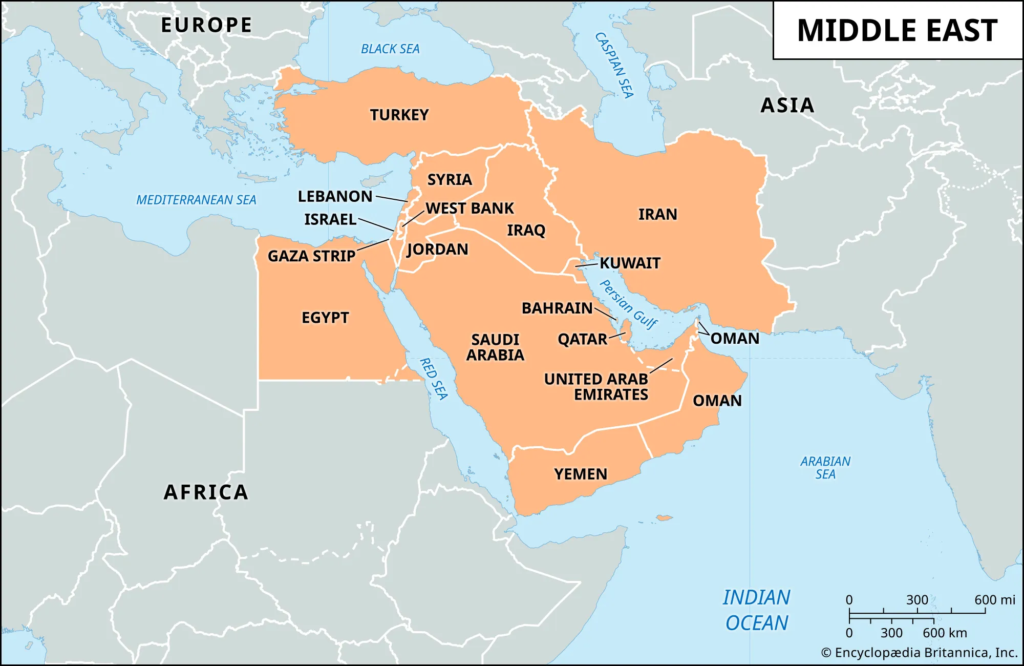
1. Iran–Israel War 2026
Context:
The United States and Israel launched a joint military operation against Iran, triggering a multi-front regional war.
What is the Conflict?
The United States and Israel initiated a large-scale military offensive—Operation Epic Fury (Operation Genesis)—targeting Iran’s nuclear and ballistic missile infrastructure. The operation reportedly resulted in the assassination of Iran’s Supreme Leader Ali Khamenei and several senior officials.
The campaign, launched under former US President Donald Trump and Israeli Prime Minister Benjamin Netanyahu, marks a shift from decades of shadow conflict to direct, high-intensity warfare.
Iran responded with Operation Truthful Promise 4, launching large-scale drone and missile attacks on Israel and US-allied Gulf states.
Historical Roots of Tensions
1. The 1953 Coup
The CIA-backed overthrow of Iranian Prime Minister Mohammad Mosaddegh fostered long-term anti-US sentiment in Iran.
2. The 1979 Islamic Revolution
The revolution replaced the Shah’s pro-Western regime with a clerical government that views the US as the “Great Satan” and Israel as illegitimate.
3. Nuclear Dispute
Iran’s uranium enrichment program has long been viewed by Israel as an existential threat and by the US as a global security risk.
4. Regional Proxy Conflicts
Iran’s “Axis of Resistance”—including Hezbollah, Hamas, and the Houthis—has intensified friction with Israel and US interests.
5. Collapse of Diplomacy
Breakdown of nuclear negotiations in early 2026 contributed directly to military escalation.
National Affairs
1. India–Canada Relations
Source: Mint
Context:
India and Canada have taken a major step toward resetting bilateral relations with the signing of a landmark civil nuclear agreement and renewed commitment to conclude a Comprehensive Economic Partnership Agreement (CEPA). The agreements were finalised following bilateral talks between Prime Minister Narendra Modi and Canadian Prime Minister Mark Carney at Hyderabad House, New Delhi.
This marks a significant diplomatic revival after relations had deteriorated in 2023.
1. Landmark Uranium Supply Agreement
- Canada will supply uranium to India under a long-term agreement.
- The deal includes cooperation in:
- Small Modular Reactors (SMRs)
- Advanced nuclear reactors
- The uranium supply agreement is valued at approximately CAD $2.6 billion (US $1.9 billion).
- It supports India’s nuclear energy expansion and clean energy goals.
The supply strengthens India’s fuel security for nuclear power generation and aligns with its low-carbon transition strategy.
2. Strategic Energy Partnership
Both leaders agreed to launch a Strategic Energy Partnership, covering:
- Uranium supply
- Liquefied Natural Gas (LNG)
- Critical minerals
- Clean technology collaboration
Canada positioned itself as a reliable LNG supplier from its west coast. The partnership also enhances cooperation in securing critical minerals essential for clean-tech manufacturing and nuclear infrastructure.
3. Defence and Maritime Cooperation
India and Canada agreed to expand cooperation in:
- Defence industry collaboration
- Maritime domain awareness
- Counter-terrorism coordination
Both sides emphasised that terrorism, extremism, and radicalisation are shared global challenges requiring close cooperation.
4. Comprehensive Economic Partnership Agreement (CEPA)
- The two sides decided to finalise CEPA negotiations soon.
- Target: Increase bilateral trade to $50 billion.
- CEPA aims to:
- Expand market access
- Promote investment flows
- Generate employment in both countries
Negotiations resumed last year after being paused amid diplomatic tensions.
Significance for India
- Strengthens long-term nuclear fuel security
- Diversifies energy and critical mineral supply chains
- Supports clean energy and manufacturing ambitions
- Expands defence and maritime cooperation
- Revives a key trade partnership amid global geopolitical shifts
2. Centre Designates Legacy Thrust Territories
Source: TNIE
Context:
The Ministry of Home Affairs (MHA) has introduced the concept of Legacy Thrust Territories (LTTs) to prevent the resurgence of Left Wing Extremism (LWE) following major security successes against Naxalism.
The initiative aims to consolidate long-term peace and stability in previously insurgency-affected areas.
What are Legacy Thrust Territories?
Legacy Thrust Territories are:
- Previously Naxal-affected districts.
- Identified for continued security vigilance and focused development intervention.
- Brought under sustained monitoring even after a significant decline in insurgent activities.
The framework ensures that operational gains against LWE are institutionalised and not reversed.
Background: Decline of Left Wing Extremism
- Around 2000: Nearly 200 districts were affected by LWE.
- By 2025: The number declined to 38 districts.
- Currently: Only 7 districts remain on the active LWE list:
- 5 in Chhattisgarh
- 1 in Jharkhand
- 1 in Odisha
These districts, along with other formerly affected regions, are being brought under the Legacy Thrust framework.
Aim of the Initiative
- Prevent resurgence of Naxalism after security operations.
- Ensure transition from security-led control to governance-led development.
- Consolidate peace through administrative expansion and socio-economic integration.
3. National Arogya Fair 2026 Held in Shegaon, Maharashtra
Source: PIB
Context:
The National Arogya Fair 2026 was successfully organised from 25–28 February 2026 at Shegaon in Buldhana district, Maharashtra. The event brought together healthcare professionals, policymakers, traditional medicine practitioners, and wellness stakeholders under one platform.
The fair focused on promoting affordable, accessible, and integrated healthcare services for the public.
About National Arogya Fair 2026
The event showcased services across all major systems of medicine, including:
- Allopathy
- Ayurveda
- Yoga
- Naturopathy
- Unani
- Siddha
- Homeopathy
Together, these systems form the AYUSH framework, promoting holistic healthcare in India.
Banking/Finance
1. SEBI Mandates Registered Name & Registration Number Disclosure on Social Media
Source: ET
Context:
The Securities and Exchange Board of India (SEBI) has issued a new circular requiring all SEBI-registered market intermediaries to disclose their registered name and SEBI registration number while posting securities market-related content on social media platforms.
The move aims to curb financial misinformation and protect retail investors from unregistered influencers and fraudulent entities.
What is the Directive?
It is a regulatory mandate requiring SEBI-regulated entities and their agents to:
- Prominently display their registered identity.
- Mention their SEBI registration number.
- Ensure transparency in all securities-related digital communications.
Objective of the Rule
- Enable investors to clearly differentiate between:
- Authorised SEBI-regulated intermediaries
- Unregistered financial influencers (“finfluencers”)
- Strengthen transparency and accountability in digital investment advice.
- Enhance investor protection amid rising social media-driven financial scams.
Key Features of the Circular
1. Mandatory Identity Disclosure
- The registered name and SEBI registration number must:
- Appear on social media profiles.
- Be displayed at the beginning of each securities-related post, video, or advisory content.
2. Wide Applicability
The rule applies to a broad range of SEBI-regulated entities, including:
- Stockbrokers
- Mutual Funds
- Investment Advisers
- Research Analysts
- Portfolio Managers
- Alternative Investment Funds (AIFs)
- Asset Management Companies (AMCs)
- Real Estate Investment Trusts (REITs)
- Infrastructure Investment Trusts (InvITs)
- Distributors and agents of these entities
3. Broad Platform Coverage
The mandate covers both open and closed digital platforms, including:
- YouTube
- Telegram
- X (formerly Twitter)
- Threads
- Closed and semi-closed groups
4. Multiple Registration Rule
- Entities holding multiple SEBI registrations must:
- Provide a web link listing all registration details.
- Mention only the relevant registration number in individual posts.
2. RBI Imposes ₹11.50 Lakh Penalty on Mahindra & Mahindra Financial Services
Context:
In February 2026, the Reserve Bank of India (RBI) imposed a monetary penalty of ₹11.50 lakh on Mahindra & Mahindra Financial Services Limited (MMFSL) for regulatory non-compliances observed during its annual inspection.
The inspection was conducted with reference to the company’s financial position as on 31 March 2025 (FY25).
Legal Provisions Invoked
The penalty was levied under:
- Section 58G(1)(b) read with
- Section 58B(5)(aa) of the RBI Act, 1934
These provisions empower RBI to impose penalties on Non-Banking Financial Companies (NBFCs) for regulatory violations.
Reasons for the Penalty
1. Violation of Fair Practices Code
- MMFSL charged revised foreclosure fees on certain loan accounts.
- The revised charges were not incorporated in the loan agreements as required.
- This constituted a breach of the Fair Practices Code prescribed by RBI.
2. Complaint-Handling Deficiencies
RBI observed lapses in the company’s grievance redressal mechanism:
- Complaints were not escalated to the Internal Ombudsman within mandated timelines.
- In some cases, final decisions were communicated to complainants beyond the prescribed time limit.
- These actions violated RBI’s regulatory norms on customer protection and complaint resolution.
Regulatory Action Taken
- The irregularities were detected during RBI’s supervisory inspection.
- RBI issued a show-cause notice to the company.
- After reviewing the company’s response, the central bank imposed the monetary penalty.
3. IIP Growth Slows to 4.8% in January 2026
Source: The Hindu
Context:
India’s industrial output growth moderated in January 2026, indicating a broad-based slowdown across key sectors including manufacturing, mining, and electricity.
What is IIP?
The Index of Industrial Production measures the performance of industrial sectors such as manufacturing, mining, and electricity. It is a key high-frequency indicator of economic growth and industrial activity in India.
Key Highlights of January 2026 IIP Data
- IIP Growth: Slowed to 4.8% in January 2026
- Previous Month (December 2025): 7.8% (later revised upward to 8%)
- Lowest in Three Months
This moderation signals a cooling of industrial momentum after December’s 26-month high.
Sector-wise Performance
Manufacturing Sector
- Growth slowed to 4.8% in January
- December 2025 growth: 8.4%
- January 2025 growth: 5.8%
Manufacturing, which carries the highest weight in IIP, was the primary drag on overall industrial growth.
Mining Sector
- Growth eased to 4.3%
- Had shown acceleration in the previous two months
The slowdown reflects moderation in raw material extraction activity.
Electricity Sector
- Growth slowed to 5.1%
- December 2025: 6.9%
- January 2025: 2.4%
Despite moderation, electricity output remains stronger compared to last year.
Infrastructure Sector: A Bright Spot
The infrastructure segment recorded 13.7% growth, the fastest since August 2023.
This was the only major sector to show accelerating growth, reflecting continued public capital expenditure and strong core sector activity.
What This Means for the Indian Economy
- Broad-Based Slowdown: All major sectors, except infrastructure, witnessed moderation.
- Demand Concerns: Weak consumer non-durables output suggests possible stress in consumption demand.
- Investment Signals: Slowing capital goods growth could impact private investment sentiment.
- Policy Implications: The data may influence future monetary and fiscal policy decisions, especially if industrial slowdown persists.
3. Fino Payments Bank’s Transition to Small Finance Bank on Track
Source: The Hindu
Context:
Fino Payments Bank clarified that its transition to a Small Finance Bank (SFB) remains on schedule despite recent developments involving its Managing Director and CEO.
Background
Fino Payments Bank received in-principle approval from the Reserve Bank of India to transition into a Small Finance Bank (SFB). This comes amid the arrest of its Managing Director and CEO, Rishi Gupta, in connection with alleged Goods and Services Tax (GST)-related violations.
What is a Small Finance Bank (SFB)?
Small Finance Banks are financial institutions licensed by the RBI to:
- Promote financial inclusion
- Provide basic banking services to underserved sections
- Extend credit to small businesses, micro enterprises, farmers, and unorganised sectors
Unlike Payments Banks, SFBs can:
- Accept deposits without restrictions
- Lend extensively, including larger loan products
- Offer a broader range of financial services
Payments Bank vs Small Finance Bank (SFB)
| Basis of Comparison | Payments Bank | Small Finance Bank (SFB) |
|---|---|---|
| Regulator | Reserve Bank of India | Reserve Bank of India |
| Objective | Promote financial inclusion through payments and deposit services | Promote financial inclusion through deposits and credit delivery |
| Lending Facility | Not allowed to lend | Allowed to provide loans |
| Deposit Acceptance | Demand deposits only (subject to RBI cap) | Demand and time deposits allowed |
| Revenue Model | Transaction fees, remittances, third-party product distribution | Interest income from loans + fee-based services |
| Priority Sector Lending (PSL) | No mandatory 75% PSL norm | Minimum 75% of ANBC to priority sector |
| Capital Requirement | Minimum ₹100 crore | Minimum ₹200 crore |
| Target Customers | Migrant workers, low-income households, small businesses | MSMEs, small farmers, informal sector, low-income individuals |
| Banking Scope | Limited banking functions | Full-service banking (within SFB framework) |
| Investment Pattern | Major portion invested in government securities | Diversified lending and investment portfolio |
4. EPFO Retains EPF Interest Rate at 8.25% for FY26
Source: FE
Context:
The Employees’ Provident Fund Organisation (EPFO) has recommended retaining the Employees’ Provident Fund (EPF) interest rate at 8.25% for FY 2025–26.
Key Decision
The Employees’ Provident Fund Organisation has recommended:
- EPF Interest Rate: 8.25%
- Applicable For: Financial Year 2025–26 (FY26)
- Status: Unchanged for the second consecutive year
This decision maintains stability in returns for over 6 crore EPF subscribers.
Historical Trend of EPF Interest Rates
- FY26: 8.25% (unchanged)
- FY24: 8.15% (last revision before increase)
- FY22: 8.10% (four-decade low)
The FY22 rate of 8.1% was the lowest in nearly 40 years, reflecting subdued earnings and broader economic pressures at that time.
What is EPF?
The Employees’ Provident Fund (EPF) is:
- A mandatory retirement savings scheme for salaried employees
- Managed by EPFO
- Jointly contributed by employer and employee
It provides:
- Retirement corpus
- Partial withdrawals for housing, medical, education needs
- Pension benefits under EPS (Employees’ Pension Scheme)
5. SEBI Intensifies Tech-Driven Enforcement to Curb Pre-Investment Scams
Source: BS
Context:
Amid a sharp surge in retail investor participation, the Securities and Exchange Board of India (SEBI) has strengthened its surveillance and technology-driven enforcement framework to tackle rising pre-investment scams.
SEBI Chairman Tuhin Kanta Pandey highlighted growing instances where aspiring investors are defrauded even before engaging with SEBI-registered intermediaries.
What Are Pre-Investment Scams?
Pre-investment scams involve fraudsters:
- Luring investors through fake trading apps
- Operating misleading WhatsApp or Telegram groups
- Promising guaranteed or abnormally high returns
- Diverting funds into personal bank accounts
In many cases, funds are siphoned off before investors interact with regulated brokers or investment platforms.
6. SEBI’s 50% Portfolio Overlap Rule
Source: Mint
Context:
The Securities and Exchange Board of India (SEBI) has tightened norms for thematic and sectoral mutual funds by introducing a 50% portfolio overlap cap within schemes of the same fund house.
According to an analysis by Elara Securities, the move is set to trigger portfolio restructuring across multiple schemes.
What is the 50% Overlap Rule?
- Thematic and sectoral schemes within the same asset management company (AMC) cannot have more than 50% common holdings.
- The objective is to:
- Ensure scheme differentiation
- Avoid duplication of investment strategies
- Protect investor interests
- Improve transparency and product clarity
Key Findings from Elara Securities Report
- 51 sectoral and thematic schemes currently breach the 50% overlap threshold.
- However, the majority show only marginal breaches.
- Only 13 schemes (excluding those with assets below ₹1,000 crore) have overlap exceeding 52%.
- These schemes will need to rebalance portfolios over a three-year glide path.
Why SEBI Introduced the Rule
- Reduce Product Duplication
Many AMCs were launching multiple thematic funds with similar portfolios, leading to internal competition and investor confusion. - Strengthen Risk Differentiation
High overlap reduces diversification benefits and exposes investors to concentrated sector risks. - Improve Transparency and Governance
The reform aligns with SEBI’s broader objective of streamlining mutual fund categories and enhancing disclosure norms.
Facts To Remember
1. PM Narendra Modi’s Visit to Rajasthan & Gujarat (28 February 2026)
Narendra Modi launched the nationwide HPV Vaccination Programme in Ajmer, Rajasthan, targeting girls aged 14 years with single-dose Gardasil-4 protection.
He inaugurated and laid foundation stones for projects worth over ₹16,680 crore in Rajasthan across infrastructure and urban sectors.
In Gujarat, he inaugurated Micron’s ATMP semiconductor facility in Sanand with an investment of ₹22,516 crore.
The visit strengthened healthcare outreach and semiconductor manufacturing in India.
2. Dr. Jitendra Singh Inaugurates Biotech Facilities at BRIC-RGCB
Union Minister Jitendra Singh inaugurated the Central Facility for Recombinant Cells and Sensors at Rajiv Gandhi Centre for Biotechnology, Kerala.
Developed with ₹60 crore support from DBT, it boosts drug discovery and genomics research.
He also laid the foundation stone for an ₹80 crore cGMP facility.
The initiative enhances India’s biotechnology and research ecosystem.
3. National Arogya Fair 2026 Held in Maharashtra
The National Arogya Fair 2026 was organised in Shegaon, Maharashtra by the Ministry of AYUSH and AIAC.
President Droupadi Murmu inaugurated the event promoting integrated healthcare systems.
It showcased Allopathy and AYUSH services with free medical outreach.
Six senior Vaidyas were honoured for contributions to traditional medicine.
4. MoTA Announces Three Tribal Festivals in March 2026
The Ministry of Tribal Affairs announced three festivals to promote tribal art, culture, and commerce.
Events include Tribes Art Fest, Living Roots Festival, and Bharat Tribes Fest in New Delhi.
The festivals aim to strengthen tribal livelihoods and market linkages.
They highlight India’s rich indigenous heritage and cultural diversity.
5. ISA and IIT Delhi Sign Framework for Solar Capacity Building
The International Solar Alliance signed an FFA with Indian Institute of Technology Delhi.
The partnership promotes renewable energy capacity building and academic collaboration.
It expands research in solar energy, AI integration, and policy studies.
The move strengthens clean energy leadership across ISA member nations.
6. HCLTech and IIT Kanpur Partner for Deep Tech Innovation
HCL Technologies signed an MoU with Indian Institute of Technology Kanpur.
The collaboration focuses on AI, robotics, and next-generation technologies for GCCs.
It bridges academic research with enterprise-ready solutions.
The partnership boosts India’s deep-tech innovation ecosystem.
7. Nagaland Signs MoU with IMD for Weather Forecasting
Nagaland’s Higher Education Department signed an MoU with the India Meteorological Department.
An X-band Doppler Weather Radar will be installed under Mission Mausam.
The 20-year partnership strengthens atmospheric research and disaster preparedness.
It enhances high-resolution forecasting in the Northeast region.
8. India–EU to Grant MFN Status for Five Years
India and the European Union agreed to grant each other MFN status under the FTA.
The provision will apply for five years after the agreement’s enforcement.
The FTA covers tariff reduction on 96.6% of traded goods.
It is expected to significantly boost bilateral trade and investment flows.
9. Ayatollah Alireza Arafi Named Iran’s Interim Supreme Leader
Following the death of Ali Khamenei, Ayatollah Alireza Arafi was appointed interim Supreme Leader.
Article 111 of Iran’s Constitution activated a three-member Interim Leadership Council.
The council includes President Masoud Pezeshkian and the Chief Justice.
The Assembly of Experts will appoint the permanent successor.
10. Jammu & Kashmir Wins First Ranji Trophy Title
Jammu & Kashmir clinched its maiden Ranji Trophy 2025–26 title.
They defeated Karnataka on first-innings lead in the final at Hubballi.
Auqib Nabi was named Player of the Tournament with 62 wickets.
J&K became the 19th team to win India’s premier domestic cricket title.
11. Zero Discrimination Day 2026 – 1 March
Zero Discrimination Day was observed globally on 1 March 2026.
The 2026 theme was “People First.”
Launched by UNAIDS in 2014, it promotes equality and inclusion.
The butterfly symbol represents transformation and dignity for all.
12. World Civil Defence Day 2026 – 1 March
World Civil Defence Day was observed on 1 March 2026.
The theme was “Managing Environmental Risks for a Resilient and Sustainable Future.”
It marks the enforcement of the ICDO Constitution in 1972.
The day honours civil defence personnel worldwide.
13. West Bengal Signs MoU for Ichhamati & Jalangi Masterplans
The West Bengal government signed an MoU with GIZ and SMCG.
The project will prepare basin-based masterplans under ‘Nodi Bandhan.’
It focuses on pollution control, dredging, and flood mitigation.
The initiative strengthens transboundary river management with Bangladesh.
14. President Droupadi Murmu Dedicates Women Welfare Schemes in Delhi
President Droupadi Murmu launched four welfare schemes under ‘Sashakt Nari Samriddh Delhi.’
Schemes include Delhi Lakhpati Bitiya Yojana and Saheli Pink NCMC.
Free LPG cylinders and Ladli Scheme DBT support were also expanded.
The initiatives promote women’s safety, mobility, and financial empowerment.
15. Reinsurers Withdraw Marine Hull War Cover Amid West Asia Hostilities
Escalating tensions in West Asia have prompted global and domestic reinsurers to withdraw marine hull war risk coverage in high-risk maritime zones, impacting shipping and trade insurance costs. Several global reinsurers, along with General Insurance Corporation of India (GIC Re), have withdrawn marine hull war cover for vessels operating in designated high-risk regions.
- In February 2026, the Reserve Bank of India (RBI) imposed a monetary penalty of ₹11.50 lakh on Mahindra & Mahindra Financial Services Limited (MMFSL) for regulatory non-compliances observed during its annual inspection. RBI Imposes ₹11.50 Lakh Penalty on Mahindra & M…
- IIP Growth: Slowed to 4.8% in January 2026 IIP Growth Slows to 4.8% in January 2026
- FY24: 8.15% (last revision before increase) EPFO Retains EPF Interest Rate at 8.25% for FY26
- Thematic and sectoral schemes within the same asset management company (AMC) cannot have more than 50% common holdings. SEBI’s 50% Portfolio Overlap Rule
- Zero Discrimination Day was observed globally on 1 March 2026.The 2026 theme was “People First.”Launched by UNAIDS in 2014, it promotes equality and inclusion.The butterfly symbol represents transformation and dignity for all. Zero Discrimination Day 2026 – 1 March
04 & 05 March, 2026
Daily Current Affairs Quiz
04 & 05 March, 2026
International Affairs
1. Strait of Hormuz
Source: TH
Context:
Rising tensions involving Iran, Israel, and the United States have brought global attention to the Strait of Hormuz, due to fears that conflict could disrupt global oil and LNG shipments.
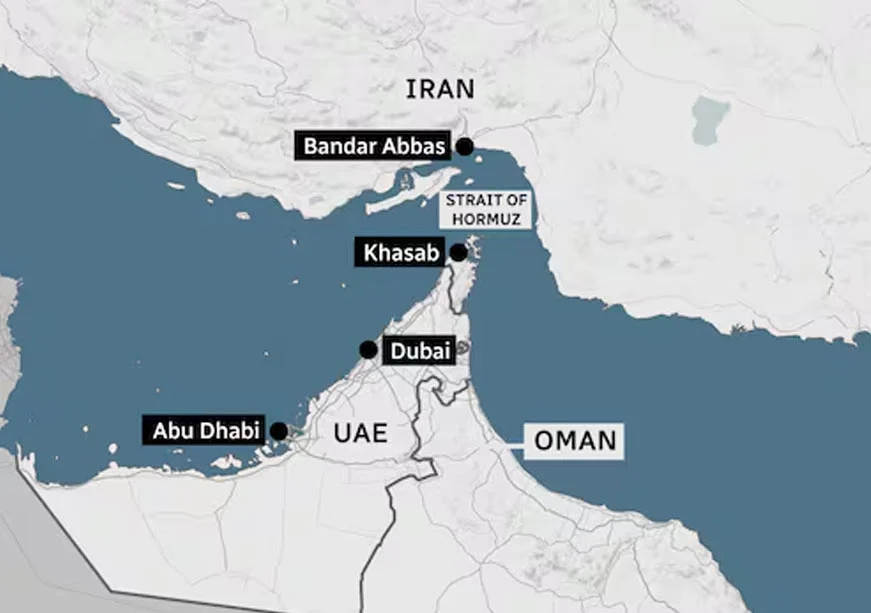
What is the Strait of Hormuz?
The Strait of Hormuz is a strategically vital maritime passage through which a large share of the world’s oil and gas exports travel from the Persian Gulf to global markets.
It is considered one of the most important energy chokepoints in the world.
Location
- Lies between Iran (north) and Oman (south).
- Connects the Persian Gulf to the Gulf of Oman and then to the Arabian Sea, opening into the Indian Ocean.
Geographic Features
- Narrowest width: ~33 km
- Shipping lanes: about 3 km wide in each direction
Because of this narrow passage, the strait is considered a critical maritime chokepoint.
Historical Importance
The Strait of Hormuz has long been central to global geopolitics and trade.
Major historical events linked to it include:
- 1973 Arab Oil Embargo
- Iran–Iraq War (1980–88), especially the “Tanker War”
- Repeated tensions involving tanker seizures and sanctions in 2012, 2019, and 2023–24
Iran has often used the threat of blocking the strait as a strategic tool during geopolitical disputes.
National Affairs
1. 16th Finance Commission on Centre–State Fiscal Relations (2026–31)
Source: TH
Why in News?
The 16th Finance Commission of India has submitted its recommendations for the period 2026–31. It retained the States’ share in tax devolution at 41%, while introducing changes in the horizontal distribution formula and proposing reforms such as merging cesses and surcharges into the divisible pool.
Constitutional Background
The Finance Commission is constituted under Article 280 of the Constitution of India to recommend:
- Distribution of tax revenues between the Centre and States (vertical devolution).
- Distribution of funds among states (horizontal devolution).
- Grants-in-aid under Article 275 of the Constitution of India.
The certification of the net proceeds of taxes is done by the Comptroller and Auditor General (CAG) under Article 279 of the Constitution of India.
Key Recommendations of the 16th Finance Commission
1. Vertical Devolution
The Commission retained the states’ share at 41% of the divisible pool, continuing the arrangement recommended by the 15th Finance Commission of India.
Grand Bargain Proposal
To address concerns about the rise of cesses and surcharges, the Commission proposed a “grand bargain”:
- The Centre should merge most cesses and surcharges into shareable taxes.
- States accept a smaller share of a larger divisible pool.
This aims to expand the total pool of shareable taxes.
Horizontal Devolution Formula
The Commission introduced a revised formula to distribute funds among states.
| Criterion | Weight |
|---|---|
| Income Distance | 42.5% |
| Population (2011 Census) | 17.5% |
| Demographic Performance | 10% |
| Forest & Ecology | 10% |
| Area | 10% |
| Contribution to GDP | 10% |
Key Changes
- Contribution to GDP (10%) introduced as a new criterion.
- Replaces earlier tax effort/fiscal discipline parameter.
- Slight reduction in income distance weight.
This shift rewards economic performance while maintaining redistribution goals.
Grants-in-Aid
Total grants recommended: ₹9.47 lakh crore
1. Local Body Grants – ₹8 lakh crore
Split between:
- Rural local bodies: ₹4.4 lakh crore
- Urban local bodies: ₹3.6 lakh crore
Conditions include:
- Timely constitution of State Finance Commissions
- Audited accounts
- Functional local governance institutions.
New Initiatives
- Urbanisation Premium Grant: ₹10,000 crore
- Infrastructure Grants for wastewater management: ₹56,100 crore
2. Disaster Management Grants – ₹2.04 lakh crore
Funds allocated for State Disaster Relief and Management Funds.
Cost sharing:
- 90:10 for Northeastern and Himalayan states
- 75:25 for other states.
Fiscal Roadmap and Reform Recommendations
Fiscal Deficit Targets
- Centre: Reduce fiscal deficit to 3.5% of GDP by 2030–31.
- States: Maintain fiscal deficit at 3% of GSDP.
Off-Budget Borrowings
The Commission recommended ending off-budget borrowings and including them in fiscal deficit calculations.
Power Sector Reforms
Encouraged privatisation of DISCOMs to improve efficiency.
Subsidy Rationalisation
Suggested rationalising subsidies, especially unconditional cash transfers enabled by the JAM Trinity (Jan Dhan–Aadhaar–Mobile).
Unconditional cash transfers now account for 20.2% of subsidy spending, up from 3% in 2018–19.
Public Sector Enterprise Reforms
Recommended:
- Closure of 308 inactive State PSEs
- Review of loss-making enterprises.
Key Issues and Criticisms
1. Retaining 41% Devolution
States had demanded 50% share in central taxes.
Critics argue the recommendation:
- Favours the Centre’s fiscal priorities
- Limits states’ untied fiscal resources.
2. Rising Cesses and Surcharges
Cesses and surcharges:
- Are not shared with states.
- Now account for nearly 20% of gross tax revenue.
The Commission did not impose firm limits, which may weaken fiscal federalism.
3. Shift Toward Performance-Based Transfers
The introduction of GDP contribution criterion benefits economically advanced states such as:
- Tamil Nadu
- Karnataka
- Maharashtra
This may reduce redistribution to poorer states.
4. Removal of Revenue Deficit Grants
The Commission discontinued revenue deficit grants, affecting:
- Hill states
- Northeastern states
- Structurally weaker economies.
5. Fiscal Discipline Conditions
Recommendations like:
- 3% deficit limit
- Ending off-budget borrowings
- Subsidy rationalisation
may limit fiscal flexibility of states.
Impact on States
Major Losing States
- Uttar Pradesh
- Bihar
- West Bengal
- Madhya Pradesh
- Odisha
- Several Northeastern states.
Implication
Reduced fiscal transfers could widen regional inequality, especially for states requiring higher public investment.
Steps Needed to Strengthen Fiscal Federalism
1. Increase Vertical Transfers
States’ share in tax revenue should be increased beyond 41%.
2. Limit Cesses and Surcharges
A legal cap (e.g., 10% of gross tax revenue) could prevent excessive centralisation.
3. Ensure Floor Guarantee
No state should receive less than its allocation under the 15th Finance Commission.
4. Strengthen Local Governments
Empower Panchayats and Urban Local Bodies through:
- Greater taxation powers
- Matching grants.
5. Revive Federal Dialogue
Regular meetings of the Inter-State Council of India under Article 263 of the Constitution of India can help resolve fiscal disputes.
2. MGNREGS Workers Flag Glitches in Monitoring App
Source: TH
Context:
Workers under the Mahatma Gandhi National Rural Employment Guarantee Scheme (MGNREGS) have reported technical problems with the updated National Mobile Monitoring System (NMMS) application used to record worker attendance. From March 1, the government made facial recognition mandatory for marking attendance in the NMMS app.
What is the NMMS App?
The National Mobile Monitoring System (NMMS) is a government mobile application used for:
- Recording real-time attendance of workers
- Uploading geotagged photographs of worksites
- Ensuring transparency in wage payments
- Monitoring the implementation of MGNREGS projects
Attendance is recorded by mates or supervisors, who take photographs of workers twice a day and upload them to the system.
Facial Recognition System
The latest update requires:
- Facial recognition authentication of workers
- Matching worker photos with Aadhaar data
- Mandatory use of the updated system to mark attendance
Mahatma Gandhi National Rural Employment Guarantee Scheme (MGNREGS)
The Mahatma Gandhi National Rural Employment Guarantee Scheme (MGNREGS) is one of India’s largest social welfare programmes aimed at enhancing livelihood security in rural areas by providing guaranteed wage employment.
Launch Date
- 2 February 2006
Implementing Ministry
- Ministry of Rural Development, Government of India
Additional Context
- The scheme was introduced under the Mahatma Gandhi National Rural Employment Guarantee Act, 2005.
3. Ruddy Shelduck (Brahminy Duck)
Context:
Residents of Mudh village, Ladakh have been protecting the Ruddy Shelduck for more than two decades. During the breeding season, villagers help escort young birds (fledglings) safely from nesting areas to the Indus River, highlighting a strong example of community-led conservation.
About the Ruddy Shelduck
Scientific Name
- Ruddy Shelduck (Tadorna ferruginea)
- It is also popularly known as the Brahminy Duck in India.
Distribution
- Found across Europe, Central Asia, and parts of Africa.
- Migratory populations winter in South Asia, especially in India.
Conservation Status
According to the International Union for Conservation of Nature (IUCN):
- Status: Least Concern
This means the species currently faces no major global extinction risk, though local conservation efforts remain important.
4. WTO’s 14th Ministerial Conference (MC14)
Context:
India has submitted proposals for the 14th WTO Ministerial Conference (MC14) focusing on:
- A permanent solution for food security
- Protection of traditional and small-scale fishermen
- Reform of the global trade dispute system
The conference will address key unresolved issues in global trade governance.
What is the WTO Ministerial Conference?
The Ministerial Conference is the highest decision-making body of the World Trade Organization (WTO).
Key Features
- Composed of trade ministers from all WTO member countries (currently about 166 members).
- Responsible for:
- Negotiating multilateral trade agreements
- Resolving major trade disputes
- Setting the future agenda for global trade rules
Legal Basis
The Ministerial Conference was established under the Marrakesh Agreement (1994) that created the WTO.
Frequency
- It must meet at least once every two years.
- It replaced earlier ministerial meetings held under the General Agreement on Tariffs and Trade (GATT).
WTO Ministerial Conference 14 (MC14)
Host
- Location: Yaoundé, Cameroon
- Dates: 26–29 March 2026
- Chair: Luc Magloire Mbarga Atangana, Cameroon’s Minister of Trade.
5. Government Plans Mandatory Carbon Credit Trading for Steel Sector
Source: BS
Context:
The Government of India plans to make compliance with the Carbon Credit Trading Scheme (CCTS) mandatory for companies in the steel industry. The decision is part of India’s broader strategy to reduce industrial greenhouse gas emissions and promote cleaner technologies. The scheme was introduced under the Energy Conservation (Amendment) Act, 2022, which laid the foundation for a domestic carbon market in India.
What is Carbon Credit Trading?
Carbon credit trading is a market-based mechanism to control greenhouse gas emissions.
Key Features
- 1 carbon credit = 1 tonne of carbon dioxide (CO₂) reduced or avoided.
- Companies receive an emission allowance.
- Firms that emit less than their limit can sell extra credits.
- Firms that emit more than their limit must buy credits.
This system creates financial incentives for companies to reduce pollution.
Carbon Credit Trading Scheme (CCTS)
The CCTS framework was notified in 2023, aiming to establish an Indian carbon market.
The system will:
- Set emission intensity targets for industries
- Allow trading of carbon credits
- Encourage adoption of low-carbon technologies
The Bureau of Energy Efficiency (BEE) is responsible for developing emissions targets and monitoring compliance.
Importance for India’s Climate Goals
The policy supports India’s broader climate commitments, including:
- Reducing emissions intensity of GDP
- Achieving net-zero emissions by 2070
- Expanding green industrial technologies
It also aligns India with global carbon market practices.
6. Shtil Missile System
Context:
The Ministry of Defence of India recently signed defence contracts worth ₹5,083 crore to strengthen maritime security, including the procurement of Shtil Missile System for frontline warships of the Indian Navy.
What is the Shtil Missile System?
The Shtil is a ship-based Surface-to-Air Missile (SAM) system designed to protect naval vessels from aerial threats.
Purpose
It intercepts threats such as:
- Fighter aircraft
- Helicopters
- Anti-ship missiles
- Unmanned aerial vehicles (UAVs)
The system provides medium-range air defence for naval fleets during maritime combat operations.
Development
- The missile system was developed by Russian defence industries and exported by Rosoboronexport, Russia’s state arms exporter.
- The system is derived from the Buk Missile System, a well-known Russian land-based air defence system.
7. Dusky Eagle-Owl
Source: TNIE
Context:
The Dusky Eagle-Owl has recently been sighted in the Phato tourism zone, Terai West Forest Division in Uttarakhand after nearly 15 years, highlighting the ecological importance of the region’s forests and wetlands.
About the Dusky Eagle-Owl
Scientific Name
Dusky Eagle-Owl (Ketupa coromanda)
It is a large bird of prey belonging to the owl family Strigidae.
Geographic Range
The species is found across South and Southeast Asia, including:
- India
- Nepal
- Bangladesh
- Pakistan
Conservation Status
According to the International Union for Conservation of Nature (IUCN):
- Status: Least Concern
This indicates that the species is not currently facing a high risk of extinction, though habitat protection remains important.
8. Operation Sankalp
Source: TH
Context:
Amid rising tensions in West Asia, Indian Navy warships deployed under Operation Sankalp have been placed on standby for Humanitarian Assistance and Disaster Relief (HADR) missions to protect Indian maritime interests and assist civilians if required.
What is Operation Sankalp?
Operation Sankalp (meaning Commitment in Sanskrit) is a maritime security mission of the Indian Navy aimed at protecting Indian merchant shipping and maintaining stability in the Indian Ocean Region (IOR).
Launch
The operation was launched on 19 June 2019 following security concerns after attacks on commercial ships in the Gulf of Oman and Strait of Hormuz.
Aim of the Operation
The mission focuses on:
- Ensuring safe passage of Indian merchant vessels through sensitive sea lanes.
- Protecting maritime trade routes in the Indian Ocean Region (IOR).
- Preventing piracy and maritime terrorism.
- Securing India’s energy imports, especially crude oil shipments.
Key Areas of Deployment
Indian naval vessels operate mainly in:
- Strait of Hormuz
- Gulf of Aden
- Gulf of Oman
These are strategic sea routes for global oil and trade movement.
Banking/Finance
1. IRDAI Proposes Shift of Insurers to Ind AS
Source: ET
Context:
The Insurance Regulatory and Development Authority of India (IRDAI) has issued a consultation paper proposing that insurance companies transition from Indian Generally Accepted Accounting Principles (IGAAP) to Indian Accounting Standards (Ind AS).
The reform aims to align the financial reporting framework of Indian insurers with global standards under International Financial Reporting Standards (IFRS).
Current Accounting System for Insurers
At present, Indian insurers follow accounting rules based on:
- Insurance Act, 1938
- IRDAI regulations
- IGAAP framework
However, most listed companies and large NBFCs in India have already migrated to Ind AS, making the insurance sector one of the last major financial segments yet to transition.
Objectives of the Ind AS Transition
IRDAI believes adopting Ind AS will:
1. Improve Transparency
Standardised reporting improves clarity in financial disclosures.
2. Increase Global Comparability
Financial statements will become comparable with international insurers.
3. Attract Foreign Investment
Global investors are more comfortable with IFRS-based reporting frameworks.
4. Improve Access to Global Capital Markets
Better reporting standards may help insurers raise capital internationally.
Transition Plan Proposed by IRDAI
Parallel Reporting in the First Year
During the first year of implementation:
- Insurers will submit Ind AS financial statements for statutory reporting.
- They will also submit IGAAP statements as special regulatory filings.
This dual reporting system will ensure a smoother transition.
Additional Audit Requirement
In the first year:
- Financial statements must undergo independent validation by an IRDAI-empanelled auditor.
- This will be in addition to the statutory audit.
Key Accounting Changes
Entity-Level Financial Statements
Under Ind AS, financial reporting will include:
- Balance Sheet
- Profit and Loss Account
- Statement of Changes in Equity
- Cash Flow Statement
These will be prepared at the entity level, consistent with global accounting practices.
Policyholder vs Shareholder Funds
Under the Insurance Act, insurers must keep policyholder and shareholder funds separate.
IRDAI’s proposed compromise:
- Primary financial statements prepared at entity level.
- Separate revenue accounts and schedules maintained for policyholder funds.
This maintains transparency while aligning with international standards.
Ind AS 117 for Insurance Contracts
The transition includes adoption of Ind AS 117, the accounting standard for insurance contracts aligned with IFRS 17.
Key Feature: Annual Cohorting
Insurance contracts must be grouped by year of issue to:
- Track profitability accurately
- Prevent cross-subsidisation between policyholder generations
Insurers requested exemption due to operational challenges, but IRDAI rejected this request.
Gradual Retrospective Implementation
To ease implementation, IRDAI proposed a phased retrospective approach:
- FY27: 10-year retrospective data
- FY28: 15-year retrospective data
- FY29: 20-year retrospective data
This allows insurers time to adjust systems and data structures.
Rules for Participating Life Insurance Policies
For participating life insurance business:
- Surplus distribution will continue under Section 49 of the Insurance Act.
- Shareholder participation remains capped at 10%.
This ensures policyholders continue receiving the majority of profits.
Implications of the Reform
If implemented, the transition to Ind AS will change how stakeholders evaluate insurance companies.
Affected stakeholders
- Investors
- Analysts
- Rating agencies
- Policyholders
2. SEBI Overlap Rules May Push Mutual Funds Toward Passive Products
Source: Mint
Background
The Securities and Exchange Board of India (SEBI) has revised mutual fund categorization norms to ensure clear differentiation between schemes within the same category.
Under the new rules:
- Portfolio overlap between thematic/sectoral funds and other equity schemes is capped at 50%.
- The rule excludes large-cap funds.
The move aims to prevent fund houses from launching multiple funds with similar portfolios under different themes.
What Is Portfolio Overlap?
Portfolio overlap refers to two mutual fund schemes holding many of the same stocks.
Previously:
- Asset management companies (AMCs) could launch several thematic or sectoral funds with similar holdings.
Now:
- SEBI requires meaningful differentiation between schemes.
This makes it harder to run multiple active funds with similar investment universes.
What Are Passive Funds?
Passive funds track a market index instead of actively selecting stocks.
Examples include:
- Index Funds
- Exchange-Traded Funds (ETFs)
- Fund of Funds (FoFs) investing in passive instruments
These funds follow rule-based investment strategies rather than active portfolio management.
Advantages of Passive Funds
Passive funds offer several benefits:
Lower Costs
Since they track an index, they require less active management, leading to lower expense ratios.
Transparency
Investors know exactly which index the fund tracks.
Easier Product Differentiation
Fund houses can launch different index-based products without violating overlap restrictions.
Possible Innovations in Passive Products
Experts expect greater innovation in passive investing due to the new rules.
1. Factor-Based Funds (Smart Beta)
These track indices based on specific factors such as:
- Higher Return on Equity (ROE)
- Strong dividend yield
- Lower volatility
- Better quality metrics
These are called factor-based passive funds.
2. Thematic Index ETFs
New ETFs may focus on emerging sectors such as:
- Electric Vehicles (EVs)
- Clean energy
- Technology sectors
These could track small baskets of 10–20 specialized stocks.
Growth of Passive Funds in India
Passive investments have been growing rapidly in India.
According to the Association of Mutual Funds in India (AMFI):
- Passive AUM share increased from 7.3% five years ago
- To about 19.02% of total mutual fund assets.
Global Comparison
In developed markets, passive investing dominates.
For example:
- In the United States, passive funds account for more than 50% of mutual fund assets.
India may gradually move in the same direction, though growth may be slower.
3. Bank Liquidity May Come Under Stress
Source: Mint
Context:
Banks in India may face temporary liquidity pressure in the March quarter as large volumes of short-term Certificates of Deposit (CDs) issued in recent months mature. Banks issued significant CDs in December, January, and February to manage tight funding conditions and slower growth in retail deposits.
What Are Certificates of Deposit (CDs)?
A Certificate of Deposit (CD) is a short-term money market instrument issued by banks to raise funds from institutional investors.
Key features
- Maturity period: 7 days to 1 year
- Usually offers higher interest rates than retail deposits
- Purchased mainly by mutual funds, corporates, and financial institutions
Banks use CDs to manage short-term liquidity needs.
Why Banks Issued More CDs Recently
Banks increased CD issuance mainly because:
1. Credit Growth Is Higher Than Deposit Growth
- Bank credit growth: ~13.4% year-on-year
- Deposit growth: ~11.2%
This gap creates funding pressure.
2. Slow Retail Deposit Mobilisation
Retail deposits have grown slowly, forcing banks to raise funds from the money market.
3. Tight Liquidity Conditions
Banks issued CDs to shore up liquidity buffers.
Impact on Liquidity Coverage Ratio (LCR)
The Reserve Bank of India requires banks to maintain a minimum Liquidity Coverage Ratio (LCR) of 100%.
What is LCR?
LCR measures whether a bank has enough high-quality liquid assets to meet 30 days of cash outflows.
Banks usually maintain 115–120% LCR as a safety cushion.
Why LCR May Fall
When CDs mature:
- Banks must repay the borrowed funds.
- These repayments count as cash outflows in the next 30 days.
- This reduces the LCR temporarily.
Analysts expect LCR to decline in Q4 FY2026 due to large CD maturities.
4. RBI Nod for SBI Mutual Fund to Acquire Stake in Bandhan Bank & RBL Bank
Source: FE
Context:
The Reserve Bank of India (RBI) has granted approval to SBI Mutual Fund to acquire up to 9.99% stake in Bandhan Bank and RBL Bank. This move allows the asset management company to increase its investment in the banking sector while remaining within regulatory limits on shareholding in banks.
Key Highlights:
Stake Limit
- SBI Mutual Fund can hold up to 9.99% of the paid-up share capital or voting rights in each bank.
- The stake must not exceed this limit without fresh approval from RBI.
Time Limit for Acquisition
- The acquisition must be completed within one year from the date of RBI approval.
- If the stake is not acquired within this period, the approval will lapse automatically.
Regulatory Conditions
If the holding of SBI Mutual Fund falls below 5%, it will need fresh RBI approval before raising the stake back to 5% or above.
The acquisition must comply with:
- Banking Regulation Act, 1949
- RBI guidelines on acquisition of shares in private banks
- Securities and Exchange Board of India (SEBI) regulations
- Foreign Exchange Management Act, 1999 (FEMA) provisions
Why RBI Approval is Required
RBI regulates shareholding in banks to ensure:
- Financial stability of banks
- Prevention of excessive ownership concentration
- Proper fit and proper assessment of investors
Typically, investors must obtain RBI approval to hold 5% or more in a private bank.
About SBI Mutual Fund
SBI Mutual Fund is one of India’s largest asset management companies.
- Established: 1987
- Joint venture between State Bank of India and Amundi (France).
It manages a large portfolio of equity, debt, and hybrid mutual fund schemes.
Agriculture
1. New Seed Act 2026 and Revised Pesticide Act 2026
Source: News on Air
Context:
On 1 March 2026, Shivraj Singh Chouhan, Union Minister of the Ministry of Agriculture and Farmers Welfare, announced two major agricultural reforms in Mussoorie, Uttarakhand:
- New Seed Act 2026
- Revised Pesticide Act 2026
These reforms aim to modernize India’s agricultural regulatory system, improve input quality, and protect farmers from substandard seeds and pesticides.
New Seed Act 2026
Objective
The New Seed Act 2026 seeks to improve transparency, quality control, and accountability in the seed sector.
Key Provisions
1. Mandatory Registration
- All seed companies must register with regulatory authorities before selling seeds in India.
- This ensures traceability and quality assurance.
2. QR Code-Based Transparency
- Seed packets will carry unique QR codes.
- Farmers can scan them to access information such as:
- Seed variety
- Origin
- Quality certification
- Producer details
3. Stronger Penalties
- Maximum penalty increased to ₹30 lakh.
- Imprisonment may also be imposed for deliberate offences such as selling fake or substandard seeds.
Revised Pesticide Act 2026
Objective
The Revised Pesticide Act 2026 aims to modernize pesticide regulation and improve environmental and farmer safety.
Replacement of Old Law
The new law will replace the Insecticides Act, 1968, which has governed pesticide regulation in India for decades.
Key Goals
- Strengthen quality control of pesticides
- Prevent sale of spurious or harmful chemicals
- Ensure safe usage of pesticides
- Align regulations with modern agricultural practices and international standards
Significance of the Reforms
1. Farmer Protection
The laws aim to protect farmers from fake seeds and substandard pesticides, which often cause crop losses.
2. Improved Agricultural Productivity
Better quality inputs can lead to higher yields and improved farm incomes.
3. Digital Transparency
The introduction of QR code tracking for seeds enhances transparency and accountability.
4. Modern Regulatory Framework
Replacing outdated laws helps align India’s agriculture with modern technology and global standards.
2. Karbi Anglong Ginger
Context:
Assam recently achieved an important milestone by exporting 1.2 metric tonnes of GI-tagged Karbi Anglong Ginger to London as a trial export consignment. This marks the first international shipment of this unique agricultural product from the state and highlights the growing global demand for region-specific Indian crops.
About Karbi Anglong Ginger
Karbi Anglong Ginger is a premium variety of ginger known for its distinct aroma, strong pungency, and medicinal value.
It has received the Geographical Indication (GI) tag, which certifies that the product originates from a specific region and possesses unique characteristics linked to that location.
Region of Cultivation
The crop is primarily grown in the Karbi Anglong district of Assam, particularly in the Singhasan Hills.
Traditional Farming Methods
Farmers use indigenous techniques such as:
- Jhum cultivation (shifting cultivation)
- Tila cultivation (farming on hill slopes)
These traditional practices help maintain the organic and natural quality of the crop.
Key Characteristics
1. Strong Aroma and Pungency
- Rich in essential oils
- Has a strong earthy flavour, making it highly valued in cooking.
2. Medicinal Properties
- Used in traditional medicine for:
- Digestive benefits
- Anti-inflammatory effects
3. Organic Cultivation
- Mostly grown through traditional, low-chemical farming methods.
4. High Market Demand
Karbi Anglong ginger is preferred in:
- Culinary industries
- Pharmaceutical products
- Food processing industries
Facts To Remember
1. NITI Aayog and JICA Sign Phase II Agreement to Promote SDGs in Aspirational Districts
In March 2026, NITI Aayog and JICA signed the Record of Discussions for Phase II of the Japan–India Cooperative Actions towards Sustainable Development Goals (SDGs). The initiative will support the Aspirational Districts Programme and Aspirational Blocks Programme. It aims to enhance institutional capacity, improve governance systems, and strengthen monitoring through evidence-based planning at the district and block levels.
2. BEE Celebrates 25th Foundation Day in New Delhi
The event was held on 1 March 2026 at India Habitat Centre, New Delhi, under the Ministry of Power. A special BEE@25 logo was unveiled to mark the silver jubilee year. The Renewable Consumption Obligation (RCO) Portal and the BEE Star Label Mobile App were also launched to strengthen monitoring and help consumers verify the energy performance of appliances.
3. Survey of India and Kerala Digital University Sign MoU for Geospatial Research
The collaboration aims to advance geospatial data collection, processing, and analysis using technologies like Artificial Intelligence and Machine Learning. Both institutions will conduct research projects, training programmes, and workshops in spatial data sciences. The partnership also promotes academic collaboration and strengthens India’s geospatial technology capabilities.
4. MeitY Launches Indigenous 30 kW Integrated Drive System for EVs
The new system integrates the electric motor and inverter into a compact unit using Interior Permanent Magnet Synchronous Motor architecture. It uses Silicon Carbide MOSFET modules for higher efficiency and improved thermal stability. The initiative aims to reduce import dependence in EV powertrain systems and promote domestic manufacturing under the PLI scheme.
5. Maharashtra Launches India’s First AI-Driven Skill Census ‘Saksham’
The census was launched in Mumbai to evaluate the skills of youth aged 18–40 years. It will cover about 55,000 households in the H-West ward using AI and GIS-based hyperlocal mapping. The survey will identify education levels, skill interests, and training needs to improve employment and entrepreneurship opportunities.
6. Government Announces Nationwide ASMITA Athletics League for Women
The league will be organised across nearly 250 locations in India to mark International Women’s Day. It will feature 100 m, 200 m, and 400 m races for girls and women in three age categories. The initiative is part of the Khelo India Mission to encourage grassroots sports participation and identify young female talent.
7. RBI and Bank of Japan Renew USD 75 Billion Bilateral Swap Arrangement
The agreement became effective on 28 February 2026 to strengthen financial cooperation between India and Japan. The arrangement allows both countries to exchange local currencies and US dollars to manage financial stress. It enhances macroeconomic stability and provides a financial safety net during currency or liquidity pressures.
8. India INX GA Partners HSBC IBU to Expand Overseas Investment Access
The partnership allows eligible investors to access global equities, ETFs, and other securities through the India INX GA platform. Investments will be made within the RBI’s Liberalised Remittance Scheme limit of USD 250,000 per financial year. The initiative strengthens GIFT City as a global financial hub and promotes regulated international investments.
9. Safeena Husain Named in TIME Women of the Year 2026
The recognition highlights her contribution to girls’ education and social empowerment in India. Founded in 2007, Educate Girls works to bring out-of-school girls back into classrooms in rural and tribal areas. The organisation now operates in more than 30,000 villages across 12 Indian states.
10. Former Union Minister KP Unnikrishnan Passes Away
He served in Indian politics for over three decades and was associated with the Indian National Congress. Before entering politics, he worked as a journalist with the Mathrubhumi newspaper. He also served on the Public Accounts Committee, contributing to parliamentary financial oversight.
11. Vice President Releases 16 Books on Tamil Scholars and Heritage
The books were published by the Publications Division of the Ministry of Information and Broadcasting. Most of the titles are in Tamil, covering subjects such as Rameswaram, Sri Ramanuja, Tamil temple architecture, and ancient traditions. The initiative aims to preserve and promote India’s rich cultural and literary heritage.
12. Book “Mahatma: A Great Communicator” Released in New Delhi
The book explores the communication skills of Mahatma Gandhi during India’s freedom struggle. It highlights how Gandhi used communication to mobilise the masses and promote non-violence. Published by Navajivan Trust, the book is available in Hindi, English, and Gujarati.
13. World Seagrass Day 2026 – March 1
The day aims to raise awareness about the role of seagrass in marine biodiversity, coastal protection, and climate change mitigation. The United Nations General Assembly declared the observance in 2022. The first World Seagrass Day was celebrated globally in 2023.
14. Civil Accounts Day 2026 – March 1
The day commemorates the establishment of ICAS in 1976 as part of reforms in public financial management. ICAS functions under the Department of Expenditure in the Ministry of Finance. The service manages government accounts and strengthens transparency in public finance administration.
- Centre: Reduce fiscal deficit to 3.5% of GDP by 2030–31. 16th Finance Commission on Centre–State Fiscal …
- SBI Mutual Fund can hold up to 9.99% of the paid-up share capital or voting rights in each bank. RBI Nod for SBI Mutual Fund to Acquire Stake in…
- On 1 March 2026, Shivraj Singh Chouhan, Union Minister of the Ministry of Agriculture and Farmers Welfare, announced two major agricultural reforms in Mussoorie, Uttarakhand: New Seed Act 2026 and Revised Pesticide Act 2026
- The scheme was introduced under the Mahatma Gandhi National Rural Employment Guarantee Act, 2005. MGNREGS Workers Flag Glitches in Monitoring App
- Composed of trade ministers from all WTO member countries (currently about 166 members). WTO’s 14th Ministerial Conference (MC14)
06 & 07 March, 2026
Daily Current Affairs Quiz
06 & 07 March, 2026
National Affairs
1. India’s 7th National Biodiversity Report
Context:
India has submitted its 7th National Report to the Convention on Biological Diversity (CBD). The report evaluates the country’s progress in achieving biodiversity conservation goals aligned with the Kunming–Montreal Global Biodiversity Framework (KMGBF) adopted in 2022, which sets global biodiversity targets to be achieved by 2030.
What is the 7th National Biodiversity Report?
The report is India’s official periodic submission to the CBD, outlining:
- Progress in biodiversity conservation
- Implementation of national biodiversity strategies
- Challenges in achieving global biodiversity targets
It was prepared by the Ministry of Environment, Forest and Climate Change (MoEFCC) in coordination with institutions such as the National Biodiversity Authority (NBA) and other government agencies.
Global Biodiversity Framework (KMGBF)
The Kunming–Montreal Global Biodiversity Framework sets 23 global targets for 2030, aiming to halt biodiversity loss worldwide.
Key Goals
- Protect 30% of land and marine areas (“30×30 target”)
- Restore degraded ecosystems
- Reduce pollution affecting biodiversity
- Control invasive alien species
- Prevent human-induced species extinction
India has aligned its policies with these goals through its National Biodiversity Strategy and Action Plan (NBSAP).
Key Findings of India’s Report
1. Limited Progress Towards Targets
Out of 23 national biodiversity targets, only two are currently on track to be achieved by 2030, indicating significant gaps in implementation.
2. Forest and Tree Cover
India’s forest and tree cover stands at about 25% of the total geographical area, showing a modest increase in recent years.
3. Ecosystem Restoration Efforts
India has pledged to restore 26 million hectares of degraded land under the Bonn Challenge, with substantial progress already reported.
4. Recovery of Flagship Species
Conservation programmes have led to improvements in populations of certain species, including:
- Tigers
- Asiatic lions
- One-horned rhinoceros
These successes reflect the effectiveness of species-specific conservation initiatives.
Major Challenges Identified
1. Land Degradation
Nearly one-third of India’s land area is affected by degradation, threatening biodiversity and ecosystem services.
2. Limited Protected Areas
Protected areas cover only around 5% of India’s land area, which is far below the global target of conserving 30% by 2030.
3. Data and Monitoring Gaps
Biodiversity data is often fragmented across institutions, making effective monitoring and policy implementation difficult.
4. Climate Change Impacts
Climate change is increasing the frequency of extreme weather events such as floods, droughts, and forest fires, affecting ecosystems and species survival.
2. Census 2027 Mascots: Pragati and Vikas
Source: TH
Context:
The Union Home Minister unveiled the official mascots “Pragati” and “Vikas” for Census 2027 and also soft-launched digital tools to support the upcoming census exercise in New Delhi.
What is the Initiative?
The Government of India has introduced two mascots for Census 2027 to:
- Create public awareness about the census
- Encourage citizen participation
- Communicate information about the enumeration process across diverse communities
These mascots will act as public outreach ambassadors for the census.
Mascot Names and Representation
- Pragati – Female enumerator mascot
- Vikas – Male enumerator mascot
Symbolism
- Represent equal participation of men and women in nation-building
- Reflect the idea of inclusive development
- Support the vision of “Viksit Bharat by 2047”
Key Features of Census 2027
1. World’s Largest Population Enumeration
- Census 2027 will be the largest census exercise in the world.
- It will involve over 30 lakh enumerators, supervisors, and officials.
2. First Fully Digital Census in India
- Data will be collected using secure mobile applications and digital platforms.
- This marks a shift from paper-based enumeration to digital data collection.
3. Self-Enumeration Facility
- Citizens will be able to submit their household details online.
- The portal will support 16 languages.
- This will allow households to enter information before the door-to-door survey.
Two Phases of Census 2027
Phase 1: Houselisting and Housing Census (HLO)
- Collects information about:
- Housing conditions
- Household amenities
- Infrastructure availability
Phase 2: Population Enumeration (PE)
- Collects demographic, social, and economic data of individuals.
3. Sanand 2.0
Source: BS
Context:
The inauguration of the Micron Technology semiconductor facility in Sanand, Gujarat, marks a major milestone in India’s ambition to become a global semiconductor manufacturing hub. Industry observers describe this shift as “Sanand 2.0”, moving the region from an automobile manufacturing centre to a semiconductor ecosystem.
From Sanand 1.0 to Sanand 2.0
Sanand 1.0 – Automobile Hub
- Sanand’s industrial journey began in 2008 with the Tata Nano plant.
- The Tata project triggered the development of automobile and manufacturing infrastructure in the region.
Sanand 2.0 – Semiconductor Manufacturing
- The new phase is driven by semiconductor manufacturing and assembly facilities.
- The Micron Technology plant is now the centrepiece of this transformation.
Micron’s Semiconductor Facility
Micron Technology, a US-based semiconductor company headquartered in Idaho, set up an ATMP facility (Assembly, Testing, Marking, and Packaging) in Sanand.
Key Products
Micron is known for manufacturing:
- DRAM (Dynamic Random Access Memory) chips
- NAND storage chips
These technologies are essential for computers, smartphones, servers, and data centres.
Why Micron Chose Sanand
Micron evaluated two possible locations in Gujarat:
- Dholera Special Investment Region (SIR) – envisioned as a semiconductor city
- Sanand GIDC (Gujarat Industrial Development Corporation)
Micron ultimately chose Sanand because:
- Infrastructure was already operational
- Faster plug-and-play manufacturing environment
- Proximity to Ahmedabad and its international airport
- Established industrial ecosystem
Speed of execution was a key factor, as semiconductor supply chains require rapid operations and minimal downtime.
4. Bronze Art in India
Context:
The Ashmolean Museum (Oxford) has decided to return a 16th-century bronze idol of Saint Tirumankai Alvar after research showed it originally belonged to the Soundarrajaperumal Temple, Thadikombu (Tamil Nadu) and was replaced by a replica after being removed.
This highlights the importance of bronze sculptures in India’s religious, artistic, and cultural traditions.
What is Bronze Art?
Bronze art refers to sculptures and ritual objects made from copper-based alloys, mainly bronze or brass. In South India, many idols are made using the panchaloha alloy (a mix of five metals).
Uses
Bronze objects were widely used for:
- Temple idols and processional deities
- Lamps (deepams)
- Ritual utensils
- Decorative sculptures
In many temples, bronze idols are considered living deities and are used in religious festivals and processions.
Important Bronze Artefacts in Indian History
1. Dancing Girl (Mohenjodaro, c. 2500 BCE)
- One of the earliest bronze sculptures.
- Shows the advanced metal casting skills of the Indus Valley Civilization.
2. Daimabad Bronzes (c. 1500 BCE)
- Large bronze sculptures found in Maharashtra.
- Indicate sophisticated casting techniques and ceremonial use.
3. Chola Bronzes (9th–13th century CE)
- Represent the golden age of bronze sculpture in India.
- Famous examples include Nataraja (Shiva as the cosmic dancer).
- Known for graceful movement, idealised anatomy, and spiritual symbolism.
Banking/Finance
1. IDFC First Bank Fraud
Source: IE
Context:
A ₹590-crore fraud involving Haryana government accounts maintained at a Chandigarh branch of IDFC First Bank has been uncovered. Investigations suggest forged cheques, diversion of funds, and involvement of bank officials along with private entities.
What is the IDFC First Bank Fraud?
The case refers to an alleged large-scale financial scam in which funds belonging to Haryana government departments were illegally withdrawn and diverted from accounts held in IDFC First Bank.
Key Modus Operandi
- Forgery of Cheques: Fake cheques were allegedly created to withdraw funds.
- Manipulation of Bank Records: Falsified bank statements were used to mislead government departments.
- Diversion of Funds: Money withdrawn from government accounts was reportedly transferred to private entities.
- Collusion: Investigations indicate possible involvement of bank officials, government employees, and private firms.
Issues Highlighted
1. Banking Governance Failures
Weak internal controls and compliance mechanisms in the bank allowed fraudulent withdrawals from government accounts.
2. Forgery and Document Manipulation
Use of forged financial documents and manipulated records exposed vulnerabilities in banking verification systems.
3. Collusion Between Officials
The case suggests coordinated actions between bank staff, government officials, and private entities, pointing to systemic corruption risks.
4. Poor Monitoring of Public Funds
Government funds kept as fixed deposits and bank balances were not effectively monitored by the concerned departments.
2. RBI Proposes Relief for Small Digital Fraud Victims
Source: ET
Context:
The Reserve Bank of India (RBI) has proposed a new measure to provide quick financial relief to victims of small digital frauds. Under the proposal, customers who lose money in online frauds may receive compensation within five days of reporting the incident.
Key Features of the Proposal
1. Compensation Limit
- Customers losing up to ₹50,000 in digital fraud may receive compensation.
- Maximum compensation: ₹25,000.
2. Time Limit for Reporting
- The fraud must be reported within 5 days of the incident.
- Once the complaint is received, banks must compensate the victim within five days.
3. One-Time Relief Measure
- The compensation is proposed as a one-time measure.
- Relief may be given even if the fraud occurred due to customer negligence, provided the complaint is filed on time.
Who Will Bear the Compensation Cost?
The financial burden will be shared between banks and the RBI.
- RBI share: around 65%–76% of the compensation
- Banks: remaining portion.
This ensures that banks can quickly reimburse customers without facing the full financial burden.
Objective of the Proposal
The RBI aims to:
- Strengthen trust in digital banking systems
- Provide faster relief to fraud victims
- Encourage timely reporting of cyber frauds
- Improve consumer protection in digital financial services
3. Crypto and Digital Money Brought Under Tax Reporting Framework
Source: ET
Context:
The Government of India has expanded the financial account reporting framework to include crypto assets, Central Bank Digital Currencies (CBDCs), and certain electronic money products. The move aims to strengthen tax transparency and international information sharing.
The changes were notified by the Central Board of Direct Taxes (CBDT) through the Income-tax (Amendment) Rules, 2026.
Key Changes in the Rules
The amendments modify Rules 114F, 114G, and 114H of the Income-tax Rules, which deal with due diligence and reporting requirements for financial institutions.
New Financial Assets Included
Financial institutions must now report accounts involving:
- Crypto assets
- Central Bank Digital Currencies (CBDCs)
- Specified electronic money products
These assets will now fall under the tax information-sharing framework.
Definition of Relevant Crypto Assets
The rules define a relevant crypto asset as:
- Any crypto asset used for payment or investment purposes
- Excludes CBDCs and specified electronic money products
Examples may include cryptocurrencies used for trading, investment, or transactions.
Specified Electronic Money Products
The rules introduce a new category called specified electronic money products, defined as:
- Digital representations of fiat currency
- Issued after receiving funds
- Redeemable at face value
- Used for payment transactions
This includes certain digital wallets or prepaid digital money instruments.
Alignment with Global Tax Transparency Frameworks
The amendments align India’s system with global standards such as:
1. FATCA (Foreign Account Tax Compliance Act)
- A U.S. law requiring disclosure of financial accounts held by U.S. taxpayers abroad.
2. CRS (Common Reporting Standard)
- Developed by the Organisation for Economic Co-operation and Development (OECD).
- Enables automatic exchange of financial account information between countries.
3. CARF (Crypto-Asset Reporting Framework)
- An OECD framework specifically designed to track and report crypto-asset transactions across borders.
Exemptions for Low-Value Accounts
Some low-value accounts are exempt from reporting requirements.
Example:
- Electronic money accounts with a balance below $10,000 (rolling 90-day average) may not require reporting.
4. SEBI Introduces Debit Freeze Facility for Mutual Fund Folios
Source: Mint
Context:
The Securities and Exchange Board of India (SEBI) has introduced a voluntary debit freeze (lock-in) facility for mutual fund folios to enhance the security of investors’ holdings and prevent unauthorised transactions.
This measure comes amid a rise in digital fraud and unauthorised financial account activities.
What is the Debit Freeze Facility?
The debit freeze facility allows mutual fund investors to block all debit transactions from their mutual fund folio.
When activated, it prevents:
- Redemption of mutual fund units
- Transfer of units
- Any outflow transactions from the folio
Transactions will only be allowed after the investor explicitly unlocks the folio.
How the Framework Works
- Investors can activate a lock on their mutual fund folio.
- Once locked, no units can be debited (redeemed or transferred).
- Transactions can resume only after the investor unlocks the folio.
Implementation Mechanism
Phase 1 Implementation
- The locking facility will be provided through MF Central, an interoperable platform for mutual fund services.
- Registrar and Transfer Agents (RTAs) will enable this facility for investors.
Eligibility
The facility will be available only to investors who:
- Are KYC-compliant
- Have a valid mobile number
- Have a registered email ID
Role of AMFI
The Association of Mutual Funds in India (AMFI) will:
- Define the process for locking and unlocking folios
- Provide operational guidelines for Asset Management Companies (AMCs) and RTAs
- Specify which financial and non-financial transactions are permitted during the lock period
Disclosure Requirements
- AMCs and RTAs must disclose the detailed process on their websites.
- The impact of the debit freeze on transactions will also be included in the Statement of Additional Information (SAI).
Key Features
- Voluntary option available to investors.
- Can be activated through mutual fund platforms or intermediaries.
- The folio remains locked for debit transactions until the investor removes the freeze.
- Credit transactions (such as additional investments) may still be allowed depending on system design.
5. SWIFT to Introduce New Framework for Cross-Border Payments
Source: BS
Context:
The SWIFT (Society for Worldwide Interbank Financial Telecommunication) network has announced a new framework to improve cross-border retail payments, aiming to make international transfers faster, cheaper, and more predictable.
Major Indian banks such as State Bank of India (SBI), HDFC Bank, ICICI Bank, and Axis Bank are expected to roll out the system as part of the global transition.
What is SWIFT?
SWIFT is a global financial messaging network that enables banks and financial institutions to securely communicate payment instructions for international money transfers.
- Used by over 11,000 financial institutions worldwide
- Facilitates cross-border banking transactions and remittances
Objectives of the New Framework
The new system aims to:
- Speed up international retail payments
- Reduce transaction costs
- Improve transparency and predictability of payment timelines
- Support small businesses and individual remittance senders
Key Features of the Framework
- Faster cross-border payments
- Better tracking of transactions
- Improved data standardisation
- Greater interoperability between banks
These improvements will reduce delays and uncertainties often associated with international transfers.
Importance for India
India is expected to benefit significantly from the new framework because:
- India is one of the largest remittance-receiving countries in the world.
- Millions of Indians working abroad send money home regularly.
Faster and cheaper payment systems will help:
- Families receiving remittances
- Small businesses involved in international trade
6. MSMEs to Receive Credit Support for E-Commerce Exports
Source: ET
Context:
The Government of India has announced credit assistance for MSMEs involved in e-commerce exports under the ₹25,060 crore Export Promotion Mission (EPM). The initiative aims to boost small exporters’ participation in global online markets.
The announcement was made through a trade notice issued by the Directorate General of Foreign Trade (DGFT).
Eligibility Criteria for MSMEs
MSMEs can avail the credit support if they meet the following conditions:
1. Existing Exporters via Postal or Courier Channels
- Must have at least six months of export experience through postal or courier services.
- Must maintain inventory in overseas warehouses for e-commerce fulfilment.
2. New Exporters with Domestic E-Commerce Experience
- MSMEs entering international e-commerce value chains can also qualify.
- They must have at least one year of regular domestic e-commerce operations.
Objective of the Scheme
The government aims to:
- Increase MSME participation in global e-commerce trade
- Improve access to export finance
- Integrate Indian MSMEs into international value chains
- Boost India’s digital and cross-border exports
7. India–UAE Plan Digital Currency Bridge for Instant Cross-Border Transfers
Source: Mint
Context:
India and the United Arab Emirates (UAE) are working on linking their Central Bank Digital Currencies (CBDCs) to enable instant cross-border money transfers between the two countries. The initiative involves collaboration between the Reserve Bank of India (RBI) and the Central Bank of the UAE.
What Is the Proposed Digital Currency Link?
The plan is to connect:
- India’s CBDC: e-Rupee
- UAE’s CBDC: Digital Dirham
Once linked, the system would allow direct wallet-to-wallet transfers, eliminating the need for traditional banking intermediaries.
This means money could be transferred almost instantly across borders.
Why the India–UAE Link Is Important
1. Large Indian Diaspora in the UAE
- The UAE hosts more than 4 million Indians.
- It is one of the largest sources of remittances to India.
2. Major Remittance Corridor
- The UAE contributes about 19.2% of India’s inward remittances.
- India is among the largest remittance-receiving countries globally.
Faster digital transfers could significantly reduce cost and time for remittances.
Types of CBDC Use
Retail CBDC
- Used by individuals for payments to other users or merchants.
Wholesale CBDC
- Used by banks for interbank settlements and large-value transactions.
Potential Uses of the CBDC Bridge
The India–UAE CBDC linkage could enable:
- Remittances (person-to-person transfers)
- Business payments (B2B)
- Consumer payments (B2C)
- Government transactions (G2G)
It could function as a parallel payment channel alongside traditional bank transfers.
Facts To Remember
1. India Has Adequate Fertilizer Stocks for Kharif Season: Centre
The Government of India has assured farmers and fertilizer companies that the country has sufficient fertilizer stocks for the upcoming kharif season, despite concerns about supply disruptions caused by the West Asia conflict involving Iran.
2. Project HANUMAN
The Government of Andhra Pradesh launched Project HANUMAN on World Wildlife Day (3 March) 2026 to address the increasing human–wildlife conflict in the state.
Project HANUMAN stands for: Healing and Nurturing Units for Monitoring, Aid and Nursing of Wildlife
3. NPCI Plans Identity Reboot to Strengthen Brand Recognition
The National Payments Corporation of India (NPCI) is planning a major branding revamp to strengthen its identity and visibility as a technology-driven digital payments infrastructure provider. The move aims to improve brand recall in India and globally, as millions of users rely on payment systems powered by NPCI but are often unaware of the organisation behind them.
4. Tamil Nadu Women Entrepreneur Empowerment Scheme (TWEES)
Launched by: Chief Minister M.K. Stalin
State: Tamil Nadu
Department: MSME (Micro, Small and Medium Enterprises) Department
Objective
- To promote women entrepreneurship in Tamil Nadu.
- Target to encourage 1 lakh women to become entrepreneurs within the next 5 years.
- Aims to strengthen women-led MSMEs, economic independence, and employment generation.
5. India’s First Riverine Lighthouses Project Launched in Assam
Sarbananda Sonowal laid the foundation stone for India’s first riverine lighthouses along the Brahmaputra River in Assam. The project will develop four lighthouses at Bogibeel, Pandu, Silghat and Biswanath Ghat on National Waterway-2. Each lighthouse will be 20 m high with a range of up to 14 nautical miles and powered entirely by solar energy. The initiative aims to improve inland navigation safety and promote river tourism.
6. NITI Aayog and UNICEF India Partner to Improve Nutrition in Aspirational Areas
NITI Aayog signed a Statement of Intent with UNICEF India to strengthen nutrition and health outcomes in aspirational districts and blocks. The partnership focuses on improving maternal and child nutrition in underserved regions. It will enhance Anganwadi infrastructure, promote nutrition literacy and improve the uptake of ICDS services. UNICEF will also mobilize CSR investment through the IMPAct4Nutrition platform.
7. IBM Launches Sangam Infrastructure Innovation Center in Bengaluru
IBM launched the Sangam Infrastructure Innovation Center at its ISDL campus in Bengaluru, Karnataka. The center integrates hybrid cloud, infrastructure technologies and Artificial Intelligence solutions. It will function as a collaborative hub connecting clients, startups, and technology partners. The initiative aims to accelerate the development and deployment of enterprise-grade AI systems.
8. Ministry of Culture Launches Upgraded Indian Culture Portal 2.0
The Ministry of Culture launched Version 2.0 of the Indian Culture Portal in New Delhi. The portal provides digital access to India’s cultural heritage, literature, and traditions. The upgraded platform features an AI chatbot “Bharti” integrated with the Bhashini language platform supporting 22 Indian languages. It also offers immersive features such as 3D monument walkthroughs and virtual tours.
9. Mobile World Congress 2026 Held in Barcelona, Spain
Mobile World Congress 2026 was held from 2–5 March 2026 in Barcelona, Spain. Organized by the GSMA, the event focused on the theme “The IQ Era.” It highlighted the integration of Artificial Intelligence with advanced connectivity and telecom technologies. Jyotiraditya Scindia represented India and launched Tejas Networks’ TJ1600-D3 Data Center Interconnect platform.
10. Hurun Global Rich List 2026 Released
The Hurun Research Institute released the Hurun Global Rich List 2026 covering 4,020 billionaires from 73 countries. Elon Musk remained the world’s richest person with a net worth of USD 792 billion. Mukesh Ambani ranked as the richest person in India and Asia. India ranked third globally with 308 billionaires in the list.
11. Chile Becomes First Country in the Americas to Eliminate Leprosy
The World Health Organization verified that Chile has eliminated leprosy as a public health problem. Chile became the first country in the Americas and the second globally after Jordan to achieve this milestone. The WHO defines elimination as less than one case per 10,000 population. The achievement supports PAHO’s Disease Elimination Initiative targeting multiple communicable diseases by 2030.
12. SBI General Insurance Appoints Pankaj Tripathi as Brand Ambassador
SBI General Insurance launched the campaign “Chuniye Bharosa, Apno Sa” to strengthen its brand image in health insurance. Actor Pankaj Tripathi was appointed as the brand ambassador. The campaign focuses on portraying the company as a trusted family protector. It will be promoted through print, television, OTT platforms, and social media.
13. YES Bank Launches Women’s Salary Account ‘YES Essence’
Yes Bank launched the ‘YES Essence Women’s Salary Account’ for working women. The account offers benefits such as a complimentary health cover and preventive health check-ups. It also includes a free locker facility for the first year. The initiative aims to support financial security and lifestyle benefits for women professionals.
14. KV Subramanian Wins University of Chicago Alumni Award
Indian economist K. V. Subramanian received the Alumni Award for Professional Achievement from the University of Chicago. He became the first Indian economist to receive the honour since its establishment in 1941. Subramanian earlier served as Chief Economic Advisor to the Government of India. He is currently a Professor of Finance at the Indian School of Business.
15. President Appoints New Governors and LGs for States and UTs
Droupadi Murmu announced new appointments and transfers of Governors and Lieutenant Governors across nine states and union territories. Lt Gen Syed Ata Hasnain was appointed Governor of Bihar. Jishnu Dev Varma was appointed Governor of Maharashtra. Taranjit Singh Sandhu became the Lieutenant Governor of Delhi.
16. Logo of Cycling League of India Unveiled
Mansukh Mandaviya unveiled the logo of the Cycling League of India. The league will be the world’s first franchise-based road cycling competition. It will feature eight franchises with teams of ten cyclists each. The initiative aims to promote professional cycling and develop talent in India.
17. International Day for Disarmament and Non-Proliferation Awareness – March 5
The United Nations observes the International Day for Disarmament and Non-Proliferation Awareness annually on March 5. The day aims to raise awareness about the importance of disarmament and peace. It was declared by the UN General Assembly in 2022. The date also marks the entry into force of the Nuclear Non-Proliferation Treaty in 1970.
- The Kunming–Montreal Global Biodiversity Framework sets 23 global targets for 2030, aiming to halt biodiversity loss worldwide. India’s 7th National Biodiversity Report
- It will involve over 30 lakh enumerators, supervisors, and officials. Census 2027 Mascots: Pragati and Vikas
- Customers losing up to ₹50,000 in digital fraud may receive compensation. RBI Proposes Relief for Small Digital Fraud Vic…
- The UAE contributes about 19.2% of India’s inward remittances. India–UAE Plan Digital Currency Bridge for Inst…
- Target to encourage 1 lakh women to become entrepreneurs within the next 5 years. Tamil Nadu Women Entrepreneur Empowerment Schem…
08 & 09 March, 2026
Daily Current Affairs Quiz
08 & 09 March, 2026
National Affairs
1. SHINE App Launched by Indian Railways
Source: TH
Why in News?
The Indian Railways launched a new mobile application called SHINE (Sexual Harassment Incident Notification for Empowerment) on International Women’s Day (March 8) to help women employees report workplace harassment.
Key Features of the SHINE App
Purpose
- Provides a digital platform for women railway employees to report sexual harassment at the workplace.
- Aims to ensure safety, quick reporting, and better grievance redressal.
Integration with HR System
- The app is integrated with the Human Resources Management System (HRMS) of Indian Railways.
- Employees can access it through the Employee Self Service (ESS) portal.
Confidential Reporting
- Maintains confidentiality of complainants.
- Ensures complaints reach the relevant authorities for timely action.
Wider Reporting Scope
- Complaints can also be filed on behalf of outsiders, such as:
- Visitors
- Contractual staff
- Students or trainees
- Other individuals who may not have direct access to the app.
Legal & Institutional Framework
Vishakha Guidelines (1997)
- Issued by the Supreme Court of India to prevent sexual harassment at workplaces.
- Mandated the creation of Internal Complaints Committees (ICCs) in organisations.
POSH Act, 2013
- The Sexual Harassment of Women at Workplace (Prevention, Prohibition and Redressal) Act provides a legal framework to address such complaints.
2. Standards for Green Ammonia and Green Methanol
Source: TH
Why in News?
The Government of India has announced standards for green ammonia and green methanol to promote trade and production of green hydrogen derivatives under the National Green Hydrogen Mission.
Objective of the Standards
- Define emission thresholds and eligibility criteria for classifying ammonia and methanol as “green”.
- Ensure transparency and credibility in the production and trade of green hydrogen derivatives.
- Facilitate domestic use and global export.
About the National Green Hydrogen Mission
- Launched: January 2023
- Nodal Ministry: Ministry of New and Renewable Energy (MNRE)
- Initial Outlay: ₹19,744 crore
- Objective: To make India a global hub for the production, use, and export of green hydrogen and its derivatives.
What is Green Hydrogen?
- Hydrogen produced using renewable energy sources (such as solar or wind) through electrolysis of water.
- Unlike grey hydrogen, it does not produce carbon emissions.
Green Hydrogen Derivatives
- Green Ammonia: Produced using green hydrogen and nitrogen; used in fertilisers, shipping fuel, and energy storage.
- Green Methanol: Produced using green hydrogen and captured carbon; used in shipping, chemicals, and clean fuels.
3. PM Modi on “Nari Shakti” on International Women’s Day
Source: TOI
Why in News?
Prime Minister Narendra Modi extended greetings on International Women’s Day (March 8), highlighting the role of “Nari Shakti” (women power) in driving India’s development and nation-building.
Key Highlights:
1. Recognition of Women’s Contribution
- The Prime Minister said women are shaping India’s progress across sectors with determination and creativity.
- Their achievements strengthen India’s goal of building a “Viksit Bharat” (Developed India).
2. Focus on Women Empowerment
- The government emphasised that women’s empowerment is central to many flagship schemes and initiatives.
- The aim is to create opportunities for women to realise their full potential and contribute to national development.
3. Role of Women in Nation Building
- Women’s aspirations, leadership, and participation are crucial for India’s social and economic progress.
- Their contributions are seen as transformative for the country’s future growth.
4. Very Low Earth Orbit (VLEO) Satellite Systems
Source: The Times of India
Why in News?
Bharat Electronics Limited (BEL) and Bellatrix Aerospace signed a Memorandum of Understanding (MoU) to jointly develop Very Low Earth Orbit (VLEO) satellite systems, aiming to strengthen India’s indigenous space technology and defense capabilities.
What is Very Low Earth Orbit (VLEO)?
- VLEO refers to satellite orbits at an altitude of 150 km – 450 km above the Earth’s surface.
- This is lower than traditional Low Earth Orbit (LEO), which typically ranges from 500 km – 2,000 km.
Organizations Involved
- Bharat Electronics Limited (BEL): A state-run defense electronics company under the Ministry of Defence.
- Bellatrix Aerospace: An Indian space-tech startup known for developing advanced satellite propulsion systems.
Aim of the Collaboration
- Develop indigenous VLEO satellite platforms.
- Build integrated satellite solutions for:
- Strategic/defense applications
- Civilian uses such as communication and Earth observation.
- Combine PSU manufacturing capability with startup innovation to accelerate India’s space technology ecosystem.
5. Khelo India Tribal Games (KITG)
Source: News in Air
Why in News?
The first-ever Khelo India Tribal Games (KITG) will be held in Chhattisgarh from 25 March to 6 April 2026, as announced by the Union Ministry of Youth Affairs and Sports.
What is Khelo India Tribal Games (KITG)?
- KITG is a national-level multi-sport event exclusively for tribal athletes from across India.
- It is organised under the Khelo India Scheme, a flagship programme aimed at promoting sports culture, grassroots talent identification, and sporting excellence.
Host and Venue
- Host State: Chhattisgarh
- Host Cities:
- Raipur
- Jagdalpur
- Sarguja
About Khelo India Programme
- Launched to strengthen the sports ecosystem in India by identifying talent at the grassroots level.
- Declared an Event of National Importance in 2020 under the Sports Broadcasting Signals (Mandatory Sharing with Prasar Bharati) Act, 2007.
6. Sukhoi Su-30MKI Fighter Aircraft
Source: ET
Why in News?
An Indian Air Force (IAF) Sukhoi Su-30MKI fighter jet crashed at Inglong Ekopi Hill in Assam on March 5, 2026, during a routine training mission.
What is the Sukhoi Su-30MKI?
- The Sukhoi Su-30MKI (NATO reporting name: Flanker-H) is a heavy, twin-engine, multirole air superiority fighter aircraft.
- It is the primary combat aircraft of the Indian Air Force, capable of performing:
- Air superiority missions
- Ground attack operations
- Maritime strike missions
- Long-range patrols
Development and Manufacturing
- Designer: Sukhoi Corporation (Russia)
- Manufactured in India by: Hindustan Aeronautics Limited (HAL) at Nashik
- The aircraft integrates technologies from multiple countries:
- Russian airframe
- Indian avionics
- Subsystems from France and Israel
7. Essential Commodities Act, 1955 (ECA)
Why in News?
The Central Government invoked the Essential Commodities Act (ECA), 1955 in response to an energy crisis triggered by geopolitical tensions involving Iran, to regulate supply and prevent hoarding of essential resources.
What is the Essential Commodities Act (ECA), 1955?
- The ECA, 1955 is a central law that allows the government to regulate the production, supply, and distribution of essential commodities.
- It aims to ensure availability of essential goods at fair prices and prevent hoarding and black marketing.
Objectives
- Ensure steady supply of essential goods to consumers.
- Prevent artificial scarcity and price manipulation.
- Enable the government to secure commodities for national defence and emergency situations.
Key Features
1. Declaration of Essential Commodities
- Commodities listed in the Schedule of the Act are considered essential.
2. Power to Amend the Schedule
- The Central Government can add or remove commodities from the list in consultation with State Governments.
3. Stock Limits
- The government can impose limits on the quantity of commodities traders can hold to prevent hoarding.
4. Price Regulation
- The Act allows the government to control prices of items such as:
- Food grains
- Edible oils
- Sugar
- Other essential items
5. Penalties
- Violations under Section 3 may lead to:
- Imprisonment from 3 months to 7 years
- Fines
6. Confiscation Powers
- Authorities can seize commodities and transport vehicles used in illegal storage or transportation.
8. SWAYATT Initiative
Source: PIB
Why in News?
The Government e-Marketplace (GeM) celebrated the 7th anniversary of the SWAYATT initiative on 6 March 2026 in New Delhi, highlighting its role in promoting inclusive public procurement for startups, women entrepreneurs, and youth.
About SWAYATT Initiative
Full Form: Startups, Women and Youth Advantage through e-Transactions
- Launched on: 19 February 2019
- Implemented by: Government e-Marketplace (GeM) under the Ministry of Commerce and Industry.
- Objective: To integrate startups, women entrepreneurs, and youth-led enterprises into the government procurement ecosystem.
Key Objectives
- Promote inclusive participation in government procurement.
- Support women-led enterprises, startups, and youth entrepreneurs.
- Encourage digital transactions through the GeM portal.
- Improve market access for small and emerging businesses.
Highlights of the 7th Anniversary Event
- Held at GeM headquarters in New Delhi.
- Ajit B. Chavan, Additional CEO of GeM, presented the progress and future roadmap of SWAYATT.
- A documentary showcasing the seven-year journey and impact of the initiative was screened.
About Government e-Marketplace (GeM)
- An online procurement portal for government departments and public sector organisations.
- Enables transparent, efficient, and paperless procurement of goods and services.
Banking/Finance
1. RBI Waives NOFHC Condition for AU Small Finance Bank
Source: Financial Express
Why in News?
The Reserve Bank of India (RBI) has relaxed the requirement of creating a Non-Operative Financial Holding Company (NOFHC) for AU Small Finance Bank (AU SFB) as it transitions to a universal bank.
Key Developments
1. Relaxation by RBI
- Earlier, AU SFB was required to create a NOFHC to hold promoter shareholding before becoming a universal bank.
- RBI has removed this mandatory requirement.
2. New Condition
- The NOFHC structure will be required only if:
- The bank or promoter group plans to set up additional financial services entities in the future (e.g., insurance, mutual funds).
3. Timeline for Universal Banking Licence
- In-principle approval: August 7, 2025
- Validity: 18 months
- The bank must apply for the final universal banking licence within this period.
What is a Universal Bank?
A universal bank provides multiple financial services under one roof, including:
- Commercial banking
- Investment banking
- Insurance services
- Asset management
- Retail and corporate banking
Examples in India include SBI, ICICI Bank, and HDFC Bank.
What is a Small Finance Bank (SFB)?
Small Finance Banks were introduced by RBI to promote financial inclusion by providing:
- Basic banking services to small businesses, farmers, MSMEs, and low-income households.
- They have restricted operations compared to universal banks.
What is NOFHC?
Non-Operative Financial Holding Company (NOFHC)
- A holding company structure used by RBI to separate banking operations from other financial services of a promoter group.
- It helps reduce conflicts of interest and improve regulatory oversight.
2. NBFCs Seek Risk-Weight Rejig Amid Rising RBI Scrutiny
Source: Business Line
Why in News?
Large Non-Banking Financial Companies (NBFCs) classified under the Upper Layer have requested the Reserve Bank of India (RBI) to revise (reduce) risk weights on certain loan categories, particularly retail loans, citing stricter regulatory scrutiny and higher capital requirements.
Key Issue
- Retail loans account for about 90% of NBFC industry Assets Under Management (AUM).
- NBFCs currently face higher risk weights than banks on similar loans, which increases their capital requirements.
Difference in Risk Weights: Banks vs NBFCs
Retail Loans (Vehicle loans, MSME loans, loans against property, gold loans)
| Institution | Risk Weight |
|---|---|
| Banks | 75% |
| NBFCs | 100% |
Corporate Loans
| Rating | Banks Risk Weight | NBFCs Risk Weight |
|---|---|---|
| AAA | 20% | 100% |
| AA | 30% | 100% |
| A | 50% | 100% |
This difference raises the capital cost for NBFCs, making lending less competitive.
Reasons for NBFC Demands
- Increased Regulatory Scrutiny
- RBI supervision of large NBFCs is now almost at par with universal banks.
- Higher Capital Requirements
- NBFCs must maintain higher capital adequacy ratios.
- Expected Credit Loss (ECL) Model
- NBFCs follow stricter provisioning norms, increasing financial pressure.
- Need for Harmonisation
- NBFCs want risk weights aligned more closely with those for banks.
Additional Demands by NBFCs
1. Dedicated Refinance Window
- Similar to the National Housing Bank (NHB) facility for Housing Finance Companies.
2. Permission to Accept Public Deposits
- RBI has not allowed large NBFCs to accept deposits for decades.
Funding Challenges
- Institutional investors like EPFO and PFRDA mainly invest in government securities.
- Investments in NBFC bonds (NCDs) are largely limited to AAA or AA rated NBFCs.
- Mutual funds also avoid lower-rated NBFC debt, making fundraising difficult for A or BBB rated NBFCs.
Key Concept: Upper Layer NBFCs
Under RBI’s Scale-Based Regulation (SBR) Framework, NBFCs are classified into:
- Base Layer (NBFC-BL)
- Middle Layer (NBFC-ML)
- Upper Layer (NBFC-UL) – large and systemically important NBFCs
- Top Layer (NBFC-TL) – if risks increase significantly
Agriculture
1. National Climate Stack Innovation Challenge
Source: ET
Why in News?
In March 2026, the National Bank for Agriculture and Rural Development (NABARD) launched the National Climate Stack Innovation Challenge to develop a National Climate Stack that provides decision-ready climate intelligence for agriculture, rural finance, and public planning.
About the Initiative
- Launched by: NABARD
- Partners: Gates Foundation and Dalberg Advisors
- Objective: Build a National Climate Stack to support climate-resilient agriculture and rural development.
Key Features
1. Digital Infrastructure
- The initiative is anchored in DiCRA (Data in Climate Resilient Agriculture).
- DiCRA will be upgraded from a digital public good to a digital public infrastructure for climate data.
2. Target Participants
The challenge is open to India’s:
- Tech startups
- Research institutions
- Universities
- Other innovators in the scientific ecosystem.
3. Awards
- 1st Prize: ₹15 lakh
- 2nd Prize: ₹10 lakh
- 3rd Prize: ₹5 lakh
Winners may also receive pilot project opportunities and adoption support through NABARD’s partner network.
What is the National Climate Stack?
- A digital platform integrating climate data, analytics, and decision tools.
- Designed to support:
- Climate-resilient agriculture
- Rural financial planning
- Public policy and development programmes
About NABARD
- Full Form: National Bank for Agriculture and Rural Development
- Established: 12 July 1982
- Legal Basis: NABARD Act, 1981
- Role: Apex development bank for agriculture and rural development in India.
- Supervises Regional Rural Banks (RRBs) and cooperative banks.
Facts To Remember
1. Cheetahs Moving from Kuno to Rajasthan
Two cheetahs from Kuno National Park (Madhya Pradesh) have moved into Baran district of Rajasthan, travelling about 60–70 km. The National Tiger Conservation Authority (NTCA) clarified that this movement represents natural territorial behaviour of cheetahs.
2. SBI Launches USD 500 Million Social Loan for Women’s Empowerment
State Bank of India launched a USD 500 million syndicated social loan facility to promote women’s economic empowerment. The funding will support MSMEs, Self-Help Groups and women-focused livelihood initiatives. Mitsubishi UFJ Financial Group acts as the mandated lead arranger and loan coordinator. The initiative aligns with the United Nations Sustainable Development Goal 5 on gender equality.
3. BEL and SASMOS Sign MoU to Strengthen Defence Manufacturing
Bharat Electronics Limited signed an MoU with SASMOS HET Technologies Limited to enhance indigenous defence manufacturing and exports. The agreement was exchanged in the presence of Rajnath Singh at the SASMOS Aerospace SEZ in Bengaluru. A naval radar communication subsystem developed within six months was showcased. The partnership aims to accelerate defence electronics innovation and production.
4. Lt Gen Dhiraj Seth Appointed Vice Chief of Army Staff
Dhiraj Seth was appointed as the next Vice Chief of Army Staff of the Indian Army. He will assume office on 1 April 2026 succeeding P. P. Singh. An Armoured Corps officer commissioned in 1986, he currently serves as the GOC-in-C of Southern Command. The VCOAS is responsible for operational readiness, modernization and coordination across Army commands.
5. Jan Aushadhi Diwas 2026 – March 7
Jan Aushadhi Diwas is observed annually on 7 March in India to promote affordable generic medicines. The initiative highlights the benefits of the Pradhan Mantri Bhartiya Janaushadhi Pariyojana. The day was declared by Narendra Modi in 2019. It is organised by the Pharmaceuticals and Medical Devices Bureau of India under the Department of Pharmaceuticals.
6. Karnataka Presents ₹4.48 Lakh Crore Budget for FY27
Siddaramaiah presented the ₹4.48 lakh crore budget for FY2026–27 in the Karnataka Legislative Assembly. The budget focuses on technology-driven growth, infrastructure and sustainability. Total revenue receipts are estimated at ₹3.15 lakh crore with a fiscal deficit of ₹97,449 crore. Major allocations include sectors such as agriculture, health, women and child development, and energy.
7. Maharashtra Presents ₹7.69 Lakh Crore Budget for FY27
Devendra Fadnavis presented the Maharashtra Budget for FY2026–27 with a total outlay of ₹7.69 lakh crore. The budget focuses on welfare programmes, infrastructure and economic growth. It proposes a capital outlay of ₹1.12 lakh crore and a fiscal deficit of 2.7% of GSDP. The budget also includes the Punyashlok Ahilyabai Holkar Farmers’ Loan Waiver Scheme for crop loans up to ₹2 lakh.
8. India crowned T20 World Champions after thumping New Zealand in final
India defeated New Zealand by 96 runs to clinch the T20 World Cup 2026 title in a thrilling final. India posted a formidable 255 for 5 in 20 overs, while New Zealand was restricted to 159 all out in 19 overs.
9. Second Phase of Viksit Bharat Yuva Connect Programme to Launch in Delhi Today
The Ministry of Youth Affairs and Sports will launch the second phase of the Viksit Bharat Yuva Connect Programme in Delhi today.
10. Indian Army Organises ‘Veterans Samman Sampark Rally’ in Nagpur
The Indian Army organised a “Veterans Samman Sampark Rally” today at the Kavi Suresh Bhat Auditorium in Nagpur, under the guidance of Headquarters Uttar Maharashtra and Gujarat Sub-Area.
11. Kerala Police to launch ‘Nirbhaya Nisha’ initiative for women’s night safety
In Kerala, various programmes were organised across the state to mark International Women’s Day.
12. Sports competitions held at 250 locations across India under ASMITA project on Women’s Day
On the occasion of International Women’s Day, sports competitions were organised simultaneously at 250 locations across the country under the ASMITA project of the Union Ministry of Youth Affairs and Sports.
13. Ministry of Home Affairs Holds Seminar on Integration with State Emergency Operation Centres in New Delhi
The Ministry of Home Affairs has conducted the third seminar on integration with State Emergency Operation Centres today in New Delhi.
14. India–Finland Business Meeting Held in Mumbai to Boost Economic Cooperation
India-Finland business meeting held in Mumbai today, bringing together industry leaders and policymakers from both countries to explore avenues for deeper economic cooperation.
15. Ministry of Youth Affairs and Sports to Organise Nationwide ASMITA Athletics League on International Women’s Day
The Union Ministry of Youth Affairs and Sports is organising a nationwide athletics league – ASMITA across the nation, including Punjab, to celebrate women in sports on the occasion of International Women’s Day.
- The first-ever Khelo India Tribal Games (KITG) will be held in Chhattisgarh from 25 March to 6 April 2026, as announced by the Union Ministry of Youth Affairs and Sports. Khelo India Tribal Games (KITG)
- VLEO refers to satellite orbits at an altitude of 150 km – 450 km above the Earth’s surface. Very Low Earth Orbit (VLEO) Satellite Systems
- Objective: To integrate startups, women entrepreneurs, and youth-led enterprises into the government procurement ecosystem. SWAYATT Initiative
- An Indian Air Force (IAF) Sukhoi Su-30MKI fighter jet crashed at Inglong Ekopi Hill in Assam on March 5, 2026, during a routine training mission. Sukhoi Su-30MKI Fighter Aircraft
- The Central Government invoked the Essential Commodities Act (ECA), 1955 in response to an energy crisis triggered by geopolitical tensions involving Iran, to regulate supply and prevent hoarding of essential resources. Essential Commodities Act, 1955 (ECA)
10 & 11 March, 2026
Daily Current Affairs Quiz
10 & 11 March, 2026
National Affairs
1. SIPRI Report 2025
Source: Mint
Context:
The Stockholm International Peace Research Institute released its report “Trends in International Arms Transfers, 2025”, highlighting global arms trade patterns for the period 2021–2025.
Key Findings:
- India remained the second-largest arms importer in the world, accounting for 8.2% of global arms imports during 2021–2025.
- Ukraine became the largest arms importer, receiving 9.7% of global arms transfers due to the ongoing war with Russia.
- Saudi Arabia ranked third, accounting for 6.8% of global arms imports.
Top Arms Exporting Countries
The leading global arms exporters during the period were:
- United States
- France
- Russia
Global Arms Trade Trends
- Global arms transfers increased by nearly 10% during 2021–2025.
- The increase is largely attributed to heightened geopolitical tensions and rising defence procurement worldwide.
2. LaBL 2.0 (Lighting a Billion Lives 2.0)
Source: Times of India
Context:
The The Energy and Resources Institute launched LaBL 2.0 (Lighting a Billion Lives 2.0) in New Delhi to scale up decentralised renewable energy solutions and promote sustainable rural livelihoods.
What is LaBL 2.0?
- LaBL 2.0 is a next-generation Decentralised Renewable Energy (DRE) programme designed to expand clean energy access in rural and underserved areas.
- It builds upon the earlier Lighting a Billion Lives initiative launched in 2008, which aimed to provide solar lighting solutions to off-grid communities.
Objectives
- Expand clean and decentralised renewable energy access in rural regions.
- Promote green livelihoods and rural entrepreneurship.
- Encourage women-led energy enterprises.
- Integrate climate finance, carbon markets, and sustainable development goals (SDGs) into grassroots energy projects.
Key Features
- Expansion of Decentralised Renewable Energy (DRE)
- Promotes solar and other clean energy technologies in off-grid and remote areas.
- Green Livelihood Creation
- Encourages productive energy use for small businesses, agriculture, and rural enterprises.
- Women-led Entrepreneurship
- Focuses on empowering women as clean energy entrepreneurs and community leaders.
- Carbon Accounting and Climate Impact
- Uses Monitoring, Reporting and Verification (MRV) systems to measure emissions reduction and climate benefits.
- Finance-ready Models
- Connects decentralised energy projects with climate finance and carbon credit markets to attract investment.
3. Commission on the Status of Women (CSW)
Context:
The Commission on the Status of Women is holding its annual session at the United Nations headquarters in New York, where governments, UN agencies, and civil society organisations review global progress on gender equality.
What is the CSW?
- The Commission on the Status of Women (CSW) is the principal global intergovernmental body dedicated to promoting gender equality and women’s empowerment.
- It functions as a commission of the United Nations Economic and Social Council.
- CSW is the largest annual UN forum focused on women’s rights and gender equality.
Established:
- 1946, through ECOSOC Resolution 11(II) of 21 June 1946.
Secretariat Support:
- Provided by UN Women, the UN body responsible for advancing gender equality and women’s empowerment.
Objectives:
- Promote gender equality and the empowerment of women and girls globally.
- Develop international standards and policy frameworks supporting women’s rights.
- Monitor and review progress on global commitments related to gender equality.
4. SheLeadsBharat – Shakti Walk Initiative
Source: PIB
Context:
The Ministry of Women and Child Development organised the #SheLeadsBharat – Shakti Walk at Kartavya Path to mark International Women’s Day in 2026.
What is #SheLeadsBharat – Shakti Walk?
- #SheLeadsBharat is a national campaign celebrating women’s leadership and contributions to nation-building.
- The Shakti Walk is a flagship event under this campaign, symbolising the empowerment and achievements of women across various sectors in India.
Objectives
- Promote women’s empowerment and leadership across social, economic, and political spheres.
- Celebrate Nari Shakti (women power) and recognise women’s role in India’s development.
- Align with the national vision of Viksit Bharat 2047.
5. Removal of the Chief Election Commissioner (CEC)
Source: The Hindu
Context:
Opposition parties from the INDIA bloc, led by the All India Trinamool Congress, are reportedly planning to move an impeachment motion against Gyanesh Kumar.
What is the Removal of the Chief Election Commissioner?
The removal of the CEC is a constitutional and quasi-judicial process designed to safeguard the independence of the Election Commission of India.
To protect the integrity of the electoral system, the CEC enjoys security of tenure similar to that of a judge of the Supreme Court of India.
Constitutional Provision
- Article 324(5) states that the Chief Election Commissioner can only be removed in the same manner and on the same grounds as a Supreme Court judge.
Grounds for Removal
A CEC can be removed only on two grounds:
- Proved Misbehavior – such as corruption, abuse of office, or violation of official conduct.
- Incapacity – physical or mental inability to discharge duties.
Procedure for Removal
- Initiation of Motion
- A removal motion must be signed by:
- At least 100 members of the Lok Sabha, or
- At least 50 members of the Rajya Sabha.
- It is then submitted to the Speaker of the Lok Sabha or Chairman of the Rajya Sabha.
- A removal motion must be signed by:
- Investigation
- If admitted, a three-member inquiry committee is formed to investigate the charges.
- Parliamentary Approval
- If the committee finds the charges valid, the motion is taken up for voting.
- It must be passed by a Special Majority, meaning:
- A majority of the total membership of the House, and
- Two-thirds of the members present and voting.
- Presidential Order
- After both Houses pass the motion in the same session, the matter is sent to the President of India, who issues the formal order removing the CEC.
6. Proba-3 Mission
Context:
The European Space Agency recently lost contact with the Coronagraph spacecraft, one of the two satellites of the Proba-3, after an anomaly caused a power failure and pushed the satellite into survival mode.
What is the Proba-3 Mission?
- Proba-3 is the world’s first precision formation-flying space mission designed to study the Sun’s outer atmosphere (corona) with high precision.
- It was launched in December 2024 by ESA aboard PSLV-C59 of the Indian Space Research Organisation.
Objective
- To create an artificial solar eclipse in space in order to observe the Sun’s faint corona.
- Normally, the corona is difficult to study because the bright solar disk overwhelms its light.
Key Features
- Twin-Spacecraft Configuration
- The mission consists of two satellites:
- Coronagraph – carries the imaging instrument.
- Occulter – blocks the Sun’s bright disk.
- The mission consists of two satellites:
- Precision Formation Flying
- The satellites fly about 150 metres apart with millimetre-level accuracy, functioning as a single virtual instrument.
- Artificial Solar Eclipse
- The Occulter casts a precise shadow on the Coronagraph, blocking direct sunlight and enabling clear observation of the corona.
- Autonomous Navigation
- Uses lasers, cameras, and cold-gas thrusters for automatic coordination and position control without continuous ground commands.
7. India–Uzbekistan Launch Pharma–Nutraceutical Corridor
Source: Business Standard
Context:
India and Uzbekistan have launched a structured pharmaceutical and nutraceutical trade corridor to expand access to the Commonwealth of Independent States (CIS) and the wider Eurasian healthcare market.
About the Initiative:
- The corridor is aimed at tapping a $7–10 billion Eurasian healthcare market by strengthening pharmaceutical and nutraceutical trade.
- It is a policy-backed platform designed to facilitate regulatory alignment, investment flows, and market entry for global manufacturers, particularly Indian companies.
- The initiative brings together Uzbekistan’s Ministry of Health, Nutrify Today, and Pharma Eurasia.
Key Objectives:
- Create an institutional framework for trade cooperation in pharmaceuticals and nutraceuticals.
- Enable regulatory coordination and streamlined approvals for products entering CIS markets.
- Promote joint ventures, partnerships, and supply-chain integration between Indian manufacturers and Eurasian distributors.
- Facilitate investment and commercial collaboration in the healthcare sector.
8. Inter-Operable Criminal Justice System (ICJS 2.0)
Source: NCRB Dashboard / News Reports
Context:
In March 2026, Uttarakhand ranked first in India in the implementation of the Inter-Operable Criminal Justice System (ICJS 2.0), scoring 93.46 on the ICJS/CCTNS Progress Dashboard released by the National Crime Records Bureau with data up to January 2026.
Top States in ICJS 2.0 Implementation
- Uttarakhand – 93.46
- Haryana – 93.41
- Assam – 93.16
- Sikkim – 91.82
- Madhya Pradesh – 90.55
About ICJS 2.0
- The Inter-Operable Criminal Justice System (ICJS) is a national platform designed to digitally integrate all pillars of the criminal justice system.
- It enables real-time data sharing between different agencies involved in criminal investigations and trials.
Key Components Integrated Under ICJS
- Crime and Criminal Tracking Network and Systems – Police
- e-Courts – Judiciary
- e-Prisons – Jail administration
- e-Prosecution – Prosecutors
- e-Forensics – Forensic labs
Digital Reform in Uttarakhand
- The state implemented a “One Data, One Entry” system, ensuring that information entered once in the system is automatically accessible to all relevant agencies, improving efficiency and transparency.
Banking/Finance
1. RBI Tightens Banks’ Dividend Payout Norms
Source: Financial Express
Context:
The Reserve Bank of India has issued final guidelines tightening dividend distribution by banks, linking payouts to capital strength and asset quality to ensure financial stability.
Key Provisions of the New Guidelines
- Dividend Cap
- Banks can distribute a maximum of 75% of their net profit as dividends in a financial year.
- Adjusted Profit Calculation
- Dividend eligibility will be based on Adjusted Profit After Tax (PAT).
- Adjusted PAT will be calculated by deducting 50% of net Non-Performing Assets (NPAs) from the net profit.
- Earlier proposals suggested deducting 100% of NPAs, which has now been relaxed.
- Restrictions on Exceptional Income
- Banks cannot declare dividends from exceptional or non-recurring income, as such gains are considered temporary.
Capital Adequacy Conditions
Banks must meet the following requirements before declaring dividends:
- Maintain required regulatory capital levels, including Common Equity Tier-1 (CET1) ratio.
- Ensure capital levels remain above regulatory requirements even after dividend distribution.
- Have positive adjusted PAT in the relevant financial year.
For foreign banks operating in India in branch mode, dividend remittance is allowed only if they have positive net profit.
RBI’s Position on Industry Requests
The RBI rejected several suggestions from banks:
- Using current year CET1 ratio instead of the previous year’s ratio.
- Allowing dividends from exceptional income.
- Postponing implementation until the adoption of expected credit loss (ECL) norms.
2. RBI Allows NBFCs and ARCs to Include Quarterly Profits in Capital Base
Source: Financial Express
Context:
The Reserve Bank of India has clarified regulatory norms allowing Non-Banking Financial Companies (NBFCs) and Asset Reconstruction Companies (ARCs) to include quarterly profits in their capital base, resolving long-standing ambiguity in capital calculation.
What Has Changed?
Earlier, most NBFCs and ARCs relied only on audited annual financial statements (typically as of March 31) to calculate:
- Net owned funds
- Tier-1 capital
Due to regulatory uncertainty, quarterly profits were generally not included in capital calculations, limiting their ability to expand lending and investment activities during the year.
Under the revised RBI directions:
- Quarterly profits can now be recognised as part of net worth and Tier-1 capital.
- This provides additional capital headroom for business expansion.
Conditions for Recognising Quarterly Profits
To ensure prudential safeguards, the RBI has imposed strict conditions:
- Audit / Limited Review Requirement
- Quarterly financial statements must undergo audit or limited review by statutory auditors.
- Dividend Adjustment
- Recognised profits must be adjusted for dividends.
- The calculation requires deducting the average dividend paid during the previous three financial years.
Why the Change Matters
The reform is expected to:
- Provide greater capital flexibility to NBFCs and ARCs.
- Expand lending capacity and investment activity during the financial year.
- Support asset reconstruction activities, especially in the distressed-asset market.
- Align regulatory treatment across different segments of the financial sector.
3. RBI Conducts ₹50,000 Crore OMO Purchase
Source: The Hindu
Context:
The Reserve Bank of India (RBI) conducted Open Market Operations (OMO) to purchase ₹50,000 crore worth of Government Securities (G-Secs) to ease liquidity in the banking system amid global economic uncertainty and rising oil prices.
What is an Open Market Operation (OMO)?
Open Market Operations are a monetary policy tool used by the RBI to regulate liquidity in the economy by buying or selling government securities in the open market.
- OMO Purchase: RBI buys government securities → increases liquidity in the banking system.
- OMO Sale: RBI sells government securities → absorbs excess liquidity.
Purpose of the OMO Purchase
The latest OMO purchase was undertaken to:
- Inject liquidity into the financial system.
- Stabilize bond yields and financial markets amid global uncertainty.
- Counter liquidity pressures arising from advance tax payments, GST outflows, and foreign exchange interventions.
4. Bank of Baroda Raises ₹10,000 Crore Through Green Infrastructure Bonds
Context:
In March 2026, Bank of Baroda raised ₹10,000 crore through Series-I long-term Green Infrastructure Bonds, becoming the first bank in India to issue domestic green bonds specifically for infrastructure financing.
What is a Green Bond?
A green bond is a fixed-income financial instrument used to raise funds for projects that have environmental or climate benefits. The money raised through these bonds is specifically earmarked for environmentally sustainable activities.
Financial Terms
- The annual cut-off coupon rate was fixed at 7.1%.
- The issue achieved a “greenium”, meaning the bonds were issued at a slightly lower yield due to strong demand for green investments.
About the Green Bond Issuance
- The bonds have a tenure of 7 years.
- They were issued through the Electronic Book Provider platform of the National Stock Exchange of India in Mumbai.
- The base issue size was ₹5,000 crore, with an additional greenshoe option of ₹5,000 crore.
Credit Ratings
The bonds received ‘AAA’ (Stable) ratings from:
- CARE Ratings
- ICRA
These ratings indicate high safety and strong credit quality.
Use of Funds
The funds raised will finance projects under BoB’s Green Financing Framework, including:
- Renewable energy projects
- Sustainable infrastructure development
- Other environmentally friendly initiatives
5. No Minimum Balance Penalty for Jan Dhan Accounts
Source: BS
Context:
The Union Finance Minister Nirmala Sitharaman informed Parliament that Basic Savings Bank Deposit Accounts (BSBDAs), including those opened under Pradhan Mantri Jan Dhan Yojana, are not subject to penalties for failing to maintain a minimum balance.
Key Points:
- Around 720 million Basic Savings Bank Deposit Accounts (BSBDAs) are currently operational in India.
- These include accounts opened under the Jan Dhan Yojana, which aim to expand financial inclusion.
- Such accounts are designed as zero-balance savings accounts, meaning account holders are not required to maintain a minimum balance.
What is a BSBD Account?
A Basic Savings Bank Deposit Account (BSBDA) is a no-frills savings bank account introduced by the Reserve Bank of India to promote financial inclusion by providing basic banking services to all sections of society, especially low-income and unbanked individuals.
Purpose of BSBDA Accounts:
- Ensure universal access to banking services.
- Provide financial services to unbanked and vulnerable populations, including low-income households and small depositors.
- Promote financial inclusion by enabling access to savings, credit, insurance, and government benefits.
6. FDI Policy Relaxation under Press Note 3
Source: Indian Express
Context:
The Union Cabinet has approved changes to Press Note 3 (2020), easing restrictions on Foreign Direct Investment (FDI) from countries sharing a land border with India, including China. The move aims to boost investment flows and strengthen India’s integration with global supply chains.
What is Press Note 3?
Press Note 3, issued in April 2020 by the Department for Promotion of Industry and Internal Trade, mandates that FDI from countries sharing land borders with India must receive prior government approval, irrespective of sector or investment size.
- Countries covered include:
China, Pakistan, Bangladesh, Nepal, Bhutan, Myanmar, and Afghanistan. - The rule also applies if the beneficial owner of an investment is from any of these countries, even if the investment is routed through another nation.
Why was Press Note 3 introduced?
- Introduced during the COVID-19 pandemic (2020) to prevent opportunistic takeovers of Indian companies when valuations were depressed.
- It also reflected security concerns following the India–China border tensions and the Galwan Valley clash in 2020.
Key Changes in the Revised Framework
- Automatic Route for Small Stakes
- Investments from land-bordering countries below 10% ownership and without controlling interest can now be allowed through the automatic route.
- Definition of Beneficial Ownership
- The revised policy introduces a clear threshold of at least 10% ownership to determine beneficial ownership.
- Faster Approval Timeline
- Investment proposals in selected sectors must be processed within 60 days, reducing delays in approvals.
- Focus on Manufacturing and Technology Sectors
- Fast-track approvals will apply to sectors such as:
- Electronic components
- Capital goods manufacturing
- Solar manufacturing value chains (polysilicon, ingot-wafer).
- Fast-track approvals will apply to sectors such as:
7. RBI Caps Bank Dividend Payout at 75% of Profit After Tax
Source: Business Standard
Context:
The Reserve Bank of India has issued revised guidelines on dividend declaration by banks, linking payouts to capital adequacy and asset quality. The new framework caps dividend payouts at 75% of Profit After Tax (PAT) and will come into effect from FY27.
Key Provisions of the New Norms
1. Dividend Cap
- Banks can distribute dividends up to 75% of PAT for the relevant financial year.
2. Link with Capital Adequacy
- Dividend eligibility depends on the Common Equity Tier-1 (CET1) ratio, a key measure of a bank’s capital strength.
- Banks with CET1 levels just above the regulatory minimum cannot declare dividends.
- Banks with stronger capital buffers may distribute up to 100% of adjusted PAT, but still within the overall 75% PAT cap.
3. Adjusted PAT Calculation
Adjusted PAT =
PAT – 50% of Net Non-Performing Assets (NPAs) as on March 31 of the financial year.
This adjusted figure determines the maximum dividend that can be paid.
Additional Conditions
Before declaring dividends, banks must ensure:
- Compliance with regulatory capital requirements even after payout.
- No RBI-imposed restrictions on dividend distribution.
- Consideration of factors such as:
- Divergence in asset classification and provisioning identified by RBI.
- Observations in statutory auditors’ reports.
- Current and projected capital position.
- Long-term growth and expansion plans.
Restrictions on Dividend Sources
Dividends cannot be paid from certain income sources, including:
- Extraordinary or exceptional income
- Unrealised gains from fair valuation (Level-3 financial instruments)
- Profits affected by audit qualifications or overstatement of earnings
Norms for Foreign Banks
Foreign banks operating in India in branch mode may remit profits to their head offices without prior approval if:
- They meet regulatory eligibility conditions.
- Their accounts have been audited.
Any excess remittance must be returned immediately.
Agriculture
1. Gender, Agriculture and Climate Change
Source: The Hindu
Context:
With 2026 declared the “International Year of the Woman Farmer” by the Food and Agriculture Organization, attention has turned to the crucial role women play in agriculture and the need to strengthen their resilience to climate change.
Role of Women in Agriculture
- Women constitute about 64% of India’s agricultural workforce and perform nearly 70% of farm tasks.
- Around 80% of rural women are engaged in agriculture-related activities.
- According to the Indian Council of Agricultural Research, women’s participation includes:
- 75% in crop production
- 79% in horticulture
- 51% in post-harvest operations
- 95% in animal husbandry and fisheries
However, their contributions remain under-recognised and under-compensated.
Key Challenges Faced by Women Farmers
- Limited Land Ownership
- Only 13.9% of agricultural landholdings are in the name of women.
- This restricts access to schemes such as Pradhan Mantri Kisan Samman Nidhi, Kisan Credit Card, and Pradhan Mantri Fasal Bima Yojana.
- Decision-Making Gap
- Women perform most farm labour, but men often control decisions regarding crop choices, input purchases, and income utilisation.
- Climate Change Vulnerability
- Climate impacts such as heatwaves, erratic rainfall, and extreme weather disproportionately affect rural women.
- Women often have less access to climate information, technology, and decision-making platforms, reducing their adaptive capacity.
- Feminisation of Agriculture
- Male migration from rural areas has increased the responsibilities of women in farming and household management.
Government Initiatives for Women Farmers
Several initiatives aim to strengthen women’s participation in agriculture:
- Reduced stamp duty on land registration for women
- 30% reservation for women under the Sub-Mission on Agricultural Mechanisation
- Namo Drone Didi Scheme to promote drone use in agriculture
- Deendayal Antyodaya Yojana National Rural Livelihood Mission
Under DAY-NRLM:
- About 10 crore households have been mobilised into 91 lakh self-help groups (SHGs).
- These SHGs are organised into 5.35 lakh village organisations and over 33,000 cluster-level federations.
Livelihood and Capacity Building Initiatives
- Mahila Kisan Sashaktikaran Pariyojana promotes sustainable agriculture practices among women farmers.
- More than 2 lakh Community Resource Persons (CRPs) — including Krishi Sakhis, Pashu Sakhis, Matsya Sakhis, and Madhu Sakhis — provide grassroots agricultural extension support.
Facts To Remember
1. India’s cheetah population hits 53 with new litter at Kuno
India’s cheetah population has crossed 50 since the launch of the Centre’s reintroduction programme for the species, after a Namibian cheetah gave birth to five cubs at Madhya Pradesh’s Kuno National Park, taking the total tally to 53.
2. Now, Rajasthan Assembly passes Bill to repeal two-child norm for ULB elections
A day after scrapping the two-child norm for panchayat elections, the Rajasthan Assembly on Tuesday passed a Bill for removing the restriction preventing individuals with more than two children from contesting the urban local body (ULB) elections. The provision for disqualification existed in the State for the last three decades.
3. PM Inaugurates Infrastructure Projects Worth ₹33,500 Crore in New Delhi
In March 2026, Narendra Modi inaugurated and laid the foundation stone for multiple infrastructure projects worth ₹33,500 crore in New Delhi, including metro expansion and housing redevelopment initiatives.
4. PM Narendra Modi Launches Development Projects Worth ₹33,500 Crore in New Delhi
Narendra Modi inaugurated and laid the foundation stone for development projects worth ₹33,500 crore in New Delhi. The projects include expansion of the Delhi Metro Pink and Magenta Lines costing about ₹18,300 crore. The Majlis Park–Maujpur Babarpur corridor expanded the Pink Line to about 71.56 km forming a circular network.
5. Finland President Alexander Stubb Visits India
Alexander Stubb, President of Finland, paid a state visit to India from 4–7 March 2026 at the invitation of Narendra Modi. The visit elevated bilateral ties to a Strategic Partnership for Digitalisation and Sustainability. He held meetings with Droupadi Murmu and C. P. Radhakrishnan during the visit. Stubb also attended the Raisina Dialogue 2026 in New Delhi as the Chief Guest.
6. Romania Ratifies Framework Agreement of International Solar Alliance
Romania ratified the Framework Agreement of the International Solar Alliance by submitting its instrument of ratification to India’s Ministry of External Affairs. Romania had earlier signed the agreement in December 2023. With this step, Romania officially became a member of the solar alliance. The move strengthens global cooperation in solar energy development.
7. Government Sets Up 17-Member Committee for SEZ Policy Reforms
The Government of India constituted a 17-member committee to recommend reforms in the Special Economic Zones policy in India. The panel includes representatives from NITI Aayog, the Department for Promotion of Industry and Internal Trade and the Central Board of Indirect Taxes and Customs. The committee will submit a concept paper within six months. Its aim is to formulate a new SEZ 2.0 policy to boost exports.
8. NITI Aayog and Tata Electronics Partner to Boost Electronics Manufacturing
NITI Aayog partnered with Tata Electronics to strengthen India’s electronics manufacturing ecosystem. The collaboration focuses on scaling production, improving supply chains and integrating India into global value chains. Over the past decade, India’s electronics production has increased nearly six times. The partnership is expected to support semiconductor and component manufacturing growth.
9. Bank of Baroda Raises ₹10,000 Crore Through Green Infrastructure Bonds
Bank of Baroda became the first Indian bank to raise ₹10,000 crore through domestic green infrastructure bonds. The seven-year bonds were issued on the National Stock Exchange of India platform. The issuance received bids worth ₹16,415 crore showing strong investor demand. The funds will be used to finance renewable energy and sustainable infrastructure projects.
10. HDFC Bank and Swiggy Launch Two New Co-Branded Credit Cards
HDFC Bank partnered with Swiggy to launch two co-branded credit cards named Swiggy BLCK and Swiggy Ornge. The cards offer cashback on food delivery, travel, shopping and daily spending. Customers can apply through the Swiggy mobile application or bank platforms. The cards also provide benefits such as Swiggy One membership and discounts on partner platforms.
11. Mojtaba Khamenei Appointed Supreme Leader of Iran
Mojtaba Khamenei was appointed the Supreme Leader of Iran by the Assembly of Experts. He succeeded interim leader Alireza Arafi after the death of Ali Khamenei. With this appointment, he became the third Supreme Leader of the Islamic Republic. The Assembly of Experts is responsible for selecting and supervising the Supreme Leader.
12. RBI Approves Ketan Merchant as Interim CEO of Fino Payments Bank
Reserve Bank of India approved the appointment of Ketan Merchant as interim CEO of Fino Payments Bank. He previously served as the bank’s Chief Financial Officer. The appointment will be valid for up to four months under the Banking Regulation Act. The bank is also preparing to transition into a Small Finance Bank.
13. ISRO and ESA Sign Agreement on Earth Observation Missions
Indian Space Research Organisation and European Space Agency signed an agreement to enhance cooperation in Earth observation missions. The collaboration will focus on calibration, validation and scientific studies for satellite data. It supports global climate monitoring and environmental research. The partnership will also contribute to the upcoming FLEX satellite mission.
14. India Wins ICC Men’s T20 World Cup 2026
India national cricket team won the ICC Men’s T20 World Cup 2026 by defeating New Zealand national cricket team by 96 runs. The final was held at Narendra Modi Stadium in Ahmedabad, Gujarat. India secured its third T20 World Cup title after earlier wins in 2007 and 2024. The tournament featured 20 teams and was co-hosted by India and Sri Lanka.
15. Vir Chakra Awardee K.G. George Passes Away
K. G. George, a Vir Chakra awardee and veteran of the Indo-Pakistani War of 1965, passed away at the age of 95 in Kerala. He served in the Corps of Signals of the Indian Army. During the war, he established a crucial communication link under enemy fire. For his bravery and dedication, he was awarded the Vir Chakra.
16. International Women’s Day 2026 – March 8
United Nations observes International Women’s Day every year on 8 March. The theme for 2026 was “Rights. Justice. Action. For ALL Women and Girls.” The UN first observed the day in 1975 during International Women’s Year. The global celebration highlights women’s achievements and promotes gender equality.
17. Goa Presents ₹30,195 Crore Budget for FY27
Pramod Sawant presented the ₹30,195 crore budget for FY2026–27 in the Goa Legislative Assembly. The budget projects a revenue surplus of ₹1,666 crore and a fiscal deficit of ₹3,895 crore. Major allocations were made for healthcare, education, tourism and infrastructure development. The budget also introduced a Climate Change Fund to support environmental initiatives.
18. 11th Raisina Dialogue Held in New Delhi
Narendra Modi inaugurated the 11th edition of the Raisina Dialogue 2026 in New Delhi from 5–7 March 2026. Alexander Stubb, President of Finland, attended as the Chief Guest and delivered the keynote address. The conference was organised by Observer Research Foundation in collaboration with the Ministry of External Affairs. The theme of the event was “Saṁskāra – Assertion, Accommodation, Advancement.”
19. Jal Mahotsav 2026 Launched in Gujarat
C. R. Patil launched Jal Mahotsav 2026 in Navsari district of Gujarat. The campaign is organised by the Ministry of Jal Shakti to promote community participation in rural water management. It is observed from 8 March to 22 March, concluding on World Water Day. The initiative supports sustainability of water infrastructure under the Jal Jeevan Mission.
20. India and Uzbekistan Launch Pharma–Nutraceutical Corridor
India and Uzbekistan launched a pharma–nutraceutical corridor to expand access to the CIS and Eurasian healthcare markets. The partnership involves Uzbekistan’s Ministry of Health, Nutrify Today and Pharma Eurasia. The corridor aims to promote regulatory alignment, trade facilitation and joint ventures. It will be commercially launched at Pharma Eurasia 2026 in Tashkent.
21. AIIMS and ISRO Sign MoU for Space Medicine Research
All India Institute of Medical Sciences signed an MoU with Indian Space Research Organisation to advance space medicine research. The collaboration will study the effects of microgravity, radiation and isolation on astronauts. It also focuses on astronaut health monitoring and specialized medical training. The partnership supports medical preparedness for future Indian human spaceflight missions.
21. India–Seychelles Joint Military Exercise LAMITIYE 2026 Begins
India and Seychelles commenced the 11th edition of the joint military exercise LAMITIYE-2026 at the Seychelles Defence Academy in Victoria. The 12-day exercise includes participation from the Indian Army, Indian Navy and Indian Air Force, marking India’s first tri-service participation. Indian naval ship INS Trikand and an IAF C-130 aircraft are deployed for the drills. The exercise focuses on sub-conventional operations in semi-urban environments and UN peacekeeping interoperability.
22. FATF Adds Kuwait and Papua New Guinea to Grey List
The Financial Action Task Force added Kuwait and Papua New Guinea to its list of jurisdictions under increased monitoring, also known as the Grey List. The decision was taken during the FATF plenary meeting held in Mexico City. Countries on the Grey List have strategic deficiencies in combating money laundering and terrorist financing. With this addition, the number of countries under monitoring has increased to 22.
23. NATO Conducts Arctic Military Exercise ‘Cold Response 2026’
The North Atlantic Treaty Organization launched the biennial Arctic military exercise Cold Response 2026 across Finland and Norway. The exercise involves around 25,000 troops from 14 NATO countries, including the United States and Denmark. It focuses on improving coordination between civilian institutions and military forces during crises. The drills are part of NATO’s broader Arctic Sentry initiative to strengthen security in the polar region.
24. PhonePe Launches RuPay ‘On-The-Go’ NCMC Card
PhonePe launched the RuPay ‘On-The-Go’ card, a National Common Mobility Card designed for seamless digital transit payments. The card supports contactless tap-and-pay transactions across metros, buses, trains and toll plazas. It stores value directly on the chip with a maximum balance of ₹2,000 and supports offline payments. The card was initially launched at the Hyderabad Metro to support the “One Nation One Card” initiative.
25. IRDAI Approves Allianz Jio Reinsurance and Kiwi General Insurance
The Insurance Regulatory and Development Authority of India granted certificates of registration to Allianz Jio Reinsurance Limited and Kiwi General Insurance Limited to start operations in India. Allianz Jio Reinsurance is a joint venture between Allianz Group and Jio Financial Services. Kiwi General Insurance is backed by WestBridge Capital and industry veteran Neelesh Garg. The approvals expand India’s insurance sector and increase the number of general insurers to 35.
26. India’s First Amphibious Surveillance Drone ‘AVATAAR’ Unveiled
AquaAirX Autonomous Systems introduced AVATAAR, India’s first amphibious surveillance drone capable of operating both in air and underwater. The drone supports intelligence, surveillance and reconnaissance missions in maritime environments. It features sensors such as imaging sonar, Doppler velocity logger and AI-assisted navigation systems. The system has achieved Technology Readiness Level-6, indicating successful prototype testing in operational environments.
27. George Russell Wins Australian Grand Prix 2026
George Russell of the Mercedes‑AMG Petronas Formula One Team won the 2026 Australian Grand Prix at Albert Park Circuit in Melbourne. The race marked the opening round of the 2026 Formula One World Championship season. Russell secured victory from pole position ahead of teammate Kimi Antonelli, while Charles Leclerc finished third. The win marked Russell’s sixth Formula One Grand Prix victory.
28. International Day of Women Judges 2026 – March 10
The United Nations observes the International Day of Women Judges every year on 10 March to promote equal participation of women in judicial systems. The 2026 theme is “Women Judges on the Bench and Beyond: Protecting Access to Justice.” The day was proclaimed by the UN General Assembly in 2021. It highlights the importance of gender equality and representation in the judiciary.
29. Punjab Budget 2026-27 Presented by Harpal Singh Cheema
Harpal Singh Cheema presented the ₹2.60 lakh crore Punjab Budget for FY27 in the state legislative assembly. The budget projects a fiscal deficit of 4.08% of GSDP and capital expenditure of ₹18,381 crore. Major allocations include education, social welfare, agriculture and healthcare sectors. The government also announced funds to commemorate the 650th birth anniversary of Guru Ravidas.
- The Stockholm International Peace Research Institute released its report “Trends in International Arms Transfers, 2025”, highlighting global arms trade patterns for the period 2021–2025. SIPRI Report 2025
- Proba-3 is the world’s first precision formation-flying space mission designed to study the Sun’s outer atmosphere (corona) with high precision. Proba-3 Mission
- In March 2026, Bank of Baroda raised ₹10,000 crore through Series-I long-term Green Infrastructure Bonds, becoming the first bank in India to issue domestic green bonds specifically for infrastructure financing. Bank of Baroda Raises ₹10,000 Crore Through Gre…
- Introduced during the COVID-19 pandemic (2020) to prevent opportunistic takeovers of Indian companies when valuations were depressed. FDI Policy Relaxation under Press Note 3
- LaBL 2.0 is a next-generation Decentralised Renewable Energy (DRE) programme designed to expand clean energy access in rural and underserved areas. LaBL 2.0 (Lighting a Billion Lives 2.0)
12,13&14 March, 2026
Daily Current Affairs Quiz
12, 13 & 14 March, 2026
National Affairs
1. Fiscal Health Index (FHI) 2026
Source: Mint
Context:
The NITI Aayog released the second annual edition of the Fiscal Health Index, assessing the fiscal performance of Indian states for FY 2023–24.
What is the Fiscal Health Index?
The Fiscal Health Index (FHI) is a framework designed to evaluate and compare the fiscal health of Indian states.
Unlike simple deficit measures, it provides a multi-dimensional assessment of fiscal sustainability, revenue strength, and debt management.
Core Pillars of the Index
The FHI evaluates states based on five key pillars:
- Quality of Expenditure
- Share of developmental and capital spending compared to committed expenditure.
- Revenue Mobilisation
- Capacity of states to generate own tax and non-tax revenues.
- Fiscal Prudence
- Management of deficits and compliance with Fiscal Responsibility and Budget Management Act norms.
- Debt Index
- Assessment of the size and burden of outstanding liabilities.
- Debt Sustainability
- Long-term ability of states to service debt without fiscal stress.
State Rankings (FY 2023–24)
Top Performing States
- Odisha – Rank 1 (Score: 73.1)
- Goa – Rank 2 (Score: 54.7)
- Jharkhand – Rank 3 (Score: 50.5)
- Gujarat – Rank 4
- Maharashtra – Rank 5
Bottom Performing States
- Punjab – Rank 18
- Andhra Pradesh – Rank 17
- West Bengal – Rank 16
- Kerala – Rank 15
Key Findings of the Report
1. Expanded Coverage
- The index now includes 10 North-Eastern and Himalayan states, acknowledging their geographic and structural fiscal challenges.
- Arunachal Pradesh emerged as the top performer among these states.
2. Strong Performance by Odisha
- Maintained leadership due to stable revenues, controlled deficits, and better fiscal management.
3. Fiscal Stress in Some States
States like Punjab, Kerala, and West Bengal face challenges due to:
- High debt levels
- Rising deficits
- Slower revenue growth.
4. Shift Toward Capital Expenditure
- Many states are increasingly focusing on capital spending and social sector investments.
5. Macro-Fiscal Importance
- State finances account for about one-third of India’s general government debt, making their fiscal health crucial for national economic stability.
Key Fiscal Challenges
1. High Committed Expenditure
- Salaries, pensions, and interest payments limit developmental spending.
- Example: In Punjab, committed expenditure reached 80% of revenue receipts in FY24.
2. Weak Own Revenue Mobilisation
- Heavy reliance on central transfers.
- Example: In Bihar, own revenues contribute less than one-third of total receipts.
3. Fiscal Deficit Breaches
- Example: Andhra Pradesh recorded a fiscal deficit of 4.35% of GSDP, exceeding the FRBM ceiling.
4. Rising Interest Burden
- Example: West Bengal spends over 20% of revenue receipts on debt servicing.
5. Geographic Constraints
- Example: Himachal Pradesh faces high infrastructure costs due to mountainous terrain.
2. Jal Jeevan Mission 2.0
Source: TH
Context:
The Union Cabinet of India has approved the restructuring and extension of the Jal Jeevan Mission until 2028, marking the beginning of JJM 2.0 to further improve rural water supply systems.
Background
Launched in 2019 by the Ministry of Jal Shakti, Jal Jeevan Mission aims to provide functional household tap connections (FHTCs) to every rural household under the “Har Ghar Jal” initiative.
Progress so far:
- 2019: 32.3 million rural households had tap water (≈17%).
- 2026: About 158 million households now have tap water access.
- Coverage now exceeds 81% of the 193.6 million rural households identified by states.
Financial Outlay
- Total outlay (JJM 2.0): ₹8.69 trillion
- Central government share: ₹3.59 trillion
- Earlier central assistance approved in 2019–20: ₹2.08 trillion.
Key Features of JJM 2.0
- Digital Monitoring Framework
- Introduction of Sujalam Bharat, a national digital platform.
- Every village will receive a unique service-area ID.
- Water supply will be tracked from source to household tap.
- Local Governance and Accountability
- Greater role for Gram Panchayats and village water committees in operation and maintenance (O&M).
- Initiatives like Jal Utsav will encourage community monitoring and participation.
- Utility-Based Approach
- The mission is shifting from connection-focused expansion to reliable service delivery.
3. Pradhan Mantri Matsya Sampada Yojana (PMMSY)
Source: PIB
Context:
The Union Government has allocated ₹2,500 crore for the fisheries sector under the Pradhan Mantri Matsya Sampada Yojana in the Union Budget 2026–27.
What is PM Matsya Sampada Yojana?
- PMMSY is a flagship scheme aimed at the sustainable development of India’s fisheries sector.
- Launched: 10 September 2020.
- Implemented by: Department of Fisheries under the Ministry of Fisheries Animal Husbandry and Dairying.
Objectives
- Increase fish production and productivity sustainably.
- Modernise fisheries infrastructure and value chains.
- Improve income and livelihoods of fishers and fish farmers.
- Promote sustainable and responsible fisheries management.
Key Features
1. Large Investment Framework
- Approved with a total investment of about ₹20,050 crore for comprehensive fisheries sector development.
2. Implementation Components
- Operates through two components:
- Central Sector (CS)
- Centrally Sponsored Scheme (CSS).
3. Infrastructure Development
- Development of:
- Fishing harbours
- Fish landing centres
- Cold-chain infrastructure
- Fish processing and storage facilities.
4. Aquaculture Promotion
Support for modern aquaculture activities such as:
- Biofloc farming
- Sea cage farming
- Seaweed cultivation
- Ornamental fisheries
- Pearl farming.
5. Fisher Welfare
- Financial support for boats, fishing gear, and insurance.
- Assistance during fishing ban periods.
6. Sustainable Fisheries Management
- Promotion of artificial reefs, mariculture, and ecosystem restoration to replenish fish stocks.
4. Supreme Court Applies Passive Euthanasia Framework for First Time
Source: Indian Express
Context:
The Supreme Court of India applied its passive euthanasia framework for the first time to permit the withdrawal of life-sustaining treatment for Harish Rana, who had remained in a persistent vegetative state for 13 years.
What is Euthanasia?
Euthanasia refers to intentionally ending a person’s life to relieve suffering, often called “mercy killing.”
Types of Euthanasia
- Active Euthanasia
- Involves a deliberate act to cause death (e.g., lethal injection).
- Illegal in India.
- Passive Euthanasia
- Involves withholding or withdrawing life-sustaining treatment such as ventilators or feeding tubes.
- Permitted in India under strict judicial guidelines.
Evolution of Euthanasia Law in India
1. P. Rathinam v. Union of India (1994)
- The Court initially held that the right to life includes the right to die, effectively decriminalising suicide.
2. Gian Kaur v. State of Punjab
- Overturned the earlier ruling.
- Held that Article 21 does not include the right to die, but recognised the idea of dying with dignity.
3. Aruna Shanbaug Case
- Allowed passive euthanasia for the first time under strict conditions with High Court approval.
4. Common Cause v. Union of India
- Recognised Right to Die with Dignity as a fundamental right under Article 21.
- Legalised Living Wills (Advance Medical Directives).
5. 2023 Supreme Court Guidelines
- Simplified procedures by removing the requirement of a Judicial Magistrate’s countersignature for living wills.
5. Bug Bounty Programme
Source: PIB
Context:
The Unique Identification Authority of India has launched its first structured Bug Bounty Programme to strengthen the cybersecurity of the Aadhaar ecosystem.
What is a Bug Bounty Programme?
A Bug Bounty Programme is a cybersecurity initiative where organisations invite ethical hackers and security researchers to identify vulnerabilities in their digital systems.
Participants are rewarded for responsibly reporting security flaws before they can be exploited by malicious actors.
Objective
- Strengthen the security and resilience of digital platforms.
- Encourage responsible disclosure of vulnerabilities.
- Enhance trust in large public digital systems such as Aadhaar.
6. Jal Jeevan Mission (JJM)
Source: The Hindu
Context:
The Union Cabinet of India has approved the extension of the Jal Jeevan Mission until 2028, with a renewed focus on sustained water service delivery rather than just infrastructure creation.
What is Jal Jeevan Mission?
- Jal Jeevan Mission is a flagship initiative aimed at providing safe and adequate drinking water through Functional Household Tap Connections (FHTC) to all rural households in India.
- Launched: 15 August 2019.
- Nodal Ministry: Ministry of Jal Shakti.
Aim
- Achieve “Har Ghar Jal” by ensuring 55 litres of water per person per day (lpcd) through tap connections for every rural household.
- The revised deadline for universal coverage is December 2028.
7. India Co-Sponsors UNSC Resolution Against Iran
Source: TOI
Context:
India co-sponsored a resolution at the United Nations Security Council calling for the immediate cessation of attacks by the Iran on Gulf countries amid the ongoing West Asia conflict.
Key Features of the Resolution
- The resolution was introduced by the Gulf Cooperation Council and supported by 134 countries.
- It demanded the immediate halt to Iranian attacks on GCC countries, including:
- Bahrain
- Kuwait
- Oman
- Qatar
- Saudi Arabia
- United Arab Emirates
- Jordan
- The resolution also condemned any attempt by Iran to block or disrupt navigation through the Strait of Hormuz.
Voting Outcome
- 13 UNSC members voted in favour.
- Russia and China abstained.
India’s Position
According to the Ministry of External Affairs, India supported the resolution because:
- Around 10 million Indians live and work in GCC countries, making their safety a major concern.
- The Gulf region is crucial for India’s energy security, supplying:
- About 50% of India’s crude oil imports
- Around 90% of liquefied petroleum gas (LPG) imports.
Banking/Finance
1. RBI Seeks Data on Banks’ Exposure to the Middle East
Source: FE
Context:
The Reserve Bank of India (RBI) has asked Indian banks to provide detailed information about their financial exposure to Middle Eastern countries. This move comes amid rising geopolitical tensions and economic uncertainty in the region.
The regulator’s objective is risk assessment and financial stability, ensuring that any potential shocks from the region do not adversely affect India’s banking system.
What Exactly the RBI Has Asked Banks to Report
The RBI has asked banks to submit granular (detailed) data covering multiple types of exposure:
1. Direct Loan Exposure
Banks must report loans given to companies operating in Middle Eastern countries such as UAE, Qatar, and Oman.
2. Indirect Exposure
This includes lending to Indian companies that operate or trade extensively with the Middle East, even if the loans were issued in India.
3. Contingent Liabilities
Banks must also disclose non-fund-based commitments, such as:
- Bank guarantees
- Letters of credit (LCs)
- Trade finance commitments
These obligations may not immediately appear as loans but can become liabilities during financial stress.
Current Exposure of Indian Banks
According to research by the State Bank of India (SBI):
- Exposure to Qatar: $2.25 billion
- Exposure to UAE: $7 billion
- Exposure to Oman: $800 million
These figures highlight that Indian banks have substantial financial linkages with Gulf economies.
Importance of the Gulf Region for India
The Middle East—particularly GCC countries—is economically critical for India.
Trade Dependence
- 13.06% of India’s exports go to GCC countries.
- 16.18% of India’s imports come from the region (Apr–Dec 2025).
Other West Asian countries account for:
- 2.03% of exports
- 3.94% of imports
Other Economic Linkages
The region is important for:
- Crude oil imports
- Remittances from Indian workers
- Indian corporate investments and projects
Any disruption in the region could therefore affect trade flows, banking exposure, and foreign exchange inflows.
Why RBI is Conducting This Exercise
Although the RBI has not flagged any immediate risk, the move is precautionary. The central bank wants to:
- Assess systemic exposure of Indian banks.
- Identify sectors vulnerable to geopolitical tensions.
- Prepare for potential stress scenarios such as trade disruptions or payment defaults.
- Ensure banks strengthen due diligence and risk management.
This reflects the RBI’s broader strategy of proactive financial supervision.
2. RBI May Maintain Prolonged Policy Pause
Source: Financial Express
Context:
Economists expect the Reserve Bank of India to keep policy interest rates unchanged in the upcoming monetary policy review, adopting a cautious wait-and-watch approach amid global geopolitical tensions and uncertain macroeconomic conditions.
Current Monetary Policy Position
- In the February 2026 monetary policy review, the RBI kept the repo rate unchanged at 5.25%.
- The central bank maintained a neutral policy stance, allowing flexibility to respond to future economic developments.
Why Economists Expect a Policy Pause
- Geopolitical Uncertainty
- The ongoing West Asia conflict has created volatility in global commodity and energy prices.
- Sharp fluctuations in crude oil prices—from around $120 per barrel to nearly $81—have increased uncertainty for policymakers.
- Supply-Side Inflation Risks
- The crisis mainly affects supply chains and energy markets, rather than domestic demand.
- Tightening policy could slow economic growth without effectively addressing supply-driven inflation.
- Balanced Growth–Inflation Outlook
- Policymakers must balance inflation risks from rising oil prices with the need to support economic growth.
Liquidity Management by RBI
The RBI has taken steps to maintain adequate liquidity in the financial system:
- Conducted Open Market Operations (OMO) worth ₹50,000 crore on March 9.
- Scheduled another ₹50,000 crore OMO purchase to stabilize bond markets and ease liquidity pressures.
These measures aim to counter liquidity drains caused by:
- Foreign exchange interventions
- Maturing FX forwards
- Advance tax and GST outflows.
3. Central Bank of India Partners with IIFL Finance for Co-Lending
Source: Financial Express
Context:
The Central Bank of India has entered into a co-lending partnership with IIFL Finance to expand credit access and offer loans at competitive interest rates under the guidelines of the Reserve Bank of India.
What is the Co-Lending Arrangement?
Co-lending is a model where banks and non-banking financial companies (NBFCs) jointly provide loans to borrowers by combining their strengths:
- Banks provide lower-cost funds.
- NBFCs contribute last-mile customer reach and loan origination capabilities.
This framework operates under the Co-Lending Arrangements (CLA) guidelines issued by RBI, revised in November 2025.
Key Features of the Partnership
- Loan Origination: IIFL Finance will source and originate loan proposals through its retail network.
- Joint Credit Assessment: Both lenders will evaluate loan applications based on jointly defined credit parameters.
- Blended Interest Rate: Borrowers will receive loans at competitive blended rates due to combined lending.
- Loan Servicing: IIFL Finance will manage loan servicing and customer interaction during the loan lifecycle.
4. Fixed Tenures May Be Introduced for Upper-Layer NBFC Chiefs
Source: Business Standard
Context:
The government and the Reserve Bank of India are considering introducing fixed tenures for top executives of upper-layer non-banking financial companies (NBFCs) as part of governance reforms.
RBI’s Scale-Based Regulation (SBR)
The proposal aligns with RBI’s four-tier Scale-Based Regulation framework for NBFCs, which aims to strengthen oversight and reduce regulatory arbitrage between banks and NBFCs.
The four layers are:
- Base Layer: NBFCs with assets up to ₹1,000 crore
- Middle Layer: NBFCs with assets above ₹1,000 crore
- Upper Layer: Systemically important NBFCs identified by RBI
- Top Layer: Reserved for NBFCs posing significant systemic risk
Proposed Governance Changes
- Fixed Tenure for Leadership
- Senior executives of upper-layer NBFCs may be given fixed tenures similar to private bank CEOs.
- Additional Whole-Time Directors
- Upper-layer NBFCs may be required to appoint at least two whole-time directors (WTDs) in addition to the Managing Director (MD) and Chief Executive Officer (CEO).
- Succession Planning
- Similar to private banks, NBFCs may need structured succession plans to ensure leadership continuity.
Existing RBI Rules for Banks
- In April 2021, the RBI capped the tenure of MDs and CEOs of private banks at 15 years, with a maximum age limit of 70 years.
- This policy forced banks to strengthen governance structures and leadership planning.
5. Employees’ Pension Scheme (EPS), 2026
Source: The Hindu
Context:
The Employees’ Provident Fund Organisation has approved the Employees’ Pension Scheme (EPS), 2026, which removes the earlier provision allowing employees to opt for pension on higher salary beyond the wage ceiling.
Background
The revision of the pension scheme was undertaken to align it with the Code on Social Security 2020, which came into force in November 2025.
The decision was taken by the Central Board of Trustees (CBT) of EPFO during its meeting chaired by Mansukh Mandaviya.
Removal of Higher Pension Clause
- The earlier Paragraph 11(4) of the Employees’ Pension Scheme 1995 allowed employees and employers to opt for pension contributions on wages exceeding the ₹15,000 monthly wage ceiling.
- The option had to be exercised within one year of the 2014 amendment to the scheme.
Employees’ Pension Scheme (EPS), 1995
The Employees’ Pension Scheme (EPS) is a social security scheme that provides pension benefits to employees in the organised sector after retirement. It is administered by the Employees’ Provident Fund Organisation (EPFO) under the Ministry of Labour and Employment.
About the Employees’ Pension Scheme (EPS)
- Launched: 1995
- Administered by: EPFO
- Coverage: Employees who are members of the Employees’ Provident Fund (EPF).
EPS provides monthly pension after retirement, disability, or to family members in case of the employee’s death.
6. SEBI Sets Rules for Intraday Borrowings by Mutual Funds
Source: News Reports
Context:
The Securities and Exchange Board of India has introduced new conditions governing intraday borrowings by mutual funds, effective April 1, 2026.
Key Provisions
Purpose of Intraday Borrowing
Mutual funds can borrow funds during the day only for specific purposes, including:
- Redemption payouts to investors
- Repurchase of mutual fund units
- Payment of interest or income distribution to unitholders
Limit on Borrowed Amount
- The borrowing amount cannot exceed guaranteed receivables expected on the same day.
- These receivables may come from entities such as:
- Government bodies
- Clearing corporations involved in market settlements
Rule for Index Funds and ETFs
The regulator also clarified that:
- Exchange Traded Fund and equity-oriented index funds may borrow funds if sell trades remain under-executed during the closing auction session on stock exchanges.
Objective
The new rules aim to:
- Ensure liquidity management for mutual funds.
- Prevent misuse of short-term borrowing for speculative purposes.
- Strengthen investor protection and market stability.
Agriculture
1. Centre Approves Extension of Bhavantar Scheme to Mustard in Madhya Pradesh
Source: Business Standard
Context:
The central government has approved a proposal from the Madhya Pradesh to extend the Bhavantar Bhugtan Yojana to mustard procurement, aiming to protect farmers from falling market prices.
About Bhavantar Bhugtan Yojana (BBY)
- BBY is a Price Deficiency Payment Scheme (PDPS).
- It compensates farmers when market prices fall below government benchmark prices (MSP).
- Farmers sell their produce in the open market, and the government pays the difference between MSP and market price directly.
Background
- Madhya Pradesh first implemented BBY in 2017 for soybean during the tenure of Shivraj Singh Chouhan as Chief Minister.
- The scheme was revived in 2025 with revised norms under the current state government.
2. GI-Tagged Joha Rice
Source: Times of India
Context:
India recently facilitated the export of 25 metric tonnes of Assam’s GI-tagged Joha rice to the United Kingdom and Italy, helping promote niche agricultural products in global markets.
What is Joha Rice?
Joha Rice is a short-grain aromatic rice variety known for its natural fragrance, soft texture, and traditional cultivation methods.
- It received Geographical Indication status in 2017, recognising its unique origin and traditional production in Assam.
Origin
- The rice originates from Assam, where it has been cultivated for centuries.
- It holds cultural importance in Assamese cuisine and festivals, often used in traditional dishes.
Regions of Cultivation
Joha rice is mainly grown in Upper and Central Assam, particularly in districts such as:
- Sivasagar
- Jorhat
- Golaghat
- Dibrugarh
- Lakhimpur
Facts To Remember
1. India and Seychelles carryout joint military exercise
The ongoing 11th edition of the India–Seychelles Joint Military Exercise LAMITIYE-2026, being conducted at the Seychelles Defence Academy from March 10 to 22, witnessed professional exchanges and joint training aimed at strengthening defence cooperation between the two countries.
2. Rupee settles at new record low of 92.3 against U.S. dollar
The rupee depreciated to a fresh low of 92.3 a dollar after the Iran’s new Supreme Leader Mojtaba Khamenei said that the Strait of Hormuz (SoH) would remain closed, keeping oil prices sticky at over $100 a barrel.
3. U.S. launches fresh probe into India, 59 other economies over ‘forced labour’
The U.S. has launched a fresh investigation into 60 countries, including India, to look into whether these countries have failed to ban the import of goods made using forced labour, the office of the U.S. Trade Representative announced late on March 12.
4. Retail Inflation Rises to 3.21% in February
India’s retail inflation, measured by the Consumer Price Index, increased to 3.21% in February from 2.74% in January, according to data released by the National Statistics Office.
5. NABARD, REC Withdraw ₹11,000 Crore Bond Issuances
Two state-owned financial institutions—National Bank for Agriculture and Rural Development and REC Limited—withdrew planned bond issuances worth ₹11,000 crore after receiving limited investor interest and bids at yields higher than acceptable levels.
6. PM Narendra Modi Visits Kerala and Tamil Nadu, Launches Projects Worth ₹16,450 Crore
Narendra Modi visited Ernakulam in Kerala and Tiruchirappalli in Tamil Nadu on 11 March 2026 to inaugurate and lay the foundation for development projects worth about ₹16,450 crore. In Kerala, projects worth ₹10,800 crore were launched including a polypropylene unit at the Kochi Refinery of Bharat Petroleum Corporation Limited. In Tamil Nadu, projects worth ₹5,650 crore were announced. These included the City Gas Distribution network to provide piped natural gas connections to households and commercial establishments.
7. Bharat Tex 2026 Launched as India’s Global Textile Event
Giriraj Singh launched Bharat Tex 2026, India’s flagship global textile event. The event will be held from 14–17 July 2026 at Bharat Mandapam in New Delhi. It is organised by the Bharat Tex Trade Federation with support from the Ministry of Textiles. The initiative aligns with the Prime Minister’s 5F vision—Farm to Fibre, Fibre to Factory, Factory to Fashion, and Fashion to Foreign markets.
8. NITI Aayog Releases Fiscal Health Index 2026; Odisha Tops
NITI Aayog released the second edition of the Fiscal Health Index (FHI) 2026 assessing the fiscal performance of Indian states. Odisha ranked first with a score of 73.1, followed by Goa and Jharkhand. The index evaluates financial management based on data from the Comptroller and Auditor General of India. States were categorised into Front-Runners, Performers and Aspirational groups.
9. Agriculture Ministry Releases 2nd Advance Estimates of Crop Production 2025–26
Shivraj Singh Chouhan released the second advance estimates of major agricultural crop production for 2025–26. Kharif foodgrain production is estimated at 1741.44 LMT while Rabi production is projected at 1745.13 LMT. Rice production for Kharif is estimated at 1239.28 LMT. The estimates were released by the Ministry of Agriculture and Farmers Welfare.
10. DPIIT and Voltas Sign MoU to Promote Cooling Technology Innovation
The Department for Promotion of Industry and Internal Trade signed an MoU with Voltas Limited to support startups working in cooling and smart appliance technologies. The collaboration focuses on areas such as HVAC systems, AI and IoT-enabled appliances. It will also organise innovation challenges under the Startup India initiative. Selected startups will receive mentorship, testing infrastructure and market access support.
11. WHO Foundation and Novo Nordisk Partner to Address Childhood Obesity in India
The WHO Foundation partnered with Novo Nordisk to tackle childhood obesity in India. The initiative will promote healthy lifestyles and early risk identification through school-based health programmes. It aligns with the Ayushman Bharat – School Health and Wellness Programme. The programme will integrate health screening, physical activity and mental health support in schools.
12. RBI Revises Counterparty Credit Risk Rules for Banks
Reserve Bank of India revised capital adequacy rules to strengthen management of counterparty credit risk. The amendment aligns India’s banking regulations with global Basel norms. Banks must maintain capital requirements at both standalone and consolidated levels. The revised framework also updates add-on factors used to calculate potential future exposure in derivative contracts.
13. RBI Cancels Licences of 36 NBFCs
The Reserve Bank of India cancelled the certificates of registration of 36 Non-Banking Financial Companies. These entities can no longer conduct NBFC business under the Reserve Bank of India Act, 1934. Additionally, nine NBFCs voluntarily surrendered their licences due to business exits or mergers. The move is part of RBI’s regulatory action to strengthen financial sector supervision.
14. SBI and MUFG Bank Form Strategic Partnership
State Bank of India signed a strategic partnership agreement with MUFG Bank of Japan. The collaboration aims to strengthen cross-border financing and investment between India and Japan. It will support mergers and acquisitions, aviation financing and trade finance. The partnership aligns with the India–Japan Special Strategic and Global Partnership.
15. RBI Authorises CRED as Payment Aggregator
Reserve Bank of India granted authorisation to CRED to operate as a Payment Aggregator. The licence was issued under the Payment and Settlement Systems Act, 2007. It will allow the fintech platform to onboard merchants directly and manage payment flows. The company already holds licences from IRDAI, SEBI and NPCI for other financial services.
16. CRISIL Projects India’s GDP Growth at 7.1% for FY27
CRISIL Limited projected India’s GDP growth at 7.1% for FY27 in its report “India Outlook: Wading through Squally Waters.” The forecast indicates a slight moderation from 7.6% growth estimated for FY26. Retail inflation is expected to rise to around 4.3%. Industrial capital expenditure is projected to increase significantly over the next five years.
17. Nomura Lowers India’s GDP Forecast to 7% for FY27
Nomura Holdings reduced India’s GDP growth forecast to 7% for FY27. The revision was mainly due to geopolitical tensions in West Asia affecting energy supplies and inflation. The firm raised the inflation projection to 4.5%. It also estimated India’s current account deficit at around 1.6% of GDP.
18. Parthanil Ghosh Appointed MD and CEO of HDFC ERGO
HDFC ERGO General Insurance appointed Parthanil Ghosh as its Managing Director and Chief Executive Officer. He will succeed Anuj Tyagi and assume charge from 16 April 2026 subject to regulatory approval. Ghosh has over 30 years of experience in financial services and insurance. He previously served as Executive Director of the company.
19. India to Host Asia Cup Archery 2027 Second Leg in Delhi
New Delhi will host the second leg of the Asia Cup Archery 2027. It will be India’s first international archery event in 22 years since the Asian Archery Championships held in 2005. The decision was announced by World Archery Asia. The event will strengthen India’s presence in international archery competitions.
20. World Kidney Day 2026 – March 12
World Kidney Day is observed annually on the second Thursday of March to raise awareness about kidney health. In 2026 it is observed on 12 March and marks the 20th anniversary of the campaign. The theme for 2026 is “Kidney Health for All – Caring for People, Protecting the Planet.” The initiative was started by the International Society of Nephrology and the International Federation of Kidney Foundations.
- The earlier Paragraph 11(4) of the Employees’ Pension Scheme 1995 allowed employees and employers to opt for pension contributions on wages exceeding the ₹15,000 monthly wage ceiling. Employees’ Pension Scheme (EPS), 2026
- Launched in 2019 by the Ministry of Jal Shakti, Jal Jeevan Mission aims to provide functional household tap connections (FHTCs) to every rural household under the “Har Ghar Jal” initiative. Jal Jeevan Mission 2.0
- The Union Government has allocated ₹2,500 crore for the fisheries sector under the Pradhan Mantri Matsya Sampada Yojana in the Union Budget 2026–27. Pradhan Mantri Matsya Sampada Yojana (PMMSY)
- The revised deadline for universal coverage is December 2028. Jal Jeevan Mission (JJM)
- 16.18% of India’s imports come from the region (Apr–Dec 2025). RBI Seeks Data on Banks’ Exposure to the Middle…

15 & 16 March, 2026
Daily Current Affairs Quiz
15 & 16 March, 2026
National Affairs
1. Purple Fest
Source: PIB
Context:
The Rashtrapati Bhavan recently hosted the Purple Fest, celebrating the achievements and talents of Divyangjan (persons with disabilities) and promoting inclusivity in society.
About Purple Fest
Purple Fest is an inclusive event organised by the Ministry of Social Justice and Empowerment to recognize the talent, achievements, and aspirations of persons with disabilities (Divyangjan).
Aim
- Promote awareness and dignity of persons with disabilities.
- Encourage equal participation and inclusion of Divyangjan in society.
- Highlight their abilities, creativity, and contributions.
2. Dumpsite Remediation Accelerator Programme (DRAP)
Context:
The Government of India has launched the Dumpsite Remediation Accelerator Programme (DRAP) to speed up the removal of legacy waste dumpsites in urban areas and reclaim land for productive use.
About DRAP
DRAP is a targeted one-year programme designed to accelerate the remediation of old garbage dumpsites (legacy waste) in cities across India.
- Launched: November 2025
- Implementing Ministry: Ministry of Housing and Urban Affairs
- Implemented under: Swachh Bharat Mission – Urban 2.0
The programme adopts a fast-tracked and structured approach to clear large garbage dumps and convert the reclaimed land into parks, public infrastructure, or waste-management facilities.
Objectives
- Achieve 100% clearance of dumpsites within one year of adoption.
- Accelerate processing of legacy waste accumulated over decades.
- Prevent the creation of new dumpsites.
- Reclaim valuable urban land.
- Improve public health and environmental conditions.
3. Project Great Indian Bustard Captive Breeding Programme
Source: News on Air
Context:
The Project Great Indian Bustard (GIB) Captive Breeding Programme has entered its fourth year, with the hatching of two new chicks at the conservation breeding centre in Rajasthan. The initiative aims to prevent the extinction of one of India’s most endangered bird species.
About the Captive Breeding Programme
The programme is a conservation initiative to protect and increase the population of the Great Indian Bustard through scientific breeding.
- Implemented by:
- Ministry of Environment, Forest and Climate Change
- Rajasthan Forest Department
- Wildlife Institute of India
- Launch:
- Project Great Indian Bustard: 2013 (Rajasthan Government)
- Dedicated breeding facilities operational around 2019–2022.
Aim
- Create a self-sustaining captive population of Great Indian Bustards.
- Reintroduce birds into the wild to increase the declining population.
About the Great Indian Bustard (GIB)
The Great Indian Bustard is one of the heaviest flying birds in the world and a flagship species of India’s grassland ecosystems.
It is also considered an umbrella species, meaning that protecting it helps conserve many other grassland species.
Conservation Status
- IUCN Red List: Critically Endangered
- Wildlife Protection Act, 1972: Schedule I
- CITES: Appendix I
These classifications give the species maximum international and national protection.
4. Samriddh Gram Phygital Services Pilot Initiative
Source: ET
Context:
The Union Minister of Communications is launching the Samriddh Gram Phygital Services Pilot Project at Umri Village, Madhya Pradesh, aimed at improving digital service delivery in rural areas.
About the Samriddh Gram Initiative
The Samriddh Gram Phygital Services Pilot Initiative is a pilot programme for integrated “phygital” service delivery—a combination of physical and digital services—in rural India.
- Implemented by: Department of Telecommunications
- Built on: BharatNet rural broadband network
The initiative establishes village-level service hubs called “Samriddhi Kendras” to provide multiple citizen services through digital connectivity.
Pilot Locations
The project is being implemented in three villages representing diverse socio-economic conditions:
- Umri Village, Madhya Pradesh
- Narakoduru Village, Andhra Pradesh
- Chaurawala Village, Uttar Pradesh
Each Samriddhi Kendra is designed to serve multiple villages within a 5 km radius.
Objectives
- Demonstrate how BharatNet connectivity can deliver integrated public services at the village level.
- Create a replicable model for rural digital transformation.
- Promote convergence of digital infrastructure, governance services, and community participation.
5. Centre Amends Electricity Rules to Strengthen Captive Power Generation
Context:
The Union government has amended the Electricity Rules, 2005 to strengthen the framework for captive power generation, particularly as industries increasingly invest in renewable and non-fossil fuel energy sources.
The Union government has introduced the Electricity (Amendment) Rules, 2026 to clarify provisions related to captive power plants and reduce regulatory ambiguity. The reforms aim to improve ease of doing business and support industries generating electricity for their own consumption.
What is Captive Power Generation?
Captive power generation refers to electricity produced by industries for their own consumption instead of relying entirely on the public power grid.
Industries often use captive plants to:
- Ensure reliable power supply
- Reduce energy costs
- Meet sustainability targets through renewable energy.
What is a Captive Power Plant?
A captive power plant (CPP) is a facility where industries generate electricity for their own use instead of relying entirely on the public power grid.
Benefits include:
- Reliable electricity supply
- Lower power costs
- Reduced transmission losses.
The concept was earlier recognised under the National Electricity Policy, 2005.
Banking/Finance
1. RBI Launches “Awareness Program on Digital Payments”
Source: BL
Context:
In March 2026, the Reserve Bank of India (RBI) launched a pilot initiative titled “Awareness Program on Digital Payments” to promote safe and widespread adoption of digital payment systems across India.
The programme was launched by Sanjay Malhotra, Governor of the RBI.
Digital Payments Awareness Week (DPAW) 2026
- The initiative is part of the 6th edition of Digital Payments Awareness Week (DPAW).
- Observed from: 9–13 March 2026
- Objective: Promote secure digital transactions and financial literacy among citizens.
Key Features of the Programme
1. Awareness Program on Digital Payments
- A pilot initiative designed to educate people about:
- Safe digital payment practices
- Fraud prevention
- Responsible use of digital financial services.
2. Multi-Media Awareness Campaign
The RBI also launched a campaign titled:
“Thoda Dhyan Se” (Be Alert / Be Careful)
The campaign encourages users to:
- Verify details before making payments
- Avoid sharing sensitive information
- Stay cautious while transacting online.
2. Mis-selling in Bancassurance and the Goal of “Insurance for All by 2047”
Source: BS
Context:
Recent steps by the Ministry of Finance, Reserve Bank of India (RBI) and Insurance Regulatory and Development Authority of India (IRDAI) aim to curb mis-selling of insurance through banks (bancassurance) and strengthen consumer protection. These reforms are important for achieving India’s goal of “Insurance for All by 2047.”
What is Bancassurance?
Bancassurance is a partnership where banks sell insurance products of insurance companies to their customers through bank branches.
Advantages:
- Wider distribution of insurance products
- Easy access for customers
- Additional revenue for banks.
However, the model has faced serious concerns about mis-selling.
Rising Complaints of Mis-selling
According to recent data:
- Over 26,000 complaints of unfair insurance practices were recorded in FY25.
- Mis-selling accounts for about one-fifth of life insurance grievances.
Mis-selling occurs when customers are pressured or misled into buying insurance policies unsuitable for their financial situation.
Examples include:
- Converting fixed deposits of senior citizens into insurance policies without proper explanation.
- Selling policies with high premiums to customers who cannot afford them.
Regulatory Gaps in Bancassurance
Historically, regulation of bancassurance has been weak due to overlapping jurisdiction:
- Insurance products are regulated by IRDAI.
- Banks are supervised by the RBI.
This created a regulatory grey area, allowing banks to sell insurance products with limited monitoring.
The Finance Minister has clarified that mis-selling is an offence, and customers should not have to approach two regulators for grievance redressal.
Recent Regulatory Measures
1. RBI Draft Conduct and Sales Norms
The RBI has proposed conduct and sales-practice rules covering third-party products sold by banks, including insurance.
2. Risk-Based Internal Audit (RBIA)
Banks will strengthen their Risk-Based Internal Audit system to examine:
- Suitability of insurance products
- Financial capacity of customers to pay premiums
- Compliance with regulatory guidelines.
3. Suitability Checks
Banks must ensure that insurance products match the customer’s:
- Financial capacity
- Investment goals
- Risk tolerance.
Importance for Financial Inclusion
If properly regulated, bancassurance can:
- Expand insurance coverage
- Improve financial security
- Support the national objective of “Insurance for All by 2047.”
However, customer trust and strong governance are essential for the model to succeed.
3. RBI Likely to Increase Liquidity to Control Short-Term Interest Rates
Context:
The Reserve Bank of India (RBI) is expected to increase liquidity in the banking system before the end of the financial year to prevent short-term interest rates from rising sharply. This move comes amid currency market interventions to stabilize the Indian rupee, which has weakened due to geopolitical tensions in West Asia.
Why RBI May Inject Liquidity
The RBI has been selling dollars in the foreign exchange market to prevent a sharp fall in the rupee. Since the beginning of the Iran–West Asia conflict, the RBI has reportedly sold about $12 billion.
Such interventions reduce rupee liquidity in the banking system.
To offset this tightening effect, the central bank may inject liquidity through monetary operations.
Tools Used by RBI to Increase Liquidity
The RBI can use several instruments:
1. Open Market Operations (OMOs)
- RBI purchases government bonds from the market.
- This injects money into the banking system.
2. Dollar–Rupee Buy–Sell Swaps
- RBI buys dollars now and sells them later.
- This temporarily injects rupee liquidity into the banking system.
Objective: Control Short-Term Interest Rates
- RBI aims to keep short-term interest rates stable, particularly the call money rate.
- The call money rate should remain near the policy repo rate, which is currently 5.25%.
- These rates are within the Liquidity Adjustment Facility (LAF) corridor, indicating comfortable liquidity.
Why Controlling Short-Term Rates Matters
Maintaining stable short-term rates helps:
- Reduce borrowing costs for banks
- Prevent sudden increases in bond yields
- Maintain financial market stability.
If liquidity becomes tight, banks may face higher overnight borrowing costs, affecting lending rates across the economy.
Agriculture
1. Farmer Earnings May Decline if West Asia Crisis Affects Exports
Source: BS
Context:
India’s agricultural sector may face economic pressure if the ongoing West Asia geopolitical tensions continue for a prolonged period. A report by the Global Trade Research Initiative (GTRI) warns that disruptions in trade routes and demand from Gulf markets could reduce farmer earnings and impact agricultural exports.
Importance of Agriculture in India’s Economy
- Agriculture contributed about 18% of India’s Gross Value Added (GVA) in FY26.
- The sector supports millions of farmers and agro-based industries.
- Export markets play a crucial role in stabilizing farm incomes.
Dependence on West Asia for Agricultural Exports
According to the GTRI report:
- India exported $11.8 billion worth of agricultural products to West Asia in 2025.
- This accounted for over one-fifth of India’s total agricultural exports.
Because of this dependence, prolonged geopolitical conflict in the region could disrupt trade and reduce demand for Indian farm products.
Agricultural Products Likely to be Impacted
Exports that could face major disruptions include:
- Cereals (especially rice)
- Fruits and vegetables
- Spices
- Meat and dairy products
- Beverages.
Among these, rice exports are most vulnerable.
Products Highly Dependent on Gulf Markets
Some agricultural products have over 70% of exports going to West Asia, making them particularly vulnerable:
| Product | Share of Exports to West Asia |
|---|---|
| Sheep and goat meat | 98.9% |
| Copra (dried coconut kernel) | 83.9% |
| Beer | 81% |
| Bananas and plantains | 79.6% |
| Nutmeg, mace and cardamom | 70.5% |
These sectors could face significant export losses if trade routes are disrupted.
2. Powerful Challengers to Crops: Rise of Allied Sectors in Indian Agriculture
Source: BS
Context:
Indian agriculture, which has evolved significantly since the Green Revolution in India, is gradually shifting from traditional crop cultivation to high-value allied sectors such as horticulture, livestock, fisheries, poultry, beekeeping, and agro-forestry. These sectors are emerging as major drivers of agricultural growth and farmer income.
Faster Growth of Allied Sectors
According to the Economic Survey of India 2025, allied agricultural activities have grown faster than crop farming.
| Sector | Average Annual Growth (Decade ending 2024-25) |
|---|---|
| Crop sector | 3.5% |
| Livestock | 7.1% |
| Fisheries | 8.8% |
Historically, crop farming has grown only 2–3.5% annually since the 1960s, whereas allied sectors have expanded at more than double that rate.
Boom in Horticulture
Within the crop sector, horticulture has shown remarkable progress.
- Total horticulture production (2024-25): over 360 million tonnes
- Food grain production: around 330 million tonnes
Breakdown of horticulture output:
- Fruits: 114.51 million tonnes
- Vegetables: 219.67 million tonnes
India is now the second-largest producer of fruits and vegetables globally, accounting for about 13% of world production.
India is also the largest producer of several horticultural crops:
- Bananas
- Papayas
- Mangoes
- Ginger
- Okra
Horticulture now contributes around 33% of agriculture’s Gross Value Added (GVA).
Remarkable Growth in Livestock and Fisheries
Livestock
- GVA increased by 195% between 2014-15 and 2023-24.
- Growth rate: 12.77% CAGR.
Milk has become India’s largest food commodity:
- Milk production (2024-25): about 248 million tonnes.
This exceeds production of major cereals:
- Rice: ~150 million tonnes
- Wheat: ~118 million tonnes.
Fisheries
The fisheries sector’s GVA increased by around 140% during the same period, showing strong expansion.
Why Allied Sectors Are Important for Farmers
Allied sectors provide several advantages compared to crop farming:
- Regular income – livestock and dairy generate daily earnings.
- Less climate dependence compared to crops.
- Risk diversification – livestock income supports farmers when crops fail.
- Support for small farmers – over 85% of Indian farmers are small or marginal.
Crop farming and animal husbandry also have a symbiotic relationship:
- Crop residues serve as animal feed.
- Animal waste acts as organic manure.
Facts To Remember
1. Sonam Wangchuk Released After 170 Days of Detention under NSA
Ladakhi environmentalist and activist Sonam Wangchuk has been released from Jodhpur Central Jail after spending 170 days in detention under the National Security Act (NSA), 1980. The Union Home Ministry revoked his detention order with immediate effect.
2. 41 of 166 Tiger Deaths in India Reported in Maharashtra (2025)
According to data from the National Tiger Conservation Authority (NTCA), 166 tiger deaths were recorded in India in 2025, out of which 41 occurred in Maharashtra. The information was shared by Maharashtra Forest Minister Ganesh Naik during the State Legislative Council’s Budget session.
3. Mayank becomes India’s 94th GM and the first from Assam
Mayank Chakraborty has become India’s 94th Grandmaster and the first from Assam. The 16-year-old achieved the title at the Hotel Stockholm North by First Hotels Chess Talents tournament, which he won (with seven points from nine rounds).
4. NDSA New Office Inaugurated and Digital Dam Safety Platforms Launched
C. R. Patil inaugurated the new office of the National Dam Safety Authority in New Delhi. Key digital initiatives including a GIS-based website, AI-enabled platform NETRA, and Rashtriya Bandh Suraksha Darpan were launched. NETRA was developed with support from the Indian Navy and WESEE. The platforms aim to strengthen monitoring, regulation and risk assessment of dams across India.
5. H. D. Kumaraswamy Launches Projects at BHEL Haridwar
H. D. Kumaraswamy inaugurated key infrastructure projects at Bharat Heavy Electricals Limited in Haridwar, Uttarakhand. He dedicated a 5 MW ground-mounted solar power plant and inaugurated a 30-ton Electric Arc Furnace. The event also included flagging off an upgraded Super Rapid Gun Mount for the Indian Navy. A turbo generator manufactured at the facility was also dispatched.
6. Government Adds Seven Districts in Phase VI of Gold Hallmarking
The Government of India implemented the sixth phase of mandatory gold hallmarking under the Bureau of Indian Standards regime. Seven districts including Katihar (Bihar) and Banda (Uttar Pradesh) were added from 2 March 2026. Hallmarking ensures the purity and authenticity of gold jewellery sold in India. With Phase VI, the system now covers 380 districts nationwide.
7. India Post Releases Special Cover for Annapurna Devi Birth Centenary
India Post released a special cover to mark the birth centenary of legendary musician Annapurna Devi in Kolkata. She was a renowned Hindustani classical music exponent and a respected teacher. Despite her reclusive life, she received major honours including the Padma Bhushan. The initiative commemorates her contribution to Indian classical music.
8. MSDE Signs MoU with GATI Foundation for Global Skill Mobility
The Ministry of Skill Development and Entrepreneurship signed an MoU with the GATI Foundation to enhance overseas employment opportunities for skilled Indians. The agreement aims to position India as a global skills capital by 2047. It includes foreign language training, documentation support and cultural orientation. The initiative will also strengthen Skill India International Centres.
9. DEPwD Launches Life-Cycle Support Model for Hearing Impaired
The Department of Empowerment of Persons with Disabilities partnered with the Coalition of the Willing to launch India’s first integrated support model for persons with hearing impairment. The collaboration includes organisations such as Yunikee and the Indian Sign Language Research and Training Centre. It focuses on awareness, assistive technology, education and employment opportunities. The initiative supports inclusive development for Divyangjan.
10. OIL and NSTFDC Partner to Improve Healthcare in Tribal Areas
Oil India Limited signed an MoU with the National Scheduled Tribes Finance and Development Corporation to strengthen healthcare infrastructure in Madhya Pradesh. The initiative will upgrade health facilities in Rajgarh district with ambulances and advanced medical equipment. The project includes ventilators, CPAP and ultrasonography machines. It aims to improve healthcare access for tribal communities.
11. IIT-Guwahati and Japan’s Gifu University Form Academic Consortium
Indian Institute of Technology Guwahati and Gifu University signed a Letter of Intent to establish the North East Region–Japan International Academic and Research Consortium. The partnership includes 22 institutions from Northeast India. It aims to promote research collaboration, academic exchange and technology development. The agreement was signed during the Japan-North East Academic Industry Cooperation Symposium 2026.
12. NCB and TraceXero Collaborate on Carbon Capture Technologies
The National Council for Cement and Building Materials partnered with TraceXero Technologies to develop carbon capture and utilisation technologies. The initiative focuses on reducing emissions in the cement sector. TraceXero has developed a process that converts captured CO₂ into graphitic carbon and graphene. The collaboration supports sustainable and low-carbon industrial development.
13. T-Hub and JETRO Partner for India–Japan Startup Collaboration
T‑Hub partnered with the Japan External Trade Organisation to strengthen collaboration between Indian and Japanese startups. The partnership focuses on deep-tech sectors such as AI, aerospace, defence and smart infrastructure. It will facilitate startup exchange programmes and market access opportunities. The initiative supports technology cooperation between India and Japan.
14. Jose Antonio Kast Sworn in as President of Chile
Jose Antonio Kast was sworn in as the 38th President of Chile after winning the 2025 presidential election. The ceremony took place at the National Congress in Valparaíso. He received the traditional presidential symbol, the Piocha de O’Higgins, from outgoing president Gabriel Boric. Kirti Vardhan Singh represented India at the inauguration ceremony.
15. KV Ramana Murty Appointed Whole-Time Member of SEBI
The Appointments Committee of the Cabinet approved the appointment of K. V. Ramana Murty as Whole-Time Member of the Securities and Exchange Board of India. He will serve for a three-year term from the date of assuming charge. Murty is a 1991-batch officer of the Indian Defence Accounts Service. His appointment increases the number of whole-time members on the SEBI board to four.
16. ISRO Conducts Sea-Level Hot Test of CE20 Cryogenic Engine
Indian Space Research Organisation conducted a successful sea-level hot test of the CE20 cryogenic engine at 22-tonne thrust at the ISRO Propulsion Complex in Mahendragiri. The test lasted 165 seconds and used a nozzle protection system. It supports the development of the C32 cryogenic stage for the Launch Vehicle Mark‑3. The upgrade will enhance payload capability for future missions.
17. World Rotaract Day 2026 – March 13
Rotary International observes World Rotaract Day annually on 13 March. The day recognises the contribution of Rotaractors in community service and leadership development. In 2026, it marks the 58th anniversary of the first Rotaract Club established in North Carolina in 1968. World Rotaract Week 2026 is observed from 9–15 March.
18. Supreme Court Urges Government to Promote Pulse Cultivation
The Supreme Court of India has asked the Union government to revisit its agricultural policy framework and encourage farmers to diversify from wheat and paddy to pulses. The Court emphasised that better incentives and pricing policies are needed to make pulse cultivation viable for farmers.
- GVA increased by 195% between 2014-15 and 2023-24. Powerful Challengers to Crops: Rise of Allied S…
- Wildlife Protection Act, 1972: Schedule I Project Great Indian Bustard Captive Breeding P…
- Achieve 100% clearance of dumpsites within one year of adoption. Dumpsite Remediation Accelerator Programme (DRA…
- The call money rate should remain near the policy repo rate, which is currently 5.25%. RBI Likely to Increase Liquidity to Control Sho…
- Agriculture contributed about 18% of India’s Gross Value Added (GVA) in FY26. Farmer Earnings May Decline if West Asia Crisis…
17 March, 2026
Daily Current Affairs Quiz
17 March, 2026
National Affairs
1. NavIC’s Atomic Clock Failure
Source: IE
Context:
The Indian Space Research Organisation (ISRO) recently reported the failure of an atomic clock onboard the navigation satellite IRNSS-1F, which is part of India’s regional navigation system NavIC (Navigation with Indian Constellation). The failure reduces the number of fully functional satellites in the constellation.
What is an Atomic Clock?
An atomic clock is an extremely precise timekeeping device that measures time based on the vibrations of atoms, typically Rubidium or Cesium.
Importance in Navigation Satellites
- Navigation systems depend on extremely accurate timing signals.
- Even a billionth of a second error can cause a location error of several meters on Earth.
- Atomic clocks ensure that satellite signals carry accurate timestamps, which are essential for calculating precise positions.
How Atomic Clocks Work
Atomic Resonance
- The clock measures the precise frequency of electromagnetic radiation emitted or absorbed when electrons change energy levels in an atom.
Ultra-Stable Frequency
- Atoms vibrate at a constant frequency, unlike quartz or mechanical clocks that can drift over time.
Time-of-Flight Measurement
- The satellite transmits a signal with a timestamp indicating when it was sent.
Trilateration
- A receiver calculates the distance from multiple satellites by comparing the sent and received time.
- Signals from at least four satellites are used to determine latitude, longitude, and altitude.
About NavIC (Navigation with Indian Constellation)
- NavIC is India’s independent regional satellite navigation system, earlier known as the Indian Regional Navigation Satellite System (IRNSS).
Launch Timeline
- The first satellite, IRNSS-1A, was launched in July 2013.
- The original constellation aimed to deploy seven satellites by 2016, with additional replacement satellites launched later.
Coverage Area
- Provides navigation services across India and about 1,500 km beyond its borders.
2. Pinaka Multi-Barrel Rocket Launcher (MBRL) System
Context:
The Indian Army has operationalised its seventh regiment of the Pinaka Multi-Barrel Rocket Launcher system and is currently raising an eighth regiment, with plans to expand to ten regiments by next year. The development strengthens India’s long-range artillery and battlefield firepower.
What is the Pinaka MBRL System?
The Pinaka is an indigenously developed multi-barrel rocket launcher (MBRL) capable of firing a salvo of 12 rockets in less than 44 seconds. It is designed as a high-volume area-saturation weapon that can neutralise enemy troops, infrastructure, and artillery positions across large battlefield zones.
Developed By
The system was developed by the Armament Research and Development Establishment (ARDE), a laboratory under the Defence Research and Development Organisation (DRDO).
Key Features of the Pinaka System
Rapid Fire Capability
- A single launcher fires 12 rockets in 44 seconds.
- A battery of six launchers can fire 72 rockets simultaneously, saturating an area of approximately 1,000 × 800 meters.
Range Variants
- Mk-I: Range of about 38 km.
- Mk-II (Extended Range): Range of about 60 km.
- Guided Pinaka: Range between 75–90 km.
3. Sujal Gaon ID
Context:
The Ministry of Jal Shakti has launched Sujal Gaon ID, a unique digital identifier to map and monitor rural piped drinking water supply schemes across India. The initiative aims to strengthen digital governance and transparency in rural water management.
What is Sujal Gaon ID?
Sujal Gaon ID is a scheme-based unique digital identifier assigned to every rural piped drinking water supply scheme in India. It enables digital mapping of water supply infrastructure and service areas, integrating them into a national digital platform for monitoring rural water systems.
Launched Under
The initiative has been introduced under the Jal Jeevan Mission 2.0, the flagship programme aimed at providing Functional Household Tap Connections (FHTCs) to all rural households.
Objectives
- Digitally map rural drinking water infrastructure across the country.
- Improve transparency and efficiency in water supply management.
- Enable evidence-based policy decisions through real-time data on water infrastructure and service delivery.
Key Features
Unique Digital Identification
- Each rural drinking water scheme is assigned a distinct Sujal Gaon ID, enabling easy identification and tracking of water infrastructure assets and services.
Integration with Sujalam Bharat Platform
- The ID is linked with Sujalam Bharat IDs, combining:
- Infrastructure identification
- Service-area identification
- This provides comprehensive mapping of the entire water supply system.
4. Megamalai Wildlife Sanctuary
Context:
Researchers from the Zoological Survey of India (ZSI) recently documented nine new species, including jumping spiders and damselflies, in the Megamalai Wildlife Sanctuary, highlighting the region’s rich biodiversity.
About Megamalai Wildlife Sanctuary
Megamalai Wildlife Sanctuary, often called the High Wavy Mountains, is a protected forest landscape in Tamil Nadu. Since 2021, it has been a core component of the Srivilliputhur–Megamalai Tiger Reserve (SMTR), India’s 51st Tiger Reserve.
Establishment
- The sanctuary became part of the tiger reserve after the SMTR notification in 2021.
- Its Eco-Sensitive Zone (ESZ) had earlier been notified in 2018.
Habitat and Ecosystems
Megamalai contains a mosaic of ecosystems, including:
- Montane Shola forests and high-altitude grasslands
- Tropical wet evergreen forests
- Tea and cardamom plantations interspersed with natural vegetation
This ecological diversity supports a wide range of flora and fauna in the southern Western Ghats.
New Species Identified
During the ZSI survey, 977 species were recorded, including nine species new to science:
- Jumping Spider: Stenaelurillus megamalai
- Mayfly: Edmundsula meghamalaiensis
- Damselfly: Thraulus vellimalaiensis, Protosticta sholai (endemic)
- Bark Lice and Cockroaches: Allacta vellimalai, Lachesilla vellimalai
Other notable fauna include:
- Hemidactylus vanam
- Historical records of the Critically Endangered Malabar Civet.
Banking/Finance
1. SEBI Announces Measures to Strengthen India’s Investment Advisory Ecosystem
Source: BS
Context:
The Securities and Exchange Board of India (SEBI) has announced several initiatives to strengthen and streamline India’s investment advisory ecosystem. The measures were outlined by SEBI Chairman Tuhin Kanta Pandey at the ARIA Aspire 2026 conclave of investment advisers.
Key Measures Announced by SEBI
1. Working Group to Review MFD–IA Regulatory Overlap
- SEBI has set up a working group to review the regulatory framework governing Mutual Fund Distributors (MFDs).
- The objective is to identify and address overlaps between Mutual Fund Distributors and Investment Advisers (IAs), ensuring clearer regulatory boundaries.
2. Common Advertisement Code
- SEBI plans to introduce a uniform advertisement code for all market intermediaries.
- This aims to:
- Improve consistency in investor communication
- Reduce operational complexities
- Prevent misleading financial promotions.
3. Launch of SEBI Setu Digital Platform
- SEBI will launch “SEBI Setu”, a digital platform designed to provide:
- End-to-end regulatory guidance
- Compliance support for investment advisers
- The platform will simplify regulatory interactions and improve ease of compliance.
4. Light-Touch Penalty Framework
- The regulator plans to introduce a standardised and simplified penalty framework for investment advisers.
- This will help ensure proportionate regulatory enforcement while reducing compliance burden.
5. Simplified Certification for Advisory Professionals
- SEBI will introduce a simplified certification module through the National Institute of Securities Markets (NISM).
- The certification will apply to persons associated with investment advice, including those in sales and non-core roles.
Facts To Remember
1. PhonePe defers mega IPO as market turbulence hits corporate fundraise plans
The raging conflict in West Asia, that triggered a sharp surge in oil prices and tanked stock markets, is beginning to disrupt corporate plans to raise funds through initial public offerings (IPOs).
2. PM Narendra Modi Visits Assam and West Bengal; Launches Projects Worth ₹66,280 Crore
Narendra Modi visited Assam and West Bengal on 13–14 March 2026 to inaugurate and lay the foundation stone for development projects worth over ₹66,280 crore. In Assam, projects worth ₹47,600 crore were launched across Kokrajhar, Guwahati and Silchar, including the Assam Mala 3.0 road programme. In West Bengal, projects worth ₹18,680 crore were inaugurated mainly in road, rail and port infrastructure. The visit focused on improving connectivity, logistics and regional development in eastern India.
3. Sagar Defence Lays Foundation for World’s First Autonomous Maritime Shipbuilding Centre
Sagar Defence Engineering Private Limited laid the foundation stone for the world’s first Autonomous Maritime Shipbuilding and Systems Centre in Nellore district of Andhra Pradesh. The facility will integrate robotics and Artificial Intelligence in shipbuilding processes. It will include shipbuilding units, R&D facilities, testing infrastructure and training centres. The initiative aims to enhance productivity and sustainability in maritime manufacturing.
4. Centre Announces ₹100 Crore Integrated Aqua Park in Jammu and Kashmir
Rajiv Ranjan Singh announced a ₹100 crore Integrated Aqua Park project in Anantnag district of Jammu and Kashmir. The announcement was made during the National Conference on Cold Water Fisheries held in Srinagar. Model Guidelines for the Development of Cold-Water Fisheries were also released to promote scientific aquaculture practices. The initiative aims to boost fisheries infrastructure and livelihoods in the region.
5. IISc Professor Arpita Patra Scales World’s Highest Volcano
Arpita Patra, professor at Indian Institute of Science Bengaluru, successfully summited Nevado Ojos del Salado, the world’s highest volcanic peak at 6,893 metres. With this achievement she became the second Indian woman to scale the peak after Arunima Sinha. The volcano is located on the Chile–Argentina border in the Atacama Desert. The expedition marks another milestone in her mountaineering achievements.
6. Government Revises Minimum Public Shareholding Norms for Listed Companies
The Ministry of Finance revised rules related to Minimum Public Shareholding under the Securities Contracts (Regulation) Rules, 1957. The amendment allows large companies to offer only 2.5% public shareholding at the time of listing instead of 5%. The revised framework introduces six categories based on post-issue market capitalisation. The reform aims to make IPOs easier for large companies while ensuring gradual compliance with the 25% public shareholding requirement.
7. ‘One Battle After Another’ Dominates Oscars 2026 with Six Awards
The 98th edition of the Academy Awards was held at the Dolby Theatre in Los Angeles. The film One Battle After Another directed by Paul Thomas Anderson won six Oscars including Best Picture and Best Director. Michael B. Jordan won Best Actor for the film “Sinners” while Jessie Buckley won Best Actress for “Hamnet”. Priyanka Chopra also presented an award at the ceremony.
8. Tamil Poet Vairamuthu Selected for 2025 Jnanpith Award
Vairamuthu was selected for the 60th Jnanpith Award for the year 2025. He became the third Tamil writer to receive the honour after Akilan and Jayakanthan. The award is presented by Bharatiya Jnanpith for outstanding contributions to Indian literature. It carries a cash prize of ₹11 lakh along with a citation and a bronze statue of Goddess Saraswati.
9. New Plant Species ‘Osbeckia zubeengargiana’ Discovered in Manas National Park
Researchers from Gauhati University discovered a new plant species named Osbeckia zubeengargiana in Manas National Park, Assam. The species was named after Assamese singer Zubeen Garg. It belongs to the Melastomataceae family and grows as a perennial shrub with distinctive pink flowers. The discovery was published in the scientific journal Phytotaxa.
10. India Tops Medal Table at World Para Athletics Grand Prix 2026
India topped the medal tally at the World Para Athletics Grand Prix 2026 New Delhi leg with 208 medals including 75 gold. The event was held at Jawaharlal Nehru Stadium from 11–13 March 2026. Russia finished second while Bosnia and Herzegovina secured third position. The tournament served as a qualifying pathway for upcoming global para-athletics championships.
11. Mayank Chakraborty Becomes India’s 94th Chess Grandmaster
Mayank Chakraborty became India’s 94th chess Grandmaster after securing his final GM norm at the Young Talents Tournament in Stockholm. The 17-year-old player from Guwahati is the first Grandmaster from India’s North-East region. He achieved the title after crossing the 2500 rating requirement set by Fédération Internationale des Échecs. The achievement marks a significant milestone for Indian chess.
12. Sarfaraz Ahmed Announces Retirement from International Cricket
Former Pakistan captain Sarfaraz Ahmed announced his retirement from international cricket. He represented Pakistan national cricket team from 2007 to 2023 and played 232 matches across formats. Sarfaraz captained Pakistan to victory in the ICC Champions Trophy 2017. He also led Pakistan to the number one ranking in T20 internationals during his captaincy.
13. International Day of Mathematics 2026 – March 14
International Day of Mathematics is observed globally on 14 March to highlight the role of mathematics in science, technology and sustainable development. The theme for 2026 is “Mathematics and Hope”. The day was proclaimed by UNESCO in 2019. It is coordinated with support from the International Mathematical Union.
14. International Day of Action for Rivers 2026 – March 14
International Day of Action for Rivers is observed annually on 14 March to raise awareness about the protection of rivers and water ecosystems. The 2026 theme is “Protect Rivers, Protect People”. The observance originated from the International Meeting of People Affected by Dams held in Brazil in 1997. It highlights the importance of rivers for biodiversity, livelihoods and water security.
15. Chhattisgarh Launches Gaudham Yojana to Establish 1,460 Cattle Shelters
Vishnu Deo Sai launched the Gaudham Yojana in Chhattisgarh to establish 1,460 cattle shelters across the state. Each development block will have around 10 shelters with capacity for about 200 cattle. The shelters will also function as training centres for animal husbandry and value-added products from cow dung. The scheme aims to manage stray cattle and support rural livelihoods.
- The first satellite, IRNSS-1A, was launched in July 2013. NavIC’s Atomic Clock Failure
- A battery of six launchers can fire 72 rockets simultaneously, saturating an area of approximately 1,000 × 800 meters. Pinaka Multi-Barrel Rocket Launcher (MBRL) Syst…
- The sanctuary became part of the tiger reserve after the SMTR notification in 2021. Megamalai Wildlife Sanctuary
- The initiative has been introduced under the Jal Jeevan Mission 2.0, the flagship programme aimed at providing Functional Household Tap Connections (FHTCs) to all rural households. Sujal Gaon ID
- SEBI has set up a working group to review the regulatory framework governing Mutual Fund Distributors (MFDs). SEBI Announces Measures to Strengthen India’s I…
18 March, 2026
Daily Current Affairs Quiz
18 March, 2026
National Affairs
1. Government Withdraws Jan Vishwas (Amendment of Provisions) Bill, 2025
Source: ET
The Government of India has withdrawn the Jan Vishwas (Amendment of Provisions) Bill, 2025 from the Lok Sabha to make further changes. The withdrawal motion was moved by Commerce and Industry Minister Piyush Goyal and was approved through a voice vote in the Lok Sabha.
Purpose of the Bill
The Jan Vishwas (Amendment of Provisions) Bill, 2025 aimed to:
- Decriminalise minor offences across various laws
- Rationalise penalties and compliance provisions
- Reduce the regulatory burden on businesses and citizens
The broader goal was to improve the ease of doing business in India by replacing certain criminal penalties with civil penalties or administrative actions.
Why the Bill Was Withdrawn
The government withdrew the bill in order to:
- Introduce modifications and improvements to the proposed amendments
- Rework certain provisions before presenting the bill again in Parliament.
2. State of Working India Report 2026
Source: BS
A report by Azim Premji University titled State of Working India 2026 highlights a significant trend in India’s labour market: about 67% of unemployed youth aged 20–29 were graduates in 2023.
Key Findings
1. Sharp rise in graduate unemployment
- 2023: Around 1.1 crore unemployed youth were graduates (67%)
- 2004: About 30 lakh unemployed youth were graduates (32%)
This indicates that the share of graduates among unemployed youth has more than doubled in two decades.
2. Rapid expansion of higher education
- Graduates among youth (20–29 years):
- 2004: 10% (1.9 crore)
- 2023: 28% (6.3 crore)
India has significantly expanded access to higher education, producing many more graduates.
3. Job creation lagging behind graduate supply
Between 2004 and 2023:
- Around 50 lakh graduates were added annually
- Only 28 lakh graduate jobs were created each year
- Out of these, only 17 lakh were salaried jobs
The report notes that graduate employment has not kept pace with the growing supply of graduates.
Reasons for High Graduate Unemployment
The report identifies several factors:
- Job creation not keeping pace with education expansion
- Skill mismatch and employability concerns
- Lack of work experience among young graduates
- Youth delaying job entry, as households today have slightly better income levels than before.
3. UNEP Report: Safe Disposal of Unused Medicines (2026)
Context:
The United Nations Environment Programme (UNEP) released the 2026 report “Safe Disposal of Unused Medicines”, highlighting the serious environmental and public health risks caused by improper disposal of pharmaceuticals.
The report proposes a global framework for safer management of unused medicines using a One Health approach, which links human health, animal health, and environmental protection.
What the Report Focuses On
The report recommends strengthening national systems through:
- Waste prevention strategies
- Medicine take-back programmes
- Strong legal and regulatory frameworks
- Public awareness campaigns
These measures should cover medicines from:
- Households
- Hospitals and pharmacies
- Agriculture and veterinary sectors
Key Findings
1. Environmental Risks
Improper disposal of medicines (e.g., flushing down toilets or dumping in landfills) releases pharmaceutical chemicals into soil and water.
This can cause:
- Antimicrobial resistance (AMR)
- Endocrine disruption in wildlife
- Toxicity in aquatic ecosystems
2. High Global Wastage
- Up to 50% of household medicines globally eventually become waste.
- This reflects over-prescription, improper storage, and patient non-compliance.
3. Rising Economic Impact
The unused medicine management market is projected to reach about $2.54 billion by 2032, driven by:
- Increasing healthcare consumption
- Greater awareness about pharmaceutical pollution
- Development of waste management systems
4. Wastewater Treatment Limitations
Most wastewater treatment plants are not designed to remove pharmaceutical compounds completely.
As a result:
- Drug residues enter rivers, lakes, and groundwater
- Long-term ecosystem contamination occurs.
5. Public Health Threat – Antimicrobial Resistance
According to global estimates:
- 1.27 million deaths in 2019 were directly caused by bacterial antimicrobial resistance (AMR).
Improper medicine disposal contributes to AMR by exposing bacteria in the environment to low levels of antibiotics, enabling resistance development.
6. Prevention Potential
The report highlights prevention as the most effective solution.
Example:
- In the Netherlands, around 40% of unused medicines could be avoided through better prescribing practices and improved patient guidance.
Key Recommendations of the Report
The report calls on governments to:
- Establish national medicine take-back programmes.
- Improve prescription and dispensing practices.
- Strengthen regulations on pharmaceutical waste disposal.
- Promote public awareness campaigns on safe disposal.
- Develop pharmaceutical pollution monitoring systems.
4. Exercise Sea Dragon
Source: TH
Context:
Exercise Sea Dragon is a multinational anti-submarine warfare (ASW) exercise led by the United States Navy in the Western Pacific Ocean near Guam.
Recently, the Indian Navy deployed its Boeing P‑8I Poseidon maritime patrol aircraft to participate in this exercise.
Overview
- Type: Multinational Anti-Submarine Warfare (ASW) exercise
- Conducted by: United States Navy
- Location: Western Pacific Ocean near Guam
- Frequency: Annual exercise
- Focus: Maritime surveillance and anti-submarine operations
Aim of the Exercise
The exercise seeks to:
- Enhance anti-submarine warfare capabilities among partner navies
- Improve interoperability between maritime patrol aircraft crews
- Strengthen defence cooperation in the Indo-Pacific region
- Support a free, open, and secure Indo-Pacific maritime domain
Participating Countries
Key Indo-Pacific partners typically participating include:
- Indian Navy
- United States Navy
- Japan Maritime Self‑Defense Force
- Royal Australian Air Force
- Royal New Zealand Air Force
5. 24 Speed Post
Source: TH
Context:
The Department of Posts under the Ministry of Communications launched “24 Speed Post” on 17 March 2026 to provide guaranteed next-day delivery services for urgent consignments. This initiative strengthens the premium express delivery services of India Post.
What is 24 Speed Post?
24 Speed Post is a premium express postal service designed for time-sensitive shipments.
It ensures D+1 delivery, meaning the parcel is delivered the next day after booking, with enhanced tracking and security features.
Objectives
The service aims to:
- Provide fast and reliable next-day delivery
- Strengthen India Post’s express logistics network
- Support businesses and individuals with urgent shipments
- Improve competitiveness with private courier services
Cities Covered in the First Phase
The service will initially operate across all PIN codes in six major metro cities:
- New Delhi
- Mumbai
- Chennai
- Kolkata
- Bengaluru
- Hyderabad
6. India’s First National Report on Implementation of the Nagoya Protocol
Source: PIB
Context:
India has submitted its First National Report (NR1) on the implementation of the Nagoya Protocol to the Secretariat of the Convention on Biological Diversity (CBD). The report highlights India’s progress in implementing Access and Benefit Sharing (ABS) mechanisms related to the use of genetic resources.
It was prepared by the Ministry of Environment, Forest and Climate Change in collaboration with the National Biodiversity Authority (NBA).
About the First National Report (NR1)
India’s First National Report (NR1) is an official submission describing the legal, institutional, and implementation measures taken by India to fulfil its obligations under the Nagoya Protocol.
Reporting Period
The report covers the period from 1 November 2017 to 31 December 2025.
Key Findings from the Report
1. Community Participation
A large number of local biodiversity institutions have been established.
- 2,76,653 Biodiversity Management Committees (BMCs) have been formed across India.
These committees function at the local body level to document biodiversity and manage local resources.
2. Access and Benefit Sharing (ABS) Approvals
Total approvals issued (2017–2025):
- 12,830 approvals
3. Benefit Sharing
The Access and Benefit Sharing mechanism generated significant funds:
- ₹216.31 crore mobilised through approvals by the NBA.
- ₹139.69 crore distributed to:
- Local communities
- Farmers
- Holders of traditional knowledge.
About the Nagoya Protocol
The Nagoya Protocol is a supplementary agreement to the Convention on Biological Diversity that establishes a legal framework for access to genetic resources and fair sharing of benefits arising from their use.
Objectives of the Protocol
- Ensure fair and equitable sharing of benefits from genetic resources.
- Promote conservation of biodiversity.
- Encourage sustainable use of biological resources.
- Protect traditional knowledge of indigenous and local communities.
7. Dual-Sex Crab (Vela carli)
Source: TH
Context:
Researchers have discovered a rare dual-sex freshwater crab in Silent Valley National Park in Kerala, located in the Western Ghats.
The crab belongs to the species Vela carli and shows gynandromorphy, a rare biological condition where an organism has both male and female physical traits. This is the first recorded case of gynandromorphy in the crab family Gecarcinucidae.
What is the Dual-Sex Crab?
- A freshwater crab species exhibiting gynandromorphy.
- The individual crab shows male reproductive structures along with female gonopores (genital openings).
- It represents a rare genetic anomaly in crustaceans.
Scientific Classification
- Scientific name: Vela carli
- Family: Gecarcinucidae
- Type: Freshwater crab
Habitat and Distribution
- Found in tree holes within forests of Silent Valley National Park.
- Species is endemic to the Central Western Ghats, meaning it occurs only in this region.
This region is known for high biodiversity and endemic species.
What is Gynandromorphy?
Gynandromorphy is a rare biological phenomenon where an organism shows both male and female physical characteristics simultaneously.
Banking/Finance
1. IRDAI Proposes Public Insurance Registry (PIR)
Source: TH
Context:
The Insurance Regulatory and Development Authority of India (IRDAI) has proposed creating a Public Insurance Registry (PIR) to modernise the information infrastructure of India’s insurance sector.
The proposal was discussed at a stakeholder meeting addressed by IRDAI Chairman Ajay Seth in New Delhi.
What is the Public Insurance Registry (PIR)?
The Public Insurance Registry (PIR) is envisioned as a consent-driven, legally compliant digital platform that will consolidate insurance data from across the ecosystem.
It will cover the entire lifecycle of an insurance policy, including:
- Policy issuance
- Policy servicing
- Claims settlement
- Grievance redressal
- Dispute resolution
The PIR will function as a structured and interoperable information infrastructure connecting insurers, regulators, and other stakeholders.
Key Objectives of PIR
- Reduce Information Asymmetry
Provide a unified database of insurance policies and transactions. - Improve Fraud Detection
Centralised data will help identify fraudulent claims and duplicate policies. - Data-Driven Regulation
Enable better regulatory oversight and policy analysis. - Improve Customer Experience
Provide easier access to insurance information for policyholders.
Integration with Bima Sugam
IRDAI emphasised alignment between the PIR and the proposed digital insurance marketplace Bima Sugam.
The integration aims to:
- Provide seamless access to insurance policies
- Improve service delivery
- Transform the overall customer experience
2. RBI Wins “Initiative of the Year” Award for .bank.in Domain
Source: ET
Context:
The Reserve Bank of India (RBI) has received the “Initiative of the Year” award from Central Banking for launching the .bank.in domain, a dedicated internet domain for India’s banking sector.
What is .bank.in?
The .bank.in domain is a specialised and exclusive internet domain for banks in India, designed to strengthen the security of digital banking services.
India has become the first country in the world to mandate a dedicated domain exclusively for banks.
Objectives of the Initiative
The .bank.in domain aims to:
- Enhance cybersecurity in digital banking
- Reduce phishing and digital payment frauds
- Increase consumer trust in online banking
- Strengthen overall financial stability
3. RBI Imposes ₹2.7 Lakh Penalty on Manappuram Finance for KMP Compensation Guideline Violation
Source: BS
Context:
The Reserve Bank of India (RBI) imposed a monetary penalty of ₹2.70 lakh on Manappuram Finance Limited, a Non-Banking Financial Company (NBFC), for non-compliance with guidelines related to Key Managerial Personnel (KMP) compensation.
Key Highlights:
Penalty Imposed
- The RBI levied the penalty under provisions of the Reserve Bank of India Act, 1934.
- The violation relates to non-adherence to compensation guidelines for Key Managerial Personnel (KMPs) applicable to NBFCs.
Inspection Basis
- The non-compliance was detected during the statutory inspection conducted by RBI.
- The inspection was based on the company’s financial position as of 31 March 2025.
Nature of the Violation
- Paid the entire variable pay upfront to certain Key Managerial Personnel (KMPs).
- According to RBI guidelines, a portion of the variable compensation must be deferred, rather than paid fully at once.
- The company did not fully comply with the KMP compensation norms under the Scale Based Regulation (SBR) framework applicable to NBFCs.
4. Fitch Raises India’s GDP Growth Forecast to 7.5% for FY26
Context:
In March 2026, Fitch Ratings released its Global Economic Outlook – March 2026, projecting India’s Gross Domestic Product (GDP) growth at 7.5% for FY2025–26 (FY26). The upward outlook is driven by strong domestic demand and stable macroeconomic indicators.
Key Highlights:
FY26 Growth Projection
- Fitch expects India’s GDP to grow at 7.5% in FY26, reflecting continued economic momentum supported by consumption and investment.
FY27 Growth Forecast Revised Upward
- For FY2026–27 (FY27), the agency revised its growth projection upward to 6.7%, compared with 6.4% estimated earlier in December 2025.
Medium-Term Outlook
- Growth is expected to moderate slightly but remain strong at around 6.5% in FY28, indicating sustained economic expansion.
5. NBFCs Delay External Commercial Borrowings as Hedging Costs Rise
Context:
Several Non-Banking Financial Companies (NBFCs) in India are postponing plans to raise funds through External Commercial Borrowings (ECBs) due to rising hedging costs triggered by geopolitical tensions in the West Asia region.
External Commercial Borrowings (ECBs)
External Commercial Borrowings (ECBs) are loans raised by Indian entities from foreign lenders in foreign currency or sometimes in Indian rupees. These borrowings help companies access international capital markets for financing their business activities.
The framework for ECBs in India is regulated by the Reserve Bank of India (RBI).
These loans can be in the form of:
- Bank loans
- Buyers’ credit
- Suppliers’ credit
- Bonds (such as Foreign Currency Convertible Bonds – FCCBs)
- Securitised instruments
Eligible Borrowers
Entities allowed to raise ECBs include:
- Companies in manufacturing and services sectors
- Non-Banking Financial Companies (NBFCs)
- Infrastructure companies
- Housing finance companies
- Microfinance institutions
- Start-ups (under specific conditions)
Why NBFCs Use ECBs
NBFCs generally tap overseas markets to:
- Diversify funding sources
- Access large global capital pools
- Borrow at potentially lower interest rates than domestic funding
However, the cost advantage depends on hedging costs used to protect against exchange-rate volatility.
6. RBI’s New Rules Deepen India’s Acquisition Finance Market
Source: Mint
Context:
Recent reforms by the Reserve Bank of India (RBI) have significantly reshaped India’s acquisition finance landscape, allowing banks to play a larger role in funding corporate acquisitions while maintaining strong prudential safeguards.
These changes come through:
- Amendments to the Credit Facilities Directions (February 2026)
- A revised framework for External Commercial Borrowings (ECBs)
Together, they open new channels for bank-funded acquisitions and offshore borrowing.
1. Banks Can Now Provide Acquisition Finance
RBI now allows Indian banks to provide acquisition finance to:
- Indian non-financial corporates
- Their subsidiaries
- Step-down Special Purpose Vehicles (SPVs)
The funds can be used to acquire strategic control in domestic or foreign companies.
Thresholds covered
Acquisitions that cross key voting thresholds are eligible:
- 26%
- 51%
- 75%
- 90%
Control can be acquired through:
- Equity shares
- Compulsorily Convertible Debentures (CCDs)
2. Eligibility Conditions for Borrowers
To prevent excessive risk, RBI has set strict financial eligibility criteria.
Minimum financial strength
Acquirers must have:
- Net worth: at least ₹500 crore
- Positive net profit: in each of the last 3 years
For unlisted companies:
- Credit rating must be BBB- or higher.
3. Financing Limits and Equity Contribution
RBI has imposed conservative leverage rules.
| Rule | Requirement |
|---|---|
| Maximum bank financing | 75% of acquisition value |
| Minimum equity contribution | 25% from acquirer |
| Post-acquisition debt-equity ratio | Max 3:1 |
For unlisted targets:
- Two independent valuations are required.
- Lower valuation is used.
Listed acquirers can temporarily bridge equity contribution for up to 12 months, provided an equity take-out is planned.
4. Mandatory Recourse and Security
Unlike leveraged buyouts in global markets, RBI requires recourse to the parent company.
Key safeguards include:
- Corporate guarantee from the parent group
- Share pledge over acquired shares/CCDs
- Compliance with 30% per-bank shareholding limit
This marks a clear departure from non-recourse leveraged buyout structures commonly used internationally.
The goal is to prevent highly leveraged acquisition structures from threatening financial stability.
5. Refinancing of Target Company Debt Allowed
Banks can now refinance existing debt of the target company if it is integral to the acquisition.
This helps when:
- Existing lenders block change-of-control clauses
- Debt is secured on core assets of the target
Importantly:
- Such refinancing does not count toward banks’ capital market exposure limits.
6. Exposure Limits for Banks
The new framework also regulates banks’ risk exposure.
| Exposure Limit | Cap |
|---|---|
| Total capital market exposure | 40% of eligible capital |
| Acquisition finance sub-limit | 20% |
| Overseas branch participation in a deal | Max 20% of funding |
These limits help prevent concentration risk in acquisition lending.
7. Changes to External Commercial Borrowings (ECBs)
The RBI also liberalized the ECB framework.
Major changes include:
- Acquisition of control now allowed as an ECB end-use
- Removal of all-in-cost ceiling
- Minimum maturity standardized at 3 years
This opens an offshore borrowing channel for acquisition finance.
7. SEBI Proposes Changes to Simplify Nomination Rules for Demat Accounts and Mutual Funds
Source: BL
The Securities and Exchange Board of India (SEBI) has proposed simplifying nomination rules for demat accounts and mutual fund (MF) folios to reduce operational difficulties faced by investors and market participants.
The proposals modify the nomination framework introduced in January 2025 after industry feedback highlighted implementation challenges.
Key Proposed Changes
1. Nomination to Become Default Option
SEBI has proposed making nomination the default option when opening:
- Demat accounts
- Mutual fund folios
Investors who do not wish to nominate anyone must explicitly opt out by submitting a declaration.
This replaces the earlier process that required:
- OTP verification
- Video-based confirmation
These procedures were considered complex and inconvenient.
2. Simplified Nominee Information Requirements
Under the proposed framework, only basic details of the nominee will be mandatory:
Required:
- Name of the nominee
- Relationship with the investor
Optional:
- Address
- Mobile number
- Email ID
- Percentage share of the nominee
If the share percentage is not specified, the assets will be divided equally among nominees.
3. Reduction in Maximum Number of Nominees
Earlier SEBI rules (January 2025 circular):
- Allowed up to 10 nominees.
New proposal:
- Limit reduced to 4 nominees.
Reason:
- Operational complexity
- Data shows most investors appoint only one or two nominees.
8. Bima Sugam to Launch Standardised Insurance Products in 2026
Source: BS
Context:
The Insurance Regulatory and Development Authority of India (IRDAI) is preparing to roll out standardised insurance products on the digital platform Bima Sugam during 2026.
The initiative was discussed at a meeting between IRDAI and CEOs of insurance companies in New Delhi.
Phased Launch of Insurance Products
Insurance products on Bima Sugam will be introduced in phases:
- Motor Insurance – expected by July 2026
- Health Insurance – expected by August 2026
- Life Insurance – expected by September 2026
Separate industry committees with representatives from insurance companies have been formed to design standardised products for each segment.
Although products will be standardised, insurers will still compete through:
- Pricing
- Underwriting policies
- Customer experience and services
What is Bima Sugam?
Bima Sugam is a proposed digital insurance marketplace aimed at creating a single platform for buying, selling, and servicing insurance policies.
Key objectives include:
- Easier access to insurance products
- Greater transparency
- Faster policy issuance and claims processing
- Improved insurance penetration in India
Public Insurance Repository (PIR)
IRDAI also plans to establish a Public Insurance Repository (PIR) to strengthen the insurance sector’s data infrastructure.
The PIR will expand the role of the Insurance Information Bureau of India (IIB), which was set up in 2009 to collect and analyse insurance data.
Features of PIR
The proposed registry will:
- Act as a comprehensive insurance data repository
- Be consent-driven and legally compliant
- Cover the entire policy lifecycle, including:
- Policy issuance
- Claims processing
- Grievance redressal
- Dispute resolution
Agriculture
1. ICRIER Paper: Use West Asia Crisis to Push Fertiliser Reforms in India
Source: BS
Context:
A new policy paper by the Indian Council for Research on International Economic Relations (ICRIER) argues that India should use the current geopolitical disruptions in West Asia as an opportunity to reform its fertiliser subsidy and supply system.
The paper titled “De-risking Fertiliser Supplies for India Amid Rising Geopolitical Risks” highlights the country’s heavy import dependence and fiscal burden from fertiliser subsidies.
Key Concern: High Import Dependence
The report notes that 68.6% of India’s fertiliser value chain depends on imports, making the sector vulnerable to geopolitical shocks.
Break-up of dependence:
- 44.5% – Imported feedstock (mainly natural gas and raw materials)
- 24.1% – Imported finished fertilisers
- 5.8% – Domestic feedstock
- 25.6% – Domestic processing and manufacturing
This means India’s fertiliser security is highly exposed to global conflicts and supply disruptions, especially in energy-producing regions.
Major Reform Recommendations
The ICRIER paper suggests several structural reforms.
1. Direct Benefit Transfer (DBT) to Farmers
Instead of subsidising fertiliser products, the government should transfer subsidies directly to farmers.
Benefits:
- Reduces leakages (estimated around 20%)
- Promotes balanced fertiliser use
- Improves fiscal efficiency
2. Gradual Price Deregulation
The report recommends gradually deregulating fertiliser prices, especially for macronutrients.
This would:
- Allow market-based pricing
- Encourage efficient use of fertilisers
- Reduce government subsidy burden
3. Bring Urea Under Nutrient-Based Subsidy (NBS)
Currently:
- Urea is highly subsidised and price-controlled
The report proposes bringing urea under the
Nutrient Based Subsidy Scheme.
This would:
- Promote balanced nutrient usage
- Reduce excessive nitrogen consumption
- Improve soil health.
4. Use AgriStack for Fertiliser Targeting
If direct reforms are difficult initially, the paper suggests restricting fertiliser sales based on farm size and crop patterns.
This could be implemented using the government’s
AgriStack digital agriculture platform.
The restrictions could be based on:
- Farm size
- Crop type
- Recommended nutrient doses from State Agricultural Universities (SAUs)
Supply-Side Recommendations
The report also calls for reducing import risks through diversification.
Measures suggested:
- Diversify fertiliser import sources
- Encourage overseas investments in fertiliser assets
- Accelerate domestic exploration of feedstock
- Simplify regulatory frameworks to improve efficiency
2. Asia-Africa Agri Alliance (AAAA)
Source: BS
Context:
The Asia-Africa Agri Alliance (AAAA) has been launched to strengthen agricultural trade, investment, technology transfer, and policy cooperation between countries in Asia and Africa.
The initiative was launched with participation from ambassadors, policymakers, agribusiness leaders, and representatives from more than 10 countries.
What is the Asia-Africa Agri Alliance?
The Asia-Africa Agri Alliance (AAAA) is a not-for-profit platform established as a Section 8 institution in India to promote institutional cooperation in the agricultural sector between Asia and Africa.
The alliance aims to bridge gaps between the two regions in technology, investment, and agricultural markets.
Importance of Asia–Africa Agricultural Cooperation
- Asia and Africa together account for over 40% of global agricultural production.
- Bilateral agricultural trade already exceeds $90 billion annually.
Africa’s Advantages
- Holds 65% of the world’s remaining arable land
- Has a young and rapidly growing workforce
- Agricultural sector projected to reach $1 trillion by 2030
Asia’s Strengths
- Advanced agricultural processing technologies
- Strong supply chain infrastructure
- Experience in agricultural transformation
- Access to large consumer markets
Key Objectives
The alliance focuses on five major pillars of cooperation:
- Trade and Market Access
- Promote agricultural trade and improve market access between Asian and African countries.
- Technology and Innovation Transfer
- Share modern farming technologies, digital agriculture tools, and processing techniques.
- Investment and Finance
- Encourage investment flows and agribusiness partnerships across the two regions.
- Policy, Standards and Agricultural Diplomacy
- Promote policy coordination, regulatory standards, and cooperation in global agricultural negotiations.
- Capacity Building and Knowledge Exchange
- Strengthen skills, research collaboration, and training programmes.
Facts To Remember
1. BHIM App Targets 5% UPI Market Share to Enter Top 5
The payments app BHIM is aiming to reach around 5% share of India’s UPI transaction volume within the next three years. The initiative is part of an effort by National Payments Corporation of India (NPCI) to position BHIM as a sovereign alternative to private digital payment apps.
2. China Overtakes Netherlands as India’s 3rd Largest Export Market (Feb 2026)
According to data from India’s commerce department, China has overtaken Netherlands to become India’s third-largest export destination in February 2026.
3. Government Approves Food Safety Reforms to Improve Ease of Doing Business
The Ministry of Health and Family Welfare approved major regulatory reforms in the food safety sector effective from April 2026. Licences issued by the Food Safety and Standards Authority of India will now have perpetual validity, eliminating renewal requirements. The turnover threshold for basic registration has been raised from ₹12 lakh to ₹1.5 crore. Street vendors registered under the Street Vendors Act, 2014 will be automatically considered registered under FSSAI.
4. Government Approves ₹1,250 Crore IT SEZ in Puducherry
The Government of India approved the establishment of an Information Technology Special Economic Zone in Puducherry. The project will be developed on 21.30 acres of land with an investment of about ₹1,250 crore. Nearly 70% of the area will have plug-and-play office infrastructure for IT companies. The SEZ is expected to generate about 30,000 jobs and produce service exports worth ₹10,000 crore over the next decade.
5. Indian Navy Participates in Exercise Sea Dragon 2026
The Indian Navy participated in the multinational anti-submarine warfare exercise Exercise Sea Dragon 2026 hosted by the United States Navy at Andersen Air Force Base in Guam. The exercise focuses on advanced maritime surveillance and submarine detection operations. Other participants included Japan, Australia and New Zealand. It aims to enhance coordination among Indo-Pacific maritime forces.
6. World Bank Approves USD 300 Million Loan for Clean Air Plan in Uttar Pradesh
The World Bank approved a loan of USD 300 million to support clean air initiatives in Uttar Pradesh. The programme will strengthen air quality management and pollution monitoring systems. The loan has a maturity period of 10 years including a two-year grace period. The initiative forms part of the regional air quality programme in the Indo-Gangetic Plains.
7. Reliance Signs USD 3 Billion Green Ammonia Deal with Samsung C&T
Reliance Industries Limited signed a long-term supply agreement with Samsung C&T Corporation of South Korea for green ammonia supply. The agreement valued at over USD 3 billion will run for 15 years starting from FY 2028-29. The green ammonia will be produced through Reliance’s clean energy ecosystem in India. The deal supports the goals of the National Green Hydrogen Mission.
8. BCCI Naman Awards 2026 Honour Cricket Legends
The Board of Control for Cricket in India presented the BCCI Naman Awards in New Delhi. Roger Binny and Rahul Dravid received the Colonel C. K. Nayudu Lifetime Achievement Award. Mithali Raj was honoured with the Lifetime Achievement Award for women’s cricket. Shubman Gill and Smriti Mandhana won the Best International Cricketer awards in men’s and women’s categories.
9. Sahitya Akademi Announces Awards for 2025
The Sahitya Akademi announced the winners of the Sahitya Akademi Awards for 2025 across 24 Indian languages. Navtej Sarna won the award in English for the novel “Crimson Spring”. Mamta Kalia received the Hindi award for her memoir “Jeete Jee Allahabad”. Each winner receives a plaque, shawl and a cash prize of ₹1 lakh.
10. Gujarat Conducts First Sounding Rocket Launch at Dholera
A sounding rocket developed by Omspace Rocket and Exploration Private Limited was successfully launched near Dholera in Gujarat. The rocket reached an altitude of about 3 kilometres carrying a small weather-monitoring payload. The launch was conducted with approval from IN-SPACe. It marks Gujarat’s entry into India’s private space technology ecosystem.
11. ZSI Discovers Two New Lichen Moth Species in Eastern Himalayas
Scientists from the Zoological Survey of India discovered two new species of lichen moths named Caulocera hollowayi and Asura buxa. The species were identified in Sikkim and West Bengal in the Eastern Himalayas. The findings were published in the journal Zootaxa. Lichen moths are considered important indicators of environmental and air quality.
12. Kimi Antonelli Wins Formula One Chinese Grand Prix 2026
Andrea Kimi Antonelli of Mercedes-AMG Petronas won the Formula 1 Chinese Grand Prix 2026 held at the Shanghai International Circuit in China. George Russell finished second while Lewis Hamilton secured third place. The race was the second round of the 2026 Formula One World Championship. It was Antonelli’s first Grand Prix victory.
13. World Sleep Day 2026 – March 13
World Sleep Day was observed on 13 March 2026 to raise awareness about the importance of healthy sleep. The campaign is organised annually by the World Sleep Society. It promotes better prevention and management of sleep disorders worldwide. The first World Sleep Day was observed in 2008.
14. Himachal Pradesh Signs MoUs with NDDB to Strengthen Dairy Sector
The Government of Himachal Pradesh signed three agreements with the National Dairy Development Board to improve dairy infrastructure. Two milk processing plants will be established at Nahan and Nalagarh with capacities of 20,000 litres per day each. Chilling centres will also be set up to strengthen milk collection systems. The project aims to increase farmer income and modernise dairy operations in the state.
15. Mundra Port Receives Indian Vessel ‘Jag Ladki’ Carrying 81,000 Tonnes of Crude Oil from UAE
A large Indian vessel named ‘Jag Ladki’ arrived at Mundra Port in Gujarat this morning carrying a significant consignment of crude oil.
16. Lok Sabha Extends Tenure of JPC on ‘One Nation, One Election’ Bills Till Monsoon Session 2026
The Lok Sabha has extended the tenure of the Joint Parliamentary Committee examining the legislation related to one nation, one election, until the first day of the last week of the Monsoon session, 2026.
17. Parliament passes Appropriation Bill 2026
Parliament has passed the Appropriation Bill 2026 with the Rajya Sabha returning it to the Lower House after discussion.
18. Govt increases Budget for Agriculture & Farmers Welfare by 2025-26
The Government has enhanced the Budget allocation of the Department of Agriculture and Farmers’ Welfare from 21,933 crore during 2013-14 to 127,290 crore during 2025-26.
- A report by Azim Premji University titled State of Working India 2026 highlights a significant trend in India’s labour market: about 67% of unemployed youth aged 20–29 were graduates in 2023. State of Working India Report 2026
- The report covers the period from 1 November 2017 to 31 December 2025. India’s First National Report on Implementation…
- For FY2026–27 (FY27), the agency revised its growth projection upward to 6.7%, compared with 6.4% estimated earlier in December 2025. Fitch Raises India’s GDP Growth Forecast to 7.5…
- Compliance with 30% per-bank shareholding limit RBI’s New Rules Deepen India’s Acquisition Fina…
- The Lok Sabha has extended the tenure of the Joint Parliamentary Committee examining the legislation related to one nation, one election, until the first day of the last week of the Monsoon session, 2026. Lok Sabha Extends Tenure of JPC on ‘One Nation,…
19 March, 2026
Daily Current Affairs Quiz
19 March, 2026
National Affairs
1. Appropriation Bill 2026 Passed
Source: TH
Context:
The Parliament of India has passed the Appropriation Bill 2026, enabling the government to legally withdraw funds from the Consolidated Fund of India for the financial year 2026–27.
What is an Appropriation Bill?
- A mandatory financial legislation that authorizes the government to:
- Withdraw money from the Consolidated Fund of India
- Without this law:
- No expenditure can be made, even after Budget presentation
Constitutional Provisions
Article 114
- No money can be withdrawn from the CFI without Parliamentary approval through an Appropriation Act
Article 115
- Deals with:
- Supplementary
- Additional
- Excess grants
Article 116
- Deals with:
- Vote on Account
- Vote of Credit
- Exceptional grants
Key Features of Appropriation Bill
1. Covers Two Types of Expenditure
- Voted Expenditure: Approved by Lok Sabha
- Charged Expenditure (not voted), including:
- Salary of President
- Judges of Supreme Court
- CAG expenses
2. No Amendment Allowed
- Parliament cannot:
- Change amount
- Alter purpose of grants
3. Money Bill Status
- Classified under Article 110
2. Economic Stabilisation Fund 2026
Source: TH
Context:
The Government of India has announced a ₹57,381 crore allocation for the Economic Stabilisation Fund to tackle global uncertainties such as the West Asia conflict, oil price volatility, and supply chain disruptions.
What is the Economic Stabilisation Fund?
- A special fiscal mechanism created by the Ministry of Finance
- Designed to:
- Provide financial buffer during economic shocks
- Ensure stability without disrupting the Union Budget
Objective
- Protect the Indian economy from:
- Oil price shocks (e.g., $100/barrel scenarios)
- Energy shortages
- Global supply chain disruptions
- Geopolitical conflicts
How the Fund Works
- Allocated through Supplementary Demands for Grants
- Funds used to:
- Meet unexpected expenditure needs
- Managed alongside:
- Additional government receipts
- Ensures:
- Fiscal deficit target remains intact (around 4% of GDP for FY26)
Key Features
1. Fiscal Headroom
- Enables quick government spending during crises
- Avoids delays in emergency response
2. Targeted Intervention
- Focus on sectors impacted by:
- External shocks
- Supply disruptions
3. Deficit Neutrality
- Spending designed to not breach fiscal deficit targets
4. Macroeconomic Stability
- Acts as a shock absorber for the economy
5. Large Allocation
- ₹57,381 crore corpus
- Part of ₹2.01 lakh crore additional spending approved
3. Transgender Rights Amendment Bill 2026
Source: IE
Context:
The Union Government has introduced the Transgender Persons (Protection of Rights) Amendment Bill, 2026 in the Lok Sabha to amend the Transgender Persons (Protection of Rights) Act, 2019.
The move comes over a decade after the landmark NALSA v. Union of India (2014) judgment, which recognized self-determination of gender identity as a fundamental right.
What is the “Right to Self-Perceived Gender Identity”?
- It means individuals can identify their gender (male, female, or transgender) based on their own perception.
- Recognized as part of personal liberty under Article 21.
- The Supreme Court held that no medical procedures (like SRS) should be mandatory for legal recognition.
Key Changes Proposed in the Bill
1. Removal of Self-Identification Right
- The Bill proposes to delete Section 4(2) of the 2019 Act.
- This effectively removes the legal right to self-perceived gender identity.
2. Redefinition of “Transgender Person”
- New definition focuses on:
- Socio-cultural identities (hijra, kinner, aravani, etc.)
- Intersex variations and congenital biological conditions
- Excludes:
- Persons based purely on self-perceived gender identity
- Those with different sexual orientations
3. Introduction of Medical Authority
- A new “authority” (medical board led by Chief Medical Officer) will:
- Verify identity
- Recommend certification
4. Changes in Gender Certification Process
- Earlier:
- Based on self-declaration affidavit (no medical test required)
- Now:
- District Magistrate will issue certificate after medical board recommendation
- Additional expert consultation possible
5. Mandatory SRS-Based Certification
- Individuals undergoing Sex Reassignment Surgery (SRS) must:
- Apply for revised gender certificate
- Medical institutions must report SRS details to authorities
6. Documentation Rights
- Allows change of name in official documents, but only if:
- Person qualifies under the revised definition
4. BHAVYA Scheme 2026
Source: TH
Context:
The Union Cabinet has approved the Bharat Audyogik Vikas Yojna (BHAVYA) with an outlay of ₹33,660 crore to boost manufacturing through the development of 100 plug-and-play industrial parks across India.
Key Highlights:
- Total allocation: ₹33,660 crore
- Target: 100 industrial parks by 2032
- Scheme duration: 6 years (from 2026–27)
- Phase 1: Development of 50 industrial parks
- Parks will be integrated with PM GatiShakti for multi-modal connectivity
Key Features of BHAVYA
1. Plug-and-Play Infrastructure
- Ready-to-use industrial facilities
- Reduced setup time for businesses
- Improved efficiency and productivity
2. Land Requirements
- Standard parks: Minimum 100 acres
- Hilly/Northeast regions: Minimum 25 acres
- Maximum size: 1,000 acres
3. Financial Support
- Central assistance: Up to ₹1 crore per acre
- Encourages public-private partnership (PPP)
4. Multi-Stakeholder Model
- Involvement of:
- Central Government
- State Governments
- Private sector
Focus Areas
- Manufacturing competitiveness
- Industrial infrastructure modernization
- Logistics efficiency through integrated connectivity
- Regional industrial development (including Northeast and hilly areas)
Banking/Finance
1. RBI Reassures on HDFC Bank: Understanding Systemically Important Banks (D-SIBs) in India
Source: BS
Context:
The Reserve Bank of India (RBI) reassured markets regarding HDFC Bank after the resignation of its chairman, stating that the bank remains a Domestic Systemically Important Bank (D-SIB) with strong governance and financial stability.
What are Systemically Important Banks?
- Known as Domestic Systemically Important Banks (D-SIBs) in India
- Banks whose failure can:
- Disrupt the entire financial system
- Trigger economic instability
- Often referred to as:
- “Too Big to Fail” institutions
Key Features of D-SIBs
1. Systemic Importance
- Large size, extensive operations, and strong interlinkages with:
- Financial institutions
- Markets
- Economy
2. RBI Framework (2014)
- Introduced by RBI in 2014
- Banks evaluated annually using:
- Systemic Importance Score (SIS)
3. Bucket Classification
- Banks placed into different risk buckets
- Higher bucket → higher regulatory requirements
4. Additional Capital Requirement
- Must maintain extra capital buffer:
- Common Equity Tier-1 (CET1)
D-SIBs in India (Current List)
- State Bank of India
- HDFC Bank
- ICICI Bank
Why are D-SIBs Important?
1. Financial Stability
- Their stability ensures:
- Confidence in banking system
- Smooth credit flow
2. Risk Containment
- Prevents systemic crises and contagion effects
3. Enhanced Regulation
- Subject to:
- Stricter supervision
- Recovery and resolution planning
Classification of Banks in India
1. Ownership-Based
- Public Sector Banks
- Private Sector Banks
- Foreign Banks
2. Functional
- Commercial Banks
- Small Finance Banks
- Payments Banks
3. Regulatory
- Scheduled vs Non-Scheduled Banks
- Differentiated Banks
- D-SIB classification cuts across all categories
Agriculture
1. Budget 2026 Carbon Credit Programme
Source: TH
Context:
A ₹20,000 crore allocation in Union Budget 2026 for a “carbon credit programme” has triggered confusion over its actual intent—whether it targets industrial decarbonisation through CCUS or aims to create carbon income opportunities for farmers.
Core Issue:
- Two competing interpretations:
- Industrial focus (CCUS-based decarbonisation)
- Agriculture-focused carbon credit income for farmers
- Official evidence indicates the primary focus is on industrial carbon capture technologies, not agriculture.
What is CCUS (Carbon Capture, Utilization, and Storage)?
Carbon Capture, Utilization, and Storage (CCUS) is a technology-based climate solution that involves:
- Capturing CO₂ emissions from industrial sources
- Utilizing the captured carbon in industrial processes
- Storing it underground to prevent release into the atmosphere
What Does CCUS Target?
Hard-to-Abate Industries
CCUS focuses on sectors where emissions are:
- Concentrated (point-source emissions)
- Technically difficult to eliminate using renewables
Key Target Sectors
- Power and Refineries
- Steel and Cement
- Chemicals
These sectors are responsible for a large share of industrial CO₂ emissions and cannot fully decarbonize through renewable energy alone.
Why Agriculture is NOT Included in CCUS
1. Diffuse Emission Sources
- Emissions spread across:
- Farms
- Soil
- Livestock
- No single point for capture
2. Biological Nature of Emissions
- Main gases:
- Methane (CH₄)
- Nitrous Oxide (N₂O)
- Produced via biological processes, not industrial combustion
3. Technological Mismatch
- CCUS works on:
- Concentrated CO₂ streams
- Agriculture deals with:
- Low-density, scattered emissions
Agriculture’s Role: Carbon Dioxide Removal (CDR)
Instead of CCUS, agriculture contributes through:
- Soil carbon sequestration
- Agroforestry
- Biochar
- Regenerative farming
These methods absorb CO₂ from the atmosphere, rather than capturing emissions at source.
2. Coconut Promotion Scheme 2026
Source: PIB
Context:
The Government of India has announced the Coconut Promotion Scheme in the Union Budget 2026–27 to strengthen the coconut sector, where India is the world’s largest producer (30.37% share).
About the Scheme
- A Central Sector Scheme aimed at:
- Enhancing coconut productivity
- Improving quality
- Promoting value addition
Budget Allocation
- Part of a broader ₹350 crore allocation for high-value crops:
- Coconut
- Cashew
- Cocoa
Status
- Currently under formulation
- State-wise fund allocation yet to be finalised
Objectives
- Increase production and productivity
- Enhance farmer income
- Improve global competitiveness of Indian coconut products
- Promote value-added exports
Key Features
1. Replantation and Rejuvenation
- Replacement of:
- Old and senile trees
- Low-yielding varieties
- Introduction of high-yielding coconut plants
2. Improved Varieties
- Promotion of:
- Disease-resistant varieties
- Climate-resilient cultivars
3. Productivity Enhancement
- Adoption of:
- Better agronomic practices
- Efficient irrigation systems
- Scientific nutrient management
4. Value Addition and Processing
- Encouragement for:
- Coconut-based industries
- Branding and exports
- Focus on products like oil, coir, coconut water, etc.
5. Farmer Livelihood Support
- Targeted interventions to:
- Strengthen income security
- Improve rural employment
India’s Position in Coconut Production
| Parameter | Data |
|---|---|
| Global Rank | 1st |
| Share in Global Production | 30.37% |
| Annual Production | 21,373.62 million nuts |
Facts To Remember
1. Jharkhand Assembly Opposes VB-G RAM G Act, Seeks Continuation of MGNREGA Framework
The Jharkhand Legislative Assembly passed a resolution opposing the proposed Viksit Bharat Guarantee for Rozgar and Ajeevika Mission (Gramin) (VB-G RAM G) and urged the Centre to retain the existing Mahatma Gandhi National Rural Employment Guarantee Act (MGNREGA) framework.
2. India’s Unemployment Rate Declines to 4.9% in February 2026
The National Statistical Office reported a marginal drop in unemployment under the PLFS February 2026 bulletin.
Urban unemployment declined to 6.6%, while rural unemployment remained stable at 4.2%.
Labour Force Participation Rate (LFPR) stood at 55.9%, showing steady workforce engagement.
The data reflects gradual improvement in urban job markets and stability in rural employment.
3. Government Approves 23 Quantum Labs under National Quantum Mission
The Government approved quantum labs in 23 institutions under the National Quantum Mission.
The initiative focuses on quantum computing, communication, and sensing technologies.
The decision was reviewed under the leadership of Jitendra Singh.
It aims to strengthen India’s research ecosystem and build a skilled quantum workforce.
4. Horticulture Production Records Growth in 2024-25 and 2025-26
The Ministry of Agriculture released FE 2024-25 and FAE 2025-26 estimates showing growth in horticulture output.
Production reached 3707.38 lakh tonnes in 2024-25 with further increase projected for 2025-26.
The total area under cultivation expanded to over 301 lakh hectares.
This reflects rising importance of high-value crops in India’s agricultural sector.
5. ALMM Framework Expanded to Include Solar Ingots and Wafers
The Ministry of New and Renewable Energy extended ALMM to cover solar ingots and wafers from June 2028.
The move aims to boost domestic solar manufacturing and reduce import dependence.
It introduces upstream integration requirements for manufacturers.
This step strengthens India’s renewable energy supply chain and self-reliance.
6. Gyan Bharatam Survey Launched to Map India’s Manuscript Heritage
The Ministry of Culture launched the Gyan Bharatam National Manuscript Survey across India.
It aims to identify, document, and digitise manuscripts using modern technology.
The survey follows a four-stage process including verification and cataloguing.
It will help preserve India’s rich cultural and intellectual heritage.
7. British Council Supports SPARK 100K Initiative for Women Entrepreneurs
The British Council signed an MoU to support SPARK 100K Collective.
The initiative aims to empower 1 lakh women entrepreneurs across India.
It provides training in digital skills, communication, and leadership.
This will enhance women’s participation in economic growth and entrepreneurship.
8. Tata Steel Partners with USTB for Low-Carbon Steelmaking
Tata Steel signed an MoU with USTB, China for sustainable steel technologies.
The collaboration focuses on scrap-based production and carbon capture utilisation.
It aims to develop low-emission and efficient steelmaking processes.
This supports India’s transition towards green industrial practices.
9. MS Dhoni Appointed Brand Ambassador for BHIM App
Mahendra Singh Dhoni was appointed brand ambassador for BHIM Payments App.
The initiative aims to promote digital payments and financial inclusion.
He will feature in campaigns highlighting ease and security of transactions.
This move supports wider adoption of UPI-based payment systems.
10. New Earthworm Species ‘Drawida vazhania’ Discovered in Kerala
Researchers discovered a new earthworm species in Kerala’s Peechi-Vazhani Wildlife Sanctuary.
The species belongs to the genus Drawida and family Moniligastridae.
It shows unique anatomical and reproductive features.
The discovery adds to biodiversity richness of the Western Ghats hotspot.
11. Kushal Das, Former AIFF General Secretary, Passes Away
All India Football Federation former General Secretary Kushal Das passed away at 66.
He served from 2010 to 2022 and played a key role in football development.
He contributed to hosting FIFA U-17 World Cup 2017 in India.
His leadership strengthened Indian football administration and infrastructure.
12. World Consumer Rights Day 2026 Observed on March 15
World Consumer Rights Day promotes awareness of consumer protection and rights globally.
The 2026 theme is “Safe products, confident consumers.”
It highlights the importance of ethical business practices and informed choices.
The day is supported by global organisations including the United Nations.
13. International Day to Combat Islamophobia Observed on March 15
The United Nations observes this day to address anti-Muslim hate and discrimination.
The 2026 theme is “Respect Every Person’s Dignity.”
It commemorates the Christchurch attacks in New Zealand in 2019.
The day promotes tolerance, inclusion, and human rights worldwide.
14. National Vaccination Day 2026 Observed on March 16
National Vaccination Day marks India’s first Oral Polio Vaccine dose in 1995.
It highlights the importance of immunisation in disease prevention.
India achieved polio-free status in 2014.
The day promotes awareness about timely vaccination and public health.
15. Tripura Presents ₹34,212 Crore Budget for FY27
Tripura government presented a budget of ₹34,212 crore for FY27.
The budget focuses on infrastructure, health, education, and digital services.
Capital expenditure increased significantly to boost development.
It aims to enhance economic growth and public welfare in the state.
16. World Sparrow Day observed globally to highlight declining sparrow populations
World Sparrow Day is being observed worldwide today, marking an annual effort to raise awareness about the rapid decline in sparrow populations.
17. Indian educator and Alakh Pandey makes Forbes World’s Billionaires List 2026
Indian educator and Edtech entrepreneur Alakh Pandey has made it to the Forbes World’s Billionaaire’s List 2026.
18. India sets up Bharat Pavilion at FILMART 2026 in Hong Kong
India has set up a Bharat Pavilion at the Hong Kong International Film and TV Market – FILMART 2026 which serves as a strategic platform for international engagement, business exchange, and industry collaboration.
19. NITI Aayog releases report to boost Sports Equipment exports
NITI Aayog today released the report on Realising the Export Potential of India’s Sports Equipment Manufacturing Sector in New Delhi.
20. Indian Army conducts Exercise Amogh Jwala at Babina Field Firing Ranges
The Indian Army’s Southern Command conducted Exercise Amogh Jwala at Babina Field Firing Ranges.
21. Cabinet approves New Era of Industrial Development through Bharat Audyogik Vikas Yojna
The Union Cabinet approved Bharat Audyogik Vikas Yojna (BHAVYA) to develop 100 plug-and-play industrial parks with an allocation of 33 thousand 660 crore rupees.
- The Government of India has announced the Coconut Promotion Scheme in the Union Budget 2026–27 to strengthen the coconut sector, where India is the world’s largest producer (30.37% share). Coconut Promotion Scheme 2026
- The Union Government has introduced the Transgender Persons (Protection of Rights) Amendment Bill, 2026 in the Lok Sabha to amend the Transgender Persons (Protection of Rights) Act, 2019. Transgender Rights Amendment Bill 2026
- Fiscal deficit target remains intact (around 4% of GDP for FY26) Economic Stabilisation Fund 2026
- Central assistance: Up to ₹1 crore per acre BHAVYA Scheme 2026
- Indian educator and Edtech entrepreneur Alakh Pandey has made it to the Forbes World's Billionaaire's List 2026. Indian educator and Alakh Pandey makes Forbes W…
20 March, 2026
Daily Current Affairs Quiz
20 March, 2026
National Affairs
1. World Happiness Report 2026
Source: IE
Context:
The World Happiness Report 2026, released on the occasion of the International Day of Happiness, ranks countries based on overall well-being using global survey data and expert analysis. This year’s theme focuses on “Happiness and Social Media.”
India’s Rank and Performance
Overall Ranking
- India ranked 116th in 2026
- Improvement from:
- 118th (2024)
- 126th (2023)
Key Observation
- Despite improvement, India remains behind regional peers such as:
- Nepal (99th)
- Pakistan (104th)
India’s Performance Across Key Indicators
| Indicator | Rank |
|---|---|
| Perception of corruption | 64th |
| Freedom to make life choices | 61st |
| Generosity (charity) | 78th |
| GDP per capita (PPP) | 89th |
| Healthy life expectancy | 95th |
| Social support | 123rd |
Top 10 Happiest Countries (2026)
- Finland (9th consecutive year)
- Iceland
- Denmark
- Costa Rica
- Sweden
- Norway
- Netherlands
- Israel
- Luxembourg
- Switzerland
Least Happy Country
- Afghanistan ranked 147th (last)
South Asia Comparison
| Country | Rank (2026) |
|---|---|
| Nepal | 99 |
| Pakistan | 104 |
| India | 116 |
| Bangladesh | 127 |
| Sri Lanka | 134 |
| Afghanistan | 147 |
Methodology of the Report
The World Happiness Report evaluates countries based on:
- GDP per capita
- Social support
- Healthy life expectancy
- Freedom to make life choices
- Generosity
- Perceptions of corruption
2. Krishi Sakhi Initiative
Source: PIB
Context:
The Agriculture Insurance Company of India Limited has launched the Krishi Sakhi Initiative to strengthen the role of women in agriculture through awareness, training, and inclusion in crop insurance systems.
What is the Krishi Sakhi Initiative?
The Krishi Sakhi Initiative is a nationwide programme designed to:
- Empower women farmers
- Improve their participation in agricultural decision-making
- Increase awareness and access to crop insurance schemes
It aligns with India’s broader push for gender-inclusive agricultural development.
Objectives of the Initiative
1. Enhance Women’s Participation
- Encourage active involvement of women in:
- Farming practices
- Risk management through insurance
2. Promote Inclusive Agriculture
- Foster gender-sensitive policies and outreach
- Recognise women as key contributors to agriculture
3. Strengthen Farm Resilience
- Improve awareness of crop insurance benefits
- Reduce vulnerability to crop losses
Key Features of the Initiative
1. Month-wise Awareness Campaigns
- Activities planned throughout 2026:
- Educational videos
- Walkathons
- Community outreach programmes
2. Capacity Building & Training
- Workshops at the grassroots level
- Focus on:
- Understanding crop insurance schemes
- Claim processes and benefits
3. Social & Behavioural Outreach
- Awareness on:
- Sanitation and hygiene
- Rural well-being
- Targeted specifically at women farmers
3. Bharat Audyogik Vikas Yojna (BHAVYA)
Context:
The Union Cabinet has approved the Bharat Audyogik Vikas Yojna (BHAVYA) with an outlay of ₹33,660 crore to develop 100 plug-and-play industrial parks across India, aimed at boosting manufacturing and employment.
What is BHAVYA?
The BHAVYA Scheme is a centrally sponsored industrial infrastructure initiative designed to create world-class, ready-to-use industrial ecosystems.
- Nodal Ministry: Department for Promotion of Industry and Internal Trade
- Implementing Agency: National Industrial Corridor Development Corporation
Objectives of BHAVYA
1. Accelerate Manufacturing Growth
- Promote Make in India and industrial expansion
2. Improve Ease of Doing Business
- Provide pre-approved infrastructure and clearances
3. Strengthen Industrial Clusters
- Enable cluster-based development and supply chains
4. Generate Employment & Attract Investment
- Create large-scale job opportunities
- Boost domestic and foreign investments
Key Features of BHAVYA
1. Plug-and-Play Industrial Infrastructure
- Ready-to-use land with:
- Utilities
- Approvals
- Clearances
- Reduces time from investment to production
2. Large-Scale Industrial Parks
- 100 parks across States & UTs
- Size range: 100–1000 acres
3. Financial Support Mechanism
- Up to ₹1 crore per acre for infrastructure
- Up to 25% support for external connectivity
4. Integrated Infrastructure Ecosystem
Core Infrastructure
- Roads, drainage, utilities, ICT systems
Value-Added Infrastructure
- Factory sheds
- Testing labs
- Warehousing
Social Infrastructure
- Worker housing
- Amenities and services
5. Ease of Doing Business Reforms
- Single-window clearance system
- State-led investor-friendly policies
6. Challenge-Based Selection
- Only investment-ready and reform-oriented projects selected
7. Alignment with National Initiatives
- Linked with PM GatiShakti for:
- Multimodal connectivity
- Logistics efficiency
4. Approved List of Models and Manufacturers (ALMM) Framework
Context:
The Ministry of New and Renewable Energy has expanded the Approved List of Models and Manufacturers (ALMM) framework to include solar ingots and wafers, effective June 1, 2028. This move deepens India’s push for self-reliance in the solar value chain.
What is the ALMM Framework?
The ALMM Framework is a quality assurance and regulatory mechanism that ensures only approved and verified solar manufacturers and models are used in government-supported and regulated solar projects.
- Launched: 2019 (ALMM Order, 2019)
- Objective: Ensure quality, reliability, and domestic manufacturing in solar energy
Objectives
1. Promote Atmanirbhar Bharat
- Reduce dependence on imports (especially from China)
- Encourage domestic solar manufacturing ecosystem
2. Ensure Quality Standards
- Maintain high performance and durability of solar components
3. Strengthen Energy Security
- Build a resilient and self-sufficient renewable sector
5. Small Hydro Power (SHP) Development Scheme
Source: News on Air
Context:
The Union Cabinet has approved the Small Hydro Power (SHP) Development Scheme for the period FY 2026-27 to FY 2030-31 with a total outlay of ₹2,584.60 crore, to accelerate India’s clean energy transition.
What is the SHP Development Scheme?
The Small Hydro Power (SHP) Development Scheme is a centrally sponsored renewable energy initiative aimed at promoting small hydro projects (1–25 MW capacity) across India, especially in remote, hilly, and underserved regions.
- Launched: March 2026
- Implemented by: Ministry of New and Renewable Energy
Key Features of the Scheme
1. Financial Outlay and Investment Potential
- Central allocation: ₹2,584.60 crore
- Expected to mobilize: ~₹15,000 crore investment
2. Differential Central Financial Assistance (CFA)
For North-Eastern & Border States:
- ₹3.6 crore/MW
- Up to 30% of project cost
- Maximum: ₹30 crore per project
For Other States:
- ₹2.4 crore/MW
- Up to 20% of project cost
- Maximum: ₹20 crore per project
Significance:
- Encourages development in strategically important and difficult terrains
3. Pipeline Development Support
- ₹30 crore earmarked for Detailed Project Reports (DPRs)
- Target: 200 future SHP projects
4. Atmanirbhar Bharat Push
- Mandatory use of 100% indigenous plant and machinery
- Boost to domestic manufacturing ecosystem
5. Decentralized and Distributed Generation
- Focus on 1–25 MW projects
- Benefits:
- Lower transmission costs
- Reduced grid congestion
- Localized energy access
Banking/Finance
1. RBI Injects ₹25,101 Crore via VRR Auction
Source: BL
Context:
The Reserve Bank of India injected ₹25,101 crore into the banking system through a 3-day Variable Rate Repo (VRR) auction on March 20, 2026, to manage short-term liquidity conditions.
What is a VRR Auction?
A Variable Rate Repo (VRR) is a short-term liquidity management tool used by RBI where:
- Banks borrow funds from RBI
- Interest rate is market-determined (auction-based)
- Helps address temporary liquidity mismatches
Key Concepts
Standing Deposit Facility (SDF)
- Facility where banks park surplus funds with RBI
- No collateral required
- Acts as floor of liquidity corridor
Open Market Operations (OMO)
- RBI buys/sells government securities
- Injects or absorbs durable (long-term) liquidity
2. Rupee Falls to Record Low of ₹93.72/$
Source: BS
Context:
The Indian rupee plunged to an all-time low of ₹93.72 per dollar, marking a sharp 1.15% single-day fall, the steepest decline since the 2022 Russia-Ukraine War. The depreciation is largely driven by rising crude oil prices and global uncertainty due to the West Asia conflict.
Key Highlights
1. Sharp Depreciation Trend
- Record low: ₹93.72/$ (intraday: ₹93.77)
- FY26 depreciation: 8.8% (worst since FY14)
- March decline: 2.92%
2. Crude Oil Price Shock
- Indian crude basket surged to ~$156/barrel
- Prices have risen 120% since the West Asia crisis
Impact:
- Increases import bill
- Worsens Current Account Deficit (CAD)
- Weakens rupee due to higher dollar demand
3. Strong Dollar Demand
- Oil Marketing Companies (OMCs) buying dollars for imports
- Foreign Portfolio Investors (FPIs) pulling out funds
- Dollar index near 99.58, indicating global strength
4. RBI Intervention
- Reserve Bank of India likely sold $4–5 billion to stabilize rupee
- Without intervention, rupee could have touched ₹95/$
5. Forward Market Pressure
- RBI has ~$107 billion oversold forward positions
- As contracts mature, RBI must buy dollars, increasing demand
Implication:
- Adds structural depreciation pressure on rupee
6. Capital Outflows
- Weak foreign investor sentiment
- Equity outflows: $8.4 billion (MTD)
- Bond flows also turning negative
Key Drivers of Rupee Depreciation
External Factors
- West Asia geopolitical tensions
- Surge in crude oil and LNG prices
- Strong US dollar
Domestic Factors
- High import dependency (especially energy)
- FPI/FDI outflows
- RBI’s forward book constraints
Implications for Indian Economy
1. Inflationary Pressures
- Costlier imports → higher fuel prices
- Pass-through to food and core inflation
2. Widening Current Account Deficit
- Higher oil import bill
- Weak export competitiveness in volatile markets
3. Impact on Businesses
- Import-heavy sectors (oil, chemicals) hit
- Exporters may gain temporarily
4. Financial Market Volatility
- Currency weakness → equity market outflows
- Increases uncertainty for investors
Agriculture
1. West Asia War Impact on Indian Agriculture
Context:
The ongoing geopolitical conflict in West Asia, particularly disruptions around the Strait of Hormuz, has triggered a surge in global energy prices. Given India’s heavy dependence on imported fuel and fertilisers, the crisis is expected to have multi-dimensional adverse effects on Indian agriculture.
Key Channels of Impact on Indian Agriculture
1. Rising Input Costs for Farmers
Energy Price Shock
- Increase in crude oil and gas prices raises:
- Diesel costs (irrigation, transport)
- Electricity and logistics expenses
Fertiliser Cost Escalation
- Urea production depends on natural gas
- Fertiliser prices linked to naphtha and petroleum prices
- India depends on imports from:
- Saudi Arabia
- Qatar
- Oman
- United Arab Emirates
Impact:
- Higher input costs → lower farm profitability
- Increased burden on government subsidies
2. Disruption in Agricultural Trade
Export Impact
- West Asia is a key market for:
- Basmati rice
- Spices
- India’s agri-exports already declining:
- $53.1 bn (2022–23) → $51.1 bn (2024–25)
Impact:
- Reduced export demand → loss of farmer income
3. Inflation and Price Volatility
- Rising input costs + import prices → food inflation
- Price volatility affects both:
- Farmers (income uncertainty)
- Consumers (cost of living)
Base Effect Factor
- Previous deflation in agri-prices may exaggerate current inflation trends temporarily
4. Supply Chain and Energy Linkages
- Disruptions in LNG/LPG supply affect:
- Fertiliser production
- Transport and storage
Impact:
- Potential shortages
- Increased dependence on imports
Broader Economic Implications
1. Impact on Rural Economy
- Agriculture employs a large share of India’s workforce
- Reduced farm incomes → weaker rural demand
2. Fiscal Pressure
- Government may need to:
- Increase fertiliser subsidies
- Manage food inflation
Facts To Remember
1. Bhubaneswar to host World indoor athletics in 2028
The Kalinga Indoor Stadium in Bhubaneswar will host the 2028 World Athletics Indoor Championships, the Athletics Federation of India (AFI) announced on Thursday.
2. HDFC Bank CEO Reappointment: Board to Consider Sashidhar Jagdishan’s Next Term
The board of HDFC Bank is set to review the reappointment of its Managing Director and CEO, Sashidhar Jagdishan, whose current term ends in October 2026. The proposal will first be evaluated by the Nomination and Remuneration Committee (NRC) and then sent to the Reserve Bank of India for final approval.
Regulatory Framework
- As per RBI norms, banks must submit board-approved recommendations 5–6 months before the CEO’s term ends
- The reappointment process is therefore expected to conclude well before October 2026
3. Cabinet Approves ₹2,584.60 Cr Small Hydro Power Scheme to Boost Renewable Energy
The Union Cabinet chaired by Narendra Modi approved the Small Hydro Power (SHP) Development Scheme (FY27–FY31) with ₹2,584.60 crore outlay. It targets installation of 1,500 MW capacity through projects of 1–25 MW. Implemented by the Ministry of New & Renewable Energy, it provides up to ₹3.6 crore/MW support in NE/border areas and ₹2.4 crore/MW for other states. The scheme aims to enhance clean energy generation and regional energy security.
4. CCEA Approves ₹1,718 Cr MSP Support for Cotton and ₹6,969 Cr NH-927 Project
The Cabinet Committee on Economic Affairs led by Narendra Modi approved ₹1,718.56 crore MSP support for cotton farmers via Cotton Corporation of India. It also sanctioned the ₹6,969.04 crore NH-927 (Barabanki–Bahraich) project in Uttar Pradesh under Hybrid Annuity Mode. The decisions aim to stabilise farmer income and boost road connectivity and logistics efficiency.
5. GSI Declares Kalinjar Fort Hill as National Geo-Heritage Site
The Geological Survey of India declared Kalinjar Fort hill in Uttar Pradesh as a National Geo-Heritage Site. The site features the rare Eparchaean Unconformity, showcasing a 1.3 billion-year geological gap. It exposes ancient Bundelkhand granite overlain by Kaimur sandstone. The recognition highlights its scientific, geological, and historical significance.
6. Reliance MET City Project Gets India’s First LEED Platinum Pre-Certification
Metropolis project by Reliance Industries Limited in Jhajjar became India’s first to receive LEED Platinum pre-certification. Awarded by Green Business Certification Inc., it recognises sustainability in urban planning. The project follows global standards in energy, water, transport, and climate resilience. It sets a benchmark for eco-friendly smart city development.
7. ‘Fare Se Fursat’ Scheme Launched to Ensure Affordable Air Travel
Union Minister Kinjarapu Rammohan Naidu launched the ‘Fare Se Fursat’ scheme with the Rewa–Raipur flight. Implemented by Alliance Air, it ensures fixed and affordable fares across six regional routes. The scheme builds on the UDAN initiative to enhance regional connectivity. It aims to make air travel predictable and accessible for common citizens.
8. Argentina Withdraws from WHO, Signalling Shift in Global Health Governance
Argentina formally exited the World Health Organization in March 2026 after a one-year notice period. The move follows a policy decision by President Javier Milei announced in 2025. It reflects a broader trend of decentralised global governance. The withdrawal raises concerns over international health cooperation frameworks.
9. Edelweiss AMC Launches India’s First Hybrid Passive Index Fund
Edelweiss Asset Management Company launched India’s first hybrid passive index fund combining equity and G-Secs. The fund follows a 70:30 allocation with automatic monthly rebalancing. It tracks the Nifty LargeMidcap250 Plus 8–13 year G-Sec index. The innovation aims to offer diversified low-cost investment options.
10. SCI Signs Green Methanol Vessel Deal with Mazagon Dock
Shipping Corporation of India signed a contract with Mazagon Dock Shipbuilders Limited for a methanol dual-fuel vessel. It is India’s first such Platform Supply Vessel supporting green shipping. The project aligns with the National Green Hydrogen Mission. It aims to reduce maritime emissions and promote sustainable transport.
11. Jawed Ashraf Receives France’s Legion d’Honneur (Commandeur Rank)
Jawed Ashraf was awarded France’s Legion of Honour (Commandeur rank) for strengthening India–France ties. He became the first Indian Ambassador to receive this distinction. The award recognises contributions to strategic diplomacy. It highlights growing bilateral cooperation between the two nations.
12. HDFC Bank Appoints Keki Mistry as Interim Chairman
HDFC Bank appointed Keki Mistry as interim part-time Chairman after RBI approval. The appointment follows the resignation of Atanu Chakraborty. Mistry brings over four decades of experience in financial services. The move ensures continuity in leadership and governance.
13. RBI Approves Bain Capital Investment in Manappuram Finance
Reserve Bank of India approved ₹4,385 crore investment by Bain Capital in Manappuram Finance. The deal includes joint control and potential stake up to 41.66%. It involves subsidiaries Asirvad Micro Finance and Manappuram Home Finance. The investment aims to strengthen capital base and expand lending operations.
14. Ordnance Factory Day 2026 Observed on March 18
Ordnance Factory Day marks the establishment of India’s first ordnance factory in 1801 at Cossipore. It highlights the role of defence manufacturing under the Ministry of Defence. The sector was restructured into seven DPSUs in 2021. The day recognises contributions to national security and defence production.
15. Global Recycling Day 2026 Promotes Sustainable Resource Use
Global Recycling Day is observed on 18 March with theme “Don’t Think Waste – Think Opportunity”. Initiated by the Bureau of International Recycling, it promotes recycling awareness. It emphasises resource efficiency and environmental sustainability. The observance encourages circular economy practices globally.
16. Punjab Launches ‘Sikhya Kranti 2.0’ with World Bank Support
The Government of Punjab, with support from the World Bank, launched Sikhya Kranti 2.0 with ₹3,500 crore investment. It focuses on foundational learning, vocational training, and digital career guidance. The programme includes a ₹2,500 crore WB loan component. It aims to improve education quality and employability outcomes.
- The Union Cabinet has approved the Small Hydro Power (SHP) Development Scheme for the period FY 2026-27 to FY 2030-31 with a total outlay of ₹2,584.60 crore, to accelerate India’s clean energy transition. Small Hydro Power (SHP) Development Scheme
- The Reserve Bank of India injected ₹25,101 crore into the banking system through a 3-day Variable Rate Repo (VRR) auction on March 20, 2026, to manage short-term liquidity conditions. RBI Injects ₹25,101 Crore via VRR Auction
- Up to ₹1 crore per acre for infrastructure Bharat Audyogik Vikas Yojna (BHAVYA)
- FY26 depreciation: 8.8% (worst since FY14) Rupee Falls to Record Low of ₹93.72/$
- The Kalinga Indoor Stadium in Bhubaneswar will host the 2028 World Athletics Indoor Championships, the Athletics Federation of India (AFI) announced on Thursday. Bhubaneswar to host World indoor athletics in 2…
21 & 22 March, 2026
Daily Current Affairs Quiz
21 & 22 March, 2026
National Affairs
1. Suraksha Sankalp Karyashala
Context:
The Ministry of Health and Family Welfare, through the National AIDS Control Organisation (NACO), organised the Suraksha Sankalp Karyashala to enhance district-level HIV/AIDS response, particularly in regions like Haryana and Delhi.
What is Suraksha Sankalp Karyashala?
Suraksha Sankalp Karyashala is a national-level workshop initiative designed to strengthen HIV/AIDS management at the district level through data-driven planning, stakeholder coordination, and targeted interventions.
Objectives of the Initiative
1. Strengthening HIV Care Continuum
- Improve early diagnosis of HIV cases
- Ensure linkage to treatment (ART services)
- Achieve better viral suppression outcomes
2. Accelerating Epidemic Control
- Work towards achieving 95:95:99 targets:
- 95% of people know their HIV status
- 95% of diagnosed individuals receive treatment
- 95–99% achieve viral suppression
- Align with India’s goal to end HIV/AIDS by 2027–2030
Key Features of the Karyashala
1. District-Focused Strategy
- Covers 219 priority districts
- Emphasis on granular, localised interventions based on district-specific data
2. Whole-of-System Coordination
- Integrates efforts of:
- National agencies (NACO)
- State health departments
- District-level health officials
- Promotes collaborative governance and accountability
3. Evidence-Based Planning
- Use of real-time data and surveillance systems
- Focus on monitoring outcomes and improving efficiency
- Encourages data-backed decision-making
2. PRARAMBH 2026
Source: PIB
Context:
The Government of India has launched PRARAMBH 2026, a nationwide awareness campaign to ensure seamless implementation of the new Income Tax Act, 2025, which comes into effect from 1 April 2026. The initiative reflects a shift towards a simplified, technology-driven, and citizen-centric tax administration system.
What is PRARAMBH 2026?
PRARAMBH 2026 (Policy Reform and Responsible Action for Mission Viksit Bharat) is a comprehensive outreach campaign designed to educate taxpayers, build awareness, and facilitate compliance with the new tax regime.
Organisations Involved
- Ministry of Finance (Department of Revenue): Policy formulation and overall implementation
- Central Board of Direct Taxes (CBDT): प्रशासन और execution of direct tax reforms and outreach initiatives
Objectives of PRARAMBH 2026
1. Smooth Transition to New Tax Regime
- Help taxpayers and officials adapt to new provisions and compliance requirements
- Reduce confusion and compliance burden
2. Promote Trust-Based Taxation
- Encourage voluntary compliance and honest reporting
- Reduce tax evasion through awareness
3. Simplification and Dispute Reduction
- Improve clarity in tax provisions
- Minimise litigation and disputes
Key Features of the Campaign
1. Multimedia Outreach Strategy
- Use of TV, digital platforms, and social media for mass awareness
- Ensures wide reach across urban and rural areas
2. Simplified Taxpayer Guidance
- Provision of FAQs, tutorials, and easy-to-understand materials
- Makes complex tax rules more accessible
3. AI-Based Assistance
- Introduction of AI chatbot ‘Kar Saathi’
- Provides real-time query resolution and reduces dependency on officials
4. Enhanced Digital Infrastructure
- Launch of Income Tax Website 2.0
- Features:
- Improved navigation
- Faster processing
- Better user interface
5. Multilingual Communication
- Tax-related information available in multiple regional languages
- Promotes inclusivity and accessibility
6. Capacity Building and Training
- Nationwide workshops for tax officials
- Ensures uniform and efficient implementation
3. Export Credit Interest Subvention Scheme
Context:
The Government of India has amended the norms for the interest subvention scheme on export credit, a crucial policy tool to support exporters with affordable financing. The revision is part of the broader ₹25,060 crore export promotion mission aimed at enhancing India’s global trade competitiveness.
What is Interest Subvention on Export Credit?
- It is an interest subsidy provided to exporters
- Applicable on pre-shipment and post-shipment export credit
- Helps reduce the cost of borrowing for exporters, especially MSMEs
Key Amendments in the Scheme
1. No Benefit After NPA Classification
- Interest subvention will not be available from the date a loan becomes a Non-Performing Asset (NPA)
- Once classified as NPA, no further subsidy support will be provided
2. Applicability to New Credit Only
- Scheme applicable only to export credit disbursed on or after January 2, 2026
Institutional Framework
- Policy governed under the Foreign Trade framework
- Linked to guidelines of the Reserve Bank of India (RBI) for export credit classification and NPA norms
Banking/Finance
1. RBI Reviews Geopolitical Impact on Financial Markets Amid Rupee Pressure and Oil Price Surge
Source: BS
Context:
The Central Board of the Reserve Bank of India (RBI) recently convened its 622nd meeting to assess the impact of escalating geopolitical tensions in West Asia on global and domestic financial markets. This marks the first board-level review since the conflict intensified in late February 2026.
Key Highlights of the RBI Board Meeting
1. Assessment of Financial Market Volatility
- The Board evaluated the impact of geopolitical developments on:
- Currency markets
- Capital flows
- Commodity prices (especially crude oil)
- Recognised rising uncertainty in global financial conditions
2. Rupee Depreciation and Dollar Demand
- Indian Rupee hit an all-time low of ₹93.72 per US dollar
- Depreciated 2.92% in March 2026
- Key drivers:
- Increased dollar demand from importers
- Surge in global crude oil prices
3. Inflationary Concerns from Oil Prices
- Rising crude oil prices may:
- Increase import bill and current account deficit (CAD)
- Trigger imported inflation
- Adds complexity to monetary policy management
Implications for Monetary Policy
1. Challenge to “Lower-for-Longer” Rate Strategy
- RBI’s Monetary Policy Committee (MPC) has:
- Reduced repo rate by 125 basis points since February 2025
- Current repo rate stands at 5.25%
- However, external shocks may force a re-evaluation of accommodative stance
2. Policy Trade-offs
- RBI faces a dual challenge:
- Support growth through low interest rates
- Control inflation and currency volatility
Facts To Remember
1. CM launches 300 e-buses, portal to disburse pending EV subsidies
Delhi Chief Minister Rekha Gupta on Friday flagged off 300 electric buses and restarted the EV incentive portal, which had remained closed since 2023. The Chief Minister said ₹24 crore in pending subsidies will now be disbursed to 12,877 beneficiaries through direct benefit transfer (DBT).
2. BPCL Launches India’s First LPG ATM in Gurugram
Bharat Petroleum Corporation Limited launched India’s first LPG ATM under ‘BharatGas Insta LPG’ in Gurugram, Haryana. It offers 24×7 automated LPG access using OTP-based verification and digital payments via UPI/cards. The machine dispenses lightweight composite cylinders (~15 kg) and has a capacity of 10 cylinders. The initiative aims to ensure quick, safe, and uninterrupted LPG supply.
3. Indian Army Conducts ‘Amogh Jwala’ Exercise in Uttar Pradesh
The Indian Army conducted Exercise ‘Amogh Jwala’ at Babina Field Firing Ranges to test mechanised warfare readiness. The drill featured Apache helicopters, drones, and network-centric warfare systems. It demonstrated integration of electronic warfare, air defence, and real-time communication. The exercise highlights India’s move towards tech-driven modern combat capabilities.
4. Forbes Billionaires List 2026: Elon Musk Tops, Mukesh Ambani Leads India
Elon Musk topped the Forbes Billionaires List 2026, while Mukesh Ambani remained India’s richest. The list features 3,428 billionaires with a combined net worth of USD 20.1 trillion. The USA leads in count, followed by China and India. Women account for 14% of the global billionaire population.
5. WTO Projects Global Trade Growth to Slow to 1.9% in 2026
The World Trade Organization projected global merchandise trade growth to slow to 1.9% in 2026. The slowdown is attributed to geopolitical tensions, tariff impacts, and demand normalization. Services trade growth is expected at 4.8% in 2026. Global GDP growth is forecast to remain stable at around 2.8%.
6. AIC Launches ‘Krishi Sakhi’ to Empower Women Farmers
Agriculture Insurance Company of India launched ‘Krishi Sakhi’ to empower women farmers through awareness and participation in crop insurance. The initiative aligns with FAO’s International Year of the Woman Farmer 2026. It includes training, outreach campaigns, and rural awareness programs. The scheme aims to strengthen women’s role in agriculture and risk management.
7. Kaveh Madani Wins Stockholm Water Prize 2026
Kaveh Madani received the Stockholm Water Prize 2026 for contributions to water governance. He is the youngest recipient and first UN official to win the award. His work emphasises governance reforms over infrastructure solutions. The recognition highlights global efforts to address water crises sustainably.
8. N Chandrasekaran Conferred UK Honorary Knighthood
Natarajan Chandrasekaran was awarded the honorary KBE by the United Kingdom. The honour recognises his role in strengthening India–UK business relations. It is among the highest civilian honours for foreign nationals. The award reflects growing global recognition of Indian corporate leadership.
9. India to Host World Indoor Athletics Championships 2028
World Athletics awarded India the hosting rights for WIAC 2028 in Bhubaneswar. It will be India’s first time hosting the event. The championship is a major global indoor track and field competition. It supports India’s ambitions for hosting Olympics 2036.
10. International Day of Happiness 2026 Observed on March 20
The United Nations observes International Day of Happiness on March 20 with theme “Caring and Sharing”. It promotes well-being as a policy priority. Finland ranked first in the World Happiness Report 2026. India ranked 116th, reflecting scope for improving quality of life.
11. French Language Day 2026 Promotes Multilingualism
The United Nations observes French Language Day on March 20 to promote linguistic diversity. It commemorates the creation of La Francophonie in 1970. It is part of UN Language Days celebrating six official languages. The initiative strengthens global cultural cooperation.
12. World Oral Health Day 2026 Highlights Health Awareness
World Oral Health Day is observed on March 20 with theme “A Happy Mouth is…A Happy Mind”. Led by the FDI World Dental Federation, it promotes oral hygiene awareness. The campaign links oral health with overall well-being. It aims to reduce the burden of oral diseases globally.
13. Chandigarh University Launches AI-Based Smart Healthcare CoE
Chandigarh University launched a Centre of Excellence in Smart Healthcare in Uttar Pradesh. It focuses on AI-driven healthcare solutions and startup support. The facility includes advanced GPU infrastructure for research. It aims to strengthen digital healthcare and AI integration in governance.
- Scheme applicable only to export credit disbursed on or after January 2, 2026 Export Credit Interest Subvention Scheme
- PRARAMBH 2026 (Policy Reform and Responsible Action for Mission Viksit Bharat) is a comprehensive outreach campaign designed to educate taxpayers, build awareness, and facilitate compliance with the new tax regime. PRARAMBH 2026
- Indian Rupee hit an all-time low of ₹93.72 per US dollar RBI Reviews Geopolitical Impact on Financial Ma…
- 95% of diagnosed individuals receive treatment Suraksha Sankalp Karyashala
23 March, 2026
Daily Current Affairs Quiz
23 March, 2026
National Affairs
1. Corporate Law Reforms and Finance Bill
Source: ET
Context:
In a significant legislative move during the Budget Session 2026, Union Finance Minister Nirmala Sitharaman is set to introduce the Corporate Laws (Amendment) Bill, 2026 in the Lok Sabha, alongside the consideration and passage of the Finance Bill, 2026. These measures are central to advancing India’s economic reforms, regulatory simplification, and fiscal governance.
Corporate Laws (Amendment) Bill, 2026
The proposed bill seeks to amend:
- Companies Act, 2013
- Limited Liability Partnership Act, 2008
Key Reform Focus
- Decriminalisation of Minor Offences
- Shifting procedural lapses from criminal liability to civil penalties
- Ease of Doing Business
- Reducing compliance burden for startups, MSMEs, and producer companies
- Regulatory Simplification
- Streamlining corporate governance and reporting norms
Finance Bill, 2026
The Finance Bill, 2026 is listed for consideration and passing in the Lok Sabha.
Core Purpose
- To implement the Union Budget 2026–27 proposals
- Provide legal backing for:
- Taxation changes
- Revenue mobilisation
- Fiscal policy measures
Other Key Legislative Business
In the Rajya Sabha, Union Home Minister Amit Shah is scheduled to introduce the Central Armed Police Forces (General Administration) Bill, 2026, aimed at:
- Standardising recruitment rules
- Regulating service conditions of officers
- Improving administrative efficiency of CAPFs
Additionally, the Appropriation (No. 2) Bill, 2026—already passed by Lok Sabha—will be taken up for consideration, authorising expenditure from the Consolidated Fund of India.
2. Exercise Lamitiye 2026
Source: PIB
Context:
Exercise Lamitiye 2026 is a bilateral military exercise between India and Seychelles, conducted in March 2026. The name “Lamitiye” means “friendship” in Creole, reflecting the close strategic ties between the two nations.
Key Highlights
- Maiden Tri-Services Edition (2026)
- Participation from:
- Indian Army
- Indian Navy
- Indian Air Force
- Along with Seychelles Defence Forces
- Participation from:
- First Participation of Indian Navy
- Represented by INS Trikand
Phases of the Exercise
Harbour Phase
- Conducted at Port Victoria
- Activities:
- Visit, Board, Search and Seizure (VBSS) drills
- Joint boarding operations
Sea Phase
- Joint maritime drills with Seychelles Coast Guard ship Le Vigilant
- Operations included:
- Boarding exercises by MARCOS and Seychelles Special Forces
- Coordinated naval manoeuvres
MAHASAGAR Vision
The mission aligns with India’s strategic doctrine:
- MAHASAGAR
(Mutual and Holistic Advancement for Security and Growth Across Region) - Reinforces India’s role as:
- Preferred Security Partner
- First Responder in the Indian Ocean Region
3. National DMF Summit 2026
Source: ET
Context:
The Ministry of Mines will organise the National District Mineral Foundation (DMF) Summit 2026 on 23–24 March 2026 at SCOPE Convention Centre. The summit focuses on improving the effective and outcome-oriented utilisation of DMF funds, especially in Aspirational Districts and Blocks.
Theme of the Summit
“Effective Utilization of District Mineral Funds for ADP/ABP Areas”
- ADP: Aspirational Districts Programme
- ABP: Aspirational Block Programme
Objectives of the Summit
- Strengthen Centre–State–District coordination
- Identify policy reforms for better utilisation of DMF funds
- Improve planning, implementation, and monitoring mechanisms
- Promote transparent and impact-driven spending
What is DMF?
- District Mineral Foundation (DMF) is a trust set up in mining districts
- Funded through contributions from mining companies
- Aims to support development of mining-affected communities
Banking/Finance
1. SEBI Board Meet 2026
Context:
The Securities and Exchange Board of India is set to deliberate on a broad reform agenda aimed at improving market efficiency, investor participation, and regulatory ease. A major focus of the meeting is easing operational constraints for Foreign Portfolio Investors (FPIs).
Key Proposal: Netting of Funds for FPIs
Current System: Gross Settlement
- FPIs must settle each trade individually
- Even if they buy and sell on the same day, they must:
- Pay fully for purchases
- Receive separately for sales
This leads to:
- Higher capital requirements
- Reduced operational efficiency
Proposed Reform: Net Settlement
SEBI is considering allowing netting of funds, meaning:
- FPIs can offset same-day buy and sell transactions
- Only the net payable or receivable amount needs to be settled
Example:
- Buy ₹100 crore worth of shares
- Sell ₹80 crore worth of shares
- Current system → Pay ₹100 crore
- Proposed system → Pay only ₹20 crore (net amount)
2. Bank of Baroda Launches UPI-Linked Credit Line for Women SHGs
Source: TOI
Context:
In March 2026, Bank of Baroda introduced a UPI-linked overdraft (OD) facility for verified women Self-Help Group (SHG) members holding accounts under Pradhan Mantri Jan Dhan Yojana. This makes BoB the first bank in India to roll out such a digital micro-credit solution integrated with UPI.
Key Features of the Initiative
1. UPI-Linked Overdraft Facility
- Women SHG members can access instant credit via UPI
- Seamless integration of digital payments and micro-credit
2. Maximum Credit Limit
- Eligible beneficiaries can avail up to ₹5,000 overdraft
- Provides quick liquidity for emergency and small business needs
3. Target Beneficiaries
- Verified women SHG members
- Must hold PMJDY bank accounts
- Focus on rural and financially excluded sections
Key Institutional Partners
The initiative has been implemented in collaboration with:
- National Payments Corporation of India
- Indian Banks Association
- Deendayal Antyodaya Yojana – National Rural Livelihoods Mission
3. RBI Imposes ₹31.80 Lakh Penalty on HSBC India for Deposit Norm Violations
Source: BS
Context:
In March 2026, the Reserve Bank of India (RBI) imposed a monetary penalty of ₹31.80 lakh on HSBC India for non-compliance with regulatory guidelines related to inoperative accounts and unclaimed deposits.
Key Violations Identified
The RBI flagged multiple compliance lapses:
- Failure to maintain a searchable database of unclaimed deposits
- Non-generation of Unclaimed Deposits Reference Number (UDRN)
- Irregularities in transferring funds to the Depositor Education and Awareness (DEA) Fund
- Violation of provisions under the Banking Regulation Act, 1949 (Section 26A)
About DEA Fund and UDRN
- DEA Fund:
- Managed by RBI
- Holds unclaimed deposits after a specified inactive period
- Used for investor awareness and protection initiatives
- UDRN (Unclaimed Deposits Reference Number):
- Unique identifier for tracking unclaimed deposits
- Ensures transparency and ease of retrieval for depositors
Nature of the Penalty
- The penalty is regulatory and corrective in nature
- Imposed for deficiencies in compliance, not fraud
- Does not impact customer transactions or deposits
- Does not preclude further supervisory action if required
4. RBI Central Board Approves Budget 2026–27 and Utkarsh 3.0
Context:
The Central Board of Directors of the Reserve Bank of India (RBI) approved the Bank’s budget for FY 2026–27 and its Medium-Term Strategy Framework – Utkarsh 3.0 (2026–29) during its 622nd meeting held in Patna under the chairmanship of Sanjay Malhotra.
What is Utkarsh 3.0?
Utkarsh 3.0 is the Medium-Term Strategy Framework (MTSF) of the Reserve Bank of India for the period 2026–2029. It outlines the RBI’s strategic priorities, reform agenda, and institutional goals to strengthen India’s financial system over the next three years.
It is the third phase of RBI’s “Utkarsh” strategy series, following earlier versions (Utkarsh 1.0 and 2.0).
Key Objectives of Utkarsh 3.0
1. Strengthening Financial Stability
- Enhancing monitoring of systemic risks
- Improving crisis preparedness and resilience of banks and NBFCs
2. Improving Regulatory and Supervisory Framework
- Adoption of risk-based and data-driven supervision
- Strengthening compliance and governance standards
3. Promoting Digital Transformation
- Expanding use of AI, data analytics, and fintech innovations
- Improving digital payment ecosystems and cybersecurity
4. Enhancing Monetary Policy Effectiveness
- Better transmission of policy rates
- Strengthening inflation targeting framework
5. Financial Inclusion and Consumer Protection
- Expanding access to banking and digital finance
- Strengthening grievance redressal mechanisms
6. Internal Capacity Building
- Upskilling RBI workforce
- Modernising internal systems and processes
Key Highlights:
1. Approval of Budget and Strategy
- RBI approved:
- Annual Budget for 2026–27
- Utkarsh 3.0 (2026–29) – the next phase of RBI’s strategic roadmap
- Utkarsh framework focuses on:
- Strengthening financial stability
- Enhancing regulatory efficiency
- Promoting innovation in financial systems
- Improving internal governance and digital capabilities
2. Economic Assessment by the Board
- The Board reviewed:
- Global economic trends and uncertainties
- Geopolitical developments affecting markets
- Impact on financial stability and capital flows
- Emphasis on managing emerging risks in a volatile global environment
Agriculture
1. Real-Time Crop Monitoring & AI in Agriculture
Source: BL
Context:
With rising concerns over food adulteration, misleading labels, and lack of traceability, consumers are increasingly demanding transparency in food supply chains. Traditional systems remain efficient but opaque, creating a trust deficit.
Emerging technologies such as Artificial Intelligence (AI), digital sensors, and real-time monitoring systems are now enabling a shift toward data-driven, transparent, and trust-based agricultural ecosystems.
What is Real-Time Crop Monitoring?
Real-time crop monitoring refers to the use of:
- AI-driven analytics
- IoT-based sensors
- Satellite and digital farm platforms
to continuously track:
- Crop health
- Soil quality
- Irrigation patterns
- Farming practices
This data is recorded throughout the crop cycle, creating a credible digital record of production.
Bridging the Transparency Gap
Problem in Current System
- Limited visibility into:
- Origin of crops
- Farming practices
- Quality of inputs
- Consumers rely heavily on brand claims rather than verified data
Technological Solution
- Linking farm-level data with supply chains
- Use of:
- QR codes
- Digital traceability platforms
This allows consumers to access:
- Source of ingredients
- Cultivation methods
- Quality indicators
Role of AI in Food Supply Chains
AI enhances transparency by:
- Converting complex farm data into simple consumer insights
- Enabling predictive analytics for crop health and yield
- Improving decision-making for farmers and agri-businesses
Facts To Remember
1. Bhupathiraju Anmish Varma Sets Guinness Record for Seven Volcanic Summits
Bhupathiraju Anmish Varma set a Guinness World Record for fastest ascent of Seven Volcanic Summits in 92 days. The expedition spanned continents from Mount Elbrus to Antarctica’s Mount Sidley. The record was recognised in February 2026 and awarded in Delhi. It highlights endurance and global mountaineering excellence.
2. William Dalrymple Wins Mark Lynton History Prize 2026
William Dalrymple won the Mark Lynton History Prize 2026 for his book “The Golden Road”. The award is administered by the Columbia University and Nieman Foundation. It carries a USD 10,000 prize for excellence in historical writing. The book highlights India’s global historical influence.
3. Rituparna Sengupta Honoured at UK Parliament for Women Empowerment
Rituparna Sengupta received the Women Empowerment Award at the House of Commons. The honour recognises her contribution to arts and culture. It was presented during an International Women’s Day event. The award highlights Indian cultural influence globally.
4. NIOT Tests Indigenous Floating LiDAR Buoy for Offshore Wind and Forecasting
National Institute of Ocean Technology tested an indigenous Floating LiDAR buoy off Tamil Nadu coast. It measures offshore wind speed up to 300 metres using laser technology. The system improves weather forecasting and supports offshore wind energy. It also enhances maritime awareness in the Indian Ocean Region.
5. Kailash Satyarthi’s Book ‘Karuna’ Highlights Power of Compassion
Kailash Satyarthi released his book “Karuna: The Power of Compassion”. It introduces the concept of Compassion Quotient (CQ) for social transformation. The book focuses on tackling inequality and global crises. It reinforces compassion as a measurable and actionable force.
6. World Sparrow Day 2026 Promotes Urban Biodiversity Conservation
World Sparrow Day is observed on March 20 with theme “Creating Bird-Friendly Cities & Communities”. It highlights the decline of House Sparrow populations globally. The initiative promotes conservation and urban biodiversity awareness. It was launched by the Nature Forever Society.
7. Telangana Budget 2026-27 Focuses on Growth and Welfare
Telangana presented ₹3.24 lakh crore Budget for FY27 by Mallu Bhatti Vikramarka. The budget targets 10.7% GSDP growth and aims for a $1 trillion economy by 2034. It emphasises infrastructure, welfare, and urban expansion. Capital expenditure stands at ₹47,267 crore.
8. Various Ministers congratulate PM Modi on becoming India’s Longest-Serving Head of Government
Union Home Minister Amit Shah has said that Prime Minister Narendra Modi has become the longest-serving head of a government in India, surpassing the record of former Sikkim Chief Minister Pawan Kumar Chamling.
9. Indian Naval Ship Trikand Concludes Port Call at Port Victoria, Seychelles
Indian Naval Ship Trikand concluded its port call from Victoria, Seychelles, on the 20th of this month.
10. Government modifies Credit Guarantee Scheme to support MSME manufacturers and exporters
The Government has modified the Mutual Credit Guarantee Scheme to support Micro, Small and Medium Enterprises in line with the Budget 2025-26.
11. Rice and Wheat Procurement in India: Parliamentary Panel Flags Persistent Shortfall
A Parliamentary Standing Committee on Consumer Affairs, Food and Public Distribution, headed by Kanimozhi Karunanidhi, has raised concerns over the consistent gap between estimated and actual procurement of rice and wheat in India. The panel has urged the Ministry of Consumer Affairs, Food and Public Distribution to improve planning and coordination with States.
- In March 2026, the Reserve Bank of India (RBI) imposed a monetary penalty of ₹31.80 lakh on HSBC India for non-compliance with regulatory guidelines related to inoperative accounts and unclaimed deposits. RBI Imposes ₹31.80 Lakh Penalty on HSBC India f…
- Utkarsh 3.0 (2026–29) – the next phase of RBI’s strategic roadmap RBI Central Board Approves Budget 2026–27 and U…
- Eligible beneficiaries can avail up to ₹5,000 overdraft Bank of Baroda Launches UPI-Linked Credit Line …
- To implement the Union Budget 2026–27 proposals Corporate Law Reforms and Finance Bill
- Proposed system → Pay only ₹20 crore (net amount) SEBI Board Meet 2026
24 March, 2026
Daily Current Affairs Quiz
24 March, 2026
National Affairs
1. SWAMIH Investment Fund II to Be Launched
Source: HT
Context:
The Government of India is in the process of launching SWAMIH Investment Fund II, a ₹15,000-crore fund aimed at completing stalled housing projects and providing relief to distressed homebuyers.
The announcement was made by Nirmala Sitharaman in Parliament.
About SWAMIH Fund
Full Form
- SWAMIH: Special Window for Affordable and Mid-Income Housing
Key Features of SWAMIH Investment Fund II
1. Fund Size
- Total corpus: ₹15,000 crore
2. Objective
- Complete 1 lakh (100,000) stalled housing units
- Provide relief to:
- Homebuyers with stuck investments
- Projects facing funding constraints
3. Target Segment
- Affordable housing
- Mid-income housing projects
4. Implementation Status
- Fund is currently under process of formal launch
Background
SWAMIH Fund I
- Launched in 2019
- Managed by:
- State Bank of India (SBI-led entity)
Purpose:
- Provide last-mile funding for stalled housing projects
Outcome:
- Helped revive several delayed real estate projects
- Delivered homes to thousands of buyers
2. Stealth Frigate Taragiri (F41)
Context:
The Indian Navy is set to commission the stealth frigate Taragiri (F41) on 03 April 2026 at Visakhapatnam. The warship is a key milestone under indigenous defence manufacturing and aligns with the vision of Aatmanirbhar Bharat.
About Stealth Frigate Taragiri
- Stealth guided-missile frigate under Project 17A
- Designed for multi-dimensional naval warfare:
- Surface combat
- Air defence
- Anti-submarine operations
Built By
- Mazagon Dock Shipbuilders Limited, Mumbai
Indigenous Content
- Over 75% indigenous components
- Involvement of:
- 200+ MSMEs
Significance:
- Boost to domestic defence ecosystem
Key Features
1. Stealth Capabilities
- Reduced radar signature
- Enhanced survivability in combat
2. Advanced Weapon Systems
- Guided missiles
- Anti-air and anti-submarine systems
- Integrated combat management systems
3. Modern Design
- Improved automation
- Network-centric warfare capability
About Project 17A
- Follow-on to Shivalik-class (Project 17) frigates
- Focus on:
- Advanced stealth
- Improved survivability
- Modern combat systems
3. Iran–Pakistan–India (IPI) & TAPI Pipelines
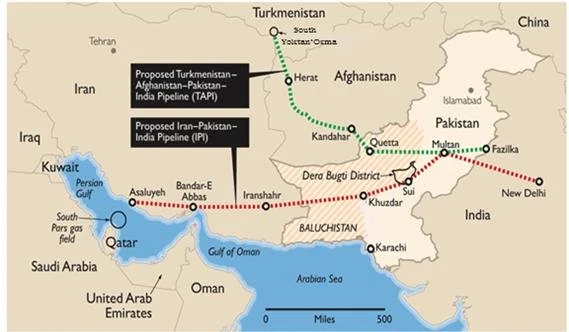
Context:
The ongoing West Asia crisis has disrupted global energy supplies, highlighting India’s dependence on imported hydrocarbons. This has renewed focus on cross-border pipeline projects like the IPI and TAPI pipelines.
Iran–Pakistan–India (IPI) Pipeline
- A proposed 2,775 km natural gas pipeline
- Connects Iran’s South Pars gas field to Pakistan and India
- Also known as the “Peace Pipeline”
Key Features
1. Objective
- Provide cost-effective gas supply
- Reduce reliance on expensive LNG imports
2. Capacity
- 60 mmscmd each for:
- India
- Pakistan
3. Strategic Significance
- Promote:
- Regional cooperation
- Economic interdependence
- Link:
- Energy-rich Persian Gulf
- Energy-deficient South Asia
Current Status
- Dormant / Stalled
Reasons for India’s Exit (2007)
- U.S. sanctions pressure (CAATSA concerns)
- Pricing disagreements
- Security concerns (route via Balochistan)
4. Centre Launches AI Skilling Drive with Google & YouTube
Source: TH
Context:
The Government of India, led by Union Minister Ashwini Vaishnaw, launched key initiatives to boost India’s media, broadcasting, and digital ecosystem, with a focus on strengthening the creative (orange) economy.
Key Initiatives Launched
1. National AI Skilling Initiative
- Implemented in partnership with:
- YouTube
- Indian Institute of Creative Technologies (IICT)
Key Features:
- Target: Train 15,000 youth (free of cost)
- Focus: AI skills for media and creative industries
- Two Phases:
Phase I (March–June 2026):
- Foundational AI training
- Courses include:
- AI Essentials
- Prompting Essentials
- Introduction to Generative AI
- Google Cloud AI learning paths
Phase II (July–December 2026):
- Advanced, project-based learning
- Focus on:
- Storytelling
- YouTube content strategies
- AI tools like Gemini and Vertex AI
2. MyWAVES Platform
- A citizen creator platform hosted on WAVES OTT
Features:
- Enables users to:
- Create
- Upload
- Share content
Objective:
- Promote grassroots content creation
- Showcase India’s cultural diversity
3. TV Broadcasting Reforms
- Introduction of:
- In-built satellite tuners in TV sets
- Advanced Electronic Programme Guide (EPG)
Benefit:
- Direct access to DD Free Dish
- No need for external set-top boxes
What is the “Orange Economy”?
- Refers to industries driven by:
- Creativity
- Culture
- Technology
- Intellectual Property
Examples:
- Media and entertainment
- Digital content creation
- Film, music, OTT platforms
5. Centre to Amend Foreign Contribution (Regulation) Act
Source: TH
Context:
The Union Government is set to introduce amendments to the Foreign Contribution (Regulation) Act, 2010 during the ongoing Parliament session. The proposed changes aim to strengthen regulation, accountability, and oversight of foreign-funded NGOs.
Key Proposed Amendments
1. Appointment of “Designated Authority”
- A new authority will be empowered to:
- Take over
- Manage
- Dispose of assets
Applicable when:
- NGO registration is:
- Suspended
- Cancelled
- Not renewed
2. Expansion of “Key Functionary” Definition
The term will now include:
- Directors
- Partners
- Trustees
- Karta of HUF
- Members of governing bodies or managing committees
- Any person controlling NGO operations
3. Liability of Key Functionaries
- Key individuals will be held legally accountable for FCRA violations.
Implication:
- Enhances personal responsibility and compliance.
4. Prior Approval for Investigation
- Law enforcement agencies and State governments must:
- Seek Central government approval before initiating FCRA-related investigations
Concern:
- May raise issues regarding:
- Federalism
- Investigative autonomy
5. Fixed Timelines for Fund Utilisation
- Introduces time-bound utilisation of foreign funds under prior permission.
Earlier Situation:
- Open-ended time limits
Benefit:
- Ensures efficient and timely use of funds.
6. Reduction in Punishment
- Maximum imprisonment reduced:
- From 5 years → 1 year
Objective:
- Possibly to rationalise penalties and reduce harshness.
Background
About FCRA
- Regulates:
- Acceptance and use of foreign contributions by NGOs
- Ensures:
- Funds are not used for activities detrimental to national interest
Current Scenario
- Around 16,000 NGOs registered
- Annual foreign funding: ~₹22,000 crore
Banking/Finance
1. Credit Guarantee Scheme for Microfinance Institutions-2.0 (CGSMFI-2.0)
Source: Mint
Context:
The Government of India launched the Credit Guarantee Scheme for Microfinance Institutions-2.0 (CGSMFI-2.0) in March 2026 to inject ₹20,000 crore liquidity into the microfinance sector and support financial inclusion.
About CGSMFI-2.0
- A credit guarantee scheme where the government provides default risk cover to banks (Member Lending Institutions – MLIs)
- Covers loans extended to:
- NBFC-MFIs
- Other Microfinance Institutions (MFIs)
Purpose:
- Encourage lending to high-risk microfinance segment
- Reduce credit risk for banks
Implementing Agencies
- Department of Financial Services – Nodal department
- National Credit Guarantee Trustee Company Limited – Provides guarantee cover
Aim of the Scheme
- Strengthen liquidity of MFIs
- Ensure continuous credit flow to small borrowers
- Promote:
- Financial inclusion
- Rural economic stability
Key Features
1. Tiered Guarantee Coverage
- 80% – Small MFIs
- 75% – Medium MFIs
- 70% – Large MFIs
Focus: Prioritises smaller institutions
2. Interest Rate Regulation
- Bank → MFI lending capped at:
- EBLR/MCLR + 2%
- MFI → Borrower lending:
- Must be 1% below average lending rate (last 6 months)
3. Low Guarantee Fee
- 0.50% per annum
- Affordable risk mitigation for lenders
4. Time-bound Scheme
- Valid till 30 June 2026
- Or until ₹20,000 crore guarantee limit is reached
5. Target Beneficiaries
- Focus on small borrowers (as per RBI definition)
- Ensures credit reaches:
- Low-income households
- Underserved rural population
2. Net FDI Negative for Fifth Straight Month
Source: TH
Context:
India’s Net Foreign Direct Investment (FDI) remained negative for the fifth consecutive month in January 2026, as per data released by the Reserve Bank of India. Outflows exceeded inflows by nearly $1.4 billion, indicating pressure on India’s external sector.
Key Data Highlights
Net FDI Position
- Net FDI: –$1.4 billion (January 2026)
- Fifth consecutive month of negative net inflows
- Highest outflow in last three months
FDI Outflows
(a) Outward FDI by Indian Companies
- Increased by 5.4% to $2.1 billion (YoY)
- Major destinations:
- USA
- Singapore
- UK
- UAE
(b) Repatriation & Disinvestment
- Jumped 97.3% to $4.9 billion
- Indicates:
- Foreign companies withdrawing profits
- Disinvestment from Indian operations
Key Reasons for Negative Net FDI
1. Rising Repatriation
- Sharp increase in profit booking and capital withdrawal
2. Decline in Fresh Inflows
- Moderation in global investment appetite
- Uncertainty due to:
- Global economic slowdown
- Geopolitical tensions
3. Increased Outward Investments
- Indian firms expanding overseas operations
Economic Implications
1. External Sector Pressure
- Negative FDI impacts:
- Balance of Payments (BoP)
- Forex reserves
2. Currency Depreciation Risk
- Lower dollar inflows → pressure on Rupee
3. Investment Climate Concerns
- Persistent outflows may signal:
- Reduced investor confidence
- Profit-taking by foreign firms
3. SEBI Approves Conflict of Interest Panel Recommendations
Source: ET
Context:
The Securities and Exchange Board of India (SEBI) has approved key recommendations of a High-Level Committee on Conflict of Interest to strengthen governance, transparency, and ease of doing business in financial markets.
Key Decisions Taken by SEBI
1. Strengthening Conflict of Interest Framework
Inclusion as “Insiders”
- SEBI Chairperson and Whole-Time Members will now be classified as ‘insiders’.
Digital Conflict Monitoring
- Creation of digital systems for:
- Monitoring conflicts of interest
- Ensuring transparency
Institutional Mechanisms
- Establishment of:
- Office of Ethics and Compliance
- Oversight Committee on Ethics
Role:
- Supervise conduct of board members
- Ensure ethical governance
Separate Regulations for Board Members
- Dedicated rules for:
- SEBI board members
- Enhances accountability and independence
2. Simplification of “Fit and Proper Person” Norms
Who are intermediaries?
- Stock exchanges
- Depositories
- Clearing corporations
Revised Criteria
- Disqualification only if:
- Convicted for economic offences
- Violations of securities laws
- Offences involving moral turpitude
3. Major Reform for Foreign Portfolio Investors (FPIs)
Net Settlement System Introduced
- FPIs can now net off transactions:
- Adjust purchase payments against sale proceeds
Earlier System:
- Gross settlement (separate payment and receipt)
Benefits:
- Reduces:
- Transaction costs
- Capital requirements
- Enhances market efficiency
4. Boost to Social Impact Investments
- Minimum investment in Social Impact Funds (AIFs) reduced:
- From ₹2 lakh → ₹1,000
Objective:
- Increase retail participation
- Promote inclusive finance
4. RBI in Talks with 4–5 Countries on Cross-Border CBDC
Context:
The Reserve Bank of India (RBI) is in discussions with 4–5 countries, including Asian and European economies, to develop cross-border transaction systems using Central Bank Digital Currency (CBDC).
What is CBDC?
- A digital form of central bank-issued currency
- Legal tender, backed by the central bank
- Can be used for:
- Retail transactions (public use)
- Wholesale transactions (interbank settlements)
Key Developments
1. Cross-Border CBDC Collaboration
- RBI engaging with:
- Asian economies
- Advanced European economies
Objective:
- Build CBDC transaction rails for:
- Faster
- Cheaper
- More efficient cross-border payments
2. Expected Benefits
(a) Lower Remittance Costs
- Reduces:
- Intermediary charges
- Transaction fees
(b) Faster Transactions
- Eliminates delays caused by:
- Multiple banking layers
- Settlement systems
(c) Reduced Compliance Layers
- Simplifies:
- Verification processes
- Regulatory checks
Agriculture
1. Agri-Photovoltaics (AgriPV)
Source: TH
Context:
India’s push for 300 GW solar capacity by 2030 and net-zero by 2070 is increasing pressure on land resources. With agriculture already occupying over half of India’s land, Agri-Photovoltaics (AgriPV) is emerging as a sustainable solution to balance energy and food security.
The Union Budget 2026–27 increased allocation for PM-KUSUM Scheme to ₹5,000 crore, reinforcing farmer-centric solarisation.
What is Agri-Photovoltaics (AgriPV)?
- Integration of:
- Solar power generation
- Agricultural cultivation on the same land
- Solar panels are:
- Mounted above crops
- Spaced between rows
- Integrated into greenhouses
Types of AgriPV Systems
1. Elevated Systems
- Panels mounted several meters above ground
- Allow full-scale farming below
2. Row-Based Systems
- Panels installed between crop rows
- Minimise shading impact
3. Vertical Systems
- Upright panels capturing sunlight from both sides
4. Greenhouse-Integrated Systems
- Panels on roofs/walls
- Provide controlled growing conditions
Crop Selection Strategy
Key Principle
- Match crops with sunlight availability under panels
Suitable Crops
- Shade-tolerant crops:
- Turmeric, ginger, leafy vegetables, tulsi
- Sunlight-intensive crops (between rows):
- Tomato, onion, potato, chilli
Regional Examples
- Madhya Pradesh: Tomato, garlic, turmeric
- Karnataka & Maharashtra: Ragi, jowar, grapes, banana
Benefits of AgriPV
1. Dual Land Use Efficiency
- Simultaneous:
- Food production
- Energy generation
2. Increased Farmer Income
- Revenue streams:
- Sale of electricity
- Land leasing
- Revenue sharing
3. Environmental Benefits
- Reduced:
- Evapotranspiration (water loss)
- Improved:
- Soil moisture retention
- Protection from:
- Heat
- Hail
- Heavy rainfall
4. Energy & Rural Development
- Powers:
- Cold storage
- Food processing
- Irrigation systems
- Reduces:
- Diesel dependence
Facts To Remember
1. North Korea’s Kim reappointed as President of state affairs: state media
North Korea’s rubber-stamp legislature has re-elected Kim Jong-un as President of state affairs, state media reported on Monday.
2. S. Thyagarajan, doyen of sports journalism, passes away
S. Thyagarajan, 85, veteran sports correspondent, who worked with The Hindu for more than five decades, passed away here on Monday.
3. Outward Remittances Under LRS Decline by 3.2% in Jan 2026
Outward remittances under the Liberalised Remittance Scheme of the Reserve Bank of India declined 3.19% year-on-year (Y-o-Y) to $2.68 billion in January 2026, indicating moderation in overseas spending by Indian residents.
4. Bharat Electricity Summit 2026 Held in New Delhi; Carbon Market Portal Launched
First edition of Bharat Electricity Summit 2026 was held at Yashobhoomi from March 19–22, 2026, inaugurated by Manohar Lal Khattar, organised by Bureau of Energy Efficiency, with theme “Electrifying Growth. Empowering Sustainability. Connecting Globally”, and featured launch of Indian Carbon Market Portal.
5. Government Launches CGSMFI 2.0 to Boost Microfinance Credit Flow
Government of India launched Credit Guarantee Scheme for Microfinance Institutions 2.0 to provide guarantee cover for loans to MFIs, benefiting 36 lakh borrowers, managed by National Credit Guarantee Trustee Company, effective from March 20, 2026.
6. FSI and BISAG-N Sign MoU for Geospatial Tech in Forestry
Forest Survey of India signed MoU with Bhaskaracharya National Institute for Space Applications and Geo-informatics to enhance use of geospatial tech, AI/ML, and remote sensing for forest management and biodiversity conservation.
7. India Sets Up Rare Earth Magnet Pilot Plant at ARCI Hyderabad
Government established Nd-Fe-B magnet pilot plant at International Advanced Research Centre for Powder Metallurgy and New Materials under DST to boost indigenous manufacturing for EVs and renewable energy, reducing import dependence.
8. RRU and SSB Academy Sign MoU for National Security Training
Rashtriya Raksha University signed MoU with Sashastra Seema Bal Academy to enhance security training, academic accreditation, and capacity building for border forces.
9. Indian Navy Participates in Exercise Kakadu 2026 in Australia
Indian Navy deployed INS Nilgiri in Exercise Kakadu 2026 involving 19 nations, enhancing Indo-Pacific maritime cooperation, and won Kakadu Shield Trophy.
10. India and Bhutan Sign MoU for Postal Cooperation
India and Bhutan signed MoU to strengthen postal services, enabling UPU–UPI cross-border remittance between India Post and Bhutan Post.
11. South Indian Bank Appoints Jose Joseph Kattoor as Chairman
South Indian Bank appointed Jose Joseph Kattoor as Non-Executive Part-Time Chairman for three years following RBI approval.
11. City Union Bank Appoints Ravindra Jadeja as Brand Ambassador
City Union Bank appointed Ravindra Jadeja as brand ambassador for two years to enhance outreach.
12. Kotak Mahindra to Divest Stake in Infina Finance
Kotak Mahindra Bank arm KMCC to sell 30.99% stake in Infina Finance for ₹1,293.91 crore, reducing shareholding to 19%.
13. Veteran BJP Leader Datta Meghe Passes Away
Datta Meghe, former MP and senior BJP leader, passed away at age 89 in Maharashtra after decades-long political career.
14. World Day of Theatre for Children and Young People Observed on March 20
Observed globally on March 20 to promote children’s cultural rights, initiated by ASSITEJ International with 2026 theme on child rights in arts.
15. International Day for Elimination of Racial Discrimination – March 21
Observed by United Nations on March 21 marking 61 years of ICERD to combat racial discrimination globally.
16. World Down Syndrome Day 2026 Observed on March 21
Observed globally with theme “Together Against Loneliness” to promote inclusion and rights of persons with Down syndrome.
17. Himachal Pradesh Budget 2026-27 Presented
Sukhvinder Singh Sukhu presented ₹54,928 crore FY27 budget focusing on fiscal discipline, green energy, and social welfare.
18. World Tuberculosis Day: President Murmu Highlights India’s Fight Against Tuberculosis
Today is World Tuberculosis Day. The day is observed on 24th March every year to raise awareness about the devastating health, social and economic consequences of Tuberculosis (TB) and to step up efforts to end the global epidemic.
19. Railways Minister Ashwini Vaishnaw Launches Five Reforms in Railways’ 52 Reforms in 52 Weeks Drive
Union Railways Minister Ashwini Vaishnaw today announced five reforms as part of Indian Railways’ resolve to undertake 52 reforms in 52 weeks this year in New Delhi.
20. India Hosts 12th Steering Committee Meeting of the Global Operational Network
The Director of Enforcement Directorate (ED), Rahul Navin, today said that asset recovery is not an afterthought but the truest measure of enforcement success under the modern anti-corruption framework enshrined in the United Nations Convention against Corruption (UNCAC).
- The Government of India launched the Credit Guarantee Scheme for Microfinance Institutions-2.0 (CGSMFI-2.0) in March 2026 to inject ₹20,000 crore liquidity into the microfinance sector and support financial inclusion. Credit Guarantee Scheme for Microfinance Instit…
- Outward remittances under the Liberalised Remittance Scheme of the Reserve Bank of India declined 3.19% year-on-year (Y-o-Y) to $2.68 billion in January 2026, indicating moderation in overseas spending by Indian residents. Outward Remittances Under LRS Decline by 3.2% i…
- The Union Budget 2026–27 increased allocation for PM-KUSUM Scheme to ₹5,000 crore, reinforcing farmer-centric solarisation. Agri-Photovoltaics (AgriPV)
- Complete 1 lakh (100,000) stalled housing units SWAMIH Investment Fund II to Be Launched
- The Indian Navy is set to commission the stealth frigate Taragiri (F41) on 03 April 2026 at Visakhapatnam. The warship is a key milestone under indigenous defence manufacturing and aligns with the vision of Aatmanirbhar Bharat. Stealth Frigate Taragiri (F41)
25 March, 2026
Daily Current Affairs Quiz
25 March, 2026
National Affairs
1. Global Terrorism Index 2026
Source: Mint
Context:
Institute for Economics and Peace releases Global Terrorism Index 2026
- Most affected country: Pakistan
- India’s rank: 13th
- Highlights changing global terrorism trends
What is Global Terrorism Index?
- Annual report measuring impact of terrorism across countries
- Published by Institute for Economics and Peace
- Score range:
- 0 → No impact
- 10 → Highest impact
Key Findings
Country Rankings
- Pakistan:
- Rank: 1
- Score: 8.574
- Deaths: 1,139
- Incidents: 1,045
- India:
- Rank: 13
- Score: 6.428
Most Affected Countries
- Burkina Faso – Rank 2
- Niger – Rank 3
- Nigeria – Rank 4
- Mali – Rank 5
METHODOLOGY
- Based on composite score using:
- Number of incidents
- Deaths
- Injuries
- Property damage
DATA
- Score range: 0 to 10
- Pakistan highest impact in 2026
- India ranked 13th
- Global deaths decreased by 28%
Important For:
- UPSC Prelims (Reports and Indices)
- UPSC Mains GS Paper 3 (Internal Security)
- State PCS Exams
- CAPF / CDS Exams
MCQs
Q.1) Global Terrorism Index is released by:
[1] United Nations
[2] World Bank
[3] Institute for Economics and Peace
[4] IMF
[5] Interpol
Answer: [3]
Q.2) GTI score ranges between:
[1] 0 to 5
[2] 1 to 10
[3] 0 to 10
[4] 10 to 100
[5] 0 to 100
Answer: [3]
Q.3) India’s rank in GTI 2026 is:
[1] 10
[2] 11
[3] 12
[4] 13
[5] 14
Answer: [4]
Q.4) Which country ranked first in GTI 2026?
[1] Nigeria
[2] Mali
[3] Pakistan
[4] Niger
[5] Burkina Faso
Answer: [3]
Q.5) GTI measures:
[1] Economic growth
[2] Climate change
[3] Impact of terrorism
[4] Population growth
[5] Trade
Answer: [3]
2. Internal Audit Portal (Ministry of Rural Development)
Context:
Ministry of Rural Development launches real-time Internal Audit Portal
- Developed by National Informatics Centre
- Purpose: Digital audit and governance monitoring
- Focus: Transparency and accountability
What is the Internal Audit Portal?
- A centralized digital platform for audit monitoring
- Replaces manual audit processes
- Enables real-time tracking of audit activities
Important For:
- UPSC Prelims (Government Initiatives, E-Governance)
- UPSC Mains GS Paper 2 (Governance, Transparency, Accountability)
- State PCS Exams
- SSC and Banking Exams
MCQs
Q.1) Internal Audit Portal is launched by:
[1] Ministry of Finance
[2] Ministry of Rural Development
[3] NITI Aayog
[4] RBI
[5] SEBI
Answer: [2]
Q.2) The portal is developed by:
[1] ISRO
[2] DRDO
[3] NIC
[4] MeitY directly
[5] RBI
Answer: [3]
3. Jal Seva Aankalan Framework
Context:
Government operationalises Jal Seva Aankalan Framework under Jal Jeevan Mission
- Focus: Monitoring rural drinking water service delivery
- Approach: Community-based assessment with digital integration
- Objective: Improve quality, reliability, and sustainability of water supply
What is the Framework?
- A village-level monitoring and assessment system
- Evaluates rural tap water services under Jal Jeevan Mission
- Combines:
- Community participation
- Digital reporting
Key Features
Community-Led Assessment
- Conducted by Village Water & Sanitation Committee (VWSC)
- Ensures grassroots participation
- Promotes accountability
Gram Sabha Validation
- Findings presented before Gram Sabha
- Acts as:
- Social audit mechanism
- Transparency tool
Digital Data Integration
- Data uploaded on JJM-IMIS dashboard
- Enables:
- Real-time monitoring
- Multi-level tracking (district to national)
Important For:
- UPSC Prelims (Government Initiatives, E-Governance)
- UPSC Mains GS Paper 2 (Governance, Transparency, Accountability)
- State PCS Exams
- SSC and Banking Exams
MCQs
Q.1) Jal Seva Aankalan Framework is associated with:
[1] Urban sanitation
[2] Rural drinking water assessment
[3] Irrigation projects
[4] River cleaning
[5] Groundwater extraction
Answer: [2]
Q.2) Which body conducts ground-level assessment?
[1] District Collector
[2] Gram Sabha
[3] Village Water & Sanitation Committee
[4] NITI Aayog
[5] Parliament
Answer: [3]
4. Remission of Duties and Taxes on Exported Products (RoDTEP)
Context:
Government restores full benefits under Remission of Duties and Taxes on Exported Products
- Context: Support to exporters amid West Asia geopolitical disruptions
- Change: Withdrawal of earlier 50% restriction on rates and caps
- Objective: Boost export competitiveness
What is RoDTEP?
- A flagship export promotion scheme
- Refunds un-rebated taxes and duties on exported products
- Ensures:
- Taxes are not exported
- Level playing field globally
KEY FEATURES
Coverage
- Covers 10,000+ export products
- Includes sectors:
- Agriculture
- Marine
- Leather
- Gems and jewellery
Digital Mechanism
- Benefits provided as:
- Transferable duty credit scrips
- Maintained in electronic ledger by Customs
WTO Compliance
- Based on principle of tax remission
- Complies with World Trade Organization norms
BACKGROUND
- Launched: January 1, 2021
- Replaced:
- Merchandise Exports from India Scheme
- Implemented by:
- Ministry of Commerce and Industry
Important For:
- UPSC Prelims (Schemes, Economy, Trade)
- UPSC Mains GS Paper 3 (External Sector, Exports)
- RBI Grade B
- Commerce Optional
- Banking and SSC Exams
MCQs
Q.1) RoDTEP scheme aims to:
[1] Provide direct subsidies to exporters
[2] Refund un-rebated taxes and duties
[3] Increase imports
[4] Control inflation
[5] Regulate banking
Answer: [2]
Q.2) RoDTEP replaced:
[1] SEZ scheme
[2] GST
[3] MEIS
[4] FDI policy
[5] EXIM Bank
Answer: [3]
Q.3) RoDTEP is compliant with:
[1] IMF norms
[2] World Bank rules
[3] WTO rules
[4] RBI guidelines
[5] SEBI norms
Answer: [3]
Q.4) Benefits under RoDTEP are given as:
[1] Cash transfer
[2] Tax exemption certificates
[3] Duty credit scrips
[4] Bonds
[5] Subsidy cheques
Answer: [3]
Q.5) FOB value refers to:
[1] Cost including insurance
[2] Value at export point excluding freight and insurance
[3] Domestic price
[4] Import value
[5] Tax value
Answer: [2]
5. Raajmarg Infra Investment Trust (RIIT)
Context:
National Highways Authority of India sponsored Raajmarg Infra Investment Trust listed on Bombay Stock Exchange
- Type: Infrastructure Investment Trust (InvIT)
- Purpose: Monetisation of highway assets
- Significance: Boosts infrastructure financing
What is RIIT?
- An Infrastructure Investment Trust (InvIT)
- Similar to a mutual fund but for infrastructure assets
- Registered with Securities and Exchange Board of India
- Constituted under Indian Trusts Act, 1882
KEY FEATURES
Asset Monetisation
- Transfers operational highway assets from NHAI to trust
- Generates upfront capital for new projects
Investment Management
- Managed by:
- Raajmarg Infra Investment Managers Pvt Ltd (RIIMPL)
- Responsible for:
- Portfolio decisions
- Asset acquisition
Revenue Generation
- Income sources:
- Toll collection
- Operational revenues
Regulatory Framework
- Governed by:
- SEBI (Infrastructure Investment Trusts) Regulations, 2014
Important For?
- UPSC Prelims (Economy, Capital Markets, Infrastructure)
- UPSC Mains GS Paper 3 (Infrastructure, Investment Models)
- RBI Grade B
- SEBI Grade A
- Banking Exams
MCQs
Q.1) RIIT is:
[1] A banking institution
[2] A mutual fund for equities
[3] An Infrastructure Investment Trust
[4] A government department
[5] A pension fund
Answer: [3]
Q.2) RIIT is primarily used for:
[1] Tax collection
[2] Asset monetisation of highways
[3] Loan disbursement
[4] Insurance services
[5] Export promotion
Answer: [2]
Q.3) InvITs are regulated by:
[1] RBI
[2] SEBI
[3] NABARD
[4] IRDAI
[5] Finance Commission
Answer: [2]
Q.4) Minimum distribution requirement in InvITs is:
[1] 50%
[2] 60%
[3] 70%
[4] 80%
[5] 90%
Answer: [5]
Q.5) Revenue for RIIT mainly comes from:
[1] Taxes
[2] Toll collection
[3] GST
[4] Imports
[5] Donations
Answer: [2]
6. Corruption Perceptions Index 2025
Context:
Transparency International releases Corruption Perceptions Index 2025
- Global corruption increasing
- India score: 39/100
- Rank: 91 out of 182 countries
- Highlights governance challenges
What is Corruption Perceptions Index (CPI)?
- Annual index measuring perceived public sector corruption
- Score range:
- 0 → Highly corrupt
- 100 → Very clean
- Based on:
- Expert assessments
- Business surveys
KEY FINDINGS
Global Trends
- Average score: 42/100 (lowest in a decade)
- 122 out of 182 countries scored below 50
- Only 5 countries scored above 80
INDIA’S PERFORMANCE
- Score: 39/100
- Rank: 91
Trend Analysis
- Stagnant performance (38–41 since 2014)
- Governance not improving in line with economic growth
Comparative Position
- Below China
- Similar to Sri Lanka
- Better than Bangladesh and Pakistan
DATA POINTS
- CPI score range: 0–100
- India score: 39
- Rank: 91
- Global average: 42
- 122 countries below 50
Important For:
- UPSC Prelims (Reports and Indices)
- UPSC Mains GS Paper 2 (Governance, Transparency)
- UPSC Mains GS Paper 3 (Economy, Investment Climate)
- Banking News
- Essay (Governance and Corruption)
- State PCS Exams
MCQs
Q.1) CPI is released by:
[1] World Bank
[2] IMF
[3] Transparency International
[4] UNDP
[5] OECD
Answer: [3]
Q.2) CPI score range is:
[1] 0–10
[2] 0–50
[3] 0–100
[4] 10–100
[5] 1–100
Answer: [3]
Q.3) India’s CPI 2025 score is:
[1] 35
[2] 37
[3] 39
[4] 41
[5] 45
Answer: [3]
Q.4) CPI measures:
[1] Actual corruption cases
[2] Perceived corruption
[3] Economic growth
[4] Poverty
[5] Inflation
Answer: [2]
Q.5) Higher CPI score indicates:
[1] Higher corruption
[2] Lower corruption
[3] No relation
[4] Economic growth
[5] Political stability
Answer: [2]
7. Transgender Persons (Protection of Rights) Amendment Bill, 2026
Context:
Lok Sabha passes Transgender Persons Amendment Bill 2026
- Passed via voice vote amid Opposition walkout
- Focus: Gender identity regulation and protection
- Raises concerns on rights and autonomy
What is the Bill?
- Amendment to the Transgender Persons (Protection of Rights) Act
- Deals with:
- Gender identity recognition
- Rights and protection of transgender persons
KEY PROVISIONS
Removal of Self-Identification Rights
- Eliminates right to self-determined gender identity
- Departure from earlier judicial recognition (e.g. NALSA v Union of India)
Mandatory Medical Verification
- Requires certification by a medical board
- Introduces institutional validation
Protection-Oriented Measures
- Prevents:
- Forced gender transition
- Strengthens:
- Legal penalties for crimes against transgender persons
Banking/Finance
1. SEBI Proposal – Gift Cards for Mutual Fund Investments
Context:
Gift Prepaid Payment Instruments (PPIs) for Mutual Funds
- Regulator: Securities and Exchange Board of India
- Why in News: Consultation paper released (March 2026)
- Focus: Allow gifting of mutual fund investments via prepaid instruments
What is the Proposal?
SEBI has proposed allowing Gift Prepaid Payment Instruments (PPIs), which can be purchased by an individual and gifted to another person, who can then use them to invest in mutual fund units.
Why is it Important?
- Promotes financial inclusion
- Encourages first-time investors
- Makes investing a social and accessible activity
- Supports deepening of capital markets
Key Features
- Gift PPIs can be used only for mutual fund investments
- Funded via:
- Bank transfer
- UPI (Indian accounts only)
- Validity: 1 year from issuance
- Investment Cap: ₹50,000 per investor per financial year
- Applicable only after KYC compliance of recipient
DATA POINTS
- Investment Cap: ₹50,000/year
- Validity: 1 year
- Mode: UPI / Bank Transfer only
- Instrument Type: Gift PPI
- Regulator: SEBI
Important For?
- UPSC Prelims (Economy, Financial Markets)
- UPSC Mains GS Paper 3 (Capital Markets, Financial Inclusion)
- RBI Grade B
- SEBI Grade A
- Banking Exams
MCQs
Q.1) Gift PPIs are proposed by:
[1] RBI
[2] SEBI
[3] NABARD
[4] IRDAI
[5] Finance Ministry
Answer: [2]
Q.2) Gift PPIs can be used for:
[1] Any purchase
[2] Mutual fund investments only
[3] Loan repayment
[4] Insurance premium
[5] Tax payment
Answer: [2]
Q.3) Maximum investment allowed via Gift PPIs is:
[1] ₹10,000
[2] ₹25,000
[3] ₹50,000
[4] ₹1,00,000
[5] No limit
Answer: [3]
Q.4) Validity of Gift PPIs is:
[1] 6 months
[2] 1 year
[3] 2 years
[4] 5 years
[5] Unlimited
Answer: [2]
Q.5) Which is mandatory for recipient?
[1] PAN only
[2] Aadhaar only
[3] KYC compliance
[4] Bank account abroad
[5] GST registration
Answer: [3]
2. RBI Push for Unified View of Payment Mandates
Context:
Unified Mandate View Across Payment Systems
- Regulator: Reserve Bank of India
- Why in News: RBI proposes single interface to view all mandates
- Focus: Customer protection and transparency in recurring payments
What is the Proposal?
RBI has proposed an interoperable system enabling users to view all recurring payment mandates (standing instructions) across platforms like:
- UPI
- Credit cards (Visa, Mastercard)
- Payment aggregators
in one unified dashboard (bird’s-eye view).
Key Features
- Unified mandate viewing system (proposed)
- Covers multiple platforms (UPI, cards, aggregators)
- 87 crore mandates created on UPI (Feb 2026)
RBI Digital Initiatives:
- Digital Payments Intelligence Platform → real-time risk scoring
- AI tools:
- UPI Help (grievance redressal)
- MuleHunter (fraud detection)
- Expansion of DPI including
Unified Lending Interface
MCQs
Q.1) Consider the following statements:
- Reserve Bank of India proposes a unified platform for mandates
- Unified Payments Interface provides mandate visibility across all systems
- Mandates refer to recurring payment instructions
Options:
[1] 1 only
[2] 1 and 2 only
[3] 1 and 3 only
[4] 2 and 3 only
[5] 1, 2 and 3
Answer: [3]
Q.2) The main objective of RBI’s proposal is:
[1] Increase tax revenue
[2] Improve transparency and customer protection
[3] Promote cash economy
[4] Reduce digital payments
[5] Control inflation
Answer: [2]
Q.3) Payment mandate refers to:
[1] One-time payment
[2] Recurring auto-debit instruction
[3] Loan approval
[4] Tax payment
[5] Insurance premium
Answer: [2]
Q.4) MuleHunter is used for:
[1] Loan processing
[2] Detecting mule accounts
[3] Payment settlement
[4] KYC verification
[5] Tax filing
Answer: [2]
Q.5) Interoperability means:
[1] Cash usage across banks
[2] Seamless integration of different systems
[3] Restricting transactions
[4] Blocking UPI
[5] Increasing fees
Answer: [2]
Agriculture
1. Women Farmers in Agriculture (International Year of the Woman Farmer 2026)
Source: PIB
Context:
United Nations declares 2026 as International Year of the Woman Farmer
- India hosts Global Conference on Women in Agri-Food Systems (GCWAS–2026)
- Focus: Women’s role in agriculture and food security
- Emphasis: Policy reforms and empowerment
Who are Women Farmers?
- Women engaged across the agricultural value chain:
- Production
- Processing
- Marketing
- Role evolving from:
- Invisible labour → Entrepreneur and decision-maker
DATA POINTS
- 80% of economically active rural women in agriculture
- 33% agricultural labourers
- 48% self-employed farmers
Financial Inclusion
- Under PM-KISAN:
- 25% benefits to women
- ₹1.01 lakh crore transferred
Skill Development
- 2.58 crore women trained (2022–2025)
- Focus:
- Agro-ecology
- Livestock management
Collectivisation
- 1,175 women-only Farmer Producer Organisations (FPOs)
ROLE OF WOMEN FARMERS
Crop Production
- Activities:
- Sowing
- Weeding
- Transplanting
- Critical in:
- Paddy cultivation
Livestock Management
- Manage:
- Dairy
- Poultry
- Small ruminants
- Example:
- Pashu Sakhis providing veterinary services
Post-Harvest and Value Addition
- Activities:
- Processing
- Packaging
- Marketing
- Example:
- Mushroom cultivation
- Spice processing
Natural Resource Management
- Promote:
- Biodiversity
- Soil health
- Example:
- Natural farming initiatives
Technology Adoption
- Increasing use of:
- Drones
- Modern tools
- Example:
- Namo Drone Didi initiative
GOVERNMENT INITIATIVES
Namo Drone Didi Scheme
- 15,000 drones for women SHGs
- 80% central assistance
Mahila Kisan Sashaktikaran Pariyojana (MKSP)
- Sub-scheme under DAY-NRLM
- Focus:
- Skill development
- Capacity building
Agriculture Infrastructure Fund (AIF)
- 3% interest subvention
- Supports:
- Warehousing
- Cold storage
Krishi Sakhi Programme
- Training 70,000 women
- Role:
- Para-extension workers
Important For:
- NABARD Exam
- UPSC Prelims (Schemes, Agriculture, Reports)
- UPSC Mains GS Paper 3 (Agriculture, Rural Economy)
- UPSC Mains GS Paper 1 (Women and Society)
- Essay (Women Empowerment, Agriculture)
- State PCS Exams
MCQs
Q.1) International Year of the Woman Farmer is:
[1] 2024
[2] 2025
[3] 2026
[4] 2027
[5] 2028
Answer: [3]
Q.2) Percentage of rural women engaged in agriculture is:
[1] 50%
[2] 60%
[3] 70%
[4] 80%
[5] 90%
Answer: [4]
Q.3) MKSP is related to:
[1] Irrigation
[2] Women empowerment in agriculture
[3] Crop insurance
[4] Fertiliser subsidy
[5] Export promotion
Answer: [2]
Q.4) Namo Drone Didi scheme focuses on:
[1] Irrigation
[2] Drone technology for women SHGs
[3] Banking
[4] Insurance
[5] Seeds
Answer: [2]
Q.5) CIWA is related to:
[1] Water management
[2] Women in agriculture
[3] Climate change
[4] Banking
[5] Trade
Answer: [2]
Facts To Remember
1. L&T Finance Joins UN Global Compact to Strengthen ESG Framework
L&T Finance Ltd became signatory to United Nations Global Compact, aligning with principles on human rights, labour, environment, and anti-corruption, with annual reporting commitment and association with PCAF for emissions tracking.
2. Goldman Sachs Cuts India GDP Growth Forecast to 5.9% for CY26
Goldman Sachs revised India’s GDP growth to 5.9% for CY26, projecting inflation at 4.6% and current account deficit at 2% of GDP amid global uncertainties.
3. Razorpay Partners Sarvam AI for Voice-Based Digital Commerce
Razorpay partnered with Sarvam AI to enable multilingual voice-based commerce, integrating AI models for real-time transactions with early rollout on Indus App and Swiggy.
4. Karnataka Grameena Bank Wins National Award for SHG Linkage
Karnataka Grameena Bank received National Award for SHG-Bank Linkage 2024-25 from MoRD for promoting financial inclusion and extending ₹2,835 crore credit to SHGs.
5. CA P.V. Narayana Rao Appointed to ICAI Sustainability Board
P V Narayana Rao appointed co-opted member of SRSB under Institute of Chartered Accountants of India for 2026–27 to strengthen sustainability reporting standards.
6. Svatantra Microfin Merger Creates 2nd Largest NBFC-MFI
Svatantra Microfin Pvt Ltd merged with CIFCPL and SHPL to form second-largest NBFC-MFI, with approvals from National Company Law Tribunal and RBI.
7. New Cockroach Species Discovered by ZSI in Maharashtra
Zoological Survey of India discovered new species ‘Neoloboptera peninsularis’ in Pune using DNA-based taxonomy, marking advancement in biodiversity research.
8. Former French PM Lionel Jospin Passes Away
Lionel Jospin passed away at 88, known for introducing 35-hour workweek and key social reforms in France.
9. International Nowruz Day Observed on March 21
United Nations observes Nowruz Day on March 21 to promote peace, cultural heritage, and global solidarity.
10. World Poetry Day 2026 Promotes Linguistic Diversity
Observed on March 21 by UNESCO with theme “Poetry as a Bridge for Peace and Inclusion” to support endangered languages.
11. World Glacier Day 2026 Highlights Climate Urgency
Observed on March 21 under United Nations to raise awareness on glacier preservation and climate change impacts.
12. International Day of Forests 2026 Celebrates Role of Forests
Observed globally on March 21 with theme “Forests and Economies” to highlight importance of forests in livelihoods and sustainability.
13. MoRD Launches Real-Time Internal Audit Portal for Governance Reforms
Ministry of Rural Development operationalised Internal Audit Portal developed by National Informatics Centre, enabling real-time audit tracking, ATR monitoring, automated alerts, and improved transparency to reduce compliance gaps.
14. NITI Aayog Sanctions ₹1.55 Crore to RISE Centre for Women Entrepreneurship
NITI Aayog approved ₹1.55 crore for RISE Centre to boost AI-based skill development, women entrepreneurship, and rural enterprise growth, benefiting over 1,000 women and supporting 300+ families.
15. PMKVY 4.0 Launched
Union Minister Gajendra Singh Shekhawat has said that Pradhan Mantri Kaushal Vikas Yojana (PMKVY) 4.0 was launched for imparting skill development training through Short-Term Training and up-skilling and re-skilling to youth across the country
16. National Biodiversity Authority Launches 3-Month Internship Programme for Graduates and Postgraduates
The National Biodiversity Authority (NBA) launched a short-term Internship Programme of up to 3 months for students who are undergoing graduation or post-graduation programmes.
17. India’s Growth to Remain Resilient at 7.1% in FY27 Despite Geopolitical Tensions: S&P Global
India’s economic growth is expected to remain resilient at 7.1 per cent in the financial year 2026-27, despite ongoing geopolitical tensions, according to a report by S&P Global.
- 87 crore mandates created on UPI (Feb 2026) RBI Push for Unified View of Payment Mandates
- Karnataka Grameena Bank received National Award for SHG-Bank Linkage 2024-25 from MoRD for promoting financial inclusion and extending ₹2,835 crore credit to SHGs. Karnataka Grameena Bank Wins National Award for…
- India’s economic growth is expected to remain resilient at 7.1 per cent in the financial year 2026-27, despite ongoing geopolitical tensions, according to a report by S&P Global. India’s Growth to Remain Resilient at 7.1% in F…
- Investment Cap: ₹50,000 per investor per financial year SEBI Proposal – Gift Cards for Mutual Fund Inve…
- Change: Withdrawal of earlier 50% restriction on rates and caps Remission of Duties and Taxes on Exported Produ…
26 March, 2026
Daily Current Affairs Quiz
26 March, 2026
National Affairs
1. Revamped UDAN Scheme (Regional Connectivity Scheme)
Source: TH
Context:
Government revises UDAN Scheme with extended subsidy support
- Subsidy period increased from 3 to 5 years
- Shift from airfare levy to direct budgetary support
- Total outlay: ₹28,840 crore
- Aim: Revive underutilized Tier-2 and Tier-3 routes
What is UDAN Scheme?
- Launched in 2016 under:
- Ministry of Civil Aviation
- Objective:
- Enhance regional air connectivity
- Make air travel affordable
- Key idea:
- “Ude Desh ka Aam Nagrik” (common citizen can fly)
KEY CHANGES IN UDAN Scheme
Extension of Subsidy Period
- Earlier:
- 3 years viability gap funding (VGF)
- Now:
- Extended to 5 years
- Reason:
- Many regional routes became unviable after subsidy ended
Change in Subsidy Funding Mechanism
- Earlier:
- Funded through levy on airline tickets
- Now:
- Direct funding from government budget
- Impact:
- Reduces burden on passengers
- Improves financial sustainability
Increased Financial Outlay
- Total allocation:
- ₹28,840 crore
- Purpose:
- Strengthen regional connectivity infrastructure
- Support airlines on less profitable routes
Important For which Exam?
- UPSC Prelims (Schemes, Aviation Sector)
- State PCS Exams
- SSC Exams
MCQs
Q.1) What is the primary objective of the UDAN Scheme?
[1] Promote international tourism
[2] Improve regional air connectivity
[3] Develop metro rail networks
[4] Boost cargo exports
Q.2) Where is the UDAN scheme implemented?
[1] Only metropolitan cities
[2] Tier-2 and Tier-3 cities
[3] Only rural villages
[4] International routes
Q.3) What is the revised subsidy duration under the revamped UDAN scheme?
[1] 2 years
[2] 3 years
[3] 5 years
[4] 10 years
Q.4) What type of funding mechanism is now used for UDAN subsidies?
[1] Airline ticket surcharge
[2] State government grants
[3] Direct budgetary support from government
[4] Private airline investment
ANSWERS
1 → [2]
2 → [2]
3 → [3]
4 → [3]
Important For which Exam?
- UPSC
- State PCS Exams
- SSC
2. Indian Railways “Reform Express” 2026
Context:
Indian Railways launches 5 new reforms under “Reform Express” initiative (total reforms in 2026: 9)
- Focus Areas:
- Cargo efficiency (Salt & Automobile transport)
- Construction quality
- Passenger convenience
- Key Highlight:
- Passengers can change boarding station up to 30 minutes before departure
What is “Reform Express” Initiative?
“Reform Express” is a reform-driven initiative by Indian Railways aimed at modernizing operations.
- Objectives:
- Improve freight share
- Enhance passenger experience
- Strengthen infrastructure quality
- Approach:
- Policy reforms
- Technology integration
- Industry collaboration
What is Multimodal Transport?
Movement of goods using multiple modes (rail, road, etc.)
- Benefits:
- Reduces cost
- Improves efficiency
- Minimizes losses
- Application:
- Salt containers loaded at source and transported seamlessly
What is Rail Co-efficient?
- Definition:
- Share of railways in total transportation of a commodity
- Example:
- Automobiles: ~24% (low → growth potential)
- Importance:
- Indicator of modal shift potential
What is Predatory Bidding?
- Definition:
- Bidding significantly below project cost
- Risks:
- Project delays
- Poor quality
- Contract disputes
- Reform:
- Extra performance guarantee for bids >5% below estimate
Important for which Exam?
- UPSC
- Banking Exam
- SSC
MCQs
Q.1) What is “Reform Express”?
[1] Train service
[2] Railway reform initiative
[3] Tax scheme
[4] Digital platform
Q.2) What is the purpose of stainless steel containers?
[1] Reduce speed
[2] Prevent corrosion
[3] Increase cost
[4] Store fuel
Q.3) What is rail co-efficient?
[1] Rail speed
[2] Share of rail transport
[3] Ticket cost
[4] Freight tax
Q.4) What is predatory bidding?
[1] High bidding
[2] Low unrealistic bidding
[3] Online bidding
[4] Foreign bidding
ANSWERS
1 → [2]
2 → [2]
3 → [2]
4 → [2]
3. India’s Updated Climate Targets (NDC 2035)
Context:
India updates climate commitments under Paris Agreement
- 60% non-fossil fuel power capacity by 2035
- 47% reduction in emissions intensity (from 2005 levels)
- Carbon sink target: 3.5–4 billion tonnes
- Targets submitted as part of Nationally Determined Contributions
What are NDCs?
- Nationally Determined Contributions (NDCs):
- Country-specific climate action plans
- Submitted to:
- United Nations Framework Convention on Climate Change
- Nature:
- Voluntary commitments under global climate framework
What is Emissions Intensity?
- Emissions per unit of GDP
- Indicates:
- Carbon efficiency of economy
What is Carbon Sink?
- Natural systems that absorb CO₂:
- Forests
- Soil
- Oceans
KEY TARGETS (2035)
- 60% installed power from non-fossil sources
- 47% reduction in emissions intensity (base year: 2005)
- Carbon sink: 3.5–4 billion tonnes CO₂ equivalent
Important For which exam?
- UPSC Prelims (Environment, International Agreements)
- UPSC Mains GS Paper 3 (Environment, Climate Change)
- Essay (Climate Action, Sustainability)
- State PCS Exams
MCQs
Q.1) What does NDC stand for in climate negotiations?
[1] National Development Council
[2] Nationally Determined Contributions
[3] National Data Collection
[4] New Development Commitment
Q.2) Where are Nationally Determined Contributions submitted?
[1] World Bank
[2] IMF
[3] United Nations Framework Convention on Climate Change
[4] WTO
Q.3) What is India’s target for non-fossil fuel-based power capacity by 2035?
[1] 40%
[2] 50%
[3] 60%
[4] 70%
Q.4) What is meant by emissions intensity?
[1] Total emissions of a country
[2] Emissions per unit of GDP
[3] Emissions from industries only
[4] Emissions from transport sector
Q.5) What does carbon sink refer to?
[1] Sources of emissions
[2] Systems that absorb carbon dioxide
[3] Industrial emissions
[4] Fossil fuel reserves
ANSWERS
1 → [2]
2 → [3]
3 → [3]
4 → [2]
5 → [2]
4. Vayu Baan Project – India’s Helicopter-Launched Drone System
Context:
Indian Air Force launches “Vayu Baan” project
- India’s first helicopter-launched drone system
- Developed by Directorate of Aerospace Design (DAD)
- Provides stand-off strike capability beyond 50 km
- Functions as surveillance drone and kamikaze weapon
What is Vayu Baan?
Vayu Baan (Air Arrow) is an indigenous Air-Launched Effects (ALE) drone system.
- Launched from:
- Moving helicopter mid-air
- Functions:
- Surveillance (ISR)
- Precision strike (kamikaze drone)
- Key Innovation:
- Integration of unmanned systems with manned platforms
What is Air-Launched Effects (ALE)?
ALE refers to drones launched from aircraft to extend operational capability.
- Purpose:
- Enhance reach
- Reduce risk to pilots
- Use Cases:
- Surveillance
- Electronic warfare
- Target neutralization
What is ISR (Intelligence, Surveillance, Reconnaissance)?
ISR refers to gathering battlefield information.
- Components:
- Intelligence (data collection)
- Surveillance (continuous monitoring)
- Reconnaissance (target identification)
- Tools:
- Sensors
- Drones
What is MANPADS?
MANPADS (Man-Portable Air Defence Systems)
- Definition:
- Shoulder-fired missile systems
- Threat:
- Can target low-flying aircraft
- Vayu Baan advantage:
- Keeps helicopters outside threat range
Important for which exams?
- UPSC CSE Prelims
- Science & Tech section; defence systems frequently asked
- UPSC Mains GS3
- Internal security, indigenisation of defence, border management
- CDS / AFCAT
- Defence current affairs; IAF capabilities
- State PSC
- Current affairs & defence technology
- NDA
- General knowledge — Indian armed forces technology
5. Biologics and Biopharma SHAKTI Strategy
Source: TH
Context:
Union Budget 2026 promotes biologics under Biopharma SHAKTI strategy
- Focus on domestic production of biologics and biosimilars
- Shift toward non-animal testing models
- Boost to biotechnology and pharmaceutical sector
What are Biologics?
Biologics are advanced medicines produced using living organisms.
- Unlike traditional drugs:
- Made through biological processes
- Large and complex protein structures
- Examples:
- Monoclonal antibodies
- Vaccines
- Insulin
- Used in:
- Cancer
- Diabetes
- Autoimmune diseases
What are Biosimilars?
Biosimilars are near-identical versions of existing biologic drugs.
- Features:
- Similar safety and effectiveness
- Lower cost than original biologics
- Importance:
- Improves affordability
- Expands access to treatment
How are Biologics Produced?
Production involves multiple complex stages:
- Host Cell Selection:
- Bacteria, yeast, or mammalian cells
- Genetic Engineering:
- DNA inserted to produce desired protein
- Large-scale Culture:
- Cells grown in bioreactors
- Purification:
- Protein extracted and cleaned
- Batch Testing:
- Ensures safety and consistency
What is Immunogenicity?
Immunogenicity is the ability to trigger an immune response.
- Risk:
- Body may reject biologics
- Solution:
- Rigorous testing and monitoring
MCQs
Q.1) What are biologics?
[1] Chemical drugs
[2] Medicines from living organisms
[3] Herbal drugs
[4] Synthetic drugs
Q.2) What are biosimilars?
[1] New drugs
[2] Copies of biologics
[3] Vaccines
[4] Antibiotics
Q.3) What is the main aim of biologics?
[1] General treatment
[2] Targeted therapy
[3] Cheap drugs
[4] Fast production
Q.4) What is used in biologics production?
[1] Machines only
[2] Living cells
[3] Metals
[4] Chemicals only
Q.5) What is precision medicine?
[1] General treatment
[2] Targeted treatment
[3] Surgery
[4] Therapy
ANSWERS
1 → [2]
2 → [2]
3 → [2]
4 → [2]
5 → [2]
Banking/Finance
1. RBI Cancels Treasury Bill Auction to Manage Liquidity
Context:
Reserve Bank of India cancels Treasury Bill (T-bill) auction
- All bids rejected due to high yields
- Aim: Support liquidity before financial year-end
- Avoid signalling higher interest rates
What are Treasury Bills (T-Bills)?
- Short-term government securities
- Issued by Government of India
- Maturity:
- 91-day
- 182-day
- 364-day
- Zero-coupon instruments
What is Yield?
- Return on bond
- Inverse relation:
- Price ↑ → Yield ↓
- Price ↓ → Yield ↑
Important for Which Exam?
RBI Grade B
- Phase 1:
- General Awareness (Monetary Policy, Bonds)
- Phase 2:
- ESI:
- Liquidity
- FM:
- Bond yields
- G-Secs
- ESI:
NABARD Grade A/B
- Phase 1:
- ESI:
- Monetary basics
- ESI:
- Phase 2:
- ESI:
- Liquidity
- Financial stability
- ESI:
UPSC
- Prelims:
- Mains:
- GS 3:
- Monetary policy
- GS 3:
MCQs
Q.1) What are Treasury Bills?
[1] Long-term bonds
[2] Short-term government securities
[3] Corporate shares
[4] Tax instruments
Q.2) Where are T-Bills issued?
[1] Private companies
[2] Government of India
[3] RBI itself
[4] State governments
Q.3) What was the reason for cancellation of T-Bills?
[1] Low demand
[2] High yield bids
[3] Technical issue
[4] Fiscal deficit
Q.4) What is the maturity period of T-Bills?
[1] 1–2 years
[2] 5–10 years
[3] 91, 182, 364 days
[4] 30 years
Q.5) What happens when bond prices fall?
[1] Yield decreases
[2] Yield increases
[3] No change
[4] Zero yield
ANSWERS
1 → [2]
2 → [2]
3 → [2]
4 → [3]
5 → [2]
2. SEBI–Google Partnership to Curb Finfluencer Violations
Context:
Securities and Exchange Board of India partners with Google to monitor finfluencers
- Objective: Control misleading financial content on social media
- Over 1 lakh misleading links removed by SEBI
- AI-based monitoring tools to be strengthened
- Verified app labelling launched to protect investors
What are Finfluencers?
Finfluencers are individuals who create financial content and influence investment decisions through digital platforms.
- Platforms used:
- YouTube
- Telegram
- Content includes:
- Stock tips
- Trading strategies
- Investment advice
- Key issue:
- Many operate without SEBI registration
- Can mislead retail investors
SEBI Regulations on Investment Advice
Securities and Exchange Board of India regulates:
- Investment Advisers (IA)
- Research Analysts (RA)
Key norms:
- Mandatory registration
- Disclosure of conflicts of interest
- No guaranteed returns allowed
Violation by finfluencers:
- Providing advice without registration
- Promoting stocks for personal gains
AI-Based Monitoring in Financial Markets
Artificial Intelligence (AI) is used to detect and control fraudulent financial content online.
- Key functions:
- Identify misleading investment advice
- Track suspicious patterns
- Detect repeat offenders
Role of Google:
- Strengthen AI systems
- Monitor content on platforms
- Remove harmful financial information
What is Verified App Labelling?
A new initiative to ensure authenticity of financial apps.
- Apps of SEBI-registered intermediaries will have:
- Verified tick mark
- Available on:
- Google Play Store
- Purpose:
- Prevent fake apps
- Protect first-time investors
Important for which Exam?
- RBI Grade B
- SEBI Grade A
MCQs
Q.1) What is a finfluencer?
[1] Bank employee
[2] Financial content creator on social media
[3] Government officer
[4] Stock exchange
Q.2) What is SEBI’s primary function?
[1] Tax collection
[2] Capital market regulation
[3] Agriculture policy
[4] Trade regulation
Q.3) What is verified app labelling?
[1] Tax certification
[2] Marking genuine apps
[3] Loan approval
[4] Insurance scheme
ANSWERS
1 → [2]
2 → [2]
3 → [2]
3. Collateral-Free Loans for MSMEs – RBI Proposal and Concerns
Source: BS
Context:
Reserve Bank of India proposes collateral-free loans up to ₹20 lakh for MSMEs
- No mandatory collateral for loans up to ₹20 lakh
- Voluntary collateral allowed in form of gold/silver
- Objective: promote cash-flow-based lending and improve MSME credit access
What is Collateral in Banking?
Collateral refers to any asset pledged by a borrower to secure a loan. It acts as a safety net for lenders in case the borrower fails to repay.
- Common forms of collateral:
- Immovable assets: land, property
- Movable assets: machinery, vehicles
- Financial assets: gold, securities
- Role in lending:
- Reduces default risk for banks
- Acts as a commitment device for borrowers
- Helps banks lend even to borrowers with weak credit history
- Example:
- A small business pledging machinery to obtain a working capital loan
What is Collateral-Based Lending?
Collateral-based lending is a traditional lending model where banks rely heavily on pledged assets rather than only on borrower income.
- Key features:
- Loan approval depends on asset value
- Lower interest rates due to reduced risk
- Widely used in MSME and agriculture sectors
- Limitations:
- Excludes asset-poor but viable businesses
- Leads to financial exclusion
What is Cash-Flow-Based Lending?
Cash-flow-based lending evaluates the borrower’s ability to repay based on income streams, business turnover, and financial records instead of physical assets.
- Key indicators used:
- Bank transaction history
- GST returns
- Digital payments data
- Advantages:
- Promotes financial inclusion
- Supports startups and small firms without assets
- Challenges:
- Requires strong data systems
- Difficult in informal sectors
Important for which Exam?
RBI Grade B
- Phase 1: Banking awareness, MSME credit
- Phase 2:
- ESI: Financial inclusion, credit markets
- FM: Risk management, lending models
NABARD Grade A/B
- Phase 1:
- ESI: Financial inclusion
- ARD: Rural credit
- Phase 2:
- ESI: MSME financing issues
- ARD: Rural enterprise credit
MCQs
Q.1) What is collateral in banking?
[1] Interest rate
[2] Asset pledged against loan
[3] Tax paid
[4] Insurance premium
Q.2) What is the main aim of RBI’s proposal?
[1] Increase exports
[2] Promote cash-flow-based lending
[3] Reduce inflation
[4] Increase taxes
Q.3) What is moral hazard?
[1] Risk before loan
[2] Risk after loan disbursement
[3] Tax evasion
[4] Inflation rise
Q.4) What is SARFAESI related to?
[1] Tax collection
[2] Loan recovery
[3] Trade policy
[4] Agriculture
ANSWERS
1 → [2]
2 → [2]
3 → [2]
4 → [2]
4. Finance Bill 2026
Source: TH
Context:
Finance Bill 2026 passed in Lok Sabha with 32 amendments
- Presented by Nirmala Sitharaman
- Key changes:
- 12% surcharge on buyback-related capital gains for promoters
- Startup tax holiday threshold increased to ₹300 crore
- Minimum 30 days for response in reassessment cases
- Focus: Tax clarity, ease of compliance, support to startups
What is the Finance Bill?
The Finance Bill is a legislative proposal that contains taxation measures announced in the Union Budget.
- It gives legal effect to tax proposals
- Passed by Parliament and becomes the Finance Act
What is Share Buyback?
A buyback occurs when a company repurchases its own shares from shareholders.
- Used to return surplus cash
- Improves financial ratios and share value
Tax change:
- Earlier: Company paid buyback tax
- Now: Tax shifted to shareholders as capital gains
What is Capital Gains Tax?
Capital gains tax is levied on profit earned from sale or transfer of assets.
- Short-term and long-term categories
- In buyback: treated as capital gains income
What is Surcharge?
Surcharge is an additional tax levied on higher-income taxpayers.
- Applied over normal tax
- New rule: 12% surcharge on promoter buyback gains
- Brings clarity in taxation
What is Startup Tax Holiday?
A tax benefit given to eligible startups.
- 100% profit deduction for 3 years
Change:
- Earlier limit: ₹100 crore turnover
- New limit: ₹300 crore
Impact:
- More startups eligible
- Boost to innovation and growth
What is Reassessment?
Reassessment allows tax authorities to reopen past returns.
- Used in cases of suspected tax evasion
New rule:
- Minimum 30 days must be given to taxpayer to respond
- Improves fairness and reduces harassment
Important for which exam?
RBI Grade B
- Phase 1:
- Budget and taxation
- Phase 2:
- ESI: Fiscal policy, startups
- FM: Capital markets, taxation
NABARD Grade A/B
- Phase 1:
- ESI: Economic policy
- Phase 2:
- ESI: Startup ecosystem, reforms
SEBI Grade A
MCQs
Q.1) What is the Finance Bill?
[1] Monetary policy tool
[2] Law implementing budget taxation proposals
[3] Trade agreement
[4] Banking regulation
Q.2) Where is the Finance Bill passed?
[1] RBI
[2] Lok Sabha
[3] SEBI
[4] Supreme Court
Q.3) What is share buyback?
[1] Sale of shares
[2] Company repurchasing its shares
[3] Issue of new shares
[4] Dividend payment
Q.4) What is capital gains tax?
[1] Tax on income
[2] Tax on profit from asset sale
[3] Tax on imports
[4] Tax on exports
Q.5) What surcharge is applied on buyback gains?
[1] 5%
[2] 10%
[3] 12%
[4] 15%
ANSWERS
1 → [2]
2 → [2]
3 → [2]
4 → [2]
5 → [3]
Agriculture
1. Agriculture Ministry Sets Up Special Cell to Monitor Farm Inputs
Source: BL
Context:
Ministry of Agriculture and Farmers Welfare sets up Special Cell amid global supply disruption
- Trigger: Supply chain disruption due to geopolitical tensions
- Focus: Fertilizers, seeds, pesticides availability
- Weekly monitoring and reporting mechanism introduced
- Strict action against black marketing
What is the Special Monitoring Cell?
A dedicated mechanism to track availability of key agricultural inputs.
- Functions:
- 24×7 monitoring
- Weekly reporting to minister
- Coordination with states
- Objective:
- Ensure uninterrupted supply to farmers
What are Agricultural Inputs?
Inputs are essential resources used in farming.
- Includes:
- Fertilizers (urea, DAP, MOP)
- Seeds
- Pesticides
- Importance:
- Directly impacts crop productivity
What is Black Marketing?
Black marketing refers to illegal sale of goods at higher prices during shortages.
- Causes:
- Supply disruption
- Hoarding
- Impact:
- Higher costs for farmers
- Reduced accessibility
What is Farmer ID?
A digital identification system for farmers.
- Purpose:
- Ensure targeted delivery of subsidies
- Link input distribution to land records
- Importance:
- Transparency
- Efficient fertilizer distribution
What are Subsidised Fertilisers?
Government-supported fertilizers sold at lower prices.
- Major types:
- Urea
- DAP (Di-Ammonium Phosphate)
- MOP (Muriate of Potash)
- Objective:
- Reduce input cost for farmers
Important for Which Exam?
NABARD Grade A/B
- Phase 1:
- Agriculture awareness
- Phase 2:
- ESI:
- Rural economy
- ARD:
- Farm inputs
- Fertilizer policy
- ESI:
MCQs
Q.1) What is the purpose of the Special Cell?
[1] Increase production
[2] Monitor farm inputs
[3] Export crops
[4] Provide loans
Q.2) What are agricultural inputs?
[1] Machines
[2] Fertilizers, seeds, pesticides
[3] Roads
[4] Buildings
Q.3) What is Farmer ID?
[1] Bank account
[2] Digital identity for farmers
[3] Loan scheme
[4] Insurance
Q.4) What is DAP?
[1] Fuel
[2] Fertilizer
[3] Pesticide
[4] Seed
ANSWERS
1 → [2]
2 → [2]
3 → [2]
4 → [2]
Facts To Remember
1. International Film Festival Delhi inaugurated by CM
Chief Minister Rekha Gupta on Wednesday inaugurated the first edition of International Film Festival Delhi at Bharat Mandapam.
2. Indian archers win two bronze at Asia Cup Stage-1
Indian archers claimed two bronze and ensured at least five more medals at the Asia Cup Stage-1 archery tournament in Bangkok on Wednesday.
3. Gurindervir wins 60m gold in national record time
Twenty-six-year-old international sprinter Gurindervir Singh held his nerve to secure the men’s 60m crown on the concluding day of the inaugural National Indoor athletics championships at the Kalinga Stadium in Bhubaneswar on Wednesday.
4. JICA Signs ₹16,420 Crore ODA Loan Agreements for Key Infrastructure Projects in India
Japan International Cooperation Agency signed ODA loans with Government of India to fund projects in healthcare, climate-resilient horticulture, and metro expansion in Maharashtra, Punjab, and Karnataka, boosting infrastructure and sustainability.
5. HDFC Securities Launches ‘NxtOption’ Platform for Advanced F&O Trading
HDFC Securities introduced NxtOption, a next-gen platform enabling retail investors to create, analyse, and track options strategies with real-time analytics, risk insights, and simplified derivatives trading tools.
6. K.V. Ramana Murty Appointed Whole-Time Member of SEBI
Securities and Exchange Board of India appointed K.V. Ramana Murty as Whole-Time Member, strengthening regulatory leadership with his expertise in financial administration and governance.
7. Agnikul Cosmos Successfully Tests 3D-Printed Rocket Engine ‘Agnite’
Agnikul Cosmos successfully test-fired its fully 3D-printed booster engine ‘Agnite’ in Chennai, marking a major milestone in India’s private space and advanced manufacturing capabilities.
8. World Puppetry Day 2026 Observed on March 21
UNIMA marked World Puppetry Day to celebrate puppetry as a global art form and educational tool, promoting cultural heritage and creative expression worldwide.
9. World Water Day 2026 Observed on March 22 with Focus on Gender
United Nations observed World Water Day under the theme “Water and Gender,” highlighting the link between water access and gender equality globally.
10. Shaheed Diwas 2026 Observed on March 23 to Honour Freedom Fighters
India observed Shaheed Diwas to commemorate the sacrifice of Bhagat Singh, Shivaram Rajguru, and Sukhdev Thapar, remembering their role in India’s independence struggle.
11. World Meteorological Day 2026 Observed on March 23
World Meteorological Organization observed the day under the theme “Observing Today, Protecting Tomorrow,” emphasizing climate science and weather monitoring.
12. Delhi Presents ₹1.03 Lakh Crore Budget for FY27
Rekha Gupta presented Delhi’s FY27 budget focusing on health, education, and infrastructure, with increased allocations and a projected revenue surplus.
13. UP Launches ‘Nivesh Mitra 3.0’ to Boost Ease of Doing Business
Yogi Adityanath launched Nivesh Mitra 3.0, an upgraded digital single-window platform integrating services, AI support, and land bank systems to enhance investment and industrial growth.
14. Rail Coach Factory Kapurthala Produces Its First Vande Bharat Express Train
The Rail Coach Factory (RCF) in Kapurthala, Punjab, has produced its first Vande Bharat Express train, which will be inducted into the fleet of railways by the end of this month.
15. Cabinet Approves India’s Commitment to Reduce Emissions Intensity of its GDP by 47% by 2035
The Union Cabinet has approved India’s Nationally Determined Contribution (NDC) for the period 2031 to 2035, enhancing the country’s ambition under the UNFCCC and the Paris Agreement while reinforcing its commitment to sustainable development and climate justice.
16. BHASHINI-PFRDA sign MoUs making pension services more inclusive
Digital India BHASHINI Division and the Pension Fund Regulatory and Development Authority,PFRDA, have signed a Memorandum of Understanding under the initiative titled ‘BHASHINI for Seva–Sanchalan’, a BHASHINI Sahayogi programme.
17. Union Minister Nitin Gadkari & Railways Minister Ashwini Vaishnaw launch Portal for Rail-Road Inspection & Stages Management – Steel Girders Portal
In a major step towards enhancing efficiency, transparency, and inter-agency coordination in infrastructure development, Minister for Road Transport and Highways, Nitin Gadkari, along with the Railways Minister Ashwini Vaishnaw, launched the Portal for Rail-Road Inspection and Stages Management – Steel Girders Portal in New Delhi.
- 60% non-fossil fuel power capacity by 2035 India’s Updated Climate Targets (NDC 2035)
- Subsidy period increased from 3 to 5 years Revamped UDAN Scheme (Regional Connectivity Sch…
- Passengers can change boarding station up to 30 minutes before departure Indian Railways “Reform Express” 2026
- Over 1 lakh misleading links removed by SEBI SEBI–Google Partnership to Curb Finfluencer Vio…
- Reserve Bank of India proposes collateral-free loans up to ₹20 lakh for MSMEs Collateral-Free Loans for MSMEs – RBI Proposal …
27 March, 2026
Daily Current Affairs Quiz
27 March, 2026
International Affairs
1. Iran Grants Passage Through Strait of Hormuz to India and Other Nations
Source: TH
Context:
Iran allows selective passage through Strait of Hormuz to “friendly nations”
- Countries allowed: India, China, Russia, Iraq, Pakistan
- Trigger: Ongoing geopolitical conflict involving Iran
- Iran claims “sovereignty” over the Strait
- India assisted Iran during maritime crisis
What is the Strait of Hormuz?
A critical global maritime chokepoint for oil trade.
- Location:
- Between Persian Gulf and Gulf of Oman
- Bordered by:
- Iran and Oman
- Importance:
- Handles ~20% of global oil trade
- Key route for India’s energy imports
What is a Maritime Chokepoint?
A narrow sea route critical for global shipping.
- Examples:
- Strait of Hormuz
- Strait of Malacca
- Risk:
- Disruption can impact global energy prices
What is Sovereignty in Maritime Context?
Authority of a state over its territorial waters.
- Includes:
- Regulation of ship passage
- Security control
- Debate:
- International waters vs territorial control
What is Freedom of Navigation?
A principle under international maritime law.
- Ensures:
- Free movement of ships through international waters
- Governed by:
- United Nations Convention on the Law of the Sea
Important for Which Exam?
- UPSC
- SSC
- State PCS
MCQs
Q1. Strait of Hormuz connects:
[1] Red Sea and Mediterranean
[2] Persian Gulf and Gulf of Oman
[3] Arabian Sea and Bay of Bengal
[4] Black Sea and Caspian Sea
Q2. Which countries border the Strait of Hormuz?
[1] Iran and Oman
[2] India and Iran
[3] Saudi Arabia and UAE
[4] Iraq and Kuwait
Q3. Strait of Hormuz is important because:
[1] Fishing zone
[2] Major oil transit route
[3] Tourism hub
[4] Naval base only
Q4. UNCLOS is related to:
[1] Airspace rules
[2] Maritime law
[3] Trade tariffs
[4] Climate change
Q5. What is a maritime chokepoint?
[1] Port
[2] Narrow strategic waterway
[3] River
[4] Canal
ANSWERS
1 → [2]
2 → [1]
3 → [2]
4 → [2]
5 → [2]
National Affairs
1. QS World University Rankings by Subject 2026
Context:
Quacquarelli Symonds releases QS World University Rankings by Subject 2026
- Top Indian performers:
- IIT (ISM) Dhanbad – Rank 21 (Mineral & Mining Engineering)
- IIM Ahmedabad – Rank 21 (Business & Management, Marketing)
- India debuts in global Marketing subject ranking
- USA leads globally, followed by UK
What is QS World University Ranking?
A global ranking system evaluating universities.
- Based on:
- Academic reputation
- Employer reputation
- Citations
- International faculty
What is Subject Ranking?
Ranking universities in specific disciplines.
- Examples:
- Engineering
- Management
- Natural Sciences
Key Highlights of QS Rankings 2026
1. India’s Top Performers
- IIT (ISM) Dhanbad:
- 21st globally in Mineral & Mining Engineering
- IIM Ahmedabad:
- 21st globally in Business & Management
- 21st globally in Marketing
2. India’s Global Standing
- 99 institutions ranked (up from 79 in 2025)
- 599 subject entries
- 120 new entries
3. Top Countries
- United States:
- 1st in 37 subjects
- United Kingdom:
- 1st in 15 subjects
4. Top Indian Institutions (Top 50)
- IIT Delhi – Rank 36 (Engineering & Technology)
- IIT Bombay – Rank 78 (Natural Sciences)
- IIT Kharagpur – Top global ranking
- Jawaharlal Nehru University – Rank 26 (Development Studies)
- BITS Pilani – Rank 45 (Pharmacy & Pharmacology)
5. India’s Rising Presence
- 4th largest higher education system globally
- Top-50 presence doubled since 2024 (27 entries)
Important for which Exam?
- UPSC
- SSC
- Banking Exam
MCQs
Q1. QS rankings are released by:
[1] World Bank
[2] IMF
[3] Quacquarelli Symonds
[4] UNESCO
Q2. As per QS Ranking IIT (ISM) Dhanbad rank is:
[1] 10
[2] 15
[3] 21
[4] 30
Q3. As per QS Ranking IIT (ISM) IIM Ahmedabad rank:
[1] 15
[2] 21
[3] 25
[4] 30
Q4. As per QS Ranking IIT (ISM) India’s total institutions:
[1] 50
[2] 75
[3] 99
[4] 120
Q5. India’s rank globally (system size):
[1] 2nd
[2] 3rd
[3] 4th
[4] 5th
ANSWERS
1 → [3]
2 → [3]
3 → [2]
4 → [3]
5 → [3]
2. Operation Urja Suraksha
Context:
India launches Operation Urja Suraksha amid West Asia tensions
- Objective: Safeguard energy supply routes
- Focus area: Strait of Hormuz
- Executing agency: Indian Navy
- Key goal: Ensure uninterrupted oil & gas imports
What is the Strait of Hormuz?
A narrow but strategically vital maritime chokepoint.
- Connects:
- Persian Gulf → Gulf of Oman
- Importance:
- Handles ~20% of global oil trade
- Critical for India’s energy imports
What is Energy Security?
Ensuring reliable and affordable access to energy resources.
- Includes:
- Crude oil
- LNG (Liquefied Natural Gas)
- LPG
Here is your refined, exam-ready structured summary with improved MCQs (full sentence, 5 options, clean format):
3. India’s Nationally Determined Contribution (NDC) 2031–2035
Context:
India has approved its updated Nationally Determined Contributions for the period 2031–2035 under the United Nations Framework Convention on Climate Change as part of the Paris Agreement. The updated targets align with India’s long-term goal of achieving net-zero emissions by 2070 and support the vision of Viksit Bharat @2047.
What are Nationally Determined Contributions (NDCs)?
NDCs are climate action plans submitted by countries outlining their commitments to reduce emissions and adapt to climate change.
Covers
- Emission reduction targets
- Adaptation strategies
- Climate finance and technology needs
What is Emissions Intensity?
Emissions intensity refers to the amount of greenhouse gas emissions per unit of GDP.
Implication
- Reduction indicates cleaner and more efficient economic growth
What is Carbon Sink?
A carbon sink is a natural system that absorbs more carbon dioxide than it emits.
Examples
- Forests
- Trees
What is Net-Zero?
Net-zero refers to balancing greenhouse gas emissions with their removal from the atmosphere.
India’s Target
- Net-zero emissions by 2070
MCQs
Q1. Under which international framework are Nationally Determined Contributions (NDCs) submitted?
[1] World Trade Organization
[2] United Nations Framework Convention on Climate Change
[3] International Monetary Fund
[4] World Bank
[5] United Nations Development Programme
Q2. What is India’s target year for achieving net-zero emissions?
[1] 2050
[2] 2060
[3] 2070
[4] 2080
[5] 2090
Q3. What is the targeted reduction in emissions intensity under India’s updated NDC?
[1] 30%
[2] 40%
[3] 47%
[4] 55%
[5] 60%
Q4. What is the target share of non-fossil fuel-based electricity capacity under the updated NDC?
[1] 40%
[2] 50%
[3] 60%
[4] 70%
[5] 80%
Q5. What is India’s target for creating additional carbon sinks under the updated NDC?
[1] 1–2 billion tonnes
[2] 2–3 billion tonnes
[3] 3.5–4 billion tonnes
[4] 4–5 billion tonnes
[5] 5–6 billion tonnes
Answer Key
1 → [2]
2 → [3]
3 → [3]
4 → [3]
5 → [3]
4. Immigration, Visa, Foreigners Registration & Tracking (IVFRT) Scheme
Context:
The Union Cabinet chaired by the Prime Minister Shri Narendra Modi has approved the continuation of the Immigration, Visa, Foreigners Registration & Tracking (IVFRT) Scheme beyond 31 March, 2026 for a period of five year from 01 April, 2026 to 31 March, 2031 with budget outlay of Rs.1800 crore.
- Approved by: Union Cabinet
- Outlay: ₹1,800 crore
- Implemented by: “,”Ministry of Home Affairs”,”India internal security ministry”
- Objective: Secure + seamless immigration system
What is IVFRT Scheme?
A mission-mode e-governance project.
- Covers entire lifecycle:
- Visa application
- Entry into India
- Stay and activities
- Exit
What are Immigration Check Posts (ICPs)?
Official entry/exit points for international travelers.
- Includes:
- Airports
- Seaports
- Land borders
What is FRRO/FRO?
Foreigners registration authorities.
- FRRO/FRO are government offices in India that handle the registration, visa services, and regulation of foreign nationals staying in the country.
- Functions:
- Registration of foreign nationals
- Visa extensions
What is e-Visa System?
Online visa issuance mechanism.
- Benefits:
- Faster processing
- Reduced paperwork
Important for which Exam?
- UPSC
- SSC
- State PCS
MCQs
Q1. The IVFRT Scheme is primarily related to which sector?
[1] Agriculture
[2] Immigration management
[3] Banking
[4] Education
[5] Defence manufacturing
Q2. The IVFRT Scheme is implemented by which ministry?
[1] Reserve Bank of India
[2] Ministry of Home Affairs
[3] SEBI
[4] NABARD
[5] Ministry of External Affairs
Q3. What is the duration of the extended IVFRT Scheme?
[1] 2020–2025
[2] 2026–2031
[3] 2015–2020
[4] 2030–2035
[5] 2025–2030
Q4. What is the primary function of FRRO/FRO?
[1] Tax collection
[2] Foreigners registration and visa services
[3] Trade regulation
[4] Agricultural monitoring
[5] Defence operations
Q5. Under FTI-TTP, immigration processing time is reduced to approximately:
[1] 1 minute
[2] 30 seconds
[3] 5 minutes
[4] 10 minutes
[5] 15 minutes
Answer Key
1 → [2]
2 → [2]
3 → [2]
4 → [2]
5 → [2]
5. BRICS CCI WE Summit 2026
Context:
BRICS CCI Women Empowerment Summit 2026 held in New Delhi (March 21–23, 2026)
- 6th edition of BRICS CCI WE Summit
- Theme: Women in Innovation, Science Leadership & Entrepreneurship (WISE)
- Focus: Women-led growth, innovation, and leadership
- Key initiative launched: Mission ShakthiSAT
What is BRICS?
BRICS is a group of major emerging economies.
- Members:
- Brazil, Russia, India, China, South Africa
What is BRICS CCI?
BRICS Chamber of Commerce and Industry promotes trade, business, and collaboration among BRICS nations.
What is BRICS WBA?
BRICS Women Business Alliance supports women entrepreneurship and economic participation.
Key Highlights of Summit 2026
1. Theme: WISE (Women in Innovation, Science & Entrepreneurship)
- Promotes:
- Women in STEM
- Leadership roles
- Startup ecosystem
2. Launch of Mission ShakthiSAT
- Unveiled by Meenakshi Lekhi
- Focus:
- Women empowerment in space and technology sectors
Important for which Exam?
- UPSC
- SSC
- State PCS
MCQs
Q1. Which of the following countries are members of BRICS?
[1] India, USA, China
[2] Brazil, Russia, India, China, South Africa
[3] India, Japan, Australia
[4] Only Asian countries
[5] India, UK, France
Q2. The BRICS CCI WE Summit 2026 was held in which city?
[1] Mumbai
[2] New Delhi
[3] Beijing
[4] Moscow
[5] Johannesburg
Q3. The theme “WISE” at the summit primarily relates to:
[1] Trade only
[2] Women in innovation and leadership
[3] Agriculture
[4] Defence
[5] Energy security
Q4. What is the focus area of Mission ShakthiSAT?
[1] Agriculture development
[2] Space and technology empowerment of women
[3] Banking inclusion
[4] Trade facilitation
[5] Climate finance
Q5. Shabana Azmi received which award at the summit?
[1] Nobel Prize
[2] Trailblazer Award
[3] Padma Bhushan
[4] Oscar
[5] Bharat Ratna
Answer Key
1 → [2]
2 → [2]
3 → [2]
4 → [2]
5 → [2]
6. India Explores Local Currency Payments for West Asian Oil Imports
Context:
India explores local currency mechanism for oil trade with Gulf Cooperation Council countries
- Trigger: Rising crude oil prices + weakening rupee
- Objective: Reduce dollar dependence & transaction costs
- Scope: Could cover ~80% of India’s oil imports
- Strategic shift in global trade settlement
What is Local Currency Trade?
Trade conducted using domestic currencies instead of a third currency like the US dollar.
- Example:
- Rupee–Dirham trade
- Rupee–Riyal mechanism
- Objective:
- Reduce exchange rate risk
- Lower transaction costs
What is Currency Conversion Cost?
Charges incurred when converting one currency into another.
- Typically:
- 1–2% per transaction stage
- Impact:
- High in large-value imports like crude oil
What is Indian Oil Basket?
A weighted average price of crude oil imported by India.
- Components:
- Oman crude
- Dubai crude
- Brent Crude
- Current trend:
- Sharp rise due to geopolitical tensions
What is Exchange Rate Depreciation?
Decline in value of domestic currency against foreign currency.
- Example:
- Rupee weakening against US dollar
- Impact:
- Higher import bills
- Inflationary pressure
Important for Which Exam?
- Banking Exam
- UPSC
MCQs
Q1. What is meant by local currency trade in international transactions?
[1] Trade using gold
[2] Trade using domestic currencies of partner countries
[3] Trade using cryptocurrencies
[4] Trade using barter system
[5] Trade using SDRs only
Q2. The Indian crude oil basket primarily includes which of the following benchmarks?
[1] Only Brent
[2] Oman, Dubai and Brent
[3] Only US oil
[4] Only Russian oil
[5] Brent and WTI only
Q3. What is the impact of currency depreciation on imports?
[1] Makes imports cheaper
[2] Makes imports costlier
[3] No impact
[4] Increases exports only
[5] Reduces inflation directly
Q4. What is the major objective of promoting local currency trade?
[1] Increase tax collection
[2] Reduce dependence on the US dollar
[3] Promote tourism
[4] Increase imports
[5] Control inflation
Q5. What does Gulf Cooperation Council (GCC) refer to?
[1] European group
[2] West Asian bloc
[3] African union
[4] ASEAN grouping
[5] Latin American bloc
Answer Key
1 → [2]
2 → [2]
3 → [2]
4 → [2]
5 → [2]
Banking/Finance
1. SEBI ‘Verified App Label’ Initiative 2026
Context:
Securities and Exchange Board of India launches ‘Verified App Label’ initiative (March 2026)
- Announced by: Tuhin Kanta Pandey
- Objective: Protect investors from fraudulent investment apps
- Key message: “First verify. Then invest.”
- Collaboration with: Google
What is SEBI?
India’s capital market regulator.
- Functions:
- Investor protection
- Market regulation
- Preventing fraud
What is a Verified App Label?
A digital authentication mechanism.
- Indicates:
- App belongs to SEBI-registered intermediary
- Safe for investors
Key Highlights of the Initiative
1. Fraud Detection and Response
- Over 1.3 lakh fraudulent apps removed
- Includes 66 fake trading apps
2. Verified Badge Mechanism
- Apps of SEBI-registered intermediaries will:
- Display “Verified App Label”
- Be identifiable on Google Play Store
3. Partnership with Google
- Monitoring misleading financial content
- Action against non-compliant finfluencers
- Strengthening digital ecosystem governance
4. Preventive Regulatory Approach
- Shift from reactive to preventive regulation
- Focus on early verification before investment
Important for which exam?
- SEBI
- Banking Exam
2. Record FPI Selling in Indian Equity Markets Amid Oil Price Uncertainty
Source: TH
Context:
Record outflows by Foreign Portfolio Investors from India amid global uncertainty
- Total selling: ₹1.1 lakh crore in March 2026
- Data source: National Securities Depository Limited
- Trigger: Rising oil prices + geopolitical tensions
- Broad-based selling across equity, debt, and mutual funds
What are FPIs (Foreign Portfolio Investors)?
Foreign investors who invest in financial assets like stocks and bonds.
- Includes:
- FIIs (Foreign Institutional Investors)
- Hedge funds, pension funds
- Nature:
- Short-term, market-sensitive investments
What is FPI Selling?
Withdrawal of foreign capital from domestic financial markets.
- Impact:
- Stock market decline
- Currency depreciation
- Increased volatility
What are Benchmark Indices?
Key indicators of stock market performance.
- Examples:
- Sensex
- Nifty 50
What is Safe-Haven Shift?
Movement of funds from risky assets to safer assets.
- Examples:
- US dollar
- Gold
- US Treasury bonds
Important for which Exam?
- Banking Exam
- NABARD
- SEBI
MCQs
Q1. What do Foreign Portfolio Investors (FPIs) primarily invest in?
[1] Physical infrastructure assets
[2] Financial assets like stocks and bonds
[3] Agricultural land only
[4] Real estate projects only
[5] Government subsidies
Q2. What is the impact of large-scale FPI selling on stock markets?
[1] It leads to a rise in stock prices
[2] It has no impact on markets
[3] It leads to a decline in stock markets
[4] It increases only exports
[5] It reduces inflation immediately
Q3. What is the Sensex in the Indian financial system?
[1] A type of currency
[2] A benchmark stock market index
[3] A banking institution
[4] A government welfare scheme
[5] A commodity exchange
Q4. What was a major trigger for the recent FPI outflows in March 2026?
[1] Decline in inflation
[2] Rise in global oil prices
[3] Increase in exports
[4] Decrease in imports
[5] Stable geopolitical conditions
Q5. What is considered a safe-haven asset during global uncertainty?
[1] Equity shares
[2] Gold
[3] Real estate
[4] Corporate bonds
[5] Mutual funds
Answer Key
1 → [2]
2 → [3]
3 → [2]
4 → [2]
5 → [2]
2. Bankers Propose COVID-like Moratorium for MSMEs Amid West Asia Conflict
Source: BS
Context:
Amid rising geopolitical tensions in West Asia, Indian banks have proposed a temporary loan moratorium for MSMEs to the Reserve Bank of India and the Government of India. The proposal is based on the model used during the COVID-19 pandemic and suggests an opt-in framework to address liquidity stress faced by small businesses.
What is a Loan Moratorium?
A loan moratorium refers to a temporary suspension of loan repayments for a specified period.
Key Features
- EMI payments are paused
- Interest may continue to accrue
- Loans are not classified as default during the period
Objective
- Provide liquidity relief during economic disruptions
- Prevent immediate loan defaults
What is an Opt-in Moratorium?
An opt-in moratorium is a voluntary mechanism where eligible borrowers choose to avail relief.
Advantages
- Targets only stressed borrowers
- Avoids blanket relief measures
- Reduces administrative burden on banks
- Helps maintain asset quality discipline
Importance of MSMEs in India
Contribution to Economy
- Around 30% contribution to GDP
- Major employment generator
- Significant role in exports
Key Vulnerability
- Highly dependent on continuous cash flow
- Limited financial buffers
- More exposed to external shocks
What is Asset Quality?
Asset quality refers to the health of a bank’s loan portfolio.
Key Indicator
- Non-Performing Assets (NPAs)
Risk
- Increase in defaults leads to deterioration in asset quality
- Moratoriums may delay recognition of stress
MCQs
Q1. What is meant by a loan moratorium in the banking system?
[1] Complete waiver of loan
[2] Temporary suspension of loan repayments
[3] Increase in loan amount
[4] Permanent reduction in interest rate
[5] Conversion of loan into equity
Q2. What is the primary objective of providing a loan moratorium to borrowers?
[1] Increase government revenue
[2] Provide liquidity relief during crises
[3] Reduce interest rates permanently
[4] Promote exports
[5] Control inflation
Q3. What is an opt-in moratorium framework in banking?
[1] Mandatory relief for all borrowers
[2] Voluntary participation by eligible borrowers
[3] Selection by government authorities only
[4] Automatic restructuring of all loans
[5] Relief limited to large corporates
Q4. What approximate share do MSMEs contribute to India’s GDP?
[1] 10%
[2] 20%
[3] 30%
[4] 40%
[5] 50%
Q5. What is the key indicator used to measure asset quality in banks?
[1] Inflation rate
[2] GDP growth
[3] Non-Performing Assets (NPAs)
[4] Export levels
[5] Fiscal deficit
Answer Key
1 → [2]
2 → [2]
3 → [2]
4 → [3]
5 → [3]
3. Income Tax Rules 2026
Context:
India has introduced stricter tax compliance rules for credit card transactions effective April 1, 2026. The reform focuses on high-value transaction monitoring, mandatory PAN linkage, and integration of credit card data with the tax reporting system to detect income-spending mismatches.
What is PAN (Permanent Account Number)?
Permanent Account Number is a unique alphanumeric identifier issued to taxpayers.
Purpose
- Track financial transactions
- Prevent tax evasion
- Enable data integration across financial systems
What are High-Value Transactions?
High-value transactions refer to financial activities exceeding specified thresholds that are monitored by tax authorities.
Examples
- Credit card spending above ₹10 lakh annually
- Cash payments above ₹1 lakh
What is Tax Scrutiny?
Tax scrutiny is a detailed examination of financial records by tax authorities.
Trigger
- Mismatch between declared income and actual expenditure
What is Perquisite?
A perquisite refers to benefits provided by an employer to an employee.
Example
- Personal expenses using corporate credit cards, which are taxable under income tax
Key Changes Introduced
- PAN-Linkage Mandatory
Credit cards must be linked with PAN, and issuance without PAN is not allowed. - High-Value Spending Monitoring
Annual spending above ₹10 lakh is flagged, including overseas transactions. - Cash Payment Monitoring
Cash payments above ₹1 lakh are tracked with stricter enforcement. - Corporate Card Taxation
Personal use of corporate cards will be treated as taxable perquisite. - Tax Payment via Credit Card
Tax payments through credit cards are allowed, though charges may apply.
MCQs
Q1. What is the primary purpose of the Permanent Account Number (PAN) in India?
[1] Issuing passports
[2] Identifying taxpayers and tracking financial transactions
[3] Providing subsidies
[4] Regulating imports
[5] Managing banking licenses
Q2. What is the threshold for credit card spending to be classified as a high-value transaction under the new rules?
[1] ₹1 lakh
[2] ₹5 lakh
[3] ₹10 lakh
[4] ₹20 lakh
[5] ₹50 lakh
Q3. What has been made mandatory for credit card issuance under the Income Tax Rules 2026?
[1] Aadhaar linkage only
[2] PAN linkage
[3] Passport verification
[4] GST registration
[5] Voter ID submission
Q4. What is meant by a perquisite under the Income Tax framework?
[1] A tax exemption provided by government
[2] A benefit provided by employer to employee
[3] A type of loan
[4] A subsidy given to farmers
[5] A corporate tax rebate
Q5. What is the threshold for monitoring cash payments under the new rules?
[1] ₹50,000
[2] ₹1 lakh
[3] ₹2 lakh
[4] ₹5 lakh
[5] ₹10 lakh
Answer Key
1 → [2]
2 → [3]
3 → [2]
4 → [2]
5 → [2]
4. Corporate Laws (Amendment) Bill, 2026
Source: IE
Context:
India has introduced the Corporate Laws (Amendment) Bill, 2026 to modernise corporate governance and improve the ease of doing business. The bill focuses on faster insolvency resolution, audit reforms, and compliance easing, and is linked with strengthening the Insolvency and Bankruptcy Code. It has been referred to a Joint Parliamentary Committee for further review.
What is NCLT?
The National Company Law Tribunal is a quasi-judicial body that handles corporate disputes and insolvency matters under the Companies Act and IBC. It currently faces capacity constraints, leading to delays in case resolution.
What is Insolvency Resolution?
It is a time-bound process to resolve stressed assets of companies under the Insolvency and Bankruptcy Code, aimed at value maximisation and revival of firms.
What is CSR (Corporate Social Responsibility)?
CSR refers to mandatory spending by companies on social and developmental activities. The proposed amendment increases the applicability threshold from ₹5 crore to ₹10 crore net profit, easing compliance for smaller firms.
What is NFRA?
The National Financial Reporting Authority regulates auditing and accounting standards in India. It oversees auditors and ensures transparency in financial reporting.
Key Proposed Amendments
- Special Benches of NCLT
Special benches can be constituted for faster disposal of cases, reducing backlog and improving efficiency. - Centralised Merger Approvals
A single NCLT bench will handle merger approvals to simplify and speed up the process. - CSR Threshold Relaxation
Threshold increased to ₹10 crore net profit to reduce compliance burden on smaller companies. - Audit Reforms
Auditors will be restricted from providing non-audit services during their tenure and for three years after, ensuring independence. - Buyback Flexibility
Companies will be allowed to undertake up to two share buybacks per year, improving capital management. - Strengthening NFRA
NFRA will be empowered to make regulations, enhancing audit oversight and accountability. - AIF Conversion
Trust-based Alternative Investment Funds (AIFs) can convert into LLPs for operational flexibility. - Virtual AGMs
Companies can conduct Annual General Meetings via video conferencing, improving compliance ease and participation.
MCQs
Q1. What is the primary function of the National Company Law Tribunal (NCLT)?
[1] Handling criminal cases
[2] Resolving corporate disputes and insolvency cases
[3] Managing taxation policies
[4] Regulating agriculture sector
[5] Supervising banking operations
Q2. In which year was the Insolvency and Bankruptcy Code enacted in India?
[1] 2010
[2] 2014
[3] 2016
[4] 2018
[5] 2020
Q3. What is the proposed CSR applicability threshold under the Corporate Laws (Amendment) Bill, 2026?
[1] ₹5 crore
[2] ₹7 crore
[3] ₹10 crore
[4] ₹15 crore
[5] ₹20 crore
Q4. What is the primary role of the National Financial Reporting Authority (NFRA)?
[1] Regulating banks
[2] Overseeing auditors and audit standards
[3] Managing fiscal policy
[4] Supervising stock exchanges
[5] Regulating insurance sector
Q5. What restriction is proposed under the audit reforms in the bill?
[1] Restriction on tax filings
[2] Ban on non-audit services by auditors
[3] Limit on bank lending
[4] Control on imports
[5] Restriction on exports
Answer Key
1 → [2]
2 → [3]
3 → [3]
4 → [2]
5 → [2]
Agriculture
1. Grameen Credit Score (GCS)
Context:
India is promoting the adoption of Grameen Credit Score as a default tool for rural borrower assessment to enhance access to formal credit. The initiative targets SHGs, farmers, MSMEs, and marginalised communities, and was announced in Union Budget FY26. It will be implemented through Credit Information Companies.
What is Grameen Credit Score (GCS)?
Grameen Credit Score is a rural-focused credit scoring mechanism designed to evaluate borrowers who lack formal credit history.
Designed for
- Farmers
- Self-Help Groups (SHGs)
- Rural enterprises
Key Feature
- Enables assessment of “new-to-credit” borrowers
What are Credit Information Companies (CICs)?
Credit Information Companies are institutions that collect and maintain credit data and generate credit scores.
Example
- TransUnion CIBIL
Role
- Generate credit scores
- Support lending decisions
What is Financial Inclusion?
Financial inclusion refers to providing affordable access to financial services to underserved populations.
Includes
- Banking
- Credit
- Insurance
What is Priority Sector Lending (PSL)?
Priority Sector Lending is a mandatory requirement for banks to lend to key sectors.
Includes
- Agriculture
- MSMEs
- Weaker sections
Important for which Exam?
- NABARD
MCQs
Q1. What is the primary purpose of the Grameen Credit Score (GCS)?
[1] Urban infrastructure financing
[2] Rural credit assessment for borrowers without formal history
[3] Tax calculation for farmers
[4] Export promotion
[5] Inflation control
Q2. Which group is the main beneficiary of the Grameen Credit Score system?
[1] Large corporates
[2] Rural borrowers including farmers and SHGs
[3] Foreign investors
[4] Government departments only
[5] Urban salaried class
Q3. Which of the following is an example of a Credit Information Company in India?
[1] RBI
[2] NABARD
[3] TransUnion CIBIL
[4] SEBI
[5] SIDBI
Q4. Which sector is included under Priority Sector Lending (PSL)?
[1] Luxury goods industry
[2] Agriculture sector
[3] Entertainment industry
[4] Defence manufacturing
[5] Cryptocurrency trading
Q5. How does the Grameen Credit Score help the rural economy?
[1] By increasing inflation
[2] By improving access to formal credit
[3] By reducing exports
[4] By increasing taxes
[5] By restricting lending
Answer Key
1 → [2]
2 → [2]
3 → [3]
4 → [2]
5 → [2]
Facts To Remember
1. BRICS CCI WE Summit 2026 Held in New Delhi Promoting Women Leadership
BRICS Chamber of Commerce and Industry hosted the Women Empowerment Summit in New Delhi with theme WISE, highlighting innovation, entrepreneurship, and initiatives like Mission ShakthiSAT while honouring Shabana Azmi.
2. NCW Partners with Truecaller to Boost Women’s Digital Safety
National Commission for Women collaborated with Truecaller to launch ‘TrueCyberSakhi’ toolkit, promoting awareness on cyber risks, fraud prevention, and digital safety for women.
3. BHASHINI and PFRDA Sign MoU for Multilingual Pension Access
BHASHINI partnered with Pension Fund Regulatory and Development Authority to enable multilingual pension services using AI-driven translation, improving accessibility across 22 languages.
4. MoE Issues 3-Year Action Plan for Nasha Mukt Bharat Abhiyan
Ministry of Education launched a nationwide action plan under NMBA to create drug-free school zones, promote awareness, and strengthen preventive education against substance abuse.
5. DPIIT Signs MoU with Razorpay and Launches Startup Sahayak Platform
Department for Promotion of Industry and Internal Trade partnered with Razorpay to support startups via ‘Startup Sahayak’, offering funding guidance, mentorship, and digital tools for growth.
6. Cochin Chamber Signs MoU with Latvian Chamber to Boost Trade
Cochin Chamber of Commerce and Industry signed MoU with Latvian Chamber of Commerce and Industry to enhance bilateral trade and expand opportunities in pharmaceuticals, education, and wood industry.
7. Ramkumar Mukhopadhyay Selected for Saraswati Samman 2025
Ramkumar Mukhopadhyay received Saraswati Samman for his novel, recognizing excellence in Indian literature with a prestigious national award.
8. CCI Approves MUFG Bank’s 20% Stake Acquisition in Shriram Finance
Competition Commission of India approved MUFG Bank acquisition of 20% stake in Shriram Finance Limited, marking a major cross-border investment in India’s financial sector.
9. World Tuberculosis Day 2026 Observed on March 24
World Health Organization observed the day with theme “Yes! We Can End TB,” promoting awareness and initiatives like TB Mukt Bharat campaign in India.
10. International Day for the Right to Truth Observed on March 24
United Nations marked the day to honour victims of human rights violations and promote justice and dignity globally.
11. International Day of Remembrance of Slavery Victims Observed on March 25
United Nations General Assembly observed the day to remember victims of transatlantic slave trade and promote awareness on historical injustices.
12. International Day of Solidarity with Detained Staff Observed on March 25
United Nations observed the day to honour detained and missing personnel in humanitarian missions and strengthen global safety frameworks.
- Total selling: ₹1.1 lakh crore in March 2026 Record FPI Selling in Indian Equity Markets Ami…
- Q2. The IVFRT Scheme is implemented by which ministry?[1] Reserve Bank of India[2] Ministry of Home Affairs[3] SEBI[4] NABARD[5] Ministry of External Affairs Immigration, Visa, Foreigners Registration & Tr…
- Q3. The theme “WISE” at the summit primarily relates to:[1] Trade only[2] Women in innovation and leadership[3] Agriculture[4] Defence[5] Energy security BRICS CCI WE Summit 2026
- High-Value Spending MonitoringAnnual spending above ₹10 lakh is flagged, including overseas transactions. Income Tax Rules 2026
- CSR Threshold RelaxationThreshold increased to ₹10 crore net profit to reduce compliance burden on smaller companies. Corporate Laws (Amendment) Bill, 2026
28 March, 2026
Daily Current Affairs Quiz
28 March, 2026
National Affairs
1. Jan Vishwas (Amendment of Provisions) Bill, 2026
Context:
The Government of India has introduced the Jan Vishwas (Amendment of Provisions) Bill, 2026 in the Lok Sabha. The Bill was presented by Jitin Prasada after incorporating recommendations of a Select Committee.
Objective of the Bill
The Bill aims to promote ease of doing business and ease of living by:
- Decriminalising minor offences
- Rationalising penalties
- Reducing compliance burden
- Promoting trust-based governance
Key Features
Decriminalisation of Offences
- Removes imprisonment provisions for minor violations
- Converts criminal offences into civil penalties
Rationalisation of Penalties
- Introduces graded penalties based on severity
- Ensures proportional punishment
Amendment to Multiple Laws
- Modifies provisions across several existing Acts
- Focus on improving regulatory efficiency
Trust-Based Governance
- Shifts from punitive approach to compliance-driven governance
- Encourages voluntary compliance by businesses
What is Decriminalisation?
Decriminalisation means removing criminal penalties (like imprisonment) for certain offences and replacing them with civil penalties such as fines.
Important for which Exams?
- UPSC Prelims & Mains
- State PCS exams
- Governance and Polity topics
MCQs
Q1. The Jan Vishwas (Amendment of Provisions) Bill, 2026 was introduced in which House of Parliament?
[1] Rajya Sabha
[2] Lok Sabha
[3] Joint Session
[4] State Assemblies
Q2. The primary objective of the Jan Vishwas Bill is to:
[1] Increase taxation
[2] Decriminalise minor offences
[3] Strengthen criminal laws
[4] Regulate elections
Q3. The Bill focuses on promoting which type of governance?
[1] Centralised governance
[2] Trust-based governance
[3] Military governance
[4] Judicial governance
Q4. Decriminalisation refers to:
[1] Increasing imprisonment
[2] Removing criminal penalties for certain offences
[3] Introducing new crimes
[4] Strengthening police powers
Q5. The Bill aims to improve which aspect of the economy?
[1] Agricultural output
[2] Ease of doing business
[3] Defence production
[4] Population growth
Answer Key
1 → [2]
2 → [2]
3 → [2]
4 → [2]
5 → [2]
2. Kerala’s ‘MLATrack.com’
Context:
Kerala has launched ‘MLATrack.com’, India’s first digital platform to systematically track the legislative performance of MLAs.
About MLATrack.com
MLATrack.com is a public digital database platform that aggregates and presents detailed data on the performance and legislative activities of Members of the Kerala Legislative Assembly for the term 2021–2026.
Aim
- Enhance transparency in legislative functioning
- Strengthen accountability of elected representatives
- Enable citizens, researchers, and media to assess MLA performance objectively
Key Features
Comprehensive MLA Profiles
- Biodata of MLAs
- Attendance records
- Constituency details and maps
Legislative Activity Tracking
- Tracks over 68,000+ questions
- Covers debates, motions, and interventions
- Provides date-wise records of participation
Data Visualization & Accessibility
- Interactive dashboards for easy understanding
- Hyperlinks to official Assembly responses
- User-friendly interface for public access
MCQs
Q1. ‘MLATrack.com’ is an initiative launched by which state?
[1] Tamil Nadu
[2] Kerala
[3] Karnataka
[4] Maharashtra
[5] Gujarat
Q2. What is the primary objective of MLATrack.com?
[1] Promote tourism
[2] Track MLA performance and enhance transparency
[3] Conduct elections
[4] Provide subsidies
[5] Manage taxation
Answer Key
1 → [2]
2 → [2]
3 → [3]
3. PRISM-SG Portal
Context:
Union Ministers launched the PRISM-SG Portal to digitize approval and inspection processes for steel girders used in Road Over Bridges (ROBs), improving coordination between highways and railways.
About PRISM-SG Portal
Full Form
Portal for Rail-Road Inspection & Stages Management – Steel Girders
What is it?
A dedicated digital platform to streamline technical approvals, inspections, and monitoring in the construction of bridges where roads and railway lines intersect.
Launched On
- 25 March 2026, New Delhi
Implementing Authority
- Ministry of Railways (in coordination with highway authorities)
Objective
- Enhance inter-agency coordination
- Reduce delays in ROB construction
- Digitize approval and inspection processes
- Ensure structural safety and compliance
What are Road Over Bridges (ROBs)?
ROBs are bridges constructed to allow road traffic to pass over railway tracks, eliminating level crossings and improving safety.
Exam Relevance
Important for
- UPSC Prelims & Mains
- State PCS
- Infrastructure & Governance topics
MCQs
Q1. The PRISM-SG Portal is related to which sector?
[1] Agriculture
[2] Bridge construction and infrastructure
[3] Banking
[4] Education
[5] Health
Q2. PRISM-SG is primarily used for managing:
[1] Airport construction
[2] Steel girders in Road Over Bridges
[3] Metro rail projects
[4] Highway toll systems
[5] Port infrastructure
4. Nasha Mukt Vidyalaya Initiative
Context:
The Ministry of Education has released a 3-year Action Plan under the Nasha Mukt Vidyalaya Initiative to combat substance abuse among school students.
About Nasha Mukt Vidyalaya Initiative
Nasha Mukt Vidyalaya (Drug-Free Schools) is a focused initiative under the Nasha Mukt Bharat Abhiyan aimed at making schools a frontline mechanism to prevent drug abuse among youth.
Objective
- Prevent substance abuse among students
- Promote behavioral change through education
- Ensure early identification and intervention
- Build a drug-free school ecosystem
Exam Relevance
Important for
- UPSC Prelims & Mains
- Social Issues (Drug Abuse)
- Government Schemes
MCQs
Q1. Nasha Mukt Vidyalaya Initiative is under which programme?
[1] Beti Bachao Beti Padhao
[2] Nasha Mukt Bharat Abhiyan
[3] Skill India
[4] Samagra Shiksha
[5] Ayushman Bharat
Q2. The initiative is implemented by:
[1] Ministry of Health
[2] Ministry of Education
[3] Ministry of Home Affairs
[4] NITI Aayog
[5] Ministry of Youth Affairs
Answer Key
1 → [2]
2 → [2]
Banking/Finance
1. Gruh Sugam Portal
Context:
The National Housing Bank has launched the Gruh Sugam Portal, a specialized digital lending platform for Defence, paramilitary, and government personnel.
About Gruh Sugam Portal
Gruh Sugam is a digital home loan marketplace that connects government employees with multiple lending institutions, enabling them to apply, compare, and secure housing loans online.
Objective
- Promote financial inclusion
- Facilitate affordable home ownership
- Address challenges faced by personnel in remote or high-altitude postings
- Reduce dependency on physical bank visits
Key Features
Administrative Unit Integration
- Loan applications can be submitted through office/unit systems
- Eliminates need for physical visits to banks
Unified Digital Marketplace
- Allows comparison of multiple loan offers from banks
- Ensures transparency and better choice
Minimal Data Entry
- Basic details required for registration
- Data shared securely with multiple lenders
Seamless Processing
- Integrated with NHB and major financial institutions
- Faster loan approvals and disbursement
Support & Grievance Redressal
- Online chat for real-time assistance
- Dedicated complaint resolution mechanism
Exam Relevance
Important for
- Banking Exam
- RBI
- NABARD
MCQs
Q1. The Gruh Sugam Portal is launched by which organization?
[1] RBI
[2] National Housing Bank
[3] SEBI
[4] NABARD
[5] SIDBI
Q2. The Gruh Sugam Portal is primarily designed for:
[1] Farmers
[2] Defence and government personnel
[3] Private companies
[4] Students
[5] Foreign investors
Q3. What is the main objective of the Gruh Sugam Portal?
[1] Promote exports
[2] Facilitate affordable home loans
[3] Increase tax collection
[4] Support agriculture
[5] Promote tourism
Q4. What is a key feature of the portal?
[1] Manual processing
[2] Comparison of multiple loan offers
[3] Offline applications only
[4] No bank involvement
[5] Limited access
Q5. Gruh Sugam Portal is associated with which sector?
[1] Agriculture
[2] Housing finance
[3] Defence production
[4] Education
[5] Trade
Answer Key
1 → [2]
2 → [2]
3 → [2]
4 → [2]
5 → [2]
2. RBI OMOs Help Banks Cut Treasury Losses in Q4FY26
Context:
In Q4FY26, the Reserve Bank of India conducted large-scale Open Market Operations (OMOs), purchasing around ₹3.5 trillion worth of government bonds. This move came amid rising bond yields triggered by global and domestic factors, including the West Asia geopolitical crisis.
What are Open Market Operations (OMOs)?
OMOs refer to the buying and selling of government securities by the central bank in the open market.
Purpose
- Inject or absorb liquidity
- Stabilize bond yields
- Influence interest rates
Why Were Treasury Losses Rising?
Banks invest heavily in government securities (G-Secs). When bond yields rise, bond prices fall, leading to mark-to-market (MTM) losses.
Key Reasons for Yield Rise
- Escalation of West Asia tensions
- Rise in crude oil prices
- Increase in US Treasury yields
- Rupee depreciation
- Foreign portfolio outflows
How RBI OMOs Helped Banks
Liquidity Support
- Injected durable liquidity into the banking system
Absorption of Losses
- RBI effectively absorbed a portion of MTM losses by buying bonds at lower yields
Profit Booking Opportunity
- Banks participating in OMOs could book profits earlier
Yield Stabilization
- Prevented disorderly spike in yields
What are Mark-to-Market (MTM) Losses?
MTM losses occur when the market value of securities falls below their purchase price.
Impact on Banks
- Reduces treasury income
- Affects quarterly profitability
MCQs
Q1. Open Market Operations (OMOs) are conducted by which institution in India?
[1] Ministry of Finance
[2] Reserve Bank of India
[3] SEBI
[4] NABARD
Q2. When bond yields rise, what happens to bond prices?
[1] Increase
[2] Decrease
[3] Remain constant
[4] Become zero
Q3. What is the primary purpose of OMOs?
[1] Tax collection
[2] Liquidity management
[3] Export promotion
[4] Inflation measurement
Q4. What does MTM loss refer to?
[1] Tax loss
[2] Market value decline of assets
[3] Operational loss
[4] Credit default
Q5. Switch operations by RBI and government aim to:
[1] Increase taxes
[2] Smooth debt maturity profile
[3] Reduce exports
[4] Control inflation directly
Answer Key
1 → [2]
2 → [2]
3 → [2]
4 → [2]
5 → [2]
Facts To Remember
1. Indian Navy Launches ‘Operation Urja Suraksha’ to Secure Energy Supply Routes
Indian Navy launched Operation Urja Suraksha to escort India-bound energy vessels through the Strait of Hormuz, ensuring protection of critical LNG, LPG, and crude oil shipments with active naval deployment.
2. IAF Launches ‘Vayu Baan’ Helicopter-Dropped Drone Project
Indian Air Force initiated Vayu Baan project to develop helicopter-launched drones, enabling stand-off strike capability beyond 50 km and reducing dependence on foreign drone technologies.
3. PRISM-SG Portal Launched to Streamline Road-Rail Bridge Projects
Ministry of Road Transport and Highways and Ministry of Railways launched PRISM-SG portal to digitize approvals, enhance coordination, and reduce project timelines for railway over bridges.
4. Culture Ministry Signs MoU with YouTube to Promote Folk and Tribal Music
Ministry of Culture partnered with YouTube to globally promote India’s folk and tribal music through digital outreach, training, and monetization support.
5. DoP Partners with TRIFED to Boost Tribal E-Commerce Logistics
Department of Posts signed MoU with TRIFED to strengthen logistics for tribal products via e-commerce platforms, ensuring efficient nationwide delivery.
6. Indian Army and IIT Madras Pravartak Collaborate for Defence Indigenisation
Indian Army partnered with IIT Madras Pravartak Technologies Foundation to develop indigenous defence technologies and establish a Nodal Indigenisation Centre in Chennai.
7. Lakshya AMC Receives SEBI Approval to Launch Mutual Fund Business
Securities and Exchange Board of India approved Lakshya AMC to start MF operations, marking expansion of financial services beyond metro cities with Ahmedabad as headquarters.
8. OECD Lowers India’s Growth Forecast to 6.1% for FY27
Organisation for Economic Co-operation and Development projected India’s GDP growth at 6.1% for FY27, citing global uncertainties while maintaining stable long-term outlook.
9. India Retains Inflation Target at 4% for 2026–31 Period
Government of India retained inflation target at 4% with a tolerance band of 2–6% under the Flexible Inflation Targeting framework in consultation with Reserve Bank of India.
10. Balendra Shah Sworn in as Youngest Prime Minister of Nepal
Balendra Shah became Nepal’s youngest PM after electoral victory, marking a major political shift with a majority government formation.
11. Stuti Pradhan Selected for World Youth Parliament 2026
Stuti Pradhan selected to represent India at World Youth Parliament, highlighting youth participation in global policy and leadership forums.
12. Carolina Marín Announces Retirement from Badminton
Carolina Marín announced retirement after an illustrious career, including Olympic gold and multiple World Championship titles.
13. IOC Introduces New Policy for Women’s Category in Sports
International Olympic Committee approved new eligibility policy for female category in sports, focusing on fairness, safety, and scientific criteria for participation.
14. World Theatre Day 2026 Observed on March 27
International Theatre Institute observed the day to celebrate theatre arts and promote cultural exchange and global unity.
15. Earth Hour 2026 Observed on March 28
World Wide Fund for Nature organized Earth Hour encouraging global participation in switching off lights to raise awareness about climate change and sustainability.
- MLATrack.com is a public digital database platform that aggregates and presents detailed data on the performance and legislative activities of Members of the Kerala Legislative Assembly for the term 2021–2026. Kerala’s ‘MLATrack.com’
- Q2. The initiative is implemented by:[1] Ministry of Health[2] Ministry of Education[3] Ministry of Home Affairs[4] NITI Aayog[5] Ministry of Youth Affairs Nasha Mukt Vidyalaya Initiative
- Q4. What is a key feature of the portal?[1] Manual processing[2] Comparison of multiple loan offers[3] Offline applications only[4] No bank involvement[5] Limited access Gruh Sugam Portal
- The Government of India has introduced the Jan Vishwas (Amendment of Provisions) Bill, 2026 in the Lok Sabha. The Bill was presented by Jitin Prasada after incorporating recommendations of a Select Committee. Jan Vishwas (Amendment of Provisions) Bill, 2026
- Government of India retained inflation target at 4% with a tolerance band of 2–6% under the Flexible Inflation Targeting framework in consultation with Reserve Bank of India. India Retains Inflation Target at 4% for 2026–3…
29 & 30 March, 2026
Daily Current Affairs Quiz
29 & 30 March, 2026
National Affairs
1. Maternal Mortality in India
Context:
- A recent report published in The Lancet highlights India’s high maternal mortality burden
- India accounts for ~1 in 10 global maternal deaths
- Maternal deaths in India (2023): ~24,700
- Global maternal deaths: ~2.4 lakh
- Maternal Mortality Ratio (MMR): Declined to 116 per 1 lakh live births
- However, progress has slowed after 2015, raising policy concerns
What is Maternal Mortality?
Maternal mortality refers to the death of a woman during pregnancy, childbirth, or within 42 days of termination of pregnancy, due to causes related to or aggravated by pregnancy.
Key Causes:
- Pregnancy-related medical complications
- Poor access to timely healthcare
Significance:
- Reflects the quality of healthcare systems, especially maternal care services
What is Maternal Mortality Ratio (MMR)?
MMR is the number of maternal deaths per 1 lakh live births.
India’s Trend:
- 1990: 508
- 2023: 116
Importance:
- Key indicator of public health performance
- Used to track progress toward global development goals
What are Preventable Causes?
Preventable causes are those that can be avoided with timely and adequate healthcare interventions.
Major Causes in India:
- Haemorrhage (excessive bleeding)
- Hypertensive disorders (e.g., preeclampsia)
- Infections (sepsis)
- Pre-existing medical conditions aggravated by pregnancy
What are Institutional Deliveries?
Institutional deliveries refer to childbirths conducted in healthcare facilities such as hospitals or health centres.
Benefits:
- Availability of skilled healthcare professionals
- Access to emergency obstetric care
- Reduced risk of maternal and neonatal deaths
India’s Progress in Reducing Maternal Mortality
India has achieved a significant decline in MMR since 1990.
Key Drivers:
- Increase in institutional deliveries
- Expansion of antenatal care services
- Government initiatives such as:
- Janani Suraksha Yojana
- Pradhan Mantri Surakshit Matritva Abhiyan
Emerging Concern: Slowing Progress
- Rapid improvement observed till 2015
- Post-2015 slowdown indicates structural challenges
Implications:
- Gaps in healthcare infrastructure
- Inefficiencies in last-mile service delivery
- Need for renewed policy focus
Regional Disparities in India
Better-performing states:
- Kerala
- Tamil Nadu
High-burden states:
- Uttar Pradesh
- Bihar
- Madhya Pradesh
Key Issue:
- Unequal access to quality maternal healthcare services across regions
Important for which Exam?
UPSC & State PCS:
- Important for Prelims (definitions, indicators)
- Relevant for Mains GS Paper 2 & 3 (health, social sector, SDGs)
MCQs
Q1. What does maternal mortality refer to?
[1] Infant deaths
[2] Death during pregnancy/childbirth
[3] Old age deaths
[4] Disease deaths
Q2. How is Maternal Mortality Ratio (MMR) measured?
[1] Per 1,000 population
[2] Per 10,000 births
[3] Per 1 lakh live births
[4] Per million
Q3. What is India’s Maternal Mortality Ratio (MMR) in 2023?
[1] 508
[2] 200
[3] 116
[4] 70
Q4. Which of the following states has a high maternal mortality burden?
[1] Kerala
[2] Tamil Nadu
[3] Uttar Pradesh
[4] Goa
Q5. What is meant by institutional delivery?
[1] Home birth
[2] Hospital birth
[3] Online care
[4] Self-care
Answers
1 → [2]
2 → [3]
3 → [3]
4 → [3]
2. Periodic Labour Force Survey (PLFS) Annual Report 2025
Source: PIB
Context:
The Ministry of Statistics and Programme Implementation released the PLFS Annual Report 2025, providing crucial data on employment, unemployment, and labour market trends in India.
About PLFS
What is it?
The Periodic Labour Force Survey (PLFS) was launched in 2017 by the National Statistical Office to estimate labour market indicators.
Measurement Methods
- Usual Status (ps+ss): Activity over the last 365 days
- Current Weekly Status (CWS): Activity over the last 7 days
Key Highlights of PLFS 2025
Labour Force Participation Rate (LFPR)
- Overall (15+): 59.3%
- Male: 79.1%
- Female: 40.0% (significant gender gap persists)
Worker Population Ratio (WPR)
- Overall: 57.4%
- Rural female WPR: 44.9% (stable improvement trend)
Unemployment Rate (UR)
- Overall: 3.1%
- Youth (15–29): 9.9% (decline from previous year)
Employment Quality Shift
- Regular wage/salaried: 23.6% (increasing)
- Self-employment: 56.2% (declining)
Sectoral Trends
- Agriculture: 43.0% (declining share)
- Manufacturing: 12.1% (improving)
Education & Employment
- Unemployment among educated persons: 6.5% (declining)
- Average years of schooling (15+): 10 years
Gender Wage Trends
- Female wages rising across sectors
- Highest growth: 8.8% in self-employment
Important for which Exam?
- UPSC Prelims & Mains
- SSC
MCQs
Q1. PLFS is conducted by which Organisation?
[1] RBI
[2] NSO
[3] NITI Aayog
[4] SEBI
[5] Labour Ministry
Q2. LFPR in PLFS 2025 is:
[1] 55.3%
[2] 59.3%
[3] 61.2%
[4] 62.5%
[5] 50.0%
Q3. Current Weekly Status refers to:
[1] 1 day
[2] 7 days
[3] 30 days
[4] 365 days
[5] 15 days
Q4. Youth unemployment rate (15–29) in 2025:
[1] 12%
[2] 10.3%
[3] 9.9%
[4] 8.5%
[5] 7%
Q5. Share of agriculture in employment:
[1] 50%
[2] 47%
[3] 43%
[4] 40%
[5] 35%
Answer Key
1 → [2]
2 → [2]
3 → [2]
4 → [3]
5 → [3]
3. Tunguska Air Defence Missile System (2K22M)
Context:
The Ministry of Defence has signed a ₹445 crore contract with JSC Rosoboronexport for the procurement of the Tunguska Air Defence Missile System (2K22M) for the Indian Army.
About Tunguska (2K22M)
Tunguska (NATO name: SA-19 Grison) is a self-propelled, hybrid air defence system combining surface-to-air missiles and anti-aircraft guns on a single platform.
Developed By
- Developed by KBP Instrument Design Bureau (Soviet Union)
- Currently exported by Rosoboronexport (Russia)
Objective
- Provide low-altitude air defence to ground forces
- Protect moving infantry and armored units
- Counter modern aerial threats including:
- Attack helicopters
- Cruise missiles
- UAVs and drones
4. Revision of PM E-DRIVE Scheme
Context:
Government revises PM Electric Drive Revolution in Innovative Vehicle Enhancement (PM E-DRIVE) Scheme
- Total outlay: ₹10,900 crore
- Focus: Electric two-wheelers (E2W) and three-wheelers (E3W)
- New deadlines:
- E2W: Eligible till July 31, 2026
- E3W: Eligible till March 31, 2028
- Price caps:
- ₹1.5 lakh (E2W)
- ₹2.5 lakh (E3W)
- Scheme type: Fund-limited incentive scheme
What is PM E-DRIVE Scheme?
A government initiative to promote electric mobility in India.
- Objective:
- Accelerate EV adoption
- Reduce fossil fuel dependence
- Lower carbon emissions
- Focus segments:
- Electric scooters
- E-rickshaws and e-carts
What is an Incentive-Based Scheme?
A scheme where financial benefits are provided to promote adoption.
- Types:
- Subsidies
- Demand incentives
- Purpose:
- Make EVs affordable
- Boost consumer demand
What is Ex-Factory Price?
The price of a vehicle at the factory before adding taxes and dealer margins.
- Importance:
- Determines eligibility for subsidy
- Prevents luxury vehicles from availing benefits
What is a Fund-Limited Scheme?
A scheme with a fixed budget allocation.
- Feature:
- Incentives available until funds are exhausted
- Implication:
- No unlimited subsidy support
MCQs
Q1. What does the PM E-DRIVE scheme primarily promote?
[1] Diesel vehicles
[2] Electric vehicles
[3] Hybrid vehicles only
[4] Petrol vehicles
Q2. What is the total outlay of the PM E-DRIVE scheme?
[1] ₹5,000 crore
[2] ₹10,900 crore
[3] ₹15,000 crore
[4] ₹20,000 crore
Q3. Till when are incentives for electric two-wheelers (E2W) valid under the scheme?
[1] 2025
[2] July 31, 2026
[3] 2027
[4] 2028
Q4. Till when are incentives for electric three-wheelers (E3W) valid under the scheme?
[1] 2026
[2] 2027
[3] March 31, 2028
[4] 2029
Q5. What is the price cap for electric two-wheelers (E2W) under the scheme?
[1] ₹1 lakh
[2] ₹1.5 lakh
[3] ₹2 lakh
[4] ₹2.5 lakh
Answers
1 → [2]
2 → [2]
3 → [2]
4 → [3]
5 → [2]
Banking/Finance
1. RBI’s Dollar Unwind Directive to Stabilize Rupee
Context:
Reserve Bank of India forces banks to cut dollar positions
- Cap on net open forex positions: $100 million
- Deadline: April 10, 2026
- Objective: Prevent rupee depreciation towards ₹95/$
- Trigger: West Asia conflict and rising crude prices
- Side-effect: Potential losses for banks
What is Net Open Position (NOP)?
Net Open Position refers to the difference between foreign currency assets and liabilities held by banks.
- Types:
- Long position: Holding more dollars (bet on rupee depreciation)
- Short position: Owing dollars
- Risk:
- Currency fluctuations can cause losses
What is Dollar Unwind?
Dollar unwind means reducing existing foreign currency positions.
- In this case:
- Banks must sell dollars
- Buy rupees
- Impact:
- Supports rupee value
What is Rupee Depreciation?
Depreciation means weakening of rupee against the US dollar.
- Example:
- ₹83/$ → ₹95/$ (rupee weakens)
- Causes:
- High oil imports
- FPI outflows
- Global uncertainty
What is Forex Market Intervention?
Central bank action to influence currency value.
- Tools:
- Dollar buying/selling
- Regulations on banks
- Swap operations
ISSUE ANALYSIS
RBI’s Unconventional Policy Move
- Earlier limit:
- 25% of bank’s net worth
- New rule:
- Maximum $100 million exposure
- Nature:
- Direct regulatory intervention
- Not typical market-based action
Objective: Stabilize Rupee
- Forces banks to:
- Sell dollars
- Increase rupee demand
- Outcome:
- Prevent sharp depreciation
Impact on Banks
- Banks had large long dollar positions
- Now forced to unwind quickly
Consequences:
- Booking losses
- Reduced trading flexibility
Important for which exam?
- RBI Grade B
- NABARD Grade A
MCQs
Q1. What does Net Open Position (NOP) refer to?
[1] Total loans
[2] Forex exposure difference
[3] Government debt
[4] Stock holdings
Q2. What is the new cap imposed by the Reserve Bank of India on net open forex positions?
[1] $1 billion
[2] $500 million
[3] $100 million
[4] No limit
Q3. What is meant by dollar unwind in the context of forex markets?
[1] Buying dollars
[2] Selling dollars
[3] Printing currency
[4] Borrowing
Q4. What does rupee depreciation imply?
[1] Rupee strengthens
[2] Rupee weakens
[3] No change
[4] Inflation falls
Q5. What was the major trigger behind RBI’s dollar unwind directive?
[1] Domestic demand
[2] West Asia conflict
[3] Monsoon
[4] Agriculture
Answers
1 → [2]
2 → [3]
3 → [2]
4 → [2]
5 → [2]
2. RBI Imposes Penalties on Banks and Fintech Firm
Context:
- Reserve Bank of India (RBI) imposed monetary penalties on four entities for regulatory non-compliance
- Entities penalised:
- Union Bank of India
- Central Bank of India
- Bank of India
- Pine Labs
- Violations related to:
- KYC norms
- Priority Sector Lending (PSL) rules
- Electronic transaction guidelines
- Prepaid Payment Instruments (PPI) norms
Penalty Details
- Union Bank of India: ₹95.40 lakh
- Central Bank of India: ₹63.60 lakh
- Bank of India: ₹58.50 lakh
- Pine Labs: ₹3.10 lakh
Key Violations Identified
Union Bank of India
- Failed to credit customer accounts within 10 working days in cases of unauthorised electronic transactions
- Violated RBI norms on customer protection in digital payments
Bank of India
- Non-compliance with Priority Sector Lending (PSL) guidelines
- Issues included:
- Charging unauthorised fees in small-ticket loans (≤ ₹25,000)
- Failure to pay interest on Term Deposit Receipts (TDRs) post maturity
Central Bank of India
- Deficiencies in Know Your Customer (KYC) norms
- Issues in Basic Savings Bank Deposit Accounts (BSBDA)
- Lapses in financial inclusion guidelines
Pine Labs
- Violated norms related to Prepaid Payment Instruments (PPIs)
- Issued full-KYC PPIs without proper KYC verification
What is KYC (Know Your Customer)?
- A process to verify identity of customers
- Ensures prevention of fraud, money laundering, and financial crimes
What is Priority Sector Lending (PSL)?
- RBI mandate for banks to lend a portion of credit to key sectors like:
- Agriculture
- MSMEs
- Weaker sections
What are Prepaid Payment Instruments (PPIs)?
- Instruments that store value for transactions
- Examples: wallets, prepaid cards
What is BSBDA?
- Basic Savings Bank Deposit Account
- Zero-balance account aimed at financial inclusion
MCQs
Q1. What is the primary purpose of KYC norms?
[1] Increase profits
[2] Verify customer identity
[3] Reduce taxes
[4] Increase lending
Q2. What does Priority Sector Lending (PSL) aim to achieve?
[1] Boost luxury consumption
[2] Support key economic sectors
[3] Increase imports
[4] Reduce exports
Q3. What are Prepaid Payment Instruments (PPIs)?
[1] Loans
[2] Stored-value payment tools
[3] Government bonds
[4] Insurance policies
Q4. What is the purpose of BSBDA accounts?
[1] High-value banking
[2] Financial inclusion
[3] Corporate lending
[4] Export promotion
Answers
1 → [2]
2 → [2]
3 → [2]
4 → [2]
Facts To Remember
1. Fitzpatrick claims his maiden DP World Tour title
The contrast was striking. Alex Fitzpatrick tapped the ball one last time and sank his face in his hands, unable to control his tears even as Eugenio Chacarra stood emotionless on the 18th green, wondering all the what-ifs of a day that saw fortunes swing as wildly as the scores on the board and some of the drives on the course.
2. India’s First Hydrogen Train Completes Successful Oscillation Trials
Ministry of Railways announced successful oscillation trials of India’s first hydrogen-powered train conducted by Research Designs and Standards Organisation, covering 20 km at 70 kmph and set to run between Jind and Sonipat, developed by Integral Coach Factory.
3. MoD Signs ₹858 Crore Defence Contracts to Boost Military Strength
Ministry of Defence signed contracts with JSC Rosoboronexport and Boeing India Defense Private Limited for air defence systems and P-8I aircraft maintenance, enhancing capabilities of Indian Army and Indian Navy.
4. DPIIT Partners with KRAFTON & Repos Energy to Boost Startup Ecosystem
Department for Promotion of Industry and Internal Trade signed MoUs with KRAFTON India Private Limited and Repos Energy India Private Limited to support startups in gaming, AI, and deep-tech through innovation programs and funding opportunities.
5. India and EU Sign Aviation Pact to Enhance Manufacturing Standards
Directorate General of Civil Aviation and European Union Aviation Safety Agency signed an agreement to boost aviation manufacturing and safety, including Airbus helicopter assembly in Bengaluru.
6. Meghalaya Signs MoU under JJM 2.0 for Rural Water Reforms
Meghalaya became the 12th state to sign MoU under Jal Jeevan Mission 2.0, focusing on decentralized water management, sustainability, and rural tap water coverage expansion.
7. APSEZ Launches India’s First Port of Refuge for Maritime Safety
Adani Ports and Special Economic Zone Limited operationalised India’s first Port of Refuge at Dighi and Gopalpur ports to provide emergency support and enhance maritime safety along the coastline.
8. NCB and UltraTech Cement Sign MoU for Construction Skill Development
National Council for Cement and Building Materials partnered with UltraTech Cement Limited to train workforce in construction through certification, workshops, and sustainable building practices.
9. Delhi Govt Partners with Prasar Bharati to Build Media Hub
Prasar Bharati and Delhi Government signed MoU to develop a world-class media and entertainment hub with film, TV, and AVGC infrastructure in New Delhi.
10. UN Launches Task Force to Safeguard Strait of Hormuz Trade
United Nations formed a task force led by Jorge Moreira da Silva to address trade disruptions and ensure humanitarian and maritime stability in the Strait of Hormuz.
11. RBI Imposes Over ₹2 Crore Penalties on Banks and Pine Labs
Reserve Bank of India imposed penalties on Union Bank of India, Central Bank of India, Bank of India, and Pine Labs Limited for regulatory non-compliance under the Banking Regulation Act.
12. Tech Mahindra and IIT Bombay Collaborate on 3D Digital Twin Project
Tech Mahindra Limited and Indian Institute of Technology Bombay signed MoU to develop a 3D digital twin of the Gymkhana building for smart campus innovation using IoT and BIM technologies.
13. Hockey India Annual Awards 2025 Honour Top Players
Hockey India awarded Hardik Singh and Navneet Kaur as Players of the Year, while Zafar Iqbal received Lifetime Achievement Award.
14. Sadhvi Niranjan Jyoti Appointed Chairperson of NCBC
Sadhvi Niranjan Jyoti assumed charge as Chairperson of National Commission for Backward Classes, succeeding Hansraj Gangaram Ahir.
15. Gurjant Singh Retires from International Hockey
Gurjant Singh announced retirement from international hockey at 31 after Olympic medal wins, continuing participation in domestic leagues.
16. World Piano Day 2026 Observed on March 29
World Piano Day celebrated on the 88th day of the year to honor the piano and promote global musical culture, initiated by Nils Frahm in 2015.
- Q3. Till when are incentives for electric two-wheelers (E2W) valid under the scheme?[1] 2025[2] July 31, 2026[3] 2027[4] 2028 Revision of PM E-DRIVE Scheme
- Objective: Prevent rupee depreciation towards ₹95/$ RBI’s Dollar Unwind Directive to Stabilize Rupee
- Maternal Mortality Ratio (MMR): Declined to 116 per 1 lakh live births Maternal Mortality in India
- What is it?The Periodic Labour Force Survey (PLFS) was launched in 2017 by the National Statistical Office to estimate labour market indicators. Periodic Labour Force Survey (PLFS) Annual Repo…
- The Ministry of Defence has signed a ₹445 crore contract with JSC Rosoboronexport for the procurement of the Tunguska Air Defence Missile System (2K22M) for the Indian Army. Tunguska Air Defence Missile System (2K22M)
31 March, 2026
Daily Current Affairs Quiz
31 March, 2026
International Affairs
1. UNESCO GEM Report 2026
Context:
In March 2026, UNESCO released the Global Education Monitoring (GEM) Report 2026 — Access and Equity: Countdown to 2030, revealing that 273 million children, adolescents, and youth were out of school globally in 2024 — approximately one in six school-age children worldwide. An additional 13 million are excluded in ten conflict-affected countries, primarily in West Asia.
Key statistics from the report:
- Global enrolment (2024): 1.4 billion — up by 327 million (30%) since 2000
- Pre-primary enrolment growth since 2000: 45%
- Post-secondary enrolment growth since 2000: 161%
- Rate of new enrolments: equivalent to 25 children entering school every minute
- Primary completion rate: improved from 77% to 88%
- Lower secondary completion rate: improved from 60% to 78%
- Upper secondary completion rate: improved from 37% to 61%
- Projected year to reach 95% completion rate: as late as 2105 — 75 years beyond the SDG 4 deadline of 2030
BACKGROUND CONCEPTS
- UNESCO (United Nations Educational, Scientific and Cultural Organization) A specialised agency of the United Nations founded in 1945, headquartered in Paris. Its mandate covers education, science, culture, and communication. India is a member state.
- Global Education Monitoring (GEM) Report An independent annual report produced by a team hosted by UNESCO. It monitors progress towards SDG 4 — the global education goal. Each edition focuses on a specific theme; the 2026 edition focuses on Access and Equity.
- Sustainable Development Goal 4 (SDG 4) One of the 17 SDGs adopted under the 2030 Agenda for Sustainable Development in 2015. SDG 4 aims to “ensure inclusive and equitable quality education and promote lifelong learning opportunities for all” by 2030. Key targets include universal primary and secondary school completion.
- Out-of-School Children (OOSC) Children, adolescents, and youth of school-going age who are not enrolled in or attending any level of formal education. OOSC data is a primary indicator for tracking SDG 4 progress.
- School Completion Rate The percentage of students who complete a given level of education — primary, lower secondary, or upper secondary. Distinct from enrolment — a child can be enrolled but drop out before completing the cycle.
- Countdown to 2030 The GEM Report’s framing of urgency — with only 4 years remaining to the SDG deadline and completion rates projected to reach 95% only by 2105, the report signals a catastrophic gap between ambition and reality.
- Conflict-Affected Countries and Education Armed conflicts disrupt education through school closures, displacement of students and teachers, destruction of infrastructure, and psychological trauma. West Asia’s ongoing conflict has severely disrupted schooling for millions — the 13 million additionally excluded children represent the hidden toll of conflict on education systems.
- Equity in Education Beyond access (enrolment), equity refers to ensuring that disadvantaged groups — girls, rural children, children with disabilities, conflict-affected children, and children from low-income households — have equal opportunity to complete quality education.
KEY TAKEAWAYS
- The headline number — 273 million out of school — is both a crisis indicator and a policy failure signal, despite 30% growth in global enrolment since 2000
- The 2105 projection for 95% completion is the most alarming finding — at current pace, the SDG 4 goal will be missed by 75 years, making it effectively a multi-generational failure
- Post-secondary education has seen the fastest growth (161%) — but this masks deep inequity: those who reach post-secondary are already the least disadvantaged
- Conflict is a structural barrier — the 13 million additionally excluded children in West Asia demonstrate that geopolitical instability directly undermines global education targets
- The gap between enrolment and completion is critical — global enrolment at 1.4 billion sounds impressive, but only two-thirds actually complete secondary schooling
- India’s relevance: with a large school-age population, India’s OOSC numbers and completion rates directly influence global statistics — schemes like PM POSHAN, RTE Act 2009, and NIPUN Bharat are India’s structural responses
- The report’s theme — Access and Equity — signals that the next frontier is not just getting children into school but ensuring equitable completion, especially for girls, minorities, and conflict-affected populations
- Pre-primary growth (45%) is positive — early childhood education is increasingly recognised as the highest-return educational investment
CONCEPTUAL MCQs
Q1. What is SDG 4 and what is its target deadline as part of the 2030 Agenda for Sustainable Development?
A) SDG 4 aims to eliminate poverty by ensuring free meals in schools — target 2025
B) SDG 4 aims to ensure good health and well-being — target 2030
C) SDG 4 aims to ensure inclusive and equitable quality education and promote lifelong learning opportunities for all — target 2030
D) SDG 4 aims to achieve gender equality through education — target 2035
E) SDG 4 aims to universalise higher education — target 2040
Q2. What is the difference between school enrolment and school completion and why does the GEM Report 2026 highlight this distinction as critical?
A) Enrolment and completion are identical metrics measured at different points
B) Enrolment measures children in pre-primary only while completion measures secondary graduates
C) Enrolment measures children entering school while completion measures those who finish a full education cycle — the GEM Report highlights this because global enrolment reached 1.4 billion yet only two-thirds complete secondary schooling, revealing a massive dropout crisis between entry and exit
D) Completion rates are higher than enrolment rates in all developing countries
E) The distinction is relevant only for higher education, not school-level education
Q3. What does the projection that 95% school completion may only be achieved by 2105 reveal about global progress towards SDG 4?
A) It means SDG 4 will be achieved slightly ahead of schedule
B) It means SDG 4 has already been achieved in most regions
C) It reveals a catastrophic gap between the 2030 SDG deadline and actual pace of progress — at current trajectory, the global community will miss the target by approximately 75 years, making it a multi-generational failure
D) It means only post-secondary completion is lagging while primary completion is on track
E) It applies only to conflict-affected countries and not to the global average
Q4. When was UNESCO founded, where is it headquartered, and what is its mandate relevant to the GEM Report?
A) 1919, Geneva — mandate covers trade and development
B) 1944, New York — mandate covers humanitarian aid
C) 1945, Paris — mandate covers education, science, culture, and communication making it the appropriate body to produce the GEM Report monitoring global education progress
D) 1948, Vienna — mandate covers human rights and education
E) 1950, London — mandate covers post-war reconstruction including school rebuilding
Q5. What does the additional exclusion of 13 million children in ten conflict-affected countries reveal about the relationship between geopolitical instability and education access?
A) Conflict-affected countries have higher enrolment rates due to international aid
B) Armed conflicts have no measurable impact on school enrolment statistics
C) Armed conflicts create a layer of educational exclusion beyond structural poverty — through school closures, displacement, infrastructure destruction, and trauma — demonstrating that geopolitical stability is a prerequisite for achieving SDG 4
D) The 13 million figure includes only university students, not school-age children
E) Conflict affects only post-secondary education while primary schooling remains unaffected
Answers:
Q1 — C. SDG 4 is part of the 17 Sustainable Development Goals adopted in 2015 under the 2030 Agenda. It specifically aims to ensure inclusive and equitable quality education and lifelong learning for all by 2030. It is the foundational global education commitment that the GEM Report monitors annually.
Q2 — C. Enrolment measures children registered in school while completion measures those who finish the full education cycle. The GEM Report’s critical finding is that despite 1.4 billion enrolled globally, only two-thirds complete secondary schooling — revealing a massive dropout problem. High enrolment without high completion is an incomplete educational achievement and masks significant learning loss and inequality.
Q3 — C. The 2105 projection reveals that at the current pace of improvement in completion rates, the world will achieve 95% completion approximately 75 years after the 2030 SDG deadline. This is not a modest delay — it means the global education goal set for this generation will effectively be inherited by three generations of children who will continue to be excluded from completing schooling.
Q4 — C. UNESCO was founded in 1945 and is headquartered in Paris. Its mandate covering education, science, culture, and communication makes it the appropriate body to host the GEM Report team and monitor global progress on SDG 4 — education being the primary pillar of UNESCO’s founding mission.
Q5 — C. The 13 million additionally excluded children in conflict-affected countries — primarily in West Asia — demonstrate that geopolitical instability is itself an education barrier operating independently of poverty or infrastructure gaps. School closures, teacher displacement, physical destruction of schools, and the psychological impact of conflict create educational exclusion that cannot be addressed through standard education policy tools — requiring peace and stability as prerequisites for SDG 4 achievement.
Important for which exam?
| Exam | Relevance | Focus Area |
|---|---|---|
| UPSC CSE | Very High | GS-2 Governance — SDG 4, education policy, international organisations, India’s education schemes |
| RBI Grade B | Moderate | Human development indicators, social sector policy awareness |
| NABARD Grade A | High | Rural education access, equity in education, human development in agriculture-dependent regions |
| SEBI Grade A | Low–Moderate | General awareness — UN reports, global development indicators |
| State PSCs | High | Education policy, SDGs, school completion data, government schemes |
National Affairs
1. Central Armed Police Forces (General Administration) Bill, 2026
Context:
The Central Government introduced the Central Armed Police Forces (General Administration) Bill, 2026 in the Rajya Sabha. The Bill provides a legislative framework governing recruitment, promotion, and service conditions of Group ‘A’ General Duty Officers (GAGDOs) and other personnel in specified CAPFs. Crucially, it explicitly mandates IPS officer deputation at senior levels — institutionalising a historical practice that was being challenged in courts.
Key mandatory IPS quotas established:
- Inspector General (IG): 50% reserved for IPS officers
- Additional Director General (ADG): Minimum 67% for IPS officers
- Special Director General (SDG) and Director General (DG): 100% reserved for IPS officers
Applicable to five CAPFs: CRPF, BSF, CISF, ITBP, and SSB — with provision to add more via notification.
BACKGROUND CONCEPTS
- Central Armed Police Forces (CAPFs) Paramilitary forces under the Ministry of Home Affairs (MHA) that assist civil power in maintaining internal security, border guarding, and industrial security. The five primary forces are CRPF (counter-insurgency), BSF (border security), CISF (industrial/infrastructure security), ITBP (Indo-Tibet border), and SSB (Sashastra Seema Bal — Nepal and Bhutan borders).
- IPS (Indian Police Service) An All India Service under Article 312 of the Constitution. Officers serve both the Union and States — making them the structural link in India’s federal law enforcement architecture. Sardar Patel envisioned the IPS as a unifying link across the federal structure.
- Group A General Duty Officers (GAGDOs) Direct-entry officers recruited specifically into CAPFs through UPSC — Assistant Commandant and above. They form the cadre officers of these forces, distinct from IPS officers on deputation.
- Deputation Temporary transfer of an officer from their parent service/cadre to another organisation. IPS officers are deputated to CAPFs for senior leadership roles — they return to their state cadres after the tenure.
- Notwithstanding Clause A legislative provision that makes a law operative overriding any other existing law or court order. The Bill uses this to override previous judicial directions on IPS deputation quotas — raising constitutional validity concerns regarding judicial review.
- Sanjay Prakash Case (2025) A Supreme Court judgment that directed the government to progressively reduce IPS deputation at the IG level within two years, recognising the career stagnation of cadre officers. The Bill directly overrides this ruling — creating a significant judicial-legislative conflict.
- Organised Group A Service (OGAS) A recognised service classification that gives cadre officers structured career progression rights. The Bill’s notwithstanding clause overriding court orders related to OGAS status is one of the key legal challenges being anticipated.
- January 2026 MHA Guidelines Mandated two-year central stints for IPS officers at IG level to foster operational bonds with CAPF cadre subordinates — referenced in the Bill’s rationale for mandatory IPS deputation.
KEY TAKEAWAYS
- The Bill converts a historical administrative practice into a statutory mandate — IPS leadership of CAPFs is now law, not just policy
- The notwithstanding clause overriding existing laws and court orders is constitutionally significant — it asserts legislative supremacy over judicial directions in what the government calls a policy matter
- Direct conflict with the Sanjay Prakash (2025) Supreme Court ruling — the Bill effectively nullifies the court’s direction to reduce IPS deputation
- Career stagnation of GAGDOs is the most serious human resource concern — 100% reservation at DG/SDG level means cadre officers have a glass ceiling regardless of merit or experience
- The “parachuting” criticism is operationally significant — district policing experience may not translate directly to specialised roles like border guarding (BSF) or nuclear facility security (CISF)
- Sardar Patel’s vision of IPS as federal glue is the philosophical foundation — the Bill frames IPS deputation as essential to national integration and inter-agency coordination
- Rule-making power granted to the Central Government overrides existing laws — a broad delegation of legislative power that may face constitutional scrutiny
- The Bill reflects a broader tension between cadre service interests and All India Service dominance in India’s civil services architecture
CONCEPTUAL MCQs
Q1. What is the constitutional basis for the Indian Police Service as an All India Service and why is it described as a unifying link in India’s federal structure?
A) IPS is created under Article 356 as an emergency provision
B) IPS derives its authority from Article 312 of the Constitution which provides for All India Services serving both the Union and States, making IPS officers a structural bridge across the federal law enforcement architecture
C) IPS is established under the Police Act of 1861 with no constitutional basis
D) IPS is a Central service that has no role in State administration
E) IPS is created under the Fifth Schedule of the Constitution for tribal area administration
Q2. What is the significance of the notwithstanding clause in the Central Armed Police Forces Bill, 2026 and what constitutional concern does it raise?
A) It allows CAPFs to operate without parliamentary oversight
B) It exempts CAPF personnel from fundamental rights guarantees
C) It makes the Bill operative overriding existing laws and court orders — raising concerns about whether legislative override of specific judicial directions violates the principle of judicial review which is a basic feature of the Constitution
D) It transfers CAPF administration from MHA to the Defence Ministry
E) It allows the government to merge CAPFs without parliamentary approval
Q3. When did the Supreme Court in the Sanjay Prakash case direct the government regarding IPS deputation in CAPFs and what did the Bill do in response?
A) 2023 — the Bill partially accepted the court’s direction by reducing IG quota to 40%
B) 2024 — the Bill referred the matter back to the court for reconsideration
C) 2025 — the Supreme Court directed progressive reduction of IPS deputation at IG level within two years, and the Bill directly overrides this ruling by statutorily mandating 50% IPS reservation at IG level
D) 2025 — the court directed 100% IPS reservation which the Bill reduced to 50%
E) 2026 — the court’s direction came after the Bill was introduced making it irrelevant
Answers:
Q1 — B. The IPS derives its constitutional basis from Article 312 which empowers Parliament to create All India Services common to the Union and States. This dual-serving character makes IPS officers a structural bridge — they serve in State police forces and are deputated to Central organisations, providing coordination linkages across India’s federal law enforcement architecture, consistent with Sardar Patel’s vision.
Q2 — C. The notwithstanding clause makes the Bill operative overriding any existing law or court order. The constitutional concern is that judicial review — the power of courts to examine the validity of executive and legislative actions — is a basic feature of the Constitution (Kesavananda Bharati, 1973). A legislative provision specifically designed to nullify judicial directions may be challenged as undermining this basic feature.
Q3 — C. The Supreme Court in Sanjay Prakash (2025) directed the government to progressively reduce IPS deputation at the IG level within two years, recognising cadre officer stagnation. The Bill directly contradicts this by statutorily mandating 50% IPS reservation at IG level — using the notwithstanding clause to override the court’s direction, asserting that deputation policy is an executive and legislative matter, not a judicial one.
EXAM RELEVANCE
| Exam | Relevance | Focus Area |
|---|---|---|
| UPSC CSE | Very High | GS-2 Polity — All India Services, CAPFs, federalism, judicial review, civil services |
| State PSCs | Very High | Civil services structure, IPS role, internal security, federal administration |
2. Biotechnology Research and Innovation Council (BRIC)
Context:
The inaugural meeting of the BRIC-Research Advisory Board (BRIC-RAB) was held at the Regional Centre for Biotechnology (RCB), Faridabad. This marks the strategic maturity of the BRIC framework — the RAB’s constitution in 2026 completes the operational transition that began with BRIC’s restructuring in late 2023.
BACKGROUND CONCEPTS
- Biotechnology Research and Innovation Council (BRIC) An Apex Autonomous Body established as a registered Society under the Department of Biotechnology (DBT), Ministry of Science and Technology. Formed by subsuming 14 distinct Autonomous Institutes (AIs) into a single cohesive entity to centralise research efforts and optimise resource utilisation in India’s biotechnology sector.
- Department of Biotechnology (DBT) The nodal ministry-level department under the Ministry of Science and Technology responsible for the development and promotion of biotechnology in India. BRIC functions under its administrative oversight.
- iBRIC Institutes The 14 formerly independent institutes now integrated under BRIC — referred to as Integrated BRIC (iBRIC) institutes. They continue to function as research centres but are now governed under a unified strategic framework monitored by the RAB.
- Research Advisory Board (RAB) The apex scientific oversight body within BRIC. It reviews and monitors scientific activities of all iBRIC institutes, ensures alignment with national goals, and provides strategic direction to BRIC’s research agenda.
- Bioeconomy The economic activity derived from biotechnology-based research and innovation — including agriculture, healthcare, industrial biotechnology, and bio-based products. BRIC’s mission-mode programmes are designed to grow India’s bioeconomy at a national scale.
- Biomanufacturing Hubs and Biofoundries Shared infrastructure facilities for large-scale biological manufacturing and synthetic biology research. BRIC manages a network of such facilities to promote shared laboratory usage — reducing duplication and infrastructure costs across institutes.
- Frugal Innovation Developing cost-effective, resource-efficient solutions using locally sourced materials and indigenous data — reducing dependency on expensive foreign technology. A core principle of BRIC’s approach to sovereign technology development.
- Regional Centre for Biotechnology (RCB), Faridabad One of the premier iBRIC institutes and the venue for the inaugural BRIC-RAB meeting. RCB is also a UNESCO Category 2 Centre for biotechnology education and research in the Asia-Pacific region.
KEY TAKEAWAYS
- BRIC represents a structural consolidation of India’s fragmented biotech research ecosystem — 14 separate institutes now function under one strategic umbrella
- The core philosophy is “decentralised national laboratory” — institutes retain their specialisation but are guided by a unified national research agenda
- The RAB’s inauguration in 2026 marks BRIC reaching strategic maturity — nearly three years after the restructuring was initiated in late 2023
- Resource optimisation through shared infrastructure — biomanufacturing hubs and biofoundries — is a key departure from the earlier siloed approach where each institute maintained independent facilities
- BRIC’s focus on sovereign technology development through frugal innovation and indigenous data aligns with India’s broader Atmanirbhar Bharat framework in science and technology
- The performance framework matrices for scientists link individual career progression to national biotech goals — a new accountability model for public sector research
CONCEPTUAL MCQs
Q1. What is the primary structural innovation that BRIC introduced in India’s biotechnology research ecosystem?
A) It created 14 new research institutes across different states
B) It transferred all biotechnology research to private sector companies
C) It subsumed 14 distinct Autonomous Institutes into a single cohesive apex body under DBT, replacing a fragmented landscape with a unified strategic framework while retaining decentralised research operations
D) It merged the Department of Biotechnology with the Department of Science and Technology
E) It established BRIC as an international organisation under UNESCO oversight
Q2. What is the role of the Research Advisory Board within BRIC and when was its inaugural meeting held?
A) RAB handles financial audits of all iBRIC institutes and met first in 2023
B) RAB approves foreign collaborations for individual institutes and met first in 2024
C) RAB reviews and monitors scientific activities of all iBRIC institutes to ensure alignment with national goals — its inaugural meeting was held at RCB Faridabad in 2026, marking BRIC’s strategic maturity
D) RAB recruits scientists for all iBRIC institutes and has been operational since 2020
E) RAB functions as a grievance redressal body for BRIC scientists and met first in 2025
Answers:
Q1 — C. BRIC’s primary structural innovation was subsuming 14 previously independent Autonomous Institutes into a single apex body — eliminating fragmentation, centralising strategic oversight through the RAB, while maintaining decentralised research operations at individual iBRIC institutes. This avoids both the inefficiency of complete fragmentation and the rigidity of a single monolithic research body.
Q2 — C. The Research Advisory Board (RAB) is BRIC’s apex scientific oversight mechanism — it reviews and monitors all iBRIC scientific activities and ensures alignment with national biotechnology goals. Its inaugural meeting at RCB, Faridabad in 2026 represents the completion of BRIC’s strategic transition that began with the restructuring in late 2023.
EXAM RELEVANCE
| Exam | Relevance | Focus Area |
|---|---|---|
| UPSC CSE | Very High | GS-3 Science and Technology — biotechnology, government research institutions, Atmanirbhar Bharat |
| State PSCs | High | Science and technology institutions, government schemes, biotechnology policy |
3. Social Media Regulation — IT Rules Amendment 2025
Context:
The Union government has proposed amendments to the Information Technology (Intermediary Guidelines and Digital Media Ethics Code) Rules, 2021 to allow the Ministry of Information and Broadcasting (I&B) to send takedown notices directly to individual social media users — a power previously limited to online news platforms only. Additionally, non-compliance with advisories issued by the Ministry of Electronics and Information Technology (MeitY) would now affect platforms’ safe harbour protection, exposing them to court liability for user content.
Key developments:
- Takedown timeline was already reduced in February from 24-36 hours to 2-3 hours to retain safe harbour
- An Inter-Departmental Committee (IDC) mandate has been broadened — no longer limited to Code of Ethics violations
- Meta has been taking down more posts and accounts since the February amendment
- Internet Freedom Foundation (IFF) called the proposal a “massive expansion of unconstitutional censorship”
- Government claims amendments are “clarificatory and procedural” in nature
BACKGROUND CONCEPTS
- IT Rules, 2021 Formally called the Information Technology (Intermediary Guidelines and Digital Media Ethics Code) Rules, 2021. Notified under Section 79 of the IT Act, 2000. Govern social media intermediaries, digital news platforms, and OTT platforms.
- Safe Harbour Protection Legal immunity granted to social media intermediaries under Section 79 of the IT Act — platforms are not liable for third-party (user) content as long as they comply with prescribed due diligence norms. Loss of safe harbour = platform can be sued in court for user posts.
- Takedown Notice A government directive asking a platform or user to remove specific content. Currently issued to online news platforms by I&B Ministry. Proposed amendment extends this to individual users.
- Section 69A of the IT Act Allows the government to issue legally binding blocking orders against online content on grounds of sovereignty, security, public order, etc. More powerful and legally enforceable than takedown notices under Section 79.
- Inter-Departmental Committee (IDC) An appellate body under IT Rules to hear grievances. The proposed amendment removes the requirement that the IDC hear only complaints regarding violation of the Code of Ethics — broadening its mandate to any “matters” referred by the Ministry.
- Intermediary Any entity that stores or transmits data on behalf of others — includes social media platforms like Meta, X (Twitter), YouTube. Their liability is governed by Section 79 of the IT Act.
- Internet Freedom Foundation (IFF) An Indian digital rights advocacy organisation that monitors and challenges government actions affecting internet freedom, privacy, and free speech.
KEY TAKEAWAYS
- The proposed amendment is a significant expansion of censorship powers — from platforms and news publishers to individual users
- Reducing safe harbour compliance window to 2-3 hours effectively forces platforms to act hastily, often removing content without adequate scrutiny
- The IDC mandate expansion removes the Code of Ethics requirement — the committee can now hear any matter referred by the Ministry, raising concerns about executive overreach
- IFF alleges the amendment is designed to circumvent stays granted by the Bombay and Madras High Courts on certain parts of IT Rules
- The government’s framing as “clarificatory” is contested — critics argue it is substantive expansion of regulatory power
- Section 79 (safe harbour) and Section 69A (blocking orders) are two distinct legal tools — the government is using Section 79 compliance pressure as a softer but faster censorship mechanism
CONCEPTUAL MCQs
Q1. What is safe harbour protection in the context of social media platforms in India?
A) A tax exemption granted to foreign tech companies
B) Legal immunity from liability for third-party user content, available under Section 79 of the IT Act, provided platforms follow due diligence norms
C) A cybersecurity protocol mandated by MeitY
D) Protection from foreign government takedown requests
E) A provision under Section 69A allowing platforms to block content voluntarily
Q2. What is the difference between a takedown notice under Section 79 and a blocking order under Section 69A of the IT Act?
A) Section 79 applies only to OTT platforms while Section 69A applies to social media
B) Section 79 notices are legally binding while Section 69A orders are advisory in nature
C) Section 79 works through safe harbour compliance pressure and is advisory in effect, while Section 69A issues legally binding blocking orders
D) Both sections are identical in their legal effect
E) Section 69A is used only for national security matters while Section 79 covers only fake news
Q3. When were the Information Technology (Intermediary Guidelines and Digital Media Ethics Code) Rules originally notified?
A) 2008
B) 2013
C) 2017
D) 2019
E) 2021
Answers:
Q1 — B. Safe harbour under Section 79 of the IT Act protects intermediaries from liability for user-generated content, provided they follow prescribed due diligence. Loss of safe harbour exposes platforms to court proceedings for user posts.
Q2 — C. Section 79 operates through compliance pressure — non-compliance leads to loss of safe harbour, not direct legal action. Section 69A issues legally binding blocking orders enforceable directly against platforms, making it a stronger but more procedurally demanding tool.
Q3 — E. The IT Rules were notified in 2021 under Section 79 of the IT Act, 2000. They have been amended multiple times since, including in February 2025 and the current proposed amendment.
EXAM RELEVANCE
| Exam | Relevance | Focus Area |
|---|---|---|
| UPSC CSE | Very High | GS-2 Polity — IT Act, free speech, digital governance, intermediary liability |
| SSC | Moderate | Digital media regulation, compliance frameworks |
| State PSCs | High | Constitutional rights, IT governance, censorship and free speech |
4. Great Indian Bustard (Ghorad)
Context:
After a decade-long hiatus, a Great Indian Bustard (GIB) chick has been born in Gujarat’s Kutch district through a pioneering inter-state conservation effort called Operation Egg Transfer. A fertilised egg was transported over 19 hours from Rajasthan to Kutch in a specialised portable incubator and swapped with an unfertilised egg in a wild nest in Abdasa — resulting in a successful birth. The effort was necessitated by the absence of male GIBs in Kutch, causing local females to lay only unfertilised eggs.
Organisations involved: Forest Departments of Gujarat and Rajasthan with Wildlife Institute of India (WII) as technical partner.
BACKGROUND CONCEPTS
- Great Indian Bustard (Ardeotis nigriceps) One of the heaviest flying birds in the world. Locally known as Ghorad in Gujarat and Maharashtra. Considered the flagship species of India’s grassland ecosystem and called the “Guardian of the Grasslands.”
- IUCN Status: Critically Endangered — the highest threat category before Extinct in the Wild.
- Population: Fewer than 150 individuals globally — majority in Rajasthan’s Desert National Park.
- Legal Protection: Listed under Schedule I of the Wildlife (Protection) Act, 1972 — the highest level of legal protection in India, prohibiting hunting and trade.
- Flagship Species A species selected to act as an ambassador for a particular habitat or ecosystem. Protecting the GIB automatically protects the entire grassland ecosystem and the biodiversity it supports.
- Wildlife Institute of India (WII) An autonomous institution under the Ministry of Environment, Forest and Climate Change (MoEFCC), headquartered in Dehradun. India’s premier wildlife research and training institution — technical partner for Operation Egg Transfer.
- Operation Egg Transfer A foster-parenting conservation strategy — replacing an unfertilised egg in a wild nest with a laboratory-fertilised egg. Key features: 19-hour cold chain transport from Rajasthan to Kutch in a specialised portable incubator maintaining precise temperature and humidity; decoy swap while the female was away from the nest.
- Schedule I of Wildlife (Protection) Act, 1972 The highest protection category under India’s primary wildlife law. Species listed here cannot be hunted, traded, or disturbed. Violations carry the most severe penalties under the Act.
- Desert National Park, Rajasthan The primary stronghold of the GIB population in India. Located in the Thar Desert across Jaisalmer and Barmer districts. Also hosts the Blackbuck, Indian Gazelle, and other arid ecosystem species.
- Grassland Ecosystem Threats The GIB’s decline is attributed to: habitat conversion (grasslands converted to agriculture and solar/wind energy projects), power line collisions (GIBs have poor frontal vision, making overhead lines fatal), predation of ground nests (by stray dogs and foxes), and slow breeding rate (one egg per year).
CONCEPTUAL MCQs
Q1. What is the IUCN conservation status of the Great Indian Bustard and what does it signify in terms of extinction risk?
A) Vulnerable — faces a high risk of extinction in the wild
B) Endangered — faces a very high risk of extinction in the wild
C) Critically Endangered — faces an extremely high risk of extinction in the wild, the highest threat category before Extinct in the Wild
D) Near Threatened — close to qualifying for a threatened category
E) Extinct in the Wild — survives only in captivity
Q2. What legal protection does Schedule I of the Wildlife (Protection) Act, 1972 provide to the Great Indian Bustard and what are its implications?
A) Schedule I provides moderate protection allowing regulated trophy hunting with government permits
B) Schedule I allows trade in GIB feathers but prohibits killing
C) Schedule I provides the highest level of legal protection in India — prohibiting hunting, trade, and disturbance of the species with the most severe penalties under the Act
D) Schedule I protection applies only within designated national parks and sanctuaries
E) Schedule I listing requires the species to be kept only in captivity for protection
Answers:
Q1 — C. The GIB is listed as Critically Endangered on the IUCN Red List — the highest threat category before Extinct in the Wild. With fewer than 150 individuals globally, the species is at an extremely high risk of extinction unless immediate and sustained conservation action is maintained.
Q2 — C. Schedule I of the Wildlife (Protection) Act, 1972 provides the highest legal protection in India. Species listed here cannot be hunted, captured, or traded under any circumstances. Violations attract the most severe penalties under the Act — including imprisonment and fines. The GIB’s Schedule I status theoretically protects it from direct human persecution but cannot address indirect threats like habitat loss or power line collisions.
EXAM RELEVANCE
| Exam | Relevance | Focus Area |
|---|---|---|
| UPSC CSE | Very High | GS-3 Environment — species conservation, Wildlife Protection Act, grassland ecosystems |
| NABARD Grade A | High | Grassland ecosystems, agricultural biodiversity, wildlife-farmer coexistence |
| SSC | Very High | Local species conservation, Desert National Park, inter-state cooperation |
Banking/Finance
1. IIP Growth at 5.2% in February 2026
Context:
India’s Index of Industrial Production (IIP) grew at 5.2% in February 2026, marginally accelerating from a revised 5.1% in January 2026 (upgraded from provisional 4.8%). The growth was driven by manufacturing and capital goods sectors, pointing to a capex and infrastructure-led industrial upcycle.
Sector-wise breakdown:
- Manufacturing: 6.0% (Jan: 5.3% | Feb 2025: 2.8%) — accelerated
- Mining & Quarrying: 3.1% — 4-month low (Jan: 4.3%) — slowed
- Electricity: 2.3% (Jan: 5.1%) — slowed
- Capital Goods & Infra/Construction Goods: Double-digit growth
Key sectors driving growth: Basic metals, automobiles, machinery.
BACKGROUND CONCEPTS
- Index of Industrial Production (IIP) A composite indicator measuring short-term changes in the volume of industrial output. Base year: 2011-12 = 100. Released monthly by MoSPI.
- Three Broad Sectors Mining, Manufacturing (~77% weight), and Electricity — weighted together to form the overall IIP number.
- Use-Based Classification IIP is also split by end-use: Primary goods, Capital goods, Intermediate goods, Infrastructure/Construction goods, Consumer Durables, and Consumer Non-Durables. This reveals the nature of industrial growth.
- Capital Goods Machines and equipment used to produce other goods. Rising capital goods output = businesses expanding productive capacity = investment-led growth.
- Provisional vs. Final Estimates IIP is released in two stages — provisional (preliminary) and final (revised with complete data). January’s figure was revised upward from 4.8% to 5.1%, which is a common occurrence.
KEY TAKEAWAYS
- IIP growth is investment-led, not just consumption-driven — capital goods and infra goods showing double-digit gains is a strong positive signal
- Manufacturing acceleration (6.0%) is the backbone of this uptick, significantly better than Feb 2025’s 2.8%
- Mining slowdown (3.1%) is a concern but still faster than Feb 2025 (1.6%) — year-on-year trajectory is improving
- Electricity deceleration (2.3%) may reflect seasonal demand moderation
- The upward revision of January IIP from 4.8% to 5.1% reflects data maturation and is a positive signal for Q4 FY26 GDP estimates
- Brickwork Ratings describes it as a “capex and infrastructure-driven upcycle” — language likely to appear in exam contexts
CONCEPTUAL MCQs
Q1. What is the base year used for computing the Index of Industrial Production in India?
A) 2004-05
B) 2007-08
C) 2011-12
D) 2017-18
E) 2020-21
Q2. When is the IIP data for a given month typically released by MoSPI?
A) On the 1st of every month without revision
B) On the last day of the same month
C) Within the first week of the following month
D) Around 6 weeks after the reference month ends, along with the previous month’s final estimate
E) Quarterly, along with GDP data
Q3. What is the approximate weight of the manufacturing sector in the overall IIP?
A) 45%
B) 55%
C) 65%
D) 77%
E) 88%
Q4. What happens to the overall IIP number when provisional estimates are revised upward, as seen with January 2026 data?
A) Only the mining component is subject to upward revision
B) Revision affects only the use-based classification, not the sectoral data
C) Provisional and final estimates are published separately and never merged
D) The revised figure replaces provisional data and improves the base for subsequent month comparisons
E) Upward revision means the economy has entered a recession
Q5. What does a double-digit growth in capital goods output in February 2026 indicate about the Indian economy?
A) Consumer demand for durables has peaked
B) India’s capital goods imports have declined sharply
C) The services sector is outperforming the industrial sector
D) Household consumption is rising faster than investment
E) Private and public sectors are expanding productive capacity — signalling an investment-led growth cycle
Answers:
Q1 — C. The current base year for IIP is 2011-12 = 100, revised from the earlier 2004-05 series. Base year revision aligns the index with the current structure of the economy.
Q2 — D. MoSPI releases IIP data approximately 6 weeks after the reference month ends. The release simultaneously provides the final figure for the previous month, replacing its earlier provisional estimate.
Q3 — D. Manufacturing carries approximately 77% weight in IIP, making it the dominant driver of the headline number. Mining (~14%) and Electricity (~8%) account for the rest.
Q4 — D. The provisional estimate is replaced by the final estimate incorporating complete enterprise-level data. An upward revision improves Q4 FY26 GDP estimates and reflects stronger-than-initially-reported industrial activity.
Q5 — E. Capital goods are machines used to produce other goods. Double-digit growth signals that firms are investing in new capacity — a forward-looking indicator of sustained industrial expansion and private capex revival.
Important for which exam?
| Exam | Relevance | Focus Area |
|---|---|---|
| RBI Grade B | Very High | IIP composition, use-based classification, growth drivers |
| NABARD Grade A | High | Industrial credit, capex cycle, agri-industry linkage |
| SEBI Grade A | Moderate | Industrial output as equity market leading indicator |
2. IRDAI Approves Ind AS Framework for Insurers
Context:
The Insurance Regulatory and Development Authority of India (IRDAI) has approved amendments mandating all insurers to prepare and present financial statements in accordance with Indian Accounting Standards (Ind AS), effective April 1, 2026. The framework is applicable to all categories of insurers — life, general, standalone health insurers, and reinsurers. The amendment is formally titled the Insurance Regulatory and Development Authority of India (Actuarial, Finance and Investment Functions of Insurers) (Amendment) Regulations, 2026.
The move aims to enhance consistency, transparency, and comparability in financial reporting across the insurance sector, in alignment with globally accepted standards.
BACKGROUND CONCEPTS
- Indian Accounting Standards (Ind AS) A set of accounting standards issued by the Ministry of Corporate Affairs and converged with International Financial Reporting Standards (IFRS). Ind AS governs recognition, measurement, presentation, and disclosure of financial statements. Already applicable to listed companies and large corporates — now extended to insurers.
- IFRS (International Financial Reporting Standards) Globally accepted accounting standards issued by the International Accounting Standards Board (IASB). Ind AS is India’s converged version of IFRS, with certain carve-outs suited to Indian regulatory and economic conditions.
- IRDAI The Insurance Regulatory and Development Authority of India — the statutory body established under the IRDAI Act, 1999 to regulate and develop the insurance industry in India. Headquartered in Hyderabad.
- Financial Reporting Framework for Insurers (Pre-Ind AS) Insurers previously followed accounting norms under the Insurance Act, 1938 and the IRDA (Preparation of Financial Statements) Regulations, 2002 — these were not fully aligned with global standards, limiting comparability.
- Categories of Insurers in India Life insurers (e.g., LIC, HDFC Life), General insurers (e.g., New India Assurance), Standalone Health Insurers (e.g., Star Health), and Reinsurers (e.g., GIC Re) — all four categories are now covered under the Ind AS mandate.
- Actuarial, Finance and Investment Functions The three core technical functions of an insurer. The amendment specifically covers these functions, reflecting that Ind AS impacts not just accounting but also actuarial valuations and investment reporting.
KEY TAKEAWAYS
- Ind AS implementation for insurers is effective from April 1, 2026 — making it a current affairs event of immediate exam relevance
- All four categories of insurers are covered — no exemptions for smaller or standalone health insurers
- The primary objectives are consistency (uniform standards across insurers), transparency (clearer disclosure), and comparability (with global peers and other Indian sectors)
- This brings insurance sector reporting in line with banking and large corporates that already follow Ind AS
- Key Ind AS standards relevant to insurers include Ind AS 117 (insurance contracts, equivalent to IFRS 17) and Ind AS 109 (financial instruments, equivalent to IFRS 9)
- The move is significant for foreign investors and reinsurers who can now compare Indian insurers with global peers using familiar accounting frameworks
- Transition to Ind AS may impact reported profitability and capital positions of insurers as valuation methodologies change
CONCEPTUAL MCQs
Q1. What is the relationship between Ind AS and IFRS?
A) Ind AS and IFRS are completely different and unrelated frameworks
B) Ind AS is India’s version of US GAAP
C) Ind AS is converged with IFRS issued by the IASB, with certain India-specific carve-outs
D) IFRS is a subset of Ind AS
E) Ind AS applies only to banking and insurance while IFRS applies to all sectors globally
Q2. What are the four categories of insurers covered under the IRDAI Ind AS mandate?
A) Life, General, Motor, and Health insurers
B) Life, General, Standalone Health, and Reinsurers
C) Public sector, Private sector, Foreign, and Cooperative insurers
D) Life, Fire, Marine, and Reinsurers
E) Life, General, Microinsurance, and Reinsurers
Q3. When was IRDAI established and under which Act?
A) 1994, under the Insurance Act
B) 1999, under the IRDAI Act
C) 2000, under the IT Act
D) 2002, under the Companies Act
E) 2005, under the Finance Act
Answers:
Q1 — C. Ind AS is converged with IFRS issued by the International Accounting Standards Board, but includes India-specific carve-outs to accommodate local regulatory, legal, and economic conditions. It is not a direct adoption but a convergence.
Q2 — B. The mandate covers all four categories: Life insurers, General insurers, Standalone Health Insurers, and Reinsurers — ensuring no segment of the insurance sector is exempt from the new reporting framework.
Q3 — B. IRDAI was established in 1999 under the IRDAI Act, 1999 and became operational in 2000. It is headquartered in Hyderabad and is the apex regulatory body for the insurance sector in India.
EXAM RELEVANCE
| 4Exam | Relevance | Focus Area |
|---|---|---|
| IRDAI Assistant Manager | Very High | Ind AS framework, insurance regulation, financial reporting |
| RBI Grade B | High | Financial sector regulation, accounting standards, IFRS convergence |
3. Why RBI’s Forex Cap Has Not Worked
Context:
The RBI’s cap on banks’ Net Open Position (NOP) at $100 million — announced on Friday — failed to provide sustained relief to the rupee. After opening over 1% stronger on Monday, the rupee reversed course and breached the ₹95/dollar mark. The initial boost faded quickly as underlying pressures continued to dominate.
Key data points:
- RBI’s forward book exposure: estimated at ~$100 billion by March
- RBI dollar sales from reserves: over $15 billion in first three weeks of March
- Brent crude oil price: trading at $115 per barrel
- Earlier NOP limit: 25% of bank’s capital (board-set internal cap)
- New NOP limit: flat $100 million — overriding the earlier norm
BACKGROUND CONCEPTS
- Net Open Position (NOP) The difference between a bank’s total foreign currency assets and liabilities. A long position means the bank holds more dollar assets than liabilities — a bet on rupee depreciation. A short position means more dollar liabilities than assets.
- Onshore vs Offshore Forex Market The onshore market operates within India under RBI regulation (USD/INR spot and forward trades). The offshore market — primarily the Non-Deliverable Forward (NDF) market — operates outside India, mainly in Singapore, London, and Dubai, and is not directly regulated by RBI.
- Forward Book Commitments by RBI or banks to buy or sell foreign currency at a predetermined rate on a future date. RBI’s large forward book (~$100 billion) represents future dollar buying obligations — adding pressure on the rupee as these mature.
- Balance of Payments (BoP) A record of all economic transactions between India and the rest of the world. Comprises the Current Account (trade, services, remittances) and the Capital and Financial Account (FDI, FPI, loans). A deteriorating BoP means more dollar outflows than inflows — weakening the rupee.
- Onshore-Offshore Arbitrage / Gap Indian banks typically run long positions onshore and short positions offshore. Foreign banks do the opposite. When RBI forces unwinding of onshore long positions, it disrupts this balance — widening the spread between onshore and offshore rates and creating liquidity strains.
- Feedback Loop in Forex Markets When forced position unwinding causes liquidity strain → offshore premiums rise → more dollar demand → further rupee pressure — a self-reinforcing cycle of depreciation pressure.
- Importer Dollar Buying Importers (especially oil companies) need to buy dollars to pay for imports. When crude prices are high, import dollar demand surges — putting additional downward pressure on the rupee, often outweighing exporter dollar selling.
KEY TAKEAWAYS
- The NOP cap was an administrative/regulatory tool — it addresses bank positioning but not the fundamental drivers of rupee weakness
- Three core pressures remain unaddressed: high crude oil prices ($115/barrel), deteriorating BoP, and rising capital account outflows
- RBI’s own $100 billion forward book is a source of future dollar demand pressure — a legacy of earlier intervention
- The cap created an unintended consequence — widening the onshore-offshore rate gap, straining liquidity, and potentially creating a feedback loop
- RBI has now used multiple tools: reserve sales ($15 billion in March), forward operations (~$100 billion book), and now NOP cap — suggesting limited remaining conventional ammunition
CONCEPTUAL MCQs
Q1. What is a bank’s Net Open Position (NOP) in the forex market and what does a long-dollar NOP indicate?
A) NOP is the total value of all forex trades executed by a bank in a day; long-dollar means the bank expects the dollar to fall
B) NOP is the difference between a bank’s foreign currency assets and liabilities; a long-dollar NOP means the bank holds more dollar assets than liabilities, effectively betting on rupee depreciation
C) NOP is the ratio of domestic to foreign currency loans; long-dollar means more foreign loans than domestic
D) NOP is the bank’s overnight borrowing position with RBI; long-dollar means borrowing in dollars
E) NOP is the total forward book of a bank; long-dollar means all forwards are in dollar-selling direction
Q2. What is the key difference between the onshore and offshore forex markets for the Indian rupee?
A) Onshore market operates 24 hours while offshore market operates only during Indian banking hours
B) Onshore market deals only in spot transactions while offshore deals only in futures
C) Onshore market operates within India under RBI regulation while offshore market — primarily the NDF market — operates outside India in centres like Singapore and London, beyond RBI’s direct control
D) Onshore market is only for importers while offshore market is only for exporters
E) There is no functional difference; both markets operate under RBI guidelines
Q3. What is the fundamental reason why the RBI’s NOP cap failed to provide sustained support to the rupee according to market participants?
A) The cap was set too high at $100 million and should have been lower
B) The cap applied only to foreign banks and not to Indian banks
C) The cap addressed bank positioning but not the underlying drivers of rupee weakness — high crude oil prices, deteriorating BoP, and rising capital account pressures
D) The cap was announced too late and should have been imposed in January
E) The cap only affected the offshore NDF market and had no impact on onshore trading
Q4. What unintended consequence did the RBI’s NOP cap create according to the SBI report?
A) It caused a sharp appreciation of the rupee beyond ₹90/dollar
B) It led to a sudden increase in foreign exchange reserves
C) It widened the gap between onshore and offshore markets and created liquidity strains that could push offshore premiums sharply higher
D) It caused Indian banks to exit the forex market entirely
E) It triggered a sudden surge in FPI inflows into Indian equity markets
Q5. When RBI builds a large forward book of approximately $100 billion, what pressure does it create on the rupee in the future?
A) It creates upward pressure on the rupee as RBI commits to selling dollars forward
B) It has no impact on the rupee as forward contracts are off-balance-sheet items
C) It creates future dollar buying obligations for RBI as forward contracts mature, adding to dollar demand and downward pressure on the rupee
D) It reduces India’s current account deficit by locking in lower import prices
E) It strengthens the rupee by signalling RBI’s long-term commitment to currency stability
Answers:
Q1 — B. NOP is the difference between foreign currency assets and liabilities. A long-dollar NOP means the bank holds more dollar assets than liabilities — implying a directional bet that the dollar will strengthen (rupee will weaken). RBI’s cap forces banks to reduce this long position by selling dollars.
Q2 — C. The onshore market operates within India under RBI regulation. The offshore NDF (Non-Deliverable Forward) market operates in financial centres like Singapore, London, and Dubai, beyond RBI’s direct regulatory reach. When onshore positions are forced to unwind, the gap between onshore and offshore rates can widen, creating arbitrage and liquidity pressures.
Q3 — C. Market participants and Barclays explicitly stated that the cap “does not change the underlying dynamics” — namely $115/barrel crude oil, deteriorating Balance of Payments, rising capital account outflows, and strong importer dollar demand. Administrative tools cannot override macroeconomic fundamentals.
Q4 — C. The SBI report noted that forcing unwinding of onshore long positions widened the onshore-offshore gap and created liquidity strains — as Indian banks unwind long onshore positions and short offshore positions simultaneously, it pushes offshore premiums sharply higher, potentially creating a self-reinforcing feedback loop.
Q5 — C. RBI’s forward book represents commitments to buy dollars at future dates. As these contracts mature, RBI must purchase dollars from the market — creating future dollar demand pressure that adds to rupee weakness. A $100 billion forward book is therefore a significant overhang on the currency.
EXAM RELEVANCE
| Exam | Relevance | Focus Area |
|---|---|---|
| RBI Grade B | Very High | Forex market intervention, NOP norms, BoP, forward book management |
| SEBI Grade B | High | Currency markets, derivative instruments, NDF market structure |
4. SEBI’s Conflict of Interest Framework
Context:
The Securities and Exchange Board of India (SEBI) constituted a high-level committee to review its conflict of interest and disclosure framework — triggered by Hindenburg Research’s allegations about the previous SEBI chairperson’s conflicts of interest allegedly interfering with a fair probe into certain listed entities. The committee, headed by former Central Vigilance Commissioner Pratyush Sinha, submitted its recommendations in November 2024. The SEBI board acted on these recommendations on March 23, 2025, accepting seven and tweaking at least six others.
Key decisions taken:
- Accepted: Tagging Whole-Time Members (WTMs) and chairpersons as insiders under insider trading norms, aligning investment curbs with employees, expanding the definition of family
- Modified: Public disclosure of assets and liabilities restricted to an internal mechanism (proposed Office of Ethics and Compliance) instead of full public disclosure
- Kept out: Unlisted securities from investment curbs on spouses and dependent family members
- Immovable property details of chairperson, WTMs, Executive Directors, and Chief General Managers will be made public
BACKGROUND CONCEPTS
- SEBI (Securities and Exchange Board of India) The statutory regulator of India’s securities markets, established under the SEBI Act, 1992. Headquartered in Mumbai. Regulates stock exchanges, listed companies, intermediaries, and investor protection.
- Conflict of Interest A situation where a person’s personal interests — financial or otherwise — could improperly influence their official decisions. In SEBI’s context, a member holding investments in companies they regulate creates a direct conflict.
- Insider Trading Trading in securities of a company using unpublished price-sensitive information (UPSI). Regulated under SEBI (Prohibition of Insider Trading) Regulations, 2015. Previously, SEBI board members were not classified as insiders — a significant gap now being addressed.
- Whole-Time Members (WTMs) Full-time members of the SEBI board who actively participate in regulatory decisions. Along with the chairperson, they are the most influential decision-makers — hence requiring the strictest disclosure norms.
- SEBI Code on Conflict of Interests for Members of Board, 2008 The existing code governing conflict of interest for SEBI board members. Key weakness: it is voluntary and lacks penalties for non-compliance — making it largely unenforceable.
- SEBI (Employees Service) Regulations, 2001 (ESR) The regulations governing SEBI employees (as distinct from board members). Unlike the SEBI Code, the ESR is enforceable — creating a sharp asymmetry where employees face stricter norms than the members who oversee them.
- Central Vigilance Commission (CVC) An independent constitutional body overseeing vigilance and anti-corruption matters in central government organisations. Former CVC Pratyush Sinha headed the high-level committee reviewing SEBI’s conflict of interest framework.
- Hindenburg Research A US-based short-seller research firm (now defunct) that published reports alleging financial irregularities in certain Indian listed entities and raised conflict of interest concerns about the previous SEBI chairperson’s ability to conduct a fair investigation.
- Office of Ethics and Compliance A new internal oversight body proposed by the Sinha committee to handle confidential disclosures of assets and liabilities of senior SEBI officials — as opposed to full public disclosure.
KEY TAKEAWAYS
- The core problem identified: members (including WTMs and chairperson) had lighter norms than employees — not classified as insiders, allowed to trade in stocks with no restrictions
- The SEBI Code is voluntary with no penalties — ESR is enforceable — a fundamental asymmetry that the committee highlighted
- Seven recommendations accepted — most significant being classifying WTMs and chairperson as insiders and aligning their investment curbs with employees
- Critical gap remains: Full public disclosure of assets and liabilities was not accepted — restricted to internal mechanism, undermining transparency
- Unlisted securities exclusion from investment curbs on family members is a loophole — unlisted entities can be used to circumvent restrictions on listed securities
CONCEPTUAL MCQs
Q1. What was the fundamental asymmetry in SEBI’s conflict of interest framework that the Sinha committee identified?
A) SEBI employees had more benefits than board members
B) Foreign members faced stricter norms than Indian members
C) Board members including WTMs and the chairperson faced lighter disclosure and trading norms than regular SEBI employees, and were not even classified as insiders under insider trading regulations
D) The SEBI Code applied to all members equally but not to external advisors
E) WTMs had stricter norms than the chairperson, creating internal inconsistency
Q2. What is the key legal difference between the SEBI Code on Conflict of Interests (2008) and the SEBI Employees Service Regulations (2001)?
A) The SEBI Code applies to all staff while ESR applies only to WTMs
B) The SEBI Code is enforceable with strict penalties while ESR is advisory in nature
C) The SEBI Code is voluntary and lacks penalties for non-compliance while ESR is enforceable, creating a situation where employees face stricter accountability than board members
D) Both are equally enforceable but cover different categories of misconduct
E) ESR was repealed in 2023 and replaced by the SEBI Code
Q3. What is the significance of classifying SEBI’s WTMs and chairperson as insiders under insider trading regulations?
A) It allows them to trade freely in all securities without disclosure
B) It exempts them from filing annual property returns
C) It subjects them to the same restrictions on trading using unpublished price-sensitive information as other insiders, closing a major regulatory gap where they previously faced no trading restrictions
D) It disqualifies them from holding positions in listed companies after retirement
E) It makes their personal investment portfolios subject to public auction
Q4. When was SEBI established and under which Act does it derive its statutory powers?
A) 1988 under the Capital Markets Act
B) 1990 under the Securities Act
C) 1992 under the SEBI Act
D) 1995 under the Financial Regulation Act
E) 2000 under the IT Act
Answers:
Q1 — C. The Sinha committee identified that board members (WTMs and chairperson) faced lighter norms than regular employees — they were not classified as insiders, faced no trading restrictions, and operated under a voluntary code without penalties, despite having far greater influence and authority over regulatory decisions.
Q2 — C. The SEBI Code (2008) is voluntary and has no penalties for non-compliance — making it largely unenforceable. The ESR (2001) is fully enforceable. This asymmetry means employees face stricter accountability than the very members who oversee them — a fundamental governance gap.
Q3 — C. Classifying WTMs and the chairperson as insiders under SEBI (Prohibition of Insider Trading) Regulations, 2015 subjects them to restrictions on trading using Unpublished Price-Sensitive Information (UPSI). Previously, they were excluded from this definition entirely — a glaring gap given their access to market-sensitive regulatory information.
Q4 — C. SEBI was established in 1992 under the SEBI Act, 1992. It was initially set up as a non-statutory body in 1988 but acquired statutory powers through the SEBI Act, 1992. It is headquartered in Mumbai and is India’s apex securities market regulator.
EXAM RELEVANCE
SEBI Grade A
5. Inflation Dynamics and RBI’s Monetary Policy Framework
Context:
The Union government has retained the inflation target of 4% with a ±2 percentage point tolerance band for the next five years — the second such five-year review since the flexible inflation-targeting framework was adopted in 2016. The first review in 2021 also retained the same target.
The RBI’s Monetary Policy Committee (MPC) is scheduled to meet on April 6-8 against a backdrop of significant uncertainty — the West Asia conflict is creating stagflationary pressures through rising crude oil prices, rupee depreciation, fertiliser supply disruption, and gas shortages affecting industrial production.
Key data points:
- Current inflation (February 2026): 3.21%
- OECD projection for India (2026): 5.1% — revised upward by 1.7 percentage points
- OECD projection for G20 (2026): 4% — revised upward by 1.2 percentage points
- Rupee depreciation since start of West Asia conflict: over 4% against the dollar
- Brent crude: $115/barrel — government selectively passing on price increases
- Government reduced special additional excise duty on petrol and diesel to cushion inflation
BACKGROUND CONCEPTS
- Flexible Inflation Targeting (FIT) Framework Adopted in 2016 through an amendment to the RBI Act, 1934. RBI is mandated to maintain CPI-based inflation at 4% with a tolerance band of ±2% (i.e., 2%-6%). Target is reviewed every five years. If RBI fails to maintain the target for three consecutive quarters, it must submit a report to the government explaining reasons and remedial measures.
- Consumer Price Index (CPI) The primary inflation measure used under the FIT framework. Tracks price changes in a basket of goods and services consumed by households. Released monthly by MoSPI.
- Monetary Policy Committee (MPC) A six-member committee under the RBI that sets the policy repo rate to achieve the inflation target. Comprises three RBI members (including the Governor) and three external members appointed by the government. Meets bi-monthly.
- Stagflation A simultaneous occurrence of high inflation and low/negative economic growth. Particularly difficult for central banks — rate hikes to control inflation further suppress growth, while rate cuts to support growth worsen inflation.
- Oil Price Shock A sudden sharp rise in crude oil prices. For India — which imports ~85% of its oil — an oil price shock simultaneously raises inflation (through fuel and transport costs) and reduces growth (through higher input costs and reduced consumer spending) — creating stagflationary conditions.
- Special Additional Excise Duty (SAED) A central government levy on petrol and diesel. Reducing it lowers fuel prices for consumers, cushioning inflationary impact — but reduces government revenue, especially problematic if the conflict prolongs.
- Current Account Deficit (CAD) The excess of imports over exports of goods, services, and transfers. A widening CAD due to high oil import bills increases dollar demand — weakening the rupee — which then feeds back into inflation through costlier imports.
- Imported Inflation Inflation caused by a rise in the price of imported goods — particularly when the domestic currency depreciates. A 4% rupee fall since the conflict began adds directly to the cost of all imports, including crude oil, fertilisers, and capital goods.
- OECD (Organisation for Economic Co-operation and Development) An intergovernmental organisation of 38 mostly developed countries that publishes economic forecasts, policy research, and data. Its inflation projections for India and G20 countries are closely tracked by policymakers.
KEY TAKEAWAYS
- Retaining the 4% ± 2% inflation target provides policy continuity and credibility — changing targets without strong reasons risks destabilising inflation expectations
- The FIT framework has demonstrably reduced both inflation and its volatility since 2016 — a key justification for retention
- India faces a triple inflationary threat from the West Asia conflict: rising crude prices, rupee depreciation, and fertiliser supply disruption affecting food prices
- Stagflation risk is real — OECD has revised India’s 2026 inflation projection up by 1.7 percentage points to 5.1% from current 3.21%
CONCEPTUAL MCQs
Q1. What is the inflation target mandated under India’s Flexible Inflation Targeting framework and what happens if RBI fails to achieve it for three consecutive quarters?
A) Target is 6% with no reporting requirement
B) Target is 2% and RBI must raise repo rate immediately
C) Target is 4% with ±2% tolerance band and RBI must submit a report to the government explaining reasons and remedial measures
D) Target is 4% with ±1% tolerance band and RBI Governor must resign
E) Target is 5% and the MPC is dissolved if missed for two consecutive quarters
Q2. What makes stagflation particularly difficult for central banks to manage compared to regular inflation or recession?
A) Stagflation occurs only in developing countries and RBI lacks the tools to address it
B) Stagflation requires simultaneous fiscal and monetary contraction which is politically impossible
C) Policy tools work in opposite directions — rate hikes to control inflation further suppress growth while rate cuts to support growth worsen inflation, leaving no clean policy solution
D) Stagflation always leads to currency collapse making monetary policy irrelevant
E) Central banks have no mandate to address stagflation under the FIT framework
Q3. What are the three primary channels through which the West Asia conflict is creating inflationary pressure in India?
A) Stock market fall, FPI outflows, and rupee appreciation
B) Rising crude oil prices, rupee depreciation increasing import costs, and fertiliser supply disruption threatening food prices
C) Rising gold prices, declining exports, and higher government borrowing
D) Reduction in remittances, collapse of IT exports, and rising fiscal deficit
E) Higher interest rates globally, declining FDI, and reduction in forex reserves
Q4. When was the Flexible Inflation Targeting framework adopted in India and under which Act was it incorporated?
A) 2013, under the RBI Act
B) 2014, under the Finance Act
C) 2016, under an amendment to the RBI Act, 1934
D) 2018, under the Monetary Policy Act
E) 2020, under the FRBM Act
Q5. What is imported inflation and how does the rupee’s 4% depreciation since the West Asia conflict began contribute to it?
A) Imported inflation refers to inflation caused by rising domestic wages; rupee depreciation has no connection to it
B) Imported inflation occurs when foreign governments export their inflation through trade agreements; rupee depreciation reduces this risk
C) Imported inflation is caused by rising prices of imported goods; a 4% rupee depreciation means India pays more rupees for every dollar-denominated import including crude oil, fertilisers, and capital goods, directly raising domestic prices
D) Imported inflation refers only to food inflation from imported agricultural products; rupee depreciation affects only manufactured goods
E) Imported inflation is measured separately from CPI and is not considered under the FIT framework
Answers:
Q1 — C. Under the FIT framework adopted in 2016, RBI is mandated to maintain CPI inflation at 4% with a ±2% tolerance band (2%-6%). If the target is breached for three consecutive quarters, RBI must submit a report to the government explaining the reasons and the remedial steps being taken.
Q2 — C. Stagflation presents a classic policy dilemma — the same tools that fight inflation (rate hikes) worsen growth, and the tools that support growth (rate cuts) worsen inflation. There is no clean solution, forcing central banks to make difficult trade-offs between their growth and inflation mandates.
Q3 — B. The three primary inflationary channels are: rising crude oil prices ($115/barrel raising fuel and transport costs), rupee depreciation (4% fall making all imports costlier — imported inflation), and fertiliser supply disruption (gas shortages affecting urea production, threatening food prices). These operate simultaneously, compounding the inflationary impact.
Q4 — C. The FIT framework was adopted in 2016 through an amendment to the RBI Act, 1934. It formally gave the MPC a statutory basis and established the inflation target as a legal mandate for RBI, replacing the earlier discretionary approach to monetary policy.
Q5 — C. Imported inflation arises when prices of imported goods rise — either due to global price increases or domestic currency depreciation. A 4% rupee depreciation means India must spend 4% more rupees for every dollar-denominated import — including crude oil (~85% of India’s oil is imported), fertilisers, edible oils, and capital goods — directly feeding into domestic prices across multiple sectors.
EXAM RELEVANCE
| Exam | Relevance | Focus Area |
|---|---|---|
| RBI Grade B | Very High | FIT framework, MPC mandate, inflation targeting, monetary policy tools |
| NABARD Grade A | High | Food inflation, fertiliser prices, rural credit implications of inflation |
Facts To Remember
1. PM Narendra Modi Inaugurates ₹11,200 Crore Noida International Airport Phase I
Narendra Modi inaugurated Phase I of Noida International Airport at Jewar under PPP model with Zurich Airport, featuring 12 million capacity, single runway operations, and boosting connectivity under UDAN scheme.
2. PLFS 2025 Report Shows Stable Urban Employment Indicators
National Statistical Office reported stable LFPR (59.3%) and WPR (57.4%) in urban areas with declining youth unemployment and rising share of salaried jobs in 2025.
3. World Buddhist Peace Conference 2026 Held in Telangana
World Buddhist Peace Conference 2026 held in Hyderabad and Buddhavanam highlighted Telangana Peace Declaration and plans to develop a global World Peace Centre.
4. Indian Navy Conducts IMEX TTX 2026 Maritime Exercise in Kochi
Indian Navy conducted IMEX TTX 2026 under IONS framework to address maritime security challenges and enhance cooperation among Indian Ocean nations.
5. MoEFCC Marks 20 Years of Earth Hour with Awareness Campaign
Ministry of Environment Forest and Climate Change and World Wide Fund for Nature organised nationwide activities promoting sustainability under “Give an Hour for Earth” initiative.
6. Indian Army Signs First Capital Procurement Contract via GeM
Indian Army signed ₹25.90 crore contract with JCB India Limited via GeM portal to procure 93 telehandlers for enhanced logistics in difficult terrains.
7. Sheetal Devi Named World Archery Para Archer of the Year 2025
Sheetal Devi honoured by World Archery Federation for outstanding global achievements including World Championship and Paralympic medals.
8. VP C.P. Radhakrishnan Presents Ramnath Goenka Journalism Awards
C. P. Radhakrishnan presented awards to 25 journalists at RNG Awards recognising excellence in print, digital, and broadcast journalism.
9. ESA Launches First Celeste Satellites for LEO Navigation System
European Space Agency launched IOD-1 and IOD-2 satellites to test LEO-based navigation enhancing accuracy and resilience of global positioning systems.
10. Kimi Antonelli Wins Japanese GP 2026, Becomes Youngest F1 Leader
Andrea Kimi Antonelli won Japanese Grand Prix and became youngest Formula 1 championship leader after consecutive victories.
11. Vijaypat Singhania Passes Away at 87
Vijaypat Singhania, former chairman of Raymond and Padma Bhushan awardee, passed away, remembered for contributions to textiles and aviation.
12. International Day of Zero Waste 2026 Observed on March 30
International Day of Zero Waste observed globally to promote sustainable waste management with 2026 theme focusing on food waste reduction.
- Countdown to 2030 The GEM Report's framing of urgency — with only 4 years remaining to the SDG deadline and completion rates projected to reach 95% only by 2105, the report signals a catastrophic gap between ambition and reality. UNESCO GEM Report 2026
- January 2026 MHA Guidelines Mandated two-year central stints for IPS officers at IG level to foster operational bonds with CAPF cadre subordinates — referenced in the Bill's rationale for mandatory IPS deputation. Central Armed Police Forces (General Administra…
- The RAB's inauguration in 2026 marks BRIC reaching strategic maturity — nearly three years after the restructuring was initiated in late 2023 Biotechnology Research and Innovation Council (…
- Intermediary Any entity that stores or transmits data on behalf of others — includes social media platforms like Meta, X (Twitter), YouTube. Their liability is governed by Section 79 of the IT Act. Social Media Regulation — IT Rules Amendment 20…
- Manufacturing: 6.0% (Jan: 5.3% | Feb 2025: 2.8%) — accelerated IIP Growth at 5.2% in February 2026
Swipe for all 5 courses →
Clarity 4 Sure · +91 87086 52887 · info@c4scourses.in