Why in News?
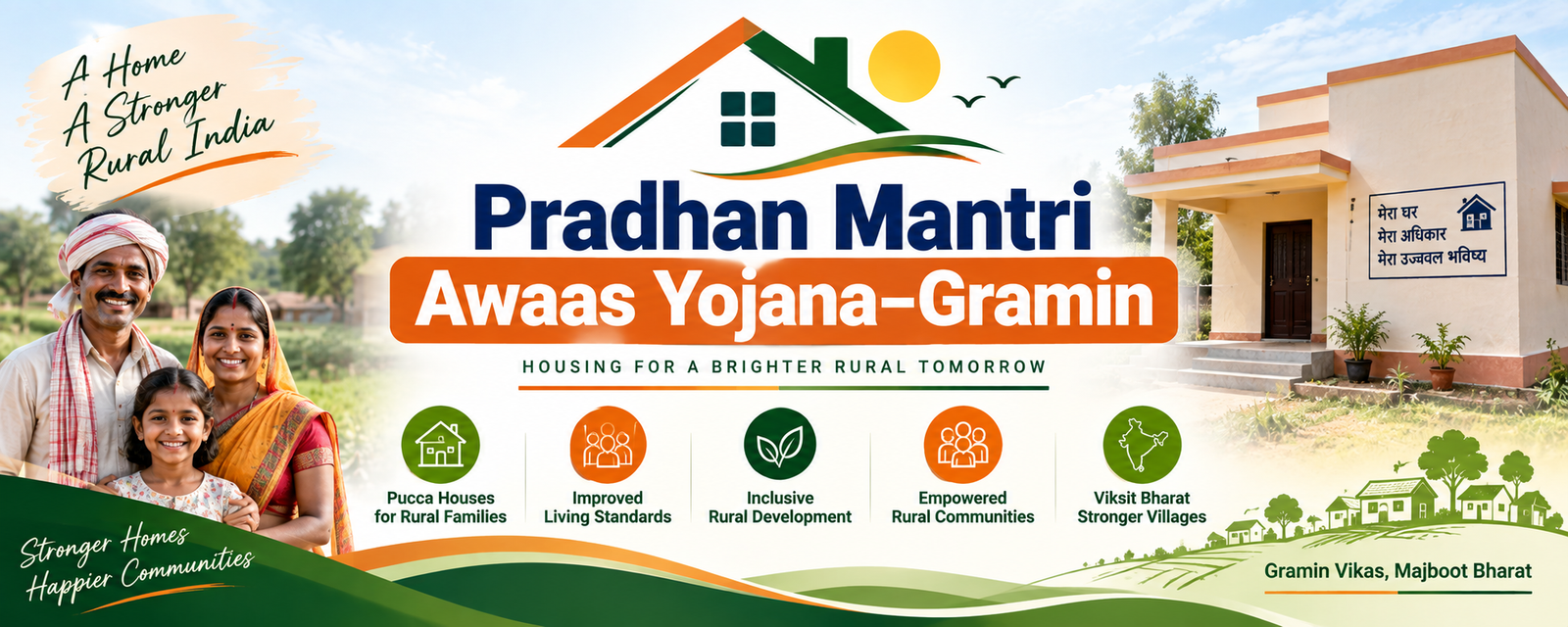
As of March 2026, the Pradhan Mantri Awaas Yojana–Gramin (PMAY-G) has completed nearly 3 crore houses for rural families across India. This is an important achievement in improving living conditions in villages and providing families with safer and more secure homes.
The government has set a target of building 4.95 crore rural houses by 2029. The scheme aims to ensure that eligible rural families have access to basic, safe and dignified housing. Along with providing houses, PMAY-G also supports broader rural development and helps improve the overall quality of life.
PMAY-G is helping turn the idea of “Housing for All” into reality by giving rural families a better place to live and supporting more inclusive growth in rural India.
What is the Pradhan Mantri Awas Yojana-Gramin (PMAY-G)?
- About:PMAY-G is a rural housing scheme that aims to provide a permanent (pucca) house with basic facilities to families who do not have a house or are living in kutcha, damaged or unsafe houses.
- The main purpose is to help poor rural families live in a safe, secure and dignified home.
- The scheme is implemented by the Ministry of Rural Development (MoRD) and was launched in 2016 by restructuring the earlier Indira Awaas Yojana (IAY).
- It is an important step towards achieving the goal of “Housing for All” in rural India.
- Selection of Beneficiaries: The government follows a multi-step process to make sure that the benefits reach the genuinely deserving rural households.
- Beneficiaries are identified using information from the Socio-Economic Caste Census (SECC) 2011.
- The list is then verified and approved by the Gram Sabha at the village level.
- Geo-tagging is also used to digitally record the location and progress of houses, which helps improve transparency and monitoring.
- Cost Sharing: The cost of constructing houses under PMAY-G is shared between the Central and State Governments.
- Plain areas: Centre and State share the cost in a 60:40 ratio.
- North-Eastern States, Himachal Pradesh, Uttarakhand and Jammu & Kashmir: The sharing ratio is 90:10.
- Other Union Territories, including Ladakh: The Central Government bears 100% of the cost.
PMAY-G is mainly about giving poor and houseless rural families a safe and permanent home. The scheme uses beneficiary verification, Gram Sabha approval and digital geo-tagging to make the process more transparent. By helping families move from unsafe kutcha houses to pucca homes with basic amenities, PMAY-G improves living conditions, security and dignity in rural India.
Implementation Framework and Reforms
- Direct Benefit Transfer (DBT): The financial assistance for house construction is directly transferred to the beneficiary’s bank account. This reduces the role of middlemen and helps prevent delays, leakages and misuse of funds.
- Multi-Tier Inspections: The construction of houses is regularly checked at different levels to ensure proper implementation.
- Block-level officers inspect around 10% of houses.
- District-level officers inspect around 2% of houses at each stage of construction.
- National-level monitors also visit selected areas to check the progress and quality of work.
- Social Audits: Gram Panchayats conduct community-based social audits at least once a year. Local people can review the implementation of the scheme, which helps improve transparency and accountability.
- AwaasSoft MIS: AwaasSoft is a web-based and bilingual Management Information System (MIS) that keeps track of the entire housing process. It covers everything from identifying beneficiaries and approving houses to releasing funds and monitoring construction. This makes it easier to track progress digitally.
- Dedicated Local Support: Each sanctioned house is linked with a local functionary who helps the beneficiary during the construction process. This support helps families understand the process, solve problems and complete their houses on time.
PMAY-G uses digital payments, regular inspections, social audits and online monitoring to make the housing programme more transparent and effective. These measures help ensure that financial assistance reaches the right people and that houses are properly constructed and completed on time.
AI-Driven Monitoring in Rural Housing
- AI-Based Photo Verification: Artificial Intelligence (AI) can analyse photographs uploaded during house construction. It can identify important parts such as walls, roofs and doors and help recommend the appropriate final photograph for approval. This makes verification faster and more systematic.
- Detection of Duplicate or Suspicious Cases: Machine learning technology can compare photographs of houses in the same area and identify unusual similarities. This helps officials detect duplicate records, incorrect submissions or possible fraud.
- Face Authentication and e-KYC: The Awaas+ 2024 mobile application uses Aadhaar-based e-KYC and AI-enabled face authentication to verify the identity of beneficiaries. This helps ensure that the benefit reaches the correct person.
- Liveliness Detection: The system can use features such as eye-blink and movement detection to check whether the person being authenticated is physically present. This reduces the possibility of someone using another person’s photograph or identity.
- Digital Geo-Tagging: Photographs of the house are taken and uploaded at different stages of construction. These photographs contain location, date and time information, allowing officials to track the progress of construction more effectively.
The use of AI, face authentication, geo-tagging and digital photographs is making rural housing monitoring more transparent and technology-driven. These tools help verify beneficiaries, track construction, identify suspicious cases and ensure that government housing assistance is reaching the right families and being used for the intended purpose.
Impact on Rural Households
- Better Living Conditions: PMAY-G has helped many rural families move from temporary or unsafe houses to permanent pucca homes. These houses provide better protection from rain, extreme weather and other risks, giving families greater safety, stability and dignity.
- Better Sanitation and Health: Through convergence with the Swachh Bharat Mission–Gramin (SBM-G), eligible beneficiaries receive ₹12,000 for constructing a toilet. This improves sanitation and helps reduce the spread of diseases caused by poor hygiene and open defecation.
- Access to Clean Energy and Water: PMAY-G works alongside other government schemes to provide households with essential services. Families can be connected with PM Ujjwala Yojana for LPG connections, PM Surya Ghar for solar electricity, and Jal Jeevan Mission for piped drinking water. This helps make rural homes more complete and comfortable.
- Women’s Empowerment: PMAY-G encourages house ownership in the name of women or jointly with women. This gives rural women greater ownership of property and strengthens their economic and social position. It also supports the broader goal of gender equality and women’s property rights, in line with Sustainable Development Goal 5.
- Employment and Skill Development: The scheme also creates employment opportunities during house construction. Beneficiaries can receive 90–95 days of unskilled labour wages through the rural employment programme, subject to applicable provisions. In addition, more than 3 lakh rural masons have been trained or certified, helping create a skilled workforce in rural areas.
PMAY-G is not only about building houses. It is helping rural families gain access to better sanitation, clean energy, drinking water, employment and property ownership. By connecting housing with other welfare programmes, the scheme aims to improve the overall quality of life of rural households.
What are the Issues Affecting PMAY-G?
- Outdated Beneficiary Data: The scheme has continued to use Socio-Economic Caste Census (SECC) 2011 data for identifying beneficiaries. Since the data is quite old, some newly eligible families may be left out, while some households that may no longer meet the eligibility criteria could remain on the list.
- Insufficient Financial Assistance: The amount provided for house construction may not always be enough because construction materials, labour and other costs have increased over time. As a result, some beneficiaries may have to borrow money or struggle to complete their houses.
- Problems with Geo-Tagging and Monitoring: There have been concerns about the misuse of the geo-tagging system used to monitor house construction. Audit findings have identified cases where houses were shown at locations far away from their actual sites. Such weaknesses can make it difficult to properly verify construction and can create opportunities for misuse or diversion of funds.
- Bribery and “Cut Money”: In some cases, beneficiaries have reported being asked to pay bribes or give a portion of their financial assistance to officials or middlemen for getting approvals or receiving instalments. Such practices reduce the amount of money reaching the beneficiary and weaken the purpose of the scheme.
Although PMAY-G has made significant progress in providing rural housing, these challenges show the need for updated beneficiary data, adequate financial support, stronger digital monitoring and strict action against corruption. Addressing these issues can help ensure that housing assistance reaches the right families in full and on time.
Conclusion
Pradhan Mantri Awaas Yojana–Gramin (PMAY-G) has gone beyond simply providing a roof over people’s heads. It is helping rural families achieve safer homes, greater dignity, better living conditions and more economic security. By connecting housing with sanitation, drinking water, clean energy and employment opportunities, the scheme has become an important part of overall rural development.
However, some challenges still need to be addressed. Beneficiary databases should be regularly updated so that newly eligible families are not left out. Financial assistance should also be reviewed in line with rising construction costs and inflation, so that families can complete their houses without taking excessive loans. At the same time, digital monitoring, geo-tagging, field inspections and social audits need to be strengthened to prevent misuse of funds and improve accountability.
With better implementation, transparent monitoring and timely support, PMAY-G can move closer to its goal of “Housing for All” and help build a more secure, inclusive and dignified rural India.
Frequently Asked Questions (FAQs)
1. What is Pradhan Mantri Awaas Yojana–Gramin (PMAY-G)?
PMAY-G is a rural housing scheme launched in 2016 to help poor and homeless rural families get pucca houses with basic facilities. The scheme aims to provide families with a safe and decent place to live.
2. How are beneficiaries selected under PMAY-G?
Beneficiaries are identified using Socio-Economic Caste Census (SECC) 2011 data. The list is then checked and approved by the Gram Sabha. The houses and construction progress are also geo-tagged to ensure proper monitoring.
3. What is the funding pattern of PMAY-G?
The cost of the scheme is shared between the Centre and the States. The ratio is 60:40 in plain areas and 90:10 in Northeastern and Himalayan states. For Union Territories, the Central Government provides 100% of the funding.
4. How does PMAY-G ensure transparency?
The scheme uses Direct Benefit Transfer (DBT) so that financial assistance goes directly to beneficiaries. Tools such as AwaasSoft, geo-tagging, social audits, and technology-based monitoring help track the construction and reduce the chances of misuse.
5. What are the major benefits of PMAY-G?
PMAY-G does more than provide houses. It helps improve living conditions, sanitation, access to clean energy and basic amenities. It can also support women’s empowerment and rural employment, while helping families build a more secure future.