The National Bank for Agriculture and Rural Development (NABARD) plays an important role in the development of agriculture and rural areas in India. Its main aim is to support rural growth, improve infrastructure, and strengthen the livelihoods of people living in rural areas.
NABARD provides financial and technical support for various rural development projects. It also encourages research and development related to agriculture and rural development. In addition, NABARD supports activities that help improve agricultural production, rural employment, and the overall rural economy.
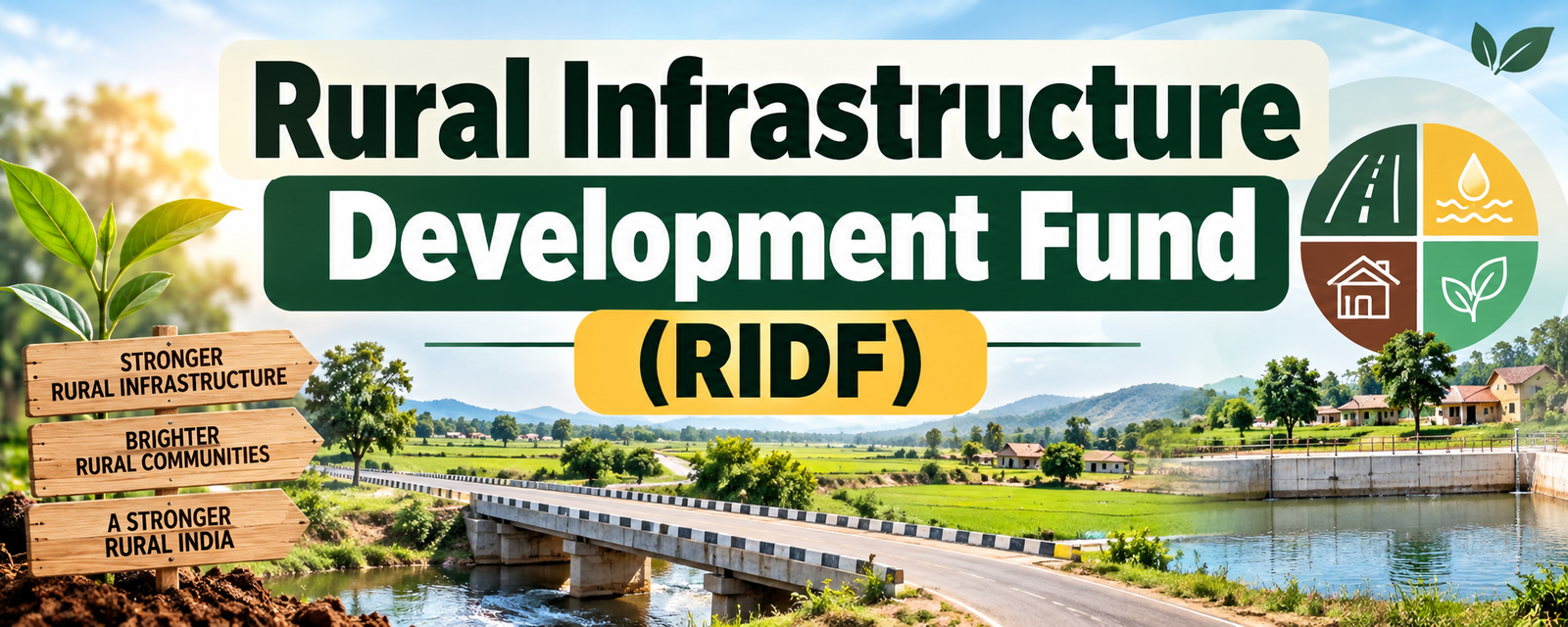
One of NABARD’s major initiatives is the Rural Infrastructure Development Fund (RIDF), which provides financial assistance for creating and improving rural infrastructure such as roads, irrigation, bridges, and other essential facilities.NABARD acts as a key institution for strengthening agriculture, rural infrastructure, and the overall rural economy of India.
Objectives of RIDF
The Rural Infrastructure Development Fund (RIDF) was created to provide financial support to State Governments for completing ongoing and important rural infrastructure projects.
RIDF was initially set up with an allocation of ₹2,000 crore. Over the years, the fund has grown significantly, with total allocations reaching around ₹3,20,500 crore, including ₹18,500 crore under Bharat Nirman, an initiative focused on developing basic rural infrastructure.
Through RIDF, NABARD provides loans and financial assistance to State Governments for projects in areas such as rural roads, irrigation, bridges, agriculture, drinking water, and other essential infrastructure. The fund supports more than 30 types of activities related to rural development.
Commercial banks also contribute to the fund through shortfalls in their priority-sector lending targets. This helps ensure that money is directed towards projects that can improve rural connectivity, agriculture, employment, and the overall quality of life in rural areas.
Role of RIDF
The Rural Infrastructure Development Fund (RIDF) plays an important role in supporting rural infrastructure projects. Its major functions include:
- Identifying important projects: RIDF helps the government identify rural infrastructure projects that need immediate attention and arrange them according to their priority.
- Project approval: Projects from the priority list are considered and sanctioned by the competent committee of NABARD.
- Providing financial support: RIDF provides the required funds to help complete approved projects in a cost-effective and efficient manner.
- Monitoring and evaluation: NABARD monitors the progress of the projects and evaluates their implementation to ensure that the funds are being used properly.
- Working with the Government: RIDF works closely with State Governments to ensure that projects are completed on time and deliver the intended benefits to rural communities.
RIDF helps select important rural projects, provides funding, monitors their progress, and works with the government to ensure timely completion.
Sanctioning of RIDF Projects
The Rural Infrastructure Development Fund (RIDF) follows a systematic process for allocating funds and approving rural infrastructure projects:
- Union Budget announcement: The overall allocation for RIDF is announced through the Union Budget.
- State-wise allocation: Funds are allocated to different States based on various factors, such as previous sanctions, the level of fund utilization/payments, rural population, infrastructure needs, and geographical area.
- Project proposals: State Governments prepare proposals for rural infrastructure projects and submit them to NABARD for consideration.
- NABARD review: NABARD examines the proposed projects to check their feasibility, cost, importance, and expected benefits.
- Project sanction: A designated sanctioning committee at NABARD’s Head Office reviews the eligible projects and approves them.
- Cost-effective and feasible projects: Projects that are financially viable, useful, and feasible are sanctioned for funding under RIDF.
The process starts with the Union Budget, followed by State-wise allocation, submission of project proposals, NABARD’s review, and finally approval of suitable projects by the sanctioning committee.
Appraisal of Projects
Before a project is approved under RIDF, NABARD carefully examines the project to make sure it is practical, financially sound, and capable of being completed successfully.
- Risk assessment: Possible risks and problems that may arise during the project are identified and analysed.
- Project feasibility: NABARD checks whether the project is technically and financially feasible and whether the implementing agency has the required capacity.
- Cost and time: The estimated cost and the time required to complete the project are carefully examined.
- Quality and safety: The project must maintain proper quality and safety standards throughout its implementation.
Project Requirements
The State Government needs to provide detailed information about the proposed project, including:
- Complete cost details, such as construction expenses, maintenance costs, establishment costs, quality-control expenses, and required equipment or hardware.
- Cost estimates: The project should have a realistic cost estimate, and unnecessary cost escalation is generally not encouraged.
- Construction plan: Details of the construction process, arrangements, and implementation schedule should be provided.
- Economic analysis: The project’s expected economic benefits and overall viability are assessed.
- Source of funds: The proposal should mention where the funds will come from and what construction methods or techniques will be used.
- Photographs: Photographs of the project site and, where relevant, similar projects already completed should be included.
- Drawings and flowcharts: Basic maps, drawings, flowcharts, or other plans should be provided to clearly explain how the project will be implemented.
Eligible Sectors under RIDF
RIDF supports activities that contribute to agriculture, rural development, and the improvement of rural living conditions. The eligible activities are broadly grouped into three major categories:
- Agriculture and Related Activities – Projects related to agriculture and allied sectors, such as irrigation, agricultural infrastructure, and other rural economic activities.
- Social Sector – Projects that improve basic services and the quality of life of people in rural areas, such as education, health, sanitation, and drinking water.
- Rural Connectivity – Projects that improve connectivity in rural areas, including rural roads, bridges, and other transport infrastructure.
Interest Rate
Under RIDF, the interest rate applicable to loans is linked to the prevailing Bank Rate. The interest paid to commercial banks that contribute funds to NABARD and the interest charged on RIDF loans are determined according to the applicable guidelines and rates.
Loan Repayment Period
The RIDF loan is generally repaid through annual instalments. The repayment period can extend up to seven years from the date of sanction, along with a grace period of up to two years, depending on the applicable terms.
Penalty Interest
If the borrower does not repay the loan on time, penal interest may be charged according to the applicable RIDF rules and terms of sanction.
Security for the Loan
Before the loan is released, the State Government has to provide the required documents, undertakings, and acceptance of the terms and conditions mentioned in the sanction letter. These documents serve as formal assurance that the State Government will follow the conditions attached to the RIDF loan.
Monitoring of RIDF Projects
NABARD regularly monitors RIDF-funded projects to make sure that the work is progressing properly, funds are being used correctly, and the required quality and technical standards are maintained.
Monitoring may include:
- Checking project progress: NABARD keeps track of whether the project is moving according to the approved plan and schedule.
- Field visits: Officials may conduct regular field visits to check the actual progress of the work.
- Identifying problems: Any major delays, technical issues, or other problems arising during implementation are identified and addressed.
- Monitoring costs: The actual expenditure is compared with the approved project cost to identify unnecessary increases or delays.
- Checking slow-moving projects: Projects that are progressing slowly receive special attention so that corrective action can be taken.
- Monitoring different projects separately: Projects may be monitored based on their size, cost, and nature.
- Quality checks: NABARD ensures that construction materials, equipment, and other project components meet the required standards.
- Monitoring fund flow: The release and utilization of funds are regularly reviewed to ensure that the money is being used for the approved purpose.
Conclusion
The Rural Infrastructure Development Fund (RIDF) is an important initiative managed by NABARD to strengthen rural infrastructure and support the overall development of rural India. By providing financial assistance to State Governments, RIDF helps in completing essential projects related to agriculture, irrigation, rural roads, bridges, drinking water, education, health, and other social infrastructure.
RIDF not only provides funds but also plays an important role in the appraisal, approval, monitoring, and evaluation of projects. NABARD checks whether projects are financially and technically feasible, monitors their progress, and ensures that the funds are used properly. This helps improve the quality and timely completion of rural infrastructure projects.
Strong rural infrastructure is important for improving agricultural productivity, rural connectivity, employment opportunities, access to basic services, and the overall standard of living. Therefore, RIDF acts as an important link between financial support and actual development at the ground level.
Frequently Asked Questions
1. What is the Rural Infrastructure Development Fund (RIDF)?
RIDF is a fund managed by NABARD to provide financial assistance to State Governments for developing and completing important rural infrastructure projects such as roads, bridges, irrigation, drinking water, and other essential facilities.
2. How is RIDF funded?
RIDF is mainly funded through contributions from commercial banks that fall short of their priority-sector lending targets. The funds are then used by NABARD to provide loans for eligible rural infrastructure projects.
3. What types of projects are eligible for RIDF funding?
RIDF supports projects across areas such as agriculture and allied activities, the social sector, and rural connectivity. These may include irrigation, rural roads, bridges, drinking water, education, health, and other eligible rural infrastructure activities.
4. How are RIDF projects sanctioned?
State Governments submit project proposals to NABARD. NABARD examines the proposals and checks their feasibility, cost, benefits, and other requirements. Eligible projects are then considered and approved by the appropriate sanctioning authority/committee.
5. What is the process of project appraisal under RIDF?
During appraisal, NABARD examines the project’s technical feasibility, financial viability, estimated cost, implementation period, risks, and expected benefits. The project proposal and supporting documents are also checked before approval.
6. What is the interest rate charged on RIDF loans?
The interest rate on RIDF loans is determined according to the applicable NABARD/RIDF guidelines and prevailing benchmark rates. The rate may change from time to time.
7. What is the loan repayment period for RIDF projects?
RIDF loans are generally repaid through annual instalments, with the repayment period and any applicable grace period determined according to the terms of the sanction.
8. How is the security for RIDF loans handled?
The State Government has to submit the required documents, undertakings, and acceptance of the terms and conditions specified by NABARD before the loan is released.
9. How are RIDF projects monitored?
NABARD regularly monitors projects through progress reports, field visits, expenditure checks, and reviews. This helps ensure that funds are used properly, work progresses on schedule, and the required quality standards are maintained.
10. What is the role of RIDF in promoting rural development?
RIDF helps State Governments develop essential rural infrastructure. Better roads, irrigation, bridges, drinking water, social infrastructure, and other facilities can improve connectivity, support agriculture, create economic opportunities, and improve the quality of life in rural areas.