Current Affairs May 2025
Tap below — WhatsApp opens with the message already written. Just press Send and the link arrives straight away.
Get the May 2025 full compilation on WhatsAppFree live session
NABARD Grade A 2026: what the 2025 cut-offs changed, and the 90-day plan
The 2025 cycle was the toughest on record at every stage. This session reads those numbers properly and turns them into a week-by-week plan for Phase 1.
In 2 days · Sun, 27 Sep at 7:30 PM IST · 75 minutes · free
The six highest scorers in NABARD Grade A 2026 were all in one classroom
Every one of them was enrolled in the NABARD Mentorship Complete Course at Clarity 4 Sure. The same descriptive training and the same current affairs notes you are reading now.
- 1Suraj Ravindra Jatkar188.75
- 2Lokesh Ram Chandran185
- 3Vivek Kumar185
- 4Kapil Patlya184.75
- 5Siddhant Khesarwani183.75
- 6Lalit182.5

- 1 May, 2025
- 2 May, 2025
- 3 May, 2025
- 4 & 5 May, 2025
- 6 May, 2025
- 7 May, 2025
- 8 May, 2025
- 9&10 May, 2025
- 11&12 May, 2025
- 13 May, 2025
- 14 May, 2025
- 15 May, 2025
- 16 & 17 May, 2025
- 18 & 19 May, 2025
- 20 May, 2025
- 21 May, 2025
- 22 May, 2025
- 23 May, 2025
- 24 May, 2025
- 26 & 27 May, 2025
- 28 May, 2025
- 29 May, 2025
- 30 May, 2025
- 31 May, 2025
Pulled straight out of this month's own facts. If a figure here is new to you, go back and read that item in full.
1 May, 2025
Daily Current Affairs Quiz
1 May, 2025
International Affairs
1. Shenzhou-19 Crew Returns After Record Mission
Context:
Three Chinese astronauts Cai Xuzhe, Song Lingdong, and Wang Haoze returned to Earth on April 30, 2025, after a six-month mission aboard the Tiangong space station. The landing occurred in Inner Mongolia, and state media confirmed all crew members were in “good health”. The return was delayed by a day due to bad weather at the Dongfeng landing site.
Mission Achievements
- The Shenzhou-19 astronauts set a new national record for the longest-ever spacewalk by a Chinese crew.
- They conducted various scientific experiments and supported station maintenance tasks during their stay since October 2024.
Shenzhou-20 Mission Takes Over
- The Shenzhou-20 mission began last week with a ceremonial send-off at the Jiuquan Satellite Launch Center in Gansu province.
- Aboard the Long March-2F rocket, the new crew includes:
- Chen Dong (46) – veteran commander and first Chinese astronaut with over 200 cumulative days in orbit.
- Chen Zhongrui (40) – former air force pilot, first spaceflight.
- Wang Jie (35) – former space tech engineer, first spaceflight.
Objectives of Shenzhou-20
- Conduct life sciences and physics experiments.
- Install space debris protection equipment on the station.
- Study planarians — regenerative aquatic flatworms — for the first time aboard Tiangong.
China’s Expanding Space Ambitions:
- Under President Xi Jinping’s “space dream”, China is investing billions to become a major celestial power.
- Goals include:
- Crewed lunar mission by the end of the decade.
- Establishing a lunar base.
- Continued robotic exploration of Mars and the moon.
National Affairs
1. Union Cabinet Approves Caste Census
Context:
Union Minister Ashwini Vaishnaw announced that caste enumeration will be part of the next Census. This marks a significant shift in India’s demographic data collection approach.
Historical Context
- The last full caste-based Census was conducted in 1931 during British rule.
- Post-independence Censuses have only enumerated Scheduled Castes (SCs) and Scheduled Tribes (STs).
- The 2011 Socio-Economic Caste Census (SECC) was conducted separately and lacked legal mandate or comprehensive caste disclosure.
Legal and Operational Framework
- Caste data will be gathered during the second and final phase of the upcoming decennial Census, giving it statutory authority.
- The upcoming Census will be conducted digitally for the first time.
- A dropdown caste code directory is being integrated into the Census mobile app to facilitate accurate data entry.
Emerging Political Dynamics
- Caste enumeration could reshape political alignments by activating marginalized voices, leading to new party formations and power-sharing arrangements.
- Ashwani Kumar, another political scientist, remarked that the move offers a “golden opportunity” for deeper democracy and harmonious power sharing, not fragmentation.
Challenges and Sensitivities
- The Karnataka caste survey experience shows that dominant communities (e.g., Lingayats, Vokkaligas) may oppose the findings if perceived as unfavourable.
- Managing post-enumeration demands for reservations, welfare, and political representation will require deft governance.
Census Timeline
- The 2021 Census, initially delayed due to the COVID-19 pandemic, has not yet been officially rescheduled.
2. India Suspends Indus Waters Treaty
Context:
In response to a terrorist attack in Jammu & Kashmir (Pahalgam), India’s Cabinet Committee on Security announced the suspension of the 1960 Indus Waters Treaty (IWT) with Pakistan. India demands Pakistan “credibly and irrevocably abjure cross-border terrorism” for the treaty to be reinstated. Legally, the IWT has no exit clause, it can only be terminated through mutual agreement, as per Article XII(4).
Legal and Diplomatic Complexity
- India may seek justification under Articles 60 and 62 of the Vienna Convention on the Law of Treaties (VCLT), though it is not a signatory, and Pakistan has not ratified it.
- Pakistan is exploring legal avenues through the World Bank, the Permanent Court of Arbitration, or the International Court of Justice (ICJ).
- The move risks internationalising the water-sharing issue, potentially inviting global scrutiny.
Operational Levers India Can Use
- Suspension allows India to:
- Stop sharing river flow data with Pakistan.
- Release or hold water at will, affecting flood and drought cycles.
- Avoid treaty-based scrutiny of hydro projects on western rivers (Indus, Jhelum, Chenab).
- Potential for agricultural and hydroelectric disruption in Pakistan, especially amid internal provincial disputes (e.g., Punjab vs. Sindh over canal projects).
Infrastructure Constraints
- Despite being allowed to store 3.6 MAF of water and irrigate 1.34 million acres, India currently stores only ~1 MAF and irrigates ~0.642 million acres in J&K and Ladakh.
- Major hydro projects on western rivers (Kishanganga, Ratle, Baglihar, etc.) are run-of-the-river, with limited storage.
- Long-term water maximisation plans face delays due to terrain, red tape, and underdeveloped infrastructure.
Broader Geopolitical Risks
- India’s move may:
- Influence China to withhold hydro data or cooperation on Sutlej and Brahmaputra rivers.
- Impact the renewal of the Ganga Water Treaty with Bangladesh (expiring 2026).
- Strain water-sharing relations with Nepal and affect Sri Lanka’s willingness to sign future treaties with India.
- Harm India’s regional image as a responsible upper riparian nation.
3. Vembanad Lake
Context:
Vembanad Lake, India’s longest and Kerala’s largest lake, is under serious ecological stress. Spanning 96.5 km and draining six major rivers, it supports agriculture, biodiversity, and livelihoods across Alappuzha, Kottayam, and Ernakulam. The lake is part of the Vembanad-Kol wetland system, a Ramsar site, but has shrunk drastically due to human encroachment, pollution, and weed infestation.

Key Environmental Challenges
Shrinking Surface and Depth
- Surface area reduced by 27% between 1917 and 1990 (cited by multiple studies).
- Encroachment, land reclamation, sedimentation cited as major contributors.
- Lower floodwater retention and impaired ecosystem functions such as water purification and biodiversity support.
Pollution and Biodiversity Loss
- High levels of plastic waste, silt, and chemical pollutants found in recent studies.
- Water hyacinth proliferation contributes to elevated Biological Oxygen Demand (BOD) and Chemical Oxygen Demand (COD).
- Fish catch down by 66% over three decades due to eutrophication and habitat degradation.
Unregulated Human Activities
- Houseboats identified as key pollutants.
- Unauthorised vessels and encroachments remain largely unchecked despite regulatory attempts.
Vembanad Lake Rejuvenation Project
Administrative Framework
- Spearheaded by Alappuzha District Collector Alex Varghese, inspired by Namami Gange.
- Backed by ₹188.25 crore five-year plan, submitted to CM Pinarayi Vijayan.
- Guided by 8 subcommittees covering agriculture, fisheries, sanitation, biodiversity, climate change, and more.
Short-Term Objectives
- Removal of plastic waste and water hyacinth.
- Construction of 31 bio-bunds (1 km each) across grama panchayats.
- Fish ranching and bio-shield installation to protect farmland.
Long-Term Targets
- Dredging lake bed to improve water-holding capacity.
- Promotion of organic farming to reduce pesticide runoff.
- Establishment of sewage and faecal sludge treatment plants in flood-prone Kuttanad.
- Utilisation of water hyacinth for value-added products.
- Boosting sustainable tourism and fisheries.
Progress So Far
- 28.72 tonnes of plastic waste removed, along with large volumes of weeds in district-led cleanup drives.
Challenges Ahead
- Political will required to reclaim encroached land.
- Enforcement needed against illegal houseboat operations.
- Integration with broader Kuttanad region revival essential due to ecological interdependence.
- Need for inter-governmental collaboration and local community engagement for sustainable outcomes.
4. Supreme Court Declares Digital Access a Fundamental Right
Context:
The Supreme Court of India has ruled that access to digital services is a part of the fundamental right to equality, life, and dignity. The ruling reinforces the need for inclusive digital governance, especially for persons with disabilities (PwDs) and marginalized groups.
Access To Digital Services
Access to digital services refers to the ability of individuals and communities to access and effectively use digital technologies and resources. This includes having the necessary hardware, software, internet connectivity, and digital literacy skills to participate fully in the digital world. Essentially, it’s about ensuring everyone can utilize digital tools and platforms for various aspects of life, from education and healthcare to employment and social connections.
Origin of the Case
- The judgment was delivered in response to petitions filed by acid attack survivors led by Pragya Prasun, and Amar Jain, a visually challenged petitioner.
- They highlighted the barriers faced in completing digital KYC processes, which rely heavily on visual input and are inaccessible to PwDs.
Critique of Current KYC Processes
- The court noted that the current digital KYC regime is exclusionary and violates the rights of disabled and marginalized individuals.
- It observed that the “unfriendly digital atmosphere” further isolates rather than empowers these citizens.
Substantive Equality Principle Upheld
- The SC invoked the principle of substantive equality, emphasizing that mere formal access is not sufficient.
- True digital inclusion means removing practical barriers in access and ensuring equity in outcomes.
Broader Issues Identified
- PwDs face obstacles due to inaccessible websites, non-adaptive apps, and lack of assistive technology.
- Rural Indians suffer from poor connectivity and lack of digital content in local languages, hindering their participation in welfare and governance schemes.
20 Directions Issued to Government
- The Bench directed the government to reform KYC processes to make them more accessible and inclusive.
- Though specifics weren’t detailed in the summary, directions are likely aimed at enhancing accessibility features, language options, and technological adaptability.
Implications for Policy and Governance
- The ruling strengthens the legal foundation for digital accessibility mandates.
- Government departments and financial institutions will now need to redesign digital platforms with universal accessibility standards.
- The verdict may also impact upcoming Digital India, fintech, and welfare delivery policies.
5. Centre Considers Revising EV Charging Infrastructure Costs Under PM E-Drive Scheme
Context:
The Government of India has initiated inter-ministerial consultations to revise the benchmark costs for EV public charging infrastructure, a move driven by changing technology and cost structures since the last revision in 2022. This update falls under the ₹10,900-crore PM E-Drive Scheme, with ₹2,000 crore earmarked specifically for charging infrastructure subsidies.
Key Points
Cost Revision Underway
- Current benchmark costs:
- ₹1.5 lakh for two- and three-wheeler chargers
- ₹6 lakh for car chargers
- ₹24 lakh for bus and truck chargers
- The Power and Heavy Industries Ministries and Bureau of Energy Efficiency (BEE) are jointly evaluating the updated cost norms.
Drivers of Cost Change
- Small/home chargers have become more affordable due to:
- Mass production
- Domestic manufacturing
- Government incentives
- Large fast chargers, used in public and highway locations, have become costlier due to:
- Rising raw material costs (e.g., copper)
- Increased import costs (e.g., battery management systems)
Subsidy Structure & Infrastructure Targets
- Subsidy covers up to 80% of upstream costs, which include:
- Distribution transformers
- Cables
- Circuit breakers
- Civil works
- Upstream costs constitute around 60% of total infrastructure expenditure.
- Public charging stations planned under the scheme:
- 48,400 for two- and three-wheelers
- 22,100 for electric cars
- 1,800 for electric buses and trucks
Strategic Rollout Plans
- Highway corridors have been prioritized for EV truck and bus charging to reduce logistics emissions and support intercity travel.
- Location-based planning is key:
- Urban areas need multi-vehicle stations.
- Highways focus on high-capacity, long-duration chargers.
Policy Implications
- The revised cost structure will better align with market realities and ensure efficient allocation of subsidies.
- It supports India’s broader goals of:
- Reducing emissions
- Scaling EV adoption
- Strengthening last-mile and freight electrification
6. PM Modi to Inaugurate WAVES 2025 Summit
Context:
Prime Minister Narendra Modi will inaugurate WAVES 2025 (World Audio Visual and Entertainment Summit) at the Jio World Centre, Mumbai, , May 1 2025. This four-day summit is the first of its kind organized by the Government of India, highlighting India’s ambition to be a global media and entertainment powerhouse
Major Participants
- Over 100 leading exhibitors will participate, including global giants:
- Netflix, Amazon, Google, Meta, Sony, Reliance, Adobe
- Indian players: Tata, Balaji Telefilms, Dharma Productions, Saregama, Yash Raj Films
- Innovators like JetSynthesys, Digital Radio Mondiale (DRM), Free Stream Technologies, Neural Garage, and Fractal Picture
Special Initiatives and Cultural Events
- Cultural performances and the “Create in India Challenge” will feature prominently
- The challenge aims to empower Indian content creators and boost indigenous storytelling and innovation
Government Vision
- WAVES 2025 is positioned as a strategic platform for global collaboration, creativity, and innovation in the entertainment sector
- It marks a pivotal effort to integrate India deeper into global M&E value chains
The Indian Express
Science & Tech
1. Natural Hydrogen
Context:
Natural hydrogen, also known as geologic hydrogen, is gaining global attention as a clean, low-cost, and abundant alternative to fossil fuels and industrially produced hydrogen. With vast reserves potentially lying beneath the Earth’s surface including in India this fuel could play a transformative role in the global energy transition.
What is Natural Hydrogen?
- Naturally occurring hydrogen gas is formed underground through geological processes, not manufactured.
- It is a clean energy source that emits no carbon dioxide when used.
- Key production processes:
- Serpentinisation (reaction between water and iron-rich rocks)
- Radiolysis (splitting of water by radioactive rocks)
- Decomposition of organic matter at geological depths
Historical Discovery
- In 1987, a flame erupted unexpectedly from a borehole in Bourakébougou, Mali, revealing a rich source of hydrogen.
- By 2012, analysis showed the gas was 98% pure hydrogen — a turning point for understanding its geologic potential.
- Once considered a curiosity, natural hydrogen is now recognized as a legitimate, large-scale energy resource.
Current Reserves and Potential
- Recent discoveries in France (Moselle and Lorraine) indicate massive deposits — 92 million tonnes, worth ~$92 billion.
- USGS estimates suggest tens of trillions of tonnes may exist globally.
- If just 2% is recoverable, it could meet global hydrogen demand for 200 years.
- Countries with active seeps or exploration: Australia, U.S., France, Spain, Albania, South Korea, Colombia, Canada.
India’s Geological Potential: India is geologically suited for natural hydrogen generation due to:
- Ultramafic and basaltic rock formations
- Ophiolite complexes in Andaman and Himalayas
- Greenstone belts in Dharwar and Singhbhum cratons
- Sedimentary basins (Vindhyan, Cuddapah, Gondwana, Chhattisgarh)
- Fractured basement rocks and hydrothermal systems (e.g., hot springs)
Despite the high potential, exploration in India remains nascent. A structured roadmap for surveying and testing is needed.
Advantages of Natural Hydrogen
- Low cost of extraction (as low as $1/kg or less)
- Zero emissions at point of use
- Doesn’t require electrolysis or fossil fuel reforming
- Energy-dense and potentially more scalable than green hydrogen
Challenges
- Economic viability depends on deposit concentration and accessibility
- Exploration technology and data still evolving
- Scattered distribution could increase costs
- Environmental impact of drilling must be evaluated
2. Cosmologists Confront ‘S8 Tension’ as Clumpiness of Universe Challenges Standard Model
Context:
Recent findings in cosmology suggest that the next major breakthrough in understanding the universe may lie in resolving how “clumpy” matter really is — a property quantified by the Sigma 8 (S8) parameter. This ongoing mystery challenges the standard Lambda Cold Dark Matter (ΛCDM) model and offers new perspectives on dark matter, dark energy, and the future of the cosmos.
The Big Bang and Cosmic Clumpiness:
- The universe originated from the Big Bang ~13.8 billion years ago.
- The Cosmic Microwave Background (CMB) radiation shows an almost perfectly uniform early universe, with slight density fluctuations (1 in 100,000).
- Today, the universe is “lumpy” with galaxies, clusters, and filaments, largely shaped by gravitational forces and dark matter dynamics.
What is Sigma 8 (S8)?
- S8 measures matter clustering over large cosmic scales (~26 million light-years).
- A higher S8 value indicates greater matter clumping; a lower value suggests a smoother distribution.
- The ΛCDM model predicts a specific value based on CMB data, but newer observations yield lower values — creating the “S8 tension.”
New Findings from the Subaru Telescope
- Researchers using Hyper Suprime-Cam (HSC) on the Subaru Telescope in Hawaii reported an S8 value of 0.747, aligning with earlier surveys.
- The data was gathered through cosmic shear (gravitational lensing of starlight by massive structures).
- Surhud S. More (IUCAA) explained that baryonic matter (like gas) movements cannot explain the discrepancy — suggesting that dark matter and dark energy are central to the mystery.
CDM Model vs. Observations
- CMB-based predictions give higher S8 values than shear surveys.
- This mismatch challenges the validity or completeness of the ΛCDM model, though the model still broadly holds.
- A key uncertainty: redshift measurements of faint galaxies, which limit the precision of deep field surveys like HSC.
Emerging Theories and Instruments
- Data from the Dark Energy Spectroscopic Instrument (DESI) suggests dark energy might be weakening, hinting at a possible decelerating universe and future “big crunch” scenario.
- Upcoming project: Rubin Legacy Survey of Space and Time (LSST) from Vera C. Rubin Observatory (Chile) aims to offer unprecedented, wide-field cosmic observations.
While the standard cosmological model still holds explanatory power, persistent S8 tension, unknown systematics, and new observations may signal the dawn of a new era in cosmology — possibly requiring a revision or extension of our current understanding of dark matter, dark energy, and the universe’s fate.
Banking/Finance
1. NSO Survey on Private Sector Capex FY25
Context:
The NSO conducted a survey between November 2024 and January 2025 to assess capital expenditure (capex) trends for the private corporate sector over the past three years (FY22-FY24) and its intentions for FY25 and FY26. The survey covered 5,380 firms, with a response rate of 58.3% (2,172 enterprises providing data). The focus was on enterprises with ₹400 crore or more turnover in manufacturing, ₹300 crore for trade, and ₹100 crore for other sectors.
Capex Allocation for Green Technologies and Diversification
- Less than 5% of private companies in FY25 planned to allocate their capex to diversification and green technologies:
- Energy transition/conservation: 1.38%
- Diversification: 2.75%
- 10 out of 17 sectors allocated zero capex to energy transition/conservation, reflecting a lack of focus on green and future technologies in India’s private sector.
Sector-Specific Allocation
- Energy Transition/Conservation:
- The highest capex allocation was in the manufacturing sector (4.36%).
- Other sectors with allocation included water supply, sewerage, waste management (0.96%) and electricity, gas, steam (0.76%).
- Diversification:
- The highest capex for diversification was seen in agriculture, forestry, and fishing (17.31%).
- Other sectors included administrative and support service activities (14.11%) and education (5.3%).
Primary Capex Objectives in FY24-25
- Income generation: 49.6% of enterprises prioritized capex for income generation.
- Upgrade: 30.1% allocated capex for upgrades.
- Others: 16.2% of firms had unspecified or varied objectives for their investments.
Private Sector’s Capex Trends:
- The total private sector capex for FY24-25 is expected to reach ₹6.56 trillion, a post-pandemic high.
- However, there is a forecasted 25% reduction in capex outlays for FY25-26, bringing the total to ₹4.9 trillion. This decrease reflects cautious planning after strong investment levels in FY24-25.
2. IndusInd Bank’s Executive Changes and Regulatory Actions
Context:
The Reserve Bank of India (RBI) has approved IndusInd Bank’s request to form an executive committee to oversee the duties of the Chief Executive Officer (CEO) until a new CEO is appointed, or for a maximum of three months. The Oversight Committee of the bank’s Board, chaired by Sunil Mehta, will guide the executive committee. This committee includes senior members from various oversight divisions, including Audit, Risk Management, and Compensation & Nomination.
Resignation of MD & CEO Sumant Kathpalia:
- Sumant Kathpalia, the MD & CEO of IndusInd Bank, resigned on April 29, 2025, citing moral responsibility for the accounting lapses that led to a loss of ₹2,000 crore.
- His resignation follows the Deputy CEO Arun Khurana’s resignation on April 28, 2025, in connection with the same accounting issues.
- Arun Khurana had also taken over as CFO after the resignation of Gobind Jain in January 2025.
Impact on Board Composition
- The bank is now without a whole-time director, which is a requirement for private sector banks under RBI norms.
- IndusInd Bank is working to fill the CEO position, with the RBI asking for a list of potential candidates for approval as soon as possible.
Regulatory Oversight and Audit
- The bank is cooperating with external audits and investigations related to the accounting lapses:
- PricewaterhouseCoopers (PwC) estimated a ₹1,979 crore negative impact from derivative issues, with a 2.27% post-tax impact on the bank’s net worth as of December 2024.
- EY is assisting in reviewing concerns in the microfinance business.
Market Impact:
- Shares of IndusInd Bank saw a marginal increase of ₹838.45 on Wednesday, signaling some stability after the executive changes.
- Analysts suggest that appointing a private sector banker as the new MD & CEO is crucial for re-rating the bank, given its unique portfolio of vehicle finance, microfinance, and gems & jewelry loans, which comprise 37% of its loan book.
3. SEBI Defers Common Contract Note for FPIs to July 1
Context:
The Securities and Exchange Board of India (SEBI) has postponed the implementation of the Common Contract Note (CCN) for Foreign Portfolio Investors (FPIs) to 1 July 2025, extending the deadline by two months due to operational challenges raised by market participants.
Common Contract Note (CCN)
The CCN seeks to consolidate trade details across exchanges into a single document to boost transparency, streamline processes, and lower costs, bringing FPIs on par with retail investors who already receive unified notes. In the current system, FPIs receive separate notes for trades executed on BSE and the National Stock Exchange.
Key Objectives of CCN
- Unification: Combines trade data across BSE and NSE into a single document.
- Transparency: Enhances auditability and reduces data fragmentation.
- Cost Efficiency: Streamlines processes, mirroring the unified contract note system already available to retail investors.
Current System vs Proposed Reform
| Feature | Current Regime | Common Contract Note Regime |
|---|---|---|
| Exchanges | Separate notes for NSE and BSE | Single consolidated note |
| Reconciliation | Per-exchange | Cross-exchange, single note |
| Settlement Chain | FPI → Global Custodian → Local Custodian → Clearing Corp | Same chain, but reconciled across exchanges in one step |
| Penalty Risk | Exists on misclassification (e.g., hand delivery) | Could increase with small mismatches |
Why the Deferral?
- Global custodians and FPI reps flagged several issues:
- Reconciliation mismatches could classify trades as hand delivery, which incurs penalties.
- System incompatibility and parallel flows between brokers and custodians complicate real-time matching.
- Clearing risks if mismatches arise under the unified format due to the multi-intermediary nature of FPI settlements.
Industry Impact
- FPIs hold nearly 17% of India’s listed equities (as of Dec 2024).
- India has over 11,000 registered FPIs.
- Any friction in their trade processing or compliance could:
- Affect market liquidity
- Erode investor confidence
- Potentially disrupt settlement cycles
Broader Context
- SEBI had initially planned CCN rollout in August 2024, then advanced it to April 30, now deferred to July 1.
- While institutional support for CCN remains strong, execution challenges remain.
- Unlike retail trades, FPI transactions involve complex multi-party coordination, increasing error probability.
4. Sebi’s Advisory on Opinion Trading
Context:
On 29 April, the Securities and Exchange Board of India (Sebi) clarified that opinion trading platforms do not fall under its regulatory jurisdiction. These platforms allow users to bet on real-world outcomes (e.g., “Will it rain tomorrow?”) via binary choices like “yes” or “no.”
- Sebi stated that since no security is being traded, no investor protection provisions under securities law apply.
- It also warned users that these apps use misleading terminology like “trading,” “profits,” or “stop-loss”, which may mimic securities market activities.
Platforms Affected
- Major platforms in India include:
- Probo (backed by Peak XV, Elevation Capital, Fundamentum)
- MPL Opinio
- Tradex
- Trago
- These platforms had hoped for a CFTC-style framework (like in the U.S. for event contracts), but India currently lacks such regulation.
Legal Grey Area
- Sebi stated that if any opinion contract qualifies as a security, such trading would be illegal and actionable.
- However, legal ambiguity persists:
- These platforms don’t offer equity, debt, or derivatives linked to companies.
- They don’t promise financial returns akin to traditional investments.
- Hence, they may not meet the definition of a “security” under Indian securities laws.
Current Regulation
- Platforms claim to be governed under MeitY (Ministry of Electronics and IT) guidelines, not financial laws.
- This leaves them unregulated in terms of financial conduct, creating user risk exposure due to lack of redress mechanisms.
Implications
| Stakeholder | Impact |
|---|---|
| Users | No regulatory protection; high risk of loss and misuse |
| Platforms | Must avoid securities-like offerings or risk Sebi enforcement |
| Investors/VCs | Increased regulatory risk could limit future funding or expansion |
| Regulators | A need for clearer cross-sector frameworks between MeitY and Sebi |
5. Curie Money’s UPI-Mutual Fund Integration
Context:
Curie Money is pioneering a model where UPI payments are debited directly from liquid mutual fund holdings, merging the benefits of instant liquidity, better returns, and payment convenience. This financial innovation may reshape how Indians manage short-term idle cash especially in a low-interest environment.
Key Features of Curie’s Model
Instant UPI Payments via Mutual Funds
- Curie links UPI to liquid mutual fund units, allowing users to make real-time payments by auto-redeeming units in the background.
- The process is seamless: scan a QR code → approve payment → mutual fund units are redeemed instantly, with notifications sent by the AMC.
Built on Sebi’s Instant Redemption Rules
- Sebi allows instant redemptions of up to ₹50,000 or 90% of units, but hasn’t explicitly permitted or disallowed UPI-linked use.
- Regulatory grey zone: Curie’s model is technically compliant but lacks explicit regulatory recognition.
Integration and Coverage
- Works best with Yes Bank, though compatible with others.
- Supports only regular mutual fund plans, allowing the platform to earn commissions.
- Current AMC support is limited—needs expansion for broader appeal.
Advantages for Consumers
Higher Returns on Idle Cash
- Savings account yield: 2.7–2.75%
- Liquid fund return: 5–6% (annualized)
→ More efficient cash management without sacrificing liquidity
Better Tax Treatment
- No TDS on mutual fund redemptions
- Taxed only on capital gains, not full amount
- Loss set-offs and carry forward allowed, unlike FDs
UPI Convenience + Investment Yield
- Ease of daily payments (groceries, services, transport)
- Earns return even while idle
- Use cases mirror UPI apps like PhonePe or GPay—but smarter with funds
Challenges & Limitations
| Category | Challenge |
|---|---|
| Regulatory | Sebi hasn’t formally recognized UPI-linked use of mutual fund redemptions |
| Psychological | Mutual funds still seen as long-term tools, not spendable instruments |
| Operational | Delay in transactions, SMS/email for each redemption may feel intrusive |
| Ecosystem | Limited AMC integrations, dependency on partner banks |
| Product Limitation | Regular plans only; UPI Lite doesn’t earn returns |
Future Outlook
Opportunities
- Tap into India’s massive UPI ecosystem
- Position liquid funds as FD-alternatives with daily usability
- Educate users on low-risk, high-liquidity mutual fund options
What’s Needed for Scale
- Clear Sebi/MeitY guidance
- Wider AMC and bank tie-ups
- UX improvements to reduce redemption alerts and processing delays
- User education to shift mindset around mutual fund liquidity
Curie’s UPI-mutual fund integration could revolutionize short-term money management, offering higher returns and better tax treatment than savings accounts, without losing the everyday usability of UPI. But it will require regulatory clarity, ecosystem support, and mass awareness to fully unlock its disruptive potential.
6. SEBI’s Proposal: Increased Mutual Fund Limits in REITs and InvITs
Context:
SEBI has proposed raising mutual fund investment limits in REITs and InvITs from 10% to 20%.
- Objective: Channel more long-term capital into real estate and infrastructure sectors
- Intended to enhance fund manager flexibility and attract broader investor participation
Current Market Realities
- Mutual fund exposure in REITs and InvITs is currently <0.3% of total AUM
- India has only four listed REITs and 18 InvITs, of which just 8 InvITs are actively traded
- Daily trading volumes are low; for example, Embassy REIT trades around ₹41 crore per day
- Many InvITs have micro-cap-like free float, reducing market liquidity
Liquidity and Valuation Challenges
- Increasing investment limits prematurely could lead to liquidity traps
- Thinly traded instruments risk NAV distortion and exit challenges for mutual funds
- During market stress, bulk sell-offs may trigger price crashes due to lack of buyers
- NAVs may become inaccurate due to stale or delayed disclosures by REITs/InvITs
Hybrid Nature and Classification Issues
- REITs/InvITs are neither true equity nor fixed income instruments
- Mandated to distribute 90% of income, limiting growth via reinvestment
- Sensitive to macroeconomic and interest rate changes, like bonds, but perpetual in nature
- Investor expectations and suitability need clearer positioning
Strategic Recommendation
- Rather than raising caps immediately, SEBI and stakeholders should focus on:
- Deepening market liquidity and transparency
- Promoting market-making and improving price discovery
- Increasing retail and HNI participation
- Enhancing awareness of risk-return profiles of REITs and InvITs
- Limit hikes should be considered only after significant utilization of current limits
7. Income Tax Department Uses Benami Law to Probe UPI Transactions via Payment Gateways
Context:
The Income Tax Department has issued notices to at least two payment gateway firms under Section 23 of the Benami Transactions (Prohibition) Act, 1988
- The notices demand disclosure of individuals linked to suspicious UPI IDs, recipients of payments, transaction dates, bank account details, and the actual flow of money
- Objective: To trace whether shell merchants are being used to route money for tax evasion or benami arrangements
What Is a Payment Gateway?
A payment gateway is a technology used by merchants to accept debit or credit card purchases from customers. The term includes not only the physical card-reading devices found in brick-and-mortar retail stores but also the payment processing portals found in online stores.
Brick-and-mortar payment gateways also have begun accepting phone-based payments using QR codes or Near Field Communication (NFC) technology.
Suspicious Transaction Patterns
- Certain PG-registered merchants may be fronts or proxies helping remitters book fake expenses
- Money is received via UPI, then returned in cash, making it hard to trace and opening the door to benami ownership and tax evasion
- Shell companies acting as merchants may also hold funds on behalf of undisclosed beneficiaries
Legal and Regulatory Basis
- Section 23 of the Benami Act empowers tax authorities to gather information even in the absence of an active investigation, with approval from an Additional or Joint Commissioner
- This differs from the I-T Act, where information collection is usually tied to an ongoing assessment
- Authorities may verify if recipient entities report the income in their tax returns; if not, it suggests a benami setup
Role of Payment Gateways and KYC Compliance
- PGs, regulated by the Reserve Bank of India (RBI), must carry out KYC before onboarding merchants
- Any KYC gaps or informal arrangements could increase regulatory scrutiny
- PGs may be asked to clarify if real operators differ from those named in official KYC records
Implications for Fintech and Compliance
- The probe signals rising scrutiny of digital payments infrastructure for money laundering and benami risk
- Firms may need to strengthen transaction monitoring systems and tighten merchant onboarding processes
- Ensuring clear documentation and transparent reporting will be critical to avoid legal exposure
8. Sebi Proposes Mandatory Dematerialisation of Key Shareholders’ Holdings Before IPO
Context:
The Securities and Exchange Board of India (Sebi) has proposed a new rule mandating dematerialisation of shares held by key pre-IPO stakeholders before the filing of the offer document. This move will apply to promoters, directors, senior management, qualified institutional buyers (QIBs), and other regulated entities such as stock brokers and NBFCs holding securities.
Dematerialization of Shares
Dematerialization of shares is the process of converting physical share certificates into an electronic format, allowing investors to hold their shares in a Demat account. This process eliminates the need for physical certificates and simplifies trading, transfer, and storage of shares, while also reducing costs and enhancing security.
- What it is: Dematerialization is the conversion of physical securities, like share certificates, into electronic form.
- How it works: Investors need a Demat account with a Depository Participant (DP) to hold their dematerialized shares. They submit their physical share certificates to the DP, who then electronically transfers the shares to the Demat account.
Current Regulatory Gap
- Sebi noted a significant volume of physical shareholding continues to exist even among critical shareholders in companies approaching IPO
- This leaves a regulatory loophole, allowing physical shares to remain in the listed ecosystem, which can hamper transparency and settlement efficiency
Objective and Market Impact
- The aim is to tighten governance, enhance market transparency, and reduce risks associated with physical shareholding post-listing
- Sebi will amend existing rules to enforce demat compliance among the specified shareholder categories
Facts To Remember
1. Satya Chandrasekharendra Saraswathi anointed the 71st seer to head Kanchi Kamakoti Peetam
Amid the chanting of Vedic hymns and reverberating to the sounds of ‘Hara Hara Sankara, Jaya Jaya Sankara’ by devotees, Sri Satya Chandrasekharendra Saraswathi was anointed the 71st seer of the Kanchi Kamakoti Peetam at a grand ceremony held in Kancheepuram.
3. Govt Procures 256 Lakh MT Wheat; Eyes 312 Lakh MT Target
Department of Food and Public Distribution (DFPD) Secretary Sanjeev Chopra today said that the government has done a total procurement of 256 lakh metric tonnes of new season wheat this year.
4. WAVES is not just an acronym, it’s a wave of culture, creativity, universal connect: PM Modi
Prime Minister Narendra Modi said, this is the perfect moment for India to lead global creativity. Mr. Modi inaugurated the first World Audio Visual Entertainment Summit (WAVES) 2025 at Jio World Convention Centre in Mumbai today.
5. International Labour Day being celebrated globally
International Labour Day is being celebrated across the globe today. The day is observed to honour the contributions of the working class and promote their rights. It pays tribute to the sacrifices of workers in securing economic and social rights around the world. The day is also known as Global Workers Day or May Day.
6. WAVES Summit 2025 to create new economic opportunities: I&B Minister Ashwini Vaishnaw
Information and Broadcasting Minister Ashwini Vaishnaw has said the WAVES summit will create new economic opportunities. Addressing the inaugural session of the first World Audio Visual Entertainment Summit (WAVES) 2025 at Jio World Convention Centre in Mumbai today, Mr Vaishnaw said, this Summit will provide a global platform to creators and provide them with exposure to new technology.
2 May, 2025
Daily Current Affairs Quiz
2 May, 2025
International Affairs
1. U.S.-Ukraine Finalize Rare Earth Minerals Agreement
Context:
The U.S. and Ukraine signed a strategic agreement called the United States-Ukraine Reinvestment Fund. The deal grants the U.S. access to Ukraine’s rare earth mineral resources. Seen as a move to secure long-term military and economic cooperation between Washington and Kyiv
Strategic Importance of the Deal
- Ukraine possesses vast deposits of critical minerals, including rare earths essential for defense, electronics, and clean energy technologies
- The agreement could bolster U.S. supply chains while offering Ukraine economic stability and sustained military backing
- The deal follows months of negotiations and geopolitical recalibration around the Russia-Ukraine conflict
Message to Russia and Global Observers
- U.S. Treasury Secretary Scott Bessent: “This agreement signals clearly to Russia that the Trump administration is committed to a peace process centered on a free, sovereign, and prosperous Ukraine”
- Framed as a geopolitical signal amid concerns over a possible shift in U.S. policy under President Donald Trump
Implications for Global Markets and Defense
- May reshape the global rare earth supply chain, reducing U.S. dependence on China
- Could anchor U.S. presence in Eastern Europe, reinforcing its strategic interest in countering Russian influence
- Enhances Ukraine’s economic leverage as it continues to face military pressure from Russia
2. India’s Diplomatic Efforts Amidst the Pahalgam Terror Attack
Context:
The Pahalgam terror attack shocked India, with fears of an escalation in military tensions and a diplomatic fallout with Pakistan. However, India has strategically used this moment to bolster its diplomatic ties with three of Pakistan’s closest allies: Saudi Arabia, the UAE, and the Taliban regime in Afghanistan.
Strengthening Ties with Saudi Arabia
- Prime Minister Modi’s visit to Jeddah coincided with the attack, where he discussed the incident with Saudi Crown Prince Mohammed bin Salman.
- The joint statement from Saudi Arabia and India condemned the attack strongly, marking the strongest language used in such condemnations. This is seen as a culmination of the strategic partnership between India and Saudi Arabia that began with:
- The 2006 India-KSA Delhi Declaration.
- The 2010 Strategic Partnership agreement which shifted Saudi Arabia’s stance on terrorism.
- Saudi Arabia’s cooperation has been key in the past, such as their role in securing the arrest of Sayed Zabiuddin Ansari (Abu Jundal), an LeT co-conspirator involved in the 26/11 attacks.
- Today, the relationship has moved beyond counterterrorism to technological cooperation and promises of $100 billion investment from Saudi Arabia.
Partnership with the UAE
- India’s relationship with the UAE has witnessed significant transformation, especially since the Strategic Partnership signed in 2017.
- Key moments include Prime Minister Modi’s multiple visits to the UAE, and most recently, the visit of Sheikh Hamdan bin Mohammed bin Rashid Al Maktoum in April, reinforcing strategic ties.
- This marks a dramatic shift from the 1990s when India struggled to secure extradition requests, such as for Dawood Ibrahim, and faced limited support in events like the 1999 IC-814 hijacking.
Engagement with the Taliban
- India’s recent engagement with the Taliban regime in Afghanistan represents another important shift in diplomatic strategy.
- A surprise visit by India’s point-person for Pakistan-Afghanistan-India relations in Kabul resulted in a meeting with Taliban foreign minister Muttaqi.
- The Taliban issued a categorical condemnation of the Pahalgam killings, a marked departure from their previous hostile stance toward India and their historical collaboration with Pakistani agencies and terror groups.
Implications of these Diplomatic Moves
- Saudi Arabia, the UAE, and the Taliban represent countries that have historically been seen as close allies of Pakistan, often limiting India’s diplomatic maneuvering.
- Well-timed diplomacy by India has successfully shifted the dynamic, pressuring Pakistan through these allies’ support against terrorism.
- This diplomatic success also highlights how India’s relations with these countries, once difficult or antagonistic, have evolved into constructive partnerships, underlining the power of long-term relationship-building.
National Affairs
1. PM Modi Dedicates Vizhinjam International Seaport
Context:
Vizhinjam International Seaport officially commissioned by PM Narendra Modi in Thiruvananthapuram, Kerala. Billed as India’s first all-weather deepwater transshipment port. Designed to reduce India’s reliance on foreign ports and boost maritime trade competitiveness.
Strategic Importance
- 75% of India’s transshipment cargo is currently handled by foreign ports, leading to annual revenue losses of $200–220 million
- Vizhinjam aims to bring this volume back to Indian shores, reducing costs, delays, and congestion
- Geostrategic location with natural draft and minimal littoral drift makes it ideal for large container vessels
Technology and Innovation
- Equipped with:
- AI-powered control room
- Vessel Traffic Management System (VTMS) developed by IIT-Madras and Maritime Technology Pvt Ltd
- Real-time radar and sensor tracking for ship movement optimization
- Will serve as a model for next-gen port infrastructure in South Asia
Challenges Faced
- Local protests led by fisherfolk and supported by church-backed groups over breakwater construction
- Despite opposition, the government pushed ahead citing long-term economic and strategic advantages
Expected Impact
- Will significantly boost India’s global maritime logistics profile
- Reduce dependency on Colombo, Singapore, and Dubai for transshipment
- Attract global shipping lines and increase cargo throughput efficiency
2. Private Member’s Bills in India
Context:
Private Member’s Bills (PMBs) are proposed by Members of Parliament (MPs) who are not part of the government. Most legislation in India is introduced by the government, but PMBs allow MPs to propose laws based on personal convictions or constituency needs. Fridays in Parliament sessions are typically reserved for PMB discussions, providing MPs an opportunity for independent thought and legislative contribution.
Declining Relevance of PMBs
- Over time, the effectiveness of PMBs has significantly diminished.
- Frequent disruptions and pre-emptive adjournments have limited the time for discussion.
- Government business priorities have increasingly overshadowed PMB discussions, relegating them to symbolic gestures.
- The 17th Lok Sabha (2019-24) saw 729 PMBs introduced in the Lok Sabha and 705 in the Rajya Sabha, but very few were discussed.
- 18th Lok Sabha (2024) witnessed a drastic decline, with only 20 MPs introducing PMBs, none of which were discussed in the Budget or inaugural sessions.
Significant Private Member’s Bills
- PMBs offer a platform for MPs to address societal issues and reflect public needs:
- Supriya Sule’s ‘Right to Disconnect’ Bill (2019): Proposed the legal right for employees to disengage from work after hours. Though it did not proceed, it sparked important conversations on work-life balance and mental health.
- Tiruchi Siva’s ‘Rights of Transgender Persons Bill’ (2014): Became the first PMB in four decades to pass the Rajya Sabha and laid the foundation for the Transgender Persons (Protection of Rights) Act, 2019.
- Gopal Chinayya Shetty’s Bill (BJP): Suggested free medical and healthcare facilities for senior citizens in government and private hospitals, showcasing MPs’ ability to act on constituency concerns.
Challenges to the PMB Process
- Institutional Changes:
- The Anti-Defection Law (Tenth Schedule), introduced to ensure political stability, limits MPs’ independence, especially those in the ruling party.
- The shift towards party-driven priorities has restricted MPs’ ability to introduce independent legislation.
- Electoral Influence: Voters often choose MPs based not only on party affiliation but also their individual integrity and constituency service, thus highlighting the importance of MP-driven legislation.
Reforms Needed for PMBs
- Protected Time for PMBs:
- PMB time should be safeguarded by amending the Rules of Procedure and Conduct of Business to prevent it from being overridden except in national emergencies.
- This would enable meaningful discussions and the introduction of significant bills.
- Creation of a Review Committee:
- A dedicated committee should be set up to screen PMBs for quality, relevance, and constitutionality, providing priority lists for discussion.
- A fast-track mechanism for high-impact PMBs could expedite their consideration.
- Extension of Parliamentary Hours:
- Extending the working hours of Parliament by a few hours could help ensure that PMBs receive sufficient time without hampering government business.
- Adopting International Practices:
- Introducing a Ten-Minute Rule, as practiced in the UK Parliament, could facilitate more PMBs being heard and recorded without requiring extensive time slots.
Potential Impact and the Value of PMBs
- Strengthening Democracy: The Vice President of India, Jagdeep Dhankhar, has emphasized that PMBs serve as a “gold mine” for India’s legislative landscape, offering forward-looking solutions to contemporary issues.
- Nurturing Innovation: When adequately supported, PMBs can introduce significant policy reforms and create legislative momentum on pressing social matters.
3. India’s Suspension of the Indus Waters Treaty (IWT)
Background: The Indus Waters Treaty (IWT)
- The 1960 IWT allocates control over the waters of the six rivers of the Indus River System:
- India’s rights: Unrestricted access to the eastern rivers — Ravi, Beas, and Sutlej.
- Pakistan’s rights: Exclusive control over the western rivers — Indus, Jhelum, and Chenab, with limited access for India for non-consumptive uses.
- Following the Pahalgam terror attack on April 22, India declared the IWT to be “held in abeyance”, meaning a suspension of its operation, citing the need to reassess obligations under the treaty.
Is Unilateral Suspension of the IWT Permissible?
- Article XII of the IWT: This article clearly states that the treaty can only be terminated through a duly ratified treaty, which requires the mutual agreement of both India and Pakistan. Therefore, unilateral suspension is not permissible under the treaty’s provisions.
- “Abeyance” vs. Suspension: India’s use of the term “abeyance” is not recognized in international law and does not align with standard terminology found in treaties. According to Dr. Prabhash Ranjan, the correct legal term would be “suspension”, which refers to temporarily halting the operation of a treaty or parts of it, without terminating it.
- Vienna Convention on the Law of Treaties (VCLT): Though India is not a party to the VCLT, Pakistan’s signature means it is bound by many of its provisions, including those related to treaty suspension. The ICJ has affirmed that Article 62 of the VCLT (which allows for suspension in case of a “fundamental change of circumstances”) reflects customary international law.
- Fundamental Change of Circumstances: India claims the “fundamental changes in circumstances” as justification for suspension. However, the International Court of Justice (ICJ) has set a high bar for such claims. In the Gabcíkovo-Nagymaros Project dispute (1997), Hungary’s argument for treaty termination due to political and economic changes was rejected by the ICJ, as the changes were not directly linked to the treaty’s primary objective.
Potential Impacts on Pakistan
- Pakistan’s Dependence on Water:
- Over 80% of Pakistan’s agriculture and about a third of its hydropower generation depend on the waters of the Indus Basin. Any disruption in water flow from the western rivers could have severe consequences.
- India’s Infrastructure Limitations:
- India lacks the massive storage infrastructure and extensive canal systems that would allow it to withhold large quantities of water from the western rivers. India primarily has run-of-the-river hydropower plants, which do not have the capacity for large-scale water storage.
- Uncertainty and Potential Disruptions:
- While India’s existing infrastructure might not allow for large-scale withholding of water, uncertainty over water flow could severely impact Pakistan’s economy, particularly its agricultural sector, which is highly dependent on a consistent flow of water.
- Dr. Happymon Jacob from JNU highlighted that regulating the flow using India’s infrastructure could still cause disruptions, even without the capacity for full-scale withholding.
- Potential for Strategic Actions by India:
- India could explore measures that it has never previously considered, including:
- Redesigning hydroelectric projects to enhance water storage capacity.
- Deploying ‘drawdown flushing’ techniques from its reservoirs, which involve the abrupt release of water, potentially causing damage downstream in Pakistan.
- Impact of Abrupt Water Release: If India were to suddenly release large volumes of water, it could cause significant flooding and damage in Pakistan, leading to humanitarian and economic distress.
- India could explore measures that it has never previously considered, including:
Banking/Finance
1. GST Collections Reach Record ₹2.09 Trillion in April 2025
Context:
India’s net goods and services tax (GST) receipts grew 9.1 per cent in April to hit a fresh monthly record of over ₹2.09 trillion, making a significant improvement over the mild 7.3 per cent uptick in revenues this March, despite a 40 per cent sequential surge in refunds.
Key Highlights
- Net GST revenue rose 9.1% YoY to ₹2.09 trillion in April 2025
- Gross GST collection surged 12.6% YoY to ₹2.37 trillion
- Domestic GST revenue increased 10.7%; import-related GST grew 20.8%
- Refunds surged 40% month-on-month, with export-related refunds up 86.1%
- Net economic activity-based GST for FY25 stood at ₹19.73 trillion vs ₹18.26 trillion in FY24
Drivers Behind the Growth
- March-end compliance and inventory liquidation by businesses boosted filings
- Exporters accelerated transactions ahead of expected US ‘Liberation Day’ tariff hikes
- Consistent high collections across all major producing and consuming states (11%–16% growth range)
Automobile Sector Performance
Passenger Vehicle Sales
- Domestic PV wholesales rose 4.4% YoY to ~3.53 lakh units in April
- SUV sales and rural demand remain the primary growth drivers
Digital Payments Trend
UPI Transactions
- UPI transaction value dipped 3% MoM to ₹23.9 trillion in April
- Decline likely due to seasonal post-fiscal slowdown in retail payments
2. UPI Transactions: Temporary Dip
- Sequential Decline: The 2% drop in volume and 3% drop in value in April is seasonal, following a March high driven by fiscal year-end business settlements and consumer purchases. The drop is not structural.
- Sustained YoY Growth: A 34% YoY rise in volume and 22% in value shows UPI remains firmly entrenched as India’s primary digital payment method.
- Stability in Daily Usage: Nearly constant daily transaction volume (596M vs 590M) suggests strong baseline activity, indicating that UPI usage is habitual, not event-driven.
IMPS: Losing Ground to UPI
- Month-on-Month Decline: A 3% fall in transaction volume and 7% drop in value.
- Structural Trend: IMPS continues to cede ground to UPI, especially with UPI’s expanding use cases (e.g., credit cards on UPI, UPI for MSMEs).
- IMPS is becoming more niche and institutional, while UPI handles the bulk of retail digital flows. Expect further relegation of IMPS unless it innovates or finds distinct utility.
AePS: Volatile and Region-Dependent
- Sharp MoM Drop: 16% fall in transactions, 13% drop in value.
- YoY Resilience: Despite the MoM fall, AePS saw 2% volume and 6% value growth YoY.
- Rural Dependency: AePS remains rural-focused, and transaction volumes often vary with MNREGA cycles, subsidy disbursement, or agricultural seasons.
- AePS is cyclical and policy-sensitive. Its drop may reflect lower government disbursements or reduced cash withdrawal needs in April.
3. Policy Direction and Strategic Vision
Context:
The Finance Minister reinforced the government’s commitment to simplifying regulations and enhancing ease of doing business. This aligns with India’s larger ambition of becoming a global economic powerhouse. The emphasis on building domestic efficiencies highlights a strategy of internal consolidation amidst global uncertainties.
Trust in the Private Sector
- Declaring the private sector a “trusted partner” in development marks a shift from regulatory oversight to a more collaborative governance model.
- The policy tone indicates a balance between formalisation and innovation, suggesting room for startups and MSMEs to grow within a stable framework.
Institutional Strengthening and Service Delivery
- The launch of Corporate Bhawan as a one-stop regulatory hub is a major step toward institutional efficiency.
- Co-locating MCA entities including NCLT, IBBI, and SFIO indicates an effort to streamline regulatory coordination and minimise procedural delays.
- A facilitative compliance approach was underlined, possibly hinting at reduced red tape and faster company incorporations.
Skill Development and Internships
- Integration of the PM Internship Scheme’s facilitation centre signals intent to bridge regulatory frameworks with career development.
- It aligns with the broader agenda of youth skilling and employment through formal corporate exposure.
BS
4. Jana Small Finance Bank Set to Seek Universal Banking Licence in May 2025
Context:
Jana Small Finance Bank (SFB) plans to apply to the Reserve Bank of India (RBI) for a universal banking licence in May 2025, according to MD & CEO Ajay Kanwal.
Eligibility Criteria Met
The bank qualifies under RBI norms, having achieved:
- Gross NPA: 2.5% in FY25 (below 3% threshold)
- Net NPA: 0.9% in FY25 (below 1% threshold)
- Profitability: Maintained consistent profitability for the last two years
- Other Requirements: Listed status, net worth over ₹1,000 crore, and scheduled bank status
Strategic Objectives
- Lower Cost of Deposits: Licence will help reduce the bank’s deposit cost
- Improved CASA Ratio: Expected to enhance current and savings account growth
- Secured Loan Expansion: Targeting 80:20 secured-to-unsecured loan mix (currently at 70:30)
What Is Universal Banking?
Universal banking is a system in which banks provide a wide variety of comprehensive financial services, including those tailored to retail, commercial, and investment services.
RBI’s Licensing Guidelines Universal Banking Licences in India (2016)
The Reserve Bank of India introduced the ‘On Tap’ Licensing Policy in August 2016 for private sector universal banks. This policy allows eligible applicants to seek a banking licence at any time, enhancing dynamism and competition in the Indian banking sector.
Eligibility Criteria
- Individuals/Professionals:
- Must be Indian residents
- Minimum 10 years of senior-level experience in banking and finance
- Private Entities/Groups:
- Resident-owned and controlled
- Minimum 10 years of successful operational track record
- Large industrial houses excluded but may hold up to 10% stake
- NBFCs:
- Resident-controlled with a 10-year track record
- Must meet additional criteria prescribed by RBI
- Small Finance Banks (Conversion Eligibility):
- Net worth ≥ ₹1,000 crore
- Scheduled bank status
- 5-year satisfactory operational record
- Gross NPA ≤ 3% and Net NPA ≤ 1% for past two years
- Mandatory listing on stock exchanges
2. Corporate Structure
- NOFHC Requirement:
- Not mandatory for standalone individual promoters
- Mandatory for promoters with group entities
- Promoter group must hold at least 51% of NOFHC’s equity
3. Capital Requirements
- Minimum ₹5 billion paid-up voting equity capital
- Promoters must initially hold ≥40%, locked-in for 5 years
- Shareholding to reduce to 15% within 15 years
4. Foreign Shareholding
- Allowed up to 74% as per current FDI policy
- Subject to minimum domestic promoter shareholding norms
5. Corporate Governance Norms
- Board must consist of a majority of independent directors
- Compliance with Banking Regulation Act, 1949 and prudential norms
6. Financial Inclusion Mandate
- Must submit a viable business plan for inclusion
- 25% of branches must be in unbanked rural centers
7. Listing Obligation
- Bank must be listed on stock exchanges within 6 years of launch
5. NABFID Plans to Raise ₹70,000 Crore in FY26
Context:
NABFID aims to raise up to ₹70,000 crore in FY26, significantly higher than the ₹23,000 crore raised in FY25.
- Sources of Funds: The funds will be sourced from both domestic and international markets, marking a shift towards external commercial borrowings (ECBs) and overseas bond offerings, depending on market conditions.
Outstanding Debt and Borrowing Growth
- Debt Securities: Outstanding debt securities rose to ₹37,190 crore in March 2025, up from ₹19,668 crore in March 2024.
- Lender Borrowings: Borrowings from lenders more than doubled to ₹11,934 crore in FY25, compared to ₹5,550 crore the previous year.
Asset Growth Projections
- Asset Doubling: NABFID expects its total assets, comprising loans and investments in instruments like debentures, to nearly double from ₹59,000 crore in March 2025 to ₹1.15 trillion by March 2026.
This strategy reflects NABFID’s ambition to expand its financial capacity to support infrastructure development across India.
6. Large Cap, Mid Cap, And Small Cap Funds
Context:
After a period of underperformance, largecap funds are seeing a resurgence. They have outperformed smallcap funds in the two-year Systematic Investment Plan (SIP) returns chart. SIP investments in largecap funds have generated an average annualized return of 11.3% over the past two years. In comparison, smallcap funds have provided 7.2% annualized returns.
Midcap Funds
- Midcap Funds’ Position: Midcap funds continue to outperform largecap funds with a 12.6% annualized return over the two-year period.
What Is The Difference Between Large Cap, Mid Cap, And Small Cap Funds?
Mutual funds are among the most effective investment options for wealth creation, especially for beginners. One of the key ways mutual funds are classified is based on market capitalization—the total market value of a company’s outstanding shares.
What is Market Capitalization?
Market capitalization (or market cap) is the total value of a company’s outstanding shares, calculated as:
Market Cap = Current Market Price per Share × Total Number of Outstanding Shares
Based on this value, SEBI categorizes companies into three main types:
Large-cap Companies
- Definition: Top 100 companies by market cap
- Market Cap Range: ₹20,000 crore and above
- Mutual Fund Type: Large-cap funds
- Characteristics:
- Stable returns
- Lower risk
- High liquidity
- Typically includes blue-chip stocks (e.g., Nifty 50 companies)
Mid-cap Companies
- Definition: Ranked 101st to 250th by market cap
- Market Cap Range: ₹5,000 crore to ₹20,000 crore
- Mutual Fund Type: Mid-cap funds
- Characteristics:
- Moderate risk and volatility
- Potential for higher returns than large-caps
- Medium liquidity
- Suitable for medium-term investment goals
Small-cap Companies
- Definition: Ranked 251st and beyond
- Market Cap Range: Below ₹5,000 crore
- Mutual Fund Type: Small-cap funds
- Characteristics:
- Highest risk due to limited track record
- High volatility
- Low liquidity
- Strong growth potential for long-term investors
Large-cap vs Mid-cap vs Small-cap Funds
| Factor | Large-cap Funds | Mid-cap Funds | Small-cap Funds |
|---|---|---|---|
| Risk Profile | Low | Moderate | High |
| Volatility | Low | Medium | High |
| Liquidity | High | Medium | Low |
| Average 5-Year Return | ~7% | ~10.28% | ~14.74% |
| Investment Horizon | Short to medium-term | Medium to long-term | Long-term only |
| Ideal For | Conservative investors | Balanced investors | Aggressive investors with high-risk tolerance |
7. BSE Seeks Approval for Monthly Derivative Contracts on New Indices
Context:
The Bombay Stock Exchange (BSE) has sought approval from the Securities and Exchange Board of India (Sebi) to offer monthly derivative contracts for two to three additional indices, including several thematic indices.
- Market Share Ambitions: This move is aimed at expanding the BSE’s share in the Futures and Options (F&O) segment, a key growth area for the exchange.
Regulatory Process and Timeline
- Approval Challenges: While the proposal is in the works, it may take time for Sebi to grant approval. This delay is partly due to ongoing regulatory changes and proposals surrounding F&O, including adjustments in delta calculation and the potential limitation of expiry days to two.
- Sebi’s Criteria for Approval: To qualify for monthly derivative contracts, an index must meet several conditions set by Sebi, such as ensuring that the stocks contributing to 80% of the index’s weight are eligible for derivative trading. Additionally, any stock ineligible for F&O must not have a weighting of more than 5% in the index.
Recent Developments and Index Launches
- New Indices Launched: Since September 2024, BSE has introduced 20 new indices based on market capitalisation, sector classification, and other criteria. These include BSE 1000, BSE Focused Midcap, BSE 250 Microcap, BSE PSU Bank, and BSE Focused IT.
- Use of Indices: These indices can be used for various financial products like mutual funds, portfolio management services (PMS), exchange-traded funds (ETFs), and index funds.
Current Market Offerings and Performance
- Existing Monthly Contracts: Currently, the BSE offers monthly derivative contracts for three indices: Sensex, Bankex, and Sensex50.
- Market Share Growth: BSE’s market share in index options has increased from 16.4% in December 2024 to around 22.1% in February 2025, boosted by regulatory changes that have helped increase premium turnover.
Future Prospects
- Potential for Further Expansions: The BSE plans to continue engaging with market participants and regulators to develop new products and services that meet the evolving market demand.
- Ongoing Consultation: The BSE spokesperson emphasized that the process of regulatory engagement is continuous, involving adjustments to align with the dynamic nature of the capital market.
8. SEBI Proposes Enhanced Role for Credit Rating Agencies in Equity Market
Context:
The Securities and Exchange Board of India (SEBI) has proposed that credit rating agencies (CRAs) take a more active role in scrutinising companies raising money in the equity market. The regulator aims to ensure that questionable companies do not access capital markets, which could lead to investor protection issues.
Key Aspects of the Proposal
- Closer Scrutiny of Fund Utilisation: SEBI has suggested that rating agencies should closely monitor how companies utilize the funds they raise in the equity markets. This would help in preventing misuse of capital raised from public investors.
- Evaluation of Fund Necessity: The regulator has proposed that CRAs assess whether a company’s decision to raise funds through the equity market is justified. This includes evaluating whether the amount being raised is appropriate for the company’s business needs and financial track record.
What are Credit Rating Agencies?
CRAs theoretically provide investors with an independent evaluation and assessment of debt securities’ creditworthiness. However, in recent decades the paying customers of CRAs have primarily not been buyers of securities but their issuers, raising the issue of conflict of interest (see below).
9. Opportunities and Challenges in the Gold Loan Sector Amid RBI’s Regulatory Overhaul
Context:
The Reserve Bank of India (RBI) issued draft guidelines on April 9, 2025, to harmonize the regulatory framework for gold loans, aiming to strengthen governance in the sector and address observed regulatory concerns. The new rules are expected to bring more stability and clarity to the gold loan market, which could help attract further investments and partnerships, particularly for fintech firms.
Rising Interest from Fintech Firms
- New fintech players are seeing a significant opportunity in the gold loan sector due to these regulatory changes. Many fintechs that have traditionally focused on unsecured consumer lending are now exploring co-lending partnerships with banks and non-banking financial companies (NBFCs) to offer secured gold loans.
- Co-lending is seen as a way to expand credit offerings and mitigate risks, offering a lucrative growth avenue for fintech firms in an otherwise competitive space.
New Market Entrants
- Several new players are entering the gold loan market, including L&T Finance and Poonawala Fincorp, signaling further growth potential.
- Established fintech companies like Rupeek, Oro Money, Indiagold, and Manipal Fintech are already active in the space, with the latter recently appointing Puja Abhishek Singh as CEO, who previously led business operations at Paytm.
Partnerships and Expansion
- Startups like Moneyview, which achieved a $1 billion valuation in 2024, are now looking to enter the gold loan market, further indicating the sector’s growth potential.
- Digital payments firm PhonePe has started acquiring gold loan customers for Muthoot Finance and Muthoot Fincorp through its app, marking a strategic expansion into the lending sector.
- BankBazaar, traditionally an unsecured loan sourcing platform, has also entered the gold loan market by partnering with Muthoot Fincorp to source gold loan customers via digital channels. Muthoot Fincorp has even invested ₹15 crore to acquire a stake in BankBazaar.
Market Potential and Consumer Demand
- India is home to approximately 25,000 tonnes of gold across households, making borrowing against gold jewellery a popular means of financial protection, especially during times of economic uncertainty.
- A large portion of India’s gold loan market remains underserved, with an estimated 65% of the market being informally served. The introduction of clearer regulations is expected to help formalize and expand access to this under-served segment.
TET
10. India Post & SBI Mutual Fund Join Hands to Offer Doorstep KYC Services
Context:
India Post and SBI Funds Management have signed an MoU to simplify mutual fund KYC onboarding through India’s vast postal network, boosting financial inclusion and investor access.
Key Highlights
- Objective: Enable secure, accessible, doorstep KYC collection, especially in rural and underserved areas.
- Reach: Leverages India Post’s 1.64 lakh+ post offices across the country.
- Execution: Trained postal staff will visit investors’ homes to collect KYC documents.
- Beneficiaries: Senior citizens, rural investors, and those with mobility issues.
- Alignment: Supports Jan Nivesh, Digital India, and overall financial literacy and participation goals.
Impact
- Empowers wider participation in mutual funds.
- Bridges the accessibility gap in capital market onboarding.
- Reinforces India Post’s growing role in digital financial services.
This initiative marks a milestone in democratizing mutual fund investments, combining trusted postal infrastructure with financial innovation for inclusive economic growth.
11. Bajaj Allianz Launches ‘ClimateSafe’
Context:
Bajaj Allianz General Insurance has introduced ‘ClimateSafe’, a first-of-its-kind parametric insurance product in India, offering swift financial relief against climate-induced risks using predefined weather triggers.
Key Highlights
- Target Customers: Retail workers, gig economy workers, drivers, shop owners, residents, and event attendees.
- Covered Risks: Extreme heat, cold waves, and excessive rainfall.
- Claims Process: Automatic settlement within 7 days, no customer intimation needed.
- Flexibility:
- Risk location and duration (1–30 days) selectable by customer
- Dynamic premiums based on real-time weather data
- Multiple purchases allowed in a year
Impact
- Addresses income disruptions and expenses due to climate volatility
- Enhances financial resilience for vulnerable and informal sector workers
- Promotes tech-led climate risk insurance adoption in India
‘ClimateSafe’ redefines insurance accessibility in a warming world—offering affordable, tech-enabled climate resilience to India’s most exposed populations.
12. SBI Partners with LPAI to Boost Banking Services at India’s Border Land Ports
Context:
State Bank of India (SBI) has signed an MoU with the Land Ports Authority of India (LPAI) to enhance banking and trade-related financial services across 26 land ports on India’s borders, aligning with the Viksit Bharat 2047 vision.
Key Highlights
- LPAI Network: Operates 15 land ports across 8 states; 11 more approved in border regions like UP, Bihar, Mizoram, and West Bengal
- Trade & Passenger Volume (FY24): ₹70,952 crore in trade; 30.46 lakh passengers; forex trade valued at ₹71,000 crore
- Growth Trends: Trade and passenger movements surged by 15x and 18x over the last decade
- SBI’s Role:
- Provide forex services, bulk cargo insurance, and digital banking
- Offer corporate salary packages with benefits for LPAI employees
- Support trade expansion goals from ₹80,000 crore to ₹2 lakh crore by 2030
Strategic Impact
- Facilitates cross-border commerce with neighboring countries (Nepal, Bangladesh, Bhutan, Myanmar)
- Enhances financial infrastructure at crucial land trade gateways
- Boosts India’s economic integration and regional connectivity
About SBI
- Founded: 1 July 1955
- HQ: Mumbai
- Chairman: Challa Sreenivasulu Setty
About LPAI
- Established: March 1, 2012, under LPAI Act, 2010
- HQ: New Delhi
- Chairman: Aditya Mishra
- Parent Ministry: Ministry of Home Affairs
13. SBI Partners with LPAI to Boost Banking Services at India’s Border Land Ports
Context:
State Bank of India (SBI) has entered into a strategic partnership with the Land Ports Authority of India (LPAI) to enhance trade-linked financial and digital banking services across India’s land ports. This aligns with the government’s Viksit Bharat 2047 vision to modernize infrastructure and facilitate regional commerce.
Key Highlights
- LPAI Footprint: Currently operates 15 land ports across 8 states; 11 more are in the pipeline, including sites in Uttar Pradesh, Bihar, Mizoram, and West Bengal
- FY24 Trade Metrics:
- Cross-border trade: ₹70,952 crore
- Passenger footfall: 30.46 lakh
- Forex trade value: ₹71,000 crore
- Growth Milestones:
- Trade volume has grown 15x
- Passenger movement increased 18x over the last decade
- SBI’s Contribution:
- Provide end-to-end forex services, digital banking, and trade facilitation
- Offer bulk cargo insurance and corporate salary packages for LPAI staff
- Support government’s goal to boost trade volume to ₹2 lakh crore by 2030
Strategic Relevance
- Strengthens India’s trade logistics with key neighbors: Nepal, Bangladesh, Bhutan, and Myanmar
- Upgrades banking infrastructure at high-traffic land trade corridors
- Reinforces India’s role in regional economic connectivity and supply chain resilience
About SBI
- Founded: July 1, 1955
- Headquarters: Mumbai
- Chairman: Challa Sreenivasulu Setty
About LPAI
- Established: March 1, 2012 (under the LPAI Act, 2010)
- Headquarters: New Delhi
- Chairman: Aditya Mishra
- Parent Ministry: Ministry of Home Affairs
14. RBI Adds 57.5 Tonnes to Gold Reserves in FY25 Amid Global Volatility
Context:
In FY25, the Reserve Bank of India (RBI) purchased 57.5 tonnes of gold, its second-highest annual acquisition since 2017, driven by global uncertainties and a surge in gold prices.
Key Highlights
- Total Gold Holdings: Reached 879.6 tonnes as of March 2025, up from 822.1 tonnes in FY24
- Year-wise Purchases:
- FY22: 66 tonnes (highest)
- FY23: 35 tonnes
- FY24: 27 tonnes
- Gold Price Surge: Global prices rose 30%, enhancing gold’s appeal as a safe-haven asset
- Trump Re-election Effect: Dollar volatility post-Nov 2024 election spurred RBI’s gold buy
- India’s Global Rank: Now 7th in global gold reserves, up from 10th in 2015
- Gold in Forex Reserves: Rose from 6.86% (2021) to 11.35% (2024)
Forex Reserves Context
- Definition: Assets held by RBI in foreign currencies, bonds, T-bills, etc.
- Main Components:
- Foreign Currency Assets (FCA) – largest
- Gold Reserves – second largest
- Special Drawing Rights (SDR) – IMF-backed asset based on five major currencies
- Reserve Tranche Position (RTP) – IMF quota-based emergency borrowing facility
RBI’s gold purchases align with a strategy to hedge against currency volatility, diversify reserves, and enhance financial security amid global economic risks.
15. Razorpay Launches India’s First AI-Integrated Model Context Protocol (MCP) Server
Context:
Razorpay has launched India’s first Model Context Protocol (MCP) server for payment gateways, enabling AI tools like chatbots to execute payment operations autonomously, bypassing traditional APIs or dashboards.
Key Highlights
- MCP Capabilities:
- AI assistants can now:
- Create payment links
- Initiate refunds
- Manage transactions via simple text commands
- Example: “Send ₹500 to Neha on WhatsApp”
- AI assistants can now:
- Real-time Automation: Enhances speed, accuracy, and efficiency of business payments
- Seamless Integration: AI systems can directly plug into Razorpay’s backend for end-to-end payment management
UPI Infrastructure Partnership
- Partner: Airtel Payments Bank
- Service: Razorpay’s UPI Switch
- Performance:
- 10,000 transactions/sec capacity
- <100 ms latency
- 24-hour issue resolution (7x faster than industry average)
- 4–5% improvement in transaction success rate
This innovation marks a leap in AI-led financial automation in India, strengthening Razorpay’s backend capabilities and expanding its presence in UPI infrastructure services.
Economy
1. MGNREGA Work Demand Declines in April 2025
Work Demand Overview
- Demand Decrease: In April 2025, households demanding work under the Mahatma Gandhi National Rural Employment Guarantee Act (MGNREGA) stood at 20.1 million, reflecting a 6.6% decrease compared to April 2024.
- Historical Comparison: This figure is the lowest for April since 2020-21. However, it is still higher than pre-Covid levels, although the gap between current demand and pre-Covid demand is narrowing.
Year-on-Year and Sequential Trends
- Year-on-Year Drop: The demand for work in April 2025 showed a decline compared to the same month in the previous year.
- Sequential Growth: Despite the year-on-year decline, the demand in April 2025 was higher than in March 2025, indicating a sequential increase in work demand.
Financial Allocation and Labour Budget
- Union Budget Allocation: The Union Budget for FY26 allocated ₹86,000 crore for MGNREGA, maintaining the same amount as the Revised and Budget Estimates for the previous year.
- Approved Labour Budget: The approved labour budget for FY26 is around 199 crore person-days, which is 18.44% lower than the actual labour budget for FY25.
This reflects the ongoing trend of fluctuating demand for work under the scheme, despite consistent financial support from the government.
BS
Facts To Remember
1. PM Modi to relaunch Amaravati project today
Preparations for Prime Minister Narendra Modi’s visit to Amaravati to relaunch the capital city construction works have been completed.
2. Caravaggio’s ‘Mary Magdalene in Ecstasy’ Unveiled at KNMA, Delhi
Kiran Nadar Museum of Art (KNMA), Saket, is exhibiting Mary Magdalene in Ecstasy by Michelangelo Merisi da Caravaggio. The painting, long considered lost, was rediscovered in 2014 and authenticated by leading historians. First time the original Baroque masterpiece is being displayed in India
3. Army, Air Force see major changes at the top as new leaders take over
In a series of major changes in the top brass of the Army and Indian Air Force (IAF), Lt. Gen. Pratik Sharma took over as the Northern Army Commander, and Air Marshal Ashutosh Dixit took charge as the Chief of Integrated Defence Staff. Air Marshal Narmdeshwar Tiwari is set to take over as the Vice-Chief of the Indian Air Force (IAF).
4. Trump removes Mike Waltz from the post of National Security Adviser
U.S. President Donald Trump ousted his national security adviser Mike Waltz and named Secretary of State Marco Rubio as his interim replacement in the first major shakeup of Mr. Trump’s inner circle since he took office in January.
5. Arvind Shrivastava takes charge as Revenue Secy
Arvind Shrivastava,a 1994 batch Indian Administrative Services (IAS) officer of the Karnataka cadre, took charge as secretary, department of revenue, Union Ministry of Finance.
6. India’s Forex Reserves Rise by $1.98 Billion to $688.13 Billion
India’s foreign exchange reserves rose by 1.98 billion dollars, reaching 688.13 billion dollars in the week ending April 25. According to the Weekly Statistical Supplement released by the Reserve Bank of India, during the last week, foreign currency assets, a major component of the reserves, were up by 2.17 billion dollars to around 580.6 billion dollars.
7. I&B Ministry to Unveil Media and Entertainment Sector Handbook at WAVES 2025
The Information and Broadcasting Ministry will release the Statistical Handbook on the Media and Entertainment Sector 2024-25 at WAVES 2025 in Mumbai tomorrow.
8. India & EU reaffirm commitment to conclude free trade agreement by 2025
Minister of Commerce and Industry Piyush Goyal and European Commissioner for Trade and Economic Security Maroš Šefčovič have reaffirmed their shared resolve to conclude the India-European Union Free Trade Agreement (FTA) by the end of 2025.
3 May, 2025
Daily Current Affairs Quiz
3 May, 2025
International Affairs
1. India-UK FTA Talks Resume
Context:
Union Commerce Minister Piyush Goyal met UK Trade Secretary Jonathan Reynolds in an unscheduled resumption of Free Trade Agreement (FTA) talks in London. Goyal’s return follows an earlier two-day visit this week that ended without a final deal. Negotiations began in January 2022, post-Brexit, but faced delays due to frequent changes in British leadership. The new Labour government has accelerated the process.
Status of Negotiations
- Few Issues Remain: Businesses close to the matter say only a few sticking points are left.
- Finalized Areas: Tariff reductions on whisky and automobiles have reportedly been agreed upon.
- Constructive Dialogue: Both governments described the latest discussions as “constructive”, indicating substantial progress.
Parallel Negotiations
- Bilateral Pacts: India and the UK are also negotiating separate treaties on investment protection and social security alongside the FTA.
- Investment Treaty Clause: Expected to include investor-state dispute settlement (ISDS) provisions, enabling companies to sue governments over policy changes impacting investments.
- US Tariff Concerns: Both India and the UK are seeking separate trade negotiations with the US to resolve tariff-related issues.
Implications
- A successful FTA would boost bilateral trade, provide duty benefits, and offer legal protection for investors.
- The deal may serve as a model for future post-Brexit UK trade pacts with emerging economies.
National Affairs
1. Vizhinjam Port
Context:
PM Narendra Modi inaugurated the ₹8,800-crore Vizhinjam International Deepwater Multipurpose Seaport in Thiruvananthapuram, Kerala. This is India’s first dedicated container transshipment port, strategically located near major global shipping routes. The port is developed by Adani Ports and SEZ Ltd under a public-private partnership (PPP) with the Kerala government.
Prime Minister’s Remarks
- Economic Vision: Modi emphasized that port cities and coastal States will be pivotal to India’s growth and transformation into a developed economy.
- Policy Blueprint: The Centre’s focus is on infrastructure development and ease of doing business, which has shaped the port and waterways strategy over the past decade.
- Private Sector Role: Highlighted massive PPP investments as critical in upgrading ports to global standards and making India’s maritime sector future-ready.
Port Features & Benefits
- Natural Depth: Nearly 20-metre deep draft makes it ideal for handling large container ships.
- Reduced Dependence: The port will minimize India’s reliance on foreign ports for transshipment, boosting efficiency and lowering logistics costs.
- Global Trade Integration: Enhances India’s presence in international maritime trade, aligning with long-term export and logistics goals.
2. PM Modi Launches ₹58,000-Crore Projects in Andhra Pradesh
Context:
PM Narendra Modi laid the foundation stone and inaugurated infrastructure works worth ₹58,000 crore in Andhra Pradesh. Ceremony held near the Secretariat in Guntur district, with virtual participation for select projects.
Amaravati Capital Development
- Amaravati Revived: Modi restarted the stalled capital city works at Amaravati, originally launched by him in 2015 under the TDP regime.
- Past Delays: Development halted due to the three-capital policy of the YSR Congress Party government.
- Renewed Commitment: Modi assured full Central support and declared that all obstacles are now cleared for Amaravati’s development.
- Future Vision: Projected Amaravati as a hub for IT, AI, green energy, education, healthcare, and clean industries.
- Cultural Sentiment: Quoting in Telugu, Modi said, “Amaravati oka nagaram kaadu, oka Shakti” (Amaravati is not a city, it’s a force).
Infrastructure Projects Highlights
- National Highways & Railways: Over ₹9,000 crore allocated to railway projects, with broad emphasis on inter-state connectivity.
- Defence Sector: Foundation laid for a Missile Testing Range at Nagayalanka (Krishna district) to bolster the national defence ecosystem.
- River Linking Support: Backing extended for Polavaram project, aimed at harnessing Godavari and Krishna rivers for irrigation and water supply.
Socio-Economic Initiatives
- Inclusive Development Focus: Emphasis on empowering farmers, youth, women, and the poor, with targeted welfare schemes.
- Central-State Collaboration: PM reaffirmed that joint efforts with CM Chandrababu Naidu and Deputy CM Pawan Kalyan would fulfill the dream of “Viksit Andhra” envisioned by N.T. Rama Rao.
3. Global Media Dialogue 2025
Overview
- Event: Global Media Dialogue 2025
- Platform: Government-to-government initiative, held during the World Audio Visual Entertainment Summit (WAVES)
- Hosted by: India; attended by delegates from 60+ countries
Key Objectives
- Foster technology-driven pluralism and a democratised international system
- Promote cultural diversity, local storytelling, and cross-border media collaboration
- Reimagine global discourse beyond colonial-era structures and great power dominance
WAVES Declaration Highlights
- Adopted by all member states
- Core Commitments:
- Promote cultural diversity and responsible AI use
- Enhance global cooperation in the media and entertainment sector
- Reduce digital and cultural divides
- Ensure fair and ethical media practices
- Combat misinformation and disinformation through responsible journalism
Strategic Outcomes:
- Global consensus on:
- Enabling creative innovation and cultural preservation
- Strengthening media integrity and fact-based reporting
- Supporting inclusive, ethically governed digital media ecosystems
Significance:
- Positions India as a thought leader in shaping a more inclusive, multipolar media order
- Lays groundwork for a collaborative global media framework, anchored in shared cultural values and equitable digital access
Banking/Finance
1. RBI Working Group Recommends Longer Call Money Market Hours to Enhance Liquidity Flexibility
Key Recommendations by RBI Working Group (Chaired by Radha Shyam Ratho):
- Extended Trading Hours for Call Money Market:
- Proposed trading window to be extended till 7:00 PM (from the current 5:00 PM).
- Aims to offer greater flexibility for banks in overnight fund management and balance sheet optimization.
- Changes to Market Repo & Tri-Party Repo (TREP):
- Synchronize and extend trading hours for both market repo and TREP to 4:00 PM.
- Unify TREP trading hours for participants settling via Designated Settlement Banks and RBI.
- Revised LAF Auction Timings:
- Prepone the Liquidity Adjustment Facility (LAF) auction to 9:30–10:00 AM, from the current 10:00–10:30 AM.
- This change is aimed at improving liquidity planning during the trading day.
- Government Securities Market:
- No change to current onshore trading hours.
- However, offshore trading with non-residents may be allowed between 5:00 PM and 11:30 PM, subject to:
- T+1 trade reporting on NDS-OM before onshore hours.
- T+2 settlement cycle.
- No Changes Proposed For:
- Interest Rate Derivatives
- Foreign Exchange Markets
Rationale Behind the Recommendations
- Post-5 PM, many banks face settlement uncertainties, impacting overnight fund usage.
- Greater alignment with global best practices and rising market volumes demand flexible frameworks.
- Feedback from market participants revealed a strong preference for operational flexibility.
Market Trends and Data Highlights (2014–2025)
- Overnight Money Market Annual Turnover:
- Grew from ₹281.37 trillion (2014–15) to ₹1,324.05 trillion (2024–25).
- Daily Average Turnover:
- Increased from ₹1.17 trillion to ₹5.52 trillion in the same period.
- TREP Segment Dominance:
- Accounts for 69% of daily average volume, followed by market repo (29%).
- Call Money share fell from 13% to 2%.
The RBI’s working group has proposed a pragmatic set of market reforms to reflect the evolving structure of India’s financial ecosystem. These changes aim to improve liquidity management, ensure operational continuity, and enhance market efficiency.
2. RBI Seeks Government Nod to Remove Cap on Vostro Account Investment in Short-Term Sovereign Debt
Context:
In 2022, the Reserve Bank of India (RBI) introduced Special Rupee Vostro Accounts (SRVAs) to facilitate rupee-based trade settlements, aiming to promote the internationalisation of the rupee. These SRVAs allow foreign banks to hold rupee balances in India through domestic banks for trade settlement without registering as Foreign Portfolio Investors (FPIs).
Current Restriction
- As per existing norms, only 30% of SRVA balances can be invested in short-term sovereign debt instruments (residual maturity less than one year), including treasury bills.
- This restriction was designed to:
- Encourage long-term capital inflows.
- Support financial stability by avoiding excess short-term speculative flows.
RBI’s Proposal to Finance Ministry
- The RBI has written to the Finance Ministry, seeking removal of the 30% cap on short-term investments by SRVA holders.
- The central bank argues this limit is discouraging usage of SRVAs and restricting short-term liquidity management for foreign banks.
- Feedback from SRVA participants indicated the cap was a major barrier to operational efficiency.
Objective Behind the Move
- Boost rupee-denominated investments and trade settlement through SRVAs.
- Enhance global acceptance of the rupee for international trade.
- Provide greater flexibility to overseas banks using SRVAs for managing trade-linked liquidity.
Significance
- If approved, the measure could:
- Increase foreign interest in rupee assets.
- Enhance demand for short-term Indian sovereign debt.
- Further India’s goal of establishing the rupee as a global trade currency.
3. Poonam Gupta Appointed Deputy Governor of RBI
Context:
Economist Poonam Gupta took charge as a Deputy Governor of the Reserve Bank of India (RBI) on Friday, becoming the fourth woman to hold this position. She succeeds Michael Patra, whose term ended in January 2025.
Departments Under Her Oversight:
Poonam Gupta will oversee several critical RBI departments, including:
- Monetary Policy Department
- Financial Markets Operations Department
- Department of Economic and Policy Research
- Financial Stability Department
- International Department
- Department of Statistics and Information Management
- Corporate Strategy and Budget Department
- Department of Communication
Role in Monetary Policy:
- Gupta will be part of the six-member Monetary Policy Committee (MPC), responsible for setting interest rates.
- The MPC has cut the policy repo rate by 25 basis points each in its last two meetings (April and February).
- The next MPC meeting is scheduled for June 2025.
4. SEBI Alleges Insider Trading Violation by Pranav Adani
Context:
Pranav Adani, a key director in Adani Group companies and nephew of founder Gautam Adani, is facing insider trading allegations from the Securities and Exchange Board of India (SEBI). According to a SEBI notice reviewed by Reuters, Pranav Adani allegedly shared unpublished price-sensitive information (UPSI) regarding Adani Green Energy’s 2021 acquisition of SB Energy Holdings, backed by SoftBank.
What Is Illegal Insider Trading?
Definition
Illegal insider trading involves buying or selling securities while in possession of material, nonpublic information in violation of a fiduciary duty or a relationship of trust and confidence. It also includes tipping such information to others who then trade based on it.
Key Violations Include
- Trading by corporate insiders (officers, directors, employees) who have access to confidential information
- Trading by tippees (friends, family, or associates) who receive insider information from company insiders
- Employees of law firms, banks, brokerages, or printing firms who misuse corporate information
- Government employees who trade on confidential information acquired through their official roles
- Political intelligence consultants who tip or trade on nonpublic government information
- Others who misappropriate confidential information from any trusted source (e.g., employers, friends)
Examples of Insider Trading Cases Brought by the SEC
- Company executives trading on confidential merger or earnings information
- Friends or family trading stocks after receiving a tip from an insider
- Legal or financial professionals using client information to trade securities
- Government insiders or consultants leveraging political intelligence for financial gain
Why It Matters
Illegal insider trading erodes public trust in the financial markets by giving unfair advantages to a select few. To maintain market integrity, the U.S. Securities and Exchange Commission (SEC) prioritizes detecting, investigating, and prosecuting such violations.
Nature of Allegation
- The regulator claims Adani shared deal-related information with his brother-in-law before the acquisition was publicly disclosed.
- The incident potentially violates India’s Prohibition of Insider Trading Regulations, which aim to curb unfair advantages in securities trading.
Background:
- The Adani Green–SB Energy deal was a major transaction valued at $3.5 billion, marking one of the largest M&A deals in India’s renewable energy sector in 2021.
- This is the first time such allegations have surfaced publicly against Pranav Adani, a long-time executive and public face of the group.
Implications:
- The case could test SEBI’s enforcement powers in high-profile insider trading matters.
- A settlement without admission may help Adani avoid protracted litigation but still leaves reputational questions open.
5. NSE Launches Nifty Waves Index for Media, Entertainment, and Gaming Sectors
Key Highlights:
The National Stock Exchange (NSE) launched a new thematic index — the Nifty NSE Waves Index at the World Audio Visual & Entertainment Summit (WAVES) in Mumbai. The index is designed to track the performance of companies in the media, entertainment, and gaming sectors, reflecting growing investor interest in these industries.
Index Composition
- The Nifty Waves Index includes 43 listed companies, such as:
- Nazara Technologies
- PVR Inox
- Zee Entertainment
- Saregama India
- Network18 Media & Investments
- Weight cap: Each stock’s weight in the index is capped at 5%, ensuring diversified exposure.
Objective and Relevance
- The index aims to provide a benchmark for tracking performance in India’s rapidly evolving digital entertainment economy.
- It also aligns with the broader market shift toward thematic investing in niche and high-growth sectors like gaming, OTT, music, and media.
6. SEBI Proposes Framework Relaxations for InvITs and REITs to Ease Business Environment
Context:
The Securities and Exchange Board of India (SEBI) released a discussion paper on Friday outlining proposed relaxations in the regulatory framework for Infrastructure Investment Trusts (InvITs) and Real Estate Investment Trusts (REITs). The move is part of SEBI’s broader agenda to promote ease of doing business and enhance the attractiveness of these instruments for both issuers and investors.
Major Proposals Include
- Redefinition of ‘Public’ Unitholders:
- SEBI proposes changes to the definition of ‘public’ for the purpose of calculating minimum public unitholding requirements.
- This could help trusts meet public holding norms more flexibly, especially during fundraising or restructuring events.
- Additional Relaxations (Under Consideration):
- Easing of listing obligations and disclosure norms.
- Simplification of capital raising procedures for InvITs and REITs.
- Enhanced flexibility in leverage limits and investment conditions.
Objective and Impact
- These proposals are aimed at streamlining regulatory compliance, reducing friction in capital markets, and encouraging greater participation in long-term infrastructure and real estate investments.
- If adopted, the new rules could spur growth in REIT and InvIT listings, attract global capital, and boost retail and institutional investor confidence.
7. SEBI Proposes Simplified Disclosure Norms for QIP Placement Documents
Context:
The Securities and Exchange Board of India (SEBI) on Friday proposed amendments to the ‘placement document’ required for Qualified Institutions Placement (QIP). The changes aim to streamline disclosure requirements by focusing only on information relevant to the issuer, eliminating redundant details.
Key Highlights:
- QIP’s Importance: In FY24, QIPs accounted for 35% of total equity-based fund mobilization, making them a crucial fundraising tool for listed companies.
- Rationale for the Proposal:
- SEBI noted that listed entities already adhere to continuous disclosure obligations.
- The current QIP format mandates extensive disclosures that are duplicative and time-consuming.
Proposed Changes
- Amend the QIP placement document format to focus exclusively on:
- Material information specific to the issuer
- Recent developments impacting the company
- Risk factors and key financials already disclosed via regulatory filings
Expected Impact
- Reduced compliance burden and faster fundraising process for companies.
- Enhanced efficiency and transparency in capital raising via QIPs.
- Likely to encourage more frequent usage of the QIP route by listed firms.
8. RBI Panel Proposes Extension of Call Money Market Hours till 7 PM
Context:
A Reserve Bank of India (RBI) working group has recommended extending the call money market trading hours by two hours, from 5:00 PM to 7:00 PM, to align with the 24×7 availability of payment systems and support better liquidity management among banks.
Key Recommendations
- Call Money Market: Extend trading hours till 7:00 PM to enhance reliance on this regulated interbank platform.
- Market Repo & TREPS: Unify and extend trading hours for both segments to 4:00 PM from the current 3:00 PM.
- Government Securities (Post-Market): Permit post-onshore trading with non-residents from 5:00 PM to 11:30 PM, with reporting on T+1 and settlement on T+2 via NDS-OM.
- No change proposed for trading hours in the bond and foreign exchange markets.
Rationale & Industry Viewpoint
- 24×7 RTGS has made it challenging to manage end-of-day fund flows, leading to increased reliance on RBI’s Standing Deposit Facility (SDF) or Marginal Standing Facility (MSF).
- Banks lose potential earnings when surplus funds are parked in SDF rather than the interbank market.
- Call money’s share in the overnight money market has declined from 13% (2014-15) to ~2%, but it remains critical as the call rate serves as the RBI’s operational target under its current monetary policy framework.
- TREPS holds 69% market share, followed by market repo at 29%.
Next Steps
- The RBI is accepting public comments until May 30, after which it will take a final decision on the recommendations.
9. RBI Imposes Penalties on ICICI Bank, Axis Bank, and 3 Others for Regulatory Non-Compliance
Context:
On Friday, the Reserve Bank of India (RBI) imposed monetary penalties on five major banks ICICI Bank, Axis Bank, Bank of Maharashtra, Bank of Baroda, and IDBI Bank for violations across multiple regulatory frameworks, including KYC norms, cyber security, and customer service standards.
Bank-wise Penalties and Reasons
- ICICI Bank
- Penalty: ₹97.8 lakh
- Violations:
- Delayed reporting of a cybersecurity incident
- Weak alert systems for account monitoring
- Failure to send credit card statements, while levying late payment fees
- Axis Bank
- Penalty: ₹29.6 lakh
- Violation:
- Unauthorized use of internal/office accounts
- Bank of Maharashtra
- Penalty: ₹31.8 lakh
- Violation:
- Non-compliance with Know Your Customer (KYC) regulations
- Bank of Baroda
- Penalty: ₹61.4 lakh
- Violations:
- Lapses in financial services compliance
- Deficiencies in customer service and deposit interest rate disclosures
- IDBI Bank
- Penalty: ₹31.8 lakh
- Violation:
- Non-compliance with the interest subvention scheme related to Kisan Credit Card (KCC) loans for agriculture
Regulatory Context
These penalties are administrative actions under RBI’s supervisory powers and are not meant to question the validity of any transaction or agreement with customers.
Implications
This development underscores RBI’s emphasis on cybersecurity preparedness, customer service integrity, and accurate implementation of government subsidy schemes, particularly in agriculture finance.
10. SEBI Rules Out Aptitude Test for Retail F&O Traders, Emphasizes Investor Autonomy
Context:
Securities and Exchange Board of India (SEBI) Chairperson Tuhin Kanta Pandey has dismissed the idea of introducing an aptitude test for retail traders in the Futures and Options (F&O) segment, citing concerns over feasibility and regulatory overreach.
Key Highlights:
1. No Aptitude Test for F&O Participation
- SEBI will not introduce a mandatory screening or aptitude test for retail investors to trade in derivatives.
- The move is aimed at maintaining a balance between investor protection and personal financial autonomy.
2. Regulatory Perspective on Derivative Trading
- In November 2023, SEBI introduced curbs on excessive speculation in derivatives to reduce financial risk.
- A SEBI internal study revealed that 90% of retail investors incur losses in F&O trading.
3. Focus on Certification for Key Market Participants
- SEBI currently mandates NISM certifications for certain roles such as investment advisors and registered intermediaries, but not for individual retail traders.
4. Emphasis on Individual Autonomy
- SEBI asserts that individuals should have the freedom to manage their investments.
- The regulator encourages informed decision-making rather than imposing restrictions on access to markets.
5. Leverage and Risk Controls
- SEBI discourages the use of leverage for trading due to the high risk involved.
- Leverage-based trading is not permitted in Alternative Investment Funds (AIFs).
6. Systemic Checks and Market Surveillance
- SEBI believes the current market infrastructure has adequate checks and balances.
- Stock exchanges act as frontline regulators, ensuring transparency through disclosures and audits.
7. Strong Enforcement Against Insider Trading
- SEBI maintains a zero-tolerance policy on insider trading.
- Enforcement actions focus on building legally robust cases to withstand judicial scrutiny.
Implications
This policy stance reflects SEBI’s broader vision of empowering retail investors without creating entry barriers, while strengthening systemic safeguards against misuse and financial fraud.
11. Bank of India Signs MoU with Sa-Dhan to Boost Financing for Women-Led and Micro Enterprises
Context:
Bank of India (BOI) has entered into a Memorandum of Understanding (MoU) with Sa-Dhan, a self-regulatory organisation appointed by the RBI, to expand financial access for small, micro, and women-led enterprises. The partnership aligns with India’s National Financial Inclusion Strategy and Sustainable Development Goals (SDGs).
Key Objectives of the MoU
- Expand credit access to Self-Help Groups (SHGs) and non-SHG entrepreneurs
- Promote climate-resilient technologies and green financing
- Support WASH financing (Water, Sanitation and Hygiene)
- Enable co-lending with Microfinance Institutions (MFIs)
- Drive digital transformation and technology adoption
- Enhance financial literacy and awareness of government schemes
Strategic Focus
- Promote affordable, flexible financing for underserved communities
- Prioritize women entrepreneurship, rural enterprises, and semi-urban development
- Facilitate loan disbursement and monitoring via digital platforms
- Build awareness around social security and financial inclusion programmes
Impact
This non-commercial MoU underscores a joint commitment to:
- Empowering rural entrepreneurs
- Strengthening women-led businesses
- Scaling sustainable finance solutions
Economy
1. Rupee Hits 7-Month High of 83.76/USD Before RBI Steps In
Key Highlights:
- Intraday Movement: The Indian rupee appreciated to 83.76 per dollar in early Friday trade — its strongest level since September 30, 2024 (when it touched 83.71).
- Psychological Level Breached: This marked the first time since October 17, 2024, that the rupee moved below the 84/USD mark, triggering stop-loss orders and foreign inflows.
- Closing Rate: The rupee ended the day at 84.55, slightly weaker than Thursday’s close of 84.49.
RBI Intervention:
- Estimated Size: The Reserve Bank of India intervened with an estimated \$3 billion purchase of US dollars.
- Purpose: Aimed at containing rupee volatility and preserving export competitiveness.
- Market Reaction: Dealers cited heavy dollar buying by RBI as the key reason for the rupee’s retracement from its peak.
Bond Market Update
- New 10-Year G-Sec: The coupon for the freshly issued 10-year government bond was set at 6.33%, aligning with market expectations.
- Liquidity: It has quickly become the second most liquid on-the-run government security.
- India’s foreign exchange reserves are also at a 7-month high, reflecting robust external stability and capital inflows.
2. S&P Lowers India’s FY26 GDP Growth Forecast to 6.3%
Key Highlights:
Revised Growth Estimates:
- FY26 GDP forecast lowered to 6.3% from 6.5% by S&P Global Ratings.
- FY27 GDP forecast also cut by 30 basis points to 6.5%.
Reason for Downgrade:
- A “seismic and uncertain shift” in U.S. trade policy is causing market volatility and affecting global confidence.
- Increased U.S. tariffs, anticipated retaliatory actions by trade partners, and market turbulence are cited as major downside risks.
Impact on Indian Markets
- Foreign Portfolio Investors (FPIs) have offloaded record volumes of Indian government bonds, driven by:
- Narrowing yield spread between Indian and U.S. bonds.
- Increased global risk aversion amid uncertainty in trade and policy.
Implications
- Lower growth may impact fiscal and monetary policy assumptions for FY26–FY27.
- Bond market outflows suggest weaker investor sentiment, especially if yield differentials continue to shrink.
- The situation underscores India’s vulnerability to global macroeconomic shocks, despite domestic growth momentum.
3. NITI Aayog Recommends Overhaul of CGTMSE Scheme to Boost MSME Competitiveness
Key Recommendations from NITI Aayog’s Report:
Title: “Enhancing Competitiveness of MSMEs in India”
- Reform of CGTMSE:
- Greater transparency and oversight: The Credit Guarantee Fund Trust for Micro and Small Enterprises (CGTMSE) should be brought under a formal regulatory authority to improve governance and accountability.
- Reduced premium rates: Lowering guarantee premiums to make the scheme more attractive and accessible for micro and small enterprises.
- Enhanced coverage for women-led units: 100% credit guarantee coverage should be extended to women-led enterprises to encourage female entrepreneurship.
- Addressing Governance Gaps:
- Currently, the Trust lacks regulatory oversight and clear governance structures.
- Recommendations call for balancing fund availability with financial discipline, particularly for low-end entrepreneurial activities.
- Credit Utilization Focus:
- Emphasis not just on access to credit, but on effective credit utilization.
- Advocates better resource allocation at the enterprise, government, and institutional levels.
- Calls for building a system that supports sound financial decision-making and risk mitigation beyond just formalised MSMEs.
- Technological & Fiscal Interventions:
- Push for MSMEs to adopt emerging technologies such as Artificial Intelligence, supported through both financial and infrastructural assistance.
- Cites findings from a NASSCOM–Meta study highlighting technology’s role in MSME competitiveness.
Background
- CGTMSE, launched in 2000, is a key government initiative to provide collateral-free credit to India’s micro and small enterprises.
- It is jointly managed by the Ministry of MSME and SIDBI.
Implications
- A reformed CGTMSE can enhance formal credit outreach, particularly to underserved segments like women entrepreneurs.
- Technological integration and risk-aware lending practices can broaden the impact of government schemes across India’s vast MSME landscape.
Agriculture
1. Centre Hikes Sugarcane FRP to ₹355/Quintal for 2025-26 Season
Context:
In a significant move to support India’s agrarian economy, the Cabinet Committee on Economic Affairs, chaired by Prime Minister Narendra Modi, has approved an increase in the Fair and Remunerative Price (FRP) of sugarcane to ₹355 per quintal for the 2025-26 sugar season. This decision benefits around 5 crore farmers and 5 lakh sugar mill workers nationwide.
Key Highlights:
New FRP Rate Announced
- ₹355 per quintal for sugarcane with a basic recovery rate of 10.25%, up from ₹340 in 2024-25.
- 4.41% higher than the current season’s FRP.
- FRP is 105.2% higher than the cost of production, estimated at ₹173 per quintal.
Incentives Based on Sugar Recovery Rates
- Premium of ₹3.46/quintal for every 0.1% rise in recovery above 10.25%.
- Deduction of ₹3.46/quintal for each 0.1% fall below 10.25%.
- No deduction for recovery below 9.5%; such farmers will still receive ₹329.05/quintal.
Basis for Decision
- Recommendations from the Commission for Agricultural Costs and Prices (CACP).
- Consultations held with State Governments and stakeholders.
Payment Performance
- 2023-24 Season: ₹1,11,703 crore (99.92%) of the ₹1,11,782 crore dues paid.
- 2024-25 Season (ongoing): ₹85,094 crore (87%) of the ₹97,270 crore dues cleared by April 28, 2025.
Economic & Employment Impact
- Sugarcane farming and processing support millions of livelihoods across farming, factory work, transport, and rural labour sectors.
Implications
This FRP hike reinforces the Centre’s commitment to doubling farmer incomes, ensuring timely cane payments, and strengthening rural economic stability through targeted policy support.
What is Fair and Remunerative Price (FRP)?
Definition:
The Fair and Remunerative Price (FRP) is the minimum price set by the Government of India that sugar mills must legally pay to sugarcane farmers for their produce. It is designed to ensure that farmers receive a fair return on their crop.
Legal Framework
- Governed by the Sugarcane (Control) Order, 1966, under the Essential Commodities Act (ECA), 1955.
- FRP must be paid within 14 days of cane delivery.
- Delayed payments attract interest up to 15% per annum.
- Sugar commissioners can recover unpaid FRP dues through revenue recovery processes, including property attachment of defaulting mills.
Payment Terms
- Mills may enter agreements with farmers to pay FRP in installments.
- FRP is binding, irrespective of market prices for sugar.
Who Recommends and Approves FRP?
- Recommended by the Commission for Agricultural Costs and Prices (CACP), an advisory body under the Ministry of Agriculture and Farmers Welfare.
- Final FRP is approved by the Cabinet Committee on Economic Affairs (CCEA), which is chaired by the Prime Minister of India.
- The policy is based on suggestions from the Rangarajan Committee on sugarcane industry reform.
Key Factors Considered for FRP Determination
- Cost of production of sugarcane
- Returns from alternative crops and general price trends of agricultural commodities
- Fair price for consumers of sugar
- Selling price of sugar by producers
- Sugar recovery rate from cane (efficiency)
- Realization from by-products such as molasses, bagasse, and press mud
- Reasonable margin for farmers covering risk and profit
4 & 5 May, 2025
Daily Current Affairs Quiz
4 & 5 May, 2025
International Affairs
1. EU Willing to Reengage with India on WTO ICT Tariff Dispute
Context:
The European Union (EU) has expressed willingness to reinitiate negotiations with India over a WTO dispute concerning import tariffs imposed by New Delhi on information and communication technology (ICT) products. A senior EU official confirmed the bloc’s readiness to explore an “amicable settlement,” provided India is open to such talks.
Background of the Dispute
- Nature of Dispute: India imposed customs duties on ICT goods including mobile phones, components, and handsets — gradually implemented since 2014.
- EU’s Position: These tariffs violate WTO rules, particularly under the Information Technology Agreement (ITA), which mandates zero duty on covered products.
- WTO Ruling (April 2023): WTO’s Dispute Settlement Body ruled in favor of the EU, asking India to remove these duties.
- India’s Response: India appealed the ruling to the WTO Appellate Body, which is currently non-functional, rendering it an “appeal into the void.”
Current Developments
- EU Readiness for Talks: The EU remains open to discussions if India seeks an amicable bilateral resolution.
- Public Consultation by EU:
- In November, the EU launched a public consultation under its Enforcement Regulation to assess the impact of India’s tariffs on EU interests.
- This is a preliminary step to evaluate potential retaliatory measures, though it doesn’t predetermine any future decision.
- MPIA Rejection by India:
- The EU suggested resolving the issue via the Multi-Party Interim Appeal Arbitration Arrangement (MPIA).
- India declined, arguing for a restoration of the WTO Appellate Body and maintaining that the tariffs are on non-ITA products.
Key Issues at Stake
- Trade Impact: Tariffs affect EU exporters of ICT goods, including electronics and telecom equipment manufacturers.
- Legal Complexity: WTO appeals remain unresolved due to the dysfunctional appellate mechanism, complicating final settlement.
- Enforcement Regulation: Gives the EU legal grounds to retaliate if the dispute remains unresolved under WTO channels.
India’s Stand
- India claims the products in question do not fall under the ITA-1 agreement.
- The government asserts its sovereign right to impose tariffs and continues bilateral engagement with the EU.
National Affairs
1. India Imposes Comprehensive Ban on Imports, Postal Links, and Port Access for Pakistan
Context:
In a significant escalation of bilateral tensions, the Government of India has imposed a complete ban on trade, shipping, and postal links with Pakistan. The decision follows a deadly terror attack in Jammu & Kashmir and coincides with Pakistan’s latest missile test.
Key Developments:
Trade Ban Enforced
- The Directorate General of Foreign Trade (DGFT) announced a ban on the “direct or indirect import or transit of all goods originating in or exported from Pakistan.”
- The restriction applies regardless of the goods’ import status (freely importable or otherwise).
- The ban is effective immediately and will remain in place until further orders.
- The DGFT cited national security and public policy as the basis for the decision.
Port and Shipping Restrictions
- The Ministry of Ports, Shipping and Waterways issued an order to:
- Prohibit docking of Pakistani-flagged ships at Indian ports.
- Bar Indian ships from visiting ports in Pakistan.
- These measures are effective immediately, with exemptions considered on a case-by-case basis.
Suspension of Postal Links
- The Department of Communications confirmed the complete suspension of all categories of inbound mail and parcels from Pakistan.
- The suspension affects both air and surface routes and is already in force.
Comprehensive Visa Revocation by India
- India has implemented a severe visa crackdown on Pakistani nationals in phases since April 23, culminating in near-total suspension of non-official travel.
Context & Background
- The restrictions come in the aftermath of the April 22 terror attack in Pahalgam, Jammu & Kashmir, which claimed 26 lives.
- Pakistan’s test-firing of a nuclear-capable missile on the same day further heightened tensions.
- Earlier this week, India had implemented a stricter visa regime for Pakistani nationals.
Policy Implications
- These measures represent India’s most stringent non-military response to Pakistan in recent years.
- Analysts believe the move is aimed at exerting economic and diplomatic pressure while reinforcing India’s national security posture.
2. India-France Rafale-M Deal
Context:
India has formally concluded a ₹64,000 crore deal with France for 26 Rafale-Marine (Rafale-M) fighter jets, enhancing the Indian Navy’s combat capabilities and preparing both INS Vikramaditya and INS Vikrant for full fighter jet deployment by 2030. Minor modifications to aircraft and carriers will be required to ensure seamless operations.
Key Highlights:
Deal Finalisation and Delivery Timeline
- Inter-Governmental Agreement (IGA) signed on April 28, 2025 between India and France.
- Procurement includes:
- 22 single-seater Rafale-Ms
- 4 twin-seater trainer versions
- Delivery schedule:
- Begins: Q2 2028
- Completed: End of 2030
- Package includes training, simulators, weapons, associated equipment, and 5-year performance-based logistics (PBL).
- Deal value: ~₹64,000 crore (includes support equipment for existing IAF Rafales).
Significance for Indian Navy
- Once inducted, Rafale-M will complete the fighter complement for both Indian aircraft carriers.
- Will significantly enhance India’s maritime power projection, especially in the Indian Ocean Region (IOR).
- Offers improved interoperability with Western naval forces, bolstering India’s naval diplomacy and multilateral operations.
The Rafale-M acquisition marks a strategic leap for Indian naval aviation, ensuring full fighter capacity on both carriers by 2030. Backed by intelligent budgeting and intergovernmental collaboration, this deal underscores India’s focus on blue water capabilities, indigenous carrier readiness, and modern air power integration.
3. Global Vaccine Coverage Decline Raises Alarms as Preventable Diseases Re-emerge
Why Vaccine-Preventable Diseases Are Rising Again
Global health agencies — WHO, UNICEF, and Gavi — have issued a joint warning that diseases such as measles, meningitis, and yellow fever are making a comeback due to:
- Massive drops in immunisation coverage
- Reduced donor funding and disrupted supply chains
- Misinformation, humanitarian crises, and population growth
Key Alarming Findings
- WHO’s survey of 108 countries (mainly low/lower-middle income) found:
- Nearly 50% face moderate to severe disruptions in immunisation campaigns
- Over half have weakened disease surveillance systems
- In 2023, 14.5 million children missed all routine vaccines, up from 13.9 million in 2022 and 12.9 million in 2019
- Over half of unvaccinated children live in fragile/conflict-hit regions
- Measles outbreak in the U.S.: 935 cases reported as of May 1, 2025 — triple 2024 figures
Vaccination: A Proven High-Return Investment
- WHO: Immunisation offers a $54 return for every $1 spent
- 154 million lives saved in 50 years — six lives a minute
- Accounts for 40% improvement in infant survival rates
- Measles vaccine alone saved 60% of those lives
- Vaccines annually prevent 4.2 million deaths from 14 major diseases
India’s Progress Through Immunisation
- Universal Immunization Programme (UIP) targets:
- 26 million newborns and 34 million pregnant women annually
- 13 million immunisation sessions held each year
- Major milestones:
- Polio-free (2014) and tetanus eliminated (2015)
- National rollout of Measles-Rubella, PCV, and Rotavirus vaccines
- As per NFHS-5 (2019–21), India’s full immunisation coverage is 76.1% — meaning 1 in 4 children still miss essential vaccines
Urgent Actions Needed
- Governments must prioritise immunisation as a critical public health and economic investment
- Strengthen the ‘Big Catch-Up’ initiative and commit to the Immunisation Agenda 2030
- Gavi’s June 25, 2025 pledging summit seeks to raise $9 billion to:
- Protect 500 million children
- Save at least 8 million lives between 2026–2030
TH
4. Discovery of Prehistoric Workshop in Haryana’s Mangar Bani
Context:
The discovery was made in Mangar Bani, situated between Manesar and Faridabad, Haryana Hidden within the Aravalli hills, the site contains evidence of early human civilization dating back 500,000 years
Archaeological Findings
- The site is possibly the oldest workshop in North India, associated with the Acheulean culture — an early stage of human tool-making
- The Lower Palaeolithic artefacts discovered at the site offer insights into the tools and lifestyle of our ancient ancestors
- Former ASI Joint Director-General S B Ota, who confirmed the discovery, described the site as more than just a prehistoric settlement but a complete workshop where early humans not only crafted tools but also lived and thrived
Cultural and Historical Context
- The Acheulean culture is known for distinctive hand axes and cleavers, marking a crucial period in human evolution
- The findings shed light on how early humans interacted with their environment and developed complex tool-making techniques during the Lower Palaeolithic period
Impact on Prehistoric Studies
- Mangar Bani adds an important piece to the puzzle of human evolution, offering a glimpse into the lifestyles and technologies of early hominins
- This discovery could influence future archaeological surveys and deepen our understanding of ancient human activity in the Indian subcontinent
Science & Tech
1. Microgravity Increases Core Body Temperature: IIST Model
Context:
A new study from the Indian Institute of Space Science and Technology (IIST), Thiruvananthapuram, offers critical insights into how microgravity affects human thermoregulation—a key determinant of astronaut well-being during long-duration space missions such as future voyages matching Voyager 1’s trajectory.
What is Microgravity?
Microgravity is the condition in which people or objects appear to be weightless. The effects of microgravity can be seen when astronauts and objects float in space. Microgravity can be experienced in other ways, as well. “Micro-” means “very small,” so microgravity refers to the condition where gravity seems to be very small. In microgravity, astronauts can float in their spacecraft – or outside, on a spacewalk. Heavy objects move around easily. For example, astronauts can move equipment weighing hundreds of pounds with their fingertips. Microgravity is sometimes called “zero gravity,” but this is misleading.
Key Findings:
- Core Body Temperature in Space:
- Microgravity consistently raises astronauts’ core body temperature. Over 2.5 months in space, body temperature may increase from 36.3°C to 37.8°C, and up to 40°C with exercise due to reduced sweating and increased metabolism.
- Body Heat Redistribution:
- In near-zero gravity, blood shifts from the lower limbs to the upper body, making the head, abdomen, and core warmer, while hands and feet become cooler.
- Advanced 3D Computational Model:
- IIST researchers developed a 3D thermoregulation model simulating:
- Blood redistribution
- Reduced blood volume
- Bone and muscle atrophy
- Metabolic changes
- Environmental heat transfer (e.g., via clothing, vital organs)
- IIST researchers developed a 3D thermoregulation model simulating:
- Verification and Application:
- The model’s predictions match official reports from Mir Space Station and the International Space Station (ISS).
Beyond space, such models are used in medicine (surgical planning), architecture (thermal comfort), and apparel design (climate-adaptive clothing).
- The model’s predictions match official reports from Mir Space Station and the International Space Station (ISS).
Lead Researchers:
- Prof. Shine S.R., Department of Aerospace Engineering
- Chithramol M.K., PhD researcher and first author
Publication:
The findings were published in Life Sciences in Space Research on March 29, 2025.
Significance:
This research strengthens the knowledge base for designing safer human spaceflights, aiding agencies like ISRO and NASA to prepare for extended missions beyond Earth orbit.
Banking/Finance
1. Crypto Scam Epidemic in India
Context:
Since 2015, a surge of fraudulent cryptocurrency platforms in India has led to widespread investor losses running into tens of thousands of crores. Lured by promises of high monthly returns and buoyed by Bitcoin’s meteoric rise, investors—many unfamiliar with the technology—were misled into Ponzi-style schemes. Enforcement agencies have ramped up investigations, but legal ambiguity and delayed reporting have hindered recovery efforts.
Key Highlights:
Rise of Dubious Crypto Firms (2015–2017)
- Fraudulent companies like BTC Fund and Gain Bitcoin capitalized on crypto’s early popularity and regulatory vacuum.
- These firms promised 10–40% monthly returns, leveraging seminars, social media, and influencer endorsements to attract unsuspecting investors.
Enforcement Action
- The Enforcement Directorate (ED) has taken up 122 cryptocurrency-related cases since 2017–18.
- Assets worth:
- ₹4.56 crore have been attached in the BTC Fund case.
- Over ₹180 crore seized in the Gain Bitcoin investigation, including properties in Dubai.
- The 2015 amendment to the PMLA (Section 8[8]) allows courts to restore attached properties to victims.
Fraud Mechanisms & Challenges
- Ponzi schemes masked as legitimate Bitcoin exchanges.
- Dark Web channels and crypto wallets used to obscure fund trails.
- Funds are swiftly diverted to mule accounts and withdrawn overseas, complicating recovery.
- According to Haryana Cyber Police, 70–80% of funds could be recovered if reported within 5–6 hours of a scam.
Global Rankings and Legal Ambiguity
- Per FBI data (2023):
- India ranks 5th globally in crypto scam complaints.
- 6th in overall crypto fraud losses.
- Cryptocurrency’s legal status remains unclear:
- RBI ban (2018) lifted by Supreme Court (2020).
- No formal regulatory ban, yet crypto incomes are taxed, implying tacit approval.
- Crypto platforms often violate FEMA provisions.
India’s cryptocurrency sector is trapped in a regulatory grey zone. While enforcement agencies have intensified action, victims remain in financial distress due to delayed justice, lack of investor awareness, and weak early intervention systems. Stronger oversight, legal clarity, and rapid response mechanisms are critical to curbing the ongoing crypto scam epidemic.
TH
2. ICAI to Prepare Research Paper to Assist SEBI in Tackling Financial Frauds
Context:
The Institute of Chartered Accountants of India (ICAI) has announced that it will develop a comprehensive research paper to assist SEBI (Securities and Exchange Board of India) in addressing financial frauds in the Indian capital markets.
Key Highlights:
- Objective: To support SEBI in enhancing regulatory oversight and preventing financial irregularities through structured academic input.
- Working Group Formation: ICAI will establish a dedicated working group comprising experts to identify fraud indicators and best practices in forensic auditing.
- Collaboration with SEBI: The institute will hold consultative discussions with SEBI to define the scope and focus areas of the research.
- Deliverable: The working group will submit a detailed research paper outlining strategies to detect, investigate, and deter financial frauds.
3. Public Sector Bank Pullback Slows Bancassurance Growth for Life Insurers in FY25
Context:
The bancassurance (banca) channel for life insurance witnessed diverging growth trends in FY25. Public sector banks (PSBs) scaled back insurance sales amid misselling concerns and regulatory scrutiny, while private sector bank–backed insurers continued to see robust growth through the same channel.
Key Growth Trends in FY25
- PSB-backed life insurers:
- Growth slowed from 7% in FY24 to 6% in FY25
- Growth dropped to 2% in March FY25
- Private bank–backed life insurers:
- Recorded 15% growth in FY25
- March growth moderated to 7%, compared to 8% in FY24
Reasons Behind PSB Slowdown
- Changes in Incentive Structures:
- Several PSBs eliminated incentive schemes for staff involved in insurance sales.
- Previously, some PSBs offered commissions or rewards; these have been completely withdrawn.
- Regulatory Pushback:
- The Reserve Bank of India (RBI) advised banks to focus on core banking and treat insurance as a customer service, not a primary business.
- At the SBI Conclave (Nov 2024), Finance Minister Nirmala Sitharaman and former IRDAI Chairman Debashish Panda flagged serious concerns around misselling and forced selling.
- IRDAI formed a task force to review and possibly restructure the banca framework.
Performance by Key PSBs
- Low Single-Digit Growth: Punjab National Bank, Canara Bank, Union Bank of India
- Double-Digit Growth: State Bank of India, Bank of Baroda, Bank of India
Emerging Challenges
- Customer Preferences Shift:
- Footfalls at bank branches are declining as customers prefer buying insurance online.
- Compliance Measures Introduced:
- Banks are adopting PIVC (Pre-Insurance Verification Calls) and other checks to curb misselling.
Strategic Realignment in Banca Distribution
The bancassurance model, once a dominant life insurance distribution channel, is undergoing a major reset, especially in the public sector. As banks realign to regulatory expectations and digital transformation accelerates, insurers will need to adapt quickly by diversifying channels, enhancing transparency, and leveraging digital innovations to sustain growth.
4. Bank Lending to NBFCs and MFIs Remains Subdued
Context:
Despite the Reserve Bank of India (RBI) reverting to lower risk weights on loans to non-banking financial companies (NBFCs) and microfinance institutions (MFIs) from April 1, 2025, banks remain cautious in extending fresh credit to the sector. Top-rated NBFCs continue to get funding access, while mid-sized and lower-rated firms struggle.
Key Trends and Data
- Bank credit to NBFCs grew only 5.7% YoY to ₹16.36 trillion as of March 21, 2025 (vs 15.3% growth in the same period last year).
- Microfinance loan portfolio declined 4% YoY to ₹3.91 trillion (as of December 2024).
- Credit to the services sector, which includes NBFCs, slowed to 13.4%, down from 28% last year.
Sectoral Insights
- Top-rated NBFCs:
- Continue to have stable access to bank funding.
- Are the primary beneficiaries of the RBI’s rollback of higher risk weights.
- Mid and small NBFCs/MFIs:
- Face limited benefit due to banks’ conservative stance.
- Have been impacted by tightened lending norms, especially in high-risk segments.
Why Are Banks Still Cautious?
- Microlending stress: Rising delinquencies have made microfinance a high-risk segment.
- Cautious credit approach: Banks prefer a wait-and-watch strategy for 1–2 more quarters.
- Unchanged loan pricing: Despite regulatory support, loan rates are not expected to decline.
- MFIN restrictions: The Microfinance Industry Network has imposed new norms (from early 2025), limiting borrower exposure to no more than three lenders.
Caution Over Optimism
Even with RBI’s support, risk aversion persists among banks, especially toward smaller NBFCs and MFIs. Sustained improvement in credit quality, adherence to new borrower protection norms, and stronger sectoral performance will be key to reviving lending momentum over the coming quarters.
5. PMMY: Fueling India’s Micro Enterprise Growth and Financial Inclusion
Context:
Launched on April 8, 2015, the Pradhan Mantri Mudra Yojana (PMMY) has emerged as a key pillar of India’s inclusive financial ecosystem. Designed to offer collateral-free loans to micro and small enterprises (MSEs), PMMY has empowered millions of first-time entrepreneurs with access to formal institutional credit.
Loan Categories Under PMMY
PMMY operates through four loan categories:
- Shishu: Loans up to ₹50,000 (early-stage enterprises)
- Kishor: Loans between ₹50,001 to ₹5 lakh (growth-stage enterprises)
- Tarun: Loans between ₹5 lakh to ₹10 lakh (established businesses)
- Tarun Plus (new in FY25): Loans up to ₹20 lakh to support business expansion for existing borrowers
Key Achievements (2015–2025)
- 520+ million loans sanctioned
- Total loan amount sanctioned: ₹32.61 trillion
- 68% of Mudra loans availed by women borrowers
- 50% of accounts belong to SC, ST, and OBC entrepreneurs
- MSMEs’ share in total bank credit rose from 15.8% to 20% in 10 years
Impact on Financial Inclusion & Entrepreneurship
- PMMY has reduced dependence on informal lending by offering credit linked to cash flows and asset life.
- Encouraged first-time business owners, especially women and marginalized communities.
- Strengthened the foundation of inclusive entrepreneurship and self-reliance (Atmanirbhar Bharat).
Role of Lending Institutions
- Banks, NBFCs, RRBs, and MFIs are central to the scheme’s delivery.
- These institutions have:
- Expanded credit access through rural and semi-urban branches
- Improved awareness, reduced turnaround time, and simplified procedures
- Actively resolved field-level implementation challenges
Sectoral Expansion and Reforms
- Inclusion of allied agriculture and rural manufacturing has had transformational impact.
- Extension to homestays (Union Budget 2025) aims to unlock rural tourism potential.
- Tech-enabled credit risk models planned for the next phase to enhance reach and precision.
Future Outlook
With a strong base of digitally assessed, collateral-free loans, PMMY is poised to support India’s goal of becoming a $5 trillion economy by:
- Scaling small businesses
- Encouraging formalization
- Deepening credit penetration in underserved areas
6. Governance Crisis in Indian Banking
Context:
- On April 28, 2025, the Deputy CEO of IndusInd Bank resigned.
- A day later, the MD & CEO also stepped down, citing moral responsibility for lapses in derivative accounting.
- Earlier in January, the Chief Financial Officer (CFO) had also resigned.
Triggering Events
- Discrepancies in the accounting of derivative transactions within the bank’s global markets division raised red flags.
- Investigations are ongoing to determine the balance sheet impact.
- The top-level resignations followed systemic failures across internal control, audit, and risk management functions.
Parallel Cases of Financial Misconduct
- New India Cooperative Bank Fraud (₹122 crore siphoned off):
- In February, RBI uncovered cash misappropriation by a former GM.
- The individual admitted to stealing cash from the vaults over several years.
- Aviom India Housing Finance Fraud:
- National Housing Bank detected inflated cash balances through mutual fund accounting irregularities.
- A forensic audit confirmed a serious accounting fraud.
Key Issues Raised
- Failures in internal control mechanisms, board supervision, and governance oversight.
- Questionable audit quality and weak RBI vigilance in early detection.
- Nomination and appointment of CEOs, often influenced more by compliance than competence.
- Regulatory blind spots, as RBI relies on board-approved shortlists for key appointments.
Governance Structure & Regulatory Framework
- CEO accountability under Section 10B of the Banking Regulation Act.
- RBI’s powers under Section 36ACA allow board supersession for up to 1 year in public interest.
- Private bank boards must comprise at least 50% independent directors with specialized domain expertise.
Systemic Challenges
- Current governance mechanisms are inadequate to detect or prevent large-scale fraud.
- Board-level dysfunction often limits a CEO’s accountability, especially when the chairman plays an outsized role.
- Inspection ≠ Audit: RBI’s inspections can miss deeper governance and compliance issues.
Recommendations & Future Outlook
- Focus of RBI inspections should shift from asset quality to board-level governance and compliance culture.
- Appointment of dedicated governance officers, separate from ethics officers or company secretaries.
- Strengthening laws for financial crimes, including clearer consequences and faster judicial outcomes.
- Avoid symbolic resignations; instead, enforce individual accountability and structural reform.
7. Supreme Court Ruling on JSW-Bhushan Power Deal
Context:
The Supreme Court declared JSW Steel’s acquisition of Bhushan Power and Steel illegal, spotlighting serious procedural gaps in India’s Insolvency and Bankruptcy Code (IBC)
- The ruling reflects growing concerns about delays, inefficiencies, and legal loopholes in the insolvency resolution process
Core Issues in the IBC Framework
- Delays in timely resolution, contradicting IBC’s original objective of time-bound recovery
- Limited institutional capacity to handle increasing caseloads
- Bottlenecks include:
- Inadequate information flow between creditors and debtors
- Strategic legal challenges used to delay proceedings
Structural Flaws and Incentive Misalignment
- Current framework gives creditors dominant control, incentivizing debtors to obstruct or delay
- A balanced approach is needed to ensure fair outcomes for both sides
- Letting debtors retain operational control post-resolution can reduce resistance and fast-track settlements
Suggested Reforms for Improved Efficiency
- Evolve the IBC process to:
- Raise the deterrence value of entering insolvency proceedings
- Use the threat of losing corporate control to push quicker settlements
- Encourage pre-insolvency arbitration and out-of-court negotiations
- Emphasize equal accountability for lenders and borrowers in managing credit risks
Long-Term Vision
- A reformed IBC should:
- Prevent moral hazard by enforcing responsible risk management
- Enable faster, fairer resolutions
- Reduce the system’s vulnerability to legal and procedural abuse
- Legal interventions should focus on systemic design rather than case-by-case fixes, which are costly and time-consuming
8. Foreign Investors Face Regulatory Roadblocks in Buying Small Stakes in Indian Listed Companies
Context:
Offshore investors seeking to buy less than 10% equity in listed Indian companies through off-market transactions (like preferential allotments or secondary deals) are facing rejections from banks. Banks insist such investments require the investor to be Sebi-registered Foreign Portfolio Investors (FPIs), even for sub-10% holdings.
Market Trades and Off-market Transactions
- Market Trades- Trades placed through the stock exchange. They are executed through a broker/exchange (NSE/BSE), cleared by the depositories (NSDL/CDSL), and settled through a Clearing Corporation (CC).
- Off-Market Trades- Trade settlement between two parties, the transferor (entity which transfers the share) and transferee (entity that receives the shares) without the involvement of an exchange or a CC. It is a way of transferring ownership of securities. Here, the transferor submits a signed Delivery Instruction Slip (DIS) to their Depository Participant (DP) requesting a transfer of the mentioned securities to the transferee.
Regulatory Confusion: FDI vs. FPI
- As per NDI (Non-Debt Instruments) Rules,
- ≥10% holding = FDI (governed by RBI)
- <10% = Foreign Portfolio Investment (FPI, governed by Sebi)
- However, the term “foreign portfolio investment” in Rule 2(t) applies broadly to any non-resident—not just registered FPIs
- This has led to divergent interpretations:
- Conservative banks reject sub-10% investment unless investor is an FPI
- Liberal banks allow non-FPI foreign investors to buy <10% without FDI documentation like FC-GPR
Implications for Foreign Investment in India
- Single-digit stake buyers reluctant to seek FPI registration due to cost and complexity
- Inconsistent bank interpretations create hurdles for foreign inflows
- Sebi’s upcoming proposal to allow direct stock purchases by foreigners (similar to NRIs) may address part of the problem
FDI-FPI Classification Rigidity
- If an FPI exceeds 10% stake, entire holding reclassified as FDI
- Even after reducing the stake below 10%, it’s still considered FDI
- This rigidity reflects jurisdictional turf issues between RBI (FDI) and Sebi (FPI), limiting investor flexibility
9. IIFL Finance Sues ACRE Over ₹1,000 Crore Loan Recovery Dispute
Context:
IIFL Finance, a Mumbai-based NBFC, has filed a petition in the Bombay High Court against Assets Care and Reconstruction Enterprise (ACRE), backed by Ares Management. The legal battle centers around alleged mismanagement of ₹1,085 crore in distressed assets under a 2021–22 servicer agreement
Key Allegations by IIFL Finance
- Arbitrary suspension and termination of recovery efforts by ACRE, hampering progress on asset resolution
- Unjustified charging of management fees after RBI’s October 2022 circular prohibiting such payments from non-recovery funds
- Violation of RBI guidelines by not refunding excess fees already paid
- Misuse of trust funds to cover ACRE’s legal expenses in arbitration, in breach of contract terms
- ACRE allegedly prioritized its own interests after recovering capital, compromising its fiduciary responsibility
Servicer Agreement Details
- Agreement covered:
- ₹1,085 crore in bad loans from 7 stressed developers and over 22,000 retail borrowers
- ACRE was entitled to:
- 4% annual management fee (~₹40 crore)
- Additional performance incentives based on recovery outcomes
Regulatory Trigger
- In October 2022, the RBI issued a circular requiring that management fees for ARCs be paid only from actual recoveries
- IIFL stopped fee payments post-circular and demanded refund of any excess payments made in violation of this directive
ACRE’s Response
- Refused to comment citing sub judice status of the case
- Rejected the accusations as baseless and misconceived
- Reiterated commitment to RBI compliance and stakeholder interest
Implications for the ARC Sector
- Case may set precedent for how servicer agreements are enforced post-RBI guidelines
- May lead to tighter fiduciary accountability standards for Asset Reconstruction Companies (ARCs)
- Could impact ARC fee structures, recovery timelines, and trust-based fund usage in future asset resolution deals
10. India Post Payments Bank (IPPB) Celebrates Labour Day with Key Welfare Initiatives
- Commitment to Labour Welfare:
- On Labour Day (May 1), India Post Payments Bank (IPPB) reaffirmed its commitment to the welfare of Shramiks (labourers) by focusing on providing essential services and benefits for the unorganised sector workforce.
- Launch of Antyodaya Shramik Suraksha Yojana (ASSY):
- The Antyodaya Shramik Suraksha Yojana (ASSY), an affordable insurance scheme, was introduced to offer comprehensive protection to unorganised sector workers.
- Launched by the Hon’ble Chief Minister of Gujarat on 8th July 2023 at Kheda, Gujarat, this scheme provides workers with a safety net and financial support in times of need.
- Scheme Impact:
- 6,97,531 policies have been issued to Shramiks under the scheme since its launch.
- 355 claims have been successfully settled, amounting to a total claim payout of ₹5,41,17,754.
- IPPB’s Role and Partners:
- The scheme is facilitated through IPPB with the support of six insurance partners:
- New India Assurance
- Bajaj Allianz General Insurance
- TATA AIG General Insurance
- Niva Bupa Health Insurance
- Aditya Birla Health Insurance
- Start Health
- The scheme is facilitated through IPPB with the support of six insurance partners:
- IPPB’s Infrastructure:
- India Post Payments Bank aims to bridge the gap for unbanked and underbanked populations, ensuring that essential services reach the last mile through its extensive postal network.
- The network includes approximately 1,65,000 Post Offices (with 140,000 in rural areas) and 3,00,000 Postal employees.
- Leadership:
- Mr. R. Viswesvaran serves as the MD & CEO of India Post Payments Bank (IPPB).
IPPB’s efforts reflect a strong commitment to improving the financial and social well-being of India’s labour force, especially in the unorganised sector.
11. India Post Collaborates with SBI Mutual Fund to Simplify KYC Verification Process
- Partnership Overview:
- India Post has partnered with SBI Funds Management Limited (SBIFM) to streamline the KYC (Know Your Customer) verification process for mutual fund investors across India.
- The collaboration is formalized through a Memorandum of Understanding (MoU), aimed at utilizing India Post’s extensive network to offer doorstep KYC verification services to investors of SBI Mutual Fund.
- Key Benefits of the Collaboration:
- The partnership ensures easy access for investors nationwide to complete their KYC process from any location, leveraging India Post’s vast infrastructure.
- This initiative supports the Government of India’s Jan Nivesh program, which aims to increase financial inclusion and encourage participation in India’s capital markets.
- India Post’s Proven Expertise in KYC:
- India Post has previously successfully facilitated KYC verifications for other mutual fund companies, including UTI Mutual Fund and SUUTI (Securities and Exchange Board of India’s public fund).
- India Post has handled over 5 lakh KYC verifications efficiently, demonstrating its ability to manage high-volume operations with precision, security, and efficiency.
- About SBI Mutual Fund:
- Founded: 29 June 1987
- Headquarters: Mumbai, Maharashtra
- MD & CEO: Mr. Nand Kishore
- Ownership: SBI Mutual Fund is a joint venture between State Bank of India (SBI) and Amundi, a leading European asset management company.
This collaboration is expected to further simplify the mutual fund investment process, offering greater accessibility and convenience for investors, while contributing to India’s financial inclusion goals.
Economy
1. India’s April GST Collection Hits Record ₹2.37 Lakh Crore
Record GST Collections and Compliance Trends
- India’s GST collections for April 2025 hit a historic high of ₹2.37 lakh crore, up 12.6% YoY.
- Net GST revenue after refunds: ₹2.09 lakh crore, marking a 9.1% annual increase.
- Rise attributed to:
- Year-end tax filings by businesses
- Increased compliance across MSMEs
- Mass adoption of fintech solutions (87% fintech adoption rate, above global average)
- Faster refunds supporting liquidity, especially for small businesses
April’s GST Growth Reflects Broader Economic Momentum
- Since GST rollout in 2017, April collections have more than doubled from ₹1.03 lakh crore to ₹2.37 lakh crore in 2025.
- A significant 86% rise in GST refunds—mainly to exporters—reflects export demand strength.
- GST from imports surged 20.8%, aligning with trade and supply chain shifts.
Manufacturing Sector Gets a Boost from Export Surge
- HSBC India Manufacturing PMI touched a 10-month high at 58.2 in April, from 58.1 in March.
- The PMI indicates:
- Strong growth in new orders
- Highest foreign demand in over 14 years
- Export demand led by Africa, Asia, Europe, West Asia, and the Americas
Global Trade Realignment Benefiting India
- Surge in April export orders partly driven by the approaching July 9 deadline for the end of a 90-day U.S. tariff pause.
- U.S. tariffs on Chinese goods appear more stringent, prompting supply chain diversification.
- India gains from:
- Lower risk of punitive U.S. tariffs
- Reshoring and near-shoring trends
- Corporate sourcing shift—Apple to manufacture most iPhones for U.S. in India
From Temporary Gains to Sustainable Growth
- While this surge reflects short-term export-led momentum, India’s manufacturing sector grew at only 4% in FY25—a four-year low.
- Long-term growth requires:
- Boosting domestic demand
- Favourable terms in ongoing Free Trade Agreements (FTAs)
- Policy incentives to deepen manufacturing and value-addition capacity
India’s record April GST collections highlight robust export activity, a compliance-friendly fintech ecosystem, and shifting global trade dynamics. However, to sustain this momentum, domestic consumption and trade negotiations must play a larger role in driving manufacturing and tax revenue.
Agriculture
1. India Unveils First-Ever Genome-Edited Rice Varieties
Context:
Union Agriculture Minister Shivraj Singh Chouhan announced the successful development of two genome-edited rice varieties.
- The innovation, led by the Indian Council of Agricultural Research (ICAR), is positioned as a catalyst for India’s second Green Revolution.
- Speaking at an ICAR event, the Minister praised the scientists for achieving a breakthrough that blends productivity with sustainability.
Major Agricultural Milestone
- India becomes the first country globally to release genome-edited rice varieties
- Two new variants: ‘Kamala (DRR Dhan 100)’ and ‘Pusa DST Rice 1’
- Developed using SDN1 and SDN2 genome editing methods, with no foreign genes inserted
- Promises 30% higher yield and 15–20 days earlier maturation compared to traditional varieties
Key Benefits of the Genome-Edited Rice
- Water Efficiency: The new rice varieties require less irrigation, helping conserve water resources.
- Environmental Impact: Reduced greenhouse gas emissions, especially methane, which is typically associated with rice cultivation.
- Higher Yield Potential: Aimed at boosting crop productivity while being resilient to climate stress.
Benefits to Farmers and Environment
- Reduced water consumption during cultivation
- Lower greenhouse gas emissions, supporting climate-resilient farming
- Enhanced tolerance to stress factors like drought, pests, and salinity
- Initial distribution through state-run seed firms, later expanded to wider markets
Regulatory and Legal Landscape
- India exempted SDN1 and SDN2 genome-edited crops from GEAC oversight under EPA Rules, 1989
- These varieties fall outside the scope of genetically modified (GM) crop regulation
- Intellectual Property Rights (IPR) applications to be filed soon for new rice lines
Government Investment and Future Outlook
- ₹500 crore allocated in the 2023–24 Union Budget for genome editing in agriculture
- Apart from rice, 24 food crops and 15 horticultural crops are under gene editing development
- Deployment to farmers may take 4–5 years due to seed production cycles
- Efforts underway to fast-track seed availability
‘Lab-to-Land’ Mission to Reach Farmers
- ICAR scientists and Krishi Vigyan Kendras to conduct twice-a-year outreach
- Each program includes 15 days of interaction with farmers per season
- At least three farmer meetings per day, aiming for full national coverage in 3–4 years
- Initiative aims to accelerate adoption of agri-scientific innovations at the grassroots
Strategic Context and Government Vision
- The development aligns with Prime Minister Narendra Modi’s call during Azadi Ka Amrit Mahotsav to adopt modern agricultural technologies.
- Genome editing is part of India’s push for sustainable agri-innovation, especially under conditions of climate uncertainty and resource scarcity.
2. Agrivoltaics in India
What Are Agriphotovoltaics (APVs)?
- Agriphotovoltaics (APVs) refer to the dual use of land for solar energy generation and crop cultivation.
- Originally conceptualized by German scientists Adolf Goetzberger and Armin Zastrow in 1981, APVs involve elevated solar panels (typically 2 m high) that allow crops to grow beneath or between solar arrays.
- APVs promote land-use efficiency, enable climate resilience, and create additional income streams for farmers.
Current Status and Pilot Projects in India
- APVs are at a nascent stage in India, mostly limited to pilot projects by research bodies or private developers.
- A case study in Najafgarh, Delhi, showed a more than sixfold income boost when a farmer leased land for APV use while also growing shade-tolerant, high-value crops.
- APVs also foster favorable microclimates, reducing water loss and heat stress on crops.
Economic and Structural Barriers
- High upfront cost is a major hurdle: APV systems cost 11% more than traditional ground-mounted solar systems (~₹2.7 crore per MW).
- Feed-in tariffs (FiTs) are crucial for viability:
- Current FiT (₹3.04/unit) yields a 15-year payback.
- A FiT aligned with thermal average power purchase cost (₹4.52/unit) would cut it to just 4 years.
Need for Regulatory Framework
- India lacks national standards for APVs, unlike:
- Japan: Requires temporary APV structures, 2m panel height, <20% crop yield loss.
- Germany: Mandates 66% reference yield and restricts solar footprint to 15% of arable land (DIN SPEC 91434).
- India must define clear APV norms to ensure agricultural priority isn’t compromised for energy returns.
Smallholder Integration and Institutional Support
- Most Indian farmers are smallholders (<2 ha) with limited capital.
- FPOs and cooperatives like Sahyadri (which runs a 250-kW APV with high-value crops) can aggregate land and investments.
- Policy instruments like:
- NABARD credit guarantees
- Grants for APV infrastructure
- Capacity-building programs
can scale adoption among small farmers.
Expand PM-KUSUM
- PM-KUSUM, India’s flagship agri-solar scheme, currently lacks APV-specific provisions.
- By modifying its grid-connected components to accommodate dual-use infrastructure, the government can:
- Leverage existing policy
- Promote land-neutral solar growth
- Incentivize rural energy entrepreneurship
Two Pillars for APV Success in India
- Robust Farmer-Centric Policy: Guidelines on panel design, crop yield protection, and land-use criteria.
- Strong Economic Incentives: Fair feed-in tariffs, financial support, and institutional innovation.
With the right policy vision, India can scale APVs to enhance rural incomes, support clean energy, and ensure food security — all on the same piece of land.
Facts To Remember
1. Australia’s Albanese wins a second 3-year term
Anthony Albanese claimed victory as the first Australian Prime Minister to clinch a second consecutive three-year term in 21 years and suggested his government had increased its majority in the next Parliament by not modelling itself on U.S. President Donald Trump’s administration.
2. Indian Bank Q4 net soars 32%, to pay dividend
State-owned Indian Bank reported a 32% jump in net profit to ₹2,956 crore for the March quarter of 2024-25, helped by a decline in bad loans and a rise in core income.
3. Kotak Bank Q4 net slips 14%, to pay ₹2.5 dividend
Kotak Mahindra Bank reported a 14% year-on-year drop in Q4 standalone net profit to ₹3,552 crore against ₹ 4,133 crore in the year-earlier period.
4. City Union Bank Q4 profit after tax rises 13% to ₹288 cr.
Private sector lender City Union Bank profit after tax (PAT) for the fourth quarter ended March 31 rose 13% year-on-year to ₹288 crore. Net interest income (NII) rose 10% to ₹601 crore.
5. Rise of sporting culture will boost India’s soft power: PM
Modi inaugurates 7th Khelo India Youth Games, says the government has always given top priority to sports in its policies; he underlines the efforts to bring the Olympics to the country in 2036
6 May, 2025
Daily Current Affairs Quiz
6 May, 2025
National Affairs
1. Escalating Geopolitical Tensions Pose Risks for Pakistan’s Economy, Moody’s Analysis
Context:
Moody’s Ratings warns that escalating tensions between India and Pakistan will severely impact Pakistan’s economy and hinder its access to external financing. In contrast, India’s economic outlook remains relatively stable, despite the geopolitical risks.
Impact on Pakistan’s Economic Outlook
Economic Struggles and Financial Vulnerability
- Pakistan’s foreign exchange reserves have fallen to $15.25 billion, insufficient to meet external debt payments in the coming years.
- Pakistan’s IMF bailout of $7 billion secured in September 2024 is under strain due to ongoing economic challenges.
- Escalating tensions are expected to weigh on Pakistan’s growth, delay its fiscal consolidation, and hinder progress toward macroeconomic stability.
Geopolitical Risks for Pakistan
- Sustained escalation in tensions with India could impair Pakistan’s economic stability and deter international investments.
- Pakistan’s growth prospects may be further compromised as the country grapples with the economic repercussions of military tensions.
India’s Economic Outlook Amid Geopolitical Risks
Limited Impact from Tensions
- India’s economic growth remains stable, with moderating growth rates amid strong public investment and healthy private consumption.
- Tensions with Pakistan are unlikely to disrupt India’s economic activity significantly, although higher defense spending could affect India’s fiscal strength and slow fiscal consolidation.
Defense and Fiscal Strength
- The geopolitical situation may lead to higher defense expenditures in India, impacting its fiscal policies and budget deficit management.
Geopolitical Developments Post-Attacks
- India suspended the Indus Waters Treaty of 1960 following a terror attack in Pahalgam in April 2025.
- Pakistan responded by suspending the 1972 Simla peace treaty.
- Moody’s predicts periodic flare-ups between India and Pakistan but expects them to avoid broad-based military conflict.
Growth Projections and Future Outlook
India’s Economic Growth
- Moody’s projects India’s GDP growth in the range of 5.5% to 6.5% for 2025.
- India is likely to maintain stability, benefiting from strong domestic consumption and public investment.
Pakistan’s Fiscal Struggles
- Pakistan’s fiscal consolidation may be set back by ongoing geopolitical tensions, further limiting its growth and macroeconomic stability.
2. Indigenous Rights and Conservation
Exclusionary Conservation: The Global and Indian Context
- Conservation policies are increasingly excluding Indigenous Peoples and Local Communities (IPLCs), treating them as encroachers rather than custodians.
- The fortress conservation model, rooted in colonial frameworks, displaces communities by enforcing state-controlled protected areas.
- Globally, 10–20 million people have been displaced; India has seen at least 6 lakh people affected by similar approaches.
IPLCs: Biodiversity Custodians
- Communities such as the Masai, Ogiek, Batwa, Ashaninka, and India’s Adivasis have sustainably managed biodiversity-rich landscapes for generations.
- Research shows IPLC-managed lands often outperform state-managed protected areas in terms of conservation outcomes.
- Tenure rights and traditional governance systems strengthen conservation efforts when legally recognised.
International Legal Frameworks: CBD and KMGBF
- The Convention on Biological Diversity (CBD), signed by 196 countries including India, aims to conserve biodiversity and ensure equitable sharing of benefits.
- In 2022, the Kunming-Montreal Global Biodiversity Framework (KMGBF) was adopted with 23 global targets, including the ‘30 by 30’ goal.
- A permanent IPLC subsidiary body was created during CBD COP-16 (2025), making the CBD the first UN convention with such a platform.
India’s Legal and Constitutional Landscape
- India enacted the Biological Diversity Act (BDA) 2002 in line with CBD, but its approach remains top-down and bureaucratic.
- The Wildlife Protection Act (1972) and Project Tiger (1973) adopted the exclusionary protected-area model.
- In contrast, The Forest Rights Act (FRA) 2006 offers a decentralised, democratic model by empowering gram sabhas to manage community forest resources.
- The PESA Act (1996) and Articles 244 and 244A of the Constitution also support tribal autonomy and resource governance.
FRA: A Legal Tool for Inclusive Conservation
- FRA recognises 13 categories of rights, especially:
- Right to access biodiversity and traditional knowledge
- Right to conserve and manage community forest resources
- FRA acknowledges historical injustice to forest dwellers and seeks to reverse displacement.
India’s 2025 Biodiversity Strategy
- India updated its National Biodiversity Strategy and Action Plan (NBSAP) with 23 targets for 2030.
- Though it supports bottom-up governance, it still leans heavily on State forest departments, neglecting the full potential of gram sabha-led management.
- Biodiversity Management Committees (BMCs) under the BDA are still not fully functional, limiting community participation.
Moving Beyond Protected Areas: OECMs
- Other Effective Area-Based Conservation Measures (OECMs) offer a way to include IPLCs in conservation beyond formal protected areas.
- India plans to notify OECM guidelines, which must:
- Not duplicate protected areas
- Involve community-led or IPLC governance
- Sustain ecosystem and cultural values
- Experts warn OECMs could become tools for resource exploitation unless rights are secured under FRA.
TH
3. Finance Minister to Attend ADB Annual Meeting in Milan
Context:
Union Finance Minister Nirmala Sitharaman is leading the Indian delegation to the 58th Annual Meeting of the ADB Board of Governors in Milan, Italy.
About ADB (Asian Development Bank):
- Headquarters: Mandaluyong, Metro Manila, Philippines
- Founded: 1966
- President: Masato Kandaassa
- Mission: Supports inclusive, resilient, and sustainable growth across Asia and the Pacific
About Ministry of Finance:
- Cabinet Minister: Smt. Nirmala Sitharaman
- Ministers of State: Shri Pankaj Chaudhary, Dr. Bhagwat Kishanrao Karad
Banking/Finance
1. What is Digital Rupee (e₹)?
- The Digital Rupee (e₹) is India’s Central Bank Digital Currency (CBDC), issued by the Reserve Bank of India (RBI).
- It is a legal tender in digital form, mirroring the value of physical ₹ and backed by the RBI.
- e₹ offers cash-like features such as instant settlement, offline usability (in pilot), and secure storage in digital wallets.
Key Features of Digital Rupee
- Storage: Stored in a digital wallet on mobile phones, similar to a physical wallet.
- Availability: Usable 24×7, even outside banking hours.
- No Interest: Like cash, no interest is paid on e₹ balances.
- Free to Use: No charges or fees for usage or wallet maintenance.
- Denominations: Available in the same denominations as physical ₹, with built-in functionality to manage change.
e₹ Wallet
- Offered by 15 pilot banks and select non-banks.
- Available on Android and iOS platforms.
- Can be used for person-to-person (P2P) and person-to-merchant (P2M) transactions via CBDC or UPI QR codes.
- Safe and secure, with wallet recovery possible even if the device is lost.
How to Use
- Download the respective bank’s e₹ app.
- Link to savings account (KYC simplified).
- Use for payments, transfers, and offline transactions (in select cases).
Participating Banks (Retail CBDC)
Some of the major banks include:
- SBI – eRupee by SBI
- ICICI Bank, HDFC Bank, YES Bank, Axis Bank
- Union Bank, Bank of Baroda, PNB, Indian Bank, etc.
(All apps available on Google Play Store and Apple App Store.)
Difference Between e₹ and UPI
| Feature | e₹ | UPI |
|---|---|---|
| Nature | Digital form of ₹ (currency) | Payment interface |
| Settlement | Direct between wallets | Routed through bank accounts |
| Store of Value | Yes | No |
Advanced Features
- Offline Payments: Enables transactions in low/no internet areas (under testing).
- Programmability: Funds can be restricted for specific uses (e.g., subsidies, allowances).
Wholesale CBDC (e₹-W)
- Meant for interbank settlements and large-value transactions.
- Currently used for:
- G-Sec market settlements
- Inter-bank call money transactions
- Offers programmability, smart contracts, and reduces settlement risk and cost.
Participants in e₹-W
- Includes 14 institutions (banks and non-banks) participating in the wholesale CBDC pilot.
The Digital Rupee (e₹) represents a significant step in India’s financial digitalization, aimed at enhancing payment efficiency, financial inclusion, and monetary innovation. With pilots in place for both retail and wholesale use, RBI is testing its scalability, security, and usability across diverse segments.
2. SC Orders Liquidation of Bhushan Power & Steel
Context:
The Supreme Court of India declared the 2021 resolution plan for Bhushan Power and Steel Ltd (BPSL) illegal. The court cited serious lapses by Resolution Professional (RP) Mahender Kumar Khandelwal, including failure to:
- Submit Form H (compliance certificate under CIRP norms)
- Verify eligibility of the successful bidder, JSW Steel, under Section 29A of the Insolvency and Bankruptcy Code (IBC)
- Disclose a joint venture between JSW Steel and an entity linked to BPSL’s former promoters
Legal Basis for Liquidation
- Section 25 of IBC: Obligates RPs to ensure due diligence and verify applicant eligibility.
- Section 29A: Disqualifies resolution applicants connected to the corporate debtor’s former promoters or other ineligible parties.
- The CoC was not given verified assurance on JSW’s eligibility post-initial discussions.
Material Lapses Identified
- Non-disclosure of critical facts by JSW and the RP misled both the Committee of Creditors (CoC) and the National Company Law Tribunal (NCLT).
- The SC termed the omissions “not procedural but material”, directly undermining the legality of the plan.
Implications for IBC Framework
- The ruling underscores greater accountability for resolution professionals.
- Legal experts say the verdict will:
- Raise the bar for due diligence in insolvency cases
- Encourage process transparency and compliance
- Empower IBBI to initiate disciplinary action against erring professionals
Background
- BPSL was admitted to insolvency in 2017 after defaulting on ₹47,200 crore of debt.
- JSW Steel’s plan had been approved in 2021, but the current order invalidates that resolution path.
3. RBI Winds Down Short Dollar Positions While Managing Liquidity Through OMOs
Context:
The Reserve Bank of India (RBI) has begun unwinding its short dollar forward positions after a seven-month pause, while infusing rupee liquidity through open market operations (OMOs) to neutralize the liquidity drain. This strategic move coincides with a weakening dollar and stable rupee, allowing the central bank to simultaneously build foreign exchange reserves and maintain surplus banking liquidity.
Key Developments
Short Dollar Forward Position Decline
- Net short dollar forward book (up to 1 year):
↓ to $64.2 billion in March 2025 from $88.75 billion in February. - Including long-term swaps:
↓ to $84.3 billion from $88.75 billion. - Positions are largely in short-term tenors, indicating natural maturity rather than rollovers.
Sterilization via OMOs
- RBI is infusing rupee liquidity through OMOs to offset the drain caused by maturing short dollar positions.
- Despite surplus liquidity, the RBI has conducted OMO purchases worth ₹2.5 trillion in 2025 so far.
- Strategy aligns with RBI’s accommodative stance to ensure banking system liquidity remains ample.
Foreign Exchange Reserve Management
RBI Builds Reserves Amid Dollar Weakness
- RBI is buying dollars in the spot market instead of rolling forward positions.
- This helps manage short positions and replenish forex reserves.
- Total forex reserves stood at $688 billion as of April 25, down from the $705 billion peak in September 2024.
Rupee Performance and Market Trends
Rupee Strengthens Against the Dollar
- Rupee appreciated by 4.38% since its all-time low of ₹87.95/$ on Feb 10, 2025.
- Current exchange rate: ₹84.26/$ (May 5), appreciating 29 paise from the previous session.
- YTD appreciation:
- 1.61% in calendar year 2025
- 1.44% in financial year 2025–26
Favorable External Factors
- Falling crude oil prices and weakening dollar index support rupee appreciation.
- Strengthening of Asian emerging market currencies adds to positive sentiment.
The RBI’s current strategy reflects a dynamic and proactive approach to managing foreign exchange exposure and banking system liquidity. By allowing short positions to mature, purchasing spot dollars, and sterilizing liquidity through OMOs, the central bank is reinforcing its accommodative stance while bolstering forex reserves amid a stable external environment.
4. SBI Research Forecasts Up to 125 bps Rate Cuts by RBI
Context:
SBI Research predicts that the Reserve Bank of India (RBI) may cut policy rates by up to 125 basis points in FY26, following a multi-year low inflation reading of 3.34% in March. This forecast is based on expectations of continued benign inflation and the need for accommodative monetary policy.
Key Forecasts and Rationale
Policy Rate Cut Expectations
- Total projected rate cuts in FY26: 125 bps
- 75 bps in H1FY26 (June and August policy reviews)
- 50 bps in H2FY26
- Current repo rate: 6.25% (after a cumulative 50 bps cut in February and April 2025)
- Possibility of the repo rate falling below the neutral rate by March 2026
- Larger 50 bps cuts are expected to be more effective than smaller 25 bps cuts spread over time
Inflation Outlook
- March CPI inflation: 3.34%, marking a multi-year low
- Domestic inflation is expected to converge toward the RBI’s 4% target, supporting the likelihood of further rate cuts
Liquidity Management and Open Market Operations (OMOs)
- RBI is expected to conduct ₹1.25 trillion in OMOs in May 2025
- Goal: Maintain a system liquidity surplus of ₹2 trillion, as per the RBI Governor’s guidance
- OMOs are intended to offset:
- Maturing short-dollar forward positions
- Volatility from FII outflows
- Exchange rate pressures faced earlier in 2025
Macroeconomic Implications
- Easing rates could stimulate:
- Private investment
- Durable growth
- Credit offtake, particularly in interest-sensitive sectors
- The RBI’s current strategy aims to:
- Anchor growth while absorbing external shocks
- Maintain stability in financial markets
5. Stricter SEBI Rules Slow SME to Mainboard Migration in 2024–25
Sharp Drop in Migrations
- Only 1 SME has migrated to the mainboard in 2025 (as of May 5)
- 12 firms migrated in 2024, down from an average of ~50 annually (2020–2022)
Key Regulatory Changes
- SEBI revised migration norms in its December 2024 board meeting
- New framework notified in March 2025
- NSE introduced stricter eligibility norms in April 2025
Revised Eligibility Criteria
- Minimum revenue of ₹100 crore in the previous financial year
- Positive operating profit in at least 2 of the past 3 years
- Promoters must retain at least 50% of their initial stake post-listing
- Firms must meet enhanced corporate governance standards including no regulatory violations or defaults
Widened Transition Timelines
- Average migration time now ~5 years in 2024 versus under 2 years in 2019
- Rule now mandates a minimum 3-year gap between SME listing and mainboard migration
Impact on SMEs
- Many SMEs disqualified despite being high-growth or well-run
- Elevated thresholds and compliance burden cited by legal experts as key obstacles
- Some analysts believe regulatory clarity may encourage better-prepared firms to pursue migration
6. RBI Slows Gold Repatriation Amid Rising Share in Forex Reserves
Minimal Gold Repatriation in H2 FY25
- RBI brought back only 1.53 tonnes of gold from overseas vaults between September 2024 and March 2025
- In contrast, 102.1 tonnes were repatriated in the first half of FY25
- The slowdown marks a strategic shift in gold repatriation pace
Current Composition of RBI’s Gold Holdings
- Total gold reserves as of March-end 2025: 879.6 metric tonnes
- 512 tonnes held domestically
- 348.6 tonnes held with Bank of England and BIS
- 18.9 tonnes in the form of gold deposits
- Share of gold in total forex reserves rose to 11.70% from 9.32% over the second half of FY25
Gold as a Hedge and Diversification Tool
- Gold acts as a hedge against inflation, currency volatility, and geopolitical risks
- RBI, like other central banks, has increased gold holdings post-Russia-Ukraine war and Covid disruptions
- Repatriation of gold had picked up after February 2022 to enhance physical custody and security
Breakup of Foreign Currency Assets (as of March-end 2025)
- Total forex assets: $567.56 billion
- $485.53 billion in securities
- $45.68 billion with other central banks and BIS
- $36.34 billion with overseas commercial banks
- RBI is also employing external asset managers for a small portion of reserves to diversify investments
7. SEBI Probes Mahadev Betting App Firms for FPI Violations and Stock Manipulation
Context:
SEBI has initiated a formal investigation into firms linked to the Mahadev Betting App case.
- Allegations include:
- Stock price manipulation
- Routing of illegal betting proceeds into Indian stock markets via FPIs
- Funds were reportedly routed from overseas, specifically via FPIs based in Dubai and Mauritius.
Link with Ongoing Enforcement Directorate (ED) Investigation
- The ED is probing money laundering by Mahadev Online Book promoters who allegedly:
- Operated benami bank accounts offshore
- Laundered betting proceeds and reinvested them into Indian markets
- ED has frozen assets and cash worth over ₹573 crore, and seized ₹3.29 crore in cash.
- These proceeds were invested in the promoters’ own companies through:
- Preferential share issues
- Promoter-controlled share sales
- Issuance of share warrants
Market Manipulation Allegations
- Evidence suggests a collusion between company promoters and accused individuals.
- They allegedly inflated company valuations using “tainted money” and manipulated stock prices with the help of agents and intermediaries.
Scale of Action Taken So Far
- Over 170 searches conducted by ED
- Assets worth ₹3,002.47 crore attached
- 13 arrests made and 74 entities named in five prosecution complaints
Next Steps and Regulatory Implications
- If SEBI’s probe confirms breach of FPI regulations, strict enforcement actions are expected against:
- Involved companies
- Promoters and directors
- FPI intermediaries aiding the routing of illicit funds
8. ₹600 Crore Discrepancy in IndusInd Bank’s Microfinance Accounting Triggers Audit Probe
Context:
Statutory auditors flagged a ₹600 crore discrepancy after reviewing IndusInd Bank’s microfinance income.
- Auditors discovered:
- Interest income was grouped together for multiple loans.
- Entries lacked borrower-level detail, despite varying interest rates.
- This method contradicts standard accounting practices where each borrower’s account must be individually recorded.
Regulatory Scrutiny and RBI Involvement
- The Reserve Bank of India (RBI) has reportedly asked the bank to resolve the irregularities.
- RBI had previously flagged issues in another matter—a ₹1,959 crore derivatives misstatement, leading to top-level exits.
Leadership Crisis at IndusInd Bank
- The bank is undergoing a leadership transition:
- Deputy CEO Arun Khurana resigned after a Grant Thornton report on the derivatives issue.
- CEO Sumant Kathpalia also stepped down shortly after.
- The misreporting has shaken confidence in the bank’s internal controls and audit oversight.
Background on Microfinance Exposure
- Microfinance constitutes 9% of IndusInd Bank’s loan book.
- Portfolio size: ₹32,564 crore as of 31 December 2024
- Average loan per borrower in Q3 FY25: ₹42,274
- The bank acquired Bharat Financial Inclusion Ltd (formerly SKS Microfinance) in 2019, now a wholly owned subsidiary.
Audit Concerns and Industry Implications
- Experts from ICAI and banking sectors have raised concerns:
- Lapses in borrower-level income recognition should have triggered red flags much earlier.
- Bunching interest income contradicts norms where each loan is tracked individually for repayment, NPA classification, and interest accounting.
- There are growing calls for:
- Stricter auditing standards
- Increased oversight by regulators like RBI and ICAI
9. MSEI’s Revival Faces Hurdle as SEBI Plans to Cap Derivative Expiries to Two Days
Background
- Metropolitan Stock Exchange of India (MSEI), formerly MCX-SX, had planned a comeback in the Indian capital markets by launching derivatives on its flagship SX40 index.
- The exchange raised ₹238 crore in December 2024 from key fintech investors like Groww’s parent (Billionbrains), Zerodha’s Rainmatter, Share India Securities, and Securocorp Securities.
- MSEI’s strategy hinged on having a Friday expiry for its SX40 derivatives to differentiate from NSE (Thursday) and BSE (Tuesday).
SEBI’s Proposed Derivatives Cap
- On 27 March 2025, SEBI released a consultation paper proposing:
- All index derivative expiries must be limited to Tuesdays or Thursdays.
- Aim: To ensure optimal spacing and reduce concentration risk.
- This move undermines MSEI’s revival strategy, as its Friday expiry may no longer be permitted.
- Without a distinct expiry day, MSEI’s derivative offerings lose competitive value.
Market Impact and Liquidity Challenge
- As of 5 May:
- MSEI’s daily trading volume was just 30,950, compared to NSE’s ₹293.72 crore and BSE’s ₹58.59 crore in cash market volumes.
- SX40 futures contracts registered zero trading volume, while Nifty 50 futures on NSE recorded 76,211 contracts.
- Experts warn traders will migrate to exchanges with higher liquidity and better price discovery, further marginalizing MSEI.
Institutional Support & Governance Efforts
- Latika Kundu, MD & CEO of MSEI, emphasized:
- Reviving MSEI supports capital market competition vital for India’s goal of becoming a developed nation.
- A duopoly or monopoly could emerge without exclusive expiry days for emerging exchanges.
- MSEI has begun upgrading its technology and infrastructure to support seamless derivative trading.
Operational and Licensing Hurdles
- Limited broker participation is stalling volume growth:
- Many brokers do not yet offer MSEI’s contracts due to licensing or technical issues.
- Customer engagement—including placing trades, paying premiums, and settling contracts—remains low.
10. Aditya Birla Capital Digital Launches Digital Gold SIP
Product Overview:
- Company: Aditya Birla Capital Digital Ltd (ABCDL)
- Product: Digital Gold Systematic Investment Plan (SIP)
- App: Available on ABCD Mobile App
- Investment Options:
- ₹50 for weekly SIPs
- ₹100 for monthly SIPs
Key Features:
- Automated & Regular Investments: Helps users invest consistently and leverage rupee-cost averaging and compounding.
- 24-Karat Gold-Backed: Gold is stored in insured, secure vaults managed by MMTC-PAMP (JV between Swiss brand PAMP & MMTC, GoI undertaking).
- Integrated Gifting + SIP Options: Enables planning, saving, and gifting gold through one platform.
- No Physical Storage Hassles: Eliminates risks of loss, theft, and making charges linked with physical gold.
Additional Offering – Digital Silver:
- Also backed by 24-Karat physical silver.
- Flexible features: Buy, hold, redeem anytime.
- Silver as a future-ready asset: Growing demand in EVs, solar energy, and technology sectors.
Key Executive:
- Pankaj Gadgil, MD & CEO, Aditya Birla Housing Finance Ltd
11. RBI Grants Online Payment Aggregator License to Zaakpay (MobiKwik)
Context:
Zaakpay, the business payments arm of MobiKwik, has received final RBI approval to operate as a licensed Online Payment Aggregator in India. This approval allows Zaakpay to legally process digital payments for businesses under Indian law.
Why This Approval Matters
Regulatory Significance:
- The RBI license certifies strong compliance, data security, and operational transparency.
- Comes amid RBI’s crackdown on unlicensed payment aggregators who were barred from onboarding new merchants.
Strategic Impact for MobiKwik
- Enables Zaakpay to scale legally and securely, targeting more partnerships and expanding digital services.
- Boosts market credibility and merchant confidence in MobiKwik’s B2B payment ecosystem.
What Zaakpay Offers
Payment Services:
- Supports over 100 payment methods:
- UPI, credit/debit cards, net banking, wallets, EMI
- Features:
- Fast checkout, QR payments, instant daily settlements
Key Partnerships:
- Meta (WhatsApp-based payments) in healthcare and transport (2024)
- Offers credit/debit EMI for greater payment flexibility
Market Reaction & Share Performance
Share Movement:
- MobiKwik shares fell 0.99% to ₹249.95 on May 2, 2025 (previous close: ₹252.60)
- Drop attributed to broader market correction, not the license news
Future Growth Plans for Zaakpay
Business Expansion Focus:
- SaaS, healthcare, logistics, Tier-2/3 cities
- Invests in AI-led fraud checks, real-time settlements, and custom checkout solutions
Long-Term Outlook:
- Poised to become a core growth engine for MobiKwik’s enterprise vertical
- Improved services and compliance may restore investor confidence
Agriculture
1. Coalition for GM-Free India Opposes Genome-Edited Paddy Varieties
Context:
Coalition for GM-free India demands withdrawal of two genome-edited rice varieties announced by the Centre. The group is currently fighting a Supreme Court case against genetically modified (GM) crops
Health and Environmental Concerns
- Coalition warns that genome-edited seeds may harm human health and cause irreversible environmental damage
- Cites an “enormous body of scientific literature” questioning the safety of gene editing techniques
Criticism of Government and Research Bodies
- Venugopal Badaravada, ICAR governing body member, criticizes focus on “science for headlines” over practical farm solutions
- Accuses the Centre of acting “under corporate lobby pressure” and bypassing scientific safety norms
Regulatory Allegations
- The coalition calls the announcement illegal, citing deregulation of SDN-1 and SDN-2 gene editing techniques without safety tests
- Claims varieties are being promoted using unscientific claims of higher yield and drought resistance without valid testing
Details of Released Varieties
- Kamala (DRR Dhan 100) developed by Indian Institute of Rice Research, Hyderabad
- Pusa DST Rice 1 developed by Indian Agricultural Research Institute, Delhi
Facts To Remember
1. Namo Bharat Stations Integrated with Electric City Buses for Last-Mile Connectivity
To enhance last-mile connectivity and provide smoother travel for Namo Bharat commuters, the National Capital Region Transport Corporation (NCRTC) has collaborated with the Delhi Transport Corporation (DTC) to integrate air-conditioned electric city buses with the Namo Bharat stations.
2. India well-positioned to meet global talent demand: EAM Jaishankar
External Affairs Minister Dr S Jaishankar has said that there is a strong global demand for talent and India is well-positioned to meet it.
3. Maldives to build $8.8 billion Financial Freezone in Malé to become Indian Ocean business hub by 2030
The Maldives has announced plans to build an $8.8 billion Maldives International Financial Centre (MIFC) in Malé, in partnership with Qatari-owned MBS Global Investments.
4. India to explore both space & deep sea in 2026 says Union Minister Dr. Jiterandra Singh
Minister of State for Space and Atomic Energy Dr. Jitendra Singh said that the Naval Forces and Naval Guards will play a vital role in ensuring the success of the Gaganyaan mission.
5. World Asthma Day being observed to raise awareness, promote accessible inhaled treatments
World Asthma Day is being observed today. Organised by the Global Initiative for Asthma, it is globally observed on the first Tuesday of May. The theme for this year is “Make Inhaled Treatments Accessible for ALL”.The day aims to raise awareness about asthma and the importance of properly managing this chronic respiratory condition. It also emphasises educating the general public about the disease and its impact on daily life.
6. Archery World Cup 2025: Jyothi Surekha Vennam eyes encore; Deepika Kumari in fray
Top-ranked Indian women archers, Jyothi Surekha Vennam and Deepika Kumari, will lead the country’s challenge at the Archery World Cup 2025 Stage 2 in Shanghai, China, starting today.
7 May, 2025
Daily Current Affairs Quiz
7 May, 2025
International Affairs
1. India-UK Sign Historic Free Trade Agreement (FTA)
Context:
Prime Ministers Narendra Modi and Keir Starmer jointly announced the successful conclusion of a landmark India-UK Free Trade Agreement (FTA). The deal includes a Double Contribution Convention, aimed at boosting bilateral investment and economic cooperation.
Key Trade Benefits for Both Nations
- For India:
- Zero-duty access for 99% of Indian exports to the UK.
- Enhanced competitiveness for sectors including textiles, toys, leather, gems & jewellery, marine products, and footwear.
- Tariffs on whisky and gin will fall from 150% → 75%, then to 40% in 10 years.
- Auto tariffs reduced from 100%+ to 10% under a quota system.
- Sensitive items like dairy, apples, and cheese are excluded from concessions to protect Indian farmers.
- For the UK:
- Cheaper exports to India in whisky, gin, automobiles, medical devices, electrical machinery, cosmetics, soft drinks, chocolates, and lamb.
- Increased access to India’s fast-growing consumer market.
Landmark Social Security Pact (Double Contribution Convention)
- Indian professionals working in the UK will get a 3-year exemption from social security payments.
- Expected to benefit over 60,000 IT sector employees.
- Could lead to 20% savings on employee salaries, a longstanding Indian demand.
Key Beneficiary Sectors
- Textiles and Apparel
- Leather and Footwear
- Gems and Jewellery
- Pharmaceuticals
- Agriculture and Processed Foods
- Fast-Moving Consumer Goods (FMCG)
- Healthcare and Innovation-driven enterprises
Projected Economic Impact
- Bilateral trade to rise by £25.5 billion.
- Positive implications for job creation, investment inflows, and supply chain integration.
- Enhanced prospects for Indian industries like engineering goods, marine exports, and apparel.
National Affairs
1. Operation Sindoor
Context:
The Indian government confirmed that ‘Operation Sindoor’ was carried out in response to the terrorist attack in Pahalgam, J&K, where 26 civilians were killed. The operation, aimed to hold accountable those responsible for the attack.
Operation Highlights
- According to the official statement:
- The strikes targeted terrorist infrastructure located in Pakistan and Pakistan-Occupied Kashmir (POK).
- Indian forces maintained a measured and non-escalatory approach, avoiding Pakistani military installations.
- The operation showcased India’s strategic restraint in both target selection and execution methods.
2. India’s HDI Ranking 2025
Context:
India ranks 130th out of 193 countries and territories in the 2025 Human Development Index (HDI) released by the United Nations Development Programme (UNDP)
- HDI score improved from 0.676 (2022) to 0.685 (2023).
- India remains in the ‘medium human development’ category but is now closer to the high development threshold (≥0.700).
Long-Term Gains and Recovery
- India’s HDI value has grown by over 53% since 1990, outpacing global and South Asian averages.
- Key drivers of improvement:
- Rising national income per capita
- Increase in mean years of schooling
- Life expectancy at its highest since the HDI began
- UNDP India attributes this progress to post-pandemic recovery and long-term investments in well-being.
Criteria
The Human Development Index (HDI) uses three main criteria to assess a country’s progress in human development: life expectancy, education, and standard of living. These criteria are then quantified into a single index value between 0 and 1, with higher values indicating greater development.
Elaboration:
- Life Expectancy: This criterion assesses a country’s average lifespan at birth, reflecting the health and longevity of its population.
- Education: The HDI considers two aspects of education:
- Mean years of schooling: The average number of years of schooling completed by the adult population.
- Expected years of schooling: The number of years of schooling that a child of school-entering age can expect to receive.
- Standard of Living: This criterion is measured by Gross National Income (GNI) per capita. GNI per capita reflects the average income of a country’s citizens and is used to assess their economic well-being.
Challenges and Inequality Concerns
- Inequality remains a major setback, reducing India’s HDI by 30.7%, one of the highest losses in South Asia.
- While inequality in health and education has lessened, income and gender disparities remain pronounced.
- Female labour force participation and political representation are still low.
- Recent steps, such as the constitutional amendment reserving one-third seats for women in legislatures, offer hope for inclusive growth.
Regional Comparison: India vs. Neighbours
| Country | HDI Rank (2025) | HDI Value |
|---|---|---|
| China | 75 | Not specified |
| Sri Lanka | 78 | Not specified |
| Bhutan | 127 | Not specified |
| India | 130 | 0.685 |
| Bangladesh | 130 (tied) | Not specified |
| Nepal | 145 | Not specified |
| Myanmar | 149 | Not specified |
| Pakistan | 168 | Not specified |
Global HDI Leaders (2023)
| Rank | Country | HDI Value |
|---|---|---|
| 1 | Iceland | 0.972 |
| 2 | Norway | 0.970 |
| 2 | Switzerland | 0.970 |
| 4 | Denmark | 0.962 |
| 5 | Germany | 0.959 |
| 5 | Sweden | 0.959 |
| 7 | Australia | 0.958 |
| 8 | Hong Kong (China SAR) | 0.955 |
| 8 | Netherlands | 0.955 |
| 17 | United States | 0.938 |
3. Satluj Yamuna Link (SYL) Canal Dispute
Context:
The Supreme Court criticized Punjab’s decision to denotify land acquired for the Sutlej-Yamuna Link (SYL) canal project, calling it an act of “high-handedness”. The project stems from the 1981 water-sharing agreement among Punjab, Haryana, and Rajasthan, aiming to reallocate Ravi-Beas river waters in the national interest.
Satluj Yamuna Link (SYL) Canal Dispute: Historical Overview and Current Status
Overview of the SYL Canal Project
- Length: 214 kilometers (133 miles)
- Purpose: To connect the Sutlej and Yamuna rivers for sharing river waters
- States Involved: Punjab and Haryana
- Legal Status: Referred to the Supreme Court of India
Historical Context
- 1955 Agreement:
- Involved states: Punjab, PEPSU, Rajasthan, Jammu & Kashmir
- Division of 19.55 billion m³ of eastern Indus rivers (Ravi, Beas, Sutlej)
- Punjab: 7.3 billion m³
- PEPSU: 1.6 billion m³
- Rajasthan: 9.9 billion m³
- Jammu & Kashmir: 0.80 billion m³
- Post-merger (1956), Punjab’s total: 8.9 billion m³
- 1960: Indus Water Treaty with Pakistan enabled India’s full use of eastern rivers
Legal and Tribunal Proceedings
- 1986: Ravi-Beas Waters Tribunal (Eradi Tribunal) formed
- 1987: Tribunal upheld prior agreements and revised allocations:
- Punjab: 6.2 billion m³
- Haryana: 4.72 billion m³
- Tribunal noted:
- Haryana’s section was completed
- Punjab’s portion remained incomplete
- Urged speedy completion
Supreme Court Clarification and Warning
- The Bench clarified that the status quo applies only to land needed for constructing the main SYL canal, not Punjab’s internal water distribution network.
- Next hearing scheduled for August 13, if no resolution is found between the States and the Centre.
- The court urged both Punjab and Haryana to work with the Centre to reach an amicable solution.
4. India Tightens Satellite Internet Rules
Context:
Starlink, owned by Elon Musk’s SpaceX, is still awaiting operational clearances in India. These include a unified licence (UL) and a GMPCS (Global Mobile Personal Communications by Satellite) authorisation, both necessary for providing satellite-based internet services.
New DoT Amendments
- The Department of Telecommunications (DoT) issued fresh amendments this week in response to heightened national security concerns, especially after the Pahalgam terror attack in Kashmir.
- These amendments mirror existing telecom surveillance mandates but extend them specifically to satellite service providers, including:
- User traffic monitoring and interception
- Location-based restrictions (geofencing)
Key New Requirements for Satellite Internet Providers
- Cross-border Usage Restrictions:
- Satellite terminals purchased abroad must be disabled within India.
- Indian-purchased terminals must be disabled outside Indian territory — a clause likely to impact the mobility appeal of Starlink.
- Local Manufacturing Mandate:
- Satellite terminal devices must be manufactured in India within five years, aligning with the Make in India initiative.
- Enhanced Geofencing Requirements:
- Aimed at preventing signal spillover in border regions.
- Enables monitoring and lawful interception to address national security risks.
Implications
- The new rules reflect India’s focus on:
- Digital sovereignty
- National security
- Technological self-reliance
- Starlink and similar players must adapt to a tighter regulatory and surveillance regime, even as demand for rural and remote internet access grows.
5. India to Launch ‘Sustainable Transport Mission’ Under National Action Plan for Climate Change (NAPCC)
Context:
The Government of India will soon introduce a new mission for “sustainable transport” under the National Action Plan for Climate Change (NAPCC). This marks the first new mission addition in over a decade and aims to tackle emissions from one of India’s most polluting sectors.
Key Focus Area
- The road transport sector will be central to this mission, as it:
- Accounts for 12% of India’s energy-related CO₂ emissions.
- Is the largest contributor to urban air pollution.
- Will likely be the slowest transport mode to achieve carbon neutrality.
- Policy interventions will focus on:
- Upgraded emission standards (e.g., introduction of BS-VII norms).
- Greater adoption of electric vehicles (EVs) and alternative fuels.
Objective
- The mission is designed to decarbonise India’s transport sector and align with the country’s net-zero emission goals.
- It will bring India in line with global efforts by the European Union, select developed countries, and African nations pursuing similar sustainability missions.
Scope and Structure
- The mission will encompass multiple transport sub-sectors:
- Road Transport
- Railways
- Ports
- Shipping
- Civil Aviation
- The Ministry of Road Transport and Highways (MoRTH) will act as the nodal agency for developing the policy framework.
Current Status and Planning
- MoRTH has been working on the mission for two years.
- The document is currently being updated with latest emissions data for 2030 and beyond.
- The apex climate committee will determine sectoral carbon reduction contributions.
TH & BS
6. ISRO Targets Early 2027 for Crewed Gaganyaan Launch
Why in News?
- ISRO Chairman V. Narayanan announced that the first Indian crewed space mission under Gaganyaan is now scheduled for Q1 2027.
- The original target was 2022, but the launch has faced multiple postponements.
- The crewed mission will be preceded by:
- Three test flights: Two uncrewed missions and one robotic flight with Vyommitra.
- A total of eight Gaganyaan missions (crewed and uncrewed) will take place until 2028.
Vyommitra and Uncrewed Mission
- The first uncrewed mission, with humanoid robot Vyommitra, is expected later in 2025.
- Nearly 90% of infrastructure and tests are complete.
- All propulsion systems for the human-rated GSLV Mk III launch vehicle are ready.
Axiom-4
Axiom Mission 4 (Ax‑4):
- Mission Type: Private spaceflight to the International Space Station (ISS)
- Operators: Axiom Space in collaboration with SpaceX and NASA
Launch Details:
- Launch Site: Launch Complex 39A, Kennedy Space Center, Florida
- Launch Vehicle: SpaceX Falcon 9 Block 5
Spacecraft Information:
- Spacecraft: Crew Dragon C213
- Orbital Destination: Low Earth Orbit (LEO)
- Mission Duration: Approximately 2 to 3 weeks
- Notable Fact: This will be the maiden flight of Crew Dragon C213, which is the fifth and possibly final Crew Dragon spacecraft to be built.
India & Axiom-4
- Indian astronaut Shubhanshu Shukla to fly aboard the Axiom-4 mission to the International Space Station (ISS).
- Launch expected in early June 2025 (Axiom reports May 29).
- India paid ₹550 crore to Axiom Space for this mission.
- Shukla’s mission will include scientific tasks and help build astronaut experience critical for Gaganyaan.
Strategic Importance
- Gaganyaan marks India’s entry into human spaceflight and builds indigenous capabilities.
- Missions like Axiom-4 provide global exposure and data for ISRO’s human spaceflight program.
- Vyommitra’s flight will serve as a key systems validation milestone.
7. Sacred Buddhist Relics from Piprahwa
Context:
The Indian Ministry of Culture has issued a legal notice to Sotheby’s Hong Kong demanding the immediate halt of the planned auction of sacred Buddhist relics scheduled. Ivy Wong, Associate General Counsel at Sotheby’s, responded stating that the matter is receiving full attention from the auction house.
Piprahwa
Piprahwa is a village near Siddharthnagar city in Siddharthnagar district of the Indian state of Uttar Pradesh. Kalanamak rice, a scented and spicy variety of rice is grown in this area. It lies in the heart of the historical Buddha’s homeland and is 9 miles from the world heritage site of Lumbini that is believed to be the place of Gautama Buddha’s birth.
Historical and Spiritual Significance
- The relics were excavated in 1898 from Piprahwa Stupa, believed to be part of ancient Kapilavastu, the birthplace of Lord Buddha.
- Items include:
- Bone fragments attributed to the Buddha
- Soapstone and crystal caskets
- A sandstone coffer
- Gold ornaments and gemstones used as offerings
- An inscription in Brahmi script identifies the relics as belonging to the Buddha, deposited by the Sakya clan.
Legal and Cultural Claims
- The majority of relics were handed over to the Indian Museum in Kolkata in 1899 and are designated as Category ‘AA’ antiquities under Indian law, prohibiting sale or export.
- A portion of the relics was gifted to the King of Siam, while some were retained by Peppé’s descendants, a selection of which has now appeared in the Sotheby’s auction list.
8. Russian-Made SA-24 Igla-S Air Defense Systems
Overview of SA-24 Igla-S
- The SA-24 Igla-S is a third-generation, Russian-made MANPADS (Man-Portable Air Defense System).
- Key features:
- Infrared-guided shoulder-fired missile
- Maximum range: 6 km; altitude coverage: up to 3.5 km
- Equipped with advanced seeker and proximity fuze
- Resistant to jamming, highly mobile, and suitable for rugged terrain
Strategic Deployment in Northern India
- Indian Army units in Jammu & Kashmir have begun deploying the Igla-S to counter:
- Low-flying UAVs
- Helicopters and surveillance aircraft
- Cross-border aerial threats
- The system’s portability makes it ideal for mountain warfare and rapid response scenarios
Strengthening India-Russia Defense Ties
- The Igla-S induction highlights continued Indo-Russian defense cooperation, despite:
- Western pressure to limit military imports from Russia
- Ongoing geopolitical tensions
- Russia supplies over 50% of India’s military imports, including tanks, fighter jets, and air defense systems
9. India’s First AI-Based Data Centre Park to Rise in Nava Raipur, Chhattisgarh
Project Overview
- Location: 14-acre site in Nava Raipur, Chhattisgarh’s new capital
- Developer: RackBank Datacenters Private Limited
- Key Milestone: Foundation laid by Chief Minister Vishnu Deo Sai on Saturday
- Significance: India’s first AI-integrated data centre park, poised to be a cornerstone of the country’s digital infrastructure
Infrastructure and Investment
- Includes 2.7 hectares under Special Economic Zone (SEZ)
- Phase 1 capacity: 5 megawatts; expandable up to 150 megawatts
- Estimated total investment: ₹2,000 crore
- Incorporates GPU-based high-end computing, live data streaming, and global-standard AI processing facilities
Technological and Sectoral Impact
- Supports key sectors:
- Health tech
- FinTech
- Defence
- Agritech and smart farming
- Data analytics
- Designed as a green, energy-efficient and environmentally sustainable facility
Digital Inclusion and Social Impact
- Will enhance remote access to digital services including:
- Education and healthcare in tribal and rural regions
- Smart governance and faster public service delivery
- Supports farmers with:
- AI-driven crop management
- Precision weather forecasting
- Improved agricultural yields
Broader Vision and Complementary Initiatives
- CM Sai termed it the “digital backbone for a new era of growth”
- Part of a broader tech ecosystem in the region:
- State allotted 10 acres for NIELIT to promote technical education and digital literacy
- Aims to position Chhattisgarh as the “heartbeat of Digital India”
Banking/Finance
1. RBI May Extend Call Money Market Hours to 7 PM
Context:
The Reserve Bank of India (RBI) proposes to extend call money market trading hours from 5 PM to 7 PM. The goal is to enhance interbank liquidity to meet the demands of 24×7 real-time payment systems.
What is the Call Money Market?
- A short-term interbank borrowing market where financial institutions lend to each other without collateral.
- Currently contributes just 2% of overnight market volumes, down from 13% in 2014–15.
- Definition: Call money refers to short-term loans—usually overnight or up to 14 days—offered in the inter-bank market.
- Types:
- Call Money: Loans repayable within one day.
- Notice Money: Loans with a maturity period of 2 to 14 days.
Purpose and Participants
- Primarily used by commercial banks to meet temporary liquidity requirements.
- Helps maintain the Cash Reserve Ratio (CRR) mandated by the Reserve Bank of India (RBI).
- Participants include commercial banks, cooperative banks, and in some cases, financial institutions.
Call Rate
- The interest rate charged on call money transactions.
- It is highly volatile, often changing daily or hourly, depending on market liquidity.
- Acts as an indicator of liquidity in the banking system.
Relationship with Other Money Market Instruments
- Call money rates have an inverse relationship with instruments like:
- Higher call rates make CDs and CPs more attractive for banks seeking short-term funds.
Importance in Financial Markets
- Provides a flexible funding option for banks to manage short-term mismatches.
- Plays a crucial role in monetary transmission and liquidity management by the RBI.
Problem Statement: Liquidity Mismatch
- Banks borrow from RBI’s Liquidity Adjustment Facility (LAF) but park excess funds in the Standing Deposit Facility (SDF) due to mismatches.
- Despite overall systemic liquidity deficit, SDF balances remain high — a paradox in monetary operations.
Broader Implications
- Enhancing the call money market could:
- Revive uncollateralised interbank lending
- Reduce dependence on RBI liquidity windows (SDF/MSF)
- Support real-time payment settlements after traditional banking hours
3. India’s Digital Public Infrastructure
Digital Foundations: Aadhaar and UPI
- India leads globally in building digital public infrastructure (DPI) for governance.
- Platforms like Aadhaar and Unified Payments Interface (UPI) serve as horizontal digital rails enabling a range of services.
- Built on Aadhaar:
- eKYC
- eSign
- DigiLocker
- These services streamline banking, telecom, tax filing, and document storage.
PMWANI (Public WiFi Access)
- Conceptualized: 2015–16 by TRAI
- Cabinet approval: December 2020 after PMO intervention
- Still under-implemented despite surging demand for video-based education
- Could bridge the digital divide for students in low-income households
eRUPI: Targeted Digital Vouchers
- Launched: August 2, 2021
- Ensures benefit-specific fund usage (e.g., school bicycles, corporate incentives)
- Integrated into UPI; slow uptake limits its transformative potential
Ayushman Bharat Digital Mission (ABDM)
- Launched: September 2021
- Vision: Digital health records, diagnostic reports, affordable care
- Challenges:
- Private sector resistance to data sharing
- Implementation inertia
- Vast potential still underutilized
Key Issues Behind Delays
- Bureaucratic inertia
- Regulatory hesitation
- Institutional resistance to change
- Lack of urgency in policy execution
BS
4. RBI’s OMO Bond Purchase Draws Strong Demand
Context:
- The Reserve Bank of India (RBI) conducted open market operations (OMO) on Tuesday, inviting bond purchases worth ₹50,000 crore.
- Total bids received: ₹1.32 lakh crore, more than 2.6x oversubscription, indicating robust market demand.
Key Highlights
- Most bonds were priced at a premium over market rates, except the 2031-maturing paper, which traded at a discount.
- Bonds maturing between 3 to 14 years were included; ultra-long tenured bonds were excluded.
- The 7.10% GS 2034 bond saw maximum demand, as investors are offloading it to accommodate the new 10-year benchmark bond issued on May 2.
What Are OMOs?
- OMOs are a tool used by the Reserve Bank of India (RBI) to manage liquidity in the economy by buying and selling government securities (G-Secs) in the open market.
- These operations help the RBI achieve its monetary policy objectives such as controlling inflation, promoting economic growth, and stabilizing bond yields.
How OMOs Work?
- Selling G-Secs
- When there is excess liquidity in the economy, the RBI sells G-Secs to absorb the excess cash, reducing the money supply.
- Buying G-Secs
- When there is a liquidity shortage, the RBI buys G-Secs from the market, thereby injecting liquidity and increasing the money supply.
Why Are OMOs Important?
- Liquidity Management
- OMOs help the RBI control the amount of liquidity in the financial system.
- Government Borrowing Costs
- By keeping bond yields low, OMOs help reduce the government’s borrowing costs.
- Inflation Control
- OMOs enable the RBI to regulate inflation by influencing the money supply in the economy.
- Smoothing Liquidity Conditions
- OMOs help maintain stable liquidity conditions throughout the year, facilitating smoother functioning of the financial markets.
Overall, OMOs are crucial for the RBI to manage the economy’s liquidity effectively, ensuring stability in the financial system and helping achieve broader economic goals.
BS
5. Fino Payments Bank Prepares to Transition into a Small Finance Bank (SFB)
Context:
Fino Payments Bank is actively preparing to upgrade to a Small Finance Bank (SFB), having already applied for the licence with the Reserve Bank of India (RBI) in November 2024.
- The move is aimed at enhancing earnings potential, expanding into lending, and deepening ties with merchant partners and account holders.
- Payments banks, unlike SFBs, cannot lend and must park 75% of deposits in government securities, severely limiting income avenues.
Small Finance Banks (SFBs) in India: Role, Features, and Impact on Financial Inclusion
What Are Small Finance Banks?
- Small Finance Banks (SFBs) are RBI-regulated niche banks focused on financial inclusion.
- Aim to provide basic banking services to the unbanked and underserved segments, especially in rural and semi-urban India.
Background and Evolution
- Introduced in the 2014-15 Union Budget.
- RBI issued operational guidelines in November 2014.
- First 10 SFB licenses were granted in November 2015, including AU Small Finance Bank, Equitas, and Ujjivan.
Objectives of SFBs
- Promote financial inclusion by extending banking services to:
- Small business units
- Micro and small industries
- Marginal farmers
- Informal and unorganised sector workers
- Expand credit access in Tier-3 to Tier-6 towns and rural areas.
Key Features
- Regulated under the Banking Regulation Act, 1949 and RBI Act, 1934.
- Offer standard banking services: Savings/Current Accounts, Fixed Deposits (FDs), Recurring Deposits (RDs), and loans.
- Scheduled Bank Status upon fulfilling RBI criteria.
- 75% of Adjusted Net Bank Credit (ANBC) must be lent to priority sectors (agriculture, MSMEs, etc.).
- Minimum capital requirement: ₹200 crore.
- No subsidiaries allowed for non-banking financial activities.
Operations and Offerings
- Deposit Mobilization: Accept deposits from residents and NRIs.
- Credit Services: Offer loans for micro-enterprises, affordable housing, vehicle loans, and farm-related credit.
- Third-Party Distribution (with RBI nod): Insurance, mutual funds, pension products, forex services.
- Rural Penetration: At least 25% of branches must be in unbanked rural centres.
BS
6. Small Finance Banks vs Payments Banks
Both Small Finance Banks and Payments Banks are licensed and regulated by the Reserve Bank of India (RBI). They operate under specific RBI guidelines and are monitored for compliance with financial regulations.
Purpose
- Small Finance Banks (SFBs): Aim to provide full-fledged banking services to unserved and underserved populations, especially in rural and semi-urban areas.
- Payments Banks (PBs): Designed to offer low-risk, technology-driven banking solutions like savings accounts and remittances to low-income households and migrant workers.
| Feature/Aspect | Small Finance Banks (SFBs) | Payments Banks (PBs) |
|---|---|---|
| Definition | Niche banks that serve underserved, unbanked populations with full banking services. | A new banking model offering limited banking services without credit risk. |
| Objective | Provide credit and deposit services to small business units, farmers, and unorganised sectors. | Provide small savings accounts and remittance/payment services to low-income groups and migrants. |
| Introduced By | RBI – 2015 | RBI – Conceptualised in 2014; operational from 2016. |
| Capital Requirement | ₹100 crore minimum paid-up capital | ₹100 crore minimum paid-up capital |
| Credit Facilities | Can issue loans and credit facilities to target sectors | Cannot provide loans or issue credit cards |
| Time Deposits (FDs/RDs) | Allowed to accept Fixed and Recurring Deposits | Not allowed to accept time deposits |
| Operational Restrictions | No area restrictions on operations | Cannot set up subsidiaries for non-banking services |
| Services Offered | Full banking services including loans, deposits, remittances, debit cards | Savings accounts, mobile banking, debit cards, UPI, NEFT, IMPS, etc. |
| Priority Sector Lending (PSL) | Must allocate 75% of ANBC to PSL | No PSL requirement |
| First Bank Example | Capital Small Finance Bank – First SFB launched in 2016 | Airtel Payments Bank – First PB licensed by RBI in 2016 |
| FDI Policy | Foreign shareholding as per FDI norms for private sector banks | Same FDI rules apply |
| No. of Banks (as of Dec 2021) | 11 Small Finance Banks | 6 Payments Banks |
List of 11 Small Finance Banks (SFBs):
- AU Small Finance Bank
- Capital SFB
- Fincare SFB
- Equitas SFB
- ESAF SFB
- Suryoday SFB
- Ujjivan SFB
- Utkarsh SFB
- North East SFB
- Jana SFB
- Shivalik SFB
List of 6 Payments Banks:
- Airtel Payments Bank
- India Post Payments Bank
- FINO Payments Bank
- Paytm Payments Bank
- Jio Payments Bank
- NSDL Payments Bank
7. Goldsikka Unveils AI-Powered Gold-Melting ATM in Hyderabad
Overview and Innovation
- Company: Hyderabad-based Goldsikka Ltd
- Innovation: India’s first AI-powered Gold-Melting ATM
- Functions:
- Buy and sell gold
- Deposit and melt gold jewellery
- Test purity and value of deposited gold
- Transfer gold’s value directly to customer’s bank account
- Augmented Reality (AR) feature for virtual jewellery try-ons
Key Features
- Fully automated process — zero human interference
- Gold melting and purity testing integrated within ATM
- Real-time value calculation of pure gold
- KYC and verification:
- Aadhaar and ID proof authentication
- Photograph of depositor taken by ATM
- Security feature: Machine auto-reports to police if gold is linked to criminal activity
Transaction Timeline and Mechanism
- Entire process (deposit to fund transfer) takes approx. 30 minutes
- Customer receives real-time valuation and can approve or reject it
- On approval, money is transferred directly to customer’s bank account
Expansion and Market Presence
- Current Deployment:
- 14 operational Gold ATMs across India
- 3 installed in international markets
- Expansion Plan:
- 100 Gold-Melting ATMs to be installed in India
- Another 100 overseas, within a year
- Awaiting regulatory approval before full-scale launch of melting-enabled machines
Impact and Consumer Benefits
- Revolutionises gold transactions by merging AI, automation, and fintech
- Encourages transparency and trust in gold trading
- Provides a secure, real-time, and self-service option for gold monetisation
- AR feature adds a retail and e-commerce layer to physical gold ATMs
8. India Lists First Mortgage-Backed Pass-Through Certificates (PTCs) on NSE
Context:
On 5th May 2025, Shri M. Nagaraju, Secretary, Department of Financial Services, Ministry of Finance, listed India’s first Mortgage-Backed PTCs on the National Stock Exchange (NSE). This marks a significant step in integrating India’s housing finance and debt capital markets.
What is a Pass-Through Certificate (PTC)?
- A Pass-Through Certificate (PTC) is a securitized debt instrument where investors receive cash flows (principal and interest) from a pool of underlying loans.
- Common in asset-backed securitization, PTCs improve liquidity and risk transfer.
Key Highlights of the Listed PTC Issue
- Structured by: RMBS Development Company Limited
- Total Issue Size: ₹1,000 crore
- No. of Certificates: 1,00,000 PTCs
- Face Value per PTC: ₹1,00,000
- Backing: Housing loans originated by LIC Housing Finance Limited
- Coupon Rate: 7.26% per annum
- Maturity: Approximately 20 years
Ratings, Format, and Trading
- Credit Ratings: Rated AAA(SO) by CRISIL and CARE Ratings
- Format: Issued in demat form
- Tradability: Listed and tradable on NSE, enabling secondary market transactions
- Coupon Discovery: Done via Electronic Book Provider (EBP) platform of NSE
Significance for Financial Markets
- Shri Nagaraju emphasized that Residential Mortgage-Backed Securities (RMBS) can:
- Catalyze housing finance growth
- Strengthen capital market participation in real estate finance
- Promote long-term investment-grade debt instruments
Economy
1. India’s GDP Forecast for 2025 Cut to 6.3% by Moody’s
Moody’s Revised India Forecast (2025)
- India’s GDP growth forecast for 2025 has been lowered to 6.3% from 6.6% by Moody’s Ratings.
- Key reasons cited:
- Policy uncertainty
- Global trade tensions, particularly between the US and China
- Geopolitical risks, including India-Pakistan tensions
Other Global Agencies Lower India’s Growth Outlook
- IMF revised India’s FY26 forecast to 6.2% (earlier: 6.5%)
- World Bank lowered India’s growth estimate to 6.3% (earlier: 6.7%)
- Moody’s forecasts India’s 2026 growth at 6.5%
Trade Tensions and Tariff Impact
- On April 2, the US imposed reciprocal tariffs, including a 26% duty on Indian imports
- A 90-day pause (till July 9) has been granted, but a 10% baseline tariff is already active
- Ongoing India-US trade talks:
- US Treasury Secretary Scott Bessent stated the countries are “very close” to a trade deal
- Negotiations have reportedly been relatively smooth
Global Growth Forecasts by Moody’s
| Country | 2025 Growth Forecast | Earlier Forecast |
|---|---|---|
| India | 6.3% | 6.6% |
| China | 3.8% | 4.5% |
| US | 1.0% | 2.0% |
Broader Economic Implications
- Global trade and investment flows in G-20 nations are expected to slow down
- India’s growth outlook, while still among the highest globally, remains sensitive to external shocks and trade frictions
- A successful India-US trade agreement could mitigate some risks, restoring investor confidence and aiding exports
Facts To Remember
1. Nationwide Civil Defence Drill Initiated Amid Heightened Security Concerns
Triggered by the April 22 terror attack in Pahalgam that killed 26 civilians, the drill aims to assess emergency response capabilities across the country. A nationwide civil defence preparedness drill is scheduled to begin on Wednesday, mandated by the Union Home Ministry.
2. IMF projects India to become fourth largest economy in ’25
The International Monetary Fund (IMF)’s April Outlook held that India would surpass Japan to become the fourth largest economy.
3. ‘Union Bank probing lapses in book procurement’
Union Bank of India has informed the stock exchanges that it is probing certain lapses in procurement of books by the bank for the purpose of gifting and supplying to its various branches.
4. Merz wins second vote to become German Chancellor
Friedrich Merz succeeded in his bid to become the next German Chancellor during a second vote in parliament, hours after he suffered a historic defeat in the first round. The conservative leader had been expected to smoothly win the vote to become Germany’s 10th Chancellor since the Second World War.
5. China’s Zhao scripts history at the Crucible Theatre
Zhao Xintong became the first Chinese player to win the World snooker championship as the qualifier completed his stunning march to the title with an 18-12 victory against Mark Williams in the final.
6. Sebi Gives Approval to Five IPOs
Laxmi India Finance, Jajoo Rashmi Refractories, Ajay Poly, Regal Resources and Veritas Finance — have received the Securities and Exchange Board of India’s approval to proceed with their initial public offerings (IPOs).
7. Farmers protest U.K. trade deal saying it’s a threat to agriculture and MSMEs
Farmers’ organisations have protested against the signing of the Free Trade Agreement between India and the United Kingdom, pointing out that the treaty was signed despite opposition from farmers, fish workers and cattle farmers.
8 May, 2025
Daily Current Affairs Quiz
8 May, 2025
International Affairs
1. India-UK FTA
Context:
The recently finalised India-UK Free Trade Agreement (FTA) could become a template for India’s ongoing FTA negotiations with major partners like the EU and the US. The deal signals a major policy shift as India agrees to slash automobile import tariffs from 100% to 10%, albeit with quotas to limit volume.
2. IMO’s Draft Net-Zero Framework
Context:
The International Maritime Organization (IMO) has approved a draft Net-Zero Framework aimed at reducing greenhouse gas (GHG) emissions from the shipping sector, with a goal of achieving net-zero emissions by 2050.
Key Features of the Framework
- Legal Basis:
- New Chapter 5 of MARPOL Annex VI (Prevention of Air Pollution from Ships).
- Global Fuel Standard (GFI):
- Requires ships to reduce GHG fuel intensity per energy unit used, based on a well-to-wake model.
- Carbon Pricing:
- Ships exceeding GFI limits must purchase remedial units, while low-GHG ships can earn surplus credits.
- IMO Net-Zero Fund:
- Redistributes carbon revenues to:
- Reward zero-emission ships.
- Fund R&D, capacity building, and climate resilience in Small Island Developing States (SIDS) and Least Developed Countries (LDCs).
- Redistributes carbon revenues to:
- Coverage:
- Targets ships over 5,000 GT (gross tonnage), which are responsible for 85% of maritime CO₂ emissions.
Significance of the Framework
- First Global Sector-Wide Regulation:
- Unifies global emissions caps and carbon pricing across international waters.
- Drives Low-Carbon Innovation:
- Encourages adoption of green fuels, onboard CCS, and hybrid technologies.
- Climate Alignment:
- Supports the Paris Agreement goals and the 2023 IMO Strategy.
- Equity Focused:
- Provides support to vulnerable nations through climate financing and technology transfer.
- Energy Transition Catalyst:
- Encourages investment in alternative fuels such as ammonia, methanol, and hydrogen.
3. The Lancet Report on Sexual Violence Against Children
Context:
A global meta-analysis published in The Lancet (1990–2023) led by the Institute for Health Metrics and Evaluation (IHME), University of Washington, provides the first age-standardized estimates of child sexual abuse globally using consistent metrics.
Key Findings
- India:
- 30.8% of girls and 13% of boys experienced sexual abuse before the age of 18.
- This marks the highest prevalence for girls in South Asia.
- Global Average (2023):
- 18.9% of females and 14.8% of males worldwide have experienced childhood sexual abuse.
- Timing of Abuse:
- 70% of victims were first abused before they turned 18.
POCSO Act
The Protection of Children from Sexual Offences (POCSO) Act came into effect on 14th November 2012. It was enacted in response to India’s ratification of the UN Convention on the Rights of the Child in 1992. The aim of the Act is to address sexual exploitation and abuse of children, which were either not specifically defined or inadequately penalized in existing laws.
Key Features of the POCSO Act
- Definition of a Child:
- The Act defines a child as any person below the age of 18 years.
- Punishments:
- The Act prescribes punishments based on the gravity of the offence. It was amended in 2019 to include stricter penalties, including the death penalty for committing sexual crimes on children, aiming to deter perpetrators.
- POCSO Rules, 2020:
- The Government of India notified the POCSO Rules, 2020, to provide a detailed framework for the implementation of the Act.
- Gender-Neutral Nature:
- The Act recognizes that both girls and boys can be victims of sexual abuse, ensuring that such abuse is penalized regardless of the victim’s gender.
- Ease in Reporting Cases:
- The Act encourages greater awareness and ease of reporting cases of child sexual exploitation, both by individuals and institutions.
- Explicit Definition of Terms:
- The Act explicitly defines sexual assault, with increased minimum punishments, offering clarity compared to the more abstract term “outraging modesty” in the Indian Penal Code.
- Storage of child pornography has been defined as a new offence under the Act.
National Affairs
1. Human Development Index (HDI) Report 2025
Title of Report
A Matter of Choice: People and Possibilities in the Age of Artificial Intelligence (UNDP)
Why in News?
India has been ranked 130th out of 193 countries in the United Nations Human Development Report (HDR) 2025, titled “A Matter of Choice: People and Possibilities in the Age of AI” by United Nations Development Programme (UNDP). The report highlights steady progress in human development indicators for India but flags persistent inequality and gender gaps as critical areas of concern.
Key Highlights of Human Development Report 2025
Global Insights:
- HDI Stagnation: Global human development progress has slowed to the weakest pace since 1990 (excluding the pandemic years).
- Global Rankings:
- Top: Iceland (HDI: 0.972)
- Bottom: South Sudan (HDI: 0.388)
- Inequality Rising: The gap between high and low-HDI countries continues to widen, stalling convergence.
- AI and Human Development:
- 1 in 5 people globally use AI tools.
- 60% believe AI will create opportunities; ~50% fear job displacement.
- Call for inclusive AI policies that prioritize equity and mitigate automation-related job losses.
India’s Performance
- HDI Score: Improved from 0.676 (2022) to 0.685 (2023)
- Ranking: Rose from 133rd to 130th
- Category: Medium Human Development (close to “high” threshold of 0.700)
- Regional Standings:
- Above: China (78), Sri Lanka (89), Bhutan (125)
- Equal: Bangladesh (130)
- Below: Nepal (145), Myanmar (150), Pakistan (168)
- Gender and Inequality Adjustments:
- Inequality-Adjusted HDI (IHDI): Drops to 0.475, showing a 30.66% decline
- Gender Development Index (GDI): 0.874 (Male: 0.722, Female: 0.631)
- Gender Inequality Index (GII): India ranks 102nd, score: 0.403
- India Among Regional and BRICS Peers:
- BRICS Rankings: Brazil (89), Russia (59), China (75), South Africa (110), India (130)
- South Asia Region: Sri Lanka leads, India ahead of Nepal, Myanmar, and Pakistan
Progress in Key Areas
- Health:
- Life expectancy rose from 58.6 years (1990) to 72 years (2023)
- Driven by programs like Ayushman Bharat, NHM, Janani Suraksha Yojana, and Poshan Abhiyaan
- Education:
- Expected years of schooling: Increased to 13 years (from 8.2 in 1990)
- Supported by RTE Act, NEP 2020, Samagra Shiksha Abhiyan
- Income:
- GNI per capita (PPP): Rose from $2,167 (1990) to $9,046 (2023)
- 135 million Indians exited multidimensional poverty (2015-2021)
- AI Skills Leadership:
- Highest global self-reported AI skill penetration
- 20% of Indian AI researchers now remain in India (vs. 0% in 2019)
Regional Comparison: India vs. Neighbours
| Country | HDI Rank (2025) | HDI Value |
|---|---|---|
| China | 75 | |
| Sri Lanka | 78 | |
| Bhutan | 127 | |
| India | 130 | 0.685 |
| Bangladesh | 130 (tied) | |
| Nepal | 145 | |
| Myanmar | 149 | |
| Pakistan | 168 |
Global HDI Leaders (2023)
| Rank | Country | HDI Value |
|---|---|---|
| 1 | Iceland | 0.972 |
| 2 | Norway | 0.970 |
| 2 | Switzerland | 0.970 |
| 4 | Denmark | 0.962 |
| 5 | Germany | 0.959 |
| 5 | Sweden | 0.959 |
| 7 | Australia | 0.958 |
| 8 | Hong Kong (China SAR) | 0.955 |
| 8 | Netherlands | 0.955 |
| 17 | United States | 0.938 |
How Can Artificial Intelligence Contribute to Human Development?
- Boosting Economic Productivity:
- AI is expected to contribute ₹33.8 lakh crore to India’s GDP by 2030 (Google estimate)
- Enhances innovation across manufacturing, agriculture, and services
- Transforming Healthcare:
- AI in diagnostics (radiology, oncology), telemedicine, and remote monitoring
- Personalized treatment, VR-based medical training, and improved access in rural areas
- Improving Education Outcomes:
- Adaptive learning platforms, AI tutors, and chatbot-based support
- Real-time monitoring to identify learning gaps
- Enabling Smart Governance:
- Public service delivery tools like MuleHunter.AI (RBI fraud detection)
- Projects like Bhashini enhance multilingual accessibility
- Promoting Inclusion:
- AI can detect delivery gaps and aid marginalized groups if guided by ethical, human-centered design
Challenges
- Inequality Impact:
- Inequality-adjusted HDI loss: 30.7%, among the highest in the region
- Gender Inequality:
- Female labor force participation: 41.7%
- Political representation and decision-making remain low
- Promise shown by the 106th Constitutional Amendment for one-third legislative reservation
Policy Recommendations: How Can India Address Human Development Challenges?
- Promote Gender Equality:
- Ensure effective implementation of legislative reservation
- Expand access to PM Mudra Yojana, Stand-Up India, and digital skilling platforms
- Support women via flexible work, childcare (crèches), and STEM programs like Vigyan Jyoti
- Enforce laws against child marriage and workplace harassment
- Strengthen Nirbhaya Fund and One Stop Centres
- Address Income Inequality:
- Scale inclusive programs: MGNREGA, PMEGP, Jan Dhan Yojana
- Focus on land reforms, quality healthcare, and accessible education
- Promote SDG 10 for reduced inequalities
- Leverage CSR for equitable development projects
- Improve Health and Education:
- Prioritize universal healthcare access and nutrition (Poshan Abhiyaan)
- Reform teacher training and curricula under NEP 2020
- Expand use of EdTech and AI-based learning tools
- Leverage AI for Inclusion and Innovation:
- Ensure ethical, inclusive AI governance
- Expand AI-based solutions in farming, health, and education
- Promote green jobs, manufacturing, and skilling in emerging sectors
- Enhance financial/digital inclusion via UPI, Jan Dhan, and digital literacy drives
India’s HDI improvement in 2025 reflects tangible progress in health, education, and income. However, sustained attention to inequality, gender gaps, and inclusive AI adoption will be critical to unlocking high human development status and achieving Sustainable Development Goals (SDGs) by 2030.
UPSC Civil Services Examination Previous Year Question (PYQ)
Prelims
Q. The Multi-dimensional Poverty Index developed by Oxford Poverty and Human Development Initiative with UNDP support covers which of the following? (2012)
- Deprivation of education, health, assets and services at household level
- Purchasing power parity at national level
- Extent of budget deficit and GDP growth rate at national level
Select the correct answer using the codes given below:
(a) 1 only
(b) 2 and 3 only
(c) 1 and 3 only
(d) 1, 2 and 3
Ans: (a)
Mains
Q. Despite consistent experience of high growth, India still goes with the lowest indicators of human development. Examine the issues that make balanced and inclusive development elusive. (2016)
2. Cabinet Approves ₹60,000 Cr. Scheme for Industrial Training Institute (ITI) Upgradation Scheme
Context:
The Union Cabinet has approved a new ₹60,000 crore Industrial Training Institute (ITI) upgradation scheme aimed at improving skilling infrastructure across the country. The initiative will focus on 1,000 government ITIs, using a hub-and-spoke model in partnership with industry players.
Scheme Duration and Budget Allocation
- Announced in the Union Budget 2024–25, the scheme will run for five years.
- Funding structure:
- ₹30,000 crore from the Central Government
- ₹20,000 crore from State Governments
- ₹10,000 crore from Industry
- Co-financing: 50% of the central share will be jointly funded by the Asian Development Bank (ADB) and the World Bank.
Objectives
- Past financial support was inadequate for full ITI upgrades, especially in infrastructure and emerging trade requirements.
- This scheme introduces a need-based investment model, allowing flexible fund allocation tailored to each institution’s requirements.
National Centres of Excellence for Skilling
- Five new National Centres of Excellence will be set up in existing National Skill Training Institutes (NSTIs) at:
- Bhubaneswar
- Chennai
- Hyderabad
- Kanpur
- Ludhiana
- These will enhance trainer development and advance vocational training standards.
3. State Performance Ranking Report by Care Edge Ratings
Context:
The 2025 State Performance Ranking Report by Care Edge Ratings (a Care Ratings subsidiary) has received wide media attention. Although prepared by a private entity, it gained semi-official stature through a foreword by the CEO of NITI Aayog.
- The report evaluates states based on seven pillars: economic, fiscal, financial, infrastructure, social, governance, and environment.
Methodology
- Utilizes 50 indicators, weighted and normalized based on expert judgment.
- States are grouped into:
- Group A: Large states
- Group B: Northeastern, hilly, and smaller states
- Each pillar has a designated weight:
- Economic (25%), Fiscal (20%), Financial & Infrastructure (15% each), Social & Governance (10% each), Environment (5%)
2025 Rankings
- Top Performers:
- Group A: Maharashtra, Gujarat, Karnataka
- Group B: Goa, Sikkim, Himachal Pradesh
- Lowest Performers:
- Group A: Madhya Pradesh, Jharkhand, Bihar
- Group B: Arunachal Pradesh, Manipur, Nagaland
Limitations of Utility
- Unlike credit ratings, these rankings do not affect borrowing costs since state bonds are sovereign-backed.
- While intended to promote competitive federalism, there’s no binding incentive or accountability mechanism to encourage actual policy reforms by state governments.
Policy Recommendations
- Redesign indicators to reflect real outcomes (e.g., actual service quality in education/health).
- Incorporate institutional strength and governance quality into the framework.
- Ensure transparency in assigning weights and consider broader stakeholder consultations.
4. Revised SHAKTI Policy for Coal Linkages
Context:
The Cabinet Committee on Economic Affairs (CCEA) has accorded its approval for the Revised SHAKTI (Scheme for Harnessing and Allocating Koyala Transparently in India) Policy for Coal Allocation to Power Sector.
Key Features of the Revised SHAKTI Policy
- Window-I:
- Coal at Notified Price
- Continuation of existing coal linkage mechanisms for Central Sector Thermal Power Projects and State-linked IPPs
- Coal earmarked for State Generating Companies (Gencos) can also be utilized by IPPs through Tariff-Based Competitive Bidding (TBCB) or for new expansion units with Power Purchase Agreements (PPAs)
- Window-II:
- Coal at Premium Price
- Available to domestic and imported coal-based power producers
- Flexible tenure from 12 months to 25 years
- No PPA required for power generation from coal secured under this window, allowing plants flexibility in selling electricity
- Objective of the Revised SHAKTI Policy
- Grant fresh coal linkages to thermal power plants (TPPs) in the Central Sector, State Sector, and Independent Power Producers (IPPs)
- Streamline the coal allocation process, offering flexibility in coal procurement and meeting dynamic power sector needs
Implications
- Employment Generation
- Flexibility for Fuel Supply Agreement (FSA) Holders
- Optimal Use of Power Plants
SHAKTI (Scheme for Harnessing and Allocating Koyala Transparently in India) Policy
The Government of India replaced the old Letter of Assurance (LoA) – Fuel Supply Agreement (FSA) regime with the SHAKTI (Scheme for Harnessing and Allocating Koyala Transparently in India) policy, notified by the Ministry of Coal on 22 May 2017. This aims to ensure transparent allocation of domestic coal to the power sector.
Key Features
Transition from LoA-FSA
- Continued coal supply for ~68,000 MW capacity at 75% of ACQ.
- ~19,000 MW delayed capacity allowed linkage if commissioned by 31.03.2022.
- Medium-term PPAs via Discom bids made eligible for linkage.
Linkage Mechanisms
- B(i): Linkages at notified prices to State/Central Gencos/JVs on MoP recommendation.
- B(ii): IPPs with long-term PPAs (but no linkage) can bid coal via tariff discount auction.
- B(iii): IPPs without PPAs eligible for auction-based linkages.
- B(iv): Pre-declared linkages earmarked for fresh PPAs.
- B(v): Grouped State power needs can be aggregated for tariff-based procurement.
- B(vi): SPVs for UMPPs eligible for full linkage via competitive bidding.
- B(vii): Transparent linkage for imported coal-based IPPs with cost pass-through.
5. INS Kiltan Arrives in Singapore for IMDEX Asia 2025
Context:
INS Kiltan, part of the Indian Navy, has arrived in Singapore to participate in IMDEX Asia 2025 at the Changi Exhibition Centre. The visit is a key element of India’s ongoing operational deployment, reinforcing the growing maritime cooperation between India and Singapore.
INS Kiltan (P30)
- Overview
- INS Kiltan (P30) is an anti-submarine warfare (ASW) corvette of the Indian Navy, developed under Project 28.
- It is the third of four Kamorta-class corvettes, designed for stealth and specialized ASW operations.
- Construction and Commissioning
- Built by Garden Reach Shipbuilders & Engineers (GRSE) in Kolkata.
- Launched: 26 March 2013
- Commissioned: 16 October 2017
IMDEX Asia
IMDEX Asia is recognized as Asia’s leading naval and maritime defence exhibition, showcasing the world’s naval elite and cutting-edge maritime innovations. Since its launch in 1997, the event has become a key platform for debuting new vessels, systems, and technologies across the global maritime industry.
PIB
6. SVAMITVA (Survey of Villages and Mapping with Improvised Technology in Village Areas) Scheme
Context:
India is poised to play a crucial role at the 2025 World Bank Land Conference, set to take place from May 5th to 8th at the World Bank Headquarters in Washington, D.C. A high-level Indian delegation, led by Shri Vivek Bharadwaj, Secretary, Ministry of Panchayati Raj (MoPR), will present India’s transformative SVAMITVA Scheme, alongside the Gram Manchitra platform.
SVAMITVA (Survey of Villages and Mapping with Improvised Technology in Village Areas) Scheme
SVAMITVA (Survey of Villages and Mapping with Improvised Technology in Village Areas) scheme is a collaborative effort of the Ministry of Panchayati Raj, State Panchayati Raj Departments, State Revenue Departments and Survey of India.
- The Scheme was launched on April 24th of the year 2020. It is meant to register a Record of Rights for rural property owners in the Abadi areas (inhabited regions) using innovative drone and GIS technology.
- It follows the Whole-of-Government approach with various departments and stakeholders for improving financial inclusion.
- SVAMITVA Through property ownership validation, it ensures better credit access and socio-economic stability.
- Goal
- Integrate a rural land property validation system
- Features
- This scheme involves mapping parcels of lands, through a utilization of the power of drones technology along with the use of Continuously Operating Reference Station or CORS.
- The mapping will be done all over the country on a phase by phase basis, over a time period of four years, i.e. between 2020-2024.
Status
- India has surveyed 68,000 square kilometers of rural land under SVAMITVA, unlocking assets worth $1.16 trillion.
7. Indo-Pacific Logistics Network (IPLN)
Context:
IPLN (Indo-Pacific Logistics Network) is a multilateral initiative aimed at developing a shared logistics framework to enable efficient and coordinated civilian disaster response across the Indo-Pacific region. It facilitates faster deployment of humanitarian aid through enhanced logistical infrastructure and interoperability between participating countries.
Key Features
- Objective: To improve disaster response coordination and enhance the efficiency of humanitarian aid deployment in the Indo-Pacific region.
- Shared Logistics Infrastructure: IPLN works on creating interoperability between the logistics systems of participating countries, making aid delivery more rapid and organized.
Participating Countries
- India
- United States
- Japan
- Australia
Launch and Initiatives
- Simulated via Tabletop Exercise (TTX): The initiative was first simulated through a Tabletop Exercise (TTX) hosted at the Asia-Pacific Centre for Security Studies in Honolulu, Hawaii.
- Complementary Initiatives: IPLN is aligned with broader regional efforts like the Indo-Pacific Partnership for Maritime Domain Awareness (IPMDA) and the Quad Pandemic Preparedness Workshop, supporting collaborative efforts in maritime security and disaster management.
Banking/Finance
1. Exim Bank Withdraws ₹2,500 Crore 10-Year Bond Issue
Context:
Exim Bank withdrew its planned ₹2,500 crore 10-year bond issuance after investors demanded higher-than-expected yields, according to multiple market sources.
Bonds in Corporate Financing
Bonds serve as a form of loan between an investor and a corporation. When a company issues bonds, it borrows a specific amount of money from investors, agreeing to pay back the principal amount along with periodic interest payments until the bond matures. Once the bond matures, the company repays the principal, concluding the bond agreement.
Bonds vs. Other Methods of Raising Capital
Bonds vs. Bank Loans
- Interest Rates: Companies typically pay lower interest rates on bonds compared to bank loans, which is advantageous for firms aiming to minimize their borrowing costs.
- Operational Freedom: Unlike bank loans, which often come with restrictive conditions (such as prohibiting further debt issuance or acquisitions), bonds offer greater operational freedom without such strings attached.
Key Features of Bonds
- Types of Bonds:
- Collateralized Bonds: These bonds are backed by a company’s assets (e.g., real estate or equipment). If the company defaults, the bondholders can claim these assets.
- Unsecured Bonds: These are not backed by any assets, and therefore carry higher risk and typically higher interest rates.
- Convertible Bonds: These bonds can be converted into a specified number of shares, allowing bondholders to benefit from rising stock prices.
- Callable Bonds: These bonds can be redeemed by the issuing company before the maturity date, especially if interest rates decrease, allowing the company to refinance at a lower rate.
- Interest Rates: A bond’s interest rate is influenced by factors like the company’s credit quality and the duration of the bond. Healthier companies or those issuing shorter-term bonds typically offer lower interest rates.
Why Companies Issue Callable Bonds
- Interest Rate Flexibility: Callable bonds allow companies to redeem and reissue debt at a lower interest rate if market rates drop. This lowers the cost of capital for the company, similar to refinancing a mortgage at a lower rate.
Corporate Bonds vs. Government Bonds
- Issuer: Corporate bonds are issued by companies to fund business activities, while government bonds are issued by governments to finance public expenditures.
- Risk and Return: Corporate bonds are generally riskier than government bonds, as corporations are more likely to default. However, this increased risk often results in higher returns for corporate bondholders.
2. Bank Bonds
Context:
Bank bonds are a type of debt security issued by banks and financial institutions to raise funds, manage risk, and offer investment opportunities to individuals and institutions. They offer structured returns and are considered relatively safe financial instruments.
What Are Bank Bonds?
- Definition: Debt securities issued by banks to raise capital.
- Purpose:
- To strengthen weak balance sheets.
- To fund expansions or regulatory capital requirements.
- To hedge market risks (e.g., interest rate or currency exposure).
Typical Features of Bank Bonds
- Issuer: Banks, some insurance companies, and other financial entities.
- Maturity: Issued for a specific term.
- Interest: Fixed-rate or floating-rate interest payments.
- Security: Often backed by loans, mortgages, or other bank assets.
- Types:
- Treasury securities (T-bills).
- Agency securities (AIGs).
- Mortgage-backed securities (MBSs).
- Asset-backed commercial paper (ABCP).
Bank Bonds vs. Other Instruments
- Higher Yields: Compared to central bank-issued government bonds.
- Market Accessibility: Can be traded in the open market, often without permits or licenses.
- Institutional Buyers: Pension funds, insurance firms, and other banks frequently invest.
For Consumers
- Utility:
- Used for saving, debt repayment, or emergency funds.
- No need for a pre-existing bank account to purchase.
- Purchase Requirements:
- Valid identity and payment method (credit/debit).
- Sometimes requires documentation if no prior credit history exists.
- Ease of Access:
- Same-day account setup often available.
- Online purchases possible through most banks.
Investment Value and Benefits
- Safer Than Stocks: Less volatile due to backing by bank assets.
- Stable Returns: Less impacted by inflation or market fluctuation.
- Quality Assurance: Issued by regulated institutions, providing reliability.
- Indirect Equity Link:
- Banks use bond proceeds to invest in growth (e.g., branches, tech upgrades).
- As banks grow, their financial stability boosts the bond’s perceived value.
Key Difference: Bank Bonds vs. Stocks
| Feature | Bank Bonds | Stocks |
|---|---|---|
| Ownership | No ownership rights | Ownership stake in a company |
| Risk | Lower, fixed return | Higher, variable return |
| Return | Interest payments | Dividends + potential capital gains |
| Maturity | Fixed-term | No maturity; held as long as desired |
| Control/Influence | No voting rights | Shareholders may vote on corporate matters |
Bank bonds offer a secure, income-generating option for both conservative investors and institutions. They provide banks with critical funding while giving investors a predictable and relatively low-risk return— making them an essential part of the modern financial ecosystem.
3. Electricity Derivatives
Context:
The National Stock Exchange (NSE) has received in-principle approval from the Securities and Exchange Board of India (SEBI) to launch electricity derivatives. The announcement was made during the NSE’s fourth-quarter earnings analyst call.
Key Features of Electricity Markets and Derivatives
This chapter outlines the unique characteristics of electricity, the structure of electricity markets, and introduces market-specific derivatives, focusing on features that directly affect pricing and trading.
Key Properties of Electricity Affecting Markets
- Non-Storability
- Electricity cannot be stored economically at scale.
- This makes real-time balancing of supply and demand crucial.
- Strongly influences market volatility and price formation.
- Transport Constraints
- Electricity is location-specific due to transmission limitations.
- There is no truly global or regional electricity market.
- Markets are fragmented: each country (or even sub-region) has its own localized market.
Electricity Market Microstructure
- Fragmentation
- Unlike gas or oil markets, electricity markets lack international homogeneity.
- Every country has a distinct market design, regulatory framework, and pricing mechanism.
- Common Structural Features
- Despite fragmentation, most electricity markets share:
- A day-ahead market (based on forecasts)
- Intraday and real-time balancing markets
- Use of merit-order dispatch and marginal pricing
- Despite fragmentation, most electricity markets share:
Electricity Derivatives
- Purpose and Use
- Used for hedging price risk due to high volatility.
- Commonly used by:
- Utilities (both generators and retailers)
- Large consumers (e.g., manufacturers)
- Types of Derivatives
- Futures and forwards: Lock in prices for future delivery
- Options: Offer flexibility with the right but not the obligation to trade
- Contracts for difference (CfDs): Common in regulated markets for stabilizing revenue
- Spread contracts: Hedge price differentials between locations or time periods
- Market Participants
- Varying strategies depending on:
- Size of the utility (large vs. small)
- Nature of business (generation vs. retail)
- Risk tolerance and access to capital markets
- Varying strategies depending on:
How Derivatives Exchanges Work
- Market Mechanism: Continuous auction where prices are set via supply-demand bids.
- Benefits:
- Price transparency.
- Predictability for producers and consumers.
- Participants: Mostly large corporations, banks, and trading firms.
- Barriers to Entry:
- High capital requirements.
- Daily financial reporting and transaction capabilities.
Trading Electricity vs. Financial Markets
Understanding the electricity wholesale market requires recognizing how electricity trading differs from traditional financial asset trading.
Key Differences Between Electricity and Financial Market Trading
- Instant Production and Consumption
- Electricity must be produced and consumed in real-time.
- Unlike commodities (e.g., oil) or financial assets (e.g., stocks, bonds), electricity cannot be stored efficiently at the wholesale level.
- Real-Time Market Balance
- Continuous balancing of supply and demand is essential to maintain grid stability.
- Market design is based on immediate delivery, not future settlements.
- Market Design
- Electricity markets operate on a day-ahead or intraday basis, requiring precision forecasting.
- Pricing reflects real-time constraints such as demand spikes, generation failures, or weather variability.
4. RBI Introduces New Framework for Regulation Formulation and Public Consultation
Context:
The Reserve Bank of India (RBI) has introduced a new framework aimed at standardizing the process of regulation-making to ensure greater transparency, accountability, and stakeholder participation. The framework will involve publishing draft regulations on the RBI’s website along with a statement of particulars, inviting public comments before finalizing any new regulations.
Key Highlights of the Framework
Scope of Regulations
- Applies to all regulatory instruments issued by the RBI:
- Directions
- Guidelines
- Notifications
- Orders
- Policies
- Specifications and Standards
Draft Publication Requirements
- RBI must publish draft regulations on its official website: www.rbi.org.in
- A Statement of Particulars must accompany the draft, including:
- Objectives of the regulation
- Impact analysis, to the extent feasible
- Reference to international standards and global best practices
Objective
To create a consistent, participatory, and evidence-based regulatory process, improving the quality and legitimacy of RBI’s regulatory instruments.
5. Weighted Average Lending Rate (WALR)
Context:
The overall spread between the weighted average lending rate (WALR) and weighted average domestic term deposit rate fell to 2.71% in March 2025, a 10-year low, down 5 bps month-on-month (M-o-M). Spread on fresh loans fell sharply by 22 bps to 2.7% during the same period.
Weighted Average Lending Rate (WALR)
The Weighted Average Lending Rate (WALR) is a key financial metric that reflects the average interest rate at which a bank lends to its borrowers, adjusted for the size of each loan.
Key Features of WALR
Definition and Purpose
- Represents the average interest rate on all outstanding loans.
- Weighed by loan size, making it more accurate than a simple average.
- Larger loans influence the WALR more than smaller ones.
Calculation
- Involves aggregating all loans by size and interest rate.
- Formula: WALR= (∑ Loan Amount * Interest Rate) / ∑ Loan Amount.
Characteristics
- Dynamic metric: Changes as loans are added, repaid, or modified.
- Reflects loan portfolio composition and prevailing interest rate trends.
- Includes all types of loans – retail, corporate, etc.
Applications
- Used to:
- Compare lending rates across banks.
- Assess competitiveness in the lending market.
- Gauge transmission of monetary policy by central banks.
- Monitor sector-specific trends (e.g., retail or SME lending).
Regulatory Relevance
- Used by regulators to assess:
- Effectiveness of policy rate changes.
- Credit market dynamics.
- Cost of borrowing across the economy.
Implications
- A lower WALR indicates:
- Cheaper credit availability
- Higher competition among banks
- Changes in WALR directly impact:
- Borrowing costs for consumers and businesses
- Bank profitability
The weighted average domestic term deposit rate (WADTDR)
The weighted average domestic term deposit rate (WADTDR) is a metric that reflects the average interest rate paid on term deposits by commercial banks, adjusted for the size of the deposits. It essentially provides a weighted average of the interest rates on different deposit maturities and amounts, considering the relative importance of each deposit in the bank’s overall deposit portfolio.
6. RBI Surplus Transfer
Context:
The Reserve Bank of India (RBI) is likely to transfer a record ₹3 lakh crore surplus to the central government for FY25. This is 50% higher than FY24’s ₹2.1 lakh crore transfer and well above the budget estimate of ₹2.3 lakh crore.
What is RBI Surplus?
- Surplus = RBI’s income – expenditure
- RBI generates surplus primarily from:
- Interest on Rupee Securities (RS)
- Earnings from Liquidity Adjustment Facility (LAF) and Marginal Standing Facility (MSF)
- Interest on loans to central/state governments and banks
- Interest from Foreign Currency Assets (FCA)
Key Expenditure Items of RBI
- Risk Provisions:
- Contingency Fund (CF): For absorbing market and operational risks.
- Asset Development Fund (ADF): For internal capital expenditure and investments in subsidiaries.
- Other Expenditures:
- Printing of currency
- Commission to banks, dealers
- Employee costs
Provisions & Legal Basis
- Section 47, RBI Act, 1934: RBI must transfer surplus to the Central Government after risk provisions.
- Section 48: RBI is exempt from income and super tax.
- Committees that guided surplus transfers:
- V Subrahmanyam (1997)
- Usha Thorat (2004)
- Y.H. Malegam (2013)
- Bimal Jalan Committee (2018) → Finalized the Revised Economic Capital Framework (ECF)
Economic Capital Framework (ECF) – Key Metrics
- Realized Equity (CF):
- Range: 5.5–6.5% of RBI’s balance sheet.
- RBI Board decided to maintain it at 5.5%.
- Economic Capital (includes CGRA):
- Range: 20.8–25.4% of balance sheet.
- Excess above upper limit is transferrable.
- CGRA = Unrealized valuation gains from forex, gold, interest rate movements.
Why Was the Surplus So High?
- Higher earnings from foreign exchange reserves
- Lower provisioning requirement under revised risk thresholds
- Strong returns on domestic and global investments
Historical RBI Surplus Payouts (₹ Cr)
| Fiscal Year | Surplus Transferred |
|---|---|
| FY16 | 65,876 |
| FY17 | 30,659 |
| FY18 | 50,000 |
| FY19 | 1,75,987 |
| FY20 | 57,128 |
| FY21 | 99,122 |
| FY22 | 30,307 |
| FY23 | 87,416 |
| FY24 | 2,10,874 |
Benefits to the Government
- Reduce Fiscal Deficit: Supports achieving FY25 target of 5.1%.
- Enhances Non-Tax Revenue: Provides fiscal space for welfare and growth expenditures.
- Lower Government Borrowing:
- May cut FY25 borrowing by ₹1 trillion.
- Reduces pressure on bond markets and yields.
- Keeps Interest Rates Low:
- Lower G-Sec yields → lower corporate borrowing costs → boosts investment.
7. RBI’s Co-lending Framework
Context:
The Reserve Bank of India (RBI) has proposed a new co-lending model requiring simultaneous loan disbursal by both banks and non-bank financial companies (NBFCs). The existing model, which allows NBFCs to originate and assign loans to banks, may be phased out. The Finance Industry Development Council (FIDC) is preparing to represent NBFC concerns formally to the RBI.
RBI to Expand Co-Lending Framework Beyond NBFCs and PSL
The Reserve Bank of India (RBI) is set to roll out a new, more inclusive co-lending framework, expanding the scope beyond existing arrangements between banks and NBFCs and beyond Priority Sector Lending (PSL).
Current Co-Lending Framework (Status Quo)
- Applicable Parties: Banks and Non-Banking Financial Companies (NBFCs) only
- Scope: Restricted to Priority Sector Lending (PSL) categories
- Risk Sharing: Typically, NBFCs initiate and service the loan, while banks share the risk and funding
- Objective: Leverage NBFC reach with bank liquidity to serve underserved segments
Why Change is Needed
- Increased Complexity: Co-lending models have diversified, sometimes involving fintechs and multilayered structures
- Elevated Interest Rates: Some arrangements led to higher borrower costs, drawing regulatory concern
- Inconsistent Risk Sharing: Varying practices created regulatory grey areas
- Consumer Protection Risks: Need for better transparency, grievance redressal, and fair lending practices
Related Developments
- RBI sees lower inflation in FY26: Forecast cut to 4%
- Repo Rate Cut: 25 bps reduction; stance now ‘accommodative’
- NPCI Empowered on UPI Limits: Can revise P2M transaction limits after consultation with banks
- Securitisation of Stressed Assets: RBI plans to enable market-based resolution
Implications of Expanded Co-Lending Framework
- For Borrowers: Potential for wider access to affordable credit with improved transparency
- For Banks & NBFCs: Clearer rules may reduce compliance uncertainty and risk exposure
- For Fintechs: Opportunity to be part of regulated co-lending partnerships
- For Economy: Supports financial inclusion and MSME growth with diversified credit models
The RBI’s Co-lending Framework
The RBI’s Co-lending Framework allows two financial institutions, like a bank and a non-banking financial company (NBFC), to jointly fund a loan portfolio in a pre-agreed proportion, with both sharing revenue and risk. This framework aims to improve credit flow to underserved sectors by combining the low-cost funding of banks with the reach of NBFCs and other financial entities.
Key Aspects:
- Joint Funding: Co-lending involves two or more financial institutions jointly disbursing loans to borrowers.
- Pre-agreed Proportion: The lending partners agree on the proportion of the loan each will fund.
- Risk and Revenue Sharing: Both partners share the risks and rewards associated with the loan portfolio.
- Sourcing and Management: Co-lending arrangements can include provisions for one partner to handle loan sourcing, credit appraisal, and management, while the other provides funding.
- Expansion Beyond Priority Sector: The RBI has expanded the framework to include all regulated entities and loan types, not just priority sector lending.
- Escrow Accounts: Escrow accounts are used to ensure transparency and compliance with regulations in co-lending partnerships.
Benefits of the Co-lending Framework
- Improved Credit Access: It allows financial institutions to reach a wider range of borrowers, including those in underserved areas.
- Risk Diversification: Sharing risks and rewards allows institutions to manage their lending portfolios more effectively.
- Credit Cost Optimization: The blending of low-cost bank funding with higher-cost NBFC funding can lead to more competitive lending rates.
- Enhanced Credit Delivery: NBFCs’ and other lenders’ strong distribution networks help reach borrowers that might be difficult for banks to access.
RBI’s Role:
- Regulatory Framework: The RBI provides the regulatory framework for co-lending, ensuring transparency, compliance, and consumer protection.
- Expanding Access: The RBI’s recent expansion of the framework aims to make it more accessible to all regulated entities and loan types, further promoting credit flow to underserved sectors.
- Customer Grievance Redressal: The RBI’s guidelines emphasize the importance of customer grievance redressal mechanisms within the co-lending framework.
TET
8. SEBI Tightens Disclosure Norms for REITs and InvITs
Overview of SEBI’s New Disclosure Norms
- On May 8, SEBI issued revised disclosure guidelines for Real Estate Investment Trusts (REITs) and Infrastructure Investment Trusts (InvITs).
- The changes aim to enhance transparency, improve investor protection, and align disclosures with global best practices.
- Issued via two circulars, the revised norms are based on the recommendations of a Working Group under HySAC (Hybrid Securities and Advisory Committee).
Key Changes in Offer Document Disclosures
- Audited Financial Statements: REITs and InvITs must disclose:
- Audited financials for the past 3 financial years
- Stub period financials, if the latest audited figures are older than 6 months
- Entity Age Clause: In follow-on offers, if the REIT/InvIT has not existed for 3 years:
- Financials must be provided for the actual period of existence + stub period
- Initial Offers: Must include audited combined financials in the offer document or placement memorandum
- Additional Audited Disclosures:
- Project-wise operating cash flows
- Contingent liabilities and commitments
- All to be audited by peer-reviewed auditors approved under REIT/InvIT regulations
9. SEBI Introduces Regulations for Securitised Debt Instruments (SDIs)
Context:
The Securities and Exchange Board of India (SEBI) has introduced a new set of regulations for securitised debt instruments (SDIs), focusing on enhancing transparency, risk management, and investor confidence. The regulations, announced through a gazette notification, mandate key changes in the issuance, transfer, and management of SDIs.
What are SDIs?
- Securitised Debt Instruments (SDIs) are created by pooling various debt assets (e.g., loans, mortgages, receivables).
- These pooled assets are sold as securities to investors, enabling originators (like banks) to convert illiquid assets into tradable instruments.
- Investors earn returns based on the performance of the underlying debt pool, with risk diversification across multiple assets.
Key Highlights of SEBI’s New Rules on Securitisation
Minimum Investment Threshold (Ticket Size)
- Primary Issuance:
- ₹1 crore minimum investment size for all investors in SDIs.
- Subsequent Transfers:
- ₹1 crore for originators not regulated by the RBI.
- For SDIs backed by listed securities: Minimum ticket size equals the highest face value among underlying securities.
Issue Process and Form
- Public Offer Duration:
- Minimum: 3 days
- Maximum: 10 days
- Dematerialised Form (Demat):
- All SDIs must be issued and transferred in demat form only.
Originator Eligibility & Track Record
- Operating History:
- Minimum of 3 years of operational track record required for originators.
Risk Retention and Holding Period
- Minimum Risk Retention:
- 10% of securitised pool
- 5% if underlying receivables mature within 24 months
- Minimum Holding Period (MHP):
- 3 months for loans with tenure ≤ 2 years
- 6 months for loans with tenure > 2 years
Asset Eligibility & Definitions
- Permissible Underlying Assets:
- Listed debt securities
- Accepted trade receivables
- Rental incomes
- Equipment leases
- Prohibited Assets:
- Re-securitisation (i.e., securitising existing securitised assets)
- Synthetic securitisation (derivative-based exposure)
10. Sa-Dhan and Bank of India Collaborate to Boost Financial Inclusion for Small, Micro, and Women-Led Businesses
Memorandum of Understanding (MoU) Signed
- Sa-Dhan, a self-regulatory organization for microfinance institutions (MFIs), has entered into a Memorandum of Understanding (MoU) with the Bank of India (BoI) to enhance financial access for small, micro, and women-led enterprises in India.
- The collaboration aims to address key barriers to financial inclusion and foster sustainable economic growth.
Focus on National Financial Inclusion and SDGs
- The partnership is aligned with India’s National Financial Inclusion goals and the Sustainable Development Goals (SDGs), particularly in areas such as:
- Poverty alleviation
- Gender equality
- Economic empowerment of underserved communities.
Key Areas of Collaboration
The MoU outlines the following key areas of collaboration:
- Enterprise finance for self-help groups (SHGs) and non-SHG members.
- Climate-resilient technologies and green financing, enabling businesses to adapt to climate change.
- WASH (Water, Sanitation, and Hygiene) financing to improve infrastructure and living conditions.
- Co-lending to Microfinance Institutions (MFIs) to provide credit to underserved businesses.
- Financial literacy and awareness programs, including guidance on government schemes to improve access to financial services.
Agriculture
1. Luminis Partners with Forvis Mazars to Scale Microbiome Solutions in India
Context:
Luminis, a leader in microbiome intelligence and precision agri-tech, has entered a strategic alliance with Forvis Mazars in India, a global advisory, audit and tax firm. Nalanda Capital Partners facilitated the deal, providing strategic advisory and capital-raising support
Partnership Objectives
- Deepen impact in aquaculture through Luminis’ Omni Biome AI platform and genomics capabilities
- Expand into soil microbiome for agriculture, addressing soil degradation, yield variability, disease pressures and climate resilience
- Eliminate antibiotics in food production by harnessing next-gen bioproducts and microbiome-based solutions
Expected Impact on India’s Agri-Food Systems
- Enhanced soil health and carbon resilience through targeted microbial applications
- Stabilised crop yields and reduced disease incidence via data-driven biocontrol solutions
- Sustainable aquaculture growth by optimising microbial communities in water and feed
Microbiome
The microbiome refers to the community of microorganisms, including bacteria, fungi, viruses, and archaea, that live in a specific environment, such as the human body or the soil. It encompasses not only the microbes themselves but also their genomes and the interactions they have with their surroundings.
Composition
- The microbiome includes a wide variety of microbes, including bacteria, archaea, fungi, protists, viruses, and other microorganisms.
- It’s a dynamic and interactive community, with microbes constantly changing and interacting with each other and their environment.
Facts To Remember
1. The Hindu Made of Chennai wins laurels at WAN-IFRA World Media Awards 2025
The Hindu has been honoured with the “World Winner” award under the “Best in Digital Advertising Product or Initiative” category at the WAN-IFRA World Media Awards, 2025, recently held in Krakow, Poland.
9&10 May, 2025
Daily Current Affairs Quiz
9 & 10 May, 2025
National Affairs
1. India’s Maternal Mortality Ratio
Context:
The Maternal Mortality Ratio (MMR) in India declined to 93 per lakh live births in 2019-21 from 97 in 2018-20, and 103 in 2017-2019, according to the latest data released by the Office of the Registrar General and Census Commissioner of India.
National MMR Trend (India):
- MMR in 2019–21: 93 maternal deaths per 100,000 live births
- Improvement Over Time:
- 2018–20: 97
- 2017–19: 103
- Source: Office of the Registrar-General and Census Commissioner of India via Sample Registration System (SRS)
State-wise MMR (High Burden States):
- Madhya Pradesh: 175
- Assam: 167
- Uttar Pradesh: 151
- Odisha: 135
- Chhattisgarh: 132
- West Bengal: 109
- Haryana: 106
Age Groups with Highest MMR:
- Highest: Women aged 20–29
- Second Highest: Women aged 30–34
Definition and Importance of MMR
- MMR: Number of maternal deaths per 100,000 live births in a given time period
- Maternal Death (WHO): Death of a woman while pregnant or within 42 days of termination of pregnancy, from causes related to the pregnancy or its management
Global Context (WHO Data, 2023)
- Global MMR Goal (SDG): Reduce MMR to <70 per 100,000 live births
- Daily Maternal Deaths: Over 700 women died every day from preventable pregnancy-related causes
- Frequency: One maternal death every 2 minutes
- Progress Since 2000: Global MMR dropped by ~40%
- Geographic Burden: 90% of maternal deaths occurred in low- and lower-middle-income countries
National Health Mission (NHM) and Maternal Health in India
The National Health Mission (NHM) plays a vital role in India’s efforts to reduce maternal mortality and improve maternal health outcomes. Under the comprehensive RMNCAH+N strategy (Reproductive, Maternal, Newborn, Child, Adolescent Health, and Nutrition), the NHM integrates various schemes and initiatives targeting maternal well-being.
Key NHM Schemes for Maternal Health
1. Janani Suraksha Yojana (JSY)
- Launched: 2005
- Objective: Promote institutional delivery among pregnant women from SC/ST/BPL households.
- Focus: Reduce maternal and neonatal mortality through financial incentives.
2. Pradhan Mantri Matru Vandana Yojana (PMMVY)
- Eligibility: Women pregnant with the first child on or after 01.01.2017.
- Incentive: ₹5,000 for the first live birth (PMMVY 1.0); additional incentive for second child if a girl (PMMVY 2.0 under Mission Shakti from April 2022).
- Objective: Encourage nutrition and positive behaviour toward the girl child.
3. Janani Shishu Suraksha Karyakaram (JSSK)
- Launched: 2011
- Benefits: Free delivery (incl. C-section), diagnostics, medicines, transport, and diet for mothers and sick infants in public health institutions.
4. Surakshit Matritva Aashwasan (SUMAN)
- Launched: 2019
- Goal: Provide respectful, zero-cost, quality maternal and newborn healthcare with zero denial of service.
5. Pradhan Mantri Surakshit Matritva Abhiyan (PMSMA)
- Launched: 2016
- Service Day: 9th of every month
- Objective: Provide quality ANC (Antenatal Care) to all pregnant women, especially High-Risk Pregnancies (HRP).
- e-PMSMA: Ensures HRP tracking and incentivizes follow-up visits.
6. LaQshya Programme
- Launched: 2017
- Focus: Improve quality of care in labour rooms and maternity OTs to ensure respectful maternity care during childbirth.
Supporting Initiatives and Systems
- Capacity Building: Training MBBS doctors in LSAS (Anesthesia) and EmOC (Obstetric Care including C-section) for rural outreach.
- Maternal Death Surveillance Review (MDSR): Identifies causes of maternal deaths and recommends corrective measures.
- Village Health, Sanitation and Nutrition Day (VHSND): Outreach for maternal care and nutrition services.
- IEC/BCC Activities: Awareness on antenatal registration, nutrition, and safe deliveries.
- Mother-Child Protection (MCP) Card & Safe Motherhood Booklet: Tools for awareness on maternal nutrition, danger signs, and healthcare services.
- RCH Portal: Web-enabled tracking of pregnant women and newborns for continuous service provision.
- Anaemia Mukt Bharat (AMB): Targets anaemia in pregnant women and adolescents through testing, treatment, and communication strategies.
2. India’s Climate Finance Taxonomy
Context:
To direct investment towards clean-energy projects and infrastructure better adapted to weather threats from climate change, the Finance Ministry has made public a draft document, ‘Framework of India’s Climate Finance Taxonomy‘.
Objective of the Draft Taxonomy
- Serve as a tool to classify economic activities consistent with India’s climate goals and its Net Zero 2070 target
- Channel investment toward clean energy, climate-resilient infrastructure, and low-emission technologies
- Prevent greenwashing by clearly defining what qualifies as “climate-supportive” or “transition” activities
- Align with India’s development vision of ‘Viksit Bharat’ (Developed India)
Key Features
- Encourages long-term, affordable, and reliable energy access
- Provides a clear framework for investors to identify legitimate green and transition projects
- Promotes transparency, credibility, and standardisation in climate finance classification
Categories of Climate-Aligned Activities
- Climate Supportive Activities:
- Directly reduce greenhouse gas emissions
- Lower emissions intensity (emissions per unit of GDP)
- Include adaptation measures and R&D to mitigate climate risks
- Climate Transition Activities:
- Enable emissions intensity reduction where absolute emissions cuts are difficult
- Include sectors like steel, cement, and iron (hard-to-abate sectors)
Global Context:
- Developed nations committed to $300 billion annually by 2035 as the New Collective Quantified Goal at COP29 (Baku)
- Actual developing world requirement: $1.35 trillion annually
- Persistent disagreements due to lack of a standard definition of “climate finance”
- India’s taxonomy aims to fill this definition gap and build consensus
3. Cost Framework to Regulate Predatory Pricing in 2025
Objective of the New Notification
- Rein in predatory pricing by clearly defining what constitutes the “cost” of a product or service
- Enable fair competition by protecting smaller players from being priced out by dominant firms
- Provide regulatory clarity for businesses and courts in pricing-related investigations
Definition of Predatory Pricing (as per Competition Act, 2002)
- Selling a product/service below its cost with the intent to:
- Eliminate competitors
- Reduce market competition
Key Cost Definition Introduced
- Cost = Average Variable Cost (AVC)
- AVC = Total Variable Cost / Total Output
- Total Variable Cost = Total Cost – Fixed Cost – Fixed Overheads
- This definition applies universally across sectors, not limited to specific industries
Importance for the Digital Economy:
- Recognizes fluid pricing strategies in tech-based sectors
- Offers regulatory flexibility for evolving business models in digital and gig economies
- Helps the CCI better detect and penalize anti-competitive pricing while promoting innovation
4. South Asia Press Freedom Report 2024–25
Context:
The 23rd Annual South Asia Press Freedom Report, titled “Frontline Democracy: Media and Political Churn”, offers a sobering view of the deteriorating state of press freedom across South Asia, with India facing systemic threats to journalistic independence.
Key Findings on Press Freedom in India
Publisher: Asia Press Freedom Group
Coverage: India, Pakistan, Afghanistan, Sri Lanka, Bangladesh, Nepal, Bhutan, Maldives
Key Regional Findings
- 250+ press freedom violations recorded across South Asia.
- 69 journalists jailed or detained; 20 journalists killed on duty.
- India ranked 151st, highlighting a significant decline in global press freedom.
- Bhutan dropped to its lowest-ever rank at 152.
- Pakistan experienced its most violent year for journalists in two decades.
India: Worsening Press Freedom Amid Legal and Digital Suppression
1. Legal & Institutional Harassment
- Frequent misuse of:
- Unlawful Activities (Prevention) Act (UAPA)
- Prevention of Money Laundering Act (PMLA)
- Sedition and Defamation laws
- Examples include Income Tax and ED raids on independent media outlets.
2. Disinformation and IT Cells
- Political party-run IT cells amplify:
- Fake news
- Hate speech
- Propaganda
- Global Risks Report 2024 identifies “manipulated information” as the top short-term global threat.
3. Digital Media Censorship
- Choking of independent platforms via:
- Denial of government ads
- Arbitrary internet shutdowns
- Tight control over digital narratives
Emerging Threats: AI and Precarious Labour Conditions
1. AI-Driven Challenges
- AI-generated content threatens news credibility and undermines human reporting.
- Algorithmic curation favors sensationalism over verified information.
2. Gig Economy & Job Insecurity
- Freelancers and gig workers face:
- Low wages
- Contract-based work
- No job protection or benefits
Gender Disparities in Media
- Under-representation of women in leadership roles across newsrooms.
- Widespread gender-based harassment, limiting safe participation of women in journalism.
Way Ahead
To reverse the growing threats to media freedom and ensure a robust democratic discourse, the following strategic reforms are recommended:
Media Law Reforms
- Pass the Media Transparency Bill 2024 to:
- Prevent media monopolies and cross-ownership.
- Ensure fair and non-partisan distribution of government advertising.
- Mandate disclosure of media funding sources and ownership patterns.
Independent Regulatory Framework
- Establish a Media Ombudsman empowered to:
- Review censorship complaints and surveillance-related violations.
- Uphold editorial independence and fair reporting standards.
- Ensure grievance redressal for unethical media practices.
Protection of Journalists’ Rights
- Introduce labour protections for freelance, gig, and contract-based journalists.
- Institutionalize:
- Legal aid for journalists facing SLAPP suits or arbitrary detentions.
- Safety mechanisms including press badges, helplines, and rapid-response units.
Strengthen Fact-Checking Infrastructure
- Public and private investment in:
- Independent fact-checking organizations and media literacy campaigns.
- Election-period fact verification to curb IT cell-led disinformation.
- Real-time myth-busting tools to address viral fake news.
Promote Digital Pluralism
- Support independent media startups, local journalism initiatives, and community radio.
- Offer tax and grant incentives for platforms that provide:
- Diverse political and social viewpoints.
- Transparent algorithms and ad policies.
- Journalist-led innovation and audience trust initiatives.
5. India vs UK Carbon Border Tax
Context:
India has strongly opposed the United Kingdom’s plan to introduce a Carbon Border Adjustment Mechanism (CBAM) from January 1, 2027, warning of reciprocal action if Indian exports are taxed under this system.
What is CBAM?
- Definition: A carbon tax imposed on imported goods to reflect their embedded carbon emissions.
- Purpose: Prevents carbon leakage by aligning import costs with domestic carbon pricing policies.
- UK’s Plan: CBAM rollout in 2027, affecting steel, aluminium, cement, and other energy-intensive sectors.
India’s Objections
- Violation of CBDR Principle:
- CBAM breaches the “Common But Differentiated Responsibilities” doctrine under the UNFCCC and Paris Agreement, which allows developing countries longer timelines for decarbonization.
- Unfair to Developing Countries:
- India argues that CBAM punishes nations with higher carbon intensity due to economic and developmental needs, despite having lower per capita emissions.
- Risk of Double Taxation:
- Indian exporters may face both domestic environmental taxes and UK’s carbon tax, hitting price competitiveness.
- Adverse MSME Impact:
- Labour-intensive sectors like textiles, leather, ceramics, and engineering goods risk losing global market share due to compliance burdens.
- India’s plea for MSME exemptions under the UK CBAM has been ignored.
Strategic and Trade Implications for India
- Effective Trade Barriers Despite FTAs:
- Even with tariff concessions under Free Trade Agreements, non-tariff carbon barriers could nullify trade gains.
- Pressure to Upgrade Sustainability Compliance:
- Indian exporters may need to implement:
- Carbon tracking and disclosure
- ESG norms adherence
- Green certification and auditing
- Indian exporters may need to implement:
- Threat to Sovereignty in Trade Policy:
- Fears of future CBAM expansion to labour, IPR, and environmental clauses, limiting India’s policy space and negotiating power.
Banking/Finance
1. IndusInd Bank’s Crisis: RBI and Financial Stability
Context:
CRISIL Ratings has put IndusInd Bank’s long-term debt instruments on ‘watch with negative implications’, citing the private-sector lender’s review of its microfinance (MFI) business and the resignation of two top executives.
RBI and Financial Stability
Context:
Over the years, the Reserve Bank of India (RBI) has stepped in at critical moments to calm markets and reassure the public about the stability of India’s banking system. The latest instance involves IndusInd Bank, where RBI’s timely intervention helped prevent depositor panic.
Recent Example: IndusInd Bank Accounting Error
- Incident: A capital loss of ₹1,500–2,000 crore (approx. 2.35% of capital) due to an accounting error.
- Market Reaction: IndusInd Bank shares plunged over 27% in a day.
- RBI Response:
- Issued a Saturday statement confirming the bank’s financial health.
- Urged depositors to ignore speculative reports and remain calm.
- Directed the bank’s board to complete corrective actions by Q4FY25.
Key Financial Metrics (as of March 9):
- Capital Adequacy Ratio: 16.46%
- Provision Coverage Ratio: 70.2%
- Liquidity Coverage Ratio (LCR): 113% (above required 100%)
RBI’s Historical Assurance Actions
- ICICI Bank (April 2003):
RBI reassured the public after rumors on ICICI’s liquidity surfaced. - YES Bank Moratorium (March 2020):
RBI protected depositors’ interests during the moratorium and resolution process. - COVID-19 Market Volatility (2020):
Then-Governor Shaktikanta Das clarified that stock volatility does not reflect the safety of bank deposits.
RBI’s Lender of Last Resort (LOLR) Function
- Mandate: Provide liquidity to solvent banks facing temporary crises to preserve system-wide confidence.
- Framework: Based on Walter Bagehot’s principles (from Lombard Street):
- Lend freely, against good collateral, at a penalty rate.
- Prevents localized issues from turning into systemic failures.
Significance of RBI’s Stability Role
- Maintains depositor confidence during market stress.
- Prevents bank runs triggered by rumors or misinformation.
- Signals regulatory vigilance and robust supervisory mechanisms.
- Supports economic resilience during volatility or governance lapses.
2. RBI Removes Investment Limits for FPIs in Corporate Debt Market
Context:
The Reserve Bank of India (RBI) has withdrawn two major restrictions on foreign portfolio investors (FPIs):
- Short-term investment limit
- Concentration limit
What Has Changed?
New Regulatory Directions:
- Short-Term Investment Limit Removed:
- FPIs can now invest any proportion of their funds in corporate debt securities, regardless of residual maturity.
- Concentration Limit Removed:
- FPIs and their related entities are no longer bound by the earlier single-investor exposure limits in the corporate debt market.
Previous Restrictions (Now Withdrawn)
- 30% Cap Rule:
- FPIs were not allowed to invest more than 30% of their total corporate debt investments in securities with residual maturity of up to one year.
- Concentration Limits:
- Long-Term FPIs: Limited to 15% of the prevailing corporate debt investment limit.
- Other FPIs: Capped at 10% of the same limit.
RBI’s Objective and Market Impact
Objective of the Move
- Intended to provide greater ease of investment to FPIs.
- Aims to facilitate foreign inflows into India’s corporate debt market.
- Supports the RBI’s broader goal of deepening the domestic corporate bond market.
Broader Implications
- Enhances flexibility for global investors
- May improve liquidity and participation in India’s corporate bond market
- Could contribute to long-term capital formation in the debt segment
3. Startup Founders Seek Sebi Relaxation on Esops Amid Dilution Ahead of IPOs
Context:
Several pre-IPO startups have requested the Securities and Exchange Board of India (Sebi) to allow issuance of employee stock options (Esops) to founders whose equity holdings have diluted substantially due to multiple funding rounds.
- Sebi’s current regulations prohibit Esop grants to promoters post-listing.
- However, many founders are classified as promoters during IPO preparation, making them ineligible for Esops under existing rules.
What Is an Employee Stock Ownership Plan (ESOP)?
An Employee Stock Ownership Plan (ESOP) is a qualified retirement benefit plan that gives employees ownership interest in the company via company stock. It is commonly used for succession planning in closely held firms and as a corporate finance tool to align employee incentives with shareholder interests.
Key Features of ESOP
- Ownership Incentive: Grants employees shares, fostering a sense of ownership and loyalty.
- Trust-Based Structure: ESOPs are set up as trust funds to hold and manage shares.
- Flexible Funding: Can be funded by newly issued shares, company cash, or borrowed funds.
- Retirement Benefit: Functions as part of an employee’s retirement package with vesting schedules.
- Non-Discriminatory: ESOPs must be offered equitably, with a fiduciary trustee overseeing the plan.
How Does an ESOP Work?
- Company Establishes Trust: A legal entity is created to manage employee ownership.
- Shares Are Allocated: Either through direct contributions, purchases, or leveraged loans.
- Vesting Period Applies: Employees earn rights to shares over time.
- Payout Upon Exit: When employees retire or leave, the company buys back the shares at fair market value.
Advantages of ESOPs
For Employees:
- Wealth Creation: Gain from stock price appreciation.
- Enhanced Motivation: Direct link between performance and rewards.
- Retirement Security: ESOP acts as a long-term savings tool.
For Employers:
- Improved Productivity: Ownership culture boosts morale and performance.
- Succession Planning: Smooth transfer of ownership in private firms.
- Tax Efficiency: Offers various corporate and shareholder tax benefits.
4. RBI Surplus Transfer to Government
Context:
The Reserve Bank of India (RBI) is expected to transfer a surplus between ₹ 2.2 trillion and ₹ 3.1 trillion to the government for the financial year 2024-25 (FY25), against record ₹ 2.1 trillion in FY24,aBusiness Standard snap poll of six participants said.
How the RBI Determines the Allocation of Dividends
The Reserve Bank of India (RBI) determines its annual dividend transfer to the Government of India based on the Economic Capital Framework (ECF). This framework balances fiscal support to the government with the need to maintain adequate financial buffers for monetary and financial stability.
Key Determinants of Dividend Allocation
Economic Capital Framework (ECF)
- Based on recommendations by the Bimal Jalan Committee (2018).
- RBI must maintain a Contingent Risk Buffer (CRB) of 5.5%–6.5% of its balance sheet.
- CRB covers risks such as:
- Market volatility
- Credit defaults
- Operational and financial system disruptions
Dividend Calculation Process
- Surplus = Total income – Total expenditure – CRB provisioning
- Only the remaining surplus, after provisioning, is transferred to the Government of India under Section 47 of the RBI Act, 1934.
Sources of RBI’s Income
| Primary Revenue Streams |
|---|
| Interest from Government Securities |
| Open Market Operations (OMOs) |
| Foreign Exchange Operations |
| Liquidity Adjustment Facility (LAF) earnings |
| Interest on loans and advances to banks |
Recent Trends
- As of March 2024:
- Forex reserves: USD 646 billion (with USD 409 billion in top-rated sovereign assets)
- Lower dollar sales in FY24 (USD 153 bn) than FY23 (USD 213 bn), yet income remained strong
- LAF operations significantly boosted earnings
Expenditure Components
| RBI’s Key Expenses |
|---|
| Operational costs |
| Interest on deposits/borrowings |
| Cost of currency issuance |
| Provisioning for contingencies and revaluation losses |
Bimal Jalan Committee: Key Recommendations
- Segregation of Capital:
- Realised Equity (CRB): Funded via retained earnings for loss absorption.
- Revaluation Reserves: Covers mark-to-market gains/losses in forex, gold, and securities.
- Dividend Rule:
- Transfer surplus to the government only after meeting the CRB requirement.
- ECF to be reviewed every five years.
- Ensures financial resilience while providing fiscal support.
Historical Context
- Malegam Committee (2013) recommended higher reserve transfers.
- Historically, RBI dividend transfers have averaged ~0.5% of GDP, though subject to annual variations.
5. Pass-Through Certificates (PTCs)
Context:
India achieved a financial milestone with the listing of its first mortgage-backed Pass-Through Certificates (PTCs) on the National Stock Exchange (NSE). Structured by RMBS Development Company Ltd. and backed by LIC Housing Finance’s home loans, this ₹1,000 crore issue marks a pivotal step in deepening India’s housing finance and securitization market.
- The initiative aligns with the Ministry of Finance’s aim to broaden financial inclusion and secondary market liquidity in housing finance.
What Are Pass-Through Certificates (PTCs)?
Definition
- Pass-Through Certificates are fixed-income securities representing an undivided interest in a pool of underlying loans, typically mortgages.
How They Work

- A financial institution pools housing loans and sells them to a Special Purpose Vehicle (SPV).
- The SPV issues PTCs to investors, passing through the monthly repayments (both interest and principal) made by borrowers.
- Investors earn regular income from the mortgage pool, making PTCs a key instrument in asset-backed securities (ABS).
Features of Mortgage-Backed PTCs
- Backed by residential mortgage loans.
- Investors receive scheduled repayments from the pool.
- Issued to diversify risk and enhance liquidity in the mortgage market.
Significance of India’s First Mortgage-Backed PTC Listing
Policy and Market Impact
- Recognized and celebrated by the Department of Financial Services (DFS), Ministry of Finance.
- Facilitates integration of debt markets with housing finance.
- Encourages broader investor participation in the housing loan securitization process.
Broader Benefits
- Boosts confidence in India’s securitization ecosystem.
- Improves liquidity in the housing finance sector.
- Sets a precedent for future mortgage securitization issuances on stock exchanges.
6. Kotak Solitaire Credit Card
Context:
Kotak Mahindra Bank has launched the Kotak Solitaire Credit Card, a travel-focused, invite-only metal card designed for premium users. As Indian travelers increasingly seek exclusive perks and seamless experiences, this card aims to deliver superior travel benefits tailored to luxury and convenience.
Key Features of Kotak Solitaire Credit Card
Airmile Earnings
- 10 airmiles per ₹100 spent on flight and hotel bookings via Kotak Unbox platform.
- 3 airmiles per ₹100 on all other eligible spends.
- Cap of 1,00,000 airmiles per statement cycle via Unbox; post this, only 3 airmiles per ₹100 will be earned.
- Exclusion categories (no airmiles):
Fuel, rent, wallet loading, utilities, telecom, insurance, education, Government, and international spending. - Airmile validity: 3 years.
7. Credit Guarantee Scheme for Startups (CGSS): Expanded to Boost Startup Debt Funding
Overview of CGSS
- Launched: October 2022 under the Startup India Action Plan
- Nodal Body: National Credit Guarantee Trustee Company (NCGTC)
- Ministry: Department for Promotion of Industry and Internal Trade (DPIIT), Ministry of Commerce and Industry
- Purpose: To provide collateral-free credit for DPIIT-recognized startups by reducing credit risk for lenders
Objectives and Strategic Importance
- Facilitates early-stage debt funding without requiring collateral
- Supports R&D, innovation, and domestic manufacturing
- Aligns with Viksit Bharat and Atmanirbhar Bharat missions
- Encourages lending to technology-driven and capital-intensive sectors
Key Features of the Expanded CGSS
- Guarantee Limit Enhanced: From ₹10 crore to ₹20 crore per borrower
- Guarantee Coverage:
- 85% for default on loans up to ₹10 crore
- 75% for default on loans above ₹10 crore
- Annual Guarantee Fee (AGF):
- Reduced to 1% (from 2%) for startups in 27 Champion Sectors
- Eligible Financial Instruments:
- Term loans, working capital, venture/subordinated debt, debentures, etc.
Eligibility Criteria
- Must be a DPIIT-recognised startup
- Should not be classified as NPA or in default
- Eligibility vetted and certified by lending institutions
Eligible Lenders
- Scheduled Commercial Banks
- NBFCs with:
- Minimum BBB credit rating
- Net worth of ₹100 crore or more
- SEBI-registered AIFs
Operational Reforms
- Automatic guarantee issuance via NCGTC portal
- Umbrella Guarantee Structure:
- Covers pooled investments
- Cap: 5% of investment amount or ₹20 crore (whichever is lower), based on actual loss
8. RBI Designates FIMMDA as First SRO Under New Financial Market Guidelines
Context:
The Reserve Bank of India (RBI) has officially designated the Fixed Income Money Market and Derivatives Association of India (FIMMDA) as the first Self-Regulatory Organisation (SRO) under its newly launched SRO framework for the financial markets, aimed at enhancing transparency, governance, and standardization.
Key Highlights
New RBI SRO Framework (August 2024)
- Introduced to govern entities recognized as SROs in financial markets.
- Outlines:
- Objectives & responsibilities
- Eligibility norms
- Governance and membership standards
- Application & recognition procedures
FIMMDA’s Role as SRO
- First entity to receive SRO status under the new framework.
- Will function within RBI’s guidelines to:
- Promote standardized market practices
- Strengthen transparency and ethical conduct
- Encourage market stability through self-governance
What Is a Self-Regulatory Organisation (SRO)?
- An SRO is a non-governmental organization authorized to:
- Frame and enforce industry-specific rules and standards
- Regulate conduct within its domain
- Ensure investor protection, professionalism, and ethical practices
- In finance, SROs reduce regulatory burden on statutory bodies by overseeing specific market segments.
About FIMMDA
- Established: 1998
- Membership: Includes scheduled commercial banks, primary dealers, insurance companies, public financial institutions
- Functions:
- Valuation of government securities and corporate bonds
- Benchmark administrator for Indian rupee interest rates
- Administers FIMMDA-NSE Overnight MIBOR
- Acts as the calculation agent for daily pricing and rate setting
Significance of the Move
- Strengthens market self-discipline and governance.
- Reduces dependency on direct regulatory intervention.
- Promotes best practices, enhances market integrity, and supports deepening of debt markets.
9. Jan Suraksha Schemes Complete 10 Years of Financial Protection for India’s Poor
Context:
Launched on 9th May 2015, the three Jan Suraksha Schemes—PMJJBY, PMSBY, and APY—were introduced as social security schemes for life insurance, accident insurance, and pension coverage targeting the economically weaker sections of society. As of 2025, they have completed a decade of providing low-cost financial risk coverage to crores of Indians.
Pradhan Mantri Jeevan Jyoti Bima Yojana (PMJJBY)
- Objective: Life insurance cover against death from any cause
- Eligibility: Age 18–50 years with a bank/post office account
- Coverage: ₹2 lakh on death (any cause)
- Annual Premium: ₹436
- Coverage Duration: 1 year (1st June–31st May), renewable annually
- Implementing Agencies: LIC and other approved life insurers via banks/post offices
Pradhan Mantri Suraksha Bima Yojana (PMSBY)
- Objective: Accident insurance for death or disability
- Eligibility: Age 18–70 years with a bank/post office account
- Coverage:
- ₹2 lakh for accidental death or total disability
- ₹1 lakh for partial disability
- Annual Premium: ₹20
- Coverage Duration: 1 year (1st June–31st May), renewable annually
- Implementing Agencies: General insurers via banks/post offices
Atal Pension Yojana (APY)
- Objective: Guaranteed pension scheme for unorganised sector workers
- Eligibility: Age 18–40 years, non-income taxpayers
- Pension Range: ₹1,000 to ₹5,000/month post 60 years of age (based on contribution)
- Contribution Frequency: Monthly, quarterly, or half-yearly
- Implementing Agency: PFRDA under National Pension System (NPS)
- Premature Death Clause: Spouse can continue scheme till subscriber turns 60
Impact Over 10 Years
- Financial Inclusion: Enabled crores of low-income Indians to access affordable risk protection
- Women Participation: High enrolment among women beneficiaries
- Ease of Access: Linked to bank/post office accounts for seamless auto-debit of premiums
- National Outreach: Implemented via public-private insurance partnerships and government-backed pension fund
Agriculture
1. Viksit Krishi Sankalp Abhiyan
Launch & Duration
- Announced by Union Agriculture Minister Shivraj Singh Chouhan
- 15-day campaign from May 29 to June 12, 2025
- Target: Reach 10–15 million farmers across 700 districts in India
Objectives
- Promote modern agricultural technology
- Encourage adoption of new high-yielding seed varieties
- Strengthen agriculture extension services to boost crop productivity
Campaign Structure
- Named “Viksit Krishi Sankalp Abhiyan”
- 2,000 outreach teams to conduct 3 meetings daily at the district level
- Daily outreach target: 11.2 million farmers
- 3,100 trained agriculture scientists to act as master trainers
- Distribution of farmer feedback forms for inputs and lessons learned
- Campaign will be nationally monitored via a dedicated cell
Coordination with States
- Union Agriculture Minister Shivraj Singh Chouhan has urged state agriculture ministers to spearhead the campaign.
- Coordination with state chief ministers to ensure effective local outreach and farmer participation.
Seed Legislation Reforms
- Proposed amendments to the Seeds Act, 1966 to:
- Prevent sale of spurious seeds.
- Ensure access to quality and certified seeds.
- Promote seed traceability across the supply chain for transparency and accountability.
Soil Health & Productivity
- Addressing India’s below-average crop productivity by:
- Promoting modern farming techniques.
- Leveraging soil health cards for balanced fertilizer use and sustainable soil management.
Key Focus Areas
- Promotion of direct-seeded rice (DSR) using scientific methods
- Direct Seeded Rice (DSR) is a method of rice cultivation where seeds are sown directly into the main field, rather than transplanting seedlings from a nursery. It can be done through wet DSR (sowing into puddled soil) or dry DSR (sowing into a non-puddled seedbed).
- Emphasis on climate-resilient crop varieties, especially in paddy-growing belts.
BS
2. India’s Genome-Edited Rice Varieties
Key Development
- India recently released two genome-edited rice varieties:
- DRR Dhan 100 (Kamala)
- Pusa DST Rice 1
- Both developed using Site Directed Nuclease 1 (SDN1) genome-editing technology.
- Derived from popular parent varieties Samba Mahsuri (BPT 5204) and Cottondora Sannalu (MTU1010).
Agronomic & Environmental Advantages
- Up to 30% yield increase compared to conventional varieties.
- 15–20 days shorter maturity period, allowing:
- Faster crop rotation
- Efficient land usage
- Improved nitrogen-use efficiency and reduced water requirement, especially beneficial for:
- Punjab and Haryana (regions facing severe groundwater depletion)
Climate Resilience and Regional Impact
- Tolerant to:
- Drought
- Salinity
- Degraded soils
- Can benefit traditionally underperforming rice regions:
- Eastern Uttar Pradesh
- Coastal West Bengal
- Odisha
- Maharashtra
- May ease ecological pressure on high-yield but environmentally stressed zones.
Scientific and Regulatory Benefits
- No foreign DNA introduced (unlike traditional GMOs), thus:
- Lower regulatory hurdles
- Higher public acceptance
- Faster policy clearance
- Not classified as genetically modified organisms under SDN1 protocol.
Broader GM Crop Perspective
- India approved GM mustard (DMH11) in 2022 — a key regulatory shift.
- Supreme Court has asked for a national policy on GM crops for:
- Research
- Cultivation
- Trade and commerce
- GM technology, with safeguards, can boost yields, resilience, and input efficiency.
Way Forward: Boosting Biotech Investment
- Current agri R&D allocation: ₹10,466 crore
- Needs significant increase over the next 2–3 years.
- National strategy must integrate:
- Biotechnology deployment
- Climate resilience
- Nutritional security
BS
Facts To Remember
1. Robert Prevost, first American Pope, will take the name Leo XIV
Robert Prevost, a missionary who spent his career ministering in Peru and took over the Vatican’s powerful office of bishops, was elected the first pope from the United States in the 2,000-year history of the Catholic Church.
2. Mission Sankalp
Launched by: Joint command of Chhattisgarh Police, Telangana Police, CRPF, CoBRA
Area of Operation: Karregutta Hills (Bijapur, Chhattisgarh) to Mulugu District (Telangana)
Objective: Neutralise core Maoist leadership and dismantle fortified guerrilla infrastructure
3. HAROP – India’s Loitering Kamikaze Drone
Overview
- Type: Loitering munition / suicide drone
- Origin: Developed by Israel Aerospace Industries (IAI)
- Used by: Indian Armed Forces (especially the Air Force and Army)
Key Features
- Dual Capability: Combines features of a UAV (Unmanned Aerial Vehicle) and a precision-guided missile
- Loitering Functionality: Capable of hovering over a target area for extended periods while scanning for enemy assets
- Autonomous Target Acquisition: Can independently detect, track, and lock onto high-value targets without requiring precise pre-fed coordinates
- Terminal Attack Mode: On identifying a target, it dives into it with an explosive warhead, eliminating the need for external command at the final stage

11&12 May, 2025
Daily Current Affairs Quiz
11&12 May, 2025
National Affairs
1. Kadbanwadi Grassland Crisis
Overview of Kadbanwadi Grassland
- Located in Indapur tehsil, Pune district, Maharashtra, spread over 2,000 hectares.
- Home to Bengal foxes, striped hyenas, Brahminy kites, and the endangered Indian grey wolf, a keystone species.
- Strong history of coexistence between shepherd communities and wolves.
Plight of the Indian Grey Wolf
- Population decline: From 70 wolves in 2016 to just 6 in the latest count (Dec 2024–Jan 2025).
- Threats:
- Feral dogs: Hunt in packs, attack isolated wolves, and scavenge city waste.
- CDV (Canine Distemper Virus): Highly contagious disease from dogs, recently killed two wolves.
- Genetic dilution: Evidence of hybrid wolf-dogs found, disrupting pack behavior and breeding.
- Habitat pressure: Encroachment, reduced shepherding, and inadequate waste management.
Legal and Conservation Challenges
- Maharashtra Forest Rules, 2014 allow removal or euthanization of dogs in reserve forests.
- Forest officials, however, hesitate to act due to backlash from animal rights groups.
- Vaccination efforts are being considered but are logistically challenging.
TH
2. Kerala’s ‘Vruthi’ Campaign
What is Vruthi?
- Vruthi means cleanliness of the body and mind.
- Launched on October 2, 2024, it marks Kerala’s shift from traditional sanitation approaches to a deeply participatory, culturally rooted waste management movement.
Why Was the Campaign Needed?
- Shift in consumption patterns post-liberalisation led to unmanageable, non-biodegradable waste.
- Kerala’s urbanisation and reduced agricultural base (GDP share <10%) worsened the crisis.
- Traditional methods of backyard disposal became unviable; waste began spreading in neighbourhoods.
- Public health concerns like dog bites, Zoonotic diseases, and sanitation worker casualties raised alarms.
How Is Vruthi Different from Swachh Bharat Mission?
- SBM 1.0 and 2.0 are top-down, infrastructure-heavy, and supply-driven.
- Vruthi and Malinya Muktham Nava Keralam are bottom-up, people-centric, and focused on behavioural change.
- Emphasises technology neutrality, allowing for context-specific waste solutions (e.g., Black Soldier Fly composting, Windrow Composting).
TH
Banking/Finance
1. SEBI’s New Derivatives Risk Framework
Context:
SEBI aims to tighten risk management and curb excessive speculation in the equity derivatives market through an updated set of rules. Reforms follow industry feedback on its February 2025 consultation paper.
Major Reforms Finalized
Revised Open Interest (OI) Calculation
Open Interest (OI) refers to the total number of outstanding futures or options contracts that have not been settled. It represents the number of active contracts in the market at a given time.
- New method: Future Equivalent (Delta-based) OI framework
- Offers a more accurate reflection of market activity and trader positioning based on derivatives’ price sensitivity to the underlying assets.
Updated Index Options Limits
- Gross position limit for index options raised to ₹10,000 crore.
- Net limit capped at ₹1,500 crore.
- Earlier proposed gross limit of ₹1,500 crore scrapped due to pushback from HFTs and market makers.
Market-Wide Position Limit (MWPL) Recast
Market Wide Position Limit (MWPL) is the maximum number of open F&O contracts permitted for a particular underlying stock. This limit is set by the exchange. Hence, it is the maximum permitted OI for a particular underlying stock. It is expressed as a number of shares.
- MWPL now set as the lower of:
- 15% of free-float market cap, or
- 65x the average daily delivery value.
- New limits align derivatives exposure with underlying cash market liquidity.
Exposure Caps
- FPIs and Mutual Funds: Limited to 30% of MWPL per stock.
- Individual traders: Restricted to 10% of MWPL per stock.
- Aim: Reduce manipulation and frequency of F&O ban periods.
Intraday Surveillance Enhancements
- No intraday position limits will be imposed.
- However, random intraday checks (4 per day) will be mandated to detect speculative misuse.
- Exchanges to create Standard Operating Procedures (SOPs) for trader surveillance.
Weekly Expiry Restrictions
- F&O expiries limited to two days per week.
- New expiries will require prior SEBI approval.
- Impacts players like Metropolitan Stock Exchange, which planned weekly Friday expiries.
Trader Profitability Survey
- Fresh SEBI survey to assess F&O trader outcomes expected by mid-June.
- Past data (FY22–FY24): 93% of individual traders lost money in derivatives trading.
2. Revolutionizing India’s Insurance Sector
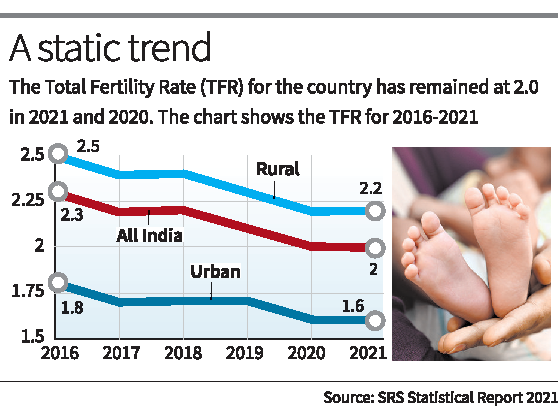
Context:
India’s financial sector is positioning itself as a hub for global investment, with a focus on attracting foreign banks and FDI in insurance. Announced in the February Budget, this policy aims to boost capital inflow and trust in the sector by simplifying regulations.
Projected Growth of the Insurance Market
- India is on track to become the 6th largest insurance market by 2032, growing at a 7.3% CAGR from 2024 to 2028, the highest among G20 nations.
- Since 2000, FDI in insurance has crossed ₹82,847 crore, signaling sustained confidence and growth.
IRDAI’s Transformation and Leadership
- Under Debasish Panda’s leadership, the Insurance Regulatory and Development Authority of India (IRDAI) evolved from a compliance-focused body to a mission-driven institution.
- Regulatory Reforms: 78 regulations were consolidated into 26, and 370 circulars were merged into 12, creating an agile and efficient regulatory framework.
- Three-Year Sunset Clause: Regulations are now periodically reassessed for relevance, ensuring that outdated rules are revised or discarded.
Bima Trinity: A Comprehensive Strategy for Insurance Inclusion
- Bima Sugam: A digital marketplace designed to democratize insurance access with low-cost, paperless, and cashless options, transforming customer experience and underwriting.
- Bima Vistaar: A bundled, affordable insurance product covering life, personal accident, property, and daily income during surgeries, offering wide coverage at a low cost.
- Bima Vahak: A women-led grassroots distribution force that empowers local agents to drive insurance awareness and trust in underserved communities.
Focus on Inclusivity and Accessibility
- India’s vision of “Insurance for All by 2047” shifts the focus from premium collection to ensuring basic risk protection for every citizen, including farmers, gig workers, and street vendors.
- The emphasis is on making insurance affordable and inclusive, extending coverage to underserved populations.
Risk-Based Capital and Financial Reporting Reforms
- Risk-based capital norms and compliance with International Financial Reporting Standards (IFRS) are underway, enhancing the resilience and accountability of insurers.
- The transition to risk-based supervision aims to improve the capital adequacy, transparency, and risk sensitivity of insurance companies.
TH
3. NRI Financial Compliance Guide 2025
Context:
If an NPS subscriber renounces Indian citizenship without obtaining an OCI card, they must notify the NPS Trust. The NPS account will be mandatorily closed in such cases.
Banking Compliance for New NRIs
An NRO (Non-Resident Ordinary) account is a bank account for Non-Resident Indians (NRIs) to manage income earned or deposits made in India. It’s held in Indian Rupees and allows NRIs to deposit, withdraw, and manage their Indian income while earning interest.
- Resident bank accounts must be converted to NRO accounts.
- NRE accounts should be opened for investing foreign income in India.
- NRO account: Used for income sourced in India (e.g., rent); interest is taxable.
- NRE account: Used for foreign income; interest is tax-free and repatriable.
Mutual Fund (MF) Guidelines for NRIs
- Change MF status to Non-Resident Individual (NRI).
- Link existing folios to NRO accounts.
- Use NRE account for new investments from foreign income.
- Submit enhanced KYC documents to SEBI-registered KYC Registration Agency (KRA), including:
- Identity proof
- Visa/residency permit/OCI card
- Overseas address proof
- FATCA (for US NRIs) / CRS declarations (for UK, Canada, etc.)
- Note: Some fund houses do not allow FATCA/CRS jurisdictions.
- MF Taxation: Same as residents, but TDS applies at redemption.
- Double Taxation Avoidance Agreement (DTAA) can reduce tax burden.
Demat Account and Trading Rules
- Resident demat account must be converted to NRI demat account.
- Required documents: NRI KYC form, PAN, passport, visa, and overseas address.
- Open NRO non-PIS trading and demat account.
- Existing holdings are transferred to this account.
- Repatriation limits:
- NRO account: Up to $1 million/year.
- NRE account: No cap.
- Permitted trading:
- F&O via custodian in NRO non-PIS account.
- No intraday equity trading, commodity, currency, or SGB trading.
- Some brokers allow BTST trades in NRO non-PIS accounts.
PPF, EPF & Insurance Compliance
- PPF: Can be continued till maturity, but not extendable beyond 15 years.
- EPF interest becomes taxable; NRIs must choose to continue or withdraw.
- Inform life/health insurers of NRI status; coverage may vary by country.
Residential Status & Income Tax Rules
- Resident for tax purposes if:
- Present in India ≥182 days in FY, or
- ≥60 days in FY + ≥365 days in previous 4 FYs.
- Non-residents pay tax only on income sourced in India.
- File ITR if:
- Indian income exceeds basic exemption, or
- You have LTCG, TDS refund, or carry-forward losses.
Leverage DTAA to Minimize Tax
- DTAA helps avoid double taxation on income (capital gains, interest, dividends).
- To claim benefits:
- Submit Tax Residency Certificate (TRC).
- Form 10F.
- Self-declaration of no permanent establishment in India.
BS
4. Morningstar DBRS Upgrades India’s Sovereign Credit Rating to ‘BBB’
Context:
Long-Term Foreign and Local Currency – Issuer Ratings upgraded to ‘BBB’ from ‘BBB (low)’, with a Stable trend. Short-Term Foreign and Local Currency Issuer Ratings upgraded to ‘R-2 (high)’ from ‘R-2 (middle)’, also with a Stable trend.
Key Highlights:
- India’s Long-Term Foreign and Local Currency – Issuer Ratings:
- From BBB (low) to BBB with a Stable outlook
- India’s Short-Term Foreign and Local Currency – Issuer Ratings:
- From R-2 (middle) to R-2 (high) with a Stable outlook
Main Drivers for the Upgrade
- Robust Structural Reforms:
- Large-scale investments in infrastructure
- Aggressive digitalisation initiatives
- Focus on fiscal consolidation with declining debt and deficit metrics
- Strong Economic Performance:
- Average real GDP growth of 8.2% between FY22 and FY25
- Sustained macroeconomic stability:
- Controlled inflation
- Range-bound exchange rate
- Stable external accounts
- Resilient Financial Sector:
- Banks with high capital adequacy ratios
- Non-performing assets (NPAs) at 13-year low, reflecting improved asset quality
Outlook and Future Prospects
- Stable Trend maintained for both long-term and short-term ratings.
- Potential for further upgrades if:
- Structural reforms continue, particularly those enhancing investment and productivity
- There is a decline in public debt-to-GDP ratio
- India maintains macroeconomic discipline and enhances institutional effectiveness
Rating Methodology
- Morningstar DBRS uses ‘high’, ‘middle’, and ‘low’ suffixes (e.g., ‘BBB (low)’, ‘R-2 (high)’), which are equivalent to the +/- symbols used by Fitch and S&P.
BS & PIB
5. RBI Relaxes FPI Investment Norms in Corporate Debt Securities
Context:
The Reserve Bank of India (RBI) has eased investment norms for Foreign Portfolio Investors (FPIs) under the general route, specifically for corporate debt securities. This move is aimed at enhancing FPI participation in India’s debt market and improving market liquidity.
Key Highlights of the Relaxation
- Withdrawal of Short-Term Investment Limit
- FPIs are no longer required to adhere to the cap on short-term investments in corporate debt.
- Removal of Concentration Limit
- The concentration limit, which restricted how much a single FPI could invest in a particular corporate issuer, has been withdrawn.
- Applies to General Route
The relaxation applies to investments made under the general route for both:- Government securities
- Corporate debt instruments
- Effective Immediately
- The revised norms are already in effect, giving FPIs immediate operational flexibility.
Impact & Objective
- Boosts Foreign Participation: Eases regulatory burden, encouraging more FPI inflows into India’s corporate debt segment
- Enhances Market Liquidity: Higher foreign participation can lead to increased trading volumes and stability
- Aligns with Reform Agenda: Complements broader efforts to deepen India’s capital markets and attract global investors
6. SEBI Imposes Cooling-Off Period for Directors of Market Infrastructure Institutions (MIIs)
Context:
The Securities and Exchange Board of India (SEBI) has amended key regulations to introduce a mandatory cooling-off period for directors transitioning between competing Market Infrastructure Institutions (MIIs), enhancing governance and safeguarding market integrity.
Key Highlights
- Amended Regulations
- SECC Regulations, 2018
- Depositories and Participants Regulations, 2018
- Applicability
- Affects non-independent directors and public interest directors of MIIs
- MIIs include: Stock exchanges, Clearing corporations, and Depositories
- Cooling-Off Period Norms
- Non-independent directors: Must serve a cooling-off period before joining the board of a competing MII
- Public interest directors: Can be appointed to a competing MII for a 3-year term only after SEBI’s prior approval
- Cooling-off rule applies only when directors move to a competing institution
Purpose and Implications
- Strengthens Governance: Prevents conflicts of interest and ensures a clean separation between competing entities
- Protects Market Integrity: Limits undue influence and ensures impartiality in the operations of market-critical institutions
- Improves Regulatory Oversight: Reinforces SEBI’s framework for ethical leadership and institutional neutrality across MIIs
Market Infrastructure Institutions (MIIs)
Market Infrastructure Institutions (MIIs) are the backbone of a robust and well-regulated financial market. These institutions include stock exchanges and depositories that facilitate seamless trading, clearing, and settlement of securities, ensuring transparency, investor protection, and financial stability.
7. Index Options
Context:
Retail participation in index options remains high despite curbs introduced in October 2023 and proposals in February 2024. A SEBI study revealed that individual investors lost ₹1.89 trillion in FY22–24, mostly on options expiry days, while high-frequency traders (HFTs) profited. India has the highest index options trading volumes globally, especially compared to the size of its cash equity market.
What Are Index Options?
An index option is an asset which enables its holder to trade (buy or sell) the value of an underlying index, for example, the Nifty 50, at a predetermined price. In the dynamic landscape of financial markets, index options have carved a special place as a versatile financial instrument.
Definition:
- Index options are financial derivatives where the underlying asset is a stock market index (like Nifty 50 or BSE Sensex), not individual stocks.
- These contracts give the buyer the right (but not obligation) to buy or sell the index value at a specific strike price by the expiration date.
Purpose:
- Investors use index options to trade broader market trends, hedge portfolios, or gain leveraged exposure to index movements.
Types of Index Options:
- Call Option: Right to buy the index at a specified price.
- Put Option: Right to sell the index at a specified price.
Key Components:
- Strike Price
- Underlying Index Value
- Expiration Date
How It Works:
- Only the premium is paid by the buyer (maximum possible loss).
- Profit/loss is determined by the difference between strike price and index level at expiry.
- Index options in India are traded after futures are launched and are standardized with lot sizes and expiry dates.
Benefits of Index Options:
- Profit in Both Directions: Positions can be taken for rising or falling markets.
- Hedging Tool: Protects portfolios from adverse market movements.
- Leverage: Small premium controls larger exposure.
Previous Measures Taken
- Lot size of index options was increased from 25 to 75 in October 2023.
- Only one weekly index option expiry per exchange was allowed to limit speculative losses.
- February 2024 proposals included:
- Gross exposure cap of ₹1,500 crore monitored intraday.
- Revamped open interest (OI) calculation methodology using delta-based OI to reflect true market risk.
Major Regulatory Revisions Proposed in 2025
- Intraday exposure cap dropped; SEBI now proposes:
- Gross limit: ₹10,000 crore
- Net limit: ₹1,500 crore (end-of-day compliance)
- These changes follow market opposition to strict intraday surveillance, which was feared to reduce liquidity and increase impact cost.
- Position monitoring through the day for index options may be dropped entirely.
Mint
Agriculture
1. First-Ever Rice Pangenome
Context:
Global Scientists Build First-Ever Rice Pangenome to Boost Climate Resilience and Yields.
What is the Rice Pangenome?
- A pangenome includes both the core and unique genes across multiple varieties of a species.
- Scientists have assembled the first rice pangenome by integrating genomic data from 144 wild and cultivated rice varieties across Asia.
- This effort mirrors the Human Genome Project in scope and significance—capturing genetic diversity crucial for crop improvement.
Why the Pangenome Matters
- Traditional reference genomes cover only a single variety (O. sativa ssp. japonica). The pangenome adds 3.87 billion new base pairs and over 69,000 genes, including:
- 28,907 core genes
- 13,728 wild-rice-specific genes
- Wild-rice-specific genes are especially important for drought resistance, disease tolerance, and climate resilience.
Key Findings and Scientific Advances
- High-fidelity (HiFi) PacBio sequencing was used for high-accuracy genome mapping.
- Population genetics reinforced that:
- All Asian cultivated rice evolved from wild Or-IIIa, a variant of Oryza rufipogon (ancestor of japonica).
- Indica rice developed through hybridization between ancient japonica and Or-I populations.
- About 20% of the genes identified are unique to wild rice, offering untapped resources for breeding programs.
Climate and Agricultural Significance
- Rice is the staple crop for nearly two-thirds of the global population.
- India produced a record 220 million tonnes in 2024-25, but faces risks:
- Temperature rise of 0.7°C since 1901
- 2024 was the hottest year on record with 0.9°C above-average minimum temperatures
- Studies warn of reduced yields and increased arsenic uptake under rising temperatures
- Genome-edited rice varieties, Samba Mahsuri and MTU 1010, developed by ICAR for drought resistance and yield boost, are awaiting field release.
Applications and Future Potential
- The pangenome serves as a powerful tool for:
- Precision breeding of high-performance rice
- Transferring climate-resilient genes from wild to cultivated varieties
- Enhancing phenotypic plasticity and regeneration capacity
- Enables rapid development of disease-tolerant and climate-resilient rice cultivars, critical for food security under global warming.
Regulatory Framework of Genetically Modified (GM) Crops in India
India adopts a multi-tiered regulatory approach to ensure the safety, efficacy, and compliance of genetically modified (GM) crops before their approval and use.
Food Safety and Standards Act, 2006
- Prohibits the import, manufacture, use, or sale of GM food products without approval from the Food Safety and Standards Authority of India (FSSAI).
- Ensures consumer health safety through strict pre-market assessment protocols.
Review Committee on Genetic Manipulation (RCGM)
- Operates under the Department of Biotechnology (DBT).
- Oversees research and development (R&D) activities related to GMOs.
- Monitors laboratory and field research to ensure biosafety compliance during early stages.
State Biotechnology Coordination Committee (SBCC)
- Constituted at the state level.
- Monitors the implementation of biosafety guidelines in research institutions and industries handling GMOs.
- Functions as a nodal agency for state-level biosafety coordination.
District Level Committee (DLC)
- Functions under SBCC and GEAC.
- Inspects and investigates local GM activities.
- Reports compliance or violations of regulatory guidelines at the grassroots level.
Genetic Engineering Appraisal Committee (GEAC)
- Final authority under the Ministry of Environment, Forest and Climate Change (MoEFCC).
- Grants environmental clearance for GM crop trials and commercial release.
- Ensures ecological and environmental safety under the Environment (Protection) Act, 1986.
GM Crop Approval Process
- Case-by-case scientific evaluation involving:
- Health and environmental risk assessments
- Field trial monitoring
- Stakeholder consultation
- Approval only after compliance with biosafety guidelines framed under the Environment (Protection) Act, 1986.
BS
Facts To Remember
1. World’s longest banana infructescence found in the forests of Andamans
An infructescence of about 4.2 metres has been recorded in a species of wild banana from Andaman and Nicobar islands, making it the longest infructescence recorded in bananas across the world. The details of the discovery were published in an international peer reviewed science journal Botany Letters earlier this year.
2. Salunkhe, Deepika win recurve bronze
Parth Salunkhe and Deepika Kumari performed creditably well to clinch the recurve men’s and women’s individual bronze medals respectively on the concluding day of the Archery World Cup Stage-2 in Shanghai.
3. Miss World 2025 kicks off with a cultural extravaganza in Hyderabad
The 72nd edition of the Miss World pageant officially began on a dazzling note at the Gachibowli Indoor Stadium, with a vibrant showcase of Telangana’s cultural heritage.
4. DARPG Hosts Rashtriya Karmayogi Jan Seva Training Programme to Empower Civil Servants
The Department of Administrative Reforms & Public Grievances (DARPG) conducted a dynamic training session under the “Rashtriya Karmayogi Jan Seva Program” on May 10, 2025, in New Delhi. Organized in collaboration with the Capacity Building Commission, the programme aimed to enhance competencies of public officials from Assistant Section Officers to Under Secretaries.
13 May, 2025
Daily Current Affairs Quiz
13 May, 2025
International Affairs
1. U.S.-China Agree to 90-Day Tariff Truce
Key Highlights:
- Major Tariff Rollback Announced:
- U.S. and Chinese officials confirmed a deal to roll back most recent tariffs.
- Both sides agreed to a 90-day truce to allow further trade negotiations.
- Tariff Reduction Details:
- U.S. to reduce its tariff on Chinese goods from 145% to 30% (a 115 percentage point cut).
- China to reduce its tariff on U.S. goods from 125% to 10% (matching 115 percentage point cut).
- China’s Commerce Ministry stated that 91% of tariffs will be cancelled, with another 24% suspended for 90 days.
Current Tariff Structure:
- US Tariff on Chinese Imports: 30%
- Includes a 10% base tariff + 20% extra due to fentanyl-related concerns
- China’s Tariff on US Imports: 10% (base tariff only)
Key Policy Shifts:
- China suspended all non-tariff barriers introduced after April 2, including export restrictions and corporate investigations.
Reasons Behind the Truce:
- Tariff Burden on Consumers: Raised prices disproportionately, hurting households more than helping producers.
- Rising Costs: Major retailers like Walmart faced inventory issues; general cost of living surged.
- Economic Slowdown: US GDP contracted in Q1 2025; economists warned of recession.
- Stagflation Risk: Tariffs contributed to inflation amid economic stagnation, raising fears of stagflation.
National Affairs
1. E-Waste Management in India
Context:
India’s digital growth is driving massive use of electronic devices, leading to a dramatic rise in electronic waste (e-waste). As India moves toward its Viksit Bharat goal, managing this waste stream through sustainable mechanisms such as Extended Producer Responsibility (EPR) and fair floor pricing for recycling certificates becomes crucial.
E-Waste Growth in India
- E-waste generation rose 151.03% from 2017-18 to 2023-24.
- Volume increased from 7,08,445 metric tonnes to 17,78,400 metric tonnes.
- Annual increase of over 1.69 lakh metric tonnes signals an urgent need for systemic reform.
What is EPR and Why It Matters?
- Extended Producer Responsibility (EPR): Mandates producers, importers, and brand owners to manage their products’ end-of-life impacts.
- Encourages:
- Sustainable design and pricing strategies
- Lifecycle accountability
- Reduction in municipal waste burden
- Promotion of formal recycling systems
E-Waste (Management) Rules, 2022
- Extended Producer Responsibility (EPR):
- Producers must meet annual recycling targets through registered recyclers. EPR certificates are used to verify compliance.
- Expanded Coverage:
- Includes 106 Electrical and Electronic Equipment (EEE) items from FY 2023–24 (previously 21).
- Inclusion of Bulk Consumers:
- Institutions and offices must dispose of e-waste through authorized recyclers/refurbishers.
- Role of Recyclers/Refurbishers:
- Registered entities manage collection, processing, and reporting of e-waste.
E-Waste (Management) Second Amendment Rules, 2023
- Clause 4 Added to Rule 5:
Focuses on sustainable refrigerant management in refrigeration and air-conditioning equipment manufacturing.
E-Waste (Management) Amendment Rules, 2024
- EPR Certificate Trading:
Government may establish platforms to trade EPR certificates under CPCB-approved guidelines. - Pricing of EPR Certificates:
CPCB to fix EPR certificate prices—maximum at 100% and minimum at 30% of applicable environmental compensation for non-compliance.
Consequences of Improper E-Waste Disposal
- Economic losses:
- Over $10 billion/year due to water, air, and soil pollution
- Over ₹80,000 crore/year in lost critical metals (gold, copper)
- $20 billion/year in lost tax revenue from informal, unaccounted recycling
- Social costs:
- Health hazards and exploitation of informal recyclers (mainly women and children)
- Average lifespan of workers in this sector is less than 27 years
International Conventions on E-Waste Management
- Basel Convention (1989): Controls transboundary movement of hazardous waste; India is a signatory.
- Bamako Convention (1991): Bans import of hazardous waste into Africa.
- Minamata Convention on Mercury (2013): Regulates mercury use; India ratified it in 2018.
- Stockholm Convention on POPs (2001): Restricts persistent organic pollutants; India is a party.
National Framework for E-Waste Management in India
- E-Waste (Management) Rules, 2022: Focus on Extended Producer Responsibility (EPR) and recycling through registered entities.
- Hazardous and Other Wastes Rules, 2016: Regulate import, storage, and handling of hazardous waste.
- National Action Plan for Chemical and Waste Management: Aligns with Stockholm and Rotterdam Conventions.
Common E-Waste Disposal Methods
- Landfilling: Cheap but causes soil and water contamination.
- Incineration: Reduces waste volume, but emits toxic gases.
- Recycling: Safely recovers metals, plastics, and reduces environmental risks.
Key Issues and Challenges in E-Waste Management
- Informal Sector Dominance: 50–80% of global e-waste handled informally; causes toxic exposure.
- Infrastructure Deficit: Limited authorized collection and recycling facilities.
- Public Unawareness: Consumers and institutions often dispose of e-waste improperly.
- Environmental Hazards: Toxic leachates and air pollution from improper disposal.
Strategies to Strengthen E-Waste Management in India
- Formalize Informal Sector: Train and integrate informal recyclers.
- Adopt Technological Innovations: Use AI/IoT for tracking and efficient recycling.
- Refurbishing Programs: Incentivize reuse and repair (as seen in Germany, EU).
- Public Awareness Campaigns: Educate citizens about safe disposal.
- International Collaboration: Partner with ITU and other global bodies for tech and capacity building.
Global Best Practices to Learn From
- EU: WEEE Directive, EPR compliance, eco-design rules, and “right to repair.”
- Japan: EPR under Home Appliance Recycling Law; nationwide recycling fee system.
- China: Formalized informal sector via training and incentives under WEEE regulations.
The Need for a National Recycling Vision
- India’s e-waste management must align with its sustainability goals
- EPR floor pricing is central to formalising the sector and unlocking its full potential
- Urgent action is necessary — a 73% rise in five years is a stark warning
- A stable, well-funded system can lead India to global leadership in sustainable waste management
UPSC Civil Services Examination, Previous Year Questions
Prelims:
Q. Due to improper/indiscriminate disposal of old and used computers or their parts, which of the following are released into the environment as e-waste? (2013)
- Beryllium
- Cadmium
- Chromium
- Heptachlor
- Mercury
- Lead
- Plutonium
Select the correct answer using the codes given below:
(a) 1, 3, 4, 6 and 7 only
(b) 1, 2, 3, 5 and 6 only
(c) 2, 4, 5 and 7 only
(d) 1, 2, 3, 4, 5, 6 and 7
Ans: (b)
Mains:
Q. What are the impediments in disposing of the huge quantities of discarded solid waste which are continuously being generated? How do we safely remove the toxic wastes that have been accumulating in our habitable environment? (2018)
2. WHO’s State of the World’s Nursing 2025
Key Global Findings:
- Worsening Shortage: WHO warns of an intensifying global nursing shortfall.
- Regional Burden: Africa and the Eastern Mediterranean are projected to account for 70% of the global nursing shortage by 2030.
Status of Nursing in India
- Nurse-to-Population Ratio:
- ~30 nurses per 10,000 population
- Below WHO’s recommended 44.5 health workers per 10,000 people
- Nursing Education:
- Increased graduate output
- Quality issues, faculty shortages, and inconsistent regulation persist
- Global Migration Trend:
- India is a top exporter of nurses to the UK, Gulf, and Australia
- Outmigration is driven by low wages, limited career paths, and poor working conditions
- Workforce Retention Challenges:
- Nurses often leave due to:
- Wage delays
- Unsafe work environments
- Lack of mental health support
- Minimal leadership opportunities
- Nurses often leave due to:
Key Challenges in India’s Nursing Sector
- Inadequate Workforce Supply
- Falls short of WHO’s benchmark
- Acute shortages in Primary Health Centres (PHCs) and Community Health Centres (CHCs), especially in rural areas
- Urban-Rural Disparity
- Workforce heavily concentrated in urban private hospitals
- Rural and public health systems remain understaffed
- Poor Working Conditions
- Long hours, delayed payments, unsafe conditions
- Mental and physical burnout among nurses
- Lack of Leadership Representation
- Scarce presence of Chief Nursing Officers (CNOs) at state/national level
- Limits nurse-led input into health policy
- Low Public Investment
- Inadequate infrastructure, limited training capacity
- Restricted budget allocations for nursing sector development
- Unbalanced International Migration
- No standardized returns or compensations for exported talent
- Bilateral migration agreements lack equity
3. Mission D3
What is Mission D3?
Mission D3 is a community-led social movement launched in November 2024 by Bhil and Bhilala tribal youths in Alirajpur and Jhabua districts of Madhya Pradesh. The campaign aims to eliminate three major financial and cultural burdens from tribal weddings:
- Dahej (Dowry)
- Daroo (Liquor)
- DJ Music
Core Objective
To promote simple, debt-free, and culturally authentic tribal weddings, protecting poor families from exploitative customs and post-marriage indebtedness.
Key Features of Mission D3
- Grassroots Initiative
- Led by social activist Nitesh Alawa
- Mobilized tribal youth and community elders
- Backed by local police, MLAs, and sarpanches
- Rapid Community Adoption
- Gaining traction across villages in Jhabua and Alirajpur
- Seen as a youth-driven cultural revival movement
- Economic Relief
- Families now save ₹1–5 lakh by avoiding dowry, liquor
- Reduces dependency on moneylenders and high-interest loans
- Cultural Revival
- DJs replaced with traditional musical instruments like dhols and madals
- Emphasis on tribal heritage and community values
- Curbing Migration
- By reducing wedding-related debt, the movement helps prevent seasonal migration for debt repayment
Social Impact
- Improved financial stability for tribal households
- Enhanced community cohesion and pride
- Strengthened women’s dignity by rejecting dowry customs
4. MY Bharat (Mera Yuva Bharat)
Context:
Mera Yuva Bharat (MY Bharat) is an autonomous institution under the Ministry of Youth Affairs and Sports, designed to empower young Indians through technology-driven engagement and youth-led development.
It was officially launched on October 31, 2023, to commemorate the birth anniversary of Sardar Vallabhbhai Patel.
Primary Objectives
- Promote inclusive youth participation in nation-building and governance.
- Develop the youth as catalysts of change for Amrit Kaal and Viksit Bharat@2047.
- Ensure equal access to opportunities for learning, volunteering, and mentorship.
Key Features of MY Bharat
- Volunteer Mobilisation
- Engages youth in activities like public service, disaster relief, and awareness drives.
- Digital Youth Profiles
- Youth can create profiles showcasing their skills, interests, and past activities.
- Helps them connect with government initiatives, NGOs, and private sector projects.
- Experiential Learning
- Provides on-ground project experience with Panchayats, Urban Local Bodies (ULBs), and businesses.
- Mentorship & Peer Networking
- Builds a national mentorship ecosystem through sector experts and youth icons.
- Encourages peer-to-peer learning and collaboration.
- Government Scheme Awareness
- Mobilizes youth as ‘Vikas Ambassadors’ to spread awareness about flagship government schemes at the grassroots.
Significance for Youth and Nation
- Encourages active civic engagement and leadership.
- Builds a pipeline of skilled, aware, and empowered citizens ready for 2047.
- Bridges the gap between government programs and youth aspirations.
5. Geotubing
What is Geotubing?
Geotubing involves the use of large, cylindrical geotextile tubes (commonly called geotubes) filled with sand, slurry, or dredged material. These are strategically placed underwater or along shorelines to act as submerged barriers, reducing wave energy and preventing erosion.
Key Features of Geotubes
- Submerged Breakwater Effect:
- Geotubes dissipate incoming wave energy before it reaches the coast, reducing shoreline erosion.
- Sand Trapping & Deposition:
- Acts as a mechanism for natural beach nourishment by trapping sand and promoting sediment build-up.
- Modular Design:
- Tubes can be customized in size and shape to match diverse terrains and project requirements.
Materials Used in Geotubing:
- High-Performance Geotextiles such as:
- Polypropylene (PP)
- Polyester (PET)
- Characteristics:
- Permeable for water drainage
- Resistant to UV rays, chemicals, and biological degradation
- High tensile strength for structural durability
Advantages of Geotubing
- Durability: Long lifespan even in harsh marine environments
- Cost-Effective: Cheaper and easier to install than concrete or steel seawalls
- Eco-Friendly: Non-toxic and used in wetland restoration projects
- Multi-functional: Applications go beyond coastal protection to industrial and environmental uses
Applications of Geotubing:
- Coastal Protection
- Seawalls, submerged breakwaters, sand dune reinforcements
- Example: Poonthura, Kerala – three-layer geotube barrier installed perpendicular to coast
- River & Lake Management
- Stabilising eroding riverbanks, sediment control in lakes
- Wastewater & Industrial Use
- Dewatering of sludge in treatment plants, dredging operations
- Infrastructure Projects
- Foundation stabilization for roads, railways, ports, reservoirs
- Environmental Remediation
- Site isolation, leachate containment, and pollution prevention
Banking/Finance
1. Special-Purpose Vehicle (SPV)
Context:
Bengaluru Smart Infrastructure Limited (B-SMILE) is a special-purpose vehicle (SPV) set up by the Karnataka government to manage large urban infrastructure projects.
- The initial government commitment is ₹7,000 crore.
- Though open to private investment, B-SMILE will be fully state-owned.
- 90% equity: Government of Karnataka
- 10% equity: Bruhat Bengaluru Mahanagara Palike (BBMP)
What is a Special Purpose Vehicle (SPV)?
- An SPV is a legally separate subsidiary formed by a parent company to isolate financial risk.
- It is also called a Special Purpose Entity (SPE) and is bankruptcy-remote, meaning it remains unaffected if the parent company collapses.
Purpose and Uses of SPVs
- Risk Isolation: Limits financial exposure from risky ventures.
- Asset Securitization: Packages assets (e.g., loans, receivables) for resale to investors.
- Joint Ventures: Facilitates specific projects with external partners.
- Property or Infrastructure Projects: Used in real estate, renewable energy, and public-private partnerships (PPPs).
- Venture Capital: Investors pool money via an SPV for a single startup investment.
Legal Forms of SPVs
- SPVs can be formed as LLCs, trusts, corporations, or limited partnerships.
- May operate independently with their own management and finances.
Accounting and Financial Risks
- SPVs are off-balance sheet entities—their debts and assets may not appear in the parent company’s accounts.
- This can obscure the actual financial position of the parent company.
- Investors should always review SPV financials to understand hidden risks.
TH
2. Bank Mitras
Context:
The Business Correspondent Resource Council (BCRC) has submitted a formal appeal to the Parliamentary Committee on Finance, urging a review of Bank Mitras’ commission structure and seeking infrastructure subsidies to support rural banking operations. The representation was made during a meeting with Bhartruhari Mahtab, Chairperson of the Committee.
What is the Bank Mitra Program?
The Bank Mitra program is an initiative under the Pradhan Mantri Jan Dhan Yojana (PMJDY) launched on August 28, 2014, that aims to extend banking services to unbanked and underbanked rural areas through appointed individuals called Bank Mitras, who act as business correspondents of banks.
The Department of Financial Services (DFS) within the Ministry of Finance of India is responsible for the scheme.
Objectives of the Bank Mitra Program
- Last-mile banking access in remote locations
- Facilitation of account opening and KYC procedures
- Promotion of financial literacy and awareness of banking products
Key Benefits
- Access to basic banking services (deposits, withdrawals, fund transfers) near customers’ homes
- Employment generation for local youth
- Cost-effective financial inclusion model
- Encourages saving and digital payments through AEPS (Aadhaar Enabled Payment System)
Impact on Financial Inclusion
- Boost in bank account penetration in rural and tribal belts
- Smooth disbursal of welfare schemes via Direct Benefit Transfer (DBT)
- Reduction in informal financial practices and frauds due to formal system presence
3. AI-Based Training in PSBs
Context:
Government-run banks in India are increasingly leveraging artificial intelligence (AI), augmented reality (AR), and virtual reality (VR) to enhance customer service quality and boost employee soft skills, especially at the front desk. The move follows surprise inspections by the Department of Financial Services (DFS) that revealed gaps in professionalism, responsiveness, and behavior among branch-level staff.
Key Developments:
- AI-Powered Employee Training:
- PSBs like Punjab National Bank (PNB) are using conversational AI to conduct 30-minute mock sessions.
- These sessions assess communication skills, etiquette, and body language.
- Employees receive a performance matrix and rankings to identify improvement areas.
- Immersive Learning via AR/VR:
- AR and VR modules are being introduced to simulate real-life banking scenarios.
- This provides employees with realistic, immersive training experiences.
- Real-Time Customer Feedback:
- A quick response (QR)-based feedback system has been deployed.
- Customers rate their experience post-transaction, with data sent to the head office for real-time monitoring.
- Soft Skills Pilot Programs:
- Pilots are underway in several districts to train staff in empathy, active listening, and service etiquette.
- Preliminary feedback shows higher customer satisfaction and employee confidence.
Structural Issues
- The push for AI training comes as deposit growth stagnates and customer service inconsistencies grow in PSBs.
- Staff shortages and heavy administrative workloads continue to undermine service delivery.
- In rural branches, a single officer often manages multiple functions (cash, compliance, etc.), leaving little time for customer interaction.
4. RBI Surplus Transfer
Context:
India’s banking system is expected to see surplus liquidity rise to ₹5.5–6 lakh crore in the coming weeks, following a substantial dividend payout by the Reserve Bank of India (RBI) to the Central Government. This is likely to exert downward pressure on short-term interest rates, influencing bond markets and monetary policy outlook.
How the RBI Determines the Allocation of Dividends
The Reserve Bank of India (RBI) determines its annual dividend transfer to the Government of India based on the Economic Capital Framework (ECF). This framework balances fiscal support to the government with the need to maintain adequate financial buffers for monetary and financial stability.
Under Which Section RBI Transfers It’s Surplus To Central Government?
- Section 47, RBI Act, 1934: RBI must transfer surplus to the Central
Government after risk provisions. - Section 48: RBI is exempt from income and super tax.
- Section 49 deals with the publication of the bank rate.
- Section 50 outlines the provisions regarding the National Housing Credit
(Long Term Operations) Fund.
Key Determinants of Dividend Allocation
Economic Capital Framework (ECF)
- Based on recommendations by the Bimal Jalan Committee (2018).
- RBI must maintain a Contingent Risk Buffer (CRB) of 5.5%–6.5% of its balance sheet.
- CRB covers risks such as:
- Market volatility
- Credit defaults
- Operational and financial system disruptions
Dividend Calculation Process
- Surplus = Total income – Total expenditure – CRB provisioning
- Only the remaining surplus, after provisioning, is transferred to the Government of India under Section 47 of the RBI Act, 1934.
Sources of RBI’s Income
| Primary Revenue Streams |
|---|
| Interest from Government Securities |
| Open Market Operations (OMOs) |
| Foreign Exchange Operations |
| Liquidity Adjustment Facility (LAF) earnings |
| Interest on loans and advances to banks |
Recent Trends
- As of March 2024:
- Forex reserves: USD 646 billion (with USD 409 billion in top-rated sovereign assets)
- Lower dollar sales in FY24 (USD 153 bn) than FY23 (USD 213 bn), yet income remained strong
- LAF operations significantly boosted earnings
Expenditure Components
| RBI’s Key Expenses |
|---|
| Operational costs |
| Interest on deposits/borrowings |
| Cost of currency issuance |
| Provisioning for contingencies and revaluation losses |
TOI
5. AMEX and HSBC Lead Foreign Banks in Credit Card Growth in FY25
Context:
American Express (AmEx) and HSBC emerged as the top-performing foreign banks in net credit card additions in FY25, bucking the broader industry trend of decelerating growth in the credit card segment. The industry added over 8 million credit cards in total, reflecting a year-on-year slowdown.
American Express (AmEx)
American Express (AmEx) is a global payments company and financial services corporation known for its credit cards and other financial products. It offers a wide range of services, including credit cards, charge cards, payment processing, and travel-related benefits to individuals, businesses, and corporations. AmEx is headquartered in New York and operates in over 200 countries and territories, serving a global customer base.
HSBC
HSBC, formally known as The Hongkong and Shanghai Banking Corporation Limited, is a global financial institution founded in 1865 with the purpose of facilitating trade between Europe and Asia. As described by HSBC, they aim to open up opportunities for their customers by leveraging their expertise, capabilities, and perspectives. Today, HSBC serves a global network of customers, including individuals, corporations, and governments, across 58 countries and territories.
6. RBI Imposes Penalties on SBI and Jana Small Finance Bank for Regulatory Non-Compliance
Context:
The Reserve Bank of India (RBI) has levied monetary penalties on State Bank of India (SBI) and Jana Small Finance Bank for violations of regulatory norms, highlighting the central bank’s continued focus on supervisory enforcement in the banking sector.
Penalty on State Bank of India (SBI):
- Amount: ₹1.73 crore (₹1,72,80,000)
- Regulatory Violations:
- Breach of “Loans and Advances – Statutory and Other Restrictions”
- Non-compliance with “Customer Protection – Limiting Liability of Customers in Unauthorised Electronic Banking Transactions”
- Violation of “Opening of Current Accounts by Banks – Need for Discipline”
Penalty on Jana Small Finance Bank:
- Amount: ₹1 crore
- Reason: Contravention of certain provisions under the Banking Regulation Act, 1949
Clarification by RBI
- These penalties are related to deficiencies in regulatory compliance.
- The penalties do not impact the validity of any customer transactions or agreements with the concerned banks.
Contextual Update
- In March 2025, the RBI had also penalized:
- HSBC Bank: ₹66.60 lakh
- IIFL Samasta Finance: ₹33.10 lakh
7. Bhutan Launches World’s First National Cryptocurrency Tourism Payment System
Context:
Bhutan has become the first country globally to launch a national-level cryptocurrency payment system for tourism, in partnership with Binance Pay, a subsidiary of Binance Holdings Ltd, and DK Bank, Bhutan’s first fully digital bank.
Key Features of the Crypto Tourism Payment System
- Cashless Travel Experience
- Tourists can pay using 100+ cryptocurrencies, including Bitcoin (BTC), Binance Coin (BNB), and USD Coin (USDC)
- Payments accepted for:
- Airline tickets
- Tourist visas & SDF
- Hotel bookings
- Monument entry
- Tour guides
- Local shopping
- QR Code-Based Transactions
- Utilizes static and dynamic QR codes for real-time payments
- Eliminates need for card terminals or cash
- Automatic Currency Conversion
- Crypto payments are instantly converted to Bhutanese Ngultrum (BTN)
- Handled by DK Bank, ensuring stable payouts to merchants
- Promotes Financial Inclusion
- Adopted by 100+ Bhutanese businesses, including remote and rural vendors
- Enables participation in the $3 trillion global cryptocurrency market
About Binance Pay
A crypto payment platform by Binance Holdings Ltd, the world’s largest cryptocurrency exchange by trading volume, supporting secure, gas-free transfers and payments.
Agriculture
1. Dvara Solutions – Kissandhan Agri Financial Services partnership
Strategic Partnership
- Parties Involved: Dvara Solutions and Kissandhan Agri Financial Services Pvt Ltd (an NBFC subsidiary of SLCM)
- Objective: To digitize and streamline Kissandhan’s loan lifecycle using Perdix, Dvara’s core lending technology platform
Key Features of the Integration
- Adoption of Perdix’s full stack:
- Loan Origination System (LOS)
- Loan Management System (LMS)
- Reports and Analytics
- Co-lending Module
- Perdix supports over ₹15,000 crore in AUM across 20+ institutions
Expected Benefits for Kissandhan
- Enhanced operational efficiency and regulatory compliance
- Faster and more customized loan disbursal across various products like:
- Micro Loan Against Property (Micro LAP)
- Group Loans
- Farmer Loans
- Medium-Term Loans
- Improved customer experience and scalability in rural credit delivery
Impact So Far (as of April 30, 2025)
- ₹3,263.99 crore in disbursed loans
- 7+ lakh farmers reached
- 37,185 women beneficiaries in agri and allied sectors
14 May, 2025
Daily Current Affairs Quiz
14 May, 2025
International Affairs
1. IMF Disburses $1 Billion to Pakistan Under Extended Fund Facility (EFF)
What is EFF?
The Extended Fund Facility is an IMF lending program designed to assist countries facing long-term balance of payments issues stemming from structural economic weaknesses.
Key Features of EFF
- Administered by: International Monetary Fund (IMF), a Bretton Woods institution
- Nature of Loan: Repayable (not financial aid or grant)
- Tenure: Extended (usually 3+ years) with longer repayment timelines
- Objective: Supports medium-term structural reforms, such as:
- Tax system overhaul
- Inflation control
- Fiscal deficit reduction
- Disbursement: In phases (tranches) based on IMF policy review of reform progress
Eligibility Criteria
- Persistent current account deficits or external payment imbalances
- Deep-seated issues in governance, public finances, tax administration, or investment climate
- Strong commitment to IMF-monitored economic reforms
EFF Loan Approval Process
- Request: Borrowing country formally seeks IMF assistance
- Staff-Level Agreement: Negotiation of proposed reform measures and targets
- Executive Board Approval: IMF reviews and clears the reform agenda and macroeconomic framework
- Tranche Disbursement: Funds released in phases, linked to reform milestones
Context in Pakistan’s Case (May 2025):
- The IMF Executive Board approved a $1 billion immediate disbursement
- The funds support Pakistan’s efforts to stabilize the economy amid fiscal imbalances and structural challenges
- Reforms target areas like tax collection, energy pricing, fiscal deficit control, and inflation containment
National Affairs
1. India’s Proposed Repairability Index
Context:
The Department of Consumer Affairs (DoCA) has received a committee report recommending a Repairability Index (RI) for mobile phones and electronic appliances in India. This framework seeks to promote transparency, sustainability, and consumer rights by scoring products on how easily they can be repaired.
What Is the Repairability Index (RI)?
- Purpose:
The RI will assign a score to products based on ease of repair using criteria such as:- Availability and cost of spare parts
- Access to software updates
- Availability of repair information
- Overall repair costs
- Goal:
- Encourage consumers to make informed choices and incentivize manufacturers to produce repair-friendly devices.
2. EPIC (Elector Photo Identity Card) Numbers
Context:
The Election Commission of India (ECI) has addressed and resolved the issue of duplicate EPIC (Elector Photo Identity Card) numbers, a problem flagged by political leaders including West Bengal CM Mamata Banerjee. All affected voters have now been issued fresh and unique EPICs, reinforcing the credibility and integrity of the voter identification process.
What is the EPIC Number?
- A 10-digit alphanumeric code assigned to each registered voter in India
- Used to prevent impersonation and duplication
- Acts as a unique identifier for each elector
Nature of the Duplication Problem
- Allegations arose that multiple voters shared the same EPIC number
Resolution Process
- Action Taken:
- All such voters have been issued new and unique EPIC numbers
- Field-level verifications confirmed no impersonation or fraud
Key Implications
- Electoral Integrity: The issue was procedural and did not affect voting rights or results
- Database Clean-Up: Reflects a major back-end data audit across constituencies
- Political Sensitivity: Highlights the growing focus on voter list transparency and accountability
3. DigiYatra
Context
DigiYatra is India’s national digital traveller identity platform, offering biometric-based, paperless boarding at airports. It is the world’s first federated, voluntary, and privacy-preserving system for digital passenger identity. As of May 2025, it is operational at 13 Indian airports, with plans to cover 50+ airports by 2026.
Digi Yatra: Seamless Contactless Travel Using Facial Recognition Technology (FRT)
Overview:
- Digi Yatra is a digital initiative aimed at ensuring contactless and paperless travel for passengers using Facial Recognition Technology (FRT).
- It enables passengers to move through airport checkpoints by verifying identity linked with their boarding pass using facial biometrics.
Key Features of DigiYatra
- Consent-based Biometric Verification: Facial recognition is used for identity verification at entry, security, and boarding gates.
- Decentralized and Privacy-First:
- Biometric data is stored only on the user’s device.
- No central storage of personal data.
- Data is purged within 24 hours of travel.
- Federated Architecture: Connects airlines, airports, and passengers in a unified digital ecosystem.
Institutional Framework
- Managed by DigiYatra Foundation, a Section 8 not-for-profit entity owned by major airport operators:
- Airports Authority of India
- GMR, Adani, BIAL, etc.
- Oversight by the Ministry of Civil Aviation, ensuring public trust and interoperability.
Implementation Timeline
- Phase 1:
- Launched at Varanasi and Bengaluru Airports in August 2022.
- Further Expansion:
- Rolled out at Pune, Vijayawada, Kolkata, Delhi, and Hyderabad by March 2023.
- AAI to continue phased rollout across more Indian airports.
Objectives of Digi Yatra
- Simplify and enhance the passenger travel experience.
- Optimize infrastructure use through a digital framework.
- Reduce operational costs and increase security standards.
- Digitize manual processes to improve efficiency and system performance.
- Enable a secure, verifiable Digital ID using Aadhaar or other government-issued identity proofs.
BS
4. PM SHRI (Pradhan Mantri Schools for Rising India) Scheme
Context:
The Kerala government on Tuesday announced it will pursue a legal course, along with protests on ground, to recover over Rs 1,500 crore allegedly withheld by the Centre. The funds, linked to centrally sponsored schemes, have reportedly been held back after Kerala refused to sign the PM SHRI scheme memorandum.
PM-SHRI Scheme: Transforming Schools into Models of NEP 2020 Implementation
Overview
- PM SHRI (Pradhan Mantri Schools for Rising India) is a centrally sponsored scheme, launched in 2022.
- It aims to develop over 14,500 model schools across India to demonstrate best practices from the National Education Policy (NEP) 2020.
- The scheme focuses on revamping existing government schools, not creating new ones.
Objective
- To foster an inclusive, safe, and modern learning environment.
- Enhance student well-being, promote holistic development, and ensure access to quality infrastructure and resources.
Funding Pattern
- General States/UTs with legislatures: 60:40 (Centre:State).
- North Eastern & Himalayan States, UT of J&K: 90:10.
- UTs without legislature: 100% Central Government funding.
- States/UTs must sign an MoU with the Ministry of Education to participate.
Duration
- The scheme will run from 2022–23 to 2026–27.
- Post-2027, maintenance of standards becomes the responsibility of respective States/UTs.
Key Features of PM SHRI Schools
- Holistic Education focusing on communication, collaboration, creativity, and critical thinking.
- Modern infrastructure including:
- Smart Classrooms
- Integrated Science Labs
- ICT-enabled libraries
- Vocational/Skill Labs & Atal Tinkering Labs
- Green Practices: Emphasis on water conservation, waste recycling, and energy-efficient practices.
- Competency-Based Education with focus on real-life application through experiential and inquiry-based learning.
- Emphasis on inclusive education with support for diverse learning needs.
Eligible Schools
- Government schools under Centre/State/UT/local bodies.
- Includes all Kendriya Vidyalayas (KVs) and Jawahar Navodaya Vidyalayas (JNVs) that meet infrastructure norms and operate from permanent campuses.
Selection Process (Challenge Mode)
- Stage 1: State/UT signs MoU with Centre.
- Stage 2: Schools shortlisted using UDISE+ data.
- Stage 3: Eligible schools compete by meeting pre-defined quality criteria.
- Final selection by an Expert Committee chaired by the Secretary, Department of School Education & Literacy.
Monitoring Mechanism
- School Quality Assessment Framework (SQAF) will be used to:
- Monitor performance.
- Ensure institutional excellence.
- Conduct periodic evaluations to uphold educational benchmarks.
5. India Identifies Priority Corridors for Zero-Emission Trucking (ZET)
What is Zero-Emission Trucking (ZET)?
Zero-Emission Trucking refers to freight transport using battery electric or hydrogen fuel cell trucks that produce no tailpipe emissions, unlike traditional diesel-powered vehicles.
Key Features of ZET
- Powered by clean energy: electricity or green hydrogen
- Equipped with high-capacity batteries or fuel cells
- Backed by charging/refueling infrastructure and smart logistics systems
- Offers lower maintenance costs and longer vehicle lifespan
Significance of ZET in India
- Environmental Impact:
- Trucks contribute to ~40% of fuel consumption and transport-related emissions
- ZET adoption will drastically reduce carbon and particulate pollution
- Health & Air Quality:
- Lowers PM2.5 and NOx pollution in urban-industrial corridors
- Improves public health outcomes in densely populated regions
- Energy Security:
- Cuts India’s diesel import dependency
- Shifts toward domestically produced electricity and green hydrogen
- Economic & Industrial Benefits:
- Enhances logistics efficiency and fleet productivity
- Supports future-ready infrastructure and industrial competitiveness
- Policy Alignment:
- Complements central schemes like:
- PM E-DRIVE (₹500 crore initiative for EV ecosystem)
- Atmanirbhar Bharat (Self-reliant India Mission)
- Complements central schemes like:
Banking/Finance
1. Fitch Upgrades Shriram Finance to ‘BB+’
Context:
Fitch Ratings upgraded Shriram Finance Ltd.’s (SFL) Long-Term Foreign- and Local-Currency Issuer Default Ratings (IDRs) from ‘BB’ to ‘BB+’, with a ‘Stable’ outlook, reflecting the company’s consistent improvements across key operational and financial parameters.
Key Drivers of the Upgrade
- Funding Diversity
- Risk Management
- Portfolio Quality
- Profitability
Ratings Details
- New Ratings:
- Long-Term Foreign-Currency IDR: ‘BB+’ (Stable)
- Long-Term Local-Currency IDR: ‘BB+’ (Stable)
- The upgrade moves SFL one notch closer to investment grade, though it remains in the speculative category.
TH
2. Challenges Faced by Indian MSMEs: SIDBI Report
Context:
A new report by the Small Industries Development Bank of India (SIDBI), titled “Understanding the Indian MSME Sector: Progress and Challenges”, reveals that access to timely credit and shortage of skilled manpower are among the most pressing challenges faced by MSMEs. The study is based on a survey of 2,000 MSMEs across 19 sectors.
Key Highlights:
Credit Access: A Persistent Bottleneck
- Despite multiple government schemes, MSMEs still face a 24% credit gap, equivalent to about ₹30 lakh crore.
- Micro enterprises are most dependent on informal borrowing (12%), compared to 3% for small enterprises and 2% for the overall MSME sector.
- The services sector faces a higher credit gap (27%).
- Women-led MSMEs experience the most acute shortfall, with a 35% credit gap.
Digital Finance Adoption
- 90% of MSMEs accept digital payments, showing strong digital integration for transactions.
- 18% of MSMEs have adopted digital lending platforms.
- The report highlights potential for wider digital credit access through tools like UPI, especially when combined with financial literacy support.
Workforce Challenges
- 25% of MSMEs cite shortage of skilled manpower as a major operational hurdle.
- The skills gap is particularly problematic in technologically driven sectors and labor-intensive manufacturing.
Policy Recommendations
- Targeted financial inclusion policies are needed for services and women-led enterprises.
- Focus on scaling digital lending ecosystems integrated with UPI and public credit registries.
- Investment in skilling programs, especially for micro enterprises and underrepresented regions, to bridge the manpower deficit.
3. Treasury Bills (T-Bills): A Key Short-Term Government Instrument
Context:
India has extended its financial support to the Maldives by rolling over a $50 million Treasury Bill, continuing a practice that began in 2019. The move comes amid the island nation’s struggle with high public debt, a widening fiscal deficit, and billion-dollar debt servicing commitments in 2025 and 2026.
Currency Swap Support
- In 2023, the Reserve Bank of India (RBI) provided a $400 million USD swap and ₹30 billion INR swap to ease a financial crunch in the Maldives.
- These facilities helped maintain foreign exchange liquidity and avert balance-of-payment pressures.
Treasury Bills (T-Bills): A Key Short-Term Government Instrument
What are Treasury Bills?
- Treasury Bills (T-Bills) are short-term money market instruments issued by the Government of India.
- They serve as promissory notes with guaranteed repayment on maturity.
- T-Bills are issued at a discount to face value and carry no coupon (zero interest rate).
Purpose of Issuance:
- To meet short-term funding requirements of the central government.
- To bridge fiscal deficits and manage temporary cash flow mismatches.
- Utilized by RBI under Open Market Operations (OMO) to regulate money supply and inflation.
Key Features:
- Zero-Coupon Security: Issued at a discount, redeemed at face value.
- Tenure: Maximum maturity of 364 days.
- Risk-Free Instrument: Backed by the Government of India; highly secure.
- Tradability: Actively traded in the secondary market.
- High Liquidity: Suitable for short-term investment and fund parking.
How Investors Benefit:
- Profit arises from the difference between issue price and face value.
- Example: A 91-day T-Bill with a face value of ₹120 may be bought at ₹118.40. On maturity, the investor receives ₹120, making a profit of ₹1.60.
Monetary Policy Tool – RBI’s Use of T-Bills:
- During Inflation (Boom Periods):
- RBI issues more T-Bills to absorb excess liquidity.
- Helps curb inflationary pressures by reducing money supply and demand.
- During Recession (Slowdown Periods):
- RBI reduces issuance or lowers discounts to discourage T-Bill investments.
- Encourages liquidity to move to stock markets and productive sectors, enhancing GDP and employment.
Types of Treasury Bills in India (Based on Tenure):
- 91-day T-Bill – Most frequently traded; short-term liquidity solution.
- 182-day T-Bill – Medium-duration T-Bill for moderate-term investments.
- 364-day T-Bill – Longest tenure under T-Bills; used by institutional investors for near one-year parking of funds.
Who Can Invest?
- Individuals
- Banks
- Corporates
- Mutual Funds
- Insurance Companies
- Foreign Portfolio Investors (FPIs)
Advantages of Treasury Bills (T-Bills)
- Government-Backed Security:
- T-Bills are backed by the Government of India, offering high credit safety and zero default risk.
- Even during economic crises, repayment is assured, making them ideal for risk-averse investors.
- Short-Term Investment with Predictable Returns:
- T-Bills offer fixed returns over short durations (up to 364 days).
- Suitable for individuals seeking secure, short-term capital appreciation.
- High Liquidity and Tradability:
- Treasury bills can be easily sold in the secondary market, offering liquidity in emergencies.
- Investors can convert holdings into cash before maturity.
- Access for Small Investors:
- Retail investors can participate through non-competitive bidding in weekly RBI auctions.
- No need to quote yield or price, promoting financial inclusion and market exposure for new investors.
- No TDS on Redemption:
- No tax deducted at source (TDS) at maturity.
- Beneficial for those in non-taxable income brackets, as there’s no need to claim TDS refunds.
Limitations of Treasury Bills:
- Low Returns Compared to Market Instruments:
- As zero-coupon securities, T-Bills offer fixed and relatively lower returns than stocks or mutual funds.
- Returns remain unaffected by favorable economic conditions or market upswings.
- Limited Capital Growth:
- The return potential is capped, unlike equity instruments that may yield exponential gains during bull runs.
- Interest Rate Risk (for Secondary Market Investors):
- If sold before maturity, T-Bill prices may fluctuate with interest rate movements, potentially affecting gains.
Taxation of Treasury Bills:
- Short-Term Capital Gains (STCG):
- Gains from T-Bills are considered STCG, taxed as per the investor’s income tax slab.
- Applies if the investor sells before maturity or redeems within one year.
- No TDS Deduction:
- No TDS is deducted at source, reducing compliance burden.
- Investors in lower tax brackets avoid unnecessary deductions and refund claims.
4. Payment Aggregator
Context:
Prosus-backed fintech firm PayU Payments Pvt. Ltd. has received final authorisation from the Reserve Bank of India (RBI) to function as an online payment aggregator, marking a major regulatory milestone after over a year since securing in-principle approval.
Key Highlights
- Final RBI Nod: PayU is now officially authorised under the Payment and Settlement Systems Act, 2007.
- Industry Status: Joins over 50 RBI-approved payment aggregators, including Razorpay, BillDesk, Cashfree Payments, and CCAvenue.
What is a Payment Aggregator?
A Payment Aggregator (PA) is a third-party service provider that enables merchants to accept digital payments through multiple methods such as UPI, credit/debit cards, e-wallets, bank transfers, and EMIs. They are licensed by the Reserve Bank of India (RBI) and manage the entire payment process on behalf of merchants via a nodal account.
How Payment Aggregators Work: A Step-by-Step Process
- Merchant Onboarding
- Merchants register with a PA who opens a sub-account (linked to the PA’s nodal account).
- Customer Payment Initiation
- The customer selects a payment method and enters details at checkout.
- Payment data is tokenized and encrypted.
- Transaction Processing
- PA forwards the request to the customer’s issuing bank via card networks or UPI rails.
- Fraud checks are performed by card networks and the PA.
- Bank Verification
- Customer’s bank verifies fund availability and authenticity.
- Approval/Denial
- Response is routed back through the same channel to the PA and merchant.
- Fund Collection
- Upon approval, funds are moved to the PA’s nodal account.
- Settlement
- PA settles funds to the merchant’s account (daily, same-day, or instantly).
Types of Payment Aggregators in India
- Bank Payment Aggregators
- Operated by banks (e.g., HDFC, ICICI)
- Do not require RBI registration
- Higher setup and integration costs
- Less suited for small businesses
- Third-Party Payment Aggregators
- Non-banks like Razorpay, Mobikwik, Airpay
- Require RBI approval
- Easier integration, lower cost
- Offer analytics, sub-merchant onboarding, and APIs
Key Features & Benefits of Payment Aggregators
- Seamless Onboarding & Sub-Merchant Management
- Onboard multiple sub-merchants (e.g., AMCs, sellers) using APIs or dashboards.
- Secure Payment Infrastructure
- No sensitive data storage
- PCI-DSS & ISO compliant
- Card tokenization and encryption
- Fraud Detection & Compliance
- Use of machine learning to detect fraud patterns
- Compliance with RBI and PCI-DSS standards
- Multiple Payment Options
- UPI, cards, NetBanking, BNPL, e-mandates, EMIs, wallets
- Fast Settlements
- Instant or same-day settlements
- Useful during weekends, holidays
- Smooth Checkout Experience
- Reduces cart abandonment
- Supports mobile-friendly and one-click payment flows
- Dedicated Customer Support
- 24×7 support for payment status, refunds, disputes, and technical queries
Payment Aggregator vs Payment Gateway: Key Differences
| Parameter | Payment Aggregator (PA) | Payment Gateway (PG) |
|---|---|---|
| Function | Handles funds and settlements | Facilitates data encryption and transaction routing |
| License Requirement | Must be RBI-authorised (non-bank entities) | No RBI license needed |
| MID Requirement | PA provides its own Merchant ID (MID) | Requires merchant to have its own MID |
| Examples | Razorpay, Mobikwik, Airpay | Razorpay, CC Avenue, PayU |
What is a Payment Aggregator License and How to Get One?
A Payment Aggregator License is issued by the Reserve Bank of India (RBI) to entities that facilitate online payments on behalf of businesses. These entities enable merchants to accept digital payments through various methods like cards, UPI, and net banking, without the need for a separate payment infrastructure.
Eligibility Criteria:
To obtain this license, a firm must fulfill the following requirements:
- Maintain a net worth of INR 15 crore by March 31, 2021
- Maintain a net worth of INR 25 crore by March 31, 2023
Application Requirements:
The application submitted to RBI must include:
- Proof of financial stability
- Details of business experience in handling payment processing
- Technical capabilities to securely manage transactions
Compliance Obligations:
Payment aggregators are required to:
- Ensure clear agreements with merchants and customers
- Address complaints, refunds, failed transactions, and dispute resolution effectively
This license ensures that only qualified and responsible entities are permitted to handle digital payments in India, fostering secure and efficient payment ecosystems.
BS
5. Expression of Interest (EOI)
Context:
A consortium of banks led by Union Bank of India has received 17–18 expressions of interest (EoIs) for the sale of ₹728.58 crore in stressed loans of Sahara Hospitality Ltd, which operates the Sahara Star Hotel in Mumbai.
What is an Expression of Interest (EOI)?
An Expression of Interest (EOI) is a non-binding document that a potential buyer shares with a seller in the early stages of a mergers and acquisitions (M&A) process. It signals a serious intent from the buyer to acquire the seller’s business, subject to due diligence and final agreement. While not legally binding, it lays the foundation for further negotiations and due diligence by outlining the proposed terms and expectations of the buyer.
Key Concept of Expression of Interest (EOI)
- Purchase Price
- States the total consideration the buyer is willing to pay on a cash-free, debt-free basis.
- May include components for ESOPs, bonuses, severance.
- Terms are non-binding and subject to revision based on further evaluations.
- Valuation Methodology
- Includes the basis for valuation such as financial projections, historical data, and assumptions like:
- Accuracy of seller’s financials
- Fully funded retirement benefits
- Normal working capital
- Seamless transfer of contracts without extra payments
- Includes the basis for valuation such as financial projections, historical data, and assumptions like:
- Due Diligence
- Requests access to conduct due diligence across finance, legal, HR, technology, facilities, and more.
- Ensures the buyer is fully informed before proceeding to a definitive agreement.
- Transaction Structure
- Clarifies whether the buyer seeks a full acquisition or a carve-out.
- Describes assets, liabilities, and earn-out arrangements.
- Explains funding method: internal reserves or bank financing.
- Management Retention Plan
- Outlines intentions for retaining key senior management and proposed incentives.
- Transition and Support Services
- Requests post-transaction support from the seller for a specified time without additional cost beyond the purchase price.
- Approvals Required
- Notes that deal closure is subject to buyer’s board approval, aligning timelines accordingly.
- Conduct of Business
- Asks the seller to continue operations in the normal course and to notify any major changes that could affect valuation or terms.
- Transaction Expenses
- Specifies that each party will bear their own costs related to legal, financial, and due diligence processes.
- Confidentiality
- Prohibits sharing of buyer’s identity or deal details without written consent.
- Disclosure allowed only post-signing of definitive agreements.
- Non-Binding Nature
- Clarifies the EOI is not legally binding.
- No party can claim damages or force the other to proceed with the deal based on the EOI.
6. Public Sector Banks Launch Special Deposit Products to Boost Resource Mobilisation
Context:
With deposit growth slowing to 10.3% in FY25 from 13.5% in FY24, state-run banks are launching innovative deposit schemes to attract customers. Most public sector banks (PSBs) are targeting a 9–11% deposit growth for FY25.
Union Bank of India: Special Term Deposit with Health Cover
- Scheme: Special 375-day fixed deposit
- Interest Rate: 6.75% per annum
- Eligibility: Minimum deposit of ₹10 lakh, maximum ₹3 crore
- Unique Feature: Includes a 375-day Super Top-up Health Insurance cover:
- Coverage: ₹5 lakh
- Facility: Cashless hospitalisation
- Objective: Combine financial returns with healthcare benefits to appeal to high-value depositors
Canara Bank: Launch of Canara TruEdge (CASA Product)
- Product Type: Current Account and Savings Account (CASA) combo
- Target Group: Customers requiring tailored financial and operational solutions
- Features:
- Customer Segmentation: Personalised account management
- Flexible Benefit System:
- Waivers and concessions on charges
- Benefits linked to Monthly Average Balance (MAB) of the previous month
- Objective: Deepen customer relationships through customisation and retention-focused incentives
7. SEBI Proposes Relaxed Norms for FPIs Investing Only in Indian Government Bonds
Context:
The Securities and Exchange Board of India (SEBI) has proposed a new framework to ease regulatory requirements for Foreign Portfolio Investors (FPIs) investing exclusively in Indian government bonds.
- The move follows India’s upcoming inclusion in major global bond indices, including:
- JP Morgan Global Emerging Markets Bond Index
- Bloomberg EM Local Currency Government Index
- FTSE Russell EM Government Bond Index (effective September 2025)
Key Proposals
- Creation of a New Category: IGBFPI
- FPIs investing only through the Voluntary Retention Route (VRR) and Fully Accessible Route (FAR) will be classified as Indian Government Bond FPIs (IGBFPIs).
- This classification will be assigned at the time of registration or transition by existing FPIs.
- Transition Guidelines for Existing FPIs
- Existing FPIs can opt-in as IGBFPI by:
- Declaring their intent.
- Divesting non-eligible holdings (i.e., securities other than permitted government bonds).
- Closing related demat and trading accounts.
- Existing FPIs can opt-in as IGBFPI by:
- Relaxed Ownership Restrictions
- Current FPI rules cap NRI/OCI/RI investment at:
- 25% individually
- 50% collectively of FPI corpus.
- Under the new proposal:
- NRIs and OCIs can control IGBFPIs with no cap.
- Resident Indians (RIs) may still face certain restrictions, which will remain.
- Current FPI rules cap NRI/OCI/RI investment at:
- Purpose and Benefit
- Aims to attract passive foreign inflows by simplifying compliance.
- Helps align regulatory framework with India’s increasing global bond market integration.
- Supports smoother execution for funds benchmarking global indices.
Implications for the Market
- These changes could enhance foreign participation in government securities, improving liquidity and depth in the bond market.
- It strengthens India’s positioning as a trusted sovereign debt market in the emerging market investment universe.
8. Liquid Exchange-Traded Funds (ETFs)
Context:
Brokers are increasingly guiding clients to liquid exchange-traded funds (ETFs) as a solution for managing idle cash. Liquid ETFs allow brokers to retain funds within their platforms, bypassing regulatory requirements that mandate transferring unutilized funds back to clients’ bank accounts at month-end. As of the latest figures, assets under management (AUM) in liquid ETFs have increased by 31% over the past year, growing from ₹17,200 crore to ₹23,550 crore.
What Are Liquid ETFs?
Liquid Exchange-Traded Funds (ETFs) are short-term debt instruments designed to invest in low-risk assets like money market instruments and overnight securities. These funds typically have a 1-day maturity and are traded on stock exchanges such as NSE and BSE, providing easy access and high liquidity for investors. Dividends from liquid ETFs are calculated daily and reinvested into additional units, credited to the demat account every 30 days.
Who Can Invest in Liquid ETFs?
Liquid ETFs are ideal for:
- Investors looking for a secure way to park unused funds temporarily.
- Those seeking consistent daily returns without committing funds for a long time.
Advantages of Liquid ETFs
- Earn Better Returns: Liquid ETFs ensure that funds earn returns immediately after settlement, unlike idle funds in a margin account or savings account.
- High Liquidity: Easy to buy and sell, ensuring quick access to funds when needed.
- Transparency: Daily updates on portfolio holdings, providing clarity on assets and strategies.
- Convenient Transactions: No need for frequent fund transfers between trading and bank accounts.
- No Securities Transaction Tax (STT): Liquid ETFs are exempt from STT, reducing the cost of investment.
- Low Expense Ratio: Expense ratios for liquid ETFs are generally lower compared to mutual funds.
Disadvantages of Liquid ETFs
- Market Risks: Subject to market fluctuations, which may impact value despite aiming for stability.
- Lack of Control Over Holdings: Investors don’t have control over individual securities within the ETF’s portfolio.
Taxation on Liquid ETFs in India
- Short-Term Capital Gains (STCG): If sold within 1 year of purchase, gains are taxed as short-term capital gains.
- Long-Term Capital Gains (LTCG): If sold after 1 year, gains are taxed at 12.5% (with the initial ₹1.25 lakh of profits exempted per financial year).
Factors to Consider When Investing in Liquid ETFs
- Investment Objective: Ideal for managing short-term liquidity or parking surplus funds temporarily.
- Time Horizon: Best suited for investors with a short-term investment horizon (days to months).
- Risk Tolerance: Liquid ETFs are low-risk but still subject to market fluctuations.
- Credit Quality: Ensure the ETF invests in high credit quality instruments to reduce default risk.
| Parameter | Liquid Funds | Liquid ETFs |
|---|---|---|
| Liquidity | T+1 redemption; some offer instant access | Intraday trading possible; real-time liquidity on exchanges |
| Suitability | Beginners, traditional investors | Market-savvy investors with trading/demat accounts |
| Transaction Cost | No brokerage; possible exit loads for early exit | Brokerage fees apply for buy/sell transactions |
| Expense Ratio | Slightly higher than ETFs | Lower expense ratio; more cost-efficient |
| Accessibility | Available through banks, AMCs, MF platforms | Requires a demat and trading account |
| Customisation | More fund options tailored to risk profiles | Limited ETF choices in market |
| Taxation | <1 yr: taxed as per slab; >1 yr: LTCG with indexation | <1 yr: STCG; >1 yr: LTCG like equity investments |
9. Qatar National Bank Becomes First MEA-Based Bank to Open Branch in India’s GIFT City
Context:
Qatar National Bank (QNB), the largest financial institution in the Middle East and Africa (MEA), has inaugurated a new branch in Gujarat International Finance Tec-City (GIFT City), making it the first MEA-based bank to do so.
- Significance for India: The move underscores India’s growing prominence as a global economic and manufacturing hub. GIFT City is positioned as a gateway for international financial services, attracting global institutions.
- Services Offered: The QNB GIFT City branch will offer:
- Credit facilities
- Foreign currency financing
- Trade finance solutions
- Wholesale banking services for Indian corporates and global clients
- India’s Long-Term Appeal: QNB sees India as a long-term opportunity for its wholesale banking operations, leveraging India’s stable economic fundamentals and its own global reach.
Implications:
- Strengthened Indo-MEA Financial Ties: QNB’s entry is expected to enhance cross-border banking cooperation and open new avenues for trade and investment flows between India and the MEA region.
- Boost for GIFT City: The development adds further credibility to GIFT City’s role as a thriving international financial centre and an attractive base for global banking institutions.
10. RBI Makes Reporting of Digital Lending Apps Mandatory from May 13, 2025
Context:
The Reserve Bank of India (RBI) has issued new compliance guidelines under the Reserve Bank of India (Digital Lending) Directions, 2025. These reforms aim to regulate digital lending platforms, enhance borrower protection, and ensure transparent and ethical lending practices.
Objective
To clean up the digital lending ecosystem by:
- Enforcing uniform regulatory standards
- Protecting borrowers from hidden charges and unethical practices
- Promoting transparency and accountability in the sector
Key Highlights
- Mandatory Reporting via CIMS Portal:
- All Regulated Entities (REs) must upload details of their Digital Lending Apps (DLAs) on the RBI’s Centralised Information Management System (CIMS).
- Portal Activation Date: May 13, 2025
- Compliance Deadline for REs: June 15, 2025
- Public Directory of DLAs:
- Launch Date: July 1, 2025
- RBI will host a live public directory on its website for consumers to verify DLAs linked to RBI-regulated lenders.
- The directory will be auto-updated as REs add or delist apps.
- Enhanced Transparency for Aggregators:
- Lending Service Providers (LSPs) must display all loan offers from multiple REs.
- Offers must include even those not matched or selected, along with the lender names.
- Stricter Vetting of Third Parties:
- REs must perform due diligence on third-party partners before engagement.
- Assessment criteria include technical capability, data privacy compliance, and data storage security.
Recent Context:
- In March 2025, the RBI conducted a $10 billion dollar-rupee buy-sell swap on February 21 to inject longer-term rupee liquidity into the financial system.
Significance
- Empowers borrowers through better access to verified digital lenders
- Curbs misuse of fintech platforms for exploitative lending
- Reinforces trust in RBI-regulated digital finance infrastructure
11. LIC Launches WhatsApp-Based Premium Payment Facility for Policyholders
Context:
Life Insurance Corporation of India (LIC), India’s largest life insurer, has introduced a new WhatsApp-based premium payment service, enabling policyholders to pay premiums and access policy details through a chatbot interface.
Key Features of the Service
- Available to all registered LIC customers
- Access through a WhatsApp bot for a seamless, interactive experience
- Allows checking of policy status and premium due dates
- Payment modes supported: UPI, net banking, credit/debit cards
- Entire journey—from policy identification to payment and receipt—happens within WhatsApp
- Launched by LIC Chairman & MD Siddhartha Mohanty and senior officials
Significance
- Enhances customer convenience and accessibility
- Enables policyholders to pay anytime, from anywhere
- Supports LIC’s broader digital transformation goals
- Over 2.2 crore policyholders are registered on LIC’s digital platform, with 3+ lakh daily logins
About LIC:
- Founded: 1 September 1956
- Headquarters: Mumbai, Maharashtra
- Chairman: Siddhartha Mohanty
Economy
1. India’s National Manufacturing Mission
Context:
The Union Government has set up an inter-ministerial panel to draft a National Manufacturing Mission. The initiative aligns with the Make in India vision and aims to reinvigorate the manufacturing sector, which has historically contributed only 15–17% to GDP, far below the 25% target.
Five Pillars of the Proposed Manufacturing Mission
- Ease and Cost of Doing Business: Focus on reducing regulatory burdens and improving business environment.
- Future-Ready Workforce: Skilling initiatives aligned with emerging manufacturing technologies.
- Revitalising MSMEs: Addressing credit, technology, and compliance challenges for micro, small, and medium enterprises.
- Access to Advanced Technology: Promoting adoption of cutting-edge tech and improving R&D capacity.
- Global Quality Standards: Enhancing competitiveness by boosting quality and consistency in manufacturing output.
Key Challenges Addressed
- Underperformance of Past Initiatives: Despite the National Manufacturing Policy (2011) and Make in India (2014), the sector has struggled due to structural inefficiencies.
- MSME Marginalisation: Existing schemes like PLI favor capital-intensive industries, leaving labour-intensive MSMEs (e.g., apparel, furniture, toys) underserved.
- Geographical Disparity: High-value manufacturing is concentrated in states like Tamil Nadu, Maharashtra, Gujarat, and Uttar Pradesh, leading to regional imbalance.
- Global Competitiveness Gaps: Compared to countries like Vietnam, India lacks scale, standardisation, and export momentum.
Opportunities for Structural Reform
- Cleantech Manufacturing Push:
- Photovoltaic cells, electric vehicles, wind and grid battery components are key sectors.
- Supports both climate goals and reduction in import dependency.
- Cluster-Based Industrial Development:
- Could help build scale, integrate supply chains, and improve logistics.
- Improved Physical and Trade Infrastructure:
- Calls for low tariffs on input goods, efficient logistics, and investor-friendly regulations.
2. Sectors of Economy
What Is a Sector?
A sector is a broad category that groups businesses and industries that engage in similar or related activities within the economy. Dividing the economy into sectors allows economists to analyze economic activities and trends, helping identify which sectors are expanding or contracting.
Key Sectors in the Economy
Four Main Economic Sectors
- Primary: Resource extraction and agriculture.
- Secondary: Manufacturing and construction.
- Tertiary: Service industries.
- Quaternary: Knowledge-based activities (R&D, IT, education).
- Primary Sector
- Involves the extraction and harvesting of natural resources from the Earth.
- Activities include:
- Mining
- Agriculture
- Fishing
- Forestry
- Hunting
- Common in emerging economies, where a significant portion of employment is concentrated in resource extraction.
- Secondary Sector
- Focuses on the processing, manufacturing, and construction industries that transform raw materials into finished goods.
- Activities include:
- Automobile production
- Textile manufacturing
- Chemical engineering
- Shipbuilding
- Energy utilities
- Represents the industrial base of developed nations.
- Tertiary Sector
- Comprises service-based industries that provide services rather than goods.
- Key areas include:
- Retail
- Transportation and distribution
- Banking and financial services
- Healthcare
- Insurance
- Legal services
- This sector forms the backbone of developed economies, supporting the functioning of the primary and secondary sectors.
- Quaternary Sector
- Encompasses knowledge-based activities that focus on intellectual pursuits and innovation.
- Key activities include:
- Research and development (R&D)
- Information technology
- Education
- Consulting services
- With the rise of technology and the knowledge economy, the quaternary sector has become increasingly significant.
Economic Sectors vs. Investment Sectors
- Economic sectors categorize activities in an economy, such as extraction, manufacturing, or services.
- Investment sectors are more granular and are used in financial markets to group companies that have similar business activities, such as:
- Technology (software, electronics)
- Energy (oil, renewable energy)
- Healthcare (pharmaceuticals, healthcare services)
- Financial services (banks, insurance)
Investment Sector Importance
Investment sectors help investors understand how specific groups of companies are performing, offering insights into market conditions and economic performance. Sector-specific funds and ETFs allow investors to target particular sectors for investment opportunities.
Agriculture
1. India to Introduce Natural Farming Certification System (NFCS)
Overview of the Proposal
- The Indian government is planning to introduce a Natural Farming Certification System (NFCS) to boost consumer trust and farmer income.
- This initiative will benefit the 1.8 million farmers practicing natural farming across 780,000 hectares of land.
- The certification aims to provide premium pricing for chemical and synthetic fertilizer-free products, improving farmers’ incomes.
Key Features of the NFCS
- Voluntary Participation: The system will be non-binding, meaning farmers can choose whether to participate.
- Increased Market Access: Certified natural farming products will likely be able to command higher prices, similar to organic farming.
- Distinct from Organic Farming: Unlike organic farming that uses natural inputs like compost and manure, natural farming avoids all external inputs, relying solely on natural ecological processes.
Targeted Regions and Support for Farmers
- Key States: Punjab, Haryana, Madhya Pradesh, Uttarakhand, Jharkhand, West Bengal, Mizoram, Telangana, and Kerala have been identified as major areas where natural farming is gaining traction.
- Farmer-Led Movements: Various farmer-led movements and state governments are supporting the adoption of natural farming in these regions.
Certification Process and Benefits
- Certification Agencies: State and union territory boards responsible for organic farming may also oversee natural farming certification.
- The NFCS will operate under the existing Participatory Guarantee System (PGS-India), which already certifies organic products, with separate standards for natural farming.
- Benefits for Farmers: The certification will help farmers gain access to better markets and secure fair pricing for their products.
- Consumer Confidence: It will also enhance consumer confidence in the quality and safety of natural farming products.
Impact on Natural Farming
- The introduction of NFCS is expected to bring about greater accountability in natural farming practices.
- It is likely to influence policy changes, attract government support, and raise consumer awareness of natural farming products.
2. Kendu Leaves – “Green Gold of Odisha”
Context:
Gram Sabhas in Odisha’s Koraput District Seek Deregulation of Kendu Leaf Trade.
Background
- Location: Eight Gram Sabhas in Boipariguda block, Koraput district, Odisha.
- Action: These communities have harvested over 4 lakh bundles of kendu leaves during the 2025 season.
- Key Villages: Kalatha Jodi, Kupuli Guda, Badali Beda, among others.
Kendu Leaves – “Green Gold of Odisha”
- Known as Tendu Leaf in other regions, kendu leaves are essential Non-Wood Forest Products (NWFPs).
- The leaves are primarily used for bidi rolling (local cigarettes) and have medicinal properties.
- Key Producer States: Odisha, Madhya Pradesh, Chhattisgarh, Jharkhand, Maharashtra, Gujarat, Andhra Pradesh.
Legal Framework – Forest Rights Act (FRA), 2006:
- FRA (2006): Recognizes the rights of forest-dwelling communities to collect, use, and sell minor forest produce (MFP) like kendu leaves.
- 2012 FRA Amendment:
- Empowers communities to process, store, transport, and sell MFP without paying royalties or needing government approval.
- Transit Permits: Must be issued by the Community Forest Rights Management Committee (CFRMC), which has the authority under the FRA.
Request for Deregulation
- The Gram Sabhas seek to manage and sell kendu leaves independently under FRA’s legal framework.
- The state government’s Odisha Kendu Leaf (Control of Trade) Act should not override the FRA, as the latter’s provisions have legal supremacy.
Significance
- Kendu leaves are a crucial livelihood source for tribal communities in Odisha.
- Granting the right to independently manage the trade would improve their economic autonomy and reduce government control.
Facts To Remember
1. Renesas India to Lead India’s First 3nm Chip Design Initiative
This milestone was declared during the inauguration of Renesas India’s new R&D office in Noida, with a design centre in Bengaluru also inaugurated virtually. Renesas Electronics, a Japanese semiconductor major, will become the first company to design 3-nanometre (nm) chips end-to-end in India, as announced by Union Electronics & IT Minister Ashwini Vaishnaw.
2. India’s retail inflation eases to a 6-year low of 3.16% in April
India’s retail inflation eased to 3.16 percent in April from 3.34 percent in March, driven by significant easing in food prices.
3. Khelo India Youth Games: Rajasthan cyclists dominate, push state to 2nd spot in medal tally
In the Khelo India Youth Games, players of Rajasthan today made a clean sweep in the events of the Cycling Time Trial category.
4. Cargo handled by India’s major ports surges to record 855 million tonnes in FY25
India’s major ports have registered remarkable growth in cargo handling in the last financial year. In a statement, the Ministry of Ports, Shipping and Waterways said that the country’s ports handled 819 million tonnes of cargo in the financial year 2023-24, which increased to 855 million tonnes in FY 2024-25, marking an annual growth of 4.3 per cent.
5. India informs WTO of tariff plan to counter US duties on steel
India has proposed to impose retaliatory tariffs to counter US duties on Indian Steel and Aluminium. India has informed the World Trade Organisation (WTO) of its plans to impose such tariffs on select American goods.
15 May, 2025
Daily Current Affairs Quiz
15 May, 2025
International Affairs
1. India–U.S.–Pakistan Relations
Background:
- U.S. President claimed credit for mediating the May 10 ceasefire between India and Pakistan, claiming to have averted a potential “nuclear conflict”.
- This is the fifth time in five days he has made this assertion.
India’s Official Position
- Ministry of External Affairs (MEA) has repeatedly rebutted the U.S. claim:
- Ceasefire was a bilateral decision between Directors General of Military Operations (DGMO) through the hotline.
- Pakistan requested a halt to hostilities 3 days after Operation Sindoor began.
- India agreed after strikes on Pakistani bases shifted ground reality.
- MEA emphasized no third-party mediation in India–Pakistan issues.
Key Concerns for India
- U.S. President’s claim violates India’s long-standing policy against third-party intervention.
- His comparison of India and Pakistan and offer to mediate on Kashmir undermines India’s stance on it being an internal matter.
- Allegations that the U.S. threatened trade cuts or offered trade incentives to force peace have been categorically denied by MEA.
- U.S. statements ignored India’s core concern: cross-border terrorism.
Geopolitical Implications
- Trump’s remarks risk internationalising bilateral issues and equating India with Pakistan. May reflect a policy shift in U.S. strategy or simply unpredictable diplomacy.
- Growing China-Pakistan cooperation could be influencing U.S. perceptions in the region.
National Affairs
1. Sample Registration System (SRS) Statistical Report 2021
Source:
Sample Registration System (SRS) Statistical Report 2021, released by the Registrar General of India
Context:
The annual crude birth rates (live births per 1,000 people in the population) for Tamil Nadu, Delhi and Kerala are declining at twice the rate of the national average, showed data from the Sample Registration System (SRS) Statistical Report 2021, released by the Registrar General of India last week.
National-Level Trends
- All-India Crude Birth Rate (CBR) in 2021: 19.3 per 1,000 population
- Average annual decline (2016–2021): 1.12%
Key Definitions
- MMR (Maternal Mortality Ratio): Maternal deaths per 100,000 live births
- IMR (Infant Mortality Rate): Infant deaths (<1 year) per 1,000 live births
- NMR (Neonatal Mortality Rate): Newborn deaths (<28 days) per 1,000 live births
- U5MR (Under-Five Mortality Rate): Deaths before age 5 per 1,000 live births
- TFR (Total Fertility Rate): Average number of children a woman would have
- Sex Ratio at Birth: Female births per 1,000 male births
Progress Report (2014–2021)
- MMR: Reduced from 130 to 93 per 100,000 live births
- IMR: Dropped from 39 to 27 per 1,000 live births
- NMR: Declined from 26 to 19 per 1,000 live births
- U5MR: Decreased from 45 to 31 per 1,000 live births
- TFR: Declined to 2.0, achieving replacement level fertility
- Sex Ratio at Birth: Improved from 899 to 913 females per 1,000 males
Global Comparison (UN Reports 2023–24)
- MMR: India’s reduction (1990–2023): 86% vs Global: 48%
- U5MR: India: 78% decline vs Global: 61%
- NMR: India: 70% vs Global: 54%
- IMR: India: 71% vs Global: 58%
Government Interventions Behind the Gains
- Ayushman Bharat Scheme: Health coverage for vulnerable populations
- Infrastructure Development: Maternity waiting homes, SNCUs, MCH wings
- Human Resource Strengthening: Skilled birth attendants and midwives
- Evidence-Based Care: Antenatal corticosteroids, CPAP therapy for newborns
- Digital Health Systems: Real-time tracking and monitoring of maternal-child health
- Equity Focus: Free, quality services with zero tolerance for care denial
SDG 2030 Alignment
- India is on track to achieve its Sustainable Development Goals related to maternal and child health, and has outperformed global averages in most mortality indicators.
Fastest Declining Birth Rates (Annual % Decline)
| State/UT | Annual Decline Rate (%) |
|---|---|
| Tamil Nadu | 2.35% |
| Delhi | 2.23% |
| Kerala | 2.05% |
| Telangana | 1.67% |
| Karnataka | 1.68% |
| Andhra Pradesh | 1.26% |
| Maharashtra | 1.57% |
| J&K | 1.47% |
| Himachal Pradesh | 1.29% |
| Odisha | 1.34% |
| Gujarat | 1.24% |
| Haryana | 1.21% |
- All southern States (TN, Kerala, AP, Telangana, Karnataka) showed faster-than-average decline.
- Punjab recorded a birth rate decline nearly equal to the national average.
States with Slowest Decline in Birth Rates
| State | Annual Decline Rate (%) |
|---|---|
| Rajasthan | 0.48% |
| Bihar | 0.86% |
| Chhattisgarh | 0.98% |
| Jharkhand | 0.98% |
| Assam | 1.05% |
| Madhya Pradesh | 1.05% |
| West Bengal | 1.08% |
| Uttar Pradesh | 1.09% |
- Uttarakhand: The only state with a rising birth rate during this period.
Civil Registration System (CRS) 2021 Insights
- States reporting increasing number of registered births:
- Bihar, Rajasthan, Uttar Pradesh, Uttarakhand, West Bengal
- Arunachal Pradesh, Mizoram, Nagaland, Jammu & Kashmir, Ladakh, Lakshadweep
Fertility Indicators (SRS 2021)
- TFR (Total Fertility Rate): Average children per woman across her reproductive span.
- GRR (Gross Reproduction Rate): Average number of daughters born per woman who survive to reproductive age.
- States with higher-than-national-average TFR and GRR:
- Bihar, Uttar Pradesh, Rajasthan, Madhya Pradesh
2. Sustainable Transport Mission Added to India’s Climate Agenda
Context:
The Government of India has decided to add a new “Sustainable Transport” mission under the National Action Plan on Climate Change (NAPCC) — the first such inclusion in over a decade.
Scope of the Sustainable Transport Mission
- Will include all transport modes:
- Roads
- Railways
- Ports
- Shipping
- Civil Aviation
- Aim: Align with international standards (where available) and reduce emissions, especially from road transport.
Sectoral Emission Landscape
- Transport contributes ~10% of India’s GHG emissions.
- Road transport alone accounts for 87–90% of emissions within the transport sector.
- Responsible for ~one-third of urban air pollution.
Key Challenges & Priorities
1. Lack of International Roadmap for Road Sector
- No globally agreed net-zero roadmap for roads.
- Government must frame a domestic strategy including:
- Bharat VII emission norms (aligned with Euro VII)
- Alternative fuels and EV promotion
2. Railway Freight Optimization
- 73% of freight traffic moves by road.
- Shifting to railways requires fixing structural inefficiencies in the rail freight system.
3 Charging Infrastructure Deficit
- India has 1 public charging point per 135 EVs vs. global average of 1 per 6–20 EVs.
- Target: 30% EV penetration by 2030.
- Required infrastructure: ~3.9 million public charging stations (from current 12,000).
Power Source Paradox
- Most current charging stations are fossil-fuel powered, undermining EV benefits.
- Solution: Power EV charging with renewable energy.
- Adds complexity and infrastructure demand, but essential for true emissions reduction.
3. National Action Plan on Climate Change (NAPCC)
- Launched: In 2008 by the Prime Minister’s Council on Climate Change
- Objective: To raise awareness and initiate coordinated actions among the public, government bodies, scientists, industries, and communities regarding the threat of climate change
- Approach: Long-term, integrated, and multi-pronged strategies aimed at sustainable development and climate resilience
Eight National Missions under NAPCC
- National Solar Mission
- Promotes the use of solar energy for power generation and other uses
- National Mission for Enhanced Energy Efficiency
- Focuses on market-based mechanisms to improve energy efficiency
- National Mission on Sustainable Habitat
- Emphasizes energy-efficient buildings, urban waste management, and sustainable transport
- National Water Mission
- Aims at water conservation, equitable distribution, and sustainable management
- National Mission for Sustaining the Himalayan Ecosystem
- Protects Himalayan glaciers and biodiversity
- National Mission for a Green India
- Targets afforestation and ecosystem restoration
- National Mission for Sustainable Agriculture
- Promotes climate-resilient agricultural practices
- National Mission on Strategic Knowledge for Climate Change
- Enhances research and data-sharing on climate science and policy
Salient Features of NAPCC
- Inclusive Development
- Prioritizes the protection of poor and vulnerable populations through sustainable growth models
- Ecological Sustainability
- Promotes qualitative changes in development strategies to preserve ecological balance
- Technology Deployment
- Encourages accelerated use of technologies for climate adaptation and mitigation
- Innovative Regulatory Mechanisms
- Supports both regulatory and voluntary measures to foster sustainable practices
- Public-Private Partnership
- Ensures effective implementation by engaging civil society, local governments, and private sector stakeholders
- International Collaboration
- Welcomes global cooperation under UNFCCC for funding, research, data sharing, and technology transfer, with a focus on equitable Intellectual Property Rights (IPR)
Greenhouse Gases (GHGs)
- Definition: Gases that absorb and emit radiant energy in the thermal infrared range
- Primary GHGs:
- Water vapor
- Carbon dioxide (CO₂)
- Methane (CH₄)
- Nitrous oxide (N₂O)
- Ozone (O₃)
- Impact:
- Maintain Earth’s temperature at an average of 15°C; without them, it would be −18°C
- Cause the Greenhouse Effect, which warms the planet by trapping heat in the atmosphere
Banking/Finance
1. Section 7 of the Insolvency and Bankruptcy Code (IBC)
Context:
The Indian Renewable Energy Development Agency (IREDA), a government-owned financier, has filed an insolvency petition under Section 7 of the Insolvency and Bankruptcy Code (IBC) against Gensol Engineering over a ₹510 crore loan default.
- Legal Action: Section 7 petition filed with the National Company Law Tribunal (NCLT)
Section 7 of the Insolvency and Bankruptcy Code (IBC)
Section 7 of the Insolvency and Bankruptcy Code (IBC) outlines the process for initiating a Corporate Insolvency Resolution Process (CIRP) by a financial creditor. It allows a financial creditor, either individually or jointly with others, to file an application with the Adjudicating Authority (NCLT) when a corporate debtor defaults on a financial debt.
Key Provisions of Section 7 IBC
- Right to Initiate CIRP
- A financial creditor (individually or jointly with others) can file an application before the Adjudicating Authority (NCLT) upon occurrence of a financial debt default by a corporate debtor.
- Application Requirements
- The application must be complete and include:
- Proof of default (such as records from an information utility or bank statements)
- Name of the proposed Insolvency Resolution Professional (IRP)
- Detailed information about the financial creditor(s)
- The application must be complete and include:
- Default Threshold
- As per current provisions and interpretations (e.g., Cleartax, NCLT orders), a minimum default of ₹1 crore is required for the application to be admitted under Section 7.
- Role of the Adjudicating Authority (NCLT)
- The NCLT is required to:
- Ascertain the existence of debt and default
- Admit or reject the application within 14 days (subject to completeness of documents)
- The NCLT is required to:
- Grounds for Rejection
- The NCLT may reject the application if:
- The corporate debtor proves it is a viable going concern
- Initiating CIRP is not deemed in the best interest of all stakeholders
- The application lacks required documentation or fails to meet threshold requirements
- The NCLT may reject the application if:
Significance of Section 7 IBC
- Empowers financial institutions to recover dues through a structured legal framework
- Ensures early resolution of insolvency and protects creditors’ rights
- Prevents prolonged defaults by enabling time-bound resolution
2. Market Capitalization
Context:
Investor sentiment is shifting away from small cap and mid cap (SMID) funds towards largecap-oriented schemes, particularly flexicap funds, amid ongoing market volatility and correction in the SMID space.
Understanding Market Capitalization
- Market Capitalization refers to the total market value of a company’s outstanding shares.
- Formula:
- Market Capitalization = Total Outstanding Shares × Current Market Price per Share
- It reflects a company’s market worth and is used to categorize companies into Large-cap, Mid-cap, and Small-cap.
SEBI’s Classification of Market Capitalization (2017 Guidelines)
| Category | Market Cap Range | Ranking by Market Cap |
|---|---|---|
| Large-cap | ₹20,000 crores and above | Top 1 to 100 companies |
| Mid-cap | ₹5,000 crores to ₹20,000 crores | 101st to 250th companies |
| Small-cap | Below ₹5,000 crores | 251st company onwards |
Large-Cap Companies
- Comprise the top 100 companies listed by market capitalization
- Known as blue-chip stocks
- Features:
- Strong market presence and track record
- Stable with lower risk
- Commonly included in major indices like Nifty 50
- Mutual Funds: Large-cap funds
Mid-Cap Companies
- Ranked from 101 to 250 in terms of market capitalization
- Features:
- Moderate risk and returns
- Growth-oriented with decent performance history
- May not be part of major indices
- Mutual Funds: Mid-cap funds
Small-Cap Companies
- Ranked 251 and below by market capitalization
- Features:
- Higher risk due to limited track record
- High growth potential, often include startups
- Low liquidity and typically not part of major indices
- Mutual Funds: Small-cap funds
Comparison: Large-cap vs Mid-cap vs Small-cap Funds
| Parameter | Large-cap Funds | Mid-cap Funds | Small-cap Funds |
|---|---|---|---|
| Risk Profile | Low risk, ideal for conservative investors | Moderate risk | High risk |
| Volatility & Liquidity | Low volatility, high liquidity | Moderate volatility and liquidity | High volatility, low liquidity |
| Returns & Growth | ~7% average returns (last 5 years), steady | ~10.28% average returns, moderate growth | ~14.74% average returns, high growth |
3. Small and Medium Real Estate Investment Trust (SM Reit)
Context:
Securities and Exchange Board of India (Sebi) has issued a public warning to investors about Strata, a commercial real estate investment platform, after it voluntarily surrendered its Small and Medium Real Estate Investment Trust (SM Reit) licence.
SEBI’s Guidelines on Small and Medium Real Estate Investment Trusts (SM REITs)
The Securities and Exchange Board of India (SEBI) has introduced new regulations to facilitate the creation of Small and Medium Real Estate Investment Trusts (SM REITs), providing greater access to real estate investments for smaller investors.
What is an SM REIT?
- A Small and Medium REIT (SMREIT) is a type of Real Estate Investment Trust designed to accommodate smaller real estate projects.
- It lowers the entry threshold from ₹500 crore (for regular REITs) to ₹50 crore, thereby democratizing real estate investments.
Key Features of SM REITs
- Minimum Asset Value
- Must have a minimum real estate asset value of ₹50 crore.
- Fund Pooling Mechanism
- Can raise a minimum of ₹50 crore through at least 200 investors by issuing investment units.
- Fund Utilization
- Funds are used to acquire and manage real estate assets and generate income for investors.
- Ownership via SPVs
- Each SM REIT scheme will operate through dedicated Special Purpose Vehicles (SPVs) for asset ownership.
- Investment Manager Requirements:
- Must have a net worth of at least ₹20 crore
- Must appoint a separate trustee to ensure oversight
- Required to maintain a dedicated website disclosing all SM REIT schemes for transparency
Significance of SM REITs
- Wider Access: Enables participation in smaller, regional real estate projects.
- Diversification: SM REITs can create separate schemes for:
- Residential real estate
- Commercial properties
- Industrial infrastructure
- Mixed-use developments
- Transparency: Enhanced investor visibility through mandatory online disclosures
Infrastructure Investment Trust (InvIT)
- Definition: An InvIT is a collective investment vehicle similar to mutual funds that allows both retail and institutional investors to invest in infrastructure projects.
- Regulated by: SEBI
Key Components of an InvIT
- Trustee
- Oversees compliance and performance of the trust
- Sponsor(s)
- Promoters or entities responsible for establishing the InvIT
- Investment Manager
- Manages assets and operations of the InvIT
- Project Manager
- Handles the execution and management of infrastructure projects
4. Fund Manager Survey (FMS): BofA Securities
Context:
India is now the most preferred equity market in the Asia-Pacific (APAC) region, according to BofA Securities’ May 2025 Fund Manager Survey (FMS), outperforming Japan, China, and other regional peers.
Key Survey Findings
- India leads with 42% net preference, up from prior months.
- Japan follows closely at 39%.
- China improves its standing to 6% (previously lowest).
- Singapore (3%) and Thailand (least preferred) remain less favoured.
- Taiwan and South Korea both registered -19% net preference, showing continued underweight sentiment.
Focus Themes in India
- Infrastructure and consumption remain the two dominant themes attracting fund manager interest.
- India is seen as a beneficiary of global supply chain realignment, especially post-tariff adjustments.
Market Sentiment and Economic Outlook
- Global optimism rising:
- Net 59% expect a weaker global economy, down from 82% last month.
- Net 77% foresee a weaker Asian economy, improving from 89%.
- Earnings slowdown fears ease:
- Net 58% expect earnings to slow, compared to 78% previously.
- Room for upward earnings revisions as consensus estimates stabilize.
Survey Methodology
- Conducted by BofA Securities from May 2–8, 2025.
- 208 panellists with $522 billion AUM participated.
- Regional APAC survey had 109 respondents managing $234 billion AUM.
5. SEBI Eases Internal Audit Team Norms for Credit Rating Agencies
Context:
On May 15, 2025, the Securities and Exchange Board of India (SEBI) relaxed eligibility norms for the composition of internal audit teams of Credit Rating Agencies (CRAs) to expand the pool of qualified professionals.
Key Changes Introduced
- New Qualifications Added:
- Cost Accountants (from ICMAI)
- Professionals with Diploma in Information System Security Audit (DISSA) from ICMAI
- Earlier Requirement:
- Mandatory presence of a Chartered Accountant (CA) and either a:
- Certified Information Systems Auditor (CISA) or
- Diploma in Information System Audit (DISA) holder
- Mandatory presence of a Chartered Accountant (CA) and either a:
Objective of the Change
- Widen the pool of professionals eligible for CRA internal audits
- Strengthen regulatory compliance through inclusion of information security and cost audit expertise
Impact
- Greater flexibility for CRAs in forming internal audit teams
- Encourages diversification in professional skill sets
- Supports enhanced governance and IT security audits within rating agencies
6. Systematic Investment Plan (SIP)
Context:
The number of Systematic Investment Plan (SIP) cancellations in India more than tripled to 162.3 lakh in April 2025 compared to March. Contrary to perceptions of investor panic amid market volatility, this spike was primarily due to a SEBI circular enforcing stricter rules on failed SIP payments.
Systematic Investment Plan (SIP)
A Systematic Investment Plan (SIP) is a disciplined method of investing in mutual funds, allowing investors to invest a fixed amount at regular intervals instead of a lump sum. SIPs help investors build wealth gradually through consistent and automated investments.
What is SIP in Mutual Funds?
- SIP stands for Systematic Investment Plan
- Enables small, regular investments in mutual funds
- Reduces the need for market timing
- Promotes disciplined and long-term investing
How Does SIP Work?
- A fixed amount is automatically debited from the investor’s bank account at chosen intervals (e.g., monthly).
- The amount is invested in the selected mutual fund scheme based on the Net Asset Value (NAV) on the date of investment.
- With each contribution, new mutual fund units are added to the investor’s portfolio.
- Over time, the investor builds a large corpus through compounding and regular contributions.
Example: SIP vs Lump Sum
Suppose you want to invest ₹1 lakh in a mutual fund:
- Lump sum: Invest entire ₹1 lakh at once
- SIP: Start a monthly SIP of ₹500. The amount will be deducted every month on a fixed date and invested in the mutual fund.
Types of Systematic Investment Plans
- Regular SIP
- Fixed amount at fixed intervals
- Top-Up SIP
- Increase investment periodically (e.g., annually or semi-annually)
- Useful for adjusting contributions with rising income
- Flexible SIP
- Vary your investment amount based on your cash flow
- Offers flexibility in amount and investment date
- Perpetual SIP
- No fixed end date
- Continue investing until you choose to stop or redeem
Key Benefits of SIP
- Disciplined Investment Habit
- Automates savings and builds consistent investment behavior
- Ideal for investors with limited market knowledge
- Rupee Cost Averaging
- Buys more units when market is low and fewer when high
- Reduces average cost per unit over time
- Power of Compounding
- Small investments grow significantly over time
- Reinvested returns generate more earnings (compound interest)
- Investing ₹1,000 per month for 20 years
- At an average 10% return, grows to ₹7,18,259
- Your total investment = ₹2,40,000; returns = ₹4,78,259
- Convenient & Hassle-Free
- Auto-debit or post-dated cheques can be used to set up SIP
- No need to track the market regularly
SEBI Circular on SIP Invalidations
- Issued on January 3, 2024 by SEBI.
- SIPs with more than three consecutive failed installment payments (daily, weekly, monthly, fortnightly) are deemed invalid.
- SIPs with quarterly and bimonthly contributions become invalid after two consecutive missed payments.
- Asset Management Companies (AMCs) must process cancellations within 10 days of investor request.
- SEBI set a deadline of April 1, 2024, for AMCs and AMFI to provide transparent data on cancelled SIPs.
BS
7. RBI Proposal to Add Nominee Email and Phone Numbers in Bank Nomination Forms
- Objective:
- To enhance protection for depositors by reducing unclaimed deposits in banks.
- Adding nominee contact details (email and phone number) helps track and communicate with nominees in case of address or contact changes.
- Context:
- The RBI sought suggestions from banks in April 2025 on updating nomination forms to include nominee email and mobile numbers.
- This requires amending the nomination form format under the Banking Companies (Nomination) Rules, 1985.
- The government’s view is being sought to finalize the changes.
- Legal Backdrop:
- The Banking Laws (Amendment) Bill, 2024 allows up to four nominees per bank account.
- It amends sections 45ZA, 45ZC, and 45ZE of the Banking Regulation Act, enabling simultaneous and successive nominations, improving flexibility and ease for depositors and heirs.
- Current Practice:
- Existing nomination forms for deposits, lockers, and safe custody articles lack fields for nominee contact info.
- Under existing rules, banks can pay dues to nominees without requiring succession certificates or legal heir verification.
- Additional Info:
- Deposits dormant for 10+ years are transferred to RBI’s Depositor Education and Awareness (DEA) Fund.
8. Co-Lending Rules for NBFCs and Banks
Context:
FICCI Urges RBI to Retain Existing Co-Lending Rules for NBFCs and Banks: NBFCs originate loans and then sell up to 80% of the loan to partner banks via direct assignment. This model provides NBFCs operational flexibility and benefits from a waiver on minimum holding period for the loans sold to banks. As per ICRA (April 2025), co-lending assets under management (AUM) reached ₹80,000 crore by March 2024, showing strong growth.
Key Highlights:
- RBI’s Proposed Change:
- Shift from the current model to a joint lending model, where banks and NBFCs would simultaneously underwrite and disburse loans.
- This new approach requires both lenders to share the loan underwriting process and disbursal, changing the operational dynamics.
- FICCI’s Concerns and Arguments:
- Repealing the current ‘track 2’ rules would be highly disruptive and could significantly reduce credit availability to vital customer segments and sectors.
- The proposed joint lending model could force NBFCs to scale back operations, risking job losses in the sector.
- It may strain liquidity, increase risk exposure, and introduce operational inefficiencies.
- The change may undermine the effectiveness of co-lending partnerships and harm financial inclusion efforts.
- FICCI’s Appeal:
- Urges RBI to preserve the existing ‘track 2’ co-lending framework.
- Emphasizes the importance of a regulatory environment that supports NBFCs’ role in credit access and financial inclusion.
Economy
1. eCommerce Business Models
B2B E-commerce Market Growth in India
- The B2B e-commerce sector in India has expanded significantly due to:
- Increased adoption of digital tools by enterprises, including MSMEs
- Streamlined procurement processes
- Enhanced logistics and distribution solutions
- Digitization of traditional supply chains leads to:
- Cost savings for businesses
- Greater transparency in operations
- Improved operational efficiency
Business-to-Business (B2B)
- Involves selling products/services between companies (e.g., manufacturers to wholesalers, wholesalers to retailers)
- High-value orders, often with recurring purchases
- Ideal for selling bulk goods like handicrafts, industrial items, mobile accessories, etc.
Business-to-Consumer (B2C)
- Most common eCommerce model: businesses selling directly to end-consumers
- Focuses on customer experience, product discovery, and user-friendly interfaces
Consumer-to-Consumer (C2C)
- Allows individuals to sell products/services to other individuals
- Typically includes second-hand marketplaces like OLX
Consumer-to-Business (C2B)
- Individuals (freelancers, influencers, photographers, etc.) offer services or products to businesses
- Reverses the traditional B2C model
Business-to-Administration (B2A)
- Focuses on transactions between companies and government agencies
- Useful for businesses providing goods or services like software, equipment, or consulting to public sector organizations
Consumer-to-Administration (C2A)
- Interaction between individual consumers and government bodies
- Common in public services like tax filing, bill payments, document services, etc.
Agriculture
1. India’s First Genome-Edited Rice Varieties
Context:
India becomes the first country globally to develop rice varieties using genome editing technology. New seeds to be available to farmers within 6 months post-clearance, large-scale production expected in next 3 crop seasons.
New Rice Varieties Developed
| Variety Name | Parent Variety | Key Traits & Benefits |
|---|---|---|
| DRR Dhan 100 (Kamala) | Samba Mahsuri (high-yield green rice) | – Yield: 5.37 tonnes/ha (vs 4.5 parent) – Drought tolerant – High nitrogen use efficiency – 20 days earlier maturity (saves water, fertilizer, lowers methane) |
| Pusa DST Rice 1 | Maruteru 1010 (MTU1010) | – 9.66% higher yield under inland salinity stress – 14.66% higher under alkalinity – 30.4% higher under coastal salinity stress |
Technology Used
- Genome Editing Techniques: Site-Directed Nuclease 1 and 2 (SDN-1, SDN-2).
- Not Genetically Modified (GM): No foreign genes introduced (unlike SDN-3).
- Mutations mimic natural mutation processes.
- Recognized and approved internationally.
- Research tested during 2023-24 under All India Coordinated Research Project on Rice.
- Peer-reviewed paper on Pusa DST Rice 1 published in 2020; Kamala’s paper under publication.
SDN Technology
| SDN Type | Description | Genetic Modification Status |
|---|---|---|
| SDN-1 | Cuts DNA, repair done naturally | Not GM |
| SDN-2 | Cuts DNA, guided repair without foreign gene | Not GM |
| SDN-3 | Inserts foreign gene into genome | Considered GM |
Controversies & Concerns
- Farmers’ Representative Criticism: Venugopal Badaravada called the claims premature; was expelled from ICAR governing body.
- Activist Opposition: Coalition for a Genetically Modified-Free India opposes deregulation, citing safety concerns and legal issues.
- Seed Sovereignty Issues: Fears about Intellectual Property Rights (IPR) on gene editing technology affecting farmers’ control over seeds.
- Demand for Transparency: Calls for government disclosure on IPR status and regulatory clarity.
Science & Tech
1. Quantum Dots
Context:
A quantum dot is a type of semiconductor that’s only a few nanometres wide. It has a wide range of applications, including in LED lighting, medical diagnostics, printing, semiconductor fabrication, and solar panels. They’re very small but they’ve had a big impact on our world as we know it. This is why the people who found a quick, reliable way to make quantum dots were awarded the Nobel Prize for chemistry in 2023.
What Are Quantum Dots and Why Are They Special?
- Quantum dots are tiny semiconductor particles, only a few nanometres wide.
- They exhibit unique properties due to quantum confinement, meaning electrons inside them are tightly packed and restricted in movement.
- Unlike electrons in normal conductors (like copper wires), electrons in quantum dots can only have specific, discrete energy levels—similar to how electrons behave inside atoms. This makes the quantum dot behave like a “giant atom.”
- This quantum confinement effect gives quantum dots special electronic and optical properties, useful in LED lighting, medical diagnostics, solar panels, printing, and semiconductors.
- The discovery of efficient ways to produce quantum dots earned the Nobel Prize in Chemistry 2023.
Applications of Quantum dots (QDs)
Quantum dots (QDs) have numerous applications across various fields, including display technology, medical imaging, and renewable energy.
1. Display Technology:
- Quantum Dot Light-Emitting Diodes (QD-LEDs):QDs can be engineered to emit light at specific wavelengths, enabling precise color control and higher efficiency in displays.
- QD-White LEDs:QDs are used in white LEDs to convert blue light from an LED into other colors, resulting in brighter and more efficient displays.
2. Biomedical Applications:
- Bioimaging:QDs can be used as fluorescent markers to visualize cells and tissues, aiding in research and diagnosis.
- Drug Delivery:QDs can be modified to carry drugs directly to targeted cells, potentially improving treatment outcomes.
- Biosensors:QDs can be incorporated into biosensors for early detection of diseases like cancer.
- Medical Imaging:QDs can be used as contrast agents in imaging techniques like MRI, optical imaging, and nuclear imaging.
3. Renewable Energy:
- Solar Cells:QDs can be used as electron acceptors or in hybrid solar cells to enhance energy conversion efficiency.
- Photodetection:QDs can be used as photodetectors to convert light into electrical signals.
4. Other Applications:
- Electronics: QDs can be used in transistors, memory devices, and other electronic components due to their unique electronic properties.
- Quantum Computing: QDs can be used as qubits for building quantum computers.
- Sensors: QDs can be used in various sensors, including those for environmental monitoring.
- Environmental Monitoring: QDs can be used as components in nanoparticle-based environmental sensors to monitor carcinogen exposure.
- Wearable Technology: QDs can be incorporated into wearable sensors for monitoring health and lifestyle.
- Vaccination Strategies: QDs can be used in vaccines to target cancer antigens.
- Early-Stage Treatment: QDs can be used in early-stage treatment strategies for cancer.
Facts To Remember
1. Justice B.R. Gavai takes over as CJI for a six-month tenure
Justice Bhushan Ramkrishna Gavai was sworn in by President Droupadi Murmu as the 52nd Chief Justice of India at the Rashtrapati Bhavan.
2. Former Defence Secretary Ajay Kumar is UPSC Chairman
Former Defence Secretary Ajay Kumar has been appointed Chairman of the UPSC, says a Union Personnel Ministry order.
3. Wholesale inflation hits 13 month low in Apr
Inflation based on the wholesale price index ( WPI) declined toa 13month low of 0.85 per cent in April from 2.05 per cent in March, on the back ofa dip in the prices of food and fuel and power. Price rise also decelerated in the manufactured products category, according to data released by the Ministry of Commerce and Industry.
4. IMF set to release $ 1.3 bn to B´desh
The International Monetary Fund ( IMF) is set to release $1.3 billion to Bangladesh in June, after completinga fourth review of its $ 4.7billion loan programme anda key breakthrough in talks on exchange rate reforms, the finance ministry said.
5. Union Cabinet Approves Display Driver Chip Manufacturing Unit in Jewar, UP
The Union Cabinet has approved the establishment of a display driver chip manufacturing unit in Jewar, Uttar Pradesh, announced by Electronics and IT Minister Ashwini Vaishnaw.
- Investment and Partnership Details
- Sixth semiconductor unit supported under the ₹76,000 crore first phase of the India Semiconductor Mission (ISM).
- Total investment: ₹3,700 crore.
- Joint venture between Indian firm HCL and Taiwanese electronics giant Foxconn.
6. India’s Progress in 6G Technology
India ranks among the top six countries worldwide in 6G patent filings. Expected data rates: up to 1 terabit per second, which is 100 times faster than 5G. 6G will operate on TeraHertz frequency bands.
Research Funding and Projects:
- Over 111 research projects on 6G have been funded in India.
- Total sanctioned amount for these projects: ₹300 crore.
7. Cambodia and China begin their largest-ever military exercises
Cambodia and China on Wednesday began their largest-ever joint military exercises, involving advanced Chinese military hardware including artillery, warships and robot battle dogs.
8. Odisha clears 11% SEBC quota for admissions in higher edu
Odisha cabinet, led by CM Mohan Charan Majhi, on Wednesday approved 11.25% reservation for socially and economically backward classes (SEBC) in higher educational institutions, extending the existing quota benefits beyond govt jobs.
9. China, Colombia sign BRI cooperation pact
China and Colombia have signed a joint cooperation plan on the Belt and Road Initiative (BRI), state media said after their leaders met in Beijing.
10. India’s First Beggar-Free City
Indore has become the country’s first beggar-free city after authorities rehabilitated beggars by providing them with employment opportunities and enrolled children involved in begging into schools.
11. Technologies Used by India
| System / Tech | Description & Role |
|---|---|
| Akash SAM | Short-range surface-to-air missile; proved superior to Chinese HQ-9 systems |
| Akashteer System | Air defence control & automation system developed by BEL; fielded in 2024 |
| IACCS | Integrated Air Command & Control System of the IAF |
| Drones & Guided Munitions | Indigenous, long-range; used in precision offensive strikes |
16 & 17 May, 2025
Daily Current Affairs Quiz
16 & 17 May, 2025
International Affairs
1. IMF to Release $1.3 Billion to Bangladesh After Fourth Loan Review
Context:
The International Monetary Fund (IMF) will disburse $1.3 billion to Bangladesh in June 2025 after the completion of the fourth review of its $4.7 billion loan program.
Key Highlights:
- The fourth and fifth tranches will be released together, delayed earlier due to IMF’s insistence on exchange rate reforms.
- Bangladesh has agreed to adopt a crawling peg exchange rate system to increase currency flexibility.
Major Reforms and IMF Conditions
- Bangladesh government dissolved the National Board of Revenue (NBR).
- Two new revenue divisions have been created under the Ministry of Finance, meeting a key IMF condition.
- Agreements were finalized on:
- Currency exchange rate regime
- Revenue management frameworks
- Overall reform alignment
Significance
- The move strengthens foreign exchange reserves, stabilizes the taka, and reinforces Bangladesh’s commitment to fiscal consolidation and transparency.
- It supports Bangladesh’s goal to sustain macroeconomic stability amid global economic challenges.
Recent Related News:
- In May 2025, the IMF approved a $1 billion loan to Pakistan under the Extended Fund Facility (EFF).
About the International Monetary Fund (IMF)
- Established: 22 July 1944
- Headquarters: Washington, D.C., USA
- Managing Director: Kristalina Georgieva
- Membership: 191 countries (190 UN member states + Kosovo)
National Affairs
1. Supreme Court Recognises Digital Access as a Fundamental Right for Persons with Disabilities (PwDs)
Context:
- The Supreme Court issued directives to revise digital Know Your Customer (KYC) norms to ensure accessibility for Persons with Disabilities (PwDs).
- The Court interpreted Article 21 of the Constitution to include the “right to digital access”, marking a significant step toward inclusive governance.
Key Legal Provisions
- Article 21: Right to life and liberty (now extended to digital access)
- Article 14: Equality before law
- Article 15: Prohibition of discrimination
- Article 38: State’s duty to promote social justice
- Rights of Persons with Disabilities (RPwD) Act, 2016
- Section 42: Mandates accessible electronic and digital media (audio descriptions, captions, sign language, universal design)
- UNCRPD (United Nations Convention on the Rights of Persons with Disabilities): India is a signatory and must ensure equal digital access
Why Are KYC Rules Important?
- Under PMLA 2002 and RBI’s Master Directions (2016), all financial institutions must conduct KYC for:
- Opening bank, trading, or demat accounts
- Accessing SIM cards, pension, insurance, scholarships
- Aadhaar-linked DBT (Direct Benefit Transfers)
- Digital KYC includes Video-based Customer Identification Process (V-CIP), OTP verifications, facial recognition, and written code capture.
Accessibility Challenges Faced by PwDs
- Blind and low-vision users cannot read flashing codes or align cameras without prompts.
- Acid-attack survivors may face rejection due to facial recognition failures.
- Thumb impressions, commonly used by visually impaired users, are not accepted for PAN cards or digital signature validation.
- Lack of assistive tech: No screen readers, audio guides, or tactile features in current KYC systems.
- RBI’s “no prompting” rule prevents human assistance during verification.
Supreme Court Observations
- Accessibility is a constitutional imperative.
- Digital exclusion violates rights under:
- Article 21 (Right to Life and Dignity)
- RPwD Act, 2016
- UNCRPD obligations
- Rajive Raturi v. Union of India (2024) cited: Accessibility central to liberty, mobility, and autonomy.
- Highlighted the digital divide not just for PwDs, but also for:
- Rural users
- Senior citizens
- Economically weaker sections
- Linguistic minorities
Supreme Court Directions
- Digital KYC frameworks must:
- Adopt inclusive design principles
- Allow alternate modes of verification (thumb impressions, assistive tech)
- Comply with ICT accessibility standards (2021, 2022)
- Introduce screen readers, voice navigation, text-to-speech, and real-time assistance
- Reiterated the need for “substantive equality”, not just formal equality
2. ISRO’s upcoming PSLV-C61 / EOS-09 Mission and Chandrayaan-5
PSLV-C61 / EOS-09 Launch
Launch Details
- Mission: PSLV-C61 / EOS-09
- Launch Date & Time: May 19, 2025, at 5:59 AM
- Location: Satish Dhawan Space Centre, Sriharikota
- Launch Vehicle: PSLV (Polar Satellite Launch Vehicle)
- Mission Count: ISRO’s 101st launch
Satellite Details
- Name: EOS-09 (Earth Observation Satellite)
- Capability: Equipped with C-band Synthetic Aperture Radar (SAR)
- Function: High-resolution imaging under all-weather, day-night conditions
- Applications: Enhanced surveillance, disaster management, and earth resource monitoring
Chandrayaan-5 / LUPEX Mission
Mission Collaboration:
- Agencies Involved: ISRO (India), JAXA (Japan), ESA (Europe), NASA (USA)
- Launch Vehicle: H3-24L by JAXA
- Key Components:
- Lander: Developed by ISRO
- Rover: Developed by Mitsubishi Heavy Industries (MHI), Japan
- Instruments: Contributions from ISRO, JAXA, ESA, NASA
Objective
- Primary Goal: Exploration of volatile materials (like lunar water)
- Target Area: Permanently Shadowed Regions (PSR) at the lunar south pole
- Scientific Significance: In-situ analysis of lunar water reserves and volatiles
TIM-3 Technical Interface Meeting
- Held on May 13–14, 2025 at ISRO HQ, Bengaluru
- Attended by experts from ISRO, JAXA, MHI
- Focus: Finalising mission architecture and integration roles
Chandrayaan Series
| Mission | Focus Area |
|---|---|
| Chandrayaan-1 | Orbital lunar mapping (2008) |
| Chandrayaan-2 | Orbiter and attempted lander (2019) |
| Chandrayaan-3 | Successful lander-rover (2023) |
| Chandrayaan-4 | Planned sample return mission |
| Chandrayaan-5 / LUPEX | Indo-Japan volatiles exploration mission |
3. Periodic Labour Force Survey (PLFS) April 2025 – Monthly Bulletin
Context:
The revamped Periodic Labour Force Survey (PLFS) began in January 2025 to generate monthly employment and unemployment indicators. Covers both rural and urban areas using Current Weekly Status (CWS). Introduces rotational panel sampling, revisiting households 4 times over 4 months.
Sampling Statistics (April 2025)
- FSUs surveyed: 7,511 (Rural: 4,140 | Urban: 3,371)
- Households surveyed: 89,434 (Rural: 49,323 | Urban: 40,111)
- Persons surveyed: 3,80,838 (Rural: 2,17,483 | Urban: 1,63,355)
Key Indicators (for Age 15 Years and Above)
Labour Force Participation Rate (LFPR)
- Overall India: 55.6%
- Rural: 58.0% | Urban: 50.7%
- Male: 77.7% | Female: 34.2%
By Age Group (15–29 years)
- Overall: 42.7% (Male: 62.0%, Female: 23.1%)
- Urban Female LFPR (15–29 years): Lowest at 21.5%
Worker Population Ratio (WPR)
- Overall India: 52.8%
- Rural: 55.4% | Urban: 47.4%
- Male: 73.7% | Female: 32.5%
By Age Group (15–29 years)
- Overall: 36.8% (Male: 53.6%, Female: 19.8%)
- Urban Female WPR (15–29 years): Lowest at 16.4%
Unemployment Rate (UR)
- Overall India: 5.1%
- Rural: 4.5% | Urban: 6.5%
- Male: 5.2% | Female: 5.0%
By Age Group (15–29 years)
- Overall: 13.8% (Male: 13.6%, Female: 14.4%)
- Urban Female UR (15–29 years): Highest at 23.7%
Definitions for Quick Reference
- LFPR: % of people working or seeking work in population
- WPR: % of employed persons in total population
- UR: % of unemployed in the labour force
- CWS: Based on activity status in the 7 days before survey
| Category | LFPR (M) | LFPR (F) | UR (M) | UR (F) |
|---|---|---|---|---|
| Rural (15–29) | 63.5% | 23.8% | 13.0% | 10.7% |
| Rural (All Ages) | 57.5% | 28.8% | 4.9% | 3.8% |
| Urban (15–29) | 59.1% | 21.5% | 15.0% | 23.7% |
| Urban (All Ages) | 58.5% | 20.5% | 5.8% | 8.7% |
| Total (15–29) | 62.0% | 23.1% | 13.6% | 14.4% |
| Total (All Ages) | 57.8% | 26.2% | 5.2% | 5.0% |
Observations
- Female labour force participation and employment remain significantly low, especially in urban areas and among youth.
- Youth unemployment is a major concern (13.8% nationally; 17.2% urban; 23.7% urban female).
- Data not directly comparable with PLFS reports before Jan 2025 due to new sampling design and schedule.
4. India’s Manned Deep-Sea Mission: MATSYA 6000
Mission Overview:
- The mission aims to send three personnel to a depth of 6000 meters using the manned submersible vehicle ‘MATSYA 6000’ for exploration of deep-sea resources like minerals.
- Developed by the National Institute of Ocean Technology (NIOT), Chennai under the Ministry of Earth Sciences.
- MATSYA 6000 endurance: 12 hours under normal operation, 96 hours in emergencies ensuring human safety.
- It is India’s first unique manned ocean mission and part of the Rs 6000-crore Deep Ocean Mission.
Significance of the Mission
- Enables direct human observation and scientific study of unexplored deep-sea regions.
- Supports the Central government’s ‘New India’ vision, emphasizing the Blue Economy as a key growth dimension.
- India’s strategic maritime advantage:
- 7517 km coastline spanning 9 coastal states and 1,382 islands.
- About 30% of the population lives in coastal areas.
- Coastal and marine sectors contribute significantly to fisheries, aquaculture, tourism, livelihoods, and blue trade.
About the Deep Ocean Mission
- Approved by the Ministry of Earth Sciences in June 2021.
- Focuses on exploring deep ocean resources, developing deep-sea technologies, and supporting sustainable use of ocean resources.
- Mission cost: Rs 4,077 crores over five years, implemented in phases.
- Aligns with India’s commitment to sustainable ocean resource utilization and Blue Economy initiatives.
Related National Initiatives Supporting Ocean and Coastal Development
- India-Norway Task Force on Blue Economy:
- Established in 2020 to foster joint sustainable development initiatives between India and Norway.
- Sagarmala Project:
- Strategic port-led development initiative using IT-enabled services to modernize ports and enhance coastal infrastructure.
- O-SMART (Ocean Services, Modelling, Applications, Resources, and Technologies):
- Umbrella scheme promoting regulated and sustainable use of ocean and marine resources.
- Integrated Coastal Zone Management (ICZM):
- Focuses on conservation of coastal and marine ecosystems and improving livelihoods of coastal communities.
- National Fisheries Policy:
- Promotes the ‘Blue Growth Initiative’ to sustainably utilize fisheries and aquatic resources for economic growth.
5. United Nations World Economic Situation and Prospects (WESP) Report 2025
Report: India Retains Position as World’s Fastest-Growing Major Economy: UN WESP Report 2025
Key Highlights:
- India’s GDP Growth Projection:
- FY 2024–25: 6.3%
- FY 2025–26: 6.4%
- Growth Drivers:
- Strong private consumption
- Robust public investment
- Inflation Outlook:
- Forecast to ease from 4.9% in 2024 to 4.3% in 2025
- Remains within RBI’s target range of 2–6%
- Employment Trends:
- Report notes positive employment growth trends in India
- Global Context:
- Global GDP growth projected at only 2.4% in 2025, indicating a fragile international economic environment
Significance:
- India continues to outperform other major economies despite global headwinds.
- Reinforces India’s position as a key engine of global economic growth, with a relatively stable macroeconomic outlook.
- Helps attract global investment and boosts economic confidence in domestic markets.
About the Report:
- The WESP report is a flagship publication of the United Nations Department of Economic and Social Affairs (UN DESA), assessing global economic trends and forecasts.
6. Supreme Court’s Advisory Jurisdiction – Article 143
Context:
The President of India has invoked Article 143(1) to seek the Supreme Court’s opinion on whether time limits can be imposed on the President and Governors for deciding on State Legislature Bills. This seeks to address delays in gubernatorial assent, especially in politically sensitive states.
What is Advisory Jurisdiction?
- It empowers the President of India to seek the Supreme Court’s opinion on important legal or factual questions of public significance.
- This process prevents constitutional ambiguities and facilitates non-litigious resolution of issues.
- Key Characteristic: The opinion rendered is advisory and non-binding.
Constitutional Provisions
- Article 143(1): President may refer questions of law or fact of public importance to the Supreme Court.
- Article 143(2): Deals with treaties, agreements, or covenants especially with former princely states.
Key Features
- Discretionary for Supreme Court: SC may accept or decline the reference.
- Advisory in Nature: Not legally enforceable, unlike a court judgment.
- Heard by Constitution Bench: As per Article 145(3), a minimum 5-judge bench hears such references.
- Independent Legal Insight: Offers the President an alternative to Cabinet advice, ensuring objective constitutional interpretation.
Historical Usage of Article 143
Invoked 14 times since 1950 for diverse constitutional and legal clarifications:
| Case | Issue Referred |
|---|---|
| Delhi Laws Act Case (1951) | Legislative powers and delegation |
| Berubari Union Case (1960) | Territorial transfer to Pakistan |
| Kesavananda Follow-up (1973) | Basic Structure doctrine |
| Cauvery Tribunal (1992) | Jurisdiction in federal water disputes |
| Ayodhya Reference (1993) | SC declined, citing political nature |
| Judges Appointment Case (1998) | Collegium system clarified |
Significance of Current Reference (2025):
Could clarify constitutional silence on gubernatorial timelines.
- May establish norms for speedy legislative process.
- Relevant to Centre-State relations and federal governance.
- Could shape future constitutional practices related to legislative assent delays.
Banking/Finance
1. Economic Capital Framework (ECF)
Context:
The Reserve Bank of India (RBI) Central Board convened on May 15, 2025 to review the Economic Capital Framework (ECF).
Definition of Economic Capital Framework (ECF)
The Economic Capital Framework (ECF) is the risk management policy of the Reserve Bank of India (RBI) that determines:
- How much capital and reserves the RBI must maintain to safeguard financial stability.
- How much surplus the RBI can legally transfer to the Government of India under Section 47 of the RBI Act, 1934.
Key Components of the ECF
- Contingency Risk Buffer (CRB):
- A financial cushion for unforeseen monetary, credit, fiscal, and operational risks.
- Recommended target: 5.5% to 6.5% of the RBI’s balance sheet.
- As of March 31, 2024: CRB = 6.5%.
- Total Economic Capital:
- Includes:
- Paid-up capital
- Reserves
- Risk provisions (CRB + Asset Development Fund)
- Revaluation balances (unrealized gains/losses from gold, forex, interest rate changes)
- Includes:
RBI Surplus Transfers to the Government (Under ECF)
| Financial Year | Surplus Transferred |
|---|---|
| FY24 | ₹2.11 lakh crore (highest-ever) |
| FY23 | ₹87,416 crore |
| FY22 | ₹30,307 crore |
| FY21 | ₹99,122 crore |
- These transfers are made after provisioning for risks under ECF.
Significance of ECF
- Bimal Jalan Committee (2018) reviewed the framework and set the current guidelines, valid till June 2024.
- The RBI board is now reassessing the framework to determine whether changes are needed, especially in light of fiscal demands and financial risks.
Potential Impacts of ECF on Fiscal Management
| Scenario | Implication |
|---|---|
| Higher CRB | More financial stability, lower surplus to government |
| Lower CRB | Larger transfers to government, higher fiscal flexibility, but increased financial risk |
| Impact on Budget | Surplus transfers fund infrastructure, subsidies, and welfare programs |
Balancing Act
- The RBI must maintain a delicate balance:
- Ensure financial resilience and credibility as a central bank.
- Support economic development through prudent surplus distribution.
2. AI and MCP Revolutionize Backend Systems in B2B Fintech
Context:
Indian B2B fintech players like Cashfree Payments and Razorpay are leveraging AI-powered agents and a new tool called Model Context Protocol (MCP) to simplify backend operations for businesses. MCP acts as a universal connector, akin to a USB-C port, enabling seamless communication between different fintech APIs and AI systems.
What is Model Context Protocol (MCP)?
- MCP allows AI agents to interact directly with core fintech APIs like those for payments, verification, and payouts.
- It reduces the need for manual integrations and streamlines the fintech experience into conversational and automated workflows.
AI-Driven Use Cases
- Payment automation: Small merchants can now use natural language (e.g., English) to:
- Generate payment links
- Track transactions
- Initiate refunds
- AI agents understand the business’s menu or rate card and automatically trigger relevant APIs.
- Operations automation: Internal teams can embed dashboards into AI assistants to instantly retrieve business data or respond to customer queries.
Scaling & Future Outlook
- The fintechs anticipate massive adoption of AI in the next 6–12 months.
- No technical bottlenecks are foreseen as MCP serves as a buffer across APIs and AI agents.
- The system is designed for scalability and evolving use cases.
BS
3. Government Plans to List Five Regional Rural Banks (RRBs) by FY27
Context:
Under the “One State, One RRB” policy, the central government is pushing RRB consolidation to improve efficiency and minimize inter-bank competition. Post the latest merger effective May 1, India now has 28 RRBs across 26 states and 2 UTs, operating over 22,000 branches in 700 districts. The government’s new goal is to list at least five RRBs by FY27 to enhance their credibility, public accountability, and access to capital markets.
Purpose of RRB Listings
- Listing is expected to:
- Strengthen RRBs’ institutional reputation.
- Encourage better governance and transparency.
- Allow RRBs to raise additional funds via public offerings.
- Drive professionalization and operational efficiency.
IPO Eligibility Criteria (As per 2022 Draft Guidelines by Finance Ministry)
To qualify for a public listing, an RRB must meet the following conditions:
- Net Worth: Minimum ₹300 crore for the past three financial years.
- Capital Adequacy Ratio: Above 9% consistently over the last three years.
- Profitability:
- Operating profit before tax of ₹15 crore in 3 out of the past 5 years.
- Return on Equity (RoE) of 10% in 3 of 5 years.
- Return on Assets (RoA) of 0.5% in 3 of 5 years.
- Regulatory Status: Must not be under RBI’s Prompt Corrective Action (PCA) framework.
Impact
- A PwC India report estimates that RRBs’ share of India’s GDP will rise from 3.7% in FY24 to 5.2% by FY30 after consolidation and reform measures.
- Listing will encourage greater investor participation, including institutional and retail investors.
RRBs
- RRBs were established under the RRB Act, 1976, with joint capital contributions from:
- Government of India (50%)
- Concerned state governments (15%)
- Sponsor public sector banks (35%)
BS
4. Draft RBI Guidelines on Co-lending
Context:
- Issued by the Reserve Bank of India (RBI) in April 2025.
- Expanded the scope of co-lending to include all regulated entities, such as banks and NBFCs.
- Extended applicability to non-priority sectors, beyond just priority sector lending (PSL).
- Aim: Improve regulatory clarity, credit flow to underserved sectors, and ensure real-time data integration for better risk monitoring.
Technological and Operational Implications
- The RBI mandates simultaneous origination and disbursement of loans.
- NBFCs must upgrade IT systems to enable real-time information sharing with banking partners.
- Full-scale tech integration may take most of FY26, say NBFC executives.
- Operational alignment between banks and NBFCs will require at least 6 months, due to complex tech and process overhauls.
Concerns Around Colending Model 2 (CLM 2)
- Draft guidelines do not clarify the status of CLM 2, widely used by banks and NBFCs.
- In CLM 2, NBFC retains minimum 20% of the loan on its books; bank takes 80%.
- In CLM 1, both entities co-originate and disburse loans simultaneously.
- Focus on CLM 1 may disrupt existing colending partnerships.
- Industry has called for clarity and flexibility to accommodate both models.
Expected Outcomes
- Once systems are upgraded, the guidelines are expected to:
- Facilitate standardised and scalable colending arrangements
- Improve transparency and borrower tracking
- Boost credit access in non-priority and underserved segments
BS
5. Co-Lending Model
What is Co-Lending?
- Co-lending refers to a strategic partnership where two financial institutions, typically a bank and a Non-Banking Financial Company (NBFC), jointly extend loans to customers.
- It is designed to combine the financial capacity of banks with the last-mile reach and flexibility of NBFCs.
Key Features of the Co-Lending Model
- Capital Contribution Split: Generally follows an 80:20 ratio (Bank: NBFC).
- Joint Underwriting: Both entities participate in credit appraisal and risk assessment.
- Risk and Return Sharing: Proportionate to the contribution of capital by each party.
- Blended Interest Rate: Final lending rate reflects a mix of the rates charged by each lender.
- Defined Operational Roles: Specific responsibilities related to servicing, monitoring, and compliance are clearly allocated.
How Co-Lending Works?
- Loan Application: Borrowers apply via a shared digital platform for joint evaluation.
- Loan Disbursement: Approved loans are funded jointly and directly disbursed to the borrower.
- Repayment Tracking: Repayments are monitored through integrated systems ensuring timely updates and transparency.
Advantages of Co-Lending
To Banks:
- Wider market penetration via NBFC distribution networks.
- Reduced individual exposure to risk.
- Better credit diversification across geographies and borrower types.
- Access to innovative borrower assessment methods used by NBFCs.
To NBFCs:
- Access to low-cost bank funds, enabling competitive interest rates.
- Enhanced brand credibility through association with reputed banks.
- Ability to finance larger loans or operate in high-risk markets with shared risk.
To Consumers:
- Faster loan approvals and disbursement.
- Access to better interest rates and flexible repayment terms.
- Increased credit availability, especially in semi-urban and rural areas.
- Combined expertise of both institutions enhances customer service.
Benefits of the Co-Lending Model
- Improved loan processing time and service quality.
- Lower interest rates due to risk sharing and cost efficiency.
- Automated, digital, and paperless processes.
- Faster disbursement through collaborative infrastructure.
- Greater financial inclusion by reaching underserved segments.
- Wider product offerings tailored to diverse borrower needs.
Applications of Co-Lending
- Home Loans: Making property ownership accessible.
- Personal Loans: For healthcare, weddings, or emergencies.
- Education Loans: Funding for higher education.
- Microfinance: Empowering small-scale borrowers and entrepreneurs.
- SME Loans: Supporting small and medium enterprises.
- Agriculture Loans: Financing for seeds, equipment, and infrastructure.
- Green Finance: Promoting sustainable and eco-friendly projects.
6. ‘Niveshak Shivir’ for Reclaiming Unclaimed Dividends & Shares
Context:
On May 9, 2025, the Investor Education and Protection Fund Authority (IEPFA) under the Ministry of Corporate Affairs, in collaboration with SEBI, held a preparatory meeting in Mumbai.
- Purpose: To enhance investor outreach, improve recovery of unclaimed dividends and shares, and launch the “Niveshak Shivir” initiative.
“Niveshak Shivir” Initiative
- A nationwide investor assistance drive aimed at:
- Enabling direct interaction with company representatives and RTAs
- Assisting in claiming unclaimed dividends and shares
- Promoting financial literacy and reducing dependence on intermediaries
- First camps to be held in Mumbai and Ahmedabad in May 2025, with expansion planned.
About IEPFA
- A statutory authority under the Ministry of Corporate Affairs.
- Aims to safeguard investor interests, promote financial literacy, and streamline asset recovery.
- Works with capital market institutions to ensure a transparent and investor-friendly ecosystem.
Significance
- Marks a key reform in India’s efforts to empower retail investors and recover over ₹30,000 crore in unclaimed shares/dividends currently with IEPFA.
- Enhances ease of doing financial recovery, improves regulatory transparency, and supports digital access to investor services.
PIB
7. Indian Bank Launches New Fixed Deposit Schemes IND SECURE and IND GREEN
New Fixed Deposit Schemes (Effective May 8, 2025):
- IND SECURE
- Tenure: 444 days
- Interest Rates:
- General Public: 7.15% p.a.
- Senior Citizens: 7.65% p.a.
- Super Senior Citizens: 7.90% p.a.
- Investment Range: ₹1,000 to < ₹3 crore
- Validity: Open until September 30, 2025
- Features: Available as FD or money multiplier deposit with callable options
- IND GREEN (Promotes sustainable development)
- Tenure: 555 days
- Interest Rates:
- General Public: 6.80% p.a.
- Senior Citizens: 7.30% p.a.
- Super Senior Citizens: 7.55% p.a.
- Investment Range: ₹1,000 to < ₹3 crore
- Validity: Open until September 30, 2025
- Features: Guaranteed returns with a sustainability focus
Discontinued Fixed Deposit Schemes (From May 8, 2025):
- IND SUPER 400 Days
- IND SUPREME 300 Days
- No new deposits accepted; existing deposits continue to earn interest as per terms
8. SEBI’s New Cancellation Norms
Context:
The number of cancelled Systematic Investment Plans (SIPs) surged to 162.3 lakh in April 2025, more than three times higher than the previous month. This increase was driven by the implementation of SEBI‘s new cancellation norms, not investor panic.
- A Systematic Investment Plan (SIP) is a disciplined method of investing in mutual funds at regular intervals.
- Investors can begin with as little as ₹500/month.
- SIPs help in rupee cost averaging and promote long-term wealth creation.
Cancellation Norms Of SEBI
- SEBI Circular (3 January 2024):
- Introduced strict guidelines for automatic cancellation of SIPs:
- Daily, weekly, monthly, and fortnightly SIPs: Cancelled after 3 consecutive failed instalments.
- Quarterly and bimonthly SIPs: Cancelled after 2 missed payments.
- Introduced strict guidelines for automatic cancellation of SIPs:
- Mandatory SIP Cancellation Timeline:
- AMCs must process investor SIP cancellation requests within 10 days.
- Improved Data Transparency:
- SEBI directed AMFI and AMCs to reflect active contributing SIPs only, cleaning up legacy data from inactive accounts.
- Cleanup began in Dec 2024–Jan 2025, completed in April 2025.
- SEBI directed AMFI and AMCs to reflect active contributing SIPs only, cleaning up legacy data from inactive accounts.
Significance of SEBI’s Move
- Ensures accurate reflection of active investor participation.
- Promotes data reliability for stakeholders and market participants.
- Aims at enhancing investor transparency and efficient functioning of mutual fund systems.
Related SEBI Update (March 2025)
- SEBI reduced the timeline for completing rights issues to 23 days, expediting capital-raising for companies.
- Full Form: Securities and Exchange Board of India
- Established: 12 April 1988 (Statutory powers since 30 Jan 1992 under SEBI Act, 1992)
- Headquarters: Mumbai, Maharashtra
- Chairman: Tuhin Kanta Pandey
9. HDFC Bank Launches ‘Biz+ Current Accounts’ for MSMEs Across India
Context:
HDFC Bank has introduced a new suite of current accounts named ‘Biz+’ to support the Micro, Small, and Medium Enterprises (MSME) sector in India.
Key Features and Benefits:
- Reimagined Current Account Suite: Designed to meet sector-specific banking needs of MSMEs such as manufacturers, traders, and service providers.
- Dedicated Support:
- Cash handling services
- Digital banking platform
- Relationship Manager/Bank Manager support
- Insurance Cover:
- New-to-bank customers receive business and payment protection insurance for the first year.
- Bundled Banking Solutions:
- Offers a One Bank approach with customized packages covering payment solutions, collections, credit, and risk management.
- Scalable Offerings:
- Accounts adapt with business growth, catering to diverse and expanding operations.
About HDFC Bank
- Founded: 1994
- Headquarters: Mumbai, Maharashtra
- MD & CEO: Sashidhar Jagdishan
- Tagline: “We understand your world”
Agriculture
1. Government Allocates Additional Rice from FCI Buffer Stock for Ethanol Production
Context:
Under the Ethanol Blended Petrol (EBP) programme, the government will supply an additional 2.8 million tonnes of rice from the Food Corporation of India (FCI) buffer stocks at subsidised rates. This move aims to reduce FCI’s excess rice stockpile while supporting ethanol production.
Significance
- Energy Security: Promotes renewable fuel usage, reducing dependence on imported fossil fuels.
- Optimal Buffer Stock Utilization: FCI currently holds 61 million tonnes (MT) of rice against a buffer norm of 13.58 MT, with an economic cost of Rs 4173/quintal projected for 2025-26.
- Economic Benefits: Supports the Make in India initiative, helps double farmers’ incomes, and generates employment.
Challenges
- Food Security vs. Energy Security: Using food staples like rice, sugarcane, and maize for ethanol may threaten food and livestock feed availability.
- Inflation Risk: Higher demand for these food crops in ethanol production could increase consumer prices and reduce availability.
About Ethanol
- A biofuel produced mainly by fermenting sugars or via petrochemical processes.
- Used as a biofuel blend in petrol, a chemical solvent, and in medical disinfectants.
EBP Programme Details
- Objective: To blend ethanol in petrol, reduce import dependency, and save foreign exchange.
- Target: Achieve 20% ethanol blending by 2025-26.
- Progress: Ethanol blending increased from 1.53% in 2014 to 15% in 2024.
Facts To Remember
1. Global Hunger Crisis Worsens in 2024, 295 Million Face Acute Food Insecurity: FAO
The United Nations Food and Agriculture Organisation (FAO) has reported a worsening global hunger crisis in 2024, with 295 million people suffering from acute food insecurity across 53 countries, a rise of 13.7 million from 2023.
2. Power Minister Manohar Lal to Represent India at BRICS Energy Ministers’ Meet in Brazil on May 19
Power Minister Manohar Lal is on an official visit to Brazil to participate in the BRICS Energy Ministers’ Meeting, scheduled for the 19th of this month.
3. ISRO Set for 101st Mission: Countdown for launch of PSLV-C61 mission commences
India is set to achieve a significant milestone with the 101st mission of its space programme. ISRO’s PSLV-C61 rocket will take-off with Earth Observation Satellite, EOS-09 satellite at 5:59 AM tomorrow from the Satish Dhawan Space Centre at Sriharikota in Andhra Pradesh.
4. World Hypertension Day 2025
World Hypertension Day is being observed across the globe today. The day aims to raise awareness about the risks associated with high blood pressure and promote effective strategies for its prevention and management.
5. India continues to be fastest growing major economy in 2025, Says United Nations Report
Indian economy will grow at 6.3 percent during the current financial year, ahead of China, US, and European Union, a UN report said.
6. UIDAI achieves major milestone with over 150 billion Aadhaar authentications
The total number of Aadhaar authentication transactions has crossed 150 billion mark, making it a milestone moment in the journey of the Unique Identification Authority of India (UIDAI) and for the broader Aadhaar ecosystem.
18 & 19 May, 2025
Daily Current Affairs Quiz
18 & 19 May, 2025
National Affairs
1. India Imposes Port Restrictions on Imports from Bangladesh
Context:
India has imposed port restrictions on specific imports from Bangladesh, citing reciprocal trade measures following Bangladesh’s restriction on Indian exports via land ports.
Key Developments:
- Immediate Restriction on RMG Imports:
- Bangladesh can no longer export ready-made garments (RMG) to India via land ports.
- RMG imports from Bangladesh are now restricted to:
- Kolkata Port
- Nhava Sheva (Mumbai) Port
- These shipments will be subject to mandatory inspections.
- Trade Reciprocity Reasoning:
- Bangladesh restricted Indian yarn exports via land ports from April 13, 2025.
- Also stopped Indian rice exports via Hili and Benapole ICPs from April 15, 2025.
- India has cited aggressive inspection of Indian trucks and trade imbalance as reasons.
- Geographical Scope of Ban:
- Imports from Bangladesh of specified items are now barred through land ports (LCSs and ICPs) in:
- Assam
- Meghalaya
- Tripura
- Mizoram
- Imports from Bangladesh of specified items are now barred through land ports (LCSs and ICPs) in:
List of Specified Commodities Under Import Restriction
- Ready-made garments (all categories)
- Plastic goods
- Wooden furniture
- Juices and fruit-flavoured drinks
- Carbonated beverages
- Bakery and confectionery products
- Cotton yarn
- Dyes
Impact & Implications:
- May strain India-Bangladesh bilateral trade ties.
- Promotes domestic manufacturing in India by limiting low-cost imports.
- Could significantly reduce cross-border trade via India’s Northeast region.
2. National Manuscripts Mission
Date of Launch: June 9, 2025
New Name: Gyan Bharatam Mission
Context:
The Government of India is relaunching the National Manuscripts Mission (NMM) under a new avatar, Gyan Bharatam Mission, to enhance efforts in manuscript conservation, digitization, and cultural preservation.
Key Features of the Gyan Bharatam Mission
- Objective:
- Survey, document, and conserve over 1 crore Indian manuscripts across:
- Academic institutions
- Libraries
- Museums
- Private collections
- Survey, document, and conserve over 1 crore Indian manuscripts across:
- Scope:
- The mission aims to digitize, preserve, and provide public access to India’s manuscript heritage spanning various regions and languages.
- Institutional Framework:
- NMM, originally set up in 2003 under the Indira Gandhi National Centre for the Arts (IGNCA), will be revamped.
- An autonomous body is likely to be constituted for efficient functioning.
- Planning and operational oversight led by the Union Culture Secretary.
Budgetary Allocation
- Previous Allocation: ₹3.5 crore
- Revised Allocation (2025–26): ₹60 crore
Current Status of Manuscript Digitization
- Metadata prepared for: 52 lakh manuscripts
- Digitized titles: Over 3 lakh
- Uploaded content: Only one-third of digitized titles available online
3. India Semiconductor Mission (Semicon 2.0)
Context:
India aims to achieve 5% of global semiconductor chip production capacity by 2030. This initiative is part of the next phase of the India Semiconductor Mission (Semicon 2.0).
Incentive Scheme & Investments
- The Government has committed $10 billion (₹82,000 crore approx.) as incentives under the mission.
- So far, six major projects have been approved with total investments exceeding ₹1.55 trillion, including:
- ₹91,000 crore for Tata’s fab plant
- Remaining funds are for OSAT and ATMP facilities
Current Approved Projects and Output
| Company / Project | Type | Daily Chip Capacity (in million) |
|---|---|---|
| Tata | Fab | 48 |
| HCL-Foxconn JV | OSAT | 1.2* |
| CG Power | OSAT | 15 |
| Kaynes | OSAT | 6.3 |
| Micron | ATMP | 4.8 (expected by end-2025) |
| Polymatech (Chennai) | ATMP | 6 (currently operational) |
| Suchi Semicon (Gujarat) | State cleared | 10 |
| RRP Electronics (MH) + RIR Power (Odisha) | State cleared | 6 (combined est.) |
Ecosystem Development under Semicon 2.0
- Focus areas:
- Supply chain development: Chemicals, gases, and other fab inputs
- OSAT/ATMP market: India targets 25% share globally in 10 years
4. EOS-09 (Risat-1B) Satellite
Context:
The Indian Space Research Organisation (ISRO) recently witnessed a rare failure of its Polar Satellite Launch Vehicle (PSLV), leading to the loss of the EOS-09 (Risat-1B) satellite. This event has triggered technical introspection, given PSLV’s high success record and strategic importance.
EOS-09 (RISAT-1B): India’s C-Band Radar Imaging Satellite
Overview:
- Full Name: Earth Observation Satellite-09 (EOS-09)
- Formerly Known As: RISAT-1B
- Developed By: Indian Space Research Organisation (ISRO)
- Mission Type: Earth observation using Synthetic Aperture Radar (SAR)
Key Features:
- Technology Used:
- C-band Synthetic Aperture Radar (SAR)
- Enables imaging regardless of weather or lighting conditions
- Complements data from Resourcesat, Cartosat, and RISAT-2B series
- Launch and Orbit Details:
- Liftoff Mass: 1,710 kg
- Orbit Type: Polar Sun-synchronous orbit
- Orbit Altitude: ~529 km
- Local Time of Descending Node (LTDN): ~05:30 AM
Purpose and Applications:
- Designed to provide continuous and reliable remote sensing data
- Used for agriculture, forestry, soil moisture, disaster management, and defense applications
- Part of RISAT (Radar Imaging Satellite) series; EOS-09 is the 7th satellite in the series
Significance of PSLV in India’s Space Program
- Versatility: Launches to Low Earth Orbit (LEO), Sun-Synchronous Orbit (SSO), and even Geostationary Transfer Orbits (GTO)
- Major Contributor: Accounts for 60%+ of ISRO’s total launches over three decades
- Global Role: Main vehicle behind the launch of ~400 commercial satellites, most being foreign payloads
- Strategic Dependence: PSLV remains crucial as SSLV is nascent and GSLV/LVM-3 are yet to be fully commercialized
TOI
5. SWAYAM Platform
Context:
Banaras Hindu University (BHU) has been appointed as the national coordinator for the Institutions of National Importance (INI) domain on the SWAYAM platform, replacing IIT Madras/NPTEL. The move marks a strategic shift to diversify online learning beyond STEM disciplines, aligning with the goals of the National Education Policy (NEP) 2020.
SWAYAM Platform
- SWAYAM is India’s central online learning platform with 10 national coordinators, including:
- UGC, AICTE – Higher education
- NCERT, NIOS – School education
- NPTEL – Science & Technology
- IIM Bangalore – Management
- Now BHU – INI domain (excluding pure technology courses)
Banking/Finance
1. What is a Derivative?
A derivative is a financial contract whose value is based on an underlying asset (e.g., stock, index, gold, oil).
- Examples:
- Gold Futures → Underlying: Gold
- Nifty Futures → Underlying: Nifty 50 index
Types of Derivatives in India
- Futures Contracts
- Obligation for buyer and seller to transact at a predetermined price on a future date
- Unlimited loss potential if market moves against the position
- Options Contracts
- Call Option: Right to buy an asset
- Put Option: Right to sell an asset
- Buyer has no obligation, only the premium is at risk
- Risks: Premium decays over time (Theta decay), may lead to capital erosion
Why So Many Warnings Against Derivatives?
Global Perspective: Warren Buffet
- 2002: Called derivatives “financial weapons of mass destruction”
- 2008: Warned they are “dangerous” and act like “time bombs“
Indian Regulators’ Concerns
- Madhabi Puri Buch (Former SEBI Chairperson):
- Expressed surprise and concern at rising retail F&O participation
- Over 90% of individuals trading in derivatives incur losses
- Nirmala Sitharaman (Finance Minister), Ashishkumar Chauhan (NSE Chief), and CEA V. Anantha Nageswaran:
- Have all cautioned against excessive trading in derivatives
Risks Associated with Derivatives
1. Not a Long-Term Asset
- No ownership or long-term appreciation
- Contracts expire; no wealth creation unlike equities
2. Leverage Risk
- Enables large trades with small capital
- Small market movements can cause huge losses
3. Misuse by Retail Investors
- Originally designed for hedging risk
- Often used by retail traders for speculation without understanding
- Results in capital erosion and financial distress
4. Time Decay in Options
- Premium paid for options loses value over time (like melting ice cream)
- Many are unaware of option Greeks, especially Theta
5. Illusion of Safety in Options
- Perceived as less risky due to “limited loss”
- But most option buyers lose entire premium, especially near expiry
2. RBI’s Contingent Risk Buffer and Surplus Transfer
What is the Contingent Risk Buffer (CRB)?
- The CRB is a reserve maintained by the RBI to cover unexpected risks and losses.
- It is a component of the Economic Capital Framework (ECF), based on recommendations by the Bimal Jalan Committee.
- The current CRB range is 5.5% to 6.5% of the RBI’s balance sheet.
Recent Developments
- The RBI’s Central Board recently met to review the ECF.
- It has sought the Government’s approval to expand the CRB range, citing increasing vulnerabilities and macroeconomic fluctuations.
- An expanded CRB range could provide the RBI more flexibility in managing economic shocks.
Implication for Surplus Transfer
- The transferable surplus from the RBI to the government depends on how much CRB is maintained.
- Higher CRB → Lower surplus transfer
- Lower CRB → Higher surplus transfer
Why It Matters
- The CRB acts as a financial safety net for the central bank.
- Modifying the CRB range impacts:
- Government finances (due to surplus dependency)
- RBI’s risk-taking capacity
- Investor and market confidence in the RBI’s risk management
3. The Alternative Investment Funds (AIFs) Industry
Context:
The Indian Venture and Alternate Capital Association (IVCA) has urged SEBI to set up an inter-regulatory platform to:
- Facilitate coordinated discussions between SEBI, RBI, IRDAI, PFRDA, and other stakeholders.
- Address operational hurdles and promote domestic capital formation.
- The proposal was made during a meeting with SEBI Chairman Tuhin Kanta Pandey earlier this month.
Key Issues
- RBI’s December 2023 circular restricted bank/FI investments in AIFs with downstream exposure to debtor companies.
- Partial relaxation in March 2024, but some banks still face challenges in honouring capital calls.
- Industry is urging regulatory clarity and harmonization across regulators to prevent compliance bottlenecks.
Strategic Focus Areas for AIF Reform
Shift Towards Accredited Investors
- Emphasis on:
- Simplifying registration using public data infrastructure (tax filings, depository ownership records).
- Tapping into the potential of high net-worth individuals with greater risk appetite and financial knowledge.
Revisiting Outdated Norms
- Calls for:
- Regulatory modernization in line with global standards.
- Simplified compliance for smoother fund operations and enhanced investor participation.
BS
4. IBC Amendment and RERA Participation
Context:
The Insolvency and Bankruptcy Board of India (IBBI) has amended corporate insolvency regulations.
- Now allows RERA authorities to participate in Committee of Creditors (CoC) meetings during resolution of stressed real estate assets.
- This move acknowledges RERA’s key role, but the involvement remains purely consultative.
Need for Structural Reforms
Proposed Solutions
- Statutory mechanisms are needed for regulatory coordination in sectoral insolvencies.
- Sector-specific authorities must:
- Institute claim-processing systems
- Attend CoC meetings as stakeholders
- Provide timely approvals for resolution plan implementation
Current Amendment Is Inadequate
- The IBBI’s amendment is a symbolic gesture, not a structural reform.
- Legislative clarity and integrated frameworks are essential to resolve real sector insolvency effectively.
BS
5. RBI Enforcement and Penalties in FY24
Context:
RBI imposed penalties in 281 instances totaling ₹86.1 crore in FY24, up from ₹40.4 crore (211 cases) in FY23.
- State-run and private banks saw increased penal action; foreign banks and small finance banks saw a decline.
- Highest historical penalty: ₹58.9 crore on ICICI Bank (March 2018) for HTM securities violations.
RBI’s Scale-Based Enforcement Framework
- A new enforcement strategy aligns penalties with a regulated entity’s (RE’s) size, complexity, and risk.
- This move followed high-level meetings by RBI Governor Shaktikanta Das with public and private bank boards in May 2023.
- Clawback provisions from RBI’s 2019 circular (effective FY20) are being tested but face long litigation timelines (e.g., Yes Bank case).
Legal Framework
- RBI is empowered under Sections 46 and 47A of the Banking Regulation Act, 1949, but has yet to act against individuals.
- Suggestion: Adopt a UK-style Senior Managers & Certification Regime (SMCR) for personal liability.
Fraud Detection: Lag Still a Major Problem
- FY24 frauds involved ₹21,367 crore in 18,461 cases vs ₹2,623 crore (14,480 cases) in FY23.
Technology Gaps in Fraud Detection
- Most systems detect known fraud patterns, causing delays in identifying new fraud techniques.
- Jaya Vaidhyanathan, CEO, BCT Digital: Calls for real-time surveillance, adaptive AI/ML systems to shift from detection to fraud prevention.
Need for Sector-Wide Governance Reform
- Experts note India’s penalties are modest compared to global regulators.
- RBI’s governance reforms need to expand beyond banks to all regulated entities (REs), including NBFCs, HFCs, CICs, etc.
- Current penalties may be seen as just another operating expense unless backed by stronger governance-linked pay structures and disclosure norms.
6. Customer Service and Accountability in Indian Banking
Context:
The Indian banking sector is undergoing a paradigm shift in customer service, driven by direct interventions from the Ministry of Finance and the Reserve Bank of India (RBI). A recent incident involving a surprise branch visit by DFS Secretary M. Nagaraju highlights the push for accountability and excellence in customer care.
CPGRAMS Revitalization
- CPGRAMS (Centralised Public Grievance Redress and Monitoring System) is now more active than ever.
- Citizens can file grievances via web and mobile (including UMANG app).
- DFS’s rank is currently low (21st) due to many unresolved banking and insurance complaints.
CPGRAMS: India’s Unified Online Public Grievance Redressal System
Overview:
- Full Form: Centralized Public Grievance Redress and Monitoring System
- Developed By: National Informatics Centre (NIC)
- Managed By: Department of Administrative Reforms and Public Grievances (DARPG)
- Availability: 24/7 online portal for citizens
Key Features:
- Purpose:
- Enables citizens to lodge grievances related to service delivery
- Integrates all ministries/departments of the Central and State Governments
- Access:
- Role-based login for officers across government levels
- Citizens receive a Registration ID to track and file appeals
RBI’s Push for Customer-Centric Banking
- RBI Ombudsman data (FY 2023-24):
- Complaints grew at 50% CAGR, touching 9.34 lakh.
- 57% of maintainable complaints required formal RBI intervention.
- 10 million+ complaints recorded across 95 scheduled commercial banks.
- Maintainable issues include frauds, wrongful charges, foreclosure fees.
- RBI has flagged:
- KYC updates turning into “HYC – Harass Your Customer”.
- Misselling of financial products, particularly to rural customers.
BS
7. Capital Adequacy Ratio (CAR)
Context:
Shapoorji Pallonji Group has asked the Reserve Bank of India (RBI) to give its unit, Sterling Investment Corp, three years to meet enhanced capital adequacy norms in relation to a recent bond issue, said people with knowledge of the matter.
What is Capital Adequacy Ratio (CAR)?
The Capital Adequacy Ratio (CAR) is a key financial metric used to assess a bank’s ability to withstand financial stress by maintaining sufficient capital reserves. It is a regulatory requirement that ensures banks can absorb potential losses while continuing to operate, thereby protecting depositors and maintaining financial system stability.
Key Features of CAR:
- Reflects a bank’s financial strength and risk management capability.
- Ensures banks maintain capital buffers against possible losses.
- Higher CAR means lower risk of insolvency.
- Enforced by central banks and regulators to promote a stable banking sector.

Components of CAR
- Tier 1 Capital (Core Capital):
- Absorbs losses while the bank continues to function.
- Includes: Equity share capital, retained earnings, disclosed reserves.
- Tier 2 Capital (Supplementary Capital):
- Absorbs losses in case of a bank’s winding up.
- Includes: Revaluation reserves, hybrid instruments, subordinated debt.
- Risk-Weighted Assets (RWA):
- Assets adjusted for credit, market, and operational risks.
- Not all assets carry the same risk—this calculation ensures a more accurate risk assessment.
CAR Requirements in India (as per RBI norms):
- 12% for Indian Public Sector Banks
- 9% for Indian Scheduled Commercial Banks
(Note: These are above the Basel III minimum requirement of 6%, reflecting India’s cautious regulatory stance.)
Why is CAR Important?
- Ensures Financial System Stability: Limits risk exposure, preventing systemic collapses.
- Protects Depositors’ Interests: Banks can honor withdrawals even during stress.
- Avoids Economic Disruptions: Minimizes the chance of a banking crisis.
- Compliance with Global Standards: CAR is a key component of Basel III regulations, which aim to enhance bank capital adequacy, stress testing, and liquidity management.
8. External Commercial Borrowings (ECBs)
Context:
Non-Banking Financial Companies (NBFCs) in India are increasingly turning to External Commercial Borrowings (ECBs) for cheaper and more diversified funding as domestic banks delay passing on the benefits of recent repo rate cuts.
External Commercial Borrowings (ECBs)
Definition:
- External Commercial Borrowings (ECBs) refer to loans in foreign currency borrowed by Indian entities from non-resident lenders.
- Widely used by Indian corporations and Public Sector Undertakings (PSUs) to access foreign capital.
Key Sources of ECBs:
- Foreign commercial banks
- Buyers’ and suppliers’ credit
- Securitized instruments: e.g., Floating Rate Notes (FRNs), Fixed Rate Bonds
- Export Credit Agencies
- Multilateral financial institutions: IFC (Washington), ADB, AFIC, CDC
Regulatory Framework:
- Governed under: Foreign Exchange Management Act (FEMA), 1999
- Regulated by:
- Department of Economic Affairs (DEA), Ministry of Finance
- Reserve Bank of India (RBI)
- ECBs can be raised via:
- Automatic Route: Cleared by AD Category-I Banks
- Approval Route: Requires prior RBI approval through AD Banks
Usage Restrictions:
- Not allowed for:
- Investment in stock market
- Speculative real estate activities
Permissible Use and Limits:
- Up to 25% of ECB proceeds can be used to repay rupee debt
- 75% must be used for new projects
- ECB cannot be used to refinance the entire rupee loan
- Minimum Average Maturity Period (MAMP) applicable to all ECBs
Sector-Specific Limits:
- Infrastructure & Greenfield projects: Up to 50% funding via ECBs allowed
- Telecom Sector: Up to 50% ECB funding permitted
- NBFC-IFCs: ECB limit raised from 50% to 75% of owned funds
- Automatic Route Caps:
- Corporates: Up to $750 million/year
- Service sector: Up to $200 million/year
- NGOs for microfinance: Up to $10 million/year
9. SEBI Expands Scope of Electronic Book Mechanism for Debt Market Efficiency
Context:
SEBI has made Electronic Book Provider (EBP) platform usage mandatory for all private placement debt issues of ₹20 crore or more.
- Earlier threshold: ₹50 crore
- Revised threshold: ₹20 crore
Expanded Scope of Applicability
- Instruments now covered under EBP mandate:
- Debt securities
- Non-convertible redeemable preference shares (NCRPS)
- Municipal bonds
- Instruments issued by REITs (Real Estate Investment Trusts)
- Instruments issued by InvITs (Infrastructure Investment Trusts)
Objective of the Move
- Improve transparency, price discovery, and efficiency in the debt market
- Streamline and standardize private placement processes
- Enhance credibility and robustness of the EBP mechanism
Background
- The move follows recommendations of a SEBI working group
- Incorporated public feedback before finalization
- Part of SEBI’s broader goal to deepen the corporate bond market in India
Implications
- Broader mandatory compliance with EBP norms across issuers
- Inclusion of newer market participants like REITs and InvITs
- Encouragement of wider investor participation and market integrity
10. PayU Gets Final RBI Approval to Operate as Payment Aggregator
Key Highlights:
- RBI Authorization Granted:
- PayU Payments Pvt. Ltd. has received final authorization from the Reserve Bank of India (RBI) to operate as a Payment Aggregator (PA) under the Payment and Settlement Systems Act, 2007.
- Regulatory Compliance:
- PayU’s approval confirms its compliance with RBI’s stringent norms, including:
- Merchant due diligence
- Maintenance of escrow accounts
- Grievance redressal mechanisms
- Strong operational and governance structures
- PayU’s approval confirms its compliance with RBI’s stringent norms, including:
- Background:
- The RBI has mandated since 2020 that all digital payment intermediaries must be authorized to ensure security, transparency, and consumer protection.
Over 180 entities had applied; only a select few have been granted final licenses so far.
- The RBI has mandated since 2020 that all digital payment intermediaries must be authorized to ensure security, transparency, and consumer protection.
Agriculture
1. Genome-Edited Rice Varieties
Context:
India has released the world’s first gene-edited rice varieties developed using CRISPR-Cas9 technology.
- These varieties target salinity tolerance, crucial for climate-resilient agriculture.
- Expected yield improvement: Up to 30%.
Deployment & Timeline
- Genome-edited rice varieties are not yet released but have been identified as promising.
- Seed production stages (breeder, foundation, certified seed) will take 2–4 years.
- Initial rollout through public sector channels like National Seeds Corporation (NSC).
Government Support & Programme
- A ₹500 crore government programme has been launched for genome editing across:
- Cereals, pulses, oilseeds
- Horticulture and livestock
- Focus: Trait-specific, location-specific, and crop-specific improvements (drought, flood, heat tolerance, etc.).
Intellectual Property Rights (IPR) & Farmer Protection
- The government will acquire freedom to operate licenses to address IPR concerns.
- No liability on farmers or consumers.
- Once released, farmers can retain and reuse seeds, reducing dependency on private firms.
Addressing Budget Constraints
- Budget constraints exist but can be mitigated by:
- Convergence across agencies
- Avoiding redundancy
- Promoting institutional synergy for higher impact
2. India Set to Launch Satellite-Based Handheld Soil Testing Tool for Farmers
Context:
The Government of India is working on a real-time, handheld digital soil testing tool using satellite-based technology. This tool aims to replace traditional soil testing, which is time-consuming, labour-intensive, and dependent on government laboratories.
Key Features of the Digital Soil Testing Tool
- Developed under the guidance of M.L. Jat, Secretary, Department of Agricultural Research and Education and DG, ICAR.
- Provides instant readings of:
- Soil texture
- pH level
- Organic matter
- Nutrient content
- Facilitates precision farming by enabling:
- Accurate application of fertilizers and irrigation
- Reduced input costs
- Improved crop yield
Technological Backbone
- A soil spectral library and national spectral depository is under development.
- Currently, the national depository houses over 40,000 soil spectra.
- 5,000–10,000 new samples will be added every year.
- Machine learning models will correlate soil spectra with soil properties for accurate analysis.
Advantages Over Traditional Methods
- Traditional soil testing takes several days and is costly.
- Soil Health Cards offer static, technical reports that are hard to interpret for non-experts.
- The new approach offers:
- Real-time, user-friendly results
- Personalized advice through mobile apps
- Accessibility for farmers with limited technical background
Complementary Initiatives
- Establishment of National Soil Survey Laboratories to support soil testing innovation.
- Plans to offer personalized agricultural recommendations via mobile or handheld devices.
Economic Context
- Agriculture contributes 18% to India’s GDP and employs 42% of the workforce.
- The FY26 Union Budget allocated ₹1.71 trillion to agriculture and allied sectors (up 20% from FY25 RE).
Significance
- This innovation is expected to transform Indian agriculture by enabling data-driven, site-specific soil management.
- Promotes sustainable farming, reduces environmental harm from fertilizer overuse, and enhances farmer income.
3. Govt releases 3 new crop varieties developed by BHU
Context:
Banaras Hindu University (BHU) has recently developed and released three new crop varieties aimed at enhancing agricultural productivity and resilience, particularly in Uttar Pradesh. These include two rice varieties and one mustard variety, each tailored to address specific agronomic challenges and improve farmer outcomes.The Times of India
Malaviya Manila Sinchit Dhan-1 (Rice)
- Development: A collaborative effort between BHU and the International Rice Research Institute (IRRI), led by Prof. Shravan Kumar Singh.
- Maturity: 115–120 days.
- Yield: 55–60 quintals per hectare.
- Grain Characteristics: Long, slender grains with a pleasant, slightly sweet taste.
Malviya Dhan 105 Sub-1 (Rice)
- Improvement: An enhanced version of the earlier Malviya Dhan 105, developed by Prof. P.K. Singh and his team.
- Feature: Incorporates the Sub-1 gene, enabling the plant to survive submergence for 14–15 days, making it suitable for flood-prone areas.
- Yield: 42–46 quintals per hectare.
Malviya Nidhi (Mustard)
- Development: Led by Prof. K. Srivastava.
- Maturity: 125–130 days.
- Yield: Approximately 20 quintals per hectare.
- Seed Characteristics: Bold, black seeds with an average oil content of 39.4%.
Science & Tech
1. Only 0.001% of Earth’s Deep Seafloor Visually Explored
Context:
A landmark study published in Science Advances reveals the staggering gap in visual exploration of the Earth’s deep ocean — defined as areas 200 meters or more below sea level. Despite covering two-thirds of Earth’s surface, this ecosystem remains largely uncharted.
Key Highlights:
Importance of Visual Imaging in Deep Ocean Research:
- Essential for contextualizing biological and geological sample collection.
- Critical for calibrating remote-sensing data.
- Helps understand marine biodiversity and geological formations.
Scope of the Study
- Conducted by U.S.-based researchers using data from:
- 43,681 visual dive records
- 34 institutions across 14 countries
- 120 Exclusive Economic Zones (EEZs) and high seas
- Data sources: Institutional archives, public databases, and published scientific literature.
Methodology and Estimates
- Two analytical approaches:
- Area-based estimation: Imaged area between 1,259 km² to 2,130 km²
- Duration-speed method: Estimated 3,823 km² covered in 66 years
- Conclusion: Only 0.001% of deep seafloor has been visually imaged.
Geographical Disparity and Bias
- 97% of dives from only five countries:
- United States, Japan, New Zealand, France, Germany
- No dive records from Africa and most of Latin America
- Topographic bias:
- Overrepresented: Canyons, escarpments
- Underrepresented: Abyssal plains (which dominate ocean floor)
Implications and Challenges
- Current visual data equals only half the area of Goa.
- Inferences on deep-sea ecosystems drawn from an extremely limited sample.
- If 1,000 imaging platforms operate at present speed (~3 km²/year/platform), it would still take 100,000 years to image the entire deep seafloor once.
Facts To Remember
1. Jagannath Temple in Digha: A Socio-Political and Cultural Milestone
Overview
- Inauguration Date: April 30, 2025 (Akshaya Tritiya)
- Location: Digha, Purba Medinipur, West Bengal
- Cost: ₹250 crore (public funds)
- Inaugurated by: CM Mamata Banerjee
- Temple Type: Replica of the 12th-century Jagannath Temple in Puri, Odisha
2. India beats Bangladesh in the U-19 SAFF summit clash
India defeated Bangladesh 4-3 via a penalty shootout to retain the SAFF U-19 Championship title on Sunday at the Golden Jubilee Stadium in Yupia, Arunachal Pradesh. The scores were tied 1-1 in regulation time, which forced the match into penalties.
3. Rajasthan’s beloved Sangri got GI Tag
Rajasthan’s beloved Sangri — the slender bean that adds a unique flavour to Rajasthani kitchens — has just been awarded a Geographical Indication (GI) tag.
4. GeM emerges as largest procurement platform globally
Government e-Marketplace (GeM) has emerged as one of the World’s largest and most efficient public e-procurement platforms, setting new benchmarks in accessibility and affordability.
5. ISRO forms probe panel after PSLV-C61 glitch leaves EOS-09 off-target
Indian Space Research Organisation (ISRO) has formed a committee to investigate the incident in which a PSLV rocket failed to place the Earth observation satellite, EOS-09, into its intended orbit.
6. Fisheries Sector Outpaces Agriculture, Contributes 9% to Economy: Minister Rajeev Ranjan Singh
Union Minister for Fisheries Rajeev Ranjan Singh today said that the fisheries sector is contributing more to the country’s economy when compared with the agriculture sector.
7. Foreign Investors Pour ₹18,600 Cr into Indian Stocks in May
Foreign investors pumped in over 18,000 crore rupees into the Indian equities market so far in May on global positive cues and improving domestic conditions. According to the depository’s data, the Foreign Portfolio Investors, or FPIs, invested 18,620 crore rupees into the equities market but pulled out 6,748 crore rupees from the debt markets so far in May.
20 May, 2025
Daily Current Affairs Quiz
20 May, 2025
National Affairs
1. Panchayat Advancement Index (PAI): Evidence-Based Decision-Making in Indian Governance
Context:
Evidence-based policy-making is promoted by the Indian government through policies like the National Data Sharing and Accessibility Policy (NDSAP), 2012.
- Data.gov.in hosts vast datasets, but usage remains limited due to:
- Complex formats
- Poor data visualization tools
- Overwhelming volume for lay users and local representatives
- Decision-making still often relies on intuition and experience rather than structured data.
Key Challenges in Grassroots Data Usage
- Data collected at gram panchayat, block, and district levels primarily serves higher administrative levels.
- Local officials and elected representatives have limited access to usable insights.
- Portals are designed for macro analysis, neglecting micro-level decision support.
- Lack of user-friendly presentation limits community awareness and engagement.
Panchayat Advancement Index (PAI)
- Released in April 2025 by the Ministry of Panchayati Raj.
- Covers 2.16 lakh+ gram panchayats, using:
- 435 local indicators (331 mandatory, 104 optional)
- 566 data points across 9 LSDG-aligned themes
- Based on the National Indicator Framework (NIF)
- Provides GP-level outcome tracking, accessible to even sarpanches and ward members (with some support).
- About 11,000 GPs were excluded due to validation issues.
State Participation and Data Gaps
- 25 States/UTs submitted nearly complete validated data.
- Uttar Pradesh: Only 23,207 out of 57,702 GPs (40%) submitted data—raises concerns about data transparency and development tracking.
Significance and Application of PAI
- Outcome-focused analysis: e.g., ‘Healthy Panchayat’ scores allow targeted health interventions.
- Enables alignment of departmental efforts (rural development, education, health) with panchayat planning.
- Can optimize use of funds from:
- CSR
- PM’s Mineral Area Fund (via DMF)
- MPLADS and MLALAD schemes
The Way Forward
- Need for trained data analysts at block/district level to generate periodic report cards.
- Recommend creating a similar Achievement Index for urban local bodies.
- Emphasize regular updates to the baseline PAI report to track improvement.
TH
2. e-Zero FIR Initiative
Context:
The Indian Cybercrime Coordination Centre (I4C) has launched a new system to automatically convert cybercrime complaints involving ₹10 lakh or more into First Information Reports (FIRs).
- The initiative is called e-Zero FIR and is being piloted in Delhi.
- It applies to complaints registered via the 1930 helpline or the cybercrime.gov.in portal.
Objective and Impact
- Aims to speed up investigation and help victims recover lost funds more efficiently.
- Addresses delays and legal hurdles that victims typically face in lodging FIRs for large-scale financial frauds.
- The FIR registration process is automated, ensuring swift legal response and tracing of digital financial trails.
Key Authorities Involved
- Launched under the direction of Union Home Minister Amit Shah after a review of I4C’s functioning.
- Integrated systems:
- National Cybercrime Reporting Portal (I4C)
- Delhi Police’s e-FIR system
- Crime and Criminal Tracking Network and Systems (CCTNS) of the National Crime Records Bureau (NCRB)
Strategic Significance
- India is witnessing a sharp rise in digital financial frauds, and this initiative enhances the speed and traceability of enforcement responses.
- Reduces reliance on manual police station-level FIR filings, enabling centralized digital surveillance and legal redress.
Relevance for India
- A step forward in cybercrime governance and victim support.
- Boosts confidence in digital economy and online transactions.
- Helps build a real-time national database of cyber frauds for better predictive policing.
TH
3. LibTech India Report on MNREGA
Context:
While the scheme saw a rise in household registrations, actual delivery of promised employment has declined. This disconnect between enrolment and actual workdays points to deeper implementation challenges. The scheme’s legal guarantee of 100 days of employment is not translating into practice for the majority of beneficiaries.
About MGNREGA
- Full Name: Mahatma Gandhi National Rural Employment Guarantee Act
- Launched: 2005
- Administered by: Ministry of Rural Development, Government of India
- Purpose: Guarantees 100 days of wage employment to rural households for unskilled manual work; aims to enhance rural livelihood security and create durable rural assets.
- Key Features:
- Demand-driven and legally enforceable right to work
- Wage payment within 15 days, with compensation for delays
- Emphasis on transparency via MIS, geo-tagging, and social audits
Key FY 2024–25 Findings (LibTech India Report)
Mismatch Between Registrations and Work Delivered
- Registrations: Rose from 13.80 crore (FY24) to 14.98 crore (FY25) → ↑8.6%
- Employment Delivery: ↓7.1%; only 7% of households received the full 100 days of employment
- Average Person-days: Dropped from 52.42 to 50.18 days/household → ↓4.3%
- Fund Utilization: ₹82,963 crore spent, exceeding the ₹86,000 crore budget → Utilization at 106%
State-Level Trends
- Decline in:
- Odisha: −34.8%
- Tamil Nadu: −25.1%
- Rajasthan: −15.9%
- Increase in:
- Maharashtra: +39.7%
- Bihar: +13.3%
Wage Payment System Issues
Two-Stage Payment Process
- Stage 1 (State): 8-day timeline for muster roll, measurement, wage list, and FTO generation.
- Stage 2 (Centre): 7 days for wage credit after FTO from state.
Delay Compensation Formula
- 0.05% per day beyond 15 days from muster roll completion
- Actual Compensation Paid: Only 3.76% of eligible delayed payments were compensated
Major Challenges Identified
- Delayed Payments:
- 71% of Stage 2 (central) payments were not made within the legal 15-day window
- Delay Disparity: SC (80% on-time), ST (63%), Others (51%)
- Insufficient Budget:
- ₹86,000 crore not enough for rising work demand
- Overspending indicates mismatch between demand and allocation
- Caste-based Payment Segregation:
- SC/ST workers prioritized; Others face longer delays → violates non-discriminatory wage rule
- Technical Failures in Payments:
- Aadhaar-based payment system (APBS) often fails due to NPCI mapping errors
- ₹4+ crore in failed wage transfers, especially in Chhattisgarh (11.4% rejection rate)
Recommendations / Way Forward
- Increase Budget Allocation:
- Raise funds to ₹1.5–2 lakh crore to match growing demand
- Simplify Payment Mechanism:
- Shift from Aadhaar-based payments to direct bank account transfers
- Ensure Automatic Compensation:
- Enforce real-time systems to trigger automatic compensation for delays
- End Caste-Based Segregation:
- Ensure uniform treatment of all workers in payment processing
- Strengthen Monitoring & Transparency:
- Use real-time dashboards and grievance redressal mechanisms
4. ‘Sagar Mein Samman’ (SMS)
Launch & Objective
- Launched by Union Minister Sarbananda Sonowal during the International Day for Women in Maritime (Mumbai).
- Aims to create a future-ready, gender-equitable maritime workforce.
- Aligned with Government of India’s Diversity, Equity, and Inclusion (DEI) goals.
Key Features of SMS Policy
- Increased Women Participation: Target of 12% female representation in technical maritime roles by 2030.
- Holistic Policy Approach:
- Planning & Strategy
- Training & Development
- Research & Development
- Governance & Compliance
- Communications & Outreach
- Focus Areas:
- Empowerment & Leadership
- Inclusivity & Equal Opportunity
- Safety & Well-being
- Skill Development & Retention
Maritime Gender Inclusion Achievements (2014–2024)
- Registered women seafarers increased from 1,699 (2015) to 14,255 (2024) — a 739% surge.
- Women seafarers on ships rose from 341 (2014) to 2,557 (2024) — a 649% increase.
- Financial assistance recipients: From 45 (2014–15) to 732 (2024–25).
- Total of 2,989 women received assistance since 2014.
Vision & Alignment
- Supports Maritime India Vision 2030: Including the ‘Women in Seafarer’ programme.
- Reinforces India’s commitment to IMO’s gender inclusion goals and UN SDGs.
- Complements 2025 IMO theme: “Our Ocean, Our Obligation, Our Opportunity”.
5. Operation Olivia 2025
Overview
- Initiated by: Indian Coast Guard (ICG)
- Purpose: To protect Olive Ridley turtles during nesting season (November to May)
- Focus Area: Odisha coast, primarily Gahirmatha Beach and Rushikulya river mouth
2025 Milestone
- Record turtle nesting: Over 6.98 lakh Olive Ridley turtles nested at Rushikulya in February 2025
- Annual turtle arrival in Odisha: 8+ lakh turtles
- Marks the highest mass nesting at Rushikulya, crediting ICG’s intensive conservation efforts
Significance
- Olive Ridley turtles are listed under:
- Schedule I of India’s Wildlife Protection Act, 1972
- IUCN Red List – Vulnerable category
- Operation Olivia aligns with India’s commitments to biodiversity protection and SDG-14 (Life Below Water)
Banking/Finance
1. RBI Issues Revised Draft Guidelines on RE Investment in AIFs
Context:
The RBI observed improved financial discipline among Regulated Entities (REs) regarding AIF investments after prior regulatory interventions. The Securities and Exchange Board of India (SEBI) had also introduced due diligence norms for AIF investors and investments. New draft guidelines aim to tighten exposure norms, enhance risk containment, and align with SEBI frameworks.
Key Provisions of the Draft Directions
New Proposal on AIF Investments
- RBI proposes a cap on investments by Regulated Entities (REs) in Alternative Investment Funds (AIFs):
- Individual RE cap: 10% of the AIF scheme’s corpus.
- Collective RE cap: 15% of the total corpus of any AIF scheme.
Background and Context
- In December 2023, RBI banned REs from investing in AIFs that have exposures to existing or recent borrowers, following SEBI’s observations about:
- Loan evergreening
- Regulatory circumvention via AIF structures
- The restrictions led to capital call issues for AIFs.
Regulatory Response and Relaxation
- In March 2024, RBI eased provisioning norms for such investments.
- As per RBI’s May 2025 note, these measures improved financial discipline among REs.
- SEBI also mandated stricter due diligence to prevent regulatory arbitrage through AIFs.
Provisioning Requirement for Conflict Exposure
- If RE’s investment exceeds 5% of an AIF’s corpus and the AIF has downstream debt exposure to a debtor company of the RE:
- The RE must make a 100% provision for the proportionate exposure.
Implications
- Risk Mitigation: Protects REs from indirect credit exposure to related parties.
- Enhanced Transparency: Promotes responsible allocation and discourages regulatory arbitrage via AIFs.
- Stronger Due Diligence: Encourages deeper risk assessment before investing in AIFs with related-party debt.
- Capital Adequacy Impact: 100% provisioning may affect capital planning for banks/NBFCs with significant AIF exposure.
2. SEBI Warns Mauritius-Based FPIs Over Non-Disclosure of Adani Shareholding Details
Background
- The Securities and Exchange Board of India (SEBI) is probing 13 offshore investors in the Adani Group following Hindenburg Research’s 2023 allegations.
- Allegations involved use of tax havens and stock manipulation, which triggered a massive stock selloff.
- The Adani Group has denied any wrongdoing, and stock prices have largely recovered since.
Warning Issued to Mauritius-Based Funds
- SEBI has threatened action against two Mauritius-based foreign portfolio investors (FPIs):
- Elara India Opportunities Fund
- Vespera Fund
- Reason: Failure to disclose granular shareholder details despite repeated requests since 2023.
Nature of Violations and Concerns
- The two FPIs held concentrated stakes in Adani Group firms.
- They did not provide details of their beneficial owners or justify the non-disclosure.
- SEBI stated that this lack of transparency hinders its investigation into:
- Minimum Public Shareholding (MPS) compliance
- Ownership concentration norms
Possible Consequences
- Penalties
- Cancellation of FPI licences
- Further regulatory tightening on foreign funds operating from tax-friendly jurisdictions
BS
3. Sebi Raises Anchor Investor Limits for Lower-Rated Bond Issues to Boost Market Appeal
Key Regulatory Changes by SEBI
- Anchor investor allocation limit increased based on bond credit rating:
- Up to 50% allocation for bonds rated BBB and below.
- 40% allocation for bonds rated between A+ and A-.
- Earlier, anchor allocation was capped at 30% regardless of rating.
- Mandatory disclosure of anchor investor participation in placement memorandums.
- Anchor investors must provide electronic confirmation of participation by T-1 day; unconfirmed amounts revert to base issue size.
Mandatory Use of Electronic Book Provider (EBP) Platform
- SEBI lowered the threshold for mandatory pricing of private placement issues on EBP from ₹50 crore to ₹20 crore and above.
- Expected to enhance transparency, reduce information asymmetry, and improve price discovery.
Impact and Benefits
- Higher anchor investor limits aim to:
- Help NBFCs and borrowers with credit rating below A attract anchor investors more easily.
- Allow arrangers to take larger initial exposure and then sell down to yield-seeking investors.
- Reduce cases of undersubscription in lower-rated bond issues.
- Increased disclosures on EBP platform to promote:
- Greater investor participation.
- More efficient pricing mechanisms.
- Improved market transparency for smaller issuers.
TET
4. Anchor Investors in IPOs
Strategic Role in IPO Ecosystem
- Market Signalers: Anchor Investors act as market validators, signaling confidence in the issuing company. Their early commitment influences retail and institutional sentiment, often shaping the trajectory of the IPO.
- Price Discovery Agents: They contribute to a fair valuation by establishing the anchor price, which serves as a reference point for other categories of investors.
Regulatory Framework and Safeguards (As per SEBI)
- Minimum Investment: ₹10 crore per anchor investor ensures that only large, credible institutions participate.
- Lock-in Period: 30-day mandatory lock-in builds listing price stability and prevents speculative sell-offs.
- Allocation Cap: Maximum 60% of QIB quota can be reserved for anchors—balancing early price discovery with broader participation.
- Early Allotment: One-day prior allotment to anchor investors helps assess initial demand and refine pricing strategy.
Impact on IPO Dynamics
- Confidence Catalyst: Their entry boosts overall investor trust and often leads to oversubscription.
- Reduced Volatility: Lock-in period ensures a cushion against initial listing-day volatility.
- Subscription Momentum: Presence of well-known anchor institutions (e.g., mutual funds, insurers) attracts retail and NII interest, improving IPO traction.
Who Qualifies as an Anchor Investor
- Must be a Qualified Institutional Buyer (QIB).
- Common types: Mutual Funds, Banks, Insurance Companies, Pension Funds.
- These entities have the analytical capabilities and capital scale to assess IPOs thoroughly and participate meaningfully.
Distinction from Other Investor Categories
- QIBs: Institutional investors with regulatory privileges and a dedicated allocation in IPOs.
- NIIs (HNIs): High-value individuals without QIB privileges; invest large sums but get no anchor status.
- RIIs: Retail individuals investing small amounts; often influenced by anchor sentiment and institutional participation.
Key Benefits to the IPO Process
- Enhances Credibility: Institutional participation affirms the issuer’s fundamentals.
- Improves Price Discovery: Sets a rational benchmark for IPO pricing.
- Stimulates Demand: Drives early subscription momentum across investor segments.
- Stabilizes Listings: Their locked-in capital ensures smoother post-listing price movement.
Policy Implications
- SEBI’s structured framework for anchor investment has brought discipline and transparency to IPO pricing and marketing.
- The mechanism safeguards retail investors by anchoring valuations to institutional benchmarks rather than speculative demand.
5. NSDL Electronic Bidding Platform (NSDL-EBP)
Background & Regulatory Context
- The Electronic Book Mechanism (EBM) was introduced by SEBI circular dated April 21, 2016 to enhance transparency in debt securities issuance through private placement.
- This framework was revised and streamlined via SEBI Circular No. SEBI/HO/DDHS/CIR/P/2018/05 dated January 5, 2018, replacing the 2016 guidelines.
- The updated framework made electronic bidding mandatory for issuances of ₹200 crore and above (including green shoe option). However, optional use is permitted for smaller issues.
Purpose and Advantages of NSDL-EBP
- Transparency in Price Discovery: Enables fair and efficient price determination through a competitive bidding process.
- Cost and Time Efficiency: Reduces administrative delays and issuance costs by digitizing the private placement process.
- Wider Participation: Provides a standardized, accessible platform for a range of participants—issuers, arrangers, and institutional investors.
Registration and Participation
- Participants such as issuers, arrangers, and investors must register with NSDL and sign necessary agreements.
- Once registered, these entities can directly participate in the bidding process hosted on the NSDL-EBP platform.
Operational Features
- Pre-Issue Registration: Issuer must execute a formal agreement with NSDL.
- Bidding Process: Bids are placed electronically, leading to transparent allocation of securities based on competitive rates.
- Applicability: Mandatory for all private placements ≥ ₹200 crore; optional for amounts below ₹200 crore.
Strategic and Policy Significance
- Strengthens Corporate Bond Market: By promoting electronic, regulated price discovery, it supports SEBI’s broader agenda of deepening India’s debt capital markets.
- Institutional Confidence: Enhances trust and reduces opacity in private placement deals, especially for large institutional investors.
- Compliance-Friendly: Aligns with SEBI’s focus on governance, audit trails, and systemic transparency in fundraising mechanisms.
Policy Implication for Issuers
- Issuers planning large-scale debt funding through private placement must adopt digital bidding, shifting away from traditional negotiated placements.
- They are encouraged to engage with the platform even for smaller issuances to gain procedural efficiencies.
6. Sebi Revises Audit Committee and Internal Audit Norms for Market Infrastructure Institutions
Revised Audit Committee Composition
- Audit committee must exclude any executive director, including managing director.
- Ensures independent and objective evaluation of management decisions and financial controls.
Rights and Participation
- Auditors and Key Management Personnel (KMP) have the right to be heard during audit committee meetings, particularly when auditor reports are discussed.
- However, auditors and KMPs do not have voting rights in audit committee meetings.
- KMPs can attend meetings with chair’s permission, but without voting rights.
Audit Committee Functions
- Responsible for:
- Approval of related-party transactions.
- Scrutiny of financial statements.
- Evaluation of internal financial controls.
- Assessment of risk management systems.
Internal Audit Requirements
- MIIs must conduct internal audits at least once annually.
- Internal audit must be conducted by an independent audit firm.
- The internal auditor must report exclusively to the audit committee, ensuring independence from management.
Objective
- These norms aim to enhance corporate governance, strengthen financial transparency, and reinforce risk management at MIIs.
7. Market Infrastructure Institutions (MIIs) in India
What are MIIs?
- Market Infrastructure Institutions (MIIs) refer to core institutions that support the structure and operation of the securities and capital market in India.
- As defined by the Bimal Jalan Committee (2010), MIIs include:
- Stock Exchanges
- Depositories
- Clearing Corporations
These are considered critical financial infrastructure akin to roads or power grids for the economy, ensuring efficient capital allocation and financial stability.
Purpose and Economic Significance
- Capital Allocation: MIIs enable smooth flow of capital from savers to businesses, facilitating investment, entrepreneurship, and economic development.
- Optimal Resource Utilization: They ensure financial resources are channeled efficiently across sectors.
- Systemic Backbone: They form the nucleus of India’s capital market architecture and help maintain trust and order in financial markets.
Why Are MIIs Systemically Important?
- Scale and Reach:
- Rapid increase in market capitalization, number of investor accounts, and capital raised via MIIs shows their growing systemic relevance.
- Potential for Contagion:
- A failure in any MII (like an exchange or clearing house) could lead to wider financial instability, both within and beyond the securities market.
- Regulatory Oversight Needed:
- Given their systemic importance, SEBI mandates high standards of corporate governance, independence, and robust risk management.
Key MIIs in India
a) Stock Exchanges (SEBI Recognized):
- National Stock Exchange (NSE)
- Bombay Stock Exchange (BSE)
- Multi Commodity Exchange (MCX)
- Metropolitan Stock Exchange of India (MSEI), and others
b) Depositories:
- National Securities Depository Limited (NSDL)
- Central Depository Services Limited (CDSL)
These maintain electronic records of securities ownership and facilitate seamless transfer and settlement.
c) Clearing Corporations:
- These validate trades and ensure settlement between parties. Examples:
- MCX Clearing Corporation
- NSCCL (NSE Clearing Ltd.)
- Indian Clearing Corporation Ltd. (ICCL)
National Stock Exchange (NSE)
- Established in 1992, NSE pioneered automated electronic trading in India.
- Hosts the NIFTY 50, tracking performance of the most liquid and largest 50 listed companies.
- NSE’s robust infrastructure has made it one of the world’s top equity markets by trading volume.
Governance Imperatives
- SEBI ensures that MIIs adhere to:
- High transparency
- Independent Boards
- Stringent compliance norms
- Failure in governance can compromise the entire market’s integrity, hence strict oversight is maintained.
8. TCS-Khan Bank Alliance
Context:
- Partnership Renewal: Tata Consultancy Services (TCS) has extended its 25-year collaboration with Khan Bank, one of Mongolia’s largest commercial banks.
- Objective: Deployment of TCS BaNCS Global Banking Platform (GBP) to overhaul the bank’s legacy core banking system and accelerate digital transformation.
Why This Is Significant
- Digital Core Modernization: Upgrading the core banking platform is critical for:
- Reducing operational inefficiencies
- Integrating siloed systems (like CIF, trade finance, treasury)
- Enabling scalable and real-time banking
- Customer Reach: Khan Bank serves 82% of Mongolia’s population, making this transformation vital for national-level financial inclusion and digital accessibility.
Key Capabilities Introduced via TCS BaNCS
- Comprehensive Module Integration:
- Customer Information File (CIF)
- Trade Finance and Treasury
- International Payments
- Retail Lending & Deposits
- Treasury Modernization: A consolidated platform for treasury management to support various asset classes, with features like:
- Real-time monitoring
- Risk exposure analysis
- Advanced analytics-based reporting
BS
9. RBI Approves Emirates NBD’s Transition to Wholly Owned Subsidiary in India
Key Announcement
- RBI has granted in-principle approval to Emirates NBD to convert its Indian branches into a Wholly Owned Subsidiary (WOS).
- Existing Branches: Mumbai, Gurugram, and Chennai.
About the WOS Framework
- Introduced by: RBI in 2013.
- Purpose: To localise foreign bank operations in India and ensure better regulatory oversight.
- Requirements:
- Minimum capital: ₹500 crore
- Basel III compliance from inception
- Must follow stringent governance, localisation, and prudential norms
Significance for Emirates NBD
- Gains operational autonomy, ability to expand branch network, and access local market resources.
- Ensures closer supervision by RBI under Indian banking regulations.
- Will facilitate deeper engagement in Indian sectors like:
- Petrochemicals
- Pharmaceuticals
- Information Technology
- Financial Services
Bank Profile: Emirates NBD
- Headquarters: Dubai, UAE
- Global Assets: $272 billion (as of March 2025)
- Customer Base: 9 million+
- Known for supporting cross-border trade and corporate finance between India and the Gulf region.
WOS in India: Current Landscape
- Operational WOS Banks:
- DBS Bank (Singapore)
- SBM Bank (Mauritius)
- FirstRand Bank (South Africa): Had WOS plans but exited Indian banking in 2021.
Agriculture
1. Uttar Pradesh Attracts ₹6,772 Cr Investment in Ethanol Sector
Ethanol Production and Investment Highlights
- UP is India’s leading ethanol producer with over 1.50 billion litres produced in FY2023-24 from 102 active distilleries.
- Fresh private sector investment of ₹6,772 crore has been committed to build additional ethanol capacity of 1.06 billion litres.
Ethanol and Clean Energy Goals
- Ethanol is blended with petrol to reduce fossil fuel dependence and carbon emissions.
- The Government of India targets 20% ethanol blending by 2025.
- CM Yogi Adityanath has directed officials to accelerate blending efforts in line with national clean energy goals.
Economic Impact of Sugarcane and Ethanol
- 5 million rural households in UP cultivate sugarcane.
- Annual cane payments to farmers exceed ₹34,000 crore from 122 sugar mills.
- UP’s sugarcane economy, including ethanol, sugar, jaggery, and chemicals, is valued at ₹50,000+ crore.
2. India’s Emerging ‘Rent-a-Bee’ Pollination Economy
Key Highlights:
- Bee Population Decline:
- India has seen a 20% decline in bee population; some regions like Odisha face up to 80% loss.
- Causes: Habitat loss, pesticide use, climate change, parasites, and reduced nectar/pollen availability.
- Consequences: Poor fruiting, reduced crop yields, food insecurity, and loss of plant biodiversity.
- Pollinator Rental (‘Rent-a-Bee’) Concept:
- Farmers are hiring bees for pollination to compensate for declining wild pollinators.
- Nitin Kumar Singh, a scientist-turned-apiarist from Barabanki (UP), leads this movement with 600+ bee boxes.
- His bees support orchards from Muzaffarpur (litchi) to Kinnaur (apples) and Nagpur (oranges).
- How It Works:
- Bee boxes (Newton hives) are placed in fields; bees forage from sunrise to sunset, returning to the same hive.
- Cost: Rs 2,500 per box/month; ~10–20 boxes needed per 15,000 sq ft.
- High demand from apple and orange growers and seed production companies.
- Italian-origin species Apis mellifera ligustica commonly used.
- Environmental Sustainability:
- No pesticides, mobile towers, or high-tension wires near Nitin’s Barabanki apiary.
- Singh’s goal is environmental restoration, not just profits.
- Bee pollination can boost yields by 20–35% and ensure higher seed quality.
- Challenges:
- Low awareness among general farmers.
- Business sustainability issues due to logistics, seasonality, and market size.
- Currently limited to advanced farmers or seed firms who understand the benefits of bee-assisted pollination.
3. Viksit Krishi Sankalp Abhiyan (2025)
Launch & Duration
- Launched by: Shri Shivraj Singh Chouhan, Union Minister for Agriculture & Farmers Welfare and Rural Development
- Campaign Duration: May 29 to June 12, 2025
- Objective: Strengthen India’s agricultural foundation for achieving a “Viksit Bharat” (Developed India) by 2047
Primary Objectives
- Ensure national food security for 1.45 billion people
- Improve nutritional outcomes and farmer incomes
- Promote resource conservation for sustainability
Six-Point Strategy of the Agriculture Ministry
- Increase agricultural production
- Reduce production costs
- Ensure fair prices for produce
- Compensate losses due to natural disasters
- Promote crop diversification, value addition & food processing
- Encourage natural and organic farming
Key Features
- Interactive Model: Farmers can share challenges, ask questions, report local issues (e.g., pest attacks)
- Collaboration between 16,000+ agricultural scientists & 731 KVKs
- Annual Rollout: Before Kharif and Rabi sowing seasons
- Aims to transform scientific research into practical guidance at grassroots level
4. AI in Agriculture
Introduction
- Traditional farming has relied on human observation and instinct.
- Now, Artificial Intelligence (AI) is enabling smarter, data-informed decisions—reshaping agriculture for better sustainability, productivity, and profitability.
Real-World Applications of AI in Farming
1. Precision Irrigation
- AI analyzes soil moisture, weather data, and crop needs to optimize irrigation.
- Results: Water savings of 20–30%, improved crop health, and reduced costs.
2. Pest and Disease Detection
- AI systems use image recognition and pattern analysis to identify early signs of disease and pests.
- Reduces dependency on blanket pesticide application.
3. Smart Equipment
- AI-powered tractors and sprayers create soil maps, apply fertilizers selectively.
- Example: Minnesota farmer saved $32/acre by targeted herbicide use.
4. AI-Driven Crop Planning
- AI forecasts based on price trends, market conditions, and climate data help determine:
- What to plant
- When to harvest or sell
- Results in higher market returns and better timing.
Challenges in AI Adoption
1. Connectivity Gaps
- ⅓ of rural areas lack reliable internet
- Workaround: Private farm networks (cost-intensive)
2. Outdated Equipment
- Older machines lack digital compatibility
- Retrofitting costs: $5,000–12,000 per machine
3. Talent Shortage
- Lack of experts combining agriculture and AI
- Growing collaboration between tech and agri universities is bridging the gap
4. Data Ownership & Ethics
- Unclear rules on who owns farm data
- Solution: Transparent contracts, farmer-led data cooperatives
Facts To Remember
1. GS1 to Introduce Next-Generation QR Codes from 2027 for Enhanced Transparency
The initiative aims to improve product transparency, traceability, and consumer protection. GS1, a global standards organization, plans to launch next-generation QR codes starting in 2027.
2. Scottie Scheffler Clinches Third Major Title with PGA Championship Victory
He won by a margin of five strokes over Americans Harris English, Davis Riley, and Bryson DeChambeau. Scottie Scheffler, World No. 1 golfer, won his third Major title by capturing the 2025 PGA Championship.
- The tournament was held at Quail Hollow.
- Scheffler finished at 11-under 273, shooting a level-par 71 in the final round.
3. Rajasthan Launches Crackdown on Fake Fertilisers and Hoarding Ahead of Kharif Season
Campaign Launch and Duration
- Objective: To curb the sale of fake or substandard fertilisers, and hoarding of seeds and fertilisers before the Kharif sowing season.
- Launched by: Rajasthan Agriculture Department on May 15, 2025
21 May, 2025
Daily Current Affairs Quiz
21 May, 2025
International Affairs
1. WHO Member States Adopt Historic Pandemic Agreement at 78th World Health Assembly
Context:
In a landmark move to strengthen pandemic preparedness and response, WHO member states have unanimously adopted the world’s first Pandemic Agreement. The decision was finalized during a plenary session of the 78th World Health Assembly, following over three years of negotiations that began after the COVID-19 crisis.
Significance of the Pandemic Agreement
- Described as a “victory for public health, science and multilateral action” by WHO Director-General Dr. Tedros Adhanom Ghebreyesus.
- Aims to:
- Make the world safer against future pandemics.
- Ensure no repetition of the socio-economic losses endured during COVID-19.
- Promote equity and solidarity in global health emergency responses.
- Purpose:
- Strengthen international cooperation.
- Ensure timely and equitable access to vaccines, therapeutics, and diagnostics.
Key Components of the Agreement
- Strengthens international coordination in pandemic prevention, preparedness, and response.
- Ensures equitable access to:
- Vaccines
- Therapeutics
- Diagnostics
- Reinforces the global health architecture by outlining:
- Core principles
- Strategic approaches
- Implementation tools
Global Health Implication
- Recognizes that citizens, economies, and societies must be shielded from future health shocks.
- Promotes collective responsibility and timely collaboration among nations.
National Affairs
1. Historic Epigraphic Record of Drought Deaths Found in Karnataka (1539 CE)
Context:
A sculptural inscription discovered near Chandrashekara temple at Guttala in Haveri district of Karnataka has documented the death of 6,307 people due to drought in the local area, making it the first such historical record of a humanitarian disaster caused by a natural calamity in India.
Location and Discovery
- Site: Near Chandrashekara Temple, Guttala, Haveri district, Karnataka
- Discovered by: K. Munirathnam Reddy, Director (Epigraphy), Archaeological Survey of India (ASI)
- Language and Script: Kannada
- Inscription Type: Sculptural inscription on stone slab
- Date Mentioned: Saka 1461, Vikari, Bhadrapada su.5 (equivalent to August 18, 1539 CE)
Key Historical Content
- Event Recorded: Death of 6,307 people due to drought (bara)
- Narrative Details:
- Victims were buried by Marulaih Odeya, son of Nanideva Odeya of Guttavalala
- Act was performed for the religious merit of Timmarasa Svami, the local ruler
- Ritual obeisance was made to Basaveshwara, reflecting socio-religious practices
- Sculpture Depicted: A person carrying a basket containing 2–3 bodies on his head (believed to be Marulaih Odeya)
Significance of the Inscription
- First epigraphic record in India documenting a large-scale humanitarian disaster from a natural calamity
- Rare example of direct historical evidence for drought-related deaths
- Provides insight into socio-economic and administrative responses of the 16th century
- Offers material for:
- Climatic pattern studies
- Demographic research
- Comparative disaster response analysis across regions and periods
ASI’s Epigraphic Efforts (2024–25)
- Over 1,000 inscriptions discovered and copied across India, including dense forest areas
- More than 100 inscriptions documented in 2025 so far
2. Lokniti-CSDS Survey on Media in India
Context:
India-Pakistan Crisis and Misinformation Surge: Impact of Misinformation on Public Trust and Behaviour in India
- Recent incident: During a recent India-Pakistan standoff, social media was flooded with:
- Unverified videos of missile strikes
- Manipulated images of military actions
- False casualty reports, amplified by some mainstream news channels
- Resulted in heightened fear and confusion on both sides
Key Findings
Prevalence of Fake News Encounters
- Nearly 50% of active Internet and social media users reported encountering misinformation online
- Most users experienced this once, twice, or a few times
Unintentional Sharing of Misinformation
- Around 40% of:
- Active Internet users (Table 3)
- Social media users (Table 4)
- Admitted to sharing/forwarding fake news and later realising it was inaccurate
Public Concern About Fake News
- Among active Internet users (Table 5):
- 21% were highly concerned
- 31% were somewhat concerned
- Among social media users (Table 6):
- 20% were highly concerned
- 32% were somewhat concerned
Note: In the 2025 World Press Freedom Index, India ranks 151 out of 180 countries.
Fake News Experience Drives Concern
- 88% of social media users who had unknowingly shared fake news expressed high or moderate concern
- Even those who never shared (44%) or were not misled (39%) by fake news showed concern, indicating a broader public consciousness
Trust Deficit in Social Media Platforms
- On X (formerly Twitter):
- 21% reported very little trust
- 12% reported complete distrust in news/information (Table 8)
Reuters Digital News Report 2024
- 70%+ Indians now prefer online media for news
- Major platforms:
- YouTube (54%)
- WhatsApp (48%)
- Reflects the critical role of social media in shaping public opinion and the need for media literacy
Policy and Educational Implications
- Findings underscore the urgent need for:
- Media literacy and digital education
- Fact-checking tools
- Platform accountability
- Goal: Equip citizens to discern credible information and curb the spread of misinformation
TH
3. Yoga Sangam 2025
Context:
The Ministry of Ayush has announced that over 1,000 organisations have already registered under the Yoga Sangam initiative ahead of International Day of Yoga (IDY) on 21st June 2025. Yoga Sangam aims to be India’s largest coordinated wellness celebration, promoting mass yoga demonstrations across the nation.
Key Highlights
- Diverse Participation:
- Registrations from schools, colleges, corporates, NGOs, RWAs, government departments, and community groups.
- Participation spans all 28 States and 7 Union Territories.
- Unified Practice:
- All events to follow the Common Yoga Protocol (CYP).
- Aims to promote unity, wellness, and national synchronisation.
- Massive Scale:
- Over 1 lakh locations expected to host Yoga Sangam events.
- From the Himalayas to Kanyakumari, urban rooftops to rural school grounds — yoga will unify the country.
Why It Matters
- Yoga Sangam 2025 is not just a yoga event — it’s a national wellness movement.
- Encourages grassroots wellness leadership, national integration, and celebration of India’s cultural and spiritual heritage.
- Reinforces India’s position as a global leader in holistic health.
PIB
4. Union Government Launches Depot Darpan, Anna Mitra & Anna Sahayata
Context:
On 21 May 2025, Union Minister Shri Pralhad Joshi launched three major digital platforms—Depot Darpan, Anna Mitra, and Anna Sahayata—to modernize and digitize India’s Public Distribution System (PDS). These initiatives aim to improve transparency, accountability, and efficiency in delivering subsidised food grains to over 81 crore beneficiaries under the National Food Security Act (NFSA).
Key Digital Initiatives Launched
Depot Darpan Portal
- Purpose: Self-assessment and real-time monitoring of FCI and CWC foodgrain depots.
- Features:
- Assigns a Composite Rating (5-star max) using a 60:40 operational-to-infrastructure metric.
- Integrates IoT sensors, CCTV, live feeds, and analytics for real-time warehouse monitoring.
- Tracks parameters like storage loss, space utilization, manpower, and profitability.
- Potential benefits:
- ₹275 crore in cost savings (FCI depots).
- ₹140 crore income augmentation (CWC warehouses).
- Capex Allocation:
- ₹1,000 crore for FCI depot upgrades.
- ₹280 crore for CWC warehouse improvements.
Anna Mitra App
- Target Users: FPS Dealers, DFSO Officers, and Food Inspectors.
- Features:
- FPS Dealers: Stock updates, sales reports, alerts.
- DFSO Officers: Performance tracking, grievance handling, beneficiary insights.
- Inspectors: Geo-tagged inspections, FPS ratings.
- Rollout: Piloted in Assam, Uttarakhand, Tripura, and Punjab.
- Languages: Hindi and English.
Anna Sahayata Platform
- Function: Advanced Grievance Redressal System for PMGKAY beneficiaries.
- Tools Used:
- WhatsApp, IVRS, and Automatic Speech Recognition (ASR).
- Pilot Rollout: Covers Gujarat, Jharkhand, Telangana, Tripura, and Uttar Pradesh.
- Languages: Hindi, Gujarati, Telugu, Bangla, and English.
Significance and Impact
- Aligns with the vision of Digital India and Viksit Bharat.
- Strengthens nutritional security through fortified rice distribution.
- Drives smart warehousing and process digitisation across food grain supply chains.
- Sets the stage for a nationwide rollout of digital grievance redressal and depot optimization.
5. Launch of Revamped OCI Portal
Inaugurated by
- Union Home Minister Amit Shah on May 19, 2025
Objective
- To simplify the registration process for Overseas Citizens of India (OCI) and enhance user experience
- To ensure ease of travel and stay for Indian-origin residents
Key Features of the New OCI Portal
- Updated user interface for better usability
- Advanced security mechanisms
- Enhanced functionality and efficiency
- Estimated to benefit over 5 million OCI cardholders globally
Background of the OCI Scheme
- Introduced via amendment to Citizenship Act, 1955 in 2005
- Allows registration of Persons of Indian Origin (PIO) as OCI
- Eligibility: Persons who were citizens of India on or after January 26, 1950, or were eligible to become citizens on that date
- Not eligible: Those who are or were citizens of Pakistan or Bangladesh, or whose parents/grandparents/great-grandparents were citizens of these two countries
Previous System Overview
- OCI services portal was launched in 2013
- Operational in 180+ Indian missions and 12 FRROs
- Handled approx. 2,000 applications per day
Banking/Finance
1. Neo Banks in India
Context:
Super.money, a fintech startup backed by Flipkart, is planning to expand its footprint across India’s growing neobanking and digital financial services market. The Bengaluru-based company completes its first year of operations in July 2025 and aims to become one of the top 3–5 neobanks in India.
Current Offerings
- Since its launch in July 2024, Super.money has introduced:
- Fixed Deposits
- Personal Loans
- Secured Credit Cards
(All offered in collaboration with partner banks/lenders)
Neo Banks in India
The fintech wave has revolutionized India’s financial ecosystem, and neo banks have emerged as a major disruptor. Operating without physical branches, these digital-first entities are redefining how banking is experienced—especially by tech-savvy users. Let’s understand what neo banks are, how they work, and how they compare with traditional banks, digital banks, and payments banks.
What are Neo Banks?
- Neo banks are 100% digital financial institutions that deliver banking services exclusively through online platforms and mobile apps.
Key Characteristics
- No physical branches
- Partner with traditional banks for regulatory compliance
- Offer services like:
- Instant money transfers
- Loans and credit cards
- Account management
- Payment services
Note: Neo banks in India do not hold a banking license due to RBI norms. They operate in partnership with licensed banks.
How are Neo Banks Different from Traditional Banks?
| Feature | Neo Banks | Traditional Banks |
|---|---|---|
| Branches | No physical branches | Multiple physical branches |
| Banking license | Operate under partner banks | Have RBI-issued licenses |
| Technology usage | AI-driven, app-based | Mix of traditional and digital services |
| Cost | Low overheads, minimal fees | Higher operational costs |
| Customer support | App-only, no personal banker | Relationship managers available |
Neo Banks vs Digital Banks
Digital Banks:
- Often digital arms of legacy banks
- May have some physical presence
- Operate under the same banking license as parent bank
Neo Banks:
- Fully independent, 100% online
- No branches at all
- Collaborate with banking partners for regulatory compliance
Neo Banks vs Payments Banks
| Aspect | Neo Banks | Payments Banks |
|---|---|---|
| License | No RBI license | RBI licensed |
| Credit services | Offer credit cards & loans | Not allowed to lend or issue credit cards |
| Risk exposure | Higher due to credit-linked services | Virtually credit risk-free |
How Do Neo Banks Function?
Neo banks operate on a tech-driven, low-cost model:
- No physical infrastructure, saving operational costs
- Partner bank handles:
- Fund custody
- Regulatory compliance
- Neo bank handles:
- Customer interface
- Product distribution
- User experience & service
- Services offered via mobile apps and cloud platforms
Advantages of Neo Banks in India
- Low Cost: No branches = lower maintenance and service charges
- Fast Services: Instant money transfers, quick loans, real-time processing
- Easy Onboarding: Open an account within minutes via app
- Personalized Offerings: AI-based insights, budgeting tools, and financial analytics
Things to Consider Before Using Neo Banks
- Not Recognized as ‘Banks’ by RBI
- Limited Product Range compared to full-service banks
- Mobile-Only Interface: No access to physical service points
- Legal Risks: In case of dispute, redressal may be complicated due to regulatory grey zones
Disadvantages of Neo Banks
- No Physical Presence: Lacks human interaction and offline support
- Limited Services: Restricted by the lack of a banking license
- Cybersecurity Concerns: Fully online operations make them vulnerable to digital threats
2. RBI Grants In-Principle Nod to Emirates NBD for Wholly Owned Subsidiary in India
Context:
Regulatory Approval: The Reserve Bank of India (RBI) has granted in-principle approval to Emirates NBD Bank PJSC to convert its existing Indian branches into a wholly owned subsidiary (WoS). Existing Operations: The Dubai-based lender currently operates branches in Mumbai, Chennai, and Gurugram.
- Next Step: Final banking licence under WoS mode will be issued upon compliance with RBI conditions.
Key Details
- Strategic Move: The conversion will enable Emirates NBD to:
- Consolidate its Indian operations under a single corporate entity.
- Benefit from WoS privileges, such as parity with domestic banks for branch expansion and fewer regulatory approvals.
- Market Footprint:
- First Indian branch inaugurated in Mumbai (2017).
- Expansion with two more branches in Chennai and Gurugram approved by RBI in 2021.
- Client Base & Services:
- Caters to corporate, SME, institutional, and NRI clients.
- Offers trade finance, treasury services, and syndicated loans.
- Provides cross-border wealth management for NRIs.
WoS Model: RBI’s Foreign Bank Policy
- WoS Framework Benefits:
- Treated at par with domestic banks for branch operations.
- No need for branch-by-branch RBI approval, subject to conditions.
- Peers: Emirates NBD joins DBS Bank India and SBM India as foreign banks operating under the WoS model.
4. RBI Cancels Licence of HCBL Co-operative Bank Due to Capital Inadequacy
Context:
The Reserve Bank of India (RBI) has cancelled the banking licence of HCBL Co-operative Bank, headquartered in Lucknow, citing inadequate capital and earning prospects. The bank has ceased operations effective May 19, 2025.
Key Reasons for Licence Cancellation
- Non-compliance with provisions of the Banking Regulation Act, 1949.
- Inability to repay current depositors in full.
- Continuation of the bank’s operations deemed prejudicial to depositor interests.
- Lack of a viable revival plan or sustainable earnings model.
Winding-up Process and Depositor Protection
- RBI has requested the Commissioner and Registrar of Cooperative, Uttar Pradesh to:
- Wind up the bank.
- Appoint a liquidator to manage the dissolution process.
- Under Deposit Insurance and Credit Guarantee Corporation (DICGC) provisions:
- Depositors are insured up to ₹5 lakh.
- 98.69% of depositors are eligible to receive their full insured deposits.
- As of January 31, 2025, ₹21.24 crore has already been paid to insured depositors.
Implications
- The bank is now prohibited from all banking activities, including:
- Accepting new deposits.
- Repaying existing deposits.
- The RBI’s action reflects its commitment to financial stability and protection of small depositors.
5. Banks May Soon Get Individual National Calling Numbers with Incoming Facility
Context:
The Government and RBI are considering a proposal to allow each bank its own unique national calling number, likely under the “1600xx” series. These dedicated numbers would support incoming calls, enhancing customer trust, service experience, and fraud prevention.
Current System and Issues
- Banks currently use multiple outbound-only numbers in the 1600xx series.
- These do not allow incoming calls, making it hard for customers to verify authenticity.
- The RBI, in January 2025, mandated:
- Use of 1600xx series for transactional communication
- Use of 140xx series for promotional purposes
Proposed Changes
- Single national number per bank with two-way call functionality.
- Greater customer clarity and verification of bank communications.
- Custom suffixes for individual banks in the 1600xx range.
- Possibility of exemptions for customers who opt in to broader communication permissions.
Banking Sector Requests
- Clarity on:
- Inbound call facility on 1600xx numbers.
- Use of third-party agents, especially in debt recovery.
- Exemptions for debt servicing calls from strict 1600xx use.
- Requests made to:
- RBI (Reserve Bank of India)
- DoT (Department of Telecommunications)
- TRAI (Telecom Regulatory Authority of India)
6. Foreign Currency Convertible Bonds (FCCBs)
Context:
State Bank of India (SBI) has received board approval to raise up to $3 billion in foreign currency bonds during FY2025-26.
- The funds will be raised via senior unsecured notes, either:
- In single or multiple tranches
- Through public offer or private placement
- In USD or other major foreign currencies
Foreign Currency Convertible Bonds (FCCBs): Meaning, Features, and How They Work
Foreign Currency Convertible Bonds (FCCBs) are a hybrid financial instrument used by companies to raise capital from international markets. These instruments offer a mix of debt and equity features, making them attractive for both issuers and investors.
What is an FCCB?
- An FCCB is a convertible bond issued in a foreign currency (not the issuer’s home currency).
- Functions like a regular bond by paying periodic interest (coupons) and principal at maturity.
- Offers bondholders the option to convert the bond into equity shares of the issuing company at a predetermined rate.
Key Takeaways
- Dual Nature: Acts as both a debt (bond) and an equity (convertible to shares) instrument.
- Foreign Currency: Issued in a currency different from the issuer’s domestic currency.
- Popular Among: Multinational companies operating in multiple geographies and aiming to raise foreign capital.
- Investor Type: Often subscribed by hedge funds, foreign nationals, and arbitrage investors.
Why Do Companies Issue FCCBs?
- Access to Foreign Capital: Tap into international investor pools.
- Lower Interest Rates: Issuing in countries with low interest rates reduces borrowing costs.
- Equity Conversion Option: Reduces debt burden if bonds are converted into shares.
- Stable Economies: Companies prefer to issue in countries with stable currencies and economic environments.
How FCCBs Work
- Coupon Payments: Made in the foreign currency periodically.
- Conversion Feature: Bonds can be converted into equity at a preset conversion price.
- Call/Put Options:
- Call Option: Issuer can redeem early.
- Put Option: Bondholder can redeem early.
Advantages of FCCBs
- Lower Cost of Capital: Due to equity component, coupon payments are generally lower.
- Currency Arbitrage: If the exchange rate moves favorably, the issuer saves more.
- Investor Benefit: Opportunity to convert into equity and gain from share price appreciation.
Risks and Considerations
- Exchange Rate Risk: Adverse forex movement increases repayment cost.
- Conversion Risk: If stock underperforms, bondholders won’t convert to equity, forcing issuer to repay in cash.
- Regulatory & Political Risk: Exposure to external country’s legal and economic frameworks.
- Equity Dilution: If bonds are converted, existing shareholders may face dilution.
Real-World Example
If a US-based company issues FCCBs in Indian rupees, the interest and principal repayments must be made in INR. If the INR appreciates, it benefits the issuer; if it depreciates, the company pays more in dollar terms.
7. SEBI’s New Co-Investment Vehicle (CIV) Plan
Background: SEBI’s May 9 Proposal
- Objective: Simplify co-investments in Alternative Investment Funds (AIFs) by replacing the current Portfolio Management Services (PMS) route with a new Co-Investment Vehicle (CIV) framework.
- Key Feature: CIVs will operate within the AIF ecosystem, avoiding duplicative structures like PMS or SPVs.
CIV Structural Highlights
- Separate PAN, demat, and bank accounts for each CIV
- Exemption from:
- Sponsor commitment
- Diversification norms (when co-investing in a single company with the AIF)
- Enables:
- Pooled governance
- Unified documentation
- Faster deal execution
- Simplified cap table management
Legal and Tax Concerns Raised
- Exit Constraints:
- CIV investors cannot exit early or stay invested post AIF tenure — Vinod Joseph, Economic Law Practice
- Governance Risks:
- Conflict scenarios may weaken CIV investor protection due to reliance on contractual rights over statutory safeguards — Ketan Mukhija, Burgeon Law
- Tax Ambiguity:
- CIV-AIF coordinated investments may be treated as an Association of Persons (AOP), risking:
- Loss of pass-through benefits
- Double taxation
- CIV-AIF coordinated investments may be treated as an Association of Persons (AOP), risking:
- Accredited Investor Limitation:
- CIVs restricted to accredited investors, potentially curbing fundraising flexibility
Operational Implications
- Administrative Burden:
- Every CIV requires:
- Separate PAN
- Bank account
- Demat account
- Adds complexity for General Partners — Brijesh Damodaran Nair, Auxano Capital
- Every CIV requires:
Mint
8. Co-Investment Through CIVs – A Structured Opportunity by SEBI
Context:
The Securities and Exchange Board of India (SEBI) has proposed a formal structure for co-investment opportunities within Alternative Investment Funds (AIFs) through a regulated Co-Investment Vehicle (CIV). This move aims to streamline investor participation and boost transparency in India’s private equity ecosystem.
What is Co-Investment?
- Definition: Co-investment refers to the option for AIF investors to invest additional capital in unlisted securities of companies where the AIF has already made investments.
- Objective: Enable direct exposure to high-potential companies while maintaining alignment with the fund’s strategy.
Purpose and Structure of CIVs
- CIVs will be structured as independent schemes under the AIF.
- Goal: Provide clarity, risk segregation, and formal governance for co-investment deals.
- Benefits:
- Clear segregation of assets and liabilities
- Independent operational control
- Transparent co-investment terms
Regulatory Safeguards & Structural Requirements
The proposed CIV framework includes:
- Separate Books of Accounts: Clear financial reporting for CIVs
- Regulatory Alignment: Compliance with AIF norms
- Enhanced Governance: Safeguards to protect co-investor rights and avoid conflicts of interest
These measures are intended to foster transparency, accountability, and investor confidence in co-investment arrangements.
Relaxation in Advisory Services Norms for AIF Managers
SEBI has also proposed to:
- Ease restrictions on AIF managers offering advisory services to offshore funds.
- Remove the requirement of prior approval, allowing AIF managers to:
- Advise global entities
- Manage cross-border fund structures
- Conditions:
- Mandatory disclosures
- Compliance with prescribed norms
Aim: Strengthen India’s position in the global fund management industry and boost offshore advisory competitiveness.
9. Ministry of Finance Clarifies Investment Rules for Stock Brokers (May 2025)
Context:
- The Ministry of Finance provided crucial clarification on investment and fund-based activities by stock brokers under the Securities Contracts (Regulation) Rules (SCRR).
- The move offers greater flexibility for brokers to invest and manage funds.
Background:
- Rule 8 of SCRR restricts brokers from engaging in any business other than securities or commodity derivatives business, except as broker/agent without personal financial liability.
- The intent was to protect client funds and prohibit misuse of client money in other businesses.
- Ambiguity existed around the phrase “any business”, leading to interpretation challenges.
Key Amendments:
- Brokers can now invest from their own net worth or borrowed funds in group companies or others not engaged in securities business, provided:
- Their liability is limited to the investment amount (no additional financial liability).
- These investments are not construed as “business” unless they involve client funds or create financial liabilities on the broker.
- Applies to all investments, not just group companies.
Significance:
- Allows brokers to use retained earnings more flexibly without breaching SCRR.
- Removes “unreasonable fetters” on broker investment activities, supporting business growth.
- Prevents regulatory penalties for brokers found non-compliant under earlier stricter interpretations.
10. ZikZuk Receives RBI In-Principle Approval to Issue Prepaid Payment Instruments (PPIs)
Context:
Hyderabad-based fintech startup ZikZuk has received in-principle authorisation from the Reserve Bank of India (RBI) to issue Prepaid Payment Instruments (PPIs). This approval enables ZikZuk to offer prepaid wallets and card-based payment solutions in India’s fast-growing digital payments market.
About PPIs:
- PPIs allow users to store money digitally and use it for various cashless transactions like purchasing goods/services, bill payments, and remittances.
- Common PPI forms include smart cards, digital wallets, and mobile payment apps.
- RBI permits PPIs to be used for Unified Payments Interface (UPI) transactions through third-party apps like Google Pay, PhonePe, and Amazon Pay.
Significance:
- ZikZuk’s entry marks further diversification and innovation in India’s digital payments ecosystem.
- It joins existing major PPI players such as PhonePe, Paytm, MobiKwik, and others.
- This reflects RBI’s growing support for new-age fintechs, boosting India’s digital economy.
BS
Economy
1. Bond Yield Gap Between India and US Narrows to 22-Year Low
Key Highlights
- Yield Gap:
- India 10-year bond yield (May 19, 2025): 6.28%
- US 10-year bond yield: 4.55%
- Yield differential: 173 basis points (bps) — lowest since July 14, 2003
- Historical Comparison:
- 22-year average yield gap: 418 bps
- Yield gap has shrunk 93 bps in the past one year
Why the Narrow Gap Isn’t Triggering Outflows
- Macro Stability in India:
- Low inflation
- Improving fiscal deficit
- Stable interest rate regime
- Foreign Portfolio Investor (FPI) Flows:
- 2022: Net outflows of $2 billion
- 2023: Net inflows of $8.29 billion
- 2024–25: Net inflows of $13.3 billion (highest since 2017)
Bond Prices and Yields
Understanding the relationship between bond prices and yields is crucial for investors navigating the debt markets. Bonds, though considered relatively stable, are sensitive to various economic and market dynamics that influence their value post-issuance.
1. Bond Basics at Issuance
- Face Value: The amount returned to the investor at maturity (e.g., ₹1,000 or $1,000).
- Coupon Rate: The fixed annual interest paid (e.g., 1% annually).
- Yield at Issuance: Matches the coupon rate if bought at face value.
Example: A 3-year bond with a 1% coupon rate pays ₹10 annually per ₹1,000 face value. At maturity, the full ₹1,000 is returned.
2. Impact of Changing Interest Rates
- Market Yield vs. Coupon Rate:
- If market rates rise, bond prices fall (existing bonds offer lower returns).
- If market rates fall, bond prices rise (existing bonds become more attractive).
Scenario: You buy a bond at 1%, but new bonds offer 2%. Your bond becomes less attractive and trades below face value.
3. Secondary Market Pricing
In the secondary bond market, prices fluctuate due to:
- Prevailing Interest Rates
- Credit Quality of Issuer
- Time Remaining to Maturity
- Demand and Supply Dynamics
Thus, a bond purchased for ₹1,000 might later trade at ₹980 or ₹1,020, affecting its yield to maturity (YTM).
Key Factors Influencing Bond Prices
| Factor | Influence |
|---|---|
| Interest Rates | Inverse relationship with bond prices |
| Credit Quality | Higher credit risk = lower price |
| Term to Maturity | Longer terms = higher interest rate risk |
| Market Demand/Supply | Greater demand pushes prices up |
What Is the Relationship Between Bond Price and Bond Yield?
Bond price and bond yield are inversely related. As the price of a bond goes up, the yield decreases. As the price of a bond goes down, the yield increases. This is because the coupon rate of the bond remains fixed, so the price in secondary markets often fluctuates to align with prevailing market rates.
What’s Driving the Yield Dynamics
- US Side:
- Spike in bond yields due to:
- Trump’s reciprocal tariff announcements
- Moody’s downgrade of US sovereign rating (Aaa → Aa1)
- Yield volatility: 4.79% (Jan high) → 3.99% (April low) → ~4.55% (May)
- Spike in bond yields due to:
- India Side:
- Yield stability attributed to:
- Anchored inflation
- No aggressive fiscal loosening
- Institutional confidence amid index inclusion
- Yield stability attributed to:
Agriculture
1. Government Launches Three New Multi-State Cooperative Societies to Promote Sustainability in Dairy Sector
Overview
- The Government of India, under the leadership of Cooperation Minister Amit Shah, has announced the establishment of three new multi-state cooperative societies aimed at promoting sustainability and circular economy practices in the dairy sector.
- This marks a major step toward the envisioned White Revolution 2.0, focusing not only on expansion but also on eco-friendly transformation.
Objectives of the Three New Cooperatives
- Animal Feed & Health Cooperative
- Focus on animal feed production, disease control, and artificial insemination.
- Aims to improve livestock productivity and health.
- Dung Management Cooperative
- Develop scientific dung management models.
- Promote conversion of waste into biogas and organic fertilizers.
- Dead Cattle Residue Cooperative
- Encourage the circular use of dead cattle residues.
- Convert carcasses into bio-resources to enhance sustainability.
Expected Impact
- Strengthen the cooperative dairy ecosystem.
- Boost rural livelihoods through innovative, sustainable dairy practices.
- Improve resource efficiency and support India’s carbon neutrality goals.
- Enhance animal welfare, waste-to-value generation, and environmental conservation.
2. IFFCO Partners with FDRVC to Empower Farmer Producer Organisations (FPOs)
Context:
- Indian Farmers Fertiliser Cooperative Limited (IFFCO) signed an MoU with the Foundation for Development of Rural Value Chains (FDRVC), a Ministry of Rural Development initiative.
- The partnership aims to empower over 800 FPOs and benefit around 10 lakh farmers nationwide by improving access to advanced agricultural inputs.
Objectives and Impact:
- IFFCO will supply innovative inputs including:
- Nano fertilisers
- Bio-stimulants
- Specialty fertilisers
- Organic inputs (bio-fertilisers, bio-decomposers)
- These inputs will be made available through FPOs, ensuring affordable prices and extended reach, especially to remote rural areas.
- FDRVC will leverage its network of FPOs for last-mile delivery, farmer education, and community-led promotion of these inputs.
- The partnership also focuses on building institutional capacities of FPOs, aiming to make them self-sustaining rural enterprises.
Significance:
- Supports sustainable agricultural practices through access to advanced fertiliser technology.
- Strengthens the rural economy by empowering farmer collectives.
- Aligns with government efforts to promote FPOs as key drivers of rural development.
BL
Facts To Remember
1. Justice Somashekar appointed Manipur HC Chief Justice
President Droupadi Murmu on Tuesday appointed Justice Kempaiah Somashekar of the Karnataka High Court as the Chief Justice of the Manipur High Court.
2. Jayant Narlikar, Indian astrophysicist who challenged Big Bang theory, passes away
Jayant Narlikar, one of India’s most distinguished astrophysicists who combined profound theoretical insight into cosmology with a lifelong commitment to science communication, passed away at his residence in Pune. He was 86.
3. World Bee Day 2025 Celebrated with Grandeur by KVIC
Event Overview
- Occasion: World Bee Day 20 May, 2025
- Organized by: Khadi and Village Industries Commission (KVIC)
- Venue: Maharashtra
4. CERT-In SAMVAAD 2025: India’s Premier Cybersecurity Audit Conference
Event Overview
- Event Name: CERT-In SAMVAAD 2025
- Organizer: Indian Computer Emergency Response Team (CERT-In), in collaboration with SkillsDA
- Dates: May 19–21, 2025
Objectives and Significance
- Strengthen India’s cybersecurity audit ecosystem
- Enhance innovation in auditing, risk assessments, and capacity building
- Support auditing of emerging technologies (AI, IoT, 5G/6G, quantum computing)
- Facilitate knowledge sharing among over 300 participants from empanelled auditing organizations, regulators, and industry experts
5. India assumes Chairmanship of Asian Productivity Organization for 2025-26
India has formally assumed the Chairmanship of the Asian Productivity Organization, APO for the 2025-26 term during the ongoing 67th Session of the Governing Body Meeting of the organisation.
6. PM Modi to inaugurate 103 Amrit Stations across the country tomorrow
Prime Minister Narendra Modi will inaugurate 103 Amrit Stations across the country tomorrow. The Amrit Bharat Station Scheme launched in December 2022 by the Ministry of Railways aims to transform over 1,300 stations into modern hubs with multimodal integration and future-ready facilities.
7. India reaffirms its commitment to global health at 78th World Health Assembly
India has reaffirmed its commitment to global health equity at the 78th World Health Assembly in Geneva today. Addressing the plenary session of the assembly, Union Health Secretary Punya Salila Srivastava emphasized on the transformative strides made under flagship initiatives like Ayushman Bharat. She
8. India’s Adriyan Karmakar bags Silver medal at ISSF Junior World Cup in Suhl, Germany
In Shooting, Adriyan Karmakar opened India’s medal account with a silver in the 50m rifle prone event at the ISSF Junior World Cup in Suhl, Germany, yesterday. The 20-year-old shot a score of 626.7, just 0.3 points behind Sweden’s Jesper Johansson, who won gold.
22 May, 2025
Daily Current Affairs Quiz
22 May, 2025
International Affairs
1. China-Pakistan Economic Corridor (CPEC)
Context:
China, Pakistan, and Afghanistan have agreed to expand the China-Pakistan Economic Corridor (CPEC) to include Afghanistan.
- Trilateral Foreign Ministers’ Meeting: The announcement followed a meeting in Beijing among:
- Chinese Foreign Minister Wang Yi,
- Pakistan’s Foreign Minister Ishaq Dar,
- Afghanistan’s Acting Foreign Minister Amir Khan Muttaqi.
What is CPEC?
The China-Pakistan Economic Corridor (CPEC) is a 3,000-km long infrastructure corridor connecting Xinjiang (China) to Gwadar Port (Pakistan).
CPEC is a bilateral project under China’s Belt and Road Initiative (BRI), aimed at:
- Enhancing connectivity across Pakistan via roads, railways, pipelines
- Facilitating energy, industrial, and communication infrastructure
- Providing China direct access to the Indian Ocean, Middle East, and Africa
Strategic Importance of CPEC for China and Pakistan
- For China:
- Shorter and cost-effective access to Middle Eastern and African markets via Gwadar.
- Reduction in dependency on the Malacca Strait.
- Consolidation of China’s influence in the Indian Ocean Region (IOR).
- For Pakistan:
- Critical solution to energy shortages and infrastructure deficits.
- Potential to transform Pakistan into a regional trade and manufacturing hub.
- Strengthened strategic ties with China.
India’s Concerns and Strategic Implications
1. Sovereignty Violation
- Route through Gilgit-Baltistan in Pakistan-occupied Kashmir (PoK), territory claimed by India.
- Seen as an infringement of India’s territorial integrity.
2. Strategic Isolation of Kashmir
- Enhanced infrastructure in PoK could undermine India’s claim over the region.
- Could shift the global perception towards legitimizing Pakistan’s control over Gilgit-Baltistan.
3. Enhanced Chinese Maritime Control
- CPEC strengthens China’s “String of Pearls” strategy — building naval and commercial bases across the IOR:
- Gwadar (Pakistan)
- Hambantota (Sri Lanka)
- Chittagong (Bangladesh)
- Others: Maldives, Seychelles, Port Sudan
4. Trade Route Realignment
- CPEC offers a shorter East-West trade corridor.
- May divert global trade away from traditional routes like the Panama Canal.
- Allows China to set terms for transcontinental logistics, impacting India’s trade leverage.
5. Export Competition
- Easier access to Chinese raw materials and logistics may strengthen Pakistan’s textile and construction exports, directly competing with Indian exports in key markets like the UAE and the US.
6. Strengthening China’s Geo-economic Clout
- A successful CPEC will reinforce China’s BRI as a dominant global trade architecture.
- Greater Chinese influence in global platforms like the UN, which may hinder India’s efforts to secure a UNSC permanent seat.
One Belt One Road (OBOR)/Belt and Road Initiative (BRI)
- Launched: 2013
- Objective: Develop a global trade network through large-scale infrastructure investment.
- Scope: Links Asia, Europe, Africa, and the Gulf via land and maritime routes.
Structure:
- Six Economic Corridors:
- New Eurasian Land Bridge (China to Western Russia)
- China-Mongolia-Russia Corridor
- China-Central Asia-West Asia Corridor
- China-Indochina Peninsula Corridor
- China-Pakistan Corridor (CPEC)
- Bangladesh-China-India-Myanmar (BCIM) Corridor
- Maritime Silk Road:
- Connects coastal China to the Mediterranean via:
- Southeast Asia
- Indian Ocean
- Arabian Sea
- Red Sea and Suez Canal
- Connects coastal China to the Mediterranean via:
India’s Stand
- India’s Opposition:
- India has strongly opposed CPEC because it passes through Pakistan-occupied Kashmir (PoK).
- India also opposes China’s broader Belt and Road Initiative (BRI), which includes CPEC.
National Affairs
1. “Poverty Decline in India after 2011–12: Bigger Picture Evidence”
Context:
A recent academic paper titled “Poverty Decline in India after 2011–12: Bigger Picture Evidence” reveals that:
- The pace of poverty reduction in India has slowed considerably since 2011–12.
- Poverty levels declined from 37% in 2004–05 to 22% in 2011–12, but fell only marginally to 18% by 2022–23.
- India lacks official poverty estimates post-2011–12, prompting reliance on indirect estimation methods.
Authorship and Methodology
- Authors: Himanshu (JNU), Peter Lanjouw & Philipp Schirmer (Vrije University, Amsterdam)
- Three Main Methodologies Used in Literature:
- Alternative NSSO Survey Extrapolations (UMPCE-based estimates: 26–30% poverty in 2019–20)
- PFCE-Based Scaling Approach (Surjit Bhalla et al., 2022)
- Survey-to-Survey Imputation (used by World Bank, CMIE-based studies, and this paper)
Key Findings
National-Level Trends
- Poverty fell sharply between 2004–05 and 2011–12 (37% → 22%)
- Marginal decline thereafter (22% → 18% by 2022–23)
- Absolute number of poor: reduced only slightly from 250 million to 225 million
State-Level Disparities
- Uttar Pradesh made significant progress
- Jharkhand and Bihar showed slower improvements
- Maharashtra and Andhra Pradesh saw stagnation in poverty reduction
Supporting Economic Indicators
- GDP growth slowed from 6.9% (2004–12) to 5.7% (2012–23)
- Real rural wage growth declined from 4.13% to 2.3% during the same periods
- Reverse migration to agriculture:
- 68 million workers added to agriculture post-2017–18
- Signifies declining agricultural productivity and wages, worsening poverty
Policy Implications
- Poverty reduction has lost momentum in India post-2011–12.
- Data transparency is critical: lack of official poverty numbers hinders policy direction.
- Despite estimation debates, converging evidence points to the need for urgent policy response to reinvigorate poverty alleviation.
2. Mission LiFE May Join India’s National Climate Plan
Context:
The Indian government is considering integrating Mission LiFE (Lifestyle for Environment) into the National Action Plan on Climate Change (NAPCC) to promote sustainable behavior and quantify the climate-related needs of individuals and businesses. This strategic move aims to elevate environmental consciousness through a behavior-centric approach.
Current Status of NAPCC
- 8 active missions targeting sectors like energy, water, and agriculture.
- Focused on technological and infrastructural climate action.
- Managed by the Ministry of Environment, Forest and Climate Change (MoEFCC).
What is Mission LiFE?
- Launched in October 2022.
- Introduced by Prime Minister Modi at COP26.
- Goal: Mobilize 1 billion people globally (2022–2028) for sustainable living.
- Led by MoEFCC, focused on behavioral change over technological interventions.
Three Core Shifts Targeted by Mission LiFE
- Demand-side change – encouraging individuals to adopt sustainable habits.
- Supply-side shift – promoting responsible business practices.
- Policy support – incentivizing sustainable consumption and production.
Why Integrate with NAPCC?
- Improved quantification of sustainability efforts by individuals and businesses.
- Enables mass awareness campaigns to drive collective behavioral change.
- Encourages bottom-up sustainability, complementing tech-focused missions like solar energy.
Challenges in Adoption
- Awareness ≠ Action: Public awareness doesn’t always translate into behavioral change.
- Example: Bureau of Energy Efficiency recommends 26°C as AC setpoint, but adherence remains low.
- Unlike subsidies for rooftop solar, Mission LiFE is self-driven, making it harder to implement.
3. DoT Launches Financial Fraud Risk Indicator to Combat Cyber Fraud
Context:
The Department of Telecommunications (DoT) unveiled the Financial Fraud Risk Indicator (FRI), a new advanced analytical tool designed to support financial institutions in detecting and preventing cyber fraud. This initiative is part of the broader Digital Intelligence Platform (DIP).
What is Financial Fraud Risk Indicator (FRI)?
- A multidimensional risk-based metric that classifies mobile numbers into three categories based on their likelihood of involvement in financial fraud:
- Medium Risk
- High Risk
- Very High Risk
- Helps banks, NBFCs, and Unified Payments Interface (UPI) service providers prioritize fraud detection and enhance customer protection measures.
Functionality and Impact
- Facilitates intelligence sharing between telecom, banking, and digital payment sectors.
- Supports proactive fraud prevention by allowing institutions to decline transactions linked to high-risk mobile numbers.
- Example: PhonePe has adopted FRI to block transactions from “Very High” risk numbers and provide user alerts via its PhonePe Protect feature.
Significance
- Enhances cybersecurity and fraud detection in the fast-growing digital payment ecosystem.
- Enables financial institutions to focus resources effectively on high-risk cases.
- Strengthens collaboration between telecom and financial sectors to curb increasing cyber fraud threats.
4. Labour Code Reforms in India
Context:
Recent reforms aim to streamline labour regulations, improve working conditions, and support industrial growth. States and Union Territories (UTs) are aligning laws with industry needs to attract investment and position themselves as investment-friendly destinations.
Labour Code Reforms in India
Background of Labour Code Reforms (2019–2020)
Between 2019 and 2020, Parliament passed four consolidated labour codes to replace 29 outdated central labour laws:
| Code | Key Focus Areas |
|---|---|
| Code on Wages, 2019 | Regulates minimum wages, bonus payments, payment timelines, and ensures equal remuneration. |
| Industrial Relations Code, 2020 | Covers trade unions, hiring/firing rules, industrial disputes, and employment conditions. |
| Code on Social Security, 2020 | Integrates provisions on EPF, ESI, gratuity, maternity, and pension schemes; extends benefits to gig and platform workers. |
| Occupational Safety, Health and Working Conditions Code, 2020 | Regulates safety standards, working hours, health, welfare, and leave policies across industries. |
Objectives of the Labour Code Reforms:
- Simplify compliance for employers and reduce multiplicity of laws.
- Promote worker welfare and safety.
- Boost industrial productivity and formalization.
- Ensure protection for new-age workers like those in gig economy.
Labour Being a Concurrent Subject: State Involvement
- Labour falls under the Concurrent List of the Constitution (Seventh Schedule).
- Hence, both Centre and States need to draft rules for implementation.
- Several states have proactively framed or amended their labour laws to align with the new codes.
Key Amendments and Trends by States/UTs
| Reform Area | States/UT Action |
|---|---|
| Retrenchment, Layoff, Closure Threshold | 20 states/UTs increased the threshold from 100 to 300 workers for prior government approval. |
| Factories Act Threshold | 19 states/UTs raised threshold: • From 10 to 20 workers (with power) • From 20 to 40 workers (without power) |
| Contract Labour Act Applicability | Threshold increased from 20 to 50 workers in 19 states/UTs. |
| Women in Night Shifts | 31 states/UTs allowed women to work night shifts, with mandated safety conditions (transport, lighting, security). |
| Inspector Raj Reform | All states/UTs implemented rules requiring compliance notice before prosecution—promoting transparency and reducing harassment. |
Implications for Employers and Workers
- Ease of Doing Business: Simplified norms, especially for MSMEs.
- Gender Inclusion: Legal backing for night shifts for women.
- Gig Economy Recognition: Gig/platform workers formally recognized under Social Security Code.
- Labour Flexibility: Relaxed thresholds aid business restructuring.
- Worker Protection: Codes mandate wage security, safety standards, and legal safeguards.
Constitutional Provisions Related to Labour Rights
India’s Constitution provides a strong framework for protecting labour rights:
- Article 14 – Equality before the law for all persons.
- Article 19(1)(c) – Freedom to form associations or unions.
- Article 21 – Right to life and personal liberty.
- Article 23 – Prohibits forced labour (begar).
- Article 24 – Prohibits employment of children below 14 years in hazardous jobs.
Directive Principles of State Policy (DPSP)
Often considered the “Magna Carta” for India’s working class:
- Article 39(a) – Right to adequate means of livelihood.
- Article 39A – Access to free legal aid.
- Article 41 – Right to work, education, and public assistance.
- Article 42 – Humane working conditions and maternity relief.
- Article 43 – Right to a living wage and decent conditions.
- Article 43A – Workers’ participation in industrial management.
Legislative Framework
- Labour falls under the Concurrent List in the Constitution (Seventh Schedule), allowing both Central and State governments to enact laws.
- Over 44 central labour laws and more than 100 state-specific laws currently govern the Indian labour ecosystem.
Second Labour Commission Recommendations (2002)
The Commission suggested consolidation of labour laws into five core categories:
- Industrial Relations
- Wages
- Social Security
- Safety
- Welfare & Working Conditions
Key Objectives of the Labour Codes
- Promote ease of doing business.
- Ensure protection of workers’ rights.
- Increase formalization of employment.
- Enable transparency and reduce compliance burden.
BS
5. Pradhan Mantri Awas Yojana–Urban (PMAY-U)
Context:
The Government of India has extended the completion deadline for Pradhan Mantri Awas Yojana–Urban (PMAY-U) to December 31, 2025, for housing projects sanctioned up to March 31, 2022. This move gives thousands of urban beneficiaries additional time to complete their affordable housing units under the flagship “Housing for All” scheme.
What is PMAY-Urban?
Launched in June 2015 by the Ministry of Housing and Urban Affairs (MoHUA), PMAY-U aims to provide affordable housing to urban families, especially those in:
- Economically Weaker Section (EWS)
- Low-Income Group (LIG)
- Middle-Income Group (MIG)
What’s New Under PMAY-U 2.0?
The second phase of the scheme maintains the original funding structure but emphasizes completion and accessibility through four verticals:
- Beneficiary-Led Construction (BLC) – For families constructing homes on their own land
- Affordable Housing in Partnership (AHP) – Collaborative housing with public/private developers
- Affordable Rental Housing (ARH) – Rental units for migrant workers and urban poor
- Interest Subsidy Scheme (ISS) – Subsidy on home loan interest to reduce EMIs
Eligibility Criteria for PMAY-U
To avail benefits under PMAY-U, an applicant must:
- Belong to EWS, LIG, or MIG category
- Be a resident of an urban area
- Not own a pucca house anywhere in India (in their or family’s name)
Offline Application Process
Applicants can apply through:
- Common Service Centres (CSCs)
- Listed partner banks under PMAY-U
Note: A nominal service fee is applicable for assistance with form filling and document uploads.
Key Benefits of PMAY-U Extension
- More time to complete sanctioned housing units
- Continued eligibility for interest subsidy on home loans
- Access to affordable rental housing options
- Streamlined online and offline application processes
Banking/Finance
1. Rapid Growth and Adoption of Mutual Funds by Household Investors
Context:
Household investors are increasingly adopting mutual funds (MFs), investing more via systematic investment plans (SIPs) in a disciplined, staggered manner. Investors are holding MF portfolios for longer durations, supporting wealth creation through compounding and reduced risk.
Investment Trends
- Preference for Equity Funds: Majority of investors focus on equity funds and hybrid schemes (combining income and equity).
- Systematic Investment Plans (SIPs):
- SIP accounts rose to 81.1 million by March 2025, up from 63.8 million in April 2024.
- SIP inflows increased to ₹2.9 trillion, up from ₹2 trillion the previous year.
- Longer-term SIPs gaining traction: 33% of regular plan SIP assets and 19% of direct plan SIP assets are held by accounts over five years old.
- Over 60% of SIPs are held by accounts more than two years old, up significantly from five years ago.
- Passive Index Funds: Recorded a massive 278% year-on-year inflow growth to ₹59,306 crore in FY 2024-25.
Economic and Market Implications
- Capital Access for New Businesses: Increased equity investments improve capital availability, fostering entrepreneurship and business growth.
- Risk Mitigation: Professional fund management and diversified portfolios help reduce the risk of capital erosion.
- Wealth Creation: Equity assets’ long-term returns enable substantial household wealth accumulation.
BS
2. SEBI’s Cybersecurity and Cyber Resilience Framework (CSCRF)
Context:
Significant rise in spurious apps, websites, and contact numbers impersonating stockbrokers and their executives. Investors have lost crores, with reported losses reaching up to ₹910 crore. Fraudsters impersonate relationship managers and prominent officials to mislead investors to fake portals. Fake WhatsApp groups offering trading advice lure gullible investors.
SEBI’s Cybersecurity and Cyber Resilience Framework (CSCRF)
What is CSCRF?
SEBI’s Cybersecurity and Cyber Resilience Framework (CSCRF) is a comprehensive regulatory mandate introduced to strengthen the cybersecurity posture of entities regulated by SEBI, including mutual funds, stock brokers, MIIs, and credit rating agencies. The framework aims to:
- Ensure client data protection
- Maintain market integrity
- Support secure digital transformation across financial institutions
CSCRF replaces older fragmented guidelines with a unified approach, aligned with global best practices and CERT-In’s Cyber Crisis Management Plan.
Core Objectives of CSCRF
- Anticipate cyber threats through risk assessments
- Withstand and contain cyber incidents effectively
- Recover business functions swiftly
- Evolve practices through adaptive security controls and audits
Key Components of CSCRF
| Category | Highlights |
|---|---|
| Security Monitoring | Mandatory Security Operations Centers (SOCs) for real-time incident detection and response |
| Governance | Board-level review of cybersecurity policies; creation of cybersecurity committees |
| Risk Management | Ongoing risk assessments, threat intelligence integration, and vendor risk oversight |
| Incident Response | Incident Response Management Plans, RCA, forensic analysis, and stakeholder updates |
| Audits & Compliance | Annual audits by CERT-In empaneled auditors, Cyber Capability Index (CCI) implementation |
| Data Security | Encryption, compliance with India’s data localization laws, and secure data handling |
Risk-Based Tiering and Applicability
SEBI classifies regulated entities into risk-based categories:
- Market Infrastructure Institutions (MIIs): Highest compliance levels, full-scale SOC, and extensive security protocols
- Qualified REs (QREs): Must maintain SOCs, perform biannual external and annual internal assessments
- Mid-Size and Smaller Entities: Tailored requirements based on cyber risk exposure
Role of Market Security Operations Centers (M-SOCs)
- NSE and BSE are mandated to establish M-SOCs
- These centers offer SOC-as-a-Service to smaller entities lacking capacity to manage their own monitoring infrastructure
Key Compliance Requirements
- Establishing SOCs (in-house or third-party managed)
- Adopting RegTech solutions for dynamic threat adaptation
- Implementing Cyber Capability Index (CCI) for continuous maturity assessment
- Conducting regular vulnerability scans and penetration testing
- Filing all incident reports via SEBI’s cyber incident reporting portal
- Developing a Cyber Crisis Management Plan (CCMP)
Importance of CSCRF for Financial Institutions
- Provides a standardized cybersecurity blueprint for all SEBI-regulated entities
- Promotes resilience culture through governance, policy audits, and employee training
- Protects critical financial infrastructure from rising cyber threats amid rapid digitization
Summary of Benefits
- Unified compliance approach under one framework
- Improved incident response capability and operational continuity
- Enhanced trust among investors, stakeholders, and consumers
- Encourages adoption of emerging technologies in secure environments
3. IRDAI Imposes ₹1 Crore Penalty on Acko General Insurance for Statutory Violations
Context:
The Insurance Regulatory and Development Authority of India (IRDAI) has imposed a monetary penalty of ₹1 crore on Acko General Insurance for multiple regulatory violations during FY 2019-20 and 2020-21.
Nature of Violations
- Violation of Section 40(1) of the Insurance Act, 1938:
- Prohibits insurers from making payments to anyone for procuring insurance business, except licensed insurance agents or intermediaries.
- Non-compliance with Outsourcing Guidelines:
- Acko was found to have improperly outsourced core activities to a third-party company without adhering to regulatory norms.
- Breach of Regulations on Commission and Rewards:
- Involves unauthorised payment of commission/remuneration/rewards to entities not licensed as agents or intermediaries.
Implications
- The penalty reflects IRDAI’s stringent stance on regulatory compliance within the insurance sector.
- Serves as a reminder to insurers to ensure all payments, outsourcing, and reward mechanisms are in line with statutory and regulatory provisions.
Background on Acko
- Acko General Insurance is a prominent digital-first insurer known for its tech-driven insurance solutions.
- This is among the first significant penalties levied on a new-age digital insurer by IRDAI, highlighting increasing regulatory scrutiny.
4. Government Notifies Payments Regulatory Board (PRB) Regulations, 2025
Context:
The Central Government has notified the Payments Regulatory Board (PRB) Regulations, 2025, introducing a new regulatory body to replace the existing Board for Regulation and Supervision of Payment and Settlement Systems (BPSS). The move marks a significant restructuring of payment system governance in India.
Background
- BPSS was a committee under the RBI’s central board, overseeing regulation and supervision of payment and settlement systems.
- The new entity, PRB, will operate under the framework of the Payment and Settlement Systems Act, 2007, and be supported by the Department of Payment and Settlement Systems (DPSS) of the RBI.
Composition of the PRB
- As per Section 3 of the PSS Act:
- RBI Governor – Chairperson
- RBI Deputy Governor in charge of payment systems – Member
- One RBI officer nominated by the central board – Member
- Three members nominated by the Central Government
- Additional invitees:
- Experts in payments, IT, and law can be invited.
- The Principal Legal Adviser of RBI will be a permanent invitee.
Governance and Voting
- Equal representation from RBI and the Government (3 members each).
- The RBI Governor will hold a casting vote in case of a tie.
Implications and Industry View
- Marks enhanced government role in shaping the payment ecosystem.
- Raises questions on whether the government will appoint bureaucrats or external experts as nominees.
- Industry watching closely for clarity on the nature of appointments.
Historical Context
- In 2018, the RBI opposed the formation of an independent PRB, citing concerns over regulatory autonomy.
Related Developments
- RBI expects lower borrowing rates from digital lenders with the new co-lending norms.
- NPCI enhances UPI oversight to prevent disruptions in digital payments.
5. EnKash Launches India’s First Unified Payment Gateway for SMBs and Startups
Context:
EnKash, a pioneer in India’s spend management and fintech innovation space, has launched the EnKash Payment Gateway — a revolutionary platform designed specifically for over 63 million underserved small and medium businesses (SMBs) and startups. The gateway aims to empower modern merchants with frictionless, flexible, and future-ready payment infrastructure.
Why This Matters
India saw ₹14 lakh crore in UPI transactions in March 2025 alone, proving that digital payments are now mainstream. Yet, SMBs continue to face challenges such as:
- High transaction failure rates (20-30%) during peak hours
- Manual reconciliations causing revenue leakages
- Disconnected systems lacking unified payment-spend management
What is a Payment Gateway?
A payment gateway is a technology used by merchants to accept debit or credit card purchases from customers. The term includes not only the physical card-reading devices found in brick-and-mortar retail stores but also the payment processing portals found in online stores.
Key Features of EnKash Payment Gateway
- Low-code/no-code SDKs & APIs for fast integration
- Unlimited developer sandbox for testing
- In-built orchestration suite for smart routing & reconciliation
- Real-time monitoring and analytics
- Zero-cost lifetime support and high reliability during peak loads
- Ready integration with Shopify, WooCommerce, Magento, and custom platforms
Target Sectors
Designed to support multiple high-growth industries including:
- D2C brands
- SaaS platforms
- B2B commerce
- Healthcare, education, logistics, and hospitality
Unified Fintech Stack Advantage
EnKash becomes India’s first fintech to offer a fully unified payments and spend management ecosystem, combining:
- Accounts Payable Automation
- Expense Management
- Corporate Cards
- Loyalty Programs
- Embedded Payment Gateway
About EnKash
Founded in 2018, EnKash holds multiple RBI-regulated licenses (PAPG, BBPOU, PPI) and has raised $23M from leading investors such as Ascent Capital, Mayfield, Axilor, and Baring Private Equity Partners India. Its platform empowers CXOs with automation, compliance tools, and real-time financial insights.
6. Star Health Launches Star Flexi
Context:
Star Health and Allied Insurance, India’s largest retail health insurer, has introduced Star Flexi—a customizable, multi-rider add-on under its flagship Super Star health insurance plan. The offering includes three tailored variants: Essential, Preferred, and Secure, each designed to address unique health coverage needs across different demographics.
Objective
The new add-on reinforces flexibility, personalisation, and affordability, with specific features suited for:
- First-time buyers in Tier 2 and Tier 3 towns
- Urban families and working professionals
- Long-term policyholders seeking top-tier protection
Star Flexi Variants
1. Essential Variant
Target Group: First-time health insurance buyers in Tier 2 and Tier 3 towns
2. Preferred Variant
Target Group: Urban professionals and families
3. Secure Variant
Target Group: Experienced buyers seeking maximum protection
7. HDFC Bank Launches Biz+ Current Account Suite for Small Businesses
Context:
HDFC Bank has launched the Biz+ current account suite, a customized banking solution aimed at supporting micro, small, and medium enterprises (MSMEs). The initiative is designed to offer comprehensive financial services across all stages of business growth and reflects the bank’s growing focus on empowering India’s MSME ecosystem.
Key Features of Biz+ Suite
- Tailored Solutions for MSMEs: Accounts curated to suit different business sizes and stages, from startups to growing enterprises.
- Dedicated Banking Services: Customized offerings to meet the evolving needs of small business owners.
- Simplified Account Management: Streamlined processes to facilitate seamless day-to-day banking operations.
- Integrated Benefits: Access to a range of value-added services like cash management, trade services, and digital banking tools.
Strategic Importance
- Market Focus: MSMEs contribute over 30% to India’s GDP and are vital to employment and exports.
- Competitive Positioning: With rising competition for MSME accounts, HDFC Bank’s Biz+ suite positions it as a leader in tailored SME banking.
- Regulatory Alignment: The launch aligns with RBI and government priorities to enhance MSME financial inclusion and formalization.
Source: Times of India – HDFC Bank launches Biz+
Agriculture
1. Empowering India’s Small Farmers: Pathways to Resilience and Prosperity
Context:
India’s 85% small and marginal farmers face persistent challenges—climate stress, rising input costs, poor market access, and credit exclusion. This covers post-COVID opportunities and reforms aimed at transforming these farmers into empowered agripreneurs aligned with sustainable development goals (SDGs).
Key Challenges Faced by Small Farmers
- Unviable Landholdings: Average holdings under 2 hectares yield low returns; rain-dependent farming risks crop failure.
- Market Exploitation: Only 7% access MSP; most depend on middlemen and face price manipulation.
- Credit Inequity: <30% access institutional credit; informal loans lead to debt traps.
- Policy Exclusion: Limited say in policy decisions; dependence on subsidies over empowerment.
Post-COVID Opportunities & Innovations
- Digital Marketplaces: e-NAM, AgriBazaar, Ninjacart enabling better price discovery and reducing reliance on mandis.
- Digital Credit Access: Fintech lending platforms offering faster, tailored credit solutions.
- E-commerce Linkages: Direct-to-consumer and B2B models creating new income streams.
- Technological Tools: Weather forecasting, price tracking enhancing decision-making.
Strategic Shifts for Empowerment
- From Farmer to Agripreneur:
- Emphasis on diversified, market-responsive farming.
- Entrepreneurial training (e.g., SVEP) essential for scale and success.
- Strengthening FPOs:
- Only a fraction of 10,000+ FPOs are viable; need for holistic support—finance, governance, market linkages.
- FPOs key to aggregation, better bargaining, and value addition.
- Corporate Partnerships:
- 4P (Public-Private-Producer Partnership) model fostering traceable supply chains and shared value.
- CSR funds directed toward rural infrastructure, organic farming, and local employment.
Organic Farming & Global Market Access
- Organic Surge:
- Driven by consumer demand post-COVID and global environmental consciousness.
- Initiatives like PKVY targeting 2M ha under organic cultivation by 2025.
- Certification & Value Chains:
- NPOP, Fairtrade boosting market credibility and premiums.
- Blockchain-enabled traceability ensuring transparency and fair returns.
Reform Pathways for an Enabling Ecosystem
- Rural LPG 2.0: Focus on Localisation, Participation, and Green Growth.
- Inclusive Financial Systems:
- Prioritize SHGs, FPOs, and rural MSMEs.
- Simplify compliance, expand one-stop facilitation centers.
- Digital Agriculture: Expand access to drone tech, chatbots, and input delivery systems.
Alignment with SDGs
- SDG 1 & 2: Poverty alleviation and food security through rural enterprises.
- SDG 8 & 10: Inclusive value chains promoting decent work and reducing inequality.
- SDG 12 & 13: Sustainable consumption and climate-resilient agriculture.
Facts To Remember
1. Heart Lamp glows, story collection wins the Booker Prize for Banu and Deepa
Heart Lamp, a collection of 12 short stories selected from her work written between 1990 and 2023 and translated by Deepa Bhasthi, won the International Booker Prize for 2025 from a shortlist featuring books in French, Italian, Danish, and Japanese.
2. PM to inaugurate 103 Amrit Bharat railway stations today
Prime Minister Narendra Modi will inaugurate 103 Amrit railway stationsthrough video conference at an event in Bikaner, Rajasthan.
3. Lion count grows by 32% in 5 years, expands beyond protected areas
India’s lion population, exclusively concentrated in Gujarat, has risen by 32% between 2020 and 2025, with 891 lions reported, according to a report from the Gujarat Forest Department released on Wednesday. The number of adult females – a proxy for future growth – rose by 27% to 330 individuals.
4. Indian Navy Inducts INSV Kaundinya: A Tribute to Ancient Indian Shipbuilding
On May 21, 2025, the Indian Navy formally inducted INSV Kaundinya, a stitched sail ship inspired by 5th-century Ajanta cave paintings, at a ceremonial event at Karwar Naval Base.
23 May, 2025
Daily Current Affairs Quiz
23 May, 2025
National Affairs
1. Santhara in Jainism
Context:
A tragic incident involving the death of a three-year-old girl in Indore, allegedly due to Santhara administered by a Jain monk, has reignited legal and ethical debates around this ancient Jain ritual of voluntary fasting unto death.
What is Santhara (Sallekhana)?
- Definition: Santhara or Sallekhana is a sacred Jain vow of voluntary and gradual fasting unto death, believed to purify the soul and help attain moksha (liberation).
- Eligibility: Undertaken by both monks and laypersons during extreme life conditions—terminal illness, old age, or famine.
- Spiritual Process:
- Gradual renunciation of food and water.
- Undertaken under spiritual guidance.
- Marked by detachment, forgiveness, and inner reflection.
Core Jain Doctrines Underpinning Santhara
- Ahiṃsa (Non-violence): Fundamental to Jainism, ensuring no harm to any living being.
- Satya (Truthfulness): Practiced with compassion; never to cause harm.
- Asteya (Non-stealing): Absolute respect for others’ property and rights.
- Brahmacharya (Chastity): Encourages celibacy or restraint.
- Aparigraha (Non-possessiveness): Promotes detachment from material and emotional bonds.
The Triratna (Three Jewels) of Jainism
- Samyak Darshan (Right Faith): Belief in truth and the path to liberation.
- Samyak Jnana (Right Knowledge): Clarity and truth in understanding existence.
- Samyak Charitra (Right Conduct): Ethical living aligned with Jain teachings.
Legal Status of Santhara in India
- Rajasthan High Court (2015): Ruled Santhara as suicide under IPC Section 306.
- Supreme Court Stay (August 2015): Upheld Santhara as a constitutionally protected religious practice under Article 25 (freedom of religion).
- Current Legal Position: Recognised and protected, subject to voluntary and informed consent under religious supervision.
Significance in Jainism
- Spiritual Goal: Viewed as a dignified and non-violent passage into death, aiding in the shedding of karmic bonds.
- Historical Precedent: Practiced by Jain luminaries like Bhadrabahu and Chandragupta Maurya in Shravanabelagola.
- Scriptural Backing: Mentioned in Jain texts like Ratnakaranda Shravakachara and classical Tamil literature like Silappadikaram and Neelakesi.
Controversy and Ethical Concerns
- The recent Indore case raises questions about:
- Consent and age: Can minors undertake such vows?
- Oversight and responsibility: Role of religious mentors.
- Balance of faith and child rights: Reconciling religious freedom with child protection laws.
2. Keezhadi Excavation: Ancient Tamil Urban Civilization
Context:
The Archaeological Survey of India (ASI) has requested noted archaeologist Amarnath Ramakrishna to revise and resubmit his report on the Keezhadi excavations. The directive highlights the need for improved scientific accuracy and refined period classification in the documentation.
What is Keezhadi?
- Location: Keezhadi is situated near Madurai, along the Vaigai river basin in Tamil Nadu.
- District: Excavation site lies in Pallichanthai Thidal, Sivaganga district.
- Discovered: Systematic excavations began in 2015, after Vaigai valley surveys (2013–14) across 293 sites.
Excavation Highlights
- Scale: Only 1 out of the estimated 100-acre site has been excavated so far.
- Findings:
- Over 4,000 artefacts discovered.
- AMS carbon dating of charcoal indicates urban habitation by 200 BCE.
- Urban features: brick structures, ring wells, water storage tanks, beads, and graffiti-marked pottery.
- Evidence of trade links with North India and the western world during the Sangam Age.
- A uniquely decorated pot, significant for its artistic and cultural value, was also found.
Cultural and Historical Significance
- Urban Tamil Civilization:
- Strong evidence of an organized, literate, and trade-oriented Tamil urban society well before the Common Era.
- Challenges the traditionally North-centric narrative of Indian civilization.
- Literary Correlation:
- Classical Tamil texts such as Tiruvilayadal Puranam mention settlements like Manalur and Konthagai, now linked to Keezhadi findings.
- Craftsmanship and Literacy:
- Pottery with Tamil-Brahmi inscriptions points to widespread literacy.
- Artefacts reflect advanced metallurgy, bead-making, and ceramic craftsmanship.
Why the Report Was Recalled
- ASI cited the need for:
- Greater scientific rigor in dating and contextual analysis.
- Better clarity in chronological sequencing.
- Accuracy in classifying cultural periods and artefact functions.
Science & Tech
1. Indian Scientists Discover Jarosite as a Natural Luminescent Clock for Mars and Earth
Context:
A team of Indian researchers has revealed that Jarosite, a mineral prevalent on Mars, can function as a natural luminescent clock. This unique property allows Jarosite to record geological events occurring over the past 25,000 years, aiding planetary dating and environmental studies.
About Jarosite
Chemical Composition & Structure
- Formula: KFe₃(SO₄)₂(OH)₆ (Potassium ferric sulfate hydroxide)
- Crystal system: Trigonal, brittle with basal cleavage
- Color: Dark yellow to yellow-brown
- Hardness: 2.5–3.5 on Mohs scale
- Lustre: Vitreous to dull, translucent to opaque
- Thermal Stability: Luminescence retained up to 450°C, making it suitable for Mars rover instrumentation
Natural Occurrence
- On Earth: Found in arid environments, acid mine drainage areas, Antarctica ice cores, and clay-rich acidic soils like Kachchh (India) and Sierra Peña Blanca (Mexico).
- On Mars: Detected by NASA’s Spirit, Opportunity, and Curiosity rovers, indicating oxidizing and acidic surface conditions.
Applications
- Planetary Dating Tool: Jarosite acts as a natural radiation clock to date geological events on Mars within a 25,000-year timeframe.
- Mars Missions: Its stability and luminescent properties make Jarosite ideal for rover-based age detection using heaters and LEDs without damaging samples.
- Environmental Indicator: Used to monitor oxidation stages in mining regions and glacial environments on Earth and Mars.
- Geological Marker: Helpful in detecting ice age layers and reconstructing environmental history from deep Earth core samples.
Banking/Finance
1. Volatility in Financial Markets
Context:
The Reserve Bank of India (RBI) sold $34.5 billion on a net basis in FY2024–25, the highest level of dollar sales since the global financial crisis of 2008–09. This intervention was aimed at curbing volatility in the foreign exchange market amid sharp depreciation of the Indian Rupee.
Forex Market Intervention
- The RBI also reduced its forward book to $84.34 billion as of March 31, 2025, from $88.75 billion in February 2025.
- This is the first cut in the forward book in seven months, indicating a shift in RBI’s forex strategy.
Volatility in Financial Markets
Definition
- Volatility refers to the degree of variation in the price of a financial asset over time.
- It is typically measured using standard deviation or variance of returns.
- Higher volatility = higher risk, due to wider potential price swings.
Key Characteristics
- Indicates uncertainty or risk in asset price movements.
- Can occur in both upward and downward directions.
- Used to assess market sentiment and price options contracts.
How to Measure Volatility
- Standard Deviation (σ): Shows how much return deviates from the mean.
- Variance: Average of squared deviations from the mean.
- Annualized Volatility Formula:

Statistical Example (Monthly Data):
- Monthly prices: ₹1 to ₹10
- Mean: ₹5.5
- Variance: ₹8.25
- Standard Deviation: ₹2.87
- Interpretation: ~68% of values lie within 1 SD from the mean in a normal distribution
Types of Volatility
- Historical Volatility (HV):
- Measures past price fluctuations
- Calculated from closing prices over a fixed time period
- Indicates how volatile an asset has been
- Implied Volatility (IV):
- Forward-looking
- Derived from options prices
- Reflects market expectations of future volatility
- Not based on historical data
Volatility in Options Pricing
- Higher volatility = higher options premiums
- Incorporated in models like Black-Scholes and Binomial Tree
- Critical in estimating probability of an option ending in-the-money
Quick Facts for Exams
- Volatility = Risk indicator
- HV is past-looking; IV is future-looking
- Widely used in derivatives pricing
- Volatility ≠ variance, but is derived from it
Reason for Market Volatility
- After nearly two years of currency stability, the Indian Rupee depreciated sharply in H2FY25.
- Key trigger: A surge in the US Dollar Index to 108, driven by:
- Rising inflation expectations
- Global uncertainty following US President Donald Trump’s return to office
2. NPCI Steps up UPI Vigil to Prevent Future Disruptions in Core Network
Context:
The National Payments Corporation of India (NPCI) has issued a circular to strengthen its supervisory framework over Unified Payments Interface (UPI) operations. This follows a root cause analysis of a recent outage that revealed excessive API calls by banks as the cause of core network stress.
Key Measures Introduced
- NPCI has outlined operational guidelines for 10 critical APIs linked to UPI.
- These APIs handle operations such as:
- Check transaction status
- Balance enquiry
- Autopay mandate execution
- Account detail verification
Compliance Requirements
- Payment Service Providers (PSPs) and acquiring banks must:
- Monitor and moderate their API usage.
- Adhere to API rate limits to prevent overload.
- Implement guidelines by July 31, 2025.
- System audits must be conducted by a CERT-In empanelled auditor and submitted by August 31, 2025.
- These audits will now be mandatory annually.
Rate Limiting and Timing Rules
- NPCI may impose rate limiters on API call frequency.
- It has mandated low-traffic execution windows for certain APIs like mandate execution.
- Defined peak hours:
- 10:00 AM – 1:00 PM
- 5:30 PM – 9:30 PM
- API timing update:
- “Check transaction status” API can now be triggered after 45–60 seconds, compared to 90 seconds previously.
Enforcement and Penalties
- Non-compliance may lead to:
- API restrictions
- Penalties
- Suspension of new customer onboarding
- Any other measure deemed appropriate by NPCI
3. RBI Proposes Special Share Certificates for UCBs to Boost Capital Base
Context:
To enhance capital mobilisation options for UCBs, especially Tier-4 UCBs, through innovative instruments like Special Share Certificates (SSCs) and Perpetual Non-Cumulative Preference Shares (PNCPS).
Special Share Certificates (SSCs)
A share certificate is a written document signed on behalf of a corporation that serves as legal proof of ownership of the indicated number of shares. It is also referred to as a stock certificate.
- Nature:
- Non-voting shares (no membership rights).
- Issued to members/others within UCB’s area of operation.
- To be issued at book value, not face value.
- Eligibility:
- Only Tier-4 UCBs (deposits > ₹10,000 crore) can issue SSCs initially.
- Dividend:
- Same rate as member shares.
- Non-cumulative in nature, as per RBI guidelines.
- Redemption:
- Permitted after 3 years from issuance.
- Trading:
- Tier-4 UCBs can facilitate SSC trading on their websites.
- Open to members and persons residing within the area of operation.
- Restrictions:
- UCBs cannot invest in SSCs of other UCBs.
- No loans against SSCs (own or other UCBs).
Perpetual Non-Cumulative Preference Shares (PNCPS)
Perpetual Non-Cumulative Preference Shares (PNCPS) are a type of preference share issued by banks with no fixed maturity date and no accumulation of unpaid dividends. They offer a fixed dividend rate and prioritize dividend payments to equity shareholders. PNCPS are often used by banks to bolster their capital base, particularly to meet Basel III capital requirements
- Loan Facility:
- UCBs may allow loans up to 20x the amount subscribed in PNCPS.
- Maximum loan limit fixed at ₹5 lakh per subscriber.
- Borrower Cap:
- PNCPS subscribers and nominal members availing credit must not exceed 20% of total borrowing members.
Rationale Behind the Proposal
- Challenges with Current Capital Options:
- Issuing member shares is unattractive due to:
- High dividend payouts.
- No issuance at premium despite high book value.
- Issuing member shares is unattractive due to:
- Legal & Global Context:
- Dual-class share structures are globally common.
- Enabled by Banking Regulation (Amendment) Act, 2020.
- Expected Impact:
- Enhances investor interest via tradability and flexibility.
- Provides cheaper, more accessible capital options for UCBs.
- Addresses the problem of long tenures (e.g., 10 years) with more flexible instruments.
4. RBI Co-lending Guidelines Aim to Lower Digital Lending Rates
Context:
The Reserve Bank of India (RBI) has held consultations with top fintech bodies to review feedback on draft colending guidelines.
- Meeting participants included representatives from:
- Fintech Association for Consumer Empowerment (FACE)
- Unified Fintech Forum (UFF, formerly DLAI)
- Fintech Convergence Council (FCC)
Key Proposals in Draft Colending Guidelines
- Blended Interest Rate Mechanism:
- Final lending rate = Weighted average of interest rates by partner lenders.
- Aimed at lowering borrowing costs for end-users.
- Expanded Scope:
- Includes all regulated entities.
- Extended beyond priority sector lending.
Co-lending Models
- CLM 1: Joint origination and disbursement of loans by banks and NBFCs.
- CLM 2: NBFCs disburse loans initially, and banks reimburse up to 80% of the loan amount later.
Call for NBFCs on UPI Credit Line
- Fintechs urged RBI to allow NBFCs to offer credit via UPI, like small finance banks (SFBs).
- RBI cautious, may allow only top-tier NBFCs due to regulatory concerns on capital and compliance.
Compliance Improvements
- Fintechs highlighted enhanced compliance practices in response to past regulatory scrutiny.
- Reference to RBI’s October 2024 action against four NBFCs for charging excessive interest.
Implication
- Final rules may help regulate digital lending rates, promote fair lending practices, and ensure consumer protection.
5. RBI’s Payments Regulatory Board (PRB)
Context:
The RBI has notified the structure and functioning of the Payments Regulatory Board (PRB) under the Board for Regulation and Supervision of Payment and Settlement Systems (BPSS). The PRB is housed within the RBI and will oversee the payments ecosystem with powers of delegation and standard-setting.
Background
- A 2017 inter-ministerial committee had proposed an independent PRB outside RBI control.
- RBI opposed this, citing the interconnectedness of monetary policy and payment systems.
- In a 2018 dissent note, RBI asserted:
- PRB must be chaired by RBI Governor
- Government may nominate 3 members
- Governor should hold a casting vote
Board Composition
- Chairperson: RBI Governor
- Other Members:
- One Deputy Governor
- Up to 3 directors from RBI Central Board (nominated by Governor)
- 2 Executive Directors (nominated by Governor)
- RBI’s Legal Adviser
Functioning and Governance
- Meetings: At least twice a year
- Voting:
- Each member gets one vote
- Majority wins on items of business
- Chairperson (or Deputy Governor in absence) holds casting vote in case of tie
- Delegation of Powers:
- The PRB can delegate its powers to:
- Chairperson or a Board member
- Sub-committees or RBI officers
- The PRB can delegate its powers to:
- Members must not:
- Be above 70 years
- Be MPs or MLAs
- Have unresolved conflicts of interest with payment systems
6. NSE Proposes Tuesday for Weekly Index Derivatives Expiry amid SEBI’s New Guidelines
Context:
The National Stock Exchange (NSE) has proposed shifting the weekly expiry of its index derivative contracts to Tuesday, moving away from the current Thursday expiry. This move comes in light of SEBI’s proposal to limit expiry days to only two weekdays: Tuesdays and Thursdays, aiming to reduce expiry-day volatility.
Key Developments
- SEBI’s New Expiry Framework
- SEBI’s Secondary Market Advisory Committee recently discussed limiting weekly expiries to only two days to curb volatility.
- SEBI Chairman Tuhin Kanta Pandey confirmed a final circular will be issued soon.
- NSE’s Expiry Strategy Shift
- NSE had earlier dropped its plan to shift expiry to Monday.
- After internal analysis, NSE now sees Tuesday as the most suitable option for expiry.
- BSE’s index options already expire on Tuesdays, making NSE’s choice aligned with the current landscape.
- Market Implications
- This move follows regulatory changes that limit one benchmark expiry per exchange per week, affecting NSE’s derivatives volume.
- NSE’s Q4FY25 revenue from transaction charges fell 15% quarter-on-quarter, reflecting a dip in cash and derivatives volumes.
- Despite this, NSE management stated they don’t foresee further loss of market share to BSE in the derivatives segment.
- SEBI’s Ongoing Work on NSE IPO
- SEBI is actively resolving pending issues around the long-delayed NSE IPO.
- While no definitive timeline was given, SEBI chair said the IPO clearance may happen soon.
Strategic Implications
- Expiry Consolidation:
- Limiting weekly expiries could streamline market operations, curb excessive volatility, and balance liquidity between exchanges.
- Market Share Battle:
- The expiry reshuffle follows intensified competition between NSE and BSE, with the latter gaining share post-regulation.
- IPO Prospects:
- Resolving IPO hurdles could unlock significant valuation for NSE and widen retail and institutional participation.
7. RBI Reviewing Bank Licensing Framework & Insurance Distribution Role: Sanjay Malhotra
Context:
In his first public remarks since taking over in December 2024, RBI Governor Sanjay Malhotra outlined key regulatory priorities, including a review of the bank licensing framework, stricter oversight on insurance product distribution, and measures to enhance consumer protection.
Key Highlights
Bank Licensing and Governance
- RBI is examining the licensing framework to align with the evolving economic landscape.
- Focus on ensuring an adequate number of strong and trustworthy banking institutions.
- A broader review is also underway of foreign shareholding norms in Indian banks.
Mis-selling of Insurance
- The central bank is reviewing the role of banks as distributors of insurance products.
- Citing rising complaints of mis-selling, especially of investment-linked products.
- Malhotra emphasized that such complaints are valid under the banking ombudsman scheme.
- RBI may introduce additional measures if the problem persists.
Consumer Protection & KYC Simplification
- High priority placed on fair practices and customer service.
- RBI will soon release simplified re-KYC guidelines.
- Proposal to enable shared KYC data access across financial institutions to improve compliance.
Liquidity and Monetary PolicyRBI to Discuss Liquidity Management with Bankers
- RBI has infused ₹9 lakh crore of durable liquidity into the banking system.
- Aimed at supporting credit growth and ensuring effective monetary policy transmission.
- While adopting an accommodative stance, the pace of rate cuts will be decided by the MPC.
Fiscal Outlook and Economic Growth
- Malhotra dismissed concerns over fiscal slippage, citing the government’s credible fiscal management track record.
- India remains well-positioned as the world’s fastest-growing major economy, driven by:
- Strong fundamentals
- Political stability
- Sound macroeconomic policies
- Demographic advantages
8. Offshore Derivative Instruments (ODIs)
Context:
The Securities and Exchange Board of India (SEBI) has extended the implementation deadline for its revised Offshore Derivative Instruments (ODIs) framework from May 17, 2025, to November 17, 2025. The move comes after market participants requested additional time to meet the new compliance requirements.
Offshore Derivative Instruments (ODIs)
Offshore Derivative Instruments (ODIs), including Participatory Notes (P-notes), are financial instruments issued by SEBI-registered Foreign Institutional Investors (FIIs) or Foreign Portfolio Investors (FPIs) to overseas investors who wish to invest in Indian securities without direct registration with SEBI.
Key Features
- Purpose: Facilitate indirect access to Indian equities and derivatives for foreign investors.
- Issued by: SEBI-registered FPIs/FIIs to overseas clients.
- Underlying Assets: Indian equity shares, equity derivatives (e.g., Nifty futures).
- Investor Motivation: Confidentiality, regulatory ease, and quicker market access.
Types of ODIs
- Participatory Notes (P-notes)
- Equity-Linked Notes
- Capped Return Notes
- Participating Return Notes
Regulatory Concerns and SEBI Actions
- Concerns: Lack of transparency, potential for round-tripping, and money laundering.
- Regulatory Amendments:
- FPIs prohibited from issuing ODIs with derivative exposure (Dec 2024).
- ODI issuers must disclose the ultimate beneficial ownership of investors.
- No hedging allowed for ODIs using Indian market derivatives.
- Enhanced disclosure norms for FPIs with segregated portfolios to prevent regulatory arbitrage.
Key Features of the Revised ODI Framework
- Enhanced Disclosure Norms:
- ODI subscribers must provide detailed disclosures if:
- Over 50% of their equity ODI holdings are in one Indian corporate group, or
- Total equity ODI exposure in India exceeds ₹25,000 crore.
- Objective: Align ODI regulations with Foreign Portfolio Investors (FPI) norms and reduce regulatory arbitrage.
- ODI subscribers must provide detailed disclosures if:
- Restrictions on Derivative Usage:
- ODIs cannot be based on derivative instruments.
- Derivatives cannot be used for hedging ODI positions.
- All ODI positions must be fully backed one-to-one by non-derivative securities.
- Separate Registration for ODI Issuers:
- FPIs issuing ODIs must obtain a separate registration with an “ODI” suffix under the same PAN.
- No new registration needed if ODIs are solely backed by government securities.
- This addition won’t be treated as a name change for existing FPIs.
Source
The Economic Times
Agriculture
1. Spices Board Launches SPICED Scheme 2025–26
Context:
The Spices Board of India has introduced the SPICED scheme — “Sustainability in Spice Sector through Progressive, Innovative and Collaborative Interventions for Export Development” — for the financial year 2025–26.
The scheme provides financial assistance for a wide range of components to enhance sustainability, productivity, quality, and global competitiveness in the Indian spices sector.
Key Objectives
- Boost productivity of small and large cardamom.
- Modernize post-harvest practices for higher quality output.
- Promote organic, GI-tagged, and value-added spices.
- Ensure compliance with international food safety and phytosanitary standards.
- Strengthen stakeholder capacity across the value chain.
- Support export promotion, especially for first-time exporters and MSMEs.
Eligibility & Application Timeline
| Category | Application Start | Last Date |
|---|---|---|
| Exporters (Export-related) | May 26, 2025 | June 30, 2025 |
| Farmers & FPOs (Dev. components) | May 26, 2025 | September 30, 2025 |
Core Components of the SPICED Scheme
For Farmers and FPOs
- Replanting & rejuvenation of cardamom plantations
- Water resource development and micro-irrigation systems
- Promotion of organic farming and Good Agricultural Practices (GAP)
- Installation of modern post-harvest equipment, such as:
- Spice polishers
- Turmeric boilers
- Mint distillation units
- Threshing and grading machines
- Dryers, slicers, and dehullers
For Exporters
- Support to participate in international trade fairs, buyer-seller meets, and market linkage programs
- Special focus on first-time exporters and MSMEs
- Assistance in showcasing Indian spices in global markets
Significance of the SPICED Scheme
- Reinforces India’s leadership in sustainable spice production
- Empowers smallholders and rural spice farmers with infrastructure and market access
- Drives value addition and innovation to meet evolving global demand
- Aligns with Make in India, export growth, and climate-smart agriculture objectives
BL
Facts To Remember
1. Ram Mohan appointed as new MPEDA director
Ram Mohan M K has been appointed as the new Director of the Marine Products Export Development Authority (MPEDA).
24 May, 2025
Daily Current Affairs Quiz
24 May, 2025
International Affairs
1. India to Push for Pakistan’s Re-inclusion in FATF Grey List
Context:
The Financial Action Task Force (FATF) is a global watchdog that monitors countries on issues related to money laundering and terror financing. Pakistan was placed on the FATF grey list in 2018 and removed in October 2022, conditional upon implementing a robust legal and enforcement framework, including an anti-terror law.
Implications
Future Actions by India
- FATF Grey List Push:
- India plans to submit a dossier to the Financial Action Task Force (FATF) ahead of its June 2025 plenary, urging the re-inclusion of Pakistan in the ‘grey list’ due to its non-compliance with anti-terror financing regulations.
- World Bank Engagement:
- India will also engage with the World Bank to prevent any further funding to Pakistan, citing similar concerns over misuse and lack of reform.
What are FATF Grey List and Blacklist?
Published by: Financial Action Task Force (FATF)
Purpose: To combat global money laundering, terrorist financing, and threats to international financial systems
FATF Blacklist
Also known as: Non-Cooperative Countries or Territories (NCCTs)
Definition:
Countries that actively support terror financing or money laundering and show no cooperation with FATF recommendations.
Current Blacklisted Countries (as of 2025):
- North Korea
- Iran
- Myanmar
Consequences of Blacklisting:
- No access to international financial aid from:
- International Monetary Fund (IMF)
- World Bank
- Asian Development Bank (ADB)
- European Union (EU)
- Subject to strict economic sanctions and financial restrictions
- Loss of global investor confidence
- Severe impact on international trade and economic growth
FATF Grey List
Definition:
Countries that are under increased monitoring due to strategic deficiencies in combating money laundering and terrorist financing.
These are “jurisdictions of concern” that may later move to the blacklist if insufficient action is taken.
Purpose of Greylisting:
- Acts as a warning and push for reforms
- Encourages countries to work with FATF to address deficiencies
Consequences of Greylisting:
- Increased scrutiny in international transactions
- Reduced foreign investments and capital inflow
- Pressure from global financial institutions to implement regulatory reforms
Key Differences
| Feature | Grey List | Blacklist |
|---|---|---|
| Severity | Moderate risk | High risk |
| Cooperation with FATF | Partial | None |
| Consequences | Increased monitoring, reduced investment | Financial isolation, sanctions |
| Example Countries (2025) | Varies (updated regularly) | North Korea, Iran, Myanmar |
TH
National Affairs
1. Overfishing in India
What is Overfishing?
- Definition: Overfishing occurs when fish are caught faster than they can naturally replenish, leading to stock depletion.
- Global Outlook: According to FAO, over 33% of global fish stocks are overexploited.
- India’s Context: Despite harvesting 3–4 million tonnes/year, 90% of Indian fishers (small-scale) contribute only 10% of the catch; 75% live below the poverty line.
Key Causes of Overfishing in India
- Overcapacity of Mechanised Vessels: Trawlers and mechanised boats remove up to 10 kg of bycatch for every 1 kg of shrimp.
- Destructive Fishing Gear: Use of small-mesh nets (<25 mm) catches juvenile fish, hindering population recovery.
- Illegal, Unreported, and Unregulated (IUU) Fishing: Globally costs $36.4 billion annually and weakens sustainable practices.
- Fragmented Regulation: Coastal states have separate Marine Fisheries Regulation Acts, enabling loopholes.
- Harmful Subsidies: Fuel and vessel subsidies promote overfishing, even when economically unviable.
Impacts of Overfishing
On Marine Ecosystems
- Biodiversity Loss: Trawling depletes reef habitats; sardine and mackerel stocks have seen major declines.
- Species Threat: Sharks, rays, and turtles — one-third of which face extinction — are severely impacted.
On Human Livelihoods
- Economic Strain: Small-scale fishers suffer from debt and low income; FMFO industry worsens market access.
- Food Insecurity: Millions depend on fish as a protein source; declining stocks endanger nutrition and employment.
On the Environment
- Dead Zones and Collapse: Discards and imbalances destabilise marine food webs (e.g., Canada’s 1992 cod fishery collapse).
Sustainable Solutions to Combat Overfishing
- Quota Management System (QMS): Adopt a New Zealand-style model based on scientific stock assessments.
- Enforce Minimum Legal Size (MLS): Example: Kerala’s MLS for threadfin bream increased catch by 41% in one season.
- Unified National Fishing Law: Standardise gear use, closed seasons, and size limits across all coastal states.
- Regulate FMFO Sector: Introduce quotas, divert bycatch for domestic aquaculture, and mandate juvenile fish release.
- Community Co-Management: Empower fisher cooperatives to manage Marine Protected Areas (MPAs).
- Consumer Awareness: Promote sustainable seafood choices and discourage purchase of undersized/illegal fish.
2. India on Track to Exceed 2030 Emissions Intensity Target: Report
About the Report
- Title of Report: Energy and Climate Change
- Published by: Council on Energy, Environment and Water (CEEW) and Alliance for an Energy Efficient Economy (AEEE)
- Focus: Tracking India’s progress toward climate targets, emissions intensity, and low-carbon pathways
Key Findings on India’s Climate Progress
Emissions Intensity Targets
- India is projected to reduce its emissions intensity by 48–57% by 2030, significantly surpassing its official NDC target of 45% reduction from 2005 levels.
- This marks strong alignment with India’s Paris Agreement goals and a decoupling of economic growth from carbon emissions.
Role of Behavioural Change – Mission LiFE
- The Mission LiFE (Lifestyle for Environment) initiative can contribute to:
- Up to 10% reduction in total emissions by 2050
- Promotes sustainable consumption and individual climate responsibility
Renewable Energy & Power Sector Transformation
- Non-fossil fuel sources could constitute 60–68% of India’s installed power capacity by 2035.
- Reflects rapid transition to clean energy through solar, wind, hydro, and nuclear.
Long-Term Net-Zero Goals
- Key enablers for India’s 2070 net-zero target:
- Carbon pricing mechanisms
- Electricity tariff reforms
- Accelerated clean technology investments
Growth and Emissions Outlook
- India’s total greenhouse gas emissions may rise with economic growth, but:
- Emissions intensity will continue to decline due to energy efficiency and renewable integration
Banking/Finance
1. RBI Approves Record ₹2.69 Trillion Surplus Transfer to Centre for FY25
Context:
The RBI Central Board has approved a record surplus transfer of ₹2.69 trillion to the Union government for the financial year 2024–25 (FY25). This marks a 27% increase over the ₹2.11 trillion transferred in FY24, making it the second consecutive record payout. The Contingent Risk Buffer (CRB) has been raised to 7.5%, the upper limit of a newly revised CRB range (4.5%–7.5%).
RBI Act of 1934
The RBI transfers its surplus to the Central Government under Section 47 of the Reserve Bank of India Act, 1934. This section mandates that after providing for various reserves and deductions, the remaining profit is paid to the Central Government.
- Section 47: This section is the primary legal provision governing the transfer of RBI’s surplus to the Central Government.
Economic Capital Framework (ECF) Revisions
- The RBI reviewed its Economic Capital Framework (ECF) after five years, as per the Bimal Jalan Committee recommendation.
- The CRB range, earlier fixed at 5.5%–6.5%, has now been revised to 6% ± 1.5%, i.e., 4.5%–7.5%.
- Despite the CRB hike, the surplus remained high due to:
- Profits from massive dollar sales
- A stronger income from forex reserves
Foreign Exchange Operations in FY25
- Gross dollar sales: $399 billion (vs $153 billion in FY24)
- Net dollar sales: $34.5 billion — highest since the 2008 global financial crisis
- The historical cost of dollars was lower than current spot prices, generating bumper forex profits.
Fiscal Implications
- The Union Budget 2025–26 had projected ₹2.56 trillion as total dividend from RBI and PSUs.
- With the actual surplus exceeding projections, the fiscal deficit could ease by ~20 bps to 4.2% of GDP.
- Alternatively, it opens space for additional spending of ~₹70,000 crore.
TH
2. Centralized Public Grievance Redress and Monitoring System (CPGRAMS)
Context:
The Union Ministry of Finance has asked public sector banks (PSBs) to strengthen customer grievance redressal following multiple misconduct incidents by bank staff. Department of Financial Services (DFS) Secretary M. Nagaraju instructed PSB heads to:
- Strictly follow employee conduct guidelines
- Review performance of branch heads regularly
CPGRAMS: Centralized Public Grievance Redress and Monitoring System
Developed by: National Informatics Centre (NIC)
Objective: To provide a 24×7 online platform for citizens to lodge grievances related to government service delivery
Key Features
- Coverage: Connects all Ministries/Departments of the Government of India and States with role-based access
- Accessibility: Citizens can:
- Lodge complaints online
- Track grievance status using a registration ID
- File appeals if dissatisfied with grievance resolution
- Languages: Available in multiple Indian languages
- Transparency: Ensures timely feedback and accountability
Governance Reforms in 2024
- 10-step reforms implemented to improve grievance redressal efficiency
- Over 1 lakh Grievance Officers mapped across departments
- Enhanced data analytics and dashboards for performance monitoring
- Faster grievance redressal timelines and escalation mechanism
Significance
- Promotes responsive governance and citizen-centric service delivery
- Strengthens digital democracy and transparency
- Plays a crucial role in public accountability and policy feedback
BS
3. RBI Draft Circular: Banks Must Facilitate KYC Updates to Activate Inoperative Accounts
Context:
The Reserve Bank of India (RBI) has proposed that all banks must offer KYC update facilities to customers seeking to activate inoperative accounts or unclaimed deposits.
- This facility must be made available at all branches, including non-home branches of the bank.
- Customers can also request KYC updates through the Video Customer Identification Process (VCIP), subject to the availability of this facility at the bank.
- Banks are allowed to use authorised business correspondents to assist customers in activating inoperative accounts.
This initiative by RBI aims to simplify the process of reactivating dormant accounts and improve customer convenience by leveraging digital and branch-based channels.
BS
4. Getepay Receives RBI Approval to Operate as Online Payment Aggregator
About Getepay
- Jaipur-based digital payments and merchant enablement platform
- Focuses on empowering small merchants, micro-retailers, and rural businesses
- First company from Rajasthan to receive this RBI approval
RBI Authorization
- Received final approval from the Reserve Bank of India (RBI) to operate as an Online Payment Aggregator (PA)
- Licensed under RBI’s regulatory framework for payment aggregators
Impact and Reach
- Currently serves 1.5 million+ merchants across:
- Kirana stores
- E-commerce sellers
- Educational institutions
- Service providers
- Small-scale manufacturers
Expansion and Strategic Plans
- Plans to expand pan-India with focus on Tier 2, Tier 3, and rural regions
- Aims to onboard millions of MSMEs on a unified digital payments and commerce platform
Key Offerings
- Beyond payment aggregation, Getepay will offer:
- Digital store creation
- Inventory management
- GST billing solutions
- Vision to help formalize 10 million MSMEs in the coming years
Significance
- Boosts India’s digital financial infrastructure and promotes MSME digitalization
- Reinforces RBI’s focus on inclusive fintech growth and regulatory compliance
5. IPPB–Aditya Birla Capital Strategic Partnership: Expanding Access to Credit
Context:
India Post Payments Bank (IPPB), a Government of India enterprise, has announced a strategic partnership with Aditya Birla Capital Limited (ABCL), one of the country’s leading diversified financial services firms. This collaboration aims to enhance access to loan products across India, particularly in underserved regions.
Purpose of the Collaboration
- Enhance access to loan products across India, especially in underserved and rural regions
- Leverage IPPB’s vast postal and digital infrastructure with ABCL’s diverse lending portfolio
Key Features of the Partnership
Bridging the Credit Gap
- IPPB will refer customers to ABCL for:
- Personal loans
- Business loans
- Loans against property
- IPPB acts as a lead referral partner, not assuming credit risk
- Credit sanctioning and risk assessment will remain with ABCL
Digital-First Lending Experience
- ABCL’s AI-enabled digital platforms to offer:
- Minimal documentation
- Swift processing
- Tailored loan products based on customer profiles
Customer-Centric Delivery
- Loans will be made accessible through IPPB’s post office network and digital channels
- Aimed at providing a simple, paperless, and presence-free experience
About India Post Payments Bank (IPPB)
- Established: 2018 under Department of Posts, Ministry of Communications
- Ownership: 100% Government of India
- Network:
- ~1.65 lakh post offices
- 3 lakh postal employees
- Services in 13 languages
- Reach: Over 11 crore customers across 5.57 lakh villages and towns
- Operates on India Stack principles for digital doorstep banking
6. SBM Bank India and ICICI Prudential Life Insurance: Bancassurance Alliance
Context:
SBM Bank India has entered into a strategic bancassurance partnership with ICICI Prudential Life Insurance to offer a wide range of life insurance products through its branch and digital networks. The alliance aims to improve insurance accessibility, especially in the context of India’s low insurance penetration rate.
Key Highlights
- Purpose of Alliance:
- To enable SBM Bank customers to access term plans, savings products, retirement solutions, and wealth creation options from ICICI Prudential Life.
- Insurance Penetration Context:
- India’s insurance penetration was 3.7% in FY24, below the global average of 7%, indicating a large untapped market.
- Strategic Benefits:
- SBM Bank benefits from an expanded product portfolio for its clients.
- ICICI Prudential Life gets wider market reach through SBM’s distribution network.
- Joint focus on digital-first, customer-centric insurance solutions.
Institutional Profiles
SBM Bank India
- A subsidiary of State Bank of Mauritius (SBM) with 22 branches in India.
- Recent expansion includes a branch in Naigaon, Maharashtra.
- Vision: To build a ‘financial supermarket’ offering end-to-end financial services.
ICICI Prudential Life Insurance
- Assets Under Management (AUM): ₹3.09 lakh crore (as of March 31, 2025)
7. IndusInd Bank Signs MoU with DPIIT to Boost Start-up Ecosystem in India
Context:
IndusInd Bank has signed a Memorandum of Understanding (MoU) with the Department for Promotion of Industry and Internal Trade (DPIIT) to provide customised banking and financial solutions to India’s start-ups, under the Startup India initiative. This public-private collaboration aims to empower innovators, entrepreneurs, and start-ups with easy access to capital and policy support.
Key Features of the Partnership
- Tailored Financial Products for Startups:
- Cash management services
- Working capital solutions
- Credit facilities for early- and growth-stage start-ups
- Enhanced Support via CGSS (Credit Guarantee Scheme for Startups):
- Collateral-free loans with guarantee cover up to ₹20 crore
- Concessional guarantee fees for 27 Champion Sectors
- Eases debt funding and promotes capital mobilisation
- Objective:
- To create a robust banking and non-banking ecosystem for start-ups
- Accelerate India’s transformation into a global entrepreneurship hub
Significance
- Encourages investment in advanced technologies and manufacturing
- Supports self-sustaining growth models for start-ups
- Aligns with government goals to foster economic growth through innovation
- Aims to build the next generation of Indian unicorns
About IndusInd Bank
- Established: Over 30 years ago
- Customer Base: ~42 million customers as of Dec 31, 2024
- Network: 3,063 branches/outlets and 2,993 ATMs; presence in 1.6 lakh villages
- Global Footprint: Representative offices in London, Dubai, and Abu Dhabi
- Key Offerings:
- Retail, SME, and corporate banking
- Microfinance, ESG-linked products, NRI services, vehicle finance
- ‘INDIE’ digital banking platform under the Digital 2.0 strategy
Facts To Remember
1. COVID isolation ward opened in Visakhapatnam hospital
The first COVID-19 case in Visakhapatnam after a long gap has caused concern amid rising cases in some Indian States and countries like Singapore and Hong Kong.
2. EC to provide mobile phone deposit facilities for voters outside polling stations
In fresh initiatives aimed at enhancing voter confidence, the Election Commission (EC) issued instructions for providing mobile deposit facilities outside polling stations and rationalising the norms for canvassing on voting days.
3. Airtel Payments Bank Eyes IPO by September 2027 Following Regulatory Mandate
IPO Timeline: Airtel Payments Bank must go public within three years after crossing ₹500 crore net worth in September 2024, setting a deadline of September 2027 for listing.
26 & 27 May, 2025
Daily Current Affairs Quiz
26 & 27 May, 2025
National Affairs
1. U.S. DIA Report 2025: India’s Strategic Posture and Security Outlook
Context:
The US Defense Intelligence Agency (DIA), in its 2025 worldwide threat assessment, has stated that India views China as its primary adversary, while treating Pakistan more as an ancillary security problem to be managed, despite the recent escalation of cross-border hostilities.
India’s Key Security Assessments
- China is viewed as India’s primary adversary
- Pakistan is considered an ancillary threat to be managed, despite recent border skirmishes
- Pakistan’s view: India seen as an existential threat
Recent Conflict Highlights
- Cross-border hostilities in mid-May between India and Pakistan
- Pahalgam terror attack (April 22, 2025) led to:
- Indian military response under Operation Sindoor
- Follow-up military confrontations lasting three days
India’s Defence and Foreign Policy Priorities
- Under PM Narendra Modi:
- Focus on global leadership, countering China, and strengthening military capabilities
- Defence Industrial Focus:
- Continued promotion of “Made in India” initiative
- Aims: Build domestic defence production, modernise forces, and address supply chain vulnerabilities
Military Modernisation Highlights
- Successful tests of:
- Agni-I Prime MRBM (nuclear-capable)
- Agni-V MIRV (Multiple Independently targetable Reentry Vehicle)
- Commissioning of India’s second nuclear-powered submarine
- Enhances nuclear triad and deterrence capability
Geostrategic Engagement
- Boosting bilateral defence partnerships in the Indian Ocean Region (IOR) via:
- Joint exercises
- Training and information sharing
- Arms sales
- Active role in multilateral and trilateral fora:
- Quad, BRICS, SCO, and ASEAN
India–China Relations
- October 2024 disengagement from Depsang and Demchok
- Reduced tensions but border demarcation dispute remains unresolved
- Context: Lingering fallout from 2020 Galwan clash
India-Russia RelationsIndia–Russia Relations
- India to maintain ties with Russia for:
- Economic and defence strategic needs
- Balancing growing Russia-China cooperation
- Procurement trends:
- Declining Russian-origin purchases under Modi
- Continued reliance on Russian spare parts for:
- Tanks
- Fighter aircraft
Pakistan’s Strategic Posture
- Focused on:
- Military modernisation
- Development of battlefield nuclear weapons
- Offset India’s conventional superiority
- DIA suspects Pakistan procured WMD-relevant goods via foreign intermediaries
TH
2. Bharat Forecasting System (BFS)
Context:
The Bharat Forecast System (BFS) is an indigenously developed high-precision weather forecasting model, officially launched by the Ministry of Science and Technology in May 2025. Developed by the Indian Institute of Tropical Meteorology (IITM), Pune, BFS is now operational after three years of rigorous testing since its inception in 2022.
Core Features and Technology
- Powered by ‘Arka’ Supercomputer:
- Processing capacity: 11.77 petaflops
- Storage: 33 petabytes
- Uses data from a network of 40 Doppler Weather Radars, expanding to 100 radars for all-India coverage.
- Capable of providing nowcasts—short-term forecasts for the next two hours.
- Forecasting Resolution: 6 km × 6 km — highest operational resolution in the world.
- Developed by the Indian Institute of Tropical Meteorology (IITM), Pune.
- Tested since 2002; significant advances in predicting heavy rainfall events.
- Short- and medium-range forecasts (3-day and 7-day) expected to improve substantially.
- Long-range forecasts (monthly or seasonal) will remain unchanged for now.
What Makes BFS Superior?
Speed:
- Previous models took 12–14 hours to generate forecasts.
- BFS delivers predictions in 4–6 hours, thanks to advanced high-performance computing under ‘Mission Mausam’.
Accuracy:
- Offers 30% improvement in forecasting extreme rainfall events.
- Significantly improves cyclone path prediction.
- Forecasts accurate down to village and panchayat levels.
Granular Localised Predictions:
- Previous grid resolution: 12 km
- BFS grid resolution: 6 km
- Results in a 64% improvement in prediction precision.
Strategic Impact
- Enhances preparedness for disaster risk reduction, especially during monsoons and cyclones.
- Supports key sectors like agriculture, water resource management, and public safety.
- Marks a leap in India’s meteorological self-reliance and technological advancement.
3. Centre-State Relations in Focus at 10th NITI Aayog Governing Council Meeting
Overview
- Event: 10th Governing Council Meeting of NITI Aayog
- Location: New Delhi
- Date: Weekend preceding May 27, 2025
- Key Theme: PM Modi urged for a collaborative “Team India” approach between Centre and States
Current Challenges in Centre-State Relations
- One-way Coordination: States allege limited say in national-level decision-making
- Infrequent Meetings:
- NITI Aayog Council meets only once a year
- GST Council has not met for over five months (against the mandated quarterly schedule)
- Federal Deficit: States often use rare forums to raise individual issues rather than collaborate on national goals
Notable State Interventions
- Andhra Pradesh CM N. Chandrababu Naidu:
- Proposed three sub-groups of States to focus on:
- GDP growth and investments
- Demographic dividend
- Governance through technology
- Proposed three sub-groups of States to focus on:
- Tamil Nadu CM M.K. Stalin:
- Proposed increasing States’ share in central taxes from 41% to 50%
- Highlighted inadequacy of current devolution formula in post-GST era
Fiscal Concerns Raised by States
- GST Shortcomings:
- GST revenue performance below expectations
- Net collections only recently exceeding pre-GST indirect tax levels
- States’ Revenue Improvement:
- Own tax revenue-to-GSDP ratio improved from 6.6% in 2017–18 to 7.2% in 2024–25
- Uneven performance across States, but progress noted
- GST Compensation Issue:
- Compensation ceased after 5 years as per initial agreement
- Many States still adjusting to post-GST fiscal constraints
Implications
- Highlights the need for:
- More frequent and structured inter-governmental dialogue
- Revisiting tax devolution and fiscal federalism
- Collaborative mechanisms like sub-groups for targeted national outcomes
4. Government Restores RodTEP Benefits for SEZs and EOUs
Context:
The Government of India has reinstated the benefits under the Remission of Duties and Taxes on Exported Products (RodTEP) scheme for goods manufactured in:
- Special Economic Zones (SEZs)
- Export-Oriented Units (EOUs)
The restoration will be effective from June 1, 2025.
Background
- The Commerce Ministry had earlier withdrawn RodTEP benefits for SEZs and EOUs starting February 6, 2025.
- RodTEP refunds various central and state duties, taxes, and levies on input products to exporters.
- The scheme supports zero-rating of exports, thereby enhancing export competitiveness.
Special Economic Zones (SEZs)
The main objectives of the SEZ Scheme is generation of additional economic activity, promotion of exports of goods and services, promotion of investment from domestic and foreign sources, creation of employment opportunities along with the development of infrastructure facilities. All laws of India are applicable in SEZs unless specifically exempted as per the SEZ Act/ Rules.
Each Zone is headed by a Development Commissioner and is administered as per the SEZ Act, 2005 and SEZ Rules, 2006. Units may be set up in the SEZ for manufacturing, trading or for service activity.
Export-Oriented Units (EOUs)
The Export Oriented Unit (EOU) Scheme started in 1981 to promote exports and thus increase net foreign exchange earnings.
What is the EOU or export-oriented units scheme?
EOUs are those units that undertake to export their entire goods and services. Any entity engaged in the below-mentioned activities can obtain the status of EOU:
- Manufacturing,
- Providing service,
- Software development,
- Repair, reconditioning and re-engineering of jewellery and articles,
- Units engaged in agriculture, animal husbandry, poultry, biotechnology, floriculture, horticulture,
- Other similar activities
BS
5. NITI Aayog Proposes Support Measures to Transform Medium Enterprises into Global Businesses
Key Recommendations
- Working Capital Support: Up to ₹25 crore at concessional interest rates via a dedicated financing scheme under the Ministry of MSME.
- Credit Card Facility: Preapproved credit cards with limits up to ₹5 crore for medium enterprises.
- Technology & Skilling: Introduction of various technology adoption initiatives and skill development measures tailored for medium enterprises.
Background and Rationale
- Medium enterprises currently lack dedicated schemes addressing their higher capital needs, often being grouped with MSMEs (micro, small, and medium enterprises).
- Revised FY26 Budget classification defines medium enterprises as those with:
- Investment up to ₹125 crore.
- Turnover up to ₹500 crore.
- Medium enterprises are viewed as potential major employment generators if given focused support.
Proposed Financing Scheme Details
- Loans available through local retail banks.
- Fast-track loan decisions.
- Loan cap of ₹25 crore, with ₹5 crore per request limit.
- Loan size linked to sector-specific revenue thresholds (manufacturing/services).
Global Best Practices
- The report cites skill development and enterprise promotion programs from countries like Türkiye, Canada, Singapore, and Australia as models for India’s medium enterprise policy framework.
BS
6. Kerala Oil Spill Incident: MSC ELSA 3 Capsizes off Kochi Coast
Context:
A Liberian-flagged cargo vessel, MSC ELSA 3, sank 38 nautical miles off the Kochi coast, raising concerns of a hazardous oil spill and environmental threat.
What Happened?
- Vessel: MSC ELSA 3 (Liberian-flagged)
- Route: Vizhinjam to Kochi
- Incident: Flooding in one hold led to capsizing and sinking
- Cargo Details:
- 640 containers onboard
- 13 classified as hazardous cargo
- 84.44 MT diesel
- 367.1 MT furnace oil
- Chemicals include calcium carbide, which is highly reactive with water
What is an Oil Spill?
- Definition: Accidental discharge of petroleum or oil-based products into marine or coastal waters.
- Environmental Impact:
- Forms a toxic surface film, blocks sunlight
- Reduces oxygen levels in water, harming marine biodiversity
Impacts of Oil Spills
Marine Life Damage
- Oil coats birds and mammals → disrupts thermoregulation and buoyancy
- Fish suffer from toxic exposure → affects growth, reproduction
Ecosystem Disruption
- Destroys phytoplankton, coral reefs, and mangroves
- Contaminates food chains and estuarine ecosystems for years
Economic Impact
- Hits fisheries, tourism, and marine transport
- Cleanup and environmental remediation are cost-intensive
Legal & Regulatory Framework
International Conventions
- MARPOL (1973/78): International treaty by IMO to prevent marine pollution
- OPRC Convention (1990): Coordinates international response to oil pollution
Indian Regulations
- Merchant Shipping Act, 1958: Governs maritime safety and pollution control
- National Oil Spill Disaster Contingency Plan (NOS-DCP):
- Managed by Indian Coast Guard
- Provides monitoring, response, and emergency coordination
Oil Spill Management Techniques
- Skimmers: Collect floating oil from the water surface
- Dispersants: Break oil into micro-droplets for faster degradation
- Oil Booms: Floating barriers that prevent oil from spreading
- In-situ Burning: Controlled burning of oil slicks
- Bioremediation: Use of oil-degrading microbes (e.g., TERI’s Oil Zapper)
7. NITI Aayog Report: Designing a Policy for Medium Enterprises
Context:
NITI Aayog has launched a visionary policy report focused on medium enterprises as a key pillar for achieving Viksit Bharat @2047, proposing targeted reforms to unlock their industrial potential.
What Are Medium Enterprises?
- Definition (as of April 2025):
- Investment: Up to ₹125 crore
- Turnover: Up to ₹500 crore
- Economic Significance:
- Only 0.3% of all MSMEs
- Contribute 40% of MSME exports
- Act as growth drivers, innovation hubs, and employment generators
Sectoral Overview
| Indicator | Value/Impact |
|---|---|
| GDP Contribution | MSMEs contribute 29%, with medium enterprises as the manufacturing core |
| Job Creation | 89 jobs/unit (vs. 5.7 in micro, 19.1 in small) |
| Export Income | ~₹50,562 crore annually |
| R&D Spend | 81% of MSME R&D comes from medium enterprises |
Positive Insights from the Report
- High Productivity & Employment: Stronger ROI and job creation per enterprise
- Export Powerhouses: Contribute disproportionately to India’s export earnings
- Innovation-Driven: Higher per-unit R&D spending than micro and small firms
- Growth Potential:
- 20% growth in medium enterprises could yield:
- ₹5.4 lakh crore in additional forex
- 12 lakh new jobs
- 20% growth in medium enterprises could yield:
- Need for Policy Realignment:
- Current policies skewed towards micro/small enterprises
- Medium enterprises lack tailored support
Key Challenges Identified
- Low Scheme Awareness: Only 10% use government portals for support
- Financing Gaps:
- No dedicated working capital facility
- Over-reliance on personal funds
- Tech Lag: 82% lack Industry 4.0 tools (AI, IoT, robotics)
- Skill Mismatch: Generic training fails to meet enterprise-specific needs
- R&D Neglect: No central innovation support mechanism
- Complex Compliance: Burdensome paperwork and fragmented information
Strategic Recommendations (Way Forward)
Finance Support
- ₹5 crore credit card facility at market-linked rates
- Turnover-linked working capital scheme
Tech & Industry 4.0 Adoption
- Upgrade Technology Centres to SME 4.0 Competence Centres
- Sector-specific testing labs under MSE-CDP scheme
Skilling & Talent Reform
- Localised, custom training based on region, sector, and scale
R&D Infrastructure
- Establish 3-tier R&D framework with national-level funding support
Digital Governance
- Create AI-enabled sub-portal on Udyam
- For scheme discovery, compliance help, and centralised support
Banking/Finance
1. Loans Against Property (LAP)
Context:
Banks and Non-Banking Financial Companies (NBFCs) are increasingly promoting Loans Against Property (LAP), a secured retail lending product, due to rising stress in unsecured loan segments.
Key Highlights:
- MSME LAP Growth: The LAP portfolio, especially for micro, medium, and small enterprises (MSMEs), has seen significant expansion.
- MSME LAP market size grew over 50% in two years to ₹11.3 trillion.
- Micro-LAP lending surged 60% to ₹1.6 trillion in the same period.
- Mortgage Loan Growth: Mortgage loans (which include LAP) recorded a year-on-year growth of 19%, highlighting strong portfolio potential.
What is a Loan Against Property?
A Loan Against Property (LAP) lets you tap into your property’s value by using it as collateral to secure funds. With benefits like low-interest rates and flexible repayment options, LAP can be a suitable financial solution. To qualify, lenders typically assess factors like property value, your income and credit score.
Why LAP is Preferred
- LAP is secured by property collateral, reducing risk for lenders.
- Protects banks’ Net Interest Margin (NIM) better than unsecured products.
- Less competitive and less risky compared to unsecured retail loans and home loans.
- Banks prefer LAP over home loans due to intense competition and policy push for affordable housing in the housing loan segment.
Challenges in the Unsecured Loan Segment
- High Delinquencies: Unsecured personal loans have a delinquency rate of 3.5%–3.6%, indicating rising defaults.
- Slowdown in Growth: Credit card dues and unsecured personal loans growth rates have declined sharply in recent years.
- Selective Lending: Post increase in risk weights on unsecured loans, banks are becoming selective and shifting focus to secured products backed by robust collateral.
2. Complaint Filed Against IndusInd Bank Over Accounting Lapses
Context:
The National Financial Reporting Authority (NFRA) has received a complaint via the CPGRAMS portal regarding alleged accounting lapses at IndusInd Bank. The issue centers on accounting discrepancies in IndusInd Bank’s derivatives portfolio, which the bank disclosed on March 10, 2025.
RBI-NFRA Coordination
- Avoiding Duplication: NFRA is currently consulting with the RBI to verify if the central bank has already conducted a forensic audit or investigation to avoid redundant inquiries.
- RBI’s Jurisdiction: Since RBI is the primary regulator for banks, NFRA may defer action if the matter is already being addressed by RBI.
SEBI’s Involvement
- SEBI’s Parallel Check: SEBI Chairman Tuhin Kanta Pandey recently stated that SEBI is examining the matter for any securities law violations or egregious misconduct.
Implications
- Multi-agency Oversight: With NFRA, RBI, and SEBI all showing interest, this case could become a high-profile financial probe.
- Auditor Accountability: If NFRA proceeds, it could scrutinize the role and diligence of the statutory auditors.
- Governance Concerns: The suspected fraud and revenue misstatements raise serious corporate governance red flags at IndusInd Bank.
3. Finance Ministry’s Directives for RRB Integration and Expansion
IT Integration Deadline
- All 28 Regional Rural Banks (RRBs) must complete IT system integration by September 30, 2025.
- Responsibility assigned to sponsor banks to ensure seamless implementation.
Profitability & Road Map for Loss-Making RRBs
- Sponsor banks to handhold and support loss-making RRBs.
- Directed to prepare a profitability roadmap to improve financial health.
Post-Amalgamation Support
- Sponsor banks to assist RRBs in:
- Leveraging amalgamation benefits
- Strengthening core banking operations
- Enhancing operational efficiency
Human Resource & Customer-Centric Measures
HR Sensitivity
- Staff-related issues must be handled with empathy and care.
- Employee grievances should be addressed promptly and sensitively.
Jan Dhan Account Re-Activation
- RRBs must:
- Reactivate inoperative Jan Dhan accounts
- Complete eKYC formalities for dormant accounts
Strategic Operational Guidance
Product and Branch Differentiation
- RRBs advised to:
- Differentiate product offerings
- Ensure geographic separation of branches to:
- Minimize intra-bank competition
- Maximize customer outreach
Background: RRB Restructuring
- Effective May 1, 2025, amalgamated RRBs now total:
- 28 RRBs across 26 states and 2 Union Territories
- With over 22,000 branches across 700 districts
Objective
To ensure that RRBs:
- Function as financially viable, tech-integrated institutions
- Continue playing a key role in rural credit delivery and financial inclusion
One State-One RRB
BS
4. Revised Economic Capital Framework (ECF) of RBI
Context:
To provide the Reserve Bank of India (RBI) with greater flexibility in determining surplus transfers to the government. Aimed at smoothing transfers across years without distorting the government’s fiscal math.
Contingency Risk Buffer (CRB): Revised Range
Increasing the Contingency Risk Buffer (CRB) provides the RBI with greater flexibility, enabling it to smoothen surplus transfers to the government and prevent significant volatility in fiscal calculations
| Period | CRB (%) |
|---|---|
| FY19–FY22 | 5.5 |
| FY23 | 6.0 |
| FY24 | 6.5 |
| FY25 | 7.5 (max of revised range) |
- The revised CRB range is now 4.5% to 7.5% (earlier 5.5%–6.5%).
- This allows the RBI to:
- Retain higher reserves in boom years
- Support higher transfers in low-earning years
Record Surplus Transfer in FY25
- RBI transferred ₹2.69 trillion to the government in FY2024–25, highest ever.
- This was done despite maintaining CRB at 7.5%.
- Supported by:
- Surge in forex transaction income (gross dollar sales jumped from $153 bn in FY24 to $399 bn in FY25)
- Higher interest from government securities
- Reduced provisioning for asset revaluation losses
- To align risk buffers with emerging risks.
- Ensure intertemporal smoothing of surplus transfers to avoid sharp fiscal impacts.
- Maintains the RBI’s resilience and credibility amid global financial volatility.
BS
5. Liberalised Remittance Scheme (LRS)
The Liberalised Remittance Scheme (LRS) is an initiative by the Reserve Bank of India (RBI) that allows Indian residents to remit (send) money abroad for various purposes such as education, travel, medical expenses, investments, and more. Since its introduction in 2004, LRS has played a crucial role in facilitating seamless international transactions for individuals.
What is the Liberalised Remittance Scheme (LRS)?
The Liberalised Remittance Scheme (LRS) was introduced by the RBI in 2004 to simplify foreign remittances for Indian residents. Under this scheme, individuals can send up to USD 250,000 per financial year (April–March) outside India for permissible transactions without requiring prior approval from the RBI.
This means that Indian residents can freely remit funds for purposes like foreign travel, overseas education, investments, gifts, donations, medical treatment, and more—as long as they comply with RBI guidelines.
Objectives of the Liberalised Remittance Scheme (LRS)
The primary goals of LRS include:
- Ease of Foreign Transactions –
- Allow Indian residents to transfer money abroad conveniently.
- Supporting Global Education –
- Enable students to pay for tuition, accommodation, and living expenses abroad.
- Encouraging Investments –
- Allow individuals to invest in foreign stocks, bonds, mutual funds, real estate, and startups.
- Facilitating International Travel & Medical Treatment –
- Help Indian citizens meet expenses for foreign travel and medical emergencies.
- Boosting Global Business Interactions –
- Support business travel, foreign partnerships, and knowledge-sharing opportunities.
6. RBI Forms Six-Member Payments Regulatory Board (PRB)
Context:
The Payments Regulatory Board (PRB) is established to regulate and supervise payment systems in India. Formed under the Payments Regulatory Board Regulations, 2025, the PRB replaces the earlier Board for Regulation and Supervision of Payment and Settlement Systems (BPSS).
Composition of the PRB
| Position | Designation | Remarks |
|---|---|---|
| RBI Governor | Chairperson (Ex-officio) | Holds casting vote |
| RBI Deputy Governor (Payments) | Member (Ex-officio) | Steps in if Governor absent |
| RBI-nominated official | Member (Ex-officio) | Nominated by RBI’s Central Board |
| Three Government Nominees | Members | Central Government appointed |
- Total Members: 6
- Decision-making: By majority vote; Chairperson/Deputy Governor holds casting vote in case of a tie
What is the Payments Regulatory Board (PRB)?
The Payments Regulatory Board (PRB) is a new six-member statutory board under the Reserve Bank of India (RBI), established in 2025. It is designed to regulate, supervise, and strengthen digital and electronic payment systems in India, including UPI, mobile wallets, and other platforms.
Composition of PRB
- Chairperson: RBI Governor (Ex-officio)
- Member: Deputy Governor (in charge of Payment & Settlement Systems)
- Member: One RBI officer nominated by the Central Board
- Three Members: Nominated by the Central Government
Note: RBI representatives are ex-officio, appointed based on their current posts.
Why Was the PRB Introduced?
- Earlier proposal: An independent regulator for payment systems separate from RBI was suggested by an inter-ministerial committee.
- RBI’s stance:
- Opposed the proposal in 2018 with a ‘Dissent Note’
- Argued payment regulation must remain with the RBI for continuity, expertise, and secure systems.
- PRB allows government representation while ensuring regulatory control stays with RBI.
PRB vs BPSS
| Parameter | BPSS (Earlier Body) | PRB (New Body – 2025) |
|---|---|---|
| Status | Existing board under RBI | Replaces BPSS |
| Governing Authority | RBI | RBI |
| Chairperson | RBI Governor | RBI Governor (Ex-officio) |
| Members | 5 (All from RBI) | 6 (3 RBI + 3 Govt nominees) |
| Government Role | None | 3 Central Govt nominees |
| Voting Process | Not clearly stated | Each member has 1 vote; casting vote with Chairperson |
| Meeting Frequency | As decided by RBI | At least twice a year |
| Expert Involvement | Not specified | Experts from law, IT, fintech can be invited; RBI Legal Adviser is permanent invitee |
Benefits and Significance
- Strengthened Oversight: Dedicated board improves monitoring, compliance, and strategic oversight of payment systems.
- Balance of Power: Equal participation from RBI and Government encourages informed and balanced policymaking.
- RBI Control Retained: RBI’s leadership ensures coherence with monetary policy and regulatory experience.
- Enables Innovation: Expert involvement supports tech-led changes (e.g., tokenization, device-based payments).
- Consumer Protection: Enforces RBI-led norms on KYC, grievance redressal, and cybersecurity.
- International Alignment: Brings India in line with global best practices for digital payment regulation.
7. Partnership: Aditya Birla Sun Life Insurance & Equitas Small Finance Bank
Partnership Objective
- ABSLI, a subsidiary of Aditya Birla Capital, has partnered with Equitas Small Finance Bank.
- Aim: To provide ABSLI’s life insurance products through Equitas’ branch network.
- Goal: Enhance financial protection and inclusion by making insurance products more accessible to Equitas customers.
Product Portfolio Offered
- Protection Plans
- Savings Plans
- Retirement Solutions
- Endowment Plans
- Unit Linked Insurance Plans (ULIPs)
- New offerings: Salaried Term Plan, Nishchit Aayush Plan, Assured Savings Plan
8. SIDBI Report: MSME Loan Demand Up 11%, Supply Drops 11% in Jan-Mar 2025
Context:
Commercial loan demand in MSME sector rose 11% year-on-year (y-o-y) during January-March 2025 (Q4 FY24-25). Despite demand growth, MSME credit supply declined by 11% y-o-y in the same quarter. For full FY24-25, credit supply grew only 3% y-o-y by value.
Reasons for Credit Supply Decline
- Heightened credit risk concerns amid worsening external economic conditions.
- Private banks experienced the sharpest supply decline at -14% y-o-y.
- Drop in demand mainly from borrowers with exposure between ₹10 crore to ₹50 crore.
- Significant fall in medium to long-term loans (tenure >1 year) and overdraft facilities.
Areas of Strength & Opportunity
- New cash credit facility loans grew 7% y-o-y in Q4 FY24-25, indicating robust working capital financing.
- As of May 12, 2025, 6.35 crore Udyam-registered MSMEs exist, but only 3.68 crore have accessed credit at least once.
- Large untapped MSME credit market presents growth potential.
- Opportunity for lenders to focus on the New-to-Credit (NTC) segment to expand MSME loan portfolios.
9. RBI Imposes Fines on Union Bank of India and Lendbox for Regulatory Violations
Entities Penalized
- Union Bank of India: Fined ₹63.6 lakh
- Transactree Technologies Pvt Ltd (Lendbox): Fined ₹40 lakh
Reasons for Penalties
Union Bank of India:
- Violated provisions of the Banking Regulation Act, 1949.
- Non-compliance with RBI directions related to Credit Flow to Agriculture – Collateral Free Agricultural Loans.
Key Regulatory Violations by Lendbox
- Lendbox (Transactree Technologies Pvt Ltd):
- Non-compliance with Non-Banking Financial Company – Peer to Peer Lending Platform (Reserve Bank) Directions, 2017.
- Penalty Imposed Under Section of the RBI Act, 1934.
- Unauthorized Routing of Funds
- Funds were routed through a co-lending escrow account, violating RBI’s prescribed fund transfer norms for P2P platforms.
- Lack of Transparency to Lenders
- Failed to disclose credit assessments and borrower risk profiles to prospective lenders.
- Loan Disbursal Without Consent
- Disbursed loans without obtaining specific approvals from individual lenders, breaching mandatory operational protocols.
10. New IBC Regulation Tightens Norms for Personal Guarantors
Context:
The Insolvency and Bankruptcy Board of India (IBBI) introduced Regulation 17B. Mandates Resolution Professionals (RPs) to notify the National Company Law Tribunal (NCLT) if a personal guarantor fails to submit a repayment plan.
Objective
- Enhance accountability of personal guarantors.
- Prevent delays in the insolvency resolution process.
Key Provisions under Regulation 17B
- If no repayment plan is submitted under Section 105 of the IBC:
- RP must file an application with creditors’ approval before the NCLT.
- RP must intimate the NCLT about the non-submission.
- RP should seek appropriate directions from the tribunal.
Background & Significance
- Fills a critical gap where earlier IBC rules lacked directives for repayment plan non-submission.
- Personal guarantors have a distinct insolvency resolution process, which runs parallel and in coordination with the Corporate Insolvency Resolution Process (CIRP).
- NCLT can now issue time-bound directions or initiate bankruptcy proceedings against personal guarantors.
Legal Context
- The 2021 Supreme Court ruling validated inclusion of personal guarantors under IBC.
- Creditors can initiate insolvency actions against guarantors even during or after corporate debtor resolution.
- Personal guarantor framework effective since December 2019.
- Regulation 17A (2024) introduced presumption of repayment plan submission, requiring RP to present it at creditors’ meetings.
Agriculture
1. Genomic and Genetic Insights into Mendel’s Pea Genes
Background: Mendel’s Groundbreaking Work on Pea Plant Inheritance
- Gregor Johann Mendel (1856–1865), an Austrian monk, experimented with pea plants to study trait inheritance.
- Studied seven traits in peas (e.g., seed shape, seed color, flower color, pod shape, pod color, flower position, plant height).
- Discovered dominant-recessive inheritance patterns with predictable 3:1 ratios in second-generation offspring.
- Published results in 1866; work initially ignored, rediscovered in 1900.
The Genetics Behind Mendel’s Traits
- Mendel’s traits are controlled by genes with alleles — different versions inherited from each parent.
- One allele often masks another, explaining dominance.
- Mendel’s foundational work led to modern genetics, chromosome theory, and gene identification.
The Unresolved Mystery: Genetic Basis of Three Traits
- Despite progress by 1917, genetic causes of three traits (pod color, pod shape, flower position) remained unknown.
- Recent research published in Nature (Feng et al., 2025) used next-generation sequencing of 697 pea variants, analyzing ~60 terabases of DNA data.
Key Findings from the 2025 Study
- Complex population structure: Pea genus Pisum has four species but genetically divides into eight groups due to cross-breeding and admixture.
- Additional alleles discovered: More genetic variants influence four well-studied traits, e.g., a new variant causing white flowers to turn purple.
- Genes identified for the last three traits:
- Pod color: DNA deletion near ChlG gene disrupts chlorophyll synthesis → yellow pods.
- Pod shape: Variations near MYB gene and CLE-peptide-encoding genes → constricted pods.
- Flower position: Deletion near CIK-like-coreceptor-kinase gene plus modifier locus → flowers at stem ends.
- Revealed 72 agriculturally relevant traits involving seed, pod, flower, leaf, root, and plant architecture.
Implications for Agriculture and Genetics
- Provides a comprehensive genetic map of pea plant traits.
- Offers potential to enhance crop yield, disease resistance, and environmental adaptation.
- Opens avenues for advanced research in plant genetics and breeding.
Economy
1. India Becomes the 4th Largest Economy in the World
Context:
India has overtaken Japan to become the 4th largest economy globally, as confirmed by NITI Aayog CEO B.V.R. Subrahmanyam, citing data from the IMF World Economic Outlook (April 2025).
What Has Happened?
- India’s Nominal GDP (2025): $4.19 trillion
- Japan’s Nominal GDP (2025): $4.18 trillion
- Source: IMF World Economic Outlook (April 2025)
India’s Updated Economic Status
- Current Global Rank (2025): 4th
- Previous Rank (2024): 5th (behind Japan)
- Top 5 Economies (2025):
- United States
- China
- Germany
- India
- Japan
Significance of the Achievement
Global Confidence & Investment
- Enhances India’s image as a global economic powerhouse
- Increases prospects for FDI and bilateral partnerships
Strong Domestic Growth
- GDP doubled from $2 trillion (2014) to $4.19 trillion (2025)
- Per capita income rose from $1,438 (2014) to $2,880 (2025)
Resilient Manufacturing Hub
- India remains a cost-effective manufacturing destination
- Attracts companies shifting from China amid global reshoring, e.g., Apple’s diversification plans
Policy Reforms & Governance
- Growth driven by:
- Digital India, Atmanirbhar Bharat
- Infrastructure expansion
- Focused policy reforms and fiscal consolidation
Future Economic Potential
- Set to overtake Germany within 2.5–3 years
- Likely to become the 3rd largest economy globally, as per NITI Aayog projections
Why This Matters
- Repositions India in geoeconomic leadership
- Reinforces commitment to inclusive, innovation-driven growth
- Establishes India as a voice for the Global South in international economic forums
Science & Tech
1. Google’s AI Matryoshka
Context:
At its 2025 I/O Developer Conference, Google unveiled a sweeping AI-first transformation across its entire product suite, anchored by powerful foundational models and new privacy-challenging functionalities.
Key Announcements
- Foundation Models: Launch of Gemini 2.5 Pro with “Deep Think” mode and Gemini 2.5 Flash as the new default model
- Hardware Backbone: Introduction of TPU v7 Ironwood with 42.5 exaFLOPS per pod (10x performance boost)
- Generative Tools: Upgrades to Imagen 4 (visuals), Veo 3 (video), and Lyria 2 (music)
- Developer Tools: Enhanced Gemini API and Vertex AI with Model Context Protocol (MCP), “thought summaries,” and Project Mariner integration
- User Interfaces: Upgrades to Gemini app, Search with AI Mode, agentic commerce features, and Gemini-integrated Chrome
What is AI Matryoshka?
AI Matryoshka is a multi-layered artificial intelligence ecosystem launched by Google. Drawing inspiration from Russian nesting dolls (Matryoshka), the system positions Google’s core AI as the central “brain” powering all layers—from APIs and developer tools to user-facing applications.
Aim
- Deeply embed AI across Google’s platforms and services.
- Build agentic, intelligent, and autonomous systems for real-time interactions with users, developers, and enterprises.
Key Features of AI Matryoshka
1. Gemini 2.5 Models
- Pro Version:
- Excels in complex reasoning and competitive coding.
- Scored top marks in the USAMO (USA Mathematical Olympiad).
- Flash Version:
- 20–30% more efficient, supports multi-speaker Text-to-Speech (TTS) in 24 languages.
2. Ironwood TPUs
- 7th-generation TPUs offering 5 exaFLOPS of computing power.
- Enables deep learning at hyperscale, advancing model performance and efficiency.
3. Advanced Media & Data Models
- Imagen 4 – High-resolution image generation.
- Veo 3 – Realistic, high-quality video synthesis.
- Lyria 2 – Professional-grade music creation.
- SynthID tools – Watermarks and verifies AI-generated content to protect copyright and ensure transparency.
4. Gemini API & Vertex AI Integration
- Uses the Model Context Protocol (MCP) for dynamic agent interactions.
- Thinking budgets optimize computing resources, enabling adaptive task execution.
5. User-Facing Integration
- AI Mode in Search:
- Provides cited, in-depth answers in Google Search results.
- Gemini App:
- Allows private data analysis, but raises privacy and surveillance concerns.
Significance of AI Matryoshka
1. Ethics & Governance
- Sparks debate on privacy, data rights, and AI transparency.
- Challenges existing frameworks on consent and user data control.
2. Digital Economy Impact
- Reshapes commerce, content creation, and automation.
- Empowers businesses with scalable, intelligent AI solutions.
3. Science & Technology Advancements
- Demonstrates scaling of AI systems and TPU innovation.
- Reinforces Google’s position in global AI competitiveness.
TH
2. New Cave-Dwelling Fish Species: Schistura densiclava
Discovery Highlights
- Species Name: Schistura densiclava
- Discovered in: Krem Mawjymbuin cave, East Khasi Hills, Meghalaya
- Researchers: Kangkan Sarma & team from Gauhati University
- Published in: Journal of Fish Biology
Taxonomy & Characteristics
- Family: Nemacheilidae (Loach family)
- Type: Troglophile loach
- Can live both in underground caves and aboveground streams
- Key Traits:
- Retains pigmentation and eyesight (unlike typical cave fishes)
- Pale yellow-green body with 14–20 greyish black bars
- Thick stripe near dorsal fin (Latin densiclava = “thick stripe”)
- Males: Slimmer, irregular patterns, puffier cheeks
- Females: Sturdier, consistent markings
Habitat Conditions
- Found 60 metres inside the cave
- Cool stream temperature: ~18°C
- Low oxygen environment
Facts To Remember
1. Indonesia, China agree to bolster relations ahead of ASEAN summit
Chinese Premier Li Qiang warned that the rise of “unilateralism and protectionism” could threaten the global economic and trade order, as he reaffirmed Beijing’s ties with Jakarta during his visit to Indonesia ahead of the ASEA regional summit in Kuala Lumpur.
2. Finland summons Russian envoy over suspected airspace violation
Finland’s Foreign Ministry said it had summoned Russia’s Ambassador over a suspected violation of Finnish airspace that took place last week.
3. Rupee appreciates beyond 85 per dollar but trims gains
The rupee appreciated beyond the 85 mark to 84.78 per dollar on the back of the fall in dollar index.
4. Containers from capsized ship spotted along Kerala coast, govt asks people to stay away
Containers from the Liberian-flagged cargo ship, MSC ELSA 3, which capsized off the Kerala coast on Sunday, have begun washing up ashore. Four coastal areas along Kollam and Alappuzha on Monday reported spotting containers.
5. MoS for Ayush, Prataprao Jadhav inaugurates Yoga Mahotsav 2025 in Puducherry
Marking the 25-day countdown to the 11th International Day of Yoga, the ‘Yoga Mahotsav 2025’ was organised today in Puducherry. Union Minister of State for Ayush, Prataprao Jadhav, inaugurated the event.
6. Govt wants to empower NE through technology & digital inclusion, says MeitY Secretary
Secretary, Ministry of Electronics and Information Technology (MeitY) S. Krishnan highlighted the ministry’s commitment to empowering the Northeast through technology and digital inclusion.
7. ISSF Junior World Cup: Indian shooter Tejaswani claims Gold in 25m pistol event
Indian shooter Tejaswani claimed the gold medal in the women’s 25m pistol event to continue the country’s domination in the ISSF Junior World Cup 2025 in Suhl, Germany, here on Monday. Tejaswani aggregated 31 after firing five shots in the eight-women final.
8. Panchayati Raj Ministry launches Panchayat Advancement Index 2.0 portal & booklet for FY 2023-24
Ministry of Panchayati Raj today organised a two-day national write-shop on rolling out of Panchayat Advancement Index (PAI) Version 2.0 for the financial year 2023-24 in New Delhi.
9. FPI ₹13,835 crore in Indian equities in May, exit debt markets
Foreign investors have pumped in nearly 14,000 crore rupees into the Indian equities market so far in May. According to the depositories’ data, the Foreign Portfolio investors, or FPIs, invested 13,835 crore rupees into the equities market but pulled out 7,743 crore rupees from the debt markets so far in May.
28 May, 2025
Daily Current Affairs Quiz
28 May, 2025
International Affairs
1. EU’s Carbon Border Tariff
Context:
European Union (EU) countries have agreed to significantly scale back the EU’s carbon border levy. The tariff will now cover only about 10% of firms previously targeted under the scheme. These 10% of companies account for over 99% of the emissions covered by the policy.
Background of the Carbon Border Tariff
- The EU’s carbon border tariff aims to protect European producers from cheaper imports originating in countries with less stringent climate regulations.
- It imposes a fee on imports equivalent to the carbon price paid by EU-based companies under the bloc’s CO2 emissions policies.
Key Changes and Impact
- The original proposal targeted around 200,000 importers who would have paid the levy starting next year.
- Under the revised plan, only companies importing more than 50 metric tons per year of goods like steel, cement, aluminium, and fertilizers will be subject to the levy.
- This replaces earlier rules that applied to all importers with goods valued over 150 euros (~$170).
- The change aims to reduce bureaucracy for smaller businesses without compromising environmental goals.
BS
2. Japan Loses Status as World’s Largest Creditor Nation to Germany in 2024
Context:
Japan lost its position as the world’s largest creditor nation for the first time in 34 years. Germany surpassed Japan with net external assets of 569.7 trillion yen compared to Japan’s 533.05 trillion yen at the end of 2024.
Key Highlights:
- China remained third with net assets of 516.3 trillion yen.
- Japan’s net external assets grew by about 13% from the previous year, marking an all-time high despite losing the top spot.
Background
- Japan held the top position since 1991 after overtaking Germany.
- Germany’s rise is due to a substantial current account surplus of 248.7 billion euros in 2024, supported by strong trade performance.
- Japan’s current account surplus was 29.4 trillion yen (around 180 billion euros) in 2024.
Net Foreign Assets
- Net foreign assets equal the value of overseas assets minus domestic assets owned by foreigners, adjusted for currency changes.
- This reflects cumulative changes in the country’s current account over time.
National Affairs
1. Early Onset of Southwest Monsoon 2025 — Causes and Uncertainties
Context:
The India Meteorological Department (IMD) declared the monsoon onset over Kerala on May 24, 2025, eight days ahead of its normal date schedule of June 1. Earliest monsoon onset in over a decade (last such early arrival in 2009)
What is the Southwest Monsoon?
- Seasonal wind system that brings ~70% of India’s annual rainfall.
- Active during June to September.
- Crucial for agriculture, drinking water, hydropower, and overall economy.
Criteria for Monsoon Onset Over Kerala (IMD)
- Rainfall Criterion:
- ≥2.5 mm rainfall for 2 consecutive days at 60% of 14 designated stations in Kerala and Lakshadweep.
- Wind Field Criterion:
- Westerly winds up to 600 hPa with speeds of 15–20 knots at 925 hPa.
- OLR Criterion:
- Outgoing Longwave Radiation (OLR) < 200 W/m², indicating active convection/cloud formation.
Causes of Early Monsoon in 2025
| Meteorological Factor | Impact |
|---|---|
| Madden-Julian Oscillation (MJO) | Boosted convection; observed from May 13 over south Andaman Sea |
| Mascarene High Intensification | Directed strong moist winds from southern Indian Ocean |
| Convection Surge | Enhanced cloud buildup and early rainfall |
| Somali Jet Strengthening | Strengthened cross-equatorial flow towards Kerala |
| Heat Low Formation | Persistent low pressure over NW India drew in moist air |
| Monsoon Trough Activation | Triggered rainfall across central and northeast India |
Implications of Early Monsoon Onset
Positive Outcomes:
- Early sowing of Kharif crops (e.g., paddy, pulses) in key states.
- Reservoirs replenished earlier in water-scarce regions like Karnataka, Tamil Nadu.
- Cooler summer trends in South India due to early rains.
Challenges/Risks:
- Urban Flooding Risk: Cities like Bengaluru may be unprepared for early heavy rainfall.
- Forecast Uncertainty: Early onset ≠ longer or stronger monsoon; water planning challenges.
- Weather Pattern Shifts: May alter seasonal temperature and rainfall distribution.
TH
2. Draft Registration Bill, 2025
Context:
To replace the 117-year-old Registration Act, 1908 with a modern, digital-first legal framework that enhances transparency, accessibility, and ease of property registration in India.
Key Highlights:
- Digital-First Approach:
- Enables online registration of immovable property and related transactions.
- Provisions for:
- Electronic presentation and admission of documents
- E-registration certificates
- Digital maintenance of records
- Verification and Authentication:
- Supports Aadhaar-based authentication.
- Also allows for alternative verification methods for those without Aadhaar or unwilling to use it.
- Integration with Other Systems:
- Facilitates electronic integration with other official record-keeping systems (e.g., land records, revenue databases).
- Citizen-Centric Reforms:
- Promotes the use of plain language in legal documents.
- Simplifies procedures for individual citizens and small businesses.
- Ensures transparency and legal safeguards are maintained.
Administrative Context
- The Department of Land Resources under the Ministry of Rural Development has been administering the Registration Act since 2006.
- The draft bill is now open for public consultation on the department’s website.
Implications
- Aims to modernize India’s land and property registration framework.
- Improves ease of doing property-related transactions, especially for small stakeholders.
- Aligns with the government’s Digital India and Ease of Doing Business initiatives.
- Helps in curbing property frauds and improving legal enforceability of property rights.
TH
3. RoDTEP (Remission of Duties and Taxes on Exported Products)
Context:
Government Restores RoDTEP Scheme Benefits for AA, EOU, and SEZ Units.
Key Announcement
- Policy Change: Restoration of RoDTEP (Remission of Duties and Taxes on Exported Products) scheme benefits
- Beneficiaries:
- Advance Authorisation (AA) holders
- Export-Oriented Units (EOUs)
- Special Economic Zone (SEZ) units
Background
- RoDTEP Scheme Launch: 2021
- Objective: Reimburse exporters for embedded central/state/local duties, taxes, and levies not refunded under any other scheme.
- Scheme Suspension: Benefits to AA, EOU, and SEZ units were discontinued on February 5, 2025.
- Industry Demand: Export bodies, led by FIEO, strongly lobbied for reinstatement citing competitiveness concerns.
Impact on Export Ecosystem
- Boost to Export Competitiveness: Enhances India’s ability to price exports more competitively in global markets.
- Encouragement for High-Value Sectors: Particularly beneficial for sectors operating under AA, EOU, and SEZ regimes such as pharmaceuticals, engineering goods, electronics, and textiles.
- Promotes Policy Continuity: Signals a commitment to consistent and predictable trade policy.
4. World Dugong Day 2025: Conservation of India’s Gentle Marine Grazer
Context:
World Dugong Day is observed every year on May 28 to raise awareness about dugongs (Dugong dugon), marine herbivores known as “sea cows”. Dugongs are the only herbivorous marine mammals in India, found in shallow coastal waters rich in seagrass meadows.
Dugong: India’s Sea Grazer
- Appearance: Resemble a cross between a seal and a whale; use front flippers to paddle.
- Diet: Feed exclusively on seagrass species such as Cymodocea, Halophila, Thalassia, and Halodule.
- Feeding Impact: Uproot and cloud waters while grazing; play a vital role in seagrass ecosystem maintenance.
- Range: Found in Indo-Pacific regions, including Andaman & Nicobar Islands, Gulf of Mannar, Palk Bay, and Gulf of Kachchh.
- Lifespan & Reproduction:
- Live up to 70 years.
- Mature at 9–10 years, calve every 3–5 years.
- Low population growth rate of ~5% per year.
Conservation Status and Threats
- IUCN Red List: Classified as Vulnerable globally; regionally endangered in India.
- Current Population in India: Estimated at only ~200 individuals.
Major Threats:
- Habitat loss due to:
- Seagrass degradation.
- Coastal development, dredging, port construction.
- Pollution from agriculture, sewage, and industry.
- Fishing hazards:
- Accidental entanglement in gillnets and trawl nets.
- Collisions with boats.
- Climate change:
- Ocean warming and acidification.
- More frequent cyclones and sea-level rise.
- Illegal poaching in remote regions.
- Lack of awareness among communities due to their elusive nature.
Conservation Initiatives in India
- Policy Level:
- India is a signatory to the Convention on Migratory Species (since 1983) and its Dugong MoU (since 2008).
- Major Milestone:
- In 2022, India announced its first Dugong Conservation Reserve in Palk Bay, Tamil Nadu (448.3 sq. km).
- Contains 122.5 sq. km of intact seagrass — crucial for dugong survival.
- Led by OMCAR Foundation, Wildlife Institute of India, and TN Forest Dept.
5. 5th-Generation Fighter Jet – AMCA Programme
Context:
Defence Minister Rajnath Singh has formally approved the execution model for the Advanced Medium Combat Aircraft (AMCA) programme. The move marks a critical step in India’s quest to develop an indigenous fifth-generation stealth fighter jet, reinforcing strategic autonomy and military self-reliance.
Execution Model and Industry Participation
- The Aeronautical Development Agency (ADA) under DRDO will lead the project.
About the AMCA Fighter Jet
- The AMCA is a twin-engine, medium-weight multirole stealth fighter with the following capabilities:
- Stealth airframe
- Internal weapons bay
- Sensor fusion and advanced avionics
- Supercruise capability
- Designed for:
- Deep penetration missions
- Swing-role operations
- Precision strikes and close air combat
- Projected weight: ~25 tonnes
- Will serve alongside the Tejas Light Combat Aircraft (LCA) as a key component of the Indian Air Force’s future fleet.
6. Panchayat Advancement Index (PAI) 2.0
Context:
The two-day National Writeshop on Panchayat Advancement Index (PAI) Version 2.0 for FY 2023–24 commenced at Dr. Ambedkar International Centre, New Delhi. During the inaugural, the PAI 2.0 Portal was launched https://pai.gov.in/ . Local Indicator Framework (LIF) Booklet for FY 2023–24 along with the Standard Operating Procedure (SOP) was also released on this occasion.
What is PAI 2.0?
- PAI (Panchayat Advancement Index) is a performance tracking tool for over 2.5 lakh Gram Panchayats across India.
- It aligns with the Localization of Sustainable Development Goals (LSDGs).
- Aims to institutionalize transparent, accountable, and evidence-based local governance.
What’s New in PAI Version 2.0?
| Feature | PAI 1.0 | PAI 2.0 |
|---|---|---|
| Indicators | 516 | 147 (↓ 72%) |
| Data Points | 794 | 227 (↓ 71%) |
| Usability | High complexity | Streamlined, focused |
| Coverage | 2.16 lakh GPs | Over 2.5 lakh GPs |
- Reduction in reporting burden and increase in data quality and clarity.
- Supported by a PAI 2.0 portal: https://pai.gov.in
- Includes LIF Booklet and Standard Operating Procedure (SOP) for FY 2023–24.
Nine Thematic Areas in PAI 2.0 (LSDG-aligned)
- Poverty-Free and Enhanced Livelihoods Panchayat
- Healthy Panchayat
- Child-Friendly Panchayat
- Water-Sufficient Panchayat
- Clean and Green Panchayat
- Panchayat with Self-Sufficient Infrastructure
- Socially Just and Socially Secured Panchayat
- Panchayat with Good Governance
- Women-Friendly Panchayat
Significance
- Empowers Panchayats with self-assessment and planning tools.
- Promotes data-backed local development, healthy competition, and bottom-up governance.
- Will serve as a benchmark for Viksit Bharat vision and India’s Voluntary National Reviews (VNRs) at global SDG forums.
Banking/Finance
1. MoSPI to Monitor Impact of Mudra Loan Scheme
Context:
The Ministry of Statistics and Programme Implementation (MoSPI) aims to track the utilization and impact of credit access programmes such as the Pradhan Mantri Mudra Yojana (PMMY). This initiative is part of efforts to support enterprise formalisation and financial inclusion.
Surveys Involved
- Monitoring will be integrated into:
- Private Sector Capital Expenditure (Capex) Survey
- Annual Survey of Unincorporated Sector Enterprises
Objectives
- Assess how Mudra loans are used by micro and small enterprises.
- Evaluate the role of credit access programmes in promoting:
- Enterprise formalisation
- Financial inclusion
Collaboration and Data User Engagement
- National Statistical Office (NSO) and Indian School of Business (ISB) jointly organized a Data Users Conference.
- The conference aimed to enhance interaction between data producers and users for improved data relevance and survey design.
Significance
- This monitoring will help policymakers understand the real impact of Mudra loans on the informal sector.
- Supports evidence-based policymaking focused on MSME growth and formalisation.
- Aligns with India’s broader economic goals of boosting digital and financial inclusion.
2. FM Nirmala Sitharaman Signals Boost for Fintech Sector
Context:
Finance Minister Nirmala Sitharaman visited Pine Labs’ Noida office. Acknowledged fintech‘s role in enabling secure, inclusive financial services, especially for merchants and MSMEs.
Push for Digitisation Across States
- FM emphasized that the Centre is incentivizing states to digitize records faster, especially through:
- 50-year interest-free capital expenditure loans
- Additional incentives for early adoption of digitization
- Stressed that while there is existing momentum on the ground, efforts need to scale up significantly.
Supportive Policy Plans for Fintech and Digital Exports
- Government aims to:
- Formulate fintech-friendly policies
- Promote India’s fintech innovations globally
- Referenced India’s G20 Digital Public Infrastructure Taskforce report, advocating plug-and-play, sovereign-compliant digital systems (e.g., API Setu, GSTN open APIs).
BS
3. CBDT Extends Income Tax Return Filing Deadline for AY 2025-26 to September 15
Context:
The Central Board of Direct Taxes (CBDT) has extended the last date for filing Income Tax Returns (ITR) for Assessment Year (AY) 2025-26 from July 31, 2025 to September 15, 2025. The extension responds to significant revisions in ITR forms and new reporting requirements introduced by the Finance Act, 2024.
Reasons for Extension
- Extensive changes to ITR forms require more time for system readiness and rollout of updated ITR utilities.
- Tax deducted at source (TDS) credits, due by May 31, will only reflect from early June, limiting the practical window for return filing without the extension.
Key Changes in ITR Forms
- ITR1 now includes an option to report long-term capital gains (LTCG) up to ₹1.25 lakh.
- ITRs 2, 3, 5, and 6 require detailed disclosures under the Capital Gains Schedule.
- Reporting is split for transactions before and after July 23, 2024, reflecting different tax implications after changes in tax laws last year.
BS
4. Reserve Bank of India (Digital Lending) Directions, 2025 Issued by RBI
Context:
The Reserve Bank of India (RBI) released new digital lending norms earlier this month impacting credit guarantee schemes for MSME loans. Most MSME loans are currently covered under credit guarantee schemes which offer zero risk weight and encourage lending at competitive interest rates.
RBI Directions on Digital Lending
The Reserve Bank of India (RBI) issued comprehensive directions to regulate the digital lending ecosystem with the aim of enhancing borrower protection, promoting transparency, and ensuring responsible digital lending practices.
Key Objectives
- Strengthen borrower protection in digital financial services
- Promote transparency and accountability in digital lending operations
- Ensure responsible lending practices among regulated entities and third-party service providers
- Prevent misuse by unauthorized or rogue digital lending apps
Definition of Digital Lending
- A remote and automated lending process using digital platforms for:
- Customer acquisition
- Credit assessment
- Loan approval
- Disbursement
- Servicing and repayment
- Recovery of loans
Entities Covered
The directions apply to:
- Commercial Banks
- Primary (Urban)/State/Central Co-operative Banks
- Non-Banking Financial Companies (NBFCs) including Housing Finance Companies
- All-India Financial Institutions
Key Features and Provisions
Mandatory Reporting of Digital Lending Apps (DLAs)
- All regulated financial entities must report their DLAs to the RBI through the Centralized Information Management System (CIMS) Portal
- Objective: Create a public directory of legitimate digital lending apps to ensure user safety and prevent fraud
Due Diligence on Lending Service Providers (LSPs)
- Financial entities must conduct enhanced due diligence on LSPs with focus on:
- Technical capabilities
- Data protection and privacy standards
- Borrower engagement conduct
- Regulatory compliance
Role of LSPs
- LSPs act as agents of financial entities and perform various digital lending functions on their behalf
- Financial entities are fully accountable for the actions of their LSPs
Mandatory Disclosures to Borrowers
- Lenders and LSPs must provide upfront disclosures including:
- Loan terms and conditions
- Interest rates, fees, and charges
- Privacy policies
- Key Fact Statements (KFS)
Grievance Redressal Mechanism
- All LSPs must appoint a Grievance Redressal Officer (GRO)
- Borrowers must be informed of the GRO’s contact details
- Financial entities remain responsible for resolving complaints raised through LSPs
Significance
- Builds consumer trust in digital lending platforms
- Eliminates predatory lending and harassment by unauthorized apps
- Aligns with RBI’s goal of secure, inclusive, and regulated fintech development
- Supports the development of a transparent and fair digital credit ecosystem
Key Regulatory Change
- RBI guidelines now prohibit regulated entities (REs), including NBFCs, from entering into default loss guarantee (DLG) arrangements on loans covered by credit guarantee schemes.
- DLGs are contractual agreements where a third party guarantees compensation for loan defaults up to a certain percentage (usually 5%).
Implications for NBFCs and MSME Lending
- Without DLG protection, NBFCs must bear full loss on defaulted MSME loans, increasing their risk exposure and provisioning requirements.
- This is expected to lead to higher lending rates for MSMEs. For example, a loan previously priced at 12% interest might increase to around 15% due to additional loss provisions.
- NBFC officials say MSME loans, a sensitive and government-prioritized segment, will become more expensive due to loss of DLG support.
5. Deposit Insurance and Credit Guarantee Corporation (DICGC)
Context:
The Union government is considering increasing the bank deposit insurance limit from the current ₹5 lakh to potentially ₹10 lakh. Deposit insurance is provided by the Deposit Insurance and Credit Guarantee Corporation (DICGC), covering deposits in commercial and cooperative banks.
DICGC and the Deposit Insurance Amendment
Background
The Deposit Insurance and Credit Guarantee Corporation (DICGC), a wholly owned subsidiary of the RBI, has initiated verification and certification of claims from 55 insured Urban Co-operative Banks (UCBs) placed under All Inclusive Directions (AID). This is to ensure that depositors receive insured amounts (up to ₹5 lakh) within 90 days, as mandated by the DICGC (Amendment) Act, 2021.
Key Objectives
- Ensure time-bound access to insured deposits for depositors
- Strengthen depositor confidence in banking system stability
- Promote transparent resolution in bank moratorium cases
- Prevent long delays in payment of insured deposits during liquidation or reconstruction
About DICGC
| Feature | Details |
|---|---|
| Established | 15 July 1978 |
| Governing Act | DICGC Act, 1961 |
| Ownership | Wholly owned by RBI |
| Jurisdiction | Ministry of Finance, Government of India |
| Insurance Limit | ₹5,00,000 per depositor (principal + interest) |
| Coverage | Savings, fixed, current, recurring deposits in insured banks |
Banks Covered by DICGC
- Insured:
- All Commercial Banks (including foreign bank branches in India)
- Regional Rural Banks (RRBs)
- Local Area Banks
- Co-operative Banks (urban, state, central)
- Not Insured:
- Primary Cooperative Societies
- Deposits of foreign governments, central/state governments
- Inter-bank deposits
- Deposits from outside India
- Land Development Banks with state co-op banks
What DICGC Insures
- All domestic bank deposits except:
- Government and interbank deposits
- Overseas deposits
- Deposits specifically exempted by RBI and DICGC
Claim Settlement Procedure
- Moratorium/Closure Initiated: Bank placed under moratorium or liquidation
- List by Liquidator: Official liquidator must submit insured depositor list within 3 months
- DICGC Payment: Pays depositors within 2 months of receiving verified list
- Bank Repayment: Bank must repay DICGC the amount disbursed
Key Features of DICGC (Amendment) Act, 2021
1. Section 18A – Interim Payments
- Allows interim payments up to ₹5 lakh if a bank is under restriction or moratorium
- Effective from September 1, 2021
- Timeline:
- 45 days: Bank must furnish list of depositors
- 30 days: DICGC verifies details and confirms depositor consent
- 15 days: DICGC disburses the payment
2. Applicability
- Applicable to past and future restrictions imposed under Banking Regulation Act, 1949
- Not applicable if:
- RBI lifts restrictions
- Bank can repay depositors without DICGC help
3. Extended Liability Window
- RBI may allow 90-day extension if reconstruction/merger scheme is pending
Premium and Repayment Provisions
| Aspect | Provision |
|---|---|
| Premium | Paid by insured banks annually |
| Cap | 0.15% of total deposits (can be raised with RBI approval) |
| Repayment by Bank | Must repay DICGC on terms set by Board |
| Penal Interest | Up to 2% above RBI repo rate for delays |
Economy
1. India’s Economic Outlook Faces Trade Tariff Uncertainty, Sluggish FDI: Finance Ministry Review
External Risks and Trade Concerns
- The 90-day pause on the 26% US tariff on Indian exports ends on July 9, 2025, posing a renewed trade risk for India.
- A successful US-India trade agreement could offset current headwinds by:
- Opening new export markets
- Boosting India’s external sector
- The outcome of the US-China reciprocal tariff pause is also critical for Indian trade prospects.
Impact on Capital Flows
- Prolonged global trade uncertainties could:
- Keep foreign portfolio investment (FPI) flows volatile through FY26
- Lead to capital flight or reduced inflows amid tighter global financial conditions
- Deter private investment, as firms may adopt a cautious approach
US Fiscal Developments: Global Spillover Risk
- The passage of the US Budget Bill and bond market reactions are being closely monitored, especially in light of:
- Moody’s recent downgrade of US sovereign credit rating
- Potential impact on global financial market stability
Foreign Direct Investment Trends
- Net FDI inflows into India in FY25 stood at a subdued $0.4 billion
- Driven by profit repatriations by foreign investors
- Reflects growing outward FDI by Indian firms
- Gross FDI inflows remained stable at $81 billion
Concerns Over India Inc.’s Outward Focus
- Outward FDI by Indian firms rose by nearly $12.5 billion in FY25
- The government expressed concern over:
- India Inc.’s growing global expansion
- Their cautious approach to domestic investment
- The need to reinvigorate investment confidence at home
BS
Agriculture
1. Viksit Krishi Sankalp Abhiyan
Context:
The Viksit Krishi Sankalp Abhiyan campaign, initiated by Union Minister Shri Shivraj Singh Chouhan, is set to launch on 29th May 2025 from Puri, Odisha. The campaign will run for 15 days, concluding on 12th June 2025. Shri Chouhan will visit nearly 20 states, engaging directly with farmers, scientists, and agricultural stakeholders.
States to be Visited
- Odisha (launch)
- Jammu, Rajasthan, Gujarat, Uttar Pradesh, Bihar, Maharashtra, Haryana, Punjab, Uttarakhand, Assam, Meghalaya, Karnataka, Tamil Nadu, Telangana, Andhra Pradesh, Madhya Pradesh, Delhi, Chhattisgarh
Campaign Objectives
- Educate farmers on modern technologies for major Kharif crops, tailored region-wise.
- Raise awareness of government schemes and policies beneficial to farmers.
- Guide farmers on using Soil Health Cards for crop selection and balanced fertilizer application.
- Collect farmer feedback to support research direction and innovation in agriculture.
Organizers and Participants
- Organized by Indian Council of Agricultural Research (ICAR) and the Ministry of Agriculture & Farmers’ Welfare in collaboration with state governments.
- Engagement across 700+ districts and involving:
- All 731 Krishi Vigyan Kendras (KVKs)
- All 113 ICAR institutes
- Officials from agriculture, horticulture, animal husbandry, fisheries departments
- Progressive farmers and other stakeholders
Scale and Impact
- Expected to directly reach 1.5 crore farmers across participating states.
- Supports the vision of “Lab to Land”, aiming to translate agricultural research into practical farming benefits.
- A key step toward achieving developed agriculture and the broader vision of Viksit Bharat-2047.
2. Fertiliser Industry Demands Reform in Outdated Regulatory Framework
Context:
Industry bodies have raised concerns about India’s outdated fertiliser regulations, claiming they favour Chinese imports over domestic manufacturers, thereby undermining the “Make in India” initiative and hurting the growth of Indian startups in the sector.
Key Highlights:
- Regulatory Imbalance:
- Under the Fertiliser Control Order (FCO), 1955, domestic firms must obtain multiple state-level licences and maintain offices and warehouses across states.
- Foreign suppliers, however, face minimal compliance, needing only import permissions to operate pan-India.
- Discrimination Against Local Products:
- A PSU tender for soluble fertilisers explicitly excluded “Made in India” products, as per the Soluble Fertilizer Industry Association (SFIA).
- Overregulation and Harassment:
- Up to 32 FCO inspectors can monitor a single domestic unit, leading to excessive scrutiny.
- No comparable level of inspection exists even in sectors like pharmaceuticals.
- Impact on Innovation:
- Overregulation hampers grassroots innovation and discourages startups.
- Fertilisers, especially soluble ones crucial for horticulture, remain outside the broader “Import Substitution” and “Make in India” momentum seen in electronics, defence, etc.
Key Demands from Industry Bodies
- “One Nation, One Licence” for non-subsidised fertilisers to ease market access.
- Capping inspector numbers to a maximum of two per unit.
- Regulatory parity between foreign and Indian manufacturers.
- A new legal framework for non-subsidised fertilisers, delinking them from the Essential Commodities Act.
- Permission for Indian marketers to source in one state and sell across India.
Significance
- Atmanirbhar Bharat Goal: Reforming FCO can reduce import dependence, especially for fertilisers used in fruit and vegetable production (currently 5 lakh tonnes imported).
- Boost to Domestic Production: Simplified norms can encourage Indian manufacturers to scale up, innovate, and compete globally.
- Urgent Need for Policy Change: Aligning fertiliser regulations with modern industrial policy is essential for fostering self-reliance and rural sector growth.
3. BASF Launches Valexio and Mibelya to Boost Indian Rice Production
Context:
BASF has introduced two new agrochemical solutions—Valexio (insecticide) and Mibelya (fungicide)—to support Indian rice farmers in improving yield quality and quantity, especially in the face of climate-related challenges.
Key Highlights:
- Product Launch:
- Valexio: Insecticide designed to manage rice hoppers, a major pest affecting rice crops.
- Mibelya: Fungicide aimed at controlling sheath blight, a common rice disease.
- Technological Advantage:
- Valexio contains an active ingredient with no known cross-resistance to existing market products.
- Offers long residual control and effectiveness across all damaging life stages of rice hoppers.
- Also provides plant health benefits, enhancing the resilience of rice crops.
Significance for Indian Agriculture
- India’s Global Role:
- Second-largest rice producer globally.
- Contributes to 40% of global rice trade with an annual output of over 100 million metric tons.
- Climate Impact:
- Erratic weather, drought, and increased pest/disease incidence have reduced yields and quality.
- These new products aim to mitigate climate-related threats to rice farming.
- Sustainable Agriculture Push:
- BASF emphasizes sustainability and resilience through innovation.
- The launch aligns with global efforts to ensure food security amid rising climate variability.
Science & Tech
1. India’s First Gene-Edited Sheep Developed Using CRISPR-Cas9 Technology
Context:
Scientists at Sher-e-Kashmir University of Agricultural Sciences and Technology (SKUAST), Kashmir have developed India’s first gene-edited sheep using CRISPR-Cas9 technology. The gene editing targets the myostatin gene, which regulates muscle growth, resulting in a sheep with approximately 30% greater muscle mass compared to normal sheep.
Key Details
- The mutated gene in the lamb enhances muscle weight, producing heavier offspring than non-mutated counterparts.
- The gene-edited lamb is currently three months old; its DNA will be sent to foreign research labs for further verification.
- The enhanced muscle trait is naturally absent in Indian sheep breeds but known in European breeds like the Texel.
Context and Regulatory Outlook
- Recently, Union Agriculture Minister Shivraj Singh Chouhan released India’s first gene-edited rice varieties developed using the same CRISPR-Cas9 technology by ICAR scientists.
- The gene-edited sheep contains no foreign DNA, differentiating it from transgenic organisms.
- This distinction facilitates regulatory approval under India’s evolving biotech policy framework.
Awards
1. Padma Awards 2024
Padma Vibhushan Awardees (2nd Highest Civilian Award):
- Justice J.S. Khehar (Retd) – Former Chief Justice of India
- Late Sharda Sinha – Legendary folk singer (posthumous)
- Late Kumudini Lakhia – Renowned Kathak dancer (posthumous)
- Awards received by their respective family members
Padma Bhushan Awardees (3rd Highest Civilian Award):
- Shobana Chandrakumar – Acclaimed dancer and actor
- Nalli Kuppuswami Chetti – Industrialist and philanthropist
- Kailash Nath Dikshit – Noted archaeologist
- Jatin Goswami – Prominent Sattriya dance exponent
- Anant Nag – Veteran actor
- Sadhvi Ritambhara – Spiritual leader
- Late Bibek Debroy – Economist (posthumous)
- Award received by his wife
- Late Manohar Joshi – Former Lok Sabha Speaker & Maharashtra CM (posthumous)
- Award received by his son
Padma Shri Awardees (for distinguished service):
- Dr. Soniya Nityanand – Vice-Chancellor, King George’s Medical University
- I.M. Vijayan – Legendary Indian footballer
- Ricky Kej – Grammy-winning music composer
- Ashwini Bhide Deshpande – Hindustani classical vocalist
- Ashok Laxman Saraf – Popular film actor
- Barry John – Veteran theatre artist and mentor
- Mamata Shankar Ghosh – Renowned dance choreographer
- Reba Kanta Mahanta – Traditional mask-maker
- Velu Aasan – Traditional Parai percussionist
- Sajjan Bhajanka – Entrepreneur
- Sant Ram Deswal – Writer
- Farooq Ahmad Mir – Prominent figure in social service
Facts To Remember
1. Anil Kumble to be named as Forest, Wildlife ambassador
Former cricketer Anil Kumble will be nominated as the Forest and Wildlife Ambassador, Forest, Biology and Environment Minister Eshwar. B. Khandre said.
2. Om Birla nominates three LS members to Press Council
Lok Sabha Speaker Om Birla has nominated three members to the Press Council of India, including BJP leader Sambit Patra, Shiv Sena’s Naresh Mhaske, and Congress’s Kali Charan Munda.
3. EU approves €150 billion loan to rearm amid times of uncertainty
EU countries on Tuesday formally approved a new €150-billion loan programme to help rearm in the face of Russia and worries over U.S.
4. Gulveer clinches India’s first gold
India’s best track athlete this season so far, Gulveer Singh continued his impressive performance with the country’s first gold at the Asian Athletics Championships, winning the 10,000m on the opening day of the competition in Gumi, South Korea.
5. Rising Outward FDI and Declining Reinvested Earnings Raise Concerns for India’s Net FDI
The share of repatriation and disinvestment in India’s gross FDI inflows has surged from about 25% in 2019-20 to 63% in 2024-25. Foreign inve
29 May, 2025
Daily Current Affairs Quiz
29 May, 2025
International Affairs
1. Interpol Issues First-Ever Silver Notice (2025)
What is a Silver Notice?
- A new Interpol colour-coded alert introduced in January 2025.
- Designed specifically to track, identify, and recover criminally acquired assets (not individuals).
- Applicable in cases of fraud, corruption, money laundering, narcotics, and environmental crimes.
Why It Matters
- First Silver Notice issued globally was at the request of India.
- Linked to Shubham Shokeen, a former French Embassy official accused in a visa fraud and illicit asset laundering case.
How Silver Notices Work
- Requested by Interpol member countries (India via CBI – Central Bureau of Investigation).
- Reviewed by Interpol General Secretariat to ensure neutrality and prevent misuse.
- Shared with 195 Interpol member nations to enable:
- Real-time asset tracing
- Freezing, seizure, or confiscation under national laws
- Cross-border cooperation on financial investigations
Key Features of the Silver Notice
- Asset-Focused Tool: Targets illicit wealth/assets, unlike Red Notice which targets fugitives.
- Transnational Scope: Enables global tracking of assets, aiding enforcement agencies.
- Supports Financial Crime Investigations: Effective in probing crypto frauds, shell companies, offshore accounts, real estate laundering.
- Promotes Legal Coordination: Provides legal framework for bilateral/multilateral asset recovery agreements.
Pilot Phase Protocols (Till Nov 2025)
- Each member country can issue up to 9 Silver Notices.
- India’s usage marks a milestone in global financial crime enforcement.
National Affairs
1. India’s Crypto Policy 2025
Context:
India is preparing to release a discussion paper in June 2025 outlining possible policy frameworks for regulating crypto assets. This move reflects a cautious shift in approach amid increasing global support for digital currencies, particularly influenced by recent developments in the United States.
Key Policy Developments
- Crypto Discussion Paper Under Finalization
- The Government of India is likely to float the paper next month for public comments.
- It will explore multiple regulatory options for virtual digital assets (VDAs).
- Global Benchmarking and References
- The framework will draw from the IMF-FSB synthesis paper on crypto regulation.
- It will study practices across major jurisdictions to formulate India-centric regulations.
- No Legal Status Yet
- In Budget FY23, India introduced a 30% tax on crypto gains, while clarifying that this does not grant legal validity to crypto assets.
- Crypto exchanges in India are required to register with the Financial Intelligence Unit (FIU).
- RBI’s Caution and CBDC Push
- The Reserve Bank of India continues to flag concerns regarding crypto misuse in money laundering and terror financing.
- RBI is promoting its Central Bank Digital Currency (CBDC) as a regulated alternative.
India’s Strategic Approach
- Consultative and Gradual
- The Centre aims for an in-depth consultative process with all stakeholders before finalizing its stance.
- A senior government official stated, “No knee-jerk decision would be taken in view of the wide ramifications of this industry.”
- Global Trends Accelerating Policy Consideration
- US President Donald Trump’s support for cryptocurrencies is seen as a major turning point.
- Bharti Group Chairman Sunil Mittal emphasized the need for India to keep pace with the changing global scenario.
Geopolitical Context and Influence
- US Policy Reversal
- The US, previously restrictive under President Biden, has pivoted towards pro-crypto legislation.
- A strategic bitcoin reserve has been created.
- Trump’s administration pardoned Ross Ulbricht, founder of the Silk Road dark web marketplace.
- US Vice President JD Vance urged the crypto industry to maintain pressure on Congress.
- Pakistan’s Entry
- Pakistan announced the creation of its first state-backed bitcoin reserve, inviting global crypto investment.
2. IMD to Launch ‘Mausam GPT’
Context:
The India Meteorological Department (IMD) will launch ‘Mausam GPT’, an AI-powered app providing localized weather forecasts via text and voice. The app will be available within six months and accessible on smartphones and basic feature phones, especially targeting small and marginal farmers.
Key Features of Mausam GPT
- Local Language Support: Forecasts delivered in regional languages.
- Text and Audio Outputs: For accessibility, especially in rural, semi-literate populations.
- Ultra-Simplified Interface:
• Access via 2–3 button presses on basic phones
• No need for internet access - Location-Based Forecasts:
• Uses telecom towers to auto-detect user location
• Offers day-wise forecast, e.g., “Day 1 – no rain, Day 2 – no rain, Day 3 – light rain”
Benefits for Key User Groups
- Farmers (India has 145 million, with 86 million title-holding):
- Accurate, hyperlocal weather to aid in crop-sowing decisions
- Ensures timely and actionable information, unlike generic city forecasts
- Travellers:
- Smartphone users can input location and travel date to receive forecasts
- Also includes advisories on appropriate clothing and safety tips
Pilot and Development Status
- A prototype version called ‘Monsoon GPT’ has been developed and is being refined.
- The upgraded Mausam GPT will integrate AI models with telecom-based location services for rural compatibility.
3. Government Plans to Upgrade Four Miniratna PSUs to Navratna Status
Context:
The Ministry of Finance is set to promote four Central Public Sector Enterprises (CPSEs) from Miniratna to Navratna status in the coming months. This move is part of the government’s strategy to enhance operational autonomy and boost global competitiveness of high-performing PSUs.
CPSEs Proposed for Navratna Status
- Cochin Shipyard Limited (CSL) – Kochi, Kerala
- Goa Shipyard Limited (GSL) – Goa
- Garden Reach Shipbuilders & Engineers Ltd (GRSE) – Kolkata, West Bengal
- MOIL Limited – Nagpur, Maharashtra
About the Navratna Scheme
- Launched: 1997 by the Government of India
- Objective: Identify and empower CPSEs with global potential.
- Benefits to Navratna CPSEs:
- Greater financial and administrative autonomy
- Authority for capital expenditure, strategic investments, and M&A
- Flexibility in human resource management and forming joint ventures
4. Poverty in India: NSO Surveys and World Bank Confirm
Major Findings from NSO Surveys (2022–23, 2023–24) & World Bank
- Poverty Headcount Ratio:
- Declined from 29.5% in 2011–12 to 4.9% in 2023–24, a 24.6 percentage point drop.
- Extreme Poverty (World Bank standard):
- Share living below $2.15/day (PPP) fell from 16.2% to 2.3%.
- At $3.65/day, poverty declined from 61.8% to 28.1%.
- GDP & Inflation Support:
- GDP growth at 9.2% in 2023–24.
- CPI inflation eased to 5.4%, aiding real consumption.
Updated Poverty Lines (Rangarajan Committee Adjusted for Inflation)
| Year | Rural Poverty Line | Urban Poverty Line |
|---|---|---|
| 2011–12 | ₹972 | ₹1,407 |
| 2022–23 | ₹1,837 | ₹2,603 |
| 2023–24 | ₹1,940 | ₹2,736 |
Consumption & Inequality Trends
- Gini Coefficient (consumption-based):
- Fell from 0.310 (2011–12) to 0.253 (2023–24) – indicates reduced inequality.
- Poverty Distribution:
- 50% of the poor live between 75%–100% of the poverty line, enabling precision in targeted welfare.
Rural vs Urban Impact
- Both rural and urban areas contributed equally to poverty reduction.
- Urban inequality fell faster, though urban welfare gaps remain.
Survey Improvements
- New methodology adopted in 2022–23 and 2023–24:
- Inflation-indexed thresholds, improved sampling.
- Sectoral insights covering consumption, housing, energy, etc.
Challenges to Sustaining Poverty Reduction
- Vulnerability to Shocks:
- Many households remain near the poverty line, prone to climate, health, and economic shocks.
- Patchy Welfare Access:
- Urban poor, gig workers, and migrants face gaps in PDS, health coverage.
- Food Inflation Pressure:
- Food inflation rose to 7.5% in FY24 – disproportionately impacts poor households.
- Data Gaps:
- Informal urban workers often underrepresented in consumption surveys.
- Regional Inequality:
- Bihar, Jharkhand, Odisha still lag behind national averages.
Way Forward: Policy Recommendations
- Targeted Support for Near-Poor:
- Expand PM-GKAY, LPG DBTs, and direct cash transfers.
- Strengthen Rural Employment:
- Boost NREGA with climate-resilient jobs.
- Urban Social Security:
- Establish portable, unified safety nets for gig workers and migrants.
- Education & Nutrition Investment:
- Close gaps via PM POSHAN, Saksham Anganwadi.
- Real-Time Poverty Tracking:
- Launch annual, multi-dimensional poverty audits with updated household-level data.
5. WMO Decadal Climate Forecast 2025–2029
Context:
The World Meteorological Organization (WMO) has released a new decadal climate forecast, warning that global temperatures between 2025 and 2029 are expected to remain at or above record levels, significantly increasing climate-related risks and development challenges.
Key Highlights:
- Global mean surface temperature expected to be 1.2°C to 1.9°C above pre-industrial levels (1850–1900).
- 80% chance that at least one year between 2025–2029 will surpass 2024’s record heat.
- 86% probability one year will exceed the 1.5°C global warming threshold.
- 70% likelihood the five-year average temperature (2025–2029) will be above 1.5°C, up from 47% in last year’s forecast.
- Short-term overshoot of the Paris Agreement’s 1.5°C target is increasingly probable, though the target refers to long-term averages.
Key Regional Climate Changes
- Arctic warming accelerating, with winter temperatures projected 2.4°C above 1991–2020 average, over 3.5 times faster than the global rate.
- Significant sea ice decline in the Barents, Bering, and Okhotsk seas, threatening biodiversity and indigenous communities.
- Precipitation shifts:
- Wetter conditions forecasted for Sahel, Alaska, and Northern Europe.
- Drier conditions expected in the Amazon Basin and parts of South Asia, increasing drought risks.
- South Asia may experience continued wet years, though precipitation will vary seasonally and regionally.
Environmental and Socioeconomic Consequences
- Extreme weather events (heatwaves, floods, droughts) will intensify with every fraction of warming, impacting both urban infrastructure and agricultural productivity.
- Glacial melting and sea-level rise pose escalating risks to coastal populations.
- Ocean warming and acidification will degrade marine ecosystems, threatening fisheries and global food security.
- Climate changes jeopardize Sustainable Development Goals (SDGs), particularly in areas of food security, water availability, and public health in vulnerable regions.
6. QCI (Quality Council of India)
What is QCI?
The Quality Council of India (QCI) is an autonomous national accreditation body dedicated to ensuring quality assurance in products, services, and processes across diverse sectors through independent third-party assessments.
Establishment and Governance
- Founded in 1996 based on recommendations from an EU Expert Mission and inter-ministerial consultations.
- Operates under the Ministry of Commerce and Industry, specifically the Department for Promotion of Industry and Internal Trade (DPIIT).
- Headquarters located at the World Trade Centre (WTC), New Delhi.
- Functions under a Public-Private Partnership (PPP) model, involving government and industry chambers like CII, FICCI, and ASSOCHAM.
- Registered under the Societies Registration Act, 1860.
- Governed by a 39-member Governing Council equally representing government, industry, and stakeholders.
- The Chairperson is nominated by the Prime Minister of India.
Objectives of QCI
- Promote and maintain quality standards across public and private sectors.
- Provide independent accreditation and third-party assessment services.
- Enhance quality of life and public service delivery by improving governance standards.
- Serve as the nodal agency for implementing National Quality Campaigns aligned with global benchmarks.
Key Functions of QCI
- Accreditation Services: Manages accreditation bodies like NABL (labs), NABH (healthcare), NABET (environment), and NBQP, ensuring adherence to quality standards.
- Third-party Assessments: Conducts independent evaluations of services, infrastructure, and government schemes.
- Policy Implementation Support: Facilitates quality initiatives under flagship programs like Swachh Bharat Abhiyan and Ayushman Bharat.
- Capacity Building: Trains auditors and quality professionals to enhance sectoral quality performance.
- Global Collaboration: Aligns India’s quality frameworks with international standards and WTO requirements, boosting India’s global competitiveness.
Banking/Finance
1. Source of Income for RBI
Context:
The Reserve Bank of India (RBI) reported a 27% increase in net income for FY25, aided by higher global interest rates and significant gains from dollar sales. This enabled the RBI to transfer a record surplus of ₹2.69 lakh crore to the central government, helping bridge the fiscal deficit.
How Does RBI Earn Profits?
The Reserve Bank of India (RBI) earns revenue from various operations, even though profit-making is not its primary mandate. Its main function is to maintain monetary stability, but it generates income through several financial activities.
Foreign Currency Investments
- Source: Investment of India’s foreign exchange reserves
- Instruments: US Treasury bonds, Euro bonds, etc.
- Earnings: Interest income on foreign securities
- Purpose: Stabilize the rupee and ensure forex liquidity
Currency Trading / Forex Market Operations
- Mechanism:
- Buys dollars during excess inflows (e.g., FPI inflows)
- Sells dollars during rupee depreciation
- Profit Source:
- Trading gains from forex transactions
- Timing and pricing advantages in buying/selling currencies
Interest on Domestic Assets
- Government Bonds:
- Holds large amounts of Indian G-Secs, earns coupon interest
- Lending to Banks (Repo Operations):
- Lends short-term funds to banks at the Repo Rate
- In FY 2023–24, the repo rate was ~6.5%, boosting interest income
Seigniorage (Currency Issuance Profit)
- Definition: Profit earned by issuing currency, i.e.,
- Seigniorage = Face Value of Currency − Cost of Printing/Minting
- Example: If printing a ₹500 note costs ₹3, the profit is ₹497
- Significance: A direct income for the RBI and government, especially when currency demand is high
- Economic Role: Considered a non-tax revenue for the sovereign
Table: RBI’s Major Income Sources
| Source | Description |
|---|---|
| Foreign Investments | Interest on forex reserves (USD, Euro, Pound assets) |
| Currency Market Operations | Trading gains from rupee-dollar stabilization |
| Government Securities | Interest income from Indian government bonds |
| Repo Lending to Banks | Earnings from repo rate under Liquidity Adjustment Facility (LAF) |
| Seigniorage | Profit from issuing currency (Face Value − Production Cost) |
UPSC Prelims PYQ
Q1. Which of the following are the sources of income for the Reserve Bank of India ? (UPSC Prelims – 2025)
I. Buying and selling Government bonds
II. Buying and selling foreign currency
III. Pension fund management
IV. Lending to private companies
V. Printing and distributing currency notes
Select the correct answer using the code given below:
I and II only
III, III and IV
I, III, IV and V
I, II and V
2. Insider Trading
Context:
The Securities and Exchange Board of India (SEBI) has barred five former senior executives of IndusInd Bank, including ex-MD & CEO Sumant Kathpalia and former Deputy CEO Arun Khurana, for alleged insider trading violations. The market regulator also directed them to disgorge ₹19.78 crore, representing losses avoided by trading shares based on unpublished price-sensitive information (UPSI).
What is Insider Trading?
Definition:
Insider trading refers to buying or selling securities of a publicly listed company by individuals who possess Unpublished Price Sensitive Information (UPSI).
Types of Insiders:
- Employees or directors of the company
- Immediate relatives of connected persons
- Officials at stock exchanges or clearing houses
- Trustees, AMC board members, or officials in mutual fund companies
- Executives in holding or associate companies
Legal vs Illegal Insider Trading
| Legal Insider Trading | Illegal Insider Trading |
|---|---|
| Occurs when insiders trade without using any UPSI | Occurs when trades are based on UPSI |
| Must be disclosed to the stock exchange | Hidden and unfair, violates SEBI norms |
| Common among employees owning shares | Examples include trading before earnings or M&A announcements |
Example:
An employee sells company stock after retirement, based on a pre-planned timeline — Legal.
If they sell after receiving UPSI about a major acquisition — Illegal.
SEBI’s Regulation Against Insider Trading
Key Regulations:
- SEBI (Prohibition of Insider Trading) Regulations, 1992
Updated in 2015 and later in 2019 to strengthen compliance.
Objectives:
- Promote fairness and transparency in the securities market
- Prevent information asymmetry
- Ensure equal access to market-relevant information
Prohibited Activities:
- Dealing in shares while in possession of UPSI
- Communicating UPSI to outsiders (except legal requirements)
Examples of Unpublished Price Sensitive Information (UPSI)
- Declaration of dividends
- Quarterly or annual financial results
- Buyback of securities or issuance of new shares
- Mergers, acquisitions, or takeovers
- Major strategic business changes
Section 11(2)(e) of Companies Act, 1956
This section prohibits insider trading with an aim to:
- Prevent market manipulation
- Promote a level playing field for investors
- Safeguard investor interest and confidence
2019 Update to SEBI Regulations
- Companies must implement a code of conduct for handling UPSI
- Establish mechanisms to prevent and detect information leaks
- Ensure compliance and accountability at all organizational levels
Penalties for Insider Trading
- Monetary fines by SEBI
- Imprisonment (up to 10 years)
- Debarment from accessing capital markets
- Loss of reputation and professional standing
Regulatory Significance
- The action signals SEBI’s strict enforcement of insider trading norms and zero tolerance for misuse of sensitive financial information by senior corporate officers.
- Reinforces the importance of transparent trading plans and compliance with UPSI disclosure norms under SEBI (Prohibition of Insider Trading) Regulations.
BS
3. FM Sitharaman Urges PSU Insurers to Innovate for Emerging Risks
Context:
Union Finance Minister Nirmala Sitharaman, while chairing a review meeting with Public Sector General Insurance Companies (PSGICs) in New Delhi, instructed insurers to develop innovative products, strengthen underwriting practices, and embrace digital transformation to enhance customer satisfaction and financial resilience.
Key Highlights
- Innovation and Risk Alignment
- Directed PSGICs to design products tailored to emerging risks, such as cyber fraud and new-age consumer needs.
- Emphasis on diversifying the insurance portfolio in response to evolving risk profiles.
- Underwriting and Profitability
- Advised alignment of combined ratios with global benchmarks to ensure long-term profitability and financial stability.
- Stressed the need for portfolio optimization and robust underwriting discipline.
- Customer Experience and Digitization
- PSGICs were instructed to:
- Promptly address customer grievances
- Enhance social media engagement
- Ensure seamless integration with the Account Aggregator system
- Implement end-to-end digital Know Your Customer (KYC) processes
- PSGICs were instructed to:
- Partnerships and Outreach
- Encouraged strategic collaborations with intermediaries, fintechs, and insurtech firms.
- Aim is to broaden service access, expand market reach, and deepen insurance penetration across diverse demographics.
BS
4. Kotak811 Launches New Campaign Targeting India’s Digital Banking Generation
Context:
Kotak Mahindra Bank has launched a new campaign to promote Kotak811, its flagship digital banking platform. The campaign aiming to resonate with India’s digital-first generation through bold, engaging communication.
Key Features of Kotak811
- Instant digital account onboarding in under 5 minutes.
- Seamless UPI transactions for fast and secure payments.
- Smart investment tools to help users manage and grow their finances.
- Cashback rewards on transactions.
- Backed by Kotak Mahindra Bank’s trust and credibility.
Strategic Context and Market Opportunity
- India has over 1 billion mobile connections, with a growing base of tech-savvy users demanding fast, secure, and intuitive financial services.
- Consumers expect speed, simplicity, security, and a feature-rich experience from banking platforms.
- Kotak811 is positioned as a full-service mobile bank, aiming to capture India’s expanding digital banking market.
Campaign Objective
- Reposition Kotak811 as a frictionless, user-first digital bank for young, mobile-first Indians.
- Align with the evolving expectations of the next generation of banking consumers through a vibrant, tech-driven brand presence.
5. SEBI Approves JioBlackRock to Launch Mutual Fund Operations in India
Context:
The Securities and Exchange Board of India (SEBI) has granted regulatory approval to JioBlackRock Asset Management Pvt Ltd to begin operations as an investment manager for mutual funds in India. This marks the formal entry of a major new player into India’s mutual fund landscape.
About JioBlackRock
- A 50:50 joint venture between:
- Jio Financial Services Ltd (JFSL) – part of the Reliance Group
- BlackRock Inc – the world’s largest asset manager
- Aimed at leveraging global asset management expertise with local financial scale and reach.
Strategic Objectives
- Offer innovative, technology-driven investment products for:
- Retail mutual fund investors
- Institutional investors
- Leverage BlackRock’s data-driven investing capabilities to differentiate in a competitive market.
- Expand financial inclusion by increasing mutual fund participation across India.
Significance for India’s Mutual Fund Industry
- Enhances competition and innovation in the asset management space.
- Encourages greater retail investor participation in capital markets.
- Aligns with broader efforts to deepen India’s financial markets and investment ecosystem.
6. Display of Only Verified Bank Account Holder Names on UPI Apps
Context:
The National Payments Corporation of India (NPCI) has mandated that all Unified Payments Interface (UPI) applications must display only the verified bank account holder’s name from June 30, 2025. Custom or user-defined names will no longer be allowed on UPI platforms.
Applicability
- The rule is binding on all UPI apps including:
- PhonePe
- Google Pay
- Paytm
- BHIM
- And other NPCI-authorized UPI apps.
Objective of the Mandate
- To reduce digital payment frauds by:
- Eliminating fake or misleading display names that scammers use to deceive users.
- Ensuring only bank-verified names appear on the recipient side of a transaction.
Rationale Behind the Move
- Fraudsters previously used fake aliases or misleading names in payment apps to trick users.
- This update aims to:
- Enhance trust in UPI transactions.
- Prevent accidental or fraudulent payments to incorrect recipients.
- Improve transaction transparency and security for millions of digital users in India.
Economy
1. Maharashtra Leads FDI Equity Inflows in FY25
Context:
According to data released by the Department for Promotion of Industry and Internal Trade (DPIIT), Maharashtra has retained its top position in FDI equity inflows during FY25, while Gujarat dropped two positions to the fourth rank. Karnataka, Delhi, and Tamil Nadu moved up one rank each, reflecting changes in foreign investor preferences and state-level economic dynamics.
Top 5 States by FDI Equity Inflow in FY25
| Rank | State | FY24 Rank | FDI Inflow (FY24, $ bn) | FDI Inflow (FY25, $ bn) | YoY % Change |
|---|---|---|---|---|---|
| 1 | Maharashtra | 1 | 15.1 | 19.6 | +29.8% |
| 2 | Karnataka | 3 | 6.57 | 6.62 | +0.76% |
| 3 | Delhi | 4 | 6.5 | 6.1 | −6.15% |
| 4 | Gujarat | 2 | 7.3 | 5.7 | −21.92% |
| 5 | Tamil Nadu | 6 | 2.4 | 3.7 | +54.17% |
Key Trends and Insights
- Maharashtra continues to dominate with $19.6 billion in FDI equity inflow, showing the highest absolute and percentage growth.
- Gujarat witnessed a 21.9% decline, falling to fourth position.
- Karnataka overtook Gujarat to become the second-largest FDI recipient, with stable inflows and marginal growth.
- Tamil Nadu saw the highest YoY growth in percentage terms (+54.1%), signaling growing investor interest in the southern state.
- Delhi experienced a moderate decline of 6.1%, though it moved up to the third position.
- Despite a 96% drop in net FDI inflows to just $0.35 billion, gross FDI inflows grew 14% to $81 billion, reflecting strong reinvested earnings and equity inflows.
Long-Term Cumulative FDI (Oct 2019 to Mar 2025)
(Selected States, in $ million)
- Maharashtra: $61,310.0
- Haryana: $57,649.98
- Goa: $44,912.44
- Gujarat: $37,807.30
- Rajasthan: $14,619.34
- Andhra Pradesh: $12,877.13
- Uttar Pradesh: $10,768.04
- Karnataka: $1,375.19 (appears understated; cross-verification needed)
- Tamil Nadu: $1,121.27
Implications
- States like Tamil Nadu and Maharashtra have positioned themselves as FDI-friendly through infrastructure development, ease-of-doing-business reforms, and sector-specific policies.
- The fall in net FDI inflows warrants closer examination of capital repatriation, disinvestment trends, and M&A activities.
- Gujarat’s drop reflects the need for policy recalibration to retain its competitive edge in industrial investments.
Agriculture
1. CCEA Approves Revised MSP for 14 Kharif Crops
What is Minimum Support Price (MSP)?
- MSP is the minimum guaranteed price set by the government to protect farmers from distress sales and ensure income stability, even if market prices fall.
- Recommended by the Commission for Agricultural Costs and Prices (CACP) and approved by the Cabinet Committee on Economic Affairs (CCEA).
- Introduced in 1966–67 during the Green Revolution, initially for wheat and paddy.
MSP Calculation Formula
- Based on A2+FL method:
- A2 = Paid-out costs (labour, seeds, irrigation, etc.)
- FL = Imputed value of family labour
- Government mandates a minimum 50% margin over the production cost to ensure farmer profitability.
- Since Budget 2018–19, MSP is fixed at 5 times the cost of production (A2+FL) to guarantee fair returns.
Crops Covered Under MSP
- Kharif Crops:
- Cereals: Paddy, Jowar, Bajra, Ragi, Maize
- Pulses: Tur (Arhar), Moong, Urad
- Oilseeds: Groundnut, Sunflower, Soyabean, Sesamum, Niger-seed
- Commercial: Cotton
- Rabi Crops: Wheat, Barley, Gram, Lentil (Masur), Rapeseed & Mustard, Safflower
- Commercial Crops: Copra, Jute, Toria, De-husked Coconut
Key Features and Objectives of MSP
- Biannual Announcement: Declared before Kharif and Rabi sowing seasons to guide farmers’ crop choices.
- Farmer Protection: Shields farmers from price fluctuations and prevents exploitation during harvest.
- Crop Diversification: Higher MSPs for pulses and oilseeds promote a shift away from water-intensive cereals.
- Nutritional Security: Encourages cultivation of millets and Shree Anna crops for healthier diets and climate resilience.
BS
2. Dr. Panjabrao Deshmukh Krishi Vidyapeeth (PDKV), Akola: Key Highlights (May 2025)
Context:
PDKV received central government approval for the release of three new crop varieties, enhancing regional agricultural productivity:
- AKAW 5100 (Wheat)
• Traits: Rust-resistant, drought-tolerant, high-yielding
• Uses: Suitable for bread and chapati
• Released for: Maharashtra, Karnataka, Telangana, Andhra Pradesh, Tamil Nadu - CSV 65 (Yellow Sorghum)
• Bio-fortified with 23.2 ppm Zinc & 30.8 ppm Iron
• Suitable for kharif season - Super Jaki (AKG 1402 Chickpea)
• High-yielding variety for rainfed regions
• Early maturing and suited for timely sowing
Extension of Existing Crop Varieties to New States
Three previously released varieties are now approved for wider cultivation:
- PDKV Amba (Soybean)
- Now approved for: Gujarat
- Traits: Early maturing (94–96 days), high-yielding, disease-resistant
- PDKV Purva (Soybean)
- Now approved for: Assam, Meghalaya, and Northeast India
- Traits: High yield (22–25 q/ha), suitable for diverse agro-climatic conditions
- TAG 73 (Groundnut)
- Now approved for: Gujarat
- Traits: High oil content, good yield potential
Pre-Kharif Farmers’ Fair 2025
Held by the Directorate of Extension Education, PDKV:
- Key Proposal:
• MLA Randhir Savarkar proposed creation of a Millet Board within Maharashtra’s agri universities
• Aim: Boost millet cultivation and marketing - PDKV’s Strategy:
• Emphasis on integrated farming, intercropping, and organic techniques
• Focus on blending traditional knowledge with new technologies - Participation & Impact:
• 1,400+ farmers attended
• ₹1.7 crore worth of seeds and inputs sold
• Technical guidance provided on pest management, weather patterns, and cropping systems
Facts To Remember
1. Kerala govt. planning law to allow culling of wild boars
The Kerala Cabinet on Wednesday examined the legal prospects of introducing a Bill in the next session of the Assembly to sanction well-regulated and scientific culling of wild animals, primarily feral boars, which endanger human life, menace human habitations, and destroy farmlands in the State.
2. PM says govt addresses various agriculture-related issues, including fair prices for farmers’ produce
Prime Minister Narendra Modi highlighted the importance of developing the country’s agriculture sector as a key step toward making India a developed nation. In a video message on his social media account at the launch of the Viksit Krishi Sankalp Abhiyan in Odisha.
3. Asian Athletics Championships: India clinches Six medals with three Gold today
In athletics, India’s Jyothi Yarraji and Avinash Sable delivered standout performances to win gold in their respective events at the 26th Asian Athletics Championships at GUMI, South Korea.
4. First batch of 17 female cadets graduated from National Defence Academy
In a landmark moment in the country’s military history, the National Defence Academy (NDA), Pune, held the Passing Out Parade of its 148th course this morning at the iconic Khetarpal Ground, marked by the commissioning of the first-ever batch of women cadets into the Indian Armed Forces.
30 May, 2025
Daily Current Affairs Quiz
30 May, 2025
National Affairs
1. Nurdle Spill in Thiruvananthapuram
What Are Nurdles?
- Definition: Tiny plastic pellets (1 mm to 5 mm in diameter), classified as primary microplastics
- Material Type:
- Low-Density Polyethylene (LDPE)
- High-Density Polyethylene (HDPE)
- Usage:
- Common in packaging, plastic bags, detergent bottles, automotive parts, medical equipment, etc.
- Recyclability: LDPE is difficult to recycle
Environmental and Ecological Impact
- Short-term Hazards:
- Beach and habitat contamination
- Immediate threat to marine and coastal ecosystems
- Long-term Risks:
- Breakdown into micro- and nano-plastics
- Bioaccumulation in marine food chains
- Entry into the human food system via seafood consumption
Government & Community Response
- Volunteer Mobilization:
- State government has deployed volunteers for beach cleanup
- Monitoring Efforts:
- Drones used by police to assess pellet spread
- Rapid Response Teams under State Pollution Control Board active on the ground
- Emergency Measures:
- Mitigation of oil slicks and hazardous materials
- Protection of fisherfolk livelihoods and marine biodiversity
2. Discovery of a New Detection Code in Quantum Materials
Context:
Scientists have found a new way of spotting a property of topological space called topological invariant in quantum materials, that remains unchanged under continuous deformations or transformations.
Key Scientific Discovery
- Focus Area: Topological quantum materials
- Core Achievement:
- Discovered a new method to detect “topological invariants” using a property called the spectral function
- Analysis based on momentum-space spectral function (SPSF)
Importance of Topological Invariants
- Definition: Properties that remain unchanged under continuous transformations of a material’s structure at the quantum level
- Examples: Winding numbers, Chern numbers
- Function: These determine how particles like electrons behave in topological materials
Significance in Technology
- Applications of Topological Materials:
- Quantum computing
- Fault-tolerant electronics
- Energy-efficient devices
- Challenge: Exotic properties are hard to detect
- Breakthrough: New method offers a universal detection tool for classifying and exploring such materials
Potential
- May accelerate discovery and design of next-gen quantum devices
- Can aid in material classification, development of robust quantum circuits, and low-power electronics
3. E-Hansa: India’s Indigenous Two-Seater Electric Trainer Aircraft
Overview
- Project Initiation: India has commenced development of E-Hansa, a two-seater electric trainer aircraft.
- Developer: Designed and built by CSIR-National Aerospace Laboratories (CSIR-NAL), Bengaluru.
- Announcement: Made by Dr. Jitendra Singh, highlighting a step forward in green aviation and indigenous aerospace innovation.
- Cost: Approximately ₹2 crore, about 50% cheaper than imported trainer aircraft.
Key Highlights
- Aircraft Type: Two-seater electric trainer designed for pilot training.
- Program: Developed under the HANSA-3 (Next Generation) trainer program by CSIR-NAL.
- Price Advantage: Substantially reduces cost compared to imported trainers, enhancing affordability.
- Purpose: To offer an eco-friendly and cost-effective flight training platform supporting sustainable aviation.
Strategic Significance
- Carbon Reduction: Supports India’s commitment to green aviation by promoting zero-emission operations.
- Import Substitution: Reduces dependence on foreign trainer aircraft, enhancing self-reliance in aerospace technology.
- Indigenous Innovation: Encourages the development of homegrown aerospace capabilities with emphasis on cost-effective manufacturing.
4. Tata Elxsi and Partners Launch Battery Aadhaar Initiative at Battery Summit 2025
Overview
- Event: Battery Summit 2025
- Partners: Tata Elxsi, Tata Motors, Tata AutoComp Systems, IIT Kharagpur
- Project: Battery Aadhaar – a digital identification system for batteries
- Alignment: Supports India’s green mobility goals and circular economy principles
What is Battery Aadhaar?
- A digital ID system for batteries enabling full lifecycle traceability
- Uses secure blockchain-backed technology for data integrity
- Developed via Tata Elxsi’s MOBIUS+ platform, in collaboration with Tata Motors, Tata AutoComp, and IIT Kharagpur
Objectives
- Assign unique digital identities to individual batteries
- Enable safe use, regulated reuse, and efficient disposal
- Ensure compliance with national and global battery regulations, including the EU Battery Regulation
Key Features
- Blockchain Integration:
- Tamper-proof, real-time data logging of each battery unit
- Lifecycle Transparency:
- Tracks manufacturing details, usage history, and material composition
- Regulatory Compliance:
- Automated reporting aligned with Indian and international policies
- Sustainability Link:
- Facilitates circular economy by minimizing battery waste and environmental hazards
Significance and Impact
- Prevents unsafe reuse of degraded or old batteries, enhancing EV safety
- Improves visibility and traceability in India’s battery supply chain
- Supports sustainability and environmental protection through responsible battery management
- Promotes eco-friendly innovation in mobility, energy storage, and electronics sectors
- Reinforces India’s leadership in green technology and supports the National Electric Mobility Mission Plan (NEMMP)
Banking/Finance
1. SEBI Tightens Oversight of Derivatives Market With New Risk-Based Rules
Context:
The Securities and Exchange Board of India (SEBI) has issued a comprehensive circular introducing sweeping changes to the regulatory framework of the equity derivatives market.
Objective
- To enhance market integrity and curb excessive speculation in the equity derivatives segment.
- To align derivatives risk measurement more closely with underlying cash market activity.
- To prevent market manipulation, especially during F&O ban periods.
Key Changes Announced by SEBI
Futures Equivalent Open Interest (New Method for OI Calculation)
- Replaces the current notional value method with a delta-based model.
- Will compute Open Interest (OI) based on Futures Equivalent Open Interest, factoring in the sensitivity (delta) of each option/future to the underlying stock/index.
- Seen as a more accurate reflection of market risk exposure.
Tighter Position Limits in Single-Stock Derivatives
- Market-Wide Position Limits (MWPL) for single-stock F&O will now be tied to the cash market delivery volume.
- Prevents artificial inflation of MWPL due to far-out-of-the-money options with negligible value.
- Aims to reduce F&O ban misuse and manipulation in illiquid stocks.
Stricter F&O Ban Rules
- Once a stock enters the F&O ban list:
- Any further trading in its derivatives must reduce exposure by end of day.
- Clearing Corporations will impose penalties for violations.
New Position Limits in Index Derivatives (Effective July 1, 2025)
- Index Options:
- Net basis cap: ₹1,500 crore per entity.
- Gross basis cap: ₹10,000 crore per entity.
- Index Futures:
- Limits will be based on type of market participant (detailed categorization to follow).
- Passive breaches due to market changes won’t be penalized.
Extended Pre-Open Session
- Pre-open window now includes:
- Current-month futures on stocks and indices.
- Next-month contracts during the last 5 trading days before expiry.
- Aim: Ensure smooth rollover and better price discovery.
Implementation
- Most provisions, including index F&O limits, take effect from July 1, 2025.
- Pre-open session changes will be operational before the next expiry cycle.
2. Alternative Investment Funds
Context:
In FY25, Category III Alternative Investment Funds (AIFs) grew nearly 3x faster than Portfolio Management Services (PMS).
- AIF Commitments: ₹2.3 trillion (↑58% YoY)
- PMS AUM: ₹4.3 trillion (↑19% YoY)
- Data Source: SEBI & Association of Portfolio Managers in India (APMI)
What Are Alternative Investment Funds (AIFs)?
Alternative Investment Funds (AIFs) are privately pooled investment vehicles that differ from traditional investment options such as stocks and mutual funds. These funds are typically preferred by High-Net-Worth Individuals (HNIs) and institutional investors due to the high capital requirement.
AIFs operate under the SEBI (Alternative Investment Funds) Regulations, 2012 and can be structured as a company, Limited Liability Partnership (LLP), trust, or other legal entities.
Types of AIFs in India
SEBI classifies AIFs into three categories based on their investment objectives:
Category 1: Growth-Oriented and Impact Investments
These funds primarily invest in start-ups, SMEs, and socially responsible businesses.
- Venture Capital Funds (VCFs)
- Provide financing to new-age startups with high growth potential.
- Suitable for investors with a high-risk, high-return mindset.
- Angel Funds
- Invest in early-stage start-ups that lack access to venture capital.
- Minimum investment per angel investor: ₹25 lakh.
- Infrastructure Funds
- Focus on companies involved in railway, port, and urban development projects.
- Attract investors optimistic about India’s infrastructure growth.
- Social Venture Funds
- Invest in businesses with social impact objectives, such as healthcare and education.
- Offer philanthropic benefits while aiming for moderate returns.
Category 2: Private and Debt-Focused Investments
These funds invest in a range of private and debt instruments without leveraging.
- Private Equity (PE) Funds
- Invest in unlisted private companies with high growth potential.
- Typically have a lock-in period of 4-7 years.
- Debt Funds
- Primarily invest in debt securities of unlisted firms.
- Target companies with strong corporate governance but lower credit ratings.
- SEBI guidelines prohibit the use of funds for direct lending.
- Fund of Funds (FoFs)
- Invest in other AIFs rather than directly into securities.
- Suitable for investors seeking diversified exposure.
Category 3: Market-Driven and High-Risk Investments
These funds employ aggressive strategies and often invest in listed securities.
- Private Investment in Public Equity (PIPE) Funds
- Acquire publicly traded shares at discounted rates.
- Less regulatory burden than traditional secondary issues.
- Hedge Funds
- Invest in both domestic and global equity & debt markets.
- Use complex strategies like derivatives and leverage for high returns.
- Typically charge high fees (e.g., 2% management fee + 20% of profits).
Who Can Invest in AIFs?
AIFs cater to sophisticated investors with substantial capital.
- Eligible investors: Resident Indians, NRIs, and foreign nationals.
- Minimum investment: ₹1 crore (₹25 lakh for fund managers, employees, and directors).
- Lock-in period: Minimum 3 years.
- Investor cap per scheme: Maximum 1,000 investors (except Angel Funds, which allow up to 49).
Benefits of Investing in AIFs
- High Return Potential – AIFs enable fund managers to deploy strategic, high-growth investment models.
- Lower Volatility – These funds are less affected by stock market fluctuations, making them more stable.
- Diversification – AIFs provide exposure to alternative assets, reducing risk during market downturns.
3. SEBI’s Investor Protection and Market Integrity Measures
UPI-linked Fraud Prevention System
- New UPI System Underway:
- Investor funds will only be transferred to pre-registered bank accounts
- Objective: Prevent cyber fraud, misrouting of funds, and scams via fake trading platforms
- Whitelist Mechanism:
- Only approved financial apps will remain on Play Store
- Non-whitelisted/unregulated apps to be pulled down
Crackdown on Unregulated ‘Finfluencers’
- Action Taken:
- SEBI has removed 70,000 unregistered finfluencers
- Ongoing removal rate: 5,000 per month
- New Advertisement Restriction:
- No SEBI-regulated entity is allowed to advertise via unregistered finfluencers
- Aim: Dismantle the business model of misinformation-based market promotion
Combatting Misinformation by Listed Companies
- Verification System in Progress:
- Exchanges to verify disclosures and claims made by listed companies
- False or misleading disclosures will be flagged quickly to protect retail investors
Cybersecurity and Inter-agency Coordination
- Collaborations Planned:
- Coordination with state police, cybercrime units, ED, and CBI
- Plan to build multi-agency response systems for financial cybercrimes
- Investor Education Push:
- Focus on portfolio allocation awareness, especially among F&O retail investors
- SEBI emphasizes that “overnight wealth through trading” is a gambling illusion
4. SEBI’s New Risk Monitoring Framework & Position Limits Update
Context:
The Securities and Exchange Board of India (SEBI) has come up with a new framework for risk monitoring and increased the position limits for futures and options. In its latest circular, the markets watchdog said it had changed the method to calculate the value of open interest (OI) from notional value-based to delta-based. The new method will weigh OI by the price sensitivity making it impossible to manipulate trades.
Key Highlights:
- Change in Open Interest (OI) Calculation:
- Shift from notional value-based to delta-based method
- Delta-based OI weights positions by price sensitivity of derivatives
- Objective: Make trade manipulation impossible by more accurate risk measurement
- Increase in Position Limits:
- SEBI has raised the maximum permissible limits for futures and options positions
- Intended to enhance market liquidity and participation
- Significance:
- Improved risk monitoring to strengthen market integrity
- Reflects SEBI’s push for robust derivatives market regulation
5. RBI Guidelines on Gold Loan Portfolio Monitoring and Risk Management
Context:
The Reserve Bank of India (RBI) has issued directives to banks and non-banking finance companies (NBFCs) to strengthen monitoring and controls over gold loan portfolios, especially concerning outsourced activities and third-party service providers.
Key Findings from RBI’s Supervisory Review
- Irregularities detected include:
- Lapses in monitoring Loan-to-Value (LTV) ratios
- Incorrect application of risk weights
- Weak controls on third-party loan sourcing and appraisal
- Inadequate due diligence and end-use monitoring
- Lack of transparency during gold ornament auctions
RBI Directives to Banks and NBFCs
- Conduct comprehensive reviews of policies, processes, and practices related to gold loans
- Identify operational gaps and implement time-bound remedial measures
- Strengthen oversight on outsourced activities and third-party involvement in gold loans
Draft Guidelines on Loans Against Gold (April 2025)
- Maintain an LTV ceiling of 75% throughout the loan tenure, including principal and accrued interest
- Expected impact:
- Reduction in gold loan disbursement to 55–60% from current 65–68% for bullet repayment loans
- Higher LTV may be allowed for EMI-based loans, facilitating faster loan portfolio reduction
Portfolio Risk Management Requirements
- Establish and periodically review a ceiling on gold-backed loans as a percentage of total loans and advances
- Factors to consider for setting limits:
- Portfolio granularity
- Collection efficiency
- Auction-based realisation performance
- Economic capital adequacy
- Concentration risks
Significance and Implications
- The RBI aims to mitigate risks in gold loan portfolios and enhance transparency
- The 75% LTV cap prevents excessive leveraging on gold assets
- Enhanced supervision of third-party sourcing reduces operational and credit risks
- Regular portfolio reviews help maintain financial stability and reduce potential defaults
6. Parliamentary Committee Flags Ambiguities in Insolvency and Bankruptcy Code (IBC)
Context:
A parliamentary Standing Committee on Finance reviewed concerns related to the Insolvency and Bankruptcy Code (IBC), highlighting ambiguities and potential amendments. The review follows the Supreme Court’s recent judgment rescinding JSW Steel’s resolution plan for Bhushan Power and Steel Ltd (BPSL), sparking debates on the insolvency mechanism’s efficiency.
Key Highlights from the Committee Deliberations
- Supreme Court Judgment:
- SC rescinded JSW Steel’s resolution plan for BPSL.
- Put a status quo on BPSL’s liquidation after JSW Steel’s plea citing damage to the company, lenders, and employees.
- Issues Raised:
- Ambiguities and inadequacies in the IBC, especially delays in the resolution process.
- Reference to prior committee (headed by Jayant Sinha) that also highlighted legal gaps and recommended amendments.
- Initial government amendments accommodated some prior recommendations.
- Government’s Stance:
- Actively addressing concerns related to the IBC.
- Potential for further amendments to improve the code.
- IBC recognized as a useful tool for distressed companies and creditors.
About the Insolvency and Bankruptcy Code (IBC)
- Enacted: 2016
- Purpose:
- Provide a clear legal framework for insolvency resolution of individuals, partnership firms, and corporate entities.
- Facilitate timely revival of financially distressed businesses.
- Enable creditors to recover dues efficiently.
- Central Goals:
- Streamline insolvency resolution processes.
- Protect stakeholder interests.
- Enhance overall efficiency and health of the Indian economy.
Significance and Implications
- IBC continues to evolve as a dynamic law responding to practical challenges.
- Amendments aim to reduce delays, clarify ambiguities, and strengthen insolvency resolution mechanisms.
- The parliamentary review and judicial interventions reflect efforts to balance creditor rights with company revival.
- Ongoing reforms could improve investor confidence and financial stability in India’s corporate sector.
Agriculture
1. Union Cabinet Approves Continuation of Modified Interest Subvention Scheme (MISS) for FY 2025–26
Context:
MISS is a central sector scheme designed to provide concessional short-term crop loans to farmers through the Kisan Credit Card (KCC) system.
- It aims to make agricultural credit affordable, encouraging timely loan repayment and reducing rural indebtedness.
- Launched in 2006–07, it is implemented jointly by the Reserve Bank of India (RBI) and NABARD via Public Sector Banks, Regional Rural Banks (RRBs), Cooperative Banks, and Private Banks.
- The Ministry of Agriculture and Farmers’ Welfare is the nodal ministry overseeing the scheme.
Objectives of MISS
- Enhance the flow of credit to agriculture and allied sectors like dairy, animal husbandry, and fisheries.
- Provide working capital support for farming activities.
- Reduce borrowing costs for small and marginal farmers.
- Incentivize prompt repayment via interest discounts.
- Offer financial relief during natural calamities.
Key Features of MISS for FY 2025–26
- Interest Rate Subsidy:
- Farmers receive loans up to ₹3 lakh at an interest rate of 7%.
- Lending institutions get an interest subvention of 1.5% from the government.
- A Prompt Repayment Incentive (PRI) of 3% reduces the effective interest rate to 4% for farmers who repay promptly.
- Sectoral Coverage: Applies to crop loans, animal husbandry, and fisheries loans (up to ₹2 lakh).
- Loan Limit Enhancement: Budget 2025–26 proposes increasing the loan limit to ₹5 lakh to cover broader agricultural needs.
- Calamity Support: A 2% interest subvention is available on restructured loans in case of natural disasters.
- Wide Reach: Over 7.75 crore KCC accounts benefit nationwide, promoting rural financial inclusion.
- Digital Innovation: Introduction of the Kisan Rin Portal (KRP) in 2023 enables faster, transparent claim processing under the scheme.
Facts To Remember
1. Mixed relay team wins second gold for India
Reigning champion India successfully defended its title in the 4x400m mixed relay for the country’s second gold at the Asian Athletics Championships on day two of the competition in Gumi, South Korea.
2. Kerala government declares Kochi shipwreck a State disaster
The Kerala government has declared the shipwreck that occurred 14.6 nautical miles off its coast on May 24 a “State-specific disaster”.
3. China launches Tianwen-2 to collect asteroid samples by 2027
China launched early the Tianwen-2 spacecraft to collect samples from near-Earth asteroid 2016HO3 and explore main-belt comet 311P.
4. Ngũgĩ wa Thiong’o, famed Kenyan novelist and dissident, dies aged 87
Ngũgĩ wa Thiong’o, the revered Kenyan man of letters and voice of dissent who in dozens of fiction and non-fiction books traced his country’s history from British imperialism to home-ruled tyranny and challenged not only the stories told but the language used to tell them, died at 87.
5. Jyothi, Sable and women’s 4x400m quartet make it a golden day for India
Some of the country’s biggest medal hopes duly delivered on the big stage as India added six medals to its tally including three gold on day three of the Asian Athletics Championships in Gumi, South Korea
31 May, 2025
Daily Current Affairs Quiz
31 May, 2025
International Affairs
1. Catastrophic Glacier Collapse: Climate Change
Context:
A colossal glacier collapse in the Swiss Alps has wrought severe destruction on the village of Blatten, burying nearly 90% of the settlement under a thick mudslide. Triggered by the sudden disintegration of a massive portion of the Birch Glacier, the landslide blocked the Lonza River and has left one man missing as rescue operations continue. The event highlights the escalating threat posed by glacier retreat in Alpine regions, driven largely by climate change.

What is Glacier Meltdown?
Glacier meltdown, also known as glacial retreat, occurs when glaciers lose ice faster than they accumulate new snow and ice. This leads to shrinking ice cover and the formation of glacial lakes. Glacier meltdown is a significant indicator of global climate change, impacting water resources, ecosystems, and increasing disaster risks.
Reasons Behind Glacier Meltdown
- Rising Global Temperatures: The eastern Himalayas are warming at a rate faster than the global average, approximately 0.1°–0.8°C per decade, accelerating ice melt.
- Increased Carbon Emissions: Enhanced greenhouse gases cause atmospheric warming, speeding up glacier melting.
- Changing Precipitation Patterns: More rainfall instead of snowfall disrupts the natural accumulation of glacier ice.
- Anthropogenic Activities: Human activities like deforestation, infrastructure development, and tourism contribute to local warming around glaciers.
- Black Carbon Deposits: Soot and particles from fossil fuel burning reduce glacier reflectivity (albedo), causing greater heat absorption and faster melting.
Impacts of Glacier Meltdown
- Glacial Lake Outburst Floods (GLOFs): Melting glaciers form lakes whose rising water levels can trigger catastrophic floods downstream.
- Disruption of River Systems: Rivers fed by glaciers such as the Teesta and Brahmaputra face irregular and unpredictable flows, impacting agriculture and hydroelectric power generation.
- Threat to Biodiversity and Ecosystems: Reduced glaciers affect plant and animal species dependent on glacier-fed water sources, disturbing ecosystems.
- Water Scarcity and Food Security: Decreased availability of glacier meltwater threatens irrigation, drinking water supplies, and overall food production.
Climate Change and Glacier
- Switzerland, home to Europe’s largest glacier reserves, is witnessing accelerating glacier loss due to rising temperatures.
- In 2023, the country experienced a 4% reduction in glacier volume, marking the second-largest annual decline after a 6% loss in 2022.
- The retreat of glaciers destabilizes mountain slopes, increasing the risk of landslides, floods, and other natural disasters.
TH
National Affairs
1. Government Eases Rules Under Advance Authorisation (AA) Scheme for Exporters
Context:
The government has relaxed norms under the Advance Authorisation (AA) Scheme to benefit exporters. Exporters can now claim duty-free benefits even if goods were shipped before licence issuance, provided the Bill of Entry is filed after the licence date.
About the Advance Authorisation Scheme
- Purpose: Allows duty-free import of inputs used in manufacturing export products to reduce input costs and enhance the competitiveness of Indian exports globally.
- Administered by: Directorate General of Foreign Trade (DGFT), Ministry of Commerce and Industry.
Key Features
- Duty-Free Import: Raw materials, packaging materials, fuel, oil, and catalysts can be imported without customs duty.
- Standard Input-Output Norms (SION): Sector-specific norms guide the permissible input quantities; ad-hoc norms can be applied if SIONs do not exist.
- Eligibility: Manufacturer exporters and merchant exporters linked with supporting manufacturers.
- Physical Incorporation Principle: Inputs must be physically used or consumed in the final export product.
Recent Relaxation in Rules
- Previous Norm: Duty exemption was denied if goods were shipped before the AA licence was issued, even if the Bill of Entry was filed later.
- New Norm: Exporters can claim duty-free benefits if the Bill of Entry is filed after licence issuance, regardless of shipment date.
- Restriction: This relaxation does not apply to restricted or canalised goods unless special approval from DGFT is obtained.
Impact
- Resolves ambiguity around shipment and licence dates.
- Streamlines Customs clearance processes for exporters.
- Enhances exporter confidence amid logistical challenges and delays.
2. Launch of Swachh Survekshan Grameen (SSG) 2025
Context:
Union Minister of Jal Shakti Shri C R Patil launched Swachh Survekshan Grameen (SSG) 2025, a nationwide rural sanitation survey by the Department of Drinking Water and Sanitation (DDWS), Ministry of Jal Shakti today in Delhi in the presence of Minister of State of Jal Shakti Shri V. Somanna.
- Scope: Survey covers 21,000 villages across 761 districts in 34 States/UTs.
- Purpose: To assess rural sanitation progress and sustainability of ODF Plus outcomes under Swachh Bharat Mission (Gramin) Phase-II.
Ministry
- Conducted by: Department of Drinking Water and Sanitation (DDWS), Ministry of Jal Shakti.
- Verification: Independent agency engaged for authentic and transparent field verification.
Key Features
- Geo-fencing Enabled Data Collection:
- Ensures data authenticity with location-verified entries during surveys.
- Swachhata Green Leaf Rating (SGLR):
- Tracks the quality and effectiveness of sanitation services delivered.
- Best Practices Documentation:
- Launch of Swachhata Chronicles Vol. III to compile and showcase successful State sanitation interventions.
- Technology Integration:
- Use of mobile applications for real-time feedback collection and data monitoring to enhance transparency.
- Inclusivity & Capacity Building:
- Mobilisation of Swachhagrahis (local sanitation volunteers), training units, and local governance bodies for sustained impact.
Survey Criteria and Components
SSG 2025 evaluates rural sanitation through four main components:
- Service-Level Progress (SLP):
- District self-assessment and desktop validation of ODF Plus Model Verified Villages.
- Direct Observation of Sanitation Status:
- Field visits to households, schools, Common Service Centres (CSCs), Panchayat Bhavans to verify cleanliness and sanitation practices.
- Direct Observation – Infrastructure Functionality:
- Evaluation of Plastic Waste Management Units (PWMU), Faecal Sludge Management (FSM) plants, GOBARdhan units, etc.
- Citizen Feedback:
- Collected through mobile apps and face-to-face surveys to ensure inclusive participation and transparency.
3. PadhAI Conclave on AI in Education
Context:
Union Minister for Education, Shri Dharmendra Pradhan, delivered the valedictory address at the concluding session of ‘PadhAI: Conclave on AI in Education’, organised by the Center of Policy Research and Governance (CPRG), in New Delhi.
Key Highlights from Shri Dharmendra Pradhan’s Address:
- AI as a Force Multiplier:
- AI is not merely technology but a catalyst for innovation, bridging empathy with technology.
- India’s AI Leadership:
- Emphasized the need for India’s human intelligence to lead the ongoing AI revolution.
- Government Initiatives on AI:
- Establishment of Centre of Excellence in AI.
- Promoting AI integration in Indian languages.
- Encouraging critical thinking in classrooms.
- Transitioning education from traditional chalkboards to digital chipsets.
- AI in School Education:
- Integration of AI in education is no longer optional but essential.
- Call to Action:
- Urged academicians and technology experts to collaborate and provide policy recommendations on AI in education.
About the PadhAI Conclave
- Duration: Two-day event
- Focus: Exploring the role of AI in transforming Indian education
- Themes Discussed:
- Expanding learning beyond classrooms
- AI’s role in higher education transformation
- Challenges and bottlenecks in existing educational institutions
4. Union Minister Launches Ayush Suraksha Portal
Context:
In a historic move to boost consumer safety and regulatory governance in India’s traditional medicine sector, Shri Prataprao Jadhav, Union Minister of State (Independent Charge) for Ayush and Minister of State for Health & Family Welfare, launched the Ayush Suraksha Portal at Ayush Bhawan, New Delhi. The launch aligns with the Supreme Court’s directive to establish a centralized mechanism for monitoring misleading advertisements and adverse drug reactions (ADRs) in Ayush systems.
Key Objectives of the Ayush Suraksha Portal
- Serve as a centralized digital platform to report and monitor misleading Ayush advertisements and ADRs
- Ensure real-time tracking, status updates, and regulatory action by State and Central authorities
- Empower citizens, professionals, and regulators through an integrated surveillance ecosystem
- Promote evidence-based practices and enhance transparency in Ayush product monitoring
Supreme Court Directive
- The portal was launched in compliance with SC Order dated July 30, 2024, in Writ Petition (Civil) No. 645/2022
- The Court mandated the creation of a central dashboard for reporting and inter-agency coordination by June 2025
Key Functional Features
- Public Access: Citizens can directly report misleading ads and ADRs
- Real-Time Updates: Status tracking and case monitoring by officials and public
- Inter-State Coordination: Facilitates referrals and action sharing among SLAs
- Transparent Governance: Public dashboard ensures accountability and visibility of actions taken
Significance
- Reinforces the Ministry of Ayush’s commitment to safe, credible, and quality-assured traditional medicine
- Enhances regulatory efficiency, ensures public health safety, and deters unethical marketing practices
- Supports the vision of Digital India and responsible governance in healthcare
5. India-Chile Comprehensive Economic Partnership Agreement (CEPA)
Context:
On 8 May 2025, India and Chile signed the Terms of Reference (ToR) for negotiating a Comprehensive Economic Partnership Agreement (CEPA). The first round of negotiations began on 26 May 2025 in New Delhi. Commitment reaffirmed during the State Visit of Chilean President Gabriel Boric Font to India in April 2025.
Objectives and Vision
- To foster deeper economic integration and strengthen global value chains between the two countries.
- To develop a balanced, ambitious, and mutually beneficial CEPA.
- To enhance bilateral trade diversification, investment promotion, and employment generation.
Key Highlights of the First Round
- Indian delegation led by Shri Vimal Anand, Joint Secretary, Department of Commerce.
- Chilean team headed by Mr. Pablo Urria, Director for Asia & Oceanic, Chile’s Ministry of Foreign Affairs.
- Negotiations covered 17 thematic tracks, including:
- Trade in Goods & Services
- Movement of Natural Persons
- Rules of Origin (RoO)
- Sanitary & Phytosanitary Measures (SPS)
- Technical Barriers to Trade (TBT)
- Customs, Transparency, Dispute Settlement
- Economic Cooperation, MSMEs, Women’s Empowerment
- Sustainable Development, Strategic Minerals Trade
- Intellectual Property Rights (IPR), Investment Cooperation
6. India Launches DHRUVA Policy for Digital Addressing System
Key Highlights
- The Department of Posts is implementing a national geo-coded addressing system to modernize public and private service delivery in India.
- The initiative includes two key milestones:
- DIGIPIN (Digital Postal Index Number): A standardized, public-domain National Addressing Grid.
- DHRUVA (Digital Hub for Reference and Unique Virtual Address): A comprehensive Digital Address Public Infrastructure (DPI) policy framework.
What is DIGIPIN?
- DIGIPIN is a geo-coded address identifier that enables:
- Logical naming of locations with directional and spatial coherence
- Public and private service efficiency
- Improved emergency response and logistics
What is DHRUVA?
- DHRUVA outlines the Digital Address DPI policy built on:
- Standardization, interoperability, and geocoding of address data
- Address-as-a-Service (AaaS) to manage and share address data securely
- User autonomy and consent-based data sharing
- Robust digital foundations for governance, e-commerce, logistics, and financial services
Policy Objectives
- Establish address data as foundational public infrastructure
- Enhance service delivery and citizen experience
- Promote collaboration between public and private stakeholders
- Encourage broad adoption by ministries, state governments, and businesses
- Enable innovation through secure, user-centric digital solutions
7. Indian Navy’s Anti-Submarine Warfare Capabilities Strengthened
Context:
On 29 May 2025, the keel laying ceremony for the 8th and final Anti-Submarine Warfare Shallow Water Craft (ASW SWC), designated BY 530, was held at Cochin Shipyard Limited (CSL), Kochi. Ceremony attended by Vice Admiral Rajaram Swaminathan (CWP&A) and senior officials from the Indian Navy and CSL.
Project Highlights
- The vessel is part of the ‘Mahe’ class of ASW SWCs.
- Contract for 8 ships awarded to CSL on 30 April 2019 by the Ministry of Defence.
- All ships are in advanced stages of production.
Strategic and Indigenous Importance
- Vessels have over 80% indigenous content, supporting Aatmanirbhar Bharat and Make in India initiatives.
- Equipped with indigenously developed state-of-the-art Underwater Sensors.
- Designed for:
- Anti-Submarine Warfare (ASW)
- Low Intensity Maritime Operations (LIMO)
- Mine Laying Operations
8. Swachh Survekshan Grameen (SSG) 2025 Launched by Jal Shakti Ministry
Context:
Union Minister of Jal Shakti, Shri C R Patil, officially launched Swachh Survekshan Grameen (SSG) 2025, a nationwide rural sanitation survey under the Department of Drinking Water and Sanitation (DDWS), Ministry of Jal Shakti. The launch event took place in New Delhi in the presence of Minister of State Shri V. Somanna, senior officials from DDWS, and state-level sanitation mission directors.
Key Objectives
- Provide a national ranking of States, UTs, and Districts on rural sanitation indicators
- Sustain and assess ODF Plus Model villages under SBM-G Phase II
- Encourage data-driven governance through structured monitoring
- Foster Jan Bhagidari and community-led sanitation practices
Strategic Features of SSG 2025
- Anchored in SBM-G Phase II: Focused on strengthening rural sanitation outcomes
- Independent Agency Survey: Structured evaluation through trained personnel and verified data
- Four Evaluation Components:
- Service-Level Progress (SLP): Based on district self-assessment and desktop verification
- Direct Observation: Field-based survey of villages, households, schools, and public spaces
- Functionality Check: Assessment of PWMUs, FSM units, GOBARdhan Plants
- Citizen Feedback: Real-time input through a dedicated mobile app and in-person surveys
Banking/Finance
1. RBI Directive on Default Loss Guarantee (DLG)
What is Default Loss Guarantee (DLG)?
- A contractual arrangement where a fintech entity guarantees to compensate lenders (banks or NBFCs) for losses arising from loan defaults.
- Typically covers losses up to 5% of the loan portfolio.
- Acts as a risk mitigation tool for lenders partnering with fintechs in loan origination.
Key Highlights of RBI’s Directive
- NPA Recognition and Provisioning:
- Lenders must exclude DLG cover while recognizing Non-Performing Assets (NPAs) and making provisions.
- DLG invocation does not affect borrower liability on the underlying loan.
- The DLG amount invoked cannot be set off against the underlying individual loans.
- Lenders are required to recognize NPAs and make provisions independently, irrespective of DLG coverage.
- Recovery and Invocation:
- Recovery proceeds from loans with invoked DLG may be shared with the DLG provider as per contract terms.
- Once invoked, the DLG cannot be reinstated, even if loan recoveries occur later.
- Rationale and Impact:
- Intended to address overreliance of fintechs on DLG for credit risk management.
- Places full responsibility for NPA recognition and provisioning on lenders, enhancing prudence.
- Expected to lead to reduced co-origination partnerships between banks and fintechs due to increased lender risk exposure.
- Seen as a credit tightening measure by RBI to ensure caution in lender-fintech partnerships.
Additional Recent Update (May 2025)
- RBI is seeking approval to allow domestic banks and their foreign branches to lend Indian Rupees to overseas borrowers for the first time, marking a significant move in international banking operations.
Implications
- Strengthens risk management discipline among lenders and fintechs.
- Could reshape fintech lending business models that depend on DLG.
- Enhances transparency and accountability in loan loss provisioning.
- May impact fintech-bank collaborations, influencing credit availability in certain segments.
BS
2. Niveshak Shivir by IEPFA and SEBI
Context:
The Investor Education and Protection Fund Authority (IEPFA), under the Ministry of Corporate Affairs, in collaboration with SEBI, has launched Niveshak Shivir, a pilot investor facilitation camp. The first camp will be held in Pune on June 1, 2025, aimed at providing a one-stop solution for resolving issues related to unclaimed dividends, shares, and other investor services.
Key Objectives
- Facilitate direct investor grievance redressal without intermediaries
- Provide on-site resolution of long-pending IEPFA claims
- Ensure timely disbursement of unclaimed dividends and shares
- Promote financial literacy and investor empowerment
Services Offered
- Direct assistance in claiming dividends held for 6–7 years
- On-the-spot KYC and nomination updates
- Instant claim resolution for pending IEPFA cases
- Stakeholder engagement: Companies with high volumes of unclaimed investor accounts to set up helpdesks
Significance and Impact
- Builds a transparent, investor-centric financial ecosystem
- Reduces reliance on intermediaries in claim processes
- Encourages participation from high-impact regions with unclaimed investments
- Enhances investor trust through proactive government facilitation
About IEPFA
The Investor Education and Protection Fund Authority is a statutory body dedicated to investor awareness, protection, and education in India. It works through nationwide campaigns, digital tools, and strategic partnerships to build a financially informed citizenry.
3. Cassette-Swap Model for ATMs
Context:
India’s transition to a cassette-swap model for ATM cash replenishment, aimed at improving security and operational efficiency, has missed its fourth consecutive deadline, originally set for FY21 and now extended beyond FY25. Initiated in 2018 following recommendations of the D.K. Mohanty Committee on Currency Movement, the plan was to phase out open-tray replenishment at ATMs in favor of a more secure lockable cassette mechanism.
What is the Cassette-Swap Model?
- Involves preloaded, lockable cash cassettes prepared by cash-in-transit (CIT) firms
- Reduces risks of counterfeit currency, theft, and human error
- Simplifies reconciliation of cash balances from previous replenishments
- Minimizes physical handling of cash inside ATMs by service personnel
Timeline and Implementation Phases
The implementation was to occur in four phases across 30 cities:
- By June 2023: Delhi, Mumbai, Bangalore, Chennai, Kolkata
- By September 2023: Ahmedabad, Hyderabad, Pune, Jaipur, Raipur, Lucknow, Bhubaneswar, Coimbatore
- By December 2023: Vizag, Patna, Vadodara, Ludhiana, Bhopal, Chandigarh, Vijayawada, Agra, Guwahati
- By March 2024: Surat, Nagpur, Indore, Goa, Jamshedpur, Cochin, Kanpur, Ranchi
RBI’s Position and Regulatory Push
- RBI initiated the mandate on April 12, 2018, post the D.K. Mohanty panel’s recommendations
- RBI excluded Cash Recycler Machines (CRMs) and onsite ATMs from the mandate
- A stock-taking meeting with the Cash Logistics Association (CLA) was held in 2024 after banks requested an extension
- CLA submitted a confidential update, and RBI set up an internal monitoring committee
Challenges in Implementation
- High cost of cassettes: ₹12,000–₹15,000 per unit
- Capital expenditure burden not yet resolved between banks and CIT firms
- Logistical limitations in Tier-2/3 cities: cash vans cannot accommodate both cassettes and currency
- Lack of consensus on interchange fee sharing (recently hiked from ₹17 to ₹19) between banks and CIT providers
- Legacy ATM infrastructure is still dominant, with only 25–30% ATMs being CRMs
Why the Cassette-Swap Model Matters
- Enhances security and reduces risks of cash fraud
- Ensures better cash audit trail and accountability
- Aligns with international best practices in cash logistics
- Intended to modernize ATM infrastructure amid rising digital payments
4. RBI Annual Report 2024 Highlights Shift to EBLR in Indian Bank Loans
Context:
The Reserve Bank of India (RBI) Annual Report for FY2023-24 reveals a major shift in the Indian lending landscape, with a growing proportion of loans now linked to external benchmarks. This transition enhances transparency and strengthens monetary policy transmission.
Key Data (as of December 2024)
- 61% of total loans in the banking system are linked to an External Benchmark Lending Rate (EBLR).
- Loans benchmarked to MCLR (Marginal Cost of Funds Based Lending Rate) have declined to 36%.
Institution-wise Distribution of Floating Rate Loans
- Public Sector Banks (PSBs):
- 44.6% of floating rate loans are linked to EBLR.
- A high share of MCLR and other legacy rate-linked loans persists, indicating slower transition.
- Private Sector Banks:
- 85.9% of floating rate loans are linked to EBLR, reflecting quicker adoption of the benchmarked system.
- Minimal reliance on MCLR and older benchmark systems.
What is EBLR?
The External Benchmark Lending Rate (EBLR) is a type of floating lending rate linked to an external, publicly available benchmark like the RBI Repo Rate, 3-month/6-month Treasury Bill Yield, or any other benchmark published by FBIL (Financial Benchmarks India Ltd).
Key Components of EBLR:
- Benchmark Rate –
- Set by an external institution like RBI or FBIL
- Spread/Margin –
- Fixed at loan origination; includes operational cost, credit risk premium, etc.
- Risk Premium –
- May vary depending on the borrower’s credit profile
Comparative Insights:
| Parameter | Public Sector Banks (PSBs) | Private Sector Banks |
|---|---|---|
| Share of EBLR-linked loans | 44.6% | 85.9% |
| Share of MCLR/legacy rate loans | Higher | Significantly lower |
Implications for Indian Banking:
- The EBLR regime improves transparency and facilitates faster monetary policy transmission.
- Private sector banks are leading the transition to modern lending practices.
- Public sector banks need to accelerate the migration from MCLR to EBLR for better alignment with RBI’s policy framework.
BS
5. India’s Record Remittances in FY24
Context:
India received a record $118.7 billion in inward remittances in 2023–24, surpassing foreign direct investment (FDI) inflows and financing over half of the merchandise trade deficit. The RBI’s Sixth Round of India’s Remittances Survey (released March 2025) reveals critical trends in the composition, value, and mode of remittances, underlining their rising importance in India’s external sector balance.
Key Highlights
- Total Inward Remittances (FY24): $118.7 billion (new record)
- Comparison with FDI: Higher than total FDI inflows in FY24
- Macroeconomic Role: Financed >50% of merchandise trade deficit
- Stability Factor: Key stabilising force amid global economic uncertainty
Structural Shifts in Remittance Sources
- Rise of Advanced Economies (AEs):
- U.S. share: 27.7% (up from 23.4% in 2020–21)
- Combined share of U.S., U.K., Canada, Australia, Singapore: 51.2%
- GCC nations’ share declined to 37.9%
- Implication: Reflects a shift in migrant profile — from low-skilled workers in GCC to high-skilled professionals and students in AEs
Impact of Migrant Profile Evolution
- High-skilled migrants in AEs:
- Tend to have stable incomes and remit consistently
- Likely to integrate abroad, reducing long-term remittance intensity
- Concentration Risk:
- Transactions above ₹5 lakh accounted for 29% of total value, though only 1.4% of volume
- Suggests a growing reliance on fewer, high-value remitters
Digital Transformation of Remittance Channels
- Digital share of transactions (FY24): 73.5%
- Average transaction cost for $200: 4.9% (below global average of 6.65%)
- SDG benchmark target: 3%
- Drivers: Rise of fintech and app-based platforms
Corridor Disparities in Digital Adoption:
| Country | Digital Share (%) |
|---|---|
| UAE | 76.1 |
| Saudi Arabia | 92.7 |
| Canada | 40.0 |
| Germany | 55.1 |
| Italy | 35.0 |
- Policy Challenge: Improve cross-border digital payment infrastructure and harmonize regulatory environments
Regional Disparities in Remittance Receipts:
- High-receiving States: Maharashtra, Kerala, Tamil Nadu (51% of total)
- Low-receiving States: Bihar, Uttar Pradesh, Rajasthan (<6% combined)
- Underlying Cause: Unequal access to migration-enabling systems (language training, foreign credentialing, job linkages)
- Policy Need: Make skilling missions more state-responsive to reduce regional inequality in remittance potential
Missing Dimensions: Household-Level Data:
- No current data on end-use of remittances at household level
- Limits insight into developmental potential (consumption vs. savings/investment)
- Policy opportunity:
- Develop savings-linked remittance products
- Promote financial literacy for migrant families
- Encourage productive asset formation
BS
6. RBI Strengthens Foreign Exchange Reserves
Context:
The Reserve Bank of India (RBI) reported an 8.2% growth in its balance sheet, reaching Rs 76 lakh crore in FY25. A key focus of the central bank is to bolster resilience in its foreign exchange reserves, which now constitute over 74% of its total assets. This comes amid rising concerns over the “weaponisation of reserves,” where countries face financial sanctions freezing foreign-held assets during geopolitical conflicts.
RBI’s Foreign Exchange Reserves and Risk Management
- Current Reserves Size: India’s forex reserves rose by 3.4% in FY25 to $668 billion, following an 11.7% increase the previous year.
- Diversification Strategy: To mitigate risks associated with global conflicts and financial market shocks, RBI emphasizes diversification across asset classes, currencies, and jurisdictions. Currently, a large share of India’s reserves is invested in US dollar assets, primarily US Treasuries.
- Objective: The diversification aims to ensure safety, liquidity, and adequate returns while protecting reserves from geopolitical and market vulnerabilities.
Digital Infrastructure and Data Security Initiatives
- RBI plans to launch the Indian Financial Services (IFS) Cloud in 2025–26, developed by its subsidiary IFTAS.
- This community cloud service, designed exclusively for RBI and regulated financial institutions, aims to enhance data security, operational efficiency, and compliance with India’s data localisation regulations.
- This move comes in response to increasing cyberattack threats targeting domestic financial data.
Promotion of the Indian Rupee in International Trade
- To reduce dependency on major currencies like the US dollar, RBI encourages exporters and importers to settle trade transactions in Indian rupees.
- Special emphasis is placed on using the rupee through mechanisms such as the Asian Clearing Union.
7. Non-Food Credit Growth Slows to 11.2% in April 2025: RBI Sectoral Deployment Data
Context:
Non-food credit growth of Scheduled Commercial Banks (SCBs) slowed sharply to 11.2% (y-o-y) in the fortnight ending April 18, 2025, compared to 15.3% in the same period last year. The decline was broad-based across sectors including agriculture, services, personal loans, and industry.
Sector-wise Credit Trends
- Agriculture & Allied Activities
- Growth declined to 9.2% y-o-y (vs. 19.8% last year).
- Services Sector
- Credit growth slowed to 11.2% y-o-y (vs. 19.5%).
- Mainly due to reduced lending to NBFCs.
- However, credit to trade and computer software remained strong.
- Personal Loans
- Slowed to 14.5% y-o-y (vs. 17.0%).
- Deceleration due to weaker growth in:
- Other personal loans
- Vehicle loans
- Credit card outstanding
- Industry
- Recorded a modest rise of 6.7% y-o-y (vs. 6.9%).
- Notable uptick in:
- Basic metal and metal products
- All engineering
- Vehicles & transport equipment
- Textiles
- Construction
- Infrastructure credit growth slowed.
RBI’s Observations (FY25 Annual Report)
- Despite the moderation, bank credit growth remains in double digits.
- RBI noted that robust bank balance sheets and potential revival in private investments may support credit demand going forward.
Non-Food Credit
Non-food credit in the context of bank lending refers to the total amount of credit extended by banks to sectors other than food procurement. It’s essentially the credit that’s not directed towards supporting the Food Corporation of India (FCI) for purchasing food grains.
- What it is:
- Non-food credit represents the majority of bank lending in India and includes loans for various sectors like agriculture, industry, services, and personal loans.
- Why it’s important:
- Non-food credit is a key indicator of economic activity and can help gauge the demand for loans in different sectors, providing insights into the overall health of the Indian economy.
- What it includes:
- Agriculture and allied activities: Loans for farming, livestock, and related industries.
- Industry: Loans for manufacturing, production, and other industrial activities.
- Services: Loans for businesses in the service sector, including finance, transportation, and retail.
- Personal loans: Loans for individual purposes, such as housing, education, and consumption.
Agriculture
1. Kisan Credit card Scheme Update
Context:
The Kisan Credit Card (KCC) scheme provides a single-window facility offering both working capital and investment credit to farmers engaged in cultivation, animal husbandry, and fisheries.

Key Statistics for FY24-25 (FY25)
- Operative KCCs:
- Declined by 2.7% compared to the previous financial year.
- Outstanding Credit Amount:
- Increased by 4.5%, crossing ₹6 trillion.
Significance
- The KCC scheme supports farmers by providing timely credit for agricultural activities and allied sectors.
- Despite a dip in the number of active KCCs, the rise in outstanding credit indicates increased utilisation or higher credit limits per card.
- Monitoring this trend helps assess credit accessibility and financial inclusion in rural India’s agricultural economy.
2. India’s Move to Restrict Import of GM Alfalfa (Lucerne) Seeds
Context:
India plans to restrict the import of genetically modified (GM) alfalfa seeds, despite U.S. pressure to reduce import duties and allow market access. The move aligns with India’s precautionary approach to GM organisms and its emphasis on domestic seed self-sufficiency.
Why Is the Restriction Being Considered?
- Concerns over GM contamination of domestic seed stocks.
- India has not approved GM alfalfa for commercial cultivation.
- Domestic alfalfa seed is available at ₹500–800/kg, while imported GM seeds are costlier due to duties.
- India already imports Berseem fodder seed from Egypt and CIS nations, but not alfalfa.
Government Measures Under Consideration
- Development of test kits to verify genetic modification status before unloading.
- Use of powers under the Environment (Protection) Act, 1986 to regulate GM imports.
- Ensuring protection of indigenous biodiversity and seed sovereignty.
About Alfalfa (Lucerne)
- Scientific Name: Medicago sativa
- Also known as buffalo herb, purple medic, or Queen of Forages.
- Native to: Southwestern Asia
- Uses:
- High-protein livestock fodder
- Hay, silage, and green manure
- Improves soil nitrogen via symbiosis with Sinorhizobium meliloti
- Benefits:
- Long lifespan (4–8 years), drought-resistance
- Enhances agricultural efficiency through nitrogen fixation
- Pollination: Insect-pollinated with purple flowers
GM Alfalfa: Key Features & Issue
- Genetic Traits:
- Herbicide resistance (especially to glyphosate)
- Reduced lignin content for better digestibility
- Developer: Monsanto (patent holder)
- Concerns:
- Risk of cross-contamination with non-GM varieties
- Dependence on patented seeds
- Environmental risks like herbicide resistance in weeds
Legal & Policy Framework in India
- Environment (Protection) Act, 1986 regulates GM organism imports.
- No GM food crop has received commercial cultivation approval in India, barring GM cotton.
3. Belagavi-Based SBOF Agrosmart Launches India’s First AI-Powered All-in-One Agriculture App
Context:
SBOF Agrosmart Private Limited, headquartered in Belagavi, has introduced SBOF Agrosmart, India’s first AI-driven comprehensive agriculture app aimed at empowering farmers with real-time, data-driven insights and solutions. The app promises to revolutionize Indian agriculture by addressing key challenges such as climate unpredictability, pest outbreaks, market volatility, and access to government schemes.
Key Features of SBOF Agrosmart App
- Artificial Intelligence & IoT Powered: Offers precise, region-specific advisory and farming recommendations.
- All-in-One Platform: Provides solutions for crop management, pest control, weather updates, soil health, and government scheme information.
- Multilingual Chatbot Support: 24/7 assistance available in multiple regional languages for wider accessibility.
- Data-Driven Agriculture: Combines decade-long expertise in fertiliser manufacturing and agri-inputs with smart technology.
Challenges Addressed
Indian farmers currently face growing uncertainties from climate change, market price fluctuations, pest and disease outbreaks, poor quality inputs, and difficulties in accessing timely and reliable information.
Facts To Remember
1. Holy Relics of Lord Buddha to Return to India After Historic Vietnam Tour
- The Holy Relics of Lord Buddha will return to India on 2nd June 2025, aboard an Indian Air Force aircraft.
- The relics will arrive at Delhi’s Palam Air Force Station around 10:00 PM.
- The relics are escorted by a Government of India delegation led by Dr. Hari Babu Kambhampati, Governor of Odisha.
2. Justices Anjaria, Vijay Bishnoi, Chandurkar take oath as SC judges
Justices Anjaria, Bishnoi and Chandurkar were welcomed with warm handshakes by Chief Justice Gavai after they were read their oath of office.
Swipe for all 5 courses →
Clarity 4 Sure · +91 87086 52887 · info@c4scourses.in